




Abstract

I
Ion was directly or indirectly involved in all the key discoveries concerning IFN made between 1970 and 1990, and arguably over an even longer period, extending from 1960 to 2000. In the period stretching from the initial discovery of IFN by Jean Lindenmann and Alick Isaacs in 1957 to that of the JAK-STAT pathway by George Stark and Jim Darnell in 1992, many physicians and scientists studied IFNs (Isaacs and Lindenmann 1957; Stark and Darnell 2012). Ion led the field, through his cellular and functional studies rather than his molecular or structural work. That does not mean to say that Ion was not a molecular immunologist; his carefully purified IFN and his highly neutralizing antibodies against IFN became essential tools not only for his own work, but also for that of many others. Yet, Ion was a whole-organism physiologist and pathologist at heart, a characteristic that probably became evident, or was acquired during his medical training.
Ion elegantly reviewed his own work in 2 delightful lively pieces: “Wherefore interferon?” (Gresser 1997) and “Interferon, an unfolding tale” (Gresser 2007). These 2 articles provide clear, scholarly, and humorous accounts of his life in the laboratory, a life focused entirely on IFNs, and covering most of the research on IFNs performed at the time. I heartily recommend both to readers of any age, whether or not they are familiar with Ion and his work. They provide a very thorough personal view of the emergence of IFN as the first cytokine, through the eyes of a pioneer with first-hand knowledge of the development of the field. These articles provide useful food for thought for both scientists in training and faculty staff working in the field of cytokine biology, through the key references cited and the lucid account they contain of 40 years of research on IFN. You can almost certainly learn more about IFN from these 2 texts alone than from the latest “revolutionary” IFN articles (which all too often fail to cite Ion's seminal articles).
Among his many important discoveries, Ion showed that IFNs are essential for antiviral immunity in vivo, that baseline IFN itself (as opposed to induced IFN) protects against viruses, that IFNs are also potent antitumor molecules in vivo, effective against diverse tumors and not only those induced by viruses, that IFN actually inhibits tumor growth in vivo, and that it does so indirectly, through other cells (the first hint of the pleiotropy of this molecule), and that excessive IFN can be detrimental, especially in fetuses and newborn mice, causing disease or death (in what would later become known as type I interferonopathies). That is no mean achievement.
In addition to these spectacular discoveries relating to the physiology and pathology of IFN at whole-organism level, most of which were achieved in studies of mice and published in a streak of elegantly written articles, Ion and colleagues also characterized the first chain of the IFN receptor, a landmark discovery in the field of molecular immunology that facilitated elucidation of the JAK-STAT pathway (Uzé et al. 1990). In another classic study, Ion collaborated with Otto Haller and Jean Lindenmann to show that the Mx locus, which confers selective resistance to influenza virus, was IFN inducible (Haller and others 1980). If we consider that IFN was the first cytokine to be discovered and characterized, the first to be used therapeutically in humans, and that some of its key features, such as pleiotropy and the fine balance between desirable and deleterious impacts, are now seen as characteristic features of cytokines generally, then Ion's legacy becomes all the more impressive.
As an aside, the IFNs I am referring to here are actually “type I” IFNs. Type II IFN is not a bona fide IFN, but the “macrophage-activating factor” described by Carl Nathan (Nathan et al. 1983). Ion pretended to be a bit reluctant to accept this idea, which we always discussed somewhat tongue in cheek, as he was the first to characterize a pH-sensitive IFN, which was later classified as the type II IFN, whereas I showed, much later, that inborn errors of type II IFN underlie mycobacterial, but not viral diseases. Type III IFNs had not yet been discovered when Ion was running his own laboratory.
Ion was a warm enthusiastic human being who loved working with others. He was as rigorous as he was imaginative, a hallmark of all great scientists. He was also sensitive, to the point of being touchy on occasions, and sometimes insistent, but that was part of his charm. He trained many individuals, who now work across the globe. Those lucky enough to have been trained by him include Michel Aguet, Gilles Uzé, Michel Tovey, Georges Lutfalla, and Danièle Brouty-Boyer. Funnily enough, he trained me too, although it in rather unusual circumstances. Indeed, I did not get to meet Ion until 1999, by which time he had already retired. Nevertheless, he worked in my laboratory for about a year, less as a retired faculty scientist on a sabbatical year and more as a head of laboratory. Let me explain.
In 2001, we identified the first humans carrying germline STAT1 mutations disrupting the type I IFN signaling pathway (STAT1). I had met Ion for the first time the year before, in Sweden, at the first meeting of what would become a fruitful EU consortium led by Martin Rottenberg. Ion was invited as an adviser by his friend Hans Wigzell. I was immensely impressed and charmed by his personality and achievements, so much so that I invited him to come to my laboratory as soon as we found the STAT1 mutation, even though he had already retired. I thought that he would probably give me some advice, go away, and then come back to see how we were getting on from time to time. Not at all. Ion spent almost a year in the laboratory, and even convinced me to hire his retired technician, Marie-Thérèse Bandu, so that we could get things working better more rapidly. He gradually took control of the STAT1-IFN project (which accounted for a large proportion of the work in what was then a small laboratory), as Emmanuelle Jouanguy and Stéphanie Dupuis vividly recall (Dupuis and others 2003). It gradually dawned on the various members of the laboratory that maybe I was not as much of a dictator as they had previously supposed.
But that experience taught me something vital. The exposure of the laboratory to an eminent scientist, working in a related but different area of science, is very stimulating. When I moved to New York, I decided to invite someone each summer to run the laboratory, in “Ion's way,” while I am on semivacation in France. We have already had the pleasure of hosting many eminent scientists and good friends, including Yanick Crow. The importance of such interactions is one of the many things I learned from Ion.
After the success of our first collaboration, we carried on discussing IFNs, while he gracefully aged from 70 to 90 years. He understood why I did not invite him back to work with us in the laboratory again, but he enjoyed discussing our subsequent work on IFNs. He often suggested research topics. He wanted us to find inborn errors of IFN underlying severe influenza, and we did. Even very recently, he was insistent that we should look at measles and polio, as he was certain that we would find other inborn errors of IFN immunity underlying these diseases. I think we have to do that, if only to prove him right once again. I, therefore, see myself as a late trainee of the late Ion Gresser. But I was also a friend of this radiant and generous man.
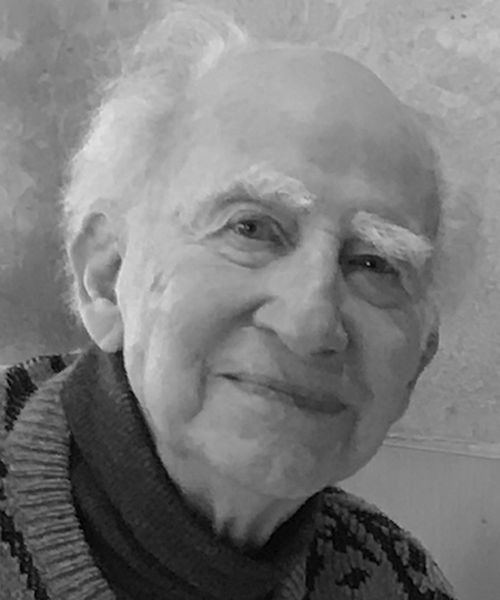
Ion was born in New York in 1928 and he died in Paris in 2019, at the age of 90 years. Ion went to college at Harvard and to medical school at Yale. He did his internship in medicine at Bellevue Hospital in New York, before working as Captain, Chief of the Department of Viral and Rickettsial Diseases in the U.S. Army Medical Corps in Japan for a couple of years (1956–1958). He then underwent scientific training in the United States, working with John Enders at Boston Children's Hospital in 1959–1961 and 1962–1965. He spent a gap year with Charles Chany at Saint Vincent de Paul Hospital in Paris in 1961–1962. His fascination with IFN began during these years. He first met Isaacs at Mill Hill in 1961, and was invited by him to give a talk about his IFN research with John Enders, and he first met Lindenmann in Boston in 1963, when Enders invited him to give a talk.
Ion wrote a moving article about what he called his “Three remarkable teachers” (Gresser 2000a). This beautiful text elegantly describes the 3 mentors with the greatest impact on him while he was on the East Coast during his formative years. Francisco Duran-Reynals, one of the pioneers of viral oncogenesis, at Yale, Lewis Thomas, physician, scientist, and writer, at Bellevue Hospital, and John Enders, Nobel Prize-winning virologist, in Boston, all 3 trained him in their own way, and Ion expressed his gratitude to them in this literary jewel, a must-read for anyone interested in this period of medical research. Ion was at his best when writing about scientists he admired; he also wrote a superb article for the Festschrift of Jean Lindemann, entitled “The man who studied IFN without really trying” (Gresser 1987b), and moving obituaries for his collaborators William Stewart and Edward de Maeyer (Gresser 2000b, 2003).
Surprisingly, Ion went against the flow, moving to Europe when there was a net migration of scientists from Europe to America. That was typical of Ion. He could be warm and gregarious, but he insisted on doing things his own way. He first took a postdoctoral position with Charles Chany at Saint Vincent de Paul Hospital in Paris. After miraculously surviving World War II, Charles Chany (who was born Karoly Csanyi in Hungary) emigrated to France, where he went to medical school and then set up the first clinical virology laboratory in France (which Pierre Lebon took over when he retired), partly sponsored by the National Institutes of Health, after returning from his training on the East Coast of the United States (Lebon and Pitha-Rowe 2013). I hope that his memoirs, “Des marches de la mort aux sciences de la vie,” will someday be translated into English. Incidentally, I and others tried and failed to convince Ion to write his memoirs. They would have been a real treat to read.
Anyway, thenceforth, Ion became an American in Paris. The eminent immunochemist Pierre Grabar and the Nobel Prize-winning virologist André Lwoff recruited him to set up his own laboratory in Villejuif. He settled in France where, from 1965 to 1997, he was Director of the Viral Oncogenesis Laboratory in Villejuif, at the Laboratoires de l'Institut de Recherches sur le Cancer (now the André Lwoff Institute). He climbed the ranks of the Centre National de la Recherche Scientifique (CNRS), becoming an emeritus professor in 1997.
Ion was more comfortable in Europe than in America, or perhaps it would be more accurate to say that he was equally uncomfortable on both sides of the Atlantic, or not fully at ease on either side. Maybe he was too sensitive for academic life in America, while not at all made for French academic politics? Maybe he preferred the French douceur de vivre but remained attached to the American constitution? Either way, we will never know exactly what drove him to make this very unusual career decision that he never went back on. Remarkably, his international success was achieved from a small laboratory in the outskirts of the Parisian region between 1965 and 1995, in what did not then and still does not even remotely resemble any of the academic powerhouses in the country of his birth, making his achievements all the more remarkable. Ion truly loved France and Europe, and I vividly recall him raving about the surgeon in Versailles who saved him a couple of years ago, when nobody else on earth would even consider operating on him (Ion told him “cure me or kill me”).
Ion was proud to have received the Avery-Landsteiner award from the Immunological Society of Germany and the Médaille d'Argent from the CNRS and the Prix Antoine Lacassagne (with Edward de Maeyer) from the Ligue Nationale Française contre le Cancer in France. He was not elected to the National Academy of Sciences in the United States, probably because he was working in France, despite remaining an American citizen throughout his life. Election under such conditions is extremely difficult. He did not mind that, though. I never once heard him complain or allude even vaguely to a lack of recognition. In this respect, some of the anecdotes about him have been misinterpreted. He was often irritated by the lack of knowledge of some of his younger colleagues, particularly after the 1990s, and he manifested his irritation in various ways.
These outbursts were not driven by his ego, but by his passion for science, and the quest for truth and justice. Admittedly, he was in a position to monitor the IFN field better than any other field, and perhaps better than anyone else in that field. But he saw a lack of erudition as a sort of lie by omission, and almost as a sin. This did not make him very popular in some circles, but he did not care, as he knew his attitude also gained him some true friends and admirers. Despite his quixotic attitude, at odds with political correctness, he always remained polite and courteous, even when he sounded tetchy and insistent.
The following example illustrates how contagious Ion's erudition could be. In 2014, Pierre Lebon and I introduced Ion to Yanick Crow, whom Ion greatly admired for his discovery of the molecular genetic basis and pathogenesis of type I interferonopathies. The 4 of us met up for “IFN lunches” from time to time. Last year, we published an article together that turned out to be Ion's last (first in English and then in French) (Crow and others 2018; Lebon and others 2019). This article grew out of Yanick's desire to stress how prescient Ion had been when predicting and showing the adverse effects of excess IFN during fetal development.
Ion could be quixotic, but he was no misanthrope. He was very generous. Anyone who ever looked deep into his blue eyes would tell you that. He did not believe in God (or so he said), but he was not nihilistic. He once told me that work and sex were the 2 great delusions of humans. He meant to say that love, in all its semantic forms, was not a delusion.
Ion was very modest about both his own talents and those of his family. He never told me that his mother was a genius, a fact that I stumbled upon inadvertently. Gisela Kahn Gresser dominated women's chess for nearly 3 decades, having taught herself to play when she was in her 30s! He also often said that his discoveries in the field of IFN were seminal only because Issacs died and Lindenmann left the field in the early 1960s. Ion was attentive to others. Well into his 80s and suffering from multiple illnesses, he would joke about his own health (eg, “I am betrayed by the enemy within”) while inquiring about mine. He made lots of good jokes and laughed at my own poor attempts. He said “A smile is OK, a laugh is better (if you have the time).” He was cheerful and joyful, although a touch of melancholy seeped through when he said that his was doing great considering how old he was (“si la vieillesse n'est pas une maladie”).
Ion was an avid reader. He had a broad and deep knowledge of the history and philosophy of science (Gresser 1987a), and we often exchanged the references of books we enjoyed. Ion also often told me that “There is much more to life than science” (and he would add “enjoy, tempus fugit”). Indeed, he knew his humanities and spoke multiple languages, including French and Italian, which he mastered perfectly. This broad cultural base helped him to cope with the inevitable private and professional disappointments of life. Ion was a very careful and patient writer. He would leave an article in a drawer for a month and then revise it again before its submission. He wished that more scientists would pay more attention to the style of their articles. I have followed this advice and will now be left wondering what Ion would think of my articles (and my jokes).
Ion admired his mentors, as well as Jean Lindenmann, Alick Isaacs, Jan Vilcek, Carl Nathan, Filippo Belardelli, Pierre Lebon, Yanick Crow, Charles Weissman, Jim Darnell, Otto Haller, William Stewart, Edward and Jaqueline De Maeyer, Kari Cantell, Hans Strander, and many others. They admired him in return. He was also very fond and proud of his trainees. We will all miss Ion sorely, all those of us who work on IFN and all those who had the fortune to know him in the course of his long and rich life, including his wife Marie-Serge in Paris and his daughters Charis and Lorin in New York.