




Abstract
Abstract
Objective:
To report a single institution's experience with transoral robotic surgery (TORS) and its clinical outcomes. This was a retrospective study carried out at a university-affiliated teaching hospital.
Subjects and Methods:
Forty-four consecutive TORS patients with benign and malignant diseases were reviewed. Data on demographics, clinical parameters, and diet were collected. Surgical margins, local and regional recurrence, distant metastasis, 2-year disease-free survival rate, and 2-year survival data were reviewed for the malignant cases.
Results:
Nine benign and 35 proven squamous cell carcinoma (SCCA) cases underwent TORS. The set-up time was 17.12 minutes (range, 10–40 minutes), and operative time was 53 minutes (range, 10–300 minutes). Average length of stay was 2.5 days. There were seven (6.8%) grade 3 surgical complications. Surgical infection rate was 2.3%. Benign cases were on a regular diet after TORS. Of the malignant cases, 94% were taking peroral diet immediately after the TORS procedure. There were no intraoperative complications and no 30-day postoperative mortalities. The mean follow-up time was 25.2 months (range, 16–38 months) for malignant disease. The SCCA sites were in the oropharynx (30/35), larynx (2/35), and unknown primary with neck metastasis (3/35). Unknown primary patients were excluded in the surgical margin analyses. Negative margins were achieved in 91% of cases. The local and regional recurrence rates were 6.3% (2/32) and 3.1% (1/32), respectively. Two patients (6.3%) developed distant metastasis. Oropharyngeal SCCA cases were reviewed, of which 23 were human papillomavirus (HPV)/p16 positive and 7 were HPV/p16 negative. The 2-year actual survival for HPV-positive and -negative patients was 96% (22/23) and 86% (6/7), respectively. The 2-year disease-free survival for HPV-positive and -negative cases was 91% (21/23) and 71.4% (5/7), respectively. All malignant cases that underwent TORS received postoperative adjuvant therapy.
Conclusions:
TORS is a safe procedure with minimal complications and acceptable clinical and functional outcomes.
Introduction
Establishing a TORS program in a university-affiliated private teaching hospital requires the cooperation of many different subspecialties: nursing operating room team, hospital administrative team, and discussion of cases in a multidisciplinary tumor board. Our TORS program was established based on and the recommendations of Patel 3 and the experiences of Weinstein et al. 4
The objective of this study was to evaluate our clinical practice's experience with TORS with adjuvant therapy, as well as oncologic and functional results.
Subjects and Methods
This study was conducted in compliance with the Greater Baltimore Medical Center Institutional Review Board requirements. A retrospective study of all TORS procedures for benign and malignant diseases of five head and neck surgeons at the Greater Baltimore Medical Center from January 2010 to September 2012 was included in this review. All cases were presented and discussed in our Head and Neck Multidisciplinary Tumor Board. National Comprehensive Cancer Network (NCCN) guidelines were considered and used in the diagnosis, treatment planning, and management in accordance to the patient's clinical condition with respect to tumor site, staging, and medical comorbidities. NCCN guidelines and treatment planning were discussed and agreed upon with the patient.
Patients who are required to have postoperative radiation underwent percutaneous endoscopic gastrostomy (PEG) tube placement during the time surgery rather than a separate procedure and a contralateral submandibular gland transfer of the uninvolved neck to reduce postoperative xerostomia. 5 The Port-a-Cath (French 6 Polyurethane Catheter PowerPort; Bard Access Systems, Inc., Salt Lake City, UT) catheter placement was also performed when clinically indicated. Our speech and language team and our nutritionist were involved in the care of our patients preoperatively and throughout the treatment and surveillance periods.
Each patient received preoperative intravenous antibiotics and 10 mg of decadron prior to TORS. A Feyh-Kastenbauer retractor (Gyrus Medical Inc., Maple Grove, MN), Dingman retractor, and Crowe–Davis retractor were used to expose the operative site. The da Vinci® Surgical System (Intuitive Surgical Inc., Sunnyvale, CA) surgical robot was positioned and docked on the right side of the patient. A 0° or 30° 8.5-mm three-dimensional camera was used with two 5-mm side arms (Maryland dissector and cautery). The operating surgeon was seated in the console, while the assistant was seated at the patient's head. An emergency tracheostomy set and head and neck operative instruments were opened and on standby in case of airway problems or uncontrolled intraoperative bleeding. Visualized vessels were clipped prior to transection. The surgical margins were 2 mm and greater and checked with a frozen section for malignant cases. Surgical margins were pursued until the frozen sections were negative for malignancy. The oral retractors were released while awaiting frozen section results. At the end of the procedure, Floseal™ (Baxter, Bloomington, IN) was applied to the operative site by some surgeons. Neck dissection was either done concurrently with TORS or 4 weeks after TORS (staged neck dissection), especially if there was concern about continuity of the resection with the neck. The operative specimen was submitted and oriented by the surgeon to the pathologist (Fig. 1).
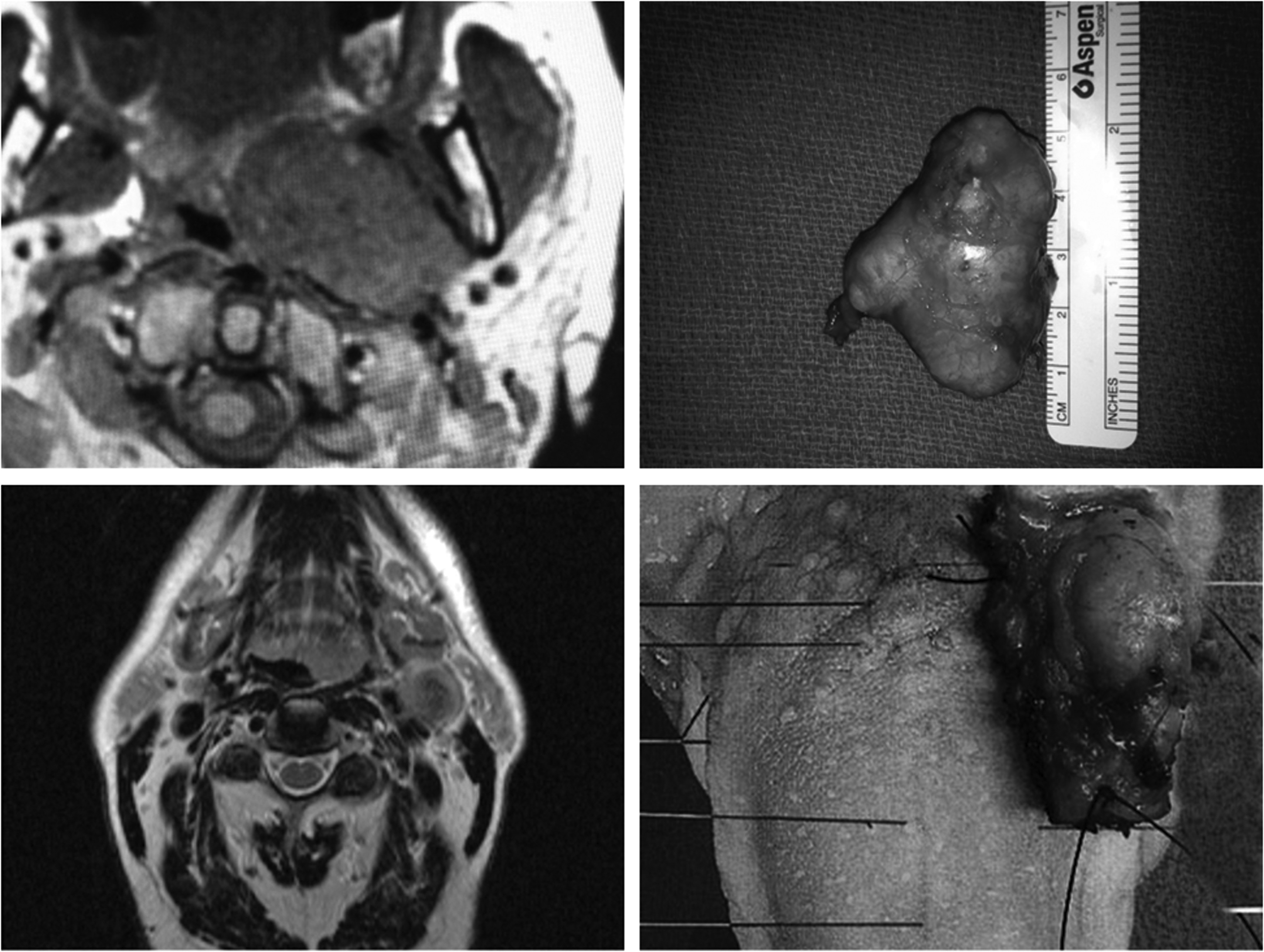
Patients received adjuvant therapy if they had (1) positive margins, (2) extracapsular spread, (3) lymphovascular invasion, (4) perineural invasion, and/or (5) multiple positive nodes. Patients received single fraction radiation treatment. The primary site was radiated at 6400 rads if margins were negative and 6940 rads if margins were positive. The neck received 5940 rads if the histologic risk factors were absent and 6480 rads if they were present. Cisplatin at 30 mg/m2 weekly for 6 weeks in conjunction with radiation was given if extracapsular spread was present in metastatic lymph nodes. The mean follow-up time was 25.2 months (range, 16–38 months).
The patients' demographics, American Society of Anesthesiologists score, airway status, histopathology (benign and malignant), set-up time, and TORS operative time were reviewed. Aside from these parameters, patients diagnosed with malignant disease had the following parameters reviewed: Eastern Cooperative Oncology Group (ECOG) performance status, TNM stage, human papillamovirus (HPV)/p16 status, concurrent or staged neck dissection, complications, surgical margins, tracheostomy dependence, PEG tube dependence, diet, pre- and post-treatment weights after 12 months of treatment, esophageal stenosis/strictures, length of hospital stay, local control, regional control, distant control, 2-year actual survival rate, and 2-year disease-free survival.
Results
Demographics
In total, 44 patients included in the study. Nine patients had benign disease, and 35 patients had malignancy, of which 31 had a known primary tumor, whereas 4 had an unknown primary with lymph node metastasis on initial presentation. The average age was 52.36 years (range, 18–80 years). There were 33 men and 12 women, giving a male:female ratio of 2.75:1. The average American Society of Anesthesiologists score was 2.34, and the average airway score was 2.18. The ECOG performance status for the malignant group was ECOG 0 for 34 patients and ECOG 1 in one patient. All 9 patients with benign pathology were ECOG 0.
Set-up time and operative time
The overall average TORS set-up time was 17.27 minutes (range, 10–40 minutes). The TORS surgery time averaged 53 minutes with a range of 10 minutes to 300 minutes, with 77% (34/44) of surgeries occurring in under 1 hour.
Malignant disease
The majority of lesions were malignant (35/44). The histology in these 35 cases was all squamous cell carcinoma (SCCA). At the time of initial clinical presentation, the site of the primary tumor was the oropharynx (n=29), larynx (n=2), and unknown primary (n=4).
Patients with unknown primary disease underwent TORS bilateral palatine and lingual tonsillectomy and concurrent neck dissection. Of the 4 patients with unknown primary disease, only 1 patient had the primary tumor (tonsil) identified on final pathology.
There were 4 patients who underwent salvage TORS, whereas the rest of the patients underwent primary TORS. Two patients underwent staged selective neck dissection, whereas the rest underwent concurrent selective neck dissection.
The T stage of the primary malignant tumors was as follows: Tx (3/35), T1 (22/35), T2 (5/35), T3 (2/35), and T4 (3/35). The American Joint Committee on Cancer staging was as follows: 3 patients were in stage 1, no patient was stage 2, 9 patients were stage 3, and 23 patients were stage IVa.
All patients with malignant disease were followed using NCCN practice guidelines and the follow-up Johns Hopkins Head and Neck Surgery multidisciplinary head and neck time line (Table 1).
CBC, complete blood count; CMP, complete metabolic profile; CT, computed tomography; PET, positron emission tomography.
Benign disease
Nine patients with benign histology had the following: prevertebral sclerosing cervicitis (1/9), parapharyngeal pleomorphic adenoma arising from the deep lobe of the parotid (1/9), tonsillar hyperplasia (2/9), obstructive sleep apnea due to lingual hyperthrophy (1/9), and unilateral enlarged lingual tonsil (3/9). One patient with a history of right base of the tongue cancer treated with radiation presented increase uptake on positron emission tomography/computed tomography scan on the right tonsil. The final histology after TORS tonsillectomy revealed lymphoid hyperplasia.
Complications
There were in total seven complications (16%) (Table 2). There was 1 patient after TORS radical tonsillectomy who developed mucosal bleeding on postoperative Day 7. He was treated in the emergency room, and the area of bleeding was cauterized with silver nitrate. No further bleeding was noted on follow-up. One patient underwent TORS for a prevertebral mass, and on final pathology revealed sclerosing cervicitis. This patient developed neck pain and fever on postoperative Day 7. The patient was returned to the operating room, the abscess was drained through a neck incision, and the patient was placed on antibiotics. Two patients developed neuropraxia. One patient developed temporary lingual nerve paresthesia secondary to pressure of the oral retractor, and another patient developed brachial plexus plexopathy; both patients recovered from their neuropraxia. One patient developed postoperative aspiration pneumonia after TORS supraglottic laryngectomy. The patient was treated with antibiotics and on follow-up had no history of recurrent aspiration pneumonia. Our pharyngotomy rate for patients who received concurrent neck dissection during TORS was 6% (2/33). The pharyngotomies were recognized intraoperatively and repaired primarily. There were no orocutaneous fistula or surgical site infection (SSI) noted during the postoperative period and on follow-up.
TORS, transoral robotic surgery.
Margins
There were 32 patients (oropharyngeal and laryngeal SCCA) included in the surgical margin review. The 3 patients with unknown primary and 9 patients with benign pathology were excluded in the analysis.
Negative margins were achieved in 91% (29/32) of our cases. Three primary TORS patients (of the 28 patients) who had negative margins on frozen section, however, on final pathology review were reported to have positive margins. No positive margins were noted in the 4 patients who underwent salvage TORS.
Tracheostomy and PEG
Two patients with T3 and T4 primary tumors had planned tracheostomy prior to the TORS procedure to secure the airway. Both patients were decannulated after the TORS procedure. The T3 patient and the T4 patient were decannulated on postoperative Days 5 and 8, respectively. Of these 2 patients, the T4 patient required maintenance of the PEG tube due to postoperative oropharyngeal dysphagia and later reinsertion of the tracheostomy during CRT treatment due to airway problems and aspiration. The second patient after salvage TORS was able to eat a regular diet but had to be supplemented with PEG tube feedings to achieve the necessary total caloric requirement per day. Our tracheostomy and PEG rates were 3% (1/32) and 6% (2/32), respectively, after completion of TORS and adjuvant therapy at 2-year follow-up.
Oral diet, weight loss, esophageal stricture, and length of stay
All patients with benign disease whounderwent TORS were on a regular diet on the second hospital day. There was no weight loss or swallowing problem noted on follow-up. The average length of stay in our series was 2.5 days (range, 4 hours postoperatively to 9 days).
Ninety-four percent (33/35) of patients with malignant disease who underwent TORS were taking a peroral diet immediately after surgery except for 2 patients (5.7%). The patient who underwent supraglottic TORS developed aspiration pneumonia and was treated accordingly. He later was able to take a regular diet at 5 weeks postsurgery after swallowing rehab exercises. The second patient with a T4 exophytic lesion developed oropharyngeal dysphagia after TORS and required maintenance of his PEG tube for nutritional support.
There were 27 patients on chart review with available weights at 1 year of follow-up. The average weight loss was 24.5 (11.9%) pounds at 1 year in patients who had undergone TORS and adjuvant therapy. We compared the weight loss with that of our historical control of patients who had received an alternate cisplatin-based CRT protocol. The mean percentage weight change in patients undergoing our previous CRT protocol was 11.2% (95% confidence interval 8.1%–14.3%), whereas the mean percentage weight change in TORS with postoperative adjuvant therapy was 12.7% (95% confidence interval 9.8%–15.5%). There was no statistical significant difference between the two groups (P=.55) (Table 3). The addition of TORS in the treatment regimen did not appear to produce any additional weight loss.
The difference between the two groups was not statistically significant (P=.55).
TORS, transoral robotic surgery.
The incidence of esophageal stricture in the patients in our clinical practice who received CRT as reported by Best et al. 6 is 19%. None of our TORS patients developed esophageal strictures.
Local recurrence
Thirty-two patients with malignant disease with a known primary tumor were reviewed for local recurrence at the operative site after TORS. The 3 patients with unknown primary disease were excluded in the analysis. The local recurrence at the surgical resection site after primary TORS with postoperative adjuvant treatment was 7.1% (2/28), whereas there were no local recurrences after salvage TORS. Salvage TORS patients did, however, develop neck and pulmonary metastasis.
There were no regional or distant failures in patients treated with primary TORS with postoperative adjuvant therapy. Patients who had positive margins on final pathology report likewise did not develop local, regional, or distant failure on follow-up. Among patients undergoing salvage TORS, 1 patient developed skin metastasis, and another 2 patients developed pulmonary metastases.
The overall local and regional recurrences for both primary and salvage TORS were 6.3% (2/32) and 3.1% (1/32), respectively (Table 4).
Of the total of 32 patients, 30 patients had oropharyngeal squamous cell carcinoma (SSCA), and 2 patients had laryngeal SSCA.
At the operative site (oropharynx).
Died secondary to chemoradiation complications at 2 months after transoral robotic surgery (TORS).
Skin neck metastasis.
The patient with a benign parapharyngeal pleomorphic adenoma on 2-year follow-up showed no local recurrence.
HPV status and 2-year survival
Two patients that underwent laryngeal and supraglottic TORS were not tested for HPV and were therefore excluded from the HPV-related survival analysis. The 3 patients with unknown primary disease were also excluded from the analysis. Thirty patients with primary tumor were available for review, of which 23 patients were HPV positive and 7 patients were HPV negative. The 2-year overall actual survival and 2-year overall disease-free survival for this cohort of patients with proven primary oropharyngeal cancer who were treated with TORS (primary and salvage) were 93% (28/30) and 87% (26/30), respectively.
The 2-year actual survival for HPV-positive TORS patients was 96% (22/23), whereas the 2-year actual survival for HPV-negative TORS patient was 86% (6/7) (Table 5). The 2-year disease-free survival for patients who underwent TORS was 91% for HPV-positive patients and 71.4% for HPV-negative patients (Table 6).
HPV, human papillomavirus; SSCA, squamous cell carcinoma; TORS, transoral robotic surgery.
HPV, human papillomavirus; SSCA, squamous cell carcinoma; TORS, transoral robotic surgery.
30-day postoperative mortality
There were no 30-day postoperative mortalities. There was 1 patient who died from complications of CRT while receiving postoperative adjuvant treatment (Table 4).
Discussion
The safety and feasibility of TORS were demonstrated by Weinstein et al., 4 Park et al., 7 and O'Malley et al. 8 All authors were able to achieve a high local control rate and a low surgical complication with the use of TORS in benign and malignant disease.
In an initial multi-institutional review of TORS in France, the median set-up and procedure times were 52±46 and 90±92 minutes, respectively. 9 In a study by Moore et al., 10 the set-up time lasted an average of 68.6 minutes for the first 10 cases and then decreased to 22.3 minutes for the subsequent 35 cases. Dowthwaite et al. 11 reported that the average set-up times after preliminary experience with TORS were under 30 minutes. The average operative time across seven studies reviewed by Dowthwaite et al. 11 was just under 75 minutes. Our operative set-up and operative time are within the time frames established in the TORS literature and therefore acceptable.
In a multi-institutional study by Vergez et al., 9 15 patients developed postoperative hemorrhage, and there were two deaths due to postoperative hemorrhages; complications in patients with significant comorbidities were observed at 9 and 18 days after the surgery. A multicenter study by Weinstein et al. 4 revealed no postoperative deaths and a 16% grade 3 (requiring hospitalization or intervention) and 2.3% grade 4 complication rate (life-threatening). We have a 16% (7/44) surgical complication rate in all TORS cases. Three patients (6.8%) had grade 3 complications, and there were no deaths directly attributable to their surgery.
Van Abel et al. 12 reported intraoperative pharyngotomy at 8% using a thulium:YAG laser and 42% using electrocautery. Our experience with intraoperative pharyngotomy rate using electrocautery differs from that of Van Abel et al. 12 in that our pharyngotomy rate was only 6%. Both pharyngotomies were recognized during the neck dissection, were closed primarily, and did not develop orocutaneous fistula or SSIs.
In a case control study audit by Law et al. 13 in general surgery, the SSI rates were not significantly different for robotic surgery (3.8%) compared with conventional laparoscopic abdominal surgery (8.7%). In a study of non–head and neck 273 robot-assisted procedures, Hermsen et al. 14 reported the robotic SSI rate was 5.9%. Despite antibiotic prophylaxis, open head and neck surgical procedures have an SSI risk of up to approximately 32.1%–40% for cases of clean contaminated surgery.15,16 To our knowledge, there are no reports on SSI in TORS. In our series, the TORS SSI rate was 2.3%.
Surgical margin status significantly affects local regional control. 17 The incidence of positive margins in open surgery ranges from 3% to a high of 60%.18,19 In a report of 37 TORS patients by Park et al., 20 histologically clear margins were achieved in 95% (37/39) of cases after resection. In another multicenter study, the rate of positive margins for TORS was reported at 4.3%. 4 In our study, we were able to have clear margins in 91% of TORS cases. All patients with positive margins received postoperative CRT. There were no local regional recurrences on close follow-up.
In the study by Moore et al., 10 17.8% of their patients required a PEG tube, but all PEG patients eventually had their feeding tube removed. The multi-institutional study on TORS reported that the PEG dependency rate was 5%, and only 2.3% had a tracheostomy. 4 Our long-term PEG tube dependency rate (5.7%) and tracheostomy rate (2.8%) are similar to those in the TORS literature.
Our reported institutional esophageal stricture rate for our primary CRT protocol is 19%. 6 Patients who underwent TORS in our study did not have esophageal strictures despite postoperative radiation with or without chemotherapy. Although Quon et al. 21 have recommended de-intensification to have better functional results, we have adopted an early speech and swallowing therapy protocol for TORS patients with malignant disease. A multidisciplinary head and neck treatment time line developed by our team integrates the different multispecialty services and NCCN follow-up guidelines to patients undergoing cancer treatment. Patients were closely monitored by all disciplines before, during, and after treatment at periodic intervals up to 12 months (Table 1). The time line allows clinicians from each discipline to evaluate specific patient needs and to intervene to improve treatment results. Patients are instructed on a specific set of oropharyngeal exercises selected to reduce the effects of disuse atrophy and improve swallow function during and post-treatment. Exercises are modified according to the patients' individual needs as clinically indicated. Patients are encouraged to continue to perform oropharyngeal exercises up to 3 months post-radiation therapy or longer as indicated. In comparison, in a randomized clinical trial by Kotz et al., 22 prophylactic swallowing exercises had improved swallowing function at 3 and 6 months after CRT but not immediately after CRT. However, the role of prophylactic swallowing exercises in TORS with postoperative adjuvant treatment remains to be proven and is being investigated by our team.
In a study by Genden et al., 2 patients tolerated oral nutrition at an average of 1.4 days after surgery without clinical evidence of aspiration or velopharyngeal reflux. Eighty percent of robotic primary resection patients in the study by Dean et al. 23 reported tolerating oral nutrition at the time of discharge (average, 1.5 days). The experience of Park et al., 20 on the other hand, showed a range of 1–18 days with a mean of 6 days to return to oral diet. Our observation of oral intake after TORS is similar to that of Park et al. 20
In a multicenter TORS study, the average hospital stay after TORS was 4.2 days. 4 Our TORS length of stay in our clinical practice is within the reported range.
Dean et al. 23 concluded that robotic-assisted surgery is an acceptable procedure for resection of both primary and recurrent oropharyngeal tumors. In our salvage cases, TORS provided local control and palliation. In our limited number of salvage TORS, patients were able to avoid local tumor problems such as tumor ulceration and bleeding.
In a prospective study by Park et al., 20 the overall survival at 2 years was 96%, and disease-free survival was 92%. Other TORS overall actual survival data have been reported at 95.7% and 81.8% at 1 and 2 years, respectively, with a disease-specific survival of 97.8% and 90.0%. 24 In a nonrandomized study by Genden et al. 2 between TORS and CRT, they reported no significant differences in local regional control, disease-free survival, distant control, and overall survival, with TORS patients returning early to functional baseline.
The following authors have reported local tumor recurrence (ranging from 1.5% to 6.7%) in their respective studies after TORS: Genden et al. 2 at 2/30 (6.7%), Park et al. 7 at 1/39 (2.7%), White et al. 24 at 3/70 (4.3%), Hurtuk et al. 25 at 1/64 (1.5%), and Weinstein et al. 26 at 1/47 (2.1%). Our local recurrence for both primary and salvage TORS is similar to that for TORS reported in the surgical literature.
Weinstein et al. 27 reported only 1 patient (3%) with local recurrence in a cohort of 30 untreated oropharyngeal SCCA patients treated with TORS alone with a follow-up of 2.7 years. Because all of our patients received postoperative adjuvant treatment, the treatment option or role of TORS alone in selected patients needs to be further investigated in our clinical practice.
Among patients treated with CRT alone, HPV-positive patients have been reported to have a higher survival compared with HPV-negative patients. 28 Fakhry et al. 29 in a prospective clinical trial reported overall 2-year survival for HPV-positive patients at 95% compared with 62% survival for HPV-negative patients. Olsen et al. 30 reported that selected patients with HPV-positive oropharyngeal carcinoma can be effectively treated with TORS alone with excellent functional and oncologic outcomes. Cohen et al., 31 on the other hand, in their study of HPV-related outcomes in patients treated primarily with TORS with postoperative adjuvant therapy, reported no statistical significance difference in survival between the HPV-positive and -negative patients in terms of overall survival, disease-specific survival, and disease-free survival. In the present study, our 2-year survival and disease-free survival suggest better survival of HPV-positive patients treated with TORS with postoperative adjuvant therapy than of HPV-negative patients. However, statistical analysis cannot be performed between the two groups because of limited sample size and statistical power. Our overall 2-year survival (93%) and disease-free survival (87%) rates are similar to reports by other authors, which range from 86% to 96% in overall survival20,24,31 and 86% to 92% in disease-free survival.20,24,31
In the study of Saba et al. 32 obtained from the Surveillance, Epidemiology and End Results Program of the U.S. National Cancer Institute, 33,100 cancers (64.7%) originated in the base of the tongue/tonsil versus 11,825 cancers (23.1%) in the oral tongue (anterior 2/3 of the tongue). Patients diagnosed with base of the tongue/tonsil cancer were predominantly males (76.7%). 32 The incidence of oropharyngeal tumors in the United States, particularly those arising from the tonsil or tongue base, has been increasing, as well as in other countries.32,33 It was also predicted that HPV-related oropharyngeal cancers will surpass non–HPV-related cancers.33–35
HPV-positive oropharyngeal cancers are epidemiologically distinct and occur in patients of younger age at the time of diagnosis compared with HPV-negative patients. 36 In our opinion, the long-term functional problems are accentuated in younger patients, regardless what treatment modality is used: open surgery with radiation, minimally invasive surgery, radiation alone, or combined CRT. Minimally invasive surgery such as TORS or transoral laser surgery is available in the surgical armamentarium and offers a less invasive approach compared with open surgery in select patients.
Patient stratification and treatment objectives of attaining long-term oncologic control with good functional results in the era of minimally invasive robotic/laser surgery, de-intensification CRT schedules, prognostic markers, NCCN guidelines, and speech and swallowing rehabilitation still remain areas of debate. The optimized treatment approach for a specific subset of patients still remains to be answered, and thus randomized clinical trials are needed to address the above-mentioned clinical issues. The advantages and disadvantages of each different treatment modality should be discussed at a multidisciplinary tumor board with reference to NCCN guidelines and tailored to each individual patient while addressing both tumor control and function.
Conclusions
In the treatment benign disease of the oropharyngeal region, TORS is a valid option with good function results. In select patients with oropharyngeal cancer, TORS with postoperative adjuvant treatment is a viable treatment option with acceptable functional and oncologic results.
Footnotes
Acknowledgments
We thank Eva Zenreich, MD, James J. Sciubba, DMD, PhD, Geofrey Neuner, MD, Marshall Levine, MD, Mei Tang, MD, Treva Kosco, RN, Dorothy Gold, MSW, LCSW-C, OSW-C, Karen Harrer, MSW, LCSW-C, Karen Ulmer, BSN, RN, CORLN, Melissa Kim, MS, CCC-SLP, Jaclyn Shellenberger, MS, CCC-SLP, Lisa Valasek, MS, CCC-SLP, and Bethany Hieber, MA, CCC-SLP.
Disclosure Statement
No competing financial interests exist.