




Abstract
Abstract
A common situation presented in any clinical facility is a woman with swelling and redness of the breast. Diagnosis upon suspicion is often mastitis or inflammatory breast cancer, which are popular and well-known diseases of the breast. However, there is one main differential diagnosis which has to be taken into consideration: lymphedema of the breast. Twenty patients with internal diseases presented in our Breast Care Unit over a 4-year period with breast-affecting lymphedema. The patients suffered from cardiac failure, nephrotic syndrome, liver failure, lymphadenopathy, and central vein occlusion. Additionally, we identified 5 patients with a history of organ transplantation and under immunosupressive medication with sirolimus or everolimus. These mTor inhibitors are known to have unwanted side effects such as unilateral or bilateral upper/lower extremity peripheral edema or facial/eyelid edema, but as we know, isolated lymphedema of the breast represents a previously unreported complication.
Introduction
Material and Methods
Using the database of our Breast Care Unit, we identified all patients who initially presented with suspicion of lymphedema, mastitis, and/or inflammatory breast cancer between July 2007 and March 2011. All patients with history of breast cancer on the lymphedema side were excluded. Furthermore, all patients where the final diagnosis turned out to be (inflammatory) breast cancer or mastitis were excluded from further analysis. From the remaining patients with lymphedema, the medical history and clinical examination, ultrasound, MRI, and histopathological results from initial presentation and follow-up visits were retrieved using original patient records and internal databases. Patient data were analyzed for the possible cause of the lymphedema, concomitant diseases, medication, therapy, and outcome.
For statistical analysis, Microsoft Excel 2003 SP 3 (Microsoft Corporation, Redmond, WA) and Analyse-It for Microsoft Excel Version 2.21 (Leeds, UK) were used.
Results
We identified 20 patients with lymphedema. The mean age was 64 years (range 32–95 years). The patient medical history, reason for presentation, concomitant medication, results of clinical examination, breast ultrasound, further diagnostics, and outcome are shown in Table 1.
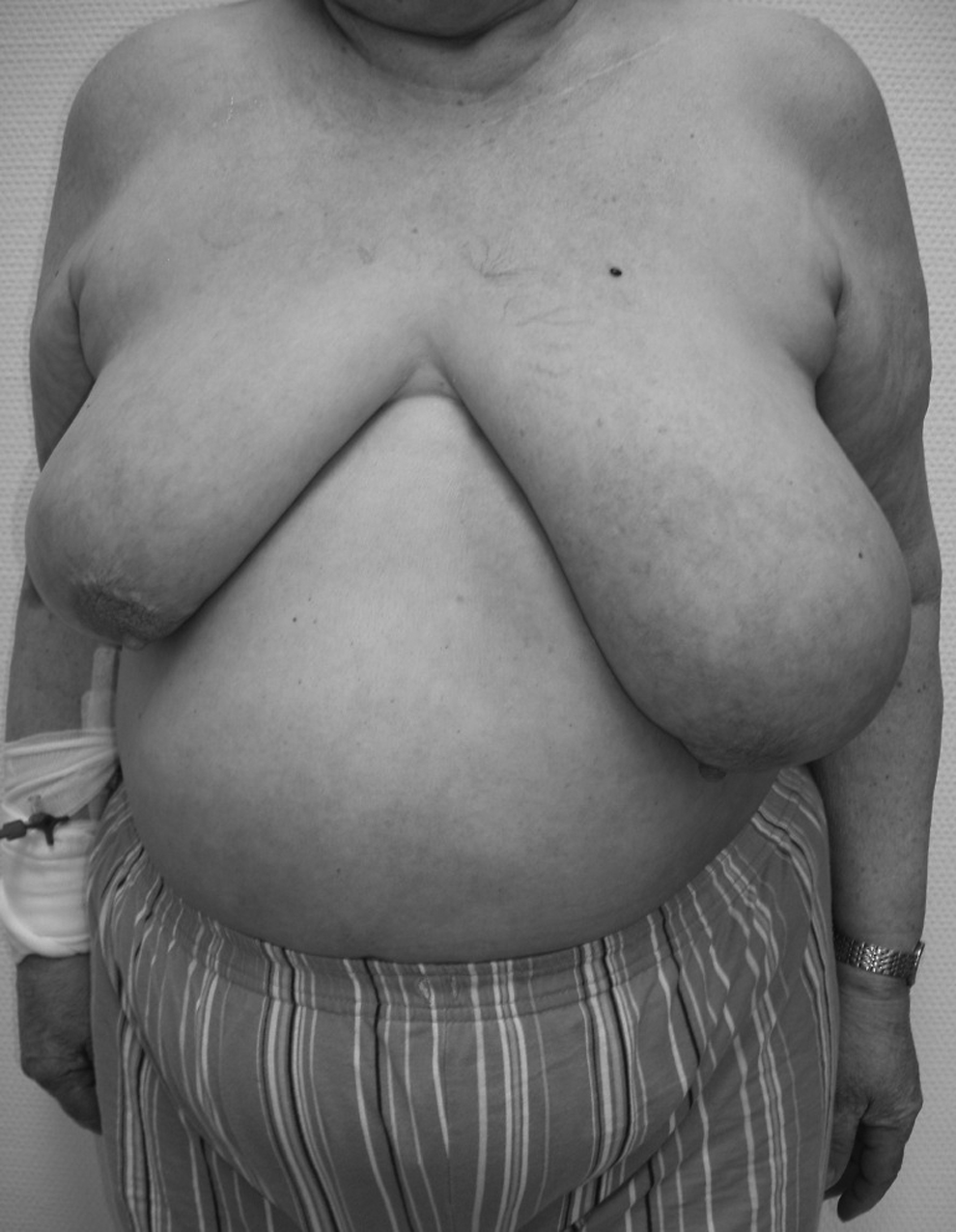
Patient #13 (see Table 1) who later had cardiac failure.
Twelve patients presented with suspicion of inflammatory breast cancer; in 10 cases the suspected diagnosis was mastitis. Two patients were forwarded due to suspicion of lymphedema. Among the 20 patients, there were 6 patients with severe cardiac restriction (NYHA °III-IV). Six patients had a history of organ transplantation [lung (1), kidney (3), heart (1), and liver (1)]. Five of them had immunosuppressive therapy with sirolimus or everolimus, one with tacrolimus. Renal insufficiency stage III KDOQI or higher was present in 7 patients. Two patients suffered from liver failure due to an acute alcoholic hepatitis and liver cirrhosis CHILD C, and another from progressive liver failure after liver transplantation. Furthermore, there were 7 patients with diabetes mellitus type II. During clinical examination, 8 patients showed swelling the right breat and 6 patients showed swelling of the left breast, and 6 additional patients presented with bilateral swelling. Nine patients showed a redness of the involved breast. In 9 patients, there were concomitant lymphedemae of other body parts [anasarca (4), upper limb/trunk (2), equilateral arm (2), and legs (1)]. Breast ultrasound revealed dilated lymphatic spaces and often, skin thickening. In 9 cases, a dermal punch biopsy or core needle biopsy was carried out to exclude inflammatory breast cancer. In 17 of 20 patients, additional imaging techniques (mammography, MRI, or CT-scan) were carried out without any suspicion of breast cancer. Four of the patients died shortly after presentation (#1, 4, 12, and 14, Fig. 3). From the remaining 16 patients, follow-up data was available in 14 cases.
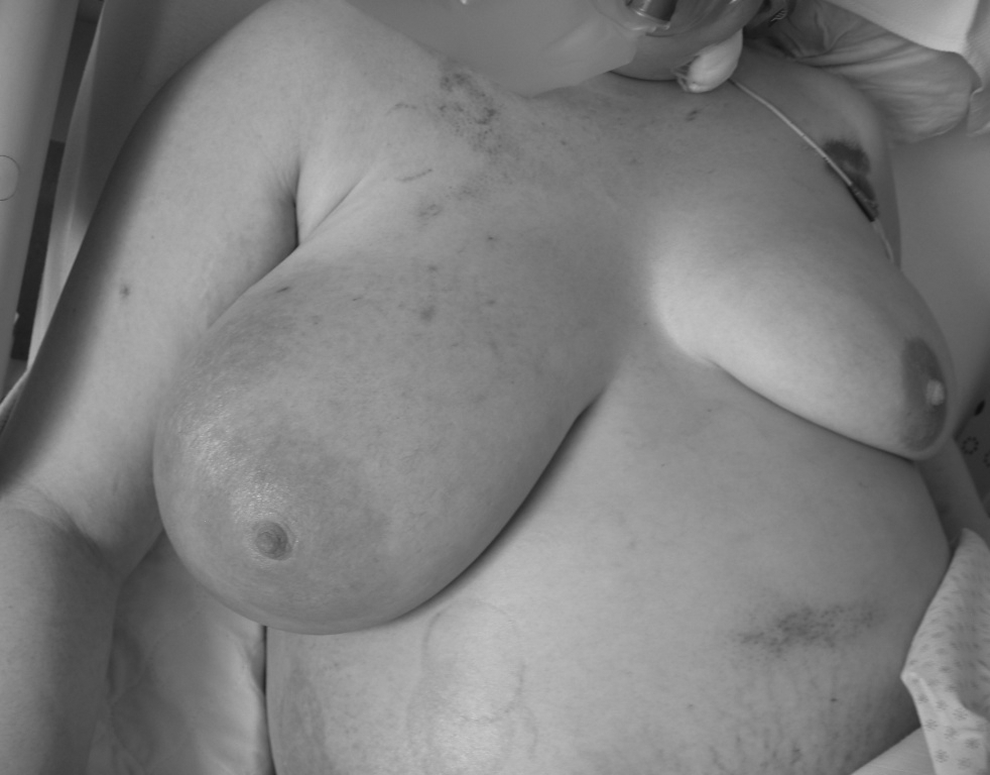
Patient #14 (see Table 1) who later had liver failure.
We encountered two cases of enlarged axillary lymph nodes manifested as lymphedema of the breast: One case (#12) was a 74-year-old woman presenting with swelling and redness of the breast under suspicion of advanced breast cancer. Physical examination revealed unilateral left-sided axillary, bilateral supra-, infraclavicular, and mediastinal lymphadenopathy, as well as bilateral pleural effusions. Lymph node biopsy proved advanced highly malignant B-cell non-Hodgkin lymphoma. A similar case (#7) was a 54-year-old woman with generalized lymphadenopathy in the context of an undifferentiated collagenosis (positive for ANA and Anti-Ro). She had bilateral axillary, supra- and infraclavicular lymphadenopathy, and developed lymphedema of the breast (right>left).
We want to highlight a group of patients with lymphedema after organ transplantation and under medication with an mTor inhibitor (either Everolimus or Sirolimus):
Case 1 (#10 on Table 1, Fig. 4) was a 53-year-old female from South Africa who received a renal transplantation for end-stage renal disease. She received everolimus and mycophenolate mofetil as immunosuppressive therapy. One year after transplantation, she developed swelling and redness of her left breast and swelling of her left arm. Magnetic resonance imaging of her neck and breasts revealed no evidence for carcinoma, but left-sided thrombosis of Vv.subclavia and brachiocephalica were present. Biopsy of left breast tissue and skin was negative for malignancy. Everolimus was not discontinued because we did not realize the possible relation between everolimus and breast edema and we attributed the symptoms to the thrombosis of the veins. In the meantime, the patient relocated back to South Africa.
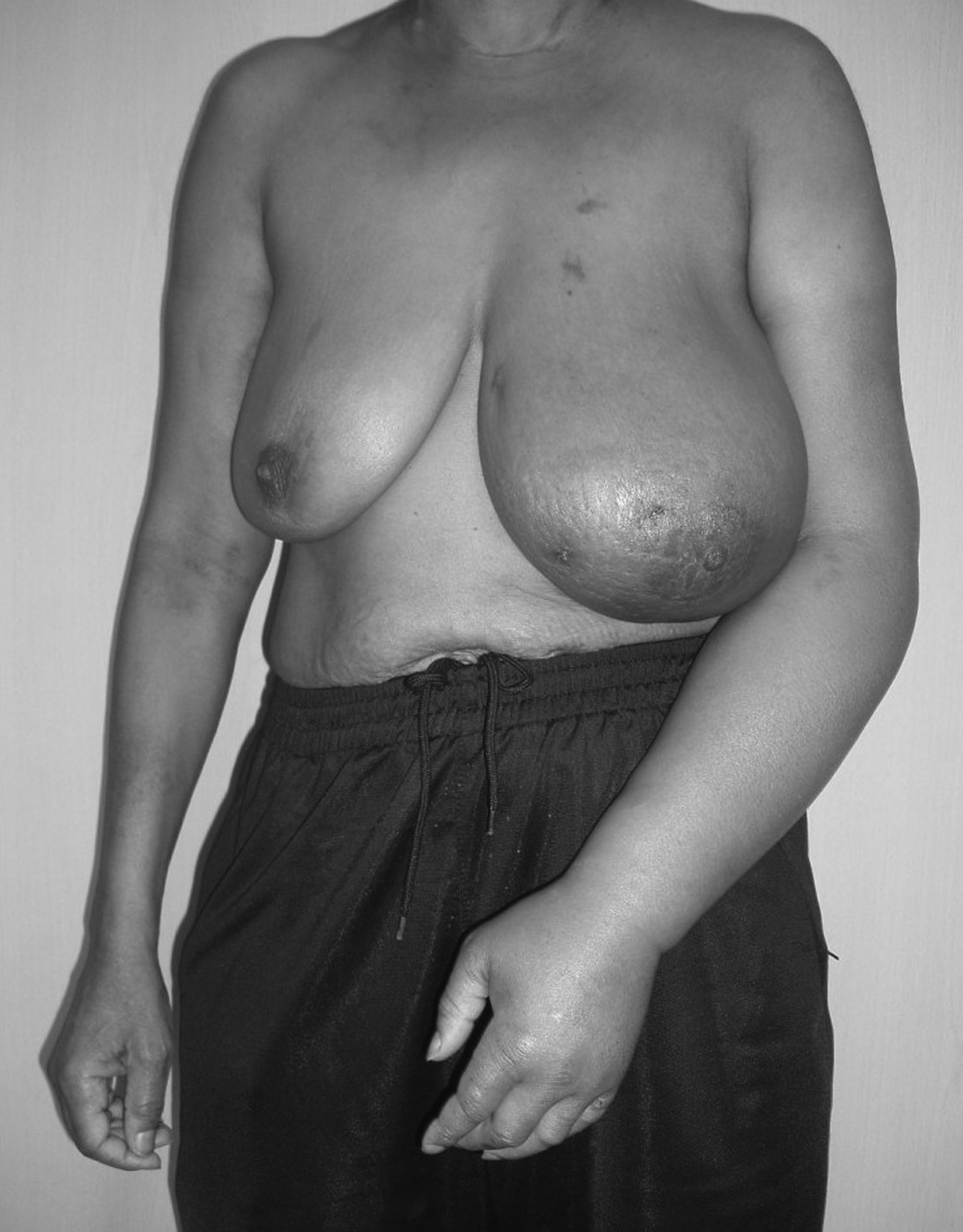
Patient #10 (see Table 1) with edema of breast and arm and with thrombosis of the V. subclavia after renal transplantation while taking everolimus.
Case 2 (#6 on Table 1) was a 75-year-old woman with a history of heart transplantation 18 years ago. Her immunosuppressive regimen consisted of everolimus (since 8 months), mycophenolate mofetil, and prednisolone. She developed redness and pain of the right breast and was send to the Breast Care Unit for suspicion of mastitis or inflammatory breast cancer. Mammography and dermal punch biopsies were negative for malignancy. We diagnosed lymphedema of the breast, but attributed it to her heart insufficiency because she did not have any other edema (eg, of the legs). She died 2 months after admission due to bowel ischemia and consecutive peritonitis.
Case 3 (# 3 on Table 1, Figs. 5 and 6) was a 36-year-old woman who received a double lung transplantation for nonspecific interstitial pneumonitis 14 months ago. She presented with swelling and redness of the right breast and was treated with intravenous antibiotics because of a suspected cause of mastistis nonpuerperalis. Redness and swelling of the breast did not improve with antibiotics. There was no evidence of carcinoma after MRI and biopsies of the right breast tissue and skin. Three months after admission, everolimus was stopped and replaced by mycophenolate mofetil. Swelling and redness of the breast regressed, but the enlargement of the breast has continued to the present (3 years later) as shown in Figure 6.
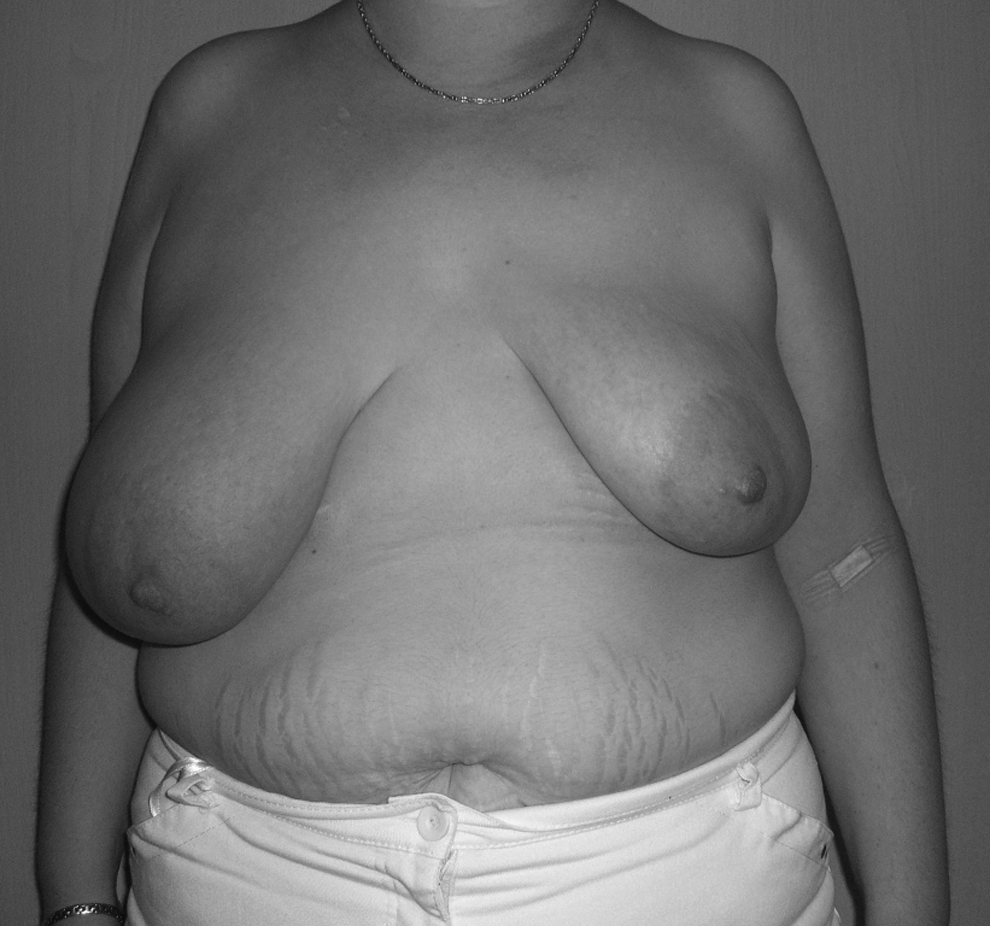
Patient #3 (see Table 1) after lung transplantation while taking sirolimus.

Patient #3 (see Table 1) after lung transplantation after sirolimus was discontinued.
Case 4 (#5 on Table 1) was a 58-year-old woman who developed lymphedema of the left breast 15 years after renal transplantation in the context of lupus erythematodes. Two months after everolimus was added to the immunosuppressive therapy with mycophenolate mofetil and prednisolone, she developed lymphedema of the right breast. Medication with everolimus was immediately stopped, and lymphedema regressed slowly. Two years later, the patient died of cardiac and renal failure.
Case 5 (#20 on Table 1, Fig. 1) was a 47-year-old woman with a stable renal allograft for 4 years, presenting with extensive redness and swelling of the right breast. Her immunosuppression at that time was sirolimus, prednisolone, and mycophenolate mofetil. This was changed to sirolimus 7 months ago. Diagnostic tests of the breast, including MRI and biopsies, failed to detect an underlying cause for the edema of the breast. There was improvement of the redness and swelling after reduction of the doses of sirolimus.
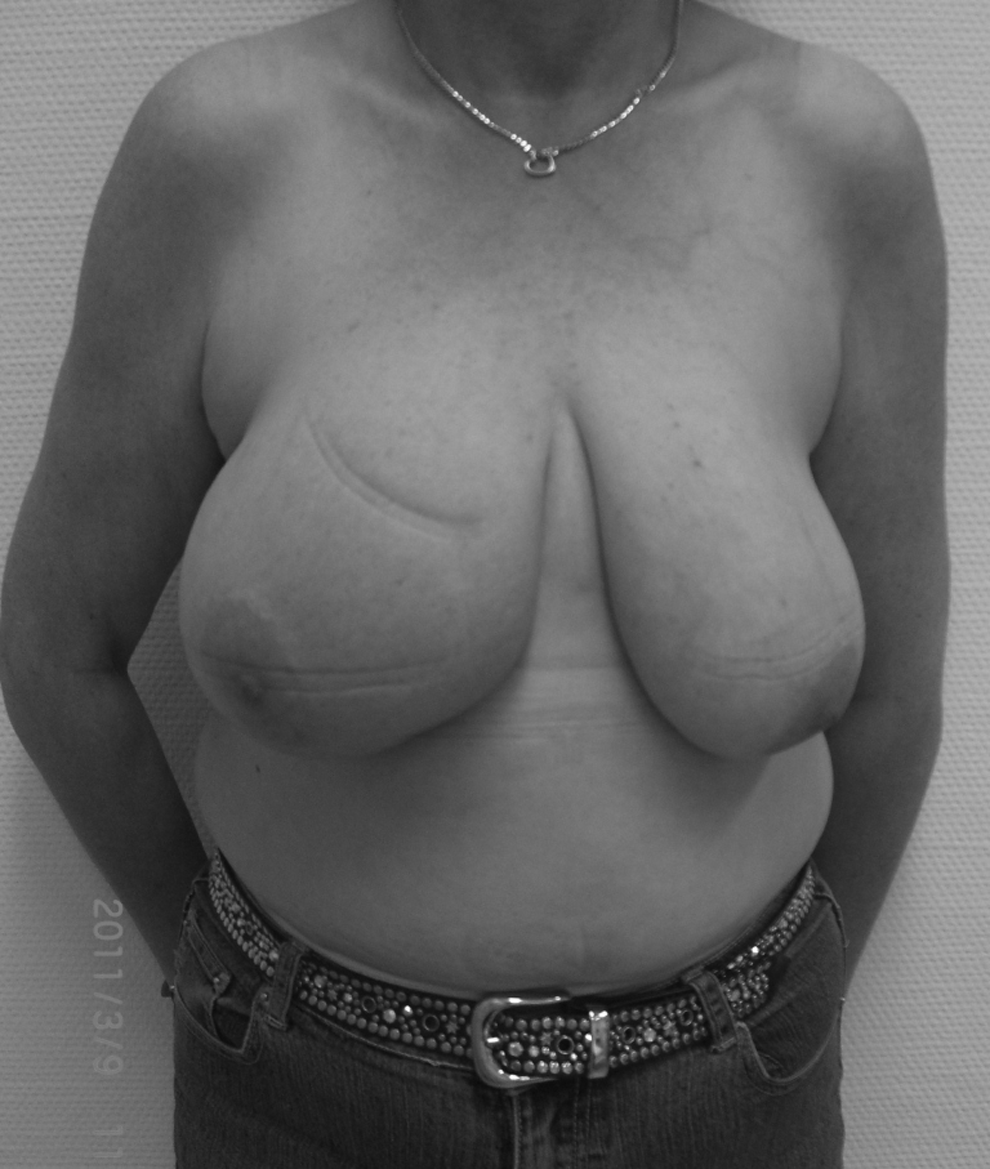
Patient #20 (see Table 1) after renal transplantation while taking sirolimus.
Discussion
Lymphedema of the breast is characterized by an increase in breast size, edema (peau d'orange), and sometimes erythema and minimal warmness of the breast. The same symptoms are present in inflammatory breast carcinoma and mastitis. As these diseases are the main differential diagnoses, most of the patients with lymphedema of the breast presented under suspicion of inflammatory breast cancer or mastitis to our Breast Care Unit. This already shows that lymphedema of the breast in nonbreast cancer patients is barely known, despite being more commonly seen in clinical practice than assumed.
Lymphedema of the breast in nonbreast cancer patients or breast cellulitis can arise from a multitude of etiologies. It was seen in diseases causing edema that could be generalized to the whole body such as cardiac failure, nephrotic syndrome, and liver failure. More than half of the patients studied showed only unilateral breast edema. Unilateral breast edema may be due to a tendency to lie on one side, causing dependent edema.10,11 We found congestive heart failure in 6 cases and consequently was the most common reason for lymphedema in nonbreast cancer patients. This phenomenon is described in the literature in many case reports.12–17 We found breast edema in two patients with anasarca caused by liver failure (cirrhosis of the liver), and in one other case it was suspected that the nephrotic syndrome of the patient was causing lymphedema of the breast. We could not retrieve any similar cases in the literature.
Generally, another reason for lymphedema is the abnormal removal of interstitial fluid caused by failure of the lymphatic system. This may be due to obstruction from, for example, pressure from enlarged lymph nodes or destruction of lymph vessels by radiotherapy. Many careful anatomic and dynamic studies of the lymphatic drainage of the breast have been performed and have consistently shown that the axillary route plays an important role for breast lymphatic drainage.18,19 Lymphedema of the breast and arm is common after breast-conserving therapy, axillary dissection, and radiation therapy in breast cancer patients. This is attributed to the impairment or occlusion of the lymphatic circulation of the breast. As sentinel techniques are widespread, the incidence is decreasing in breast cancer patients. However, radiation techniques may account for many of the lymphedema cases, so lymphedema remains a therapeutic challenge in this area.20–22 Erysipelas-like inflammation following breast surgery, such as reduction mammoplasty in patients without breast cancer and without axillary dissection related to lymphatic dysfunction induced only by the surgery of the breast, is also reported. 23 We found lymphedema because of obstruction of breast lympathic drainage in two patients: One suffered from advanced highly malignant non-Hodgkin`s lymphoma with left-sided axillary, bilateral supraclavicular and infraclavicular as well as mediastinal lymphadenopathy. The other patient developed lymphedema of the breast due to generalized lymphadenopathy in the context of an undifferentiated collagenosis (positive for ANA and Anti-Ro). Only one similar case of lymphedema of the breast in non-Hodgkin`s lymphoma with axillary lymphadenopathy is reported in the literature. 24
Of the remaining patients, there were 5 patients with a history of organ transplantation and medication with either everolimus (4) or sirolimus (1) at the same time. Each patient had a history of solid organ transplantation (renal or heart) and had received everolimus or sirolimus as part of an immunosuppression regimen after transplantation for a period of 2–14 months prior to developing lymphedema of the breast. Retrospectively, we hypothesize that the lymphedema of the breast in cases 1 and 2 was associated with medication of mTor inhibitors. We did not realize the possible relation between lymphedema and mTor inhibitors, because the patients had internal diseases, such as cardiac failure and thrombosis of the V. subclavia, which could cause lymphedema. Lymphedema of the breast is described as a complication of subclavian vein catheterization and in patients with central vein occlusion, therefore we think medication with everolimus was the reason for lymphedema of the breast or contributed to it.25–29 The remaining three patients did not have any risks for lymphedema after organ transplantation but did receive medication with an mTor inhibitor. No other likely causes of lymphedema were discovered and we realized the possible relationship between taking an mTor inhibitor and developing lymphedema of the breast. In two patients, medication was stopped, in one reduced, and lymphedema, especially erythema and swelling, regressed slowly.
To date, there are several case reports of sirolimus-associated lymphedema of the upper and lower limb in the transplantation literature.30–34 The CADENCE trial reported a 25% everolimus discontinuation rate due to one or more adverse events, three of 20 heart transplant patients developed peripheral edema. 35 Unilateral or bilateral peripheral edema/lymphedema is frequently sufficiently severe enough to require medication discontinuation. However, it may be less frequent with everolimus with a retrospective series reporting four- to five-fold less edema when compared to matched sirolimus-treated patients (14% vs 6%, respectively). 36 The reporting of lymphocele formation with sirolimus indicates interference of this drug with lymph drainage, too. It is known that sirolimus can lead to reduced healing of lymphatic channels that are divided during transplant surgery; therefore a lymphatic leak and the formation of a lymphocele can result.37,38 The mechanism of mTor inhibitor- associated lymphedema is not entirely clear. It was hypothesized that increased lymph flow along with disrupted lymphatics in the affected extremities may explain lymphedema as a complication of sirolimus. 8
Conclusion
It is necessary to raise awareness that lymphedema of the breast is an important differential diagnosis to mastitis and inflammatory breast cancer in patients with redness and swelling of the breast. Lymphedema of the breast can be both a symptom of an internal disease and a side effect of immunosuppressive medication. It is necessary to optimize therapy of the internal disease for treatment of the lymphedema. Everolimus/sirolimus-related lymphedema of the breast should be treated with dose reduction or discontinuation because this may lead to relief of symptoms. 26 Moreover, standard of care techniques in patients with extremity lymphedema like manual lymphatic drainage and compression therapy should be discussed in patients with lymphedema of the breast. 37
Footnotes
Disclosure Statement
Drs. Hille, Soergel, Makowski, Dörk-Bousset, and Hillemanns reported no conflicts of interest.