




Abstract
Antimicrobial resistance is a major global health problem that is developed upon exposure of bacteria to antimicrobial agents, and, thus, reducing or eliminating the ability of the currently available antibacterial drugs to eradicate bacterial infections. The aim of the current study was to encapsulate levofloxacin (third generation fluoroquinolones) into chitosan (CS) nanoparticles, to evaluate the antibacterial potency of the nanosized drug, and to characterize the major genetic mutations associated with the exposure of bacteria to the levofloxacin-loaded nanoparticle versus free levofloxacin. Three consecutive mutants were selected by stepwise exposure of one reference and two clinical Escherichia coli isolates to a series of progressively increasing concentrations of levofloxacin and the levofloxacin-loaded nanoparticles. Mutations in quinolone resistance determining region (QRDR) of gyrA and parC and regulators of AcrAB efflux pump (soxR, soxS and acrR) for all the selected-mutants were determined using polymerase chain reaction and sequencing. Mutants developed upon exposure to the nanosized drug had higher sensitivity to levofloxacin, compared with the levofloxacin-selected mutants. In addition, mutations in gyrA were observed in the levofloxacin first mutants, but in the nanosized levofloxacin second mutants. In the third mutants, an additional mutation in parC and mutations in the regulators were found only in levofloxacin-selected mutants. Loading of levofloxacin into the CS nanoparticles could increase the antibacterial activity of the drug and decrease the emergence of resistant mutants. To the best of our knowledge, this is the first study to explore the role of antimicrobial-loaded nanoparticles in the reduction of emergence of bacterial resistance.
Introduction
L
Resistance to levofloxacin is acquired via several mechanisms. The first mechanism includes mutations in the quinolone resistance determining regions (QRDR) of DNA gyrase (gyrA and gyrB) and topoisomerase IV (parC and parE).2,3 Other mechanisms involve the overexpression of efflux pump proteins, thus, leading to the active efflux of quinolones from the bacterial cell.3–6 AcrAB pump is the most common efflux pump involved in fluoroquinolone resistance (FQR) in Enterobacteriaceae. AcrAB pump is regulated globally by SoxS (regulated by SoxR), MarA (regulated by MarR), and locally by AcrR. Mutations in soxS, soxR, and acrR were found to be associated with acrAB overexpression, and subsequently, FQR. 4
One of the most promising approaches to decrease antimicrobial resistance is the loading of antibacterial drugs into nanomaterials. 7 Nanoformulations could enhance the intracellular bioavailability of the antimicrobial agents, and, thus, reducing the development of resistant subpopulations. Moreover, the potential antibacterial activity of some nanoparticle-forming polymers (per se) might further increase the potency of the antibacterial drugs.8–10
Despite previous attempts to develop levofloxacin-loaded nanoparticles, these formulations were tested only for their antimicrobial potency.11,12 The aim of the current study was to prepare and characterize levofloxacin-loaded nanoparticles, evaluate their antibacterial potency, and characterize molecular mechanisms of stepwise resistance that emerges upon exposure of susceptible isolates to levofloxacin-loaded nanoparticles in comparison to unloaded levofloxacin.
Materials and Methods
Materials
Levofloxacin, low-molecular weight chitosan (CS), and sodium tripolyphosphate (TPP) were purchased from Sigma-Aldrich Co. (St. Louis, MO).
Preparation of levofloxacin-loaded CS/TPP nanoparticles
Nanoparticles were prepared via ionic gelation at various weight ratios of CS/TPP. CS was dissolved in acetic acid (1% w/v), pH was adjusted to 5.4, and the solution was sonicated for 30 minutes. Levofloxacin was added to the CS solution, and finally TPP (1% w/v) was added to the CS-levofloxacin solution. 12
Physicochemical characterizations of the levofloxacin-loaded nanoparticles
Average size, polydispersity index (PDI) and zeta potential of the levofloxacin-loaded nanoparticles were measured using a Zetasizer Nano-ZS instrument (Malvern Instruments, Worcestershire, United Kingdom). All samples were measured at both 25°C and 37°C in triplicates.
The morphological characteristics of the levofloxacin-loaded nanoparticles (1 mg/ml at CS:TPP ratio of 2:1) were investigated by transmission electron microscopy (TEM, Model 100 CX II, Tokyo, Japan). 13
Encapsulation efficiency of levofloxacin into the CS/TPP nanoparticles at CS/TPP ratio 2:1 was determined using ultraviolet-visible spectrophotometer (Thermo Scientific, Waltham, MA). The encapsulation efficiency of levofloxacin-loaded nanoparticles was determined via separation of the nanoparticles from the aqueous solution (free levofloxacin) by centrifugation at 14,000 rpm for 60 minutes. The amount of the free levofloxacin in the supernatant was measured at a wavelength of 293 nm.
12
The levofloxacin encapsulation efficiency (%) was calculated using the following equation:
Stability of levofloxacin-loaded nanoparticles
Levofloxacin-loaded nanoparticles were stored at 4°C for 7 days. The size and PDI were measured to study the effect of storage on the stability of the nanoparticles. In addition, the effect of lyophilization, in presence and absence of different cryoprotectants was studied. Different cryoprotectants (1 ml), such as 1% trehalose, 1% tryptophan, 10% sucrose, and 0.1% mannitol, were added to the nanoparticle solutions. The levofloxacin-loaded nanoparticles (1 mg/ml at CS:TPP ratio of 2:1), with or without cryoprotectants, were frozen overnight at −80°C, and then transferred to a lyophilizer (Alpha 2.4 LD plus; Martin Christ). The lyophilization process was continued for 24 hours at a temperature of −60°C and pressure of 0.011 mbar. Then, the lyophilized powders were reconstituted in water and characterized by the Zetasizer, as described previously, to select the optimal formulations.14,15
Bacterial strains
Three isolates have been used in this study; Escherichia coli reference strain ATCC 25922 (Ec ref; American Tissue Cell Culture, Manassas, VA), and two clinical E. coli isolates (Ec14 and Ec77 obtained from the Medical Microbiology Laboratory, Faculty of Medicine, Assiut University). Isolates were selected based on full susceptibility to all antimicrobial classes and were kept at −20°C freezer. The minimal inhibitory concentrations (MICs) of levofloxacin and ciprofloxacin for the three isolates were determined by E-test® strips (Himedia, Marseille, France).
In vitro selection of the resistant mutants
The resistant mutants were selected by growing the three parental E. coli strains on gradually increasing concentrations of levofloxacin and levofloxacin-loaded nanoparticles, as previously described. 2 In brief, the three parental strains (Ec ref, Ec14, and Ec77) were spread on trypticase soy agar plates and incubated at 37°C for 24 hours. Single colonies were grown in 100 ml Luria–Bertani broth and incubated overnight at 37°C under shaking. Then, 100 μl of each culture was placed into 100 ml of Mueller–Hinton (MH) broth and incubated on a shaker at 37°C until the OD540 reaches 1.1–1.2 (corresponds to 1010 cells/ml). Then, 0.5 ml (5 × 10⁹ cells/ml) of the resultant culture was spread on MH agar plates containing a series of progressively increasing concentrations of either levofloxacin or levofloxacin-loaded nanoparticles (2–64 × MIC) and incubated for 24 hours at 37°C. Single first-step mutants growing on the highest concentration of levofloxacin and levofloxacin-loaded nanoparticles were indiscriminately collected. Experiments, including ten subcultures on drug-containing MH agar plates (the selected MIC) alternating with 12 passages on drug-free plates, were designed to ensure the stability of developed resistant mutants after each step of selection. Second- and third-step mutants were obtained in the same way using the mutants selected at the highest MICs during the first-step or second-step of mutation selection, respectively. At each selection step, two representative mutants were picked and stored at −80°C until further analysis.
Mutation frequency
One milliliter of the bacterial inoculum of OD600 ∼1.1 was used to calculate the mutation frequency for all levofloxacin-, and nanosized levofloxacin-mutants by the method modified from Lyu LaZ. 16 Two independent dilutions were performed for each sample and the mean colony-forming unit was used. The mutation frequencies were calculated from the ratio of the number mutant colonies obtained on drug-containing plates to the total viable count (on drug-free plates).
Antimicrobial susceptibility testing
The susceptibilities of all parental and mutant strains for levofloxacin and the levofloxacin-loaded nanoparticles were determined using broth microdilution method according to the Clinical Laboratory Standard Institute (CLSI) guidelines. Furthermore, all isolates were subjected to antimicrobial susceptibility testing using Kirby-Bauer method. 17 The antibiotic-resistance phenotype of each resistant isolate was determined and classified as no drug resistance (NDR), single-drug resistance (SDR; resistant to only one drug class), or multidrug resistance (MDR; resistant to two or more unrelated drug classes). For quality control purposes, E. coli ATCC 25922 was used. 17
Detection of mutations in the resistance genes by polymerase chain reaction
All parental and mutant strains were tested for mutations in gyrA, parC, and regulators of AcrAB efflux pump (soxR and acrR) by polymerase chain reaction (PCR) and sequencing. The primers used are listed in Table 1. DNA was extracted by boiling method. 18 PCR amplification was performed in a total volume of 50 μl, using Thermocycler T100 gradient system (Bio-Rad, Hercules, CA). The sequences obtained for each gene were compared with the published sequences of wild-type E. coli K12 on the National Center for the Biotechnology website (www.ncbi.nlm.nih.gov).
Results
Characterizations of the levofloxacin-loaded nanoparticles
Levofloxacin-loaded nanoparticles were prepared via ionotropic pregelation method. The size of the prepared nanoparticles (1:1 to 6:1 CS/TPP ratio) ranged from 420 to 580 nm, and the PDI ranged from 0.2 to 0.5 at 25°C (Fig. 1). The nanoparticles had positive zeta potential that ranged from 20 to 38 mV at 25°C. Lowest size and PDI were observed at a ratio of 2:1 CS:TPP, and thus, these nanoparticles were selected for further characterizations (Fig. 2 and Table 2). The physicochemical properties of the levofloxacin-loaded nanoparticle were also tested at 37°C to mimic the conditions of the in vitro MIC experiments and to investigate the effect of the physiological temperature on the characteristics of the nanoparticles. No significant changes were observed in the size, PDI, and zeta potential of the nanoparticles at 37°C. TEM revealed that the morphology of the levofloxacin-loaded nanoparticles were close to sphericity (Fig. 3). The intensity-, volume-, and number-averaged hydrodynamic diameters of levofloxacin-loaded nanoparticles are illustrated in Fig. 2. The size of levofloxacin-loaded nanoparticles, when imaged under TEM, was 10 ± 3 nm. The TEM results are in agreement with number-averaged hydrodynamic diameter (Fig. 2 and Table 1). The encapsulation efficiency of levofloxacin into the nanoparticles prepared at a ratio of 2:1 CS/TPP was 35.5% ± 0.6%.
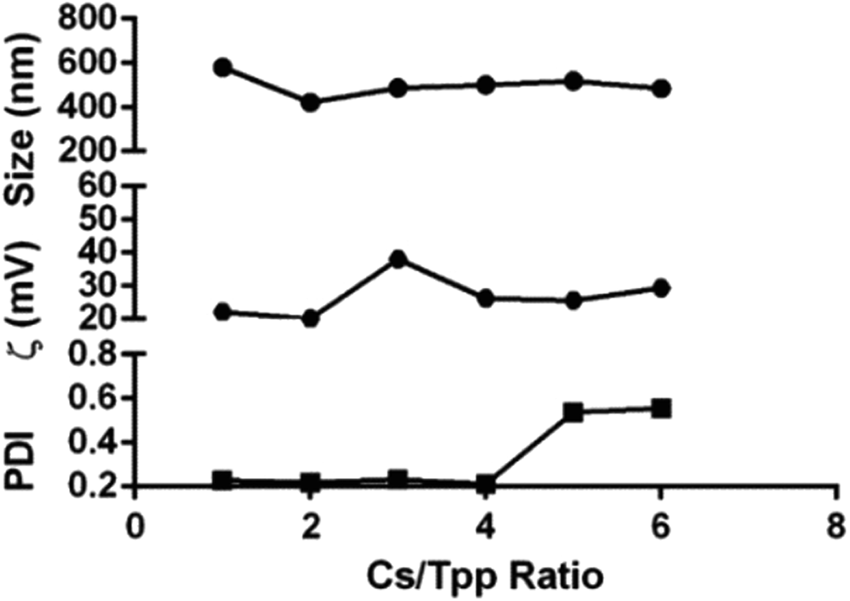
The effect of CS/TPP ratio on the size (intensity-averaged hydrodynamic diameter), zeta-potential, and PDI of levofloxacin-loaded nanoparticles. The values are presented as mean ± SD (n = 3). CS, chitosan; PDI, polydispersity index; SD, standard deviation; TPP, sodium tripolyphosphate.
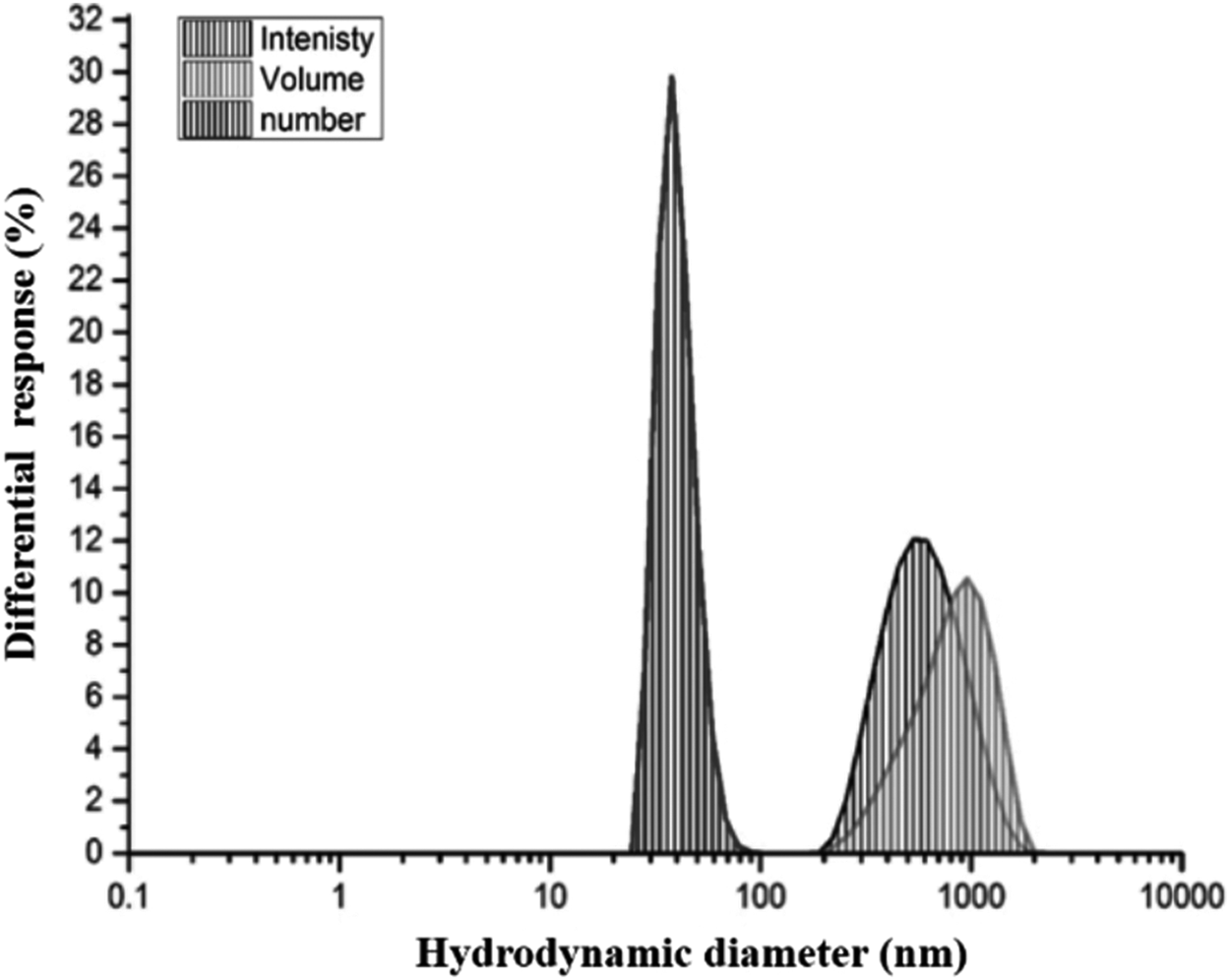
Intensity-, volume-, and number-averaged hydrodynamic diameter histograms of levofloxacin-loaded nanoparticles prepared at CS/TPP ratio of 2:1.
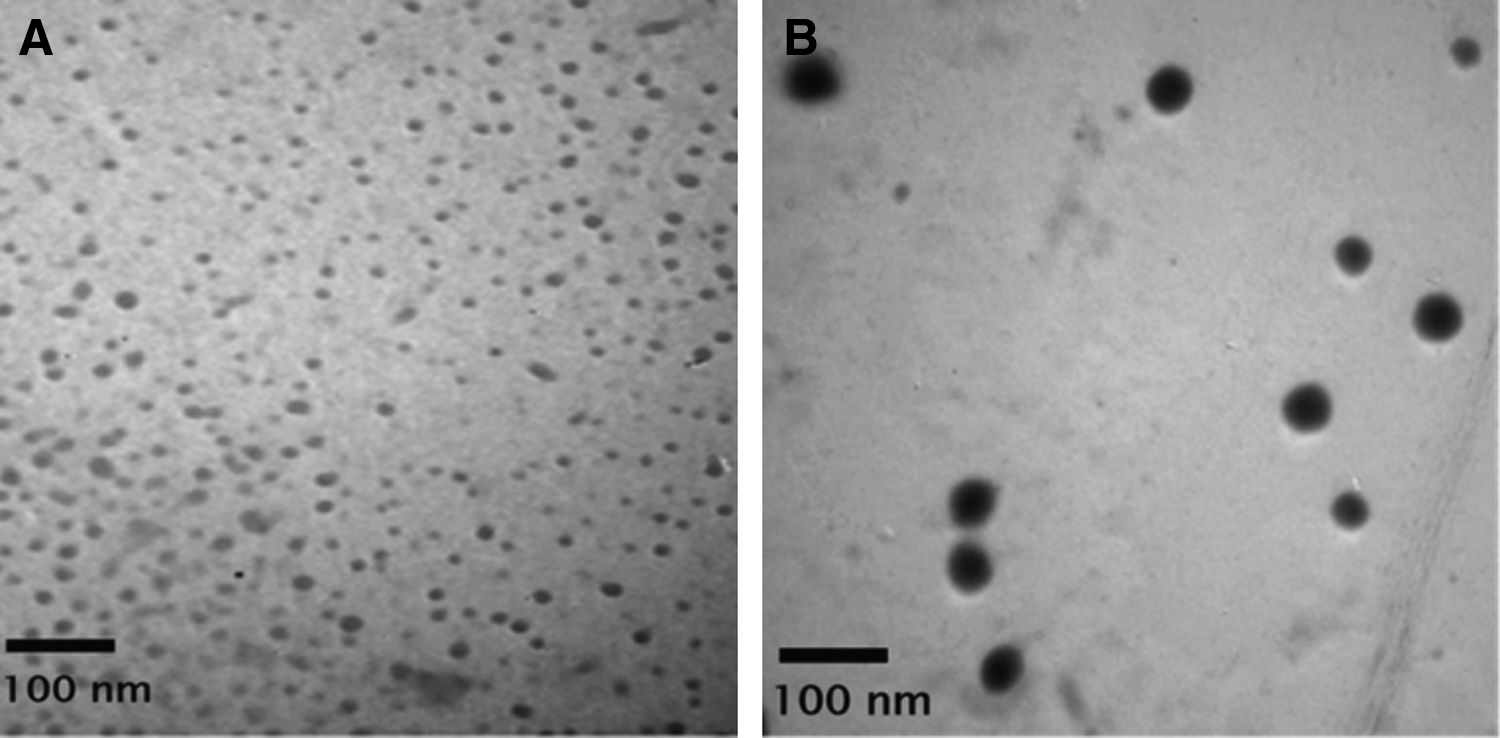
Transmission electron microscopy micrographs of levofloxacin-loaded nanoparticles (CS:TPP weight ratio of 2:1) without staining at magnifications of 100,000 ×
PDI, polydispersity index.
Stability of levofloxacin-loaded nanoparticles
Levofloxacin-loaded nanoparticles, when stored in a liquid form, had a little increase in size and PDI over an incubation period of 7 days. The size and PDI increased from 420 to 430 nm and from 0.2 to 0.4, respectively, over the 7 days (Fig. 4). However, there was no significant change in the zeta potential of the nanoparticles. Freeze-drying process aims to preserving the physicochemical characteristics and increasing the shelf-life stability of the nanoparticles. However, sometimes, addition of cryoprotectants is essential to prevent nanoparticles aggregation during the freezing process.14,15 The size and PDI of levofloxacin-loaded nanoparticle measured after freeze-drying without cryoprotectants were 420.8 nm and 0.2, respectively. However, the presence of different cryoprotectants resulted in small change in the size and high increase in the PDI of the nanoparticles after freeze-drying. The increase in PDI reflects some aggregation during the process of the lyophilization (Fig. 5).9,14

The effect of storage on the size and PDI of levofloxacin-loaded nanoparticle at 4°C for 7 days. Values are presented as mean ± SD (n = 3).
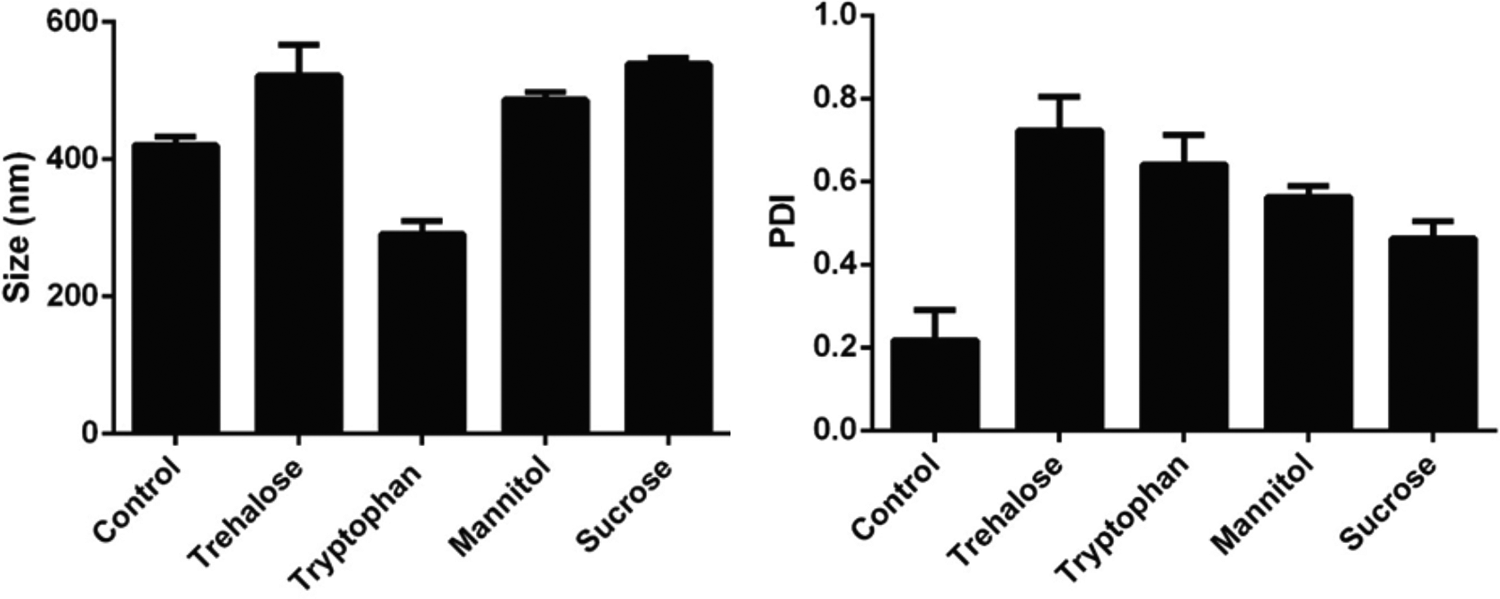
The effect of freeze-drying on the stability (size and PDI) of levofloxacin-loaded nanoparticles in the presence or absence of various cryoprotectants. The values are presented as mean ± SD (n = 3).
Selection of resistant mutants upon exposure to levofloxacin and levofloxacin-loaded nanoparticles
Eighteen mutants were collected as a result of three consecutive steps of exposure of three parental E. coli isolates (Ec ref, Ec14, Ec77) to increasing concentrations of levofloxacin and levofloxacin-loaded nanoparticles (Table 3). In all the in vitro experiments, equivalent concentrations of levofloxacin were utilized in the free drug and the drug-loaded nanoparticle-tested samples. The MICs of the first-step mutants (Ec1 ref, Ec114, Ec177) arising from both levofloxacin and levofloxacin-loaded nanoparticles had increased. The MICs of levofloxacin and levofloxacin-loaded nanoparticles first-step mutants ranged from 0.12 to 0.25 mg/ml and 0.06 to 0.12 mg/ml, respectively. Second-step mutants (Ec2 ref, Ec214, Ec277) exhibited further increase in the MICs for both unloaded and loaded levofloxacin-selected mutants. Two of the second-step levofloxacin mutants exhibited resistance to levofloxacin (MIC ≥8 mg/ml), while all levofloxacin-loaded nanoparticles second-step mutants did not exhibit resistance to levofloxacin (MIC <8 mg/ml). With further increase in the levofloxacin MICs for the third-step mutants, the MICs of levofloxacin third-step mutants (32–64 mg/ml) were higher than the MICs of the levofloxacin-loaded nanoparticles third-step mutants (4–16 mg/ml).
β-lactams (penicillin, cephalosporins); btetracycline; cchloramphenicol; dfluoroquinolone; ecarbapenem; faminoglycosides.
A, ampicillin; C, ceftriaxone; M, meropenem; CP, ciprofloxacin; L, levofloxacin; AK, amikacin; T, tetracycline; H, chloramphenicol; —, no resistance.
LEV, levofloxacin; LM, levofloxacin selected mutants; MDR, multidrug resistance; MIC, minimal inhibitory concentration; NDR, no drug resistance; NL, levofloxacin-loaded nanoparticles; NLM, levofloxacin-loaded nanoparticles selected mutants; SDR, single drug resistance.
Antibacterial potency of levofloxacin-loaded nanoparticle versus free levofloxacin
To assess the antibacterial potency of levofloxacin-loaded nanoparticle, we compared the MICs of levofloxacin-loaded nanoparticle to those of levofloxacin in all the three step mutants. The antibacterial potency of levofloxacin-loaded nanoparticle was greater than that of the unloaded levofloxacin for the three parental strains and all the selected mutants (Table 3). The basal MIC of the three parental strains was 0.008 mg/ml for levofloxacin, while ranged from 0.001 to 0.002 mg/ml for the levofloxacin-loaded nanoparticles. MIC values for the levofloxacin-selected mutants ranged from 0.12 to 64 mg/ml for levofloxacin, while ranged from 0.06 to 16 mg/ml (two- to fourfold decrease) for the levofloxacin-loaded nanoparticles. Similarly, MIC values for levofloxacin-loaded nanoparticles-selected mutants ranged from 0.06 to 16 mg/ml for levofloxacin, whereas they ranged from 0.016 to 4 mg/ml (fourfold decrease) for the levofloxacin-loaded nanoparticles.
Levofloxacin second-step mutants showed low-level resistance to levofloxacin, however, they were susceptible to levofloxacin-loaded nanoparticles. Similarly, third-step levofloxacin-selected mutants exhibited high-level levofloxacin resistance (MIC >32 mg/ml), but only low to moderate (MIC ≥8 ≤ 32 mg/ml) level resistance to levofloxacin-loaded nanoparticles. Likewise, levofloxacin-loaded nanoparticles third-step mutants were resistant to levofloxacin, but all mutants retained susceptibility to the levofloxacin-loaded nanoparticles. The difference in MICs between the free drug and the nanosized levofloxacin reflects the higher potency of the levofloxacin-loaded nanoparticles.
To assess the possibility that CS nanoparticles have some level of antibacterial activity, we tested all parental and mutant strains for their susceptibilities to different concentrations of unloaded CS nanoparticles. The concentration of CS nanoparticles used to encapsulate levofloxacin in this study did not have any antibacterial activity.
Mutation frequency
The frequencies of mutations selected using levofloxacin and levofloxacin-loaded nanoparticles are presented in Table 3. For the three steps of mutation selections, it was realized that the frequencies of mutations were much lower upon treatment with levofloxacin-loaded nanoparticles than levofloxacin. Mutation frequencies ranged from 2 × 10⁻⁹ to 3.8 × 10⁻⁶ for the levofloxacin-loaded nanoparticles, while ranged from 1.6 × 10⁻⁶ to 5.8 × 10⁻⁴ for levofloxacin. Levofloxacin-loaded nanoparticles mutants emerged at the highest frequency at the fist-step of selection and that frequency decreased in the second- and third-step mutants. On the contrary, levofloxacin mutants appeared with similar frequencies in the three steps of selections.
Antimicrobial susceptibility phenotype
To establish the antimicrobial susceptibility phenotype and spectrum and to assess cross-resistance patterns in the parental strains and the selected mutants, the MICs of six antimicrobial drug classes were tested (Supplementary Table S1; Supplementary Data are available online at www.liebertpub.com/mdr). Parental isolates and levofloxacin-loaded nanoparticles first-step mutants were fully susceptible to all the tested drugs (NDR). The first evidence of resistance was SDR (SDR, 1 resistance only to β-lactams) appeared in the levofloxacin first-step mutants. With further selection steps, there was an increase in the number of drugs to which resistance was developed. Acquisition of MDR appeared in the second-, and third-step levofloxacin, and levofloxacin-loaded nanoparticles-selected mutants (Table 3). Although second- and third-step mutants treated with both levofloxacin and levofloxacin-loaded nanoparticles exhibit MDR phenotype, levofloxacin-loaded nanoparticles step mutants demonstrated resistance to lower number of drug classes. Moreover, third-step levofloxacin-selected mutants were resistant to all the tested drug classes, including carbapenem. Interestingly, although the second-step mutants of levofloxacin-loaded nanoparticles were either susceptible (Ec2 ref) or show intermediate susceptibility to the levofloxacin-loaded nanoparticles (Ec214 and Ec277), they were resistant to other tested FQs (ciprofloxacin).
Mutations in DNA gyrase, topoisomerase IV, and pump regulator genes
Amino acid substitutions in FQ target enzymes (DNA gyrase and topoisomerase IV) and regulators of AcrAB pump, in original isolates and their mutants, are presented in Table 4. Levofloxacin first-, second-, and third-step mutants had a single amino acid change in GyrA at the position 83 (Ser83Leu), and this mutation was associated with an increase in the levofloxacin MIC from 0.008 to 0.25 mg/ml. Second-step levofloxacin mutants acquired further increase in levofloxacin MIC, although they did not contain any additional target or nontarget mutations. Two of the levofloxacin selected third mutants (Ec314 and Ec377) acquired additional novel mutation in ParC at the position 131 (Leu131Gln), with a further increase in the levofloxacin MIC (four- to eightfold).
At each selection step, two representative mutants were randomly picked and subjected to PCR and sequencing. In all cases, the same mutation/s (or no mutation) was found in both mutants taken from each strain at each step of selection.
PCR, polymerase chain reaction.
On the contrary, levofloxacin-loaded nanoparticles first-step mutants did not have any mutations either in gyrA or parC. Nevertheless, two of the levofloxacin-loaded nanoparticles second- (Ec214 and Ec277) and third-step mutants (Ec314 and Ec377) harbored a single mutation in GyrA at the position 83 (Ser83Leu) with no mutations in parC. Interestingly, levofloxacin-loaded nanoparticles all step mutants selected from “Ec ref” showed progressive increase in MIC, but they did not harbor any mutations in the tested genes.
The potential contribution of mutations in the AcrAB pump's regulators (soxS, soxR, and acrR genes) to FQ resistance in the selected mutants was investigated. Mutations in both soxR and acrR were detected only in the levofloxacin third-step mutants. Each levofloxacin third-step mutant acquired a single mutation in acrR (Thr213lle in Ec3ref and Ec314, and Ser56Leu in Ec37, but only Ec377 contained an additional mutation in soxR (Arg127Pro) that might lead to the high-level levofloxacin resistance exhibited by this isolate.
Discussion
Antimicrobial resistance has become a serious challenging problem globally. Among the strategies to combat antimicrobial resistance is to load antimicrobials into nanoscale materials of various structures and compositions. Nanoparticles were described to have a significant role in increasing the antimicrobial potency and decreasing the bacterial resistance. 19 Previous studies reported that nanoparticles have the ability to accumulate inside bacterial cells and, thus, increasing the intracellular bioavailability of these nanoparticles.20,21 Moreover, examination by confocal laser scanning microscopy established the presence of CS polymers inside E. coli that were exposed to CS under different conditions. 22 To the best of our knowledge, this is the first description of multistep selection for antimicrobial-loaded nanoparticles resistance in pathogenic microorganisms. In addition, this study proved that nanoparticles could improve the antibacterial activity of levofloxacin, and more importantly, decrease the emergence of associated FQ resistance, probably through the increasing bioavailability of the antimicrobial inside the bacterial cell and subsequently reducing the development of resistant subpopulations (Fig. 6).

The role of nanoparticles in reducing the emergence of resistance in bacterial strains via reducing the genetic mutations, inhibiting the overexpression of efflux pumps, and thus resulting in higher intracellular bioavailability of the loaded drug, levofloxacin.
In the current study, nanosized particles of narrow size distribution was developed and could be stored in a dry powdered form that is suitable for industrial scale-up and clinical applications. The weight ratio of CS/TPP had a significant role in nanoparticles formation and characteristics. 13 It was observed that the PDI of nanoparticles increased upon increasing the CS/TPP ratio, which might be due to aggregates formation. The positive net charge of levofloxacin-loaded nanoparticles indicates the presence of excess CS functional amine groups at the surface of the nanoparticles. The positive zeta potential is crucial in imparting physical stability to the nanoparticles and in increasing the electrostatic interactions between nanoparticles and cell wall of the bacteria. 23
The stability study of levofloxacin-loaded nanoparticles confirmed that the nanoparticles had a sufficient stability over a long incubation period. These results established the role of TPP as a crosslinker and its ability to form stable nanostructures with CS. 24 The poor stability of antimicrobials in aqueous solution is considered as a serious problem. 25 Hence, storage in a powdered form allows for higher stability, longer shelf-life, and prevents aggregation and degradation of the antimicrobial nanoparticles. 26 Upon lyophilization, the levofloxacin-loaded nanoparticles maintained their sizes and PDI. Unexpectedly, the presence of different cryoprotectants resulted in increases in the size and PDI of the nanoparticles. However, it is advantageous that the nanomaterials could be stored in a dried powdered form, without the need for cryoprotectants. 15 Preparation of the antimicrobial nanoparticles without the need for cryoprotectants simplifies the manufacturing procedures and might be useful in patients with special circumstances (e.g., most of cryoprotectants are sugar, is not recommended in diabetic patients).
This is the first study to investigate the mechanisms of bacterial resistance that emerges upon exposure to antimicrobial-loaded nanoparticles in comparison to the unloaded antimicrobial agents. Accordingly, E. coli-resistant mutants were selected by stepwise exposure of fully susceptible E. coli isolates to escalating concentrations of levofloxacin and levofloxacin-loaded nanoparticles. The sequences of the QRDR of gyrA and parC and the transcriptional regulators (soxR, soxS, and acrR) were analyzed.
Levofloxacin-loaded nanoparticles selected-mutants required three consecutive steps of selections to develop resistance against levofloxacin, whereas levofloxacin-selected mutants developed resistance to levofloxacin after only two steps of selections. Furthermore, the MICs for levofloxacin-loaded nanoparticles selected mutants were lower than those of the unloaded levofloxacin-selected mutants, either when tested with levofloxacin or levofloxacin-loaded nanoparticles. The highest levofloxacin MIC value for levofloxacin-loaded nanoparticles-selected mutants was 16 mg/ml (moderate-level resistance), while for the levofloxacin-selected mutants, MIC reached up to 64 mg/ml (high-level resistance). Similarly, the highest levofloxacin-loaded nanoparticle MIC value for the levofloxacin-loaded nanoparticles-selected mutants was 4 mg/ml (below the resistance breakpoint), but reached up to 16 mg/ml (moderate-level resistance) for the levofloxacin-selected mutants. The lower MICs of nanosized levofloxacin-selected mutants are anticipated to lower the possibility of clonal expansion of resistant mutants selected with levofloxacin-loaded nanoparticles in clinical settings. 27
The second aim of this study was to assess the antibacterial potency of levofloxacin-loaded nanoparticle in comparison to that of the unloaded levofloxacin. The results of this study demonstrated that for all the 18 selected-mutants, the MICs of levofloxacin-loaded nanoparticles were always lower than the corresponding MICs of levofloxacin. The improved performance of the levofloxacin-loaded nanoparticles might be explained by their smaller size and positive charge that resulted in higher intracellular bioavailability, compared to the free drug, and thus inhibiting the selection of resistant mutant subpopulations. 21 CS was previously reported to have some antibacterial activity that might intensify the activity of the loaded antibacterial drugs, 19 however, the concentration of CS used in this study did not have any antibacterial activity.
The frequencies of spontaneous step mutations with levofloxacin-loaded nanoparticles were considerably lower, compared to those with levofloxacin. Furthermore, levofloxacin-loaded nanoparticles mutation frequencies were much lower than those reported previously with either pradofloxacin (a potent third-generation FQs used in veterinary medicine) or ciprofloxacin using the same reference isolate and inoculum density. 2 This lower frequency might be also explained by the small size and positive charge of nanoparticles that caused higher intracellular bioavailability of the loaded drug and consequently inhibited the development of resistant mutant. 21
Previous studies demonstrated that resistant mutants are inclined toward MDR phenotype once they develop resistance to FQ.28,29 Interestingly, our findings showed that levofloxacin-loaded nanoparticles first-step mutants remained with NDR, unlike levofloxacin first-step mutants that expressed SDR phenotype. First-step mutants selected with other FQs were found to express SDR phenotype. 2 All second- and third-step mutants showed cross-resistance to other drug classes and expressed MDR phenotype; levofloxacin mutants were resistant to more drug classes. These findings support our speculation that nanoparticles play a role in decreasing emergence of antimicrobial cross-resistance.
Although we have not examined all possible resistance mechanisms in this study, our current data revealed some characteristic features of mechanisms of resistance developing in the clinical E. coli mutants selected with levofloxacin and levofloxacin-loaded nanoparticles. Levofloxacin first-step mutants acquired a single mutation in gyrA (Ser83Leu), while gyrA mutations appeared in the second-step of mutation selection with the levofloxacin-loaded nanoparticles, and although the MICs were increased, they were still below the levofloxacin resistance breakpoint (8 mg/ml). Previous studies demonstrated that a single mutation in gyrA decreases the affinity to FQs, but is not enough to cause resistance. 30 Interestingly, second-step levofloxacin mutants and third-step levofloxacin-loaded nanoparticles mutants exhibited resistance to levofloxacin, but they did not acquire additional mutations in gyrA or parC. Previous studies on FQs stepwise mutant selection reported an increase in the MICs of step mutants with the absence of additional mutations, suggesting the presence of other resistance mechanisms. 2 The acquisition of Leu131Gln substitution in parC (in the third-step levofloxacin mutants) boosted the MIC of levofloxacin to 32–64 mg/ml. The MICs of the same mutants, when tested with the levofloxacin-loaded nanoparticles, were only 8–16 mg/ml, denoting a greater potency of this nanoparticle formulation over the unloaded free FQs.
AcrAB efflux pump is subjected to different levels of regulation by local or global regulator genes (i.e., soxR, soxS and acrR). Mutations in these regulators are associated with AcrAB pump overexpression and contributed to FQR. 31 In the current study, mutations in regulators appeared as the level of levofloxacin resistance is shifted toward moderate and high levels. Two acrR mutations (Thr213lle and Ser56Leu) and a single soxR mutation (Arg127Pro) were detected in the levofloxacin-associated mutants expressing moderate-to-high-level of levofloxacin resistance. This finding is in agreement with earlier studies, which stated that the high-level of FQR usually reflects a second-step mutation. 32 Interestingly, levofloxacin-loaded nanoparticles-associated mutants did not acquire any mutations in the regulators, which reflect the superiority of nanoparticles in the suppression of emergence of mutations in the resistance genes.
Conclusions
Nanosized particles could be prepared and efficiently loaded with the antibacterial drug, levofloxacin. The particles were stable in a form of solution, in addition to maintaining their physicochemical characteristics upon freeze-drying without the need for cryoprotectants, and thus can be stored in a powdered lyophilized form suitable for clinical applications. Our findings demonstrated that the levofloxacin-loaded nanoparticles had higher potency, compared with the free levofloxacin. In addition, this study reflects a significant role of nanoparticles in decreasing the emergence of resistant mutants, possibly, by increasing both the bioavailability and the efficacy of levofloxacin.
Footnotes
Acknowledgment
This study was supported financially by the Science and Technology Development Fund (STDF), Egypt, Grant No. 25913.
Disclosure Statement
No competing financial interests exist.
References
Supplementary Material
Please find the following supplemental material available below.
For Open Access articles published under a Creative Commons License, all supplemental material carries the same license as the article it is associated with.
For non-Open Access articles published, all supplemental material carries a non-exclusive license, and permission requests for re-use of supplemental material or any part of supplemental material shall be sent directly to the copyright owner as specified in the copyright notice associated with the article.
