




Abstract
This study investigated the occurrence and resistance rates of Staphylococcus aureus strains isolated from raw milk in the dairy farms over two seasons (spring and autumn) and across four regions that included 11 provinces in China. In total, 750 raw milk samples from the 405 dairy farms were collected. Fifteen antimicrobial agents were tested for antimicrobial resistance via disk diffusion tests, and PCR tests were performed to identify drug resistance genes of S. aureus isolates. Out of 750 samples, 276 (36.8%) were positive for S. aureus, with 150 (41.1%) being positive in spring and 126 (32.7%) being positive in autumn. The occurrence rate of S. aureus in northeastern China (45%) was higher than that in western China (33%) and southern China (31.9%), respectively, and the rate significantly (p < 0.05) differed from those of western China and southern China. Of 276 isolates, 261 (94.6%) strains were resistant to more than 1 antimicrobial drug, and 193 (69.9%) strains were multidrug resistant. The blaZ (46.3%), dfrG (35.5%), and tetM (27.2%) genes were detected at a high frequency in the S. aureus strains. Our data revealed a variation (p < 0.05) in the resistance patterns in the different regions and across the two seasons. The occurrence and drug resistance rates of S. aureus isolated from raw milk obtained from dairy farms may still cause severe problems in China.
Introduction
Mastitis in dairy herds is a prevalent global disease that causes economic burdens due to reduced milk production, increased treatment costs, and potential concerns relating to public health.1–4 A recent study has also indicated that for bovine mastitis cases, a few species of bacteria, such as Staphylococcus aureus, Streptococcus agalactiae, Streptococcus dysgalactiae, Streptococcus uberis, coagulase-negative staphylococci, and Escherichia coli, predominate. 5 Of several etiological agents, S. aureus is the most common mastitis-causing pathogen in dairy cows.6,7 Due to its ubiquity, S. aureus exists in food-processing environments and causes foodborne poisoning and infections in both humans and animals.8,9 Ultimately, the risk of milk contamination can increase after dairy products reach the consumer market. 10
Antimicrobial treatment is one recognized method used to prevent and treat dairy cow mastitis.11,12 However, the use of antimicrobials for infection treatment may lead to the potential development of antimicrobial resistance. 13 A previous study reported that 30% of S. aureus strains isolated from raw mastitic milk samples were resistant to one or more classes of antimicrobial agents. 14 In a similar manner, cows in China also suffer from mastitis caused by resistant S. aureus. For example, among the 28.0% of S. aureus strains isolated from bovine mastitic milk in Zhejiang province, 90.7% of 75 representative S. aureus isolates were resistant to at least one antimicrobial class. 15
The staphylococci that originate in animals usually harbor a wide variety of antimicrobial resistance genes. 16 In recent years, many reports have confirmed that S. aureus isolated from the milk of cows diagnosed with mastitis carries multiple drug resistance genes. A report from the United States indicated that 27.7% of S. aureus isolates carried multiple resistance genes (mainly blaZ combined with tet). 12 In Iran, blaZ (46%) and tetM (34.8%) resistance genes were found at a high frequency in S. aureus isolated from raw milk (from cows and sheep) and dairy products. 17 In northwest China, genotyping revealed that the most prevalent resistance genes carried by S. aureus isolated from bovine mastitic samples were rpoB (100%) and blaZ (95.45%). 18 Therefore, monitoring of the antimicrobial characterization of mastitis-causing S. aureus isolates is required for the antibiotic treatment of animals on dairy farms. 19
To the best of our knowledge, studies of the occurrence and characterization of S. aureus cultured from raw milk in the dairy farms have mainly focused on individual areas of China; however, a little information currently exists about the regional and seasonal changes of S. aureus isolated from raw milk samples in the dairy farms.19,20 Thus, the objective of this study was to investigate the occurrence, drug-resistant phenotypes, and genotypes of S. aureus isolated from 750 raw milk samples in the 405 dairy farms collected from four regions over two seasons in China. These results may provide clues that can be used to select the best drugs and treatments for dairy farm cows with mastitis.
Materials and Methods
Collection of samples
In total, 750 raw milk samples (with a somatic cell count >200,000 cells/mL in the milk) were collected from 405 major dairy farms in 11 provinces of China, including northeastern China (n = 200, Heilongjiang and the Inner Mongolia provinces), northern China (n = 240, Hebei, Beijing, Tianjin, and Shandong), western China (n = 100, Xinjiang), and southern China (n = 210, Shanghai, Jiangxi, Anhui, and Sichuan provinces). Dairy farms were selected if the farm owned over 200 dairy cows and also based on where the cows were housed, grouped, and managed according to their ages and lactation cycle and if the cows were fed with total mixed rations. In addition, sand or organic bedding had to be used for the herds. The samples were collected from the same dairy farms over two seasons: spring (n = 365, March–April 2016) and autumn (n = 385, September–October 2016). One milk sample consisted of a mix of milk from 8 to 10 individual dairy cows with a somatic cell count >200,000 cells/mL in the milk from each farm. These samples were collected and then used for the investigation.
A 50-mL milk sample was taken and poured into a sterile tube after the teats of the cow had been disinfected with 0.5% iodine solution (Merck, Germany) and wiped dry with a clean paper towel. The first four to five streams of the foremilk sample were removed before the actual sample was collected. All milk samples were stored at 4°C and transported to the laboratory within 24 hr for the experiment. The experimental procedures in the present study were approved by the Animal Care Advisory Committee at Qingdao Agricultural University.
Isolation and identification of S. aureus
The procedure for the S. aureus isolation and identification was carried out based on a previous method. 17 In brief, 10 mL of each raw milk sample was added to a 90-mL trypticase soy broth (Qingdao Haibo Biotechnology Co. Ltd., Qingdao, China). The solution was incubated at 37°C in an incubator for 24 hr. After preenrichment, the culture was inoculated on Baird-Parker agar supplemented with 5% egg yolk and tellurite (Baird-Parker agar; Beijing Land Bridge Technology Ltd., Beijing, China) at 37°C for 24–48 hr. The colonies with a typical black appearance surrounded by a clear zone were considered to be S. aureus. The nuc gene-based PCR method was used to confirm the presence of S. aureus. 9 The confirmed S. aureus strains were preserved at −80°C for further study.
Antimicrobial susceptibility test
The S. aureus isolates were subjected to antimicrobial susceptibility testing using the Kirby-Bauer disk diffusion method on Mueller–Hinton Agar (Qingdao Haibo Biotechnology Co. Ltd.) according to the guidelines of the Clinical Laboratory Standards Institute. 21 Fifteen total commercial antibiotic disks (Tianhe Microbial Reagent Co. Ltd., Hangzhou, China) were used in the experiment and included disks with penicillin G (10 U), cefoxitin (30 μg), oxacillin (1 μg), erythromycin (15 μg), ciprofloxacin (5 μg), doxycycline (30 μg), tetracycline (30 μg), trimethoprim (5 μg), sulfamethoxazole (300 μg), gentamicin (10 μg), tobramycin (10 μg), kanamycin (30 μg), amikacin (30 μg), clindamycin (2 μg), and chloramphenicol (30 μg). S. aureus ATCC 25923 was used as the positive control.
Detection of antimicrobial resistance genes
The DNA of each S. aureus isolate was obtained using the boiling method. First, the live or dead S. aureus isolate cells were collected by centrifugation at 10,000 g for 5 min. Then, the supernatant was discarded, and 200 μL of 1 × phosphate-buffered saline-Tween 20 buffer was added to the tube, vortexed, and mixed. The tube was boiled in water for 10 min and then quickly cooled in an ice bath for 5 min. Finally, the supernatant was retained as a DNA template after centrifugation at 10,000g for 5 min. The DNA templates were stored at −80°C before testing.
The antimicrobial resistance genes of all the isolates were amplified by PCR (BIO-RAD MJ Mini PCR System, CA). Table 1 shows all the PCR primer information. The primers were synthesized by Sangon Biotech Co., Ltd. (Shanghai, China) and included penicillin G (blaZ), cefoxitin (cfxA), oxacillin (mecA), erythromycin (ermA, ermB, ermC, msrA, msrB, and mphC), tetracycline (tetL, tetM, and tetK), trimethoprim (dfrG, dfrK, and dfrS1), aminoglycosides (aac(6′)-aph(2″), ant(6)-Ia, and ant(4′)-Ia), lincosamides (lnuA and lnuB), chloramphenicol (cat::pC194, cat::pC221, cat::pC223, and fexA) resistance genes, and the multidrug resistance gene (cfr). The PCR mixture (25 μL) consisted of 0.3 μL of Taq DNA polymerase, 0.4 μL of each primer, 1 μL of the DNA template, 2.2 μL of 2.5 mmol/L dNTP, 2.5 μL of 10 × the PCR buffer, and 18.2 μL of ddH2O. All PCR amplified products were analyzed by 0.8% (w/v) agarose gel electrophoresis and stained with 4S Red Plus nucleic acid dye (BBI Life Science) for 50 min at 80 V and 130 mA, and then the electrophoretic results were analyzed.
Primers Used for Antimicrobial Resistance Genes Detection in This Study
Statistical analysis
The data were analyzed using the Chi-square tests available in the Statistical Package for the Social Sciences (SPSS), version 22.0 (SPSS, Inc., Chicago, IL). The regional and seasonal differences among the groups were compared in terms of their occurrence rates, drug resistance rates, and the resistance genes of the S. aureus isolates. For all the analyses, a p-value <0.05 was considered statistically significant.
Results
Isolation of S. aureus from raw milk samples
In the 750 raw milk samples from the 405 dairy farms, 276 (36.8%) strains of S. aureus were isolated and confirmed (Table 2). The occurrence rate of S. aureus was significantly higher in raw milk samples from the farms in spring (41.1%) than it was in autumn (32.7%). Ninety S. aureus isolates were isolated from the dairy farms in northeastern China, which had the highest isolation rate (45%) among the four regions, followed by 35.8% in northern China and 33% in western China. The lowest isolation rate (31.9%) was detected in southern China. Significant differences in the S. aureus isolation rates were found between northeastern and western China (p < 0.05), as well as between northeastern and southern China (p < 0.05).
Occurrence of Staphylococcus aureus Isolated from Raw Milk Samples in the Dairy Farms Among the Four Regions Between Spring and Autumn in China
Antimicrobial resistance phenotypes of the S. aureus isolates
The results of the antimicrobial susceptibility tests demonstrated that 261 (94.6%) S. aureus strains from the dairy farms in four regions of China had a severe and variable degree of resistance to 15 tested antimicrobials, including 3 β-lactams, 1 macrolide, 1 quinolone, 2 tetracyclines, 2 sulfonamides, 4 aminoglycosides, 1 lincosamide, and 1 amphenicol (Table 3). The resistance rate of S. aureus to five kinds of drugs exceeded 50%, with a resistance rate of 81.5% for penicillin G, 73.6% for sulfamethoxazole, 70.3% for trimethoprim, 63% for oxacillin, and 50.4% for clindamycin. The other drug resistance rates for S. aureus were between 14.1% and 37.0%. The most sensitive drug for S. aureus was ciprofloxacin, which had the lowest resistance rate of 14.1%. The average S. aureus resistance rates to all 15 antimicrobials in northeastern China (40.8%) and northern China (43.5%) were slightly higher than those in western China (35.1%) and southern China (34.8%), while this rate was slightly higher in spring (43.3%) than it was in autumn (35%). However, no differences in the single-drug resistance rates for S. aureus were found among the four regions (p > 0.05) or between the two seasons (p > 0.05). Regarding the number of drugs with a resistance rate >50%, the four regions were similar. In particular, penicillin G, sulfamethoxazole, and trimethoprim showed resistance in all the different areas. A similar pattern was also found between the two seasons. However, the drug resistance rates of S. aureus to penicillin G, oxacillin, sulfamethoxazole, trimethoprim, and erythromycin were significantly higher in spring than in autumn (p < 0.05).
The Distributions of Antimicrobials Resistances in Phenotypes of Staphylococcus aureus Isolated from Raw Milk Samples (n = 276) in the Dairy Farms Among the Four Regions Between Spring and Autumn in China
Among these isolates, 193 (69.9%) S. aureus strains showed multidrug resistance (resistant to at least one agent in at least three antimicrobial classes). One (0.4%) strain was simultaneously resistant to eight classes out of the 14 antimicrobials. The regional and seasonal differences in the multidrug resistance patterns of S. aureus are shown in Figs. 1 and 2 and Table 4. The isolates' multidrug resistance patterns in the four regions were similar, with the highest number of strains being resistant to three to four drugs and the lowest quantity of strains being resistant to seven to eight drugs, with no significant differences being found among the four regions (p > 0.05). However, there was a significant difference in the multidrug resistance rate over two seasons, and the multidrug resistance rates with the three-to-four and seven-to-eight resistance patterns in spring were significantly higher than those same patterns in autumn (p < 0.05).
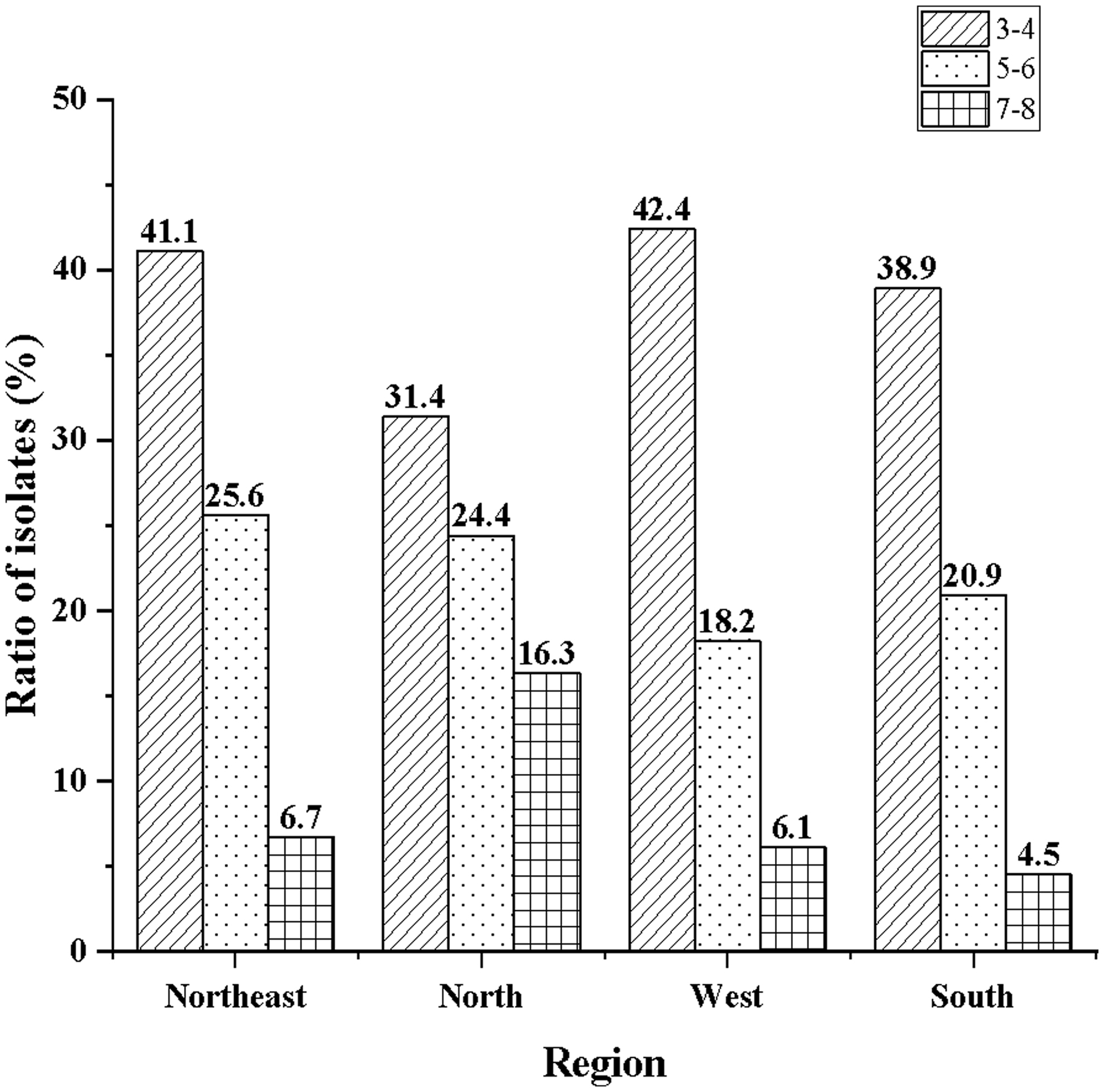
The distributions of multiresistant to antimicrobials of Staphylococcus aureus isolated from raw milk samples in the dairy farms among the four regions of China. “3–4” means that the isolates resist to three to four classes of drugs; “5–6” means that the isolates resist to five to six classes of drugs; “7–8” means that the isolates resist to seven to eight classes of drugs.
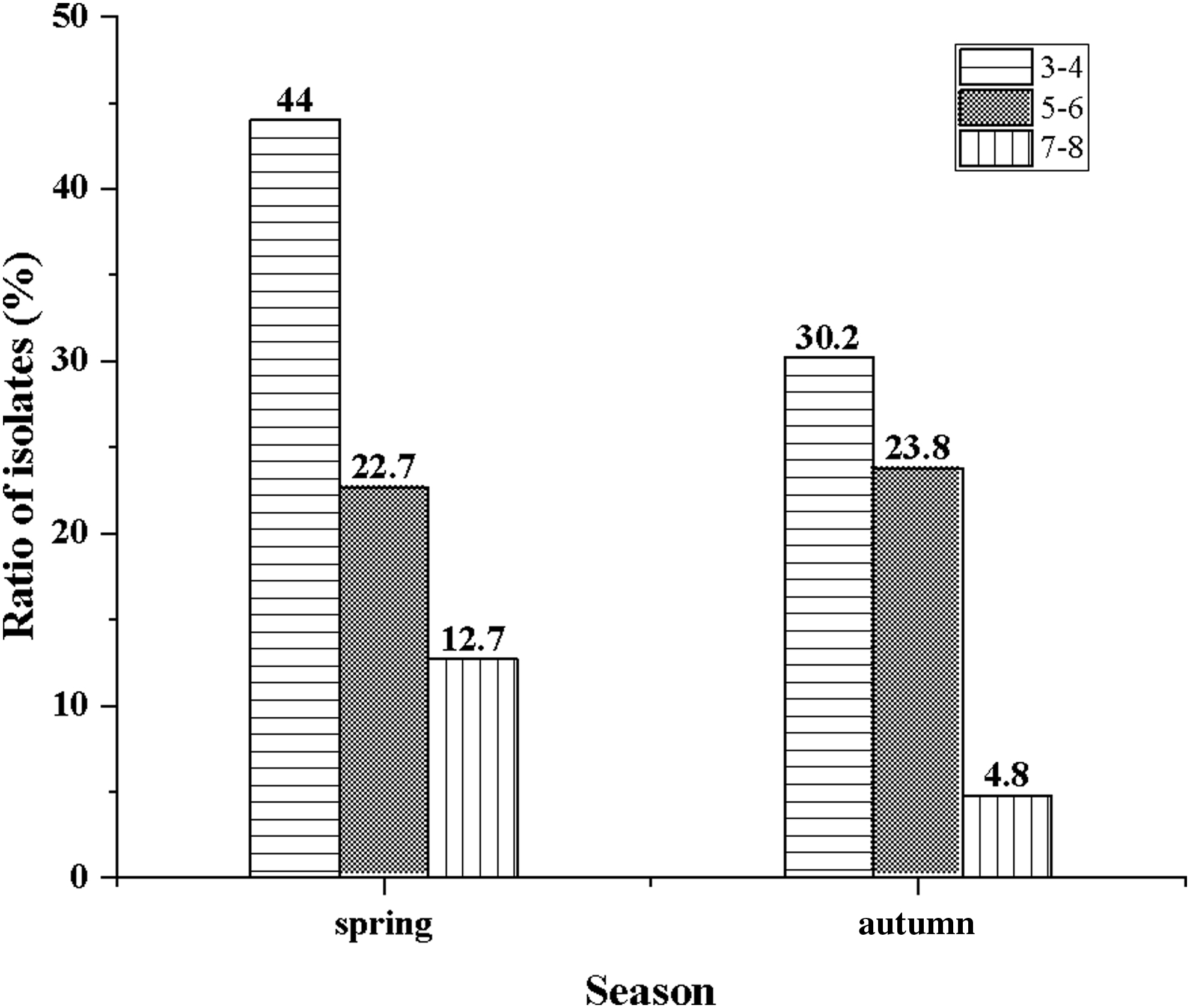
The distributions of multiresistant to antimicrobials of Staphylococcus aureus isolated from raw milk samples in the dairy farms between spring and autumn. “3–4” means that the isolates resist to three to four classes of drugs; “5–6” means that the isolates resist to five to six classes of drugs; “7–8” means that the isolates resist to seven to eight classes of drugs.
The Main Drug Resistance Patterns of 276 Staphylococcus aureus Strains Isolated from Raw Milk Samples in the Dairy Farms Among the Four Regions Between Spring and Autumn in China
The abbreviation of eight classes of drugs are as follows: βLs, β-lactams; MCs, macrolides; QNs, quinolones; TCs, tetracyclines; SULs, sulfonamides; AGs, aminoglycosides; LINs, lincosamides; AMPs, amphenicols.“—”means none.
Antimicrobial resistance genotypes of the S. aureus isolates
The results for the antimicrobial resistance genes are presented in Fig. 3. In this study, 25 resistance genes were detected and were carried by 175 (63.4%) S. aureus isolates. The penicillin G-resistant gene (blaZ) was the gene with the highest detection rate at 46.3%, followed by the dfrG trimethoprim-resistance gene (35.5%) and the tetM tetracycline-resistance gene (27.2%). The remaining 22 resistance genes had detection rates that ranged from 3.3% to 23.6%. In addition, the cfr multidrug resistance gene was detected in 39 (14.1%) strains.
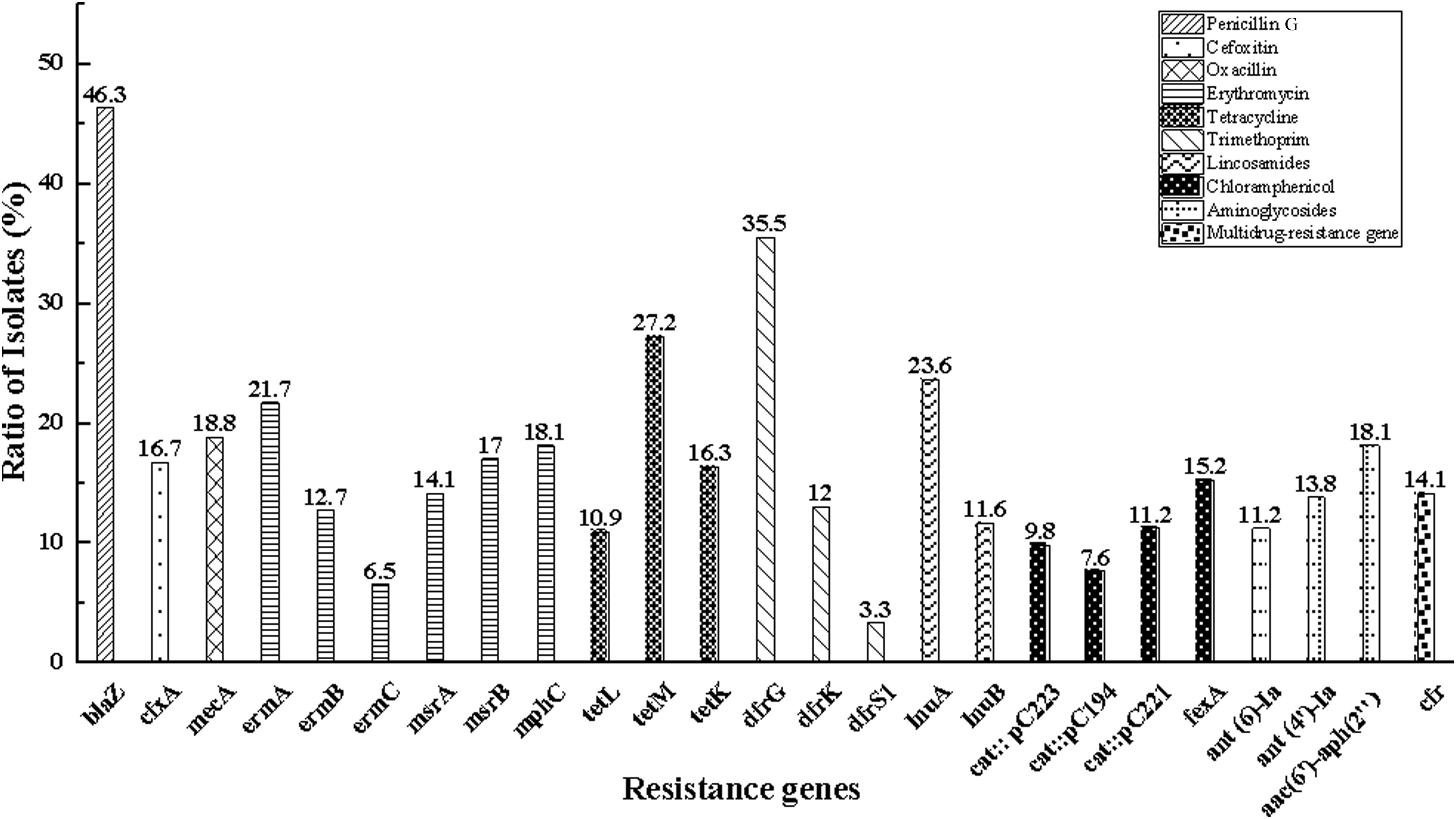
The distributions of antibiotic resistance genes of Staphylococcus aureus isolated from raw milk samples.
In our study, the majority of the S. aureus isolates possessed the blaZ gene in northeastern, northern, and southern China, where the detection rates were 47.8%, 45.3%, and 47.8%, respectively. The most prevalent gene detected in western China was dfrG (45.5%) (Table 5). The average detection rate for all 25 antibiotic resistance genes carried by the S. aureus isolates was slightly higher in northern China (18.1%) than it was in southern (16.1%), northeastern (15.9%), and western China (15%), and no significant differences were found among the four regions (p > 0.05). For the two seasons, the incidence rate of the blaZ resistance gene in S. aureus isolates was higher in spring (52.7%) compared to autumn (38.9%). Similar to the resistant phenotype of S. aureus, the detection rate for all the resistant genes was higher in spring than in autumn, except for the aminoglycoside-resistant dominant genes of ant (6)-Ia and ant (4′)-Ia. The average detection rate for the resistance genes was slightly higher in spring (18.8%) than in autumn (13.8%), and there was no significant difference between the two seasons (p > 0.05).
The Distributions of Antibiotic Resistance Genes of Staphylococcus aureus Isolated from Raw Milk Samples in the Dairy Farms Among the Four Regions Between Spring and Autumn in China
In our analysis, the average correlation coefficient between the resistant phenotype and genes of S. aureus was 64.8% (Table 6). The highest correlation coefficient was 84.5% for amphenicols, followed by 74.5% for macrolides, 74.0% for tetracyclines, 57.9% for β-lactams, 57.7% for sulfonamides, 52.8% for aminoglycosides, and 52.5% for lincosamides. The correlation between the resistant phenotypes and genes of S. aureus in the different regions are shown in Table 7. The correlation coefficient of the resistant phenotype and genes of S. aureus was the highest in northeastern China (66.5%), whereas it was the lowest in southern China (57.5%). In addition, the average correlation coefficient of the resistant phenotypes and genes of S. aureus were similar between the two seasons (Table 6).
The Correlation Between Resistant Phenotypes and Genes of Staphylococcus aureus Isolated from Raw Milk Samples in the Dairy Farms Between Spring and Autumn
The Correlation Between Resistant Phenotypes and Genes of Staphylococcus aureus Isolated from Raw Milk Samples in the Dairy Farms Among the Four Regions of China
Discussion
S. aureus is one of the main global pathogens involved in bovine mastitis in the dairy farms; thus, the presence of S. aureus in raw milk has received much attention.31,32 To the best of our knowledge, this study represents the first comprehensive report on the occurrence rates, drug-resistant phenotypes, and genotypes of S. aureus isolates in 750 raw milk samples obtained from 405 dairy farms in four regions across two seasons in China. The occurrence rates and characteristics of S. aureus isolated from raw milk in the dairy farms will be helpful to develop prevention and control procedures for pathogens specific to each region and season. In the present study, 36.8% (276/750) of the raw milk samples were positive for S. aureus of the 750 dairy samples collected from 405 dairy farms in China in 2016. This result was somewhat lower than those found in previous reports, which reported the occurrence rate of S. aureus in raw milk to be 83% in Italy, 33 56% in Turkey, 34 and 47.3% in Norway. 35 However, our data are consistent with previous studies conducted in China, where the occurrence rate of S. aureus was 10.2–46.2% in raw mastitic milk samples.36–38 The isolation rate may be affected by the number of animals observed, stages of lactation, parity number, management practices, or other factors that are difficult to examine thoroughly. 39
Our records showed that the S. aureus isolation rate of the dairy farms was higher in spring than in autumn. As spring is a rainy season and autumn is a dry season in China, 40 elevated air temperatures and higher humidity in spring enhance bacterial growth, which may explain these results. 41 Further studies need to be carried out to determine the exact cause of these differences. In our study, the isolation rate for S. aureus was higher in northeastern China than it was in northern, western, and southern China. Another report described similar observations regarding the S. aureus detection rate, which was found to be 50.1% in 894 bulk tank milk samples in northeastern China. 20 Although the climate in northeastern China is mostly cool and dry, more S. aureus isolates were found in that region.
Several previous studies have indicated that the rate of dairy cow infections with pathogens was related to geographic variations as well as the management of the herds under investigation (e.g., periparturient dairy cows and calving management, bedding maintenance, and cleaning rates for the cows, etc.).38,42 In addition, healthy cows and infected cows are often milked together using the same milking machinery on several dairy-farming communities in northeastern China, which may explain our findings. Thus, farm management practices could be introduced to protect dairy cows against contagious mastitis pathogens, which would complement necessary antimicrobial-resistance procedures to determine the most appropriate veterinary drugs for mastitis treatment.
In the present study, 94.6% of S. aureus isolates from raw milk obtained from dairy farms showed resistance to at least one antibiotic, and 69.9% of the strains showed multidrug resistance (resistant to at least one agent in at least three antimicrobial classes). Our results for drug resistance were much higher than those described in other reports. For example, a previous study reported that 9.09% of the S. aureus isolates in milk were defined as multidrug resistant in China. 18 Another study found that 15.4% of the S. aureus isolates in raw milk in Iran were multidrug resistant. 17 The high occurrence of multidrug resistance in S. aureus from raw milk is a potential risk to human health.
Most S. aureus isolates were found to have high levels of resistance to penicillin G, sulfamethoxazole, trimethoprim, oxacillin, and clindamycin; however, there was a much lower level of resistance to ciprofloxacin. In particular, the resistance rate of penicillin G was similar between northwest China (84.1%) 18 and northern China (85.2%). 19 Prior studies in other countries have also shown that there is a high occurrence of penicillin G-resistant S. aureus isolates in raw milk.17,22 The high resistance rate of penicillin G-resistant S. aureus isolates may likely be related to the extensive use of antibiotics to treat infections in the dairy farms. Recognizing the resistance characteristics of S. aureus is essential for monitoring the spread of resistant strains and controlling the potential harm linked to pathogens. 43 The multidrug resistance patterns of S. aureus in the four regions of China were basically similar, with the highest number of strains being resistant to three to four classes of drugs, and the multidrug resistance rate was higher in spring than in autumn. This is the first article to investigate multidrug resistance by S. aureus across different seasons and regions in China. This information will guide the adoption of appropriate antibiotic treatments (such as ciprofloxacin) for mastitis caused by S. aureus in different seasons and regions in China.
Just as there was a higher isolation rate for S. aureus in spring than there was in autumn, the resistance rate of S. aureus to most veterinary drugs also showed the same trend. In a previous study, S. aureus isolates in milk were significantly associated with the season, and the same association was observed for resistant strains. 44 This phenomenon could be related to the repeated therapeutic use of veterinary drugs. At the same time, the veterinary drugs used to treat mastitis in dairy cows were similar among the dairy farms throughout the year, according to veterinary records. In addition, S. aureus isolated from dairy farms in the four regions of China showed similar average resistances to eight classes of antimicrobials tested in this study. The average drug resistance rate of S. aureus isolated from raw milk samples was slightly lower in southern China than it was in the other three regions. Our study revealed that the incidence rates of S. aureus in raw milk were different among the four regions. This phenomenon may be related to the differences in agricultural practices and also climatic conditions between these regions. 45 As discussed previously, the distribution and variation in resistance genes of S. aureus strains isolated from raw milk from dairy farms were first mapped in major regions over two seasons in China. As a result, this study may contribute to the development of appropriate strategies to prevent dairy cows from being infected in different areas.
In our study, 25 different resistance genes were identified in the 175 S. aureus isolates. The most prevalent resistance genes were blaZ (46.3%), dfrG (35.5%), and tetM (27.2%). A recent study found that the blaZ, ermB, rpoB, ermC, tetK, and tetM resistance genes in the S. aureus isolates were highly prevalant in northwest China. 18 Furthermore, a study also reported that the resistance genes of aac6′-aph2,″ ant(4′)-Ia, mecA, blaZ, and tetM genes from S. aureus strains have high occurrence rates in northern China. 19 In Brazil, the most prevalent resistance genes in S. aureus isolates were tetK, tetL, and ereB. 46 In Iran, the blaZ, tetM, and ermC resistance genes in S. aureus isolates in mastitis milk were found at rates of 86%, 39.5%, and 39.5%, respectively. 47 Other articles from Iran have indicated that high frequencies of blaZ (46%) and tetM (34.8%) resistance genes were present in S. aureus isolates. 17 These findings indicate that the most prevalent resistance gene was blaZ, which was in agreement with earlier findings. However, the occurrence rate of the dfrG was different from earlier findings, which may be caused by the different medication habits on different dairy farms. 43 In the current study, our results showed the average resistance gene detection rate of S. aureus strains in northern China was slightly higher than those for all other regions. We assume that this difference might be caused by cows that have not responded to antibiotic treatment, which has not completely eliminated the causative pathogens.
In the present study, our results showed that the resistant phenotypes and genotypes of S. aureus were not completely consistent. The high correlation coefficient was 84.5% for amphenicols, 74.5% for macrolides, and 74.0% for tetracyclines. These data were similar to those in another report that identified a moderate correlation between the resistant phenotype and genotype for tetracyclines. 18 However, a different study found that none of the tetracycline-resistant S. aureus strains carried the tetM gene 48 ; one explanation for this finding is that phenotypic resistance may not be caused by genetic acquisition, or the “intrinsic” mechanisms of bacterial resistance (such as biofilms or multidrug efflux pumps) may play a primary role in resistance.18,49 Future research should continue to investigate the relationship between resistance genes and phenotypes and develop new strategies to combat antimicrobial resistance, including the prevention and treatment of bovine mastitis by examining phenotypic susceptibility to specific antimicrobial resistance genes.
Conclusions
In this study, we investigated S. aureus in raw milk obtained from dairy farms in four different regions over two seasons in China. Our data revealed that the detected S. aureus isolates had a high percentage of antimicrobial resistance and carried multiple antimicrobial resistance genes. Therefore, it is of considerable significance to develop treatment methods based on the different regional and seasonal features relating to the incidence and resistance of S. aureus strains. The findings will help prevent infections with S. aureus in cows on dairy farms and further protect the health of the end consumers.
Footnotes
Disclosure Statement
No competing financial interests exist.
Funding Information
The authors gratefully acknowledge the Key R&D Program of Shandong Province (2019GNC106024), Scientific Research Foundation of the Higher Education Institutions of Shandong Province (J17KA131), Breeding Plan of Shandong Provincial Qingchuang Research Team (2019), the Special Fund for Agro-scientific Research in the Public Interest (201403071), National risk assessment major special project of milk product quality and safety (GJFP2019027), Agricultural Technology Experimental Demonstration and Service Support Project in 2018 (15182130106407160), and Natural Science Foundation of Shandong Province of the P.R. China (ZR2015CQ020).