




Abstract
Abstract
Biomedical science in the 21st century is embedded in, and draws from, a digital commons and “Big Data” created by high-throughput Omics technologies such as genomics. Classic Edisonian metaphors of science and scientists (i.e., “the lone genius” or other narrow definitions of expertise) are ill equipped to harness the vast promises of the 21st century digital commons. Moreover, in medicine and life sciences, experts often under-appreciate the important contributions made by citizen scholars and lead users of innovations to design innovative products and co-create new knowledge. We believe there are a large number of users waiting to be mobilized so as to engage with Big Data as citizen scientists—only if some funding were available. Yet many of these scholars may not meet the meta-criteria used to judge expertise, such as a track record in obtaining large research grants or a traditional academic curriculum vitae. This innovation research article describes a novel idea and action framework: micro-grants, each worth $1000, for genomics and Big Data. Though a relatively small amount at first glance, this far exceeds the annual income of the “bottom one billion”—the 1.4 billion people living below the extreme poverty level defined by the World Bank ($1.25/day). We describe two types of micro-grants. Type 1 micro-grants can be awarded through established funding agencies and philanthropies that create micro-granting programs to fund a broad and highly diverse array of small artisan labs and citizen scholars to connect genomics and Big Data with new models of discovery such as open user innovation. Type 2 micro-grants can be funded by existing or new science observatories and citizen think tanks through crowd-funding mechanisms described herein. Type 2 micro-grants would also facilitate global health diplomacy by co-creating crowd-funded micro-granting programs across nation-states in regions facing political and financial instability, while sharing similar disease burdens, therapeutics, and diagnostic needs. We report the creation of ten Type 2 micro-grants for citizen science and artisan labs to be administered by the nonprofit Data-Enabled Life Sciences Alliance International (DELSA Global, Seattle). Our hope is that these micro-grants will spur novel forms of disruptive innovation and genomics translation by artisan scientists and citizen scholars alike. We conclude with a neglected voice from the global health frontlines, the American University of Iraq in Sulaimani, and suggest that many similar global regions are now poised for micro-grant enabled collective innovation to harness the 21st century digital commons.
Life With (Not After) Big Data
“
Big Data is here to stay. It is attracting research interest and investments from funders around the globe (Rizkallah et al., 2012), including in low- and middle-income countries (LMICs). For example, the Human Heredity and Health in Africa (H3Africa) is a consortium of African scientists, enabled by partners such as the Wellcome Trust in the UK and the National Institutes of Health (NIH) in the US, to bridge the research, expertise, and infrastructural genomics bottlenecks that Africa currently faces (Dandara et al., 2012). The African Society of Human Genetics (AfSHG), representing over 20 African countries, is working together with the NIH and the Wellcome Trust to organize meetings with leading African and international scholars in genomics, genetics, medicine, epidemiology, and ethics to ensure continued engagement of African scientists in the generation and interpretation of large Omics datasets to solve local and international health problems. Another example of Big Data application is disease-based and population biobanks, many of which are also being set up in developing countries, which involve tens of thousands of biological samples linked to patient data for regional and international collaborative genomics research (Harris et al., 2012; Knoppers et al., 2011).
While these efforts for capacity-building continue, Big Data raises new challenges that can be summed up in “Five Vs”:
• Volume;
• Velocity;
• Variety;
• Veracity; and
• Valorization.
Together with an enormous increase in sheer amount (volume), speed (velocity), and type (variety) of data being generated, the last two Vs refer to tensions posed by data validation (veracity) and shortcomings in the current regulatory oversight, incentive and reward mechanisms to move Big Data to collective action for value-added knowledge and innovation (valorization) (Dove et al., 2012; Faraj et al., 2012; Özdemir and Dove, 2012a).
Notwithstanding these complexities to be resolved, this article identifies yet another and hitherto neglected bottleneck: the need for innovation in research funding in the age of Big Data. In particular, innovative funding mechanisms for research targeting the translation of Omics digital commons and existing infrastructure science (e.g., biobanks) to biomedical discovery are sorely needed and timely. Much of the extant funding for discovery research is not tailored specifically for small-scale artisan science or open innovation by user communities and citizen scientists (von Hippel, 2013).
As a resolution, we identify and describe two innovative solutions, namely, “crowd-funded micro-grants” and “citizen philanthropy.” These original concepts are inter-related and potentially game changing in the goal to achieve the vision of global science articulated by Subra Suresh. They can also help cultivate distributed, multi-layered, and ingenious leadership under the ethos of an open society and open innovation, as suggested in the epigraphs by John Kotter and Václav Havel.
This innovation research article maps and underscores the value and timeliness of these new funding strategies to cultivate global science, particularly in LMICs, where genomics innovations need translation not only from “lab to the clinic” but also from “clinic to the streets” in order to address real-life concerns and priority needs of LMIC citizens (Dove and Özdemir, 2013a; Özdemir, 2009).
Better Together: Big Science and Small (Artisan) Science
The ENCODE Project Consortium is the latest example of Big Data and “Big Science” projects that have come to typify the genomics and post-genomics research and development (R&D) landscape (ENCODE Project Consortium 2012). ENCODE was completed in September 2012 after a decade-long federated effort that involved an international team of 442 scientists who compiled an impressive catalogue of functional elements in the human genome, essentially an “encyclopaedia of DNA elements.” On the occasion of the ENCODE Project's completion last year, Bruce Alberts, Editor-in-Chief of Science, heralded it as an important accomplishment that will spur further research on the fundamentals of life, health, and disease (Alberts, 2012). But Alberts also posed a prescient question: “Does this mean that the highly successful ‘small-science’ era of biological research will soon be over?” (Alberts, 2012).
No doubt, since time immemorial, science has been about discovery. Historically, the “doing” of science took place in small laboratories by scholars connecting the dots between seemingly unrelated phenomena or empirical observations, linking theory and practice, and making invisible or unknown natural laws discernible. Described another way, science always exhibited an elusive, artisan or “indie” element, a spirit of discovery, in much the same way indie music, arts, mountain climbing, and other forms of creative human endeavors have embodied such discovery in their own ethos and practice.
Big Science and Big Data are not necessarily in competition with the classic discovery or artisan science in small laboratories. Big Science projects represent what is often termed “infrastructure science,” such as cloud computing, electronic health records, biobanks, educational and data standards, which collectively form a “digital commons” enabling and sustaining 21st century discovery science (Kaye et al., 2012; Schofield et al., 2010). This hybrid configuration of 21st century science, and the temporal and spatial juxtaposition of infrastructure and discovery science practices, are often underappreciated (Fig. 1) (Özdemir et al. 2011). Seen in this light, it becomes evident that Big Science can provide the infrastructure for small-scale artisan discovery science to flourish at an ever faster rate and in a more sustainable form. Conversely, artisan science, especially in local contexts, can add to the richness of Big Science in the form of innovative ideas to link infrastructure projects to discovery science.
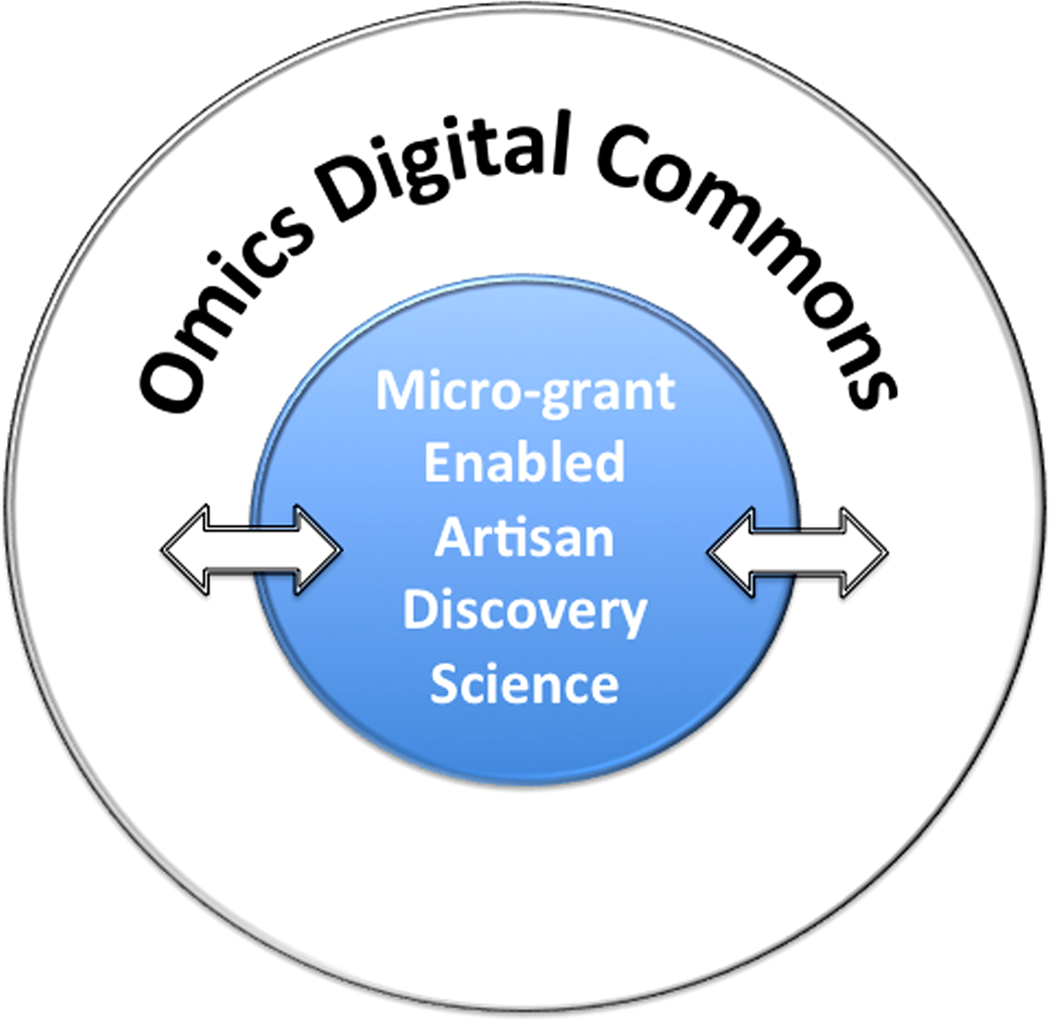
Harnessing the OMICS digital commons with micro-grant-enabled artisan discovery science in LMICs and non-LMICs.
Attempts to define success for Big Science and infrastructure science should not be hasty. These are intergenerational projects that may not deliver immediately; they are meant to create and sustain a digital commons for creative mining, not to mention sustainable and reproducible discovery science from cell to society (Brand, 2012; Burke and Trinidad, 2011; Knoppers and Özdemir, 2013; Özdemir, 2010). Still, any innovative measures to bridge the bottleneck between Big Science and its translation to discovery science would be welcome. To date, linking Big Science with artisan discovery science, surprisingly, has not been adequately theorized, empirically mapped, or explored for innovative solutions, be they novel R&D funding mechanisms, rewards, or incentives. The design of novel funding mechanisms for linking genomics and Big Data with discovery science would be incomplete, however, without an appreciation of the nuances of 21st century R&D, described in the next section.
Return to a Perennial Question: What is Discovery Science?
A “full-suite” or “timeshare” operation?
We have noted earlier that science has always been about discovery, resting to a large extent on the Edisonian metaphors of science and scientists, the lone genius, and driven by individual entrepreneurship. But discovery science is also not a value-neutral activity (Guston, 2008; Guston et al., 2009; Dove and Özdemir, 2013b). For too long, the traditional set up for discovery science has been a “full-suite” operation where discovery R&D laboratories developed a full suite of instruments to compete for new findings and take on their rivals on every front—even though in highly dynamic fields such as genomics, equipment can become outdated and obsolete very rapidly. In other cases, some instruments in such full-suite laboratory settings sit idle in drawers collecting dust because only one could be used at a time (Hand, 2012). In this regard, we in the life sciences community can learn much from the field of physics and astronomy. They have usefully adopted the concept of “timesharing” in a central core facility stocked with state-of-the-art equipment. For example, Todd Boroson, former director of the US National Optical Astronomy Observatory in Tucson, Arizona has noted that “It's a waste of resources to have nine instruments sitting in cabinets”, and that “It's imprudent to build every instrument for every occasion” (Hand, 2012).
Research in medicine and data-intensive life sciences requires similar integrative (Laberge and Knoppers, 1992), collaborative, and timeshared approaches (Faraj et al., 2012). Although the culture of collaboration and doing science through timesharing at a core facility, or harnessing a digital commons in life sciences, has (relatively) lagged behind certain fields such as astronomy and physics, times are changing rapidly (Özdemir et al. 2013). Stephen Friend at Sage Bionetworks suggests, for example, that
Today most discoveries are made by scientist-clinicians who are funded to generate data, build a model or hypothesis, provide a validation of their idea, and then share the results as a paper in a peer-reviewed journal. But as the scale of the data needed to make insights grows (…) the power of coordinated team approaches will grow. By analogy to physics, astronomy, and the writing of the software, the benefits of dynamic teams sharing data and ideas in real time will multiply. The logical extension is to start considering a “commons” where omics data, projects, and models can be evolved in a shared manner. (Friend, 2011)
New online technologies, Web 2.0, and personal genomics in the life sciences domain have further reduced the threshold for successful collaboration, and importantly, engagement of nonprofessionals such as citizen scientists for discovery science (Prainsack, 2012; Tutton and Prainsack, 2011). This has brought scientific experts and citizen scientists in closer proximity, superseding hitherto geographical, disciplinary, and epistemological divides. The term citizen science speaks to the greater involvement of nonprofessionals and a broader range of publics in discovery science. And such involvement of citizens is no longer limited to a passive product adoption role; citizen science and scientists have moved “upstream,” taking part in scientific design and the actual doing of science across a broad range of activities on the innovation trajectory. For example, uBiome is one of the latest citizen science projects to map the human microbiome using high-throughput DNA sequencing technology. Online computer game players have recently demonstrated the contributions that can be made by nonprofessionals in complex scientific tasks such as protein structure prediction (Khatib et al., 2011). SETI@home project meets the need for computing power using Internet-connected computers in the Search for Extraterrestrial Intelligence (SETI) by running a free program that downloads and analyzes radio telescope data (Scientific American, 2013). In other cases, citizen science contributes to geographically distributed forms and formats of data collection that would have otherwise not been possible solely by expert communities or the “one scientist, one laboratory” model of discovery science (e.g., the Encyclopedia of Life project).
These examples are consistent with the recent transformation of 21st century science to its current dual configuration comprised of discovery science and infrastructure science such as biobanks and the attendant digital commons, as well as the engagement of a broader range of actors in the discovery and innovation process. While the rise of citizen science does not invalidate the continuing important role of traditional experts in the scientific enterprise, the practice model is increasingly one of knowledge co-production where the joint contributions of narrow expertise by technical specialists and the broader range of experience-based experts and citizens are desired and required. As we detail below, such co-production of scientific knowledge and innovations are more sustainable, and prove to be clinically and socially robust as well.
Micro-Grants for User Innovation
Bearing in mind the nuances of 21st century science and new forms of knowledge co-production with citizen science, we return to the challenge of devising novel R&D funding mechanisms that are synchronized with these changes in the folklore and practice of science and its actors. If genomics infrastructure science projects such as ENCODE are to be harvested by small-scale artisan discovery laboratories around the globe for new diagnostics and therapeutics, R&D funding will be required (Gwinn et al., 2011). This is no easy task, as much of the West grapples with large budget deficits, public finance reconfigurations, and spending cuts. One consequence is increasingly competitive R&D funding. More projects are competing for fewer funds, while many country's citizens resist the idea of greater levels of taxation to maintain or boost spending levels (Dove and Özdemir, 2013a). In the case of LMIC investigators, competing for funding internationally is even more difficult in this fiscal climate since many resource-rich countries seek to enhance home-grown science and technology infrastructure projects. However, recently there has been increasing interest and more support from LMIC governments towards the valorization of Big Data. A caGrid-compatible cancer grid, to be run on the Indian National Knowledge Network (NKN), is an example of an initiative to connect all the regional cancer centres (RCCs) of India for distributed and inclusive life sciences discovery.
Classic peer-reviewed operating grants support the “science push” model of innovation from lab to the clinic. This model tends to overlook the important contributions made by user communities to design new products or co-create new knowledge. For example, a scoping analysis of 344 studies in health and allied sciences found that only nine considered the extent to which questions posed by researchers match questions of relevance to patients and clinicians (Oliver and Gray, 2006). New and more inclusive ways of conceptualizing research funding and translation science must take hold.
As explained above in the case of citizen science, experts in medicine and life sciences often under-appreciate that innovation actors are widely distributed well beyond classic expert communities. In a range of industries, from innovative products in medical technologies used in operating theatres for surgery and dentistry clinics, to laboratory equipment in life sciences and mountain biking apparatuses, sophisticated lead users often know what works best and what does not precisely because they have well-established skills and expertise of their own (von Hippel, 2013). Engagement of these user communities in an innovation ecosystem not only remedies the gaps between knowledge producers and users noted above, but also enables them to become active players in the design and co-production of knowledge-based innovation (Özdemir and Dove, 2012b; von Hippel, 2013). This alternative approach to understanding innovation, the “user pull” model, as well as the classic “science push” model, is summarized in Figure 2.
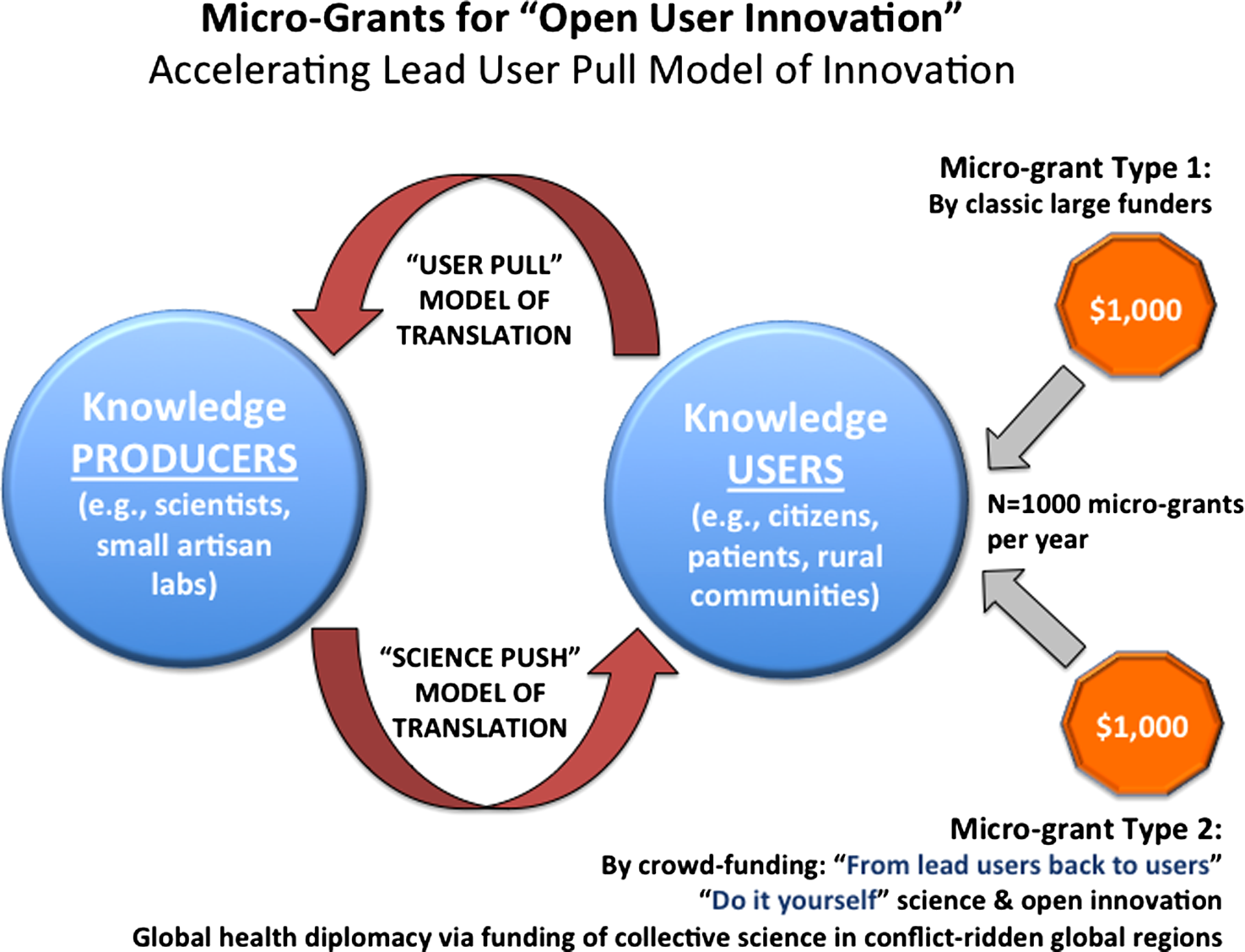
Putting micro-grants and open user innovation into action for translation of genomics infrastructure science (Big Science) by small artisan laboratories, citizen scholars, and anyone with an ingenious idea. Type 1 and Type 2 micro-grants serve to engage and empower users and downstream innovation actors (e.g., patients, citizen scientists, rural communities, marginalized groups hitherto not engaged in genomics, LMIC citizens) with upstream innovation actors (e.g., technology designers) and infrastructure science.
We believe there are a large number of users waiting to mobilize so as to engage with Big Data as citizen scientists—only if some funding were available. These citizen scholars have cogent ideas to connect the dots in Big Data and genomic sciences, turning them into discoveries. Yet many of these scholars lack the meta-criteria used to judge expertise (and thus to determine suitability for funding), such as a track record in obtaining research grants or a traditional academic curriculum vitae. In this regard, there are instructive lessons to be learned from Muhammad Yunus, the recipient of the 2006 Nobel Peace Prize for pioneering a category of banking known as microfinance, which consists of lending small loans to poverty-stricken people who lack collateral and thus do not qualify for conventional bank loans (Lovgren, 2006). As a young economics professor during the 1974 famine in Bangladesh, Yunus lent from his own pocket US $27 to 42 women in the village of Jobra who had a small business making bamboo furniture. Since then, micro-credit programs have flourished in numerous countries as an effective mechanism to reduce poverty, empower women, and improve health (Hennink and McFarland, 2013), with some micro-credit organizations in operation for several decades (e.g., BRAC, Yunus' Grameen Bank) long before the promulgation of the Millennium Development Goals (MDGs).
Inspired by this story, we suggest it is time for a new take on Yunus' idea in the current age of genomics and Big Data: micro-grants (not micro-loans) for genomics diagnostics, each worth US $1000. While a small amount at first glance, we propose this figure precisely because it far exceeds the annual income of the “bottom one billion”, the estimated 1.4 billion people who live below the extreme poverty level defined by the World Bank ($1.25/day or less) (Hotez, 2011a).
Can It Work? Will It Work? Is It Worth It?
Scholarship and human intelligence, as with users of innovations, are distributed across lands and populations, be it at a leading university in an urban metropolitan city, or in a refugee camp, and among nomadic travellers inventing new ways to feed their animals to survive the elements of nature in their environment. Micro-grants can serve, we submit, to remedy what we call the “agency gap” among experience-based user communities to convene, connect, and co-produce knowledge-based innovations together with established experts like genomics scientists.
Different from a catalyst, start-up or proof-of-concept grant, micro-grants will enable recipients to identify solutions and make discoveries from Big Data and other infrastructure projects like biobanks. In a resource-limited setting, including those in Northern developed countries (Hotez and Gurwith, 2011; Hotez et al., 2012a), a $1000 micro-grant could go a long way to bring to the genomics field a multitude of users who currently remain invisible. For example, the Middle-East and North Africa (MENA) region links three continents, Africa, Asia, and Europe, and is situated on one of the early out-of-Africa migration routes. It is thus subject to unique population genetic heterogeneity (Badro et al., 2013). But to date, it has been understudied (El-Sibai et al., 2009). Moreover, because of a very high rate of consanguineous marriages in the region, there is potential for encountering clusters of recessive disorders that are otherwise rare elsewhere (Tadmouri et al., 2009). Some segments of the MENA population face considerable financial hardship and migration, not to mention dwellings in refugee camps and rural communities that likely lack easy access to life science innovations. There should be opportunities for local communities, including refugee camp representatives, to propose ideas for research that are directly situated in their local context and needs.
Such “needs-led” research designs have been advocated for some time in Western countries such as the UK. For example, the UK National Health Services (NHS) Research and Development Program has a needs-led program of commissioned research to counterbalance the other “blue skies” funding programs that rely primarily on researchers suggesting potential research projects to funders (Oliver and Gray, 2006). Thus, a $1000 micro-grant can be effectively utilized to harness needs-led research by enabling workshops in LMICs. This would put into action the “user pull” model of translation noted above (Fig. 2) by engaging the traditionally neglected or under-represented populations such as refugee camp residents and other migrant populations in the MENA region.
Looking further ahead, in other cases, a micro-grant might allow a rural community citizen or migrant worker to travel to an innovation hub to contribute as a designer-in-timeshare core facility and co-create a new genomics-driven diagnostic test for a neglected disease of local public health significance. This could lead to the discovery of a new genetic marker for a recessive disorder with high prevalence in the MENA region that may ultimately attract the attention of larger funding agencies for further work and innovation. A $1000 micro-grant can indeed be used to translate the Big Data innovations, including “translation on the streets,” by conducting qualitative research projects that harness needs-led science and test the real-life situated clinical utility of Big Data and Omics innovations on local grounds.
Irrespective of the development status of a country, both in LMICs and non-LMICs, the current funding streams and timelines do not always offer a “rapid response funding mechanism” for that “one game changing experiment” to be done “next week” or month. Hence, micro-grants could enrich and diversify (without replacing) the extant classic research funding streams by creating a broader range of possibilities to enable highly innovative artisan science. They would also open up the narrow range of innovation epistemologies (i.e., the meta-knowledge frames that determine how do we know what we know?) prevailing among the traditionally defined expert communities.
A report on open science by the UK Royal Society lends further support to the promise of “massively parallel collaboration” by user communities in linking infrastructure science to discovery action:
In January 2009 Tim Gowers, an eminent mathematician and recipient of the Fields Medal, launched the Polymath Project, a blog serving as an open forum for contributors to work on a complex unsolved mathematical problem. He posed the question: “Is massively collaborative mathematics possible?” He then set out the problem, his ideas about it and an invitation for others to contribute to its solution. 27 people made more than 800 comments, rapidly developing or discarding emerging ideas. In just over a month, the problem was solved. Together they not only solved the core problem, but a harder generalisation of it. In describing this, Gowers said, “It felt like the difference between driving a car and pushing it” (Royal Society 2012).
We note that data-intensive life science was named the “Fourth Paradigm of Science” by the late Jim Gray, preceded by the third (in the last few decades: computational branch, modeling, and simulating complex phenomena), the second (in the last few hundred years: theoretical branch, using models leading to generalizations), and the first paradigm (a thousand years ago: empirical description of natural phenomena) (Hey et al., 2009). That is, data already exist, and in vast amounts in the current era of Fourth Paradigm Science, waiting to be harnessed to enable or be translated into medical discoveries. Seen in this light, the extant life sciences innovation ecosystem is not necessarily different from the above example of the field of massively collaborative mathematics.
Micro-granting for genomics discovery by small laboratories and citizen scholars is an actionable idea waiting to be harnessed—in much the same way Big Data is sorely waiting to be translated into scientific discoveries for a deeper understanding of the fundamentals of life, health, and disease.
In all, the user pull model of innovation and knowledge translation, if funded by multiple micro-grants (e.g., 1000 grantees/year) worth $1000 each, can serve as a force multiplier, empowering and bringing user communities together to harvest, analyse and discover in the 21st century digital commons (Figs. 1 and 2).
Micro-grants are not a panacea for R&D funding shortages, nor a substitute for classic operating grants to establish discovery laboratories. Micro-grants are a direct response to the dual architecture of 21st century science such as genomics and other Omics-es that rest on an infrastructure science and digital commons. As mentioned in our examples drawn from the field of astronomy, a new model of “doing discovery science” is rapidly emerging in life sciences and biomedicine where discovery activities rely on innovation hubs or similar infrastructure core facilities as astronomers and physicists have successfully implemented in the past. While infrastructures such as biobanks are now in place or being built, they also now need to be matched with vastly distributed forms of discovery actors, for example, citizen science projects and citizen scholars, harnessing these digital commons ecologies produced by various infrastructure projects and the arrival of Big Data. In this sense, it would be a mistake to focus on the monetary amount of a micro-grant proposed in this article ($1000), which is not set in stone. It is conceivable that different micro-grant programs might adopt different monetary amounts depending on local contexts. However, the intent of a micro-grant is not necessarily to set up large-scale discovery labs but instead bring to the table a new and epistemically diverse set of innovation actors, including those who have been previously silent, silenced, or disenfranchised in the age of data-intensive science. Some examples include LIMIC citizens, women in LMICs, refugee communities, and many others (see discussion below, and Dove and Özdemir 2013a). Equally important, engagement or advocacy on behalf of the disadvantaged genomics innovation actors should be carried out both by self-identifying members of these groups and also outsiders who believe in social justice as a principle. One does not have to be a card-carrying member of a marginalized community or LMIC citizen to believe in inclusive innovation and the real-life linkages between genomics, global health diplomacy, and societal development.
Micro-grants could resonate well with the recent suggestion made by Evans and Khoury (2013) for new and innovative ways to evaluate evidence on new genomics applications and Omics diagnostics. Indeed, we will likely never have sufficient resources or time to conduct randomized controlled trials for each candidate genomics test. Of particular concern is the ascertainment of clinical and real-life utility of new Omics diagnostics that will vary in different contexts, and between LMICs and non-LMICs. Micro-grants, through epistemic diversification of innovation actors and user communities, can help chart a richer understanding of the clinical utility of genomics and Omics applications in a context-sensitive manner.
A Process Map for Putting Micro-Grants to Action
The key tenets of our proposal for micro-grants are summarized in Table 1. We envision that micro-grants will be of two kinds.
Type 1 grants can be awarded by established funding agencies that currently enable genomics and large scale infrastructure science, such as the Wellcome Trust, NIH, and the National Science Foundation, and the Bill and Melinda Gates Foundation. These agencies might consider introducing micro-granting programs to fund a broad and diverse array of scientists, patients, and citizen scholars (of any background and from any global region) to connect genomics and Big Data with new models of discovery such as lead user innovation discussed above, and illustrated in Figure 2. Type 2 grants can be funded by existing or new science observatories and citizen think tanks through crowd-funding mechanisms (Fig. 2). This second type would also greatly facilitate global health diplomacy by co-creating crowd-funded micro-granting diplomacy avenues across nation-states in global regions that not only share similar disease burdens, therapeutics, and diagnostic needs, but also share the burden of civil conflict, war, street or domestic violence, and other highly dynamic and opaque uncertainties.
Accountability and Post-Funding Matchmaking
While we are inspired by Muhammad Yunus' example, micro-grants are not micro-loans. Rather, they are merit-based transformative grants for artisan science and citizen science. In the case of Type 2 micro-grants, they will directly derive from community funds and efforts. It is therefore crucial that accountability is directly built into the micro-grant funding streams, especially since, unlike micro-loans, finance generation is not the main and immediate goal of this endeavour. Regardless of the funding source, be it public, private, or public-private partnership, recipient scientists and citizens should be held to stringent standards to maximize productivity and returns on investment. This aspect should be applied from the start, and applicants displaying knowledge of this skill should have exponentially increased probability in gaining support for micro-grants. This will excise a large amount of waste, entirely rework “funding psychology” and culture, and most importantly, usefully impact effective maximization of resource usage that is a sine qua non in resource-limited settings.
We suggest that the awardees and their biographies be posted on the micro-grant funding agencies' websites (unless requested or legally required otherwise for privacy purposes), thus creating a public archive of these citizen scholars and artisan scientists who can then be empowered to scale up their micro-grant supported research with other citizen scholars or larger funding agencies and stakeholders interested in ground-up innovation.
A recent study of micro-credit to women in Burkina Faso has shown that such funding not only “facilitate savings and investment strategies, but also lead to changes in household decision-making, enabling women to initiate health prevention, seek health treatment, and manage health emergencies” (Hennick and McFarland, 2013). Yet every first order action often has second order consequences, especially in dynamic global health settings with opaque uncertainties. Thus, Hennick and McFarland (2013) also observed that there was a parallel “reduced household contributions by the husband,” suggesting that the initial gains achieved by micro-credit can be fragile. It is conceivable that those who succeed in micro-grant competitions may face a potential reduction in their other funding resources by, inter alia, powerful local forces or jealous peers that are not uncommon in academic fields, both in LMICs and non-LMICs. We therefore wish to emphasize that micro-grant programs should be monitored post-funding to ensure that the awardees' hard-earned research and genuine scholarship gains are maximized and sustained. Finally, for micro-grant to succeed, an adequate level of Internet and digital connectivity is important, which might be a rate-limiting step for implementation in some global regions. Still, human ingenuity and collective intelligence are ubiquitous; micro-grants would help create an alternative and user-sustained innovation path to translate genomics and post-genomics biotechnologies into products that are meaningful and functional for the participating communities.
Voices from the Frontlines
The American University of Iraq, Sulaimani
One of the most interesting frontline locales that could be well suited for micro-grant applications is the American University of Iraq, Sulaimani (AUIS), which opened in 2007. This new institute of higher learning is dedicated to offering a comprehensive, US-style liberal arts education in Iraq and is an alternative to the “lecture-memorize-repeat” model of education that tends to dominate in some global regions. Like many others, this new university is struggling to build an adequate cyber infrastructure and provide enough resources for the faculty to approach anything close to data-intensive Big Data science. Students also have little experience with hands-on scientific research or the prevailing paradigms of scientific inquiry, data-driven or otherwise. However, recent programs in IT (the Microsoft Imagine Cup) and social entrepreneurship (the Hult Global Case Challenge) have successfully connected AUIS with students in Internet-rich countries by allowing them to compete together. These challenges have been successful because they have captured the abilities and desires of people to solve problems locally while also connecting to globally relevant issues and projects, thus horizontalizing the entrenched hierarchies to problem solving.
Indeed, micro-grants can work to horizontalize research funding for the same reason: they combine artisan drive and innovation with global infrastructure. Without such funding mechanisms, the fear is that the rest of the Big Data scientific community is moving so fast that a good many students in Iraq and the Middle East will lag far behind by the time they finish their undergraduate training. This challenge therefore invites novel solutions and funding mechanisms like crowd-funded micro-grants to accelerate the development of students at this newly launched university. Finally, micro-grants to artisan scientists in all countries could lead to more collaborations among institutions who could compete for larger funding, such as the NSF/USAID “Partnerships for Enhanced Engagement in Research” (PEER) grants, or the NSF/BMGF “Basic Research to Enable Agricultural Development” (BREAD) grants.
Middle East Medical Assembly
Founded in 1911, the Middle East Medical Assembly (MEMA) is headquartered at the American University of Beirut (AUB) in Lebanon. MEMA is a multidisciplinary scientific meeting bringing together international, regional, and local experts, physicians, and scientists to accelerate medical education, research, and healthcare innovation in the region. New micro-grant programs can be used to drive forward an emerging innovation or a new biomedical concept, and transition it from the local to global context in the spirit of GloCal Omics. This link is crucial for discoveries to generate actionable outcomes for real world applications. We have noted that enabling the participation of lead users and community members at pertinent scientific meetings or workshops for needs-led research design might be one way of putting micro-grants into action. This particular application context for micro-grants could be expanded to make crowd-funded ideas the central theme of meetings such as MEMA, dedicated to bringing together a highly diverse group of innovators, designers, and users. At such meetings, micro-grants would enable both horizontal and vertical transfer of ideas and cross-fertilization among the constituents of an innovation ecosystem such as the Omics and Big Data driven discovery communities. In this regard, more than a century long history and multidisciplinary composition of the MEMA make it an ideal fora through which micro-grants can reach their intended audiences. MEMA has been an established regional meeting and its host, AUB, has been a center for advanced learning in the tradition of the US liberal arts model since the early 20th century. Conceivably, micro-grants might become an annual tradition and opportunity to introduce the latest discoveries by both young and senior investigators as well as citizen scientists.
Citizen Philanthropy in Action: Ten Micro-Grants for Scale Up Crowd-Funding
The MENA region suffers from the neglected tropical diseases (NTDs) that affect some 20 countries with a total population of about 400 million people (Hotez et al., 2012a). NTDs disproportionately affect an estimated 65 million people living on less than US$2 per day in the MENA region. If each citizen in this region were to contribute 1 cent (one time only) towards NTDs or other diseases of great public health significance that cannot be tackled in a patchy manner within the classic nation-state borders, it would amount to $4 million. This would help generate 4000 micro-grants, each worth $1000 for citizen scientists and catalyze open user innovation.
Though we believe the concept of a micro-grant is sound, actions speak louder than words. Hence, in the spirit of distributed leadership encouraged by John Kotter, with the conviction that anyone with a modest income can make a donation for global health, the first author of this article has pledged to contribute US$10,000 from his personal income in 2013 as a nonprofit donation to be used entirely towards the creation of 10 Type 2 micro-grants for data-intensive diagnostics for common complex or rare diseases, and theranostic tests such as pharmacogenomics and vaccinomics. Administration and peer-review for these 10 freshly minted Type 2 micro-grants will be carried out by DELSA Global in Seattle as a nonprofit entity in the 2013–2014 funding cycle. Our hope is that this will spur novel forms of disruptive innovation and genomics translation by artisan scientists and citizen scholars alike.
Can Micro-Grants Enable a New Cadre of Diplomats for GloCal Omics?
In a January 2013 editorial in OMICS, one of us noted that the next generation of diagnostics and innovations will likely emerge from tensions at the intersection of global and local science, termed as GloCal Omics (Özdemir, 2013). The GloCal concept was conceived and pioneered much earlier, by another co-author of this innovation research article (Kickbusch, 1999). In GloCal settings, where the global and local innovation forces meet, clash and/or synergize, the linkages between health and diplomacy become clearer and all the more relevant. Both Peter Hotez and Ilona Kickbusch have repeatedly emphasized these linkages, and that shared regional and global health problems are also opportunities for global health diplomacy (Hotez, 2010; 2011b; Hotez et al., 2012b; Kickbusch, et al. 2007; 2013; Kickbusch and Buss 2011).
Indeed, in 2010, the then US Secretary of State Hilary Rodham Clinton articulated a new vision for American diplomacy and development through the strengthening of what she termed “civilian power” (Clinton, 2010; see also Hotez, 2011b). On the other side of the Atlantic in the European Union (EU), the Europe 2020 economic reform and growth agenda initiated by José Manual Barroso, the President of the European Commission, rests considerably on science for diplomacy and development. In this agenda, one of the five EU-wide targets is R&D and knowledge based innovation (European Commission, 2011). Micro-grants for genomics, and life sciences more broadly, can help bring together the citizens in LMICs and non-LMICs alike, and have them work together with scientific and technology experts to solve the complex global health problems we currently face. In effect, this may also inform the current search for novel approaches to accelerate translation science (Collins, 2011).
In its recent report, the UK Royal Society (2010) suggests three dimensions contributing to the relationship between science and diplomacy:
• Science in diplomacy; • Science for diplomacy; and • Diplomacy for science.
With the recognition for science in diplomacy—that scientific and technical knowledge is invaluable for diplomacy and international relations—fellowship programs have brought dozens of scientists to the US State Department and the US Agency for International Development (USAID) over the last decade. This capacity building for science-in-diplomacy has led to at least two novel career trajectories where science plays an instrumental role for advancing diplomacy and nation state interests (science for diplomacy), as well as diplomacy playing an instrumental role for scientific cooperation and innovation among nations and global regions (diplomacy for science) (Fig. 3). The need for resolution of tensions among political, economic and health factors have been a major driver in the development of new health diplomacy skills (e.g., the Framework Convention on Tobacco Control; the provision of low-cost anti-retroviral drugs to treat HIV/AIDS in LMICs). Beyond the traditional high-income countries, new actors are now engaging in diplomacy for science and health, including emerging countries such as Brazil, China, India, South Africa, and Thailand, regional groupings such as the African Union/New Partnership for Africa's development and non-state actors such as the private sector and civil society organizations.
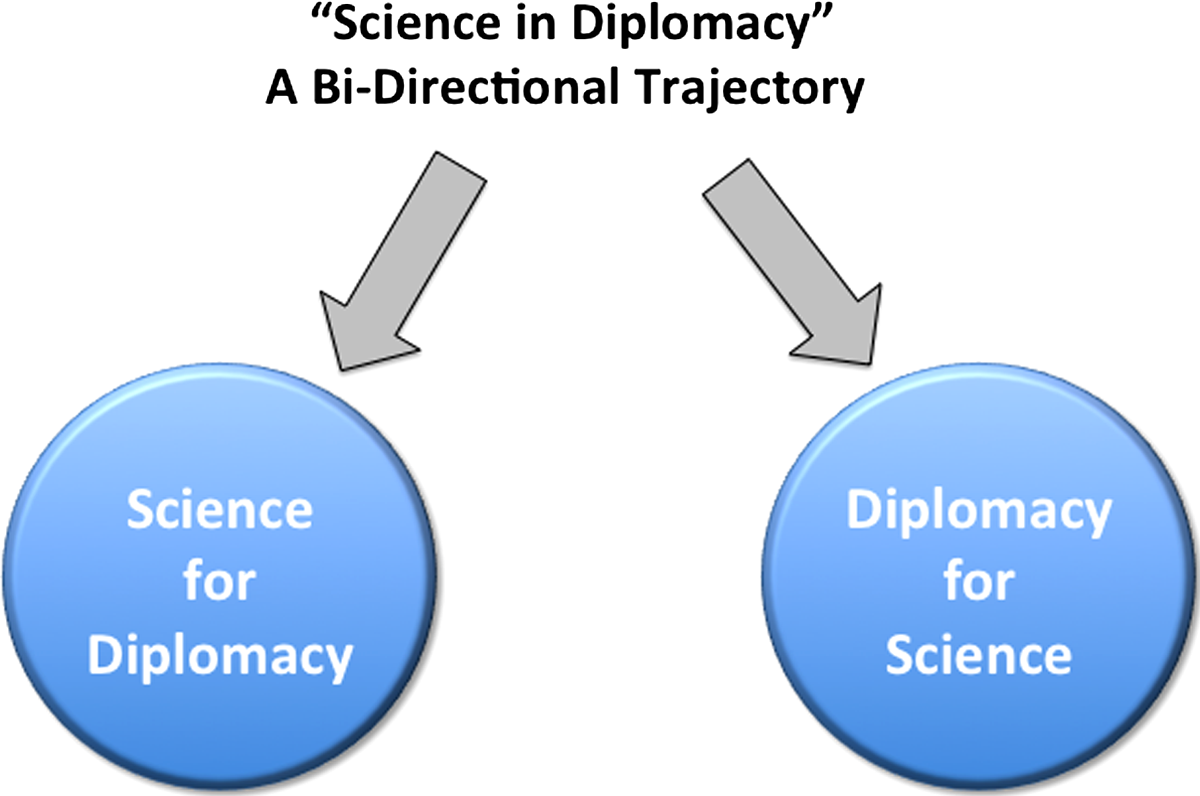
Twenty-first century trajectories for the relationship between science and diplomacy. The increasing proximity of science and diplomacy opens up new perspectives in international relations and research, and are often linked to power politics, economic interests, and also discussions around values and principles on how we live and co-produce knowledge-based innovations as global citizens across the traditional Westphalian nation–state borders.
Powerful forces—including the changing political, economic, environmental, and social realities of the 21st century—are shaping and changing the character of each of these actors and dimensions of science and diplomacy, creating new challenges as well as opportunities at GloCal levels (Kickbusch et al., 2013). These forces, the tensions they create, and the opportunities they provide are nowhere more evident than in the field of health diplomacy—which, while part of the larger domain of science diplomacy, has emerged as prominent field in its own right in recent years:
Global health diplomacy is gaining in importance and its negotiators should be well prepared. Some countries have added a full-time health attaché to their diplomatic staff in recognition of the importance and complexity of global health deliberations; others have added diplomats to the staff of international health departments. Their common challenge is to navigate a complex system in which issues in domestic and foreign policy intertwine the lines of power and constantly influence change, and where increasingly rapid decisions and skilful negotiations are required in the face of outbreaks of disease, security threats or other issues. (Kickbusch et al. 2007).
Conclusion
Micro-grants offer the promise to take philanthropy and 21st century leadership to new heights through greater cognizance of the idea that all types of people can make a contribution to science, including by “do it yourself science” enabled by Type 2 micro-grants (Fig. 2 and Table 1). Similarly, micro-grants would help funders and large philanthropies to engage, in real-time as science and technology are still in the making, with lead user innovation and artisan discovery science. We believe this will help create a versatile menu of R&D funding options in the near future, with both horizontal and vertical architectures that will be made broadly available so as to fit the needs of emerging genomics and Big Data innovations in all the world's places.
As we look ahead for OMICS 2.0 and its practice in diverse local contexts (Özdemir, 2013), it is important to keep an open and unassuming mind. Truly innovative work will appear from any region and institution, and from any person, including non-professionals, citizen scientists, and users for genomics diagnostics and related products (Dove and Özdemir, 2013a). Such GloCal knowledge and panoptic vision of innovation systems in the making will be important ingredients in training the future generation of global health diplomats and Omics scholars.
Footnotes
Acknowledgments
The views expressed in this article are entirely personal views of the authors and do not necessarily represent positions of their affiliated institutions. No funding was received in support of this innovation analysis. V.Ö. would like to thank Dominique Romeny for creating a writer-in-residence post in December 2012 in Amsterdam, the Netherlands that helped generate the initial concept of micro-granting for disruptive innovation in genomics and data-enabled life sciences.
Author Disclosure Statement
The authors declare that no conflicting financial interests exist.