




Abstract
One Health (OH) offers conceptual and applied prospects to advance planetary health and integrative biology in the 21st century. For example, The World Health Organization (WHO) has declared antimicrobial resistance (AMR) one of humanity's top 10 health threats worldwide (AMR). The AMR research, as seen through the OH lens, recognizes the interdependence and the coproduction of the health of humans, nonhuman animals, and the environment (the OH triad). Moreover, research and development (R&D) is required to generate potential solutions to prevent, diagnose, and treat infections and control the spread and emergence of AMR. However, it is still unclear how well the OH approach is integrated into current AMR R&D. In this study, we present a systematic review on the OH funding landscape for cross-sectoral AMR R&D, and its alignment/gaps with the current global strategic agenda on AMR. A systematic literature review was conducted using public databases covering the period between January 2015 and May 2022. We included the studies and reviews on AMR encompassing more than one sector of the OH triad. Out of the 777 included studies, 475 (61%) encompassed the three OH sectors. A key finding of the present systematic review is that the environment was the most neglected sector in the OH triad. AMR surveillance, transmission, and interventions are the most commonly studied priority topics. In addition, both cross-sectoral AMR literature and investments have been increasing since 2017. The operational aspect of AMR is the most researched and funded area. However, certain priority topics in the strategic research and innovation agenda of the Joint Programming Initiative on AMR are underrepresented in OH AMR research, such as diagnosis and therapeutics. To the best of authors' knowledge, this is the first study that systematically reviews the cross-sectoral literature on AMR, classifies it, and aligns and contextualizes it in regard to the funding landscape of AMR. This systematic review identifies neglected areas in AMR R&D and could serve as critical information for policymaking so as to realize the objectives of the Global Action Plan on AMR. Going forward, more cross-sectoral AMR research and funding are needed. As integrative biology and omics systems science are poised to benefit from a rapprochement with the OH lens, the present article highlights the AMR research and funding landscapes.
Introduction
Antimicrobial resistance (AMR) is a global public health challenge that threatens the effective prevention and treatment of an ever-increasing range of infections caused by bacteria, parasites, viruses, and fungi. The World Health Organization (WHO) has declared AMR one of humanity's top 10 global health threats (WHO, 2021a). Globally, the burden associated with drug-resistant infections was estimated, by the Global Research on Antimicrobial Resistance (GRAM) Project report, to be 4.95 million in 2019 alone, of which 1.27 million deaths were directly attributable to drug resistance (Murray et al., 2022). If no action is taken now, by 2050, AMR is expected to cause more deaths than cancer (European Commission, 2017) and a decline in the global gross domestic product of between 3.8% and 5%, with an increase of 28.3 million people living in extreme poverty.
Addressing the rising threat of AMR requires a holistic and multisectoral approach because of the similarity between antimicrobials used to treat various infectious diseases in animals and humans. In addition, the causes and impacts of resistant bacteria cross humans, animals, and environmental health and spread across geographic borders (WHO—Regional Office for Europe, 2021). One Health (OH) is “an integrated, unifying approach that aims to sustainably balance and optimise the health of people, animals and ecosystems. It recognises the health of humans, domestic and wild animals, plants, and the wider environment (including ecosystems) are closely linked and inter-dependent” (OHHLEP, 2022, p. 13).
The OH approach is not a new concept, as the close relationship between human health and the health of the surrounding animal and environment (the OH triad) was recognized decades ago (Zinsstag et al., 2005). However, in 2008, the WHO, Food and Agriculture Organization (FAO), World Organisation for Animal Health (WOAH) (hereafter referred to as the Tripartite)—in coordination with the World Bank, United Nations Children's Fund and United Nations System Influenza—published a strategic framework for the reduction of risks of infectious diseases at the animal–human–ecosystem interface, thereby endorsing and promoting the OH approach (FAO, 2008). Since then, many national and international bodies have supported and implemented the OH approach.
Research and development (R&D), and innovation can provide novel solutions and tools to prevent and treat infectious diseases, improve diagnosis, and control the spread of AMR (European Commission, 2017). Moreover, OH, in the context of research, incorporates human, animal, environmental, ecosystem, and wildlife perspectives in its approach to AMR. According to Escher et al. (2021), OH studies simultaneously assess AMR in an animal–human, human–environment, animal–environment, or human–animal–environment context.
Nonetheless, greater innovation and funding are required in operational research and for the development of new antimicrobial medicines, vaccines, and diagnostic tools (WHO, 2021a). Furthermore, the importance of strengthening the knowledge and the evidence base through surveillance and research was foregrounded by the World Health Assembly in the second objective of the Global Action Plan on Antimicrobial Resistance (GAP AMR) adopted in 2015. Under this objective, the GAP AMR indicated that the strategic research and innovation agenda (SRIA) published through the Joint Programming Initiative on Antimicrobial Resistance (JPIAMR) could provide an initial framework for further development of a global strategic research agenda (JPIAMR, 2022a; WHO, 2015).
In 2017, under Germany's Presidency, the Group of Twenty (G20) heads of state and government decided to intensify global collaboration in the fight against AMR. In response to this call, the Global AMR R&D Hub (hereafter referred to as the Hub) was established with a mandate to improve and enhance R&D activities and policies across the “One Health” spectrum. A key tool in fulfilling this mandate has been the development of a Dynamic Dashboard, which collects and presents information on global investments (public and philanthropic), in AMR R&D across the human, animal, plant, and environmental health sectors, with the aim of providing an evidence base to foster global priority setting and evidence-based decision-making on the allocation of resources, including identifying gaps, overlaps, and potential for cross-sectoral collaboration (Global AMR R&D Hub, 2022).
Aligning with the indicated international efforts to curb the AMR threat, the current systematic review explored the AMR research that adopts the cross-sectoral approach of OH by identifying the sectors, areas, and topics of cross-sectoral AMR research. Furthermore, the review, on the one hand, explores how the published research since 2015 aligns with the priority topics of the current global research agenda. On the other hand, the present review interpreted the published OH AMR research in light of the cross-sectoral investments in AMR projects since 2017. By identifying and categorizing the AMR research carried out through the OH lens, this systematic review contributes to a clearer realization of the concurrent focus areas of AMR research.
Finally, we suggest that aligning those areas to the JPIAMR's SRIA and the funding of AMR (1) can help identify neglected areas in AMR R&D, and (2) could serve as critical information for the policymaking process to realize the objectives of the GAP AMR (WHO, 2015).
Materials and Methods
The Preferred Reporting Items for Systematic Reviews and Meta-Analyses (PRISMA) statement 2020 checklist was used to guide the conduction of this review (Page et al., 2021).
Eligibility criteria
A set of inclusion and exclusion criteria were developed to determine the eligibility of studies. The inclusion criteria were as follows: (1) All published peer-reviewed studies and reviews on AMR, regardless of whether basic or applied research, that use the cross-sectoral approach of OH (even without explicitly mentioning the term “One Health”), (2) written in English, (3) have been published after 2015, which is the year that the GAP AMR addressed the JPIAMR's SRIA as an initial framework for a global strategic research agenda, and (4) protocols of research were included as they are relevant for the research question to identify the areas of ongoing research as well.
Exclusion criteria
The exclusion criteria were as follows: (1) AMR research that only addresses or mentions OH but does not demonstrate a concrete link with more than one sector in the overall approach of the study, as in data collection and analysis and the scope of the research, (2) articles that do not have comprehensive abstracts and their full texts are not accessible, (3) publications in languages other than English, (4) articles that are not peer-reviewed, such as editorials, news-reporting articles, conference proceedings, consultation calls, and Supplementary Data were excluded.
Information sources
The literature search was conducted electronically using the MEDLINE® (PubMed), Scopus®, and Web of Science™ databases. The Medline database was exempted from the Web of Science search since PubMed covers it. The search was conducted using the Google Chrome® browser and Windows 10® as an operating system.
Search strategy
The databases were searched on May 04, 2022, to identify eligible studies with a time coverage from January 2015. Table 1 displays the search strategy used for each database.
The Search Strategy
AMR, antimicrobial resistance.
Selection process
Citations identified from the literature search were imported to EndNote X9®, where the duplicates were removed, and then the remaining results were imported to Rayyan.ai—a web tool for systematic reviews—where the remaining duplicates were identified, manually reviewed, and removed. Moreover, one reviewer (I.A.) scanned the titles and abstracts of the resulting studies to determine their eligibility using Rayyan.ai. Articles that did not meet the inclusion criteria were excluded, and the reason for exclusion was recorded using the “exclusion reason” function of the mentioned website. Finally, inconclusive articles were discussed with another author (L.O.) until a consensus was reached and a decision was made.
Data collection process
A data extraction sheet was developed (Supplementary Appendix SA1), and one reviewer collected data from the titles and abstracts of the included studies. Where the abstracts were incomprehensive or missing, their full texts were accessed to extract the required data. The data extraction was conducted simultaneously with determining eligibility. The note function of Rayyan.ai was used to record the extracted data items (Rayyan Systems, 2023).
Data items
The following information was extracted from the abstracts and full texts of the eligible studies: Authors' names, publication date, the study title, the research sectors (human–animal–environment, human–animal, animal–environment, human–environment), the research area, and the research topic.
The Hub identified 10 research areas on AMR that are used to guide the data extraction. Table 2 describes the research areas and their definitions (Global AMR R&D Hub, 2021a). Moreover, the SRIA on Antimicrobial Resistance of the JPIAMR presents an overview of recent developments and future needs for AMR research and is a guiding tool for AMR research prioritization in investments, research activities, and planning (JPIAMR, 2022a). The six topics outlined in this SRIA are used as a template for the data extraction in this study. Table 3 demonstrates those topics with their definitions.
Research Areas on Antimicrobial Resistance
Adopted from the Dynamic Dashboard's Categories and Definitions (Global AMR R&D Hub, 2021a).
R&D, research and development.
The Priority Topics of the Strategic Research and Innovation Agenda on Antimicrobial Resistance
Adopted from the JPIAMR's SRIA (JPIAMR, 2021).
JPIAMR, Joint Programming Initiative on Antimicrobial Resistance; OH, One Health; SRIA, strategic research and innovation agenda.
Study risk-of-bias assessment
The use of a bias assessment tool was deemed unnecessary since the data extracted from the articles were not quality-related but rather about the subject and the research approach.
Data analysis and presentation
After the extraction, the collected information was exported from Rayyan.ai and sorted using Excel® from Microsoft® 365 MSO (Version 2112) in preparation for the analysis. Studies were categorized according to the research topic, area, and sector. The results are presented using charts and figures produced using Excel.
Reliability and validity
The study results should be reproduced under a similar methodology to consider them reliable (Joppe, 2000). Therefore, the methodology of this systematic literature review is described extensively and transparently to ensure reliability. Moreover, the PRISMA 2020 Statement Checklist was followed for the different stages of this study.
On the contrary, validity determines “whether the research truly measures that which it was intended to measure or how truthful the research results are” (Joppe, 2000, p. 1). In this research, validity was ensured by using a suitable methodology to measure the intended aim of the study. The study aims to determine the OH AMR research's sectors, areas, and topics. So, the aim requires a systematic collection and synthesis of all the available evidence, which is the core function of the systematic literature review methodology used in this study (Kitchenham et al., 2009). Finally, three experts (L.O., R.S., A.B.) reviewed the methodology used, including the selection process, data collection, and analysis, to ensure further reliability and validity of the research.
Research ethics aspects
This is a systematic review and research ethics committee approval and informed consent were not applicable.
Results
Selection of publications
The database search identified 2657 records. After the automatic and manual removal of the duplicates, the reviewer screened (n = 1649) records and (n = 872) studies were excluded. Most excluded articles mentioned the OH approach in their titles or abstracts; however, they were mainly excluded due to the failure to demonstrate a tangible link to more than one sector based on the eligibility criteria of this study—animal only (n = 404), the environment only (n = 163), or human only (n = 100).
Other reasons for exclusion included being in languages other than English (n = 54), AMR is not the main topic of the study (n = 62), neither abstract nor the full text of a record being accessible (n = 11), and records that are additions to studies such as datasheets, Supplementary data, and source data files (n = 31). Finally, nonpeer-reviewed (n = 47). Overall (n = 777), articles were eligible and included in this review, as shown in Figure 1. The reviewed studies demonstrate comprehensive global coverage, encompassing diverse countries and continents. However, it is noteworthy that the geographic locations of these studies were not extracted or incorporated into the analytical framework of this research (the complete reference list of the included articles is provided in the Supplementary Data S1).
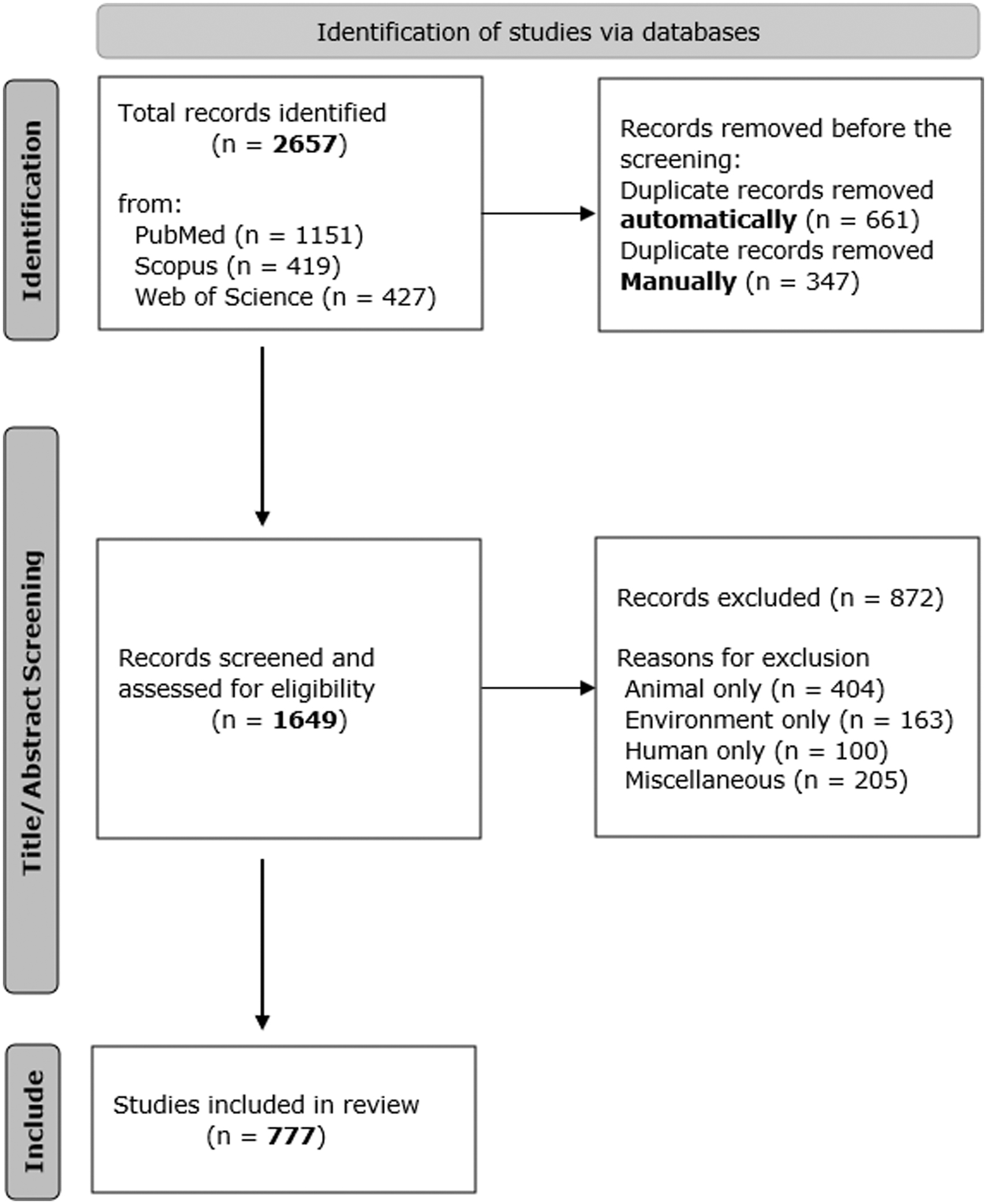
Selection of the eligible publications—modified PRISMA 2020 flow diagram (Page et al., 2021). PRISMA, Preferred Reporting Items for Systematic Reviews and Meta-Analyses.
Summary of findings
AMR research and the sectors of OH
OH AMR research encompasses the human, animal, and environmental sectors; however, not all the OH AMR research is conducted across the three sectors. As illustrated in Figure 2, out of the 777 cross-sectoral studies published since 2015, 475 (61%) were conducted across the 3 sectors, while 195 (25%) were conducted in the human–animal interface. The animal–environment and human–environment interfaces account for only 10% (n = 77) and 4% (n = 30), respectively.
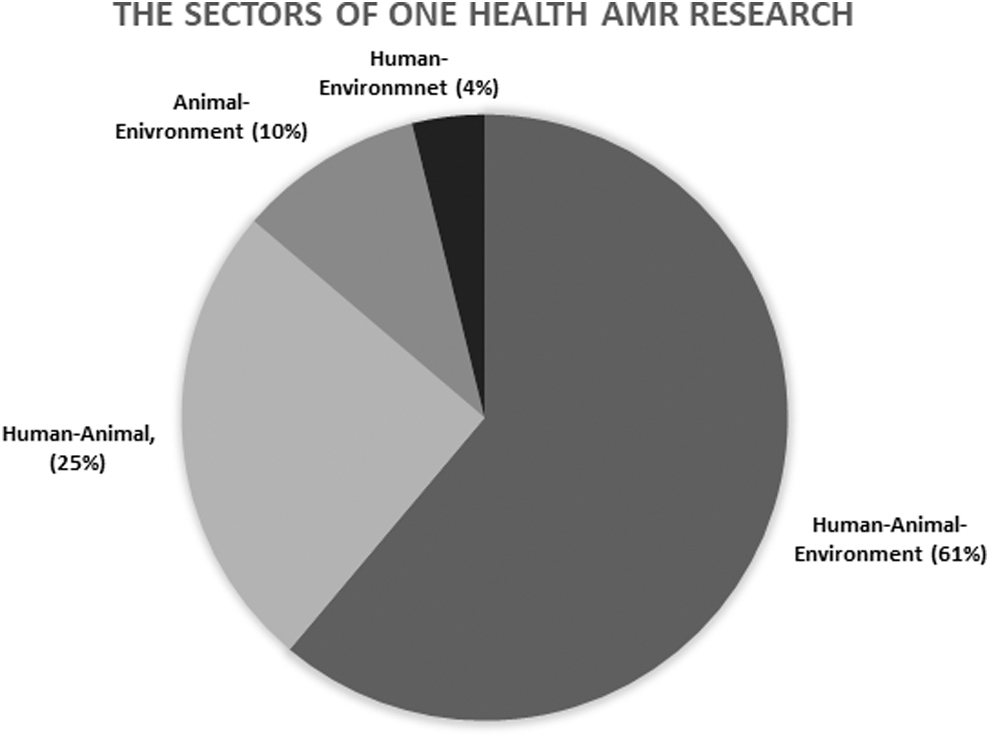
The distribution of cross-sectoral AMR research across the OH sectors based on the number of publications. AMR, antimicrobial resistance; OR, One Health.
OH AMR research and the global research agenda
As previously mentioned, the JPIAMR identified the priority topics of AMR research in their SRIA. In addition, the GAP AMR suggested this SRIA as an initial framework for developing global strategic research agenda. Thus, those topics are used as a template to examine cross-sectoral AMR research. However, numerous studies covered more than one priority topic, such as transmission and environment in basic research or surveillance and interventions in operational research. This overlap led to classifying some studies under multiple priority topics; thus, the excess in the overall number of publications in this section compared with the number of included studies.
Accordingly, the 777 included publications were categorized following those priority topics and across the OH sectors, as shown in Figure 3. Most of the included studies were on surveillance or (and) transmission of AMR—373 and 307, respectively. On the contrary, only 36 studies explored the development of cross-sectoral therapeutics, and an even smaller number (n = 9) was on the development and improvement of cross-sectoral diagnostics on AMR. The number of studies focused on interventions and control measures was 248, while 84 publications explored the role of the environment on AMR. Moreover, most studies are conducted across the human–animal–environment sectors, while the human–environment interface was the least studied across the priority topics.

The distribution of cross-sectoral AMR literature across the priority topics in SRIA. SRIA, strategic research and innovation agenda.
OH AMR research and investments
The Global AMR R&D Hub's categorization of the AMR research areas was adopted as another template to classify the published literature and sit it within the investment landscape. Since the categories of the Hub were mainly product-specific, and the differences between the research areas were well-distinguished, the overlap between the categories in the included studies was minimal. Moreover, the Hub identified four sectors under the OH continuum (human, animal, plant, and environment); however, the plant sector was incorporated under the environment sector in this study.
Moreover, the 2021 annual report of the Hub was used to display AMR investments (Global AMR R&D Hub, 2021b). However, since the mentioned report includes completed data about investments only from 2017 to 2020, and to make the results more comparable, this categorization included only the OH AMR research since 2017, leaving the 2015 and 2016 publications out. Finally, the quantity of OH AMR publications per year is described against the total cross-sectoral investments in AMR per year for the period between 2017 and 2020.
Figures 4 and 5 show the cross-sectoral AMR research and investment landscape since 2017.
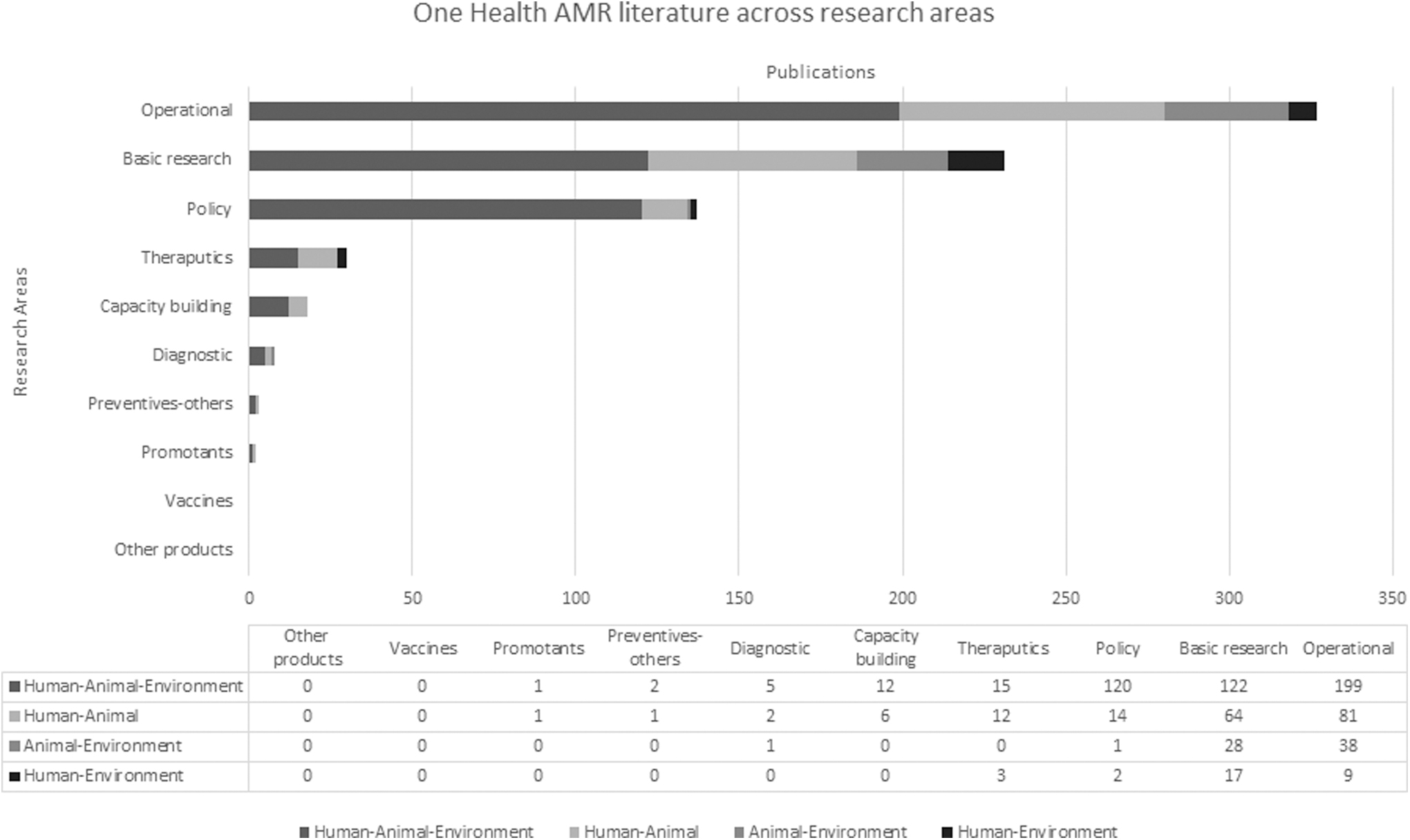
The distribution of cross-sectoral AMR literature across research areas.
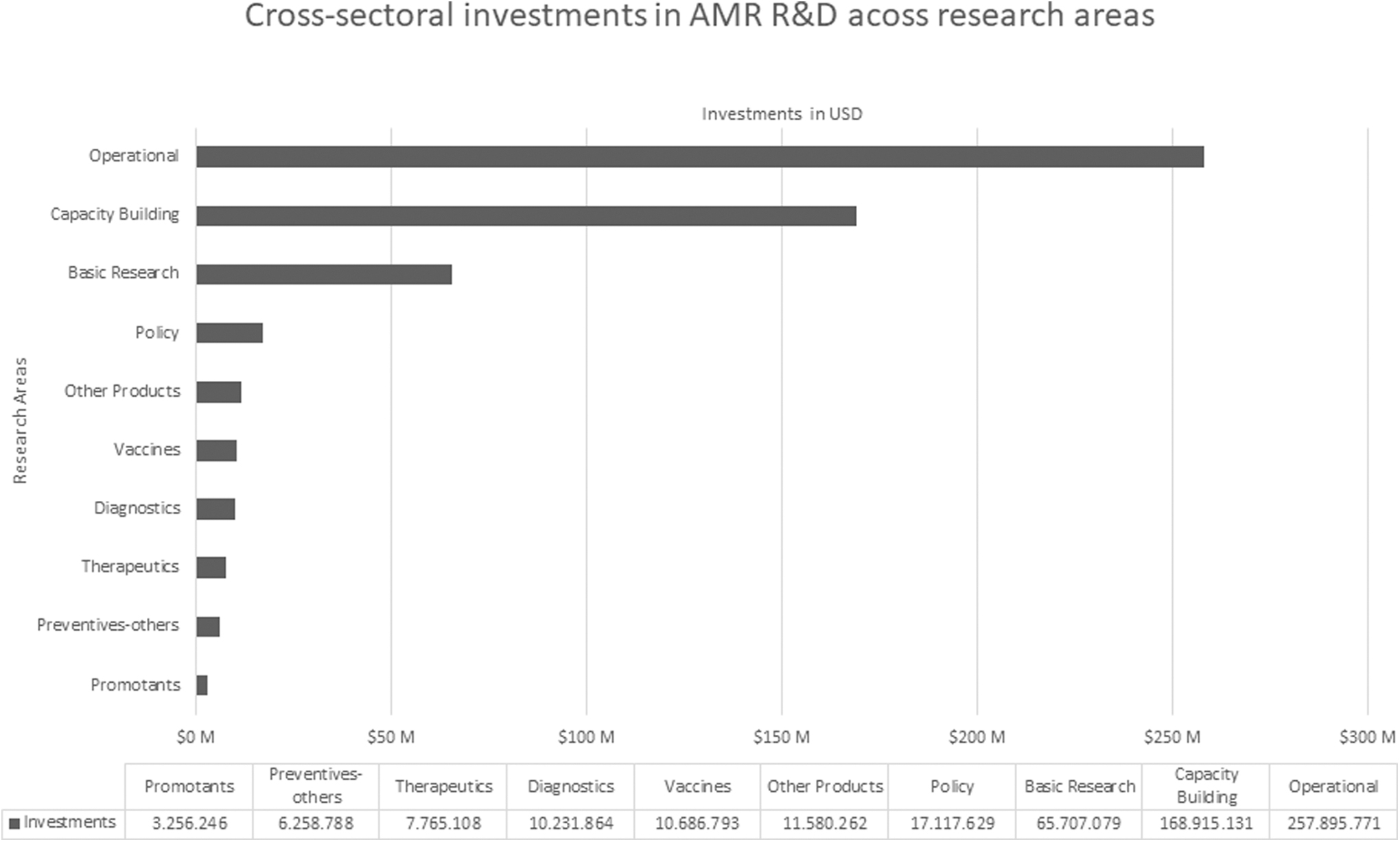
Total investment in cross-sectoral AMR projects. Adopted from (Global AMR R&D Hub, 2021a). R&D, research and development.
Operational research on AMR—including infection prevention and control, stewardship, surveillance, accessibility and availability, epidemiology, and social science research—has received the most investments in cross-sectoral AMR R&D projects—around 258 million United States dollar (USD) or 46.1% of the total investments. Similarly, the majority of cross-sectoral AMR literature published since 2017 also focused on the operational area—42.1% (n = 327). On the contrary, capacity building research received a relatively large share of investments (around 169 million USD or 30% of the total investments); however, this share is different in the case of literature as only 2.3% (n = 18) of the OH AMR studies were about improving the human or infrastructural resource capacity to address the AMR challenge.
The cross-sectoral literature on AMR in Figure 4 shows that basic and policy research is the second- and third-most studied areas, constituting around 29.7% (n = 231) and 17.6% (n = 137), respectively. On the contrary, the rest of the research areas—all the product-specific areas—account for less than 5.5% (n = 43) of all cross-sectoral literature on AMR, with the most significant share attributed to therapeutics (n = 30).
From the cross-sectoral investment aspect, basic and policy R&D investments are the third- and fourth-most funded areas. However, compared with the literature case, they constitute a substantially smaller percentage of the overall investments, with around 11.7% (66 million USD) and 3.1% (17 million USD), respectively. On the contrary, as shown in the publications, the cross-sectoral product-specific R&D received a humble percentage of the overall investments with 8.3% (50 million USD). In particular, therapeutics and preventives are close to the bottommost in cross-sectoral investments with 1.3% (n = 7.7 million USD) and 1.1% (n = 6.2 million USD).
Nevertheless, the cross-sectoral AMR literature has witnessed a significant increase in the volume of publications. As apparent from Figure 6, the published literature has more than quadrupled between 2017 and 2021 from 52 to 212 publications, respectively. On the contrary, the investments have doubled in cross-sectoral AMR R&D from 59 million to 129 million USD, as shown in Figure 7.

Cross-sectoral AMR publications by year.
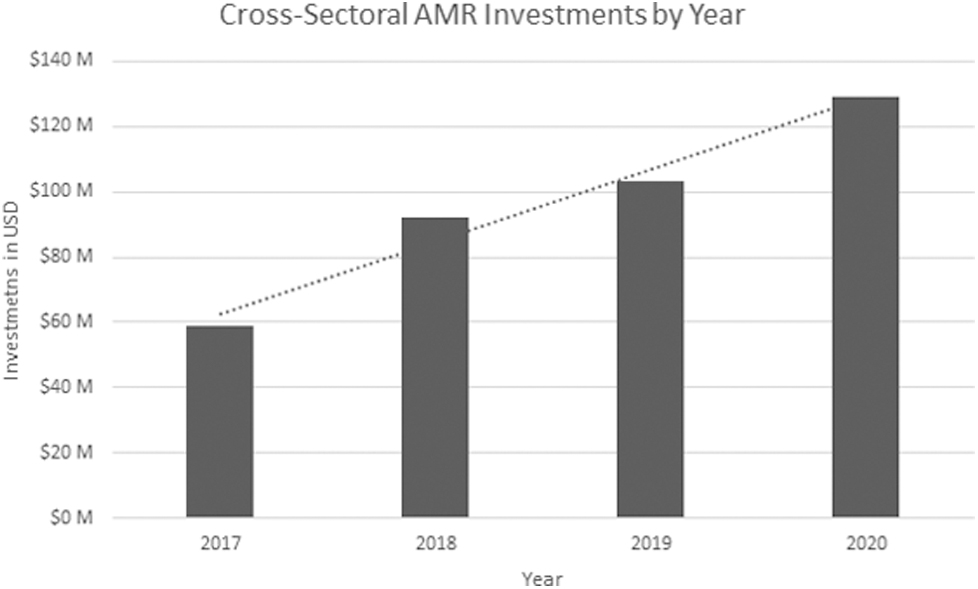
Total investment in cross-sectoral AMR R&D by year (in USD). Adopted from (Global AMR R&D Hub, 2021b). USD, United States dollar.
Discussion
To the authors' knowledge, this is the first study that systematically reviews the cross-sectoral literature on AMR, classifies it, and aligns it to the funding landscape of AMR. In this study, the cross-sectoral research on AMR was surveyed, and the sectors, research areas, and topics of 777 studies and reviews were attained using the priority topics of the SRIA and the research areas of the Global AMR R&D Hub as templates for data extraction.
Overall, there has been a significant increase in OH AMR funding and research since 2017. This result aligns with a finding of a review conducted by Sikkema and Koopmans (2016) about OH training and research in Western Europe. They found that both OH research and funding possibilities for AMR had increased significantly. These findings are consistent with the results of this study; however, this study encompassed global studies and investments, not just those from Western Europe.
Moreover, this study highlighted the sectors of AMR literature. As a result, most of the reviewed literature was conducted across the three sectors of OH. This focus on the three sectors is evident in operational and policy research (i.e., research meant to aid organizational and local decision-making and management strategies, and research conducted to inform policies and regulations on national and international research). Moreover, among the studies that have been conducted over only two of the OH sectors, the results showed that the environment was the least studied (animal–environment 10%, human–environment 4%). This lack of representation of the environmental sector resonates with a key finding of the systematic analysis of One Health networks (OHNs) reported by Khan et al. (2018). Their analysis showed that the environment is the most neglected sector to be engaged with among the OHNs.
In the absence of an “official” global research agenda on AMR and considering the objectives of the GAP AMR, this study used the JPIAMR's SRIA as a model for a global strategic agenda. It categorized the results of the systematic literature review in agreement with the six priority topics of the SRIA. Accordingly, not all the priority topics of AMR research are equally addressed in the cross-sectoral literature on AMR. On the one hand, surveillance, transmission, and interventions have proven to be the most studied priority topics in the OH AMR research. In the case of surveillance and interventions, that could be partially attributed to the international recognition of the importance of integrated surveillance systems by the GAP AMR and the Global Antimicrobial Resistance and Use Surveillance System (GLASS)-OH Module (WHO, 2021b; WHO, 2015a).
In addition, all member states of the WHO have been tasked to implement their national action plans on AMR through a multisectoral approach to ensure comprehensive surveillance, monitoring, and policy implementation across the human, animal, and environmental domains (Jinks et al., 2016; WHO, 2015a). This fact could explain the relative abundance in the cross-sectoral AMR research on interventions—the included studies that assess national plans were categorized as interventions. Finally, the transmission of AMR is one of the most called for basic research topics by most R&D initiatives and action plans (European Commission, 2017; WHO, 2015a).
On the other hand, three priority topics appear to be underrepresented in the cross-sectoral AMR research—environment, therapeutics, and diagnostics. The neglect of the environmental sector has been discussed. However, the underrepresentation of diagnostics in the OH AMR literature could be attributed to the approach of diagnostic research, as it is mainly focused on in vitro conditions notwithstanding any of the OH sectors, as inferred from the WHO's report on the landscape of diagnostics against AMR and the meeting report for technical consultation on in vitro diagnostics for AMR (WHO, 2019a; WHO, 2019b). Moreover, as an essential part of the global effort to avert the AMR threat, diagnostics allow and empower active surveillance of drug resistance (Global Health Network, 2022).
Accordingly, the lack of cross-sectoral diagnostic research in AMR could be attributed to the focus of cross-sectoral studies on the surveillance aspect (diagnostics at a population level) rather than the diagnostic one (on an individual level) as the latter is expected to be done more in unisectoral studies. Furthermore, only 4.6% (n = 36) of the cross-sectoral AMR research is discovering new antimicrobials and therapeutic alternatives to AMR. This should be regarded in light of a greater need for new AMR therapies and the lack of antimicrobials in the pipeline to meet expected needs (European Commission, 2017). The modest share of OH therapeutic research could be interpreted as an actual lack of studies on AMR therapeutics, or therapeutics are approached unisectorally in the literature.
In addition, this study showed the OH AMR research from a yet different angle, as it portrays the literature in light of the concurrent investments in AMR. It highlights that some areas of AMR are focused on by both cross-sectoral literature and investments, especially the operational area, while others are not, such as preventives and therapeutics. This cross-sectoral focus on the operational area responds to the WHO's call for greater innovation and investment in operational research by adopting the integrated approach of OH; however, this is not the case for the same call on diagnostics and therapeutics (WHO, 2021a). Moreover, according to the Hub's 2021 annual report on the global AMR R&D funding landscape (Global AMR R&D Hub, 2021b), the majority of the total AMR investments, regardless of the OH sectors, are in basic, therapeutic, and operational research, 30%, 24%, and 22%, in order.
Besides, only 6% of the overall AMR R&D investments are cross-sectoral, and as shown in the results, basic and therapeutic cross-sectoral R&D investments in AMR make a modest share of the total cross-sectoral investments with a mere 11.7% and 1.3%, respectively. This shows that most basic and therapeutic R&D investments are unisectoral despite the great recognition of the importance of cross-sectoral basic research in understanding the AMR challenge and supporting the development of new treatment options (European Commission, 2017; WHO, 2015a). Nevertheless, regardless of the difference between its overall and cross-sectoral R&D investments, basic research is still one of the most studied areas in cross-sectoral AMR research, with 29.7%.
Finally, considering the ongoing international effort to establish the OH priority research agenda on AMR (WHO, 2021c), this systematic literature review serves as crucial background information to determine the priorities of this agenda, given the identified research gaps. Besides, it can also serve as important feedback to the JPIAMR, the European Commission, and the member states in their ongoing efforts to develop a new SRIA for the future OH AMR partnership (JPIAMR, 2022b).
Strengths and limitations
This study clearly reflects the OH AMR research using two classification systems to categorize the relevant literature. Moreover, three databases with a comprehensive search strategy were used to minimize the risk of missing records in the search process. However, caution should be exercised when interpreting the results of the study due to the following limitations. (1) Studies' full texts were not screened for eligibility nor were used for data extraction unless the abstracts were not comprehensive and the links between sectors were not made clear. (2) Only one reviewer screened the records for eligibility, which could potentially lead to records being missed (Edwards et al., 2002). (3) Single screening of the records was conducted to determine their eligibility, which could lead to a substantial miss of records when compared with double screening (Waffenschmidt et al., 2019).
(4) Risk-of-bias assessment was deemed unnecessary for the methodology of this study; however, it could be regarded as a limitation. (5) Only studies conducted in the English language were included in this research, which could lead to a sizeable amount of relevant literature being excluded. (6) Data about the geographical locations of the studies were not examined, which give important insights on the literature. Thus, the applicability of the results on the national and regional levels is limited. (7) Finally, this study is limited by the limitation of the Hub's 2021 annual report on AMR R&D funding, which lacks information about the private and institutional investments, and contains data gaps in geographical representativeness, among others (Global AMR R&D Hub, 2020).
Recommendations
Based on the results of this study, the authors make the following recommendations:
Similar studies surveying the cross-sectoral AMR research are needed to better understand the OH AMR research landscape; studies that are not limited to the English language and take the geographical distribution of the studies into account. Further cross-sectoral studies are needed in all areas of AMR, with a particular focus on preventive and therapeutic areas. Cross-sectoral investments must be enhanced in all areas of AMR, especially for basic, preventive, and therapeutic R&D. The overlap of the JPIAMR SRIA's priority topics should be considered in the current global efforts to develop the OH priority research agenda for AMR by the Quadripartite and seek alignment.
Finally, the collaborative approach of Health in All Policies (HiAP) calls for the integration and articulation of health consideration into policymaking across sectors to improve the health of all communities and people (CDC, 2016). Nevertheless, the threat of AMR highlighted the importance of considering the health of animals and the environment in addressing such a health consideration. This study shows the weight of policy from the cross-sectoral AMR literature and investment perspectives and urges toward One Health in All Policies.
Conclusions
AMR is a global threat with grave impacts on human, animal, and environmental health. Actions to tackle this challenge should be coordinated and integrated across the three sectors of OH. Research, development, and innovation are instrumental in informing and supporting these actions. This study is the first study that systematically reviews the cross-sectoral literature on AMR, classifies it, and aligns it to the funding landscape of AMR. The results showed a significant increase in cross-sectoral AMR research and funding since 2017, with unequal coverage across the OH sectors and multiple discrepancies and gaps in focus areas and topics.
In conclusion, this research helps identify neglected areas in AMR R&D and can serve as critical information for the policymaking process to realize the objectives of the GAP AMR. Nonetheless, more research and investments in cross-sectoral AMR R&D are needed to improve our understanding of the different aspects of AMR, provide new therapeutic solutions, and inform the operational and policy processes.
Footnotes
Acknowledgment
This work was presented in the context of One World, OH conference, an event of the PREVENT IT project at Chitkara University, India (December 6–7, 2022).
Authors' Contributions
I.A.: investigation, writing—original draft, writing—reviewing and editing, conceptualization, methodology, visualization, and formal analysis. L.O.: conceptualization, writing—review and editing, methodology, and formal analysis. R.S.: conceptualization, resources, and methodology. A.B.: conceptualization, methodology, validation, and supervision.
Author Disclosure Statement
The authors declare they have no conflicting financial interests.
Funding Information
No funding was received for this article.

Abbreviations Used
References
Supplementary Material
Please find the following supplemental material available below.
For Open Access articles published under a Creative Commons License, all supplemental material carries the same license as the article it is associated with.
For non-Open Access articles published, all supplemental material carries a non-exclusive license, and permission requests for re-use of supplemental material or any part of supplemental material shall be sent directly to the copyright owner as specified in the copyright notice associated with the article.
