




Abstract
Food production must undergo systems change to meet the sustainable development goals (SDGs). For example, organic farming can be empowered by soil microorganisms with plant growth promotion (PGP) and biocontrol features. In this context, there have been limited studies on pomegranate. We investigated microbial diversity in rhizosphere of the pomegranate “Bhagwa” variety and its potential role in PGP and biocontrol. Both bulk and rhizosphere soil samples were analyzed for their physicochemical properties. Whole metagenome sequencing was conducted using the Illumina NovaSeq6000 platform. Surprisingly, we found that bulk and rhizosphere soil samples had comparable microbial diversity. Metagenome sequencing revealed the abundance of Streptomyces indicus, Bradyrhizobium kalamazoonesis, and Pseudomonas cellulosum in the rhizosphere that are reported here for the first time in agricultural literature. Pathway prediction analysis using KEGG (Kyoto Encyclopedia for Genes and Genomes) and COG (clusters of orthologous genes) databases identified metabolic pathways associated with biocontrol properties against pathogens. We confirmed the metagenome data in vitro, which demonstrated their PGP potential and antimicrobial properties. For instance, S. indicus produced high concentration of indole-3-acetic acid, a PGP phytohormone, that can stimulate plant growth. In addition, an antimicrobial susceptibility assay suggested that bacterial extracts displayed activity against Xanthomonas, a primary pathogen causing the pomegranate wilt disease. In conclusion, this study suggests that S. indicus, B. kalamazoonesis, and P. cellulosum can potentially be PGP and biocontrol agents that may contribute to increased crop productivity in pomegranate cultivation. These agents and their combinations warrant future research with an eye on SDGs and so as to enable and innovate organic farming and pomegranate agricultural practices.
Introduction
In light of the growing interest in sustainability, organic farming has become an environment friendly production method attuned to ecological and systems thinking. Organic farms supply equally nutritious foods with minimal pesticide residues but produce lower yields than the equivalent conventional crops (Patil et al., 2014). Organic farming is commercially more viable, environmentally benign, and economically efficient while reducing ecological impact and promising growers economic prosperity (Eyhorn et al., 2019; Willer et al., 2019). In view of the sustainable development goals (SDGs) and to live within planetary boundaries in a time of climate crisis, many scholars believe that food and farming systems must undergo innovations, including new ways of thinking organic farming. For instance, organic farming can be enabled by soil microorganisms with plant growth promotion (PGP) and biocontrol features.
In terms of environmental integrity, organic farming offers protection (Zhou et al., 2021). Environmental effects of conventional and organic farming practices have been studied extensively. Because organic farming forbids the use of synthetic pesticides, which can be hazardous to water, soil, local land, and aquatic wildlife species, organic farming is believed to be less harmful to the environment. Compared with conventional farming, soil improved by organic farming has more organic compounds, biological residues, higher protein levels, better soil integrity, efficient water percolation, and lesser water and wind erosion (Das et al., 2020). Because biofertilizers not only supply essential nutrients (including vital nutrients), but also enhance the biological and physical stability of soil, they increase soil aeration and boost the chances for root production and development. Biofertilizers offer a potential method for sustainable crop cultivation with minimal synthetic input (Aznar-Sanchez et al., 2019).
Pomegranate (Punica granatum L.; Lythraceae family) has antioxidant capacity and is high in polyphenol content (Vucic et al., 2019). Among other popular polyphenol-rich drinks and fruit juices, pomegranate juice is thought to have the highest antioxidant capacity (Usha et al., 2022; Usha et al., 2021) and embodies potentials for therapeutics and preventive medicine in a context of chronic diseases. Hence, innovating pomegranate growth and protection, including its organic farming, are of interest in both agricultural and medical fields.
Rhizosphere soil is abundant in beneficial microorganisms essential to the health of the soil and plant growth. Soil fauna and flora have an impact on the soil structure, which in turn affects erosion and water accessibility, and the physiochemical and biological properties of the soil (Das et al., 2023; Wolejko et al., 2020). In this overarching context, there are limited studies of the pomegranate rhizosphere. Using metagenomics and in vitro approaches, this study investigated the microbial diversity in rhizosphere of the pomegranate “Bhagwa” variety and its potential role in PGP and biocontrol.
Materials and Methods
This study did not involve human subjects nor animal research and was conducted under the overall research ethics oversight of the authors' institutions.
Description of the study site and collection of soil samples
The soil samples for analysis were collected from pomegranate field in Doddamarali, Taluk in Chikkaballapur, Karnataka (Chikkaballapur, Doddamarali, 13.3669oN, 77.7373oE). The variety cultivated was “Bhagwa” (Fig. 1A–C).
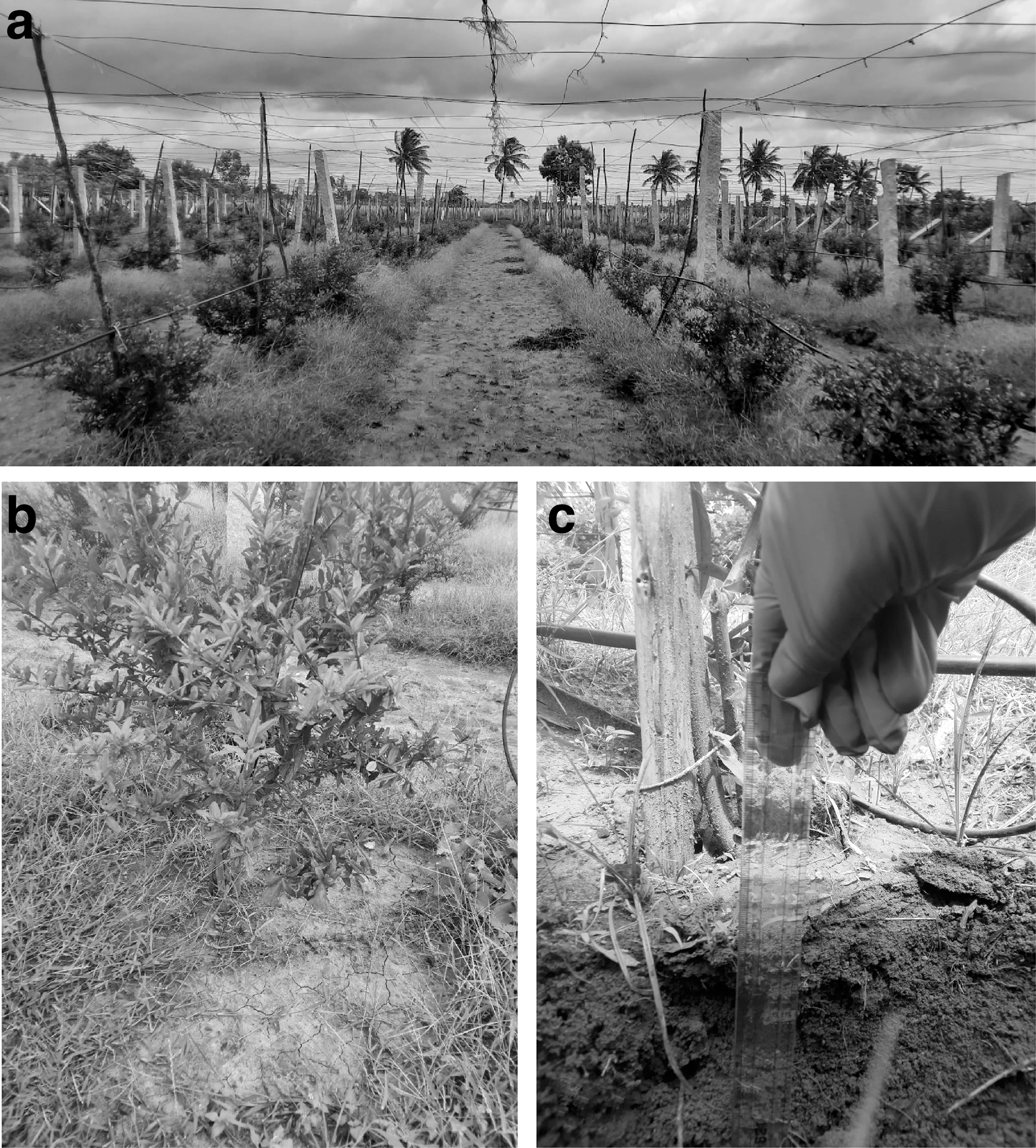
The land was left fallow for 2 years where previously “Bhagwa” variety was grown followed by monocropping of pomegranate again with “Bhagwa” variety. Drip irrigation was practiced in 1 acre of cultivated land. The plants were at their blossoming stage. There were no significant symptoms of pest and disease infestation in the plants. The recorded average temperature was 28–30°C with 43% humidity and 13 km/h wind speed, wind direction from the northeast.
The soil sample collected comprised rhizosphere and bulk samples that were randomly sampled from the four corners and center of the field. These samples were made to a composite sample with three replications of each. The soil depth chosen was top 15 cm representing the top soil adhering to the roots in case of the rhizosphere sample (Ravinath et al., 2022). Bulk samples were collected 2 feet away from roots to negate root influence. An overview of the methodology adopted in this study is provided in Figure 2.
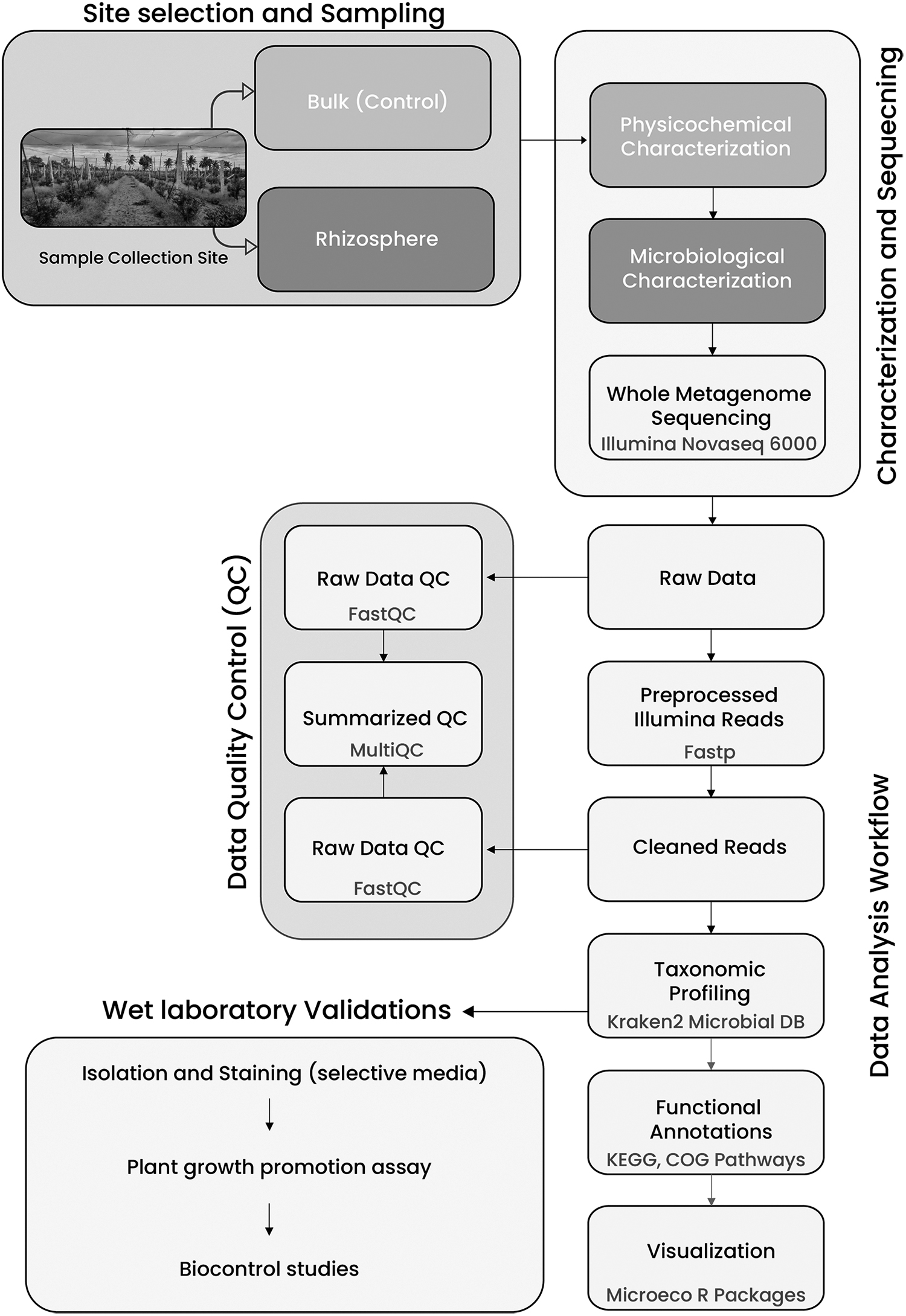
An overview of the study methodology, encompassing site selection and sampling, physicochemical characterization, microbial characterization, data analysis and quality control, and wet laboratory validations, such as growth promotion assays and biocontrol studies.
Physicochemical characterization of rhizosphere and bulk soil
The primary goal of the study was to identify microbial diversity and the bacteria that may operate as potential biocontrol agents and plant growth promoters in the bulk soil and rhizosphere. Hence, it was necessary to characterize the soil with regard to its physicochemical properties.
For each replication of the rhizosphere and the bulk soil sample, the following parameters were tested: pH, electrical conductivity, organic carbon content, macronutrients and micronutrients, total bacterial and fungal count. The macronutrients and micronutrients estimated were nitrogen (N), phosphorous (P), potassium (K), and chlorine (Cl), iron (Fe), copper (Cu), zinc (Zn), and manganese (Mn).
The electrometric method was used to measure the electrical conductivity and pH. Kjeldahl's method was used to measure total nitrogen, spectrophotometer for phosphorus, and flame photometer for potassium. For organic carbon and chlorine, titration method was utilized. For Fe, Cu, Mn, B, and Zn atomic absorption spectrometry was used. Total fungal count was calculated using the method for yeast and mold count of foodstuffs and animal feeds, total bacterial count by the Bureau of Indian Standards (IS 5401:2002) horizontal method for the enumeration of microorganisms colony count technique at 30°C for food and animal feeding stuffs (IS 5403:1999) (Ravinath et al., 2022).
Isolation of bacteria from rhizosphere and bulk soil
Serial dilution method was used to isolate bacteria from rhizosphere and bulk soil samples. One gram each of the rhizosphere and bulk sample replicates were mixed in 9.0 mL of saline solution followed by vortexing for 5 min to remove the debris, soil sediments, and other impurities (Gupta et al., 2002). The soil suspension was subjected to serial dilution of 10−1 to 10−6. From each dilution ranging from 10−1 to 10−6, 100 μL of the supernatant from each replicate of bulk and rhizosphere soil samples were transferred to nutrient agar media using spread plate method. The plates were incubated at 37°C in the incubator. The colonies obtained in each dilution for both the soil samples were subjected to Gram staining further to which the pure cultures from the colonies were screened for its plant growth promoting and biocontrol potential.
Gram staining
Gram staining was performed for all the isolates obtained from all the replicates of rhizosphere and bulk soil samples, R1, R2, R3 and B1, B2, B3.
Screening of Bacterial Isolates In Vitro from Rhizosphere and Bulk Soil for Plant Growth–Promoting Traits
Indole acetic acid production
The test for indole-3-acidic acid (IAA) was performed following the method standardized by Kamnev et al. (2001). The appearance of pink color was considered positive for IAA production.
Phosphate solubilization
This test was performed using Pikovskaya's medium. The presence of clear zone around the bacterial culture indicates the potential to solubilize phosphorus (Pikovskaya, 1948).
Production of ammonia
The isolates from rhizosphere and bulk soil samples were tested for ammonia production following the method standardized by Cappuccino and Sherman (1992). To 10 mL peptone broth, the bacterial cultures that were grown overnight were inoculated and kept in shaker incubator for 48 h at 30°C ± 0.1°C to which 0.5 mL of Nessler's reagent was added. The ammonia production is indicated by faint yellow to dark brown color.
Production of organic acid
The ability of bacterial isolates to produce organic acid was checked by growing them in MM9 broth, which is a minimal salt medium, for 2–3 days at 30°C. The indicator used is methyl red, which gives a pink color, indicating the production of organic acid.
Amylase activity
The isolates from bulk and rhizosphere samples were screened for amylase activity inoculated on starch agar medium plates. The plates were inundated with iodine after 48 h of incubation, allowed to sit for a minute, and then emptied off. Amylase production is indicated by clear zone development.
Cellulase activity
This test was performed in cellulose agar medium (Khianngam et al., 2014) with Congo red as indicator. The appearance of clear halo zone is considered positive test for cellulase production by bacterial isolates.
Characterization and Screening of Bacterial Isolates for Potential Biocontrol Property
Chitinase activity
The check for chitinase activity was carried out using component medium comprising colloidal chitin 4.0 (K2HPO4 0.7, KH2PO4 0.3, MgSO4 0.5, FeSO4 0.01, ZnSO4 0.001, MnCl2 0.001, agar 15.0, distilled water 1000 mL) for a duration of 5–7 days at 30°C. Chitinase enzyme production was confirmed by the addition of iodine and subsequent development of clear zone around the bacterial culture (Roberts and Selitrennikoff, 1988).
HCN production
The methodology standardized by Castric was adopted for this test (Castric, 1975). The isolates obtained from bulk and rhizosphere soil samples were inoculated on nutrient agar plates with glycine 4.4 g/L. After adding Whatman filter paper No. 1 impregnated with 2% sodium carbonate in a 0.5% picric acid solution, the plates were sealed. The color change of filter paper from deep yellow to reddish after 4 days of incubation suggested the synthesis of HCN (Bakker and Schippers, 1978).
Protease activity
The protease activity was determined following the methodology adopted by Chang et al. (2009). The nutrient agar media containing skim milk (3% v/v) was used for the test. The observation for the appearance of clear zone indicating protease activity was carried out after incubating the cultures for 48 h at 30°C.
Characterization of Vesicular Arbuscular Mycorrhiza
The plant growth–promoting rhizobacteria (PGPR) have been reported to be associated with mycorrhiza owing to the synergistic interaction influencing the plant growth positively. To confirm the association, study on vesicular arbuscular mycorrhiza (VAM) was carried out. Moreover, in our previous investigations on VAM infection in pomegranate, the roots of “Bhagwa” variety were collected from a field in Tumkur where organic farming was practiced. The roots showed VAM infection after staining and microscopic observation.
To confirm the presence of VAM (Ravinath et al., 2022), where conventional farming practices were adopted, the roots of pomegranate variety “Bhagwa” were processed and stained following the method described by Phillips and Hayman (1970), as in our previous study (Ravinath et al., 2022). Alkali hydrolysis of pomegranate root segments having a size of 0.5–1.5 cm was performed with 10% KOH in an autoclave for 1 h. This was followed by distilled water wash and alkali neutralization with 1% HCl for 1 h. The roots were then flooded with trypan blue 0.05% for 2–3 h. The stained roots were observed at 40 × for VAM infection. The VAM spores were isolated from the rhizosphere soil following wet sieving and decanting method (Gerdemann and Nicolson, 1963).
Metagenomics for Exploring Microbial Diversity
Shotgun metagenome sequencing of rhizosphere and bulk soil samples was performed using Illumina NovaSeq 6000 platform. Using the average of two separate data points from the Nanodrop 1000, the extracted DNA was quantified. On the 1% agarose gel, the purity of DNA was verified.
Library Preparation and Quality Control
The TruSeq® DNA Nano LP kit (Illumina No. 15041877, Illumina No. 20665713) was used to prepare the library. Measurement of final libraries were carried out using a Qubit 4.0 fluorometer (Thermofisher No. Q33238) and a DNA HS test kit (Thermofisher No. Q32851), in accordance with the manufacturer's instructions. The results obtained are given in Supplementary Table S1. Following the manufacturer's protocol, we used extremely sensitive D1000 screentapes (Agilent No. 5067–5582) to query the library on the Tapestation 4150 (Agilent) to ascertain the insert size.
Bioinformatics Workflow
Raw data quality assessment was performed using FastQC v.0.11.9 (default parameters) (Andrews, 2010) and summarized using MultiQC v.1.9 (Ewels et al., 2016) followed by preprocessing using Fastp v.0.20.1 (parameters:—trim_front1 6—trim_front2 6 -q 30 -l 50 -c—adapter_fasta) (Chen et al., 2018).
Postfiltered data were reassessed using FastQC and summarized using MultiQC. Taxonomic profiling was carried out using Kraken2 v.2.1.2 (Wood et al., 2019) based on KRAKEN2 microbial database, which comprised archaea, bacteria, fungi, protozoa, viral, UniVec Core (https://refdb.s3.climb.ac.uk/kraken2-microbial), and visualized using Krona. Stacked bar plots and box plots based on relative abundance were plotted using microeco R packages (Liu et al., 2021) (Fig. 3). Functional gene annotation was performed using Kyoto Encyclopedia for Genes and Genomes (KEGG) and COG pathways.

Stacked bar plot showing the predicted average relative abundance at various levels of taxa,
Functional Analysis of Metagenomes
To remove host specific reads, i.e., reads unique to Bos taurus, the processed data were aligned with the indexed B. taurus genome using Bowtie2 v.2.4.2 (parameters:—met-file) (Langmead and Salzberg, 2012). The SqueezeMeta pipeline v1.3.0 (Tamames and Puente-Sanchez, 2019) in sequential mode with MegaHIT assembler (default parameters) was then used to individually assemble the host filtered reads. Individual assemblies were binned using maxbin2 (Schmieder and Edwards, 2011). Barrnap was used to predict RNAs (Wu et al., 2016).
Using the RDP classifier, 16S rRNA sequences were taxonomically categorized (Seemann, 2013). Aragorn was used to predict the sequences of tRNA and tmRNA (Laslett and Canback, 2004). Prodigal was used to predict ORFs (Hyatt et al., 2010). Diamond HMM homology searches were conducted for the Pfam database using similarity searches, the databases used being GenBank, eggNOG, and KEGG (Eddy and Wheeler, 2011).
Pathway prediction for KEGG and COG (clusters of orthologous genes) databases was carried out using MinPath (Ye and Doak, 2009). A statistical comparison analysis for COG and KEGG functional annotation between bulk and rhizosphere groups was performed using the Statistical Analyses of Metagenomic Profiles [STAMP] (Parks et al., 2014) software v 2.1.3. Statistical significance of the differences between two groups was assessed by two-sided Welch's t-test, with no corrections. Features with small effects (<0.01) were removed.
Validation of Metagenome Data
Isolation and staining of bacterial stains using specific media
The plant was uprooted from the soil and gently shaken to collect the soil sample and the excess soil was removed that was adhering to the pomegranate plant (P. granatum). The data regarding most dominant species of bacteria in rhizosphere and bulk sample were extracted from whole-genome sequencing data. The bacteria, namely Pseudomonas, Bradyrhizobium, and Streptomyces, were isolated by serially diluting the soil sample in phosphate-buffered saline (0.05 M; 1 × ) solution (Karn et al., 2022). For each bacterial isolation, specific selective media were prepared, namely Pseudomonas agar base media, BJSM (Bradyrhizobium japonicum selective media) media, and maltose–yeast extract–malt extract (MYM) media. The serial dilutions were prepared from 10−1 to 10−5 and were plated accordingly by spread plate method (Elgohary et al., 2020). Each bacterial agar plate was cultured in triplicates and was incubated at 37°C for 48 h. After the incubation period the bacterial colonies were examined.
Various morphological traits, such as pigments, colony shape, elevation, border; texture; and opacity; were used to select representative colonies. After getting pure cultures, the ensuing tests were carried out (Yang et al., 2020).
PGP Assay of Bacterial Extracts
PGP activity of the bacterial extracts was carried out by qualitative and quantitative analysis of IAA. The 48-h broth cultures of bacteria (Streptomyces, Pseudomonas, and Bradyrhizobium) were subjected to 2–3 drops of Kovac's reagent for qualitative examination. The formation of cherry red indole ring indicates positive for IAA production (Kovacs, 1925). With a few minor adjustments, the wheat coleoptile test described in Madhu et al. (2012) was used to quantitatively analyze IAA in the bacterial extracts.
Studies of Biocontrol Potential of Bacterial Extracts Using Xanthomonas as Plant Pathogen
Preparation of bacterial extracts
Each isolate was inoculated onto yeast-malt extract broth and incubated at 30°C for 48 h while being shaken. Cell biomass was moved to the best medium for production and incubated at 30°C in a shaking incubator at 180 rpm during the best production time. A centrifuge was used to separate the supernatant and cell biomass for 15 min at 8000 rpm. In a separating funnel, the supernatant was collected and extracted using ethyl acetate at a ratio of 1:1 (v/v). A rotary evaporator was used to collect and concentrate the extraction results to obtain a crude extract of bacteria (Kurnianto et al., 2021).
Well diffusion method for antimicrobial assay
The Xanthomonas isolates were used as test pathogen for the study of biocontrol potential. Organism was dispersed using a sterile cotton swap into solidified Muller–Hinton agar medium for the present experiment. Three wells with a diameter of 4 mm were then formed onto the media using a cork-borer. Different bacterial extracts, including Streptomyces, Pseudomonas, and Bradyrhizobium, were poured into each well. Following a 24-h incubation period at 37°C in the plates, the zone of inhibition was measured and noted (Kausar et al., 2021).
Minimal inhibitory concentration of bacterial extracts
Broth microdilution assay was performed for minimal inhibitory concentration (MIC) determination (Schaechter, 2009). Equal portions of nutritional medium were collected in numerous Eppendorf tubes and serially diluted with crude bacterial extract concentrations. Following the administration of equal parts of Xanthomonas culture broth, the tubes were incubated at 37°C for 24 h (El-Sheekh et al., 2021). The absorbance was then measured at 600 nm using ELISA reader. Dunnett's multiple comparisons test was performed to arrive at best dilution of bacterial extract (MIC) by comparing the 100% concentration with other dilutions of bacterial extracts.
Results and Discussion
Physicochemical characterization of soil
The pH between the bulk soil (6.82) and the rhizosphere soil (6.93) did not differ. A neutral pH was noted. The neutral pH influences microbial diversity in a positive way. The organic carbon content in both samples were low, 0.42% and 0.49% for bulk and rhizosphere, respectively, which could be attributed to the land being left fallow for 2 years before cultivation. Data for the first agricultural season were collected. Macronutrients N, P, and K and micronutrients Zn, Cu, and B did not show significant variation between bulk and rhizosphere soil samples, whereas iron content in rhizosphere soil was higher (5.466%) compared with bulk (4.16 ppm). This could also be attributed to the cultivation practices.
The presence of high amount of chlorine was reported in rhizosphere (386.66 ppm) compared with bulk (313.33 ppm). The electrical conductivity of rhizosphere soil (118.33 μS/cm) was found to be optimal favoring the growth of microorganisms. Total bacterial count and fungal count significantly increased in bulk (922.66 colony-forming units [CFU] and 6 CFU) compared with rhizosphere (850 CFU and 4.66 CFU) sample. The fact that microbial diversity of rhizosphere soil is a subset of bulk soil justifies the abundance of organisms in bulk sample (Table 1).
Physicochemical Characterization of Bulk Soil and Rhizosphere Soil Sample
SD, standard deviation ±2; CFU, colony-forming unit.
The relatively high content of nitrogen could be attributed to the dominance of Proteobacteria members known for fixing nitrogen. The abundance of Bradyrhizobium kalamazoonesis in metagenome data support this finding. The enhanced microbial diversity could be correlated to low nitrogen content as substantiated in stress gradient hypothesis (Hammarlund and Harcombe, 2019).
Isolation of bacteria from rhizosphere and bulk sample
A total of 12 isolates, 4 from rhizosphere sample and 8 from bulk soil sample were isolated by serial dilution and spread plate method. All 12 isolates were Gram negative. Few were cocci and many were short rods (Supplementary Fig. S1).
Screening of isolates for plant growth–promoting traits
The isolates from rhizosphere sample were strongly positive for IAA test, whereas seven of eight isolates in bulk developed only faint pink color. All isolates tested negative for phosphate solubilization. Yellow picrate filter paper turned red brown in all 12 isolates showing its ability to produce HCN.
Cyanogenic bacteria have immense potential in controlling pathogenic bacteria thereby acting as biopesticides. The ability to enhance IAA production makes cyanogenic bacteria good PGPR (Sehrawat et al., 2002). The two isolates were amylase positive in rhizosphere, whereas only three isolates showed amylase positive in bulk. This feature would help these bacteria as PGPR by degrading organic matter in soil and thereby stimulating better plant growth. Bulk and rhizosphere showed one isolate each positive for cellulase activity, facilitating the decomposition of plant waste near the rhizosphere, enhancing plant growth and biofilm formation.
All 12 isolates were positive for NH3 production, which is a crucial characteristic associated to PGP. In general, it has been shown that the ammonia produced by PGPR delivers nitrogen to its host plants, promoting the elongation of the roots and shoots as well as the biomass of such plants (Marques et al., 2010) (Supplementary Fig. S2).
Screening of isolates for biocontrol potential
Protease activity was more prominent in bulk compared with rhizosphere samples. Six isolates from bulk were found to be chitinase positive. Proteobacteria, Firmicutes, and Actinobacteria members have good chitinase activity. This in turn helps validate our metagenome study. These bacteria have marked potential against pathogenic fungi, nematodes, and insect pests having chitin in the cell walls and exoskeleton (Banerjee and Mandal, 2019) (Supplementary Fig. S2).
Investigation of VAM in roots
The infection of VAM in the cortical cells of the root was confirmed with the presence of vesicles and arbuscules. Although vesicles denote the storage organs of VAM, arbuscules denote the fungal hyphae that is modified for the nutrient exchange between fungi and the host plant cell. VAM is an excellent biofertilizer for promoting plant growth and the presence of VAM has been reported to enhance the growth of beneficial organism (Nelson et al., 2008) (Supplementary Fig. S3).
Bradyrhizobium and arbuscular mycorrhizal fungi work together synergistically in the rhizosphere of soybeans to increase nutrient availability and crop growth (Meena et al., 2018). There are further instances of arbuscular mycorrhiza and Pseudomonas (Singh et al., 2013) promoting mycorrhizal development, enhanced disease resistance, and increased plant growth in Coleus. Although Pseudomonas sp. strain F113 did not exhibit antagonistic behavior toward G. mosseae, it did stimulate the growth of a mycorrhizal fungus (Barea et al., 1998). Streptomycetes members are also equally competent in showcasing synergistic association with mycorrhiza (Schrey et al., 2012).
Whole-genome sequencing and metagenomics
The Illumina NovaSeq 6000 platform was used to perform whole-genome sequencing on the replicates of the rhizosphere and bulk soil samples. The quality control test of the DNA isolated from the soil samples was successful. The samples could be sequenced because the library QC report was of good quality (Supplementary Table S1). Total number of raw reads were higher in rhizosphere sample (Supplementary Table S2). The trimmed reads had base pairs ranging from 118 bp to 144 bp, the G-C content varying from 61% to 64%, which ensures better read coverage while sequencing (Supplementary Table S3). The sequence information is provided in Table 2.
Sequence Information Obtained from Bulk and Rhizosphere Soil Sample
RO, read orientation; AGP, average GC percentage; SL, length of sequence in bp; TS, total sequences in millions.
Taxonomic profiling
Kraken2 program was used for assigning classification labels to the DNA sequences, which is reported to be ultrafast and efficient compared with BLAST. The advantage lies in the usage of k-mer exact-match database searches as opposed to imperfect sequence alignment. Kraken2 is more efficient in taxonomic classification compared with other classification tools as it can reduce the memory usage by 85% (Gerdemann and Nicolson, 1963). Kraken2 microbial database was used for taxonomy profiling and visualized using KRONA.
The taxonomic profiling of rhizosphere and bulk sample revealed the abundance of phylum, Proteobacteria, showing high resolution of Alphaproteobacteria followed by Actinobacteria (Supplementary Fig. S4). Similar results were reported in grasslands of Oklahoma (Spain et al., 2009). The prominence of Proteobacteria and Actinobacteria in agricultural systems where monocropping is followed was also reported by Pang et al. (2021), where sugarcane was grown intensively. The intensive monocropping of pomegranate could have led to the predominance of these two phyla. The rhizosphere effect leads to reduced pH and hence the abundance of Actinobacteria.
The microbial diversity within the replicates and between bulk and rhizosphere sample did not show much difference. This could be attributed to the fact that the soil characteristics of bulk and rhizosphere were not significantly different. Another justification could be the cultivation practices where the land was kept fallow for 2 years.
Visualization through heatmaps and boxplot gave a deeper insight of relative abundance right from phylum to the species level. The bulk and rhizosphere sample revealed the abundance of Proteobacteria, compared with Actinobacteria and Firmicutes, as reported in the previous study carried out by our team employing 16SrRNA sequencing (Ravinath et al., 2022). At the class level, Actinobacteria topped followed by alphaproteobacteria, betaproteobacteria, and gammaproteobacteria, which in turn is an indicator of good soil fertility with beneficial bacteria belonging to these classes.
The abundant species were reported to be Streptomyces indicus, B. kalamazoonesis, and Pseudomonas cellulosum as given in the heatmap and boxplot. The most abundant family being Streptomycetaceae, Comamodaceae, and Bradyrhizobiaceae, order being Burkholderiales, followed by Rhizobiales and Streptomycetales, as represented in the heatmap and boxplot.
The variation in the abundant phyla, class, and species of bacteria could be justified with the change in climate, time variation, and agricultural practices at the time of sample collection. This is the first report of S. indicus in an agricultural field. The only report of this species available as on date is from deep sea sediments (Luo et al., 2011). We also note to the best of our knowledge that this is the first report of novel species B. kalamazoonesis, belonging to the class Alphaproteobacteria and P. cellulosum to Gammaproteobacteria in the rhizosphere of pomegranate through the present study. The results are depicted as stacked bar plots and box plots (Figs. 3 and 4 and Supplementary Figs. S4 and S5).
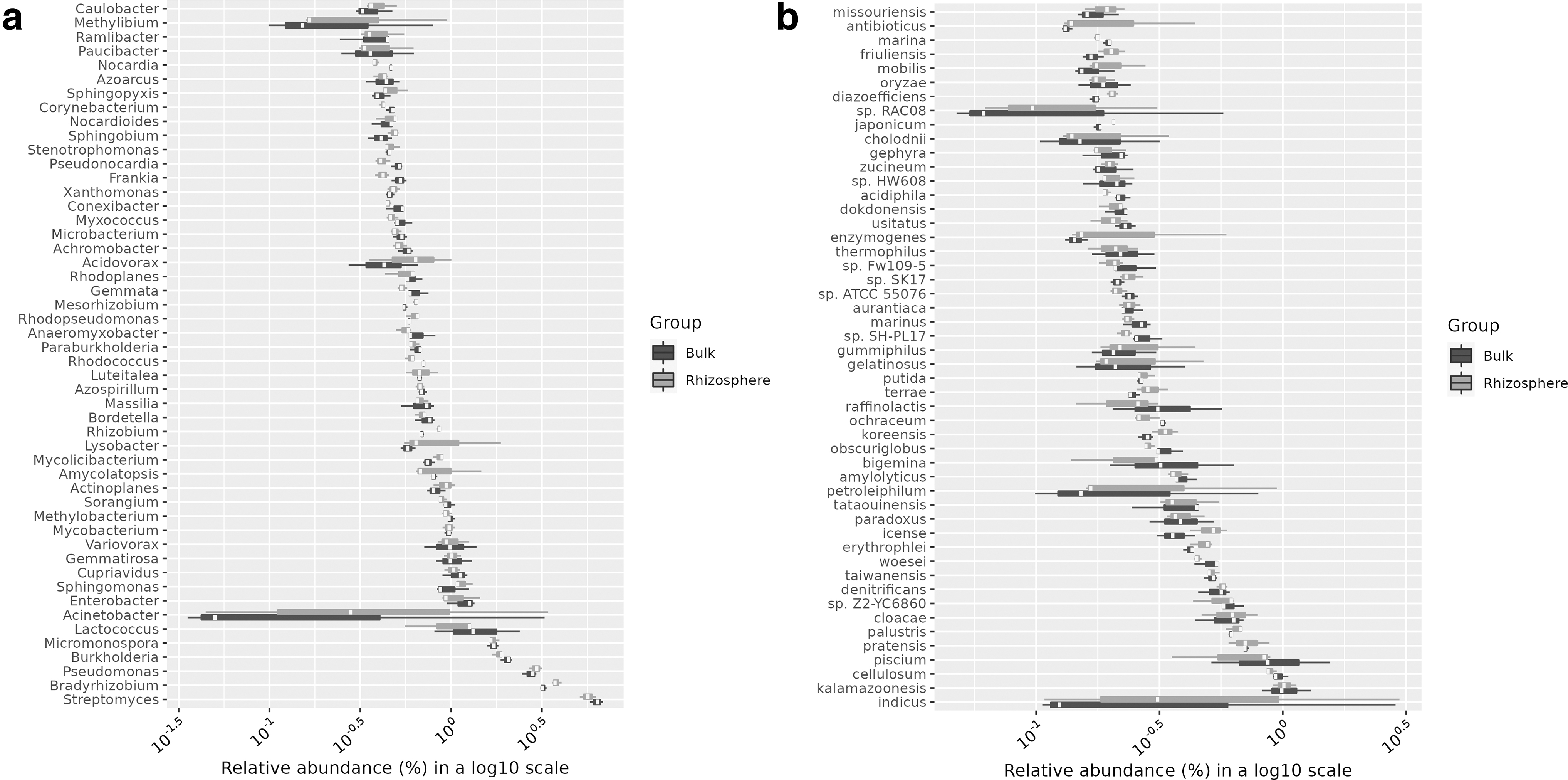
Boxplot for bulk versus rhizosphere group. Relative abundance
Figure 4 provides a statistical representation of the sample groups, bulk versus rhizosphere, at the genus level (a) and species level (b) in a boxplot format. The relative abundance estimates are provided in log scale. The two groups are represented in green (bulk) and red (rhizosphere).
Functional annotation
The KEGG was used for functional annotation. KEGG and COG pathway analysis reported similar hits of metabolic pathways. The major two hits of metabolic pathways in our study were eukaryotic serine threonine protein kinase and putative ATP-binding cassette (ABC) transport system and permease protein. Studies in bacteria have unveiled the functional role of eukaryotic serine threonine protein kinase in various physiological functions such as division of cells, secondary metabolism, and ability to cause infection (Burnside and Rajagopal, 2012; Pereira et al., 2011). Scientific reports also disclose the association of eSTKs (Eukaryote-like serine/threonine kinases) with binding of β-lactam antibiotics.
In addition, studies have shown that eSTKs control the cell cycle in Proteobacteria and bind β-lactam antibiotics in Actinobacteria and Fermicutes (Jones and Dyson, 2006; Yeats et al., 2002). Hanks-type serine/threonine kinases (STKs) are essential regulators of metabolism, stress response, biofilm formation, envelope biogenesis, and both free-living and symbiotic bacteria (Lipa and Janczarek, 2020). Numerous glycoconjugates on the cell surface of both Gram-positive and Gram-negative bacteria are exported via ABC transporters. Among these factors influencing pathogenicity in Gram-negative bacteria is the O-antigenic polysaccharide (O446 PS) component of lipopolysaccharide (Cuthbertson et al., 2007).
In both Gram-positive and Gram-negative bacteria, a variety of cell-surface glycoconjugates are exported via ABC transporters. The O-antigenic polysaccharide (O-PS) component of lipopolysaccharide is one of these determinants of pathogenicity in Gram-negative microorganisms (Cuthbertson et al., 2007). These are crucial for the uptake of nutrients and release of antimicrobial agents across the cell membrane. The biocontrol activity of the dominant species in our study, Bradyrhizobium, Pseudomonas, and Streptococcus could be attributed to the predominance of this metabolic pathway (Fig. 5).

Functional predictions with KEGG Orthology and COG.
Validation of whole genome sequencing
Metagenomic approaches coupled with wet-lab validation ensure the possibility of developing potential plant growth–promoting bacteria and effective biocontrol agents. In this direction, the most abundant species Streptomyces, Bradyrhizobium, and Pseudomonas revealed through metagenomic approach were isolated using selective media followed by testing them for its beneficial characteristics.
Isolation and staining of bacterial strains
Pure cultures of the various isolates were obtained through serial dilution and spread plate method for soil samples from rhizosphere and bulk. This was followed by Gram staining, morphological and biochemical characterization. Because all the isolates were Gram negative, few resembling Bradyrhizobium and Pseudomonas, showing the absence of Streptomyces through conventional wet-lab culture, selective media for all three abundant species reflected in metagenome study were prepared to isolate pure cultures from the soil samples.
The Streptomyces isolates found in MYM media were grayish white, lacked diffusible colors, and had powdery aerial mycelium with chains of spores. In BJSM media, the Bradyrhizobium isolates appeared as round colonies that were convex, opaque, and light pink in color. Not a single spore was seen to develop. Pseudomonas agar base media had the isolates with pearlescent appearance. The Gram staining of these pure cultures revealed the presence of Gram-negative short rods of Bradyrhizobium, Pseudomonas, and Gram-positive filamentous of Streptomyces. This shows the importance of metagenomic approach where from phylum to species level resolution of all the bacteria present in the soil sample is made available, which is not adequately represented by the cultivable representatives. The mere absence of Streptomyces in wet-lab culture through conventional method and its abundance in the scenario explored through whole-genome sequencing sheds light on the value of a metagenome approach.
PGP assay
The bacterial extracts of 48-h-old cultures of Streptomyces, Bradyrhizobium, and Pseudomonas were subjected to IAA production test. Streptomyces, whose cell-free supernatant contained the highest concentration of IAA (10−4 M), had the maximum intensity of pink color development using Covac's reagent (Table 3).
Concentration of Indole Acetic Acid in the Bacterial Extracts from Standard Graph of Indole Acetic Acid
IAA, indole-3-acetic acid.
For the synthesis of IAA, all three isolates tested positive. The wheat coleoptile bioassay produced the same results, with IAA in the broth being the cause of the elongation of wheat coleoptile after 24 h of incubation with bacterial extract from 2 cm to 3.5 cm on an average. The effect on coleoptile cell elongation and cell division did not significantly differ from one another, making all three excellent candidates as PGPR. The profound influence of the bacterial extracts on coleoptile length is a strong indication of significant amount of IAA present in the extract. We think that this property could positively influence the plant production and productivity if a future combination and consortium of these three species could be developed as PGPR and applied in agricultural fields (Supplementary Figs. S6 and S7).
Studies of biocontrol potential of bacterial extracts using Xanthomonas as plant pathogen
Xanthomonas isolated from wilt-infected pomegranate plants were used as test pathogen. Xanthomonas axonopodis pv. Punicae have been reported as the major pathogen causing bacterial wilt disease in pomegranate (Doddaraju et al., 2019). This is the rationale behind choosing the test pathogen as Xanthomonas in our study. The antimicrobial studies of Streptomyces, Bradyrhizobium, and Pseudomonas against Xanthomonas showed significant effect on the pathogen. The ELISA reader gave the minimum OD value of Xanthomonas with 75% concentration of bacterial extract.
The cultures of Bradyrhizobium, Pseudomonas, and Streptomyces showed very good compatibility for designing as potential mixed consortium. All three cultures tested for antimicrobial activity showed effective antagonistic activity against the common pathogen in pomegranate field, Xanthomonas the causative agent of bacterial blight of pomegranate, which was very evident comparing the control plate and test plates, and by extension, offering the promise that these species can be potential biocontrol agents. Dunnett's multiple comparisons test for OD values from ELISA reader gave an MIC of 75% of bacterial extract showing maximum antimicrobial activity (Fig. 6, Table 4, and Supplementary Fig. S8).

Minimum OD Value of Xanthomonas with 75% Concentration of Bacterial Extract (from ELISA Reader)
MIC calculated using ANOVA, p < 0.0001% followed by Dunnett's multiple comparisons test.
Dunnett's multiple comparisons test.
Mean difference.
95% confidence interval for difference in means.
Adjusted p value.
ANOVA, analysis of variance; MIC, minimal inhibitory concentration.
This investigation of microbial diversity in terms of abundance and functional annotation highlights the importance of metagenomic approach through whole-genome sequencing in exploring the beneficial microorganism in the rhizosphere of pomegranate that is not feasible through a conventional wet-lab approach. The validation of metagenomic data through wet-lab approach using selective media for the culture of the abundant organisms reflected in metagenome study followed by confirmation of the potential for enhancing growth and pathogen control proved to be a valuable approach in this study that aimed to inform future development of crop-specific PGPR and biocontrol agents.
To the best of our knowledge, the presence of S. indicus, B. kalamazoonesis, and P. cellulosum is being reported here for the first time through the present metagenome-based investigation of the pomegranate rhizosphere. The abundance of B. kalamazoonesis in the rhizosphere of pomegranate, a nonleguminous crop is noteworthy herein. The fine resolution from phyla to species level makes the approach in this study robust because lineages that are not characterized but beneficial for plant growth could be unraveled. Further validations through pot studies and field studies are necessary, however, so as to evaluate and verify the potential of these species as plant growth–promoting and biocontrol agents.
Future Outlook and Conclusions
Soil is perhaps the most intricate and varied habitat for microorganisms on the planet. Traditional methods based on culturable bacteria and more recent methods based on DNA analysis in soil reveal a huge diversity even at the genetic level (Das et al., 2021). Different chemical compositions and surface characteristics of the mineral particles affect microbial survival, activity, and soil solution composition. Microorganisms are vital for maintaining healthy soil as well as performing the tasks required for the highest crop and animal yield. These microbial interactions with plants include the provision of nutrients to crops, stimulation of plant growth, production of phytohormones, biological control of phytopathogens, improvement of soil configuration, accumulation of inorganic substances, and biodegradation of metal-contaminated agricultural soil (Das et al., 2021).
Against this overarching context, biofertilizers are organic substitutes for chemical fertilizers that are applied to the rhizosphere or to plants to help boost nutrient availability. Numerous plant growth–promoting microorganisms bring about a variety of contributions, including fixing, solubilization, transporting, and reusing essential minerals in the crop field to benefit crops and increase plant output. Bacterial organic fertilizers are a class of bacteria that aid in repairing various soil nutrients required for plant growth (Johns, 2015). They can fix nitrogen, saturate potassium and phosphorus or other micronutrients, solubilize them, and produce either chemicals that promote plant growth or organic compounds that control plant diseases. Thus, sustainable agriculture is promoted by using these microorganisms as biofertilizers to increase plant and crop productivity, soil fertility, and phytopathogen management (Ortiz and Sansinenea, 2022). Unfortunately, only 1–2% of organisms can be cultured, limiting the potential for exploring these organisms and validating the plant growth–promoting and biocontrol characteristics (Das et al., 2023).
Metagenomics help unveil the soil microbial diversity and the abundance of various beneficial and pathogenic microorganisms in the rhizosphere of bacteria (Ravinath et al., 2022). The whole-genome sequencing technique facilitates the exploration of microbial diversity and important metabolic pathways associated with plant growth and productivity. Previously, our group had elucidated the Indian pomegranate genome var. “Bhagwa” (Usha et al., 2022). The follow-up of wet-lab studies and validation can pave the way for developing potential biofertilizers and biocontrol agents integral to sustainable and organic farming.
In this study, metagenomic approach involving whole-genome sequencing using Illumina NovaSeq 6000 was used to elucidate the array of microorganism associated with the rhizosphere and bulk soil of pomegranate variety “Bhagwa.” The study informs and adds to the knowledge to better understand the functional genes and proteins associated with the microbial diversity, and with an eye to development of potential biofertilizers and biocontrol agents in the future.
In all, this study emphasized the influence of microbial diversity on root zone. Whole-genome sequencing identified plant growth–promoting rhizobacteria such as P. cellulosum, B. kalamazoonesis, and S. indicus, suggesting their potential as plant growth promoters and pest control agents in pomegranate agriculture. Two major hits of metabolic pathways in this study were eukaryotic serine threonine protein kinase and putative ABC transport system and permease protein.
These findings collectively warrant future research in relation to SDGs and so as to enable and innovate organic farming and pomegranate agricultural practices.
Footnotes
Acknowledgments
The authors thank the facilities provided by DBT-BIF facility, (BT/PR39804/7/976/2020) and DST-FIST facility for PG Level O (SR/FST/College-404/2018) at Maharani Lakshmi Ammanni College For Women, Bengaluru, India. The authors thank Dr. Vural Ozdemir for his comprehensive editing in this article.
Author Disclosure Statement
The authors declare they have no conflicting financial interests.

Abbreviations Used
References
Supplementary Material
Please find the following supplemental material available below.
For Open Access articles published under a Creative Commons License, all supplemental material carries the same license as the article it is associated with.
For non-Open Access articles published, all supplemental material carries a non-exclusive license, and permission requests for re-use of supplemental material or any part of supplemental material shall be sent directly to the copyright owner as specified in the copyright notice associated with the article.
