




Abstract
Introduction
B
Transurethral resection of prostate (TURP), pioneered in the early 1900s, is regarded as the gold standard in the surgical management of BPH. However, this technique can result in a number of acute (such as arterial or venous hemorrhages, urinary tract infection, and TUR syndrome, characterized by dilutional hyponatremia caused by irrigation fluids used in the surgery) or long-term complications (urethral stricture, retrograde ejaculation, and urinary incontinence). 4,5 In view of these, a number of novel techniques have been advanced in the recent years, like the Transurethral Holmium Laser Ablation of the Prostate (HoLAP), Transurethral Holmium Laser Enucleation of the Prostate (HoLEP), Holmium Laser Resection of the Prostate (HoLRP), Transurethral Incision of the Prostate (TUIP), Transurethral Vaporization of the Prostate (TUVP), as well as photoselective vaporization of the prostate (PVP).
Comorbidities and concomitant medication use increase the surgical risks in about 10–15% of patients with BPH, in whom minimizing the operative time and blood loss becomes a priority. Techniques as the PVP may offer an effective alternative in this population, as revealed by reports from other regions. 6 No systematic study has investigated the utility of PVP in BPH patients with surgical risks in our region, and our study attempts to fill this gap.
In this study, we report the findings on the application of PVP in the management of BPH and long-term follow-up of 229 patients receiving this treatment in our hospital over a 2-year period.
Methods
Patients
A total of 229 patients presenting to the urology clinic of our hospital with a diagnosis of BPH between January 2009 and December 2012 formed the prospective study cohort. Following a detailed history taking, all patients underwent systematic clinical examination. The laboratory investigations included routine urinalysis, ultrasonography, serum prostate specific antigen (PSA), and uroflowmetry to calculate maximal flow rate (Qmax). The severity of urinary symptoms was assessed using the International Prostate Symptom Score (IPSS).
Before the surgery, 50 (22%) of the patients were using aspirin, while coumadin and clopidogrel usage percentage were 16 (7%) and 5% of patients, respectively. Patients on anticoagulant medication were suspended from using aspirin 7 days before surgery and allowed to proceed 7 days after the surgery. Warfarin use was suspended for about 5 days and then started again to normalize the international normalized ratio, which was considered normal at <1.3. Surgery was allowed for patients with values near normal (range, 1.3–1.4).
Patients with a history of prostate cancer, neurological disorders, or spinal cord injury were excluded from the study.
Anesthesia
All the patients underwent spinal anesthesia with 10 mg bupivacaine and added doses of 10 μg fentanyl and if needed (prolongation of the surgery time and patient's anxiety) sedation was given.
Surgical technique
All the procedures were done by the same highly trained and experienced urologist. A 120 W High Performance System (HPS) (American Medical System, Incorporation, MN) was used for performing the surgery. The side firing ADD Stat™ laser fiber was placed in the cavity with the double sheath mirror (22.5F, 30°), and physiological saline was used as the irrigation fluid. The distance between the optical fiber side hole and the prostate tissue was ∼0.5 mm. The vaporization begins from the median lobe, the ADD optical fiber is continuously swept left and right, vaporization gradually proceeds up to the verumontanum, places the bottom part of the anterior urethra in the same plane as the bladder trigone, and vaporizes the lobes on both sides up to the prostate capsule. The procedure was done as reported earlier by Chen et al. 6
Parameters observed
We assessed the surgical operative time, total energy used, duration of indwelling catheter use, duration of hospital stay, and early and delayed postoperative complications. The IPSSs were reassessed during follow-up at 1, 6, 12, and 24 months following the surgery. During the follow-up, Qmax, postvoid residual volume, serum PSA level, occurrence of complications, and requirement for additional medications were evaluated.
Statistical analysis
Statistical Package for the Social Sciences (SPSS, Inc., Chicago, IL) v.19.0 software package (IBM Corp.) was used to perform statistical tests. Statistical results were presented as mean ± standard deviation along or as a percentage of total patients.
Results
Preoperative parameters
All the data were collected prospectively. A total of 229 patients formed the study cohort. The average age of the patient was 71.2 ± 9.6 years (range, 47–92 years). The mean PSA level of the patients was 3.68 ± 2.96 ng/mL (range, 0.3–17.0 ng/mL). All the subjects had moderate-to-severe symptoms, as revealed by the IPSSs ranging from 14 to 35 (24.7 ± 4.93). A total of 72% of patients received alpha-blockers preoperatively, while 4% received 5-alpha reductase inhibitors and 8% received a combination of these.
The preoperative prostate volume ranged from 20 to 160 cc (59.41 ± 28.1 cc). A total of 161 (70.3%) patients had a prostate volume <80 cc, while it ranged between 80 and 100 cc for 49 (21.4%) patients, and >100 cc in 19 (8.3%) patients (Table 1). Indications for surgery in patients with small glands were significantly lower than Qmax values measured with uroflowmetry with no response to alpha adrenergic blocker treatment.
Before surgery, the mean value of the maximal flow rate (Qmax) among the cohort was 8.66 ± 3.04 m/s (range, 3.5–17.0 m/s), while the postvoid residual urine volume (PVR) volumes ranged from 10 to 380 mL (83.86 ± 59.8 mL).
Intraoperative observations
The mean operating time among all patients was 47.35 ± 16.14 min (range, 20–100 min). The mean lasing time and operating time were lowest in patients with prostate volume <80 cc and highest in those who had prostates sized >100 cc (Table 1). The average energy use during the procedure was 184.39 ± 101.3 kJ (range, 32–446 kJ). The mean energy use was 140.10 kJ among patients with prostate volumes <80 cc and increased to 278.33 and 317.47 kJ, with increases in prostate volumes to 80–100 and >100 cc, respectively (Table 1). Figure 1 is showing view of the prostatic urethra after vaporization.
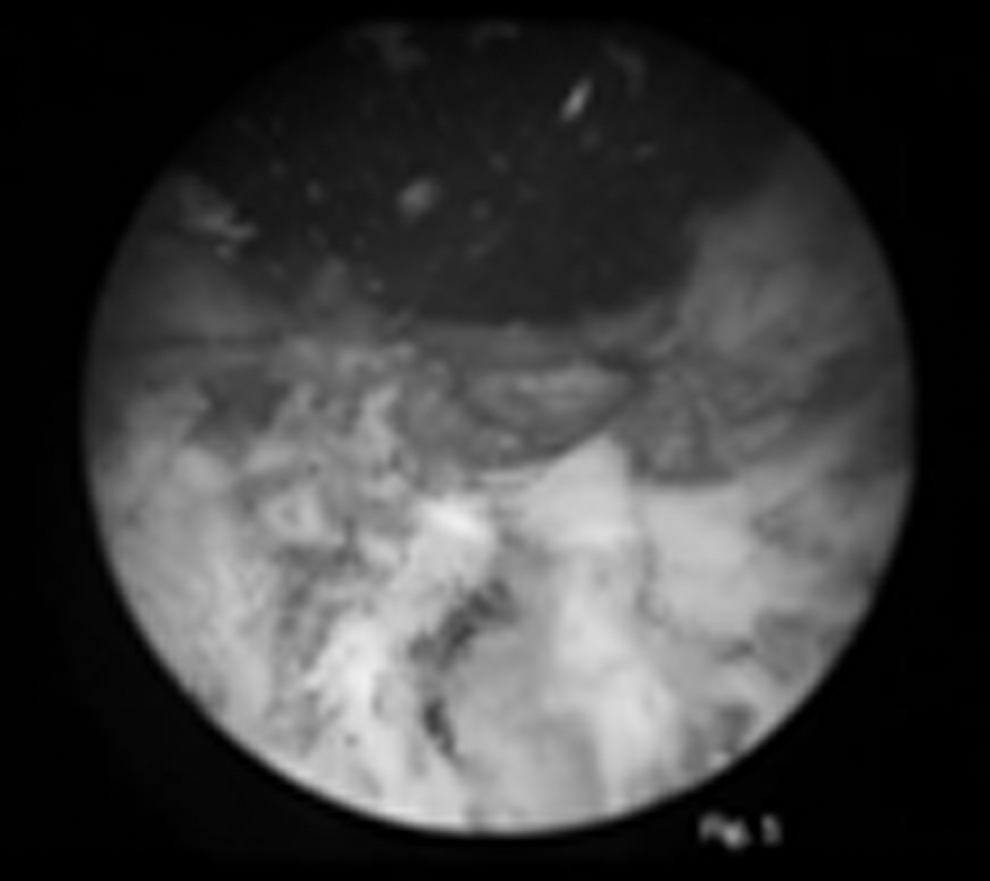
Intraoperative view of the prostatic urethra after vaporization.
A total of five patients (2.2%) required conversion of the operative procedure to TURP during the surgery, while one patient had capsular perforation.
Postoperative observations
The average time to catheter removal was 21.45 ± 11.06 h (range, 9–100 h), while the mean duration of hospital stay was 24.82 ± 11.5 h (range, 12–105 h), among all patients. As shown in Table 1, the mean time to catheter removal and duration of hospital stay was lowest among patients with a preoperative prostate volume <80 cc (19.74 and 22.95 h, respectively). In patients with prostate volumes between 80 and 100 cc, these times were 26.18 and 29.96 h, respectively, while the corresponding durations were 23.79 and 27.42 h in patients with prostates larger than 100 cc (Table 1).
During the period from hospital discharge to 1 month after surgery, 10 (4.4%) patients developed transient urinary retention, while 27 (11.8%) complained of urinary urgency. Urinary infection developed in 14 (6.1%) of the patients during this period, while 3 (1.3%) had urge incontinence.
During the period from 1 to 6 month after the surgery, two (0.9%) patients each developed urinary urgency and urinary tract infection (UTI). Between 6 and 12 months postsurgery, four (1.8%) patients developed urinary stricture. Repeat surgery was required in four (1.8%) patients between 12 and 24 months after the initial operation. The incontinences were urge incontinence, and all were pad free with anticholinergic treatment. Two of the urethral stenosis were meatal stenosis in which during cystoscopy sheath was hardly inserted with the narrowing of external meatus.
As shown in Table 2, all patient groups showed significant reduction in the IPSS from preoperative levels, as early as 1 month after the surgery. The low IPSS continued up to 24 months after the surgery, which was the last point of follow-up.
IPSS, International Prostate Symptom Score.
The mean value of Qmax increased to ≥15 mL/s in all age groups from the first month after surgery. The measurements increased by over twofold from the baseline scores and were comparable across the patient groups. The increase was sustained even at the follow-up after 24 months (Table 3).
Qmax, maximum urine flow rate.
Similarly, the mean values of PVR also reduced over 33% by 1 month after PVP, across all patient groups. The values decreased even further by the 6th month after surgery, but showed an increase in all groups during the follow-up at 12th and 24th months (although remaining well below the baseline) (Table 4).
PVR, postvoid residual urine volume.
When evaluated at 12 months after PVP, the mean serum PSA level decreased from 7.79 ± 2.95 to 4.27 ± 1.82 ng/mL in the group with prostate volumes >100 cc. The group with prostate sizes between 80 and 100 cc showed a reduction from 5.16 to 2.56 ng/mL, while the mean value decreased from 2.74 to 1.48 in the group with smaller prostates at this time point.
Discussion
PVP is fast emerging as an alternative to TURP for surgical management of BPH. Many reports have earlier reported on its safety and efficacy. 6 –9 The present study summarizes observations on the safety and efficacy of PVP using 120 W HPS laser in 229 patients attending our tertiary care hospital and the results of the follow-up over 24 months. Computed tomography showing prostatic urethra 2 years after vaporization is shown in Fig. 2.
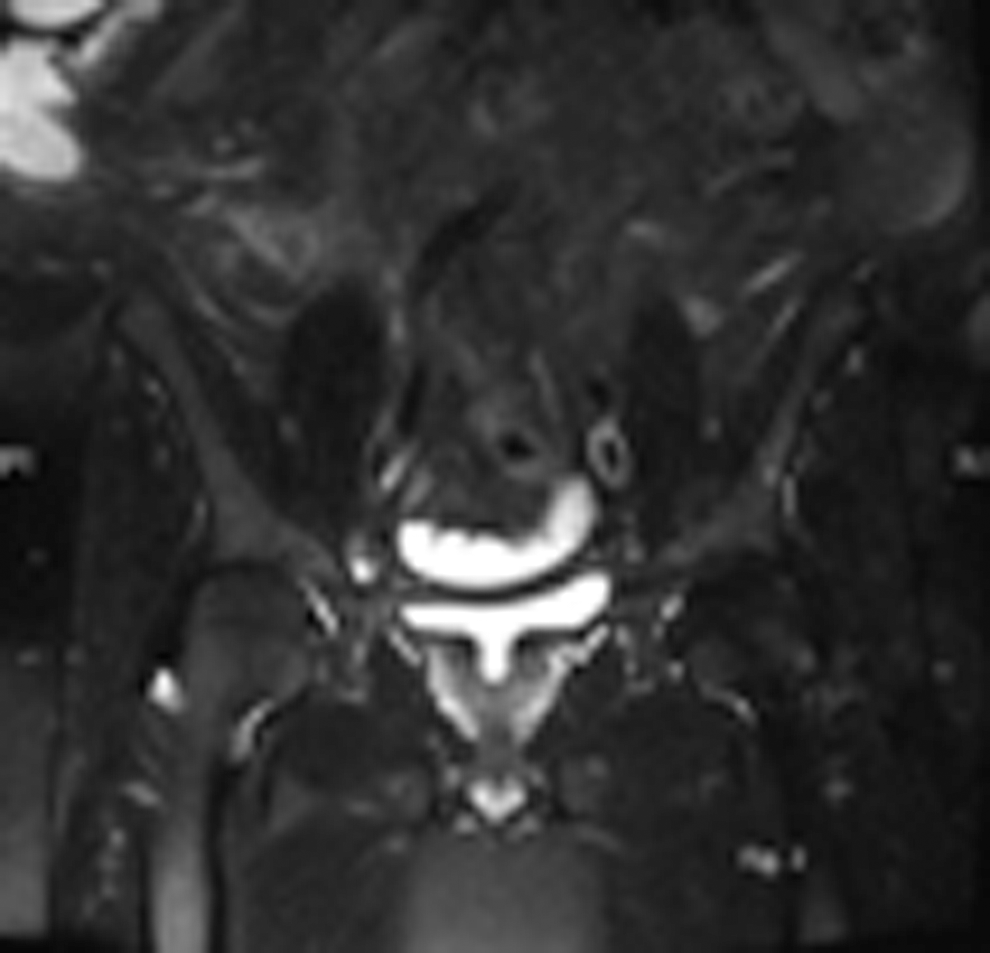
Computed tomography showing prostatic urethra 2 years after vaporization.
The study cohort included patients in the age range 47–92 years and with prostate volumes ranging from 20 to 160 cc. Despite concomitant use of medications, including alpha-blockers, 5α-reductase inhibitor (ARI), or combinations thereof, PVP was completed successfully in all patients except five whose disease necessitated TURP.
The average operating time in this study was 47.35 min, which seems to be greater than that reported earlier by Choi et al. 10 who used 120 W HPS laser for BPH surgery. However, the mean energy use and duration of catheterization in the present study were comparable to his findings. Mosli et al. 11 had reported lesser durations of operative time, as well as hospital stay, earlier.
Dyachuk 12 recently reported comparable clinical efficacy of PVP with TURP, when prostate volume was 80 mL, and superior clinical efficacy of the former in patients with larger prostates.
Batura et al. 13 in a study comparing both methods observed that complication rates (15.4%) were comparable among patients who underwent PVP with 120 W HPS and TURP. Among the patients who underwent PVP, 4.3% required repeat surgery, while urethral stricture developed in 3.4%. In the present study, complications mostly occurred in the first month after the surgery, included transient urinary retention, urinary infection, urgency, and urge incontinence, and resolved eventually. Our findings appear to be in consonance with the observations of Teng et al. 14 of low occurrence of complications following PVP. Four patients in the present series required repeat surgery between 12 and 24 months after PVP. This seems to agree with the observations by Teng et al. 14 on re-interventions following PVP.
In a meta-analysis of six randomized control trials and five case–control studies, Ding et al. 15 observed no significant differences in IPSS, Qmax, QoL, and PVR between patients who underwent TURP and PVP. Teng et al., 14 in a meta-analysis, reported no significant difference among Qmax, PVR, and IPSS between TURP and PVP at 1 month after the procedures, which was also maintained at 6 months of follow-up. Zang et al., 16 in a recent meta-analysis, observed no significant differences between PVP and TURP in terms of QoL, Qmax, IPSS, and PVR among the recipients of both methods, when followed up at 1, 3, 6, 12, and 24 months later.
In the present study, PVP using 120 W HPS effectively reduced the IPSS within 1 month in the group of patients with prostate volume <80 cc, while reductions occurred in patients with larger prostates (Table 2). This is greater than that reported in a study by Capitán et al. 17 who undertook a randomized controlled trial comparing PVP and TURP.
In the present study, Qmax values increased by over 2.2-fold compared to the preoperative measurements in all groups. The change was comparable across all patient groups, and the enhancement was maintained at all points of follow-up. This appears to agree with earlier reports by Capitán et al. 17
A comparable reduction of over 1.8-fold in mean serum PSA level also occurred from the preoperative levels, across all patient groups, when evaluated at 12 months after PVP.
The present study revealed a short duration of catheterization and time to discharge from hospital in patients treated by PVP. This is in consonance with similar observations by Capitán et al., 17 Lukacs et al., 18 Pereira-Correia et al., 19 Ding et al., 15 Tasci et al., 20 and Zang et al. 16
Conclusions
Findings from our study reveal that PVP using 120 W HPS laser is a safe and effective option in patients on anticoagulant medications and is associated with a lower incidence of complications. This technique induced sustained improvements in subjective and objective parameters associated with BPH and had a shorter time to removal of urinary catheter and overall hospital stay. However, we believe that it is essential to confirm the novelty of this procedure with more prospective studies, such as ours.
Footnotes
Author Disclosure Statement
No competing financial interests exist.