




Abstract
Objective:
To evaluate the effectiveness and safety of a 675 nm laser device in the treatment of facial aging.
Background:
Wrinkles represent a major sign of aging skin and are considered a major topic in cosmetic dermatology, representing a common problem that negatively impacts patients' quality of life. Different types of treatments are currently available. The aim of this study was to assess the efficacy and safety of a new 675 nm laser source system on facial wrinkles.
Methods:
A total of 22 consecutive female (age 49.36 ± 8.72) patients, with Fitzpatrick skin types II–IV and facial wrinkles, were treated with three sessions of a 675 nm laser system. Efficacy of treatment was assessed using the Modified Fitzpatrick Wrinkles Scale pre and postoperatively before 3 months.
Results:
All 22 patients treated with the 675 nm laser had a significant improvement of facial wrinkles according to the FWS (from 1.59 ± 0.80 to 1 ± 0.64; p ≤ 0.001). No side effects occurred except a mild erythematous rash in two patients.
Conclusions:
This novel 675 nm laser system can be considered a promising and effective tool in patients with facial wrinkles, and it involves a simple post-treatment management.
Introduction
Wrinkles are major clinical alterations of aging skin. The dermal layer of the skin contains well-organized and oriented collagen fibers that contribute to its firmness and smoothness. Cutaneous aging is a multifactorial process depending on both intrinsic factors (genetics, hormone, and metabolic), and extrinsic factors [long-term exposure to solar ultraviolet (UV), air pollution, smoking, poor nutrition, and chemicals]. 1
Intrinsic aging of skin is genetically determined, with different genes being involved. A genetic defect may lead to telomerase deficiency and thus to a blockade of cells in the basal layer replication, inducing the epidermis to become thinner. Intrinsic aging skin includes also an alteration of elastin, fibrillin, and oligosaccharides. 2,3
An estrogen deficiency typical of menopause results in a rapid increase in skin aging. Hypoestrogenism causes a reduced production of hyaluronic acid with a consequent decrease in skin viscosity. The skin becomes tightened and thin, dry and wrinkled especially on the face, the seat of the greatest expression of hormonal receptors. 4
Moreover, also the reactive oxygen species play a critical role in dermal extracellular matrix alterations of both intrinsic aging and photoaging. 2
Exposure to UV radiation is the primary factor of extrinsic skin aging. The sun exposure mainly affects the stratum corneum, resulting in thickened skin due to reduced expression of collagen type VII in keratinocytes. Type VII collagen is the anchoring fibrils at the dermal–epidermal junction. This decrease contributes to wrinkles due to the weakened connection between dermis and epidermis, with an accumulation of abnormal elastic tissue deep in the dermis. 5,6
Facial wrinkles may be classified into two types according to recent studies. Static wrinkles are always visible even when all facial muscles are resting as they developed in thin stretched skin as a result of premature or natural aging processes. Dynamic wrinkles, on the contrary, appear temporarily after facial expression.
Degradation of collagen and abnormal elastin accumulation in the superficial dermis may cause loss of thickness and elasticity with formation of wrinkles. 7
Treatment of facial wrinkles has become a major topic in cosmetic dermatology.
Development of nonsurgical procedures such as toxins, fillers, and chemical peels has restricted surgical indications and motivates patients to choose more easily these treatments. 8
Treatment of facial wrinkles involves the use of different types of ablative and nonablative lasers. Ablative lasers target epidermal and dermal water, whereas nonablative lasers heat the epidermis, stimulating the fibroblast activity to produce new collagen. This treatment results in lower side effects and reduced downtime. However, this also means that more clinical sessions may be required to achieve the desired results especially when treating deep lines or wrinkles.
Both CO2 and Er.YAG microablative laser systems and nonfractional nonablative systems in the near infrared (NIR) use water as a chromophore to transfer energy to collagen fibers. This step, although it has a proven efficacy, involves the entire dermal epidermal sector by introducing a more complex postoperative management. 9
A new device emitting a red light at a wavelength of 675 nm has been evaluated. At this, the length waves show characteristically a high affinity with collagen fibers and minimal interaction with the vascular component. In this way, the device acts directly on the collagen.
The aim of the study was to investigate whether this new 675 nm fractional laser (RedTouch™; Deka Medical Lasers, Italy) induces remodeling of collagen, reducing the risks of side effects and simplifying post-treatment management in comparison with traditional ablative and nonablative lasers. 10
Materials and Methods
The study included 22 consecutive female patients (median age 49.36 ± 8.72 years), with Fitzpatrick skin types II–IV and facial wrinkles. These patients were treated in the Dermatology Department of University of Rome “Tor Vergata” and the Dermatological Unit of Magna Graecia University in Catanzaro, Italy. Patients were treated with three sessions of the RedTouch laser with standard settings (power: 10 W, dwell time: 300–400 ms, spacing: 1–1.5 mm, cooling: 5°C) (Table 1).
Device Technical Specifications
The system includes a 15 × 15 mm scanning system capable of generating ablative microzones and selective thermal damage on treated areas preserving the epidermal layer from heat damage thanks to a 5°C integrated skin cooling system.
A transparent conductive gel was used in all procedures (Ultrasound transmission Gel G007 Eco by Fiab
Exclusion criteria for the study were the following: hypersensitivity to light in the NIR wavelength region; use of photosensitive medications; use of anticoagulant and/or immunosuppressant drugs. Patients with seizure disorders triggered by light, pregnant patients, patients with personal or family history of skin cancer, and patients who have been exposed to the sun for several hours in 3 weeks before treatment (for any skin type) were excluded; also, tattoos or skin disorders on the treated areas were contraindicated to treatment.
Sessions were performed with a 30-day interval.
Treatment was carried out by passing the handpiece in contact with the skin surface, without excessive pressure, with consecutive spots and no overlapping on affected areas. Two laser passes were performed. Areas close to the bone surface (forehead, cheekbone, etc.) were treated with only one passage to avoid minor burns and/or hyperpigmentation. Application of topical anesthetics was optional: it was used in only three patients and completely removed before treatment. After treatment, skin was cooled with cold water-soaked gauzes and a nonsteroidal anti-inflammatory cream was applied. 11 Postoperative recommendations included the use of total block mineral sunscreens for the whole treatment and follow-up period.
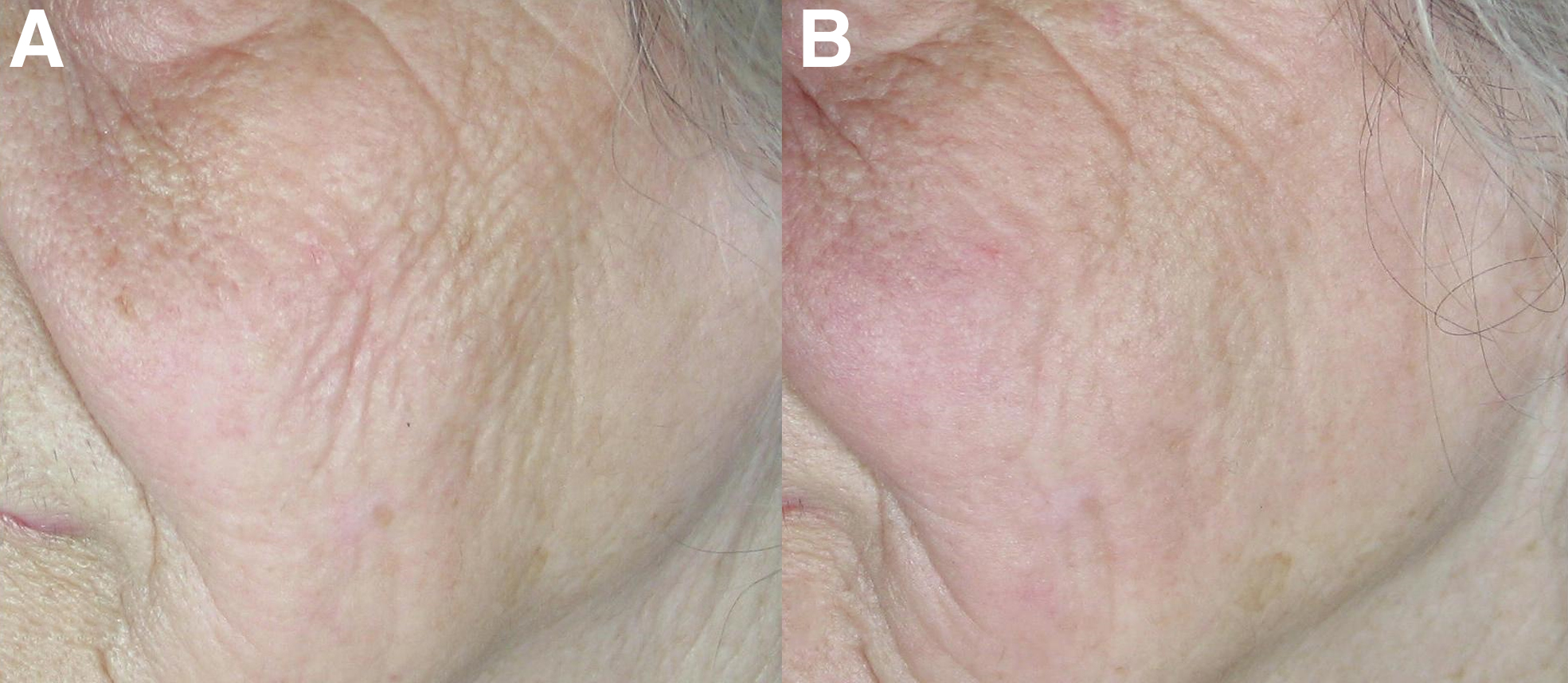
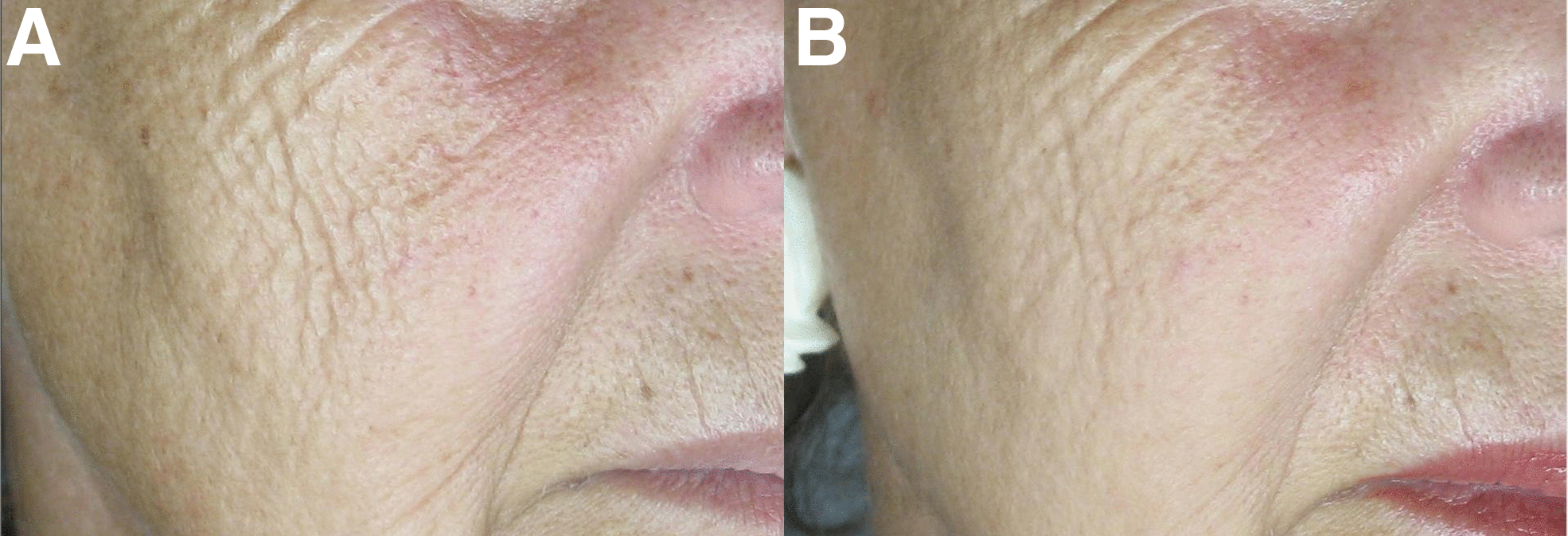
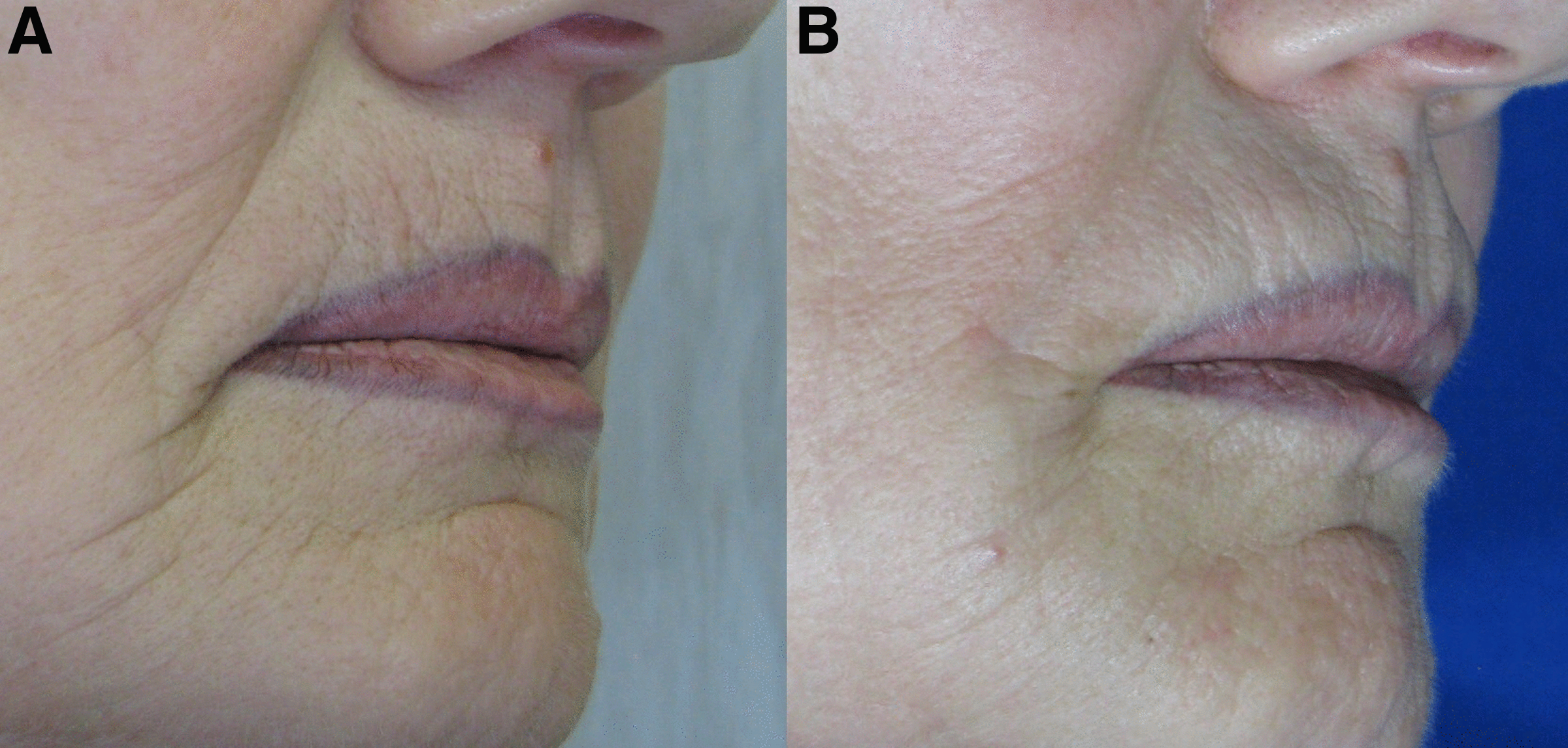
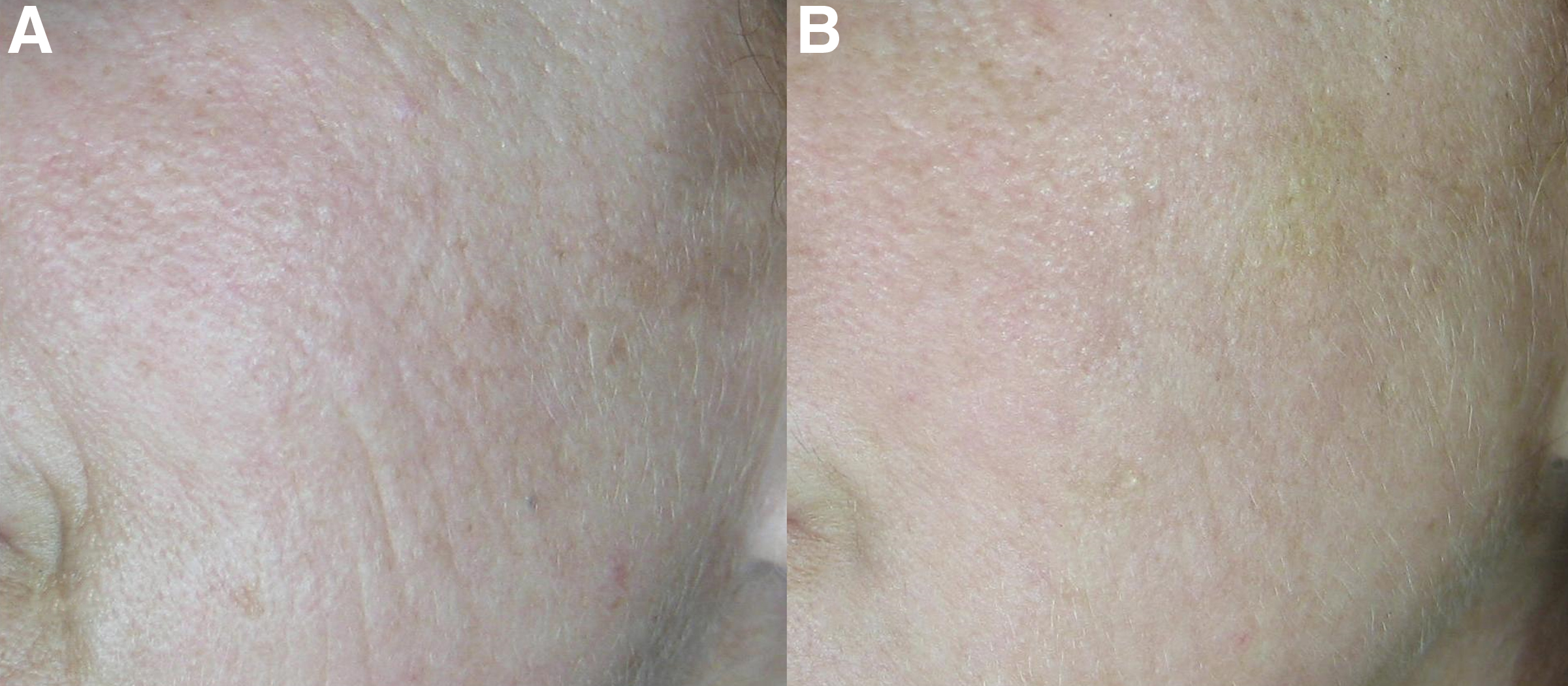
The efficacy and safety of the study were assessed using three methods: Comparison of digital photographs before and 3 months after the last treatment. Modified Fitzpatrick Wrinkles Scale (FWS) assessed by investigator compared with baseline
12
(0—no wrinkles, continuous skin line; 0, 5—very shallow yet visible wrinkle; 1—fine wrinkle; 1, 5—visible wrinkle up to 1 mm in depth; 2—visible wrinkle from 1 to 2 mm in depth; 2, 5—wrinkle 2 to 3 mm in depth; 3—deep wrinkle >3 mm in depth). Visual Analog Scale (VAS) of 5 points (0—none, 1—slight pain, 2, 3—moderate pain, 4—severe pain, 5—intolerable pain) to evaluate safety and tolerance.
The appearance of side effects such as blistering, scarring, burns, hypopigmentation, or hyperpigmentation has also been monitored. Statistical analysis was performed using paired Student's T test. Informed consent regarding the possible risks of the procedures and the use of photographs for scientific reasons were obtained. This study was approved by the Ethics Committee Calabria Centro with reference number 373/2019. Patient's characteristics are reported in Table 2.
Patients' Characteristics
FWS, Fitzpatrick Wrinkles Scale; VAS, Visual Analog Scale.
Results
Nineteen out of 22 patients treated with the RedTouch laser had significant improvement of facial wrinkles according to FWS and photographic evaluation. The scores decreased significantly from baseline (1.59 ± 0.80) to 3 months of follow-up (1 ± 0.64) after the last treatment (p ≤ 0.001) (Figs. 1 –4). Pain, measured using VAS, was minimum (Pain VAS: 1.32 ± 1.09) for the majority of subjects, with good patient satisfaction. The only side effect, occurred in two patients, consisted of minor burns.
Discussion
Treatment of facial wrinkles has become a major issue in cosmetic dermatology. Superficial wrinkles are associated with textural changes of the skin surface caused by intrinsic and extrinsic changes with abnormalities in the metabolism of collagen and elastic fibers. 13 Ablative lasers vaporize tissue and therefore are more aggressive when compared with nonablative lasers. The potential damaging risks associated with nonablative lasers are significantly lower when compared with ablative ones. 14 The major benefit for these devices is their significant reduction in postoperative downtime when compared with CO2/erbium lasers. 10 Patients experience as little as a few hours of erythema without other side effects such as scaling or peeling of the skin. Nonablative lasers offer different targeted treatments focused on textural improvements, acne treatment, and overall skin aging. These devices may also be used in patients with darker skin types because, unlike ablative lasers, they do not induce hyperpigmentation. The system used in this study emits a 675 nm wavelength red light through a 15 × 15 mm scanning system. In addition to power and pulse duration, the distance between microthermal zones has been added as a third operating parameter.
The depth reached at each emission has been calculated at 400 microns. Therefore, a thermal column is formed; this thermal column conducts heat to the surrounding areas causing immediate collagen shrinkage and denaturation with subsequent new collagen formation and consequent wrinkle “smoothing.”
The system used in this study allows different possible combinations of the abovementioned operating parameters to treat different signs of skin aging. The device is also equipped with a 5°C skin contact cooling handpiece to preserve the epidermis from damage caused by the increase in temperature.
Its wavelength has high affinity for collagen fibers, and therefore, in our opinion, it represents a promising treatment strategy for wrinkles, without interaction with the vascular component of the dermis; therefore, risk of side effects and post-treatment management are minimized.
Fractional microablative rejuvenation, another potential treatment for skin aging, acts by producing areas of thermal damage with ablative and coagulation components due to the interaction of the CO2 or Er:YAG laser with the water chromophore. The great benefit brought about by cell renewal entails the formation of fibrin microcrusts with careful postoperative management. 15 On the contrary, fractional nonablative rejuvenation systems use NIR sources that interact with water to generate coagulation columns with the formation of microscopic epidermal necrotic debris (MENDs) or dermoepidermal detachment typical of the postoperative course of NIR systems. 10
Both CO2 and Er:YAG microablative laser systems and nonfractional nonablative systems in the NIR use water as a chromophore to transfer energy to collagen fibers and involve the entire dermal epidermal sector by introducing a more complex postoperative management. 9
This new 675 nm wavelength device, according to its spectral absorbance, acts directly on the collagen component: heat is directly transferred to collagen fibers without targeting other chromophores. 16
The energy delivered to collagen induces collagen regeneration, hence promoting the production of dermal collagen and the straightening of elastic fibers. This new laser device has been proposed also in the treatment of other lesions rich in collagen, such as acne scars, 17 with very promising results. Thanks to its high affinity for melanin, this device has been also proposed in the treatment of hyperpigmentations. 18 Treatment is easy to perform, and not very painful thanks to the preventive skin cooling. The laser used creates 1-mm-wide thermal zones with no damage of the epidermal layers thanks to the contact cooling system. No formation of MENDs or dermoepidermal detachment has been observed unlike the postoperative course of fractional systems with an NIR emission with smaller spot sizes (100–300 micron). Absence of crusts and/or microcrusts in the postoperative time gives a minimal impact on the relational life of the patients. The RedTouch laser ability to act on collagen fibers makes this device promising for the treatment of chronoaging and pigmented disorders.
Limitations of the study include the small number of patients without a control group. Further, evaluation by means of the Fitzpatrick Wrinkles and Elastosis Scale (FWS) and photographs to determine the clinical severity of facial wrinkles were performed using investigator evaluation.
Conclusions
In conclusion, the results of this study show that the 675 nm laser source system used in this study may be considered an effective and safe tool to treat signs of skin aging such as wrinkles. Further, it is associated with a low risk of side effects and a simple post-treatment management.
Footnotes
Acknowledgments
Special thanks to Mr. Tiziano Zingoni for his contribution to the work.
Author Disclosure Statement
No competing financial interests exist.
Funding Information
No funding was received.