




Abstract
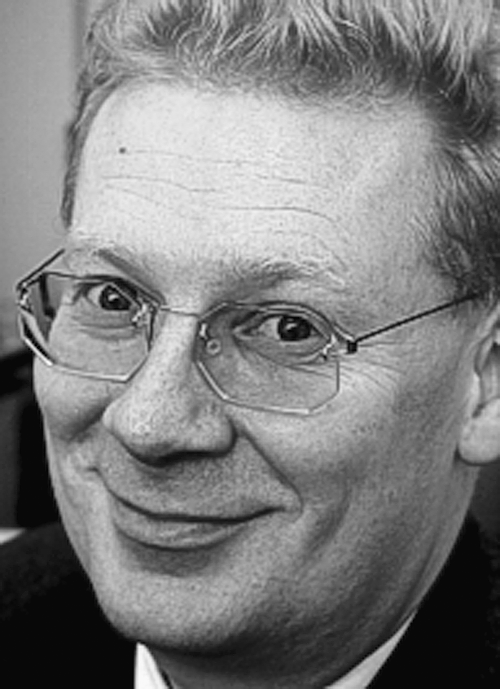
Augustinus Bader is a full Professor of Stem Cell Biology and Cell Technology at the University of Leipzig. He studied medicine in Italy (Chieti), Germany (Würzburg), China (Shanghai Second Medical College), Switzerland (Bern, Inselspital), and the United States (Boston, Massachusetts General Hospital, Harvard Medical School). He has a specialization (habilitation) in experimental surgery and is also a board-certified pharmacologist and toxicologist. He was Germany's first Professor of Tissue Engineering. He holds 220 patents or patent applications and has contributed to more than 140 peer-reviewed papers, books, and book chapters. His innovations include bioreactor systems for bone and cartilage engineering, cardiovascular systems, skin and hepatic bioreactors that can be cryostored, corresponding cell culture processes, the detection of a therapeutic proteins that lead to tissue regeneration (e.g., liver and skin), the latter of which is being tested clinically with significant success. Bader has been a Board Member (Treasurer) of the European Tissue Engineering Society (ETES) and Governor of the European Society for Artificial Organs (ESAO) and serves on the editorial board of Artificial Organs as well as Cells Tissues and Organs. In 2001 he initiated the International Foundation for Regenerative Medicine, a nonprofit organization that supports the implementation of regenerative medicine. He sees stem cell therapy as a social technology and supports its application in a clinical environment from the perspective of this foundation. He has also been a founder of biotech companies that are now bringing first-drug applications to clinical trials. He teaches pharmacology and toxicology, experimental surgery, medical biotechnology, and tissue engineering in a number of university-based courses, but also contributes to international training workshops and summer schools both nationally and internationally, including Italy and Austria (visiting professorship at Krems Donau University). He has also been a coordinator of the European Union projects, coordinator/partner of several national multidisciplinary projects, and organizer of major international congresses in the field of regenerative medicine and tissue engineering in 1998, 2001, 2003, 2005 and 2010. In October, 2009, he coordinated the formation of the World Federation and World Virtual Institute of Preventive & Regenerative Medicine, to act as a globally positioned cluster of excellence.
What are the main themes of your group's current research?
A.B.: I work in the field of stem cell therapies, specifically, primarily with the patients' own autologous stem cells. The approach I am developing provides a clinically advantageous alternative to the main cell culture–based strategies used worldwide at present, which usually involve taking cells that are expanded in vitro in a laboratory and creating an implant that you can then bring back to the patient for transplant. This current strategy is very complicated logistically, takes a relatively long time, and requires a two-step procedure for the patient. Expanding the cells in vitro can take several weeks, and doing this outside the body makes it much more difficult to control, takes a long time, and causes significant costs. Furthermore, cells kept in culture for long periods of time usually go into dedifferentiation, and it is difficult to control for infection at the time of reimplantation. Additionally, oncogene activation even in just one of the hundreds of thousands or millions of cells being expanded in vitro can increase the risk of cancerous transformation after reimplantation. Most of all, the testing for oncogene activation at the time of implantation for the idenfication of such transformed cells is unrealistic at present.
The strategy I propose is to employ combined technologies for endogenous stem cell activation and to use the mechanisms related to normal wound-healing processes to allow regeneration of defects that are too large or complicated to be repaired in a normal wound- -healing situation. Use the human being as the bioreactor and, in a sense, capture all of the knowledge we have about activating or leading cells into commitment to translate into the patient. Interacting with clinical partners, our group has developed techniques that we apply now to different types of tissues.
Let me explain the physiology behind this concept: If I were to cut myself on my left arm and would have an injury, for example, my body would immediately recognize the exact location of the site of injury and start to react by releasing cytokines that trigger stem cells to be activated. We use this mechanism to guide the injured tissue in combination with an equally rapidly prepared implant through the process of regeneration that occurs in smaller wounds. We take advantage of this intrinsic stem cell activation to help the body repair defects that are so large that it would not normally be able to do so because scar formation would occur first. We have developed a technology that reduces the risk of scar formation and instead stimulates the body to go into bone, muscle, or skin regeneration in a much better way. All of this is done inside the body. We have developed techniques to automate the cell preparatory process, which is equally done intraoperatively.
We have learned how to take advantage of and stimulate the normal wound-triggered regenerative capacity present in human beings and animals. So far this has worked well in all preclinical models and tissues tested. Thus, because this mechanism is independent of where the injury is, we most likely have only one basic mechanim to respond in wound healing. Bone, liver, or skin—it appears always to be the same basic mechanism. We are learning how to use this mechanism to trigger regeneration and are adding a “copy” material, which is a synthetic material we place in large wounds or defects to facilitate structural repair. The risks and drawbacks from pure in vitro technologies come from initiating stem cell–driven regeneration in the absence of trauma, which would naturally trigger these events. We needed to develop methods for propagating stem cells and lead them to indefinite replication, which is not a typical physiological response. This is a conditioned form of replication that stops when the wound has healed. One of the first papers describing the basic mechanism relating to wound cytokines to trigger stem cells for regenerative effects and showing the first clinical results will appear in Rejuvenation Research.
Using a partial aspect of this approach, we are engaged in multicenter trials in burn patients. We are planning clinical trials using a cell therapy approach for other tissues, including diabetic ulcers and bone regeneration, to validate this method. Conceptually, this approach is different from previous techniques using cell culture. The use of embryonic stem cells to create, for example, a skin transplant outside the body or induced pluripotent stem cells (iPSs), needs several rounds of expansion and modifications in gene expression to produce the stem cells. To generate a piece of skin for transplantation requires a few weeks, which may be late for acute injuries such as in burn patients.
How would you describe the potential for regenerative medicine to combat aging?
A.B.: I agree with a lot of the ideas that Aubrey de Grey has put forward—that aging represents a form of continuous damage throughout the life span. I think this is the link to regenerative medicine. On the biotechnology side, the goal is to regenerate or repair large defects. But we can see the similarity to aging, in which the body continually tries to repair or regenerate itself. It is assumed that significant amounts of our tissue are replaced or regenerated every day. Having stem cells in our bone marrow, our blood, and all of our tissues means that we should be able to regenerate them and to use them against effects of aging. This is the link between regenerative therapies and techniques to combat aging. The knowledge we have achieved can be applied to everyday uses, such as eating better foods, getting more exercise, and taking advantage of other mechanisms that are beneficial and probably have a role in inducing stem cell activation. This is something we can learn from regenerative technologies, which represents a more high-tech approach; these aspects (biotechnology and everyday use) are just two different scales of intervention, or two sides of the same medal.
There is probably an innate life span that a human being can achieve. There is much discussion about this and no clear answers, but I am sure that a lot of the defects that we call aging can be counterbalanced by increasing the quality and quantity of stem cells that we have in our body. I would define health not as the absence of disease, but as a well-balanced expression of regenerative capacities and disease as a state resulting from the lack of regeneration. Mechanisms to combat aging will be mechanisms that increase our regenerative capacity for stem cells. So research into aging and research into regenerative medicine will likely be very synergistic.
Do you think the international effort to develop effective regenerative medicine would benefit from greater communication between researchers in the United States and in the rest of the world?
A.B.: On a scientific level, once a scientific development goes into clinical application, it is conceived as something that eventually will help patients. Then you have to consider the regulatory environment, which may be either a little bit different, similar, or maybe totally different in different areas of the world. But if you consider regenerative medicine as a technology that has a basic truth, that basic truth works for a patient in the North and South America, in Europe, Asia, and indeed everywhere. Ultimately be talking about the same technology. At some point, I think it will come down to a basic technology, which will have to be applied to patients independent of their location. To allow for this, the technology will have to be verified by different cultural and technological entities. Greater communication between researchers and clinicians involved in developing and applying a technology is extremely relevant to how technologies become innovations.
I would paraphrase a saying of Mark Twain: You are considered to be out of the normal as long as not everyone is doing what you have invented. This means that as long as nobody else is doing what you have conceived, it will not be considered a credible technology. The credibility comes when others have checked out and approved the technology, and regenerative research is no different.
This is one of our major goals, to prove this technology in a transparent process. The credibility of the technology comes by sharing this knowledge. Sharing of knowledge and eventually applying it to our patients is very important. I believe, therefore, that a worldwide federation that would link these multidisciplinary fields of knowledge and application is extremely relevant to push these technologies to clinical application in a coordinated manner, allowing the knowledge to be exchanged and the resources used on a much larger scale.
A major challenge to the broad delivery of regenerative medicine is cost, especially resulting from the need to use autologous cells to avoid immune reactions. What are the most promising ways to reduce costs associated with applying regenerative medicine in the clinic?
A.B.: The concept behind this technology provides a less costly solution, I think. With a conventional cell culture approach of preparing stem cells or other types of cells in a laboratory, environment, legal, and regulatory requirements make it necessary to treat these cells as “conventional” pharmaceuticals and impose a big financial burden on their development. It is necessary to develop a product that is highly standardized, safe, and reliable, but if you have a production technology that takes 8, 10, or 12 weeks or requires genetic manipulation, then the time requirement and risk involved in expanding cells makes it a very costly process. Therefore, we have been working on a technology that avoids the time and cost of preparing the cells. The technology also requires machines (so-called bioareactors) that automate the process, but this automation represents an important advance that makes it possible to apply the technology at low cost.
I think we have been mistaken in thinking about tissue regeneration in terms of transplantation medicine. People believe they have to make a product—a piece of skin, liver, or bone, for example—and then bring this product back to the patient. I would rather develop technology that regenerates tissue inside the human being, so the person cooperates in this regenerative process. The patient comes with his or her own stem cells, and it does not make sense to make a product out of those. Automation allows us to do this on site rather than in a centralized laboratory, and we can dramatically decrease the cost of the treatment or fully avoid expensive standard treatments. I think this approach will change the way we think of stem cell technology today.
The cost of end-organ failure in the United States is grossly estimated to be $400 billion each year. If you are able to reduce end-organ failure, then a lot of insurance costs and social burden can also be avoided. The cost of liver transplantation is about $300,000 per patient, plus the cost of the lifelong medications that patients then have to take. But if you could regenerate the liver instead of doing a transplant, you could save significant amounts of money. Also, many people die while on the waiting list for a donor organ. The cost of wound care for a patient with diabetic ulcer is estimated to be $20,000 to $40,000 every year. In the end, a considerable portion of these people will end up having amputations. After an amputation, most people can no longer work and may have to go into an institution because of their limited mobility, and this further increases the social cost.
What inspired you to create PYRAMED, the first joint activity of the World Federation Preventive & Regenerative Medicine and the World Virtual Institute Preventive & Regenerative Medicine? Please describe PYRAMED and summarize its mission and goals.
A.B.: Conceptually, the term PYRAMED represents the organizational structure of the organization. The tip of the pyramid is the World Virtual Institute, reserved for the most advanced and excellent institutes, and the base of the pyramid is the World Federation, which is more inclusive. PYRAMED started in Europe a number of years ago. In 2003, we had a number of networks of scientific organizations, which came together to form the World Federation. We then had the idea to expand this concept further to include North America, Latin America, and Asia, which so far are the hot spots of this technology. We intend to bring these specialists together to advance their activities and to create a critical mass of expertise on a global scale. PYRAMED is at present only an interest group; it does not compete with established societies because it is not a society but is instead a federation that supports cooperation between the existing societies.
In 2003, when this activity began, it was initially very difficult because this federation originated from an academic background. But it has since flourished and grown, and the membership of the organization has doubled. After the next World Congress, I think we will become much better known worldwide. The group presently includes 58 organizations, but has the potential to expand and add many more scientific, legal, and, more recently, also patient organizations, for example. International cooperation is essential to benefit from these preventive and regenerative technologies, and the exchange of information is critical to the speed of innovation.
One of the difficulties that stem cell technologies have faced in the past is that even if you are able to manufacture stem cells in an industrial-like setting and create a tissue such as skin to sell, this is not the type of product that would be of interest to the large pharmaceutical market, because you cannot produce it on a conventional scale. This is why it is so critical for us to establish our own networks, linking researchers and clinicians, so we can bring the technology to the patients in the operating room. We can advance the technology as an academic initiative, encouraging people to cooperate and work together.
Rejuvenation Research is the official journal of PYRAMED, and we are delighted to welcome you as an associate editor of the journal. What are your plans for exploiting this association for the benefit of regenerative medicine and its application to the problem of aging?
A.B.: To work together in this field is an expression of our philosophy. To prevent the mechanisms that lead to aging using technology that is coming from regenerative medicine is a very good model. I believe they are two sides of the same application, and the basic inherent mechanisms are the same.
I think the field of aging will benefit from this collaboration. Regenerative medicine brings a lot of scientifically valid biotechnological knowledge to the field of aging. On the other side, in the field of regenerative medicine, we can see the applicability of the regenerative tools we are developing for combating aging. This offers dual applications of one technology that will benefit both fields. I chose Rejuvenation Research to be the official journal of PYRAMED from the point of view of openness. When we talk about regenerative medicine, we are not speaking about tissue engineering alone. Regenerative medicine is not only about making implants; it is a much broader field and also has a preventive dimension. I see preventive and regenerative medicine as a wedding of two applications of the same technology. I think this approach will begin to change how we use stem cell technologies to combat desease and change our perspective on aging.