




Abstract
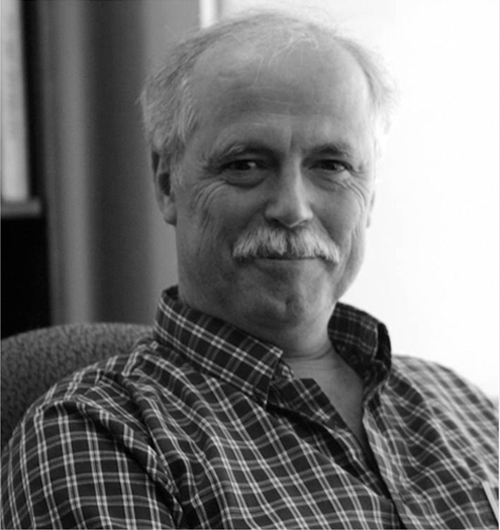
Felipe Sierra, PhD, is Director of the Division of Aging Biology (DAB) at the National Institute on Aging (NIA), National Institutes of Health (NIH). Trained as a biochemist in his native Chile, he obtained a PhD in Biochemistry and Molecular Biology from the University of Florida. After completing a post-doctoral fellowship at the University of Geneva, Switzerland, he worked in industry (at Nestlé, in Switzerland) for the next 5 years. During this time he developed his interest in the biology of aging, an interest that brought him back to academia and to the United States, as an Assistant Professor at the Medical College of Pennsylvania, and later as an Associate Professor at the Lankenau Institute for Medical Research in Pennsylvania. This last position was shared with a primary appointment at the University of Chile in Santiago. Four years after initiating this arrangement, Dr. Sierra relocated again to the United States, this time as a Program Director within the Biology of Aging Program, National Institute on Aging. He became the Director of this unit in April, 2006.
F.S.: I worked in the lab for over 20 years, mostly as a molecular biologist in the field of aging biology, studying gene expression and cell signaling pathways. Working as a bench scientist, I got to develop and follow my own ideas, but I had a fairly narrow perspective on aging research. My main goal in becoming an administrator was to broaden that perspective. Also, I wanted to play a larger role in shaping the agenda for aging research and be involved in deciding in which directions the field would move. In that regard, I felt that I had much to contribute based on my experience working in industry and in academia, in the United States, in Europe, and in Chile.
I have been at the NIA for 11 years. I started as a Program Officer and have been Director of the DAB for the last 6 years. My expectations have been absolutely fulfilled. I love my job! I indeed now have a much broader perspective of the field. As for playing a larger role in shaping the agenda, I do play a significant role—not as large as people often think, though. It is interesting for me to watch the field evolve and to advise scientists, helping them move their research forward. Looking at the current field of research in aging biology, I feel very blessed to have been at the right place at the right time over the past several years.
Still, I've come to realize that things never move as quickly as one might like. You have to balance the interests of my Division with the interests of other Divisions within the NIA; and the interests of the NIA with the interests of other Institutes in the NIH. It is an exciting and interesting challenge, but also frustrating sometimes, because of course you do not always get what you want. The funding situation is not always ideal, but you just have to deal with it.
F.S.: The main areas we have focused on since I have been the director—and this represents a bit of an evolution in focus—involve moving away from measuring primarily life span to also include measurements of health span, which is what people are primarily interested in. We do not want to live forever, we want to live healthy lives for a longer time. That is a major thrust of what we have been trying to do. Of course health span is more difficult to measure than life span. Life span is binary; either you are alive or you are dead. Health is much more complicated and also more expensive to assess, and we are operating at a time when funds are somewhat limited, so this also poses particular challenges to move the field forward. When resources are limited, you need to be more creative to follow your goals.
We are starting to see the fruits of our efforts in terms of identifying interventions that can extend both life span and health span; interventions based on very solid experimental science and solid knowledge. Our published research has generated a lot of enthusiasm from the scientific community. It has attracted new scientists to aging biology and will further advance our knowledge in the field.
F.S.: I think we are at a point where we are starting to think about translation, but we are not quite ready yet to pursue it. Further research at the basic level is necessary, and that continues to be the primary focus of NIA's DAB. Of course, we do have translation in our sights, and the way our Institute is organized, it is a subject addressed in conjunction with my colleague Evan Hadley of NIA's Division of Geriatrics and Clinical Gerontology.
I have also been focusing a lot of attention on educating the scientific community and the general public about the concept of aging as the major risk factor for disease, which in a sense is also related to translation. As part of this effort, I have developed a trans-NIH interest group focused on geroscience. My Division has been putting out publications about this concept, and we have been pursuing other activities to get out this message.
In terms of how the scientific research priorities of the Division have evolved, I would say that it has generally moved from a narrower to a broader interpretation of age-related processes. For example, we are increasingly interested in areas such as inflammation, integrated physiology, and metabolism. One area that has surfaced in the last few years is proteostasis, the study of protein quality control, and its relation to aging. That started as a somewhat narrow area, but it is now being looked at in a more integrated perspective, and I think this is important.
We have also made an effort to include a larger variety of invertebrate models of aging in the hopes that we will find new important aging-related pathways that might not be as important or relevant in the current invertebrate models, which are mainly Caenorhabditis elegans, Drosophila, and yeast. For example, we are funding some research on hydra, which have an amazing regenerative potential, and thus it might allow us to explore in further detail the genetics of stem cells in relation to the aging process. We also want to increase the emphasis on comparative biology and to be able to ask questions such as, “How can one animal model live five times longer than another when they are so similar?”
It is important to keep in mind, however, that we want to do this without neglecting more traditional areas of research such as free radicals or cell senescence. Senescence research has been around since 1961 after the seminal publication by Lenny Hayflick, but it has been experiencing a rebirth of sorts due to the description by Judy Campisi a few years ago of a very dramatic pro-inflammatory secretory phenotype and work by Jim Kirkland and Jan Van Deursen on the effects of removing senescent cells and by other researcher in this area. We are not neglecting these classical areas even as new research interests arise.
F.S.: I don't have a crystal ball and do not know what will happen in the future. I could not, for example, have foreseen the renewed interest in cell senescence research 5 or 10 years ago. But, in general, we want to keep focusing on the larger picture, such as health span and aging being a risk factor for disease, which we have not focused on in the past. We have to remain open-minded, and when something new and interesting comes along, we need to embrace it.
F.S.: Deciding what research to fund presents difficult challenges and requires difficult decisions. In general, we fund the research that the community wants to do. We receive researcher-initiated proposals, and they go through a rigorous review system that might not be perfect, but I have not seen a better one anywhere in the world. We at the NIH respect the opinions of the reviewers and have very limited control over the review process, and that is how most research is funded.
We have more control over some aspects of funding, such as our initiatives. We attend a lot of meetings, listen to the presentations, and read the literature. We also hold our own workshops to try to identify gaps and opportunities. But again, it is not my decision alone regarding what initiatives we can pursue. Just as applicants for research funding have to write grants, I have to make a case with Richard Hodes, Director of the NIA, for him to approve the money to fund an initiative. I also have some discretionary funds to use for projects I feel strongly about. But even then, if there is a research project that the review panels might not give a fundable score to, and I would like to put some discretionary funds toward it, I still have to present it to the National Advisory Council on Aging, so in the end, all decisions go through a series of checks and balances, and these are important to keep the process transparent.
F.S.: I think there are ways in which we could interact, share information, and avoid duplication of research more effectively. Different funders have different goals, different boards of directors, different objectives, and different mechanisms of operating. And rightly so; each wants to preserve its niche, and each believes that the way it functions is the best. We all have to respect that. Having a super-committee above all of them would not be a good idea in my opinion.
However, there would be value in organizing annual meetings of all the partners, including the NIA and the external funders, to assess the current situation, develop common strategies, and see how we can help each other. While it would not be the role of the NIA to lobby any of these groups, we could engage in an open discussion of gaps and opportunities in the field identifying areas of research most in need of funding. These types of discussion would be useful in trying to better coordinate activities and limit duplication. They would also allow us to question and reinforce each other's ideas.
A good example of this idea is what has been happening with the National Alzheimer's Project Act (NAPA). People, all trying to achieve a similar goal, are getting together to coordinate their activities related to Alzheimer so there is no repetition of the science. This could serve as a useful model.
F.S.: There are 27 Institutes and Centers at the NIH, and yes, we collaborate and talk, but we are trying hard to do better. Traditionally, we may have an application that does not fall clearly into one Institute or another and we discuss where it should go. That has always happened. In recent years, there have been several initiatives to bring the institutes together, to better coordinate and leverage our resources, and we are building on that. The NIH Common Fund is one important example.
In my area, in terms of talking about aging as a risk factor for diseases that are of particular interest to other Institutes, that is something that has not happened much in the past. When an application comes in related to cardiovascular disease, for example, it would go to the National Heart Lung and Blood Institute (NHLBI). But, we now know, too, that an underlying main risk factor for cardiovascular disease is aging. In fact, there are data to suggest that aging is the major risk factor for most chronic cardiovascular, neurodegenerative, musculoskeletal, and metabolic diseases, among others. But I certainly am not advocating that the whole NIH budget would come to the NIA!
Instead, I came up with the idea of trying to interest the other Institutes in the role of aging on diseases that they study. My hope is that they will take aging into consideration when thinking about the research they fund. When I proposed this idea to several Institute Directors at NIH about a year ago, there was great enthusiasm. Within a month, 20 of them had contacted me to say they wanted to have a representative in the Geroscience Interest Group (GSIG). We formed an Executive Committee with representatives from those Institutes, and have been meeting monthly. It has been a pleasure working with them.
Among our earliest activities is a seminar series that has featured several prominent researchers, including Jim Kirkland from the Mayo Clinic, Francis Collins, Director of the NIH, Rich Miller, University of Michigan Geriatrics Center, and Jie Chen, Harvard Medical School, who works on Parkinson and Alzheimer diseases. It has been a very successful endeavor with excellent attendance, both in person and remotely with videocast.
In addition, last September we organized a workshop focused on the role of inflammation in age-related diseases. We looked at areas such as inflammation in cancer and neurological diseases. Presenters discussed an overarching issue, as opposed to each person talking about his or her latest research. We are in the final stages of developing a manuscript that describes what came out of the workshop.
We are also in the midst of planning our first summit that we are calling “Advances in Geroscience: Impact on Healthspan and Chronic Disease,” scheduled for October 30th to November 2nd of this year. Similar to the workshop, the chairs of each committee will give presenters a list of questions that need to be addressed during their 10-min talk. A large portion of the meeting will be devoted to discussion, and the third day will be a closed session meeting of the chairs to draw conclusions and make recommendations based on the ideas shared during the summit. We are inviting top scientists working on a variety of topics of importance to aging and chronic disease, so we expect to engage a large and varied attendance to this meeting.
The idea is that after we review the results of the summit, we will then re-engage the other Institutes. Right now, our work that emphasizes aging as a major risk factor for disease is focused as an internal NIH activity, but it is something that I would hope gains greater recognition on other levels as well. My main goal is to the get the scientific community excited about pursuing this concept.