




Abstract

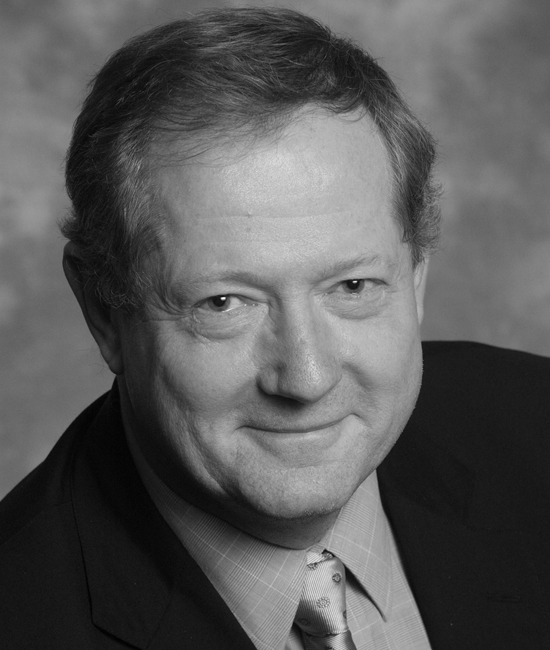
Dr. Richard W. Barker is a strategic advisor, speaker, and author on health care and life sciences. He is Director of the Centre for the Advancement of Sustainable Medical Innovation (CASMI), a European initiative aimed at transforming the research and development and regulatory processes in life sciences to bring advances more rapidly and affordably to patients. He is also chairman of the South London Academic Health Science Network
I founded CASMI 2 years ago, first as a unit in Oxford University and then in partnership with University College London (UCL). Along with senior medics at both universities, I had become convinced that medical innovation was becoming unsustainable. Sir John Bell, Regius Professor at Oxford, and Sir John Tooke, Vice-Provost for Medical Sciences at UCL, are CASMI's co-chairs. This gives us access at the top level to two of the UK's—and the world's—leading universities. Furthermore, we can call on about 30 professorial-level Fellows drawn from many different disciplines. We are also grateful for the support of the Wellcome Trust, which helped fund the establishment of CASMI.
My own involvement with the medical innovation issue goes back a bit further, to 2006. Sir David Cooksey published a UK government report pointing out the challenges faced by the pharmaceutical research and development process. I formed a think-tank called the Athenaeum Group that included senior regulators, pharmaceutical company executives, clinicians, and patient group leaders to debate Sir David's conclusions and to map a way forward. We published our recommendations in The Lancet in 2010 (375:357–359). So in some ways, CASMI's work has been going on for some time.
Our goal is to make the process of bringing valuable medical innovations—drugs, devices, diagnostics, and informatics tools—to the patient faster and more affordably. We see four “gaps in translation” that stand in the way of more efficient, and therefore more sustainable, innovation. The first is between promising bioscience discoveries, usually in academia, and potential products ready for clinical trials. The second gap arises when products that have been undergoing clinical studies fail to gain either regulatory approval or reimbursement, thus wasting a great deal of investment. The third gap applies to those relatively few products that do get through these earlier development and approval processes but are, for one reason or another, not spread across the health system or not used as intended by patients. As experts have debated the poor overall impact from the substantial life sciences investments and great advances of the last decades, these three gaps have been widely highlighted.
The fourth gap we are focusing on, however, is relatively new. It is the failure of the system to learn systematically from all of the treatments used and the patient outcomes that result, and then to feed those conclusions back into the research process. In an era in which we are finally accumulating “Big Data” in health care, with the many stories it can tell, there is a real opportunity if we can bridge this gap. We will learn both about the intended results of our treatment choices and also about others we might not have expected.
These gaps in translation have been well documented in pharmaceuticals, and so medicines are a major focus for CASMI. We are working on “adaptive licensing,” which we hope will enable new medicines that show particular promise in areas of unmet need to reach patients quicker, with data to confirm their effectiveness and safety collected during routine treatment, using the informatics tools we now have available. But we are also at work on companion diagnostics and cell therapy, areas in which regulatory processes have yet to be fully laid out.
CASMI's mission is a global one. Because the issues we are tackling are global, the industries that will benefit are global, and there is steady convergence across the world in systems to regulate and value the products. However, CASMI had to start somewhere, and so our roots are in two UK universities and the situation in the European region.
Nevertheless, we are already partnering beyond Europe. We are working with the Strategies for Engineered Negligible Senescence (SENS) Research Foundation in Mountain View, California, for example. SENS is supporting two PhD students that are working with CASMI. We have also formed an international consortium to work on the translational issues in commercializing stem cell therapy. Partners in this consortium come from both coasts of the United States and from Canada. Additionally, in launching a recent project on Open Innovation, we formed an advisory group drawn from Europe, the United States, and Australia. So we hope to take as global a perspective as possible in our work.
We also recognize that there are several other organizations, especially in the United States, that are working on the same broad medical innovation agenda, and we plan to come together in early 2014 to discuss closer cooperation. Who knows where this will end up? Perhaps CASMI will form part of a global federation with a common agenda and coordinated research. But that is for the future.
Regulators have a tough job. Typically they are not rewarded for allowing new treatments to reach patients quickly, and they are criticized if any new treatment has adverse side effects. Although this may seem logical for risk-averse politicians, to whom the regulators answer, it is often not the choice that patients themselves would make. In fact, one of CASMI's objectives is to bring the patient voice much more powerfully to the table.
There are promising signs in the regulatory world, though. The US Food and Drug Administration (FDA) has been experimenting with its “breakthrough” route, and the first drug to come through this process has just been approved. And the European Medicines Agency (EMA) is seriously considering our proposals for “adaptive licensing” in Europe. So there are positive “straws in the wind.”
There is also a great deal of room for further progress in two related regulatory areas. The first is how evidence is collected, with a shift from large and costly Phase 3 trials (which are often still inconclusive) to a mix of adaptive trial designs and “real world” data collection. The second is a move to a more scientific approach to benefit/risk assessment, one that also takes the patients' perspective more fully into account. Ideally this would be global in scope, although there are currently some real differences in the degree that different regulatory systems are risk averse.
We are fortunate to have attracted a very senior advisory group. This is chaired by Sir David Cooksey, who has been a strong influence not only on this issue but also on life science policy in the United Kingdom under several governments. We also have the advice of the UK's Chief Medical Officer, the chairman of the UK regulator, the Medicines and Healthcare products Regulatory Agency (MHRA), and of Quintiles, the leading clinical research organization. In addition, the group includes a recently retired FDA deputy commissioner and the head of GlaxoSmithKline's research organization. Last, but by no means least, we have a senior patient representative. All members of the group have important entrées into policy-making, so that, as our research progresses and we develop new models for medical innovation, we can influence both public policy and private sector practice.
But we must remind ourselves that the changes we need to see will flow from a number of initiatives across the world. We meet regularly with such groups across the world, and also with such bodies as the FDA, the EMA, the Gates Foundation, and industrial trade associations. I recently spoke on these issues at a major conference in Korea, a very fast-moving nation in life sciences.
Most of the major unconquered diseases are age related. Certainly, there are important challenges remaining in childhood genetic disorders, but dementia, most life-limiting cardiac and pulmonary conditions, and most cancers strike in the second half of life. So better, faster, and more affordable ways to develop new treatments, the diagnostics to target them properly, and information technology (IT) tools for patient self-management can all make a major difference in combating the diseases of aging.
Many of the killer diseases need better preventative therapies, so that dangerous late-stage problems, with their costly hospital visits, never arise. And we will certainly need to be able to develop combination therapies. In cancer, we will see the advent of personalized medicine, as we are able to tune cocktails of drugs to specific mutations in a tumor. In orthopedics, we are already seeing combinations of stem cells and what are called scaffolds, or solid supports, that can be inserted into aging joints. These approaches pose especially interesting development and regulatory challenges.
Slowing, or even reversing, the aging process poses additional scientific challenges. We may be able to achieve replacement of faulty cells or organs using stem cells, or lengthen telomeres with telomerase activators, or intervene in senile dementia with implants, but in each case we will need to map out development pathways, the means to collect evidence of efficacy and safety, along with ways to assess the value of our inventions to patients and health systems. Therefore, no matter how futuristic our biomedical science becomes, the CASMI agenda of optimizing the process remains just as relevant!