




Abstract
Human skin undergoes changes during aging that result from the synergistic effects of intrinsic and extrinsic factors that may culminate in wrinkle formation, a characteristic of aged skin. Panax ginseng and ginsenosides have promising properties in preventing skin aging. Our previous study demonstrated that enzyme-modified ginseng extract (EG) has inhibitory effects against ultraviolet B (UVB) radiation-induced skin aging. The purpose of the current study was to evaluate the preventive effects of EG on eye-wrinkle formation by applying EG cream in 23 randomized human subjects. Compared to the placebo, EG significantly reduced the global photo-damage score. In addition, total roughness (R1), smoothness depth (R4), and arithmetic roughness average (R5) were significantly decreased with use of EG. In a post-study questionnaire, subjects responded that EG was absorbed efficiently into the skin and was more potent in moisturizing and softening skin than the placebo. No participants reported adverse reactions to treatment. In conclusion, EG sufficiently suppressed eye wrinkle formation by decreasing various roughness measures on the basis of assessment with non-invasive devices. Therefore, our results indicate that EG is a promising anti-aging candidate that could be used as an ingredient in natural functional food and cosmetic products.
Introduction
H
Over the past two decades, interest in reversing the effects of aging on skin has increased considerably. 6 Because skin is damaged by the aging process itself and by extrinsic insults like long-term or severe UVR, there is need for functional food and cosmetic products that can delay facial wrinkling. Studies of oriental herb extracts have provided new insights into the effects of functional cosmetics on the prevention of skin aging. 7 Panax ginseng is one promising candidate that has been used as a botanical drug for several thousand years. The biological activity of Panax ginseng is imparted by its component ginsenosides. The major ginsenosides found in ginseng (Rb1, Rb2, Rc, Rd, Re, and Rg1) comprise about 80%, whereas the minor ginsenosides (F1, F2, Rg3, Rh1, Rh2 compound Y, compound Mc, and compound K) are absent or present in low concentrations. 8 Recent research has investigated the precise role of these ginsenosides and ginseng extract in preventing skin aging. 9,10 For example, ginsenoside Rb1 has anti-aging activities in skin that result from increased type I collagen production and suppression of UV-induced apoptosis. 11,12 Kim et al. (2004) reported that topical treatment with compound K increases the amount of hyaluronan in the skin of hairless mice. 13 Ginsenoside Rg3 inhibits growth of human melanoma cells. 14 Lee et al. (2003) showed that ginsenoside F1 protects human HaCaT keratinocytes from UVB-induced apoptosis. 15
It has been reported that minor ginsenosides may function more effectively than major ginsenosides because minor ginsenosides are more easily absorbed into the bloodstream. 16 Therefore, minor ginsenosides may have potential as functional food ingredients and drug candidates. Major ginsenosides can be transformed into minor ginsenosides through hydrolysis of their sugar moieties. The minor ginsenoside F2 is transformed by protopanaxadiol (PPD) derivatives that enzymatically hydrolyze two glucose molecules at C-3 and one glucose molecule at C-20. 17 Our previous study demonstrated that ginsenoside F2 has anti-cancer effects in breast cancer stem cells and glioblastoma multiforme. 18 Recently, we also reported that ginsenoside F2 prevents hair loss and simultaneously induces hair growth. 19,20 On the basis of the mounting evidence of the anti-aging properties of ginseng and our previous findings that enzyme-modified ginseng extract (EG) has inhibitory effects against UVB-induced skin aging in human dermal fibroblasts and hairless mice, 10 we hypothesized that topical application of EG may be beneficial to reduce clinical signs of skin aging.
Materials and Methods
Preparation of enzyme-modified Panax ginseng cream
Enzyme-modified Panax ginseng (EG) was extracted as previously described.
10
EG was produced using a patented protocol (Korea patent no. 1014540660000). Briefly, the crude enzyme was extracted from Aspergillus niger (KACC 40280), which was isolated from the Nuruk for makgeolli, Korean traditional wine. The active enzyme was purified by loading it into an ion-exchage resin. Dried and ground ginseng (0.5 kg) was incubated with the enzyme solution containing ginsenoside-β-glucosidase and extracted from 5.0 liters of ethanol. Ginseng was incubated with the enzyme at 50–60°C for 24 hr. After reaction, the enzyme was removed by ultrafiltration (molecular weight cutoff [MWCO], 10,000 Da). The solution was then filtered and concentrated. In addition, the composition of EG had been analyzed and characterized previously by our research group.
10
Liquid chromatography coupled with tandem mass spectrometry (LC-MS/MS) was performed with an Agilent 6410 Triple Quad Tandem Mass Spectrometer. The total ginsenosides content and two main ginsenosides (Rb1 and Rg1) of EG were 214.24 μg/mg and 90.43 μg/mg, respectively. Ginsenoside F2 as an active compound of EG was 45.51 μg/mg. EG and placebo formulations were identical in color, fragrance, and packaging. The composition of formulations is shown in Table S1 (Supplementary Data are available at
Subjects and study design
In this randomized, double-blind study, 23 healthy Korean women 30–65 years old presenting with crow's feet wrinkles were enrolled and 22 women were recruited as participants. One out of the initial 23 enrolled subjects was excluded from subsequent analysis because of agreement withdrawal/treatment refusal (n = 1). Baseline severity of global photo-damage was scored from 2 to 6 using the Jung score of facial skin photo-aging. Participants were requested to abstain from the following for the duration of the trial: (1) Exposure to sunlight; (2) lotion, creams, or other facial products; (3) smoking or excessive alcohol consumption; and (4) no use of cosmetics for at least 12 hr prior to assessment. Participants were excluded if they reported any of the following: (1) Use of topical anti-aging products in the previous 3 months; (2) tretinoin use or superficial peels in the previous 6 months; (3) topical steroidal ointment in the previous months; (4) history of fillers, botulinum toxin, medium-depth peel, ablative laser, or surgical lifting in the previous 24 months; (5) pregnancy or breastfeeding; (6) exposure to artificial UV radiation; (7) allergy to any ingredients in the cream; or (8) dermatological problems.
All participants provided written informed consent before enrolling in the study. After completing the above-mentioned enrollment process, the study coordinator randomly allocated the subjects into each group on the basis of a computer-generated random number table. The subjects and investigators were blind to the group allocation throughout the study period. The study was conducted in accordance with the guidelines for study no. 2009-166 of the Korea Food & Drug Administration. The trial started on August 23 and was completed November 17. The protocol was reviewed and approved by the Ethics Committee (Oriental Hospital of Se-Myung University, Jecheon, South Korea) in August 2011. This study was carried out in accordance with the Declaration of Helsinki (1964), changed in Tokyo (2004) and Seoul (2008).
Treatment
All volunteers were instructed about application of the formulation, and the crow's feet wrinkle area was selected as the testing area. Active formulation (EG) was applied on the left or right eye area manifesting signs of crow's feet, and the placebo was applied on the other eye area, respectively, twice daily (morning and night) for 12 weeks. Before application, subjects were asked to wash their skin using the same mild facial nickel-tested cleanser. Subjects were not allowed to use any other cosmetic products during the treatment period.
Visual assessment
Patients were assessed at the investigating center at baseline (week 0) and at weeks 4, 8, and 12. The primary efficacy end point was the investigator's assessment of global photo-damage score (GPDS) at week 12. GPDS ranged from 0 to 7 as follows: 0, none; 1, none/mild; 2, mild; 3, mild/moderate; 4, moderate; 5, moderate/severe; 6, severe; and 7, very severe. 21
Photography
Photographs of the patients' faces were taken at weeks 0, 4, 8, and 12 weeks under standardized conditions. Photographs were of the areas lateral to the right and left eyes. All photographs were taken with subjects looking straight ahead under constant lighting conditions with the same camera, camera settings, and camera placement. A Nikon D200 camera was positioned on an SVK 35D tripod to the right of the subject's face and perpendicular to the area to be photographed, whereas an Olympus twin T28 Macroflash unit was positioned with one flash head directly above the lens pointed at the subject and the other directed away. Exposure was controlled by adjusting the lens aperture with the flash set on manual at full output.
Non-invasive measurements of the skin
All measurements were performed under standardized conditions, i.e., room temperature of 22 ± 2°C and a relative humidity level of 50% ± 10%. An acclimatization time of at least 30 min was allowed before measurements started. To obtain skin replicas, 1.0 cm of light-bodied silicone (SilfloR, Flexico, Colchester, UK) was prepared from two components mixed at a ratio of 1:1 under decompression (two drops each of catalyst and thinner). The mixture was then applied to the skin surface. After drying and hardening, the replicas were subjected to further analysis. (Fig. 1). Image files were analyzed using the program Skin Viscometer SV 600 (Courage & Khazaka, Cologne, Germany). Arbitrary units (R1–R5) were assigned to each sample on the basis of the furrow depth according to shadow size and brightness due to inflection under illumination. Investigated roughness parameters were R1 (skin roughness), R3 (average roughness), and R5 (arithmetic average roughness). Skin roughness (R1) was defined as the difference between the highest crest and lowest furrow. Maximum roughness (R2) was the largest value recorded. Depth of smoothness (R4) was also recorded.
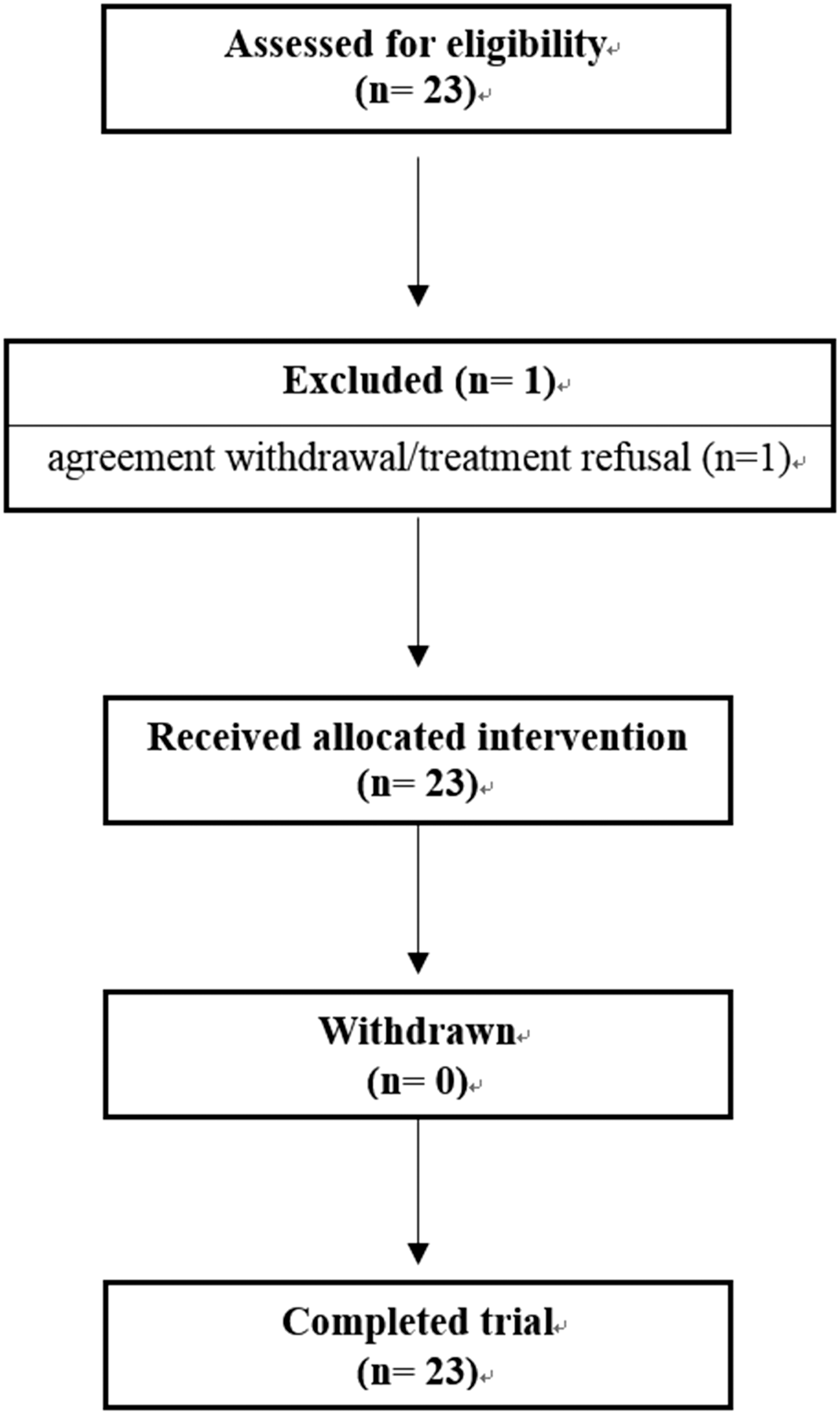
Study flowchart of the participants describing trial progress.
Questionnaire study
At the completion of the 12-week study period, all participants answered the following questions presented in a questionnaire: “Have you noticed an improvement in your skin moisture?”, “Have you noticed an improvement in your skin smoothness?”, “Has your skin elasticity improved?”, “Which product do you think has an anti-wrinkle effect?”, and “If there was an observed improvement, which do you think is more effective in absorption?” The answers choices were as follows: A, excellent; B, good; C, moderate; D, poor; and F, bad.
Clinical assessment
Assessments were performed by the same two professional investigators at weeks 0, 4, 8, and 12 and were performed blinded to previous assessments. Right and left eyes were graded separately. Adverse effects were also recorded, including erythema, edema, scaling, itching, stinging, burning, tightness, or prickling of the skin, which were graded as none, mild, severe, or very severe. Evaluation was performed in the same location and with the same lighting at each visit.
Statistical analysis
Statistical analysis was performed for those who completed the trial. SPSS software version 17.0 (SPSS Inc., Chicago, IL) was used for statistical analysis. Differences between groups were evaluated with Student's t-test, and differences within groups were analyzed with analysis of co-variance (ANCOVA). A p value < 0.05 was considered to be significant. Descriptive statistical analysis was performed with the questionnaire assessments.
Results
Demographics of subjects
Twenty-three subjects (female) with average age of 46.87 ± 6.50 years enrolled in the study. Because of protocol noncompliance, one subject was withdrawn from the study. As shown in Table 1, eye wrinkles of right and left sides were assessed by GPDS before treatment with EG. The average GPDS values for the right and left sides of subject faces were 3.83 ± 1.53 and 3.91 ± 1.53, respectively. Before the study began, 70% of participants complained of dry skin. Sixty-five percent complained of thin crow's feet and normal skin elasticity.
Global photo-damage score (GPDS): 2, mild; 3, mild/moderate; 4, moderate; 5, moderate/severe; 6, severe.
Analysis of EG effect on eye wrinkles in human skin
As shown in Table 2, we compared the severity of eye wrinkles by measuring GPDS before and after 4, 8, and 12 weeks of treatment. Before treatment with EG or placebo, baseline GPDS scores were 4.05 ± 1.46 and 3.86 ± 1.55, respectively. After 4 weeks, GPDS values increased to 4.09 ± 1.41 in the EG group and 3.91 ± 1.54 in the placebo group. However, GPDS values decreased in the EG treatment (3.77 ± 1.51) at 12 weeks.
Compared between groups: p value by Student's t-test.
Compared between groups: p value by ANCOVA (adjustment with baseline).
After 4 weeks − baseline.
Compared within groups: p value by paired t-test.
After 8 weeks − baseline.
After 12 weeks − baseline.
p < 0.05, ** p < 0.01 by Student's t-test for comparison with placebo group.
EG, enzyme-modified ginseng extract; GPDS, global photo-damage score; SD, standard deviation; ANCOVA, analysis of co-variance.
Images of eye wrinkle sites were measured at each time point by an SV600 Visiometer. Before treatment with EG or placebo, total skin roughness (R1) was 0.16 ± 0.04 and 0.14 ± 0.05 arbitrary unit (AU) for the right and left sides, respectively. At weeks 4, 8, and 12, R1 values significantly decreased by 0.03 ± 0.03, 0.04 ± 0.04, and 0.05 ± 0.05 A.U, respectively, in the EG group. However, no significant changes were found at these time points in the placebo group (Table 3). The baseline maximum roughness (R2) was 0.09 ± 0.02 A.U in both EG and placebo groups. EG treatment decreased R2 values by 0.08 ± 0.02, 0.07 ± 0.02, and 0.6 ± 0.02 A.U. at 4, 8, and 12 weeks, respectively (Table 4). Before treatment with EG or placebo, the average roughness (R3) was the same in both groups at 0.06 ± 0.02 A.U. After 12 weeks, R3 values decreased in both EG and placebo treatment groups (Table 5). However, it was more effectively improved in the EG group at 0.04 ± 0.01 A.U. than in the placebo group at 0.05 ± 0.01 A.U. In total, EG was more effective than placebo in decreasing R1, R2, and R3 roughness after 12 weeks.
Compared between groups: p value by Student's t-test.
Compared between groups: p value by ANCOVA (adjustment with baseline).
After 8 weeks − baseline.
Compared within groups: p value by paired t-test.
After 16 weeks − baseline.
After 24 weeks − baseline.
p < 0.05, ** p < 0.01 by Student's t-test for comparison with placebo group.
EG, enzyme-modified ginseng extract; GPDS, global photo-damage score; SD, standard deviation; ANCOVA, analysis of co-variance.
Compared between groups: p value by Student's t-test.
Compared between groups: p value by ANCOVA (adjustment with baseline).
After 8 weeks − baseline.
Compared within groups: p value by paired t-test.
After 16 weeks − baseline.
After 24 weeks − baseline.
p < 0.05, ** p < 0.01 by Student's t-test for comparison with placebo group.
EG, enzyme-modified ginseng extract; GPDS, global photo-damage score; SD, standard deviation; ANCOVA, analysis of co-variance.
Compared between groups: p value by Student's t-test.
Compared between groups: p value by ANCOVA (adjustment with baseline).
After 8 weeks − baseline.
Compared within groups: p value by paired t-test.
After 16 weeks − baseline.
After 24 weeks − baseline.
p < 0.05, ** P < 0.01 by Student's t-test for comparison with placebo group.
EG, enzyme-modified ginseng extract; GPDS, global photo-damage score; SD, standard deviation; ANCOVA, analysis of co-variance.
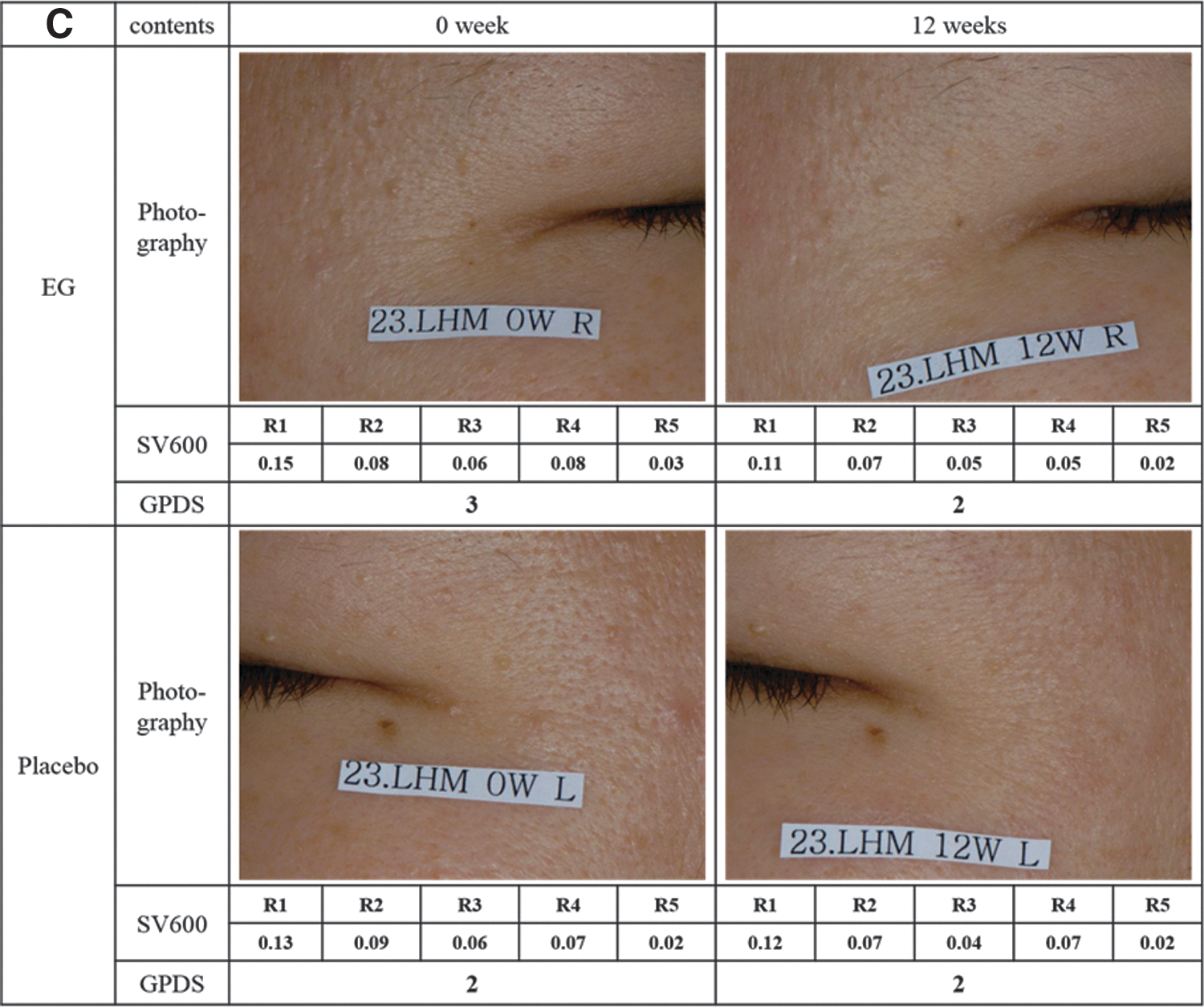
High values of smoothness depth (R4) indicate reduced skin moisture. Baselines of R4 of EG and placebo were 0.08 ± 0.03 and 0.06 ± 0.02 A.U, respectively. These R4 values were comparably improved by EG and placebo to 0.05 ± 0.01 and 0.05 ± 0.02 A.U., respectively, at 12 weeks. However, the overall change in R4 was greater in the EG-treated group than in the placebo group (Table 6). EG treatment decreased the arithmetic roughness average (R5) value (down to 0.01 ± 0.01 A.U.), whereas placebo did not (Table 7). Overall, EG treatment resulted in statistically significant decreases in R1, R4, and R5 values. Representative pictures of clinical results are shown in Fig. 2.
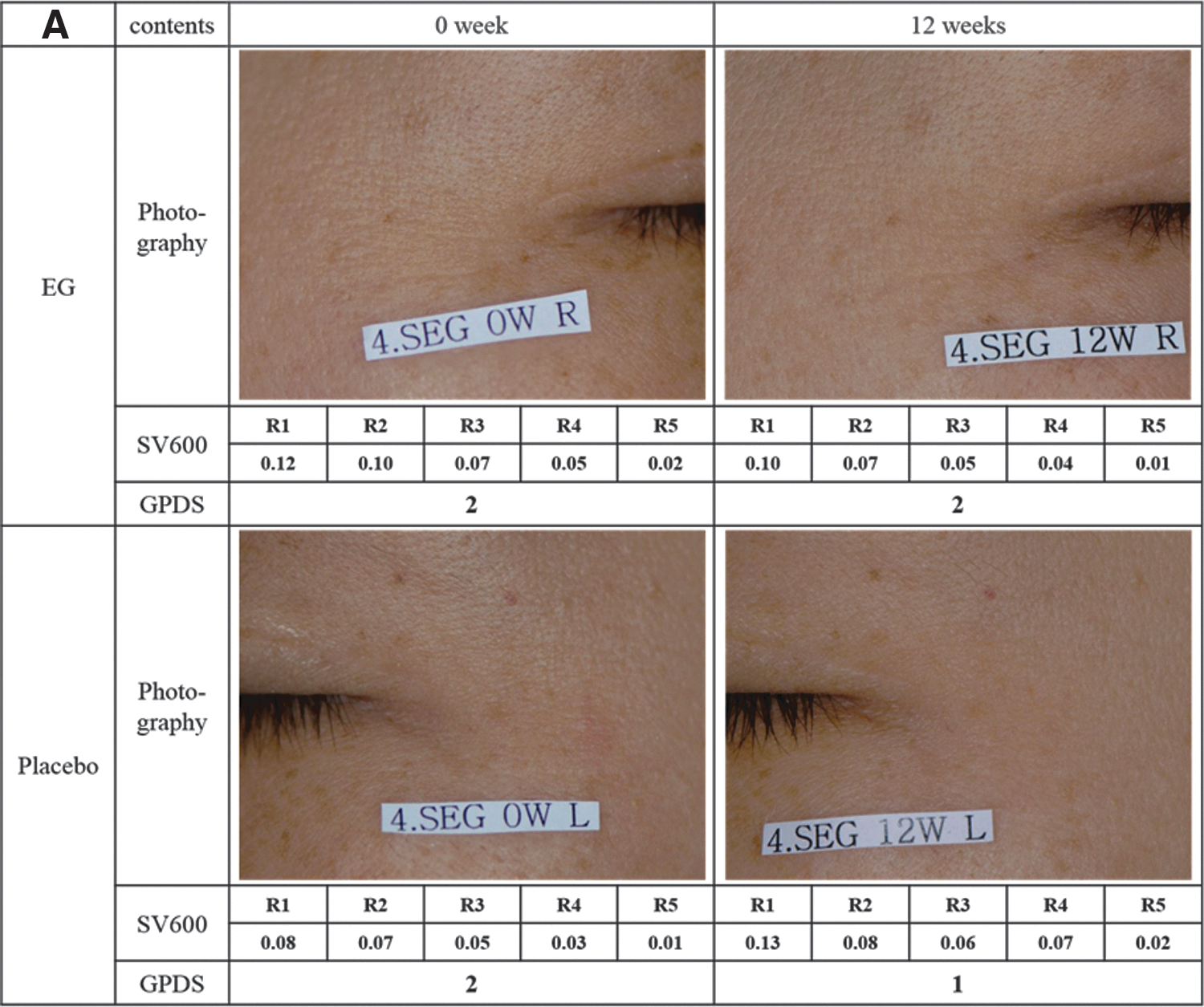
Representative pictures of before and after the treatment. Color images available online at

Compared between groups: p value by Student's t-test.
Compared between groups: p value by ANCOVA (adjustment with baseline).
After 8 weeks − baseline.
Compared within groups: p value by paired t-test.
After 16 weeks − baseline.
After 24 weeks − baseline.
p < 0.05, ** p < 0.01 by Student's t-test for comparison with placebo group.
EG, enzyme-modified ginseng extract; GPDS, global photo-damage score; SD, standard deviation; ANCOVA, analysis of co-variance.
Compared between groups: p value by Student's t-test.
Compared between groups: p value by ANCOVA (adjustment with baseline).
After 8 weeks − baseline.
Compared within groups: p value by paired t-test.
After 16 weeks − baseline.
After 24 weeks − baseline.
p < 0.05, ** p < 0.01 by Student's t-test for comparison with placebo group.
EG, enzyme-modified ginseng extract; GPDS, global photo-damage score; SD, standard deviation; ANCOVA, analysis of co-variance.
Self-satisfaction assessment after treatment
Questionnaires are routinely used in clinical research to assess indices of reliability and validity. 22 Responses to the questionnaire are summarized in Fig. 3. Compared to placebo, subjects responded that EG was more efficiently absorbed into the skin. Subjects also responded that EG was more potent in moisturizing and softening the skin than was the placebo. However, almost all participants noted no difference in anti-photo-aging effects between the two products.

Questionnaires following a 12-week treatment with enzyme-modified ginseng extract (EG) and placebo. The answers choices were as follows: A, excellent; B, good; C, moderate; D, poor; and F, bad.
Safety results
No participants reported adverse reactions to treatment, including erythema, edema, scaling, itching, stinging, burning, tightness, or prickling of the skin.
Discussion
In this explorative clinical trial, the efficacy of EG as an anti-wrinkle agent was assessed using a variety of techniques, including clinical examination by investigators, instrumental evaluation measured by skin replicas, and self-report–type questionnaires. We found that EG has significant anti-wrinkle effects over placebo when used topically in human subjects. Our previous study demonstrated that major ginsenoside Rb1 can convert to minor ginsenoside F2 by enzymatic reaction. We further found that EG, which is rich in ginsenoside F2, attenuated UVB-induced skin damage in both human dermal fibroblasts and in hairless mice. Specifically, histological examination of mouse skin showed that EG treatment successfully reversed skin thickening and loose compaction of collagen fibers following UVB irradiation. Furthermore, photo-aging–related molecules such as MMP-1, procollagen type I, transforming growth factor-β1 (TGF–β1), and elastin were shown to be decreased by treatment with EG. 10
Global photo-damage scores of eye wrinkles were diminished by treatment with EG. Crow's feet wrinkles in the EG treatment group appeared thinner and dimmer in photographs compared with placebo. These results suggest that topical application of EG may have anti-wrinkle effects. Because measurement using non-invasive devices permits evaluation of correlations between hydration and roughness, many investigators use these instruments to assess anti-wrinkle efficacy. 23 Our results showed that skin roughness values (R1 and R5), determined by analysis of photographs collected by the SV600 Visiometer, were significantly decreased by EG application. Because we did not explore histological changes or molecular mechanisms of the treatment with EG in this study, further research is needed to determine whether EG can also protect against human skin aging at the molecular level.
The weather conditions under which this study was performed add an additional variable for consideration. The change from fall to winter in South Korea (i.e., September to February) is marked by dryer (average humidity, 62.3%) and colder (average temperature, 6.9°C) weather (Korea Meteorological Administration). Because sweat evaporates quickly in cold, dry air, moisture is lost through the skin. In colder weather, additional water loss occurs as a result of increased urine and respiration. 24 Even though our clinical trial was conducted in drier weather conditions (i.e., from August 23 to November 17), we still noticed significant improvements in skin moisture by EG treatment. This finding was corroborated by the questionnaires in which volunteers in the EG group noted more potent moisturizing effects of treatment compared to the placebo group. In a previous study, we demonstrated that increased epidermal hydration caused by EG treatment protected against UVB-induced dryness in mouse dorsal skin. 10 Taken together, these results suggest that EG may play a role in repairing dry skin by increasing skin moisture. Our findings suggest the need for further studies that investigate the precise mechanisms by which EG hydrates the skin.
There is a growing trend for natural products to be used in functional foods. 25 This trend is rooted in a desire for cosmetic and food industries to be more environmentally friendly. Natural products frequently result in fewer side effects than chemical-based products and also tend to cause less harm to the earth. However, they are also typically more expensive. Ginseng is expensive, because it is fastidious to grow and has a very long growth period (up to 6 years). Although ginsenosides, especially minor ginsenosides, are protective against various skin disorders, 26 they account for only 0.4%–1% of total ginseng, making them difficult to use as ingredients of functional foods and cosmetics. Therefore, it will be important to mass-produce minor ginsenosides, which have varying bioavailability, using crude enzymes. Enzymatically modified F2-rich ginseng is advantageous in this regard because it is both environmentally friendly and applicable for mass production. The processing of EG relies on crude enzymes rather than chemical synthesis, and thus it is an easy, cost-effective candidate ingredient.
In conclusion, this clinical study demonstrated that EG can reduce wrinkles in the skin around the eyes. First, subjects in the EG group showed decreased GPDS eye wrinkle scores after 12 weeks. Second, skin roughness, a precursor to wrinkle formation, was reduced by topical application of EG. Third, in spite of low humidity in the environment, the moisturizing effects of EG were remarkable. These findings suggest that EG is a good candidate as an ingredient of natural functional foods and cosmetics used for anti-aging.
Footnotes
Acknowledgments
This research was supported by the Korea Institute of Planning and Evaluation for Technology in Food, Agriculture, Forestry and Fisheries (iPET, 810006-03-3-SB110), Republic of Korea.
Author Disclosure Statement
No competing financial interests exist.
References
Supplementary Material
Please find the following supplemental material available below.
For Open Access articles published under a Creative Commons License, all supplemental material carries the same license as the article it is associated with.
For non-Open Access articles published, all supplemental material carries a non-exclusive license, and permission requests for re-use of supplemental material or any part of supplemental material shall be sent directly to the copyright owner as specified in the copyright notice associated with the article.
