




Abstract
This article discusses the need for biosampling as a way to test “super-duper” centenarians (persons aged >120 years) to identify biological pathways for Homo sapiens to live to their fullest biological lifespan potential (estimated by extreme value theory to be currently between 123 years and 128 years) and, by extension, the possibility of biosampling leading to the identification through scientific research testing and data analysis areas of potential life extension. Studies of twins have shown that the proportion of longevity attributed to heredity (genetic potential) versus environment increases substantially the higher the age group being tested, especially after age 75 years. Even among the oldest-old, the proportion attributed to biological factors continues increasing the higher the age category, which is a selective process as the genetically weaker of the remaining survivors continue to die off first, leaving a more and more highly selected remaining population. This self-selection process means that the very oldest individuals are already the “genetic lottery winners” who have the biological potential to come close to the maximum human lifespan. Testing of these persons may result in faster breakthroughs in the attempt to extend the human lifespan through biological testing and analysis. Indeed, it is possible that, just as some human lifespans are shortened due to random genetic mutations unique to the individual (such as persons with progeria), it is possible that there could be some humans whose maximum genetic potential was due in part to a genetic mutation unique to that particular individual. This remains an area of potential research that has not yet been thoroughly biotested—but one that could change soon, and biotesting a 122-year-old woman's biosamples would be a prime opportunity for such a test: Jeanne Calment. Because only one 122-year-old woman has been validated in recorded scientific history, the uniqueness of the case makes it a unique opportunity that should not be passed by. Herewith, I take a closer look at the Jeanne Calment case and the conclusion is the same as the start: Jeanne Calment was 122 years, her age is relatively unique but not impossible to repeat in the future; however, her samples may be available right now, and thus remains the only current opportunity to study a >120-year-old person from a biological perspective.
Preface
Extreme value theory currently posits that the maximum current biological lifespan for humans is between 123 and 128 years. 1 These mathematical calculations apply mathematical formulas to large-scale population data, incorporating factors such as total base population, life expectancy, and the expected mortality rate. Running the computerized simulations many times will produce results which can then be averaged together. These results may give us some idea of the maximum observed human lifespan, but they also leave many questions for further study, such as: Why do humans not live longer? Can the human lifespan be extended? Is the result variable or fixed? What if other mathematical formulas are used? Studying supercentenarians, and especially the oldest supercentenarians, from a biological perspective can help lead us to answers to these questions. *
The Jeanne Calment Case: A Prospect for Biosampling?
Biosampling, the collection of biological material for the study of one's biological makeup, can be useful for more than mere traditional uses, such as testing for one's genealogy, family tree, ancestral heritage, or testing for one's medical predisposition to certain negative biological factors, such as a family history of heart disease. Indeed, biosampling can also be used to test for positive factors in families with a history of longevity. As the proportion of human longevity attributed to biological factors increases significantly over age 75 years, 2 and continues to increase the higher the age bracket, so the concentration of identifiable biological factors associated with extreme longevity becomes more detectable the higher the age of the person being tested. It, therefore, makes sense to test persons >105 years (semisupercentenarians) and >110 years (supercentenarians). But even among these groups, we still see great variability in health status, function, and life expectancy. Perhaps we should focus on even higher more elite data, such as the biosampling of persons >115 years or even >120 years.
In the case of Jeanne Calment of France, 1875–1997 (Fig. 1), generally recognized for many years as the oldest validated person according to actuarial and demographic science at age 122.45 years and accepted as such by Guinness World Records, the fact that her great age exceeds any other validated case by >3 years, and that a similar case is not likely to show up within the next few decades (current estimates give a 50% chance of the Calment record being broken in the next 38 years), 3 and that her biological family line is extinct, yet biosamples donated by Jeanne Calment for scientific research may still remain, it may be possible to use the biosamples currently in reserve for future scientific research. In addition, there remains the larger overview of the possibility of integrating biosample testing into the traditional age-validated process. At the moment, there is no present way to positively identify a person's age through biotesting alone, but biotesting in conjunction with identification documents could be combined to more thoroughly rule out the possibility of mistakes and errors, seeking to improve beyond this article documentation alone. Hereunder, I review the topic area, including a brief history of age validation and the Jeanne Calment case as the official “oldest person ever,” as well as discuss a potential follow-up regarding this case, and perhaps similar cases in the future.
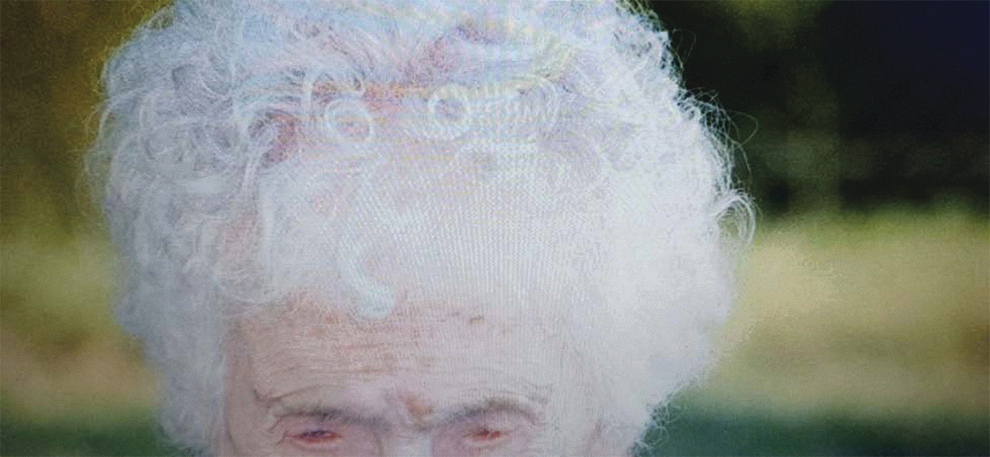
A close-up, high-resolution view of Jeanne Calment's forehead and eyes at age 120, showing advanced aging/deterioration expected for someone her age, not for someone at age 97.
Of course, we should pause for a moment and consider the ethics of biosampling. Each individual human has individual human rights, such as the right to their own person and privacy. As such, any biosamples procured for scientific testing should be procured in a scientifically ethical manner, and one that properly reflects the will of the person being tested. Jeanne Calment, already having chosen to be publicly identified for her age, and having worked with scientists for several years, chose to donate biosamples of her person in the 1990s to the Chronos project, which collected biosamples of French centenarians. As such, the ethical requirements of biosampling in this case have already been met >20 years ago by French researchers. And yet, the ideas for what to test for in 1995 were not as well developed as what to test for today. Searching for genetic biomarkers of longevity on a population-scale level, such as Apolipoprotein E, was a good thing. But for unique cases, the opportunity to do more than a mere population-level prevalence test arises. With Jeanne Calment, we have a unique opportunity to biotest the samples of a 122-year-old woman, not for mere prevalence trends in a population, but for specific unique biomarkers of longevity in that person. As we know that some advantageous mutations can arise spontaneously in a single human body, so each individual has a unique biomarker profile. But we also know that the biomarkers of someone at, say, 115 years are more special than at age 90 years. In the United States alone, >1 million persons today are aged >90 years, but 0 are currently aged >115 years. These numbers alone show that to go from 90 to 115 is less likely than to go from 1 million to 1. And that is merely for age 115 years. What about age >120 years?
The Jeanne Calment case represents, uniquely, both the best validated and oldest validated supercentenarian case in actuarial and demographic science. That alone makes the case doubly special and unique. At age 122.45 years, Jeanne Calment's age stands out as the “Mount Everest of Aging.” Because her age is so extraordinary in relation to the other validated-age case data, there has been interest in studying her case for >20 years after her passing, in addition to the earlier >10 years of research by scientists while she was living. In 1995, Jeanne Calment broke the “all-time” Guinness World Record for the oldest authenticated individual in human history (retroactively, if we discount the Shigechiyo Izumi case, then Jeanne actually became the “oldest person ever” in 1990, aged 115 years). Hypothetical scenarios of identification document (ID) switching, long a standard test of age validation since the methods were developed, in this and other cases have left some in science wondering whether more can be done to limit doubt beyond the paper documents check and local interviews, and so there has been a push among some for biosampling to resolve this issue. However, those who have validated Jeanne's case already have made such a strong case that in the view of many, there is no issue to resolve, and thus no need for biosampling. 4 I agree with the former but not the latter. If, indeed, the case is proven beyond reasonable doubt to be valid, at age 122.45 years, that is all the more reason for biosampling. As the proportion of longevity attributed to biological (including genetic, epigenetic, etc.) factors increases the higher the age group, so the oldest person on record should have unique biological properties that may not show up in even 115-year olds. Conversely, science has already identified unique genetic mutations that shorten human lifespan, but has not adequately tested for mutations that extend the human lifespan. Although studies of life-shortening genetics have been numerous, little effort has been made to study the potential of life-extending genetics, at least among those with the highest ages, in humans. That could change soon. In short, if Jeanne Calment were a genetic mutant with positive genetic mutations that reduced the effects of aging and allowed her to outlive everyone else, then science can only gain from studying such a person. But before we get into the details of that, I think it is important for the reader to have an overview of the history of supercentenarian biosampling and a refresher on the history of age validation and the Jeanne Calment case itself.
An Overview of Supercentenarian Biosampling
The idea of biotesting the bodies of “super” centenarians is not new. Indeed, it is not even limited to the mere last 140 years. Rather, this idea goes back to the search for trying to find out why some people apparently live so much longer than everyone else, which goes back thousands of years. It is, therefore, difficult to say for certain when the first attempts began to use biosampling methods to test alleged supercentenarians. However, among currently known examples, a good candidate for biotesting of alleged supercentenarians began in 1635 in England, with the case of “Old Tom Parr.” An elderly man brought to the king as a curiosity and said to be “152” years old died soon thereafter, leading to the king's inquest for an autopsy. The king's royal physician, Sir William Harvey, performed an autopsy on the body of Thomas Parr, who had claimed to be 152 years old at the time of his death. 5 If anything, this autopsy result helped to cast doubt that this man was anywhere near the age claimed; recent researchers believe that Mr. Parr may have been less than age 70 years. 6
The Thomas Parr situation may have been a one-off situation for that time, but parallels can be seen in the later case of American Joice Heth, touted by American showman P.T. Barnum to be a “161”-year-old woman. After her death in 1836, an autopsy performed by Dr. David Rogers concluded that her body was not >80 years old, aligning more closely with persons in their 70s than those >100 years. 7 Curiously, Dr. Rogers claimed that he had also performed an autopsy on a “115-year-old woman” in Italy and that the Italian woman's age was close to accurate. These better-noted examples help to give us some insight into the mindset of the medical community of the time, and it should be noted that the extreme ages to >115 years commonly touted in the popular press at the time were viewed with some skepticism by the scientific community. Nonetheless, autopsy results alone left much to be desired: whereas physicians could get a general idea that someone was “closer to 70–80 years than to 150–160 years,” more certain estimates would require additional verification. The idea of using people's life stories to “test” for whether someone could remember historical events from early in the lifetime of alleged long livers had already begun. But there was also an understanding that documents proving one's birth, marriage, life history, and death were essential for bringing further into focus how long humans lived. Autopsies could help estimate decades, not years.
The move from autopsy to taking individual biological samples for testing, however, is a relatively recent phenomenon. Centenarian studies in the 1980s, such as the New England Centenarian Study, were a precursor model of using longevous persons for the testing of genetic and other biological factors associated with human aging. By the 1990s, the New England Centenarian Study had already biotested several supercentenarians, including a 119-year-old woman in the United States. We also saw a Japanese autopsy study of a 116-year-old woman in 1995.
The Gerontology Research Group (GRG) began the biosampling of supercentenarians in the early 2000s, with Dr. L. Stephen Coles performing supercentenarian autopsies, and his wife Natalie Coles performing blood draws. Although prior individual autopsies on supercentenarians had been done, Dr. Coles was the first to publish an autopsy study of supercentenarians. 8 These efforts ended with Dr. Coles's cancer illness rendering him unable to continue, and the partial results were published just before Dr. Coles's death, in November 2014. 9
Other groups have, at various times, either proposed, or been involved in, supercentenarian biosampling. The Supercentenarian Research Foundation, founded by Stan Primmer, began biosampling of a 116-year-old supercentenarian woman and her family in 2006. 10 The New England Supercentenarian Study, a subset of the New England Centenarian Study, launched in 2007. 11 Another group, the Supercentenarian Research Study/Betterhumans, began sampling supercentenarians in the past decade. 12 In 2014, a study of a single 115-year-old woman in the Netherlands was published, revealing new insights with regard to stem cells and aging, among other results. 13 In 2016, a small Japanese study of four supercentenarians investigated dementia. 14 In 2019, a new study of supercentenarians from Japan found an association between “super” immunity and super-long-life in humans. 15 Of course, these biosampling studies can tell us a lot about the persons biosampled, but they cannot yet confirm a person's age. For that, age validation through documentation of a person's life history is still needed. Hereunder, I discuss a brief history of the development of the age validation of extreme age claims.
Brief History of Age Validation
From a scientific perspective, the purpose of age validation is to create statistically valid data wherein the probability of certainty is great enough that the data quality will not affect the conclusions of the study. From an actuarial perspective, the purpose of age validation of the oldest person on record is to help determine life insurance tables. Age validation is important in fields such as gerontology (the study of longevity), demography (study of population size/change/movement), and mathematics (in the question to identify human mortality models that best fit the maximum theoretical human lifespan). When the age claims are extraordinary, utmost care must be taken to reduce the risk of errant data being included. In addition to being in many cases the focus of a study itself, age-validated data on supercentenarians can also be useful in applied studies, such as trying to determine which biological factors are associated with extreme longevity. In these kinds of studies, it is important that the ages of the supercentenarians in the study are certain. But that has not always been possible.
For millennia before vital statistics began to be regularly recorded on a population basis, human claims to extreme longevity have far exceeded the current biological maximum human lifespan, with religious and mythological claims to people living hundreds and even thousands of years. Claims to age beyond >130 years are generally assigned to longevity mythology. 16 Since the advent of population-level national birth registration starting with France in 1539 (Ordinance of Villers-Cotterêts, signed by King Francis I, making birth registration compulsory), 17 the move toward age-validated data that can be used to accurately determine how long humans are living and whether the maximum observed human lifespan is increasing has been a long slow process. The ideas of the demography of human longevity began to take shape in the early 1700s, with researchers such as Georges Buffon in 1749 18 proposing that human longevity is basically the same everywhere (people live ∼90 years). 19,20, ‡ At the time, such an estimate was not far off, and it helped to counter the alternative viewpoint that population-level human longevity varied substantially by region. This debate has continued for over a century, with the evidence continuing to favor Buffon over those who sought a differentiation due to environment (such as “longevity valley” or “longevous mountain region” concepts). What has become clear is that all Homo sapiens share the same species-specific lifespan and that environmental influence only can serve to reduce, not extend, the maximum attainable ages, and even then, the effect is often only within a few years: for example, the oldest Japanese person from Hokkaido in northern Japan was aged 113 years but age >114 years has occurred on a fairly regular basis in more temperate regions, topping out at age 117 years—but even that differentiation is <5 years.
When population-level age studies were beginning to develop, the need for individual case validation also arose, to help define the extremes. Pension and other age-associated obligations were becoming of interest to both governmental and private entities. The age validation of supercentenarians began as a need for life insurance companies to close life tables. Insurers noticed that not many persons with policies lived beyond age 95 years, but claims among persons without life insurance went much higher, and there was a worry of excessive payouts for extreme age cases. This was despite the fact that at the time, most persons with life insurance policies were among the upper classes, and those without were among the poorer. To resolve this issue, William Thoms, best known for coining the term “folklore” in 1846, devised test methods to verify whether persons claiming to be age >100 years were in fact the age claimed. These methods, subsequently called validation, were covered in his seminal work, Human Longevity: Its Facts and Its Fictions (1873). 21 His classic tests for age included the need to find original documentation from close to the time of the birth event, midlife documentation, family-tree context, local area context, subject interviews, documents cross-checking, recent documentation, and the “100th-birthday test.” The key idea here was that when persons inflated their age claim to gain attention, they did so almost invariably in mid-to-late life. No one “planned” from birth to become the “oldest living person,” but only in mid-to-later life the idea came upon them. By checking the evidence tree of a person's life further back and down to the roots, researchers could eliminate age-inflated claims caused by those seeking attention due to extreme old age. For Thoms himself, this worked in 100% of the cases: of all the cases he checked, not one claim older than 103 years of age could be verified, and the verified case was someone with a life insurance policy already. The 103-year-old, Jacob Luning of Germany, remains verified to this day.
However, eliminating age inflation due to mid-to-late-life age misreporting is not enough to produce cleanly validated data on a scientific level. Other sources of error exist, including misidentification of persons. In the 1870s in Canada, researchers (the Taché investigation) announced that Pierre Joubert had been verified to have been “113” years of age. Remarkably, this claim stood unchallenged for over a century, § and was even accepted into generally reliable sources such as the Encyclopedia Britannica until in 1990 a reinvestigation 22 turned up evidence of a double life: Pierre Sr. was born in 1701 and died in 1766; Pierre Jr. was born in 1732 and died in 1814. The documents were real, but they had been mismatched, which is more likely to occur in a case of father–son namesaking. In this case, the Canadian researchers in the 1870s had not closely checked to rule out this possibility. There was no supercentenarian or even centenarian here.
At this point, we should remember that we have the advantage of hindsight. Age 113 years in the 1870s did not seem too extreme compared with the background of many extreme claims to ages >120 years at the time. The notion of local (Canadian, Quebec, Catholic, etc.) pride and patriarchal associations could also have played a role, if subconsciously. Yet in the larger view, at least the efforts were made to investigate, and this process can over time be self-correcting as more documents become available. Indeed, in the 1990s, new research by Desjardins was able to confirm at least one of the Taché centenarians as valid and over age 107 years. 23
Moving forward, in the 1890s Thomas Emley Young, president of the Institute of Actuaries, London, began validating or invalidating centenarian claims. T.E. Young introduced the concept of tracking valid centenarians by “age in years and days,” starting with Margaret Ann Neve of the Channel Islands, then 106, in 1898 (Ms. Neve would eventually reach age 110 years before passing away in 1903). 24 Having taken an actuarial approach to human longevity, it was not a surprise when, in 1909, the New York Times 25 asked two experts for their assessment of human longevity over the next century: what would be the maximum human lifespan one century later? One of these experts was Elie Metchnikoff, coiner of the term “gerontology” in 1903: Metchnikoff, known for studying diet associated with human longevity, estimated that humans by 2009 would reach age 140 years. The other expert, the actuarian, T.E. Young estimated that humans by 2009 would be closer to age 125 years. As we know today, the actuarian was closer to the current number: age 122 years.
The next 50-year period or so saw slow progress in the field being made. Alexander Graham Bell, better known for developing the telephone, also studied human longevity (until his death in 1922) and believed that Ann Pouder was 110 in 1917. His work was featured in the National Geographic magazine. The 1920s saw new supercentenarian cases believed to be authentic, including Americans Delina Filkins (113 years), Louisa Theirs (111 years), and Miriam Bannister (111 years). Katherine Plunket of Ireland reached 111 years in 1932. In the 1930s, Walter Bowerman was noted for debunking claims such as Zaro Agha of Turkey (said to be “157” years; Bowerman said he was only 97 years) while supporting what he considered to be valid cases, generally in the age 108–113 years range.
The 1940s were a decade focused on war, not human longevity. World War II (WWII) was the worst war in history, resulting in the deaths of tens of millions of people, soldiers and civilians. Yet, war also produced military records, which would be useful in later validation efforts for several supercentenarian soldier claims, and the 1945 atomic bombings of Hiroshima and Nagasaki resulted in biomarkers of radioactivity levels that could be tested for later. 26 Interestingly, at least two survivors of the 1945 atomic bombing of Hiroshima went on to reach age 114 years: Asa Takii and Mitoyo Kawate.
The 1950s saw a return to relative world peace, and a focus on establishing a new bureaucratic global world order (characterized by the United Nations, decolonization, the institution of birth registration in places such as China, etc.) led to a reinterest in human aging and supercentenarians. At the same time, Guinness World Records began in 1955, and among the very first records was that of British American Betsy Baker, oldest person in 1955 at age 113 years. This particular record remains unchallenged today. However, the 1950s also saw many fraudulent/inflated/errant claims to extreme age, including faux “Civil War veterans” in the United States, such as Walter Williams (claimed 117 years, but was actually 105 years) and John Salling (claimed 112 years, but was 101 years).
The 1960s saw a time of intensified longevity mythology, as extreme longevity became a tool of global propaganda in the USSR versus the West split. Extreme longevity has often been touted as a symbol of a healthy and proper way of life. The idea that “Communism confers longevity” was pushed in nations as such the USSR, China, and Cuba. Meanwhile, the West, more anchored in bureaucratic records than much of Europe, still made way for U.S. claims of extreme age, especially “ex-slaves” often reported to be >120 years.
This trend continued into the 1970s, which proved to be the pivotal decade in the paradigm shift from longevity mythology to a more skeptical viewpoint. In particular, the year 1973 saw the death of Shirali Mislimov of the USSR, allegedly 168 years old. The 1970s were noted for several “myths of concentrated superlongevity” in remote mountainous areas, such as the Caucasus, Hunza Valley in Pakistan, and Vilcabamba in Ecuador, among others. While these longevity myths had multiple rationales (a confluence of local village elder, patriarchal, religious, regionalist, nationalist, and ideological pride), they all had something in common: extraordinary age claims to 130+ with no proof of age. In addition, there were clues that began to “blow the lid” on these extraordinary claims. National Geographic's Alexander Leaf noted that one particular claimant had aged 10 years in 1 year's time between interviews. This clue alone began to turn the tide in favor of a more skeptical viewpoint. Others, such as Zhores Medvedev of the USSR, helped to cast doubt on the longevity mythology of the Caucasus. 27 Meanwhile, the claims in Vilcabamba, Ecuador, were debunked by experts who determined that there was no one in Vilcabamba older than 96 years, contrary to popular claims to age >140 years. 28
It should be noted that many gerontologic experts in the 1970s and even earlier had long considered the maximum human lifespan to be “110–115” years, 27 but that a vocal minority of those who studied human longevity had long been open to the idea that humans could live to 140 years, 150 years, even >170 years. These ideas, indeed, included among their adherents Elie Metchnikoff, the founder of gerontology. Usually, these ideas were wrapped around rationalizing concepts that could explain “extreme pockets of unusual/extreme longevity”—such as “fresh mountain air,” “clean mountain water,” a diet and lifestyle of goat cheese/yogurt, and other rationalizations. None of these ideas stood the test of the scientific method. We now know today that the world's oldest living person could be living in a major city (New York City's oldest resident on record is 116 years, e.g.). However, the 1970s continued to be a transitional period in the field. After the debunking of several longevity myths (including those of the Caucasus and Vilcabamba, and the false claim of Charlie Smith of the United States to be “137” years in 1979), the media attention on supercentenarian claimants shifted to the idea of “authentication.”
Shigechiyo Izumi Case
Guinness World Records, it should be noted, never fell for the longevity myths cases. One of the Guinness precepts is that “truth is stranger than fiction” and so having a case be “totally authenticated” was more important than having a more extraordinary, but unproven claim. Under this philosophy, it was not a surprise when, in 1978, Guinness World Records accepted the claim of Shigechiyo Izumi of Japan to be 113 years. The case, on its surface, had several things going for it: (1) Japan had begun koseki registration in the 1870s, and this claimant had been registered; (2) Japan was on the rise on the world stage as a new economic and cultural power, and that included the image of Japan as a land of longevity due to perceived healthy diet/lifestyle/cultural practices; (3) age 113 years was near the acceptable line between the validated data world of actuarial science (most actuarial life insurance tables then maxed out at age 113 years; this was later raised to 120 years in recent decades); (4) Izumi had appeared to have several more years of life in him, so the age could go a lot higher; and (5) Izumi could be seen as a symbol of diversity and internationalism/globalism.
However, there were also signs of problems with this claim. For one, Izumi appeared to be quite young for the age claimed, including streaks of black on his hair. Two, the age did not stop at 113 years: over time, the birthdays ticked off: 114 years in 1979; 115 years in 1980; etc. By 1985, Izumi had reached age “120” years on paper. Three, he was male, in an age category dominated by females. Four, the ages of his family members also left considerable room for age adjustment. But clues such as this are not enough to rule out an extreme outlier. Indeed, the claim that Izumi worked for 90 years seemed to support the claim to “120” years, and the case was also backed by the government of Japan—officially. Izumi also embraced his role as a public figure.
Clues, however, that there was a problem with this case came from Japan itself. The original case validators later retracted support for the case; whispers in Japanese media centered on whether the government of Japan would continue to “recognize” Izumi as age “119” years in 1984. Izumi's death in 1986 at official age “120” years did not end the controversy. Finally, Japanese scientists leaked information to the media in 1987, stating that Izumi was “only 105” years. 29 The explanation by experts is that the family had two sons named Shigechiyo Izumi: one born in 1865 who had died young and a younger son born in 1880 who initially had been renamed to honor the oldest deceased sibling. In their view, the man who died in 1986 was born in 1880, and hence was age 105.5 years, not “120.5” years.
However, this particular news was not widely circulated at the time beyond the Japanese-language media. Before the age of the World Wide Web, information such as this did not spread rapidly. The Izumi case remained for many years as the “Guinness World Record-Holder.” It was not until October 17, 1995, when Jeanne Calment passed the milestone of 120 years, 238 days, that the Izumi case was not considered to be the official all-time world record holder. Even then, the Izumi case remained the record for “oldest authenticated male” for many years afterward. One thing to consider is that there is the understanding in the world of science that material accepted for scientific publication (the Izumi case was also included in scientific materials) should not be withdrawn lightly; actual evidence should be published in a scientific journal to officially debunk the case. Despite the source of the “Izumi was only 105” news reports in the 1987 Japan media, such as Asahi Shimbun, came from a scientist, the leaker remained anonymous and the alleged Izumi material showing him to be 15 years younger was never published publicly or in a scientific journal publication (was this due to cultural and governmental pressure not to publish?). The Japanese respect for ultra human longevity and reputation as a source of validated extreme human longevity data would have made it publicly unpalatable to come forward especially soon after Izumi's death. Note that these news reports of Izumi's age being in dispute did not reach non-Japanese news reports until many years later. This troubling fact means that the Izumi case remains, to this day, merely disputed, not fully debunked. Guinness World Records made the decision to withdraw support for the Izumi case in 2010. 30 However, the government of Japan still officially lists Shigechiyo Izumi as their national longevity record holder, at age “120” years. The “proof” that Izumi was “only 105” years remains unpublished as of this writing. However, “proof” that Izumi was “120” years also remains unpublished, which has resulted in a gray-zone situation where the dispute cannot be fully resolved, due to nonsharing of information publicly.
Between Izumi and Calment
The death of Shigechiyo Izumi on February 21, 1986, was coincidentally Jeanne Calment's 111th birthday, but she was not yet considered to be the world's oldest person or even oldest person in France (Eugenie Roux, 112 years, passed away in June 1986), and was not yet well known outside of local media coverage. The Guinness “oldest living person” title went back to the relatively mundane: female supercentenarians in the age range of 112–114 years (the Augusta Holtz case, the now-recognized first person validated to have reached age 115 years in 1986, was not validated until 2012). Anna Eliza Williams of Wales, United Kingdom in 1987, became the first undisputed female supercentenarian in real time to be validated to have reached age 114 years, soon followed by Florence Knapp, 114 years, of the United States. Yet both of these ladies died within days of each other: Ms. Williams on December 27, 1987, and Ms. Knapp on January 11, 1988. The door was now open for the Jeanne Calment case to come into the “world's oldest person” discussion.
Brief History of the Jeanne Calment Case: Initial Claim and Acceptance
The sudden death of the last two verified supercentenarians from the year 1873 in short order opened up an opportunity for the Jeanne Calment case to attain international recognition. ** However, initially the Guinness “oldest living person” title (which is always considered “until otherwise proven” and conditional upon the documentation for the case having been officially accepted by Guinness World Records at the time) went to a few younger ladies: initial news reports had Mare Bolette Torp, 111 years, of Norway as the titleholder; she was soon replaced by Orpha Nusbaum, 112 years, of the United States— who, however, passed away in March 1988. Jeanne Louise Calment, born February 21, 1875, was older than either of the two. Would Jeanne Calment claim the title? The year 1988 would be a seminal year in the history of the Jeanne Calment case: it was the year that marked the 100th anniversary of the visit to Arles of noted painter Vincent Van Gogh, and Arles's “Van Gogh 100th Anniversary” celebrations meant that the local Arles news became international media news. It quickly emerged in the press that a 113-year-old woman in Arles “sold pencils to Vincent Van Gogh” as a child and still remembered his “ugly face.” These reports attracted the attention of many. By August 1988, Guinness World Records had authenticated †† that Jeanne Calment, 113 years, was their new “oldest living person” titleholder, retroactive to January 11, 1988. 31 Meanwhile, researcher Jean-Marie Robine, a demographer, also began to investigate the Calment case in 1988, mainly to help establish demographic efforts for French supercentenarians. 32
The year 1989 saw Jeanne Calment lose her “oldest living person” title— to a claim to be older. Carrie White of the United States was said to be born in November 1874 and was recognized as the “new” titleholder after submission of a claim. Carrie White went on to reach age “116” years, passing away on February 14, 1991, at the calculated age of 116 years, 88 days. 33 Upon Carrie's passing, Jeanne Calment regained her title. Later, the Carrie White claim was called into question by additional scrutiny of the case and new evidence located. 34 In hindsight, the Carrie White case situation should have drawn some red flags: one, there was no original proof of birth; the oldest document was from 1909, some 35 years after birth. Second, she had little family history; she had been turned over to a mental institution in 1909, suffering from a medical condition then described as “post-typhoid psychosis.” Having spent the rest of her life institutionalized, there was the positive aspect of stability of identity, but if the initial age given in 1909 was incorrect, then it would follow that the case would continue with it. Although it now seems more likely that Ms. White was “only 102” years, born in August 1888 according to the 1900 census, we also need to remember that the census record is also a reflected memory, not an original recording of an event. Ms. White was probably a centenarian, but was not the world's oldest person.
Over the next several years, the Jeanne Calment case would not be seriously challenged again. Validated persons younger than her, such as Charlotte Hughes of the United Kingdom (1877–1993), Margaret Skeete of the United States (1878–1994), and Tane Ikai of Japan (1879–1995), would pass away sooner than she. The Jeanne Calment case began gaining super-media traction in 1992, when Jeanne turned 117 years. By her 118th birthday, media outlets had named her such things as “Mistress of Time.” In 1995, Jeanne Calment reached her 120th birthday, the very first time that a validated person with an original birth record reached age 120 years. And later in the year, by October 1995 Jeanne Calment had eclipsed the Izumi case, becoming recognized as the all-time record-holder on October 17, 1995. 35
The media attention surrounding the Jeanne Calment case was immense. There were several reasons for this: one, the initial link to the Van Gogh anniversary led to a movie about Jeanne's life being made, called “Vincent and Me.” 36 Two, Jeanne herself was in decent shape for her age and was a charismatic personality, known for engaging bon mots (wise sayings) as well as her sense of humor. Jeanne also did things such as thumb her nose at some traditions. For example, she hunted with her husband at a time when the role was mostly socially limited to males. Smoking a cigarette for her 117th birthday, in defiance of social expectation, was telling. 37 This is a woman who would not be held back by the standard fare of being overly prudent. As Jeanne herself stated in 1985, “I waited 110 years to become famous; I plan to take advantage of it as long as possible.”
The media would sometimes pair the Jeanne Calment case with unvalidated claims, such as Emma Winn of the United States (1875?–1994) or Maria do Carmo Geronimo of Brazil (1871?–2000). But none of these media pairings had any relationship with the scientific facts of the Jeanne Calment case; it simply means that the media attention at the time was focused on finding challengers to the Jeanne Calment title. For their part, the science media also had their time. By 1993, Jeanne Calment had become the “go-to” media face for pop-science stories in publications such as Time and Newsweek. In 1995, noted demographer Jay Olshansky described Jeanne Calment as the “Michael Jordan of aging.” He claimed that your chance of reaching Jeanne's age is similar to your chance of playing basketball like Michael Jordan. It is a great analogy, and can be extended further: I say that just as Michael Jordan reaching his peak ability required both natural ability and a positive conscious effort to act upon it (practice), the Jeanne Calment case was extraordinary, in part, due to her biological potential, but also, in part, due to her positive environment and lifestyle. Occasional cigarette for a media photo-op aside, Jeanne had a long history of extraordinarily beneficial diet and lifestyle practices: she cooked with olive oil; drank red wine in moderation; rode a bicycle at 100 years; walked at 114 years; and she stayed ever mentally engaged, active, and positive. When, in January 1990, she fell and broke her hip, many thought that would be the end of her. Her 115th birthday party in February 1990 was somewhat subdued: she stayed in bed the whole day, resting her fractured hip. Yet, when asked what she did with her time, she said: “I think, I dream, I go over my life in my head…I never get bored.” This was a woman whose active, positive, and mostly healthy lifestyle combined with a super-longevous biological potential to reach the oldest so-far-documented attained maximum human lifespan. When Jeanne Calment finally died in 1997 at the documented verified age of 122 years, 164 days, she set down a mark. Yet, that mark is not one of extraordinarily extraordinary 38 ; it is, rather, a mark of the minimum age to which an individual of the species Homo sapiens can reach. It is a conservative mark, an “at least” point. In extreme value theory, higher ages are attainable; they just have not been observed yet, due to chance.
But, skeptics said, how can we be sure that the age is accurate? Discounting the Izumi case, skeptics stated that the Jeanne Calment case was so far beyond the previous records that it must be thoroughly checked for evidence. And so Michel Allard and Jean-Marie Robine set out to do just that, joining with other experts in the field, such as Dr. James Vaupel, founder of the Max Planck Institute for Demographic Research in Rostock, Germany in 1996; and Dr. Bernard Jeune of Odense University, Denmark, already noted for his work on extreme age validation. The results of this work were impressive: >40 official documents, including indirect family documents, combined over a period of >122 years with no breaks >12 years. 39 In addition to the documentation gathered, there is also the multiyear history of family study, in-person interviews, and more collected by Allard and Robine. The validation summary of the Jeanne Calment case published by the Odense University, Denmark Monograph Series on Population Aging, is also shared by the Max Planck Institute for Demographic Research. 39 Without going over this in detail, I will say this body of work to validate the Jeanne Calment case as the all-time documented record holder is extremely impressive: we have solid proof of birth; we have solid proof of death; between the two, >40 documents and, even more than that, family-tree reconstitution, local area context, in-person interviews, and the like combine to make the Jeanne Calment case not just the oldest validated case but the best-validated case. The evidence is so strong, one has to ask: what would be the statistical odds of all this being brought together and not being correct? We understand that, just as the odds of flipping a coin 30 consecutive times and coming up with the same results increases the chances that both sides of the coin are the same, so if we continue to check a validation case and the evidence keeps lining up, then we gain more and more confidence that the result really is valid. If anything, this remains one of the remaining hypothetical exercises to further check this case that has not yet been done.
Hypotheses About ID-Switching: Can It Be Ruled Out in the Jeanne Calment Case?
Having briefly reviewed a history of supercentenarian age validation and how the Jeanne Calment case came to be initially accepted as validated, it is now time to examine how the principles and concepts of age validation apply to the Jeanne Calment case. The purpose of this case review is twofold: (1) in part to examine in greater detail how the case passes the currently accepted standard for age validation and is, indeed, the gold standard for age validation but also (2) to examine remaining questions with regard to the hypothetical possibility of ID-switching, both in this case (not demonstrated) and in several other famous case examples (where some kind of ID-misidentification was an issue).
One thing to remember about science is that it is above all a methodology, not a result. Science is tentative. Science has to be open enough to have room for ideas that can explain anomalous phenomena. We do not need a religious authority telling us that the Sun revolves around the Earth, as Galileo was forced to concede to. And yet, at the same time, we also need to balance new ideas with old. The Einsteinian model for gravity and space–time modified the Newtonian model, but that does not mean that the Newtonian model did not have some degree of success as a descriptor of phenomena such as gravity. A model, by definition, is a simplification of reality: one has to ask whether the simplification process, intended, in part, to make the model easier to understand but also intended because in reality it is not (yet) possible to reach an absolute limit to every means of modeling (except, perhaps, measures such as Planck length and Planck time), conserves enough of the details of reality for us to draw a firm conclusion. When we get into a discussion about something such as the maximum hypothetical human lifespan versus the maximum scientifically accepted documented human lifespan, we understand that there is a gap, and the odds are, there should be a gap. In the same way, the tallest trees could hypothetically reach 425–427 feet (130 m) in height, 40 but do not, in part, due to bad luck (wind breakage/drought/humans cut them down/bird damaged the top/etc.), so we also understand that the oldest validated person of all time will almost certainly be not the maximum hypothetical age that can be reached (even if the estimated maximum hypothetical age is “spot-on”) but something well below that, because so many factors are required for “everything to go right” that the odds are, it never will happen in reality. So, if, for example, extreme value theory suggests that, under current life expectancy conditions, age 125 years or even 128 years is possible, that does not mean that actually happened. It means that it could theoretically happen, but it may be too unlikely to ever be observed, because the odds for “everything to go right” are so infinitesimal. So, when dealing with a situation such as the Jeanne Calment case, one thing to consider is not just whether the case is within the maximum theoretical possibility, but also whether it is near the maximum actual expected result, but not so close to the “plausible impossible” as to be extremely unlikely. With the Jeanne Calment case, the answer is “Yes”: the case fits within the “sweet spot” of being rare enough to be a uniquely plausible data point but not so rare as to be plausibly impossible. Several persons (such as Don Gennery of National Aeronautics and Space Administration) have independently calculated the odds of “one person ever” reaching age 122 years; several results have aligned closely with a percentage rate of 12%–14%, which distills down from 13 per 100 odds to a 1 in 7 chance. Put another way, if we run a hypothetical universe simulation applying 1 billion data points and the life expectancy at birth at the time of Jeanne Calment, we can expect that in 12–14 out of 100 times the simulation is run—distilled down to 1 out of 7 times the simulation is run, the maximum (extreme) value will be 122 or higher—and 6 times out of 7 the value will be lower.
We can thus consider that age 122 years for an “all-time record” is not the most likely outcome, but it is also far from unlikely, either. A 1 in 7 chance is actually a rather mundane value: not so low as to be likely to be broken any time soon, but not so high, either, that it is way out there. Indeed, the Jeanne Calment data point is less extraordinary than Mount Everest—a mountain whose existence on Earth is widely documented. Moreover, the Jeanne Calment data point is also less extraordinary, statistically, than many other outlier data points seen in nature, sports, and the like, such as longest river and most pitching wins in baseball. Within the perspective of an all-time record, the data point is not extraordinary but within statistical expectation. The real question is not so much whether age 122 years is feasible, the real question is when will we see this mark again. And the answer seems to be: within the next few decades, according to mathematical calculations. ‡‡
Of course, the answer that age 122 years should occur again within a few decades is disappointing to those who expect rapid change. However, we should remember that even in a field such as meteorology, experiencing temperature change through global warming, we still see many weather record highs that have survived not just for four decades but also for >140 years. Indeed, weather statistics have shown that average daily high weather records last, on average, ∼50 years.
Idea about ID-switching not new: actually part of the testing for initial validation
Age validation is a method designed to test the quality of data when it comes to the age of a subject, either for an individual case or for cases as part of a larger group study. One thing that needs to be said about age validation that has not been properly emphasized enough in the media is age validation, by default, assumes that the person's age is invalid (extraordinary claims require extraordinary evidence), unless/until sufficient evidence is enough to convince the experts otherwise. Age validation involves the following primary components.
Original proof of birth or close proxy
The first requirement for an age-validated case is proof of birth, preferably an officially issued government document from a governmental system that keeps systematic birth registration. However, >110 years ago, an estimated <10% of the world population had official birth registration. To increase the proportion of validatable cases, an alternative record may be substituted if the evidence is clear and such substitutions were of comparable data quality. The most obvious substitution is a religious document such as an infant baptismal record, maintained by a major religious institution such as the Catholic Church.
As with a rock thrown into a pond creating circles around the impact, the waves becoming more scattering the further from the impact event, so it is important to have the proof of birth as close to the birth event as possible. If an original birth record cannot be located (due to either the birth not being recorded or the record not available/destroyed), then a proxy identifying document close to the birth event may be substituted. Catholic infant baptismal records are often a very good proxy, as the infant baptism is often close to the birth event.
Less certain but acceptable in some circumstances are census-matched ages. Deciding where to draw the line on how far out a census document should be counted as a “proxy” document suitable for substitution for the birth event has been a matter of debate for some time. In the case of Sarah Knauss, because the 1890 census, which may have once included Sarah in it, was destroyed by a massive U.S. government fire in 1934 (97% of the U.S. 1890 census was destroyed), and Sarah's September 1880 birth came just after the June 1880 census, the earliest available census document for Sarah is the June 1900 census, which correctly lists her as 19 years old. In the Sarah Knauss case, the ages of younger siblings limit the possibility of Sarah being much younger than the “mirrored” age of 119 years, with age 117 years being very unlikely (the mother would have had to give birth at <10 months) but not ruled out entirely and age 118 years still being possible, but no evidence at this time has yet been produced, which contradicts age “119” years for the Knauss case. 34 With all the evidence so far supporting age 119 years, the Knauss case at this time remains validated as age 119 years. Still, more research may be done to check this case or any other case considered validated or unvalidated.
In the case of Jeanne Calment, the issue of validation by a proxy method is not an issue. With an original 1875 proof of birth with several matching points, it is quite certain that Jeanne Calment was born in 1875. Proof of birth is not an issue in this case and is not in dispute in this case.
Proof of survival >110 years later
The second requirement for age validation is proof of survival to >110 years later. In many instances, the death record serves as the proof, but it is preferable to have a proof that the person was living at age 110 years, if possible, to rule out the possibility of the death record being mismatched to the wrong person. There have been several historical case examples where a birth record was matched to a death record of a similarly named but younger person. For example, the Canadian Tache investigation in 1878 mismatched the birth record of Pierre Joubert Sr. (born 1701) with the death record of Pierre Joubert Jr. (died in 1814), creating an apparent “113”-year-old early supercentenarian. This case was reinvestigated and overturned in 1990 by Charbonneau. 22 Of course, such a scenario would not apply to the Jeanne Calment case: Jeanne's daughter was Yvonne; the names did not match so they could not be confused.
However, “proof” of survival through third-party verification (such as a phone call to a family member) has not proven to be fail-safe, either. In the notable case of Sogen Kato of Japan, an apparent “111”-year-old man turned out to be a case where the family hid the body for decades, in part, to continue collecting a pension (but also may have had a religious inspiration). 41 But in that case, the evidence of fraud was obvious: the dead body was located by the police, the false pension collections were located, and the daughter was charged with pension fraud. 42 Again, this is not the case with the Jeanne Calment case, where there is no evidence of a death being hidden, or of a pension being extended beyond a death.
We should also be careful to balance “aha!” moments of extreme exceptions. The Sogen Kato case remains unique and one of its kind, where the family kept the body while continuing to collect his pension. Although other cases in Japan of families collecting pensions for a “missing” relative (often someone who disappeared or moved away and never returned) were located, in 2010, the >300 centenarian cases investigated turning out to be missing persons represented a small percentage: that is, ∼1% of the total centenarian population. 43 Also, the “234,000” missing centenarians number conflated two different Japanese systems of recordkeeping: Japan traditionally tracks the entire national population, and the so-called 234,000 missing centenarians actually represented missing persons cases (many from WWII) where the person would have been >100 years if still alive. That is completely different from the Japan Ministry of Health, Labor, and Welfare listing of centenarians, where everyone listed is “verified” by local government officials to be still alive. A recheck in 2010 did indeed find that about 99 out of 100 listed centenarians were indeed alive; the remaining 1% had been misreported as alive, mostly by the family. But the total number of reported centenarians in Japan in September 2010 (>44,000) never came close to the “missing persons” listings of >234,000 would-be centenarians. In our need to be properly skeptical, we must also be reflexive: we should not over-react to media frenzies but base our understanding of the situation on the deep metrics. And for Japan, >44,000 confirmed >100-year-olds in 2010 is quite impressive.
Proof of name change/midlife document connecting proof of birth to proof of survival to >110 years/death
The third major requirement for age validation involves a midlife document connecting the proof of birth document to the proof of survival to >110 years per proof of death document. In the case of women who changed their name at marriage, it is important for a marriage record to establish that the person in the birth record changed names at marriage, to become the person in the death record.
However, because males historically did not change names at marriage, some early researchers that ignored this step for males and incorrectly matched the birth record of a Sr. to the death record of a Jr. For example, Pierre Joubert was “validated” in 1878 by the Tache investigation that determined that he was 113 years: a birth record for a Pierre Joubert from 1701 was (mis)matched to a death record for a Pierre Joubert who died in 1814. This errant conclusion stood for 112 years, until in 1990 a reinvestigation by Charbonneau 22 uncovered the 1732 birth record of son and the 1766 death record of the father.
In the case of Jeanne Calment, there is only one birth record for Jeanne Louise Calment and only one death record for Jeanne Louise (Calment) Calment. The 1896 marriage record further establishes that the Jeanne who was born in 1875 was the Jeanne who married her cousin, Fernand Calment, in 1896. Thus the Jeanne Calment case also passes the third requirement for age validation.
Family-tree history
The first three requirements for age validation are considered sufficient for validating age claims in the range of 110–114 years, in part, due to the statistical number of cases (age >110 years validations now number in the several thousands). However, for age claims to >115 years, which are far rarer (<50 years currently accepted as validated, ever), less likely to be correct (<2% of U.S. claims to age >115 years could be validated, according to a recent study) and also more likely to cause statistical noise if an incorrect validation were to occur, additional requirements are expected of researchers. This includes building a family-tree history of the supercentenarian claimant to frame their life within the context of their family tree. This can prove useful in several ways. For one, researchers can check for potential identity reuse scenarios (if a younger sibling was renamed after an older sibling who died, e.g.). Second, the ages of the parents and children can help detect whether there are problems with the time period of the claim (a recent claim from Russia to age “123” years looks highly unlikely given that, if she were the age claimed, she would have given birth to three children between the ages of 53 and 59 years) 44 In yet another instance, the claim of William Coates of the United States to be “114” years was invalidated when, in order for him to be the age claimed, he would have had to be born a year before his mother (an impossibility). 45 In yet another test, the birth dates of other siblings of an alleged supercentenarian can help narrow down the range of possibility for their case: we know, for example, that Sarah Knauss had a younger sibling born in July 1884, so that limits her to being born in September 1883 or earlier. Finally, family tree data can help establish whether a family tended to be long lived (as if often the case with families of supercentenarians).
With the Jeanne Calment case, her family-tree context reveals nothing, apart from her great age, out of the ordinary. Jeanne's mother was 37 years when she gave birth to Jeanne, who married in 1896 at age 21 years and gave birth in 1898, almost at 23 years. Notably, Jeanne's family tree seems to have a higher family longevity than normal (her father lived to 93 years and a brother lived to 97 years, e.g.), although no other ages fall into the extraordinary range. In short, the Jeanne Calment case passes the family tree test: her case fits within the family tree context.
Local community context
A fifth test, applied generally to only the most extraordinary cases (such as all-time historical record holders or claims to ages >117 years), is where the case fits within the context of the local community. One such example is that of a man in Costa Rica who is allegedly “119” years old currently. 46 Although at first the case appeared to have documentation, including a 1900 baptismal record, several issues appeared to suggest that the age claim may be out of place. First, the man did not apply for a pension until 1999, allegedly at age “99” years. Second, there was a nephew of the same name born in 1934 who would have been “65” years in 1999: the right age for applying for a pension. If that is not enough, this man claimed to have no family that he could remember; his social-life traceability began only with his entry to the nursing home facility. Within the context of the local community, this man was from another town and had no known social or family history before him moving into the current facility. In short, his case raises notable suspicions in a case where age “119” years for a male is extraordinary.
However, the Jeanne Calment case easily passes this test: she has lived all of her life in the same midsized town, Arles: a town large enough for many people to be aware of someone but small enough that people still know each other. As a building landlord in the center of town and a member of a family that ran the largest local store, called “Maison Calment,” Jeanne Calment was someone well known to the local community for decades. In such a sweet-spot environment that tends to maximize exposure among the local community, having lived her entire life in the same place, the odds of an identity switch in such a scenario are virtually nonexistent: a large number of persons have stated that they knew Jeanne and Yvonne Calment and none of them ever recalled anything that would come close for them suspecting an ID switch 47 (for further reading, please see the Robin-Champigneul chapter). 48
Suspicion in this case was not based on actual evidence but standard testing procedures, and because the age claim was so extraordinary
In 1997, noted gerontologist Tom Kirkwood suggested that the Jeanne Calment case was so solidly validated, which the only possible notion he could envision where she might not be the age claimed was one of an identity switch. Such a hypothetical idea was not based on any evidence but a kind of “devil's advocate” “what if” scenario. Having reviewed the case more in detail, Kirkwood soon after came around to accepting that an ID-switch scenario was utterly implausible. Nonetheless, this early questioning caused Leonid Gavrilov, then an up-and-coming Russian-born gerontologist and mathematician in America, to entertain the notion that an ID-switch needed further research. This idea simmered as a back-burner discussion for >20 years before it recently caught fire and resurfaced again as something sensational. Nonetheless, a quick check of the actual new material located in 2019 again strongly affirms that there is no place for an ID-switch scenario in the Jeanne Calment case (see the Robin-Champigneul article for details). As others have covered the rebuttals to this story [including Eric LeBourg, 49 Jean-Marie Robine, 4 and Francois Robin-Champigneul (this issue)], 48 I plan to examine only a few example issues that demonstrate the need to consider the “null” hypothesis (the possibility that the hypothesis advanced may be incorrect) in one's research. Skepticism is not simply to doubt something: it is, rather, to take a careful approach, to demand a closer look at something, and to not take anything for granted. And sometimes, allegations turn out not to be correct.
So, what about the “reverse mortgage” and insurance chatter?
In 2006, a dinner-table conversation among French life insurance agents 50 included the rumor that Jeanne Calment was not the age claimed—but never has this claim be corroborated in any way, shape, or form. Indeed, when those involved are asked about it, they have repeatedly pulled back from such an allegation, saying it was just a rumor and they had no first-hand knowledge. They did not even have the details of the rumor. The person supposed to be the source of the rumor at the diner was interviewed by a journalist; he explained that there was nothing more than some statistical suspicion about such an exceptional longevity, saying exactly the following (translated from French by François Robin-Champigneul): “Statistically, this was an anomaly. For us as well as for the insurance company, in comparison to the histories and our mortality tables, such a longevity was not possible. The insurance shared with us its doubts about the veracity of the history of Jeanne Calment. But, as I remember, it had not made an enormous file about her. It only wanted to tell the Ministry that it did not believe in it from a statistical point of view. And to get itself covered, in a way.” One has to understand that the motivation of the French insurance agents' “dinner-table conversation” is to discuss the larger issue of life insurance fraud and similar situations that can prove costly for insurers, and for insurers to do their due diligence. The Jeanne Calment “reverse mortgage” (actually a life annuity) agreement from 1963 was the topic of conversation as a case example, and since at first glance it appeared that she cost them more money than she put into it, it is a cautionary tale that had been making insurance and financial discussions for many years. Yet the story, as the telling and retelling, failed to consider some common sense objections: first, while no one expected an 88-year-old woman in 1963 to live to age 122 years: also, a reverse mortgage begins to pay immediately, so there is little incentive to make oneself 23 years older, as there could be with an old-age pension that has to begin at age 65 years. Yvonne in 1963 would have been 65 years, already old enough for a pension. The real purpose of the reverse mortgage agreement was the lack of heirs, as Jeanne's descendants' line went extinct with the death of her grandson in 1963. In that case, starting an agreement after her grandson's death fits with common sense (it may have given Jeanne time to deal with the death, including the emotional toll but also the practical winding down of personal effects including financial life insurance policies). Moreover, someone aged 67 years in 1965 in France did not have a life expectancy to expect to reach age “99” years, either. Who planned for this? No one, it just happened. So not only is there no documentary evidence of a switch, the idea of a switch to get a good “reverse mortgage” deal does not make sense. By definition, the payments began right away.
Overskepticism: Nebra Sky Disk and Vincent
One of the issues in this case situation is that we need to consider the null hypothesis: what if the suggestion of ID-switching is not true? For some who have pushed “Calment-debunk,” they have started with a decision in their mind that an ID-switch had occurred, then they looked for elements to support that position. This is a classic teleological fallacy and not proper science. Proper science must not begin with the conclusion, but begin with an open question whose answer can be affirmative, negative, or not enough information to reach a conclusion. Some of those pushing Calment-debunk, such as Novoselov and Zak, 51 began with the result desired, then looked for “confirmation” to support it. This introduces observation bias and the results are tainted by presupposition.
A classic case of “Overskepticism” is the Nebra Sky Disk 52 “hoax” 53 that turned out to be incorrect. The Nebra Sky Disk had been found in 1999 by amateurs but was soon confiscated by government authorities. The very important significance of the disk—its uniqueness, relatively good shape, and amateur origins—made it a subject of controversy, and some scholars thought it was a hoax. Similar to the Jeanne Calment case, there was a lot of media attention, and some of the naysayers accused those who “approved” of the disk being authentic of being influenced by bias, such as Germany favoring the disk because it brought Germany cultural glory and, indeed, a “tourist” exhibit. However, repeated testing by multiple authorities showed that the Nebra Sky Disk was, in fact, of ancient origin and the “hoax” was little more than one scholar's overactive imagination and biased personal opinion. 54 Nonetheless, the authenticity of the Nebra Sky Disk was resolved through scientific testing, not the opinion of authorities.
Overskepticism can be a problem, also, in hypotheses based on mathematical formulas. Because people think of math as exact and correct, it is often assumed that mathematical formulas are “perfect” when, in fact, mathematical formulas, as with theoretical models, in most instances are simplifications of reality that do not take into consideration all variables, or how these variables change in proportional effect over time. One good example of problems with a formulaic approach is population growth rates. The assumption is that the inputs that led to the growth in the prior period will continue unchanged in later periods, but this is almost never the case. The reality is, the conditions change over time, and the further the formula estimate gets from the base data, the more unreliable it becomes. Consider, for example, the city of Hollywood, Florida. Its population increased >8% a year for >40 consecutive years, 55 so one might have thought that would be the case for the 1980 census also. But suddenly the growth slowed to just 1.28% annually. Indeed, this graph shows that trends can change suddenly, even among a city that did not substantially change its city limits for many years (Table 1).
Growth-Rate Variability of Hollywood, Florida
N/A, not applicable.
This is relevant to the claims of many mathematicians who have, in both the past and present, made erroneous assumptions about the continuance of mathematical formulas to “justify” erroneous conclusions. One such example was by Vincent, 56 who in 1951 posited that the maximum human lifespan, using the exponential mortality curve, was just “107” years. We now know that the validated maximum human lifespan already exceeded age 107 years in 1836 (Pierre Darcourt) and even if we give Vincent the “benefit of the doubt” for his time, his miscalculation was invalidated by evidence >100 years before it. Moreover, this was not the first or last person to underestimate (or overestimate) the maximum observed human lifespan. Dr. James Fries, best known for the compression of morbidity hypothesis, suggested in 1980 that the maximum human life should be around age 110 years (although he may have been referring to quality of life, not maximum possible age). In attempting to replicate the Vincent article, Depoid 57 came up with his own maximum age figure: 115 years. Amazingly, the estimates for maximum age keep getting higher, even among most skeptics, but still in many instances estimates are below the actual observed data. The actuarial life insurance tables once topped out at 113 years, but have been revised to top out now at age 120 years. 58 Of course, the actuarial tables are not a representation of maximum theoretical lifespan, but a representation of the maximum practical risk for a population-level life insurance or government-funded pension policy. Age >120 years would be an extreme exception, but not considered impossible. In 1909, Thomas Emley Young, President of the Institute of Actuaries, estimated that the maximum human lifespan 100 years later would be close to age “125” years. 25 At least we can say that not everyone underestimated the maximum human lifespan. Of course, some overestimated it: in the same New York Times article, Elie Metchnikoff, founder of gerontology, overestimated the maximum human lifespan a century later at “140” years, based on little more than speculation about human diet. I think we can say that the actuaries had a closer understanding of the maximum human lifespan even a century ago, and still do. Today, the Society of Actuaries supports Jeanne Calment as the “all-time record holder.” 58 And yet, even as we must be wary of overestimates, underestimates are also problematic. For those interested in human life extension, getting the present facts about the current maximum human lifespan is essential as a base comparison for human life extension study and treatment.
Responses to ID-Switching Hypotheses
Extreme value theory: age 122 years is possible
Much of the discussion about the Jeanne Calment case centers on not the case itself, but how it fits within mathematical theories about the maximum human lifespan. Optimists such as Dr. James Vaupel, founder of the Max Planck Institute for Demographic Research in Rostock, Germany, favor optimistic mathematical models where the mortality rate at the highest ages “plateaus” and maybe even “decelerates.” For them, the Jeanne Calment case is a strong proof of this. Likewise, those who favor a higher-mortality-rate-at-the-highest-ages model (such as the Gavrilovs) see the Calment case as not well fitting into some of the more pessimistic mathematical models. Nonetheless, the theories should fit the data. Most experts in extreme value theory have calculated that the maximum observed human lifespan should presently be in the range of 119–128 years, but with an understanding that the confidence intervals (lowest and highest bounds) are the least likely, and most favor a range of 122–125 years as the current maximum theoretical human lifespan. Since such a data are a range, we cannot say that “119 excludes 122” because the confidence interval goes to 128 years on the high end. Thus, the Jeanne Calment case fits within the range of expectations and toward the lower bounds (more statistically likely and less prominent). Even that is subject to revision more in favor of the Jeanne Calment case because it is based on base values such as life expectancy and population size. As both increase, the maximum values will increase.
Furthermore, taking a look at the maximum reported age at death (MRAD) among validated data 59 over the past 162 years yields the following results:
the MRAD over the past 182 years: 108 years (1837) Darcourt 110 years (1898) Boomgaard 113 years (1928) Filkins 115 years (1986) Holtz 116 years (1995) Ikai 122 years (1997) Calment.
Although age “122” years in 1997 at first seems a bit extreme, let us consider the statistics if Jeanne Calment never existed:
108 years (1837) Darcourt
110 years (1898) Boomgaard
113 years (1928) Filkins
115 years (1986) Holtz
116 years (1995) Ikai
117 years (1998) Meilleur
119 years (1999) Knauss.
The data still show a spike in the 1990s. Also of note, whereas age 115 years was never documentably reached until 1986, since that time it has become more of an “average age” of the oldest living person. Over the past 20 years, the average age of the “oldest living person” is 115.2 years (using a methodology that checks maximum age once a month, so for 12 data points per year) and rising. Even if we assume a 0.70 annual mortality risk, if we have 20 people aged >116 years (GRG all-time >116 years data, excluding Lucy Hannah), we should expect 2 persons to reach age >118 years (20 × 3 × 3 = 1.8), which is what we have (Jeanne Calment and Sarah Knauss). Also, if we understand the outlier theory, the long-lived individuals are likely to be in super-special shape, and so it is not surprising that both reached age >119 years. What is surprising is that the number of persons reaching age 117 years has not yet produced a third >118 years case, but that could change as early as 2021. At the time of this writing, Kane Tanaka of Japan, born January 2, 1903, is a few days from her 117th birthday.
All of this is a background, a framework to what began as a hypothetical/academic discussion that did not focus on the Jeanne Calment case directly but instead on the implications of this data point on mathematical theories about the maximum human lifespan. Moreover, >90% of current scientists in the field accept that age 122 years is mathematically possible. Even those who asserted an ID-switch have now conceded this point: age 122 years is possible and the case cannot be ruled out.
But, some would say, just because a record is hypothetically possible does not mean that it is expected. Age 122 years is “far beyond” the second-place record, age 119 years for Sarah Knauss, they say. Actually, this turns out to be incorrect. The Jeanne Calment case is not a statistically unusual outlier; it is actually a mundane data point. The percentage gap between Mount Everest and the world's second-tallest mountain is greater than the gap between Jeanne Calment and Sarah Knauss. Mount Everest is more statistically unusual than the Jeanne Calment case, yet no one would say that Mount Everest does not exist. And, indeed, if we check many statistical records, the difference between first place and the rest of the field is often greater.
A third statistical argument is that, ok, so age 122 years is possible and age 122 years is not that statistically prominent (i.e., the distance between the topmost point and the second highest point). However, some would say “but the extreme unusualness of the statistical situation lies in that the age record was so extended by just one case in such a short time—before Jeanne Calment, if we discount Izumi, no one has previously been documented to have lived longer than 114.” Of course, that argument has problems also, not the least of which is that the great shift in interest and methodology in the 1980s–1990s (such as the computerization of records, government tracking improvements, the release of records through the Internet, and the worldwide communication through the Internet) can explain this rapid shift. We also need to remember that, in hindsight, we are continuing to find older cases (such as Augusta Holtz, 115 years in 1986) that, had they been validated then, would have narrowed the gap. For an example of how methodology shift alone can override even a declining data trend, we example hereunder the case example of the yellow meranti tree: the world's tallest tropical tree species in the Danum Valley, Malaysia.
Understanding new records: the yellow meranti tree example (sudden records increase due to new methodologies)
The Jeanne Calment case seemed to be even more unusual than it was, in part, because it came along at a time when the idea of tracking supercentenarians worldwide (other than for the world's oldest person, world's oldest man) had not yet come to fruition. France, for example, did not begin to track >110-year-old persons in the central government registry until 1987 (when Jeanne Calment was 112 years), meaning that cases in France before 1987 may have been missed, unless captured by media report. Indeed, before Jeanne Calment, no one in France older than age 112 years had been documented. But it remains a possibility that cases >113 years had existed but simply had not been properly reported. Changes in methodology can create a statistical illusion of improvement, when instead what could be happening is an improvement in data coverage and capture.
One example of this can be seen in the recorded maximum heights of the yellow meranti tree (Shorea faguetiana). Despite more forests being cut down, and the percentage of the original old-growth forests continuing to decline, the yellow meranti tree height record has risen from 2016 to 2019 from 90 m to 101 m, on the basis of new methods of height detection and light detection and ranging (LIDAR)
60
greatly increasing the detection coverage, while also increasing the reliability of the data.
61
Moreover, this was not just a one-off find, but a large number of new higher trees were located even before “Menara Tower”: Scientists have announced a flurry of record-setting tree discoveries in recent years from the state of Sabah. In 2016, Unding made it to the top of another yellow meranti in the nearby Maliau Basin that was 89.5 meters (294 feet) tall. Just months later, a team led by Greg Asner, an ecologist and currently the director of the Center for Global Discovery and Conservation Science at Arizona State University, reported finding a 94.1-meter (309-foot) tree, also from the Shorea genus, along with 50 others that topped the 90-meter mark. Then, in July 2018, a Malaysian newspaper reported that officials in Sabah's Tawau Hills Park said they had the tallest tree in the tropics—yet another yellow meranti that stands nearly 97 meters (318 feet) high.
It should be noted that, before 2016, the record for yellow meranti was even lower (∼290 feet). The sudden jump from 294 to 331 feet in <3 years is statistically more unlikely than the Jeanne Calment case: whereas the Jeanne Calment case extended the validated human record ∼6% (115–122) in 7 years, the yellow meranti tree height increase is ∼12% in just a 3-year interval. This sudden jump in the maximum height record of this tree should not be misconstrued as to suggest that the trees are suddenly growing taller: they are not. Rather, it shows that data coverage increase alone, including new methodologies and new focus, can lead to more extreme cases (record-breaking cases discovered), even in the face of a declining likelihood (lower number of trees as more are being cut). Likewise, the Jeanne Calment case was part of a rapid media expansion of this topic area in the late 1980s/1990s period, but we should not be so quick to assume that no one lived similar lifetimes before records were surveyed/incorporated into the data coverage. Less than 10% of the world's population >110 years ago had proper birth records, and even among those that did, many of the records remain to be discovered. In short, we must understand that the data on maximum supercentenarian ages is contingent upon several factors: data availability, data coverage, life expectancy >110 years ago, maximum biological lifespan under conditions >110 years ago, population size, and methods of recording and reporting. In light of this, it is very premature in a relatively new topic area to conclude that Jeanne being <3% above the rest of the validated field is an extreme outlier. Extreme value theory suggests that more extreme ages are possible; they simply have not been observed yet. The maximum observed human lifespan is, by definition, something that is not likely to see new records every day. Converse to the understanding that limited-time rapid increases may occur, we also need to recognize that breakthroughs such as LIDAR for forest measurement or the advent of the computerization of documents for the validation of exceptional longevity are one-time events that are not likely to repeat. In short, although a burst of new records with new technology is initially expected, in many instances this kind of new gain will slow as the new technology becomes the new normal. Consider, in this analogy, that before the mid-1980s, age 114 years was considered a mere hypothetical documented age that humans would one day attain. Since the mid-1980s, age 114 years has become an age that happens nearly every single year. With a new higher normal standard, what was once seen as near impossible in human longevity as recently as the early 1980s is now seen as not old enough to be the world's oldest living person. Likewise, a 290-foot yellow meranti tree may have been a record in 2015 but is no longer in contention among the top yellow meranti trees. The new higher standard has been established, and it is very likely that the period of finding new taller yellow meranti trees has already begun to slow. With LIDAR having covered most of the Danum Valley, the opportunity for a new record find is now reduced. In short, as data coverage approaches 90% or more, the opportunity for new undiscovered records begins to reduce greatly. All this is to say that not only was the “big jump” from before Jeanne Calment to Jeanne Calment within statistical expectation, the slowdown in the record increases and the failure to this point to break or even challenge the Jeanne Calment record—yet—is not unexpected. However, we also need to remember that a record such as this needs only one individual to break it. Odds are, given the current base conditions of a rising population and a rising life expectancy, the likelihood of Jeanne Calment's record to be surpassed is increasing. And yet, even the most optimistic estimate so far is that there is only a 50% chance of the record breaking in the next 38 years—which is to say, if we wish to focus on studying the biology of >120 years persons now, we need to study the biosamples of the Jeanne Calment case.
Incorrect “facts” and overstatements
Much of the recent information put out to call the Jeanne Calment case into question has turned out to be incorrect. As time and space do not permit, I do not plan to review every detail here, and much work has been done by others on this (see, e.g., articles by Robine, Robin-Champigneul, and the work by the Contre Enquete group). 47 That said, there are a few instances where I feel that both the scientific community and the media have not properly responded yet to allegations that Jeanne and Yvonne switched IDs. When we take a closer look at the real facts concerning this case, some of the alleged case “anomalies” disappear under more scrutiny. The examples are as follows:
Example A: Incorrect height
The alleged height of Jeanne Calment in old age was incorrect. It was not 150 cm but 143 cm. The “150 cm” may have been an error by a graduate student; the original data by Allard showed 143 cm. 49 A finding of the original work by Allard shows this to be the case. 49 Correcting this error removes one of the strongest arguments to suggest that this woman was not herself.
Example B: Eye color
In some photos of Jeanne, her eyes appear to be brown (dark), whereas in others they appear to be green. An assertion that Jeanne could not have been Jeanne because her eye color changed from “black” to “green” is not correct. The original mistranslation of “noir” to “black” when it really meant “dark” in the context of eye description on the ID card was just one issue. If we understand that “noir” in French can be used for “brown” eyes, then this argument is less than it seems. Aside from the fact that Jeanne was not known to use eye contact lenses, the question arises: how likely is it that someone with brown eyes will have eyes that turn green also? It turns out the answer is not what many people expected: the likelihood is not that rare, with various estimates of 15% or more. 62 Eye colors can and do change with age, and sometimes even with seasonal variability. Hazel eyes are actually the most-variable-known eye color, and switching from green in summer to brown in winter has happened in many cases. To suggest a not-rare phenomenon is “proof” of ID-switching is to overstate the assertion. Also, in any case, Yvonne's eyes appear on the black-and-white photos at least as dark as those of the young Jeanne Calment.
These are just two examples. Time and space do not permit me to fully respond to every assertion at this time, but given the very strong evidence that Jeanne was Jeanne and that every assertion so far checked has turned out to be false, misleading, or not verifiable makes the point, in my view. More on the facts of the Jeanne Calment case can be found in the Robin-Champigneul article.
Collating coincidences, ignoring actual incontrovertible evidence versus the actual facts
To review, the ID-switch hypothesis is part of the method of extreme age validation testing, but it should be ruled out when actual evidence controverts it, as in the Jeanne Calment case. Ignoring the actual facts of the case and stringing together opinions in a “Bayesian” analysis are to merely misuse a mathematical tool. Formulas are only as good as the input variables. If the inputs are incorrect, the formula results will also be incorrect. The assertion of ID-switching in the case of Jeanne Calment is controverted by facts such as the open public funeral for Yvonne Calment in 1934; the fact that Yvonne had been chronically ill since at least 1928 before her death; the family tree and history context; the testimony of actual living relatives (such as Gilberte Mery, now 90 years) who met both Jeanne and Yvonne Calment and received the testimonies from their parents and family members who were adult in the 1930s; the reports of neighbors; and the reports of the community all come together to weave a very tightly knit narrative that excludes ID-switching.
Conclusion 1: The Jeanne Calment Case Remains Solidly Validated at Age 122 years
After the long-simmering “ID-switch” hypothesis in the Jeanne Calment case boiled over in the past year, researchers both for and against the notion that Jeanne Calment lived 122 years took a closer look at the case and the evidence available. New evidence, including new information about the life, health, and death of Jeanne's daughter Yvonne, as well as additional family and local information provided on the Jeanne Calment case, greatly strengthens the already gold standard for age validation. Perhaps Jeanne Calment is not just simply in the >120 years category by herself, but also in the “platinum-level” validation, a standard reached by no other case. The amount of new material that has come forward in the Jeanne Calment case, in my view, closes the door on this particular conjecture. I say this based on the evidence.
Science is about using the scientific method to help answer questions about the world we live in, and ourselves. We must be open to new hypotheses and see whether they fit or not with the evidence. However, when a closer look at the evidence is overwhelmingly in favor of the “null” hypothesis (i.e., the new idea is rejected by actual evidence to the contrary), it is time to move on from it.
Some people have argued that biosampling is needed to rule out any/all possibility of an ID-switch. I think a very solid case that Jeanne was 122 years has already been made. Biosampling alone, as with DNA, is a tool that needs to be placed within the context of the case. Should the samples have gotten mixed up, or destroyed, it may not be possible for such a test in this case. However, should it be possible to test the samples, we are still led to Conclusion 2: Biosampling, the Solution Anyway.
Conclusion 2: Biosampling, the Solution Anyway
Having reviewed the procedures for a full case validation, the Jeanne Louise Calment case passes the tests with flying colors. But beyond the science, the local townspeople of Arles have strongly supported the notion that Jeanne really was 122 years when she passed away in 1997, and not a single original piece of evidence has emerged to the contrary. Given that, some may say that, case closed, biosampling is not needed. Such a scenario, however, belies a greater understanding: that the whole purpose of age validation in the first place is to establish a “ground floor” for scientific research on supercentenarians. The next step for supercentenarian research has long been recognized to be the gathering of biosamples from individuals proven to be above a certain age minimum (say, age >105 years for males in country X, or age >108 years for females in country Y). The Supercentenarian Research Foundation laid out the principles of the need for biosampling of extremely long-lived individuals in 2004. 63 The paper evidence, family and local history context, and great assembly of >30 documents, combined with no evidence against, make the Jeanne Calment case the best paper-and-testimonies-validated case of all time. In addition to the many years of research on this case by noted researchers such as Jean-Marie Robine (founder of the International Database on Longevity), Michel Allard, James Vaupel (founder of the Max Planck Institute for Demographic Research), as well as the new additional findings produced by Francois Robin-Champigneul, among others, the Jeanne Calment case's authentication by Guinness World Records in 1988 has well stood the test of time and new evidence. With the degree of statistical and analytical confidence that Jeanne was aged 122 years exceedingly high, I think we can conclude that Jeanne was Jeanne and aged 122 years, 164 days at her death on August 4, 1997 in Arles, France. Case closed.
But that does not mean that biosampling of the Jeanne Calment case is not needed. If we understand the biological clues from the Danish twins study and other similar research, the proportion of longevity attributed to biological factors is highest, and yet rarest, at the highest ages. Recent findings, such as that of the 115-year-old Dutch woman showing no sign of dementia at 115 years, or that of seven Japanese supercentenarians all having super-immunity not seen even among 89-year-olds, we can surmise that the shifting of the focus from age 110 years to age 122 years would see even greater extraordinary results. Jeanne Calment may very well have been a biological mutant: we know that the human body can accumulate spontaneous mutations over time; studies in the past have typically focused on life-shortening mutations—why not focus on potentially life-extending mutations. Perhaps her biological constitution has some kind of superprotection that allowed her to live 3 years longer than any other person yet observed. Biosampling can answer these kinds of questions, paper validation cannot. Given the rarity of the Jeanne Calment case, we must say that it would be a benefit to humanity if samples already donated by Jeanne Calment herself were tested—for biomarkers of extraordinary longevity. As with the study showing super-immunity among supercentenarians, let us not forget that, once these biomarkers are identified, treatments that can be generalized to the population at large can be developed. Even one breakthrough could increase both human lifespan and human healthspan. Although there are no guarantees, we know that the failure rate of not trying is 100%. It would be better to give this idea a chance.
Footnotes
Acknowledgments
I thank all those who helped make this article possible. First, I thank Aubrey de Grey for the opportunity to publish this article. Second, I thank Francois Robin-Champigneul for his assistance with researching this article regarding the Jeanne Calment case, and for editorial advice. Third, I thank Waclaw Jan Kroczek for his editorial assistance. Fourth, I thank those validators who did the prior work to research and validate the Jeanne Calment case, including Guinness World Records (which approved the case in 1988); Jean-Marie Robine and Michel Allard (who validated the case); James Vaupel, Bernard Jeune, and others who helped double check and test this case; and the recent work of the Contre Enquete group that served as a major effort to find additional life evidence that further strengthened an already very strong case that Jeanne Louise Calment, a woman born February 21, 1975, in Arles, France, did indeed live until her death on August 4, 1997, in Arles, France, at the age of 122 years, 164 days. Fifth, I thank the Calment family relatives, including Gilberte and Tom Mery, who helped directly with sharing family material that helped to further our understanding of the life history of their beloved relative, Jeanne Calment. Finally, I thank Jeanne Louise Calment, who set an example in life for others to follow—not just by living for 122 years, but also by demonstrating several successful strategies for human longevity, including being strong minded self-directed individuals; being generally positive and uplifting in personality; being an example of exercising well into old age (Jeanne rode a bicycle at 100 years and walked until 114 years). At her 115th birthday, confined to bed after breaking her hip in a fall the month before, a reporter asked Jeanne how she made it through staying in bed, did she get bored. Jeanne's response was prescient: “I think, I dream, I go over over my life, I never get bored!” What a positive example of healthy aging.
Author Disclosure Statement
As the Senior Consultant for Gerontology for Guinness World Records, I get paid to adjudicate cases—the same whether the case gets approved or denied. As such, there is no conflict of interest regarding this article.
Funding Information
No funding was received for this article.