




Abstract
Mesenchymal stromal cells from adipose tissue (adipose stromal cells, ASCs) are regulators of repair processes in situ by paracrine mechanisms. These unique capabilities make ASCs candidates for the regenerative medicine applications, including cell-assisted lipotransfer method. ASC aging processes have been extensively researched in vitro, there is however limited information about the impact of ASC aging on their biological role in tissue regeneration in vivo. The aim of our study was the research of the possible effects of aging processes of ASCs resulting from the donor age or from in vitro aging during long-term culture (ASC expansion in bioreactors) on their capability to support survival of adipose subcutaneous transplants in rats. The supportive in vivo effects of ASCs from young donors were compared with the effects of ASCs from old donors and ASCs “aged” in long-term in vitro cultures. Fat grafts enriched with ASCs (regardless of their age) retain their volume longer than fat grafts without ASCs supplementation. Vascular expansion in cell-enriched fat grafts was more intense when compared with the controls. It may be concluded that the aging of ASCs does not substantially reduce their ability for the support of the survival of adipose tissue grafts.
Introduction
Fat grafts are widely used in reconstructive surgery for tissue repair in burns, soft tissue defects, injuries, breast reconstruction, and in plastic surgery. 1 –4
Although significant progress has been made in recent years in fat grafting techniques, the survival of fat grafts is not satisfactory because of adipocyte apoptosis and local inflammatory reactions. Reported retention rates of transplanted fat range from 10% to 90%. 5 –7 Transplants of a large volume of fat show a greater tendency to necrosis and cyst formation, whereas very small lipotransfers tend to resorb quickly. 8 The basic factor contributing to tissue absorption in fat grafts seems to be the lack of sufficient angiogenesis in the transplant, apoptosis, and their mechanical damage. 9 To improve the efficacy of autologous fat grafting and minimize complications, Matsumoto et al. suggested using the cell-assisted lipotransfer (CAL) method in 2006.
This method involves enriching lipoaspirate with mesenchymal stromal cells (MSCs). 10 –13 Adipose-derived (mesenchymal) stromal cells (ASCs) due to their adipogenic and angiogenic potential are frequently used for enriching adipose tissue transplants. Many authors describe the advantage of the CAL method over conventional fat grafts. 14 –17 Unfortunately, there is no conclusive data concerning the age limit of ASC donors. There are several reports confirming the aging process of ASC, but data on functional therapeutic capabilities of ASCs from aging donors are not sufficient. The data on the impact of the long-term expansion of ASC on their usefulness for enriching fat grafts are even more limited.
Adipose stromal cells are subclass of the MSCs, which are present in all tissues of human body. The first observations of MSCs were published by Friedenstein, 18 but their real recognition as the cells capable to participate in tissue regeneration and differentiation into several lineages (adipo-, osteo-, and chondrogenesis, as well as formation of several other types of mature cells is the achievement of the past 20 years. After the recognition of MSC capabilities to regulate tissue regeneration, the in vivo experiments and clinical trials are directed to develop the new therapies exploiting the tissue repair potential of MSCs.
The general problem in MSC clinical applications is the unanswered question, how far their usefulness may be hampered by their aging resulting from the donor age or their multiple divisions induced for their expansion before the clinical applications. The research on MSC aging started early after the recognition of their clinical usefulness. The early projects were concentrated on the identification of the markers for MSC aging in vitro and in vivo. It has been observed, that along the aging process, there occurs increase in p53 and p21 expression, which correlates with the limited MSC proliferation ability, as well as the expression of senescence-associated beta-galactosidase. 19 –23
The evaluation of telomerase activity did not give fully conclusive results and needs further research 24,25 ; nevertheless, telomeres have been found to shorten along the in vitro culture (∼50 bp per cell passage). 23 Fetal MSC have longer telomeres, grow faster and stronger express the markers of pluripotency than their counterparts from adult donors. 26 The proliferative potential of MSC correlates with telomere length reduction both in vitro and in vivo. 27 The effects of MSC aging include not only cell morphology and proliferative potential, but also their capacity to differentiate into adipo-, osteo-, and chondrogenic lineages.
Both in vitro and in vivo, MSC aging changes their differentiation potential from osteogenesis to adipogenesis 28,29 and is manifested by decrease of expression of CBFA1, Runx2, Dlx5, and increase of expression of PPAR-γ, aP2. 30,31 MSCs of aging patients, especially suffering joints inflammatory diseases, are characterized by the lower chondrogenic potential. 32,33
Interestingly, the presence of senescent MSCs in synovial capsule inhibits the regenerative process in osteoarthritis. 34,35 Among the intrinsic mechanisms of MSC aging being active in healthy organisms, there were reported CXCR4 receptor signaling, 36 DNA methylation, 37 oxidative stress, 38 or high level of glucose. 39 The latter finding may explain abnormally high progress of aging of MSCs in diabetic patients. 40 Recently, the research of MSC aging is performed on the molecular level. 41,42 The combined information on MSC aging is applied for the research of the rejuvenation of tissues and whole organisms achieved by the application of rejuvenated MSCs. 43 –47
Adipose tissue transplantation is extensively used as a tool not only in aesthetic medicine, but also for the repairs and reconstructions in oncology patients, accident victims, some inborn malformations, and other surgery patients. It has been proven 16 that the supplementation of adipose graft by autologous MSCs improves graft survival, but no definite data exist that concern the relationship between the MSC aging and their capacity to support the graft. The aim of our study was to evaluate of the effect of donor age of ASC transplantation on neoangiogenesis process in post-transplanted adipose tissue and of the impact of in vitro ASC culture time on the post-transplant stability of ASC-augmented fat transplants. To reduce individual diversity between the cell donors and recipients, an inbred rat strain was selected as experimental animals.
Materials and Methods
The animals used for the research
Male Wistar Albino Glaxo inbred rat strain was selected as the experimental animals. Studies were conducted on two groups of animals: 6 months old and 2 years old (body weight: 309.8 g ± 21.6 and 353.5 g ± 19.1, respectively), being equivalent of human ages 25 and 80 years, respectively.
The animals were bred and maintained during experiment at the Laboratory of Animal Breeding, Maria Sklodowska-Curie National Research Institute of Oncology in Warsaw. The rats were sacrificed by overdose of isoflurane (Baxter, Poland). The adipose tissue was obtained from four locations (neck, kidney, gonad, and groin). The experimental procedures were approved by The II Local Ethics Committee in Warsaw (Approval No. WAW2/20/2017). All procedures for the experiments were performed in accordance with the animal welfare guidelines of the Polish Laboratory Animal Science Association.
Isolation of ASCs from the rats
Adipose tissue was mechanically fragmented and digested for about 40 minutes in 37°C using 0.075% collagenase solution from Clostridium histolyticum (Sigma-Aldrich, USA) in phosphate-buffered saline (PBS; Life Technologies Co, USA). The adipose tissue and collagenase mixture were shaken every 15 minutes. After the incubation period, fetal bovine serum (FBS; Life Technologies Co.) was added and the cell suspension was filtered through 100 μm nylon filter, washed in PBS and centrifuged for 10 minutes, 400 g, room temperature.
Cells were grown in Dulbecco's Modified Eagle Medium (DMEM) supplemented with 10% FBS and antibiotic solution (1% penicillin–streptomycin; Life Technologies Co.) under standard condition (37°C, 5% carbon dioxide, 95% humidity) until 80% confluence and they were detached by exposure to trypsin (0.25% trypsin with 1 mM EDTA; Life Technologies Co.) and replated at a density of 5 × 10³ for subsequent passage. Isolated in suspension ASCs from 3rd and 30th passages were frozen in liquid nitrogen.
Fat grafting and histological analysis
ASC-enriched fat grafts were transferred to a 2 cc syringe with 19-gauge needle, and injected between the dermis and the fascia of 30 rats. The animals were divided into three study groups (n = 10 rats per group), including fat grafts (2 mL) enriched with 2 × 10⁶ ASCs passage 3 from young and aging donors (I group) or 2 × 10⁶ ASCs passage 30 from young and aging donors (II group), and a control fat group (III group) without addition of cells. One week after implantation of fat grafts, it was assessed whether lipoaspirates held their volume or were absorbed.
Fat grafts absorption was assessed by two independent scientists by observation. These observers did not find different degrees of reabsorption; therefore, fat grafts were divided into two categories—absorbed or unabsorbed. The rats were euthanized and fat grafts were explanted, fixed in 10% formalin, and embedded in paraffin. Four-millimeter sections were stained with hematoxylin and eosin for analysis of fat structure. Nikon Eclipse Ti light microscope at the 40 × objective was used for bright field imaging. The structure of adipose tissue and the number of blood vessels were assessed.
Statistical analysis
Statistical analysis was performed using STATISTICA 13 PL computer program. After performing the analysis of the normality of the distribution of the variable with the Shapiro–Wilk test, the data were analyzed with the Lavene's test for variance homogeneity, and post hoc Kruskal–Wallis. Pearson chi-squared test was performed for nominal data (maintaining the viability of fat grafts). Statistically significant differences were analyzed at p < 0.05 level (graphic descriptions: statistical significance levels described as *p < 0.05, **p < 0.01, ***p < 0.001).
Results
One week after subcutaneous implantation of adipose tissue, it was observed that fat grafts enriched with cells (regardless of their passage) retain their volume longer than fat grafts without the addition of cells (Fig. 1). The addition of cells obtained from young donors more efficiently stabilized the volume of fat grafts than the addition of cells from aging donors. It has been shown that ASCs grown for a longer time (30 passages) supported lipoaspirate better than ASCs grown for a short time (3 passages). There were no significant differences in fat grafts volume support after the addition of ASCs from early and late passages, obtained from young donors, whereas in elderly donors long-term expansion of cells in vitro favored a significant maintenance of the volume of transplanted lipoaspirates (Pearson chi-squared test, p = 0.06533; Fig. 2).
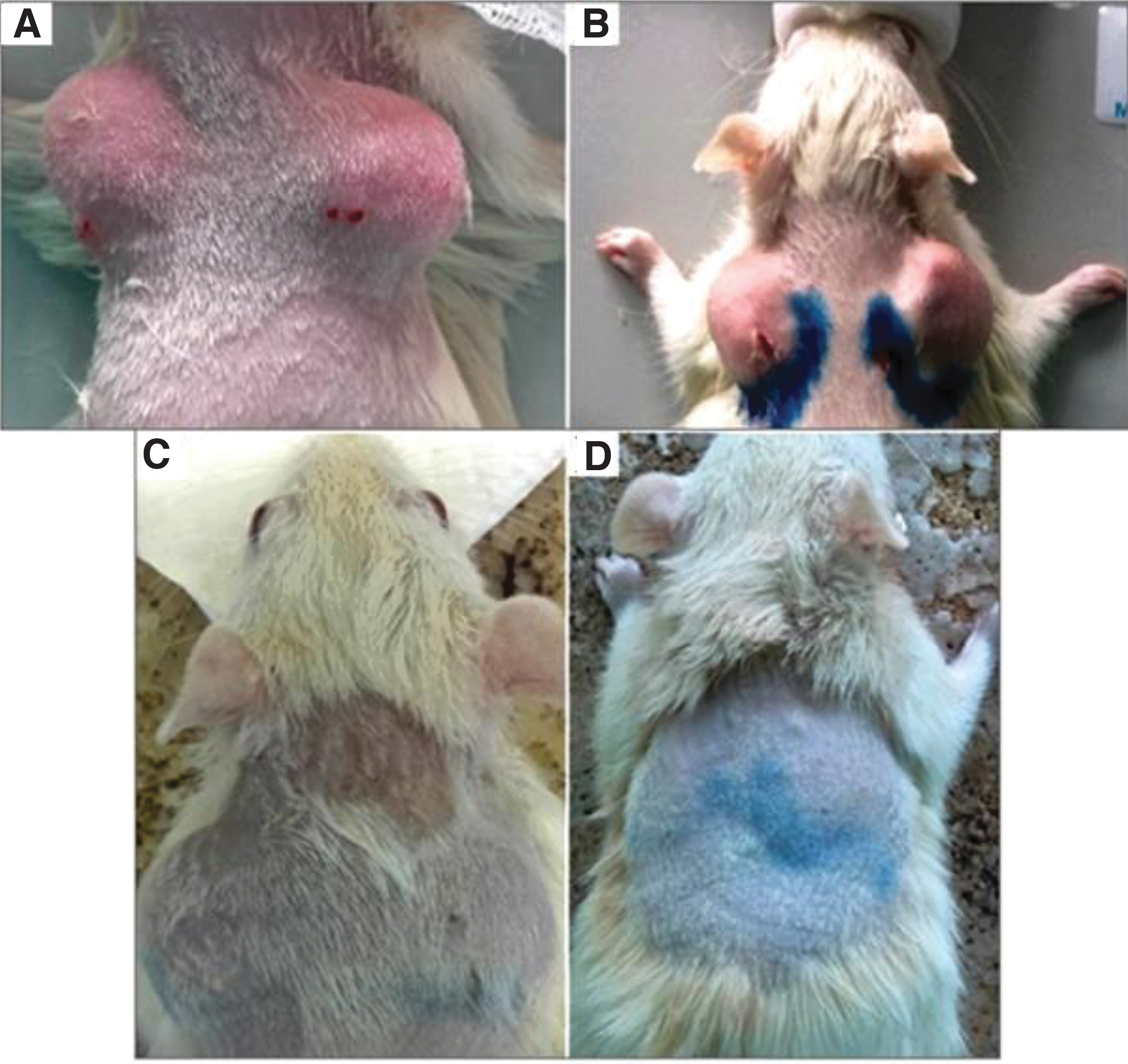
The fat grafts immediately after injection
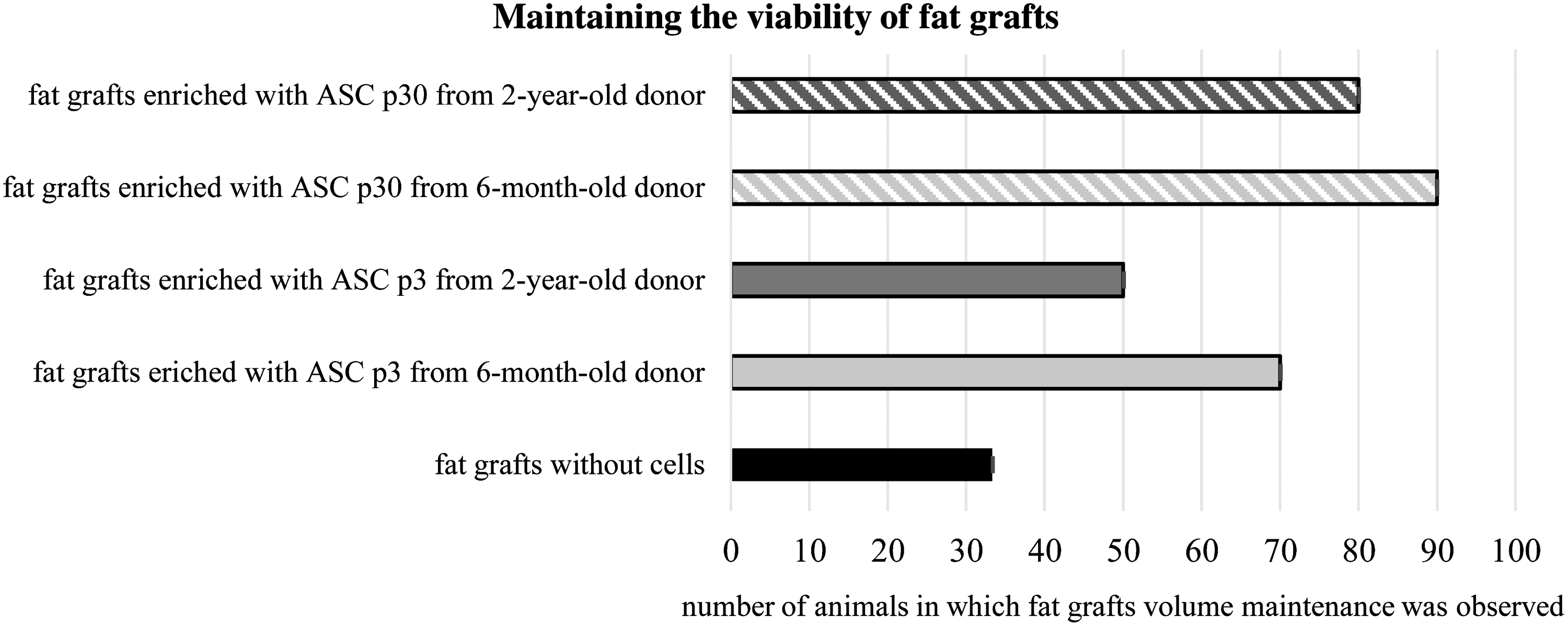
Maintaining the viability of fat grafts enriched ASC 3rd and 30th passages obtained from 6-month-old and 2-year-old rats (n = 10). Pearson chi-squared test; p = 0.06533; statistical mean ± standard error. ASC, adipose stromal cells.
In situ vascularization of fat graft regions in most cases was more intense in ASC-enriched fat grafts when compared with controls (Fig. 3) ASCs from long-term cultures showed stronger proangiogenic properties when compared with ASCs from short-term cultures as well as ASCs from young donors compared with ASCs isolated from aging donors (Fig. 3).
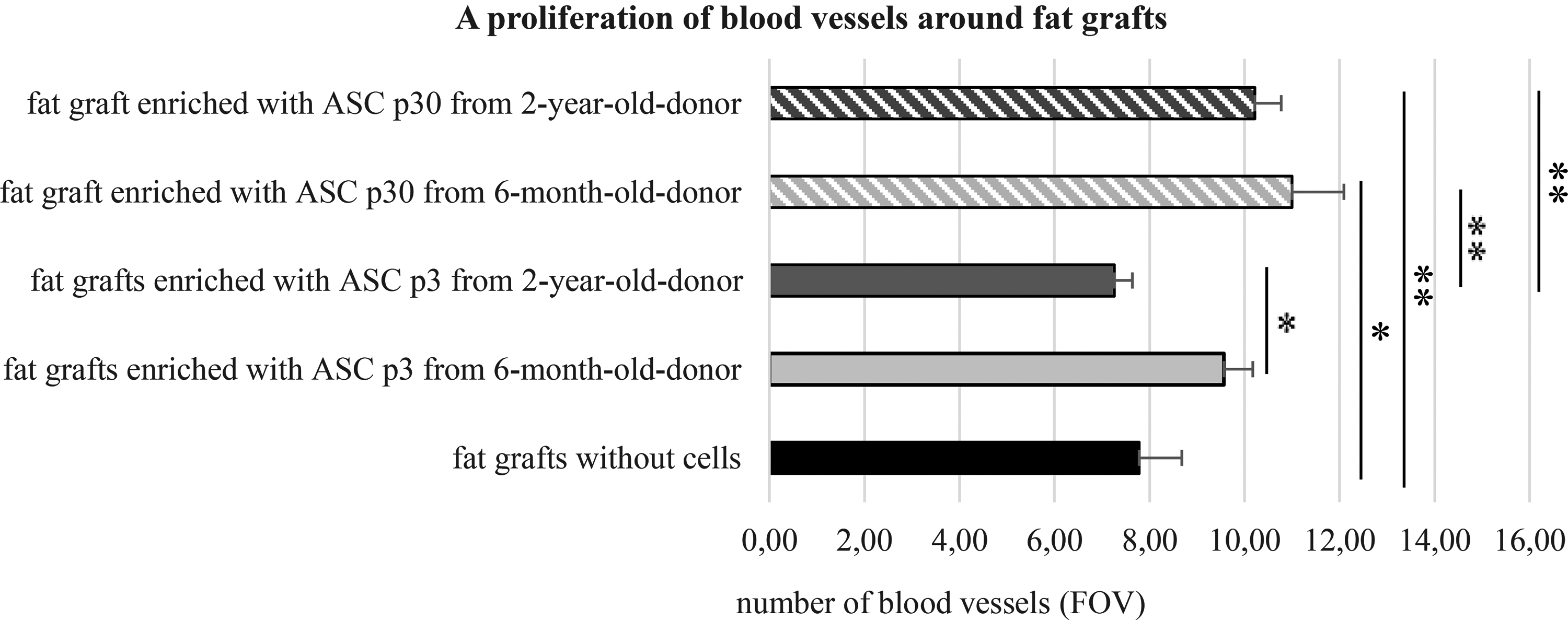
A proliferation of blood vessels calculated around the fat grafts in the field of view of the lens (FOV 40 × ) (n = 10). Each analysis was performed at three randomly selected areas of the microscope slide. Kruskal–Wallis test; *p < 0.05; **p < 0.01; statistical mean ± standard error. FOV, field of view.
Large areas of the regular adipocyte tissue structure were observed in almost all cell-enriched fat grafts regardless of their type, passage, and age donors from which they were isolated. The exceptions were fat graft enriched with ASC passage 3 isolated from a 6-month-old rat and fat graft enriched with ASC passage 30 obtained from a 6-month-old rat. Areas of adipose tissue necrosis were visible in all preparations (experimental and control). The numerous granulocytes, lymphocytes, and giant multinucleated cells accumulating at the site of acute inflammation leading to scarring of tissues were observed (Fig. 4). The largest area affected by ocular reaction in the subcutaneous tissue or dermis was visible in fat deposits enriched with ASC passage 30 from 2-year-old rats.
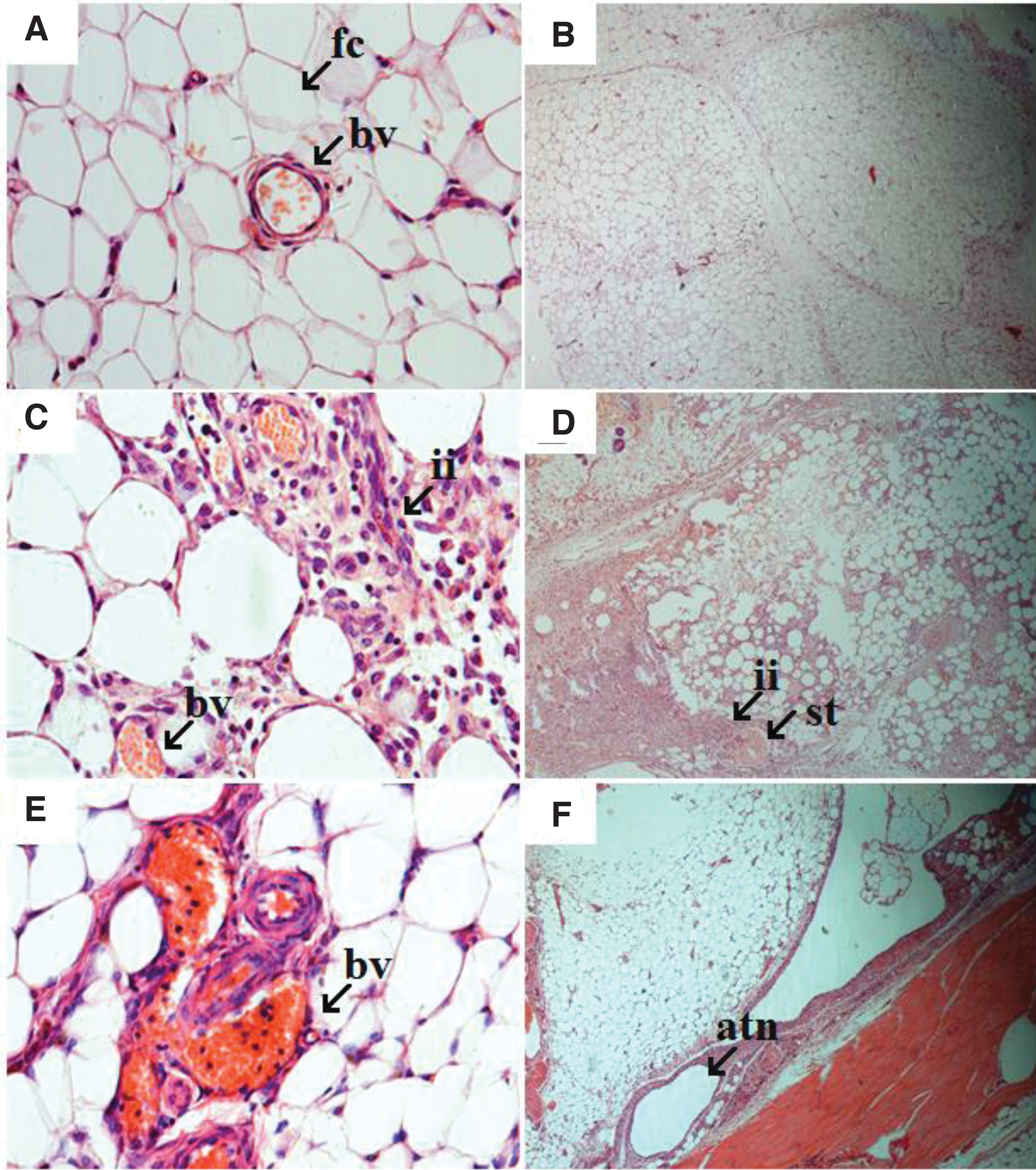
Morphology of adipose tissue on H&E stained preparations. Images show the normal structure of adipose tissue after subcutaneous implantation
Discussion
Cell-assisted lipotransfer is a method increasingly used in reconstructive surgery. Most studies conclude the advantages of CAL method in comparison with conventional fat grafts. Commonly accepted dogma is that transplantation of cells derived from young donors gives better clinical results than from aged donors, but the experimental data suggesting the safe age limit for ASC donors do not exist.
The question of cell donor age may be avoided in planning the allogeneic transplantations, since there is always the availability of young donors. In autologous transplantations, however, the cell age is proportional to the donor/host age and any new data on the parameters of aging cells, which may be important in their post-transplantational functions is very important. Possible qualitative changes in ASCs caused by advanced age of the patient may significantly limit their autologous use, but the knowledge in this area is still insufficient.
The role of ASCs in supporting the survival of transplanted adipose tissue may be split into their regulatory functions and the delivery of the new adipocytes as the product of ASC differentiation. The regulatory functions, performed by delivery of cytokines and other regulatory factors (exosomes, cytoplasmic vesicles, chemokines, and growth factors) to the surrounding tissue by paracrine manner and by direct contact with adipose tissue elements, result among the others in antiapoptotic activity and the induction of the new blood vessels.
The other supporting function is the immunomodulation resulting of the mitigation of immune response in the adjacent tissue to the adipose graft. Although adipose graft, being autologous, do not induce the mechanisms responsible for the host versus graft disease, the tissue injury accompanying the surgical process of grafting induce infiltration of lymphocytes, granulocytes, and macrophages into the border between adipose graft and the adjacent tissue. Such immune reaction results in the inflammatory reaction and reduces already insufficient gas exchange and delivery of nutrients by blood into fat implant.
ASCs are able to induce neoangiogenesis and play supportive role in neovascularization of grafted adipose tissue. All these functions may or may be not significantly impaired by the aging of ASCs, thus making possible to perform CAL treatment in senile patients. The differentiation switch of aging MSCs from osteo- and chondrogenesis to adipogenesis may be even beneficial in autologous CAL in senile patients, since it should increase the ability of ASCs to mature into adipose tissue cells (adipocytes).
Gontijo-de-Amorim et al., 2 performing structural fat grafting in 30 patients with volumetric deficits of the face, noticed that fat grafts enriched with mechanically dissociated stromal vascular fraction (SVF) yielded improved volume retention and esthetic results compared with fat prepared conventionally. The authors did not observe differences between the age of patients, which was in the range of 17–60 years for the experimental group and between 20 and 55 years for the control group. 2 Similarly, Yoshimura et al. 15 applying autologous ASC-enriched fat graft for breast augmentation observed longer maintenance of new breast shape and volume than after cell-free lipotransfer.
Forty patients aged 20–62 years were treated, the observation period ranged from 6 to 42 months. 15 Domenis et al. after an ultrasound assessment of the subcutaneous breast area after fat graft confirmed the clinical advantage of the CAL technique in reducing the resorption of fat grafts after a year, especially in the central breast area. 3
The downside of clinical reports is often the lack of information about the number of cells added to the fat graft. Paik et al. 17 conducting preclinical studies on a mouse model noticed that the number of cells enriching the fat graft is a key issue. The authors adding 1 × 10⁴; 1 × 10⁵; 1 × 10⁶; and 1 × 10⁷ ASCs to 0.2 mL fat graft to mice observed that the addition of 1 × 10⁵ cells significantly improved implant survival and vascularity. The improvement was significant compared with the nonenriched fat graft but also to other groups enriched with cells.
Furthermore, the addition of an increased number of cells (1 × 10⁷) to fat graft had a negative effect on graft volume. Significantly more cyst and vacuoles, increased inflammation and fibrosis and decreased vascularity compared with mice receiving grafts of fat alone were observed. 17 Bae et al. had similar observations regarding the number of cells added to fat grafts. 48 Meta-analysis conducted by Laloze et al. 49 and Wang and Wu 50 suggests that cell-assisted lipotransfer is superior to conventional lipoinjection for improved fat survival rate. Wang and Wu 50 observed that one of the factors affecting the effectiveness of fat grafts is the transplant site.
CAL in the arm and face has been shown to be more effective than in breast. Laloze et al. 49 observed a higher number of complications in the CAL method related to the volume of fat. To compensate for fat grafts resorption many surgeons tend to inject more fat. Unfortunately, with CAL, there is a correlation of lipotransfer volume with the number of complications. Therefore, the use of cell-enriched fat transplants seems to be safer at low volumes (<100 mL). 49,50 It should be noticed that the aforementioned observations relate to SVF-enriched, not pure ASC, fat grafts. SVF contains ASCs, but is a heterogeneous population of cells, which may be important in the quality of transplants.
Our research confirmed higher efficacy in maintaining the volume of lipoaspirates after their cell enrichment compared with lipoaspirates without the addition of cells. Fat grafts enriched with cells isolated from young rats maintained their volume longer than fat grafts enriched with cells of aging animals. This observation applies to alike freshly isolated cells, ASCs cultured for short (3 passages), and for a long time (30 passages). ASC isolated from aging rats cultured for a short time has worse effect on maintenance lipoaspirates volume than ASC of aging rats cultured for a long time and cells isolated from young rats. Most granulocytes, lymphocytes, and giant multinucleated cells were observed in fat grafts enriched with ASCs from long-term cultures.
ASCs from late passages showed greater proangiogenic properties compared with ASCs from early passages, as well as ASCs from young rats compared with ASCs from aging rats, which we also confirmed in in vitro tests presented in the earlier publication by Siennicka et al. 51 Significant areas of lipoaspirates affected by inflammation and tissue necrosis may result from too many cells being added to fat grafts (2 × 10⁶ in 2 mL fat). Considering that fat retention potential varies between species and the effectiveness of maintaining fat grafts depends on their size, animal studies are only an approximation of the clinical situation. Further experiments are needed to assess the role of cells in large volume fat grafts although the feasibility of these studies is limited by the availability of animal models.
According to meta-analyzes conducted by Toyserkani et al. 53 and Moustaki et al., 54 the number of cells colonizing fat grafts ranges from 5 × 10⁵ to 2 × 10⁷ per graft. The relative improvement in CAL survival was 1.19- to 2.37-fold higher compared with conventional graft. 52 –55 The survival of fat grafts is also affected by the anatomical location and vascularization of the recipient tissue, the experience of operators, and the individual characteristics of patients. Moreover, most of the published data present a very short observation period for patients and do not provide the number of cells that enhance lipotransfer. All these variables make it difficult to compare available experience reports.
Moreover, there are differences in several parameters characterizing rat versus human mesenchymal stem cells (hMSCs), for example, life span, healing capacity, metabolism, and immune system parameters, when compared humans with rats. The transfer of results obtained with animal MSCs to hMSCs is hampered by very limited knowledge about the similarities and differences between cells of different origins. These differences, however, do not diminish the usefulness of the rat model, including rat mesenchymal stem cells, as a laboratory model of human diseases.
Summing up the results of our research and other preclinical studies and early clinical trials, it can be stated that the use of fat grafts enriched with ASC regardless of the age of the donor reduces their resorption and stimulates the formation of new blood vessels compared with conventional transplants.
However, parameters such as the number of cells added to lipoaspirates and the volume of implanted fat should be considered because it may be important for the viability and quality of transplants. The uniqueness of the model used in this study consists in comparing the effect of fat grafts enriched with cells isolated from aged or young donors to recipients of the same age (young). This was not possible in published studies of other authors because their observations concerned clinical autologous transplants when an elderly or young donor received a transplant of his (at the same age as his body) ASCs.
The experimental model we developed concerned research on rats from an inbred strain, thus allowing the transplantation of cells from older or young animals to recipients of the same age while maintaining the features of the autologous model in terms of genetic compatibility of the graft and recipient. As a result, the only examined feature was the age of the ASCs transplanted, and neither the recipient's age nor the type of fat transplanted introduced additional variables that could adversely affect the results and conclusions.
Conclusions
It may be concluded that ASCs regardless of donor age stimulate the process of neoangiogenesis in vivo, and reduce the resorption rate of transplanted lipoaspirates, confirming their usefulness for the augmentation of fat transplanted for regenerative medicine purposes. However, more controlled and randomized clinical trials are needed to determine the efficacy and safety of CAL.
Footnotes
Authors' Contributions
Software, formal analysis, writing—original draft preparation, and project administration by K.S. Conceptualization, methodology, writing—review and editing, and validation by K.S. and Z.P. Investigation by K.S., P.P., W.O., M.G., and S.M. Resources by K.S. and M.G. Data curation and visualization by K.S. and W.O. Supervision and funding acquisition by Z.P. All authors have read and agreed to the published version of the article.
Acknowledgments
This study was supported by Maria Sklodowska-Curie National Research Institute of Oncology subsidy from Ministry of Science and Higher Education.
Institutional Review Board Statement
The study was conducted according to the guidelines of the Declaration of Helsinki.
Author Disclosure Statement
The data sets during and/or analyzed during this study are available from the corresponding author on reasonable request. The authors declare no conflict of interest.
Funding Information
This research received no external funding.