




Abstract
The therapeutic application of flavonoids in the management of infectious diseases, cancers, chronic wounds, aging, and neurodegenerative disorders has been well documented in scientific literature. The citric flavonoid naringenin comes under the category of flavanone and exhibits a plethora of health benefits. Very few flavonoids such as curcumin, resveratrol, catechin, quercetin, and kaempferol have been studied to exert their anti-aging properties in humans. The effect of naringenin in the context of age-associated disorders in detail has not been elucidated yet. The databases used for the literature search were Science Direct, Google Scholar, and PubMed. More emphasis has been put on the recent literature on “naringenin” and its effect on “age-associated disorders.” Almost all chronic degenerative disorders are characterized by oxidative stress and inflammatory response. The study aims at highlighting the reactive oxygen species-mediated activity of naringenin and the underlying molecular mechanism leading to the prevention of various age-associated disorders. Altogether, the review presents a systematic comprehension of the pharmaceutical and clinicopathological benefits of naringenin in age-associated disorders.
Introduction
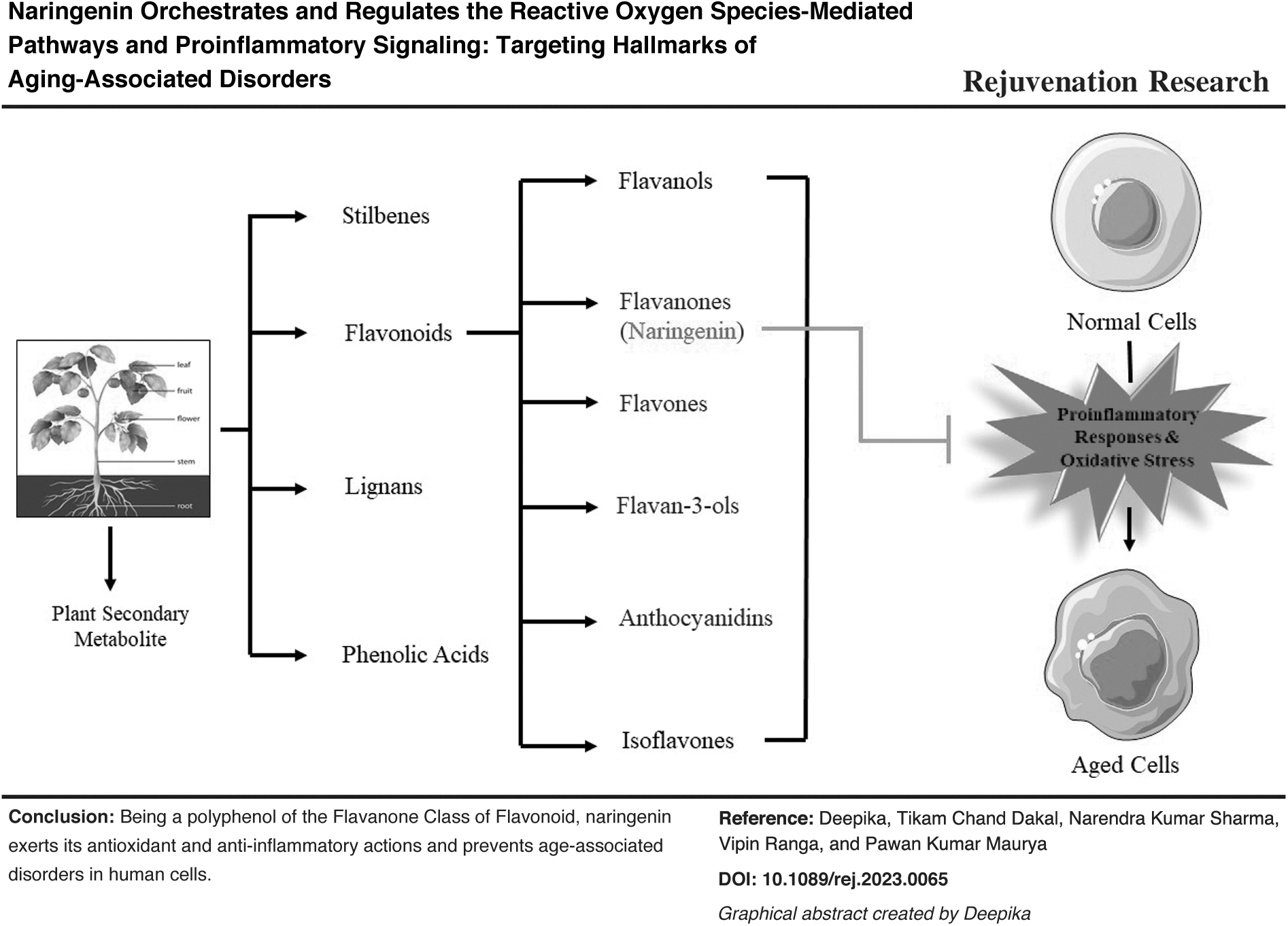
To date, ∼8000 polyphenolic members have been identified. According to their carbon skeleton, polyphenols have been categorized into four groups: stilbenes, flavonoids, lignans, and phenolic acids. 1 These polyphenols are identified by their odor, bitter taste, astringency, and color. 2 Polyphenols are naturally occurring, semi-synthetic, or synthetic organic compounds containing phenolic groups in their structure. Typically, polyphenols consist of aromatic rings with a hydroxyl group moiety. 3 Polyphenolic compounds are synthesized through the phenylpropanoid and shikimic acid pathways and help the plant adapt to stressed conditions. 4
The term “flavonoid” has been derived from the Latin word flavus meaning yellow. These compounds are generally found in yellow color in nature and are known to be produced by fungi and plants. 5 Flavonoids are known to provide color to fruits and flowers of plants. 6 The most studied group of polyphenols are the flavonoids, which are further subdivided into flavanols, flavanones, flavones, flavonols, isoflavones, and anthocyanins. 7 The basic flavonoid structure along with its different categories have been depicted in Figure 1.
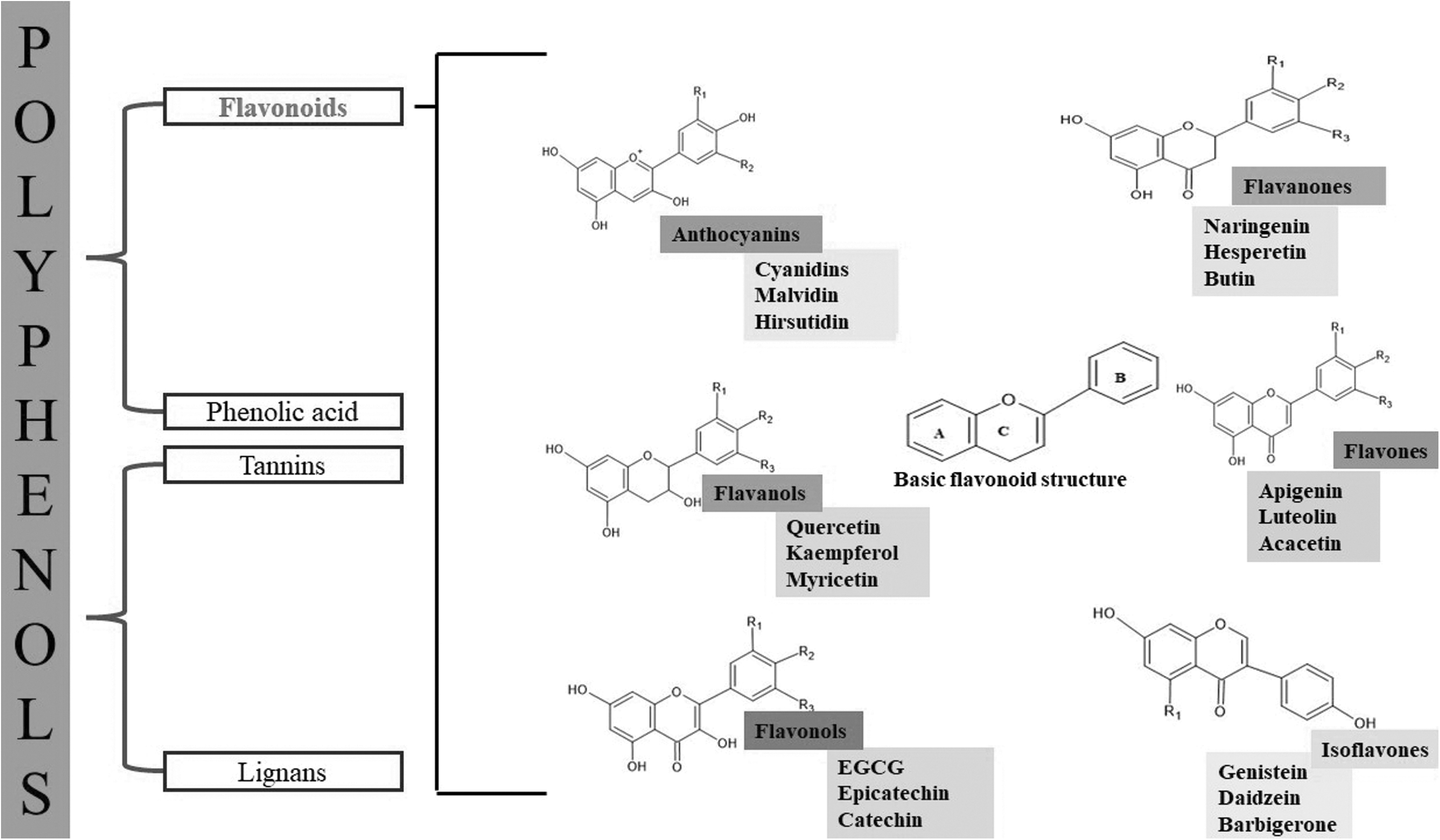
A concise representation of six basic flavonoids (with their examples) that belong to the category of polyphenols. Naringenin is a flavonoid of flavanones class.
There are various derivatives of flavonoids and these derived types are based on polymerization, methylation, prenylation, glycosidation, and acetylation. The different structures are involved in different biological activities of the flavonoids. 8 Glycosides are the typical representative of flavonoids. The various form of glycosides of flavonoids that occur in nature are rutinosides, arabinosides, glucosides, rhamnosides, and galactosides. 9
Flavonoids are known to play various biological functions in bacteria, animals, and plants. Flavonoids protect the plant from biotic and abiotic stress factors, making the plants frost and drought resistant. At present, about 6000 flavonoids are being known to be found in fruits, vegetables, medicinal plants, and herbs and providing them with colored pigments. 10
The structure of flavonoids consists of a flavan backbone that consists of two benzene rings, that is, A and B, and connected by a heterocyclic pyran ring (ring C). The further classification of the flavonoids depends on the carbonyl group present at fourth carbon position of ringC. 11 The structure of flavonoids comprises two aromatic rings with a phenolic hydroxyl substituent that is attached to a carbon moiety. 12 These flavonoids are the phenylpropanoid compounds, pigments that are soluble in water.
The storage sites for these compounds are the vacuoles of the plant cell. 13 Flavonoids exists either as aglycones or in glycosylated form. The chemical structure of the flavonoids provides for its antioxidant property. The hydroxyl group present in the flavonoids is owing to its antioxidant behavior, scavenges free radicals, and is also responsible for the chelation of metal ions. Flavonoid exhibits antioxidant property both in vitro and in vivo. 14
Fruits such as apples, berries, cherries, and plum are rich in flavonoids and the fruits found in tropical region have lower levels of flavonoids in them. 15 Flavonoids are among the most widely occurring secondary metabolites and are extremely valuable for mankind. Flavonoids possess anti-allergic, anti-inflammatory, anti-bacterial, anti-viral, and antioxidant properties. Anti-microbial, anti-malarial, and neuroprotective properties of flavonoid have also been reported. 16 These interact with the signaling pathways in various cancer types; reduce metastasis, angiogenesis, and proliferation; and increase the rate of apoptosis. 4
Various studies suggest that food rich in polyphenols have remarkable antioxidant properties that affect the process of aging and exhibit a protective effect against various age-associated diseases such as diabetes, cancers hypertension, arthritis, atherosclerosis cataracts, and Alzheimer's disease. Pterostilbene and resveratrol show antiaging activities through the inhibition of oxidative and inflammatory pathways. 17
The process of aging increases the risk of major chronic disorders, which include cancer, neurodegenerative, and cardiovascular disorders. 18 Various studies show that polyphenols such as Epigallocatechin gallate (EGCG), quercetin, and curcumin extend the life-span as studied in various models such as Drosophila, Caenorhabditis elegans, as well as in obese rodents. 19 Unlike other metabolites, medications used for the brain, and nutrients such as dietary polyphenols can cross the blood-brain barrier and are relevant in protecting the brain against aging. Therefore, polyphenols are known to lessen the adverse effects of aging on the brain. 20
Studies on the animal model and on population have suggested that daily consumption of green tea catechins helps to suppress the cognition decline caused due to age. Catechins have the permeability on the blood-brain barrier and therefore help reduce the decline of cognitive functions that arises with advancing age. 21 Resveratrol is a known polyphenol exhibiting antioxidant capacity and has been reported to decrease oxidative damage in in vivo and in vitro studies. 22
Resveratrol has been studied to enhance temozolomide-induced senescence and is also known to reduce temozolomide drug resistance in case of glioma cells. 23 Quercetin and anthocyanins have been reported to reduce the level of reactive oxygen species (ROS). 24 It has been reported that gallic acid suppresses the β-galactosidase activity and reduces the expression of biomarkers of oxidative stress in the embryonic fibroblast cells of rats, hence modulating the process of cellular senescence and thereafter the process of aging. 19
Naringenin (NG) comes under the category of flavanone, and is commonly found in tangerines, grape fruits, oranges, raw lime, and lemon peels. NG being abundant in our diet has become an interest of the scientific community across the world. The antioxidant and anti-inflammatory property of NG has gained a lot of attention in dealing with various age-associated disorders. NG is known to exhibit antiviral, antibacterial, nephroprotective, neuroprotective, cardioprotective, and antidiabetic properties. 25
NG has been studied to exhibit astonishing therapeutic efficacy and in recent times emerged as a major therapeutic agent for the treatment of metabolic disorders, and diseases of liver and heart. NG exhibits its efficacy in neurodegenerative disorders as well. 26 NG is one of the widely consumed flavonoids, and can be largely employed in clinical applications owing to low cytotoxicity and remarkable antioxidant and anti-inflammatory properties.
In the current study, we have reviewed how NG orchestrates and regulates the ROS-mediated pathways and proinflammatory signaling to target hallmarks of aging-associated disorders.
Antioxidant and Anti-Inflammatory Activities of Flavonoids
According to several scientific studies, oxidative stress plays an important part in the aging process. The buildup of oxidative damage in cells and tissues over time is a significant cause of aging. Oxidative stress is thought to be a substantial factor to a variety of diseases, including neurodegenerative, cardiovascular, and metabolic diseases such as diabetes mellitus. 27 The antioxidant behavior of the polyphenol is known to reduce the oxidative stress by orchestrating several signaling pathways and anti-oxidant signaling pathways (Fig. 2).
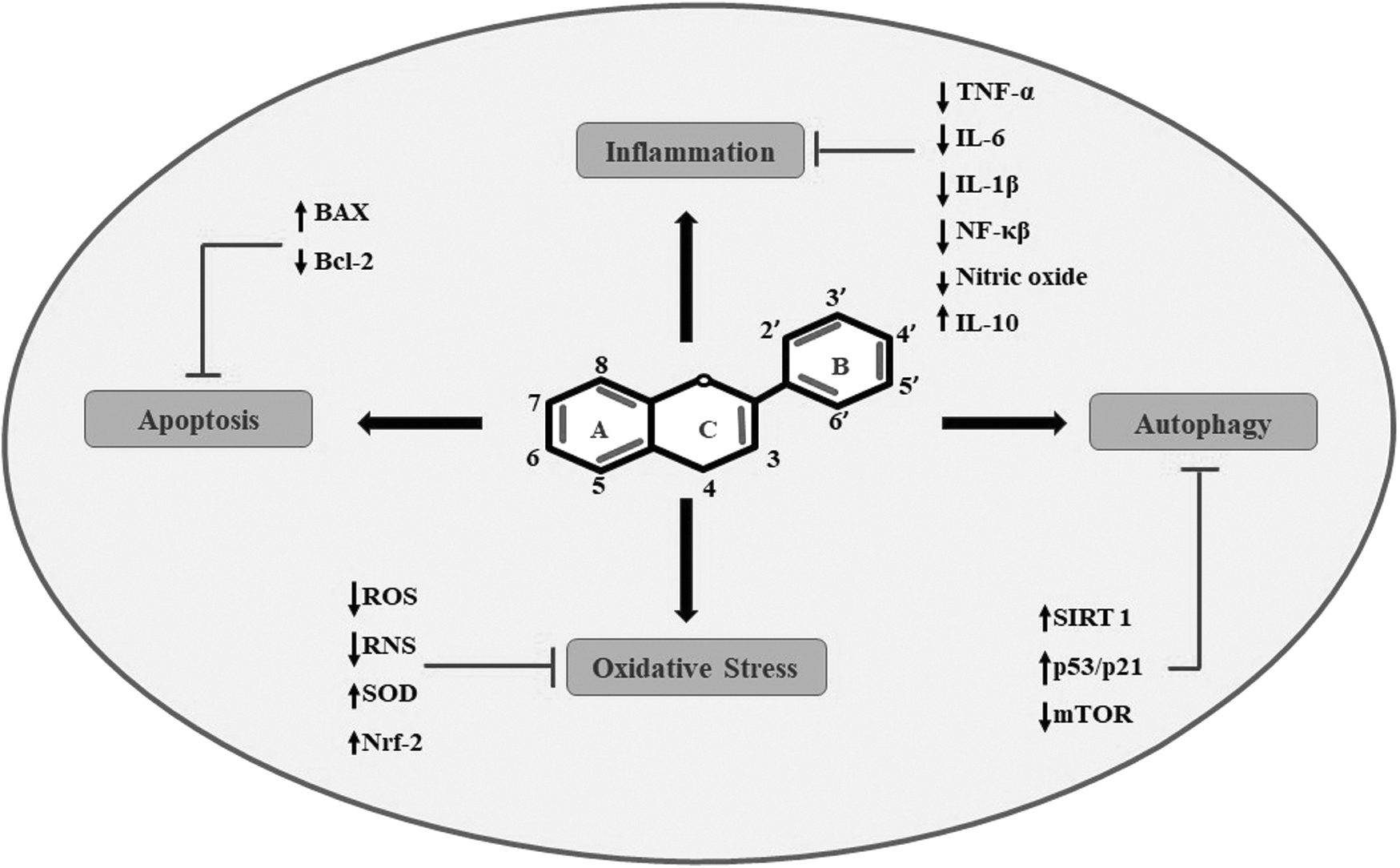
A systematic representation of four basic pharmacological attributes of flavonoids: anti-oxidant, anti-inflammatory, anti-apoptotic, and anti-autophagic. Naringenin exerts these properties due to its basic three-benzene ring structure along with unique chemical functional groups. Most studied molecular pathways, proteins, genes, and transcription factors that are being affected by the actions of naringenin/flavonoids have been shown.
The antioxidant role of polyphenols neutralizes the free radicals by transferring electron or the hydrogen atom; it also reduces the formation of the metal-dependent hydroxyl radical by the mechanism of chelation, and is known to decrease apoptosis of cells by modulating dysfunction of mitochondria. 1 Due to the presence of the hydroxyl group, flavonoids directly scavenge the ROS, act in metal ion chelation, and stabilize the free radicals. Other activities of flavonoids include antioxidant enzyme oxidation in the cell, pro-oxidant enzyme suppression, and stimulation of the production of antioxidant enzymes. 15
EGCG has characteristic antioxidant properties and inhibits the enzymes responsible for generating ROS. It has been reported that the phenol ring present in the structure of EGCG aids in the trapping of electrons and the scavenging of free radicals, thereby inhibiting the formation of ROS and reducing the damage caused by oxidative stress. As an antioxidant, EGCG has also been shown to improve mitochondrial function. 28
On one hand, EGCG scavenges free radicals or chelates the metal ions that favor free radical formation and on the other hand, it increases the endogenous antioxidant enzyme activity and inhibits pro-oxidant enzyme activity. 29 Quercetin is a well-studied flavonoid that inhibits oxidative stress as demonstrated in an in vitro study in RPE cells. 30 Studies have reported that quercetin helps to suppress lipid peroxidation. Due to its free radical scavenging activity, quercetin is considered as a strong antioxidant molecule. 31
Other flavonoids such as rutin, myricetin, and quercetrin help inhibit superoxide radical production. 10 Rutin has been studied to be a potent free radical scavenger. The free radical scavenging activity is because of its ability to inhibit the enzyme xanthine oxidase. 32 Apigenin exerts antioxidant activity by increasing the activity of superoxide dismutase (SOD) and catalase (CAT) and decreasing the level of malondialdehyde (MDA) in in vitro experiments. 33 Flavonoid luteolin attenuates the production of ROS in Michigan Cancer Foundation (MCF)-cells and also reduces ROS generation induced by doxorubicin. 34
Flavonoid genistein has been reported to inhibit the peroxidation of lipids in glioma cell lines of rats. 35 The in vitro antioxidant activity of genistein has been studied in Huh7.5 cell lines of human hepatocarcinoma, 36 and in vivo antioxidant activity has been studied in male adult Sprague-Dawley rats. 37 Kaempferol has been studied and shown that it inhibits the activity of xanthine oxidase and increases the activity of CAT, SOD, and heme oxygenase-1, therefore acting as an antioxidant compound. 38
Cancer, obesity, type 2 diabetes, arthritis, and cardiovascular and neurological problems are all caused primarily by oxidative stress by inflammation in humans. Flavonoids are well known for their anti-inflammatory effects, and several in vivo and in vitro studies have shown their therapeutic activity in the treatment of chronic disorders. 39 Due to its intrinsic antioxidant behavior, flavonoids are known to exhibit anti-inflammatory properties. 31
Flavonoids have been reported as potent anti-inflammatory molecules that can alter, regulate, and govern a spectrum of gene expression, signaling pathways, and pro-inflammatory responses.
The anti-inflammatory property of the polyphenol suppresses the pro-inflammatory signaling pathways such as NF-κB, AP1, and MAPK. 40 The anti-inflammatory activity of quercetin inhibits the effect of pro-inflammatory cytokines such as IL-1β, TNF-α, and IL-6 and inflammatory cytokines such as nitric oxide and CAT. 41 Its anti-inflammatory properties have been studied in animal and human models and in different cell types as well. 42 In vitro studies have reported the anti-inflammatory properties of quercetin. Quercetin activates the production of adiponectin, which is known for its anti-inflammatory activities. 39
It has been shown that quercetin prevents lipopolysaccharide-mediated TNF-α development in the macrophages and IL-8 induced development of lipopolysaccharide in the A549 cell of lungs. 43 Studies have revealed that polyphenol EGCG, which comes in the category of green tea, has the capability to reduce the biomarkers of inflammation such as prostaglandin-E2 and cyclooxygenase-2, which are associated with the development of tumors. 44
EGCG has been reported to inhibit AP-1 and NF-κB transfection for the downregulation of the expression of COX-2 and iNOS by scavenging ROS, NO, and peroxynitrite and thus reduces the production of inflammatory factors to exhibit the anti-inflammatory activities. 28 EGCG also inhibits the pro-inflammatory pathways, that is, TLR4. 45
Studies have reported the anti-inflammatory property of kaempferol. Kaempferol has been known to inhibit the DNA-binding activity of NF-κB and decreases its expression. 46 Kaempferol exhibits anti-inflammatory activity by decreasing the release of IL-1β, IL-6, and TNF-α, and activates Nrf2 pathways. 47 Myricetin has been reported to reduce the markers of inflammation such as COX-2, NF-κB, IL-6, TNF-α, and IL-1β, which further prevents chronic inflammation-related tumor in colon tissue of experimental mice. 48
According to the reported studies, flavonoids exert anti-inflammatory activities by the inhibition of a transcription factor COX-2 gene in DLD-1 cell lines of human colon cancer and by the inhibitory mechanism of lipoxygenase enzymes. 49 Fisetin has been studied to exhibit a protective effect against inflammation in various animal models and in in vitro studies in chronic inflammatory disorders. 50
Luteolin decreases the production of ROS and modulates NF-κB and MAPK pathways, thus exhibiting an anti-inflammatory effect. 51 Luteolin has also been studied to suppress the inflammation of brain tissue and regulate various cell signaling pathways. 52 Apigenin has also been studied for its anti-inflammatory properties. It reduces the inflammation markers in response to allergens and TNF-α. 53 Fisetin also exerts anti-inflammatory property by activating NF-κB in lipopolysaccharide-treated RAW264.7 cells. 54
In vitro studies have reported that the treatment of genistein in different cell lines downregulates the production of TNF-α and IL-6 and therefore behaves as an anti-inflammatory agent 55 (Table 1).
Detailed Account of the Various Flavonoids Along with Their Dietary Sources and Biological Activities
Structure of NG
The phytochemical NG was discovered in the year 1907 by Tutin and Power. The bioactive compound contains three hydroxyl groups in its structure. The hydroxyl group confers significantly for the transfer of H+/− or transfer of electrons and thus neutralizes free radicals acting as a potent antioxidant molecule. NG holds the ability to donate 3 and accept 5 atoms of hydrogen. 80
The structure of NG is composed of 15 carbon structure, which contains two fused aromatic rings attached to another ring via carbon-carbon bonding (C6-C3-C6) forming an oxygenated heterocycle. NG consists of three hydroxyl group at 4′ (ring B), 5, and 7 (ring A) carbon positions 81 and an oxygen atom at the fourth position of ring C. The hydroxyl group in the structure can be substituted by any other functional group and NG analogues can be produced. 82
OH-group at ring A contributes to the antioxidant potential of NG by stabilizing the structure of NG after donating hydrogen atoms to the free radicals. OH-group of ring B is important as it stabilizes peroxynitrite, peroxyl, and hydroxyl radicals by the production of relatively stable flavonoid structure. Association between the 5-OH group of ring A and 4-oxo group of ring C in the structure of NG helps to chelate heavy metals 83 (Fig. 3).
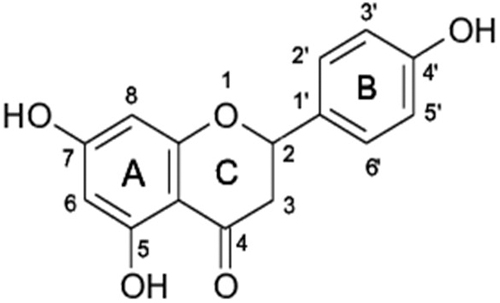
Structure of naringenin.
Physiochemistry of NG
Flavonoid naringenin, 4,5,7-trihydroxyflavone, belongs to the sub-category flavanones of flavonoid, is abundantly found in various citrus fruits, and is known to exert a wide range of biological activity. 84 The chemical formula of NG is C15H12O5 and its molecular weight is 272.26 g. The compound is present in the solid state with a melting point of about 251℃. 85
The compound gets easily soluble in organic solvents such as dimethyl sulfoxide, dimethyl formamide, and ethanol, and is sparingly soluble in buffers of aqueous nature. NG depicts two different pKa values, that is, 7.05 and 8.84, exhibiting a weak base in nature and is a hydrophobic molecule. 86
NG gets synthesized from an aromatic amino acid, phenylalanine. NG is a glycosylated form of naringin, a bitter constituent present in citrus fruits. NG occurs widely in lemon, orange, grape fruits, 87 tomatoes, and bergamot. 88 NG is also found in peel of tomato and Figures. 89 NG exists as a colorless and flavorless category of flavonoid. 90 The flavanone NG is rapidly metabolized from naringin via the liver metabolizing enzyme, naringinase. 81
NG is a highly lipophilic molecule and is absorbed by the epithelial cells of the small intestine through passive diffusion. 91 NG exhibits antioxidant property by scavenging the free radicals and induces the endogenous antioxidant activity. 83 The presence of hydrophobic ring in its structure accounts for low solubility and oral bioavailability of the compound. 92
NG exhibits dual property by upregulating the function of both antioxidant and pro-oxidant enzymes. 93 The crystalline and hydrophobic nature of NG is responsible for limiting the stability, oral bioavailability, and aqueous solubility of the compound. 94
Activities of NG
Antioxidant activity
NG is involved in neutralizing the free radicals by preventing the chelation of metal ions, which catalyzes their synthesis. 95 NG acts as a strong free radical scavenger and thus prevents from lipid peroxidation. NG has been studied to scavenge hydroxyl and superoxide radicals in in vitro experiments. 96
Apart from being a scavenger for free radicals, NG also acts as a chelator for metal ions, and activates the antioxidant enzyme system. 97 The ability of NG to suppress oxidative stress makes it a promising anti-cancer molecule. Evidence supports that the anti-cancer property of NG is mediated via its pro-oxidative capability. 98
Both naringenin and naringin have antioxidant properties, although the free radical scavenging activity of naringenin is stronger than that of its precursor, naringin. Studies indicate that NG efficiently enhances the glutathione (GSH) activity. NG has also been investigated to reduce the H2O2 activity and levels of protein carbonyl groups while enhancing the antioxidant enzyme activity such as CAT, SOD, GSH peroxidase, and GSH reductase. 99
Studies show that NG increases the level of antioxidant enzymes such as GPx, CAT, and SOD in the rat model with polycystic ovary syndrome. 100 Due to the presence of the hydroxyl group in its structure, NG effectively quenches the free radicals that are derived from oxygen. NG also protects the membrane from the attack of free radicals and thus protects the membrane from lipid peroxidation. 101 In H2O2-induced stress, NG has been shown to increase the overall concentration of GSH levels in mitochondria in hepatic cell lines.
The administration of NG in hepatic damaged cells alleviates the enzymatic biomarkers of the liver such as MDA, alkaline phosphatase, aspartate aminotransferase, and alanine aminotransferase. 102 Flavonoid NG exhibits antioxidant property and helps in reducing ROS in senescent cells. 103
NG has been reported to combat the peroxidation of lipids. The antioxidant effect of NG is attributed due to its ability to reduce ROS production and further enhancing the SOD and CAT activity in various chronic disorders. 27 According to a study reported by Miler, Zivanovic, Ajdzanovic, Orescanin-Dusic, Milenkovic, Konic-Ristic, Blagojevic, Milosevic, and Sosic-Jurjevic, 104 it was proved that the administration of NG in the liver of Wistar rats improves the antioxidant status and the composition of membrane lipids. Liu et al. 72 reported that administration of NG in high-fat diet-induced rats for 4 weeks significantly reduces the levels of MDA and nitric oxide and increases the level of GSH and SOD.
Anti-inflammatory activity
NG has been studied to regulate the inflammatory pathways as well. It regulates the NF-kB pathway, and decreases the level of TNF-α, IL-6, and IL-1β. 99 To stop the progression of metabolic diseases, NG suppresses the production of key chemokines that play a crucial role in attracting inflammatory cells into adipose tissue. In addition to its analgesic properties, NG has been studied to have anti-inflammatory effects in mouse adipose tissue by lowering chemokine and cytokine levels, especially IL-6, while having no effect on TNF-α. 93
The administration of NG in doxorubicin-induced liver of Wistar rats reduces the pro-inflammatory cytokines and transcription factors and thus alleviates inflammation. The reduction of pro-inflammatory cytokines is due to the inhibitory activity of NG on NF-κB. 105 NG lowers the lipopolysaccharide-induced inflammatory pain, reduces lung injury, and suppresses inflammatory responses in microglial cells, which account for the neuroprotective potential of the flavanone.
NG can be employed in the treatment and management of disorders related to neuro-inflammation. 106 NG has been studied to activate AMPKα/Sirt1 signaling pathways, restoring Ca2+ balance of the mitochondria, that ultimately lowers the production of ROS. The activation of AMPKα/Sirt1 pathways is also responsible for upregulating the proteins present downstream of eNOS. This increased production of nitric oxide ameliorates endothelial damage. 107
Studies suggest that NG has the capability to inhibit inflammatory responses in different animal models and cell types, and might act as an immunomodulator for treating various disorders related to inflammation. According to a study, NG improves renal failure in high-cholesterol fed rat models by the inhibition of ROS and NF-κB pathways. 108
Anti-cancerous activity
NG has the potential to treat various types of cancers. NG inhibits cancer progression by induction of apoptosis, arrest of cell cycle, damage of mitochondria, accumulation of ROS, and modulation of different signaling pathways. 109 NG has been studied to be a potent anti-cancerous agent by the inhibition of inflammatory and cell signaling pathways such as MAPK, NF-κβ, and AKT; decreases proliferation of cancer cells; and induces apoptosis in various cancer cell lines. 110
The anti-cancer property of NG is mediated by the inhibition of several signaling pathways, including TGF-α, VEGF, and mitogen-activated protein kinases. 91 NG has been reported to inhibit the growth of colon cancer cells and induce autophagy by regulating isoprenylcysteine carboxyl methyltransferase/RAS signaling pathways. The chemotherapeutic potential of NG has also been evaluated by suppressing the progression of prostate cancer cell lines by regulating P13K/Akt signaling pathways.
NG also promotes the death of cancer cells by inhibiting the expression of epidermal growth factor receptor-2. 111 Studies report that a higher concentration of NG induces apoptosis and inhibits proliferation of cells in carcinoma cells of breast. When a drug, tamoxefin is combined with NG, it promotes apoptosis in MCF-7 cells. 112 Treatment with NG has been studied to inhibit proliferation of cells, increase the phosphorylation of AMPK, negatively regulate the expression of cyclin D, and induce cell death. 113
Anti-diabetic activity
NG ameliorates metabolism of lipid and glucose in high-fat diet and streptozotocin-induced diabetes mellitus in rats by the downregulation of inflammation and oxidative stress. The antidiabetic effect of NG is exerted by activating the GLUT4 and PPARγ in rats treated with streptozotocin. NG exhibits neuroprotection by the regulation of Nrf2 antioxidant signaling pathways. 114 NG exhibits anti-diabetic effect by inhibiting gluconeogenesis by the upregulation of AMPK pathways and thus NG shows a metformin-like effect. 115
Administration of 50 mg/kg/day NG in streptozotocin-induced diabetic rats ameliorates the apoptosis proteins such as Bcl-2, Bax, and caspase-3 in the retina, thereby exhibiting antidiabetic property. NG treatment also decreases thiobarbituric acid reactive substances, and increases GSH levels in rats induced with diabetes. 116
Inflammation and oxidative stress are considered the two “evil twins” responsible for aging. 117 Evidence supports that oxidative stress has a crucial role in the pathogenesis of chronic inflammatory disorders. Oxidative damage such as lipid peroxidation and protein oxidation results in the degeneration of neurons in disorders of the brain leading to neuroinflammation and cell death and ultimately leads to memory loss and neurodegeneration. 2
Inflammation cannot be considered as disease but viewed as a biological process that leads to the occurrence of various diseases such as obesity, cardiovascular disorders, type 2 diabetes mellitus, and insulin resistance. 118 Oxidative stress has been regarded as the primary or secondary cause for various inflammatory diseases, metabolic disorders, neurodegenerative disorders, cardiovascular diseases, and cancer. Intake of fresh vegetables and fruits in the diet has been effective against several diseases involving oxidative stress. 119
The ability of NG to suppress oxidative damage is mediated via interfering with the signaling pathways of oxidative stress, suppressing pathways of cellular inflammatory and pro-inflammatory mediators involved in signaling transduction mechanisms at the molecular level.
NG exhibits cardioprotective effect by the modulation of smooth muscle cells via the NO-signaling pathway. 91 Studies have evaluated the protective role of NG in cardiac aging caused by ROS such as hydrogen peroxide and superoxide radicals. The anti-aging activity of NG has been evaluated in H9C2 cell lines against H2O2-induced stress. 81 NG has been studied to improve myocardial ischemia-reperfusion injury in H9C2 cells of mice. 120
NG reduces doxorubicin-induced toxicity in cardiac tissues of rats and therefore exerts cardio-protective function. NG also modulates nitric oxide environment and oxidative stress and acts to effectively manage cardiovascular disorder. 86
According to a study performed by Bansal, Singh, Saroj, Sodhi, Kuhad, 121 in olfactory bulbectomy-induced animals, NG was demonstrated to alleviate sadness by pattern. According to the findings, NG restored blood corticosterone levels as well as antioxidant enzymes, MDA, and nitrite in the hippocampus and cerebral cortex area, displaying antioxidant and anti-stress properties.
In Huntington's and epilepticus models of rats, NG has been shown to protect against 3-nitropropoinic acid and kanic acid-induced cognitive impairments. In an Alzheimer's disease animal model, NG has also been shown to aid memory. 122
According to a randomized, controlled clinical trial performed by Namkhah et al., 123 it was shown that supplementation of NG for 4 weeks in obese patients having non-alcoholic fatty liver disease reduced body mass index and body weight significantly and improved liver fibrosis, steatosis, and lipid profile. The studies cited earlier suggest that NG can be used as a therapeutic compound and can be effectively studied as a cure to prevent aging and various age-associated disorders.
Age-related illnesses are degenerative disorders caused by the functional and structural decrease of tissues and organs over time. The degenerative disorders that relate to the functional and structural decline of various tissues and organs over a period are known as age-associated disorders. Diabetes, cataract, cancer, cardiovascular disorders, hypertension, dementia, osteoporosis, and neurodegenerative disorders such as Parkinson's and Alzheimer's are age-associated disorders and linked with accelerated aging. 124
We have discussed the role of NG in some of the age-associated disorders. The study cited earlier highlights the antioxidant and anti-inflammatory activities of NG. As NG actively participates in the antioxidant and anti-inflammatory pathways, we can hypothesize that NG might actively participate in aging pathways as well and can be used as a potent therapeutic agent for aging.
Discussion
Aging is a multifactorial process characterized by the accumulation of oxidative damage in various cells and tissues, decreases the responses of anti-inflammation, and increases pro-inflammatory stimulus. As natural compounds are known to increase health benefits, they are widely being studied. The phytochemicals have been studied to mitigate oxidative stress directly by scavenging of free radicals and indirectly by inducing the antioxidant enzymes. But the exact mechanism of action of these natural products remains unknown. 125
The reactive species mediated activity of flavonoids is known to protect against neurodegenerative disorders as well. Flavonoids such as quercetin have been reported to reverse impaired cognition and enhance memory during aging. 126 Flavonoids exhibit anti-cancerous properties by the induction of apoptosis, autophagy, cell senescence, and cell cycle arrest. 127 Flavonoids are known to act as antioxidant and pro-oxidant molecule, thus maintaining ROS homeostasis and downregulating the pro-inflammatory pathways 15 (Fig. 4).

Three fundamental cellular and molecular modes of actions of naringenin and its role in the downregulation of the cell signaling pathways related to the generation of proinflammatory signals and oxidants (ROS). In the absence of naringenin, proinflammatory and ROS-mediated signaling lead to the activation of MAPK, NF-κβ, RAS/RAF, and KEAP1/NRF2 signaling pathways that cause translocation of transcription factors to manifest undesirable changes in the expression of proinflammatory and ROS-related genes. ROS, reactive oxygen species.
Herbal medicines are frequently being used to cure diseases due to the presence of polyphenols as its major constituent. 128,129 Plant polyphenols in general and flavonoids in particular have a plethora of health-promoting benefits. In addition, polyphenols are also expected to alter the expression profiles of advanced glycation end products. 130
Polyphenols are a frequent source of antioxidants in the diet, found in a variety of fruits and vegetables. These flavonoids are being utilized to decrease inflammation and restore normal cell functioning. Flavonoids, due to their structure, are powerful antioxidants, anti-inflammatory, and neuroprotective phytochemicals. Flavonoids contain a hydroxyl group in their structure that serves as a free radical scavenger and hence act as an antioxidant molecule. The citrus flavanone naringenin is a popular flavonoid among humans.
Flavonoids have been shown to lower oxidative stress in cells by scavenging free radicals. Flavonoids have been shown to exhibit a variety of antioxidant properties both in vitro and in vivo. These compounds have also been studied for their ability to promote cellular senescence in cancerous cell lines. It has been shown to stop the cell cycle and cause apoptosis. Flavonoids have also been researched for their ability to influence autophagy.
Flavonoids induce autophagy and have a protective effect in cancer cell lines. The bioactive compounds also have anti-inflammatory properties. Flavonoids have anti-inflammatory properties that can help treat chronic diseases. These substances have been linked to the inhibition of pro-inflammatory cytokines.
The antioxidant, anti-inflammatory, anti-cancerous, and anti-diabetic activities of NG have been discussed in detail. NG is involved in metal chelation and suppresses the production of free radicals and peroxidation of lipids in humans. The presence of hydroxyl group in NG owes to its antioxidant property by scavenging free radicals and chelation of metallic ions. The antioxidant property of NG involves the inhibition of the formation of ROS and the elimination of ROS. NG has also been studied to decrease the catalytic activity of the enzymes involved in the production of ROS.
As a result, we hypothesize that if NG plays a role in modulating the pathways involved in these activities, they can also be studied as an anti-aging molecule. A few flavonoids have previously been documented to treat certain age-related disorders and to participate in the process of healthy aging. As the world's population ages, it becomes more important to seek out anti-aging compounds. As a result, the NG may be examined further for their anti-aging actions.
Conclusion
The antioxidant and anti-inflammatory properties of NG have received a lot of attention in the treatment of various age-related disorders. Flavonoids are intensively explored for their anti-aging qualities, in addition to being examined for numerous degenerative and metabolic illnesses. Only a few compounds have been examined for their anti-aging properties.
However, certain phytochemicals have been utilized repeatedly because of their significance in the hallmarks of aging, including oxidative stress, autophagy, cell senescence, and inflammation. Because these phytochemicals are being utilized to control the pathways of the activities of aging markers, they may be studied further for their influence on aging and other age-related illnesses.
Footnotes
Acknowledgment
This study was supported by a Senior Research Fellowship from the University Grant Commission to Deepika (Reference No: 201610000784). The Indian Council of Medical Research (ICMR), Government of India, is gratefully acknowledged by P.K.M. for giving financial assistance (5/10/FR/03/2021-RBMCH). Agencies had no role in the interpretation or writing the manuscript.
Authors' Contributions
Deepika: Writing—original draft preparation. T.C.D.: Writing—review and editing; Visualization. N.K.S.: Editing. V.R.: Editing. P.K.M.: Conceptualization.
Author Disclosure Statement
No competing financial interests exist.
Funding Information
No funding was received for this article.