




Abstract
Abstract
Space suits are a critical part of a human rated space vehicle. Final Frontier Design is working to push the design and functionality of space suits for the commercial space market.
Introduction
Continued human exploration of outer space is an inevitability. With our first steps into Earth orbit five decades ago, we began a grand journey to space, one that will only increase in scale, scope, and complexity as we venture further to the planets and stars. As we live in space longer, and venture farther, our reliance on life support systems becomes more important.
Environmental control and life support systems (ECLSSs) in modern spacecraft are complex and challenging. Recreating the carbon cycle of Earth on a small scale, with minimal power, mass and volume constraints, in rechargeable systems, with minimal consumable loss, is an epic challenge. Space suits are a critical part of most ECLSSs, either to provide a pressure containment redundancy or to willfully leave the vehicle into space. Space suits sometimes contain their own personal life support systems (PLSSs), and just as often rely on ECLSSs of their mated vehicle. Current space suits hold a proud record of reliability and safety; however, they add considerable restriction, weight, volume, and monetary cost to any human mission.
Future space suit design must improve to allow for more cost-effective, astronaut-efficient missions. Current suit mobility penalties, restrictions in tactility, injuries, and sizing ranging must be mitigated if human space exploration is to effectively expand beyond low earth orbit (LEO). Overall cost of suit supply and logistics must be reduced to enable true exploration class missions within a reasonable budget.
Final Frontier Design (FFD) is focused on improving space suit enclosure technology to enable astronauts to better do their job at a lower cost, and to further humankind's journey to the stars. For FFD, this includes both emergency redundancy suits for intravehicular activity (IVA) (Fig. 1) and space walking suits for extravehicular activity (EVA). We believe that the evolution of space suits is a critical part of the future of human space flight and the evolution of ECLSSs; their functionality and viability will enable human exploration beyond LEO, only if they continue to evolve and improve. Indeed, there is little point in sending humans to space without highly functional space suits.
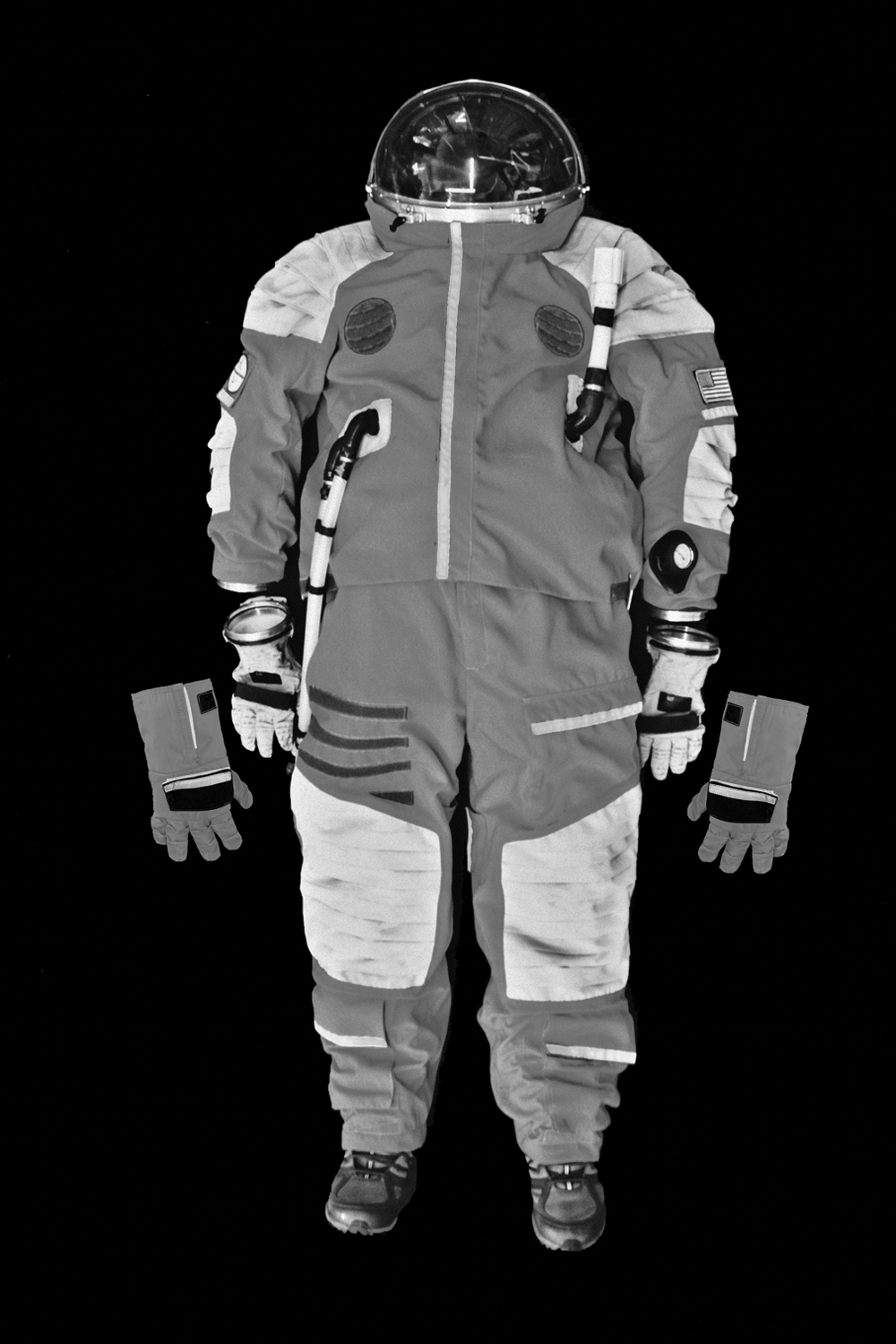
Final Frontier Design's IVA space suit. IVA, intravehicular activity. Courtesy Final Frontier Design; published with permission.
History
FFD was founded by Nikolay Moiseev (Fig. 2) and Ted Southern (Fig. 3) in 2010, upon a prize-winning entry in NASA's 2009 Astronaut Glove Challenge. Nikolay worked at Zvezda, the Russian space suit manufacturer, for nearly 20 years on many different suit designs. Ted's background is in the costuming industry in New York City, and he has experience in technical costuming and special effects. Ted and Nikolay partnered together in 2009 to develop and build a glove that outperformed NASA's current technology in multiple pressurized tests.
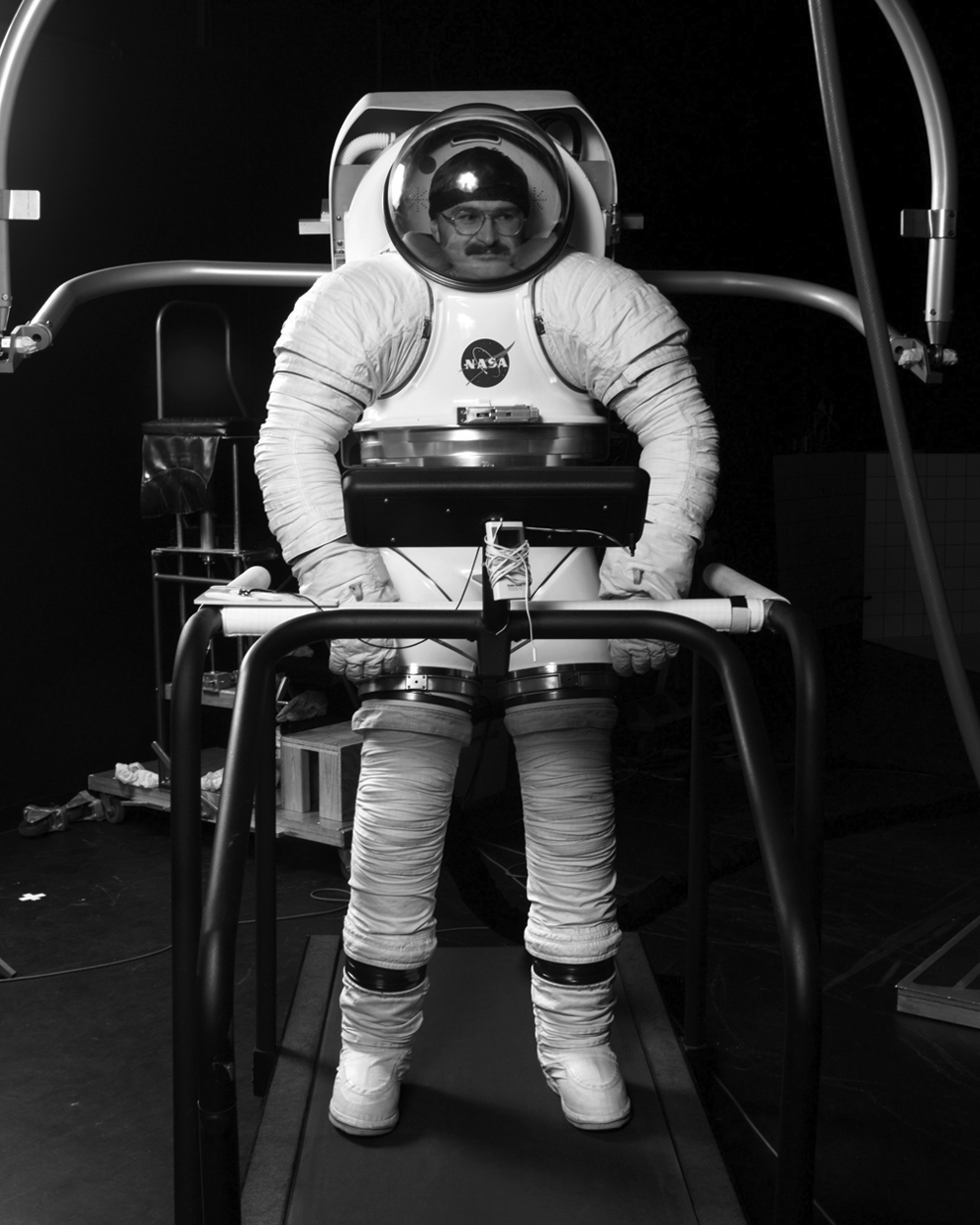
Nikolay Moiseev at Zvezda. Courtesy Final Frontier Design; published with permission.
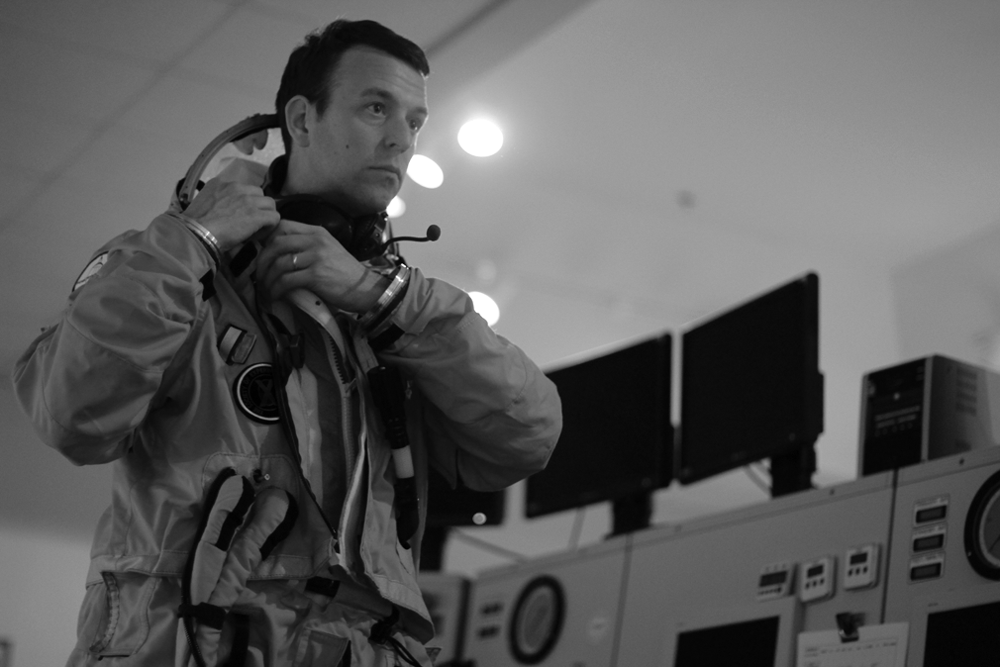
Ted Southern. Courtesy Final Frontier Design; published with permission.
After the competition, FFD quickly started working to develop a commercial full IVA space suit enclosure, with their first suit completed in 2010. Based on designs originally built independently by Nikolay before FFD, this suit was intended as a light-weight, highly mobile, and inexpensive commercial space suit. Since 2011, we have dramatically upgraded our IVA suit's designs, hardware, processes, and capabilities. We have built a total of seven IVA space suit assemblies for various institutions and customers since our founding (Fig. 4), and have conducted high fidelity human testing in simulators, aircraft, microgravity, and hypobaric chambers. We currently have a Space Act Agreement with NASA's Commercial Space Capabilities Office to develop and execute a human rating plan for our IVA suit. We categorize our IVA suits according to their mission: Terra for Earth-based testing, Stratos for high-altitude flights, and Exos for orbital space flights. Each suit category has different requirements for manufacturing controls, validations, and materials, but are of a similar architecture.
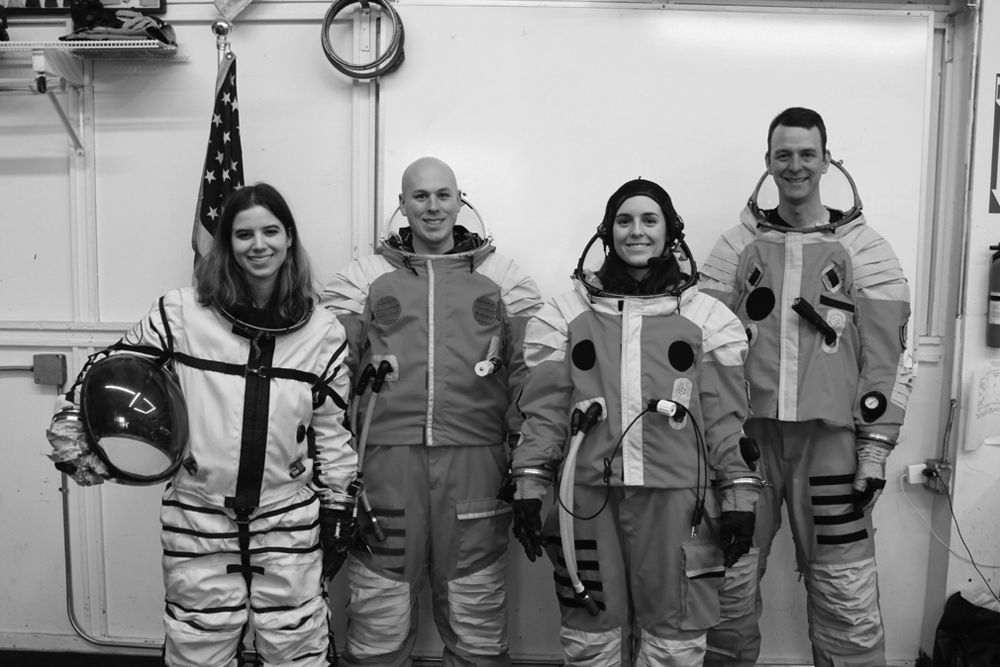
Final Frontier Design's IVA suit evolution. Pictured are Sara Berndt, Fletcher Bach, Paula Wolf and Ted Southern; photograph is published with permission from Final Frontier Design and those listed.
Beyond IVA, we have thrived in our work on EVA components with NASA, having been awarded four SBIRs for suit development with NASA's crew systems between 2011 and 2015. These contracts included prototype development of pressurized gloves, elbows, shoulders, and outer garment development for exploration class missions (Figs. 5 and 6). In 2015, FFD was awarded a 14-month fixed-price contract to develop and deliver mechanical counter pressure (MCP) gloves for NASA's high-pressure EVA glove initiative (Fig. 7).
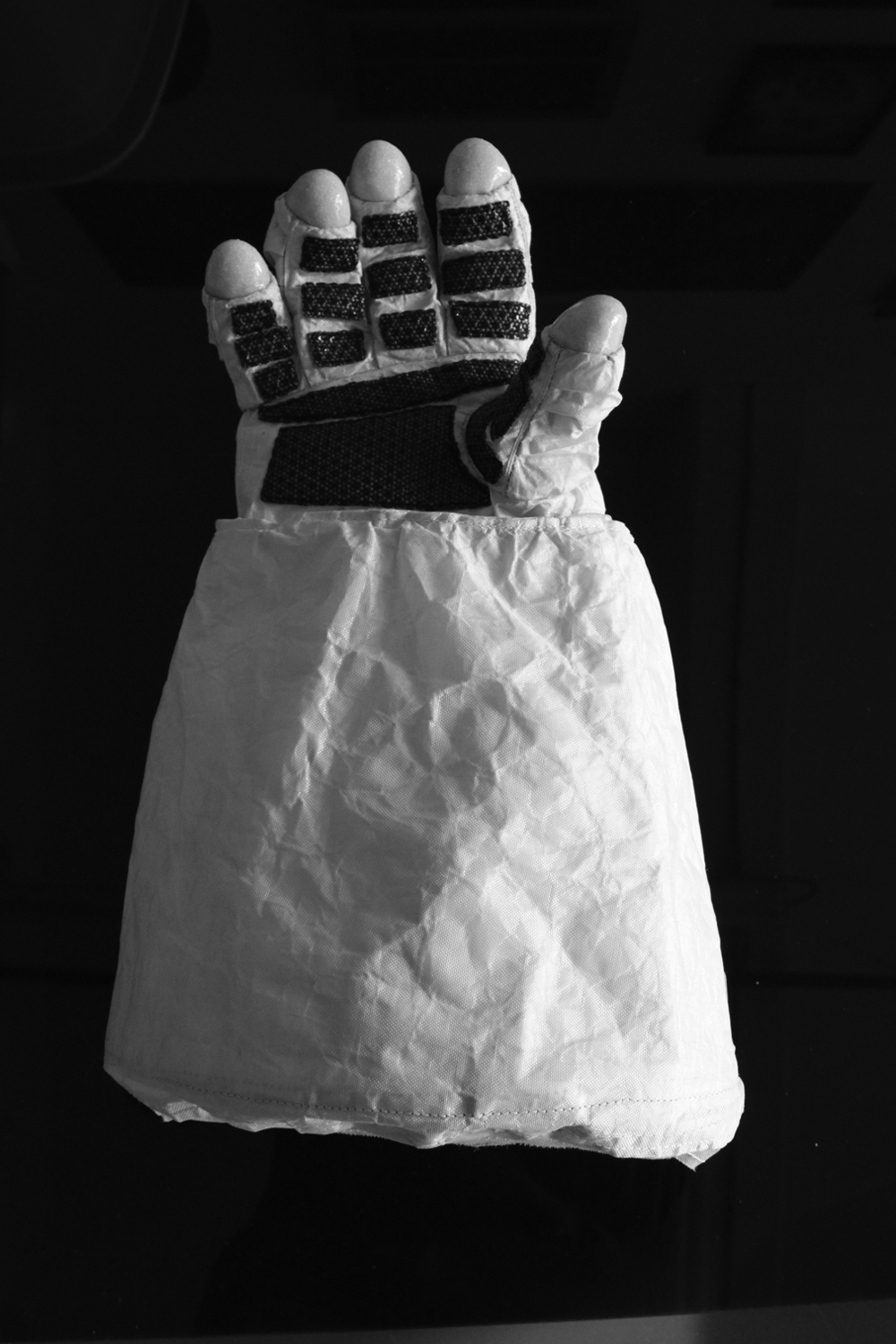
Final Frontier Design's Martian glove. Courtesy Final Frontier Design; published with permission.
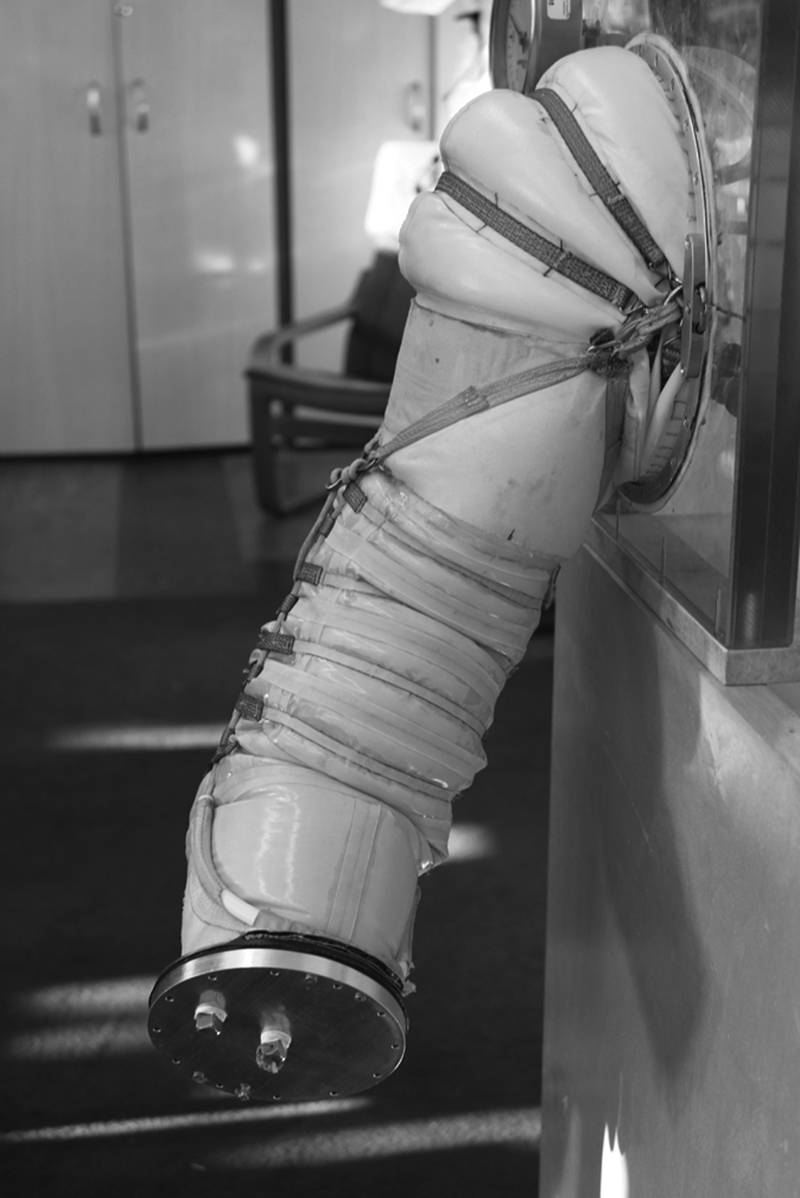
Elbow and shoulder assembly. Courtesy Final Frontier Design; published with permission.
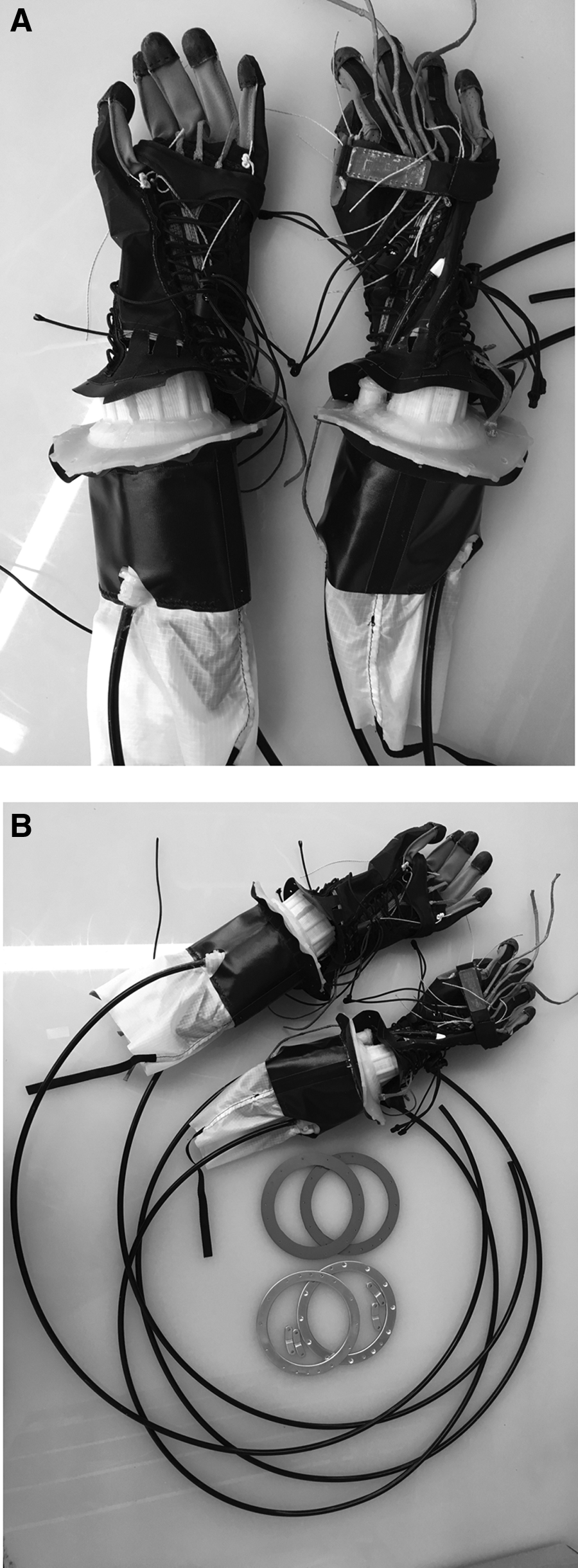
Final Frontier Design's MCP (mechanical counter pressure) gloves, detail
MCP is a nonintuitive idea, but an important one. Fundamentally, only the astronaut's head needs gas, for breathing and sinus stability. Our arms, legs, and even torso, however, can survive exposure to vacuum, provided that there is adequate compression applied to these areas to match the breathing gas around the head. Tight fitting garments designed to provide this compression are called MCP. Theoretically, MCP could be a much light, more mobile, and less bulky suit, while eliminating or reducing the number of bearings required for adequate mobility, reducing the pressure loads encountered with a fully pressurized suit, and adding a factor of safety by minimizing the risk of breathing gas loss through puncture and overall load on the suit. However, in practice, MCP is very difficult because the human body is a complex shape and is very dynamic.
Our delivery to NASA of a functional MCP glove prototype marks a milestone in MCP development. The glove was carefully measured for its overall compressive effect on the hand, and standardized testing took place at relevant depressurized differentials (−4.3 psid). Testing showed that our glove has superior tactility and mobility in the fingers, and is physiologically adequate for depressurized testing with a human.
Goals
FFD intends to complete a human rating plan for their IVA suit because we believe there is opportunity in the commercial space market for a better performing space suit. Part of this goal includes achieving flight safety approval from the Federal Aviation Administration, Office of Commercial Space Transportation, which is perhaps the only modicum of third party review for commercial space in existence. Our Space Act Agreement partners have been instrumental in assisting in this, providing feedback and insight from NASA in our requirements, definitions, and overall concept of operations.
Beyond IVA, FFD intends to develop and fly EVA suits, with a goal to decrease overall weight and increase astronaut capability in comparison with current systems. We see a tremendous opportunity to develop next-generation space suits for tomorrow's space providers, who will definitely need EVA suits if they send astronauts to orbit or beyond. We have a vision of a lightweight and highly functional suit based on U.S., Russian, and unique in-house suit concepts, combined. We plan on working with partners to develop and integrate a PLSS with our enclosure, and are currently working toward compatibility with NASA's PLSS 2.0.
Longer term, we believe MCP technologies will revolutionize and fundamentally change EVA. The reduction in mass, bulk, complexity, and cost of MCP suit systems will make current pressurized suits obsolete. FFD's long-term goals include development and testing of a full MCP EVA architecture. To reduce risk, we are developing traditional pressurized EVA and MCP EVA technologies in tandem.
FFD has an additional goal of pursuing technology spinoffs with applications on Earth, especially in the personal protective equipment field. Firefighters' turnout gear, electrical linesman equipment, first responders, military, and hazardous environment gear share similar bulk, mass, and mobility challenges with space suits. These markets are drastically larger than space suits, offering an opportunity for us to leverage our knowledge here on Earth.
Current Activities
FFD is currently pushing forward on its IVA space suit rating program. Baseline requirements for human rating have been drafted and are in process of being refined. We recently completed major material toxicity testing at NASA White Sands Test Center and will also conduct pure oxygen compatibility testing with the primary components of the suit (Fig. 8). Pure oxygen tests in a hypobaric chamber with our partner, the Southern Aero-Medical Institute (SAMI), are planned for 2017. We completed our second campaign of microgravity flights with NRC Canada in November 2016, integrating all major systems including ventilation, seat/restraint, communications, suit, and human (Fig. 9). Future microgravity flights are slated to fly with the suit visor down and suit inflated. We are currently working on fully integrating our IVA suit with an F-104 Starfighter in addition to other aircraft and spacecraft.

DMLS 3D printed neck ring: IVA space suit. Courtesy Final Frontier Design; published with permission.
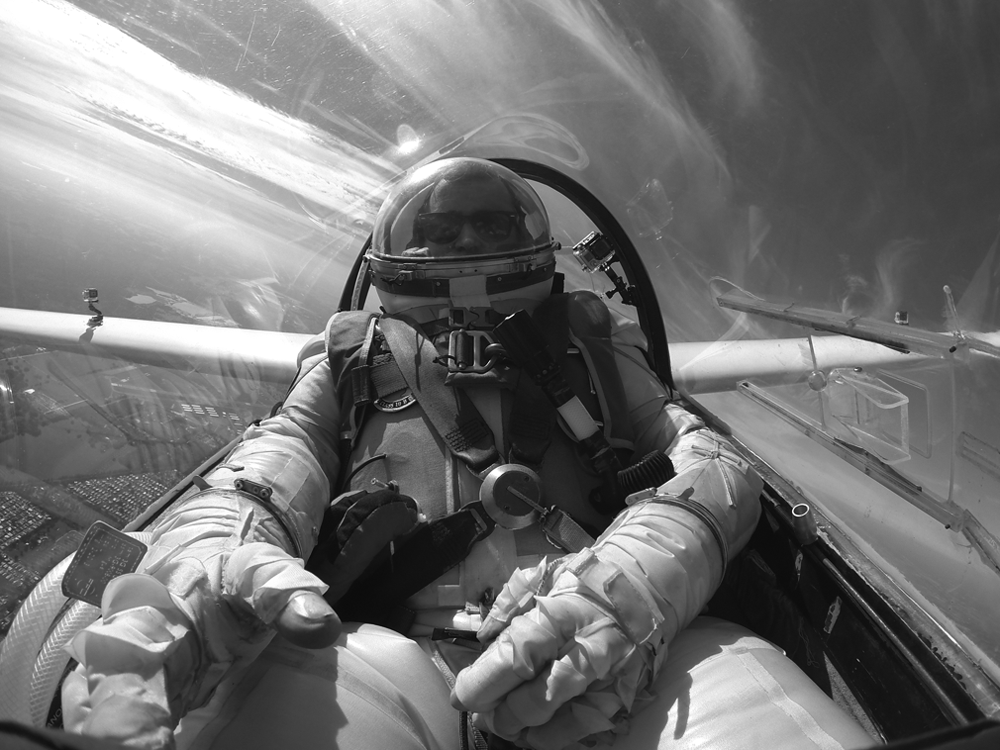
Final Frontier Design's IVA suit in glider flight. Courtesy Final Frontier Design; published with permission.
FFD has built an upper torso framework to verify hardware, layout, and functionality of our rear entry hatch design. Current preliminary EVA suit architecture will be built without bearings to reduce cost and complexity. Arms and legs for a pressurized EVA suit have already been developed. A commercialization plan that includes near-term Earth-based testing partners and longer term flight providers is being evaluated and finalized.
MCP research capitalizing on FFD's recent glove delivery is well underway. A full arm including a passive shoulder seal has been built and are being tested in a vacuum chamber currently. An MCP boot system has been developed, including extensive foot castings and hardware comfort, don/doff, and ambulatory tests.
FFD is also pushing forward on ancillary space suit elements needed for longer duration EVAs, such as human waste containment, digital sensor platforms, and liquid cooling garments.
Finally, after many years of developing innovative solutions for space suits, we are now spinning off this work for Earth. FFD is starting a year-long contract effort to optimize electrical linesman gloves for comfort and cooling. We are also founding a spin-off company, Space Rated, to capitalize on the technical garment knowledge we develop for NASA, to benefit a broad range of customers on Earth.
Conclusion
FFD is a unique small business incorporating international expertise and a wide range of backgrounds in both engineering and the creative world to attempt to affect the future of human space travel for the better. We bring a nimble, innovative, and forward-looking approach to space safety garment design that we believe can positively influence what we will be wearing on- and off-planet for decades to come.
Footnotes
Author Disclosure Statement
The author is the co-owner of Final Frontier Design and receives payments from that company.