




Abstract
The formulation of the Outer Space Treaty signaled to all space actors that space exploration would be bounded by certain ethics and code of conduct and as most countries have ratified this treaty, including several African countries. However, changes or modifications to these policies are dependent on who has the most influence to change them and to which space actors they mostly apply. If African space actors are to hold a major influence in significant decision-making processes on space matters and to use the full extent of some of these policies such as the Access and Utilization of Space Resources, it needs to have a considerable active space presence—something it currently lacks. To this end, there is a need to push for the formation of an independent and sustainable African Space sector—an autonomy echoed by Pan-African Agenda 2063; “The Africa We Want.” This push, if properly overseen and diligently implemented, can establish the African continent as an economic giant and a suitable contender for a robust competitive advantage among other space powers. In this article, we propose a model instrument that can be applied to and address the underlying issues of the current climate of the African Space sector—lack of a strategic drive to explore the space industry, underutilization of available resources, the presence of brain drain of intellectuals and qualified personnel to oversee the push for autonomy. To this end, we introduce the six pillars of a developmental framework for the African Space Autonomy.
Model Instrument
Preamble
Considering that the activities of exploration and use of outer space for peaceful purposes play a crucial role in the social, economic, scientific, and technological development of all nations; in the management of global issues such as the preservation of the environment and disaster management, security and defense, telecommunication and navigation.
Noting the overwhelming importance of regional cooperation and incorporated synergy between regional governments of African nations and private entities in the development of their commonwealth and prosperity.
Recalling the increasing importance of outer space transparency and confidence-building measures considering the growing use of outer space by governmental and nongovernmental entities.
Understanding that African nations desiring to be spacefaring States must acquire knowledge regarding general practices to enhance the safety, security, and sustainability of outer space activities that could usefully be made available to the other Regional States, for the common benefit.
Reaffirming their commitment to the Charter of the United Nations and other international space law instruments.
Subscribing to the following guiding principles for space activities.
Purpose and Scope
The purpose of this guiding instrument is to enhance regional cooperation and incorporate synergy between regional governments of African nations and to further partnerships between governmental agencies and private enterprises in space exploration.
This instrument addresses the shortfalls and gaps of any other existing international space law instrument while providing a more fertile ground for potential African space nations to thrive with the sole aim of bringing prosperity and development through space exploration to the African continent.
This instrument seeks to encourage joint participation, collaboration, and cooperation between member states of African nations in line with the 2063 African union agenda to achieve “the Africa we want.”
This instrument promotes the interests of developing nations while not entirely neglecting but tapping into the giant strides of developed nations of the world.
This instrument seeks to ensure that the African space sector remains competitive in international space engagements through the safeguards afforded by a just and equitable legal, regulatory framework for space explorations, which is in tune with best practice.
General Principles
Space exploration by member states shall be conducted in a legitimate, lawful, proper, and standard way in line with international best practices.
The freedom for all States, in accordance with international law and obligations, to access, to explore, and to use outer space for peaceful purposes without harmful interference, fully respecting the security, safety, and integrity of space objects, and consistent with internationally accepted practices, operating procedures, technical standards, and policies associated with the long-term sustainability of outer space activities, including, inter alia, the safe conduct of outer space activities.
The freedom of exploration shall be geared toward advancing the interests of African or developing nations through their various agencies and governments while also creating an open environment for private interests and enterprises.
The responsibility of developing States, in the conduct of scientific, civil, commercial, and military activities, to promote the peaceful exploration and use of outer space for the benefit, and in the interest, of humankind.
The responsibility of developing States to take all appropriate measures and cooperate in good faith to avoid harmful interference with other outer space activities.
The responsibility of developing states with relevant technical know-how and space capabilities in the space program for space exploration endeavors to contribute and assist other subscribing developing nations in fostering and promoting the interest and benefit of such developing nations. Each Subscribing State is free to determine the nature of its participation in international space cooperation on an equitable and mutually acceptable basis about the legitimate rights and interests of parties concerned, for example, appropriate technology safeguard arrangements, multilateral commitments, and relevant standards and practices.
The responsibility of Developing African states to reposition their economy from being primary consumers and dependents on other nations for high-tech services to being self-dependent and self-sufficient, thereby bringing wealth and prosperity to her people.
The responsibility of Developing African states to harness the benefits of Research and Development in space technology by developing indigenous space capability driven by responsible innovation and engaging in scientific research and personnel training to be established in the international space community and ultimately toward achieving autonomy.
The responsibility of state parties to, in the event of any controversy, dispute or claim arising out of or in relation to this instrument, including any question regarding its breach, existence, validity or termination, or the legal relationships established by this agreement, shall be submitted and determined by arbitration.
Introduction
Background and Problem Definition
Africa—a continent is a home to several emerging economies with primordial technologies offering solutions to a variety of humankind's challenges. This formed the primary drive for discussions and deliberations amid African leaders and technology policymakers toward the push for a new Africa. The deliberation on technology conveys the need for space exploration and applications as a bedrock to improving the current technological state of the African nations. In the same vein, discussions about space being the next frontier sustain within and outside the shores of Africa. Those within find it rather challenging to lend a voice or to put in the needed resources to cater to their interest and predisposition to Research and Development (R&D). The “intellectual few” (the thinkers) believe that there is still a potential yet to be unraveled, and they see some economic viability in this terrain. The African space industry necessary to revitalize space R&D in Africa is, however, underdeveloped. This is majorly due to the gross underutilization of resources available on the continent. Brain drain is also a huge factor that one cannot neglect when discussing the need for an African Space Autonomy. The “intellectual few”—belong to the set of populations that contribute to the brain drain of the continent at large.
Space is the next frontier for humanity, because it offers a vast array of opportunities from its exploration. Opportunities such as advancing technology portend for space resource mining, earth observation, and a means for participating countries in space to gain national pride. Many nations are eagerly investing in their space programs, for example, National Aeronautics and Space Administration (NASA), China National Space Administration, The Roscosmos State Corporation for Space Activities, and The Japan Aerospace Exploration Agency have been successful in achieving tremendous achievements, from launching the first living thing into orbit, to landing the first man on the moon and more recently, sending a probe to Mars by SpaceX and partners. These have successfully helped in promoting the national pride and global relevance of these nations, and more value to their national development in terms of advancement as they climb the space technology ladder; the successes of their space programs are globally acknowledged and celebrated.
However, African States need to find their position in the world of global governance and pursue the need for economic convergence—a scenario where less developed states grow their economies together while striving to match the standards of living and quality of life of the more advanced countries. 1 With the emergence of space as the next frontier, private and nationally funded missions are scrambling to engage in outer space activities. 2 Laws and policies were put in place to guide these activities, but they have some loopholes that still need to be addressed. 3 An example is the issue of militarization of space and the use of space for peaceful purposes. 4 One may, therefore, argue that these existing policies may not cater well to new and future entrants, especially the African States. For the African States to engage in making and fixing space policies, a better approach will be to focus on attaining competence in the space industry to garner global relevance and influence.
Contesting: Position of Africa in Global (Space) Governance
Africa is seen as the last frontier from the lenses of emerging world economies, amid growing knowledge and evolving understanding in the field of science and applicable advanced technological strength in the modern world.5,6 To this end, space agencies are working actively in human and personal technological investment to gain a significant foothold on the riches and resources that await in the deep, vast space for exploration, with each government pushing for a national stake in this venture. It is from this development that the need for space governance arises. Both the NASA Space Act Agreement and the recent enactment of the U.S. Space Force are examples of how the United States is enabling technological advancement through policies and agreements. This gives a more inclusive approach toward their national space goals, capacity building for American companies and citizens, and implementation of autonomous capabilities for the U.S. government in space technologies.
In this work, we identify the areas of institutional space construct and propose the developmental framework that is entrenched in responsible innovation and stable governance for short- and long-term results. This essay addresses the feasibility of Pan-African Agenda 2063—“The Africa we want” in the long run. 7 This creates the foundational implementation stages in the short term with research and innovation as core drivers for space development and technological capacity building. This will ensure a technological continuum to revitalize all other African Industry segments and hence propel African nations to a realm of economic convergence that will also provide ground for space exploration as it relates to global governance as the long-term goal.
Addressing Policy Gap: African Actors—Access and Utilization of Space Resources
The establishment of the guiding principles, resolutions, and binding treaties have formed the bases for structures and framework guiding space activities. A significant reference is the Vienna Convention on the Laws of Treaties that laid the foundation for how policies and laws are defined, established, integrated, amended, and implemented over time. States have been able to follow these precepts to creating effective laws and binding treaties for different sectors of the governments. The space industry has brought countries together toward agreeing on the Outer Space Treaty, the Moon Agreement, the Rescue Agreement, the Liability Convention, and the Registration Convention, which are Treaties. The basal documents, which were made eons of years ago, have helped fuel the progress and advancement of technology and use of outer space resources for the benefit of mankind. These treaties are initiatives aimed at pushing space governance and law between governments of spacefaring countries, as well as the growing commercial space sector. It has also provided coordination of new entry into the domain of the spacefaring nations.
Setting the Plot
Currently, space development in Africa can be defined as a facade across all African States ascribed active in the African space industry. Beyond this facade, a dichotomy of views exists among policymakers on how best to ensure the technological continuum, with implementation strategies to achieve the Africa agenda 2063 (The Africa we want). 7 Nevertheless, a non-myopic or well-informed policy strategist will identify that there is a setback to space development in Africa. The issue stems from the problem of the non-inclusion of private entities and actors in the almost stagnant or better described as a slowly improving industry in Africa. Currently, space development in Africa lacks sustainability, innovation maintenance, and operations. In addition to this, there is the absence of national policies.
As Africa develops and grows in her space exploration and technology advancement stages, it is vital to take cognizance of what the developed nations have put into place. The effectiveness of Africa's present national and regional policies should be re-assessed to create, amend, and implement robust policies that would enable a new African frontier. The push for African greatness in space advancement will foster a unique level of contributions to the global space community while ensuring an all-inclusive approach toward capacity building, technology readiness, and the next phase of global space exploration. Africa should work toward becoming an integral part of the next move for the exploration of outer space, the journey to Mars, settlement, and beyond to take a rightful place in contributing to the growth and advancement of the world's space achievements.
What and Why Developmental Framework for Autonomy?
Autonomy to a nation is defined as a form of self-governance and self-defining freedom—a concept that African States must choose to adopt to move up the value and power chain in the 21st century. African space autonomy in a similar context would be a form of growing interdependence between countries in Africa. Established space agencies of more advanced countries have been successful in this plight through a powerful, cooperative framework that fosters the existence of public and private space ventures. A good example is the European Union: Through collaboration within member States, it has kept a self-sustaining economy and a very active European Space Agency (ESA). 2 Africa could also adopt the relational framework of the ESA to achieve autonomy with an active African Union (AU) through a functional African Space Agency (ASA) that allows public and private access to commercial space ventures by adopting some of these frameworks and strategies. Such a framework should offer a perspective that African States can use to visualize better the future they desire by becoming aware of compelling future needs and solutions that the space industry offers. To this end, policymakers should capitalize exhaustively on the outlook that space permits. In this, there is the need for a developed African Space sector to harness the many benefits of space exploration and, by extension, to establish a regime of African Space Autonomy.
Allowing for Incorporated Synergies (Public and Private Actors)
To have a productive African space sector, cross-collaborative educational strategy within countries in Africa must be developed. Such educational policy will allow cross-border development so Africans can study encompassing issues within its domain for improvement from the status quo, where Africa relies on external knowledge to achieve its aim. Such an institutional framework also has the potential to reduce the heightened rates of brain drain across all sectors, thereby creating means to develop indigenous capacity. Brain drain has led to a loss of intellectual capacity in Africa, and it has crippled industries across several space industry segments, which could have coalesced to form an active Africa Space Industry and a thriving economic front. In a futuristic outlook—“The Africa we want” of the Pan-African Agenda 2063, if Africa becomes an Economic Giant, a space power, it will be because Africans implemented strategic steps to effectuate such an outcome. 7 African states must be proactive in securing the necessary steps to establishing their space industry while pushing for competitive advantage. The push for a thorough understanding of the many challenges related to sustainable development goals (SDGs) for African emerging economies is also paramount. Such an essential undertaking will reflect on the potential laden on the fertile African continent, to ease synergies and implementation of the public and private space actors' consensus through the ASA.
African Space Strategy
The African Union Commission (AUC) has been the backbone of policy and strategy development in Africa. African country leaders have deliberated on several policies and strategies for the future of African development. At the core of these deliberations is the African Development Bank (AfDB). The AfDB investigates investment structures and the financial implications of policies and strategies. Of the various strategies proposed by the AUC, the African Space Policy and Strategy co-founded by the European Commission toward social, political, and economic integration of Africa is the core for the future of the African Space Industry through the ASA (Fig. 1). The African We Want: Vision 2063 contains a robust detail of the proposed breakthrough strategies and steps to take to transform the space economy purposely led by ASA under the AU. The Africa we want: Agenda 2063 also points out the focus of Africa, the challenges faced, and the path to technological development. 7 The Agenda recognized Africa's basic needs, which include, but are not limited to, clean water, food security, and other sustainability goals such as climate change. Space application has been identified as a significant driver in addressing these issues. Moreover, this has fueled the discussions on strategies such as the Africa Water 2025, Program for Infrastructure Development in Africa (PIDA), Climate Development Africa, e-Governance, and the Comprehensive Africa Agricultural Development Program (CAADP).
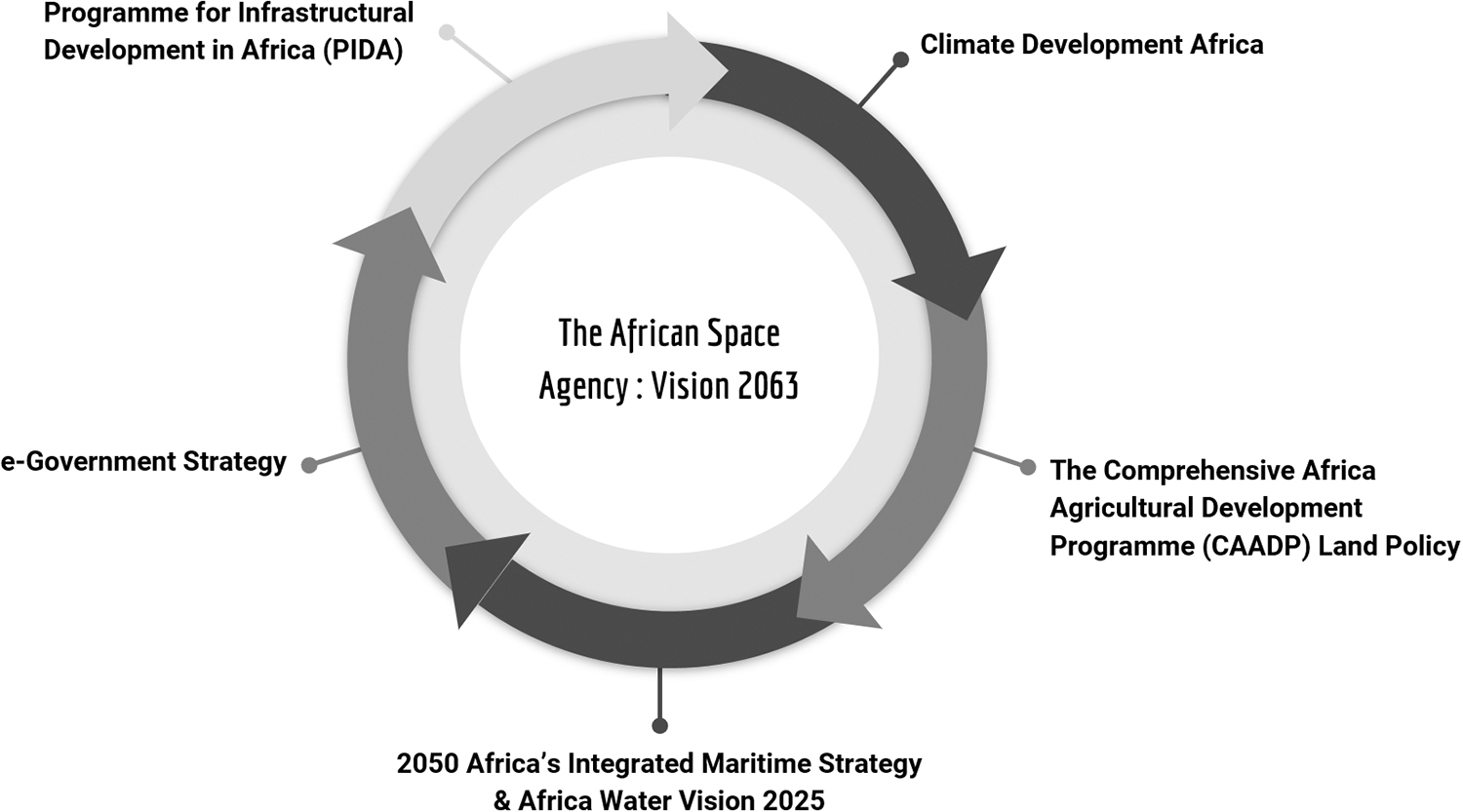
Toward Social–Political and Economic Integration in Africa.
The individual strategies collectively have their implementation rooted in space applications. The establishment of the Africa Space Agency is proposed to be a stimulus for the implementation of the African we Want in Africa and a body to enhance cross-collaboration amid African countries.
It is essential to recognize that the ASA is not yet in full operability. However, there is a need to consider the strategies in place individually while allocating resources for the execution and implementation of an effective African space program. Such an approach will aid African space policies to allow for actual technological growth through space technology acquisition schemes and technical competency to solve the African challenges. Such an approach will aid African space policies to allow for actual technological growth through space technology acquisition schemes with technical competencies to solve the African challenges. Subsequently, obtained knowledge and technical know-how would allay means of solving the African socioeconomic challenges for sustainable development. Some of the proposed solution frameworks for these challenges are described later:
Africa Water Vision, 2025. The Vision explored the vast potential of the abundance of water in Africa, which can be converted into many uses, which include, but are not limited to, hydroelectric energy, clean drinking water, and many more. It further discussed the threats of spatial and variable climate change, water scarcity, pollution, unstable financial investments in water sanitation, and supply. This framework tends toward achieving the SDG6 and ensuring the aversion of the disastrous consequences of the threats associated with water supply and demand in Africa. According to the framework, it is to achieve “an Africa where there are an equitable and sustainable use and management of water resources for poverty alleviation, socio-economic development, regional cooperation, and the environment.”
8
2050 Africa's Integrated Maritime Strategy. This strategy recognized the wealth creation potential of the African Maritime Domain and provided a pathway toward human capital development and improved standard of living through the Marine and Coastal services and space applications.
9
e-Government Strategy. This framework adopts strategies toward achieving a standard location-based mobile service, spatial depicting of biotechnology and creative industries; mapping of Government Information Communication Technology infrastructures, data, applications, and services delivery. E-Government success in Africa is mainly reliant on the progress and success of space growth in Africa in terms of the internet, big data, automated networks, data analytics, and information transfer, among others. PIDA. A significant problem that Africa faces in infrastructural development is the issue of policy alignment and harmonization. The majority of the treaties that have been signed and ratified have not been written into national legislation, and the framework of PIDA addresses how this challenge will be addressed. PIDA is based on a shared vision of regional integration and a long-term agenda that will support the objectives of the AU's Abuja Treaty. PIDA is also expected to help increase access to energy and reduce the cost of acquisition, reduce the cost of transportation (transportation efficiency gains of ∼$172 billion in the African Regional Transport Integration Network), increase international trade, ensure water and food safety, and, most importantly, increase global connectivity (Infrastructure for Spatial Information).
10
Climate Development Africa. This framework addresses the issue of Climate Change. It also supports operation in the generation and dissemination of quality climate information in Africa, enhancement of policymakers and policy institutions to integrate climate change information into development programs, and implementation of adaptation practices of climate information. The CAADP Land Policy. Under the New Partnership for Africa's Development (NEPAD), Food Security is a significant focus. This framework focused on three (3) major pillars for quick impact and the fourth pillar for long-term impact in the form of agricultural research and technology dissemination and adoption. The foundational 3 pillars for developing by CAADP for improving Africa's food security include: Extending the area under sustainable land management and reliable water control systems, improving rural infrastructure and trade-related capacities for market access, and increasing food supply and reducing hunger. These include both farm yield and rainfall.
11
Africa Regional Strategy for Disaster Risk Reduction. This result of the African Consultative Meeting on Disaster Risk Reduction in Africa” in June 2003 gave birth to a decision to develop the Regional Strategy on Disaster Risk Reduction. “These are in two phases: (1) undertaking a baseline study to establish the status of disaster risk reduction in Africa; and (2) drafting the Regional Strategy on Disaster Risk Reduction. The baseline study has identified gaps and issues to form the basis for developing the regional strategy Security and Emergency.” This strategy entirely focuses on Vulnerability and Risk conditions and how it can be addressed in the long term both nationally and regionally. The AU and NEPAD recognized that the existing operations and tools adopted for disaster management would not sufficiently address the tragic probabilities of the problems in Africa. The strategy points out that what is needed is a complete change in the belief and operations of national authorities and other stakeholders involved in the process.
12
Agenda 2063: The Africa We Want. This focused on the seven (7) key aspirations of the AU, which include inclusive growth and sustainable development, Pan-Africanism, Good Governance, Peaceful Africa, Good Culture and Ethics, Capacity Building for Youths, women and children, and Strong Global Power and Player.
13
Global Monitoring for Environment and Disaster (GMES) and Africa. The African Space Policy and Strategy: Toward Social, Political, and Economic Integration of Africa. This is the most elaborate policy on the strategy of the AU toward achieving the Agenda 2063. This also shows how important the frameworks mentioned earlier are to the success of the future of space development in Africa. The strategy highlights the major poles of integration for the African economy, which includes: the African Economic Pillars (agriculture, blue economy, digital infrastructure, and energy), Global Challenges (climate change, disaster management, sustainable development), and the African Global Landscape (economic growth, population growth, and regional and national democracy). The African Space Policy and Strategy pointed out seven key major drivers toward achieving the Agenda 2063, and they include: climate change, resource integration and management, knowledge banking, safety and security, innovation culture, capacity building and employment, and global commons.
7
Highlights of the African Space Policy and Strategic Goals
The goals have been separated into policies and strategies. To make it simple, here is the direct transfer of the goals from the Global Monitoring for Environment and Security and Africa:
Policy goals
Well-coordinated and integrated African space program that is responsive to the social, economic, political, and environmental needs of the continent, as well as being globally competitive
The regulatory framework that supports an African space program and ensures that Africa is responsible and engages in the context of peaceful uses of outer space
Strategic goals
Space-derived products and services used for decision making and addressing the economic, political, social, and environmental challenges.
An indigenous space capability, in both the private and public sectors, that defines a coordinated, effective, and innovative African-led space program. 7,13
It is laudable to say that the AUC, with the Economic Commission of Africa, the AfDB, the NEPAD, and the United Nations, have done a great deal of work in putting in place policies, frameworks, and strategy. Such developmental strategies will enable the African continent to become autonomous soon and become a contributing power in the global space community. However, there are still some gaps in the implementation of these policies that need to be pointed out and given more attention. From these interests came policies that were put in place to regulate the venture. Although it has been working so far, it still has several gaps in its postulation, which are again being mentioned in significant formal discourse. By the same set of policies, any space actor is regulated by even major ones who have influential power.
For the African Space sector, none of these policies is of any benefit or use as there are no activities done to indicate such. One might wonder how the article in the Moon Agreement Treaty can apply to the current African space programs whose focus so far has been lying in basic space applications. So how can Africa benefit from such policies or even contribute to its improvement if it has not made significant strides to access or utilize space resources? There is an open question to the general African populace: Should we not focus on a policy to aid our continental goals? What policies are other countries using to aid their (United States, European Union, China) competitive advantage, all of which are helping them build internally?
The Situation of Things: Current Trend
The current trend is on a third-party acquisition of satellite technologies by all African space actors (e.g., Ethiopia, Egypt, Ghana, Morocco) through non-African entities. In February 1999, South Africa launched Sunsat-1, the nation's first satellite built in Stellenbosch University, South Africa, by students. Algeria followed in November 2002 by launching the Alsat-1 built by Surrey Space Technology Limited (SSTL) based in the United Kingdom. Nigeria joined the league of African Satellite launchers in September 2003 by launching the NigeriaSat-1 built by SSTL. Other African nations such as Egypt, Morocco, Ghana, Angola, Algeria, and Kenya also started space programs aimed at launching satellites to orbit. These countries have invested millions of dollars in space technology but have been unable to build indigenous capacity (technological capability).
Other emerging spacefaring nations such as India are actively pursuing space exploration and improving singularly or through collaboration, whereas Africa remains, generally, a passive participant in this endeavor. This might be due to the inability to develop significantly, political instability, or general lack of innovation as a culture. Directly, this passiveness translates to buying satellites, lack of continuous funding, under-representation in international space forums, and absence from the space sector. Still, the most poignant may be because African countries are faced with most of the primary challenges, such as lack of electricity, insecurity, good governance, and poor infrastructural development that inhibit needed sustainable development across the continent. The push for space exploration seems alien to African Space policymakers amid several socioeconomic challenges in Africa. Scarce resources would be spent on more pressing needs than what appears to be a pursuit of the abstract. The African space sector is still at its infancy even as other world regions develop in their space capabilities. The reason for this stunted growth could be attributed to lack of interest, poverty, meager budget allocation for the space sector, lack of collaboration between developing African nations among many others, little or no public–private partnerships, and very low cross-border collaborations.
The Space Technology Ladder outlines the different stages of competence acquisition in space-related operations. 14 For the most part, the African space sector has some success in some areas levels. It is important to note that the satellites being used in African countries are majorly contracted to companies and organizations outside Africa to assist with the building and launching of the space payloads. So far, no African country has lunch capability, not to mention recoverable biological sounding rocket capability, and no African country can claim to its State an astronaut. To put it bluntly, we are not yet competent in our capability to manufacture and maintain satellites, build launch sites, research, develop Sounding Rockets, and develop payloads that can travel beyond outer space. Going back to the strategies African countries have been adopting for their basic amenities, it will be essential to note specific references from the Science, Technology, and Innovation Strategy for Africa 2024 and some of the AUs focused on the social needs, policy frameworks, and the products and the requirements that are relevant to the our proposed developmental framework toward a vibrant African space economy.
Proposed Solution: Developmental Framework
The theme of our proposed developmental framework spans six diverse perspectives and undertakings, namely: Governance, Legislation, Education, Finance and Investment, Technology, and Resources, all targeted toward achieving Pan-African Space Autonomy. These six different, yet correlated perspectives are shown in Figure 2, which are the pillars that will foster development for autonomy in space in Africa. From responsible innovation needed to drive stakeholder engagement, and impactful R&D to keep innovation alive, as well as cooperative ventures between private and public actors to secure the social, economic and national benefits, it is any wonder that most major spacefaring nations or agencies have been successful in space exploitation and exploration. With the strategic installment of these pillars, the African space industry will move up in the Space Technological Ladder, a milestone-defining framework for space technology capability, and evolve into a robust ecosystem with a competitive edge. 14 For one, utilizing R&D to harmonize and parallelize African States' indigenous capabilities will strengthen the systems development, infrastructure, and human preparation for space. For another, it can outline the benefits of market-oriented missions and justify the continuation of space development and investment. Humankind is in an era where exploration capability has dramatically improved; results of decade-long investment in research and personnel training, and supportive policies have boosted space programs to its current capacity. Although global governance and economic convergence are inherent in major space actors, there is delayed progress in the technological in-house manufacturing and development in the African Space sphere, which has prevented its ability to emerge as a leader in this domain.
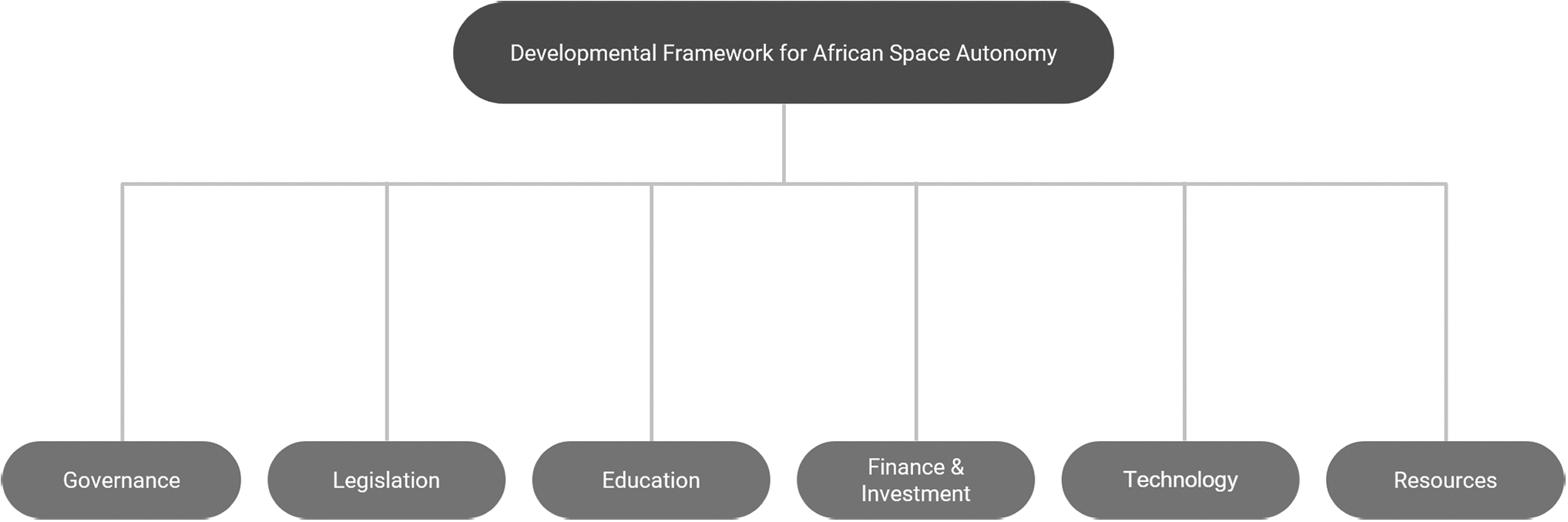
The Six Pillars for the African's Developmental Framework for Space Autonomy.
However, all hope is not lost. Africa has a unique advantage in space explorations for the next phase of space advancements. One significant advantage Africa has in embarking on such a transformative journey is its abundant natural resources. The African continent has sparse land with useful landscapes for supporting launches, remote surveillance and testing, and isolated research—vital resources in space development. With a boastful amount of natural resources not limited to oil and gas, solid minerals, and unique climate conditions, Africa is home to a variety of raw materials that are useful in the space industry. 15 Another advantage lies in the presence of human capital: The intellectual and indigenous capacities, as well as its increasing population (according to the World Population latest release, Africa is bound to be the second most populated continent in the world by 2050), makes it a hub for the workforce needed for space-related operations. The continent of Africa also has a unique environment, hungry for technological advancements, public and private partnerships, investments, and administrative operations, with significant margins open for growth in every sector of the government for each of the African countries. Africa, therefore, has an opportunity to utilize its natural and human resources, including its geographical advantage to promote and sustain the socioeconomic growth of its individual nations and regions. This will subsequently improve the quality of life of the people and contribute to its national development—the main goal of Agenda 2063: The Africa We Want.7,13 The six pillars of the developmental frameworks and their expected functions, shown in Figure 3, describe what and how such pillars are essential in attaining autonomy in space.
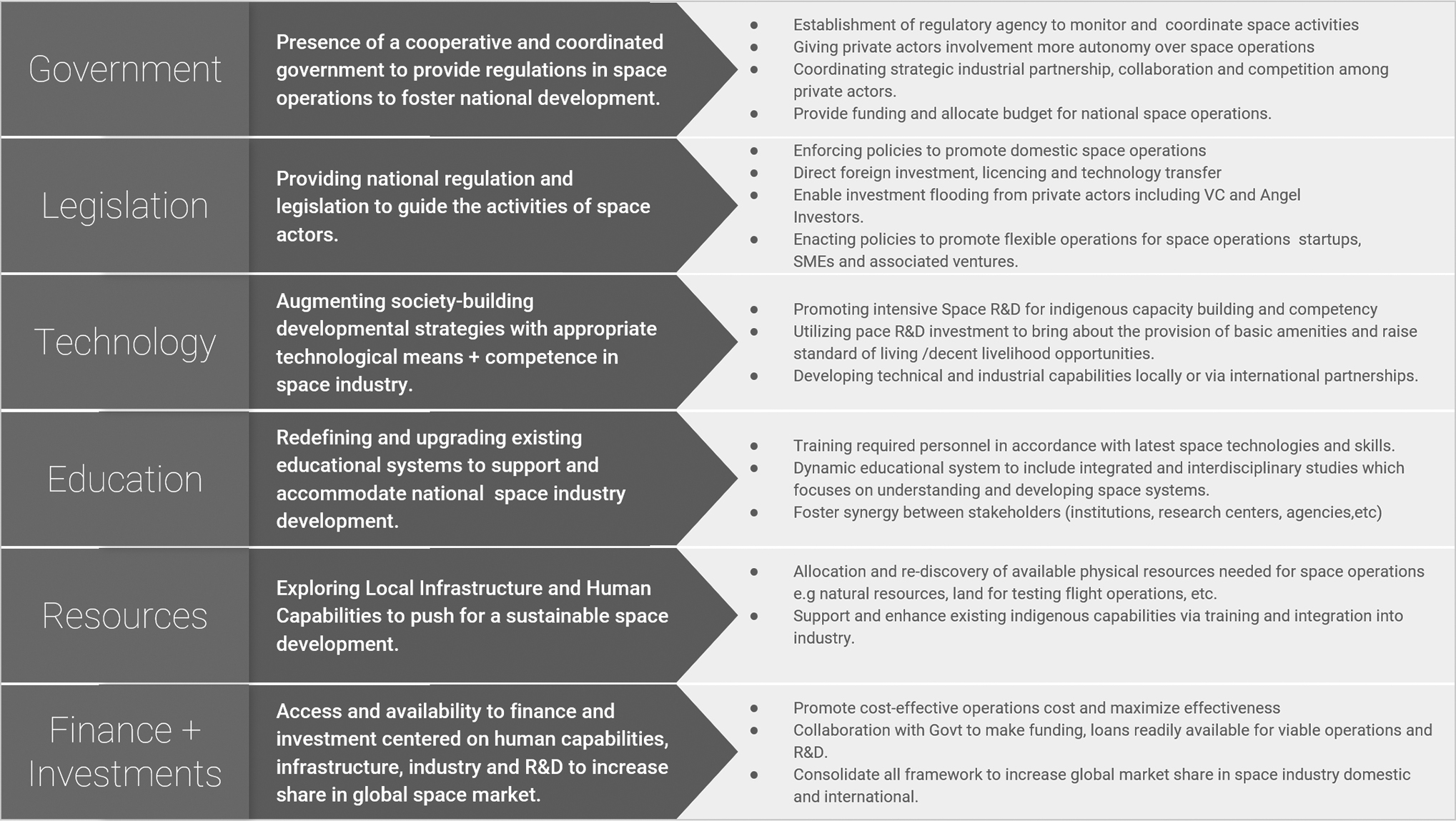
An overview and outline of the Six Pillars for African Developmental Framework.
Toward Space Exploration and Space Driving Initiative
As spacefaring nations continue to develop their space industries, with combined efforts of the public and private entities, their level of competitive advantage improves by leaving the African countries far behind with regards to economic growth and technology capacity driven by innovation.6,15,16 Spacefaring nations have pushed their prowess (Competitive Advantage) through continued space research.15,17 It can be said that proceeds from space R&D fostered innovation in every other aspect of science and technological fields, especially in the security, satellites, and telecommunication sectors. African nations need to rethink what truly defines their aim in the growing globally competitive economic market. Based on Michael Porter's stages of competitive advantage, many African countries can be categorized into the factor-driven and investment-driven stages, for example, they are mainly providers of raw materials to other growing economies.15,17
To this end, we have proposed a sequence of developmental phases seen in Figure 4, which will serve as the action plan toward this agenda. Phase 1, the first foundational step, would be a political synergy among African state actors. What we propose is a political synergy within African countries, which are potential African space actors that have ratified some or all the Outer space treaties.1,6,15,18 Phase 2 would require an introspective approach to gather statistics on resources available and support for the division of research focus and personnel training of ASA. Such research methodology currently proposed is like the infamous concept of “the division of labor” in the macroeconomics term. It would be the prelude to Phase 3, where each country accepts the challenge of specialization to gain competence in some space capability, not limited to launching, satellite manufacturing, and remote sensing. Phase 4 gives an outlook on what the long-term objective of the ASA would be—a culmination of cooperative and strategic efforts taken to build competency in space autonomy in Africa. The ASA is expected to lead the implementation phase of the 2063 strategy for African Countries to climb the Space Technology Ladder with a view of responsible innovation and sheer political will. The acquired technological know-how (space technological capability) in the African space actor and their agencies of specialized mastery in one or more space industry segments will aid the effectuating our developmental framework objectives. The ASA will truly be a Global Space Actor if the required of strategy implementation is the sole focus in the plan for the African Space Agenda 2063: “Africa we want.” 7
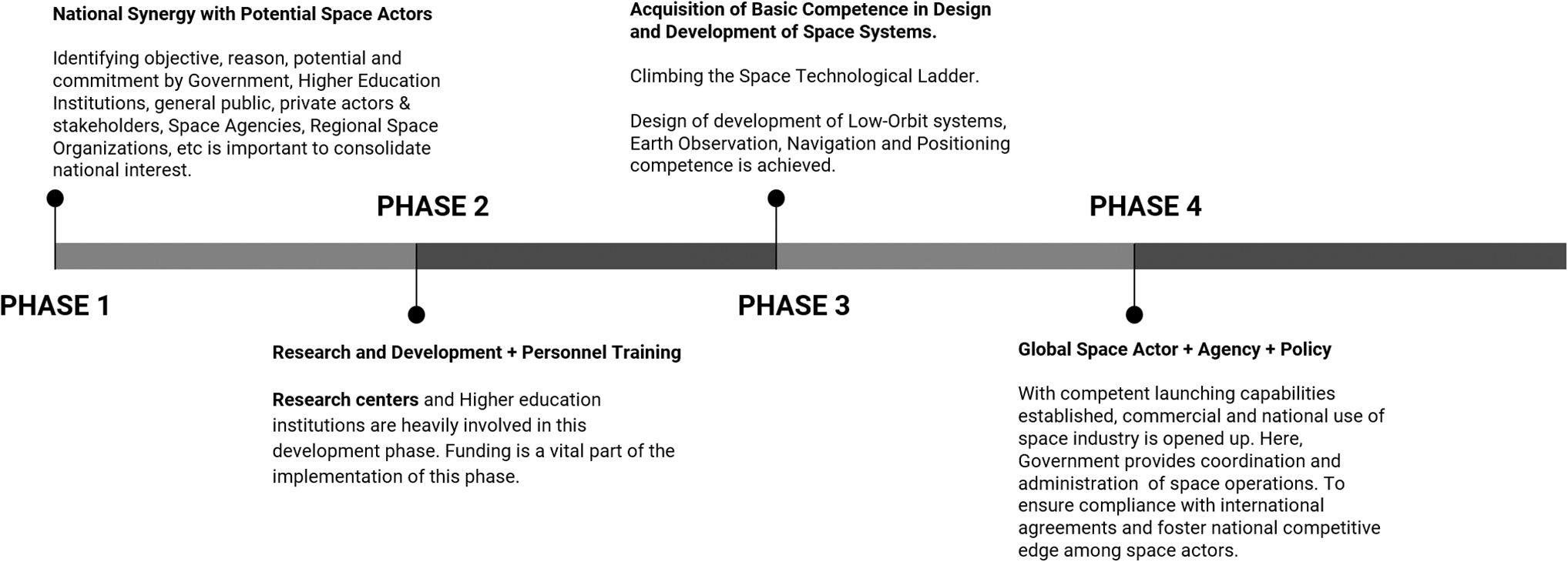
Phases toward achieving African Space Autonomy while climbing the technological space ladder.
The Need for Responsible Innovation and Governance in Africa
The path to genuine pan-African autonomy lies in our drive for responsible innovation and creation of distributive technology that meets socioeconomic needs and breaks ground for the development of all industry segments that are needed to acquire Space technological capability. So how do we responsibly govern science and technological innovation? Responsible innovation is defined as a transparent, interactive process by which societal actors and innovators become mutually inclined to be responsive to each other to attain ethical acceptability, sustainability, and societal desirability of the innovation process and its marketable products. 19 Marketable products imply that the business and investment community (private actors) should be involved.
Therefore, Africa's need for responsible innovation and governance should be strongly tied to the attainment of peculiar values across all member states to create an environment for a Pan-African driven educational framework. Applying this to the African space sector means a proper “embedding of scientific and technological advances” within the African States with a focus on their fundamental challenges, which would create a means to oust the inherent primitive technological solutions in African Countries. 20 Agreed peculiar values would create a competition profile for member states, where nations could be rewarded based on their policy implementation strategies and results, such that investors and other stakeholders make and maximize social impact across all industry segments, which would consolidate for a robust space program. Inherently, the success of a nation's space sector is a function of the level of improvement across all industry segments. For instance, the satellite production industry is practically nonexistent in an economy without a semiconductor industry.
So far, most African states have not provided full social benefits to their citizens due to a myriad of reasons, with the topmost being lack of poor governance and lack of innovative drive. The social issues plaguing most African States need to be solved from a different perspective, and the space sector offers that perspective through many lenses; it can be used as a tool to improve the socioeconomic lives of citizens. Investment in space programs can solve these issues and serve as a catalyst to boost the economic and innovative infrastructure to that of major developed countries such as the United States and China, who benefited tremendously from such investments. If the African States choose to invest in space innovation and development, one significant aspect of its social issue is sure to be tackled: technological backwardness. By utilizing remote sensing and communication, these nations can quickly provide social services to most of its populations, including those at remote locations. These services also have benefits in the areas of agri-business, disaster warnings and management, and online education as a result of fast broadband internet telecommunication services, and telemedicine—all of which, through improvement and consistently, will foster a comprehensive national development.
Complementary to responsible innovation is responsible governance in which roles are allotted to all those (the interested African States in this case) involved in the innovation process. Policymakers in Africa must show intense interest in the exploration and exploitation of space resources before these policy gaps can be addressed adequately and inclusively. However, for sustainable national development, states must reposition their economy from being primary consumers and dependent on other nations for high-tech service providers, in this case, for example, the procurement of satellite services. To achieve the desired autonomy, they must first adopt a producer–manufacturer mindset from which national needs can be met and fulfilled and subsequently extended to export. The space enterprises provide opportunities for the African States to move up the value chain, to diversify business exchanges, and to retain highly skilled engineers and other professionals that are necessary for its technological progress. In addition to this, it serves as both the technical and non-technical motivation to pursue national pride, geopolitical relationships, regional cooperation, and healthy foster competition to aid technological growth, which serves as incentives to subscribing African states. Therefore, there is the need for a technological continuum for emerging African countries across all institutions and reduce the brain-drain factor that plagues every African nation.
The Need for R&D and Building Indigenous Capacities for Space
R&D in space technology is the next vital step in developing indigenous space capability, more so to gain traction in the international scene and ultimately toward achieving autonomy. To achieve indigenous capability in the space industry, African States must invest in R&D by engaging in scientific research and personnel training. Doing so will allow such states to build the fundamental technological backgrounds and, over time, attain technical competence in the design and development space systems. Establishing capability for carrying out theoretical and experimental investigations in space and atmospheric sciences, satellite design, and space systems are some examples of these. From these, other aspects of space industry development, such as manufacturing and launching capabilities, as well as commercialization and space service provision, can quickly be built. An important area that R&D is very much dependent on is in the educational system of a nation. Space science and technology, and other related disciplines such as astrophysics, astronomy, and earth science should be introduced into the curriculum of tertiary institutions, with mandatory research and internships.
This could also help build up the technological readiness of the continent, boosting more research and also enhancing countries in Africa to adopt new technologies and to improve productivity in other sectors of the industries (such as agriculture, ICT, and the health sector). The water management of the continent could experience more positive transformation through this approach. It is needed to provide distributive innovation platforms, which means changing traditional industrial models, which is encouraged to integrate with scientific research institutes, key laboratories, engineering centers, and other units that have technological advantages. They will jointly undertake major projects and be beneficial to the formation of production, learning, and research integration.
The revitalization of a national space agency, or the establishment of one, if there is none, is a significant step for a nation choosing to gain ground in the space industry. Such an agency should set the path for development and social benefits through the space industry and ultimately toward national development. It should also improve a nation's space portfolio and foster competition. Having one will allow African States to coordinate and parallelize space R&D into many of its sectors. For one, it can permit private investment, inter-university collaboration among the African States, joint venturing, and foster agreements among these states and international companies.2,15 Another lies in identifying market-oriented missions, promoting good infrastructure and human capabilities, and dispersing government funding to targeted R&D for the successful use of space to benefit the African populace. 15
Investment Infrastructure
The industry, government, the public, and the scientific community are the major stakeholders in global space exploration. 21 A dual to multiple relationships exists between these stakeholders, from the technological progress the scientific community makes, which the industry builds for space missions to educational funding the government provides to its citizens and inspiration and enlightenment achieved by the public. Investments in one lead to significant returns in others, which are plowed back, forming a cycle of investment outlook.
In achieving the African Space Policy initiative and encouraging more space technology to be built within the continent, African governments must provide special funds for startups and graduate students to leverage ideas and new approaches by the young minds. There must be the provision of direct funds for specific disciplines, technologies, and projects. Some of the significant and notable projects in the global space currently include three-dimensional printing, robotics, superconductors, tracking and control, cryogenics, and artificial gravity. For example, through satellite tracking and control, opportunities arise for use in telemedicine, telehealth, and disaster management—benefits that are genuinely applicable in Africa. There must be investment strategies targeted toward companies and agencies that are providing these entities with means to fund R&D and scientific research institutions in addition to collaboration with universities and industries. African countries should strive to attract companies that are already established with manufacturing satellites and developing the essential space materials of the future. African countries should lay out policies and regulations to provide tax incentives to space companies that are willing to set base in the African soil to make the environment more suitable for startups by offering incubators and clusters that draw talents and lean on non-cash public resources to develop new budding industries and Social entrepreneurship.
A critical approach that the U.S. government took toward developing the next generation of spaceflights and focusing more on the crucial research and regulations was the NASA Space Agreement. This enabled NASA to collaborate with companies in the United States and contract out payload constructions, rocket constructions, and other construction that there are already companies that specialize or are willing to conduct research to build capacity.2,17 NASA promotes collaboration with the United States and international partners. NASA's international agreements strengthen foreign policy by supporting National Security Strategy goals for collaborative R&D. Hundreds of U.S. companies, universities, and other government agencies engage with NASA through thousands of Space Act Agreements. These agreements let NASA and its partners to formalize arrangements for access to expertise, facilities, and resources. In some cases, the agreements serve as alternative contracting mechanisms to develop new capabilities cooperatively. This has helped the United States to develop across the board and to attain competence even toward radio frequency, space materials, and many more simple things that smaller companies are focused on. It is essential that the AU through ASA emulates this approach by its willingness to partner with companies in Africa. Such collaboration with private actors would aid the execution of important projects. Also, it would encourage the development of new startups firms, incubation hubs for astroprenuership that can build capacity in the long term to develop technology on the African soil.
The United Kingdom has developed the Satellite Application Catapult, which provides private capital for projects, grant funding, technical support, and access to facilities and information for the U.K. citizens whenever they so require for projects that benefit the country's goals. It is a good thing the Agenda 2063 is already laid in gold, and the African Space Policy has stated the highlights of what is the focus for the next years to come. It will be necessary if this kind of approach can be adopted to encourage all-round technology development from the university level to young professionals and experienced African professionals who have studied in other parts of the world and would like to come back to Africa. The ASA will be a great platform to drive forward the common goal of encouraging cross-border collaboration between countries in Africa and beyond.
Long Term: Incorporated Synergies Across African Space Industry
The African States need a form of investment model for a Pan-African driven educational framework that allows for continuity, where all countries bring together funds for the same aim—“to attain technological continuum”—cross-nationally within the environs of the African economic and geopolitical strata. African nations face similar challenges, both socioeconomically and in the context of technological advancement. A Pan-African driven educational framework would necessitate a vibrant foundational technical precedence to address the delay of African countries in attaining relevance in the competitive industrial construct. Technological sectors get the most hits in this newfound reality.
The African States have, in the past, sent their promising scholars to the developed worlds; these scholars tend to acquire needed research training from the countries they find themselves and most of the time, their garnered knowledge may be yet underutilized due to the political instability and poorly defined technological policy implementation procedures across African states. These have had a debilitating effect on the needed technological continuum in the African techno-economical construct. This will continue to be the case if this trend is left unaddressed. Newly elected governments of most African States pay no attention to technical policy blueprints of past administrations. Hence, a short-lived technological continuum is the case. For example, in 2003, the Nigerian government sponsored the NigeriaSat-1 initiative, implemented through a national space policy that sought to propel the Nigerian technical capacity on a path toward space competency, but this was discontinued in 2007 due to new government policy and agenda that did not include it in its budget or plan. In 2011, this original initiative was continued with the launch of NigeriaSat-2 and as at 2020, there are plans on the way to send a replacement to space—something heavily dependent on the current administration.
The African countries individually have to look inward to their strength in terms of the economy and more toward the 12 pillars of the Global Competitive Index of the World Economic Forum, comparing with the space trends and getting the most compatible model. 22 The idea of competitive advantage is very practical, since would-be Africa space actors must take more cognizance to implementation of their policies. Subsequently, “learning by doing” improves and adopts better practices along the chosen path for responsible innovation. Finding the strength for each country can be any or more of the following: institutions, infrastructure, macroeconomic environment, health and primary education, higher education and training, good market efficiency, labor market efficiency, financial market development, technological readiness, market size, business sophistication, and innovation. An excellent example of this innovative approach was performed by the SpacEst Team of the Space Studies Program at the International Space University to find the best way to Enhance Industrial Space Competitiveness of the GrandEst region of France, Comparing with Global Trends and Local Positioning. 22 Although a variety of literature on policies and strategies exist for African and non-African socioeconomic interests, pragmatic implementation precept are bereft in the range of nonperforming sectors since the several National Space Agencies have their differing space agendas tailored to owned technological policies and inherent societal challenges needing space research and applications.
Implementation Strategy bnd Grand Challenges
A true Pan-African Driven Space Autonomy is one that fosters the independent cooperation in space missions among the African States and solidifies Africa's might and space-capability in carrying out peaceful and beneficial space exploration missions. It goes on to imply that each African State exhibits basic autonomy by its indigenous capabilities in its chosen field of space exploration such that it can engage with other States as well as international communities and agencies in pursuit of peaceful exploits and exploration of space resources. This commands a significant influence on the policies that guide these activities.
To create bedding for possible space exploration, industry segment success must coalesce in aiding an African space-driven initiative. Although this work creates a clear need to acquire knowledge through African states as space actors, by pulling resources for a collaborative space sector, a division of labor (specialization) has to be created, such that each country focuses on specific industry segments in space. Such a nation will achieve mastery in the sector. Therefore, the combined capacities of these countries will enable autonomy so that the proposed ASA can thrive. Hurdles to achieving autonomy may stem from different areas such as political meddling and administrative inadequacies, which can limit flexibility (ease of entry) for private actors. Nevertheless, if these States can adopt the strategies mentioned earlier and implement the proposed model instrument, indigenous capacities in Space technology can be achieved.
At the center of the next generation of space autonomy integration in Africa is a collaborative effort for space business, a collective drive for a collaborative solution toward a common goal, with the different businesses working closely with the government agencies, building capacity for the future and contributing to the basic needs of the African man. For Africa to develop and become autonomous in the global space community, space business must thrive in Africa, with welcoming hands from each State and incentives to encourage integration and growth in the society.
For one, R&D need to be implemented in a fashion that is anticipatory and adaptive, so that as newer technologies are developed, existing policies have enough room to accommodate them, their nuances as well as extend their market benefits and risks. Focused technological continuum through checks and rewards, ranking of nations by Africans, is based on achieved milestones while climbing the technological space ladder. This will create grounds for the proactive space industry and promote competition as a new responsive innovation in Africa, possibly through creating an environment for capitalism to thrive, and new grounds for commensurate competitive advantage. Incubation programs should be launched to attract talents across the African countries without prejudice and involving experienced mentors from the rest of the world to come to Africa and help train the next generation of Africa Space Technological Development.
To achieve this space autonomy, African States should be driven by responsible innovation and a desire to improve the lives of its citizens. R&D, such as responsible innovation, is part of the first phase that the African States must complete; they serve as the building blocks for innovation, a core foundation for the establishment of the space industry. The next phase is the creation of a robust framework to absorb or regain African intellectual capacity existing as brain drain to all African nations. There is a need to create capital for purposeful accelerator programs within educational institutions, so synergy can exist between the State-led space institutions and coordinated private entry for a revitalized space economy in Africa. Hence, isolation should be avoided. Nations must strive to achieve technological independence so that a sustainable African Space Autonomy can exist as an Interdependence synergy with the budding Africa Space Sector through the ASA. Africa must be a keen participant while finding relevance in the world of Global (Space) Governance. We are in the era of enabling a Pan-African driven Space Force, “Per Aspera ad Astra.”
Footnotes
Acknowledgments
The authors thank Olufunke Adebola (Mentor), PhD, of Georgia Institute of Technology, and colleagues at Skolkovo Institute of Science and Technology (Skoltech) for sharing insights and constructive inputs. They appreciate the SpacEst Team of the International Space University and colleagues who aided this work and provided comments that significantly improved the article. They also appreciate the Dmitry Payson, PhD of the Space Cluster, Skolkovo Innovation Hub for his valuable insights and discussion on this project. They are grateful to Timiebi Aganaba, PhD, the Space Governance Contest Team behind this competition for sharing the resources during the completion of this essay.
Author Disclosure Statement
No competing financial interests exist.
Funding Information
No funding was received for this article.