




Abstract

After bowel edema resolved, the fascia was still unable to be closed because of retraction. We elected to use human acellular dermal matrix (AlloDerm; LifeCell, Branchburg, NJ) as a bioprosthetic mesh for abdominal closure, with the skin left open. We managed the exposed biologic mesh with a vacuum-assisted closure device (V.A.C.; KCI, San Antonio, TX). She remained critically ill in the intensive care unit, and on hospital day 20, a greenish growth was seen on the surface of her abdominal mesh (Fig. 1). Culture revealed fungal conidia and hyphal elements (Fig. 2), later speciating as Aspergillus fumigatus. At this point, in concert with the advice of our infectious disease colleagues, the wound care regimen was modified to a wet-to-dry dressing changed three times daily, using gauze soaked in amphotericin B. Despite the fact that neither drain fluid nor blood cultures grew bacteria or fungus, she decompensated clinically because of presumed fungal sepsis. She deteriorated further over the next several days and required increasing hemodynamic support. Subsequently, she was placed on comfort care at the request of her family and expired.
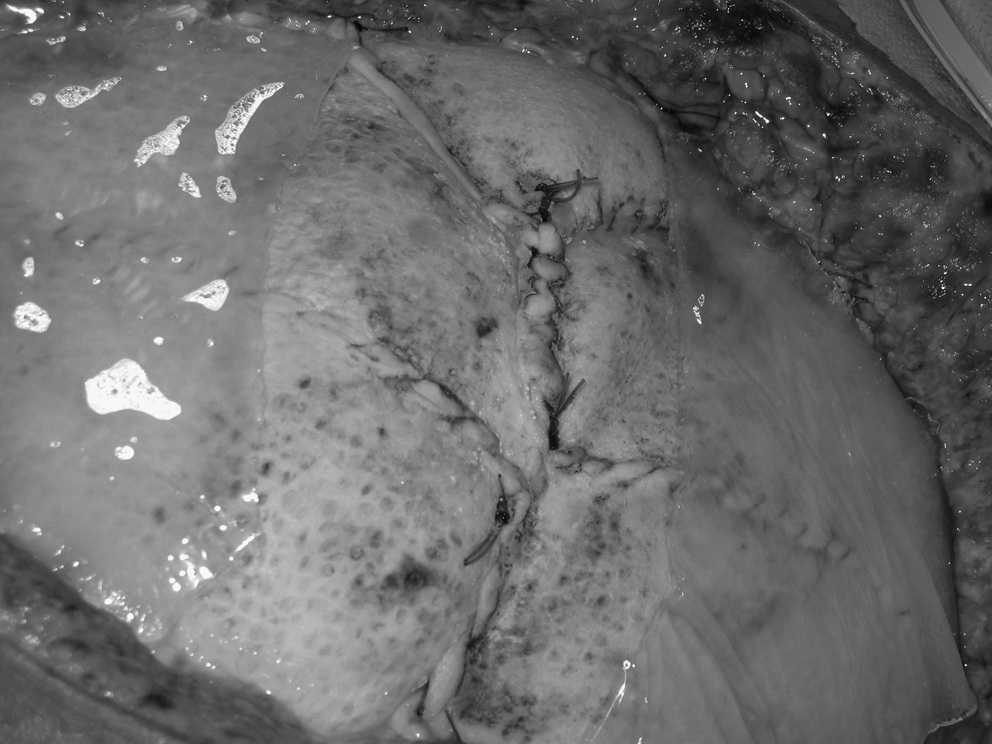
Aspergillus infection of bioprosthetic mesh.

Fungal elements isolated from bioprosthetic mesh.
Footnotes
Author Disclosure Statement
The authors have no disclosure.