




Abstract
Background:
Fat grafting is a standard method for soft augmentation. However, occasionally Mycobacterium abscessus infection can be seen secondary to fat grafting. The aim of this study was to report experience with and propose standard treatment.
Patients and Methods:
From 2006 to 2018, 12 women who had received fat grafting for facial soft augmentation in different Chinese private clinics were reviewed.
Results:
The patients presented with local swelling and skin ulceration. They patients received primary infusion of antibiotic agents; however, the results were poor. After being admitted to our hospital, cultures were taken and sent to the specialized examination center. Mycobacterium abscessus was diagnosed in all of the patients. According to drug sensitivity results, targeted antibiotic agent treatment was implemented for 12 months. Local proper conservative debridement was conducted as needed. When the patients were discharged from the hospital, they were advised to continual oral medication for six months. After three to nine years of follow-up, no recurrence was found. On the basis of this, a corresponding standard treatment was proposed.
Conclusions:
Mycobacterium abscessus infection after fat grafting should be diagnosed and treated accurately. Our experience and proposed treatment may be beneficial.
Autologous fat transplantation is a widely used technique for soft tissue augmentation. However, in recent years, complications associated with fat grafting have gradually increased. Serious Mycobacterium abscessus infection has been caused by this type of minimally invasive procedure (Table 1). As early as 1987, it was found that gentian violet skin marking solution was proved to be the infection source of Mycobacterium chelonae surgical site infections after plastic surgery [1]. It is known that Mycobacterium abscessus is present in the environment [2–7]. It was first described in 1953 by Moore and Frerichs in a woman who had chronic osteoarthritis and developed a gluteal abscess. Although it rarely causes disease in humans, Mycobacterium abscessus has been associated with skin and soft-tissue infection after trauma, medical procedures such as augmentation mammoplasty, acupuncture, and injections [6–11].
Fat Grafting Associated with Mycobacterium Abscessus Infection
Treatment is difficult. Tissue specimens should be sent to the laboratory for culture in order to ensure an accurate diagnosis [12]. Because Mycobacterium abscessus differs in antimicrobial sensitivities, susceptibility testing is crucial to achieve successful treatment.
To date, no specialized standard treatment has been put forward for fat grafting associated with Mycobacterium abscessus infection. We propose a standard treatment plan.
Patients and Methods
Twelve female patients between 23 and 48 years of age with skin pus and swelling of the face (Fig. 1) were studied retrospectively. All patients had undergone fat grafting at different private clinics from 2006 to 2018. All operations were performed by plastic surgeons using 27-gauge needle. Injection volume was from 4 to 23 mL on unilateral face or whole face. All of the suctioned fat was processed through gauze filtration. The initial symptom was a high fever, which occurred six to 90 days after primary fat injection. Skin abscess then appeared. Before being admitted to our hospital, the patients were treated with four generations of cephalosporin antibiotic therapy without any effect. The high fever was not reduced because these cephalosporin antibiotic agents were not effective for Mycobacterium abscessus. In these private clinics, these physicians did not realize that they might be infected with Mycobacterium abscessus. The patients were treated for a common infection, not using macrolide-based treatment with other drugs based on sensitivities. In our hospital, cultures and biopsies of the skin lesions were collected from all patients. The culture was executed in a specialized thoracic hospital and a drug sensitivity test was made. Patients' data are summarized in Table 2.
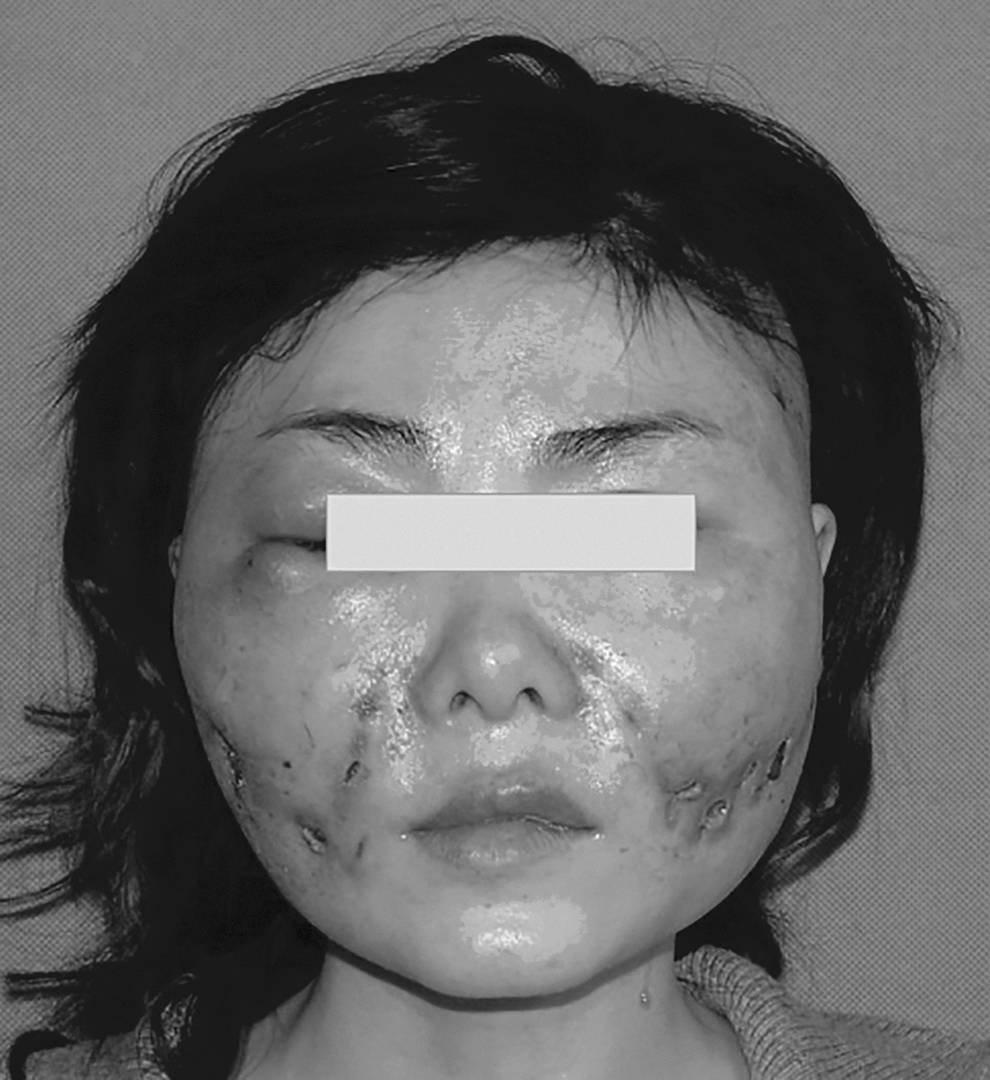
A 35-five-year old woman presented with facial swelling six days after fat grafting.
Patients' Data- Infection of M. abscessus
Recently, a unique case was admitted. This patient is 53 years old and had developed multiple subcutaneous nodules on the face. These nodules grew slowly. She had a history of facial fat transplantation in a licensed clinic by a licensed plastic surgeon 10 years ago.
Results
The left, right, and whole facial infection occurred in one, two, and nine patients, respectively. Symptoms presented six to 30 days after initial injection. A 27-gauge needle was used routinely. Injection volume ranged from 4 to 23 mL. Treatment including macrolide-based treatment with other drugs based on sensitivities and surgery. All 12 patients received proper debridement surgery twice on average. The patients were found to be infected with Mycobacterium abscessus through laboratory culture. Two types of combined medications were prescribed. None of the patients showed resistance to the drug. Intravenous infusion with three or four macrolide-based treatment with other drugs based on sensitivities was carried out for at least 12 months. Then, oral drugs followed for six months. Local abscesses disappeared in all patients, who received macrolide-based treatment with other drugs based on sensitivities for 1.5 years. However, local tissue adhesion can be seen after the whole treatment (Fig. 2). No recurrence was found after three to nine years of follow-up, respectively. During the course of treatment, various side effects of the antibiotics were observed; definitive protective treatment alleviated them.
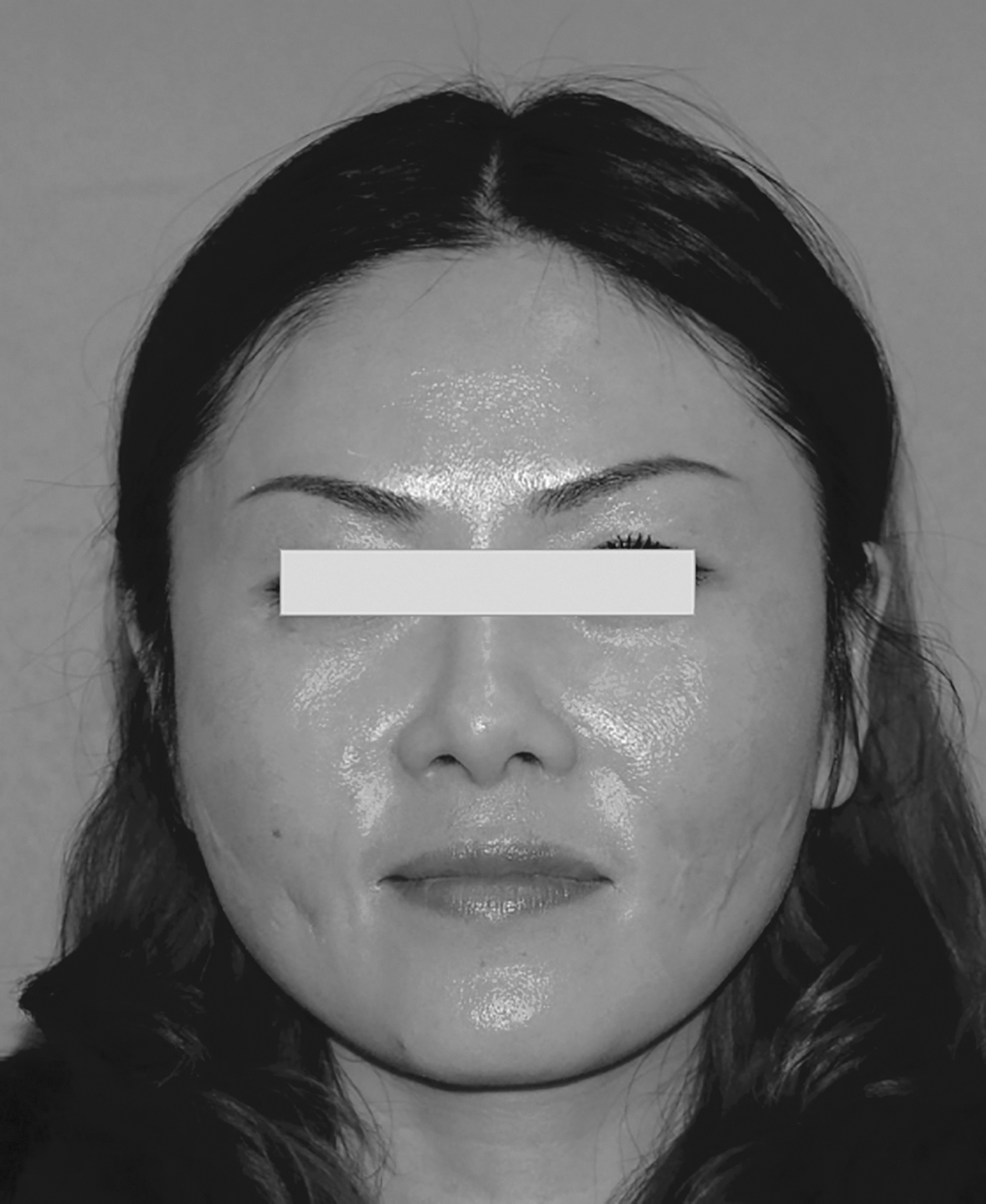
After treatment and six-year follow-up, no recurrence occurred.
For the unique case, we found that subcutaneous sclerosis was located on the bilateral nasolabial groove, upper lip, and left lower eyelid (Fig. 3). Computed tomography results also showed degenerated tissues in the subcutaneous layer (Fig. 4). After being admitted to our hospital, the patient was operated on to remove these degenerated tissues, which were then sent to the above specialized thoracic hospital for species culture. Mycobacterium abscessus was found and macrolide-based treatment with other drugs based on sensitivities was used. Until present she has only received the drug treatment for one month. We are not sure that the history of fat injection is associated with the formation of sclerosis.

A 53-year-old woman with a history of receiving fat grafting 10 years ago who developed multiple subcutaneous sclerosis in the face.
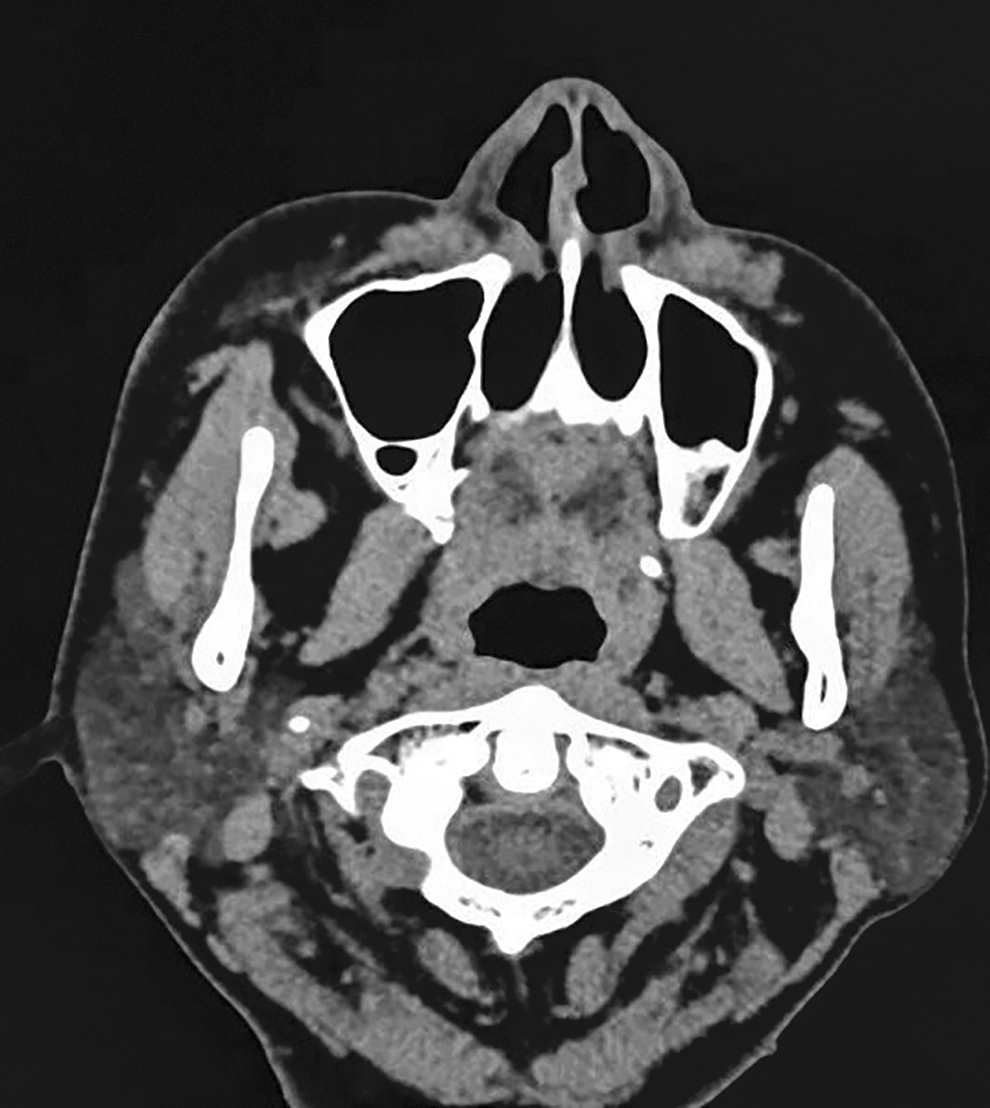
Computed tomography results also showed those degenerated tissues in the subcutaneous layer.
Discussion
Mycobacterium abscessus is an acid-fast, rapidly growing, nontuberculous mycobacterium with global distribution, being found in soil, water, dust, and family and hospital settings. The incidence of infections by rapidly growing mycobacteria has increased in recently. This is partially attributed to the increased frequency of surgical procedures. There are several reports of Mycobacterium abscessus complicating plastic surgery procedures, such as augmentation mammoplasty, breast reduction, breast implants, abdominoplasty, and liposuction [13–16]. It cannot be ignored in plastic surgey because it can cause serious deformities.
Treatment includes drug and surgery. In Mycobacterium abscessus infections, surgery following general principles with draining of abscesses and removal of necrotic tissue is essential to cure localized disease. Early microbiologic diagnosis and adequate antimicrobial agents as well as prompt surgical approach are important.
Our experience can be summarized as follows: surgical instruments must be strictly sterilized; bacterial culture and susceptibility testing are reliable procedures to identify diagnosis; and intravenous infusion with three or four macrolide-based treatment with other drugs based on sensitivities must be performed for at least 12 months. Macrolide-based treatment with other drugs based on sensitivities has been recommended by British Thoracic Society [17]. Then an oral macrolide with a continual phase for six months should follow. Debridement that preserves tissue is critical for plastic surgeons, Deformity after repeated surgery and localized infection can be treated in plastic surgery to improve appearance. In terms of which types of drugs are best, it is necessary to send each specimen for laboratory examination every time and test which drugs can meet the treatment demands. We made a treatment standard for treating this type of infection (Fig. 5).
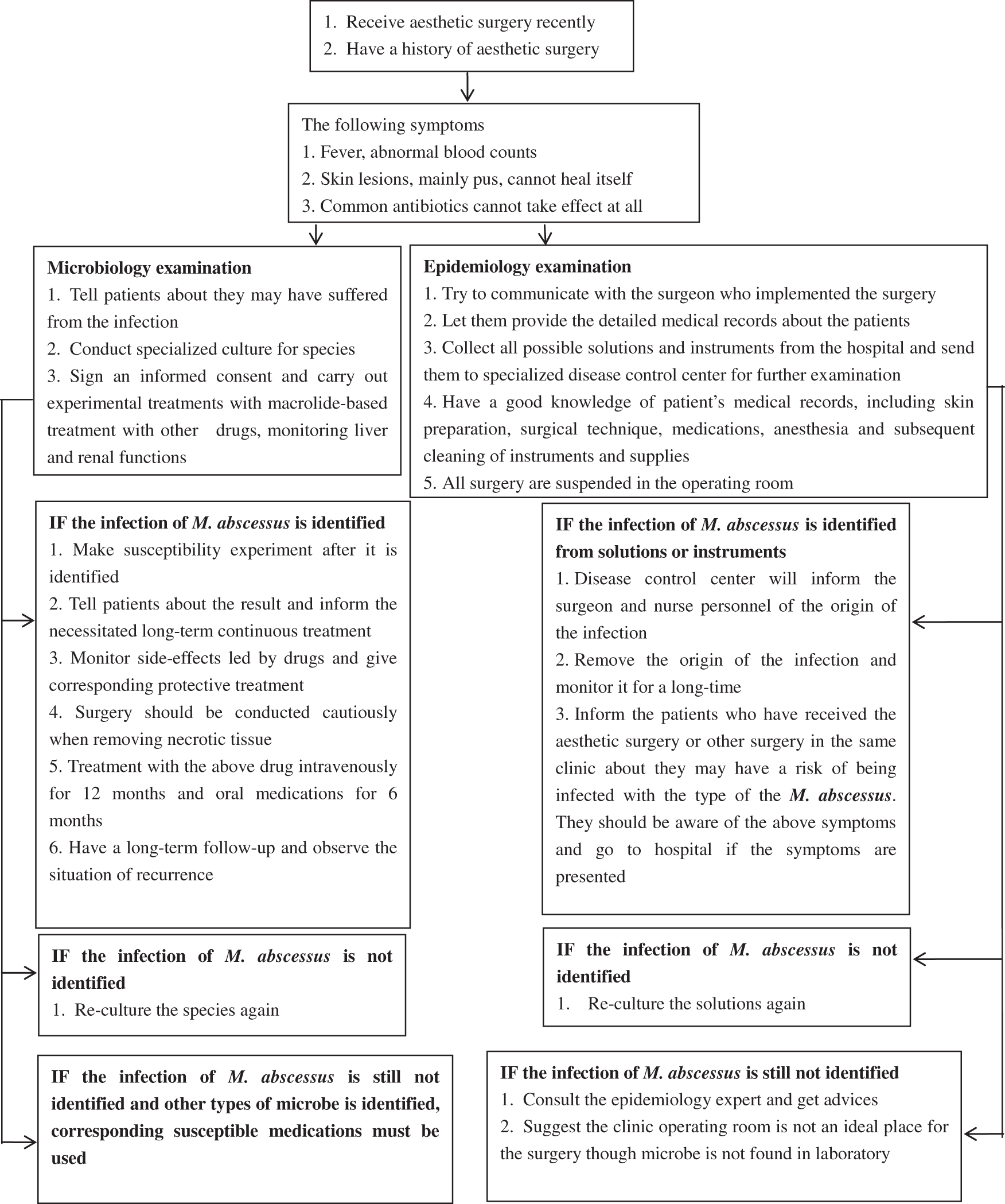
Treatment standard for treating Mycobacterium abscessus infection after fat injection.
Although no definite evidence for causation of this complication has been found, it is most likely that surgical instruments can be contaminated by this type of organism, which can be found in dust, soil, and water. Private clinics in China are mostly not capable of complying with state law. Poor sanitary conditions render cosmetic surgery at risk of contamination. Therefore, we strongly advise people in China to choose a regular hospital or clinic to implement this procedure. Injection procedures involve transferring fat from donor site to recipient site. During this process, the fat must be free of contamination. The fat injection is prohibited from coming into contact with anything other than the surgical instruments. To prevent skin- and device-related infections, strict avoidance of nonsterile water for medical procedures and instrument cleaning is recommended.
Twelve patients received fat grafting from different private hospitals, some of which are in remote areas. It is not possible for us to examine their surgical instruments, which could determine whether these items were infected with Mycobacterium abscessus. Furthermore, it is common in China that some of these private clinics are unlicensed. They may not disinfect thoroughly as a cost-savings measure. Also, the information may not be available to the public, which makes it difficult for us to summarize the information accurately. We will advise Chinese Aesthetic Association to monitor this type of special infection.
Conclusions
Although fat grafting is a common procedure for facial augmentation, Mycobacterium abscessus infection can be devastating for patients. It is critical to receive standardized treatment as soon as possible to minimize secondary deformity.
Footnotes
Acknowledgments
Approval from the committee of The People's Liberation Army. General Hospital was obtained. All patients provided written consent for publication. H. Song designed the research and B. Chen wrote the manuscript. All authors have read and approved the manuscript.
Funding Information
This work was supported by Beijing Municipal Science & Technology Commission No. Z181100001718179; 304 ZhuanXiang Key Program of People's Liberation Army General Hospital (No 2016FC-304ZTSYS-01).
Author Disclosure Statement
No competing financial interests exist.