




Abstract
The successful regeneration of large defects in traumatized and diseased tissues depends on the availability of biodegradable and bioactive biomaterials able to guide the tissue during its repair by offering both a physical support and a control of its biological mechanisms. Recently, a novel class of natural, biodegradable biomaterials has been obtained by the thermosetting of defatted soy curd. These biomaterials have been shown to regulate the activity of both tissue and inflammatory cells. Here, soybean-based hydrogels with different physicochemical properties and bioactivity have been obtained with a relatively simple and highly reproducible processing method. The content of the different soy components (e.g., the isoflavones) was tuned varying the solvent system during the extraction procedure, while variations in the material crosslinking provided either loose hydrogels or a bioglue. The biomaterials obtained can be used as either bioadhesives or injectable formulations in regenerative medicine as they were shown to stimulate the synthesis of collagen by fibroblasts and the formation of mineralized bone noduli by osteoblasts.
Introduction
While the clinical performance of synthetic biomaterials is confined to their ability to support cell adhesion and to release loaded growth factors, natural polymers bear biochemical features, which have evolved for the purpose of dynamically controlling biological processes. Indeed, natural polymers of a protein or a polysaccharide composition such as collagen, glycosaminoglycans, agarose, alginate, chitosan, and fibrin glue have been shown to be able to establish biospecific interactions with biochemical and cellular components leading, for example, to haemostatic functions (e.g., alginate and fibrin) and to bioligand-driven cell activity control (e.g., collagen and hyaluronan).2–5
Despite their interesting biological properties, the use of biopolymers in regenerative medicine is limited by their antigenic potential, by the risks of transmittable diseases, by batch-to-batch variability and, in some cases, by their relatively high extraction costs.4,6
As for the synthetic polymers, all the natural polymers thus far proposed as biomaterials for regenerative medicine have no intrinsic component, which is able to exert a para- or autocrine-mimicking signaling activity on cells. These types of signaling are particularly important to jump-start the repair of critical size tissue defects, and they are controlled by the secretion of growth factors by the tissue and immunocompetent cells. However, these growth factors are relatively unstable and expensive to be used in their purified and biomaterial-encapsulated form in clinical treatments. 7 In addition, their therapeutic efficacy is reached only through the release of doses relatively higher than those endogenously produced by the tissues, thus introducing a carcinogenic potential. 8
Among the natural polymers, the use of soy as a potential natural source for biomaterials has also been suggested.9–12 Early research focused on developing biomaterials from the protein fraction of soy and aimed at manufacturing hydrogels, films, membranes, and fibers with properties broadly suitable for biomedical applications. 11 While achieving successful engineering, the physico-chemical properties (i.e., biodegradation, rheological, and mechanical properties) of these soy protein-based biomaterials were not tuned to any specific clinical needs. Moreover, these studies neglected the need for overcoming the limitations of any other natural polymers; the antigenic potential, the lack of biochemical activity, and the batch-to-batch variations.
In an attempt at addressing these concerns, a new class of soy-based biomaterials has recently been developed that includes all the main components of the soy such as proteins, carbohydrates, and isoflavones (daidzein and genistein and also there glycosylated forms daidzin and genistin) and is obtained by a relatively simple thermosetting procedure of the defatted soybean curd. 12 The rationale in using all the main soy components resides in the ascertained role of the protein fraction as a substrate for an important clotting enzyme (Factor XIII) and in the ability of the isoflavone components in the nonglycosylated form to modulate the activity of both immunocompetent and tissue cells.13,14 This novel class of biomaterials can be formulated as films, membranes, and granules either as a monolithic material or in combination with other biomaterial types.10,11 Furthermore, the availability of one of the largest, freely accessible soy cultivars' database allows the traceability of both the raw material source and its composition. In vitro studies have shown that this new class of soy-based biomaterials (and their degradation products) exerts (1) the inhibition of both monocyte/macrophage and the osteoclast activity and (2) the stimulation of osteoblasts to differentiate and to secrete collagen and calcified bone noduli. 12 These properties have been confirmed in vivo by a rabbit femoral bone model where the tissue repair of soybean-based granules was ascertained. 15 Although relatively simple, the manufacture of these bioactive biomaterials depends on the preliminary preparation of the soy curd and relies on the natural isoflavone content of soy. Furthermore, thermoset soy-based biomaterials cannot be formulated in the form of injectable hydrogels, and their isoflavone content cannot be tuned to specific clinical applications.
The present article shows preparation methods to obtain soybean-based hydrogels of both tuneable physicochemical properties and isoflavone content, and it provides evidence of the stimulatory effect of these hydrogels on the activity of cell types relevant to either soft or bony tissue repair.
Materials and Methods
Soy-based hydrogel preparation methods
Soy-based hydrogels were prepared by two different methods, either (1) sequential or (2) simultaneous procedure of soy flour defatting process and material extraction. To tune the material composition, each method was also tested in a series of alternative solvent systems (Table 1).
For example, where extraction method 1 is Ethanol/30 C/2 h/50% deionized water. Arrow indicates extraction method 5 was the selected extraction method.
Preparation by sequential flour defatting and material extraction procedures
Commercially available organic soy flour (Infinity Food) from six different batches was freeze-dried to remove water content. Soy flour was defatted following a method usually employed in the food industry. 16 Briefly, freeze-dried flour was suspended in hexane (1:5 ratio) at 30°C for 4 h, in a shaking incubator at a 45° angle and 200 rpm to ensure effective solvent/flour mixing. The suspension was removed from the incubator and allowed to cool and settle for 10–15 min. After residue sedimentation, the hexane fraction was discarded, fresh hexane was added, and the sediment underwent the process three more times to remove any trace lipids. The defatted flour was allowed to dry for 48 h at room temperature.
To prepare soybean-based hydrogels, the defatted flour was suspended in the appropriate solvent system (1:10 flour/solvent ratio). The solvent systems used included methanol, ethanol, acetonitrile, acetone, deionised water, 0.05 N HCl, or a mixture of the above at different ratios (e.g., ethanol/water 80:20, see Table 1). 17 The sample was placed at 45° angle in the shaking incubator (200 rpm) for different times (e.g., from 2 to 4 h), at different temperatures (e.g., from 30°C to 50°C). The samples were cooled to room temperature and allowed to settle for 30 min. Supernatants were collected and centrifuged for 10 min at 2500 rpm, room temperature. The obtained supernatants were filtered through a clean glass syringe packed with glass wool. Solvent was evaporated under a nitrogen flow followed by freeze-drying. Gels of different density were obtained by resuspending the freeze-dried powder in crosslinking agent solutions (e.g., 0.1 M CaCl2 or MgCl2 aqueous solution, 0.05, 0.1, 0.5, 1.0, and 2.5% w/v genipin-based aqueous solutions, 37°C, 24 h). Alternatively, the obtained gel, with or without a crosslinking agent, underwent a further stabilization step by thermosetting at 60°C overnight to improve the tensile strength. 18
Preparation by combined defatting and extraction procedure
In an alternative method, the soybean-based hydrogels were obtained simultaneously to the flour defatting process. The flour was agitated for 2 h at 50°C in a cosolvent system such as, but not limited to, ethanol: water: hexane (80:20:10 ratio). The suspension was left to settle and cool for 5 min. The top hexane layer was discarded, and the remaining supernatant and solids were separated by decantation. The solid was washed with the fresh solvent system as described above and the supernatants from the different extractions were pooled. The filtered and pooled supernatants were evaporated under a nitrogen flow followed by freeze drying. Soy-based hydrogels were obtained as described above in the presence and absence of crosslinking agent solutions and with or without thermosetting.
Soy-based hydrogel physicochemical characterization
Soy material composition was characterized by Fourier transform infrared spectroscopy (FTIR), a gravimetric analysis (lipid content), a Bradford assay (protein content), high-performance liquid chromatography (HPLC, isoflavone content), and an anthrone assay (carbohydrate content) after each processing step, and data were compared with those of the soy flour.
Characterization of the extract composition
The obtained powder and relative hydrogels were characterized by FTIR before and after crosslinking. Thirty two scans in the 650 to 4000 cm−1, 4 cm−1 resolution were recorded using a Nicolet Avatar 320 single beam equipped with the Golden gate accessory with a diamond crystal and a ZnSe-focussing element. The data were processed by Nicolet Omnic E.S.P. 5.2a software and expressed as transmittance (%) after air background subtraction. Peak shifts were considered significant only when exceeding the 4-cm−1 scanning resolution.
The protein content of both raw materials and extract was performed by a conventional Bradford method. Briefly, soybean samples were dissolved in 0.1 N NaOH and incubated under shaking for 1 h, room temperature. After incubation, 100 μL of sample was mixed with 100 μL of the Bio-Rad protein reagent dye (Biorad; catalogue no. 500-0006) in a 96-well plate and incubated for 5 min at room temperature. The sample absorbance at 595 nm was then measured, and the values were transformed into protein concentration using a standard curve (R 2 =0.995) obtained from a bovine serum albumin (Sigma Aldrich; catalogue no. A7030) solution in the range of 0 to 0.1 mg/mL. Experiments were performed in triplicate on samples from different batch preparations.
HPLC was performed using a Phenomenex Luna C18 (2): 150×4.6-mm (3 μm particle size) column equipped with SecurityGuard Phenomenex (3 μm) guard cartridge. The heater was set at 25°C. Chromatography was performed in a mobile phase consisting of a binary gradient (Solvent A: Deionised water and 0.1% acetic acid, solvent B: Acetonitrile and 0.1% acetic acid), which was pumped by a Perkin Elmer Series 200 lc binary gradient, a pump programmed to deliver the solvent A/solvent B mixtures at the following conditions 10/90 (0 min): 15/85 (0.1 min), 20/80 (4 min), 40/60 (9 min), and 60/40 (0.1 min) hold at 60/40 (4 min). The total run time was 17.2 min. The eluted isoflavones were detected by a Shimadzu SPD-6A UV detector at 262 nm, 2.56 AUFS, fast response. Chromatograms were obtained by a Shimadzu C-R5A Chromatopac integrator/chart recorder programmed with a: 150 μV/min slope, 10 μV/min drift, 50 μV min peak area, and attenuation=0, at a chart recorder speed of 4 mm/min, and including area and baseline/integration print (no retention time on chart). Samples were injected by an autosampling using a Waters 717+ with 96-shell vial carousel autosampler with 250 μL inserts. The carousel was programmed with a 10 μL injection volume, 25°C injection temperature, 21 min run, and 3.5 min report time. To ensure baseline stability, the total run time was 24.5 min.
The anthrone method assay was performed to assess the total saccharide amount in both the starting raw material and the final soy extract obtained by the 80/20 ethanol/water solvent system. Briefly, samples were incubated with a freshly prepared anthrone (0.4 g; Acros Organics) solution in 75% sulphuric acid (200 mL; Fisher Scientific) at 130°C for 10 min. The solution was chilled in ice, and the total amount of carbohydrates in the samples was measured by spectrophotometry at 578 nm. A standard curve with an R 2 value of 0.998 was obtained by the absorbance reading of glucose standards in the range of 0 to 0.1 mg/mL. Experiments were performed in triplicate on samples from different batch preparations.
Thermal and rheological analysis
Differential scanning calorimetry (DSC) was also performed using a Polymer Laboratories DSC using aluminium crucibles and lids and sapphire, tin and indium calibration reference standards. Samples were heated from −60 to 250°C at 10°C/min under a nitrogen gas flow of 15 cm3/min. Sample weight ranged between 2.9 and 3.8 mg.
Viscosity as function of shear rate, elastic and viscous moduli G′ and G′′ were determined at two different temperatures, 25°C and 37°C, using a stress-controlled rheometer (Bohlin Mod. Gemini) with a cone-plate tool. To keep gels in a controlled environment, a humidity chamber was used. Rheology experiments were performed in triplicate.
Isoflavone release from soy-based hydrogels
One hundred milligrams of dry soybean extract was reconstituted in 30 μL of 0.1 mM CaCl2 or crosslinked by different concentration of genipin. The reconstituted gel pellets were placed in small glass vials and incubated in 1 mL of phosphate buffered saline (PBS) pH 7.2 for 7 days at 37°C under static conditions. Aliquots (100 μL) of the supernatants were collected at the different times (3 and 24 h, 3 and 7 days) and tested for their isoflavone content by HPLC following the method described above. Sample supernatant volumes were maintained by addition of 100 μL of fresh PBS after each withdrawal.
Cytotoxicity and bioactivity assessment of soy-based hydrogels
The cytotoxicity and bioactivity of calcium-crosslinked soybean biomaterial were assessed by incubating hydrogels in sterile PBS as described for the isoflavone release experiments. Supernatants at days 1, 3, and 7 were withdrawn and used for cell experiments. MG-63 human osteosarcoma osteoblast-like cells or V79 human lung fibroblasts were grown to subconfluent cultures in the Dulbecco's Modified Eagle Medium (DMEM) enriched with 20% fetal calf serum for 48 h, at 37°C in 95% air and 5% CO2. In the case of osteoblasts, a nonosteogenic medium (no ascorbic acid and β-glycerophosphate) was chosen. The choice of the nonosteogenic medium was made as it is known that this competes with the osteogenic effect of soybean isoflavones. The cells were then washed in the fresh DMEM and incubated with the new medium spiked with 100 μL of supernatants obtained from the isoflavone-release experiments. The experiment was stopped 48 h after spiking. Six replicates were performed for each experiment.
Lactate dehydrogenase activity of ML29 fibroblasts incubated with soy-based hydrogels
The cytotoxicity of the soy-based extracts obtained by the ethanol/water (80/20) solvent systems was evaluated by the lactate dehydrogenase (LDH) assay using the Cytotox 96 kit (Promega). The assay measures the cell LDH activity via the oxidation of NADH to NAD+ in the presence of lactate and pyruvate. The enzyme activity was measured by reading the absorbance at 490 nm by a spectrophotometer (ELx800 BioTek). Positive controls were obtained from the measurement of the LDH activity liberated from the cytoplasm of Triton-lysed cells (1×10⁵ cells/mL). Data were expressed as mean±standard deviation of the enzymatic arbitrary units from n=6.
Fibroblast collagen secretion and osteoblast culture mineralization
Control and hydrogel extract-treated fibroblasts were stained by established histological staining methods for the deposition of collagen (Picrosirius method) and of a mineral phase (Alizarin Red method). Staining was performed on cell cultures obtained from three different experiments.
Results
Biomaterial preparation and characterization
The conventional lipid extraction method ensured an almost complete removal of soybean lipids from the soy flour, which corresponded to 18% (0.175 g/g of soy). The effective removal of lipids was confirmed by FTIR, which showed the lack of the lipids peaks at 2922, 2852, and 1743 cm−1 (Fig. 1). No significant protein or carbohydrate loss was detected, and the amounts of these two components remained 35 and 14% w/w, respectively. The content of the main soybean isoflavones after extraction showed only a minimal removal of genistin (0.7 μg/g soy flour) and no detectable coextraction of the other main isoflavones (e.g., genistein and daidzein). A combination of 10 extraction protocols with different solvent systems, temperature, and extraction time (see Table 1) led to a wide range of extraction yields (Fig. 2). The acceptance of a slightly lower yield from condition 5, the selected extraction (indicated by an arrow), compared to the equivalent methanol condition (6) is justified on the basis of reduced solvent cost, ethics (green) considerations, and potential cytotoxity of any byproducts. Furthermore, the levels of the active isoflavones, genistein, and daidzein are proportionally higher per gram of extract, as may be seen in Figure 3b protocols. Conditions 1 and 2 have been included for reference, as they represent a solvent composition of 50:50 solvent to deionized water. Although they are high yielding, the consistency of the product was less gel-like and more akin to molasses; isoflavone content was also significantly depleted, as seen in Figure 3a and b. Other similar conditions, including acetonitrile or acetone solvents, and all four solvents with and without acidification have been omitted for simplicity. The figure compares conditions for methanol, the most applied soya extraction solvent in the literature, and ethanol the recommended alternative. Similarly, the amounts of the four main isoflavone species, daidzin and daidzein, genistin and genistein, varied depending on which of the 10 extraction protocols were used (Fig. 3a, b).
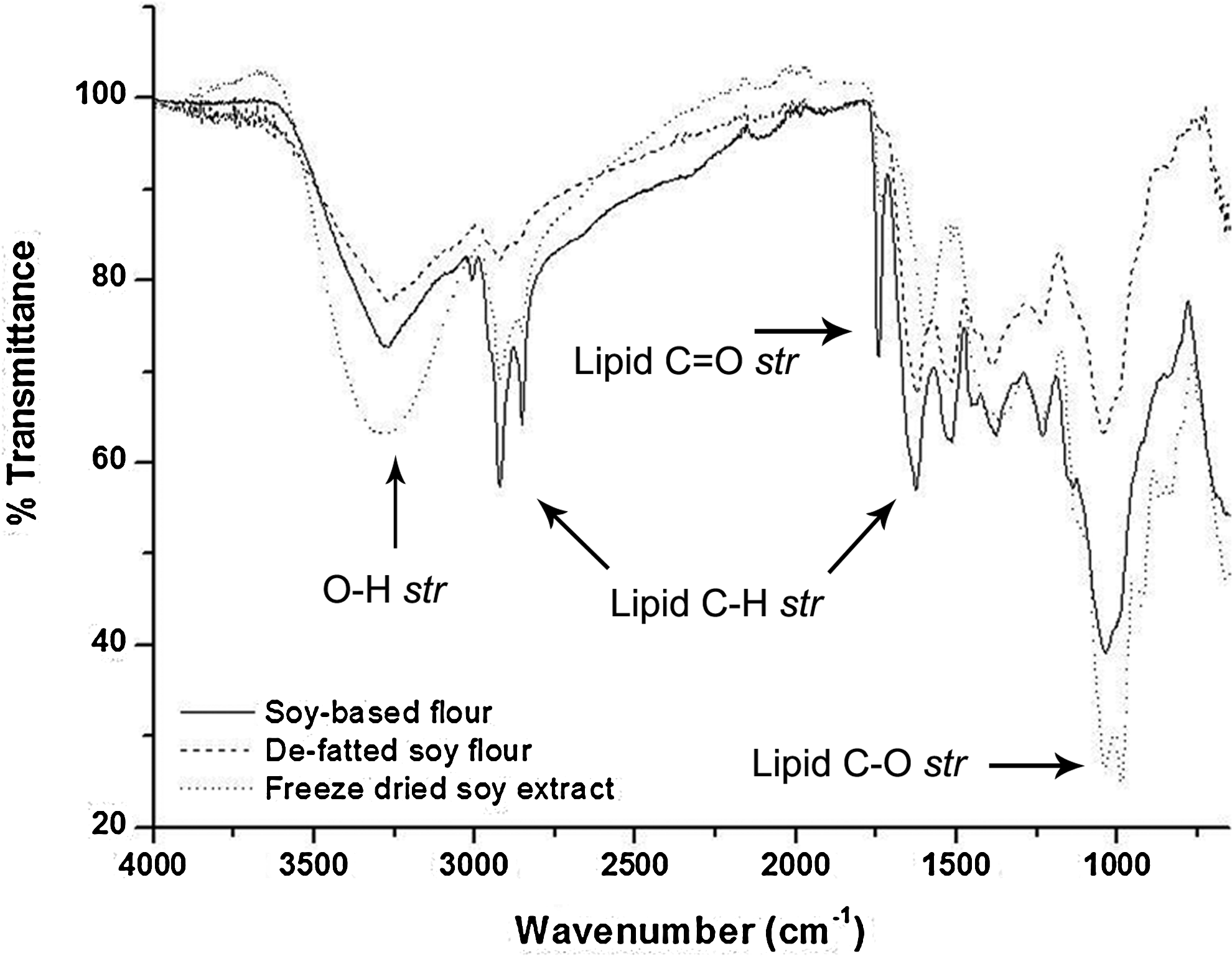
FTIR of the soy-based flour, defatted soy flour, and freeze- dried soy extract. FTIR, Fourier transform infrared spectroscopy.
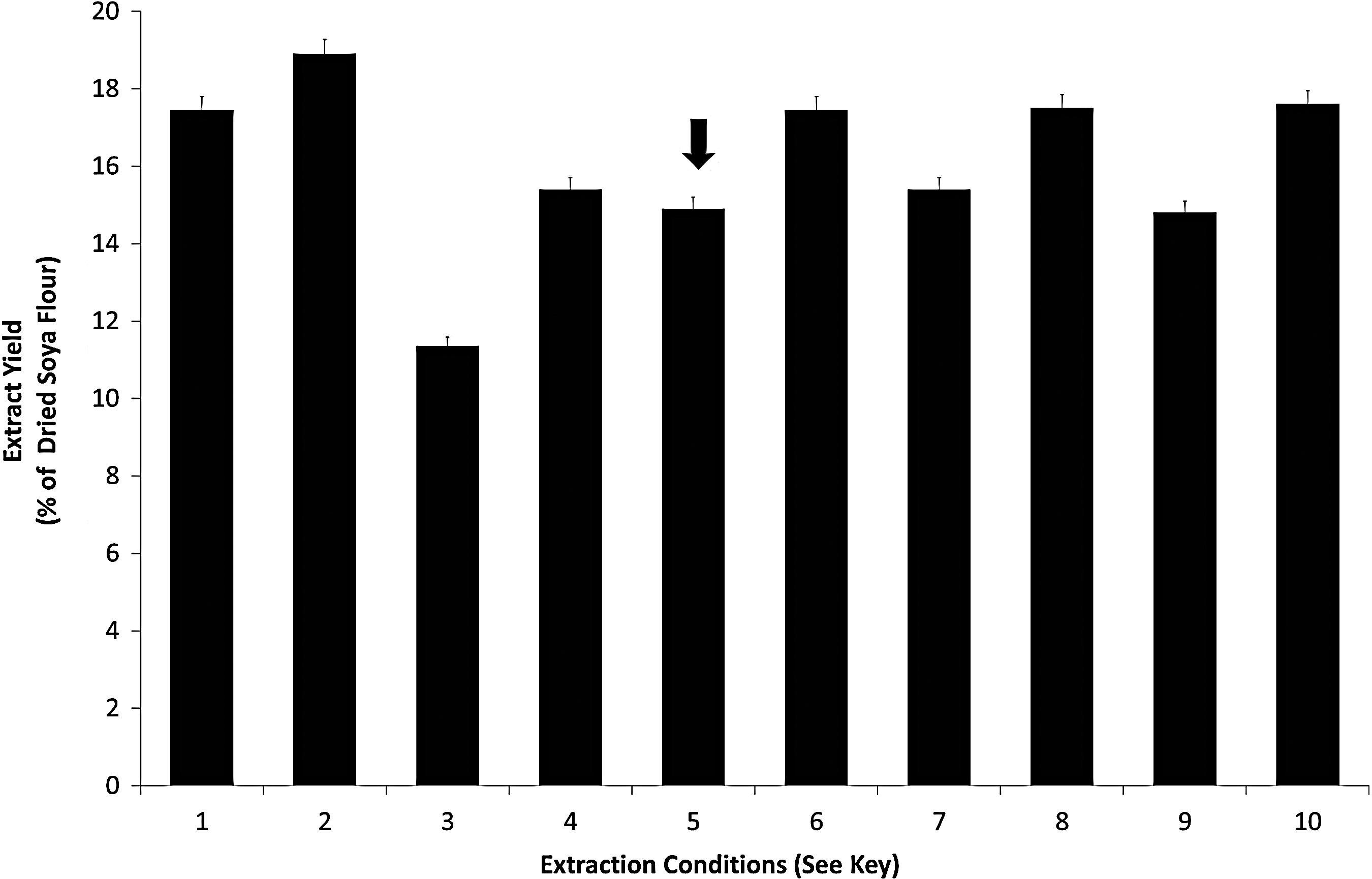
Soy-based hydrogel yields obtained from different extraction conditions. Arrow indicates extract condition 5 was the preferred extraction method.
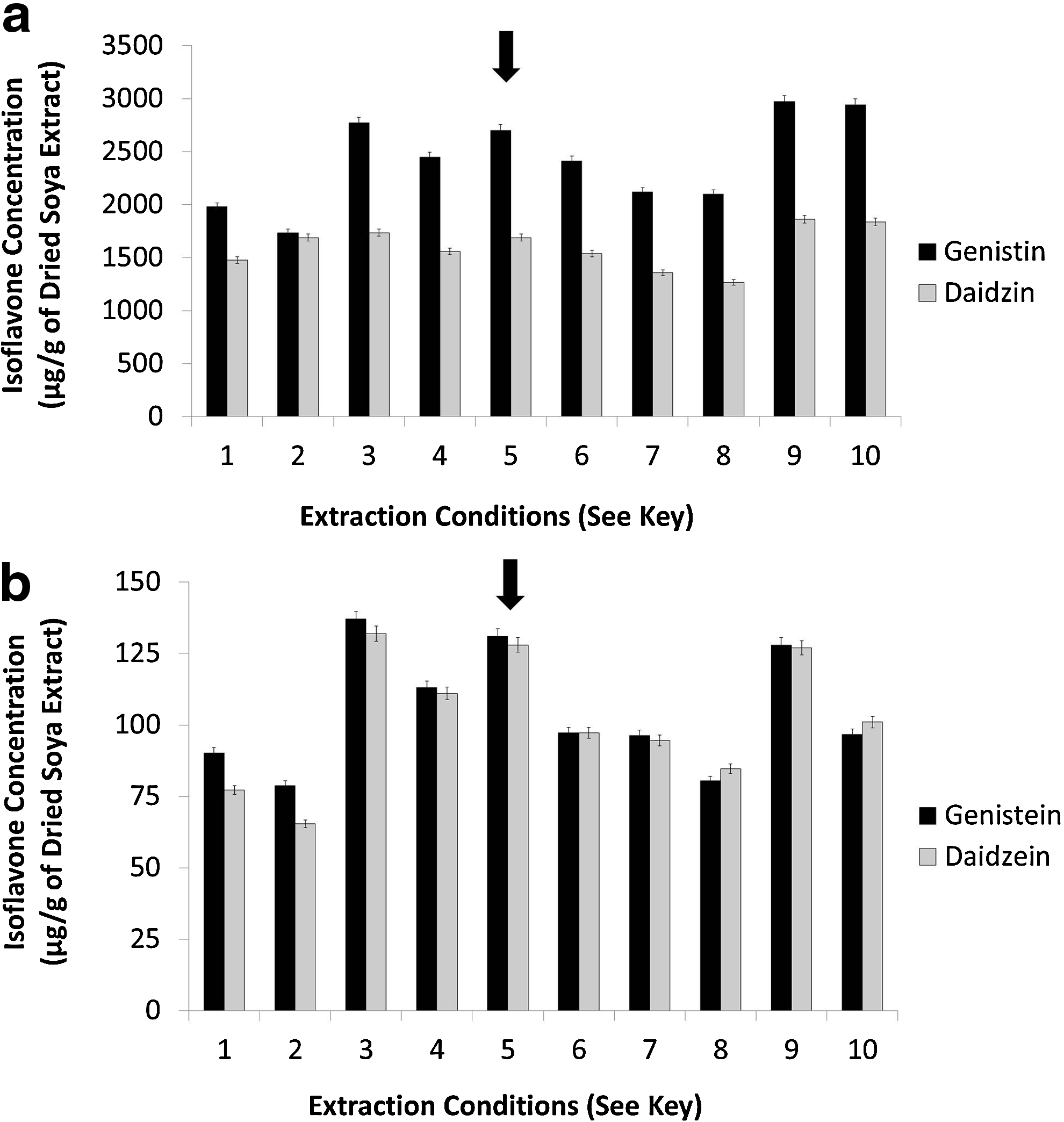
High-performance liquid chromatography-determined isoflavone levels of the soy-based hydrogels obtained from different extraction conditions.
Considering the similar yield of extraction and isoflavone concentration levels, which were obtained by extraction procedures based on ethanol/water and methanol/water solvent system and the 80/20 ethanol/water system, 30°C was adopted as it reduces the risks of hazardous organic solvent residues and microbial contaminations during the biomaterial preparation. The amount of both the protein and carbohydrate fractions in the extracts was quantified showing that the extraction procedure led to protein and carbohydrate concentrates (protein fraction=56%, carbohydrate fraction=35% by weight of dry powder). The extraction obtained simultaneously to the defatting process showed defatting levels comparable to those obtained by the sequential method. Similarly, protein and carbohydrate fractions were preserved together with the main isoflavone species (data not shown).
The freeze-dried powders obtained by 80/20 ethanol/water extraction of the defatted soy flour were reconstituted into different aqueous media to obtain hydrogels. Hydrogels could be obtained up to a 70% water volume per soy extract amount (e.g., 100 mg of soy extract reconstituted in 70 μL of aqueous medium). Above this threshold, extract powders were readily solubilized.
To improve the hydrogel stability, hydrogels with different powder to medium ratios were reconstituted in 0.1 M CaCl2. Calcium-crosslinked hydrogels underwent further crosslinking by thermosetting and/or genipin treatment. The efficacy of the thermal crosslinking adopted to transform the defatted soy extract in to a stable hydrogel was also proven by the FTIR analysis, where the shift of some of the soy protein peaks as well as the change of their relative ratio was observed (Fig. 4). In particular, the amine I peak shifted from 1626 to 1633 cm−1, whereas the amine II peak (from 1515 to 1516 cm−1) and the amine III peaks (from 1385 to 1389 cm−1 and from 1231 to 1233 cm−1) did not show any significant shift. However, the amine II peak showed a higher intensity and its ratio with the amine I peak changed. The peak at 1038 cm−1, attributed to the carbohydrate fraction of the soy, was also shifted after thermosetting, and the ratio with its shoulder changed as its intensity increased. The crosslinking of the protein fraction by genipin did not induce any significant change of the FTIR profile (data not shown). However, the consistency of the gel changed slowly and significantly overnight to acquire an intense blue coloration and gluey consistency especially at the highest genipin concentration (data not shown). Although DSC showed a clear difference between non-, calcium-, and genipin-crosslinked biomaterials, the thermogram is typical of natural polymers where a relatively wide peak appears around 100°C due to water evaporation (Fig. 5). It was observed that the ionic and covalent crosslinking significantly stabilized the biomaterial as shown by the lack of the sharp peak of degradation at 210°C.

FTIR of the noncrosslinked and calcium-crosslinked soybean-based gel.

Differential scanning calorimetry of reconstituted noncrosslinked and crosslinked soybean-based biomaterials.
The rheological properties of the soybean-based hydrogels at different concentrations of the ionic crosslinking agent (Ca2+) showed that for 0.1 M CaCl2, G′′ was always higher than G′ indicating a viscous behavior of the solution (Fig. 6a, b). 100 mg of soybean-based hydrogel was prepared in either 50 or 80 μL of 0.1 M CaCl2 solution. The G′ and G′′ measurements suggested that both values are function of the soybean biomaterial concentration; a more viscous material was obtained as soy extract content was increased. However, a more evident increase of G′ is observed as a greater number of intramolecular occurs. From a flow behavior point of view, it is possible to observe that both concentrations showed a pseudoplastic behavior.

Rheological characterization of a 0.1 M CaCl2-crosslinked soy-based biomaterials.
The data shown in Figure 7 indicate that the soybean-based biomaterials were able to sustain the release of the main isoflavones at least over 5 days of incubation in PBS. In particular, it was observed that the glycosylated isoflavone species were released at higher amounts, and that the covalent crosslinking by genipin significantly delayed the release of all the isoflavone species under investigation.
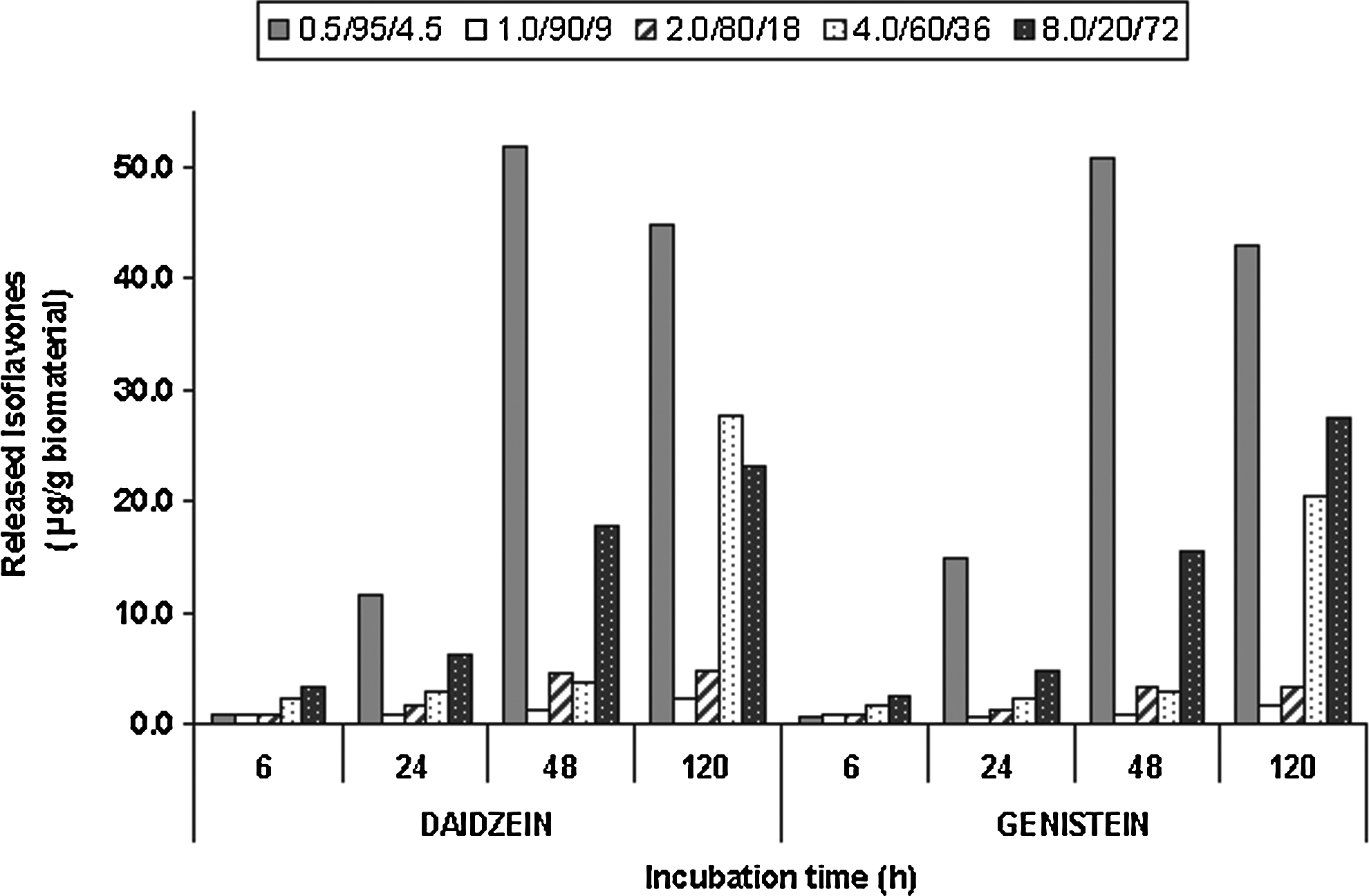
Isoflavone release from soy-based hydrogels over 5-day incubation at physiological conditions.
The soybean-based biomaterials did not show any significant cytotoxicity: the extract aliquots showing LDH activity levels not significantly different from the negative control and always lower than 5% of the positive control (Table 2). The qualitative assessment of the biomaterial ability to stimulate collagen synthesis in fibroblasts (Fig. 8a, b) and osteoblasts (data not shown) clearly showed collagen deposition higher than control cells. Similarly, osteoblast calcification potential was enhanced by spiking of the cells with aliquots deriving from the isoflavone release experiments (Fig. 8c, d).
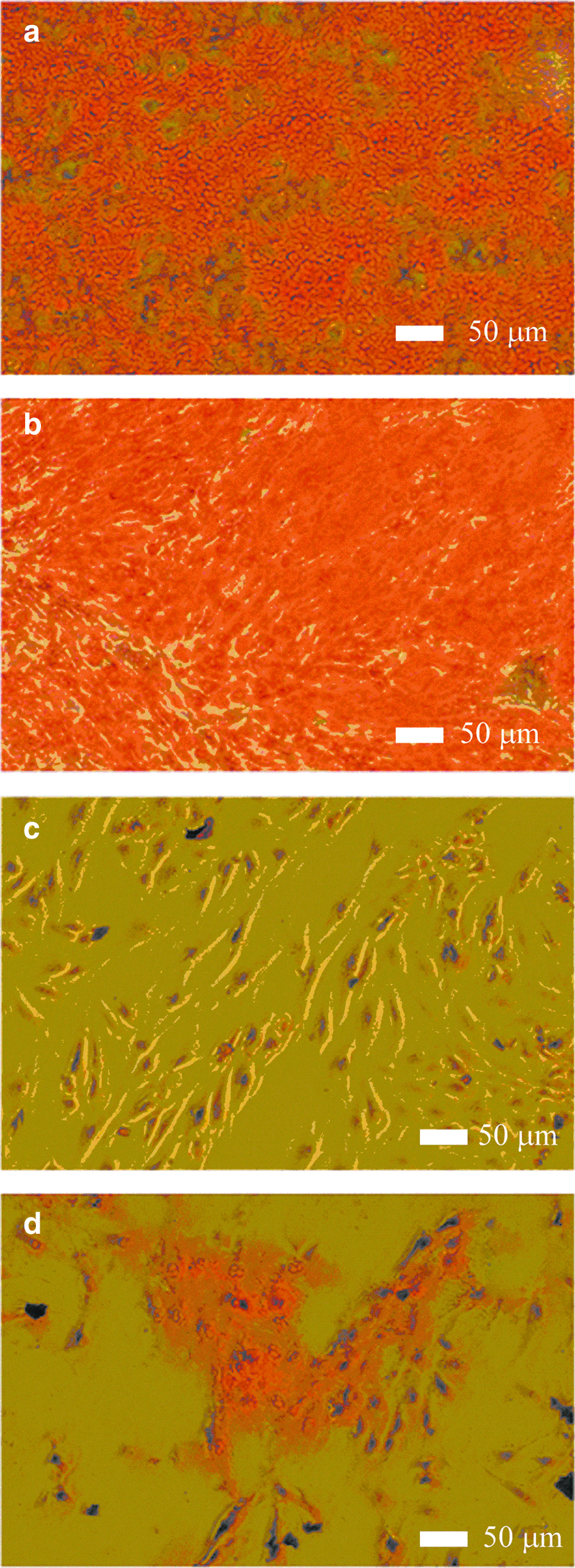
Typical soy-based biomaterials induction of cell differentiation.
LDH, lactate dehydrogenase.
Discussion
In the last decades, the need for bioactive biomaterials has been considered fundamental to regenerative medicine. 19 In the vast majority of cases, this bioactivity has been obtained by enriching the biomaterials with growth factors able to stimulate cell proliferation or differentiation. 20 However, the use of these growth factors presents several drawbacks; these biomolecules are obtained from allogenic, xenogenic, or recombinant sources, they have a relatively short stability in the biological environment, and they have a significant effect on tissue repair only when delivered at relatively high doses. 8 As a consequence, biomaterials loaded with these growth factors are likely to be relatively expensive and to be potentially associated to transmittable diseases or tissue malignancies. Recent investigations about the use of soybean as a potential source for biomaterials have highlighted that these biomaterials exert several specific bioactivities on tissues.10–12 Indeed, these studies have not only shown that soybean-based biomaterials have physicochemical properties suitable for several clinical applications, but they have also demonstrated that their isoflavone content can stimulate osteoblast differentiation, while inhibiting the activity of monocytes/macrophages and osteoclasts. 10 However, these studies were not taking into account the need for injectable biomaterials with similar bioactivity potential. The present study adopted an extraction procedure used to characterize soybean flour and derived food products to transform it into a very cost–effective and reliable procedure to manufacture soybean-based injectable biomaterials with tuneable physicochemical and bioactivity properties. These data show that the use of different extraction conditions allows a change of both the yield of biomaterial extraction and the isoflavone content without altering the overall composition of the soy. More explicitly, the combination of the defatting method with the different extraction procedures was able to eliminate the oily fraction, while preserving all the main components of the soy; protein, carbohydrate, and isoflavones. The ability to remove the oily fraction is particularly important in the biomedical field when considered that breast silicone implants filled by soy oil have been withdrawn from the market following indications of a potential hazard to the patients' health. 21 The introduction of different levels of crosslinking (ionic and covalent) in the biomaterial preparation procedure provided a range of biomaterials suitable as injectable or adhesive formulations. For example, the use of bioactive glues has widely been advocated in several surgical applications. As far as the injectable formulations are concerned, a relatively wide range was obtained by varying either the concentration of the extract in the reconstituting medium or the concentration of the ionic crosslinking agent and thermosetting. The physicochemical properties of the adhesive biomaterials were instead regulated by the varying concentration of the covalent crosslinking agent, the genipin (data not shown). The covalent crosslinking was also shown to improve the hydrogel stability and the control of the isoflavone release. DSC of the samples crosslinked either by ionic and thermal treatment or by covalent bond formation, clearly showed the lack of the material degradation peak that was pronounced in the noncrosslinked hydrogels. The noncrosslinked hydrogels were shown to undergo degradation at a temperature value similar to that reported in literature for a soybean protein. 11 The experiments on both fibroblasts and osteoblasts clearly showed that the degradation by-products of these biomaterials are not only nontoxic for the cells, but also stimulate their ability to deposit new extracellular matrix (i.e., collagen) that, in the case of osteoblasts resulted in mineralization. Finally, the pliable nature of the soybean-based hydrogels suggests their potential use in combination with other types of biomaterials. When combined with these biomaterials, such hydrogels could improve their physicochemical properties (e.g., injectability) and provide bioactivity toward different cell types through the release of isoflavones.
Conclusions
The present article shows that hydrogels with different physicochemical properties, nontoxic behavior, and intrinsic bioactivity on cells can be produced by soybean flour by a relatively nonexpensive procedure. The high reproducibility of this preparation method and of the quality controls for both the raw material, and the biomaterial during all its phases of manufacturing shows that this bioactive biomaterial could soon be translated into the clinical practice.
Footnotes
Disclosure Statement
No competing financial interests exist.