




Abstract
This study evaluated tracheal regeneration studies using scientometric and co-occurrence analysis to identify the most important topics and assess their trends over time. To provide the adequate search options, PubMed, Scopus, and Web of Science (WOS) were used to cover various categories such as keywords, countries, organizations, and authors. Search results were obtained by employing Bibexcel. Co-occurrence analysis was applied to evaluate the publications. Finally, scientific maps, author's network, and country contributions were depicted using VOSviewer and NetDraw. Furthermore, the first 25 countries and 130 of the most productive authors were determined. Regarding the trend analysis, 10 co-occurrence terms out of highly frequent words were examined at 5-year intervals. Our findings indicated that the field of trachea regeneration has tested different approaches over the time. In total, 65 countries have contributed to scientific progress both in experimental and clinical fields. Special keywords such as tissue engineering and different types of stem cells have been increasingly used since 1995. Studies have addressed topics such as angiogenesis, decellularization methods, extracellular matrix, and mechanical properties since 2011. These findings will offer evidence-based information about the current status and trends of tracheal replacement research topics over time, as well as countries' contributions.
Introduction
T
The idea of using tracheal substitutes was raised by Belsey's opinion, which in turn was based on the impossibility of tracheal resection more than 2 cm. 3 However, studies conducted from 1950 to 1970 showed that this limitation could be tackled. 4 At the moment, considering the experimental progress in the field of tracheal surgery, it is feasible to resect one half of the tracheal lesion in adults and one third in children, and make a safe anastomosis. For the lengthier lesions, tracheal substitutes will be required. Other factors such as age, regional anatomy, pathology, and previous treatments also affect this limitation. 5 Therefore, many studies have been conducted to provide proper tracheal substitutes with very limited success. In this regard, the aim of these studies varies over time. Herein is a review of these dynamic attempts.
Stents and prostheses
Different types of prostheses made of materials such as stainless steel, silicon (Montgomery T-tube, Dumon, Rush, Orlowski), Teflon, Vitallium, glass, polyethylene, Avalon, and poly (vinyl alcohol) have been tested on animals and human beings in some cases. However, the most popular are the silicone and metal-based stents. 6 The main limiting factor in this group is poor biocompatibility. To improve the stents' performance with regard to the host response, different approaches have been developed, including the fabrication of hybrid stents, 6 adding biological or biocompatible materials such as collagen 7 and Dacron, 8 and employing materials with functionalized anti-inflammatory agents. 9
Moreover, to form a patient's own tissue around the prostheses, some investigators have made porous materials to promote penetration of blood vessels into the prosthesis and prevent its migration.10,11 Thus, mesh form of some materials such as collagen, Marlex, tantalum, Dacron, silicone, polytetrafluorethylene, and polypropylene has been widely used in clinical and experimental studies.10,12
Despite the general belief that “there have been no recent striking advances in airway stent technology”, 6 the prostheses designing is still advancing to make a structure with the size of a patient's own trachea. In this regard, Choi et al. fabricated a bilayered porous prosthesis based on polyurethane (PU) and polyethylene glycol. The prostheses were implanted in three beagles. Three-month follow-up showed the respiratory mucosa over the prosthesis and granulation tissue through the pores. 13 In another experiment, treatment of the tracheal defect using porous prosthesis fabricated by Pluronic F127/PU or Pluronic F127/PCL was promising because of the facilitation in epithelialization, but mechanical insufficiency still remained an issue.14,15
Recently, a hybrid prosthesis has been created from poly (dimethyl siloxane) and collagen, which has biomechanical properties similar to the human trachea. 16 Successful semicircular implantations of the new prostheses made of poly lactic acid and poly glycolic acid copolymer in dogs have also been reported lately. 17 In general, bacterial infections, obstruction, granulation and lack of epithelial coverage, and poor mechanical properties are some of the complications related to the prosthesis.6,12 Thus, the increase in biomechanical properties and biocompatibility are constructive developments for studies aiming at fabrication of a tracheal prosthesis.
Nonviable tissues
Researchers have employed freeze-drying, chemical fixation, and freezing to eliminate or decrease the antigenicity of connective tissues, aorta, trachea, and other tissues. However, loss of the mechanical properties and therefore the need for permanent stenting made them poor substitutes. 12 For example, in 2010, Agathos et al. treated a xenograft trachea by incubating it in a glutaraldehyde solution for 3 months and then implanted it in a pig model. However, occlusion at the distal part of anastomosis to the native trachea due to granulation tissue formation, made this method inappropriate. 18 Altogether, there is no adequate number of studies focused on replacing the trachea with these types of materials, and after introducing tissue engineering, they were more used as biological scaffolds rather than tracheal substitutes.
Autogenous tissues
Pericardium, omentum, fascia, skin, pleura, and synovial membrane 12 with the support of solid prostheses are considered substitutes for the trachea in many studies. Despite the reepithelialization and low risk of necrosis as advantages, some disadvantages like the surgical risk of harvesting the autogenous tissues and necessity of stenting make autogenous grafts suitable only to deal with special cases. 19 Recently, replacing trachea by using a patient's bronchial walls and lung tissue has had good results as well. 20
Autogenous tissues in composite graft
Considering the restrictions caused by stenting in autogenous tissues, other therapeutic options are applied by fabricating composite grafts. 12 Indeed, the patient's own rib or cartilage is employed to prepare rigidity of the graft, and coverage of the respiratory epithelium is provided by using skin or buccal mucosa. In 2009 Fujiwara et al. used rib's cartilages and free flap fascia of the forearm to create a composite by two-stage prefabricated radial forearm free flap tracheal reconstruction. However, due to the procedure risks and the time-consuming process, this method has not been popularized over the time. 21
Tracheal transplantation
The first successful tracheal transection and reanastomosis belong to Gluck in 1881. 22 Almost 40 years later, through removing three to nine tracheal rings and regrafting in canine model, Burket showed that a long-segment autograft is impracticable. 12 Other complementary studies in 1950 s noted the pivotal role of blood supply in tracheal transplantation. 23 Thereupon, further studies continued based on preparing blood flow through direct or indirect vascularization, in one or two stages. 24
Tracheal allotransplantation
The first allograft transplant in 1954 failed due to ischemia and high antigenic properties of the epithelial cells. 12 In 1979, Rose and Sesterhenn performed a study based on the allotransplantation on rat model. After 280 days, the results indicated that tracheal tissues possess only minor organ-specific antigenicity. 25 These findings led to the first allograft transplantation taken from a brain-dead donor and prevascularized in the sternocleidomastoid muscle, without application of any immunosuppressant drugs. 26 The lack of further reports of the patient's condition may be due to graft rejection. In this regard, in 1984, Beigel and his colleagues conducted a series of studies on inbred rats and demonstrated the antigenicity of the tracheal epithelium. 27 Therefore, they offered a strong evidence-based option to the controversy of tracheal antigenicity in the existing literature. Afterward, prescription of immunosuppressive drugs has been suggested in tracheal transplantations. 28
Transplantation of the cryopreserved trachea
The first report of a cryopreserved tracheal transplantation was published in 1951. 29 This method reduced the tracheal antigenicity of chondrocytes and epithelium. It is worth mentioning that a long period of cryopreservation is required to decrease antigenicity, which may lead to low cell viability. Therefore, the efficacy of this method depends on the period of cryopreservation. In 2000, seven patients underwent tracheal transplantation using cryopreserved trachea. Three patients were decannulated within 20 months of follow-up. Based on these findings, researchers concluded that the cryopreserved trachea could be a valuable alternative for tracheal reconstruction. 30
Some experimental studies also confirmed the effect of freeze/thaw cycles on decreasing the antigenicity, but the remaining cell surface antigens would lead to chronic rejection. 31 Further researches are required to evaluate the mechanism of synergistic effects of both cryopreservation and adequate immunosuppression.
Autograft–allograft composite grafts
In 2010, Delaere, who had criticized misconducting scientists for considering trachea as a well-suited organ for tissue engineering previously, 32 reconstructed a long-segmented tracheal defect using a vascularized composite graft made of recipient buccal mucosa and tracheal allograft. In this research, immunosuppressive therapy was administered during heterotopic transplantation, while the graft was wrapped in the recipient's forearm fascia for vascularization. 28
Aorta as a tracheal graft
Tracheal replacement with processed aortic graft has been taken into account as a bioprosthesis from 1959. 12 Martinod et al. began to replace the trachea with a carotid artery in 1997 and then continued their work with different lengths of the aorta in sheep animal models. 33 What is noteworthy in this method is the transformation of intima layer of the aorta into the cartilage tissue. 34 The proposed theories include chondrocyte transformation of primary intimal cells and differentiation of arrived stem cells from circulation in the aorta wall because of the local ischemia. 35
Since the chondrocytes that appeared in the lining of the aorta did not develop enough rigidity in aorta tissue, stenting was required to prevent the collapse of the aortic walls. Based on the results obtained from aorta transplantation, six patients underwent tracheal transplantation in 2005 using two fresh aortas and four cryopreserved ones. A flap from pectoralis muscle was taken to support perfusion and no immunosuppressive drugs were administered. Calcification, graft contraction, infections, spinal cord ischemia, and esophageal fistula were reported in the follow-up. 36 In another experiment, Jacques et al. employed a long segment of the autologous aorta to reconstruct tracheal stenosis in a 68-year-old patient. 37 Overall, the results obtained from clinically used aorta graft confirmed the possibility of replacing both the main stem bronchus and long segment of the trachea with aorta graft, in urgent conditions. Furthermore, the results of (TRACHEO- BRONC-ART study) would provide the required data for this implantation approach. 38
Bioengineering of the trachea
The emergence of tissue engineering in 1993 opened up a new horizon in the field of tissue regeneration. Indeed, the simple structure of the trachea made it suitable as the first tissue-engineered organ. 39 The first research to employ this method was performed in 1994 and was conducted by fabricating a synthetic scaffold made of poly glycolic acid and transplanting it in mice. 40 Soon, the findings obtained from relevant studies indicated that the mechanical properties and vascularization are the main criteria for proper substitutes. Subsequently, many other types of research were conducted to provide blood supply and improve the biomechanics of the constructs.
Synthetic and biological scaffolds
Scaffolds, which are templates similar to extracellular matrix (ECM), are used to guide the growth of new tissues. The structures of scaffolds are usually porous and basically synthetic or biological in nature. A scaffold should be biocompatible and biodegradable to be suitable for tissue engineering. 41 The degradation rate should be coordinated with the speed of natural tissue formation to maintain the physiological function of the tissue. 42 Alginate, collagen, hyaluronic acid, fibrin, and chitosan can be mentioned as natural materials and poly (lactic acid), poly (glycolic acid), and poly (caprolactone) are examples of synthetic polymers. Various methods have been proposed to produce scaffolds with proper porosity in size and connections. These methods include casting, phase separation, melt molding, freeze-drying, and electrospinning. Biological scaffolds are usually made of ECM by removing cellular components and have found many applications in reconstructive surgery. ECM is secreted by tissue cells and is in a dynamic equilibrium with them. 43 Decellularization procedures affect the texture, surface structure, and composition of tissue in addition to reducing cellular antigens. Consequently, various methods and materials are applied for decellularization to diminish negative effects on mechanical properties.
Recently, coculture strategies have been aimed to combine differentiated primary cells with the proliferative potential of MSCs to solve the above-mentioned limitations. 44 Subsequently, the coculture of cells resulted in synergistic specific tissue formation in both the plate surface area and 3D environments. As a whole, a suitable tracheal substitute should be (1) rigid laterally, (2) flexible longitudinally, (3) covered with ciliated epithelium of the respiratory tract, (4) airtight, (5) compatible with trachea to avoid chronic inflammation, granulation tissue formation, infection, and erosion, (6) nontoxic, (7) nonimmunogenic, (8) noncarcinogenic, and (9) vascularized. Taken together, the aim of this study is to evaluate the tracheal replacement field using co-occurrence analysis 45 to identify the most important issues and provide an assessment of the trends over time. Iran's productions and their international relationships were also analyzed.
Methods
Data sources
PubMed and Scopus were used to cover articles related to tracheal replacement, as many as possible. We also used Web of Science (WOS) to cover various fields such as keywords, countries, organizations, and authors that were important for literature analysis and scientometry.
Strategy of search
Given the role of keywords in the evaluation of research trends in any field of science, this study used only Medical Subject Headings (MeSH) keywords to achieve more accurate results. Scientific articles indexed in the above-mentioned databases were retrieved by the end of December 2015. For example, the query used for WOS database was as follows: TS = [(Trachea* OR “air way” OR bronchi) AND (Bioengineering OR “Bio-Engineering” OR “Biological Engineering” OR Reconstruction OR Regeneration OR Regenerative OR Replacement OR Transplantation OR Transplants)].
Methodologies
Co-occurrence analysis was applied to evaluate the publications among bibliometric indexes. 46 Bibexcel was employed to prepare and clean the data, determine co-occurrence matrix, and organize network output files. VOSviewer 1.6.1 was used for scientific mapping and clustering the themes. NetDraw 2.153 was used to delineate indicators of social network analysis.
Mapping
To prepare authors' network, search results of WOS were entered into VOS viewer software and the 60 most productive authors and their relationships were identified. In addition, countries contributing to the production of articles were retrieved as well and those ranking among the first 25 were determined.
Density Drawing was prepared to visualize the trend of this particular field of research. For keyword analysis, the 10 co-occurred words with highest frequency were examined by 5-year intervals (from 1995 to 2015) and before 1995. In terms of hot topics and common keywords used in the title of articles in PubMed, Scopus, and WOS databases, the 100 co-occurred words were assessed and then visualized by VOSviewer 1.6.1.
Results
There were 3438, 1751, and 3009 total tracheal replacement-related articles in the WOS, Scopus, and PubMed databases, respectively. The first 15 words of each database are compared in Table 1. Figure 1 also shows network visualization of the results.
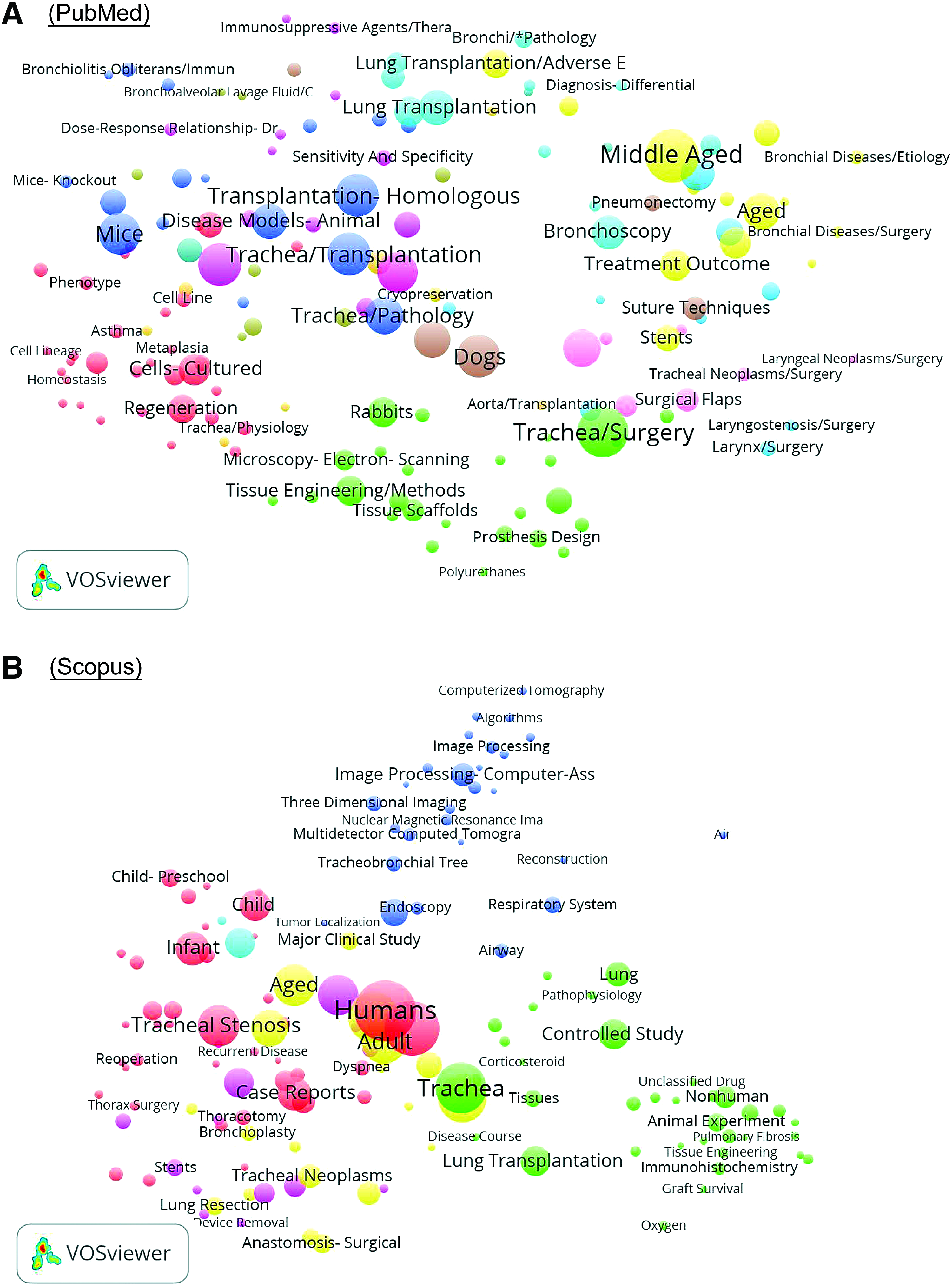
Common keywords according to 100 co-occurrence.
WOS, Web of Science.
In sum, a total of 65 countries have contributed to the production of articles in this field. USA, Japan, Germany, United Kingdom, and France have the largest share of publications in this field. Iran has 24 articles and is ranked 23th among the 65 countries in the list (Fig. 2).
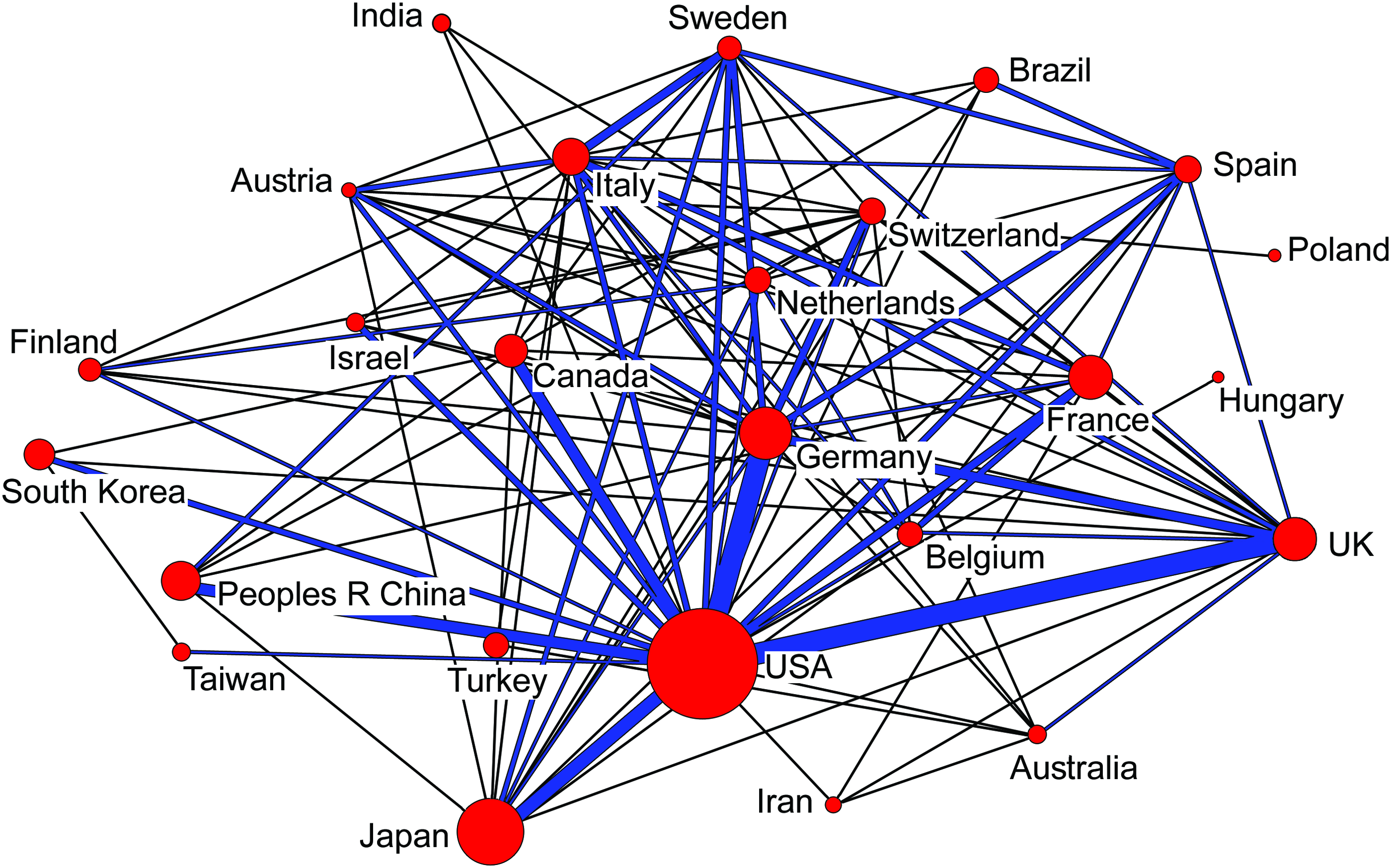
Twenty-five top countries contributed in producing articles. Color images available online at www.liebertpub.com/teb
Among 12,178 authors, as it is depicted in Figure 3, the five top authors were NakamuraT, Patterson G, Grillo H, Kim J, and Macchiarini P. In this network map, nodes are represented as writers and ties are represented as cooperation. The diameter of the circle indicates the abundance of articles, and the thickness of the lines indicates the scientific collaboration of authors. Given the structure of the network, most articles and the largest number of collaborations were related to a Japanese scientist—Nakamura. Furthermore, the most cooperation was among Nakamura– Shimizu with 20 articles and Jungebluth–Macchiarini with 16 articles.
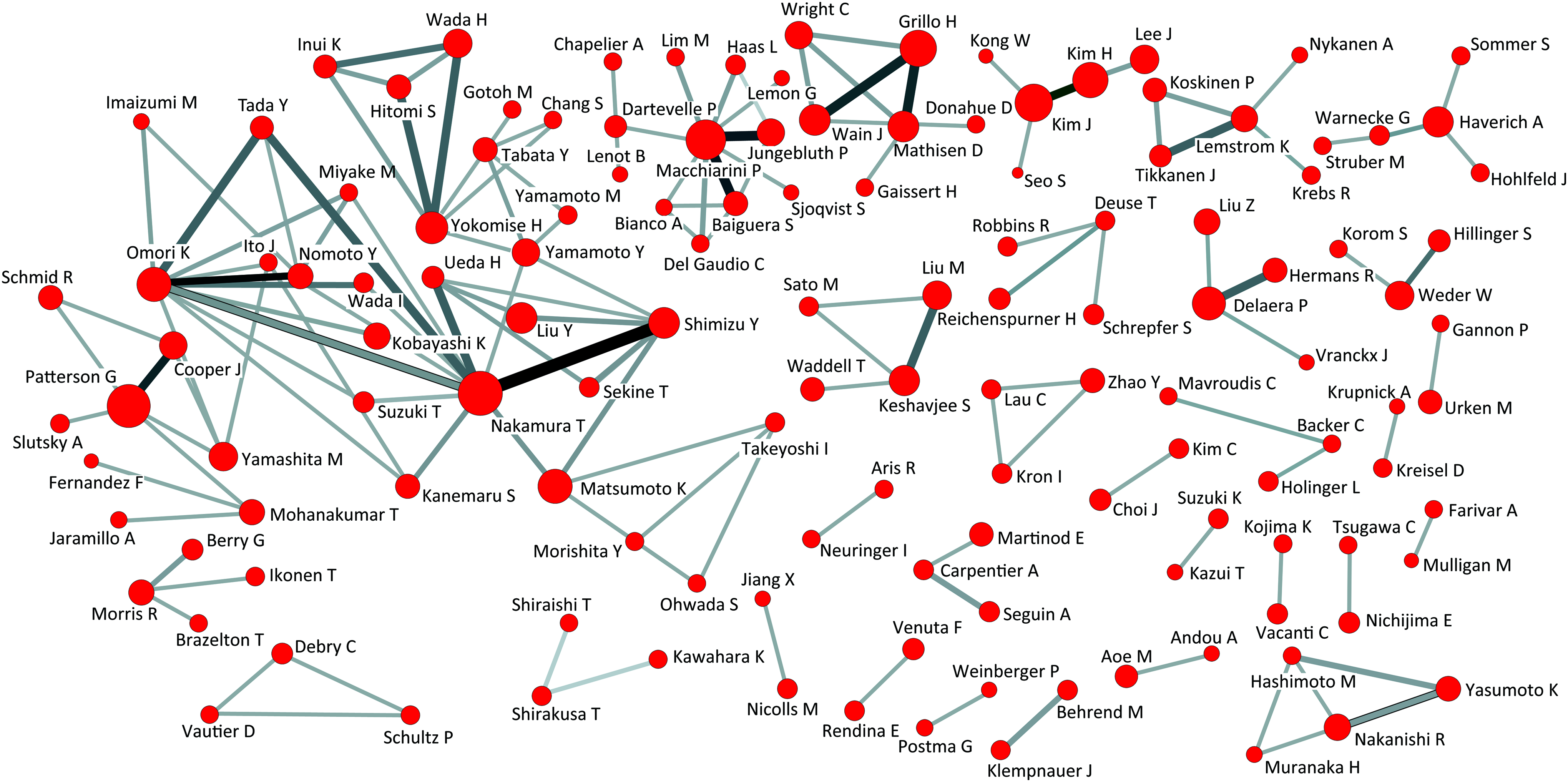
Cooperation of the first 130 authors. Color images available online at www.liebertpub.com/teb
Publication trends before 1995
Considering the 10 co-occurrence threshold, 51 out of the 732 keywords in this period met the predetermined conditions (Fig. 4A). The words “lung transplantation,” “bronchiolitis obliterance,” and “tracheal stenosis” had the highest frequency and words such as “stent,” “prosthesis,” “animal study,” and “tissue engineering” did not appear on the map.
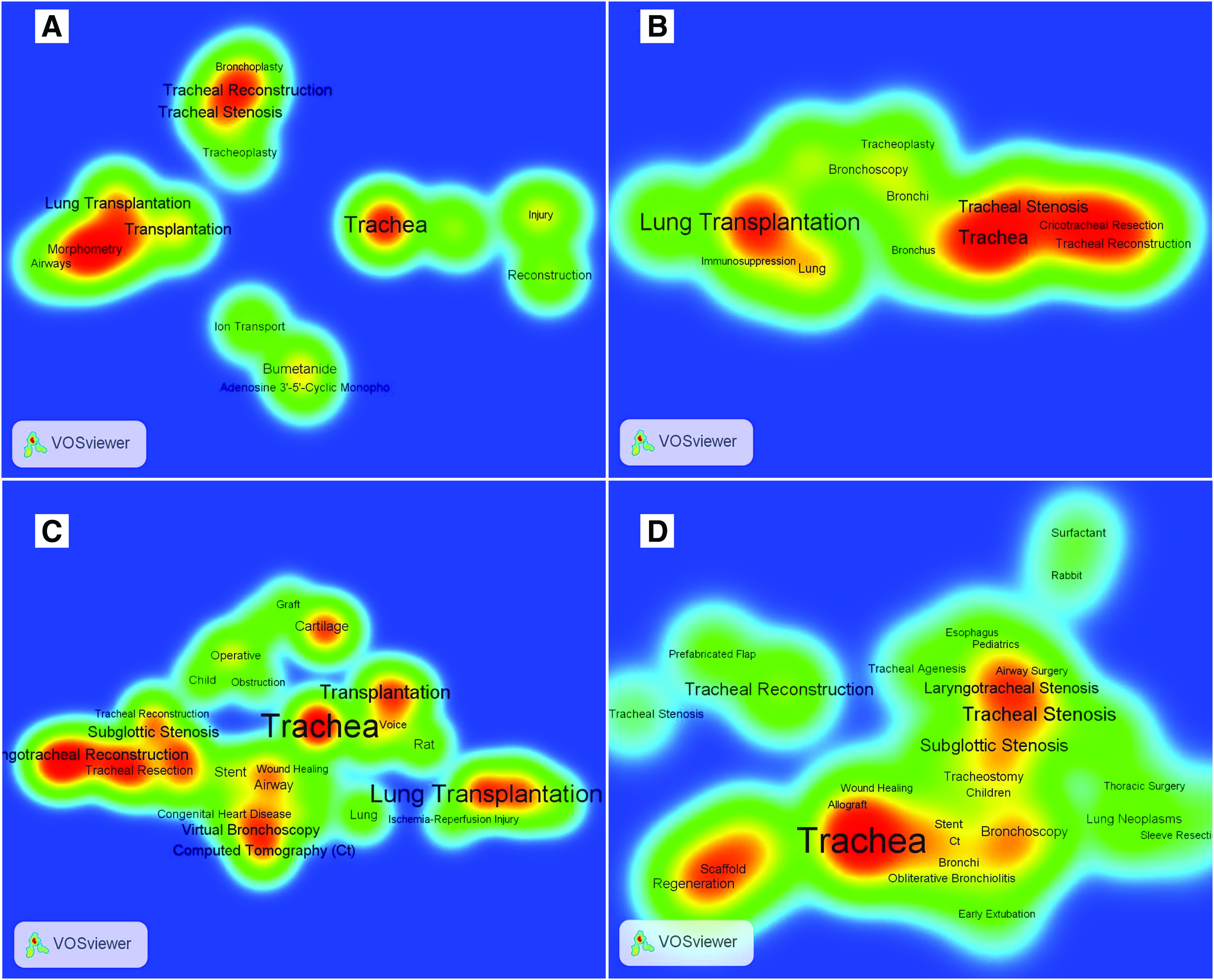
The trends of keywords used in different intervals, according to 10 co-occurrence.
Fourteen clusters have been obtained and the term “bronchoplasty” has been proposed among methods for tracheal reconstruction and was in the hot region, but the term “tracheoplasty” was in the cold zone. “Bronchi,” “lung transplantation,” “laryngotracheal reconstruction,” “injury & denervation,” “bronchoscopy,” “cAMP,” “bronchiolitis obliterance,” “tracheoplasty,” and “trachea” were the first terms in some of the clusters.
Publication trends during 1996–2000 period
In this period, among 478 items, 34 keywords met the threshold and 9 clusters were categorized (Fig. 4B).
The words “lung transplantation,” “tracheal stenosis” and “stent,” “infant,” “child,” and “tracheostomy” had high frequency and were in the hotspot area. The terms “immunosuppression,” “tracheoplasty,” and “bronchoscopy” appeared in the cold region. Words such as “animal study” and “tissue engineering” did not even appear on the map. “Transplant” has been generally mentioned, but the exact words “allograft and autograft transplantations” were not observed on the map. The term “respiratory distress syndrome,” which was a common phrase before 1996, was located in the cold region in this period. Nine clusters have been obtained that are summarized in Table 2.
Publication trends during 2001–2005 period
There were 77 items out of 477 that met the criteria and 13 clusters were identified. The keywords “cartilage,” “tissue engineering,” “Allograft,” “chronic rejection,” and “balloon dilatation” emerged among the hotspots on the map (Fig. 4C). The word “rat” in this period appeared in the cold zone. Among the keywords related to “cartilage,” the terms “tissue engineering,” “congenital anomaly,” “tracheal malformation,” and “fetal surgery” were similar to it. Moreover, items like “scaffold” or “prefabrication” have not met the threshold of 10 co-occurrences.
Publication trends during 2006–2010 period
In this interval, 76 items out of 754 keywords met the 10 co-occurrence threshold. Among animal models “rat” and “rabbit” caught the attention and “rat” in particular appeared in the hot zone and in the region related to “lung transplant” and “bronchiolitis oblitrans.” Figure 4D shows the trends of keywords used from 2006 to 2010. The words “fibroblast,” “epithelial stem cell(s),” “mesenchymal stem cell(s),” “scaffold,” “cartilage,” “polypropylene,” “mechanical properties,” and “ECM” could be observed in the field of “tissue engineering”. Keywords including “prefabrication,” “sleeve resection,” and “lung neoplasm” emerged in the map, although placed in the cold area.
Publication trends during 2011–2015 period
“Bioengineering” and “tissue engineering” are still among the hotspots in 2011–2015 (Fig. 5). There was a noted attention to “collagen” in this period. The keyword “Mice” has been more commonly used in experimental studies. Words “angiogenesis” and “decellularization” appeared in hotspots in this period in “tissue engineering” cluster. In this interval, “Cross-linking agents,” “extracellular matrix,” and “mechanical properties” were also considered. Despite being present on the map, the terms “immunosuppression,” “bioreactor,” and “trachea transplantation” were in the cold zones.

Discussion
In this study, topics and trends of tracheal replacement research field were assessed, using co-occurrence analysis. Scientific maps indicated that studies are dynamically expanded over time and among different periods; various strategies have been employed to overcome the limitations of each alternative.
As Grillo has mentioned in his critical review, “unlike other transplantation, alternative air passages are rarely lifesaving and are basically for improving the patient's condition”. 12 Therefore, all the criteria of a suitable alternative should be met. Before 1995, the terms prosthesis and stent were not prominent in the literature. In this period, lung transplantation and its complications such as bronchiolitis obliterans were subjects of most studies.
In the second interval, the word stent was a common word and tracheal reconstruction along with cricotracheal resection appeared in the same cluster. Tracheal reconstruction was more significant than replacement. Tissue engineering was not in the relevant drawing yet, although in the last two decades, tissue engineering has opened new horizons in this field. In 1994, the first studies on tracheal bioengineering in an animal model aspired scientists that access to a suitable alternative may be at hand. 40 The term cartilage emerged in 2001 because of its important role in tracheal rigidity assurance. Many preconceived ideas like foreign material, bioprosthesis, aorta, autogenous tissue, and allograft replacements were combined with tissue engineering and numerous studies were conducted to investigate this topic. The first artificial tracheal transplantation was implemented in a 58-year-old patient in 2003. 47 The bioartificial construct was prepared from acellular porcine jejunum as collagen matrix. Collagen as a natural biomaterial was a common subject since 2006. Gradually, ECM, which is derived from decellularized trachea, was applied in many experimental researches. Later on, tracheal replacement through autologous cell-seeded biological scaffold turned out to be a lifesaving option for another patient who suffered from tracheal agenesis, following various unsuccessful alternative treatment methods, including stenting and allograft transplantation. However, progressive stenosis in the proximal portion of the graft caused permanent stenting. 48
After a while, the terms scaffold, polypropylene, and biomechanic were taken into consideration, resulting in a cascade of studies that aimed to improve the mechanical properties of acellular scaffolds, and therefore “decellularization” became a common keyword during the past 5 years. Finally, the weak points of biological scaffolds, including (1) the time-consuming procedure, (2) the biomechanical inadequacy, (3) the possibility of infection, (4) the size match limitation, and (5) the donor shortage,50,51 have led scientists to believe that “synthetic biomaterials may ultimately provide a more reliable model for simple structures such as trachea”. 49 Thus, the investigators have concentrated on the fabrication and optimization of synthetic scaffolds in the clinic. The first tracheal replacement using tailored bioartificial nanocomposite scaffold was performed in 2011. 50 The autologous, cell-seeded, Y-shape nondegradable scaffold was rigid enough to prevent collapse; however, granular tissue appeared in the left bronchus and complementary studies are ongoing to address the material biocompatibility.
As a whole, these findings depicted the status and trends of different approaches applied to develop an off the shelf tracheal alternative. Therefore, the researchers and policy makers could forecast the dynamic directions of these researches and take actions to support them. Possibly, the best approach is to combine these ideas together to create a hybrid structure, including the strong points of both synthetic and biological scaffolds. 51
Footnotes
Acknowledgments
We would like to gratefully thank Dr. Jahanara Mamikhani and Dr. Shahram Tofighi for their helpful scientific information and Mrs. Sakine Rostamipour for her assistance with article preparation.
Disclosure Statement
The authors have no commercial, proprietary, or financial interest in the products or companies mentioned in this article.