




Abstract
In the regenerative medicine and tissue engineering (TE) field, it is often an overlooked and challenging aspect to fathom how TE-related basic research could be translated to applied and translational research, ultimately aiming to develop and market a product or service. The aim of the present article is to investigate the patents in the field of TE and to look up relevant patents, type of applicants, and outcomes of relevant patents over the last 10 years. Besides referencing these patents, it was also the aim to collect data on companies related to the relevant patents to investigate the current commercial status of the product or service that the patent relates to.
Impact statement
The article describes an overview of intellectual property protection and strategies in the field of tissue engineering and regenerative medicine. The aim of the present work is to demonstrate patenting with examples of marketed outcomes, which may be helpful for those who intend to develop a tissue-engineered product.
Introduction
Intellectual property protection
In technology-related fields, when it comes to a commercialized product or service, it can be important to ensure that a product or service stands out from the crowd, from a technological viewpoint, and production of the said product or use of a service is limited to those who have the relevant skills and intellect. Generally, intellectual property (IP) is thus defined as knowledge- or imagination-based creations and, subsequently, the unique ability to use this knowledge to manufacture a product or perform a service. Thus, IP protection is generally defined as the ability to limit the use of this knowledge to those who are authorized by the creators. IP protection is a complex topic, ranging from art to, for example, software; however, the scope of the present article is limited to tissue engineering (TE)-related IP protection.
Three main categories of IP protection are relevant in the TE-related field: know-how, trademark, and patenting.
In the present article, we will elaborate on patenting, which is the most powerful IP protection measure in TE and is based on three main pillars:
- inventive step: meaning that the inventors came by their invention due to a somewhat unexpected outcome over one or a series of experiments; - novelty: meaning that up to the priority date of the patent, no one who is skilled in the art has made the novel points of the patent publicly available, for example, presenting it at a conference, as an abstract, or in a scientific article, nor was it already patented; and - industrial applicability: meaning that the product, method, or application can be used commercially.
The present article aims to focus on TE and regenerative medicine (RM)-related patents and their outcomes in the past 10 years to help understand the connection between the scientific background, industrial applicability, and actual commercialization. In the TE field, there are three main product types for which creators are strongly advised to have some sort of IP protection: tissue products, medical devices, and pharmaceuticals.
Overview of Patents Between 2010 and 2020 and Search Strategies
Based on the definition of the potential IP protection strategies and potential product types that tissue-engineered products can be categorized in, it is important to have the described mindset if one plans to prepare a tissue-engineered product that is envisioned to be made commercially available with a reasonable IP protection background.
To demonstrate the differences and trends of scientific interest and patenting in the TE field, a combination of the “tissue engineering” and “regenerative medicine” expressions was used to look up relevant documents in the PubMed, National Center for Biotechnology Information (NCBI), and ScienceDirect databases for scientific publication trends in the last 10 years. The Espacenet database was used to assess patent publication trends in the last 10 years. The results are presented in Figure 1.

The yearly distribution of scientific articles and patents with the search terms “tissue engineering” and “regenerative medicine” together.
The results for the scientific articles may contain redundant information as numerous articles are available in all three databases; however, the tendency is clearly visible: the scientific interest in TE and RM increased over the last 10 years and over three times more articles were published in 2020 compared with 2010. The published patents have also doubled, but generally the number of scientific articles is 30–60 times higher compared with the published patents and the number of patents do not increase as rapidly as the number of scientific articles, year-over-year.
The number of patents was further elaborated with separate searches of patents that contained tissue engineering or regenerative medicine, and the results increased to 6419 and 1124, respectively, as shown in the distribution in Figure 2.
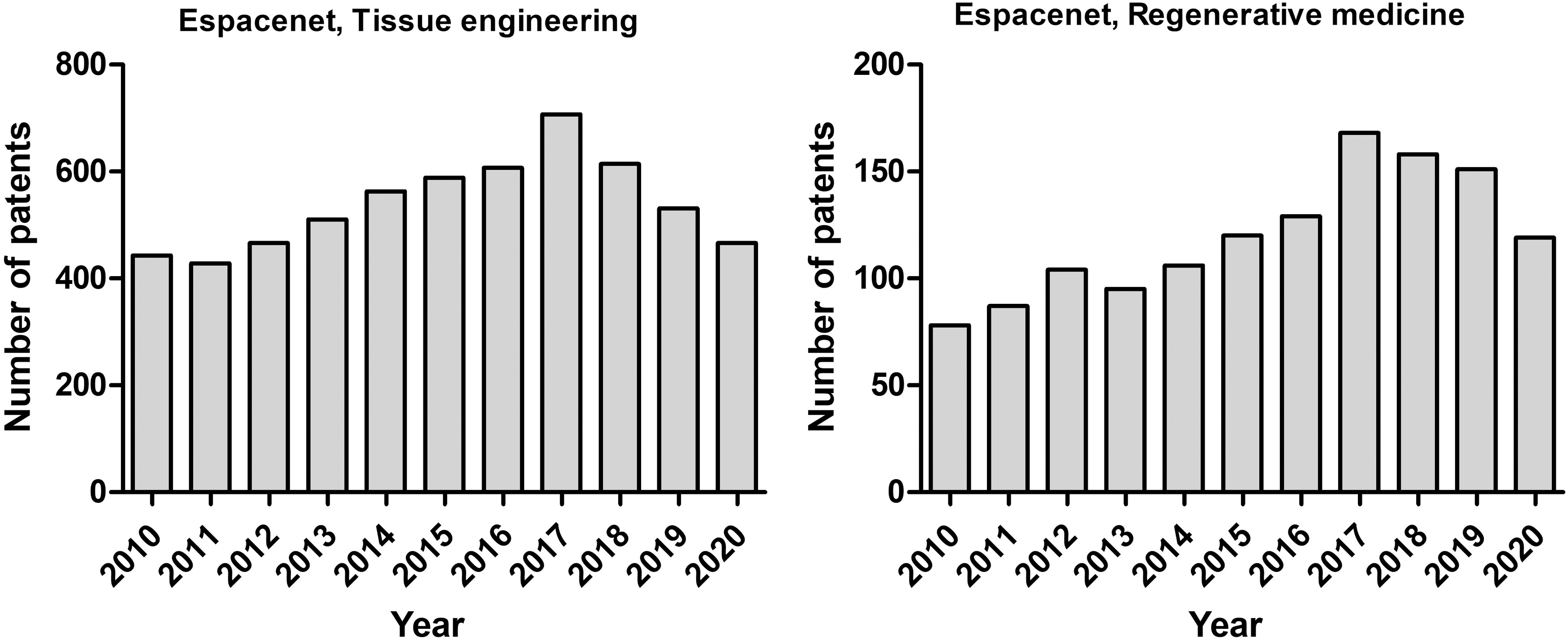
The yearly distribution of patents with the search terms “tissue engineering” and “regenerative medicine” separately.
With the modified search terms, the received results increased over 10-fold; however, as is visible, the trends are similar, thus we can say that there has been a decrease in the field of TE and RM-related patents since 2017.
For a closer understanding and a data size that can be reasonably handled and evaluated, the patent characteristics for the last 10 years using the search terms described in Figure 1 were investigated. The patents found were further elaborated based on the applicant, outcome, and history of the patent.
The distribution of active and withdrawn patents from 2010 to 2020 is shown in Figure 3.
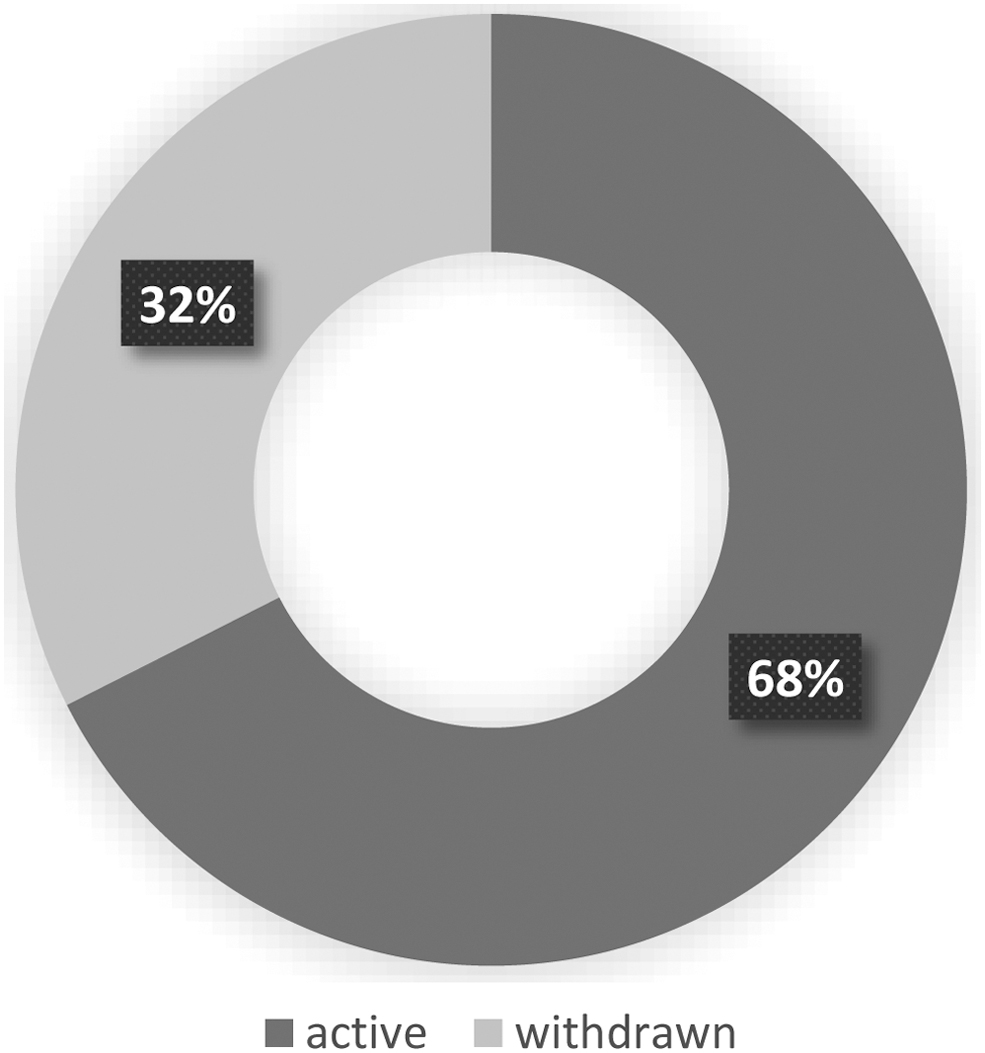
The distribution of active and withdrawn patents from 2010 to 2020.
The details and yearly distribution are shown in Table 1.
Summary and Yearly Distribution of Active and Withdrawn Patents from 2010 to 2020
The active patents were further examined to see the topics of these patents. It needs to be clarified that from 2018, most of the patents are still pending or are entering the national phases, and only some have been withdrawn, thus the active patents between 2018 and 2020 may not reflect the viability or potential of a patent application.
Classification of Active Patents
To summarize the applicant types between 2010 and 2020, it is important to distinguish between for-profit and nonprofit applicants. During the investigated interval, 129 different applicants were identified with patents having the “tissue engineering” and “regenerative medicine” terms in the title, abstract, or claims. The distribution of active patents between 2010 and 2020 is shown in Figure 4.

The ratio of nonprofit and for-profit applicants of the active patents between 2010 and 2020.
The description of active patents and their distribution can be found in Supplementary Data S1 as most of the active patents have not arrived at a commercial outcome. Probably the majority of patents that have institutions, universities, or foundations as applicants will need to cooperate with an investor or an investment fund to arrive at a marketed medicinal product. If a service is the desired goal of the patent, then these entities may have a higher success rate, and it seems that services especially related to research have positive outcomes when nonprofit entities file a patent application. However, it may also be a policy of some of the nonprofit entities to maintain their patents, and there are also grants, which require filing of a patent based on the outcomes of the grant.
In summary,
Scaffold-Related Inventions
Multiwell plate
The applicant of this patent is The Electrospinning Company, Ltd., and it was published in 2013. The invention led to the Mimetix® product family, which is a range of multiwell plates for three-dimensional (3D) cell culture research purposes. It is a commercially available product. 1
Implant
Xeltis B.V. is the applicant of this patent and their invention relates to an implant comprising a matrix material and a method for manufacturing an implant comprising matrix material. The invention further relates to a crimped implant. 2 The product is an artificial valve for cardiovascular application, and the invention is in the preclinical and clinical phases.
Fibroblast growth factor-18 in graft transplantation and TE procedures
Merck Patent GmbH invented this procedure that has the main claim on a process for producing a transplantable cartilage material for TE, wherein the said process comprises the steps for culturing chondrogenic cells, either in monolayer culture or 3D culture, in a culture medium comprising a fibroblast growth factor (FGF)-18 compound for a time sufficient to allow the formation of a transplantable cartilage material. 3 The invention is related to knee osteoarthritis and is in the clinical phase.
Biobrick for bioprinting and application thereof
Sichuan Revotek Biotechnology Co., Ltd., registered this patent, which relates to a biobrick applicable to biological printing (e.g., 3D biological printing) and TE; a composition (e.g., biological ink), including the biobrick; a preparation method and application of the biobrick; and a constructed body (e.g., a 3D construct), including the biobrick or constructed by using the biobrick/biological ink. Thus, the technology presented in the patent is probably part of the 3D tissue and organ printing-related portfolio of the company. 4
Cellulose nanofibrillar bioink for 3D bioprinting for cell culturing, TE, and RM applications
This patent describes a bioink formulation that is part of the product family of Cellink A.B. for 3D bioprinting. The invention describes applications of this novel cellulose nanofibrillar bioink in 3D bioprinting of tissues and organs with optimal architecture. The patented technology is present in the commercially available bioinks of the company; however, it needs to be noted that the products are of research grade and are not intended for administration in humans or animals. 5
Device and methods for printing biological tissues and organs
The patent is related to medicine and biology, particularly to the means for artificial manufacturing of biological tissues and organs, and can be used in biotechnology, bioengineering, TE, RM, and 3D printing of biological tissues and organs. The invention describes both the apparatus and the methods for 3D bioprinting. The 3D bioprinter is commercially available from the applicant, Private Institution Laboratory for Biotechnological Research, 3D Bioprinting Solutions. The device is intended for nonmedical applications of bioprinting, including creation of 3D functional models of human tissues and organs for toxicological, pharmacological, and radiological studies, as well as for in vitro and in vivo simulation of human diseases. 6
Microscaffold
The invention is a microscaffold comprising a porous particle that
comprises a 3D network of fibers comprising a polymer and
has a particle size of ≤2000 μm.
The microscaffold, composition, or multiwell plate may be used for RM, TE, screening compounds for biological use, or drug screening. The patent probably supports the IP protection of the commercially available Mimetix product family of The Electrospinning Company, Ltd., mentioned above. 7
Methodological Patents
T cell immunomodulation by placenta cell preparations
This was patented by Centro di Ricerca E. Menni, Fondazione Poliambulanza Istituto Ospedaliero. Fondazione Poliambulanza is a private nonprofit hospital, accredited and operating within the National and Regional Healthcare Service. The patent describes a method for obtaining amniotic mesenchymal tissue cells and/or chorionic mesenchymal tissue cells and is used for “in vitro studies on placenta derivatives and cells' properties” and “therapy approaches by using placental cells and derivatives in pre-clinic models”. 8 The patent discloses a method to enable cell therapy-related studies. The applicant is a nonprofit institute, thus the commercial outcome is probably limited.
Making and using in vitro synthesized ssRNA for introducing into mammalian cells to induce a biological or biochemical effect
This patent is the invention of Cellscript LLC, which is an enabling company that provides products and technologies for making and using RNA for translation in cells for clinical research and therapeutics. The patent describes mRNA and methods for reprogramming cells that exhibit the first differentiated state or phenotype to cells that exhibit the second differentiated state or phenotype, and this method is probably within the portfolio of the company. 9
Method for rapid mincing of adipose tissues to isolate live cells in vitro
The applicant of this patent is the Buddhist Tzu Chi Medical Foundation and it discloses a method for isolating living cells of adipose tissues to improve the number of living cells per unit weight of adipose tissues without reducing cell viability. It is probably part of the tissue bank service that is provided by the foundation. 10
Human mesenchymal stem cell proliferation promotion adjuvant, human mesenchymal stem cell amplification, pharmaceutical composition, growth factor, and use
Similar to the prior patent, the invention by the Buddhist Tcbc Medical Foundation relates to an adjuvant for rapid in vitro proliferation of human mesenchymal stem cells, which is used to solve the problem of poor cell amplification efficiency of human mesenchymal stem cell culture. The human mesenchymal stem cell culture adjuvant comprises at least an antioxidant and a second type of FGF (FGF-2). The invention is probably part of the tissue banking activities of the foundation and enables the viability and amplification of human stem cell culture and is thus similar to the prior patent; this probably has no commercial value. 11
Method of cross-linking of polysaccharides using photoremovable protecting groups
The invention discloses a method of preparation of cross-linked materials based on polysaccharides using electromagnetic radiation in an aqueous solution. The advantage of the suggested solution is the temporal and spatial control of cross-linking that allows preparation of advanced materials for TE, where the cross-linking density and thus the mechanical properties in the material structure can be tailored. The patent describes a method that helps to protect the manufacturing route for the manufacturing company called Contipro, and this method is probably part of the production steps in the company portfolio. It is important to note that Contipro manufactures and distributes materials that are suitable for pharmaceutical, medical device, and research grade materials as well.12,13
Derivatives of sulfated polysaccharides, method of preparation, modification, and use thereof
Similar to the manufacturing-related patent of Contipro mentioned earlier, this patent also describes a method to produce and use α, β-unsaturated aldehydes in the structure of sulfated polysaccharides. The proposed method allows preparing materials suitable for pH-responsive drug delivery systems or for preparation of scaffolds in TE or RM. This method is probably among the production steps for products in the portfolio of Contipro. 14
Compositional Patents
Nanoparticulate systems prepared from sorbitan esters
This was patented and first published in 2013. The patent discloses an invention related to systems comprising homogeneous nanoparticles having an average size of <1 μm and containing at least a sorbitan ester, a macrogol ester, a macrogol ether, or a derivative of these and, optionally, at least one component derived from oxyethylene and/or at least one component having an electric charge (positive or negative). The invention is intended to be used as a medicine or medical device; in TE or RM; for cosmetic, hygienic, or nutritional uses; and in surface coatings as, for example, a pharmaceutically acceptable carrier formulation. The invention was patented by the University of Santiago de Compostela, which is a nonprofit university. The invention is in the in vitro–ex vivo evaluation phase, thus there was no commercial outcome so far.15,16
Medical devices containing oriented films of poly-4-hydroxybutyrate and copolymers
The invention generally relates to polymeric compositions that can be processed into films (using continuous processes) to produce products having substantially uniform physical properties, including physical and thermo-mechanical integrity. The film is intended to be used in biocompatible medical devices, for example, stents, scaffolds, and membranes. The material is commercially available under the name of TephaFLEX® at Tepha, Inc., in the form of medical devices and is intended for soft tissue-related applications. 17
Compositions for cell-based three-dimensional printing
Similar to the patent mentioned earlier, this patent describes a biobrick that can be used for bioprinting (e.g., 3D bioprinting) and TE, a composition comprising the biobrick (e.g., bioink), a method of making the biobrick, and uses thereof. A construct (e.g., a 3D construct) comprising the biobrick or constructed using the biobrick/bioink is also described. The patent by Sichuan Revotek CO., LTD., is probably part of or supports the biobrick manufacturing technology. 18
Cell Therapy-Related Patents
Placental stem cells, methods for isolating the same, and use thereof
This patent describes a method for extracting cells from the human placenta and isolating cells positive for human leukocyte antigen-G, a migration marker, and at least one pluripotent stem cell marker, and use thereof. 19 The method is part of the commercially available services of Stem Cell Technologies & Biomarkers (SCT & B, Inc.), a company specializing in stem cell-based RM, cell therapies, gene therapies, and biodiagnostics.
Methods for development and use of minimally polarized function cell micro-aggregate units in tissue applications using LGR4, LGR5 and LGR6 expressing epithelial stem cells
The applicant of the patent is a company called PolarityTE, Inc. The company intends to utilize a patient's own cells and tissues to regenerate functionally polarized human tissue. The main claim of the patent is to use a minimally polarized, microaggregate multicellular composition characterized by a multidimensional support selected from the group consisting of scaffolding, collagen, matrix, particle, and fiber and isolated, living, leucine-rich repeat-containing receptor (LGR)-expressing cells. The current status is that it is entering the regulatory phase, and the company plans to offer an autologous, cell-based therapy service. 20
Discussion
Summarizing the patents that were found to be on the way to applicability or are already available, we found that only four patents of the 18 were registered by nonprofit entities, so most of the entities were profit oriented. Another interesting aspect is that despite the application type of the categorization above, five patents can be used in cell culture-related inventions1,7,10,11,19 to enable models or methods for in vitro or in vivo research, two patents were clearly part of cell therapy services,19,20 and two patents were manufacturing methods for TE materials.12,14
It is also clearly visible that the innovative technology-related trends also led to the foundation of for-profit companies and patents. Two examples were found, the electrospinning trend that led to two patents that utilized this technology for 3D cell culture modeling1,7 and the 3D bioprinting trend in 2016 and 2017 that led to compositional and apparatus-related patents.4–6,18
Actual implants were only patented by two entities, Xeltis for artificial cardiovascular valves since 20142 and Merck for osteoarthritis since 2015. 3 They are only in the clinical phase, yet, which is not surprising, as these types of developments are the closest to actual TE and RM, thus these products will be either pharmaceuticals or medical devices; either way, the regulatory process is generally expensive and time-consuming.
The present article gathered the patents that were made public between 2010 and 2020 and had both the “tissue engineering” and “regenerative medicine” terms in the title, abstract, or claims of the patent. The limitation to both these terms made it possible to find a number of patents that are still manageable, but can give a thoughtful insight regarding the relationships between scientific literature, patenting, and nonprofit and for-profit entities and the potential commercial outcomes. To summarize the data, the most important publication-to-commercial outcome numbers are shown in Table 2.
Scientific Literature-to-Product Outcome Numbers Between 2010 and 2020
Data gathered from publicly available databases between December 1, 2020, and December 9, 2020.
NCBI, National Center for Biotechnology Information; TE, tissue engineering.
It needs to be clarified that the collected scientific publication data were gathered between 1st and 9th of December, thus not all the published data were available for 2020, and it also needs to be clarified that not all the filed patent applications have become public yet. There is a potential 1- to 2.5-year interval until a patent is published. Thus, the reader needs to keep in mind that the data are based on the publicly available and already published data, which means that there may be commercial outcomes that are unpublished or were not made available for the public and are handled as trade secrets.
Unfortunately, all these disclaimers were needed to allow us to write this article. However, the data may not reflect the current number, but it needs to be kept in mind that the aim of the article was to present the trends of an interval, and the data that were available at the time allowed us to present these trends. As a general conclusion related to patenting, when one decides to create IP protection strategies for a product or service, one is advised to look for legal advice from patent attorneys. IP protection is a complex and expensive procedure with many laws that are different for different protection types and countries and regions worldwide.
Conclusions
The trend shows us that TE and RM are becoming hot topics in the scientific field, and there are more and more scientific articles every year that are published in this field. However, the commercial outcome still seems to be underperforming. This was tried to be evaluated by the outcomes of the published patents in the field. As shown, among the inventions that are related to TE and RM from a pharmaceutically applicable point of view, only two patents were found that are in the clinical evaluation phase. Those patents were published by Xeltis and Merck in 2014 and 2015, respectively, meaning that it took 5 years to reach the clinical phase with a TE and RM development.
Generally, it seems that services, research-related manufacturing, and developments in the research field can be realized under a reasonable time and probably with a reasonable budget. The medicinal development may also be reasonably realized when it is categorized as a medical device. 21 Thus, it is important to start with a basic idea how a research would lead to a development and what type of product that would likely become. When the product is likely to become a pharmaceutical, then the required budget probably needs to involve private or public funding, and probably this is one of the reasons why we did not see such products on the market.
The other reason is probably the regulatory-related issues; there seems a need for researchers skilled in the art to think more about translation and for regulatory entities to come up with regulations for this emerging field. Hopefully, this will be made available in the upcoming 10–15 years so that more TE and RM-related products can be put on the market.
Footnotes
Acknowledgment
The authors are thankful to Dr. Zsombor Lacza for help with the infrastructural requirements in the topic.
Disclosure Statement
No competing financial interests exist.
Funding Information
The research was financed by the Higher Education Institutional Excellence Programme of the Ministry of Human Capacities in Hungary within the framework of the Molecular Biology Thematic Programme of Semmelweis University.

References
Supplementary Material
Please find the following supplemental material available below.
For Open Access articles published under a Creative Commons License, all supplemental material carries the same license as the article it is associated with.
For non-Open Access articles published, all supplemental material carries a non-exclusive license, and permission requests for re-use of supplemental material or any part of supplemental material shall be sent directly to the copyright owner as specified in the copyright notice associated with the article.
