




Abstract
This research is dedicated to uncovering the evolving trends, progressive developments, and principal research themes in tissue engineering and regenerative medicine for rotator cuff injuries, which spans the past two decades. This article leverages visualization methodology to provide a clear and comprehensive portrayal of the dynamic landscape within the field. We compiled 758 research entries centered on the application of tissue engineering and regenerative medicine in treating rotator cuff injuries, drawing from the Web of Science Core Collection database and covering the period from 2003 to 2023. Analytical tools such as VOSviewer, CiteSpace, and GraphPad Prism were used. We conducted comprehensive analyses to discern the general characteristics, historical evolution, key literature, and pivotal keywords within this research field. This comprehensive analysis enabled us to identify emerging focal points and current trends in the application of tissue engineering and regenerative medicine for addressing rotator cuff injuries. The compilation of 758 articles in this study indicates a consistent upward trajectory in publications concerning tissue engineering and regenerative medicine for rotator cuff injuries. The scholarly contributions from the United States, China, and South Korea have notable influence on the progression of this research area. The analysis delineated ten specific research subdomains, including fatty infiltration, tears, tissue engineering, shoulder pain, tendon repair, extracellular matrix (ECM), and platelet-rich plasma growth factors. Noteworthy is the recurrent mention of keywords such as “mesenchymal stem cells,” “repair,” and “platelet-rich plasma” throughout past two decades, highlighting their critical role in the evolution of the relevant field. This bibliometric analysis meticulously examines 758 publications, offering an in-depth exploration of the developments in tissue engineering and regenerative medicine for rotator cuff injuries between 2003 and 2023. The study effectively constructs a knowledge map, delineating the progressive contours of research in this domain. By pinpointing prevailing trends and emerging hotspots, the study furnishes crucial insights, setting a direction for forthcoming explorations and providing guidance for future researchers in this evolving field.
Impact Statement
This article delineates an unprecedented scholarly endeavor, using comprehensive bibliometric and visualization methodologies to systematically review the corpus of literature on tissue engineering and regenerative medicine pertaining to rotator cuff injuries spanning two decades. It meticulously identifies pivotal contributions from the United States, China, and South Korea, delineates critical research subdomains such as fatty infiltration and the ECM, and prognosticates future investigative trajectories focusing on the development of advanced biomaterials, precision in stem cell applications, innovative scaffold design, and elucidation of microenvironmental dynamics.
Introduction
The rotator cuff is a collective term for a group of muscles and tendons surrounding the shoulder joint, composed of the teres minor, subscapularis tendons, supraspinatus, and infraspinatus, regulates the stability and movement of the shoulder by connecting the muscles around the scapula to the through via tendon–bone attachments called the enthesis, making it crucial for work, sports, and daily life, and essential for overall shoulder function. 1 The tendons in the rotator cuff facilitate rotation and ensure the stability of the humerus, with the supraspinatus tendon aiding in arm abduction and the subscapularis tendon responsible for internal rotation of the humerus, highlighting that each tendon plays a specific role in managing the movement, stability, and rotation of the shoulder. 2 The infraspinatus and teres minor tendons are responsible for the external rotation of the humerus, specifically managing the external rotation of the shoulder.
Rotator cuff tears, a leading cause of shoulder disability causing dysfunction and chronic pain, represent a significant socioeconomic burden in Asia, Europe, and the United States, with an estimated prevalence of 20.7% in Japan, increasing with age, highlighting their major impact on health and the economy, particularly in aging populations. 3 These tears can arise from trauma, overuse, or degenerative changes. Although surgical techniques for repairing these tears have achieved significant advancements, high rates of recurrence or incomplete healing, ranging from 40% to over 90%, are still reported frequently.
Tendon–bone healing is a highly complex process crucial to the success of rotator cuff repair, making effective healing essential for successful outcomes. 4 Clinical evidence shows that symptomatic degenerative full-thickness rotator cuff tears do not heal and are at risk of slow progression over time, indicating that these tears are unlikely to heal and tend to worsen gradually.5,6 Predictors of rotator cuff retear include both tear-specific characteristics and patient demographics, with key factors being tear size, fatty infiltration, and muscle atrophy.7,8 These factors could decrease the elasticity and vitality of the rotator cuff tendon tissues, inhibiting healing after rotator cuff repair. 9 Old age, diabetes, osteoporosis, dyslipidemia, obesity, and smoking are also demographic risk factors for retear.9,10
To effectively address the complexities of rotator cuff repair, an integrative approach that harnesses knowledge from various multidisciplinary fields is essential. Strategies such as tissue engineering, graft augmentation, growth factors (GFs), mesenchymal stem cells (MSCs), biophysical therapies, gene therapy, and platelet-rich plasma have been explored to optimize the treatment of rotator cuff injuries, indicating that numerous advanced biomedical and biophysical approaches have been pursued to improve outcomes.11,12 Tissue engineering, a pivotal facet of regenerative medicine, stands out as a field brimming with potential, offering innovative alternatives to traditional treatment modalities. Successful tissue engineering requires a combination of multipotent stem/progenitor cells13,14 and growth/osteogenic factors15,16 to repair, substitute, or regenerate tissues and organs. 17 In the interface of tissue engineering and regenerative medicine, stem cell science, gene therapy, and the manipulation of soluble molecules and cell/tissue types contribute collectively to the advancement of therapeutic solutions and biocompatible scaffold material. Biological constructs such as autografts, allografts, and xenografts—derived, respectively, from cells of patients, cells from another genetically distinct individual, and cells from a different species—illustrate the biological diversity harnessed in this field. 18 Scaffolds, crafted from either natural substance like collagen and decellularized matrices or synthetic materials, are engineered to emulate the intricate three-dimensional environment of the extracellular matrix (ECM). This environment is pivotal for cell proliferation and integration into tissues or organs, maintaining their specialized structures and morphologies. 19 Scaffolds are meticulously designed to align with specific cell types and the desired local conditions in vivo, necessitating tailored designs and materials for different engineered tissues or organs. 20 Moreover, the physical properties of synthetic scaffolds, including pore size, geometry, permeability, and spatial arrangement, alongside the bulk and surface characteristics, are crucial as they significantly influence cellular behavior. The biodegradation of scaffolds is a critical aspect, designed to harmonize with the natural ECM production by the cells. Innovations in scaffold fabrication have considerably advanced the objectives of tissue engineering.21,22 Furthermore, the advent of scaffold-free tissue engineering presents an intriguing avenue, enabling cells to generate their own ECM and autonomously assemble into intricate 3D biological structures. 23 This comprehensive approach embodies the core principles and applications of regenerative medicine and tissue engineering in the context of rotator cuff injury treatment, delineating a future where repair and regeneration are not just envisioned but actively accomplished.
Over the past two decades, there have been significant advancements in tissue engineering and regenerative medicine for rotator cuff injuries, with a major research focus on the potential of various tissue types combined with biomaterials. However, the publication trends in this field have yet to be comprehensively analyzed. This underscores the imperative of thoroughly exploring and scrutinizing these trends to adeptly inform and steer future research directions.
Bibliometric analysis, using mathematical and statistical techniques, investigates publications and provides critical insights into the historical development, key research areas, and prospective trajectories of a particular field. Visual network tools such as CiteSpace and VOSviewer enhance this process by enabling researchers to gain a comprehensive understanding of publication conditions. These tools allow researchers to predict emerging research trends and identify key hotspots, guiding future studies to address the most critical and promising areas.
This study uses innovative bibliometric analysis using visual network tools to address knowledge gaps and unmet needs in the field of tissue engineering and regenerative medicine for rotator cuff injuries. It thoroughly examines literature on this topic from 2003 to 2023, mapping out developmental trends. To our knowledge, this is the first comprehensive and scientific analysis of research in this area, providing valuable insights into future research directions.
Given the lack of comprehensive analysis in the field of tissue engineering and regenerative medicine for rotator cuff injuries, this article aims to provide researchers with valuable information to avoid unnecessary detours. This information will enhance research efficiency and guide researchers in setting realistic goals and finding suitable research directions. In addition, by aggregating and analyzing big data in this field, the research promotes information sharing, contributing to more effective and in-depth research practices.
Methods
Data source and search strategy
The Web of Science Core Collection (WoSCC) was selected as the primary source because it offers an extensive coverage of over 12,000 international academic journals, a breadth that has been validated in previous studies. For data collection, all articles published between January 1, 2003, and December 31, 2023, were systematically retrieved from WoSCC. This selection ensured that WoSCC provided comprehensive global scholarly information for the bibliometric analysis. The search terms were obtained by using the advanced search section function as follows: (refer to Fig. 1) Theme = ROTATER CUFF AND Theme = tissue engineering OR regenerat* AND Publishing year = (2003.1.1–2023.12.31) AND Document types = (Article or Review) AND Language = (English). The exclusion criteria for this study involved omitting nonarticles, nonreviews, and non-English papers, focusing solely on English language articles and reviews.

Literature selection process.
Detailed documentation of publication details such as nationality, journal, title, publication year, author’s name, affiliation, funding agency, and research focus was maintained, with the data formatted for download and transferred into Excel 2021 for in-depth analysis. The data search and postprocessing were independently completed by coauthors to ensure thoroughness and accuracy, with any discrepancies resolved through expert consultation to achieve unanimous agreement. Each data point was scrutinized and analyzed using GraphPad Prism and Origin 2021 to ensure precision and reliability, resulting in a meticulous process that ensured comprehensive and accurate data analysis.
Bibliometric analysis and visualization
Publication counts and citation data were sourced directly from WoSCC, and the relative research interest (RRI) metric was calculated to show the proportion of publications in the specific research area each year relative to the total annual publications from 2003 to 2023. Data processing was performed using GraphPad Prism8, and a world map depicting the global distribution of publications was generated using Microsoft Office PowerPoint (2021). This comprehensive analysis and visualization effectively showcased publication trends and global distribution over the 20-year period.
Data on total publications from leading countries were retrieved and scrutinized using WoS and GraphPad Prism8, with the H-index for researchers calculated to gauge research impact, resulting in an in-depth examination of publication output and research impact from these countries.
VOS viewer was used to visualize networks within the literature, enabling analyses of cocitation, co-occurrence, and bibliographic coupling, while Microsoft Office PowerPoint was used to visualize the distribution of publications and intercountry relationships, resulting in a study that used advanced tools to construct and analyze literature networks and visualize global publication distribution and intercountry relationships.
CiteSpace (6.1.R2) was used to perform key analyses of pronounced citation bursts of keywords and references, as well as cluster analysis on keyword cocitation, providing comprehensive summaries of journals and facilitating an in-depth understanding of these patterns.
GraphPad Prism8, VOS viewer, and CiteSpace were used to conduct an exhaustive bibliometric analysis, focusing on publications, citations, and scholarly networks within the research domain, ensuring a thorough investigation of the bibliometric data through the deployment of these multifaceted tools.
Results
Overall performance of global literature
A comprehensive collection of 790 studies spanning from 2003 to 2023 was initially gathered and scrutinized based on defined search parameters. After filtering out editorial material (14), papers under processing (5), meeting abstracts (5), correction, and non-English publications, 758 studies remained for further analysis. As illustrated in Figure 2A, a consistent upswing in global research on this topic was observed, with a notable spike over the past decade, signifying a robust and accelerating growth trajectory. The count of global studies surged from 35 in 2013 to 82 by 2022, mirroring the burgeoning interest and intensified research endeavors in this domain (Fig. 2A).

Global trends and countries/regions which contribute to the research field regarding tissue engineering and regenerative medicine for rotator cuff injuries from 2003 to 2023.
An analysis through VOSviewer pinpointed contributions from 44 countries/regions. Figure 2B presents the number of publications by different countries in the form of a world map, with the United States and China each having more than 100 publications. As depicted in Figure 2C, the USA stood at the forefront with a contribution of 320 papers in total, followed by China with 189, South Korea with 55, England with 54, and Germany with 47 papers. The USA represented a significant 40.5% of the total publications among the top 10 contributing countries/regions, with China and South Korea’s collective outputs being only 59% and 17.1% of the USA’s, respectively. Remarkably, China has been at the vanguard of annual publications since 2020, reinforcing its crucial influence and leadership in propelling advancements in this field.
In essence, the domain of tissue engineering and regenerative medicine for rotator cuff injuries has captured escalating global interest, marking an era characterized by rapid progress and expansion.
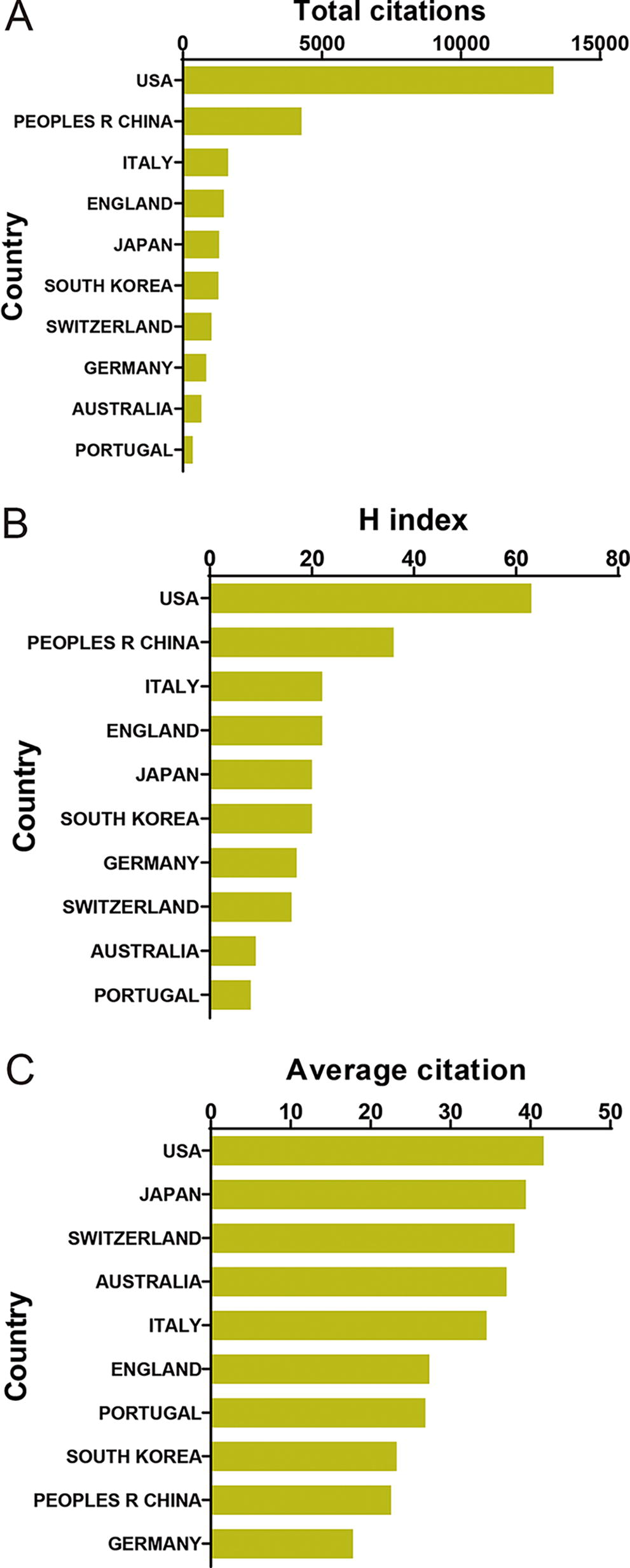
Figure 3A reveals that the publications accruing the most citations predominantly originated from the USA, amassing a total of 13,332 citations. This was succeeded by China with 4,268 citations, Italy with 1,622 citations, England with 1,477 citations, and Japan with 1,301 citations. In the context of relative publication numbers and the H-index, the USA maintained its prominence in the field with an H-index of 63, outpacing China of 36, Italy and England both of 22, and Japan of 20, as showcased in Figure 3B. Noteworthy is the fact that publications from the USA not only led in citation counts but also among average citation frequencies, recording 41.6 citations per publication. Japan followed closely with an even higher average of 50.6, with Switzerland at 38, Australia at 37, and Italy at 34.5, as delineated in Figure 3C.
The author-country collaboration analysis, visualized through VOSviewer in Figure 4C, underscored the United States as the foremost collaborator in the field, boasting an impressive total link strength of 106. This underscores the United States’ extensive network of international partnerships in this realm. In contrast, China, despite its substantial volume of research, showed a total link strength of 63, indicating a stronger inclination toward domestic collaborations. While the USA and China are pivotal in fostering international collaborations, other nations are also active participants. However, their collaborative ties are generally not as extensive or closely-knit as those involving the United States and China.
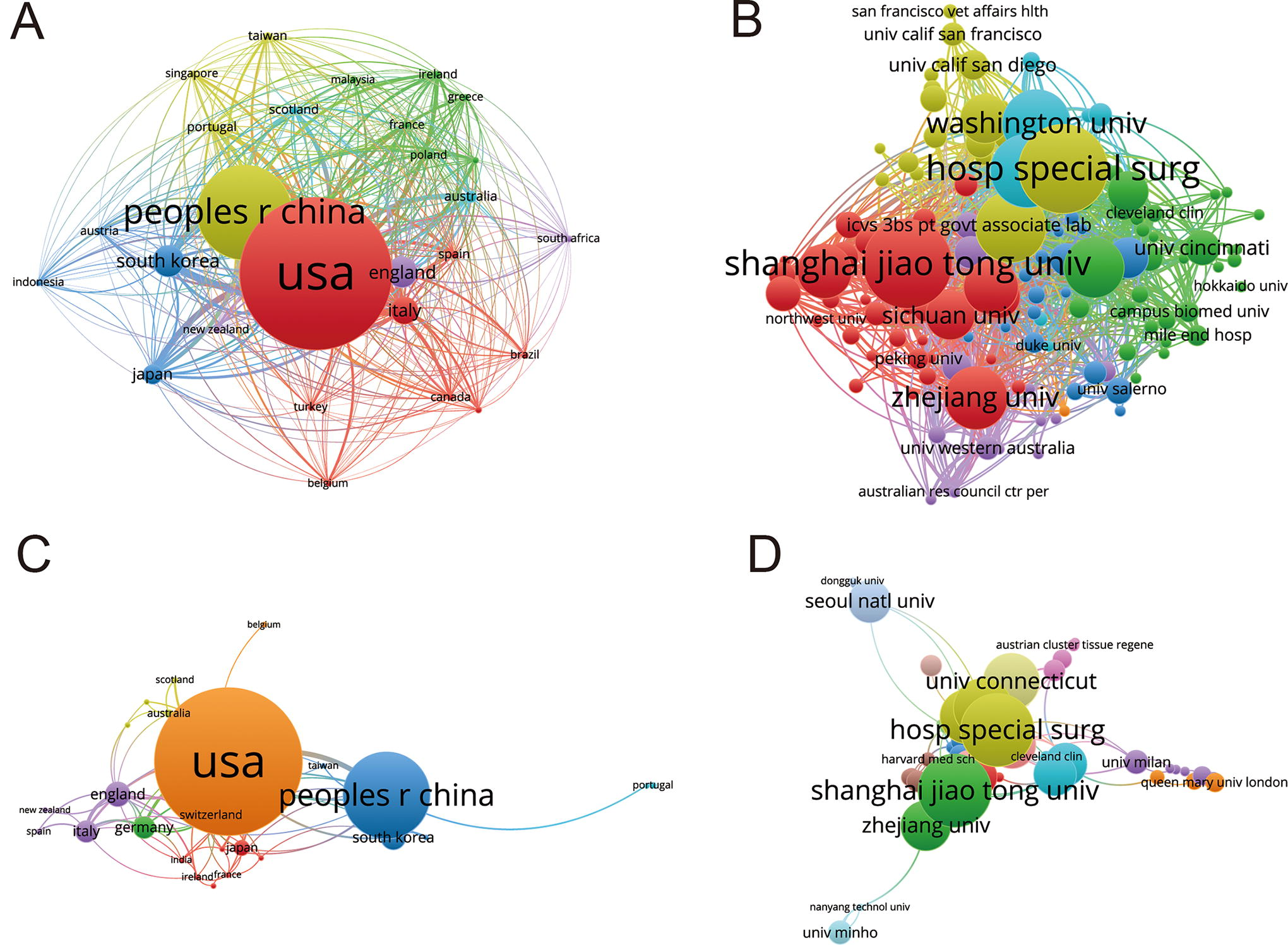
Mapping of countries/regions/institutions associated with Tissue engineering and regenerative medicine for rotator cuff injuries from 2003 to 2023.
Regarding publication volume, Table 1 identifies the top 10 institutions in terms of contributions, with Shanghai Jiao Tong University at the forefront evaluated by article count. An analysis of international collaborations between institutions placed Hospital for Special Surgery at the top (Fig. 4D). Interestingly, while institutions from China garnered the most citations, they did not feature as prominently in collaboration rankings, indicating a predilection for domestic collaborations among Chinese institutions, echoing the country collaboration analysis. As depicted in Figure 4B, VOSviewer was used to estimate research impact based on citations for the top 20 institutions, with Columbia University having the highest impact (link strength 31,306), followed by Shanghai Jiao Tong University (link strength 28,765) and the University of Connecticut (link strength 28,474); notably, Columbia University demonstrated a strong research impact despite not having the highest research output, leading in research impact, followed by Shanghai Jiao Tong University and the University of Connecticut.
Top 10 Institutions Published Literature Related to Tissue Engineering and Regenerative Medicine for Rotator Cuff Injuries from 2003 to 2023
Top 10 Institutions Published Literature Related to Tissue Engineering and Regenerative Medicine for Rotator Cuff Injuries from 2003 to 2023
VOSviewer examined 348 authors with more than two publications in the field, identifying Thomopoulos S as a leading author with 21 articles and 1,677 citations, indicating significant influence and a pivotal role, alongside other leading authors such as Rodeo SA, Zhao JZ, Laurencin CT, and Jiang J (Table 2). The visualized author collaboration network (Fig. 5B) shows two distinct research clusters, with Thomopoulos S and Gulotta lv having the highest link strength, indicating strong research connections and broad recognition. Bibliographic coupling and cocitation analyses (Figs. 5A and 5C) indicate thematic overlaps, with Thomopoulos S leading in both publication quantity and citation impact, showcasing significant collaboration and influence in the field.
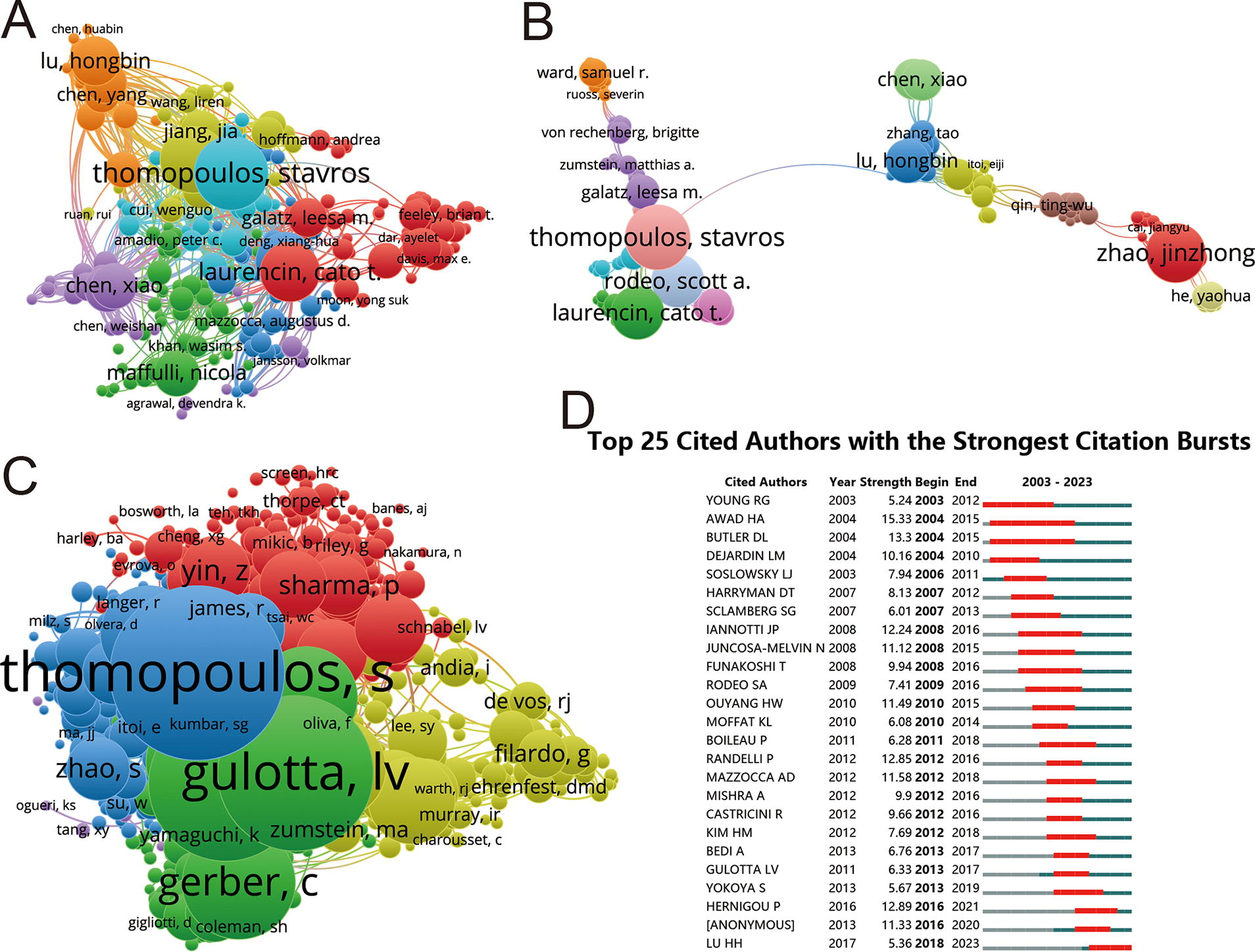
Network visualization of author collaboration analysis regarding tissue engineering and regenerative medicine for rotator cuff injuries from 2003 to 2023.
Top 10 Authors with the Most Publications Regarding Tissue Engineering and Regenerative Medicine for Rotator Cuff Injuries from 2003 to 2023
Furthermore, citation bursts that indicate the surges of interest in particular references over specific periods are used as critical metrics. In our study, the most prominent citation bursts were pinpointed. CiteSpace identified a total of 20 notable publications, as depicted in Figure 5D. The research by Young RG stood out, demonstrating the most intense citation burst, registering a burst strength of 5.24 from 2003 to 2012.
Table 3 showcases the 10 journals with the highest publication output in this study, highlighting the American Journal of Sports Medicine as the most prolific with 63 articles. Other significant contributors include the Journal of Shoulder and Elbow Surgery (37 articles), Journal of Orthopedic Research (34 articles), Arthroscopy: The Journal of Arthroscopic and Related Surgery (19 articles), and the Journal of Orthopedic Translation (16 articles). For the cocitation analysis performed using VOSviewer, journals with fewer than 10 citations were excluded. Figure 6 presents a detailed evaluation of 607 journals based on their total link strength. The top 5 journals identified by total link strength are the American Journal of Sports Medicine (3,804 citations), Journal of Shoulder and Elbow Surgery (2,331 citations), Journal of Bone and Joint Surgery American (2,248 citations), Journal of Orthopedic Research (2,083 citations), and Biomaterials (1,925 citations), as shown in Figure 6C.

Articles published in different journals on tissue engineering and regenerative medicine for rotator cuff injuries from 2003 to 2023.
Top 10 Most Productive Journals Related to Tissue Engineering and Regenerative Medicine for Rotator Cuff Injuries from 2003 to 2023
According to Table 4, the most prevalent research fields identified through VOSviewer are Orthopedics, Sport Sciences, Materials Science, Engineering, and Cell Biology. These orientations highlight the current focus and potential areas for future development in the field.
Top 10 Focused Research Areas
The analysis identified the most influential literature in tissue engineering and regenerative medicine for rotator cuff injuries, using VOSviewer to examine cocitation references. The article by Galatz LM had the highest link strength, indicating its significant influence. Among the top cited research articles, the most cited was “Shock wave therapy induces neovascularization at the tendon-bone junction—A study in rabbits,” which garnered 453 citations. The most cited Review Articles was “Tendon Healing: Repair and Regeneration,” with 292 citations, as detailed in Tables 5 and 6. In addition, the paper by Gulotta LV, published in 2009, exhibited the strongest citation burst, lasting from 2011 to 2014. These findings provide a comprehensive understanding of the key contributions and influential works in the field, highlighting both the most cited articles and the notable citation burst of Gulotta LV’s paper.
Top 5 Research Articles with the Most Citations in the Field of Tissue Engineering and Regenerative Medicine for Rotator Cuff Injuries from 2003 to 2023
Top 5 Research Articles with the Most Citations in the Field of Tissue Engineering and Regenerative Medicine for Rotator Cuff Injuries from 2003 to 2023
Top 5 Review Articless with the Most Citations in the Field of Tissue Engineering and Regenerative Medicine for Rotator Cuff Injuries from 2003 to 2023
Table 7 summarizes the funding sources for tissue engineering and regenerative medicine research related to rotator cuff injuries. In the table, the National Institutes of Health (NIH) USA and the United States Department of Health and Human Services stand out as the primary funders, supporting a total of 129 articles. This is closely followed by China’s National Natural Science Foundation with 107 articles and the NIH National Institute of Arthritis and Musculoskeletal and Skin Diseases with 41 articles. Interestingly, this funding distribution aligns with the earlier country-wise analyses, underscoring the prominent roles of the United States and China among driving research in this domain.
Top 10 Funds Related to Tissue Engineering and Regenerative Medicine for Rotator Cuff Injuries from 2003 to 2023
Using burst detection algorithm of VOSviewer, we analyzed and mapped the dynamic trends of keyword bursts. The co-occurrence of keywords, as presented in Figures 8A and 8B, indicates a pronounced emphasis on “mesenchymal stem-cells,” highlighting the significant interest in leveraging these cells for innovative therapies in rotator cuff repair. In Figure 9, keywords coalesce into ten distinct clusters, sequenced chronologically to illustrate the evolution of research focus. Notably, “fatty infiltration” following rotator cuff injuries remain pivotal concerns in repair strategies. Furthermore, keywords such as “repair,” “platelet-rich plasma,” and “in-vitro” have also frequently appeared during the period from 2003 to 2023. This suggests ongoing research interest and emphasis on these specific aspects in the field of tissue engineering and regenerative medicine for rotator cuff injuries.
Discussion
Over the past two decades, significant advancements have been made in the tissue engineering and regenerative medicine research for rotator cuff injuries. This article highlights the substantial efforts and progress in this field, providing a comprehensive bibliometric and visualization analysis from 2003 to 2023. Using bibliometric software, the study facilitates an intuitive and systematic understanding of development processes and trends in specialized fields, helping to identify emerging research hotspots and significant achievements. These insights offer valuable guidance for both novice and experienced researchers.
Trends of global development of tissue engineering and regenerative medicine for rotator cuff injuries
The visualization results demonstrate a significant upward trend in the number of publications from January 1, 2003, to December 31, 2023, and an increase in RRI, indicating the growing popularity of this research field over the past two decades.
Regarding national contributions, the United States leads the field of tissue engineering and regenerative medicine for rotator cuff injuries, contributing over 100 publications, the highest number of citations, and achieving the highest H-index, along with the highest average citations per publication, indicating a dominant role in research output and impact. China, while ranking second in total publications, stands ninth in average citations per publication, demonstrating significant influence but also highlighting the potential for improving the quality of its research output. Remarkably, two of the top 10 institutions and two of the top 10 funding sources in this field are based in China, underscoring its growing prominence. Furthermore, the analysis reveals a critical relationship between high academic influence and robust support from research platforms and funding agencies. The study anticipates an intensification of global collaboration among nations, institutions, and researchers, driven by the shared goal of advancing tissue engineering-based therapeutic approaches. Such collaborations are essential for future breakthroughs and innovations, promising to enhance clinical outcomes for rotator cuff injuries. In conclusion, although the United States remains the leader in publication quantity, citation impact, and average citations, China shows strong influence with considerable room for quality improvement. The emphasis on global collaboration and support from research platforms and funding is crucial for driving future advancements. This global trend highlights a promising future for tissue engineering-based therapeutic approaches, which are expected to significantly improve clinical outcomes for patients with rotator cuff injuries.
Status and quality of authors, journals, and studies
The United States, with top-ranked authors and substantial funding from the NIH, plays a crucial role in tissue engineering and regenerative medicine for rotator cuff injuries. These top authors, primarily from the United States, are early entrants who have gained prior attention for advancements in this field, as noted in Table 2. However, collaboration analysis shows that research relationships among authors from different countries are scattered, indicating a lack of academic connection and communication, as shown in Figure 4C. It is recommended that authors from different countries and institutions strengthen cooperation to improve research outcomes. Top-cited authors, including Thomopoulos S, Gulotta LV, and Galatz LM, receive significant international attention and recognition, as illustrated in Figure 5C. In addition, further exploration of journals associated with publications is presented in Table 3. In conclusion, the USA’s pivotal role is underscored by its top-ranked authors and significant NIH funding, but there is a need for enhanced international collaboration. Early entrants have made substantial contributions, and top authors such as Thomopoulos S, Gulotta LV, and Galatz LM emphasize the importance of their work. Strengthening global cooperation among authors could drive further advancements in the field. American Journal of Sports Medicine, Journal of Shoulder and Elbow Surgery and Journal of Orthopedic Research published most papers. The top five journals published more than 100 papers in total, and predictably, the listed top 10 journals might be the possible choices for researchers to publish high-quality research in the future. Furthermore, the cocitation analysis based on journals was conducted to investigate the impacts of publications by analyzing the total citation number. Figure 6C showed that Am J Sport Med had made the most outstanding contributions in this field. Among the top 10 research orientations, six are specialized in the clinical study and four are in the scope of basic research. More specifically, the dual-map analysis reflected the concentration of research in fatty infiltration, tissue engineering, and ECM.
The impact of published literature was evaluated in citation analysis of cocitation network analysis (Fig. 6A). Table 5 showed that the most cited article demonstrated that shock wave therapy significantly promotes neovascularization and angiogenesis marker expression at the tendon–bone junction in rabbits, suggesting its potential for promoting orthopedic healing. 24 Another study explored a multidisciplinary approach to tendon repair, integrating MSCs, bioscaffolds, and mechanical stimulation. It aims to improve tendon repair outcomes by enhancing the structural and material properties of the repairs, closely matching those of natural tendon tissue. 25 Among the five most frequently cited articles, the majority belong to the category of basic research, focusing on the pathology, pathogenesis, diagnosis, and treatment of rotator cuff injuries.
Notably, a cocitation analysis of the references reveals which publications have made the most outstanding contributions to the field. As shown in Figure 7B, the article “Outcomes and Repair Integrity of Completely Arthroscopic Large and Massive Rotator Cuff Repairs” by Galatz Leesa M. et al. is likely the most frequently cited reference. In Figure 7B, the majority of the top 25 articles with citation spikes are related to the pathophysiology, diagnosis, and treatment of rotator cuff injuries, indicating that these areas are hot topics in rotator cuff regeneration research.
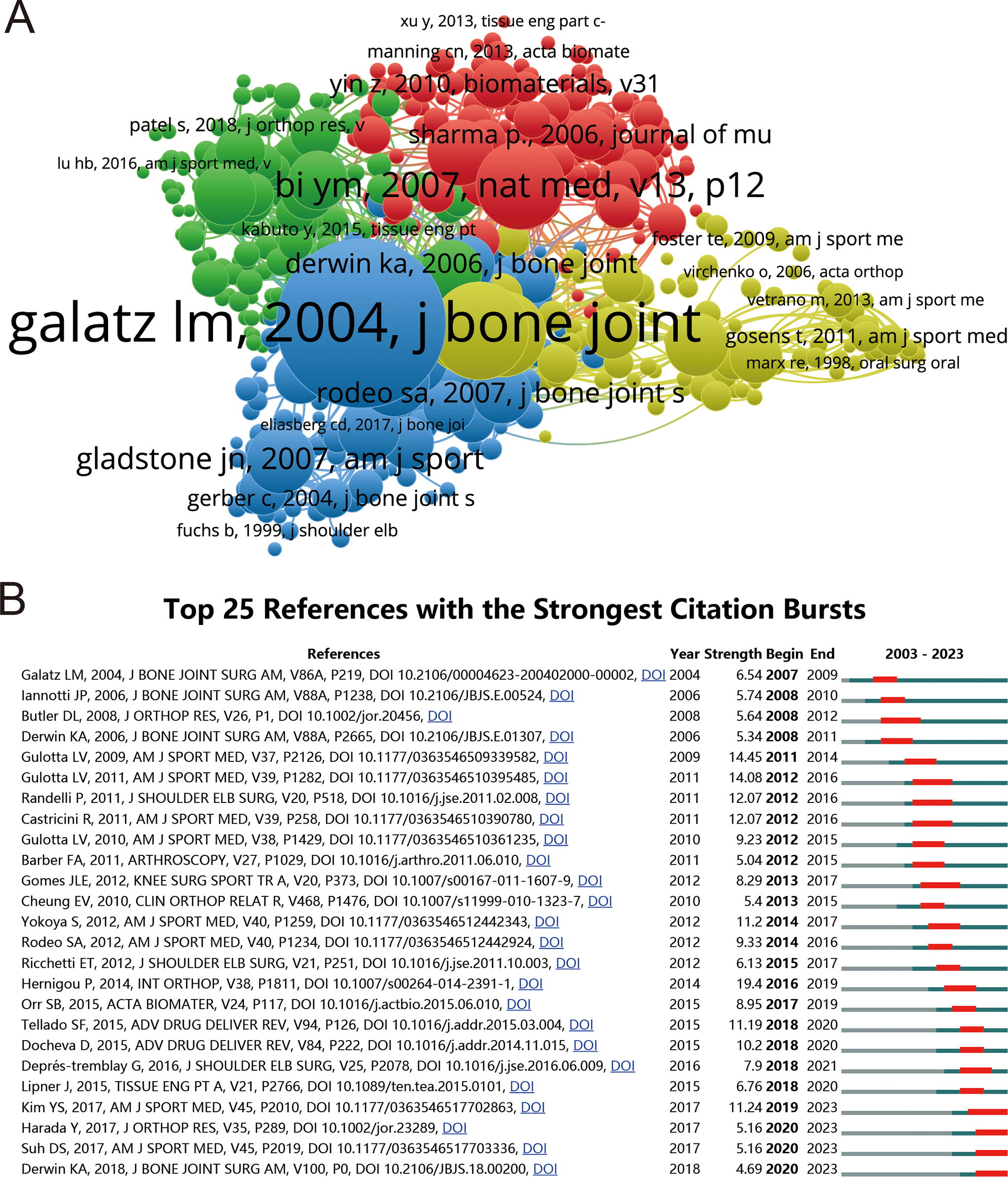
Mapping of references on tissue engineering and regenerative medicine for rotator cuff injuries from 2003 to 2023.
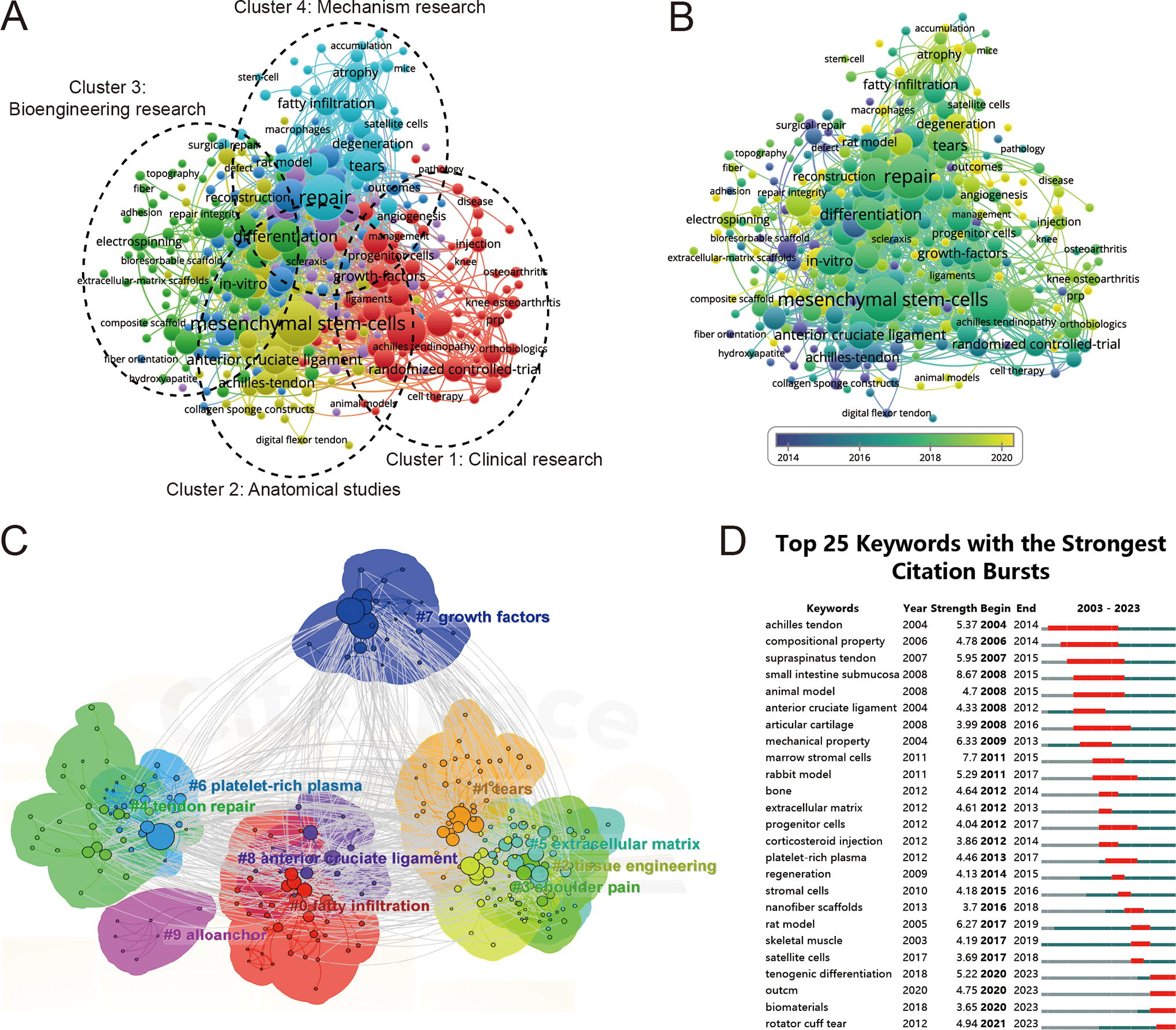
Mapping of keywords towards studies on tissue engineering and regenerative medicine for rotator cuff injuries from 2003 to 2023.

Visualization of keyword timeline visualization from 2013 to 2023.
The evolving research landscape and cutting-edge developments in tissue engineering and regenerative medicine for rotator cuff injuries can be discerned through the analysis of keyword co-occurrence and bursts. As depicted in Figure 8, “mesenchymal stem cells” emerge as the most frequently cited keyword, underscoring its dominant role in the field of regenerative medicine. Notably, the seminal work by Lawrence V. Gulotta et al. in 2009 laid the groundwork for investigating the potential of bone marrow-derived MSCs in enhancing the healing process postrotator cuff tendon repair. 26 Furthermore, Figures 8B and 8C illustrate that the core research clusters predominantly revolve around “growth factors,” “platelet-rich plasma,” “anterior cruciate ligament,” “extracellular matrix,” and “tissue engineering.” This convergence of themes highlights a substantial overlap and synergy among biomaterials, stem cell applications, and tissue engineering techniques, all of which collectively contribute to the advancement of rotator cuff healing methodologies.
Based on the keywords extracted from the titles and abstracts of all publications included in our study, a keyword timeline visualization network was created. Figure 9 illustrates ten primary research clusters, which encompass more detailed secondary research keywords and their occurrences and changes over time. Figure 8A displays four main research trends, which can be further divided into four clusters: clinical research (red), anatomical studies (yellow), bioengineering research (green), and mechanism research (blue). These results not only align with the current hotspots in the field of rotator cuff injury tissue engineering and regenerative medicine but also predict future research directions, as shown below.
(I) Clinical researches: Co-occurrence analysis of keywords has pinpointed “cell therapy,” “Platelet-Rich Plasma (PRP),” and “growth factors” as significant research hotspots in clinical treatment that merit further attention. These terms have emerged as central themes in the current literature, underscoring their potential in advancing therapeutic interventions. Cell therapy for rotator cuff injuries uses MSCs to promote tendon–bone interface healing. MSCs aid in healing by differentiating into relevant cell types, enhancing angiogenesis, reducing inflammation, and secreting healing-promoting bioactive molecules. Their effects are significantly mediated through the release of exosomes, facilitating intercellular communication and tissue repair.27,28 “PRP,” which stands for platelet-rich plasma, is a regenerative treatment that aims to reduce pain and enhance function. It is easy to prepare using a centrifugal process and contains a number of GFs. 29 Platelet-rich plasma injections, often guided by ultrasound, are based on the premise of using the platelets of patients to promote healing. The therapy has shown potential in various studies, offering benefits such as pain relief, improved function, and possibly superior outcomes compared with corticosteroids in the medium to long term. However, evidence is varied, and further research is necessary to fully understand its efficacy and optimal application. 30 Finally, GFs such as Platelet-Derived Growth Factor (PDGF), Vascular Endothelial Growth Factor, Transforming Growth Factor-beta, Fibroblast Growth Factor, and Insulin-Like Growth Factor from platelets can stimulate tissue healing and regeneration in rotator cuff injuries. 31 The prominence of these keywords signals a concerted move toward more regenerative and biologically based treatments, marking them as areas ripe for further investigation and development in the quest to enhance clinical outcomes. Furthermore, given that both cartilage and tendon/ligament regeneration are integral components of tissue engineering, there exists a notable parallel and connection between the regenerative medical treatments for rotator cuff injuries and osteoarthritis.
(II) Anatomical studies: This bibliometric analysis delves into the intricacies of structural properties and their implications in regenerative medicine, particularly concerning the rotator cuff, anterior cruciate ligament (ACL), and Achilles’ tendon. As shown by cluster 2 in Figure 8A, this group also explores the applications of MSCs in the regeneration of these tissues.
In sports medicine, injuries related to the insertion of tendons into bones, such as rotator cuff injuries, anterior cruciate ligament injuries, and Achilles tendon ruptures, are frequently observed. 32 These structures share a common vulnerability to injuries due to overuse, degeneration, or acute trauma. Their intrinsic anatomical properties, such as limited blood supply and the intricate arrangement of collagen fibers, pose significant challenges to natural healing and regeneration. 33
MSCs have gained attention for the capabilities of self-renewal and multipotent differentiation and exhibit immunomodulatory capacity. 34 In the context of the rotator cuff, ACL, and Achilles tendon, MSCs can be used to promote the regeneration of damaged tissues. Their capacity to reducing pain and potentially improving function makes them a promising tool in enhancing tissue repair and mitigating fibrosis or scar formation. 35 In recent years, the generation of induced pluripotent stem cells (iPSCs) represents a recent advancement that has introduced new research and therapeutic opportunities, marking a significant milestone in the field.36–38 These human pluripotent stem cells can differentiate in vitro into derivatives of the three primary germ layers, with the potential to become any cell type in the body, marking a significant advancement in the field. 39 In medical science, the application of iPSC technology in cell therapy is rapidly gaining momentum. This innovative approach is enhancing fields such as regenerative medicine 40 and cancer immunotherapy, 41 as well as advancing disease research and drug discovery. 42
Research of Cluster 2 is pivotal in understanding the structural complexities of the rotator cuff, ACL, and Achilles tendon and harnessing the potential of collagen sponge constructs as well as MSCs in tissue regeneration. By focusing on the unique anatomical properties and the regenerative capacities of these innovative approaches, this group aims to develop more effective treatments for injuries and degenerative conditions, ultimately improving patient outcomes and their quality of life.
(III) Bioengineering researches: Cluster 3, dedicated to bioengineering research, is at the intersection of engineering and biology, pushing the boundaries in tissue regeneration and repair. The focal keywords of this group—“electrospinning,” “extracellular matrix scaffolds,” and “in-vitro studies”—highlight the pioneering role of advanced materials, techniques, and methodologies for tissue engineering.
Electrospinning has emerged as a highly favored technique in recent years, which uses an electrostatic potential characterized by high voltage and very low current for creating ultrafine fibers. 43 This method can achieve high porosity, enable surface functionalization, and offer adjustable structural properties, making it a cornerstone in the fabrication of advanced materials. The most commonly used materials are organic polymers in the form of either solution or melt. 44
Decellularized ECM (dECM) scaffolds stand out among various scaffold types. These biomaterials are crafted from human or animal organs/tissues, where immunogenic cellular components are meticulously removed using decellularization technologies. As a result, they are garnering significant attention for their potential in regenerative medicine and tissue engineering. 45 dECM scaffolds are made up of various ECM components, including collagen, elastin, fibronectin, laminin, and matricellular proteins, providing a robust and natural-like extracellular environment. This composition creates a complex 3D structure that closely mimics the natural ECM. 46 It has significant applications in tissue engineering, as they can be implanted into patients to restore damaged organs, aid in the regeneration of endogenous tissues, and replace missing organs. 47
In vitro studies are a cornerstone in this group’s research, providing the preliminary platform to test and refine these bioengineering advancements. 48 One example is the development of 3D-printed scaffolds for bone regeneration, where in vitro studies assess biocompatibility and osteo-inductive properties of the materials. 48 These in vitro experiments are crucial for understanding the fundamental mechanisms at play and pave the way for in vivo studies and clinical applications. 49
(IV) Mechanism researches: Research of Cluster 4 is instrumental in shedding light on the processes of degeneration, fatty infiltration, and atrophy. By gaining a deeper understanding of these mechanisms, this group is at the forefront of developing innovative and targeted approaches to combat tissue deterioration. The research holds the potential to revolutionize regenerative medicine, offering new hope for the restoration and preservation of tissue health through its insights and discoveries.
“Degeneration” encapsulates the gradual deterioration of tissues, often associated with conditions like osteoarthritis or tendonitis. Muscle atrophy refers to the decline in muscle mass and strength. The mechanisms underpinning muscle atrophy are complicated and poorly understood. 50 Increased oxidative stress, heightened inflammation, and impaired mitochondrial function are critical upstream signals leading to skeletal muscle atrophy induced by various diseases. 51 In addition, the ubiquitin proteasome system, 52 autophagy lysosome system, 53 caspase system, and calpain system are four major downstream elements for protein degradation. Understanding the mechanisms behind atrophy allows for more targeted treatments of rotator cuff injuries.
“Fatty infiltration” is another critical research focus of this group. Fatty infiltration, along with severe atrophy, and fibrosis have shown to be strong predictors of retears following the surgery. 54 It involves the accumulation of fat cells within tissues, which can disrupt normal tissue structure and function. This process is particularly detrimental in muscular and connective tissues, where it can compromise the integrity and healing capacity of the tissue. In addition, finding ways to inhibit fatty infiltration is a significant concern for many researchers. For instance, studies have demonstrated that suppressing PDGFR signaling can reduce muscular fatty infiltration to high extent following rotator cuff tears which offers a new target for clinical interventions of ideal efficacy. 55
Future research trends
Forecasting future trends and impacts in tissue engineering and regenerative medicine for rotator cuff injury treatments is crucial, with key research areas identified as fatty infiltration, tissue engineering, tendon repair, ECM, and platelet-rich plasma, as shown in Figure 8C, highlighting a growing focus on foundational studies. In addition, the research direction is shifting from surgical repair to regeneration research and mechanism research, as depicted in Figure 8B, which could significantly influence future research. The analysis underscores these key areas and the shift in focus as essential to shaping future research directions and impacts in the field.
The pathophysiology of rotator cuff injuries is inherently complex, characterized by chronic physiological changes and intense inflammation. Normal tissue development and repair processes involve a sophisticated interplay of various cell types and ECM components. 56 However, the intricate nature of these processes often leaves researchers grappling with ambiguities which necessitates a deeper dive into the molecular and cellular dynamics at play. Ghilardi et al. (2020) discuss how calcium and Extracellular Signal-Regulated Kinase signaling pathways play critical roles in tissue repair by linking specific injury signals to cellular repair actions. 57 The review highlights the use of advanced biosensors and optogenetic tools to analyze these signaling networks, emphasizing the complexity of cellular communication in tissue repair.
Furthermore, the principal mechanisms through which scaffold-based and bioengineered treatments exert their regenerative effects are not fully understood. Although several hypotheses have been proposed and some positive therapeutic effects are observed, a consensus on the definitive pathways and mechanisms remains elusive. Renowned studies, such as the review by Hofer and Tuan, shed light on the trophic activities of certain biomolecules and signaling pathways, such as nitric oxide and nuclear factor-kB, in mitigating pain and promoting tissue regeneration. Yet, the comprehensive mapping of these pathways in the context of rotator cuff regeneration is still in its infancy. 58
Rotator cuff repair is a complex process requiring advanced regenerative techniques that involve material scaffolds, stem cells, and GFs. The effectiveness of these techniques varies in enhancing the repair process, tissue regeneration, mechanical strength, and clinical outcomes, indicating the need for tailored approaches to achieve optimal results. 59 A more profound understanding of the pathology and mechanisms of tissue injury and repair will undoubtedly enhance the development of more precise and effective regenerative strategies. This entails not just improving the choice of materials and the design of scaffolds but also fine-tuning treatment protocols and minimizing adverse effects. As the field continues to evolve, the promise of regenerative medicine and tissue engineering in revolutionizing the treatment of rotator cuff injuries grows ever more tangible, heralding a new era of recovery and rehabilitation for patients.
Limitations of this study
While this review offers valuable perspectives on global progress and focal points in tissue engineering and regenerative medicine for rotator cuff injuries, it is important to acknowledge certain limitations. Specifically, distinguishing nuanced details within this domain, such as the specific types of tissues involved in regenerative scaffolds and the intricate interactions between different biomaterials and cellular components, remains challenging. Furthermore, there is a potential for overlooking certain studies due to database and language biases. Databases such as PubMed, Cochrane, and the Embase library, as well as non-English language databases, were not included, which may affect the comprehensiveness of our review. In addition, the reliance on citation frequency may result in underrepresentation of high-quality studies published recently, creating a discrepancy between actual research activities and the bibliometric analysis presented. Hence, it is imperative for future research to incorporate the most recent studies and consider works published in languages other than English to provide a more holistic understanding of the field.
Conclusion
Overall, our research demonstrates significant global trends and an increased focus on tissue engineering and regenerative medicine for rotator cuff injuries from 2003 to 2023. The United States has made the largest contribution, leading with the most publications, total citation frequencies, and H-index, underscoring its pivotal role and leadership in advancing the field. In addition, our study identifies anticipated key areas for future research, which will likely shape the ongoing evolution and potential of tissue engineering and regenerative medicine for rotator cuff injuries:
Advanced biomaterial development
Focus will lie in creating more sophisticated biocompatible materials that closely emulate the natural structure and function of rotator cuff tissues to enhance the quality and durability of regenerated tissues.
Precision in stem cell technology
Delving into the specific roles and efficacy of various stem cells, such as MSCs and induced pluripotent stem cells, in promoting repair and regeneration of damaged tissues.
Scaffold design and 3D bioprinting
Advancing the use of 3D bioprinting to fabricate precise and personalized scaffolds that provide essential biomechanical support and promote cell growth as well as tissue regeneration.
Microenvironment and cellular signaling studies
Investigating the complex interactions between the ECM, intercellular communication, and the cellular microenvironment during the injury and regeneration process to identify novel therapeutic targets and strategies.
Through in-depth research and innovation in these pivotal areas, tissue engineering and regenerative medicine are poised to revolutionize the treatment of rotator cuff injuries, offering more effective and sustainable therapeutic solutions for patients.
Footnotes
Authors’ Contributions
Z.Y.: Contributed to conceptualization, methodology, software, investigation, and visualization. Q.Y.L.: Contributed to conceptualization, investigation, writing original draft preparation. Y.D.N.: Contributed to formal analysis, writing original draft preparation, and reviewing. M.Z.S.: Contributed to writing, reviewing and revising. F.F.Z.: Conducted formal analysis and validation. D.X.: Contributed to supervision and funding acquisition.
Disclosure Statement
No competing financial interests exist.
Funding Information
This study was funded by Peking University Clinical Scientist Training Program (supported by "the Fundamental Research Funds for the Central Universities", BMU2024PYJH015) and Innovation Fund for Outstanding Doctoral Students of Peking University Health Science Center.