




Abstract
This bibliometric analysis examined research on bioactive glass in dentistry from 2015 to 2024, identifying key trends, its impact on dental applications, and future research directions. Data were collected from Web of Science and Scopus in April 2025, focusing on studies published between 2015 and 2024 using the keywords “Dentistry” AND “Bioactive Glass.” A total of 2114 studies from 706 sources were analyzed, involving 7471 authors with an average of 5.78 coauthors per article. The analysis used Web of Science and Scopus, which provide comprehensive access to peer-reviewed literature in dentistry and materials science. Prominent journals included Dental Materials, Ceramics International, Materials, Journal of the Mechanical Behavior of Biomedical Materials, and Journal of Dentistry. There was a notable increase in publications, with 52 articles in 2024. The average number of citations per document was 15.61, and the average document age was 4.72 years. Collaborative research, especially among Saudi Arabia, Egypt, China, the United States, and Brazil, was a significant trend. Leading institutions included the Egyptian Knowledge Bank, University of London, and King Abdulaziz University, reflecting substantial contributions from the Middle East, Europe, and Asia. Core research topics focused on bioactive glass, mechanical properties, nanoparticles, bioactivity, and hydroxyapatite. The study highlights a growing global interest in bioactive glass, particularly in relation to dentin hypersensitivity, remineralization, and tissue regeneration. The continued rise in publication volume and expansion of international collaborations underscore the vitality of this field. Emerging directions such as bone regeneration, antibacterial applications, and advancements in the mechanical performance of bioactive materials are likely to shape the trajectory of future research.
Impact Statement
This bibliometric analysis highlights the growing significance of bioactive glass in dentistry, particularly in the context of remineralization, tissue regeneration, and antimicrobial protection. The increasing volume of research, highlighted by a surge in publications and international collaborations, reflects the expanding interest in bioactive glass. Prominent research areas include remineralization, hydroxyapatite applications, and mechanical properties of bioactive materials, with implications for bone regeneration and innovative dental treatments. By identifying trends and leading contributors, this study provides a foundation for future research aimed at enhancing the clinical applications and material science of bioactive glass in dentistry.
Introduction
Bioactive glass has emerged as a distinctive material in modern dentistry, recognized for its regenerative and antibacterial properties. Bioactive glass 58S effectively alleviates dentin hypersensitivity by forming a protective layer that seals open dentinal tubules, thereby mitigating the impact of external stimuli on nerve endings. 1 Composite materials incorporating amorphous calcium phosphate and bioactive glass nanoparticles have also demonstrated efficacy in caries prevention by creating a mineral barrier on enamel surfaces, protecting them from demineralization. 2
Multicomponent porous bioactive glass coatings for implants have been shown to improve both biocompatibility and osseointegration, essential factors for implant stability and longevity. 3 The 70S30C bioactive glass has also shown potential in pulpotomy treatments by inducing a controlled inflammatory response, which activates regenerative processes that promote pulp tissue healing. 4
The remineralizing properties of bioactive glass are particularly advantageous for treating early stage caries. For example, strontium-doped bioactive glass has been evaluated for its ability to stimulate hydroxyapatite formation—the primary mineral component of teeth—thereby enhancing the restoration and reinforcement of enamel and dentin. 5 Furthermore, incorporating fluoride into bioactive glass enhances its protective capabilities against acid-induced demineralization, which is especially beneficial for patients at high risk of caries. 6
Another notable advantage of bioactive glass is its antibacterial properties, especially when ions such as zinc and silver are incorporated to enhance its antimicrobial effects. These additions help control microbial biofilms that contribute to periodontal diseases and caries, making bioactive glass an ideal component for adhesives and coatings that protect dental tissues while reducing the risk of infections. 7
In advanced applications, bioactive glass is used as a key ingredient in remineralizing gels and pastes designed to treat enamel white spot lesions. 8 These formulations, enriched with bioactive glass and fluoride, promote deep remineralization, making them particularly effective in strengthening compromised enamel and preventing further deterioration. 9 In endodontic practice, bioactive glass is valued for its potential in pulp capping, where it protects and promotes the healing of pulp tissues, making it suitable for regenerative dentistry. 10 Its regenerative properties are equally advantageous in bone surgery, where bioactive glass accelerates osteogenesis and facilitates the repair of bone defects, which is critical for implant placement and periodontal therapies. 11
Despite its numerous advantages, bioactive glass has certain limitations. Its relatively high cost can hinder widespread adoption, particularly in low-resource settings. 12 In addition, while bioactive glass demonstrates high efficacy in remineralization and osseointegration, its mechanical durability may be inferior to other dental materials, such as composites and ceramics, under significant masticatory forces. 13 Environmental factors, such as highly acidic conditions or the presence of fluoride-resistant bacterial strains, may also reduce its effectiveness. 14
When compared with calcium phosphate-based materials, bioactive glass exhibits superior remineralization properties due to its ability to release therapeutic ions that stimulate hydroxyapatite formation. 15 However, calcium phosphate materials generally exhibit better biocompatibility in highly acidic environments, making them preferable for specific clinical applications. 16 Fluoride-based treatments, on the other hand, are highly effective in preventing demineralization and caries but lack the regenerative and antibacterial properties inherent to bioactive glass. 17 This comparison underscores the unique potential of bioactive glass to address both therapeutic and preventative needs in dental care. This study aims to provide a comprehensive bibliometric analysis of bioactive glass research in dentistry, examining development trends, key areas of impact, and emerging applications.
Materials and Methods
Research strategy
To conduct a comprehensive review of studies in dentistry involving bioactive glass, we sourced data from the Web of Science and Scopus databases. Our research strategy was designed to cover various aspects of this field. Data collection was carried out in April 2025. The search protocol included the terms “Dentistry” AND “Bioactive Glass” (in the title) or “Dentistry” AND “Bioactive Glass” (in the abstract) (Table 1). The search spanned the period from 2015 to 2024, with no restrictions other than those inherent to the indexing in the Web of Science and Scopus databases. Our selection criteria were limited to original research articles and reviews published in English. We excluded nonoriginal studies and nonpeer-reviewed documents; however, we included articles covering a wide range of clinical applications of bioactive glass in dentistry, including caries management, periodontitis, pulp therapy, bone regeneration, and dentin hypersensitivity. The article selection procedure is illustrated in Figure 1.

Flowchart for article selection in the bibliometric analysis of the use of bioactive glass in dentistry.
Web of Science and Scopus Databases (Author Keywords OR Title OR Abstract)
RStudio and Biblioshiny analysis
The bibliometric study was conducted using RStudio v.4.4.0, a robust open-source statistical software, along with the bibliometric R package. This was accessed on April 5, 2025, alongside the Biblioshiny tool. Biblioshiny provides an interactive and user-friendly platform for bibliometric studies, facilitating the examination of publication trends, collaboration networks, and keyword linkages. Networks of coauthorship, co-occurrence analysis of keywords, and citation patterns were created to uncover collaboration patterns among researchers and the influence of articles in this domain.
Delineation of predominant institutions, publications, authors, and allied nations
We created visual depictions to illustrate the connections among the most dynamic institutions and authors, offering insights into their collaborative efforts. Countries were assessed based on their scholarly output, determined by the proportion of papers each contributed. In addition, we explored the extent of collaboration among the top 10 most productive nations. To visually represent this cooperation, we designed a map reflecting the number of publications from each country.
Investigation of keyword recurrences
A chronological analysis was conducted with increased precision to trace the intermittent emergence of distinct keywords over the years. A TreeMap was created to display the distribution and significance of the top 10 most recurrent keywords. A comprehensive thematic analysis was carried out to highlight the prevailing trends and patterns within the selected articles.
Results
Comprehensive overview of the manuscripts
A total of 2144 relevant studies from 706 different sources were thoroughly examined. The research involved 7471 researchers, who collectively contributed an average of 15.61 citations per article over the past 10 years. The main findings regarding the use of bioactive glass in dentistry are presented based on the most-cited papers from the last decade in Table 2. In addition, the annual growth rate for this research area was calculated at 9.4%, indicating the increasing importance of this topic and the growing number of researchers in the field. The substantial volume of scientific work is further highlighted by the presence of 4613 unique author keywords. Notably, a significant portion of the authors engaged in collaborative research (25.31%).
Top 10 Most Cited Documents on the Use of Bioactive Glass in Dentistry (2020–2024)
Evolution of publication and citation metrics
The data indicate a sustained increase in publication activity on the topic of bioactive glass in dentistry (see Fig. 2A, B). Between 2015 and 2024, the annual number of publications more than doubled, rising from 127 to 285 articles. The highest number of publications was recorded in 2022 (N = 295), marking a peak in research interest during this period. At the same time, a decline in the average number of citations per article was observed—from 33.71 in 2016 to 2.09 in 2024—which is likely due to the fact that more recent publications have not yet had sufficient time to accumulate citations. A similar trend is seen in the annual average citation rate, which decreased from 3.37 to 1.04 over the same period. Nevertheless, the continued growth in publication output in recent years confirms the sustained interest of the research community in this field.
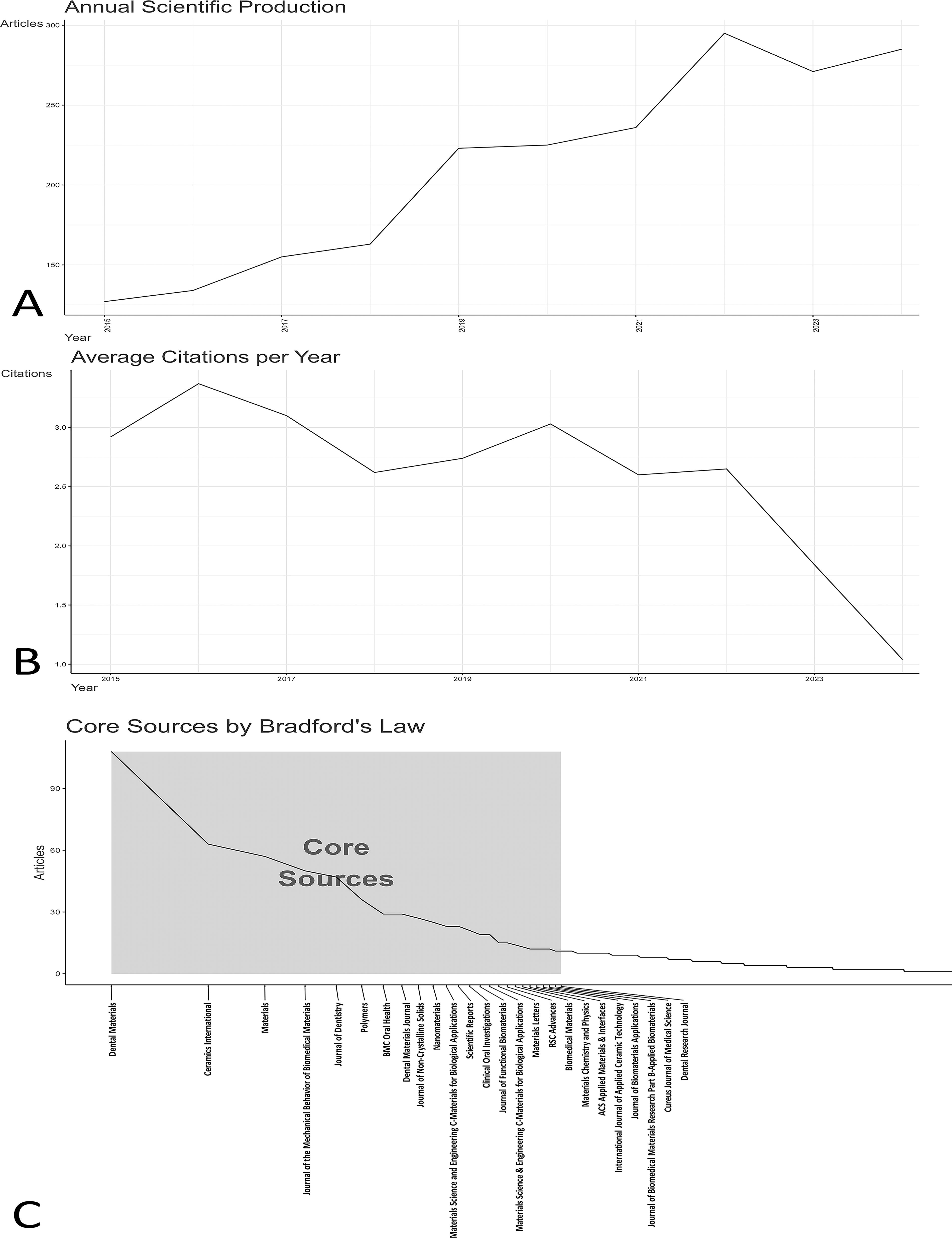
The yearly global pattern of
According to Bradford’s Law, the core of publication activity on the topic of bioactive glass in dentistry is concentrated in 10 leading scientific journals (Fig. 2C). The largest number of articles was published in Dental Materials, which accounted for 108 publications, followed by Ceramics International with 63, Materials with 57, Journal of the Mechanical Behavior of Biomedical Materials with 50, and Journal of Dentistry with 47. The remaining core journals, including Polymers, BMC Oral Health, Dental Materials Journal, Journal of Non-Crystalline Solids, and Nanomaterials, contributed between 25 and 36 articles. These journals serve as central platforms for disseminating research findings and collectively represent the primary channels for scholarly discourse on bioactive materials in dentistry. Detailed publication counts for each of these journals are provided (Table 3). These journals play a key role in advancing research in the field of dental materials, reflecting their central position in the scholarly discourse on the subject.
The 10 Most Cited Journals on the Topic of the Treatment of the Use of Bioactive Glass in Dentistry From 2020 to 2024
Most productive authors, institutions, countries, and their collaboration network
Based on the updated data, the institutions that contributed the highest number of publications in the field of bioactive glass in dentistry were Egyptian Knowledge Bank, University of London, King Abdulaziz University, Dankook University, Imam Abdulrahman Bin Faisal University, Universidade Estadual Paulista, Queen Mary University London, King Saud University, Saveetha Dental College and Hospital, and Tehran University of Medical Sciences, with 148, 111, 94, 89, 82, 70, 62, 54, 50, and 50 articles, respectively (Fig. 3A). These institutions reflect a broad geographic distribution, with strong representation from the Middle East, Europe, Asia, and South America, highlighting the global interest and multidisciplinary contributions to the topic.
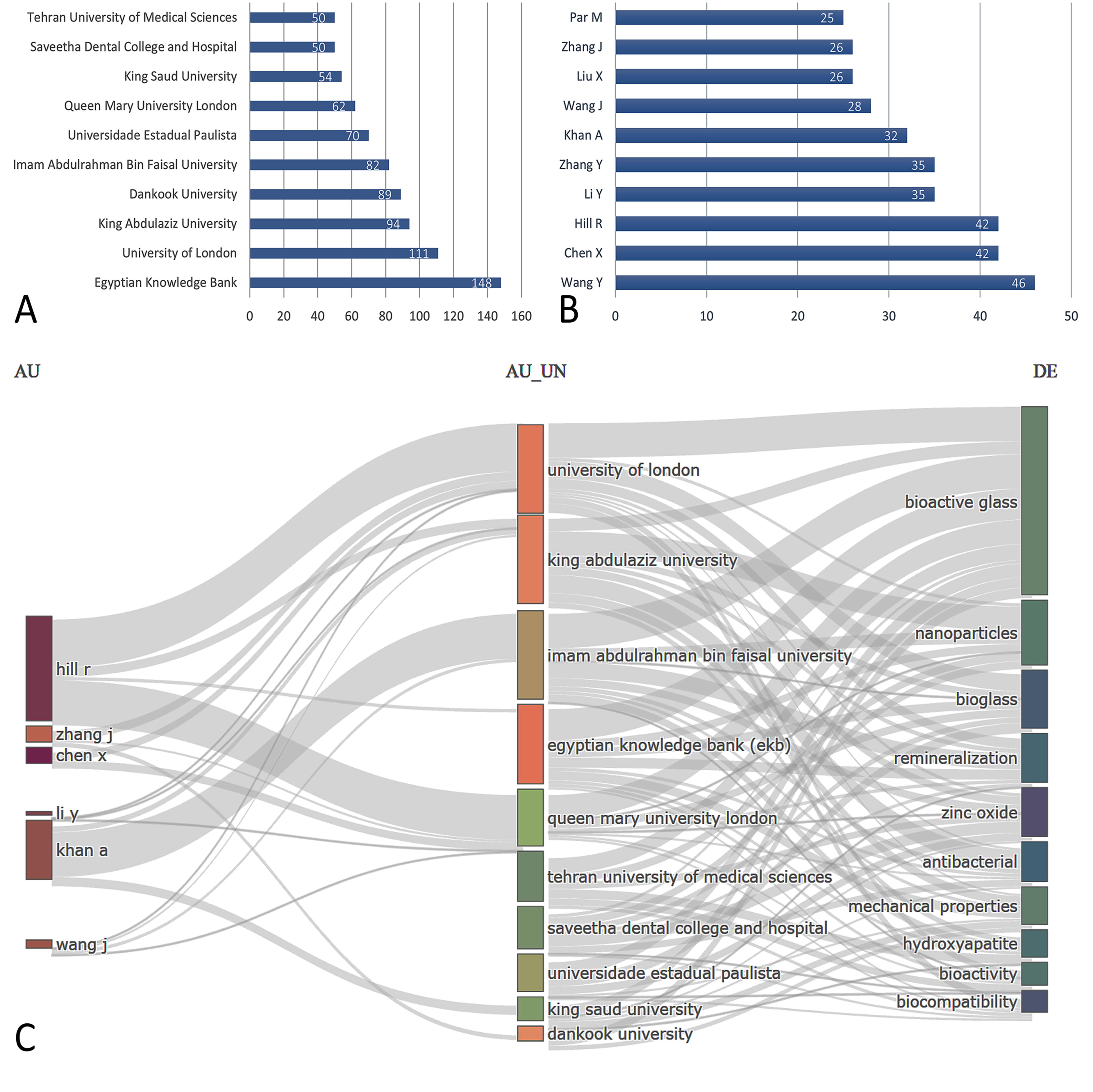
Overview of key contributors and trends in the study of bioactive glass in dentistry.
Among the most productive authors, Wang Y was the leading contributor with 46 publications, followed by Chen X and Hill R, both with 42. Li Y and Zhang Y each published 35 articles, while Khan A, Wang J, Liu X, Zhang J, and Par M also showed consistent productivity, with 25–32 publications each (Fig. 3B). This author distribution indicates sustained efforts by a group of prominent researchers, many of whom are affiliated with institutions that appear in the top contributing affiliations.
The three-field plot illustrates the interconnected structure of scientific production, showing how affiliations, authors, and keywords are interrelated in this research domain (Fig. 3C). Notably, authors such as Hill R, Khan A, and Wang Y demonstrate multiple connections to keywords such as “bioactive glass,” “mechanical properties,” “antibacterial,” and “remineralization,” suggesting the central thematic clusters within the literature.
In terms of international collaboration, Saudi Arabia showed the highest frequency of partnerships, with Egypt (33), Pakistan (20), and the United States (17) as its leading collaborators. China maintained strong cooperation with the United States (28), the United Kingdom (16), and several other countries, including Germany, Canada, Japan, and Australia. Brazil formed frequent collaborations with the United States (26), Spain (12), Canada (11), the United Kingdom (10), and Germany (7), reflecting its growing involvement in global dental materials research. The United Kingdom appeared as a frequent partner country for multiple regions, especially with Iraq, Spain, Egypt, Finland, and France. This network of scientific partnerships demonstrates the extent of international engagement, with collaborations spanning North and South America, Europe, Asia, and Oceania, underlining the widespread relevance of bioactive glass research in the global dental community (Fig. 4A).
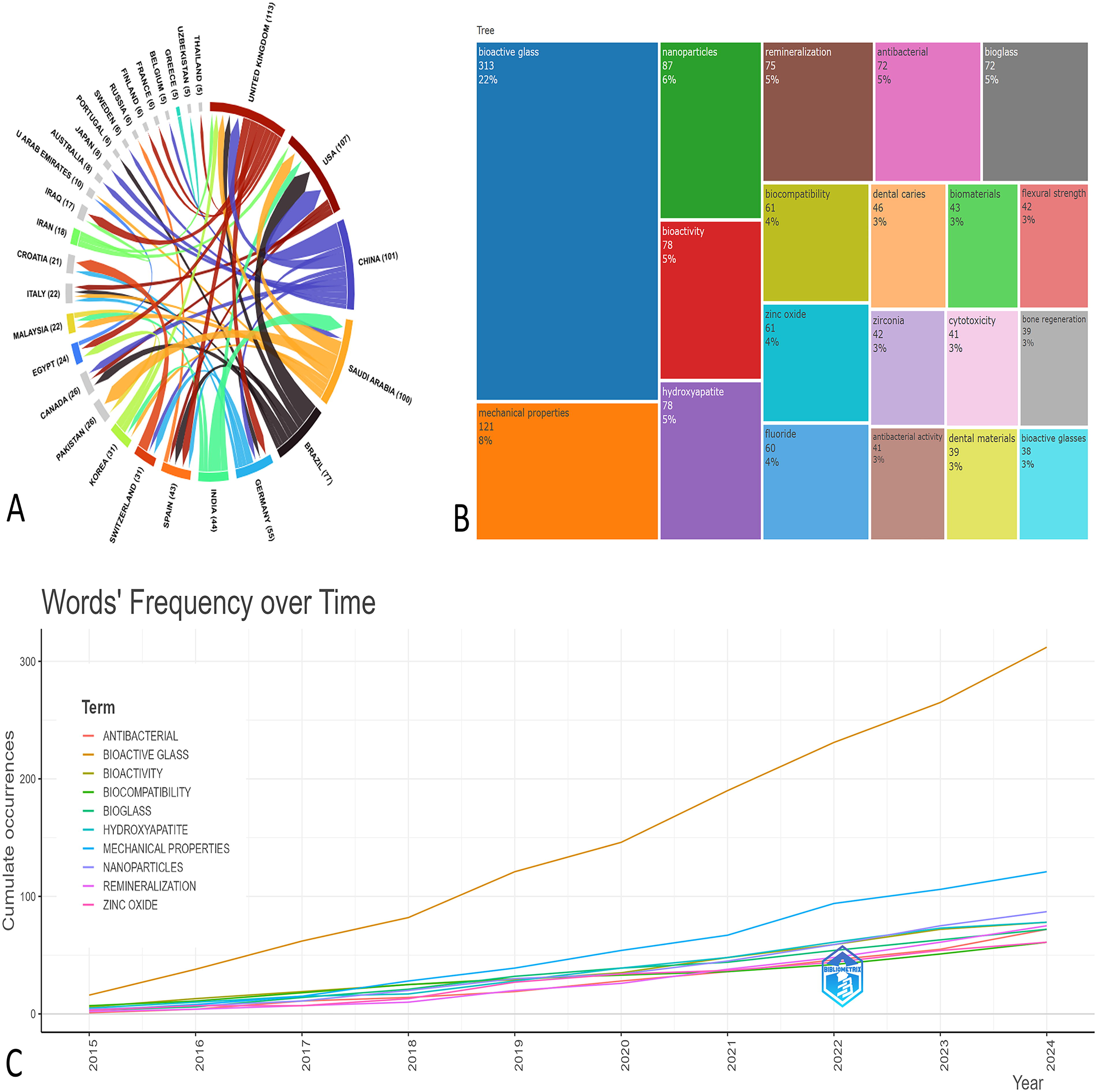
Visualization of global collaboration and keyword trends in bioactive glass research in dentistry (2015–2024).
Co-occurrence, focal points, and evolving keywords
The analysis of author keywords over time reveals a steady and significant increase in the frequency of core terms associated with bioactive glass and its applications in dentistry (Fig. 4B). From 2015 to 2024, the term bioactive glass demonstrated the most pronounced growth, rising from 16 mentions in 2015 to 312 in 2024. A similar upward trend was observed for mechanical properties, which increased from 3 to 121 mentions over the same period. Other highly recurring terms included nanoparticles (from 4 to 87), bioactivity (from 6 to 78), and hydroxyapatite (from 5 to 78), reflecting the growing attention to both material characteristics and biological interactions.
In parallel, keywords such as remineralization, antibacterial, bioglass, and biocompatibility exhibited marked growth. The frequency of remineralization rose from 2 mentions in 2015 to 75 in 2024, while antibacterial increased from 1 to 72. Terms like bioglass and biocompatibility followed similar trajectories, each reaching 72 and 61 occurrences, respectively, by 2024. The emergence of zinc oxide—growing from 3 mentions in 2015 to 61 in 2024—also indicates expanding interest in multifunctional biomaterials.
These trends reflect a shift from purely compositional research toward applied studies emphasizing performance characteristics and biological outcomes. The TreeMap of keyword distributions further highlights bioactive glass as the dominant term, accounting for 31% of all keyword occurrences, followed by mechanical properties (12%), nanoparticles (9%), bioactivity and hydroxyapatite (8% each), with other terms such as antibacterial, bioglass, and remineralization each representing 7% or more (Fig. 4C).
A timeline analysis of trending topics also confirms the sustained prominence of bioactive glass from 2019 through 2023, with notable interest in hydroxyapatite, antibacterial agents, chlorhexidine, and white spot lesions (Fig. 5). Newer terms such as sol–gel, biofilm, and Ag-doped bioactive glass indicate emerging experimental directions, while the continued presence of terms like tissue engineering and glass ionomer cement suggests an ongoing focus on regenerative strategies and restorative materials in dental research.
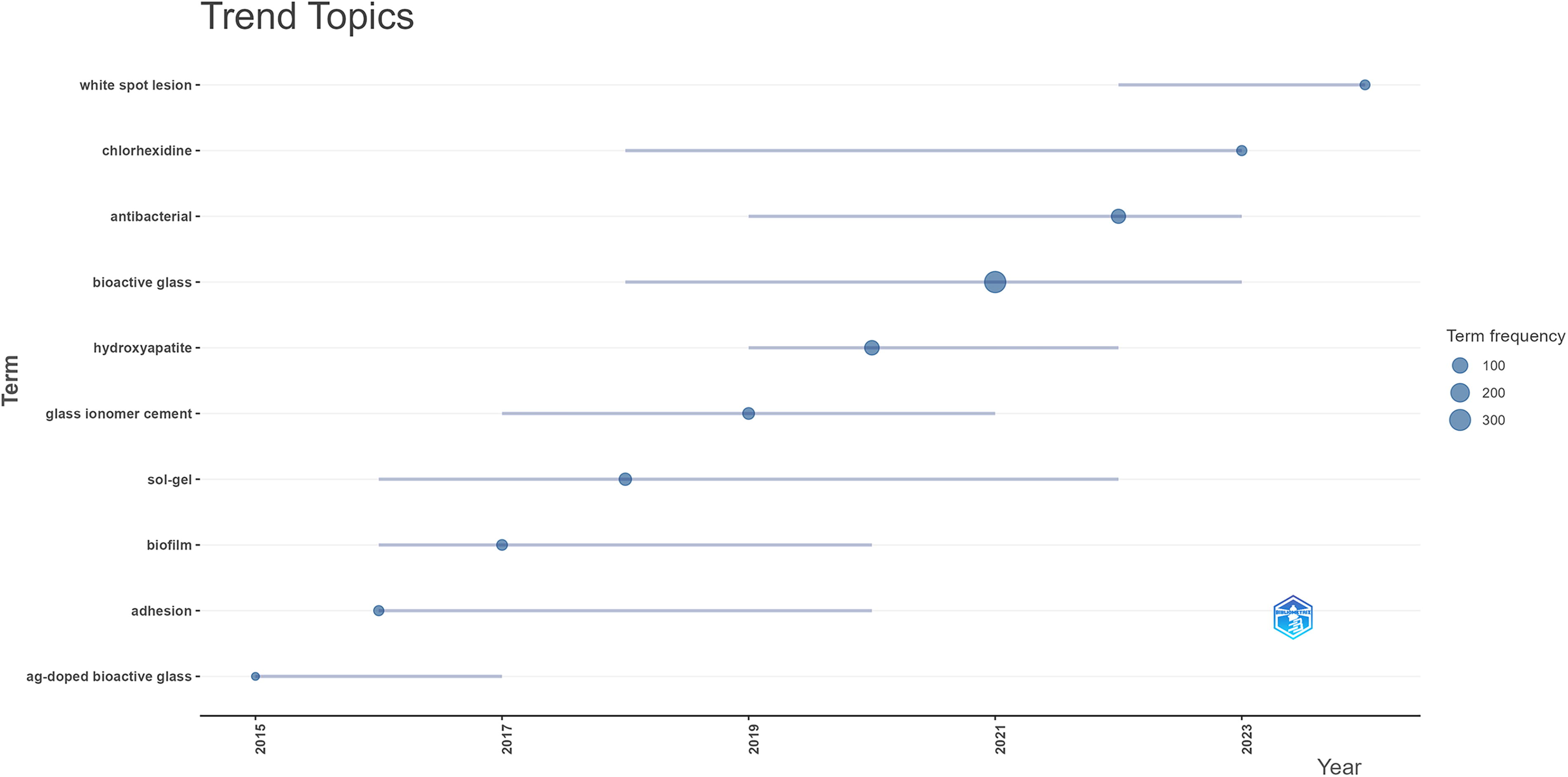
A timeline of trending topics is presented. Each bubble indicates the peak frequency of use for each keyword, while the line indicates the years it was used.
Discussion
The application of bioactive glass in dentistry has significantly evolved, as reflected in the growing body of research highlighting its versatility and effectiveness across various clinical domains. This section discusses the properties of bioactive glass in the context of remineralization, antimicrobial activity, regenerative endodontics, periodontal therapy, and aesthetic dentistry. Several types of bioactive glass have been prominently used in dental research, each with distinct compositions and properties. The 45S5 composition, known as Bioglass®, is widely recognized for its high bioactivity and clinical approval. Other variants, such as 58S, 70S30C, S53P4, and 13-93, differ in network connectivity and ion release profiles, allowing for tailored applications including hard tissue regeneration, periodontal repair, and implant coating. These differences contribute to diverse biological behaviors, offering a range of options for specific dental treatments.
One of the most extensively studied areas is the remineralization of dental hard tissues, particularly with fluoride-enhanced formulations. Numerous studies have shown that fluoride-containing bioactive glass increases enamel resistance to acid exposure, which is essential for preventing caries in high-risk populations. 12 Composites incorporating calcium phosphate further support enamel recovery by forming a mineralized layer that restores hardness and reduces the likelihood of future lesions. 13 Experimental gels and varnishes containing bioactive glass have demonstrated the ability to achieve deep lesion remineralization without the need for invasive treatment, making them particularly valuable in pediatric and orthodontic practice.6,15 Other formulations combining amorphous calcium phosphate with bioactive glass have proven effective in creating a mineral barrier on enamel surfaces, enhancing resistance to demineralization. 16 However, the calcium-to-phosphate ratio (Ca/P) is inconsistently reported in some studies, with molar, atomic, and weight-based values used interchangeably without clear specification, complicating data interpretation. The classical molar Ca/P ratio of ^1.67 is a critical reference for hydroxyapatite formation and should be reported consistently. In our analysis, we prioritized studies with clearly defined stoichiometric values and validated methods. For instance, Chen et al. 15 reported variable Ca/P values without specifying the measurement basis, while Qiu et al. 16 lacked sufficient analytical detail. These discrepancies highlight the need for standardized and transparent reporting in future research.
The antimicrobial potential of bioactive glass has also become a key area of investigation. Its effectiveness is significantly enhanced through the addition of ions such as zinc, silver, and copper. Ion-doped formulations have been shown to effectively disrupt bacterial biofilms and inhibit the growth of oral pathogens such as Streptococcus mutans, a key contributor to dental caries.17,18 Silver-containing glass provides prolonged antimicrobial activity, which is particularly valuable for patients with elevated infection risk. Furthermore, bioactive glass-based adhesives and sealants incorporating antimicrobial ions reduce bacterial colonization on treated surfaces, which is especially useful in orthodontic applications around brackets and wires.19,20
In endodontics, bioactive glass has gained attention for its regenerative potential. Its ion release profile stimulates cellular activity conducive to tissue repair, making it suitable for pulp capping and as a scaffold for the migration and proliferation of dental pulp stem cells.21B22 -24 It provides a minimally invasive alternative to traditional pulp treatment materials. In addition, combinations with calcium hydroxide have shown synergistic effects, improving dentin bridge formation and promoting pulp healing in deep cavities. 25
The osteoconductive and osteoinductive properties of bioactive glass make it a promising material for periodontal regeneration and use in implantology. It has been successfully applied as a bone graft substitute in alveolar bone reconstruction around dental implants, supporting their stability and osseointegration.26,27 When combined with autografts or allografts, bioactive glass contributes to increased bone volume and improved outcomes in complex augmentation procedures.28,29 In periodontal therapy, bioactive glass powder promotes the regeneration of both hard and soft tissues while also offering antibacterial benefits. 30 To optimize the clinical performance of bioactive glass in bone and periodontal regeneration, it would be advisable for future studies to focus on fine-tuning its degradation rate to match the pace of tissue healing. A mismatch between material resorption and new tissue formation may negatively impact both mechanical stability and regenerative outcomes. Modifying the glass network structure by altering its composition or incorporating dopant elements represents a promising approach to controlling dissolution kinetics and aligning material behavior with the biological timeline of tissue remodeling.
In aesthetic dentistry, bioactive glass is used to treat white spot lesions and early enamel defects. Studies have shown that these formulations promote subsurface remineralization, effectively masking white spots and reducing visual contrast with surrounding enamel. 31 Remineralizing gels based on bioactive glass not only reinforce enamel but also improve its translucency—a critical aspect of cosmetic treatments. 32 Moreover, its inclusion in whitening products helps mitigate the sensitivity often associated with bleaching procedures, enhancing patient comfort. 33
Ongoing improvements in bioactive glass formulations continue to drive innovation in dental materials science. New compositions incorporating magnesium and strontium aim to accelerate mineralization and enhance biocompatibility. 34 Current research is focused on optimizing ion release profiles to sustain long-term remineralizing and antimicrobial effects. 35 Special attention is being given to the development of nanostructured and composite bioactive glass systems capable of targeted delivery of therapeutically active ions to damaged tissues. 36 Despite considerable progress in biological performance, improving the mechanical properties of bioactive glass remains a pressing challenge, especially for its use in load-bearing areas. One promising approach involves developing composites that combine bioactive glass with biocompatible polymers, as well as employing ion substitution techniques to increase fracture toughness, wear resistance, and long-term durability without compromising bioactivity. Recent hybrid glass–polymer systems based on integration with polyhedral oligomeric silsesquioxane have demonstrated significant improvements in both mechanical performance and biological function, thereby expanding their potential for clinical applications. 12
Although bioactive glass is widely recognized for its regenerative and antimicrobial potential, certain material-specific limitations should be acknowledged. These include its relatively low fracture toughness compared with ceramics and composites, sensitivity to acidic conditions which may compromise its structural integrity, and higher production costs that may limit accessibility in resource-constrained settings. Furthermore, the performance of bioactive glass under complex loading conditions in the oral cavity remains a concern, particularly for long-term clinical applications. Further research is needed to address persistent limitations of bioactive glass. Improving its mechanical strength, wear resistance, and durability under masticatory forces remains a priority. Although in vitro and in vivo studies show promising results, there is still a lack of large-scale clinical trials necessary to confirm its safety and efficacy in various dental applications. Such trials will be crucial for establishing standardized treatment protocols, optimizing formulations, and facilitating the broader clinical translation of bioactive glass-based materials in both restorative and regenerative dentistry. Additionally, several methodological limitations must be acknowledged. Some studies employed incomplete or inconsistent approaches to assessing mineralization, particularly in interpreting Ca/P ratios. Relying solely on visual evaluation without spectroscopic or quantitative analysis techniques reduces the reliability of conclusions. To enhance scientific rigor and reproducibility, future investigations should adopt standardized and validated analytical protocols for bioactive glass research.
Conclusion
The diverse applications of bioactive glass—from caries prevention and endodontics to periodontal therapy and aesthetics—underscore its potential to significantly advance dental care. Integrating bioactive glass into treatment protocols not only enhances the durability and efficacy of restorations but also opens new avenues for minimally invasive and regenerative dental treatments. With ongoing research, bioactive glass is likely to become an indispensable component in dentistry, bridging the gap between traditional treatments and advanced biomaterials.
Footnotes
Authors’ Contributions
T.T.: Conceptualization, data curation, investigation, project administration, software, validation, writing—original draft, and writing—review and editing. M.K.: Investigation, methodology, supervision, validation, and writing—review and editing. A.A.: Conceptualization, software, validation, visualization, and writing—original draft. N.M.M.: Methodology, validation, resources, data curation, and writing—review and editing. N.T.: Supervision, validation, writing—review and editing, visualization, and project administration. A.T.: Conceptualization, supervision, methodology, validation, writing—review and editing, and project administration.
Disclosure Statement
The authors declare no conflict of interest.
Funding Information
This research did not receive any specific grant from funding agencies in the public, commercial, or not-for-profit sectors.