




Abstract
Tissue-engineered vascular grafts hold great promise in many clinical applications, especially in pediatrics wherein growth potential is critical. A continuing challenge, however, is identification of optimal scaffold parameters for promoting favorable neovessel development. In particular, given the countless design parameters available, including those related to polymeric microstructure, material behavior, and degradation kinetics, the number of possible scaffold designs is almost limitless. Advances in computationally modeling the growth and remodeling of native blood vessels suggest that similar simulations could help reduce the search space for candidate scaffold designs in tissue engineering. In this study, we meld a computational model of in vivo neovessel formation with a surrogate management framework to identify optimal scaffold designs for use in the extracardiac Fontan circulation while comparing the utility of different objective functions. We show that evolving luminal radius and graft compliance can be matched to that of the native vein by the end of the simulation period with judicious combinations of scaffold parameters, although the inability to match these metrics at all times reveals constraints engendered by current materials. We emphasize further that there is yet a need to examine additional metrics, and combinations thereof, when seeking to optimize functionality and reduce the potential for adverse outcomes.
Impact Statement
Tissue-engineered vascular grafts have considerable promise for treating myriad conditions, and multiple designs are now in FDA-approved trials. Nevertheless, the search continues for the optimal design of the underlying polymeric scaffold. We present a novel melding of a computational model of vascular adaptation and a formal method of optimization that can aid in identifying optimal design parameters, with potential to save development time and costs while improving clinical outcomes.
Introduction
Tremendous advances have emerged over the past two decades in the design of tissue-engineered vascular grafts (TEVGs) using different strategies.1,2 One promising approach uses an implanted biodegradable polymeric scaffold that is seeded with autologous bone marrow-derived cells. This TEVG has proved to be safe and effective in extracardiac Fontan procedures used to treat children with congenital heart disease, with the graft connecting the thoracic inferior vena cava (IVC) to the pulmonary arteries. 3 In brief, cells seeded within the polymeric scaffold promote the infiltration of host vascular cells, which deposit neotissue within the porous scaffold. 4 From a tissue engineering perspective, the primary goal is to achieve a progressive deposition of neotissue that balances the degradation of polymer so as to maintain structural integrity. From a clinical perspective, the ultimate goal is to achieve a neovessel that yields appropriate hemodynamics while growing and adapting as the child matures. Realization of these goals would transform clinical care.
Deposition of neotissue in vivo results primarily from two basic processes, immunobiological and mechanobiological. Although the polymeric scaffolds are biocompatible, they elicit a foreign body response. Inflammatory cells, especially monocytes/macrophages, infiltrate the porous scaffold and via paracrine signaling promote host cell infiltration and deposition of extracellular matrix to isolate the graft from the host. 5 This inflammatory response subsides as the polymer degrades, which also transfers more of the hemodynamic load to the accumulating neotissue. The intramural cells sense this changing mechanical environment and respond via further matrix deposition and degradation. Achieving sufficient stiffness and strength throughout neovessel development thus requires a coordinated balance between immuno-driven and mechano-mediated processes.6,7 Too much deposition results in stenosis or scarring and thus suboptimal neovessel function; too much degradation results in structural vulnerability, potentially leading to aneurysmal dilatation or rupture.
The initial polymer properties and degradation profile thus play key roles in neovessel development. Pore size and fiber diameter are particularly important parameters for they modulate the inflammatory response and dictate the initial mechanical properties of the scaffold. Fiber alignment and intrinsic polymer stiffness similarly play important roles in both processes. Despite the almost limitless possible combination of scaffold geometries, microstructures, and methods of fabrication, trial- and-error has been the method of choice over decades to arrive at current designs, 2 which fortunately are both safe and effective. Nevertheless, numerous complications remain, including local luminal narrowing in patients and animal models. There is a need, therefore, to explore additional scaffold designs with the hope of eliminating, or at least minimizing, such complications. Recent advances in computational biomechanical modeling as well as formal methods of optimization promise to contribute to the search for improved, ultimately optimal, scaffold designs. In this study, we combine for the first time a novel vascular growth (changes in mass) and remodeling (changes in microstructure) model and formal methods of optimization to identify improved polymeric scaffold designs for TEVGs in a low-pressure model of the Fontan procedure.
Methods
All computational models must be informed by data. In this study, we focus on optimizing polymeric scaffolds to be implanted as interposition grafts within the IVC of SCID/bg mice, for which extensive data exist and there are clinically acceptable outcomes with no instances of occlusive thrombus, severe narrowing, or rupture through 2 years of implantation.7–9 Specifically, the present computational growth and remodeling (G&R) model was developed based upon data from n = 15 in vitro degradation studies plus n = 33 in vivo studies using female CB-17 SCID/bg mice (5 nonimplanted controls plus 28 implanted with grafts), with data collected at 0, 2, 6, 12, 24, and 104 weeks of implantation.8,9 Moreover, similar data were collected for n = 14 female C57BL/6 mice (5 controls plus 9 implanted), which enabled refinement of the inflammation modeling. 7 The reader is referred to the original articles for further details on the experiments. While an IVC-interposition graft does not model the hemodynamics of the Fontan circulation, it provides significant information on neovessel development in a low-pressure environment.
G&R framework
To simulate time-dependent changes in the graft and to predict effects of design changes on key outcomes, we used a constrained mixture G&R model that describes the evolving geometry, composition, and biomechanical behavior of the implanted TEVGs.6,7,9 The underlying general theoretical framework has been refined over the past 15 years, and similarly describes well mechano-mediated and immuno-driven adaptations of native arteries. 10 While overall scaffold geometry (e.g., caliber and wall thickness) plays important roles in TEVGs, 11 particularly at different sites within the vasculature, other graft features, including polymer microstructure, 12 mechanical behavior, 13 and degradation rate, 14 largely determine the inflammatory response and neotissue turnover by infiltrating cells. Thus, constitutive relationships were developed to focus on some of these key material parameters.
Details of the theoretical framework and associated methods of solution can be found elsewhere,6,7,10,15 hence, we briefly review key equations and model parameters for the optimization study performed herein. Importantly, the contribution of the degrading polymeric scaffold to the overall mechanical properties of the TEVG is given by a constituent stored energy density,
where
where microstructural analyses of such a cellular solid
16
suggest that the shear modulus
where kp is a rate-type parameter and
Conversely, let the evolving stored energy of any constituent
where
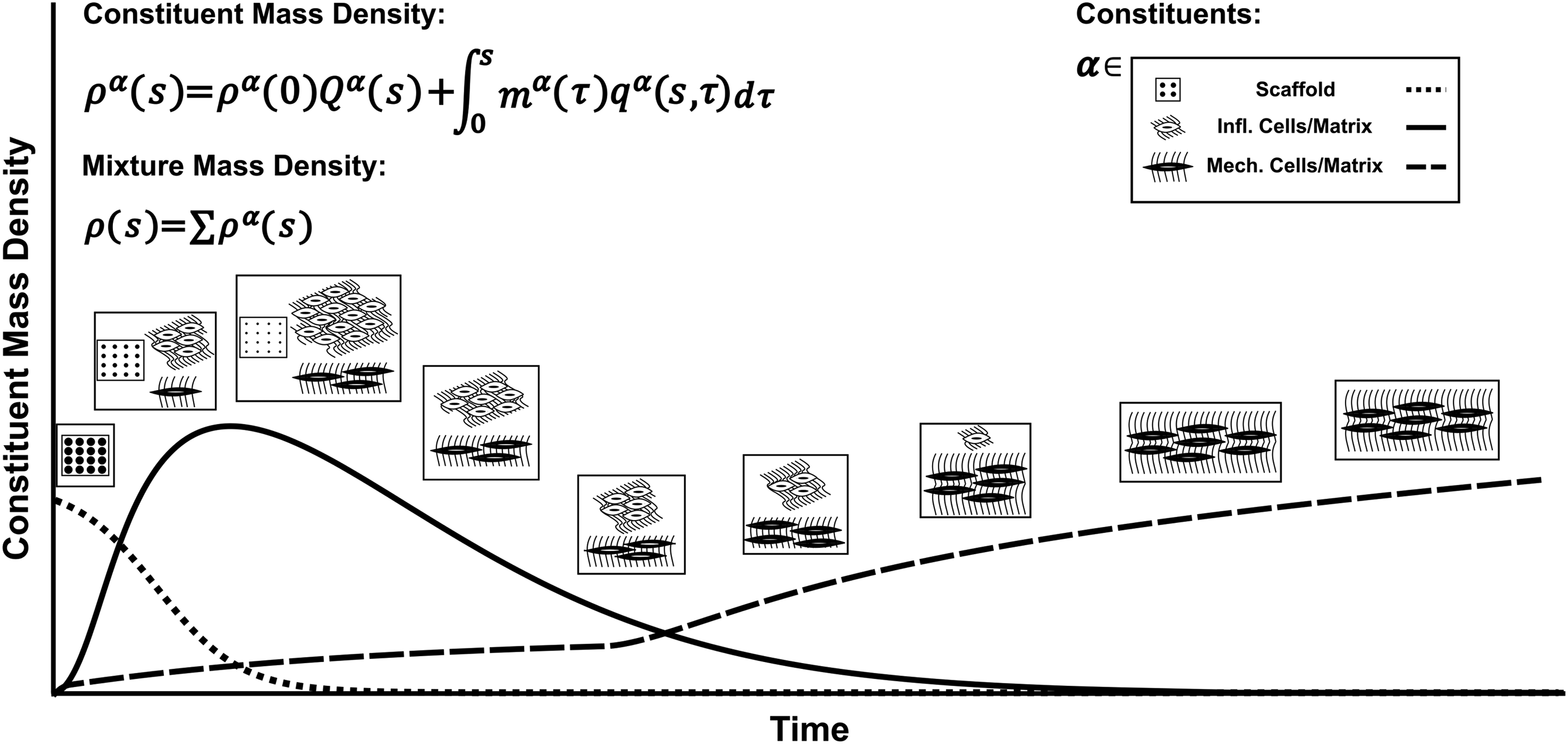
Idealized evolution of constituent mass density through G&R processes that result from gradual polymer degradation and neotissue deposition. In particular, inflammatory-driven matrix production (solid line) tends to dominate early graft behavior, but as the inflammation wanes with a loss of polymer mass (dotted lines), mechano-mediated matrix production (dashed lines) can contribute to long-term graft behavior and its eventual steady state in the absence of significant chronic inflammation. G&R, growth and remodeling.
where
The ability of inflammatory cells to infiltrate a scaffold is governed by its microstructure, particularly pore size rp, which can be related to porosity
where
Description, Values, and Units of Key Parameters that Control the Inflammatory-Driven Growth and Remodeling Processes (First Four Rows) as Well as Two Key Scaffold Parameters and Their Values Used for Normalization
G&R, growth and remodeling.
Note that these functional forms for the inflammatory gains
Objective function formulation
Consider a general objective function of the form
where
where TEVG compliance
where circumferential material stiffness S defines TEVG behavior independent of geometry, with
Given these three descriptors, we considered optimizations based on various combinations thereof, as, for example,
with
Values of Each Parameter that Defines the Polymeric Scaffold as Identified by a Particular Optimization Procedure (Third to Sixth Rows), Given Prescribed Bounds for the Search (First Row)
The previously used experimental graft design (second row) is also included for comparison. Note in particular that each of the optimizations desired a much lower value of the intrinsic elastic modulus
Surrogate management framework
Although many different methods are available for optimization,
23
we use a nonintrusive, derivative-free method called the Surrogate Management Framework, which has guaranteed convergence to a local minimum via pattern search theory and has been useful for parameter identification in diverse vascular remodeling simulations7,24 as well as applications in cardiovascular surgery design.25,26 In this study, however, we focus for the first time on optimizing the scaffold design to improve neovessel development. A surrogate management algorithm using a mesh adaptive direct search
27
is initiated with a set of randomly initialized points using Latin Hypercube Sampling (LHS). True objective function evaluations are performed at these initial points in the parameter space via repeated calls to the G&R simulation code, which outputs each metric Y for a given input parameter set
The algorithm proceeds through a series of SEARCH and POLL steps. In the SEARCH step, current values of J are interpolated over the discretized parameter space using kriging to generate a high-dimensional response surface. Potential minima are identified on the interpolated surface, and true objective function evaluations are performed for the corresponding parameter values. The kriging surface is updated after every true function evaluation for successive SEARCH steps. When a SEARCH step fails to produce an improved minimum, a POLL step evaluates candidate points around the current minimum in a positive spanning set using mesh adaptive direct search and seeks to find a better objective function value. If a POLL step succeeds in identifying an improved point, the algorithm proceeds back to the SEARCH step. Otherwise, if the POLL step fails, a mesh local optimizer has been found and the algorithm performs a mesh refinement or terminates after reaching a predefined mesh threshold. Optimal values are verified in each case considered with five independent runs of the optimization algorithm for different random initializations of the LHS, as the convergence is only guaranteed to a local minimum.
Results
We first simulated the evolving inner radius, compliance, and material stiffness based on scaffold parameters used in the experimentally implanted grafts (Table 2), which performed well according to classic metrics of outcome (e.g., suture retention strength, burst pressure, patency) as there were no catastrophic failures through 2 years in the SCID/bg mouse model. 9 Model simulations based on experimental data (dashed line, Fig. 2) yet highlighted marked differences from the geometry and mechanical properties of the native IVC. Graft radius increased beyond that of the native vein as immuno-driven neotissue degraded before mechano-mediated neotissue could stabilize the geometry (dashed line, Fig. 3). Compliance increased from minimal on implantation to above native values, but then decreased with the onset of mechano-mediated neotissue turnover (dashed line, Fig. 2); after a recovery, remodeling left the compliance higher than that of native, which could adversely affect the hemodynamics and, in turn, associated continued graft remodeling. Circumferential material stiffness was initially several orders of magnitude larger than that of the native vein, due primarily to the intrinsic stiffness of the polymeric scaffold, but it dropped below that of the native vein as the polymer degraded and neotissue was deposited in a wall that remained thicker than native, thus leading to a lower stretch from the unloaded to loaded state and an associated lower (stretch-dependent) stiffness. Recall that this design emerged from years of prior trial-and-error studies and was found to be safe and effective.8,9
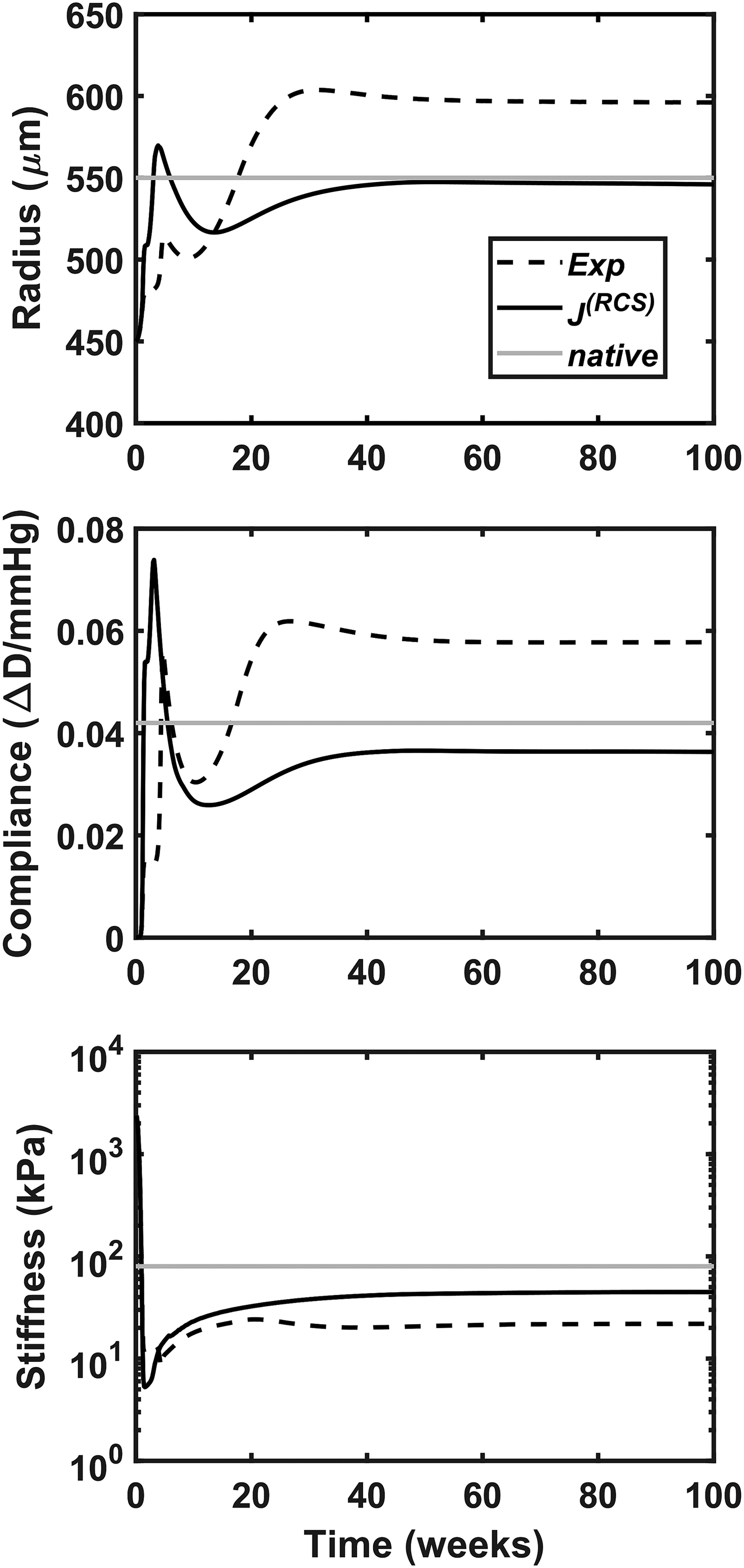
Simulated evolution of graft inner radius (top), compliance (middle), and circumferential material stiffness (bottom) based on model predictions informed directly by the experimental scaffold (Exp, dashed line) as well as an optimization of objective function
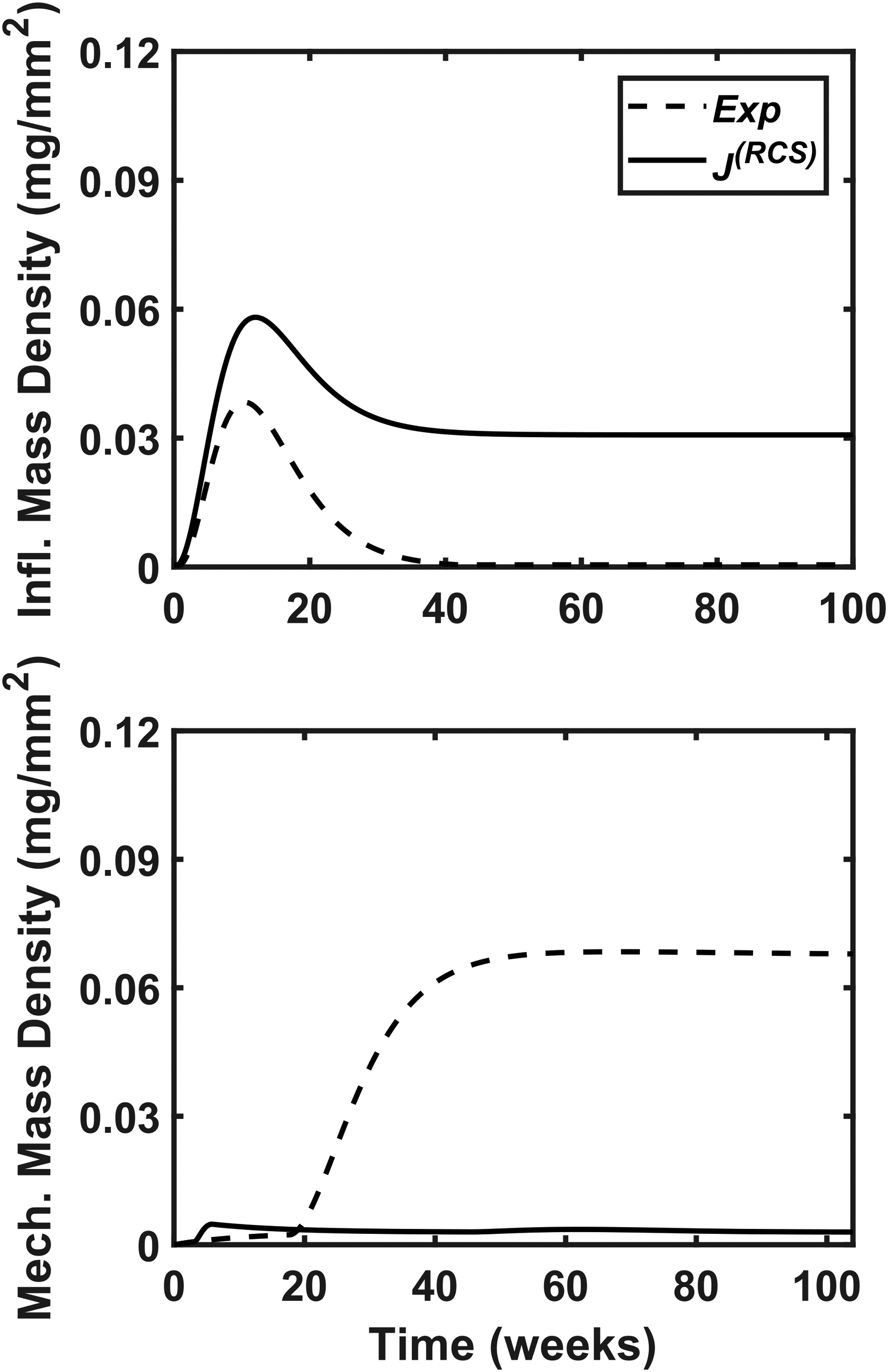
Simulated inflammatory-driven (top) and mechano-mediated (bottom) mass density evolutions for a polymeric scaffold that was implanted experimentally (Exp, dashed line) versus that for a scaffold design that was optimized according to objective function
In an attempt to identify a scaffold design that could improve on outcomes for the experimental graft, consider predictions associated with minimization of objective function
Due to the inability of the model to match the target stiffness when minimizing
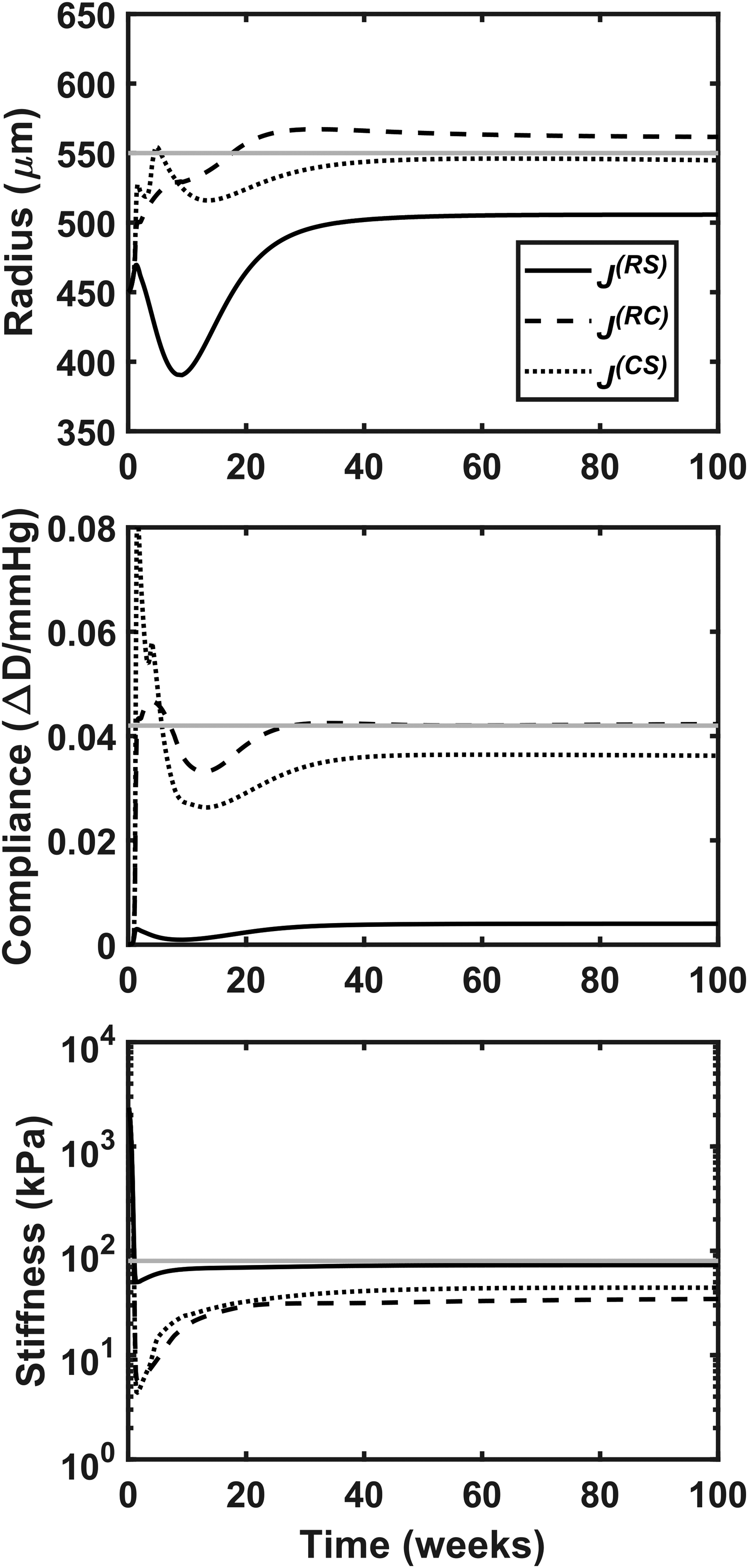
Simulated changes in inner radius (top), compliance (middle), and circumferential material stiffness (bottom) for a polymeric scaffold optimized according to
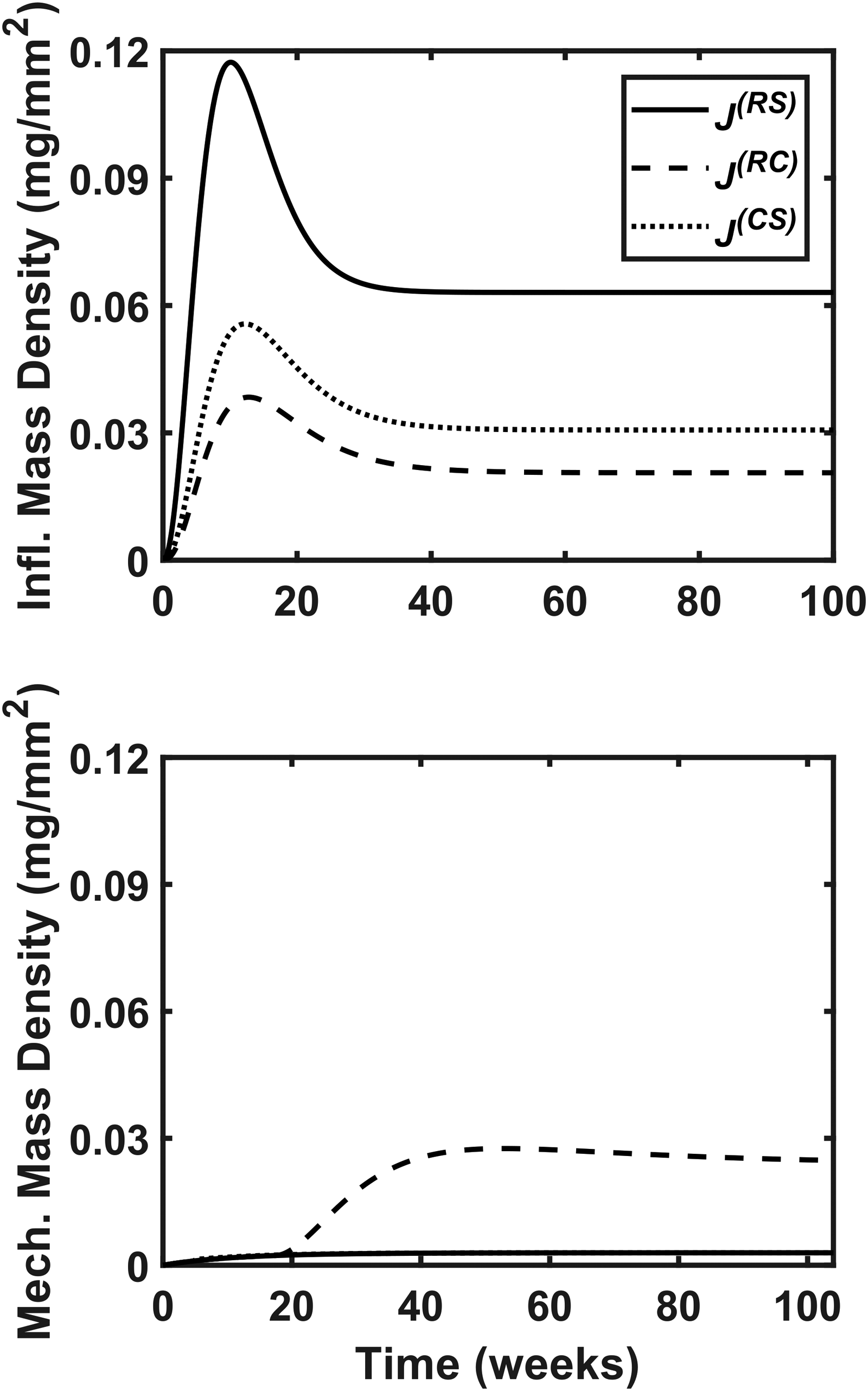
Simulated evolution of inflammatory-driven (top) and mechano-mediated (bottom) mass density for scaffolds optimized according to
To identify the potential for improved compliance over the
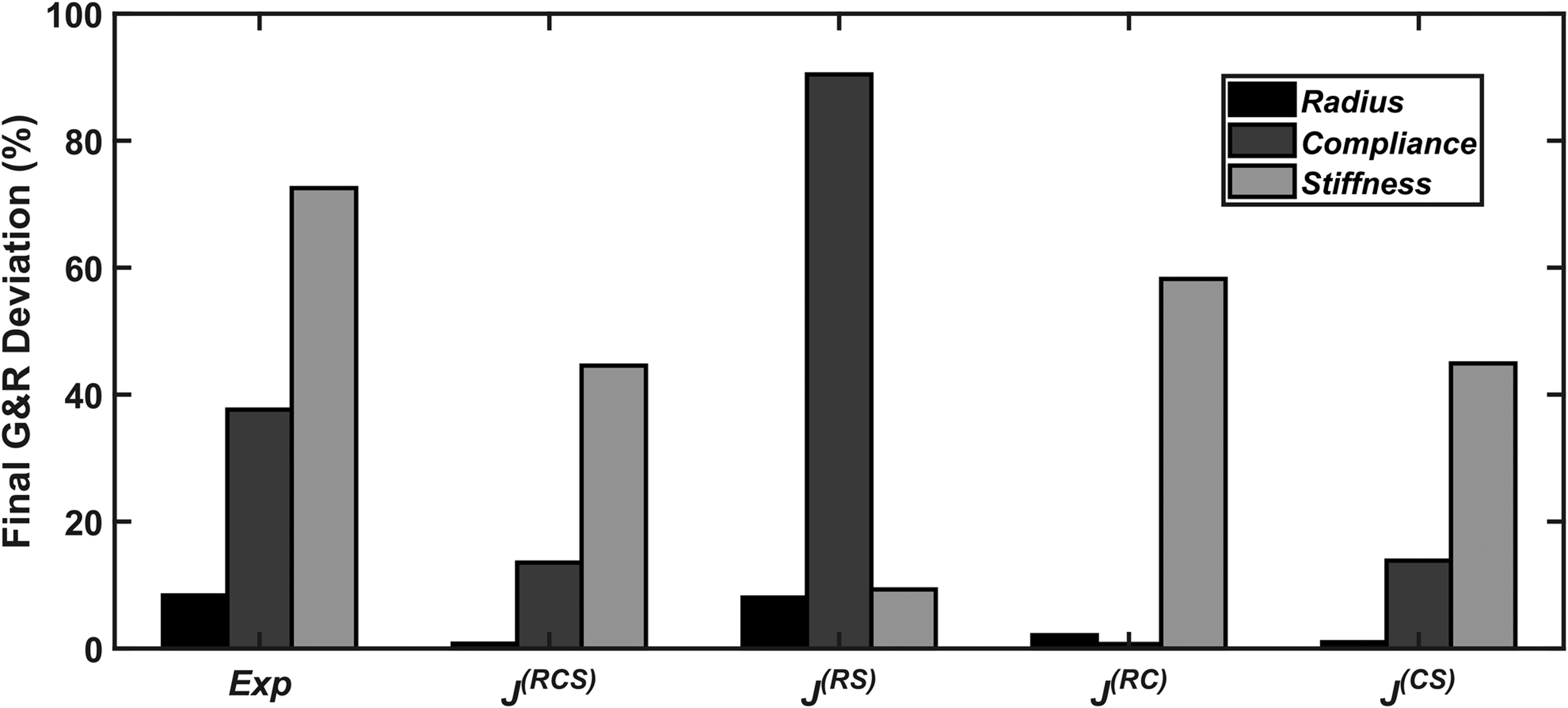
Absolute percent deviation from native homeostatic values for three key G&R metrics–inner radius, overall compliance, and circumferential material stiffness–after a simulated period of 2 years for each scaffold design optimized according to the specified objective functions, all compared to results for the original experimental (implanted) TEVG. TEVG, tissue-engineered vascular grafts.
Finally, minimizing
Discussion
With successful clinical trials of TEVGs underway,28,29 the promise of vascular tissue engineering has never been greater. Nevertheless, although proved to be safe and effective, current clinical TEVGs are not yet optimal; complications include local narrowing (stenosis) and dilatation (aneurysm). While the clinical trials arose from trial-and-error empirical approaches, computational models have also become increasingly sophisticated and recognized as tools for guiding the design of implants for tissue engineering applications.22,30 Thus, we sought to exploit the advances in computational modeling to establish a new approach to scaffold design. We previously showed that computational models can describe 6 and predict 9 in vivo neovessel development that starts from a biodegradable polymeric scaffold implanted as an IVC-interposition model, a reasonable surrogate for an extracardiac Fontan conduit. We further showed that these models can be used to identify preferred values of scaffold parameters via informal parameter sensitivity studies. 15 Yet, seeking optimal designs via brute force methods (i.e., grid-based search methods) is computationally inefficient and likely intractable for models having the complexity needed to capture evolving TEVG behavior. As in experimental studies, brute force methods require one to hold all parameters constant while varying a single parameter and then to repeat this process for the different parameters of interest. For example, for the five key parameters examined herein, comparison of results for five different values, assuming the need for at least three experimental times (e.g., 2, 6, 24 weeks in mouse studies) and five replicates at each time for each combination of parameters, would necessitate 375 long-term mouse studies using 25 different graft designs. In contrast, in this study, we coupled numerical simulations of TEVG development with a formal surrogate management framework-based optimization to refine the experimental search space, that is, to identify promising combinations of parameters and thereby to reduce the requisite number of time-consuming and expensive mouse studies, noting that experimental validation of potentially improved designs is ultimately necessary. We suggest that such a reduction in iterative testing could accelerate the design process.
Complicating the search for the best TEVG is the coexistence of two overlapping processes that govern in vivo neovessel development: immuno-driven and mechano-mediated deposition and degradation of neotissue. Mechanobiological cues can guide the development of TEVGs, with increasing evidence that the loads present when cells infiltrate and differentiate can impact the outcome. 31 Yet, in vivo TEVG development is initially driven primarily by a foreign body response to the implanted polymeric scaffold.4,7 Iterative experiments examining effects of changing scaffold parameters on inflammatory cell function and polarization 12 have laid the groundwork for computational studies that seek to describe the inflammatory response to different scaffold microstructures. Noting the fundamental importance of initial experimental studies for informing a computational model, we focused on TEVG implants in immuno-compromised SCID/bg mice that yielded high patency rates without the need for anticoagulant therapy or seeding with bone marrow-derived mononuclear cells.8,9 Because our simulations are informed by data from mouse IVC models, we also focused on matching uniform proximal and distal IVC properties and geometry over the ∼2-year lifespan of the mouse. Finally, we focused on responses in maturity, not adaptations needed in response to somatic growth since our data were for adult SCID/bg mice. These simplifications allowed us to consider potential differences in evolving behavior due solely to changes in graft microstructure and material properties.
Examination of the predicted optimal parameter sets for different objective functions (Table 2) revealed that each optimization produced a microstructure more prone to inflammation than did the experimental case. Since these simulations were based on data from immuno-compromised SCID/bg mice, such an enhancement of the inflammatory response may have been necessary to compensate for the impaired monocyte/macrophage function inherent to these mice. Indeed, previous studies in SCID/bg mice using grafts seeded with bone marrow-derived mononuclear cells demonstrated that release of chemokines such as MCP-1 during early stages of graft development helps increase monocyte/macrophage recruitment and improves remodeling.
4
Mild inflammatory responses, as for the
For optimizations without excessive narrowing (
As demonstrated by possible stenosis when optimizing with
Although our approach-combining methods of biomechanical simulation with formal optimization-promises to reduce the experimental search space, many other aspects of neovessel development must be explored. The target population for Fontan procedures is young children for whom neither a single basal rate of matrix production nor a target homeostatic mechanical state exists. Moreover, gene expression and cellular activity can be very different in development versus maturity, as, for example, most vascular elastin is deposited and cross-linked before adolescence. There is a need to understand better the influence of normal vascular development. We also assumed that the distending blood pressure and associated blood flow remained constant throughout neovessel development. These, too, can change as the child grows. Among more general issues, it would be useful to examine theoretically whether the predicted quasistatic equilibrium solutions are mechanobiologically stable. 33 That is, would the resulting neovessels be expected to mechano-adapt to subsequent perturbations in mechanical loading? Such stability would be fundamental to ensuring appropriate growth potential. These and additional considerations remind us of the need for even more experimental data to inform the development of refined constitutive relationships, particularly in terms of scaffold microstructural parameters and for human cohorts of children.
Footnotes
Acknowledgments
This work was supported by grants from the NIH (HL098228, HL128602, HL139796), DoD (PR170976), and NSF (DGE1122492). We appreciated discussions with Ramak Khosravi.
Disclosure Statement
C.K.B. receives support from Gunze, Ltd., which did not influence this study. None of the other authors has disclosures.