




Abstract
To learn about advances in skeletal muscle tissue engineering (SMTE) in recent years, we used VOSviewer and Citespace software to quantitatively analyze and visualize relevant literature in the Web of Science database during the period 2012–2022. By mapping high-frequency keyword relationship networks, keyword time zones, and journal article cocitations, we clarified the areas of great interest, evolutionary paths, and developmental trends in research on SMTE. We conducted an in-depth analysis of highly cited and representative articles at various stages to summarize the mainstream research areas of great interest in SMTE and discussed the future development and challenges in this field, intending to provide a reference for the clinical treatment of skeletal muscle injury repair. We found that a collaborative network of authors has formed in this field; the journals publishing SMTE articles belong to the fields of biomaterials and tissue engineering, and open-access journals have played a key role in the promotion of the development of SMTE; and in the past decade, there has been rapid progress in SMTE research in terms of both depth and breadth.
Impact statement
Compared with the literature review method, bibliometrics can provide a comprehensive knowledge of a knowledge area based on a huge amount of literature. In this article, based on the Web of Science database, CiteSpace, and Vosviewer visualization tools were used to measure and analyze the literature reports in the field of skeletal muscle tissue engineering (SMTE). The research hotspots and cutting-edge information on SMTE were mined in terms of the number of publications, the number of citations, the keywords, the authors, and the publishing institutions to understand the current status of the research on SMTE in the world, to provide a reference for related researchers, engineering research in the field of SMTE, to comprehensively understand the current status of global research in the field of SMTE, and to provide a reference for related researchers.
Introduction
Skeletal muscle is a common muscle tissue that accounts for ∼40% of the body's total weight. It plays a key role in body movement, thermoregulation, and basal energy metabolism. 1 Skeletal muscle is a fibrous tissue with a complex multilayered structure that consists of neatly arranged bundles of multinucleated muscle fibers that are wrapped with an outer muscle membrane to form muscle tissue. 2 The connective tissue adjacent to the muscle tissue is interconnected, which allows blood vessels and nerves to enter along the connective tissue membrane for the exchange of substances, and the movement and contraction of skeletal muscle. 3
Skeletal muscle contraction and movement are regulated by motor inputs through neuromuscular junctions (NMJs), which are specialized synapses between presynaptic motor neuron terminals and the motor endplates of postsynaptic muscle fibers. 4 When a nerve impulse reaches the NMJ, it causes vesicles containing acetylcholine (ACh) to be released from the axon terminals and bind to ACh receptors (AChRs) on the muscle fiber membranes, generating an action potential. 1 The action potential leads to the release of large amounts of calcium ions into the muscle fiber.
The calcium ions interact with shielding proteins on actin and myosin filaments to produce muscle contraction. 5
Skeletal muscle damage is caused by a variety of factors, including muscle contusions from sports, muscle tears from accidents, and muscle damage following most surgical operations. Muscle injury recovery is a dynamic and complex physiological process that involves interactions between many types of cells and their products, bioactive substances, and the extracellular matrix (ECM) across three overlapping and distinct periods. Skeletal muscle has a good regenerative capacity for minor injuries, but severe injuries, such as voluminous muscle loss (VML), result in the loss of its intrinsic regenerative capacity, causing an imbalance in the physiological environment, which can lead to the cessation of the injury healing process at one of the abovementioned phases, resulting in impaired cellular function at the site of the defect and the inability to heal properly, resulting in irreversible damage. 6 The current clinical strategy for VML treatment is to transplant autologous tissue into the damaged area for functional repair.
However, this strategy is hampered by a lack of tissue sources as well as the fact that the transplantation process might cause secondary injury to muscle tissue and cannot generate sufficient muscle tissue regeneration, resulting in incomplete muscular function recovery and complicating VML treatment.
The layered fibromuscular structure and its integration with other tissues, including the vasculature and nervous system, are critical for normal tissue function, as demonstrated by the brief explanation of muscle anatomy and physiology above. This structure must be maintained and replicated following injury, either through natural skeletal muscle healing or through focused regeneration through various treatment techniques. Currently, efficiently treating severe skeletal muscle lesions, reducing scar growth, and regenerating injured muscle tissue remains a significant therapeutic challenge. 7 As a result, the creation of a skeletal muscle tissue-engineered scaffold capable of imitating native muscle structure is intended to solve this issue to promote skeletal muscle regeneration and decrease pain associated with muscle defects.
Despite its benefits, such as variable design and different manufacturing procedures, skeletal muscle regeneration scaffolds have downsides. Most grafts, for example, lack the bioactivity and ability to induce muscle regeneration required for an ideal artificial scaffold. 8 Most scaffolds are designed to promote and support muscle tissue repair and function restoration by recreating physical structure and function. Improving the efficacy of skeletal muscle damage repair and developing suitable artificial scaffolds remain clinical challenges. Scaffolds with highly bionic architectures are possible with a better understanding of the skeletal muscle regeneration process and the development of improved biomanufacturing technology. Researchers are also concentrating on scaffold functionalization by inserting bioactive chemicals, such as growth factors and natural molecules originating from cells, which can actively stimulate endogenous regeneration and improve immune regulation. It enhances host cell development, protects against foreign body reactions, and generates vascular networking and innervation.
Scaffolds can also constantly administer numerous types of medicines to stimulate distinct stages of muscle regeneration if appropriately built.9,10 Understanding the pathologic microenvironment is critical to treating skeletal muscle defects. For example, excess reactive oxygen species, inflammatory factors, chemokines (CXCL1), 11 and a decrease in microenvironmental pH can hinder muscle growth. 12 The application of exogenous stimuli, such as light, magnetic, electrical, ultrasonic, and mechanical stimuli, can be used to modulate cellular behavior and influence muscle regeneration.13,14 These stimuli can be provided through smart scaffolds that respond to environmental inputs and have a stimulating or inducing effect on the tissue. 15 Scaffolds can safeguard healthy cells and tissues while exerting therapeutic effects, enhancing efficacy, and avoiding harmful side effects because they can respond quickly to the microenvironment. 16
In the past decade, there has been rapid development in skeletal muscle tissue engineering (SMTE). A variety of functional scaffolds have been constructed and subsequently applied in clinical settings, such as the repair of damaged sites, the creation of pathological models, and the establishment of drug screening platforms. Given the continuous advances in cutting-edge research in SMTE and interactions and collaborations among various disciplines, a systematic analysis and review of previous studies would be valuable for enabling researchers to learn the research areas of great interest and innovative trends in this field.
Bibliometrics emerged in the early 20th century, became an independent discipline in 1969, and is widely used in literature analysis at present. Bibliometric analysis provides a quantitative method for reviewing and investigating existing literature in a given field. 17 During bibliometric analysis, detailed information, such as authors, keywords, journals, countries, institutions, and references, can be obtained, reflecting a particular field's landscape. With the help of modern computer technology, graphical and visual results can complement bibliometric analysis. 18 Cocitation is also often used in bibliometric analysis. Cocitation analysis (visual analysis) analyzes the relationship that is defined when two articles are cited together in one or more documents.19,20 The visual approach to cocitation analysis in bibliometrics helps researchers to interpret data, thereby making the results more comprehensive. Additionally, this method can be applied to most elements of an article (except the article itself), including authors, keywords, institutions, and countries.21,22
Visualization helps to identify the intrinsic connections among this information, such as the same research topics among different authors, research priorities at different institutions, and new theories from established institutions. 23
Therefore, in the present study, we adopted a bibliometric approach to sort and summarize SMTE research in the last decade (2012–2022). We quantitatively present this research field's development paths, research areas of great interest, and evolutionary trends through visual mapping, and provide an outlook on future research priorities.
Research Methods and Data Sources
Research methods
In contrast to basic bibliometric methods, visualization methods can visualize the citation information and hierarchical structure of literature and uncover interactive information in complex networks. 24 In this study, we combine the traditional literature review model of “deep reading” with bibliometric methods of visualization software and use Citespace and VOSviewer to analyze global SMTE research in recent years. 25 We analyzed to determine the number of articles published in this field, author co-occurrences, institutional co-occurrences, and research areas of great interest in SMTE. We designed the study to identify research areas of great interest and research trends in the field quickly and accurately.
Data source
We selected the Web of Science (WoS) Core Collection as the data source and applied a carefully designed algorithm (Fig. 1) to ensure the completeness and accuracy of the retrieved data. We set the citation index to SCI-EXPANDED and used the search term TS = ((“Skeletal Muscle” OR “skeletal muscle regeneration” OR “volumetric muscle loss” OR “myogenesis” OR “myogenic”) AND (“Tissue engineering” OR “Biomaterials” OR “Tissue engineering scaffolds”)). As of January 15, 2023, we searched “Articles” and “Review Articles” published during the period from January 1, 2012 to December 31, 2022. We retrieved a total of 1299 articles (340 reviews and 959 journal articles) and entered 789 eligible articles into the final analysis.
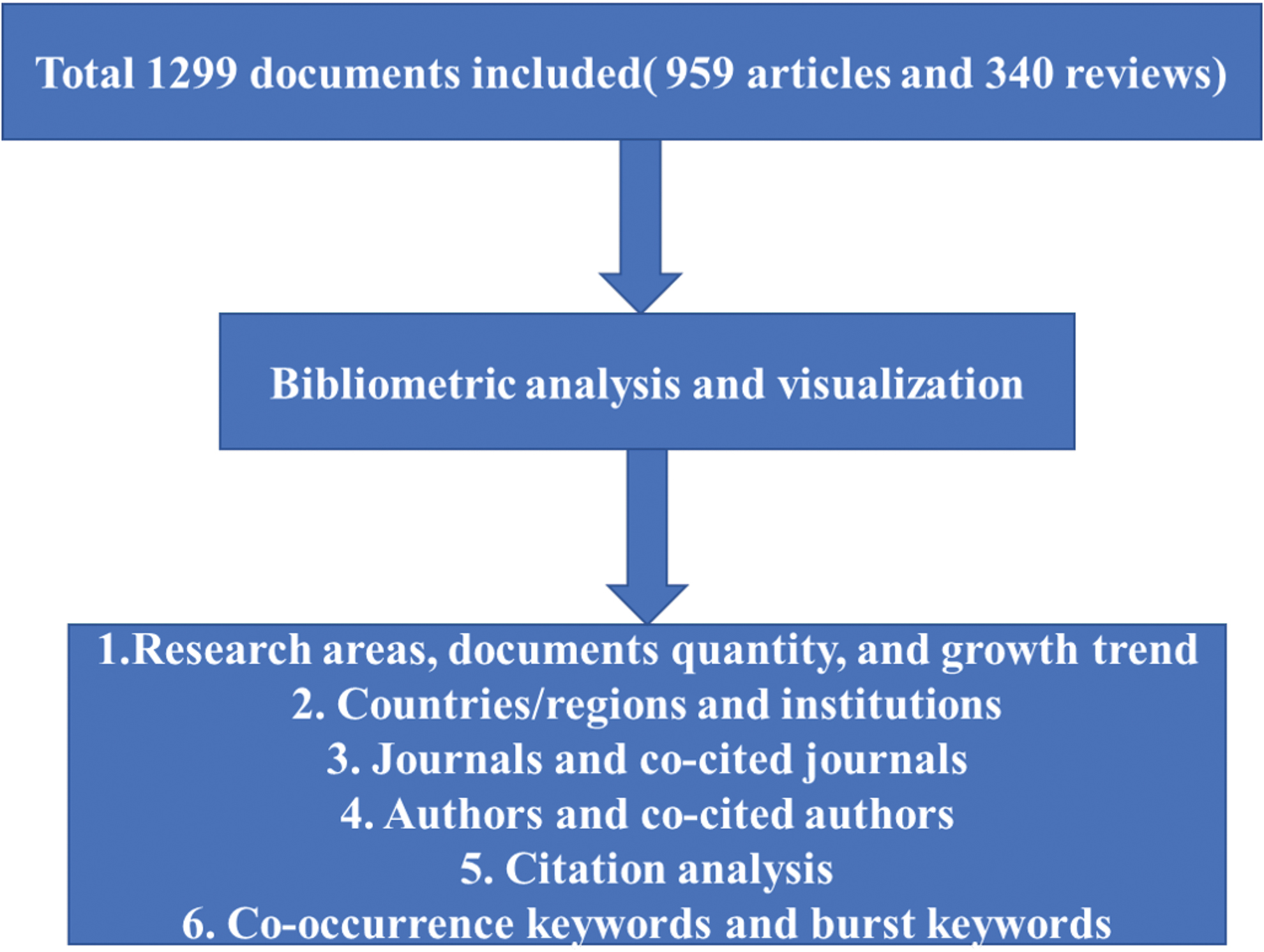
Article search algorithm. Color images are available online.
Results
Number of publications
Figure 2 shows the temporal distribution of publications on SMTE. Overall, the number of publications on SMTE has risen and has increased faster since 2015, and the number of publications remained stable at over 140 from 2018 to 2021. Thus, this research area has received increasing attention in recent years, with richer and more specific topics. The researchers work in industries/fields such as materials, biology, and pharmaceuticals, which indicates a trend toward crossdisciplinary integration.

Distribution of countries/regions that contributed to research from 2012 to 2022. Color images are available online.
Countries and institutions
We analyzed the volume of publications from 53 countries to determine which countries were making the most significant contributions to research on SMTE repair. First, we visualized countries with a volume of publications greater than or equal to four using VOSviewer software (Fig. 3). The larger the circle (node), the higher the publication output. The thickness of the line between the two nodes represents the strength of the association: the thicker the line, the higher the frequency with which the linked two countries collaborated to publish articles. The color of the nodes represents a cluster. As shown in Figure 1, the distribution of publications in this field was highly uneven and followed the Pareto principle: most of the articles were written by authors from a small number of countries.
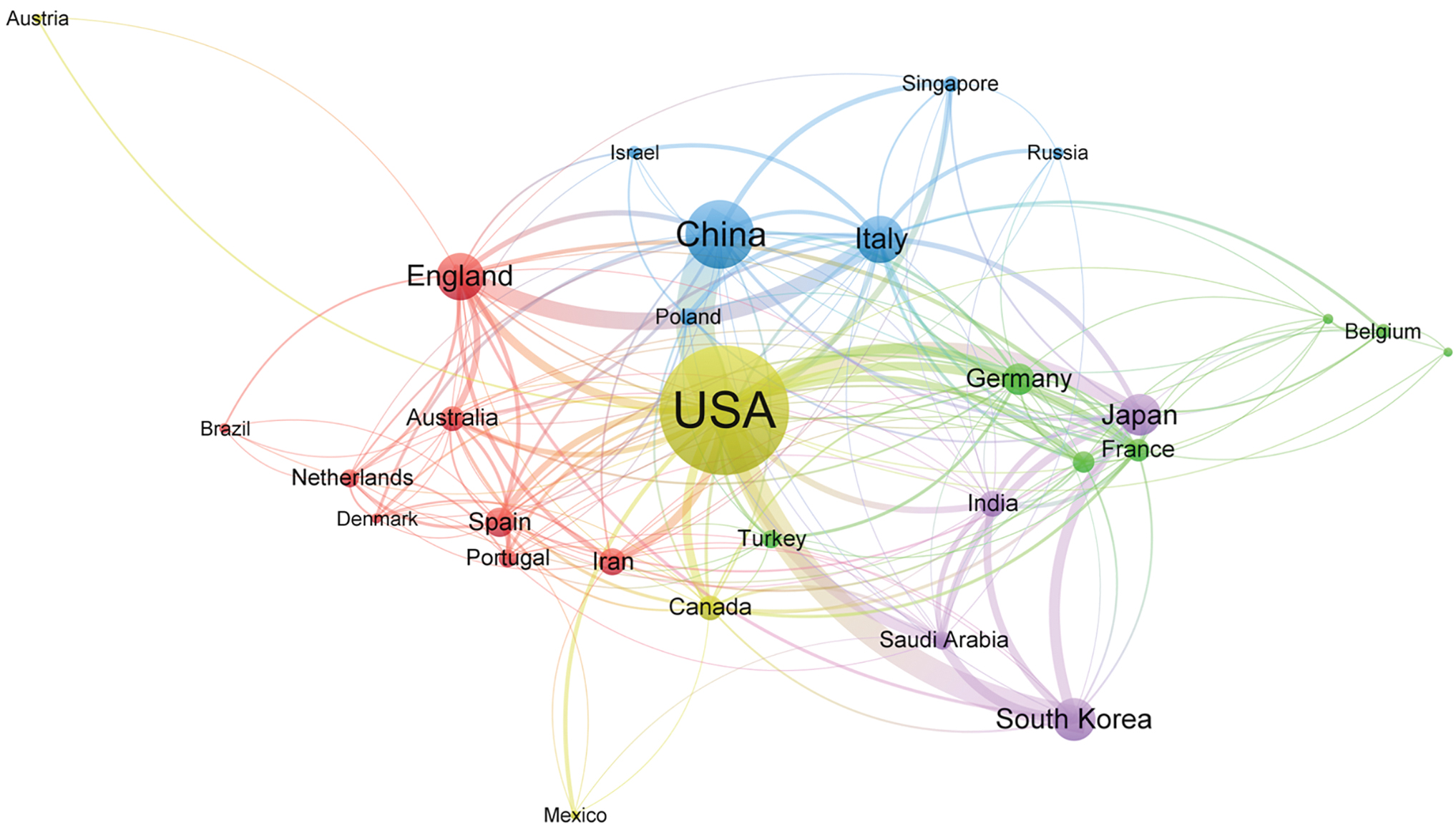
Visual mapping of publication output by country, 2012–2022. Color images are available online.
Table 1 shows the top 10 countries with the largest number of publications on SMTE. Authors from the United States contributed the largest number of articles (n = 522, 40%), with 48.42 citations per article, on average. The next largest contributor was China, with 235 publications and 8179 citations. The United States had a clear advantage in terms of the number of publications, citation frequency, and centrality.
Top 10 Countries by Number of Publications, 2012–2022
In our analysis of the number of publications by institution, we determined that 989 institutions worldwide were involved in research related to skeletal muscle repair. Figure 4 shows the collaborations between institutions. These institutions had a diverse distribution and they collaborated quite frequently. Harvard University, Massachusetts Institute of Technology (MIT), and Northeastern University are represented by large circles in the network map, which reflects the importance of these institutions in the overall collaborative relationship.

Visual mapping of publication output by institution, 2012–2022. Color images are available online.
Table 2 presents the top 10 institutions with the highest publication output, most of which were located in North America and Asia. Articles published by Harvard University had the highest number of citations (n = 3431), with up to 48.53 citations per article, on average. MIT was second, with 23 publications and 2792 citations.
Top 10 Institutions by Number of Publications, 2012–2022
The United States had a clear advantage in terms of the number of publications, citation frequency, and centrality. Additionally, researchers in the United States had conducted extensive exchanges and collaborations with those in 50 countries, thereby securing a dominant position in global research. China and India were the only 2 developing countries in the top 10 countries. Simultaneously, 5 of the top 10 institutions were from the United States, and 2 were from developing countries. Overall, developing countries had a limited global presence in this field. As shown in Figure 2, the location relationships between institutions are fragmented, which suggests that academic cooperation has not been sufficiently close worldwide. Therefore, global communication and cooperation should be strengthened to promote common development.
Journals
We retrieved a total of 414 journals. We found that most of the journals in which the articles on SMTE were published in the last decade belonged to the fields of materials science and medicine, with a small number of general journals. Table 3 lists the top 10 journals in terms of citations. The most cited journal was Advanced Materials, which is a top journal in engineering technology (impact factor: 32.086), with up to 121.36 citations per article, on average. Thus, the articles published in this journal are of high quality and have received much attention in the field of SMTE repair. In our further analysis, we found that articles published in Advanced Materials mainly used empirical research that focused on how to design and prepare tissue engineering scaffolds for the efficient repair of skeletal muscle injury.
Top 10 Journals by Citations per Article, 2012–2022
IF, impact factor; JCR, JournaI Citation Reports.
Authors
Table 4 lists the top 10 authors in terms of publications. Among the highly productive authors, the most published author was Baolin Guo (Xi'an Jiaotong University), with 23 articles, 2993 citations, and 130.13 citations per article from 2012 to 2022. Ali Khademhosseini (Harvard University) ranked second, with 21 articles, 3168 citations, and 150.86 citations per article. A total of 3809 authors have been involved in research on skeletal muscle injury repair. However, only 31 authors published more than 10 articles, which accounts for 0.81% of the total; and 172 authors published more than 5 articles, which accounts for 4.52%. The vast majority of authors published only one article. Although many researchers are involved in related work, only a small number of them focus on this area of research.
Top 10 Authors by the Number of Publications, 2012–2022
The H-index can be used to measure an author's scholarly output and performance, thus reflecting the influence of the author in a given field. The top five authors in terms of the H-index were Baolin Guo (Xi'an Jiaotong University, H = 20), Ali Khademhosseini (Harvard University, H = 18), Peter X. Ma (University of Michigan, H = 18), Nenad Bursac (Duke University, H = 14), and George J. Christ (Wake Forest University, H = 11).
We analyzed collaborations among authors (with a minimum number of publications of five) using VOSviewer software, which produced an author co-occurrence network, in which a node represents an author; the size and color of the node represent the number of publications, and the taxon to which the author belongs; and the lines between the nodes represent the collaboration between authors (Fig. 5). The results showed that five decentralized cooperative network relationships were formed in the research on skeletal muscle injury repair, with Ali Khademhosseini (total link strength = 85 times), Serge Ostrovidov (total link strength = 71 times), Samad Ahadian (total link strength = 59 times), Hojae Bae (total link strength = 56 times), and Baolin Guo (total link strength = 53 times) as the centers. Notably, the density of cooperative networks within these five groups was high and the density of cooperative networks between the groups was low.
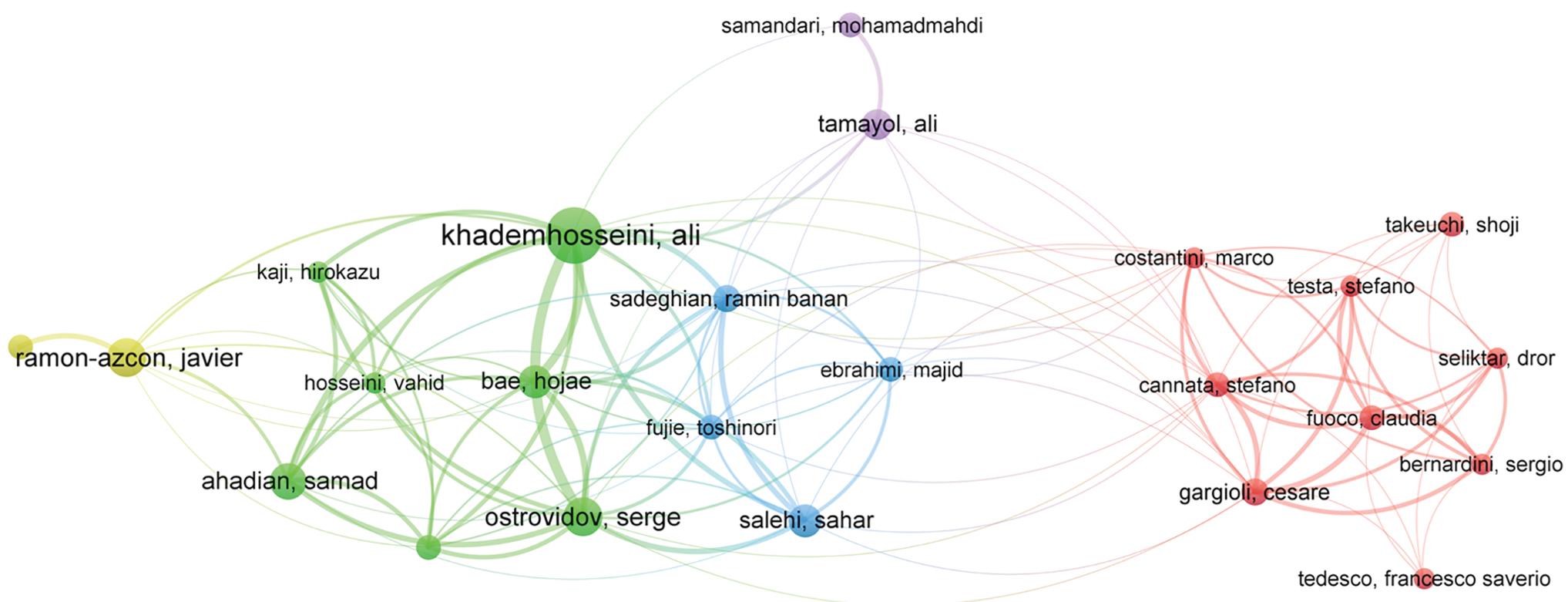
Map of author groups, 2012–2022. Color images are available online.
Citation analysis
The number of citations is an important indicator that objectively evaluates the impact of an article. Table 5 shows the main information about the top 10 most cited articles, which were mainly produced between 2012 and 2019. “A 3D bioprinting system to produce human-scale tissue constructs with structural integrity” by Hyun-Wook Kang et al. in 2016 was the most cited article between 2012 and 2022, with a total of 1644 citations. The second-most cited article was “Synthesis, properties, and biomedical applications of gelatin methacryloyl (GelMA) hydrogels” by Yue, Kan et al. in 2015, with a total of 1397 citations. This is followed by “Extracellular matrix: A dynamic microenvironment for stem cell niche” by Gattazzo, Francesca et al. in 2014, with 823 total citations.
Top 10 Skeletal Muscle Tissue Engineering Publications
Top high-frequency keywords
The combination of network clustering analysis and keyword citation detection is helpful for quickly understanding the topics of great interest and trends in a research area. In the present study, we extracted the top 25 keywords using VOSviewer and CiteSpace software. As shown in Figure 6, cell differentiation, proliferation, expression, extracellular matrix, application, regeneration, and injury repair had the highest concurrences. Notably, tissue engineering application and modeling have been the most cited burst words in recent years, which predict the possible development trends.
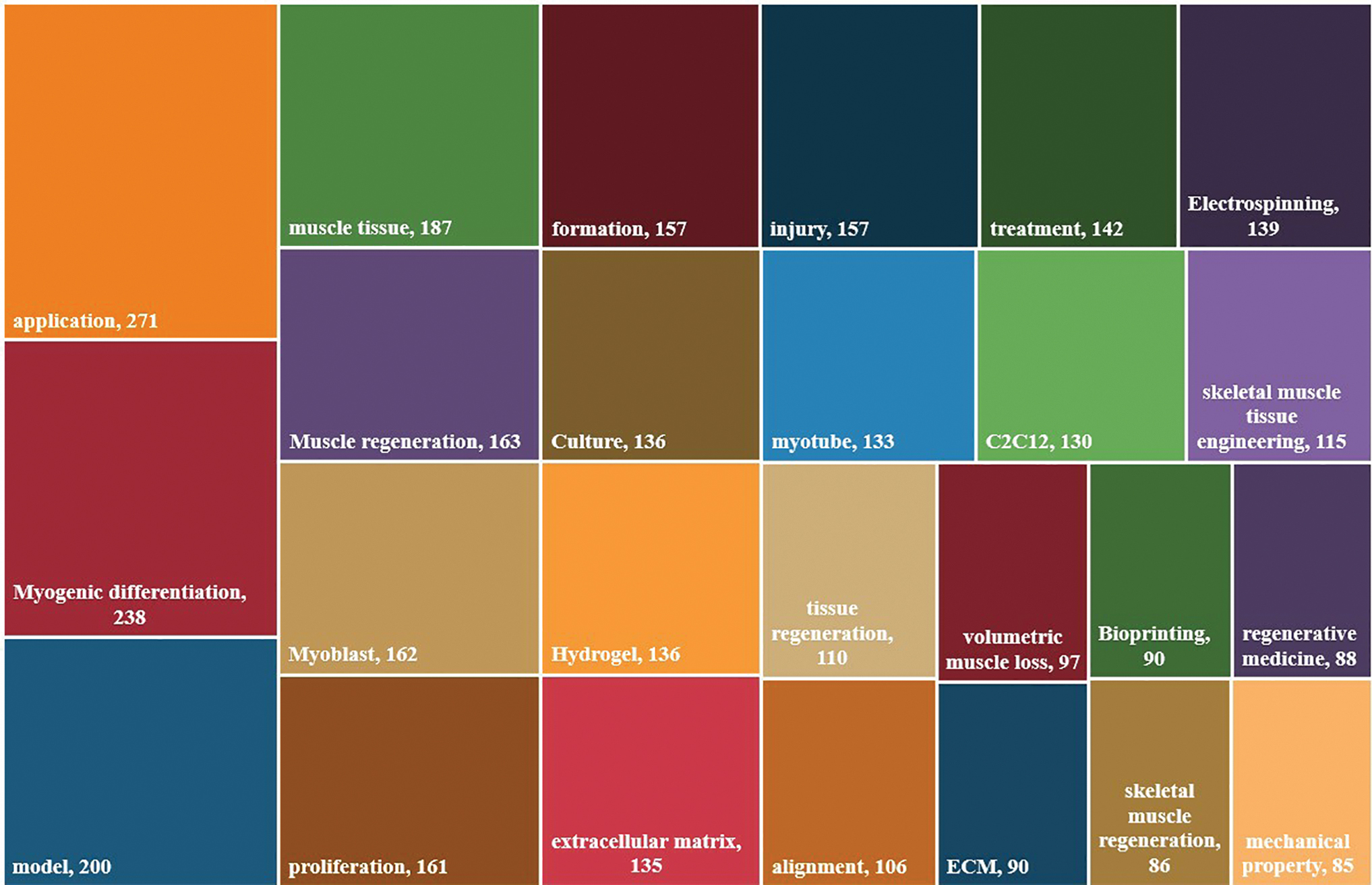
Top 25 high-frequency keywords, 2012–2022. Color images are available online.
Temporal keyword clustering is an analytical method used to study the variation of keywords on the same timeline. Based on the results of keyword clustering, we plotted the temporal distribution of keywords (Fig. 7) and placed the five extracted clusters on the right-hand side of the figure. We found that research on SMTE mainly focused on the creation of volumetric muscle loss models and the construction of microscopically oriented structural scaffolds.
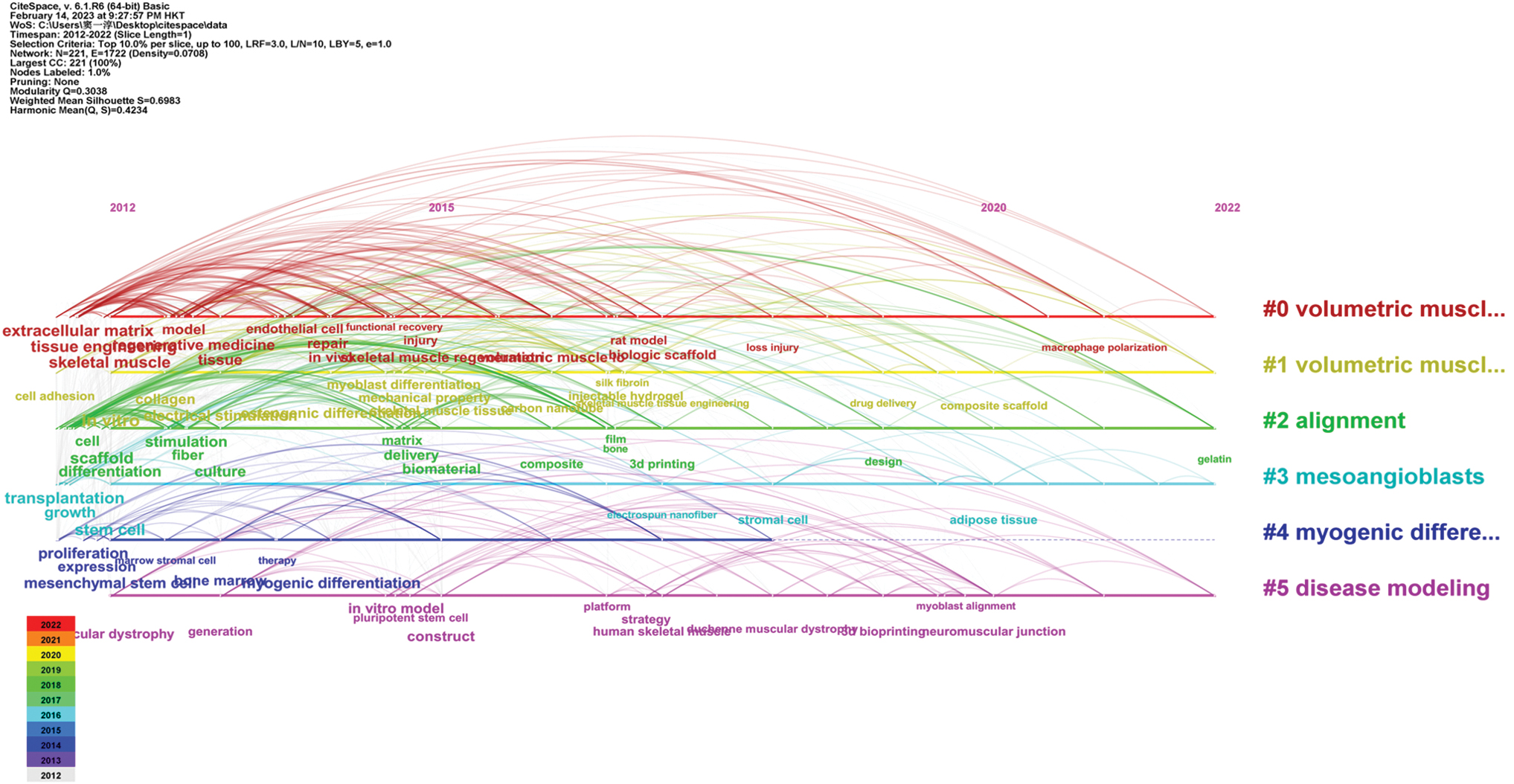
Visual analysis of keywords and clusters. Color images are available online.
The keywords in a scientific article are a highly condensed version of the article, and the word frequency of keywords can reflect the impact of research topics. In our study, we divided the keywords into three groups according to the research topics using CiteSpace software. We found that the keywords in the SMTE corpus for the period 2012–2019 were focused on stem cells. In particular, the differentiation potential of stem cells to skeletal muscle was an early research area of great interest in the SMTE corpus. With the rapid development of engineering and materials science, the main topics in the SMTE corpus for the period 2019–2022 became bioprinting and biomanufacturing. The evolution of these high-frequency keywords reveals a shift in SMTE-related research areas of great interest. The research areas of great interest in the SMTE corpus shifted from seed cells to the application of hydrogel material-based bioprinting or biomanufacturing strategies in the in vitro construction of highly bionic-engineered skeletal muscle, which involves the alignment, differentiation, and organization of cells.
The current study mainly focuses on the development and design of tissue-engineered skeletal muscle scaffolds, various novel biofabrication methodologies have been developed, as well as several three-dimensional (3D) tissue engineering muscle models created employing fabrication technologies such as 3D bioprinting and electrospinning. To improve tissue maturity, the constructed models are paired with the use of external stimulation. The researchers employed a photosynthetic cyanobacterium in a methacrylated gelatin bioink and used in situ electric field stimulation to fabricate cell-laden scaffolds for regenerating skeletal muscle tissue. This approach resulted in highly aligned, multinucleated myofibers and significant upregulation of myogenic-related genes, leading to restoration of muscle functionality and regeneration in vivo.
Due to the complex structure of natural skeletal muscle and surrounding tissues, such as the different pore sizes between the membranes of each connective tissue, it is difficult for ordinary scaffolds to achieve high-efficiency and high-performance repair. To mimic the layered structure of muscle tissue, strategies, including 3D printing, melt electrospinning (MEW), and femtosecond laser ablation have been developed to fabricate multilayered or multifunctional scaffolds.
Katzschmann et al. developed a bioink with suitable mechanical properties for the construction of skeletal muscle tissue with a perfusable microchannel network by using a 3D bioprinting technique based on multimaterial extrusion. The material properties of the bioprint, the design of microchannels for cell survival support, local drug release, and the stability and precision of the bioprinting process were evaluated to successfully construct 3D skeletal muscle tissues in vitro. 26 Castilho used MEW as a methodology to fabricate hexagonal scaffolds with adjustable diameters and magnetic distributions using magnetic composites, which were used to guide the in vitro skeletal muscle model for 3D tissue formation.
These scaffolds can be remotely activated by a magnetic field to promote the orderly alignment of muscle bundles. 27 Cui et al. 28 reported that 3D bioprinting allows precise deposition of matrix and cells for the fabrication of complex structures. Lee et al. developed a new photocrosslinking method for 3D bioprinting, which was highly effective in fabricating biofunctional muscle tissue constructs. 29 These studies demonstrate the potential of 3D scaffolds for constructing complex functional skeletal muscle tissue structures. Shin 30 presents a bioengineering approach to create muscle connective tissue (MCT)-layered myofibers using stem cell fate-controlling biomaterials, achieving controlled codifferentiation of MCT fibroblasts and myofibers from human-induced pluripotent stem cells. The findings of this study have implications for the development of biomimetic human muscle grafts for various biomedical applications.
Meanwhile, the researchers utilized genetic technology in conjunction with tissue engineering technology to control the growing process of a 3D skeletal muscle model using genetic engineering techniques. They enhanced the formation of new skeletal muscle and the growth of blood vessels in the tissue-engineered skeletal muscle by constructing target cells with secretion capabilities. This study unveiled the mechanism by which muscle injuries heal. For example, Wang et al. 31 presents a 3D muscle aging system that overcomes the limitations of traditional models and demonstrates impaired regeneration in old muscle constructs compared with young muscle constructs. The study identifies complement component 4b (C4b) as a cell-autonomous mechanism that delays muscle progenitor cell amplification and impairs functional recovery in aging muscle and suggests that inhibiting C4b may enhance aged muscle repair.
Burst words are keywords that increase suddenly in citation frequency in a research area within a short period and can reflect research topics that have had a high impact over time. In our study, we obtained 24 burst words by calculating the burst intensity of keywords (Fig. 8). As shown in Figure 8, 2012–2014 was the initial stage, during which the induced differentiation of stem cells was the main research topic. With the application of induced stem cell technology, stem cells were directed into myogenic cells, and in vitro tissue models of skeletal muscle were constructed accordingly to explore muscle physiology and the mechanism of muscle diseases, which provided a theoretical basis for subsequent research on artificial tissue models of skeletal muscle. From 2014 to 2019, the main research topic was the effects of external interventions on the behavior of myogenic cells, which focused mainly on the use of in vitro electrical stimulation, mechanical stimulation, growth factor signaling, and other methods to explore the key elements that affect the growth and differentiation of myogenic cells.
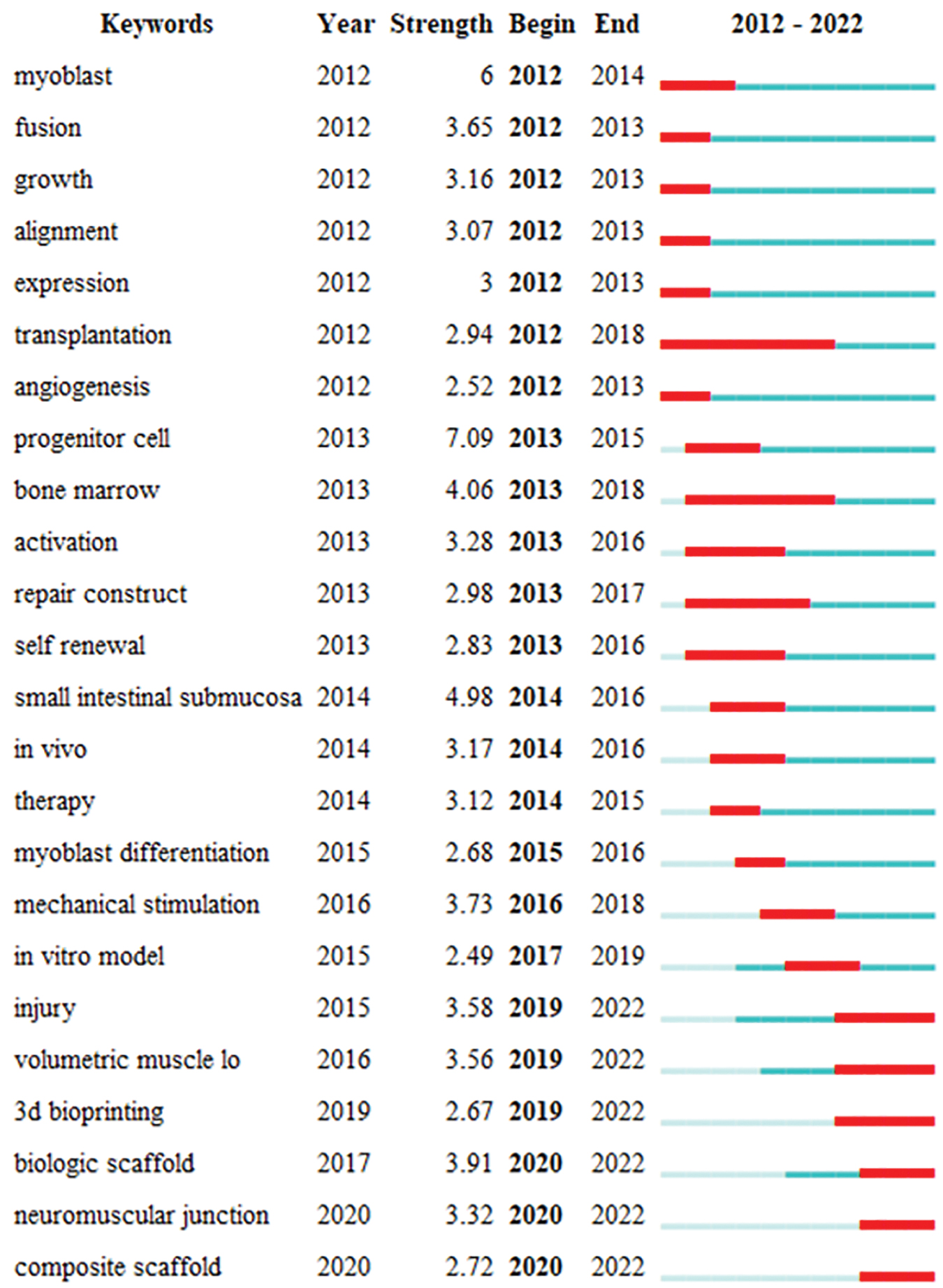
Top 24 keywords with the strongest citation bursts. Color images are available online.
From 2019 to the present, with rapid advances in materials science and high-end manufacturing, more studies have been conducted on the construction of 3D scaffold models than before, which can achieve better integration with cells and biological signaling factors, and regulate cell behavior by enabling the specific stimulation and guidance of cells according to the properties of materials. These in vitro models are expected to simulate realistic physiological properties, such as muscle fiber arrangement, the basal structure of the ECM, and contraction patterns. Meanwhile, the application of external stimuli to the in vitro models can improve the promotion of cell growth and development, and achieve specific differentiation. For example, electrical stimulation plays an important role in both the induction of artificial cell movement and the formation of mature NMJs. Kamihira et al. applied pulsed electrical stimulation with continuous electrical pulses of 0.3 V/mm amplitude and 1 Hz frequency to muscle precursor cells cultured on micropatterned polylactic acid membranes and observed an increase in the density of myotubes. 32
Challenges of SMTE
To summarize, keyword clustering and burst word analysis have demonstrated that notable advances in skeletal muscle injury repair have laid a solid foundation for addressing technical problems in clinical applications and introducing novel nanofiber materials. 33 SMTE models have become a powerful tool for studying myogenesis, metabolism, and motor neuron and NMJ disease mechanisms. In recent years, the application and scale production of new materials have become research topics of great interest in materials manufacturing technology, and more environmentally friendly materials have been used in new application scenarios. SMTE has made significant progress in recent years, but there are still several limitations and challenges that need to be addressed. The current limitations of SMTE are as follows: there are no clinically applicable mature tissue-engineered muscle construction protocols, and existing engineered SMTE scaffolds cannot be constructed to obtain native muscle tissue structures and muscle tissues with contractile physiological functions.
Furthermore, the engineered skeletal muscle tissue frequently exhibits flawed 3D spatial organization, with notable disparities in the alignment of muscle fibers, blood vessels, and neural network structure compared with healthy skeletal muscle. This discrepancy can result in immune rejection following implantation and hinder the effective restoration of large-volume skeletal muscle defects.
There are several challenges in mimicking native skeletal muscle. One of the main challenges is the difficulty of scaling up tissue engineering techniques to produce large volumes of functional muscle tissue for clinical applications. Current methods for generating muscle tissue in vitro are limited by the size and complexity of the tissue constructs that can be produced. The lack of vascularization in engineered muscle tissue is another major challenge, as it limits the ability of the tissue to receive nutrients and oxygen, which are essential for its survival and function.
Another challenge is the need for a reliable source of muscle cells for tissue engineering. While satellite cells are the most commonly used cell type for muscle tissue engineering, they have limited proliferative capacity and can be difficult to obtain in large quantities. Other cell types, such as muscle-derived stem cells and induced pluripotent stem cells (iPSCs), have been explored as alternative cell sources, but they also have limitations, such as low differentiation efficiency and potential tumorigenicity.
The mechanical properties of engineered muscle tissue are also a challenge. Skeletal muscle is a highly organized tissue with a complex hierarchical structure, and replicating this structure in vitro is difficult. The alignment of muscle fibers is critical for proper muscle function, and current tissue engineering techniques have limited ability to control fiber alignment and orientation.
Finally, the immune response to implanted tissue constructs is a major challenge in tissue engineering. The immune system can recognize implanted tissue constructs as foreign and mount an immune response, leading to rejection of the tissue. Strategies to overcome this challenge include the use of immunomodulatory biomaterials and the genetic modification of cells to reduce their immunogenicity. 34
In conclusion, while significant progress has been made in SMTE, there are still several challenges that need to be addressed before this technology can be widely used in clinical applications. These challenges include scaling up tissue engineering techniques, finding reliable cell sources, replicating the complex hierarchical structure of skeletal muscle, and overcoming immune rejection of implanted tissue constructs. With a better understanding of SCs and neuronal cell biology, the development of new materials and technologies, and the continuous integration of genetic engineering, 3D bioprinting technology, and tissue engineering technology, tissue engineering technology will be able to repair skeletal muscle injuries with greater clinical success.
Conclusion
In our present study, we summarized the countries, institutions, authors, journals, and citations that have contributed to SMTE research using VOSviewer and Citespace software. This bibliometric study had several limitations. First, we used only the Science Citation Index Expanded WoS electronic database and did not search or analyze other relevant databases. Additionally, we excluded all non-English language articles. Although most of the relevant publications are in English, publication bias could occur. Second, we could not ensure that each article was fully relevant to the topics. Despite this, we believe that our results provide a helpful and representative overview of research on skeletal muscle injury repair. In particular, research groups from the United States and France have made important contributions to the development of SMTE research, and international collaboration should be strengthened to obtain more high-quality results.
Our bibliometric review highlights the main research areas of great interest and possible future research directions associated with keywords including muscle fatigue, neuromuscular electrical stimulation, spinal cord injury, tissue engineering, and atrophy. Further research is warranted to promote the development of the field through the exploration of new techniques and new application strategies. We expect that in the coming years, SMTE research will break through the existing set of challenges and achieve a breakthrough.
Footnotes
Acknowledgments
The authors gratefully acknowledge the State Key Laboratory of Organic–Inorganic Composites, Beijing Laboratory of Biomedical Materials, National Center for Orthopedics, and Beijing Research Institute of Traumatology and Orthopedics.
Authors' Contributions
Y.D.: Conceptualization, Investigation, Methodology, Formal analysis, and Writing—original draft. L.Z.: Investigation, and Writing—original draft. J.W.: Investigation, and Writing—review and editing. Y.X.: Supervision, and Writing—review and editing. Y.Z.: Writing—review and editing. Y.L.: Writing—review and editing. Liqun Z.: Writing—review and editing. R.S.: Conceptualization, Investigation, Project administration, Supervision, Funding acquisition, Resources, and Writing—review and editing.
Disclaimer
The contents of this publication are the sole responsibility of the author(s). The authors conducted an in-depth analysis of highly cited and representative articles at various stages to summarize the mainstream research areas of great interest in SMTE and identify this field's developmental trajectory. This work is highly related to the scope of the journal, especially in the fields of material science, nanotechnology, biomedicine, and tissue engineering, and it will be able to provide new thoughts on skeletal muscle repair and regeneration.
Disclosure Statement
No competing financial interests exist.
Funding Information
This work was supported by the National Natural Science Foundation of China (Grant Nos. 82072406, 8215131), Beijing Municipal Health Commission (Grant No. BJRITO-RDP-2024), Beijing Nova Program (Grant No. 20220484229), and Beijing Jishuitan Hospital Elite Young Scholar Program XKGG2021.