




Abstract
Saturday, November 1, 2014
Thyroid Cancer Saturday Oral Abstract Translational 9:00 AM
TERT C228T promoter mutation represents a novel genetic mechanism in thyroid tumorigenesis with promising prognostic potential, but its specific prognostic value in thyroid cancer patient mortality has not been well established. This study explored the role of TERT C228T mutation in papillary thyroid cancer (PTC)-related mortality with respect to the BARF V600E mutation status.
TERT promoter mutation C228T and BRAF V600E were examined by Sanger sequencing of genomic DNA of PTC and their relationship with PTC-related patient death was analyzed.
Among 609 patients (436 females and 173 males, aged 46.1 ± 14.1 years), TERT C228T and BRAF V600E mutations were found in 66 (10.8%) and 225 (36.9%) cases, respectively, and patient death occurred in 18 (3.0%) cases. Death occurred in 13/225 (5.8%) BRAF mutation-positive vs 5/384 (1.3%) BRAF-negative cases (P = 0.002) and 11/66 (16.7%) TERT mutation-positive vs 7/543 (1.3%) TERT-negative cases (P < 0.001). Death occurred in 2/355 (0.6%) cases without any mutation (N), 5/188 (2.7%) cases with BRAF mutation only (B), 3/29 (10.3%) cases with TERT mutation only (T), and 8/37 (21.6%) cases with both TERT and BRAF mutations (T + B), with corresponding deaths per 1000 person-years (95% CI) of 1.37 (0.34–5.50), 7.49 (3.12–17.99), 18.26 (5.89–56.63), and 58.61 (29.31–117.19). The P values are: B vs. N, 0.052; T vs. N, 0.004; B + T vs. N, <0.001, with corresponding HR (95% CI) of 5.13 (0.93–28.26), 20.03 (3.01–133.14), and 19.22 (3.70–99.86) after adjustment for patient age and sex. Similar results were obtained on the analyses of 464 conventional-variant PTC alone. Co-existence of BRAF and TERT promoter mutations were also strongly associated with the loss of radioiodine avidity of recurrent PTC.
This large study demonstrates that TERT promoter mutation is strongly associated with PTC-related mortality, particularly when coexisting with BRAF mutation. Coexistence of the two mutations represents a unique genetic background that defines the group of PTC patients with the highest risk for morality.
Thyroid Cancer Saturday Oral Abstract 9:15 AM
The Cancer Genome Atlas analysis showed a high frequency of ch22q loss in RAS-mutant PTC (45%). The association was particularly striking for HRAS: 10/14 (71%) (p < 5xE-6; OR > 10).
As stated in results.
We found that PDTCs also had frequent 22q LOH (14/63; 22%), preferentially in RAS (8/16; 50%) vs BRAF-mutant tumors (0/26). Of the cancer genes on Ch22q, we focused on NF2 because 4/40 thyroid cancer cell lines had homozygous NF2 nonsense mutations (Cal62:c.643G > T,pE215*; 8505C:c.385G > T,p.E129*; TCO-1:c.303T > A,p.Y101*; KHM-5M: NF2-exon4-del), and other NF2-WT or hemizygous lines and tumors had low/absent merlin protein, Nf2 loss or Ras activation was insufficient to induce thyroid cancers in mice. However, their combined disruption gave rise to large PDTCs with markedly increased pERK. Enforced merlin expression in RAS-mutant/NF2-null cells resulted in decreased growth, colony formation and MAPK signaling, whereas the inactive mutant NF2-L64P was without effect. Unexpectedly, merlin inhibited both WT and mutant RAS-GTP levels, which was associated with decreased expression of all RAS isoforms. Merlin expression in RAS-mutant/NF2-null cells resulted in YAP phosphorylation and retention in the cytoplasm. YAP is a required component of a transcriptional regulatory complex mediating effects of Hippo pathway inactivation. Silencing of YAP decreased expression of all RAS isoforms, their signaling and cell growth, a previously unknown effect of Hippo signaling. This YAP-RAS-mediated increase in MAPK output rendered RAS-mutant/NF2-null cells more dependent on this pathway for growth: IC50 for the MEK inhibitor AZD6244 was lower in merlin-null (<50–200 nM) vs merlin-WT (>200 nM-2 μM) cells, which was confirmed in isogenic HRASG13R, NF2-WT cells stably expressing sh-NF2. Similarly, treatment of mice with HrasG12V/Nf2-null thyroid cancers with AZD6244 showed consistent reduction of tumor size, whereas HasG12V/Pten-null and HrasG12V-p53-null thyroid cancers failed to respond.
Hence, NF2/merlin is a thyroid tumor suppressor gene, the loss of which amplifies RAS signaling and renders thyroid cancers sensitive to MEK inhibitors.
Thyroid Cancer Saturday Oral Abstract Translational 9:30 AM
HRAS mutations are the second most common type of RAS mutation found in thyroid cancer and are also present in other cancer types, including medullary thyroid cancer. HRAS is currently the only RAS oncoprotein that can be directly inhibited pharmacologically with drugs that have been tested in humans, as it is delocalized from the plasma membrane by farnesyltransferase inhibitors (FTIs). This class of drugs was largely abandoned because they were ineffective in clinical trials. However, these studies were flawed because they did not focus on patients with cancers harboring the vulnerable oncogenic driver mutation. AZD6244 is a MEK inhibitor currently being used in clinical trials to block the MAPK pathway in a variety of malignancies. However, its effectiveness is limited by feedback responses that lead to the reactivation of pMEK, particularly in the setting of BRAF or RAS-mutant disease.
To study these agents in the thyroid, we generated mice with endogenous HrasG12V expression targeted to the thyroid in the context of p53 loss.
These mice developed highly proliferative anaplastic and poorly differentiated thyroid cancers with a high mortality rate (tumor doubling time 7–20 days). Treatment with two weeks of AZD6244 yielded variable responses whereas treatment with the FTI tipifarnib showed more consistent reduction of tumor volumes (figure). When used in combination in HrasG12V/p53(-/-) mutant thyroid cancer cell lines, feedback responses to AZD6244 (as measured by pMEK) were reduced in the presence of tipifarnib. MAPK transcriptional output markers (Dusp5, Hmga2, Fosl1) also showed a greater reduction using the combination in vitro. Treatment of tumor-bearing HrasG12V/p53-null mice with both AZD6244 and tipifarnib for two weeks produced greater tumor shrinkage than either drug alone with minimal toxicity (figure).
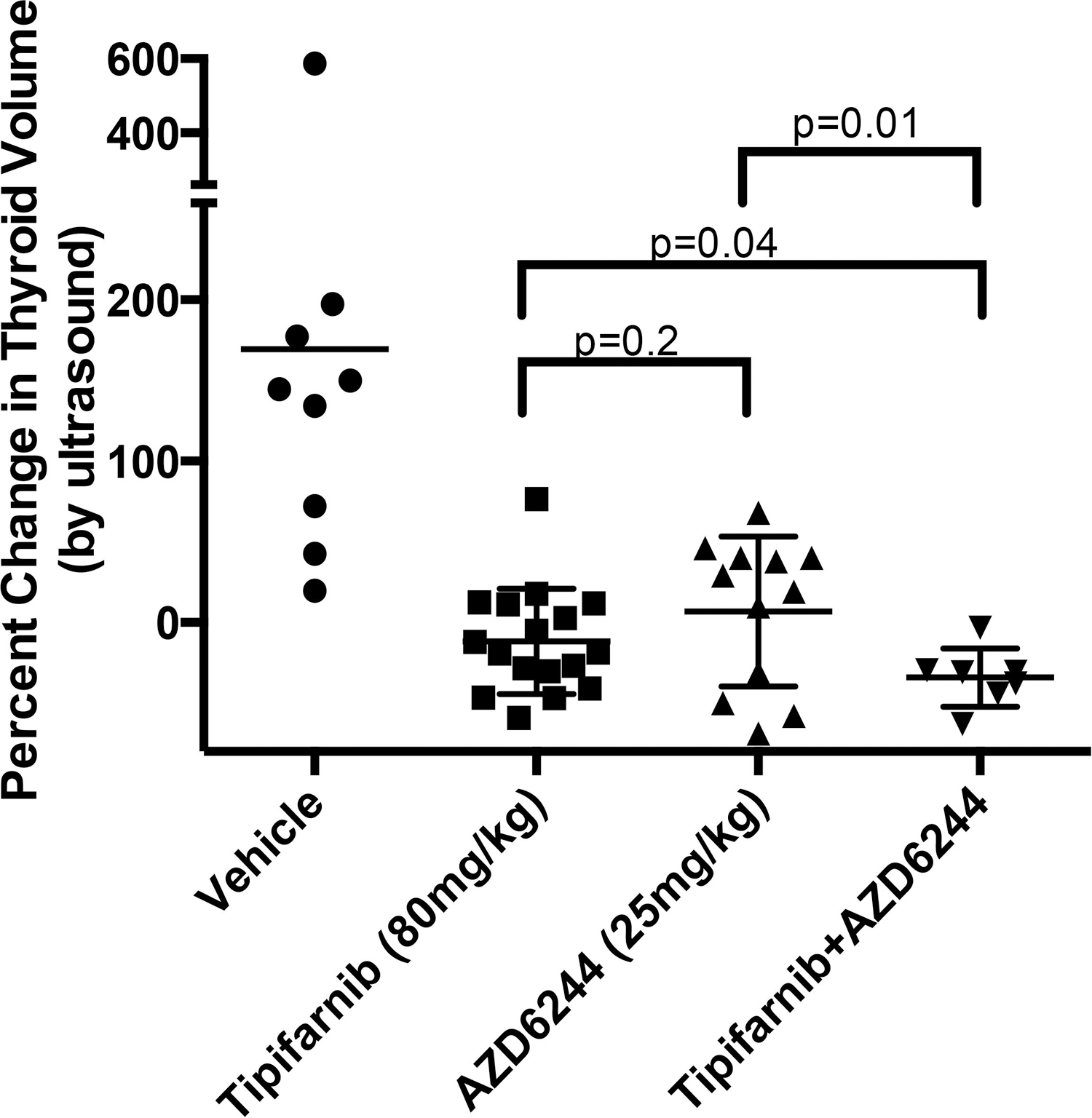
These results demonstrate that FTIs are an effective treatment for Hras-mutant thyroid cancers, and that responses could be augmented by concomitant MEK inhibition. This provides the rationale for a basket clinical trial for HRAS-mutant cancers with the FTI tipifarnib, which is currently being designed by our group.
Autoimmunity Saturday Oral Abstract Translational 9:45 AM
Agranulocytosis is a rare side effect of thyrostatic treatment with unknown etiology and is associated with high infection risk. Familial cases of thyrostatic-induced agranulocytosis have not been described so far. We have identified two independent families with respectively two and four affected family members with Graves' disease, of which respectively two and three patients developed propylthiouracil or thiamazole induced agranulocytosis, suggesting the presence of a common genetic cause. The present study aimed to identify the genetic cause of thyrostatic-induced agranulocytosis.
Whole exome sequencing of both affected and unaffected family members and co-segregation of genetic variants between the two families was performed.
After the exclusion of common and rare variants that were detected in previous large-scale exome sequencing databases and the selection for complete co-segregation among all five patients in the two families, 15 candidate genes were found with mutations in all affected patients. Based on the functional role of the proteins encoded by these genes, NOX3 was identified as the most likely causative genetic candidate. Consistently, mutations in NOX3 were not detected in the family member affected by Graves' disease that did not develop thyrostatic-induced agranulocytosis. NOX3 is a component of the NADPH oxidase complex. Defects in NADPH oxidase complex have been previously associated with drug-induced agranulocytosis. Importantly, previous genetic studies revealed no role NOX3 in susceptibility to Graves' disease, making it unlikely that these mutations are associated with familial Graves' disease.
The present study identifies for the first time NOX3 as a genetic cause of thyrostatic-induced agranulocytosis. Subsequent functional studies should unravel the underlying mechanisms of agranulocytosis evoked by the combination of genetic defects of NOX3 on the one hand and thyrostatic treatment on the other.
Thyroid Cancer Saturday Oral Abstract Translational 10:00 AM
Gene fusions are common in thyroid cancer. ThyroSeq next-gen sequencing (NGS) panel detects more than 40 previously reported fusion types by amplification and sequencing of fusion transcripts. In addition, it is designed to detect novel fusions involving the ALK, RET, NTRK1, NTRK3 and PPARG genes by differential expression of gene segments involved in the fusion. In this study, we evaluated the performance of this panel for detection of novel fusion types in thyroid FNA samples.
ThyroSeq RNA NGS analysis was performed on 716 thyroid FNA samples. Custom libraries were prepared using 10 ng of RNA and sequenced on Ion Torrent PGM (Life Technologies). Bioinformatics analysis was performed using custom pipeline that designed to identify gene fusion transcripts and gene expression levels.
Out of 716 analyzed thyroid FNA specimens, 5 were positive for novel fusion types. This included a novel EML4/NTRK3 fusion (EML4 exon 6 and NTRK3 exon 14) as well as novel isoform of previously detected EML4/ALK fusion (EML4 exon 6 and ALK exon 19) and 3 new isoforms of PAX8/PPARG (PAX8 exon 2 and PPARG exon 2). None of these fusions could have been identified by amplification of the previously known fusion breakpoints. The presence of novel fusion types was confirmed in all cases either by FISH, IHC, or RNA-seq and conventional RT-PCR. Cytologic diagnoses in these cases were FLUS in 2 FNA samples, FN/FL in one, and suspicious for malignant cells in two FNA samples. After surgery, all 5 nodules were found to be cancer. No other mutations or gene fusions were found in these samples.
Novel types and isoforms of gene fusions occur in thyroid cancer and can be detected by targeted NGS panel in thyroid FNA samples. This enhances further the accuracy of cancer diagnosis in thyroid nodules with indeterminate cytology. In addition, this provides potential therapeutic targets for patients with advanced thyroid cancer.
Thyroid Hormone Action Saturday Oral Abstract Basic 10:15 AM
X-linked adrenoleukodystrophy (X-ALD) affects 1 in 17,000 people in the US and is characterized by adrenal gland dysfunction and neurological deficits that arise from destruction of the myelin sheath surrounding neurons. Patients with X-ALD have elevated very long chain fatty acids (VLCFAs) in plasma and tissue, which are thought to be responsible for the disease pathology. Identifying agents that lower VLCFA levels has been a guiding principle for developing an X-ALD therapy. X-ALD is a genetic disease caused by mutations in ABCD1, which encodes a peroxisomal ABC-type transporter important for VLCFA degradation. ABCD2 is a close homolog of ABCD1 that has been shown to genetically compensate for ABCD1, and ABCD2 is regulated by thyroid hormone. This study explores the hypothesis that VLCFA levels are regulated by thyroid status via ABCD2 transcription and that thyroid hormone agonists will lower VLCFAs in a mouse model of X-ALD.
Abcd1 knockout (KO) mice with elevated VLCFAs in plasma and brain were used to evaluate the effects of thyroid status and thyroid hormone receptor (TR) ligand activation on Abcd2 and VLCFAs. Hypothyroidism was induced by inclusion of 0.1% methimazole and 0.2% potassium perchlorate in drinking water for 8 weeks. T3 and thyroid hormone agonists were administered daily by intraperitoneal injections (0.1 - 1 mg/kg) for seven days. Serum and brain tissue were collected and analyzed for VLCFA content using GC-MS and LC-MS. In addition, quantitative PCR was used to measure the transcript levels of Abcd2 in the brain.
The experimental data confirmed a role for thyroid status and thyroid hormone activation in VLCFA regulation. TR activation lowered VLCFAs in plasma and brain tissue of Abcd1 KO mice, whereas hypothyroidism increased VLCFAs. TR activation also led to an increase in Abcd2 transcript levels, whereas hypothyroidism decreased Abcd2 levels compared to euthyroid.
This study provides evidence demonstrating that thyroid status regulates VLCFA levels in an X-ALD mouse model presumably via modulation of Abcd2. These findings establish a potential role for selective thyromimetics as therapeutic agents for the treatment of X-ALD.
Thursday, October 30, 2014
Disorders of Thyroid Function Thursday Poster Translational
Normal maternal thyroid function during pregnancy is crucial for an uncomplicated course and proper child development. Fetal growth heavily depends on angiogenesis. Placental Growth Factor (PlGF) is a proangiogenic factor sharing high homology with Vascular Endothelial Growth Factor (VEGF) whereas Soluble FMS-Like Tyrosine kinase-1 (sFlt1) is a potent antagonist of VEGF and PlGF signaling. We previously showed that these angiogenic factors are associated with fetal thyroid function. However, both factors also reach the maternal circulation via nonspecific diffusion through the intervillous space. Since the thyroid is a highly vascularized organ, we hypothesized that these angiogenic factors also influence maternal thyroid function.
sFlt1, PlGF, hCG, TSH, free T4 and T4 levels were determined during early pregnancy in 5517 women from the Generation R cohort. Analyses were adjusted for various covariates including gestational age, BMI, smoking, ethnicity and placental weight.
sFlt1 levels were inversely associated with FT4 (−0.08 ± 0.01; P < 0.001) and T4 (−0.5 ± 0.1; P < 0.001) and there was a tendency to increased TSH (β ± SE 0.003 ± 0.002; P = 0.06; Figure 1). PlGF was negatively associated with TSH (−0.04 ± 0.01; P = 0.002) and with FT4 (−0.7 ± 0.1; P < 0.001) with a clear cut-off for these effects (PlGF < 100 pg/ml; Figure 1). PlGF showed a positive association with T4 levels (−0.5 ± 0.1; P = 0.03). sFlt1 was linearly associated with the risk of subclinical hypothyroidism (P = 0.004) and hypothyroxinemia (P = 0.02), and high levels increased these risks 2.4-fold (95CI 1.2–4.9) and 3-fold (95CI 1.4–6.4), respectively. PlGF was linearly associated with the risk of hypothyroxinemia (P = 0.01). Interaction analyses showed that high levels of PlGF impaired the hCG-mediated FT4 increase whereas increasing levels of hCG corrected the lower levels of FT4 and T4 seen amongst women with high sFlt1.
*Linear regression coefficient after LN-transformation of independent variable.
Graphs show the assoiation between maternal levels of sFlt1, PlGF and predicted mean levels of TSH or FT4 (black lines) with 95% confidence interval (grey areas). Analyses were performed after exclusion of twin pregnancies, fertility treatment and pre-existing disease or thyroid interfering medication usage and were adjusted for gestational age at blood sampling, hCG levels, maternal age, education level, parity, BMI, ethnicity and fetal gender. Analyses were performed using restricted cubic spline analyses in R statistical software v 3.03, package RMS.
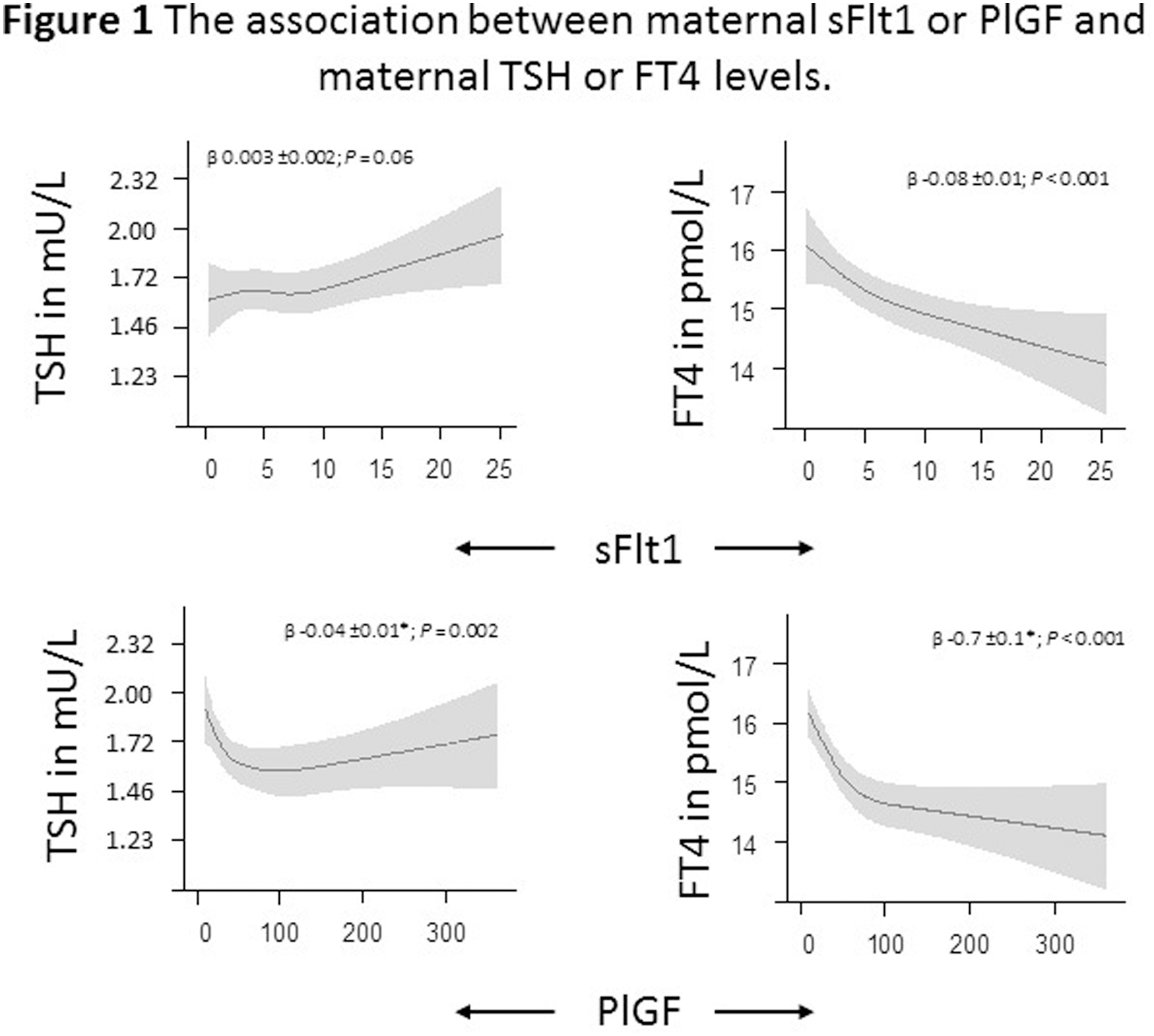
Angiogenic factors sFlt1 and PlGF are novel determinants of maternal thyroid function and are associated with the risk of subclinical hypothyroidism and hypothyroxinemia. These effects are likely to be mediated via alterations in thyroid vascular density. These data provide novel insights into the physiology of gestational thyroid (dys)function.
Thyroid Hormone Action Thursday Poster Basic
PGC1a plays a central role in skeletal muscle (SKM) biology by mediating mitochondrial biogenesis and oxidative capacity. Several benefits of exercise training are achieved through PGC1a induction in SKM of mice and humans. Given that T3 promotes PGC1a gene expression, here we tested whether local T3 production by type 2 deiodinase (D2) plays a role in SKM exercise-induced PGC1a expression.
Male Wistar rats (8–12 wks) and C57/B6 mice with SKM-specific Dio2 inactivation (obtained by crossing floxed Dio2 mice with the cre recombinase expressing mice under the myosin light chain promoter; SKM-D2KO; 9–13 w) were submitted to an acute treadmill exercise session (20 min at 70–75% of maximum aerobic capacity). Muscle D2 activity was measured in microsomal protein from rat soleus (SOL) and white gastrocnemius (WG) while muscle homogenates were applied to mice SOL.
Exercise increased D2 activity (∼2-fold) in SOL from both control rats and mice; Dio2 gene expression as assessed by RT-qPCR was 2.2-fold greater in rat SOL and 2.7-fold in WG (p < 0.05 for both). Concomitantly, PGC-1a mRNA increased 5.5-fold in SOL and 1.8-fold in WG of exercised rats. Pharmacological blockage of beta-adrenergic receptors with propranolol (10 mg/kg) prevented Dio2 and PGC-1a induction in rat SOL and WG. Also, blocking D2 mediated T4-to-T3 conversion with iopanoic acid (60 mg/kg) attenuated the increase of PGC-1a (5.9 vs. 2.8-fold) in rats. Accordingly, SKM-D2KO mice exhibited reduced D2 activity and expression in SOL, while no difference in PGC1a and beta-2 adrenergic receptor mRNA levels were observed. Notably, exercise failed to fully induce PGC1a mRNA response in SKM-D2KO mice (1.6 vs. 2.3-fold; p < 0.05).
In conclusion, acute high intensity treadmill exercise increases SKM D2 activity and mRNA levels through a beta-adrenergic receptor-dependent mechanism. Furthermore, local T3 production during exercise is critical for at least part of the PGC-1a induction by exercise.
Friday, October 31, 2014
Thyroid Cancer Friday Poster Clinical
The purpose of this study is to evaluate the relationship between lymph node yield (LNY) from central and lateral neck dissections and risk of recurrence in patients undergoing primary surgery for well-differentiated papillary thyroid cancer.
We retrospectively reviewed clinical data from all patients with biopsy-proven well-differentiated papillary thyroid carcinoma who underwent total thyroidectomy with central or lateral neck dissection at our institution from 2005–2009. Patient demographics and tumor characteristics were obtained, and clinical data with at least 5 year follow up was used. Within the central and lateral neck dissections, total number of nodes dissected (LNY), total positive nodes removed, and the ratio of positive to total nodes were determined.
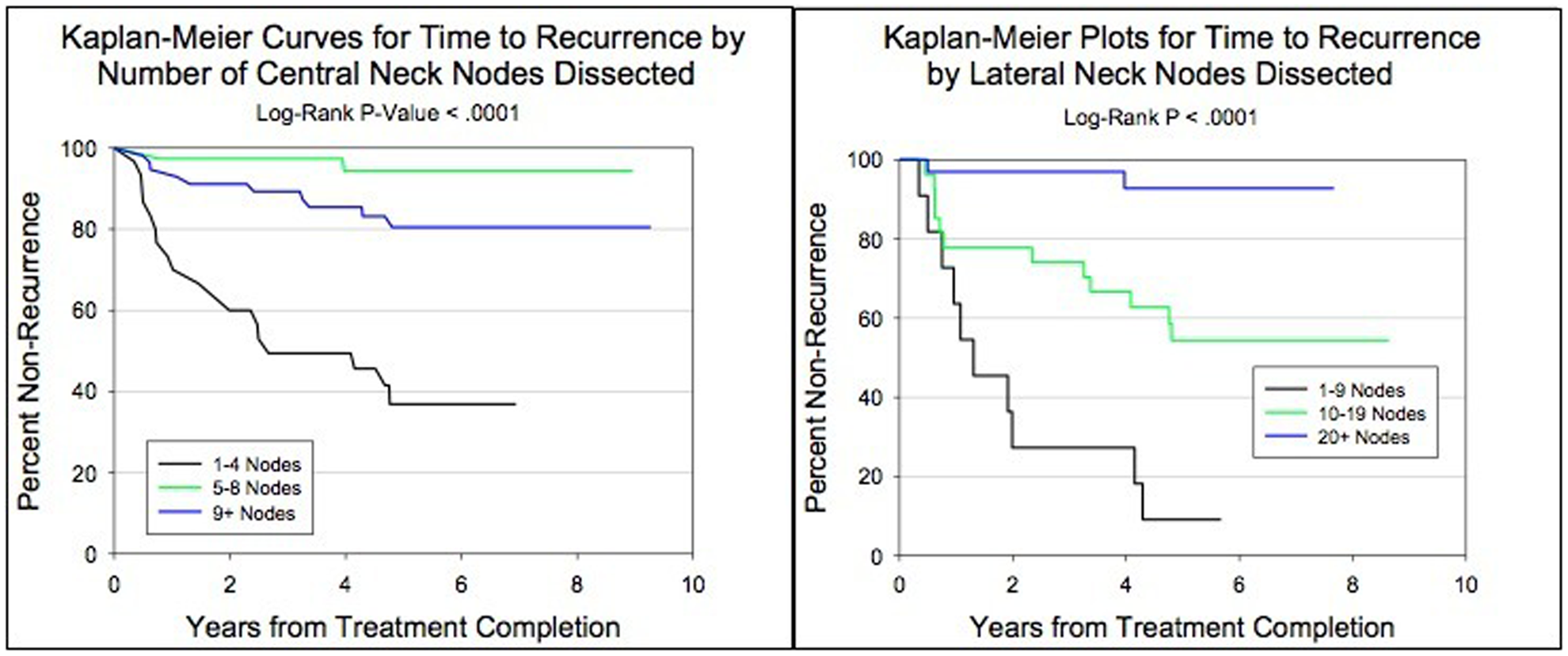
One-hundred fifty-two patients were studied, with average follow-up of 69 months. Of 125 patients who underwent central neck dissection, 20 had central neck disease recurrence. The LNY of patients with central neck recurrence was significantly less than in those who had no recurrence (2.5 vs 10.3, p < 0.0001). Of 71 patients who underwent lateral neck dissection, 23 had lateral neck disease recurrence. The LNY of patients with lateral neck recurrence was significantly less than in those who did not recur (10.5 vs 24.6, p < 0.0001). Earlier recurrence was associated with smaller LNY in both groups.
Higher LNY in central and lateral neck dissections is associated with lower risk of papillary thyroid cancer recurrence in the central and lateral neck. To minimize the risk of recurrence and need for secondary therapy with revision surgery and/or radiation, surgeons should perform thorough, compartment-oriented central and lateral neck dissections when nodal surgery is undertaken.
Time to recurrence is associated with central and lateral neck dissection lymph node yield.
Disorders of Thyroid Function Friday Poster Clinical
Thyrotoxicosis has been associated with increased rates of atrial fibrillation and decreased bone mineral density from both endogenous and exogenous thyroid hormone excess. With increasing longevity in the United States and increasing treatment of subclinical hypothyroidism in geriatric patients, we have investigated risk factors for thyrotoxicosis in a prospective study.
In the Baltimore Longitudinal Study of Aging since 2003, thyroid stimulating hormone (TSH) levels have been obtained every 1–5 years depending on age, in 1450 ambulatory participants. Data through 2014 were used to determine the risk factors associated with prevalent and incident cases of low TSH (below assay specific lower limits of normal).
Prevalence of low TSH was 10.3% for subjects on levothyroxine (LT4) and 0.8% for unexposed individuals (p < 0.001). New cases occurred at a rate of 19.2 per 1000 person-years of exposure to LT4 and 1.5 per 1000 person-years in the unexposed population. Women were more often treated with LT4 than men, and more often over-treated than men. The risk of thyrotoxicosis adjusted for race and age for women on LT4 compared to untreated women was HR = 15.3 (95% CI 4.2- 55.6) versus HR = 5.6 for men (NS). White race and older age were also risk factors for being on and initiating LT4. BMI was higher in those on LT4 at baseline, but not those starting therapy during follow up. Rates of initiating LT4 ranged from zero among men younger than 50 up to 2.5% per year among women older than 80. As of the last follow up, LT4 was prescribed to 12.9% of the study population. For one-third of LT4-treated subjects with follow up data, over-treatment persisted for at least 2 years.
Iatrogenic thyrotoxicosis accounts for almost half of both prevalent and incident low TSH events in this cohort, with the highest rates among older women, who are already vulnerable to atrial fibrillation and osteoporosis. Together with recent studies demonstrating no increased risk of cardiovascular morbidity or death for individuals with elevated TSH less than 10 mU/L, our data suggest that physicians should be particularly cautious in treating subclinical hypothyroidism in elderly women.

Thyroid & Development Friday Poster Translational
Thyroid hormone (TH) is essential for the developing brain and if lacking during gestation, will lead to abnormal brain development. Offspring of women with inadequately treated hypothyroidism (HYPO) or treated hyperthyroidism during pregnancy (HYPER) are typically exposed to an insufficient gestational TH supply. Previous research shows these children have reduced hippocampal volumes and abnormal hippocampal function. Studies on TH-deficient rodents also show abnormalities in hippocampal integrity and chemical composition. However, it is not known if this is similarly affected in TH-deficient children. Magnetic resonance spectroscopy (MRS) provides an ideal tool for studying human brain biochemistry in vivo. Therefore, we used MRS to assess hippocampal metabolites in children exposed to early TH deficiency. Specific objectives were: 1) to compare TH-deficient groups with matched controls on MRS and memory indices and 2) to correlate MRS and memory indices.
We studied 18 HYPO, 9 HYPER, and 27 age- and sex-matched controls. All were extensively assessed for memory and underwent 1.5 T MR imaging including left and right hippocampal MRS (Fig. 1A). MR spectra were analyzed using L-C Model to obtain metabolite concentrations (Fig. 1B). Statistical analysis was performed using SPSS.
Sample Methods and Results. A.Voxel placement in right hippocampus; B.MRS spectrum from left hippocampus; C.Mean glycerophosphocholine (GPC) concentrations in left hippocampus (p < 0.05); D.Correlation between right NAA + NAAG concentration and memory performance in HYPO (<0.01).
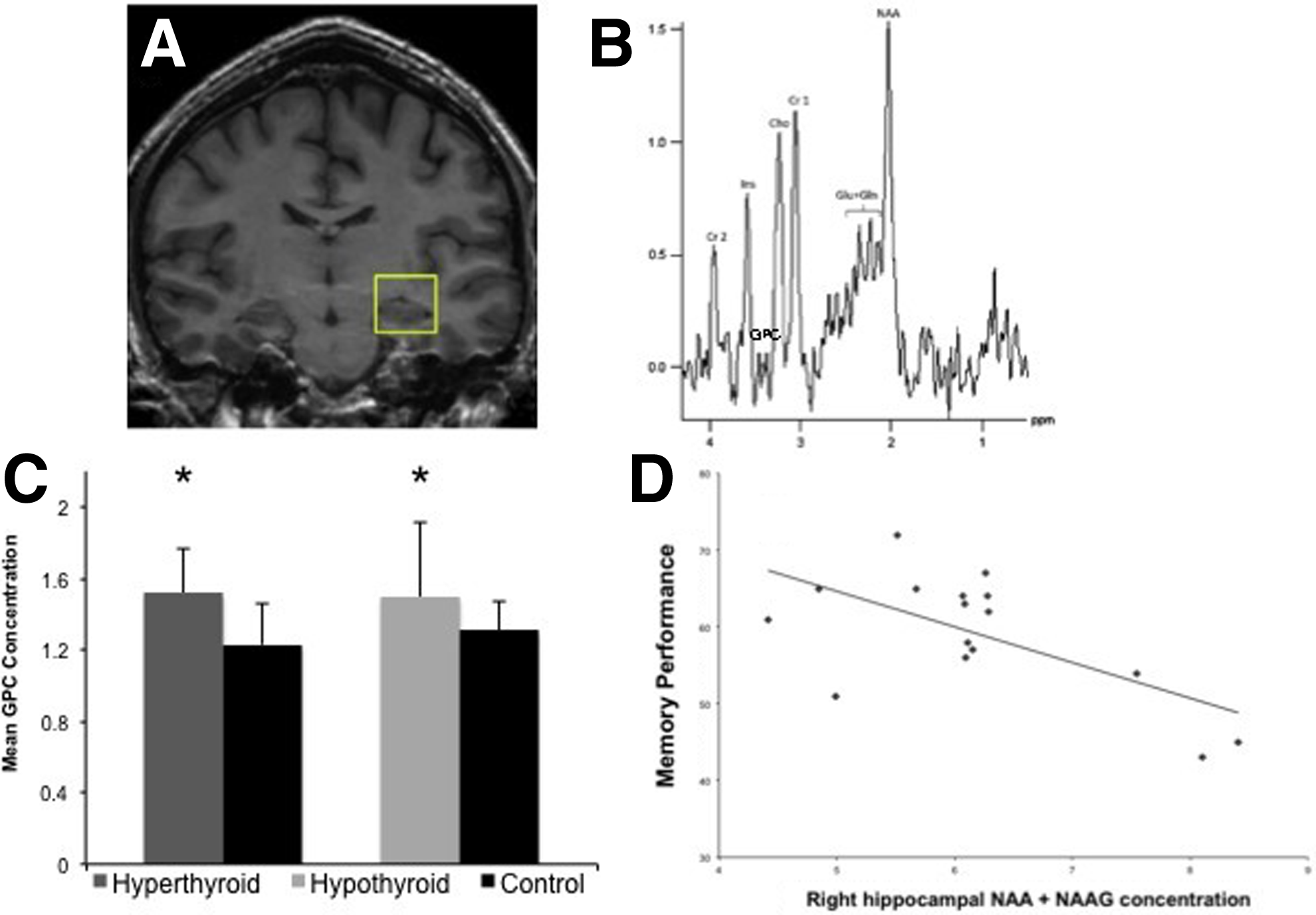
HYPO showed elevated glutatmate and glycerophosphocholine (GPC) levels in left hippocampus only while HYPER showed elevated levels of creatine, GPC, and N-acetylaspartate (NAA) in both hippocampi (Fig. 1C). HYPO exhibited every day and autobiographical memory weaknesses; both groups showed poor story recall. In HYPO, elevated GPC and NAA + NAAG levels were associated with poor memory performance (Fig. 1D). In HYPER, GPC was negatively correlated with autobiographical memory.
Elevated metabolite concentrations contributing to memory deficits in HYPO and HYPER signify that adequate TH exposure during pregnancy is essential for healthy hippocampal tissue development. Differences between HYPO and HYPER groups may reflect timing and degree of TH loss.
Saturday, November 1, 2014
Thyroid Cancer Saturday Poster Clinical
There are few therapeutic options for patients with advanced thyroid carcinoma due to the shortage of available clinical trials. The phosphotidilinositol-3 kinase (P13K)/Akt signaling pathway and downstream mTOR activation have been implicated in the pathogenesis of thyroid carcinomas. We hypothesize that the combination of an mTOR inhibitor, sirolimus, with a well-known cytotoxic agent, cyclophosphamide, provides a well-tolerated and promising alternative treatment.
The case and control populations were extracted from all patients treated for advanced thyroid cancer at the University of Michigan Oncology clinic from 1995 through 2013. Fifteen patients were identified in the case group and seventeen in the control group. Response was assessed every 8 weeks and progression events were determined by RECIST criteria.
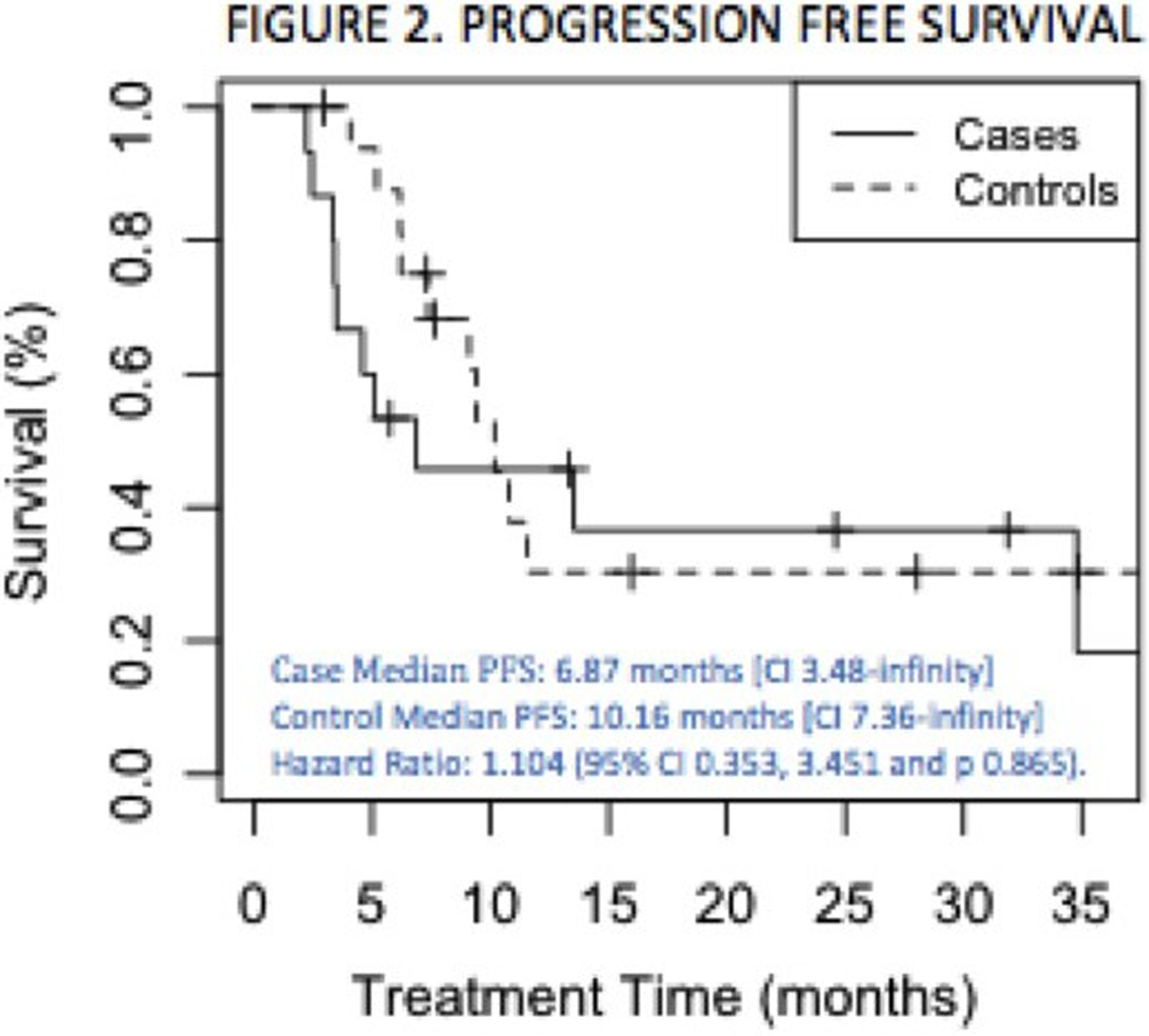
Median overall survival was 25 months (CI 7.46, infinity) in the case and >96.9 months (CI 21.4, infinity) in the control groups. The median progression free survival (PFS) was 6.87 months (CI 3.48, infinity) in the case population and 10.16 months [CI 7.36, infinity] in the control population. The hazard ratio for PFS was 1.104 (95% CI 0.353, 3.451 and p 0.865). In patients with less than three sites of metastases, the median PFS was 13.55 months (CI 3.42, infinity) in the case group, and 10.78 months (CI 9.11, infinity) in the control group. In patients treated as first line, PFS was 34.78 months (CI 3.42, infinity) in the case group and relatively unchanged at 9.40 months (Cl 7.36, infinity) in the control patients.
There was similar progression free survival in the case and control groups with potential benefit noted in the sub group analysis of patients treated with first line and metastases limited to less than three sites. The combination of sirolimus and cyclophosphamide combination was generally well tolerated and easily accessible, highlighting its applicability in patients with limited options.
Thyroid Nodules & Goiter Saturday Poster Clinical
Thyroid goiter is an enlargement of the thyroid gland due to iodine deficiency. In the Sudan, the prevalence of goiter in different regions in Sudan is significant. Thyroid scintigraphy with 99mTc-pertechnetate in addition to the hormone measurements are the most common diagnostic nuclear medicine procedures used. This study aimed to measure the thyroid hormones level by using Radio Immuno Assay (RIA) techniques and evaluate the incidence of thyroid goiter in Sudan, assess the value of thyroid scan, and thyroid function test (TFT) in the diagnosis of thyroid goiter.
A total of 600 patients referred to radiation and isotope center Khartoum (RICK) were investigated. RIA, TFT and thyroid scan was performed on all patients. Family history of goiter, marital status and demographic data were obtained. The goiter was classified into: Huge, large, moderate, small and normal. The thyroid was imaged 20 minutes after the intravenous administration of 4.5 mCi of Tc99m Pertechnetate using a scintillation gamma camera (Nucline™ SPIRIT DH-V) equipped with a parallel hole collimator. Anterior image were then obtained with the patient supine and neck extended.
A total of 600 patients were studied, 67 males (11.2%) and 533 females (88.8%) and age ranged between 17 to 65 years and mean age is 42 years. The results of thyroid hormones TSH, T3 and T4 were normal in approximately 93%, 3% of the sample is high and 4% are low (Table). Tc 99m distribution was homogeneous in 54% of the sample and 20% showed nodules, while 60% of the sample has regular shape. 50% of the sample showed diffuse uptake and the lowest percentage was diffuse goiter extending to supra Sternal notch (SSN) (1%). 4%, 16% and 80% showed hot, cold and Nodular uptake, respectively. The incidence of thyroid goiter is 3 to 5 times higher in females than males.
The presence of family history of goiter does not significantly favor thyroid gland disorders. There is no relation between thyroid size and hormone level, sex and marital status. There is strong relationship between thyroid gland nodules and goiter grade. Incidence of goiter is multi-factorial. There is a great need for further studies concerning prevalence of goiter in different regions of the country.
Thyroid Cancer Saturday Poster Clinical
The external branch of the superior laryngeal nerve (SLN) innervates the cricothyroid muscle, allowing for higher vocal pitch and volume. The SLN is not routinely identified during thyroid surgery, and few studies have examined the role of intraoperative neuromonitoring (IONM) of the SLN.
In a prospective study, IONM was performed during 40 consecutive thyroidectomy cases by a single surgeon. The SLN and recurrent laryngeal nerve (RLN) were stimulated on the involved side(s) upon identification and again at the end of each case. Thresholds to activation of responses and tracings were recorded, stored and analyzed, allowing for post-hoc, in-depth analysis of latencies and amplitudes of the compound muscle action potentials. IONM was performed using a Dragonfly electrode applied to any size endotracheal tube and a conventional Xltek IONM system. Real-time analysis by a clinical neurophysiologist was performed throughout. Laryngeal function was assessed preoperatively and postoperatively by fiberoptic laryngoscopy.
Of the 65 SLNs at risk, 62 (95%) were identified. The mean threshold at which a reliable final EMG waveform was obtained was 0.35 ± 0.10 milliamps (mean ± SD), which was not significantly different from the mean pre-resection threshold (0.35 ± 0.14 mA). The RLN was identified in all cases, with threshold data comparable to that for the SLN. Three patients (7.5%) presented with altered pitch or dysphonia and had evidence of SLN weakness on laryngoscopy two weeks after surgery. Laryngeal function returned to baseline in two of these patients but had not improved by 3 months in the third patient. Final SLN thresholds from these patients were not significantly different from the mean. Two additional patients with subjective decreased pitch or dysphonia had normal postoperative examinations.
Our prospective study demonstrates that the SLN can be successfully identified and monitored in the majority of cases. Further, our study suggests that a change in current threshold needed to stimulate the SLN might not be a sensitive indicator of transient SLN dysfunction. Longer follow up may be needed to assess the usefulness of threshold change in predicting permanent deficits in these patients.