




Abstract
Mongolia is a country of Central Asia that occupies 1,564,116 km2 and has a population of 2.7 million people. The geography of Mongolia is varied and has a continental climate. Plague, caused by the bacterium Yersinia pestis, is enzootic in wild rodent populations over large rural areas of Mongolia. Natural plague foci have occurred over 28.3% of Mongolia, and 47.1% of these foci are highly active. Highly active plague foci exist mainly in the western part of Mongolia. A total of 27% of all plague cultures were isolated from ectoparasites of 12 species of endemic mammals and 1 species of bird. Most plague cultures isolated from ectoparasites of mammals were from fleas (91.5%). The majority of cultures isolated from fleas were from marmot fleas (64.5% of all fleas). The marmot flea (Oropsylla silantiewi) is considered the primary vector of plague. Human cases of plague have been recorded in Mongolia since 1897 and more than 3000 plague cultures were isolated from natural foci. Plague foci occur between 50°00–43°00 longitude and 88°00–120°00 latitude and at altitudes between 640 and 3500 m.
Introduction
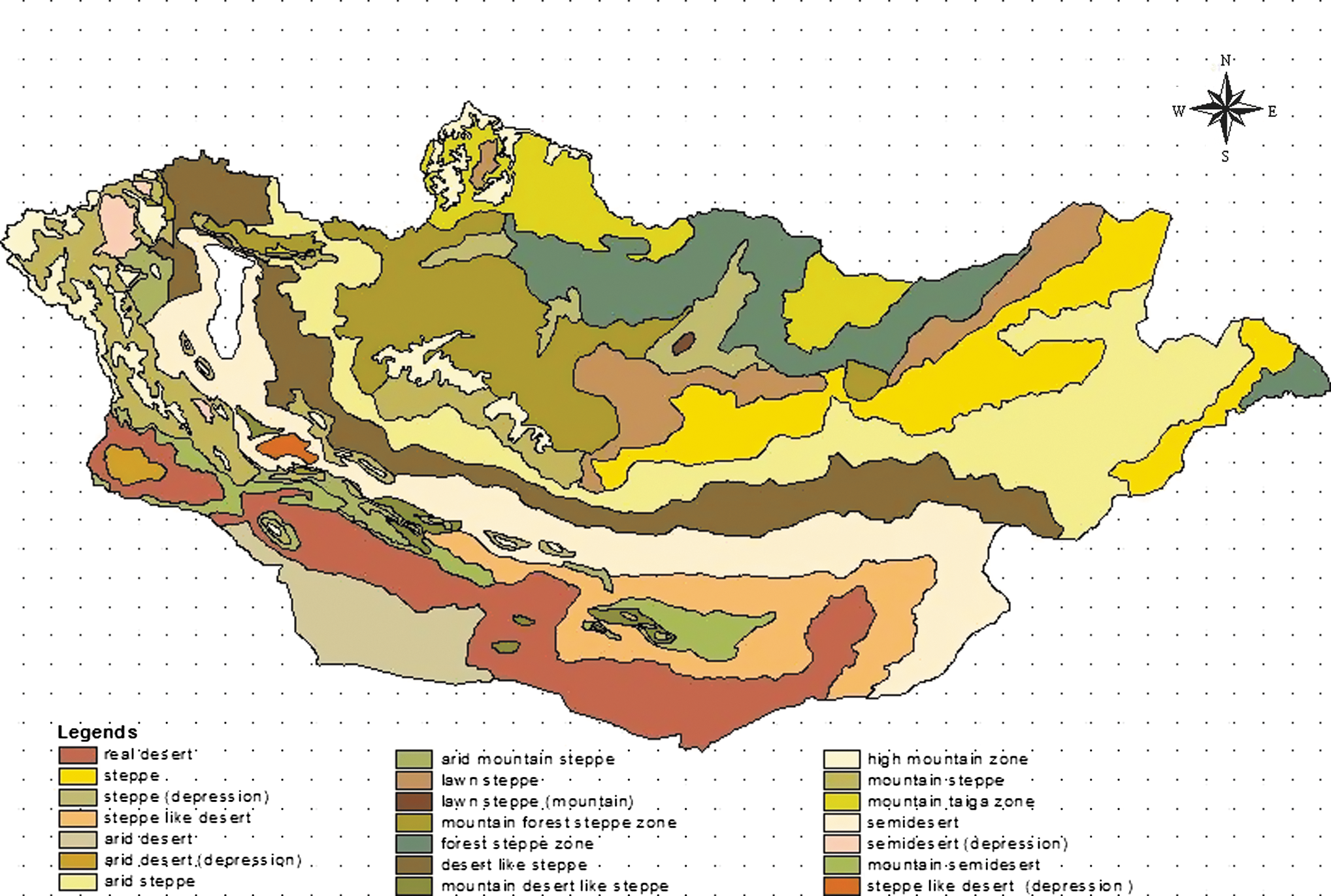
The geographical regions of Mongolia. (Color image available online at:
Plague (caused by the bacterium Yersinia pestis) is enzootic in wild rodent populations over large rural areas of Mongolia. Natural plague foci exist in 28.3% of the entire territory of Mongolia, and 47.1% of these foci are highly active. Highly active plague foci exist mainly in western part of Mongolia and more than 3000 plague cultures have been isolated from host animals and their ectoparasites. Human plague cases have been recorded in Mongolia since 1897.
Materials and Methods
In this article, we review archival data of the Mongolian National Center for Infectious Diseases with Natural Foci collected from field expeditions and human plague cases investigated from 1940 to 2008. Plague in ectoparasites was identified by cultures of Y. pestis. In mammals and birds, plague was identified by cultures, antibodies, or antigens of Y. pestis from blood or tissues.
Statistical summaries and analyses were conducted using Microsoft Excel. Maps were created using ArcView GIS version 3.2. For the number and spatial abundance of fleas, we used the index developed by Jovtii (1966). The index of fleas for a particular site was the sum of the host flea index and burrow flea index. The host flea index was calculated in following way: total number of fleas (regardless of species) collected from a particular species of host divided by the total number of examined hosts of that species. The burrow flea index was calculated in a similar manner.
Results
Since 1960, 65 species of mammals and 1 bird species were involved in plague investigations in Mongolia; 210 species of ectoparasites were identified on these vertebrates (Table 1). There were 19 host species found to be infected with plague in Mongolia. The 18 infected species of mammals were Pallas's pika (Ochotona pallasi), daurian pika (Ochotona daurica), Siberian marmot (Marmota sibirica), gray marmot (Marmota baibacina), long-tailed suslik (Spermophilus undulatus), red-cheeked suslik (Spermophilus erythrogenys), Russian hamster (Phodopus sungaris), silver mountain vole (Alticola argentatus), flat-headed vole (Alticola strelzovi), narrow-headed vole (M. gregalis), Brandt's vole (Lasiopodomys brandti), Mongolian gerbil (Meriones unguiculatus), Midday gerbil (M. meridianus), great gerbil (Rhombomys opimus), Siberian five-toed jerboa (Allactaga sibirica), Corsac fox (Vulpes corsac), Siberian polecat (Mustela eversmanni), and the mountain weasel (M. altaica). One species of bird, the northern wheatear (Oenante oenante), was also found to be infected with plague. More than 50% of all plague cultures were from marmots. Plague was also identified in 28 species and subspecies of fleas, 4 species of ticks, and 2 species of lice. Ectoparasites constituted 27% of all plague cultures isolated and 91.5% of these were from fleas. The majority of cultures from which Y. pestis was isolated were from marmot fleas (64.05%) and 61.5% were Oropsylla silantiewi (Table 2).
Included are number of ectoparasite, flea, tick, and lice species.
Siberian marmots are the main hosts of plague in Mongolia. Marmots are distributed in the mountain steppe and steppe zones. Sixty-one species and subspecies of fleas (5 families and 19 genera), 10 species of ticks, and 1 species of louse were found on marmots. O. silantiewi was the predominant flea found on marmots (95.8–100%). Citellophilus tesquorum, Oropsylla alaskensis, Frontopsylla luculenta, Frontopsylla hetera, Amphalius runatus, Ctenophyllus hirticrus, Rhadinopsylla li transbaikalica, Neopsylla mana, and Neopsylla pleskei were also commonly found on marmots.
Flea abundance in the natural plague foci of Mongolia varied geographically and by species. The average index of fleas on marmots in Mongolia was 95.3; the maximum value was 125.7 in the western high mountain areas and the lowest index was 42.3 in the eastern steppe regions. This average flea index for marmots had a standard deviation of 21.9, a coefficient of variation (CV) of 23.0%, and the average index varied significantly among different regions of the country (p < 0.05; Fig. 2).
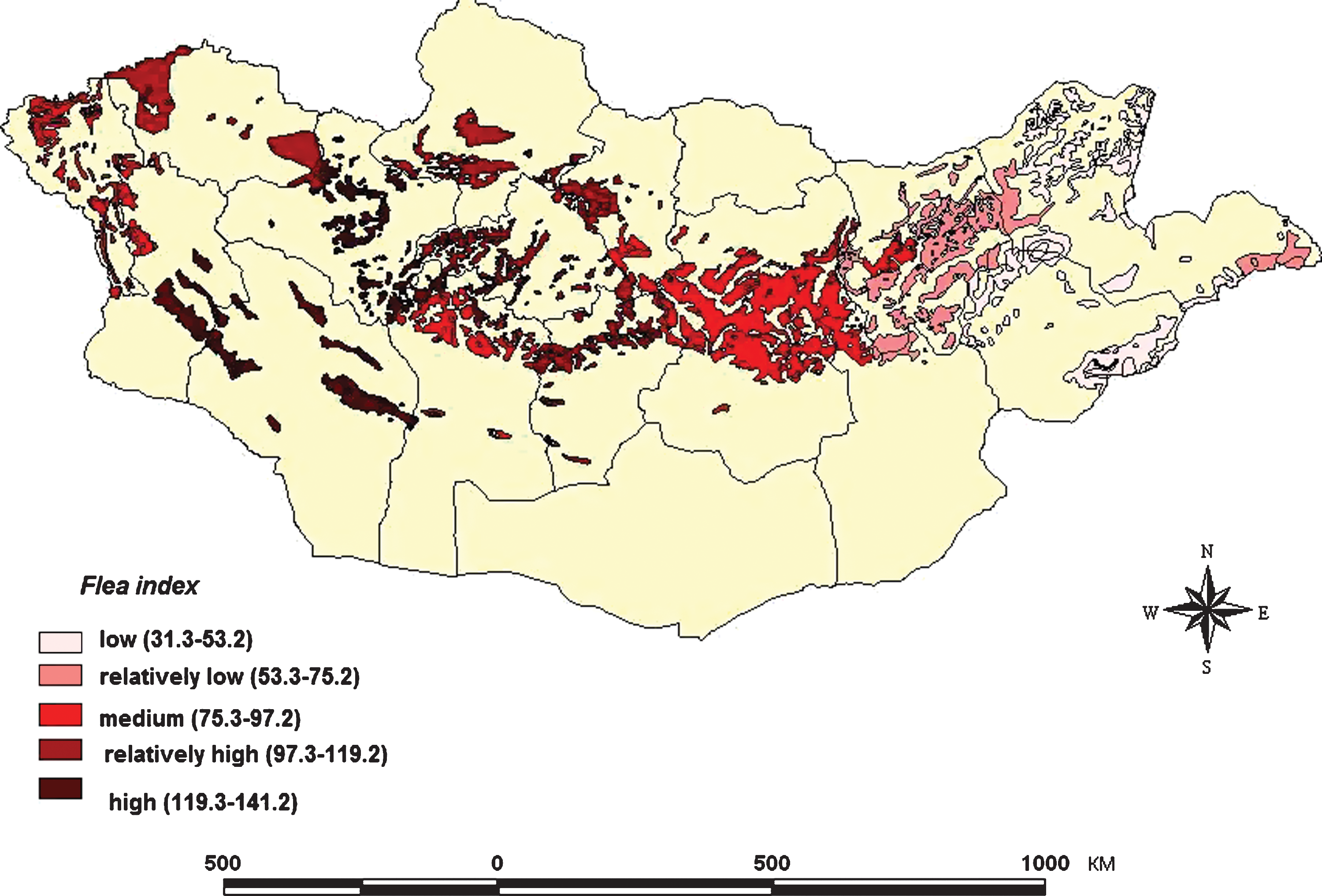
Geographical variation of flea abundance on marmots (Marmota sibirica). (Color image available online at:
Four species of susliks or ground squirrels (Spermophilus spp.) are widely distributed in Mongolia and 80 species and subspecies (5 families and 26 genera) of fleas were found on them. Citellophilus tesquorum sungaris was the dominant flea found on susliks (35.4–81.9%). O. alaskensis, F. luculenta, and R. li transbaikalica were also frequently found on susliks. The highest flea index (119) was noted in Khangai mountain steppe areas for long-tailed susliks. Low flea indices of 32–40.4 were reported in the southern semiarid desert and eastern steppe regions for daurian and red-cheeked susliks. The standard deviation for average flea indices for this region of the country was 25.1, the CV was 31.9%, and these averages differed significantly from other regions of the country (Fig. 3).
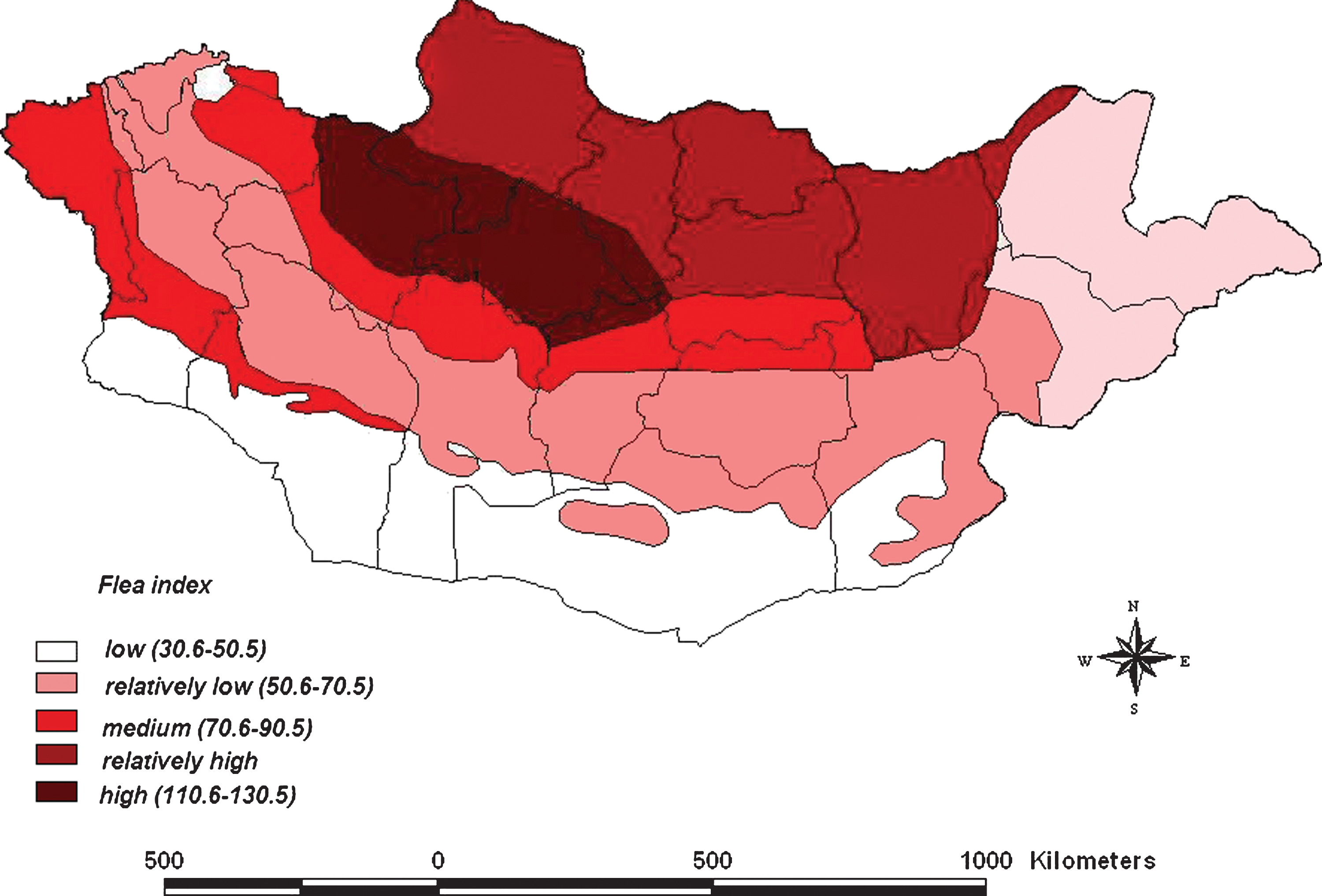
Geographical variation of flea abundance on susliks (Spermophilus spp.). (Color image available online at:
There are four species of pikas in Mongolia in the genus Ochotona (O. pallasi, O. daurica, O. alpina, O. hyperborea). Pallas's pika (O. pallasi) and daurian pika (O. daurica) are found in most geographical areas. The other two species are distributed in relatively small areas in mountainous regions of Mongolia. Pallas's pika and daurian pika were found to be infected with plague (O. daurica). A total of 79 species and subspecies (5 families, 27 genera) of fleas were found on pikas. The two most dominant species of fleas were A. runatus (32.6–51.8%) and C. hirticrus (22.8–47.2%). F. hetera, Paradoxopsyllus scorodumovi, Paramonopsyllus scalonae, F. luculenta, Rhadinopsylla dahurica, N. mana, Rhadinopsylla altaica, R. li transbaikalica, N. pleskei, and Frontopsylla frontalis baikal were also frequently found on pikas. The flea index for pikas averaged 64.7. The minimum index of 36.0 was found for pikas in the steppe regions in the central-southern part of Mongolia. A maximum index of 129.6 was found for pikas in the mountain forest steppe areas of northern Mongolia. The standard deviation for the flea index for pikas was 29.0, CV was −44.8%, and the indices differed significantly among different regions of Mongolia (Fig. 4).
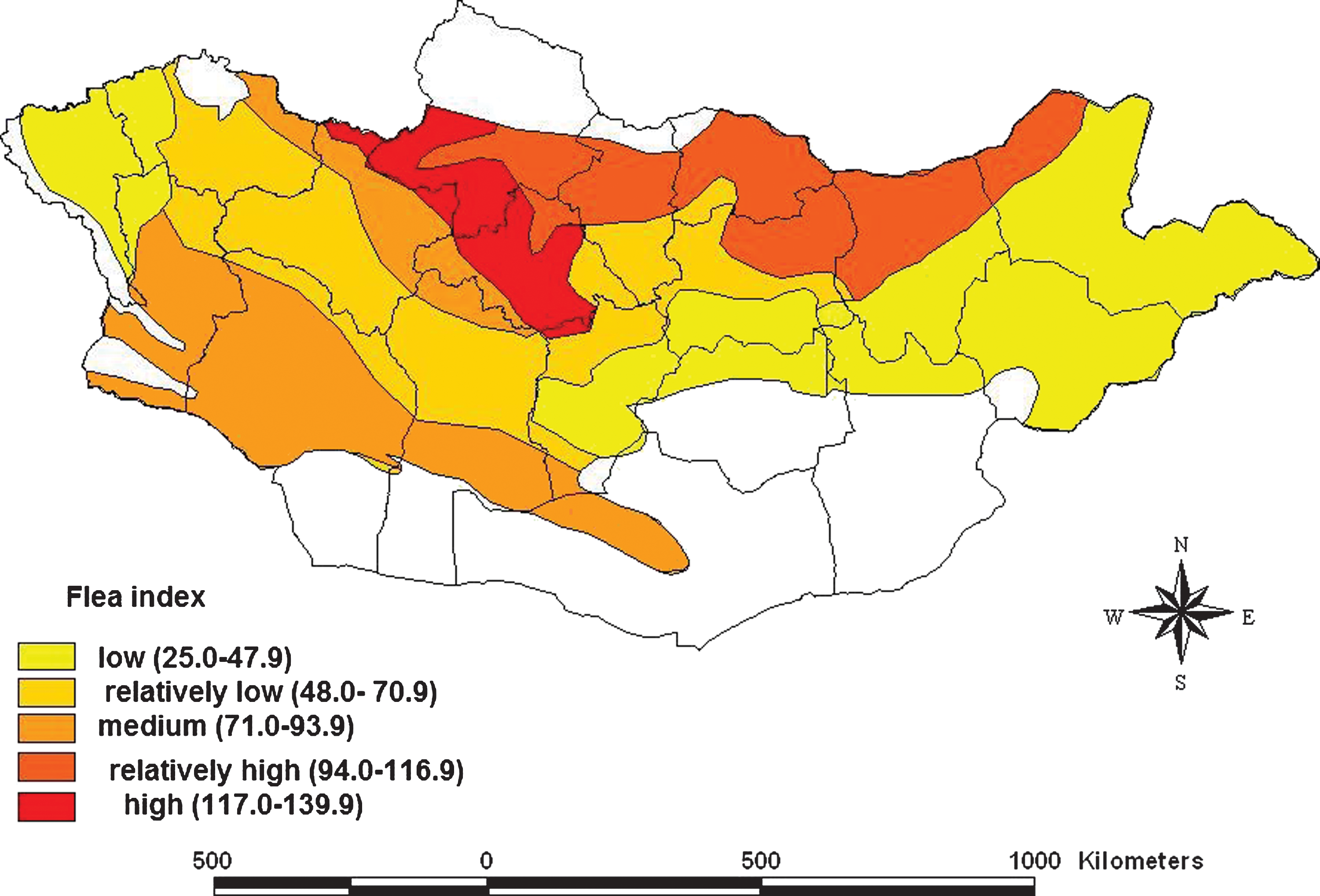
Geographical variation of flea abundance on pikas (Ochotona spp.). (Color image available online at:
Brandt's voles are distributed mostly in the steppe zones of Mongolia and 55 species and subspecies (5 families, 22 genera) of fleas were found on them. N. mana and N. pleskei were the dominant fleas found on Brandt's voles. The average index of fleas on Brandt's voles was 118.4. The maximum index of 151.8 was found in the central steppe areas and the minimum of 104.1 was found in the mountain forest steppe zones of northern Mongolia. The standard deviation for the average flea indices on Brandt's voles was 19.3, with a CV of 16.3%, and these average indices did not vary significantly among geographic regions (Fig. 5).
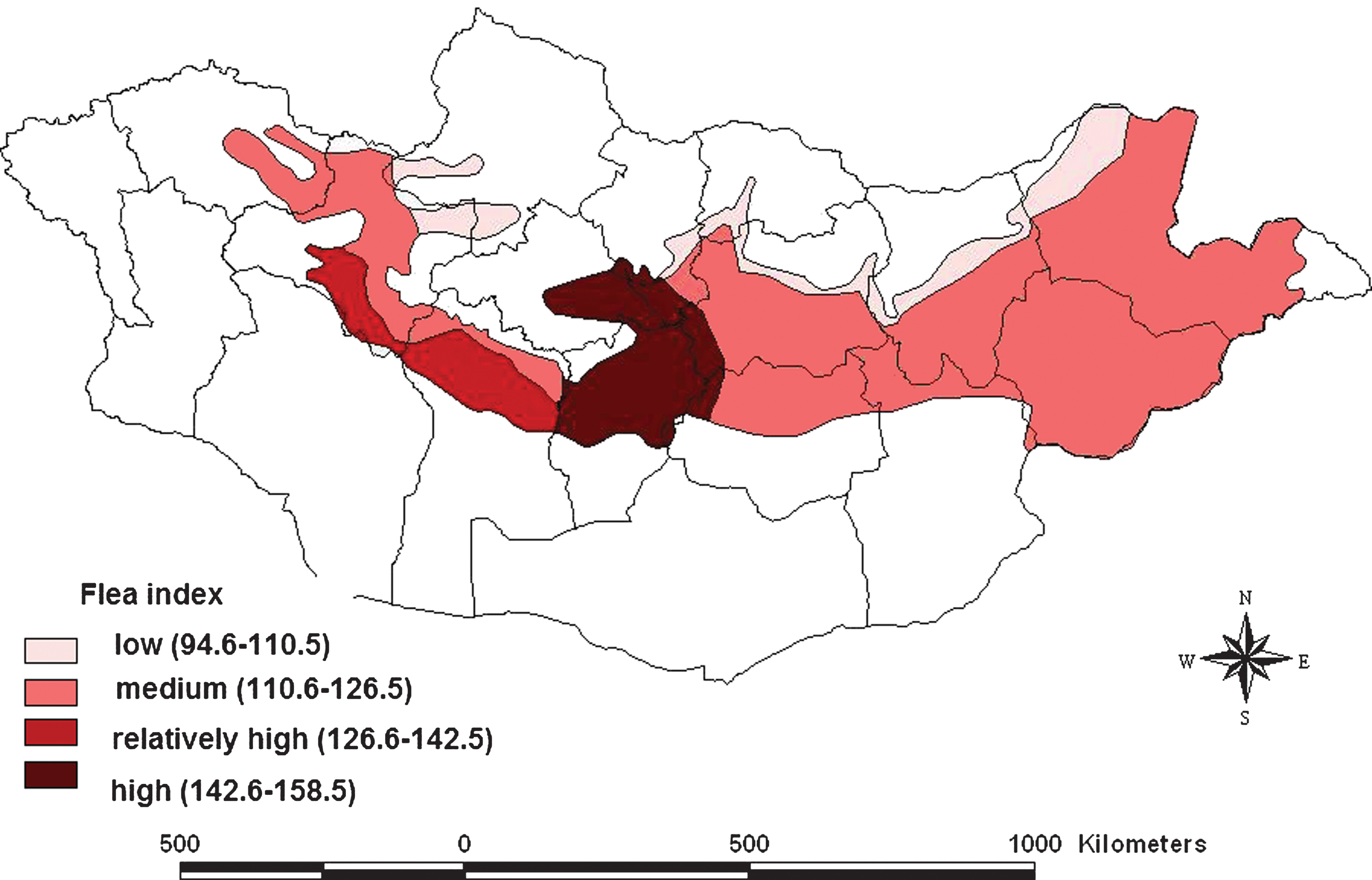
Geographical variation of flea abundance on Brandt's voles (Lasiopodomys brandti). (Color image available online at:
According to studies of geographical distribution of plague isolation and documented human cases in Mongolia since 1890, plague circulates between 43°00–50°00 east longitude and 88°00–120°00 north latitude at 640–3500 m above sea level. Eighty percent of all plague cultures were isolated from elevations between 1500 and 3000 m (Fig. 6). The correlation coefficient between altitude and number of plague cultures was r = 0.6 (p < 0.01).
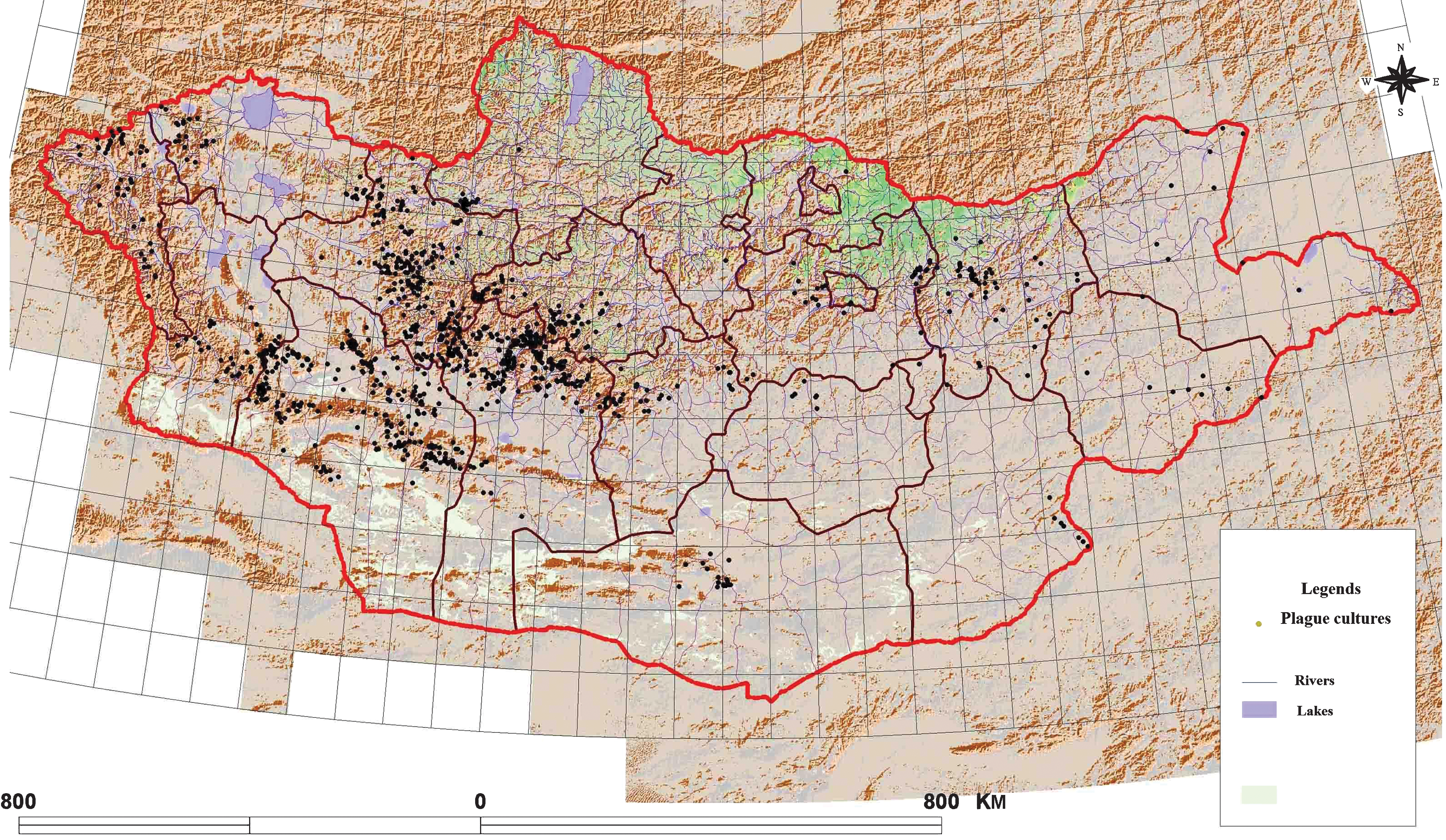
Locations of isolated plague cultures. (Color image available online at:
From 1940 to 2008, there were 521 human plague cases registered in Mongolia, of which 69.9% resulted in death (Fig. 7). Bubonic plague accounted for 68.4% of all human cases registered from 1989 to 2008, the pneumonic form accounted for 29.3% of cases, and the septic form accounted for the remaining 2.3% of the cases. The majority of human cases were infected by marmots (75.2%), 20.3% were infected by other people, and 4.5% were infected from fleas. Children and young people aged 1–25 years constituted 63.2% of human cases. The peak period for human plague cases reported was in August and September. People contracted plague through direct contact while handling and skinning infected marmots. The majority of people infected by contact with marmots developed bubonic plague (88.0%), 8.0% developed pneumonic, and 4.0% developed septic forms of plague.
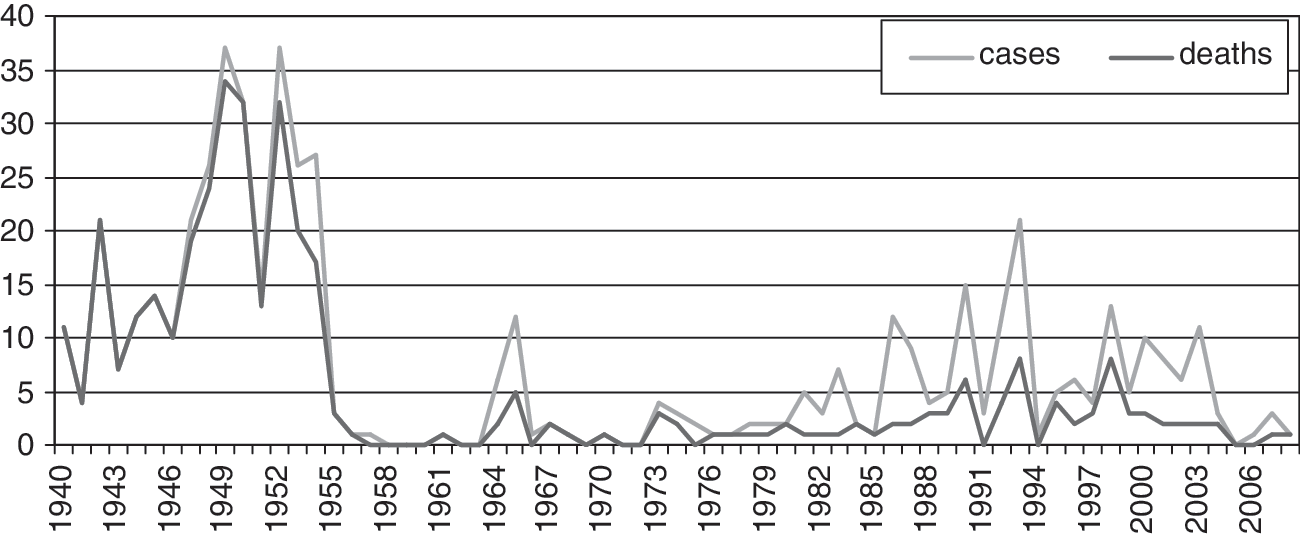
Human plague cases registered in Mongolia.
Discussion
The main hosts for plague in Mongolia are Siberian marmots, Pallas's pikas, and Brandt's voles. Susliks also play a significant role in the maintenance of plague. Plague bacteria were isolated mainly from specific fleas of the host animals and the main vector of plague in Mongolia is the marmot flea O. silantiewi. Endemic foci for plague exist in mountain steppe and steppe areas, at elevations of 640–3500 m; the culture rate increases with elevation.
Mongolians hunt marmots for fur and meat, which leads to a high risk of plague infection. As a result, human plague cases have been identified almost every year in Mongolia beginning in 1940 and the mortality rate is approximately five times higher than the world average. According to the last 10 years of plague investigations, mostly young men aged 19–25 years were infected by plague during the process of hunting and skinning marmots. The most effective way to reduce the rate of infection among marmot hunters is to increase their awareness of the plague infection risks associated with contact with marmots and other rodents and to educate them on ways to prevent plague infection.
Footnotes
Acknowledgments
The authors thank Dr. Danzan Gombo and two anonymous reviewers for helpful comments on this manuscript. This work was supported by the National Center for Infectious Diseases with Natural Foci.
Disclosure Statement
No competing financial interests exist.