




Abstract
Background:
Worldwide, horses play critical roles in recreation, food production, transportation, and as working animals. Horses' roles differ by geographical region and the socioeconomic status of the people, but despite modern advances in transportation, which have in some ways altered humans contact with horses, potential risks for equine zoonotic pathogen transmission to humans occur globally. While previous reports have focused upon individual or groups of equine pathogens, to our knowledge, a systematic review of equine zoonoses has never been performed.
Methods:
Using PRISMA's systematic review guidelines, we searched the English literature and identified 233 previous reports of potential equine zoonoses found in horses. We studied and summarized their findings with a goal of identifying risk factors that favor disease transmission from horses to humans.
Results:
These previous reports identified 56 zoonotic pathogens that have been found in horses. Of the 233 articles, 13 involved direct transmission to humans (
Conclusions:
While case reports of zoonotic infections directly from horses remain low, there is a high potential for underreporting due to lack of knowledge among health professionals. Awareness of these zoonotic pathogens, their disease presentation in horses and humans, and their associated risk factors for cross-species infection are important to public health officials, clinicians, and people with recreational or occupational equid exposure.
Introduction
In 2017,
Zoonotic diseases account for more than 60% of known diseases and 75% of emerging diseases (Taylor et al. 2001). Livestock present multiple opportunities for zoonotic transmission from contact with the live animal as well as from milk, meat, or other animal products. A systematic review of cattle zoonoses identified 45 pathogens that could be transmitted to humans (McDaniel et al. 2014). Reviews examining small ruminants and pigs also found a total of 19 and 30 zoonotic diseases among these animals, respectively (Uddin Khan et al. 2013, Ganter 2015). Many public health professionals are unaware of the risk of even the more common zoonotic diseases spread by horses. In a survey of Canadian public health professionals in 2013, approximately one in six respondents stated that they believed that horses had no impact on public health (Snedeker et al. 2013). Many individuals were also undereducated on the occurrence of common diseases with less than 36% believing that a person could be infected with Salmonella, Cryptosporidium, or Escherichia coli from a horse, and only 61% knew that a person could contract rabies from a horse (Snedeker et al. 2013). Equally concerning, a survey in New Zealand in 2009 found that 69% of equine premises had no biosecurity protocol for visitors, which is a primary concern for the spread of diseases between horses, which also can result in the spread of zoonotic diseases (Rosanowski et al. 2012). This biosecurity negligence is a particular concern regarding the spread of equine zoonotic pathogens.
Zoonotic diseases in horses have been the subject of several narrowly focused reviews, which summarized upwards of 20 diseases spread by bites or contact with equids (Bender and Tsukayama 2004, Langley and Morris 2009, Khurana et al. 2015, Dominguez et al. 2016). The main limitation of these reviews is how by focusing only on the better-known diseases they failed to examine the full range of potential zoonoses (Bender and Tsukayama 2004, Khurana et al. 2015). Hence, we sought in this report to perform a comprehensive and systematic review of the literature considering previous reports of potential zoonotic equine pathogens that have been recorded in horses with the hope that such a review would prove valuable to public health officials, clinicians, and people with recreational or occupational exposure to horses.
Methods
A systematic review was performed to establish a list of pathogens, which have been found in both horses and humans and have been found to cause signs or symptoms in humans. Both direct and indirect evidence for transmission was accepted. Direct evidence included clearly documented transmission events from horses to humans. Indirect evidence for transmission included the occurrence of diseases known to occur in humans that have occurred in horses and known equine diseases that occurred in humans, especially with equine exposure, even if transmission could not be proved. Pathogens with a high prevalence among vectors affecting equines (e.g., ticks or flies) and pathogens known to transmit to humans and equines via insect vectors (e.g., West Nile virus) were also included.
Literature search
In December 2016, we searched the following databases: PubMed, Web of Science: Core Collection, Zoological Record, and BIOSIS, ProQuest: Ag Science Collection, EBSCO Host: CAB, and Wiley Online Library. We used the PRISMA method (Moher et al. 2009) (Supplementary Data). Search terms included: Equine(s), horse(s), equid(s), “Equus ferus” zoonotic, zoonoses, zoonosis, “Animal to human transmission,” and “equine exposure” (see Supplementary Table S1 for full search strings). Only journal articles were used. No time-period was specified. Only English language articles were included. The gray literature was not included. Duplicate articles were removed.
Literature analysis
Titles and abstracts were reviewed to determine if articles referred to diseases in horses or humans that were zoonotic between horses and humans. For the purpose of our study, zoonoses was defined as a disease to which humans and horses were both susceptible that could be transmitted either directly or indirectly from horses to humans. Vectored diseases were included. Prevalence, surveillance, outbreaks, and case studies/series in humans and horses were collected. The articles that were not in English, review articles, and any citation for a format that was not a journal article (books, thesis, and conference proceedings/presentations) were removed.
Full-text review on the remaining articles was performed to verify that the diseases were zoonotic and involved horses in their transmission cycle. Articles were reviewed both by A.S. and F.S.O. and included by consensus. Further information was extracted from each article by A.S. for pathogen, transmission, and methodology. Articles that only dealt with molecular characteristics or policy were also removed.
Additional analyses
Further information about the identified pathogens was gathered using online information from the Centers for Disease Control (CDC), World Health Organization (WHO), and the Food and Agriculture Organization (FAO), as well as the online version of the Merck Veterinary Manual (January 2017). Information was collected on taxonomic grouping, morphology, and transmission, as well as organ systems affected available diagnostic tests. Pathogens were categorized as in categories A, B, or C according to the National Institute of Health's National Institute of Allergy and Infectious Diseases (NIAID) Emerging Infectious Diseases/Pathogens list (National Institute of Health 2016).
Results
This systematic review of six databases resulted in 2987 citations, of which 1465 were removed as duplicates. Of the remaining 1522 articles, 1143 were removed after reviewing the title and abstract, as these were not deemed relevant to our focus on equine zoonotic diseases. From the remaining 379 articles, 146 were excluded after examining the full text. These articles were primarily excluded for not being in English, not referring to zoonotic diseases, or because horses were not part of the reported disease transmission. The remaining 233 articles were included in this analysis (Fig. 1) (see Supplementary Table S2 for all 233 articles sorted by pathogen).
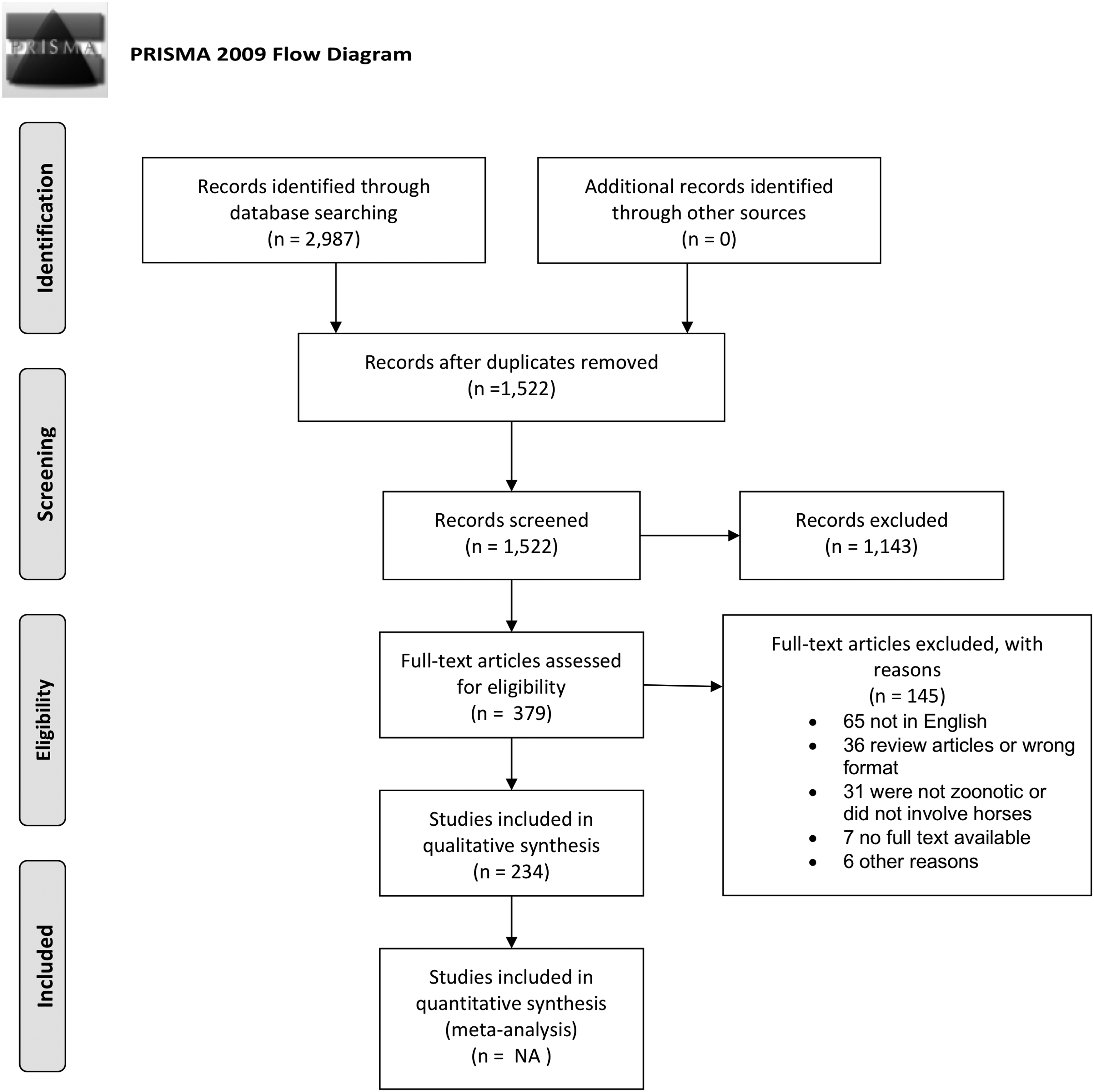
PRISMA flow diagram.
The 233 articles mentioned 250 distinct pathogens; 13 articles covered two pathogens, and 2 articles discussed three pathogens. Of the 233 articles, 13 articles reported incidents that involved direct transmission to humans (5.6%). These articles included five pathogens: Methicillin-resistant Staphylococcus aureus (MRSA, five articles), Streptococcus equi subspecies zooepidemicus (three articles), Hendra virus (two articles), West Nile virus (two articles), and cryptosporidium (one article). Both the West Nile virus articles referred to the same direct occupational zoonotic transmission event during a horse necropsy (Venter et al. 2010).
Considering the pathogens with both direct and indirect transmission to humans, a total of 56 potential equine zoonotic pathogens were identified (Table 1). Potential human-to-human transmission was recognized in 22 (39.3%) of the 56 pathogens while animal-to-human transmission only was recognized in 18 (32.1%) of these pathogens. Among these 56 pathogens, 46.4% were bacteria (26/56), 28.6% were viruses (16/56), 10.7% were helminths (6/56), and 8.9% were identified as protozoa (5/56). The smallest group was fungi at 5.4% (3/56).
Characterization of Previously Recognized Equine Zoonotic Pathogens
Additional data on classification from CDC, WHO, and Merck (2016).
A. phagocytophilum includes Ehrlichia equi articles.
Streptococcus equi subspp. Zooepidemicus and ruminatorum includes one group C Streptococcus.
CDC, Centers for Disease Control; IHC, immunohistochemistry; SS, single-stranded; WHO, World Health Organization.
The bacteria (26) and viruses (16) were further categorized. The majority of bacterial species (16/26, 61.5%) were gram negative. The viruses were categorized according to type of genome and replication: single-strand positive sense RNA viruses (9/16, 56.3%), single-strand negative sense RNA viruses (4/16, 25%), double-strand RNA virus (1/16, 6.25%), and DNA viruses (2/16, 12.5%). Of these pathogens, 7 were cited by 10 or more articles: Methicillin-resistant staphylococcus spp. (MRS, 22 articles), Cryptosporidium (21 articles), Toxoplasma gondii (19 articles), Leptospira spp. (18 articles), West Nile virus (14 articles), Giardia spp. (11 articles), and Brucella spp. (10 articles).
The most common transmission routes for the pathogens were by ingestion (29, 51.8%), inhalation (19, 33.9%), and wound/skin contact (18, 32.1%). Vector transmission was fundamental for 14 (25.0%) pathogens (Table 2). Of the 15 pathogens (26.8%) that involved vectors for transmission, mosquitoes were the most common vector (7, 46.7%), followed by ticks (5, 33.3%) and flies (2, 13.3%). Multiple vectors, including flies, lice, or fleas, were noted to be involved in the transmission of Bartonella spp. (6.7%).
Transmission Routes for Potential Zoonotic Pathogens from Horses
Additional data on transmission routes from CDC, WHO, and Merck.
A. phagocytophilum includes Ehrlichia equi articles.
S. equi subspp. Zooepidemicus and ruminatorum includes one group C Streptococcus spp.
Most potential equine zoonotic pathogens can manifest as systemic infections in humans (30, 53.6%). The other most common manifestations were gastrointestinal (19, 33.9%), respiratory (16, 28.6%), cutaneous (13, 23.2%), and neurological (12, 21.4%) (Table 3). Diagnostic assessment of pathogen infection in humans was most commonly carried out by PCR (37, 66.1%), serology (25, 44.6%), and culture (23, 41.1%) (Table 1).
Organ Systems in Humans Affected by Potential Zoonotic Pathogens from Horses
Additional data from CDC, WHO, and Merck.
A. phagocytophilum includes Ehrlichia equi articles.
S. equi subspp. Zooepidemicus and ruminatorum includes one group C Streptococcus spp.
Of the 56 potential zoonotic equine pathogens, 57.1% (n = 32) were classified on the National Institute of Health's NIAID Emerging Infectious Diseases/Pathogens list (National Institute of Health 2016). The majority of these pathogens were either listed as category B (n = 16) or emerging infectious diseases (n = 9). Five of these disease conditions were priority C, while two were priority A (Table 4).
Categorization of the 56 Potential Zoonotic Equine Pathogens Found on the National Institute of Allergy and Infectious Diseases Emerging Infectious Diseases/Pathogens List
Discussion
Worldwide, the close interactions between horses and humans afford many opportunities for pathogens to cross species. Many public health professionals and persons with equine exposure are unaware of the zoonotic disease risk from horses (Snedeker et al. 2013). Many of these pathogens are considered to be emerging infectious diseases (Table 4), suggesting a current need for research into transmission risks (Bender and Tsukayama 2004). Thirty-two of the pathogens in this review were on the National Institute of Health's NIAID Emerging Infectious Diseases/Pathogens list, and two pathogens, Bacillus anthracis and Clostridium botulinum, are “those organisms/biological agents that pose the highest risk to national security and public health” (National Institute of Health 2016). Both pathogens are relatively common causes of disease among livestock and wildlife. Similarly, a number of pathogens are considered as the “second highest priority organisms/biological agents” and are largely limited to equids (National Institute of Health 2016). Examples include Burkholderia mallei and the equine encephalitis viruses, of which some clinicians, public health professionals, and veterinarians may be less aware. This lack of awareness may be especially true for the 9 (16.1%) emerging infectious diseases. Furthermore, more than 50% of these pathogens cause systemic disease characteristics, which affect multiple organ systems and may be confused with other more prevalent causes of similar signs and symptoms.
Transmission routes: ingestion
According to the U.S. CDC, one in six people get sick each year from eating or handling contaminated foods. Similarly, ingestion is the most common route of infection for equine zoonotic pathogens. For contaminated foods, cooking meat thoroughly and washing hands and equipment after handling meat will prevent most foodborne pathogens. Handwashing with alcohol-based products is not sufficient for every pathogen. For instance, Cryptosporidium parvum cannot easily be destroyed with alcohol handwashing treatments, and there are records of direct transmission from foals to humans (Galuppi et al. 2016).
Cooking meat properly is important for several other diseases. Trichinella spp. are a recognized complication of undercooked horsemeat, especially in Italy and France (Pozio et al. 2001). Similarly, Toxoplasma gondii has also been found in horsemeat meant for human consumption (Osiyemi et al. 1985, Paştiu et al. 2015). Both the category A equine zoonotic pathogens (B. anthracis and C. botulinum) have been reported as transmissible by ingestion of infected horse meat. According to the CDC, dogs should be kept away from raw meat and organs from livestock, including horses, and where possible, dogs should be kept away from livestock and livestock feed. For Fasciola hepatica, an aquatic snail is necessary for its transmission, as the eggs pass from livestock and humans to develop into the infective stage in the snail. However, in a study where pigs were fed with mouse liver infected with juvenile flukes, the pigs became infected, suggesting that direct infection is possible when consuming undercooked pork liver (Taira et al. 1997). Since horses are known to be able to be infected with Fasciola spp., proper cooking of liver is suggested (Haridy et al. 2002).
Meat is not the only horse product with the potential for infection. In other livestock species, Brucella spp., Mycobacterium spp., Salmonella spp., Listeria monocytogenes, Campylobacter spp., Coxiella burnetii, and E. coli have all been transmitted in unpasteurized milk (John 2006). Adding to the risk from these pathogens, several zoonotic bacteria have been found in equines with multidrug-resistant strains, including Actinobacillus equuli, E. coli, and Campylobacter spp. (Ahmed et al. 2010, Jokisalo et al. 2010, Ewers et al. 2014, Komba et al. 2014).
Transmission routes: inhalation
While fewer horse pathogens are spread by inhalation than ingestion, these include many pathogens with high mortality rates in human. Much of the recent biosecurity work involving horses with infection by inhalation has been done around the Hendra virus, which has been associated with numerous human and horse fatalities during outbreaks in Australia (Paterson et al. 1998, Westbury 2000, Hanna et al. 2006). A review of safety procedures used by veterinarians found that 58% of clients were receptive to biosecurity procedures. However, cited among issues veterinarians had with clients adopting biosecurity measures was that the clients assumed that one had to physically touch the horses to be at risk (Mendez et al. 2014). Personnel protective equipment is recommended if coming within 5 meters of an Hendra virus infected horse (Mendez et al. 2016). Another high-risk pathogen spread by inhalation is B. mallei, which has higher than 40% mortality rate in humans even with antibiotic treatment. Recent outbreaks in nonendemic areas have occurred from recently imported horses (Kettle and Wernery 2016). Equine influenza is another potentially zoonotic repository pathogen with a history of spread from recently imported horses (Xie et al. 2016).
Rabies virus has been transmitted by inhalation in the laboratory setting, and rabies inhalation is considered a low but potential risk in a necropsy setting (Winkler et al. 1973). Risks for human infection with the Australian bat lyssavirus are similar to those for rabies (Annand and Reid 2014). While rare other neurologic diseases, including West Nile virus, are at risk for transmission during necropsy (Venter and Swanepoel 2010, Venter et al. 2010).
Risks for human infection with MRS and A. equuli are increased in human and equine hospital settings (Weese and Lefebvre 2007, Jokisalo et al. 2010, Cuny and Witte 2016). Immunocompromised individuals are at special risk for Rhodococcus equi (Topino et al. 2010), which is still a risk to immunocompetent individuals (Ulivieri and Oliveri 2006). Parturition is a time of increased risk for respiratory transmission, including from A. equuli and C. burnetii (Tozer et al. 2014, 2016).
Transmission routes: wounds, bites, or cutaneous exposures
Cutaneous exposure is the third most common route of exposure for potential equine zoonoses and can occur either with or without penetration from bites or other wounds. A comprehensive review of horse bite injuries to humans found that five genera of bacteria were spread by equine bites (Langley and Morris 2009). Rabies virus is commonly associated with bites, and horses can present with misleading symptoms (Merini et al. 2010).
Wounds from knives, scalpels, or needles while handling dead horses, during slaughter or necropsy, are other sources of infection. A case of A. equuli infection occurred in a butcher who had cut his hand while at work (Ashhurst-Smith et al. 1998). Contamination of wounds can occur when the zoonotic pathogen has access to open wounds. Also, infected wounds in horses can serve as a source of infection for humans. MRSA is a common wound contaminant (Köck et al. 2014). In one case, multiple veterinarians and students without open wounds caught MRSA from a foal with a contaminated wound (Schwaber et al. 2013). In another case, a fatal infection of S. equi subspecies zooepidemicus was diagnosed in a man caring for a horse with an open wound (Kawakami et al. 2016). In general, skin conditions in horses are visible and affected horses should not be directly handled. Dermatophytosis is found worldwide in horses, including performance and working horses (ElAshmawy and Ali 2016, Maurice et al. 2016). The CDC suggests washing hands often when touching farm animals regardless of the presence of visible lesions.
Transmission routes: vector-borne
Of the approximate one quarter of potential equine zoonotic diseases that involved vectors for transmission, mosquitoes are the most common vector, followed by ticks and flies. Bartonella spp. are spread by flies, lice, or fleas. All but one of these pathogens, C. burnetii, require a vector for transmission.
All seven of the equine zoonotic diseases transmitted by mosquitoes are viruses (Table 1). All but one, Sindbis virus, of the mosquito-borne viruses cause encephalitis. For eastern equine encephalitis virus, Ilheus virus, Japanese encephalitis virus, Sindbis virus, St. Louis encephalitis virus, Western equine encephalitis virus, and West Nile virus, horses are presumed to be a dead-end host and are not part of the pathogens' active transmission cycles. Horses and humans do not reach a high enough viremia to infect mosquitoes (Lundström et al. 2010, Díaz et al. 2012, Pauvolid-Corrêa et al. 2013, Go et al. 2014). Horses do serve as sentinels for human infections as both are often infected from common avian reservoirs (Ludu et al. 2014, Saegerman et al. 2016). Horses with Venezuelan equine encephalitis virus can present with a viremia and thus serve as a source of infection (Estrada-Franco et al. 2004). Mosquito control and the prevention of mosquito bites can reduce horse and human infections from these pathogens.
Equine zoonotic diseases from ticks have been found in humans, ticks, and horses (Otomura et al. 2010, Toledo et al. 2011, Butler et al. 2016a, 2016b). Prevention requires tick control measures, as there is no direct transmission for these diseases except for C. burnetii. All five equine zoonotic pathogens carried by ticks are gram negative bacteria (Table 1). Flies and other insects can also transmit diseases from horses to humans. Flies spread Leishmania and Onchocerca spp. (Beaver et al. 1974, 1989, Ali-Khan 1977, Burr et al. 1998, Filho et al. 2008). There are species of Onchocerca that persistently cause disease in humans, but Onchocerca cervicalis from horses is considered a rare occurrence (Beaver et al. 1974, 1989, Ali-Khan 1977, Burr et al. 1998). In both cases, there was a possibility that the cases were caused by Onchocerca gutterosa, which is zoonotic from cattle (Ali-Khan 1977, Beaver et al. 1989). The pathogen, Bartonella spp. is spread by flies, lice, and fleas. There is some discussion of ticks being involved in transmission as well, but evidence is considered inconclusive (Telford and Wormser 2010).
Study strengths and limitations
The study is unique in that we used PRISMA methodology with a goal of including all potential zoonotic pathogens associated with horses. We identified and characterized a relatively large number of such pathogens. However, more than a third of the pathogens identified in this review were only mentioned in one article. In addition, most reports supporting direct transmission of equine pathogens to humans were case reports with insufficient data to determine transmission prevalence or risk. Some might argue that the sparse zoonotic disease data are at least partially due to a lack of awareness of equine zoonoses among health care providers. Others might argue that some of these reports were describing aberrant transmission and the case reports may not represent true zoonotic risks. Despite these uncertainties, it seems clear that there exist major gaps in the medical literature regarding the epidemiology of equine zoonotic diseases. We also did not find extensive literature supporting a number of widely accepted equine zoonoses. For instance, in this review, West Nile virus was found in 14 reports, eastern equine encephalitis in four reports, Venezuelan equine encephalitis found in one report, but western equine encephalitis virus was found only in review articles. Since review articles were outside the scope of the review, western equine encephalitis was not included in the 56 zoonotic pathogens. Future reviews might include other equids, such as donkeys, mules, and zebras, to improve our understanding.
Conclusions
This study identified 56 unique pathogens that have the potential to be transmitted between horses and humans. Furthermore, 16.1% were classified as emerging infectious diseases. The main potential routes of transmission included oral, inhalation, and cutaneous exposures. Identified potential equine zoonotic pathogens produced systemic, gastrointestinal, and dermatological disease manifestations in humans. Sometimes, these infections were severe leading to human and equine death. Proper biosecurity and awareness of zoonotic diseases are critical for the effective prevention of zoonotic diseases, especially for rare or emerging diseases (Levings 2012). More research is needed to fill in data gaps regarding the epidemiology of many of these equine zoonoses. This research is particularly important considering the increasing international movement of horses for show, breeding, and other purposes. These equine movements have potential to transfer such pathogens to nonendemic areas, which could lead to large epidemics in horses and humans (Dominguez et al. 2016). Having a greater understanding of equine zoonoses and their transmission routes would assist medical and public health professionals in preventing their occurrence.
Disclaimer
The content is solely the responsibility of the authors and does not necessarily represent the official views of the NIH.
Footnotes
Author Disclosure Statement
No conflicting financial interests exist.
Funding Information
This research was made possible by a grant from Fogarty International Center of the U.S. National Institutes of Health, 5D43TW009373 (Prof. Gregory C. Gray, PI) and was supported by the National Center for Advancing Translational Sciences, National Institutes of Health, award no. TL1TR002546.
Supplementary Material
Supplementary Data
Supplementary Table S1
Supplementary Table S2
References
Supplementary Material
Please find the following supplemental material available below.
For Open Access articles published under a Creative Commons License, all supplemental material carries the same license as the article it is associated with.
For non-Open Access articles published, all supplemental material carries a non-exclusive license, and permission requests for re-use of supplemental material or any part of supplemental material shall be sent directly to the copyright owner as specified in the copyright notice associated with the article.
