




Abstract
Background:
Pet and feeder rodents are one of the main sources of emerging infectious diseases. These rodents are purchased from pet shops, breeders, and online. Consequently, some of these rodents may subtly transmit diseases as they may be asymptomatic to certain pathogens.
Materials and Methods:
We systematically searched four academic databases viz. Google Scholar, PubMed, Web of Science, and Scopus to determine zoonotic pathogens associated with pet and feeder rodents globally. Our searches were performed in R statistical software using the packages “metagear” and “revtool”.
Results:
We found 62 studies reporting on zoonotic pathogens between 1973 and 2022 from 16 countries representing 4 continents, namely Africa, Europe, Asia, and North America. The review identified 30 zoonotic pathogens isolated from pet and feeder rodents, including the African pygmy mouse (Mus minutoides), brown rat (Rattus norvegicus), and the house mouse (Mus musculus). The greatest number of pathogens was reported from the United States, followed by Togo and the United Kingdom. Bacterial pathogens were the most prevalent. However, the Seoul virus and rat bite fever (Streptobacillus moniliformis) were the most studied pathogens, found in more than one country, with reported outbreak cases. Most of the zoonotic pathogens were isolated from rodents acquired from pet shops.
Conclusions:
We recommend that pet and feeder rodents purchased from pet shops should be regularly screened for potential zoonotic pathogens as some of these animals may not show clinical signs of the illness. There is also a critical need to develop strict regulations and policies, especially in underdeveloped and developing regions for an effective surveillance process, which will include early detection, rapid response, and control of zoonotic diseases globally.
Introduction
Several live non-native animal species have been introduced globally for purposes such as viewing in zoos, game farming, ornamentation, biomedical research, biological control, and for the exotic pet trade (Baker et al., 2013; Bush et al., 2014; Moshobane et al., 2020; Pimentel et al., 2000). The latter has become a multibillion-dollar global business, with the reptile pet trade industry's annual revenue estimated at approximately U.S.$1.4 billion in the United States alone (Collis and Fenili, 2011; Gippet and Bertelsmeier, 2021). The number of households that keep exotic animals as companions or pets has also increased over the years (Lockwood et al., 2019; Warwick et al., 2018). It has been reported that most households in countries such as the United States, United Kingdom, and Germany keep one or two exotic animals as pets (Drews, 2001; Kieswetter, 2017; Pees et al., 2013). These pets range from reptiles, amphibians, invertebrates, birds, and mammals (Bush et al., 2014; Gippet and Bertelsmeier, 2021). In recent years, an increase in the number of exotic animals has been reported for rodents, birds, and reptiles (Sterneberg-Van der Maaten et al., 2016).
The increased demand for some species seems to be influenced by their popularity, cost, fashion advertisements, and celebrity interest (Hänninen, 2021; Harrington et al., 2019). Keeping exotic pets comes with a lot of responsibilities, as most of these animals require exceptional care, proper housing, expensive medication, and diet (Grant et al., 2017; Harrington et al., 2019). Unfortunately, some of these species are abandoned at animal shelters or in the wild when they become aggressive to handle or expensive to maintain (Reaser and Meyers, 2007; Stringham and Lockwood, 2018). Another reason for abandoning exotic pets is the fear of zoonotic diseases (Holmberg et al., 2015; Reaser and Meyers, 2007). Zoonotic diseases are illnesses or infections transmitted between animals and humans (Ferreira et al., 2021; Naicker, 2011). These infections are caused by disease-causing agents such as bacteria, parasites, fungi, and viruses (Rahman et al., 2020; Weiss, 2008).
Exotic pets such as birds, amphibians, reptiles, and small mammals have been linked to outbreaks or infections of zoonotic diseases caused by Bartonella henselae, Salmonella, Hantaviruses, the Seoul virus, and lymphocytic choriomeningitis virus in the United States (Centers for Disease Control and Prevention, 2022; Halsby et al., 2014; Varela et al., 2022). It has been reported that exotic pets are one of the primary sources of emerging infectious diseases (Bezerra-Santos et al., 2021; Chomel et al., 2007; Smith and Whitfield, 2012). Diseases caused by pet animals can be fatal if not treated (Shvartsblat et al., 2004). Most zoonotic diseases caused by pets are transmitted through petting, bites, scratches, and contact with an infected pet's excreta and/or saliva (Damborg et al., 2016; Gaastra et al., 2009; Hönlinger et al., 2005). In addition, pet food, including raw food diets, pet treats, frozen or live rodents (e.g., house mice [Mus musculus], brown rats [Rattus norvegicus]), and amphibians (e.g., the Chinese edible frog [Hoplobatrachus rugulosus]) used as feeders for predator pets such as reptiles and amphibians have been cited as possible sources of zoonotic diseases (Prapasarakul et al., 2012; Smith and Whitfield, 2012; Swanink et al., 2018; Varela et al., 2022; Vrbova et al., 2018).
To mitigate the potential impacts of exotic pet zoonoses on the public, interventions by stakeholders such as veterinarians, public health institutions and practitioners, the pet trade industry, researchers, and policy-makers are necessary (Smith and Whitfield, 2012). Discussions among these stakeholders should include thorough monitoring of the pet trade industry, modifying existing pet trade regulations, and educating the general public about the potential health risks associated with exotic pets. Moorhouse et al. (2017) reported that information about zoonotic disease risks associated with exotic pets could reduce consumer demand by up to ∼40%. Assessing potential zoonotic pathogens associated with exotic pets and pet products such as feeder animals and pet treats is critical. This may allow insights into pathogen/host associations and possibly the identification of either potential or future outbreaks and develop appropriate regulations and policies around surveillance processes for early detection, rapid response, and control of zoonotic diseases globally.
This review aimed to assess zoonotic pathogens associated with pet and feeder murid rodents through a comprehensive global systematic literature assessment. The review also aimed to determine if the associated pathogens are bacterial, parasitic, fungal, or viral, and their associated rodent species. In addition, the review aimed to identify possible research gaps that may require further investigation on zoonotic pathogens related to pet and feeder rodents.
Materials and Methods
Literature search
We used multiple literature searching regimes to gather information on global zoonotic diseases associated with pet and feeder rodent species. The review includes peer-reviewed published literature covering diverse methodologies such as serology (indirect) and isolation (direct) for detection of zoonotic pathogens. These were searched via the following academic databases: (i) Web of Science (
For Google Scholar, we searched using the terms “pet rodent outbreaks,” “pet rodent zoonotic diseases,” “pet rat and mice/mouse outbreak,” “pet rat and mice zoonotic diseases,” “pet rodent zoonosis,” “pet rodent zoonotic pathogens,” “feeder rodent zoonotic diseases,” “feeder rodent outbreak,” “feeder rat and mice/mouse outbreak,” “feeder rat and mice zoonotic diseases,” “feeder rodent zoonosis,” and “feeder rodent zoonotic pathogens.”
The search results were selected according to the peer-reviewed publication's relevance and exported as RIS, BIB, and NBIB files readable in R statistical software (version 4.1.3; R Core Team, 2022). The searches were undertaken in English; however, we found one study (Mignard et al., 2007) published in French, with an English abstract. Therefore, we were able to incorporate that study because it included useful information in its abstract and, we were able to translate this study into English. In addition, our information was restricted to zoonotic pathogens of pet and feeder rodents. The R statistical software (version 4.1.3; R Core Team, 2022) was used to draw a flowchart showing how a Boolean search was conducted and how the peer-reviewed publications were either selected or excluded in Preferred Reporting Items for Systematic Reviews and Meta-Analyses (PRISMA) (Moher et al., 2009).
Literature screening
The exported data were screened in R statistical software version 4.1.3 using the packages “metagear” and “revtool” (Lajeunesse, 2016; R Core Team, 2022; Westgate, 2019). We combined all the literature from the academic databases mentioned previously into a single file and assessed relevant literature by selecting all the studies that mentioned our keywords in their abstract and title (Supplementary Fig. S1). Duplicated articles were excluded before analyzing the abstracts related to our searches. We read all the abstracts and full articles to identify whether they met our selection criteria (Fig. 1 and Supplementary Fig. S1). For each study, we extracted and analyzed the following information: (i) zoonotic disease associated with feeder and/or pet rodents; (ii) rodent species associated with the zoonotic disease; (iii) type of zoonotic pathogen (i.e., whether bacterial, parasitic, fungal, or viral); (iv) source of trade or pet origin (e.g., pet shop, breeder, or pet owner); (v) year of publication; and (vi) countries where the study was conducted (Supplementary Fig. S1). We used ArcGIS version 10.6 (ESRI, 2022) to map the geographical regions where these studies were conducted.
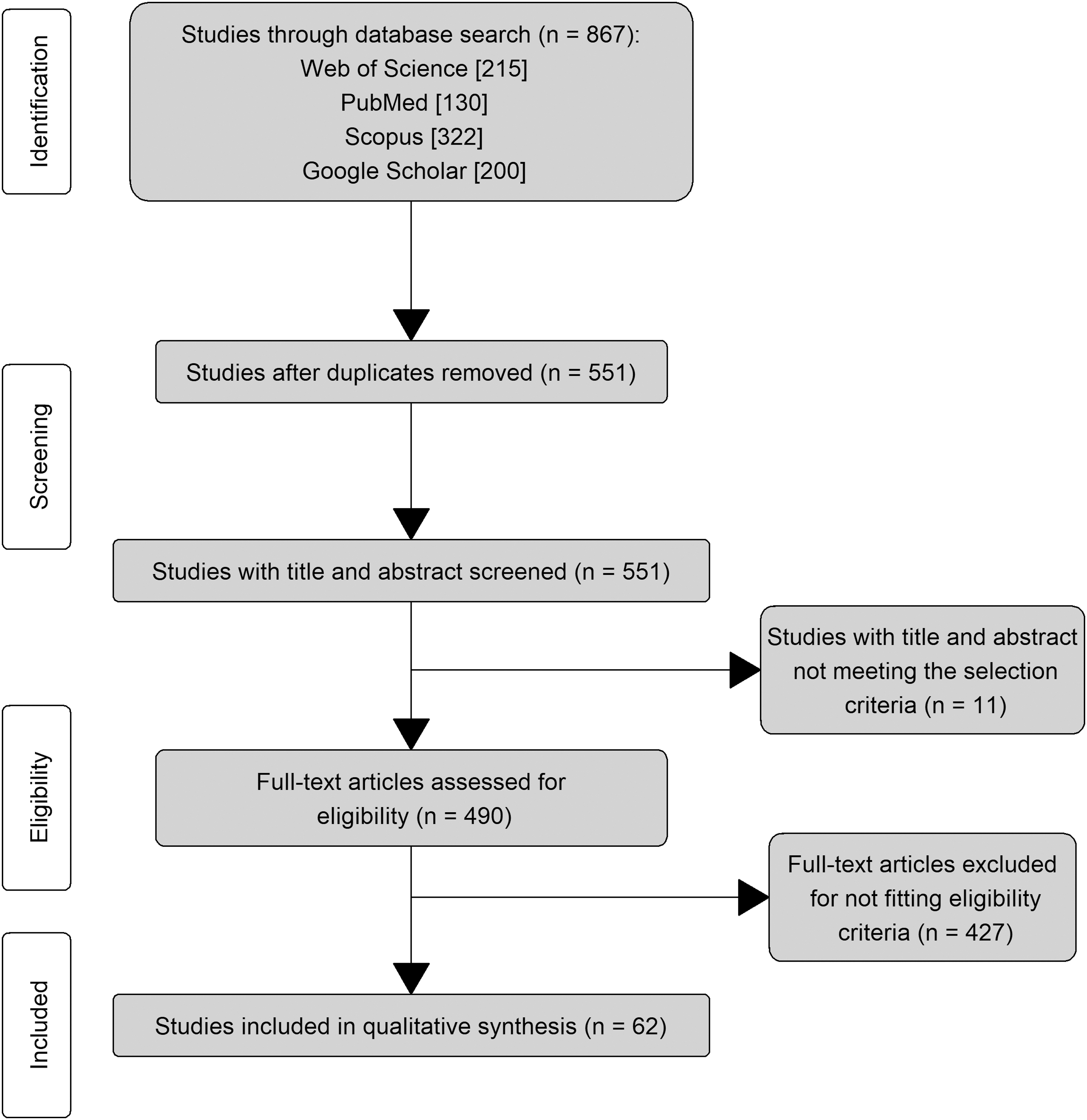
PRISMA flow diagram of the literature review process for studies on zoonotic pathogens associated with pet or feeder rodent species globally. PRISMA, Preferred Reporting Items for Systematic Reviews and Meta-Analyses.
Results
Number of identified studies
We found a total of 62 articles published between 1973 and 2022 reporting on zoonotic pathogens associated with pet or feeder rodents across 16 countries (Fig. 2 and Supplementary Fig. S2 and Supplementary Data). The majority of the studies were conducted in the 20th century than in the 19th century (Fig. 2). The research on zoonotic pathogens associated with pet and feeder rodents was first published in the United States and Norway in 1973 and 1992, respectively (Supplementary Table S1). There was a steady increase in the number of publications from 2004 onward and a decrease from 2009 to 2010. The largest number of publications was in the last 5 years, particularly in 2017 and 2018, with seven and six studies, respectively (Fig. 2).
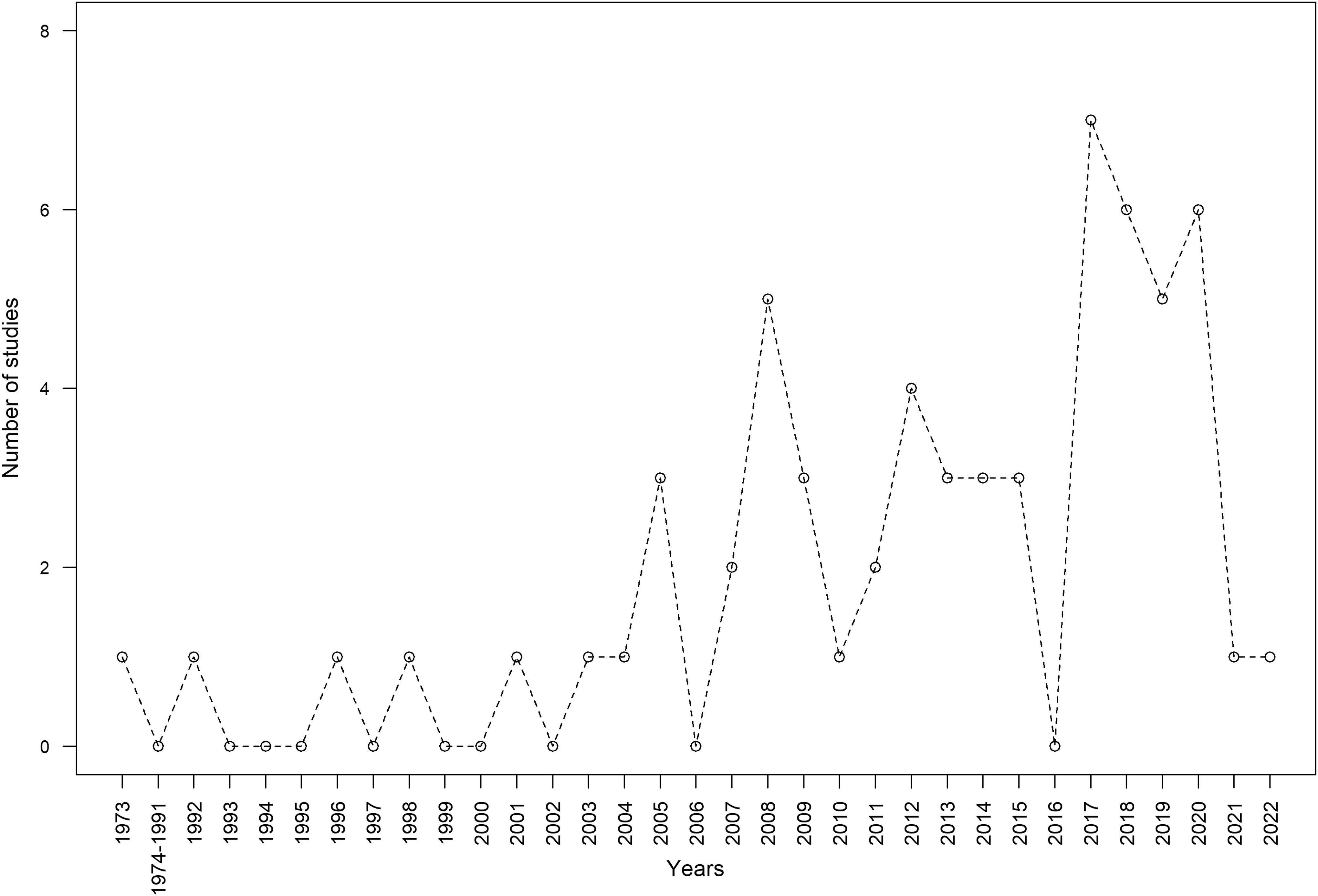
The number of publications per year associated with zoonotic pathogens of pet and/or feeder rodents across countries globally between 1973 and 2022.
These studies were conducted in at least seven countries that included the United States, United Kingdom, France, Japan, Belgium, Canada, and the Netherlands (Supplementary Table S1). Europe and North America were well-represented in terms of research throughout the study years, with the United Kingdom and Canada being the latest countries to continue with research in 2021 and 2022 (Supplementary Table S1). We found that Asia and Africa were the least represented countries, with Asia having three studies in 2012, 2017, and 2020, whereas Africa only had one study in 2021 conducted in Togo (Supplementary Table S1).
Geographical locations
Two studies were conducted in more than one country, that is, one study shared between Canada and the United States (Kerins et al., 2018), and another conducted in Belgium and France (Mori et al., 2017), therefore making a total of 64 studies conducted. A large proportion of studies were conducted in North America, followed by Europe. The United States (20/64 [i.e., 31.3% of the studies]) had the largest number of studies, followed by the United Kingdom (9/64; 14.1%), France (7/64; 11%), and Germany (7/64; 11%) (Fig. 3 and Supplementary Fig. S2). No studies were identified in two continents, that is, Australia and South America (Fig. 3).
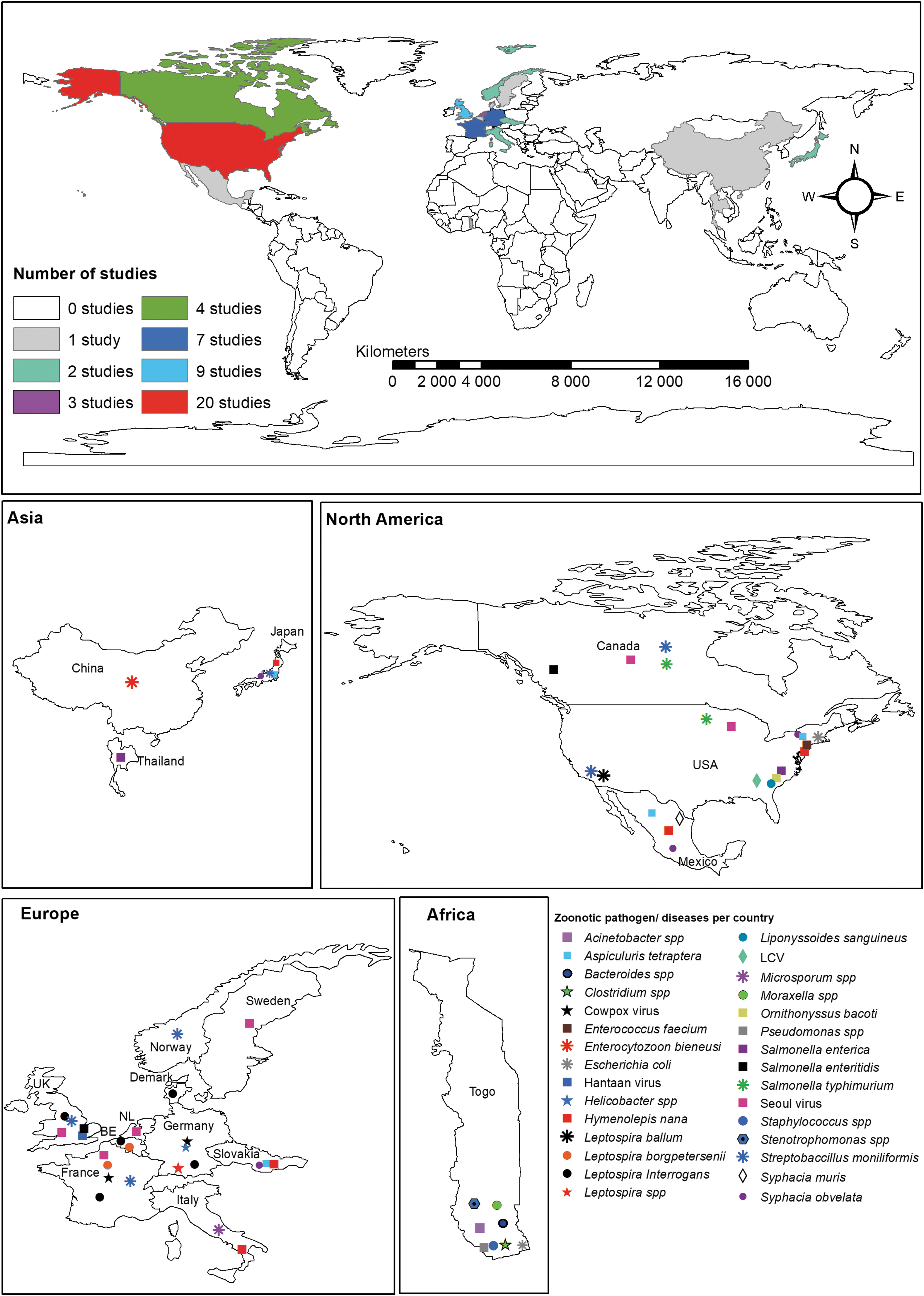
Map showing the geographic distribution of the number of studies on zoonotic pathogens associated with pet or feeder rodents between 1973 and 2022. Countries abbreviations are as follows: BE, Belgium; NL, Netherlands; UK, United Kingdom; USA, United States of America. LCV, lymphocytic choriomeningitis virus.
Our literature search found a total of 30 zoonotic pathogens of pet and/or feeder rodents across the 4 continents (Fig. 3). North America had the largest number of zoonotic pathogens reported, followed by Europe (Fig. 3). The United States was the most frequently represented country, with 13 zoonotic pathogens reported, followed by Togo (number of zoonotic pathogens; n = 8), the United Kingdom (n = 5), and France (n = 5) (Fig. 3).
Nine zoonotic pathogens were reported in more than one country, that is, Seoul virus (United Kingdom, Sweden, Netherlands, France, and United States); Hymenolepis nana (Japan, Italy, Mexico, Slovakia, and United States); Leptospira interrogans (Denmark, Germany, France, Belgium, and United Kingdom); Streptobacillus moniliformis (Canada, United States, France, and Norway); Salmonella typhimurium (Canada and United States); Salmonella enterica (United States and Thailand); Salmonella enteritidis (Canada and United Kingdom); Leptospira borgpetersenii (Belgium and France); Escherichia coli (United States and Togo); and cowpox virus (Germany and France) (Fig. 3). Twenty-two articles covered individual case reports or outbreaks involving more than 10 cases associated with contact with infected rodents or reptiles obtained from breeding facilities and pet shops (Supplementary Table S1).
The cases were associated with the following pathogens cowpox virus (five articles), Leptospira spp. (four articles), S. enterica (two articles), S. enteritidis (one article), S. typhimurium (four articles), Seoul hantavirus (two articles), and S. moniliformis (seven articles) (Supplementary Table S1). The cases involved the following countries Canada, Denmark, France, Germany, the Netherlands, Norway, the United Kingdom, and the United States (Supplementary Table S1). Consequently, the outbreak of some cases resulted from the import and export of pet or feeder rodents between the countries (Supplementary Table S1). For example, the Seoul virus in the United States and Canada, and Cowpox infection in France was owing to pet rats that a pet dealer imported from a breeder in the Czech Republic (Ducournau et al., 2013; Kerins et al., 2018). For most cases, rodents were asymptomatic, and the transmission was through direct contact with infected rodents (Supplementary Table S1).
Zoonotic pathogens
Pet rodents accounted for 71% (44 articles) of the studies on zoonotic pathogens, whereas feeder rodents accounted for 26% (16 articles), and both pet rodents and feeder rodents accounted for only 3% (2 articles) (Fig. 4). Bacterial pathogens were frequently reported, followed by parasitic and viral pathogens. For bacterial pathogens, 18 pathogens were identified, with 5 identified to species level and S. moniliformis being the most-studied pathogen (Fig. 4). However, in terms of bacterial prevalence, species from the genera Leptospira and Salmonella were the most prevalent. Seven species of parasitic pathogens were identified, with H. nana identified in 6 of 14 studies. For viral zoonotic pathogens, four species were identified, with the Seoul virus identified in 13 of 23 studies. This species was identified in both pet and feeder rodents, making it the most studied and published zoonotic pathogen. We only identified one fungal pathogen study isolated from pet rodents, that is, Microsporum spp. (Fig. 4).

Zoonotic pathogens associated with pet and/or feeder rodents identified in the literature globally.
Rodent species and sources of trade/origin
We identified three rodent species, which are commonly traded as both pets and feeders for carnivorous pets, that is, the African pygmy mouse (Mus minutoides), the house mouse (M. musculus), and the brown rat (R. norvegicus) (Table 1). Rats accounted for 64% (47 studies) of articles on zoonotic pathogens, whereas mice accounted for 36% (27 studies) (Table 1). However, in terms of zoonotic prevalence, mice were associated with a total of 20 pathogens, whereas 17 pathogens were isolated from rats. Overall, pet shops were the primary source from where rodents were obtained. Some of the zoonotic pathogens were identified from rats and mice obtained from breeding facilities/breeders, pet owners, and veterinary clinics (Table 1). The most prevalent zoonotic pathogen, the Seoul virus was identified from R. norvegicus obtained from three different sources, that is, pet owners, pet shops, and breeding facilities/breeders (Table 1).
Sources of Pet and Feeder Rodents Associated with Zoonotic Pathogens
The full references are provided in the Supplementary Data.
Discussion
Our global systematic review on zoonotic pathogens of pet or feeder rodents showed a marked increase in the number of publications in the 20th century. This increase may be explained by the international recognition of the zoonotic disease threats posed by exotic pets and the wildlife trade (Chomel et al., 2007; Pavlin et al., 2009). In addition, the number of households that keep pet rodents has increased over the years, particularly in the United States where ownership has been reported to have increased by 11% between 2007 and 2012 (Lankau et al., 2017; Sterneberg-Van der Maaten et al., 2016). Consequently, the increased ownership of these pets poses health risks to humans. For example, the number of human salmonellosis cases in the United States has been reported to have increased in parallel with the ownership of pet iguanas (Chomel et al., 2007).
Of note, our review indicated an increase in the number of publications on zoonotic pathogens and human infections from 2007 to 2008 in the United States. Most of the studies followed outbreak incidents, for example, a study in Canada followed an outbreak of human S. enteritidis illness associated with exposure to pet mice in 2018 and 2019 (Plotogea et al., 2022). Although pet rodents and reptiles are kept as pets and traded globally, research on their potential health risks to humans is lacking in most exporting countries (Lankau et al., 2017; Valdez, 2021). This indicates an existing research gap in investigations focusing on zoonoses of pet and/or feeder rodents. For example, two continents (Australia and South America) had no studies on zoonotic pathogens of pet/feeder rodents, whereas Asia and Africa had less than four studies.
The lack of research in some of these continents may be explained by the lack of funding or priorities in research focus areas. Another explanation could be that none of these continents have experienced an outbreak as a result of keeping exotic pet reptiles and rodents. However, the lack of research focusing on pet and feeder species is of great concern as these continents export reptiles and some rodent species to other continents (
Another possible explanation for large numbers of publications in Europe and North America could be that these continents have experienced outbreaks related to the increased keeping of exotic pets such as rodents and reptiles. For example, this includes the outbreak of Salmonella in the United States and the United Kingdom, Seoul virus (United States), cowpox virus (Germany and Canada), and lymphocytic choriomeningitis virus (United States) between 2008 and 2020 (Cartwright et al., 2016; Centers for Disease Control and Prevention, 2005; Edison et al., 2014; Fuller et al., 2008; Harker et al., 2011; Kanagarajah et al., 2018; Kerins et al., 2018; Knust et al., 2020; Lee et al., 2008; Plotogea et al., 2022; Vogel et al., 2012; Vrbova et al., 2018). Although we could only find one study in Africa (Togo) (D'Cruze et al., 2020), the country had the second largest number of zoonotic pathogens identified. This indicates that Togo is a high-risk country in terms of its potential to export reptile species with zoonotic pathogens, including asymptomatic individuals (D'Cruze et al., 2020).
Both pet and feeder rodents were found to have been the source of zoonotic pathogens responsible for outbreaks in several countries. Zoonotic pathogens such as S. moniliformis, Salmonella spp., and Leptospira spp. are difficult to detect as some pets or feeder rodents may be asymptomatic. Consequently, diseases such as rat-bite fever, salmonellosis, and leptospirosis may be transferred to humans through contact or bite by an infected pet rat, and or carnivorous pets, such as snakes and lizards (Campe et al., 2009; Mori et al., 2017). The lack of clinical symptoms in these pets may increase the chances of transmission from pets to humans and possible outbreaks. For example, the outbreak of the Seoul virus in 2017 was linked to pet rats' exports and imports between Canada and the United States (Kerins et al., 2018). This suggests that countries should screen rodents and other exotic pets before importation and exportation to prevent possible outbreaks and transmissions. In addition, breeding facilities and pet shops should screen the animals before selling them to customers.
Our literature search found that the highly invasive and synanthropic M. musculus and R. norvegicus are frequently studied in research focusing on zoonotic pathogens. We, therefore, suggest that more studies focusing on potential health risks associated with other pet and feeder rodent species should be conducted. For example, the southern multimammate mouse (Mastomys coucha) is traded as a pet and feeder rodent (Shivambu et al., 2022); however, there is little information on its potential zoonotic risks in the pet trade industry. In addition, some of the studies in our review did not indicate their study species but rather their generic common names, such as rats and mice. Consequently, such studies make it difficult to trace which species may be of concern. Of particular interest, zoonotic pathogens isolated from feeder mice in a study by D'Cruze et al. (2020) in Togo were not found in other countries, suggesting that other rodent species may be involved and not just M. musculus and R. norvegicus.
Most zoonotic pathogens identified in this review were associated with pets or feeders purchased from pet shops. It has been suggested that pet shops can play a vital role in controlling the spread of zoonotic infections as they are one of the primary sources where the public can acquire information on the risks associated with pets (Halsby et al., 2014). An asymptomatic pet or feeder rodent can potentially transmit the illness to other pets within the shop, workers, and customers. It has been suggested that breeders are more reliable in getting healthy pets than some pet shops (Centers for Disease Control and Prevention, 2005; Patterson, 2006). This is because some pet shops take no responsibility for their pets, and most of their animals, especially rodents, are bred behind the pet shops and are mostly unhealthy because of inhumane treatment (Patterson, 2006).
Conclusions and Recommendations
Our systematic review found that studies on zoonotic pathogens of pet and feeder rodents are lacking in several countries, particularly underdeveloped and developing, although they seem to import and export rodents to other countries. For example, we did not find any study from the Czech Republic, although the rodents responsible for cowpox infections in France were purchased from that country (Ducournau et al., 2013). This indicates the need to conduct more research on pets and feeder species, given the role played by these animals in transmitting diseases to humans. We, therefore, suggest that animals from pet shops and breeding facilities should be screened for zoonotic diseases as they may not show clinical signs of some zoonotic diseases. Studies should also investigate zoonotic pathogens associated with other feeder animals, as it is evident that more studies focus on feeder rodents, although other species such as frogs (H. rugulosus) are used (Prapasarakul et al., 2012).
Given the recent COVID-19 pandemic that has had a significant global impact, we recommend that global rather than country-specific protocols on how to handle pets and feeder species in animal facilities be developed. A study by Varela et al. (2022) highlights some important recommendations on how to reduce the risk of transmission from feeder and pet rodents. These recommendations should be used when developing global protocols on these animals.
Footnotes
Acknowledgments
The authors thank the South African National Research Foundation (NRF) and the University of Pretoria (South Africa), for logistic support and funding. The authors also thank anonymous reviewers for their constructive comments that have assisted in improving the article.
Ethical Approval Statement
This study does not require an ethical approval because no human or animal subjects were directly involved in the study.
Authors' Contributions
N.S.: Conceptualization, Methodology, Data analysis, Writing original draft, Funding acquisition. T.C.S.: Conceptualization, Methodology, Data analysis, Reviewing, and Editing. C.T.C.: Supervision, Conceptualization, Funding acquisition, Reviewing, and Editing.
Author Disclosure Statement
No conflicting financial interests exist.
Funding Information
This work is based on the research supported in part by the South African National Research Foundation (NRF; Grant No. 38528).
Supplementary Material
Supplementary Data
Supplementary Figure S1
Supplementary Figure S2
Supplementary Table S1
References
Supplementary Material
Please find the following supplemental material available below.
For Open Access articles published under a Creative Commons License, all supplemental material carries the same license as the article it is associated with.
For non-Open Access articles published, all supplemental material carries a non-exclusive license, and permission requests for re-use of supplemental material or any part of supplemental material shall be sent directly to the copyright owner as specified in the copyright notice associated with the article.
