




Abstract
Introduction:
The Epizootiological Investigation Form (EIF) is a document issued for every notified human brucellosis case, with the aim to convey information from public health to veterinary authorities for farm animals epidemiologically linked with the patient. We assessed the integration of EIF to the routine collaboration among stakeholders and the efficiency in directing the veterinary efforts to identify Brucella-infected animals.
Methods:
EIFs were evaluated for the implementation, timeliness, and completeness of the shared information provided by the public health and the veterinary authorities. The efficiency of EIFs in identifying infected farms was compared with the Brucella infection rate of routinely screened farms in the frame of the national brucellosis program.
Results:
During 2017–2022, 344 EIFs were issued for equal number of human brucellosis cases and 118 (34.3%) were circulated successfully among all stakeholders, whereas 226 (65.7%) went missing. The highest rate of intersectoral circulation occurred in May (47.8%, p = 0.007). Veterinary investigation was performed, and result was provided in 62 (57.4%) of the 108 circulated EIFs that disclosed the contact details of the epidemiologically linked animal farms. Brucella was detected at a significantly higher rate (51.7%) in the investigated sheep and goats' farms than the infection rate (2.7%) of the national brucellosis program (p < 0.00001). Among the screened bovine herds, two were found infected of the eight tested (25%). The circulation among all competent authorities of EIFs with a farm screening outcome required a median (interquartile range) of 50 days (22, 88). The likelihood of a “complete” EIF per human case differed among geographic Regions (p = 0.010), and was higher for patients diagnosed in April (p = 0.001) and occupied as stockbreeders (p = 0.025).
Conclusions:
EIF is a useful tool for pinpointing suspected animals for brucellosis screening. Training of the collaborating personnel is essential for improving the implementation of EIF in the everyday practice.
Introduction
Brucellosis is a debilitating worldwide zoonosis, particularly endemic in the countries of the Mediterranean basin and the Middle East (Ulu Kilic et al., 2013). Sheep and goats are the main reservoir of the Brucella Melitensis, which is responsible for the great majority of human cases (Blasco and Molina-Flores, 2011). Bovines are the natural hosts of Brucella abortus, also infectious to man but causing a less severe disease (Khurana et al., 2021). Transmission occurs by direct or indirect contact with animals, or by consumption of dairy products (Atluri et al., 2011).
Greece presents the highest rate of human cases and outbreaks in domestic animal farms among European countries (The European Union one health 2018 zoonoses report, 2018), and the infections are attributed mainly to B. melitensis (Fouskis et al., 2018). The interdisciplinary, synergistic collaboration among stakeholders from the standpoints of human, veterinary and ecological science, based on the concept of “One Health”, has an added value in combating brucellosis (Ghanbari et al., 2020).
Among the efforts to curb the disease, the Zoonoses Department of the Greek National Public Health Organization (NPHO) and the Zoonoses Department of the General Veterinary Directorate of the Ministry of Rural Development and Foods agreed on the joint implementation of the Epizootiological Investigation Form (EIF) (Supplementary Fig S1), a standardized document for conveying information among competent authorities. The main purpose of the EIF is to notify the Veterinary Authorities of the animal farms identified as potential source of infection for human brucellosis patients. The implicated farms are then prioritized for emergency blood sampling and laboratory screening for brucellosis.
In this study, we assessed the integration of EIFs into the routine collaboration between public health and veterinary services and the efficacy of EIFs in correctly directing veterinary efforts to identify infected animals.
Materials and Methods
Health professionals in Greece are legally obliged to report human brucellosis cases to the Greek NPHO via the brucellosis notification form.
In brief, for each notified human brucellosis case a blank EIF is issued by NPHO, devoid of patient personal data but with a unique id for each patient and is forwarded to the competent local Public Health Authority (PHA). The patient is interviewed by the PHA for potential vehicles of transmission, including contact with animals or ingestion of unpasteurized milk products; if the epidemiological investigation concludes to a specific animal farm as a potential source of infection, an epidemiological link of the patient with the farm is established, and the farm is characterized suspected.
The EIF filled with the contact details of the suspected farm (owner, location, telephone number) is forwarded by the PHA to the competent local Veterinary Authority (VA). VA proceeds to blood sampling and forwards the EIF filled with the laboratory result for brucellosis (“priority screening”), and other information regarding the farm to the NPHO for archiving and analysis. In case that the veterinary screening is not feasible, the reasons should be provided in a dedicated for this purpose field of the EIF.
In summary, the information conveyed with EIF includes the following: (i) unique id associated with each human brucellosis patient, (ii) location and contact details of the suspected farm, (iii) official id of the farm, (iv) species and number of raised animals, (v) outcome of the test performed due to link with the human case or reasons that the test was not performed, and (vi) outcome of the most recent test in the suspected farm.
Even when the contact details of the farm are unknown or the screening is not feasible, EIF is still required to be circulated by all stakeholders and to return to NPHO for validating the continuity of the chain of intersectoral communications. An EIF that successively passed from NPHO to PHA and VA and returned to NPHO is considered fully forwarded (“returned” EIF). A flow chart of the intersectoral circulation of information concerning a brucellosis patient is illustrated in Figure 1.
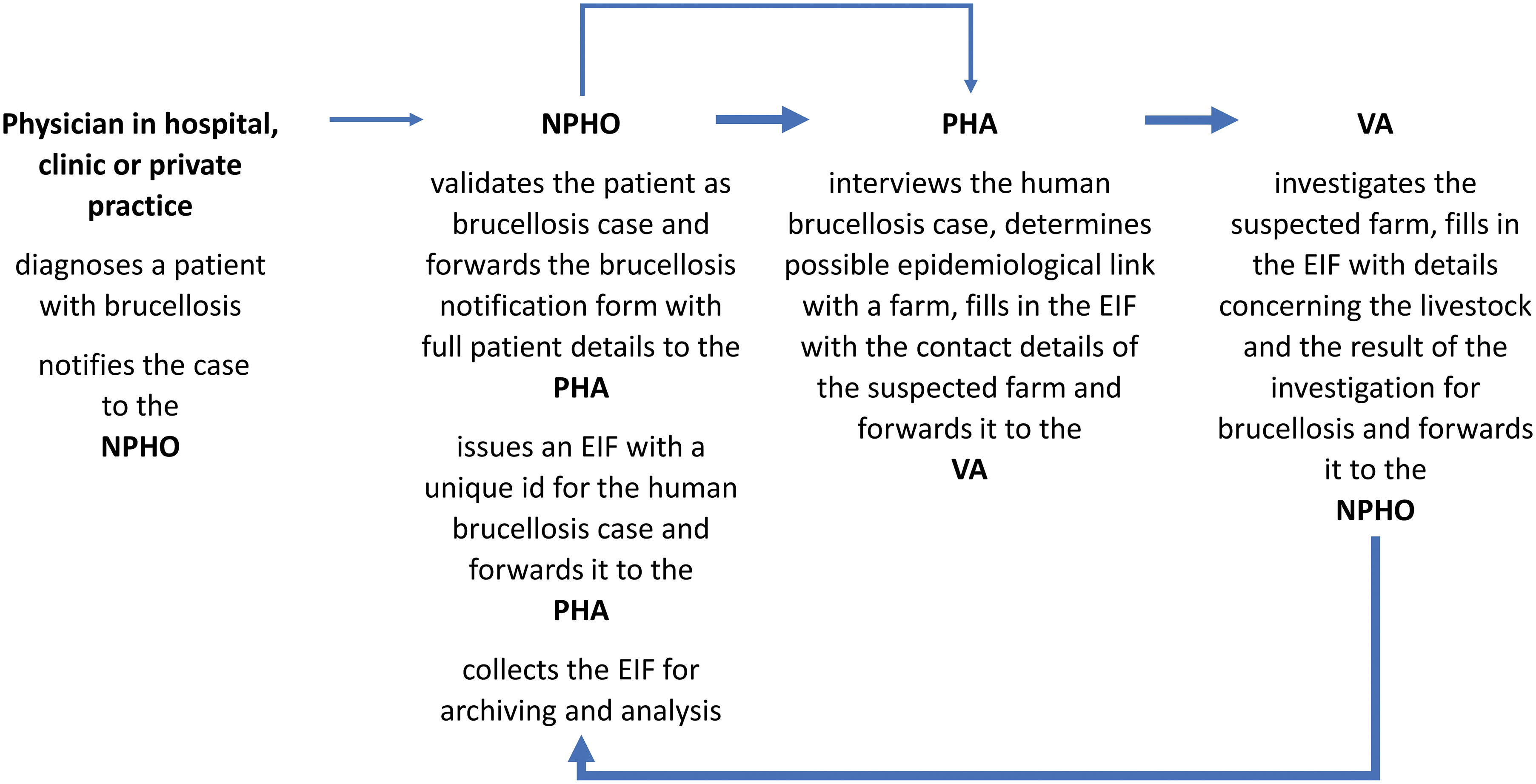
Flow chart of the routine intersectoral communication since a patient is diagnosed with brucellosis. The bold arrows indicate the circulation of the EIF, and the thin arrows the circulation of the brucellosis notification form. EIF, Epizootiological Investigation Form; NPHO, National Public Health Organization; PHA, Public Health Authority; VA, Veterinary Authority.
A revision of the EIF was introduced in 2018 requiring the additional information of the result of the most recent routine test performed in the farm before an epidemiological link with a human case was established. The addition was implemented to ensure a minimum of information for the brucellosis status of the farm even if the “priority screening” was not possible.
Veterinary screening
The establishment of an epidemiological link with a human brucellosis case triggers the urgent serologic screening of the suspected farm. The “priority screening” includes all unvaccinated sheep and goats of ≥6 months of age and of the rams and bucks that had received vaccination (Rev-1) ∼1 year before the examination. In cattle, the “priority screening” is performed in male, unvaccinated animals of ∼12 months of age. The vaccination status and the regular conduct of blood sampling are indicated both by a certification provided to the owner and by records maintained by VA, whereas individual animals are identifiable by ear tags.
Swine and other livestock species are not included in the official brucellosis control and eradication program, vaccination is not applied, and a screening protocol is not in place; however, a pig farm deemed as potential infection source will also be tested for brucellosis. Rose Bengal Test, modified for animal testing, is used for the initial screening, and the diagnosis of brucellosis is confirmed with the Complement Fixation Test. Both methods test for IgG1 antibodies. Animal species other than sheep, goats, bovines, and swine are not currently included in the EIF. A farm is considered infected with Brucella spp. if one or more of the bred animals are confirmed for brucellosis.
Data
The analysis was performed at the geographical level of Regions, the 13 administratively discrete nomenclature of territorial units for statistics (NUTS)-2 areas of Greece, according to the NUTS as set by the EU regulation (EC) No 1059/2003, 2016 classification. The high-risk occupations included farmers, stockbreeders, butchers, veterinarians, and professions related with farm animals. The examined data regarded the period 2017–2022, and included the following: a. Human brucellosis cases (data obtained from the mandatory notification database of NPHO): – region of residence – year and month of notification – high-risk occupation – age and gender. b. Farms epidemiologically linked to human brucellosis cases (data extracted from EIFs): – Region and contact details of the farm (location, person, and phone to contact) (filled by PHA). – Species of the raised animals, size of the flock, outcome of the “priority screening” and in the revised EIFs the additional information of the most recent routine examination before the occurrence of the human case (filled by VA). c. Animal data (obtained from the Zoonoses Department of the General Veterinary Directorate of the Ministry of Rural Development and Foods): the sheep and goat flocks and bovine herds by region scaled per 100,000 inhabitants, and the rate of infected farms in the frame of the national program for the control and eradication of brucellosis. d. Human population by region and year (Hellenic Statistical Authority, 2023).
Analysis
To assess the efficacy of EIFs to correctly direct veterinary efforts to identify infected herds, the rate of the Brucella-positive farms discovered through the EIF was compared with the rate of the farms found infected by routine serology in the frame of the national eradication and control brucellosis program.
The “returned” EIFs were evaluated for the timeliness of the intersectoral circulation, the quality of the exchanged information, and the implementation at national and local level according to markers proposed by the World Health Organization (2018) for assessing the functionality of a surveillance system.
The timeliness was represented by the time needed (days) for the processing of EIF by all stakeholders; that is, the passing of the EIF from NPHO to PHA, subsequently to VA and finally to NPHO (“circulation period”).
As for the quality of information, the “returned” EIFs were classified using a scale, according to the completeness of provided information about the farm contact details, the raised animal species, and the “priority screening”:
i. The “complete” EIFs included the farm contact details and the result of the “priority screening” of the farm.
ii. The “functional” EIFs included the farm contact details, but the “priority screening” result was missing because veterinary examination was not feasible due to reasons reported by the VA.
iii. The “nonfunctional” EIFs included the contact details of the farm, but the “priority screening” result was missing and the reasons were not reported by the VA.
iv. The “uncomplete” EIFs lacked both the farm contact details and the result of the “priority screening.”
The implementation of EIF was assessed as the rate of the accomplished laboratory investigations (“implementation rate”) in those of the “returned” EIFs that disclosed the farm contact details and was determined by the following formula:
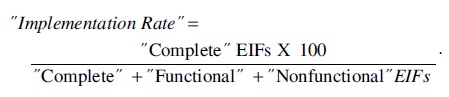
The percentage of the “returned” EIFs to all the issued EIFs (“return rate”) denoted the passing of EIFs from all stakeholders and was deemed as an indicator of the proper functioning of the intersectoral chain of communication.
The “unreturned” EIFs represented the issued EIFs by NPHO that went missing and did not return to NPHO.
The added value of the 2018 revision was assessed by the revised “returned” EIFs that lacked the “priority screening,” but included the most recent routine test as the only available laboratory result.
The most recent routine screening was analyzed for the outcome and the temporal proximity (days) of the sampling with the occurrence of the linked human case.
A time-series analysis was performed to identify potential periodicity in the “return rate” and the “implementation rate.” All available data were investigated for temporal and spatial associations that could support predictive models.
The confidence level was set to 95%, and the statistical analysis was performed with the statistical package SPSS (IBM SPSS Statistics for Windows, Version: 28.0, Armonk, NY, USA).
Ethical statement
The study has been approved by the Bioethical Committee of the NPHO of Greece (14498/25-07-2023).
Results
During 2017–2022, 344 EIFs were issued from NPHO, linked with the 344 human brucellosis cases reported in the same period. The “returned” EIFs were 118, corresponding to a “return rate” of 34.3%, while 226 went missing (“unreturned”). We accounted for the reporting rate bias by comparing the available data of the cases that yielded a “returned” EIF versus the cases that did not. No discernable variation was revealed between them when testing for regional [X 2(12) = 16.078, p = 0.188] or occupational [X 2(6) = 5.207, p = 0.518] differences, or regarding gender [X 2(1) = 0.537, p = 0.464] and age [t(342) = 1.442, p = 0.15].
Among Regions, the “return rate” had a median (interquartile range [IQR]) of 29.2% (25.0, 39.6), and a seasonality was apparent with the highest mean return rate observed in May (47.8%), X 2(11) = 25.705, p = 0.007. The “returned” EIFs included 62 “complete,” 27 “functional,” 19 “nonfunctional,” and 10 “uncomplete.” The “complete,” “functional,” and “nonfunctional” EIFs disclosed the contact details of the epidemiologically linked farms and represented 91.5% of the total “returned” EIFs (n = 108); all the implicated farms were located within the Regions of residence of the associated brucellosis patients.
The reported animal species in the “complete” EIFs were sheep and goats in 54 (87.0%); bovines in 4 (6.5%); and sheep, goats, and bovines in 4 (6.5%), respectively. The “priority screening” was accomplished in 58 of the sheep and goat flocks with 30 Brucella detections (51.7%), and in 8 bovine herds with two of them found infected (25.0%) (Table 1).
Information for the Animal Farms and the Veterinary Screenings, Conveyed By the Epizootiological Investigation Forms, Greece, 2017–2022
S: sheep, G: goats, B: bovines.
Four “complete” EIFs referred to animal holdings raising sheep, goats, and bovines, and included four sheep and goat flocks and four bovine herds.
EIF: Epizootiological Investigation Form; N/A: non/applicable.
The reasons cited for not performing farm screening in the “functional” EIFs were the absence of livestock at the time of the visit (56%; n = 15) and the inability to communicate with the stockbreeder (44%; n = 12).
The “implementation rate” reflecting the realized veterinary investigations in the farms with disclosed contact details was 57.4% for the whole country, varying from 33.3% to 100.0% among Regions with a median implementation rate (IQR) of 60.0% (41.9, 86.1).
The “circulation period” of the “complete” EIFs had a median (IQR) 50 days (22, 88), nationwide, with median (IQR) per Region ranging from 14 (8, 23) to 88 (42, 91) days (Fig. 2).
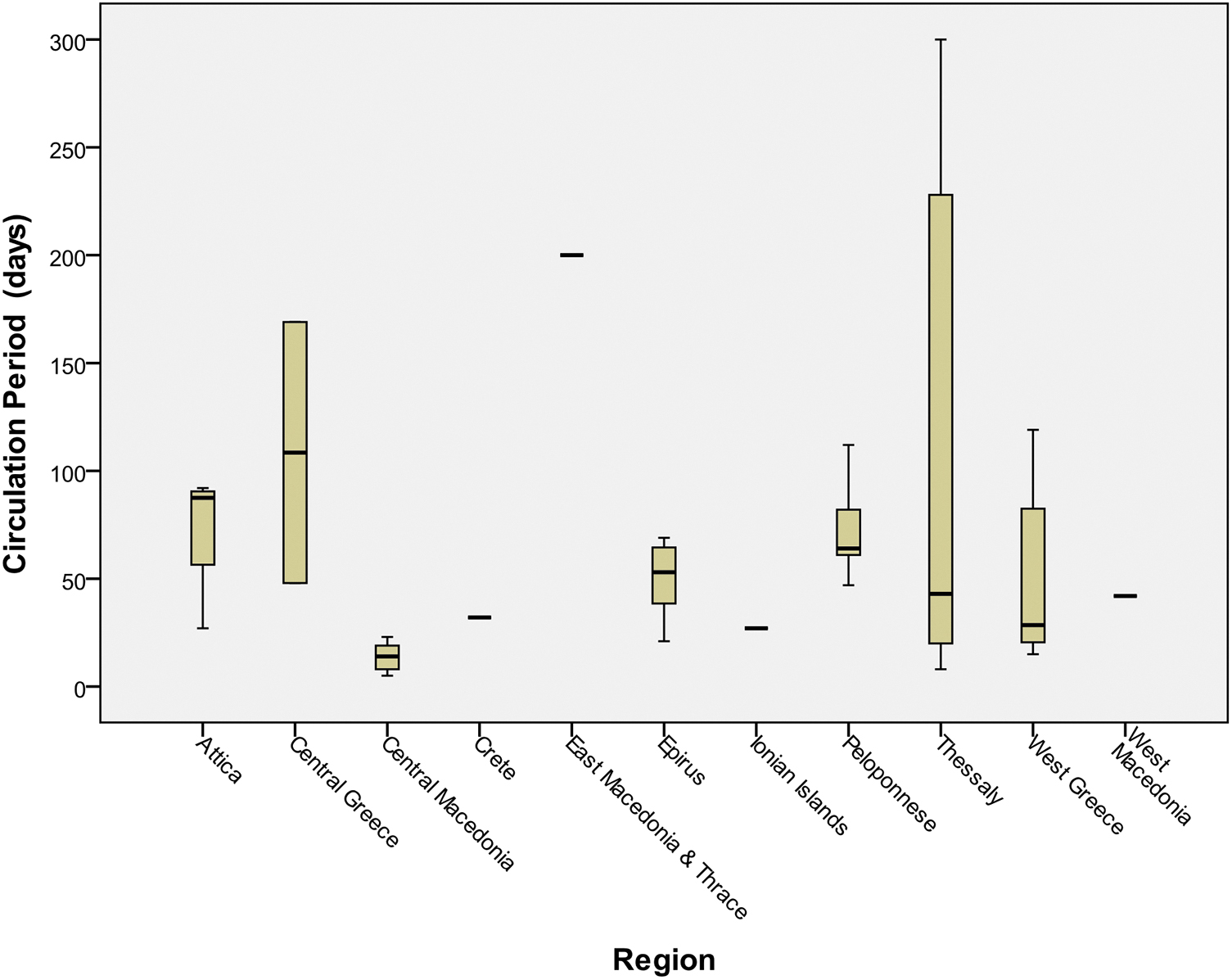
Turnaround time (days) for the circulation of the “complete” EIFs among all stakeholders (“circulation period”), per Region, Greece, 2017–2022.
The infection rate of sheep and goats' farms by the routine screening in the frame of the national brucellosis control and eradication program for the period 2017–2022 in Greece was 2.7% taking into account all samplings performed (2722 Brucella detections in 100,925 samplings). It can be concluded that the frequency of farms found positive due to EIF-based notification was significantly higher than the overall infection rate in the country resulting from the routine screening, X 2(1) = 525.59, p < 0.00001.
The Brucella detections in bovine farms through the national brucellosis program were 569 among 18,970 screenings, corresponding to 3.0% infection rate, far lower than the rate of positive herds identified by EIF-driven investigations; however, no statistical conclusions can be drawn for the efficiency of EIFs to discover infected cattle herds due to the limited number of the bovine farms that underwent EIF-motivated examination.
Regions differed in the likelihood of ending up with a “complete” EIF for each reported human brucellosis case, X 2(12) = 26.359, p = 0.010; the odds ratio for a “complete” EIF to originate from Epirus Region versus any other Region was 4.1 (p < 0.001) (Fig. 3).
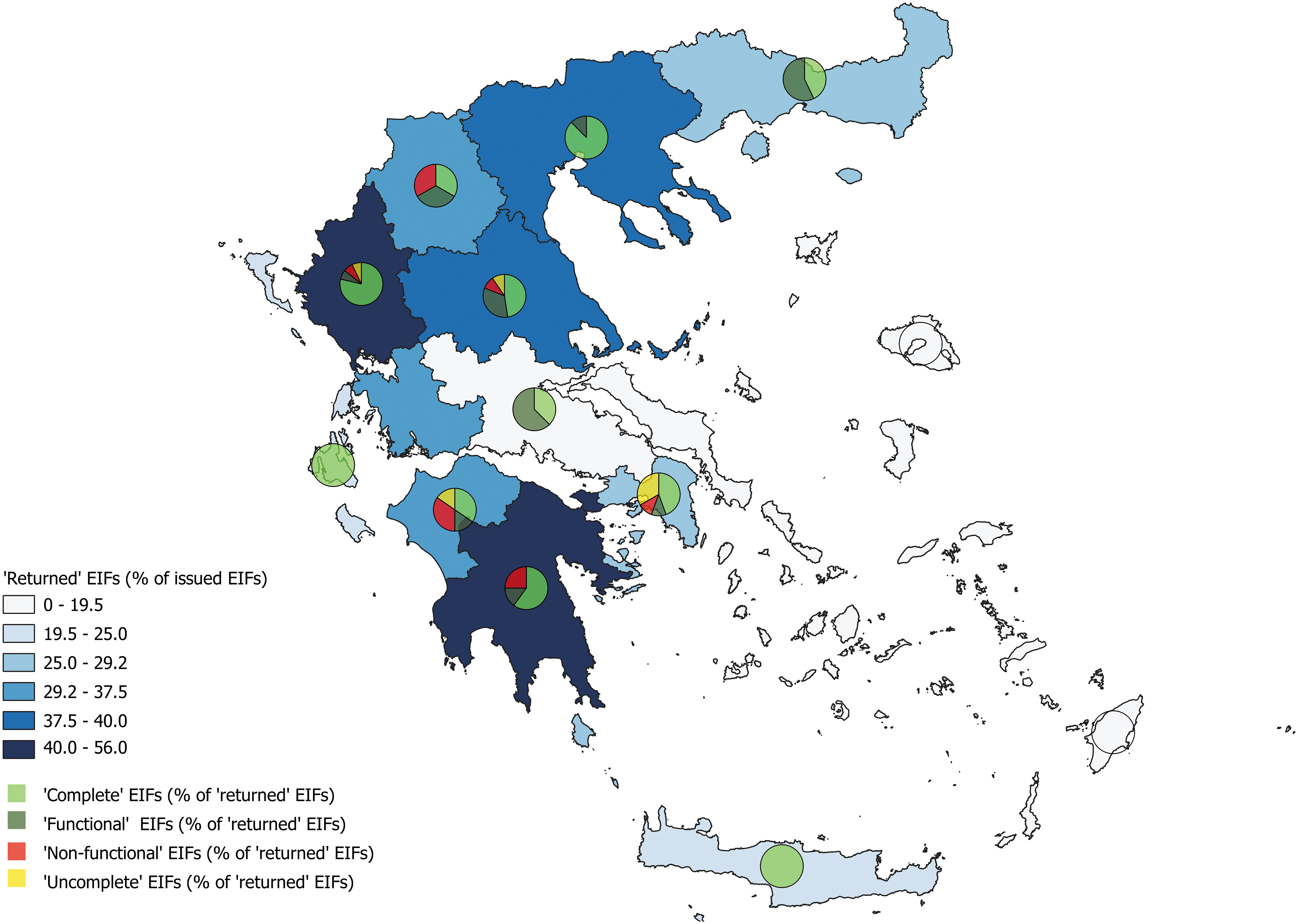
Return rate to the NPHO of the circulated among all stakeholders EIFs and rate of “Complete,” “Functional,” “Nonfunctional,” and “Uncomplete” returned EIFs, per Region, Greece, 2017–2022.
The “complete” EIFs were positively associated with the high-risk occupation of the patients, X 2(1) = 6.718, p = 0.010. Specifically, the stockbreeders were associated with a higher rate of “complete” EIFs (1.9 odds ratio), X 2(1) = 5.047, p = 0.025. The odds ratio of a “complete” EIF was higher for human cases reported in April (3.1), X 2(1) = 10.855, p = 0.001 (Fig. 4).

“Complete” EIFs by monthly reported human brucellosis cases, Greece, 2017–2022.
The likelihood of a “complete” EIF was increased when a revised EIF was used (odds ratio 6.5), X 2(1) = 34.917, p < 0.001.
The “implementation rate” assessed on yearly base did not differ among Regions (p = 0.178) or regarding the occupation (p = 0.98) but a monthly variation was observed [X 2(10) = 21.537, p < 0.018], with the highest rate observed in April (83.3%).
A projection method based on the regression analysis technique was used for a time-series analysis, and a simple seasonal model was determined as the best fit. The model validation was done by residual correlogram analysis and computed Box-Ljung Q statistic test [Ljung-Box (16) = 11.830, p = 0.756], and was found to adequately fit the data (stationary R 2 = 0.722, maximum absolute error = 32.528). A periodicity in trimester base regarding the “return rate” was identified in the fit model, with the highest yield estimated in the second quarter (Fig. 5).
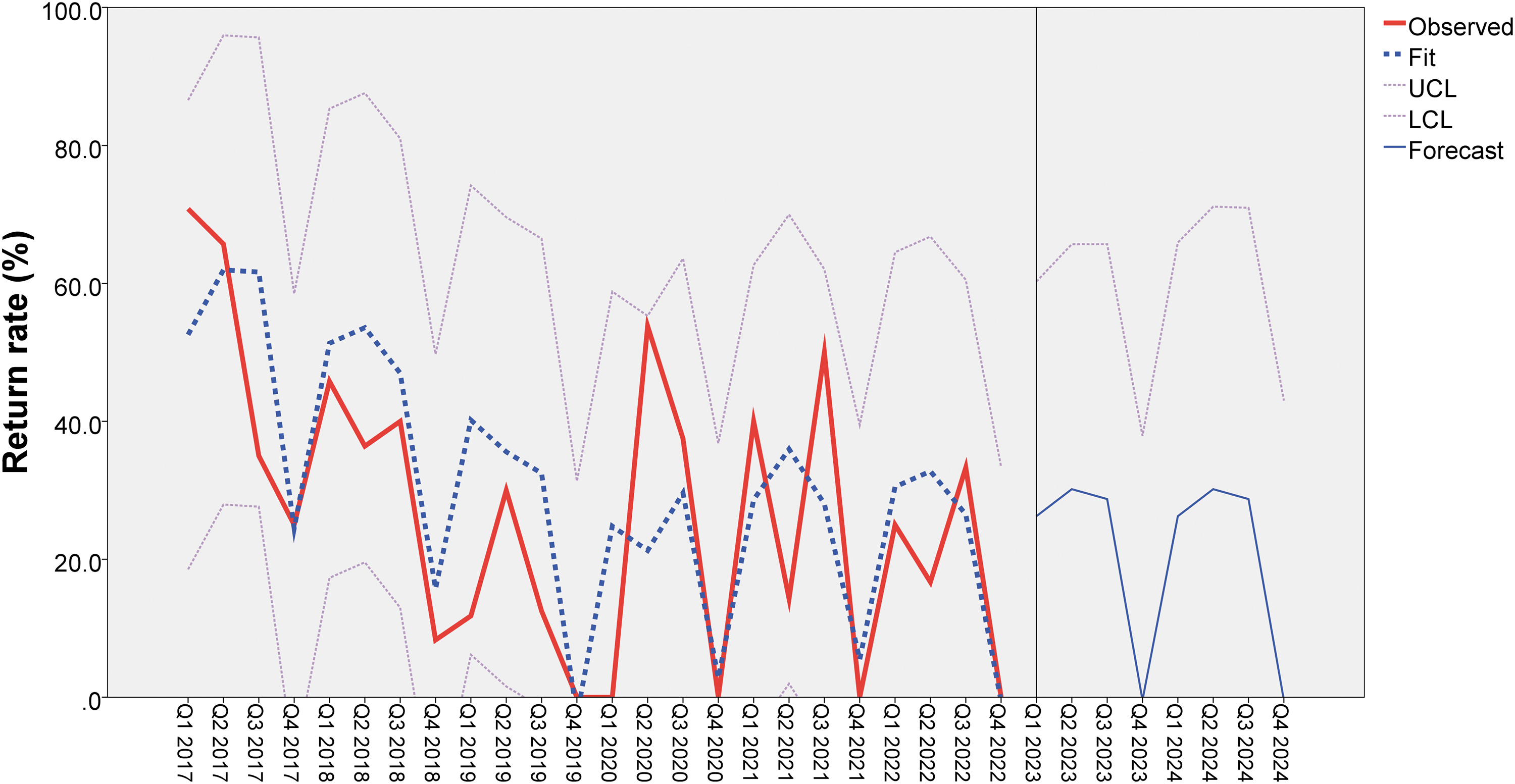
Time series of the return rate of the EIFs with quarterly periodicity from 2017 to 2022. Observed values (thick line), fit model (dotted line), and forecast (thin line). Q1, Q2, Q3, and Q4: 1st, 2nd, 3rd, and 4th quarter, respectively. LCL, lower control limit; UCL, upper control limit.
The information of the most recent routine test of the sheep and goats' farms before the occurrence of the human case was reported in 21 revised EIFs that included the question. The time of samplings with Brucella detection was more proximal to occurrence of the human cases (mean = 177 days) compared with samplings that had negative results (mean = 344 days), but the difference was not significant (p = 0.288), possibly due to the limited number of observations. The Brucella-positive outcomes of the most recent routine tests were followed by 100% positive ones in the “priority screening,” whereas 33.0% of the negative ones were followed by positive. The paired results of the most recent routine screening and of the “priority screening” exhibited consistency (70.0%), but the number of observations was too limited (n = 12) to draw any statistical conclusion (p = 0.125).
The added value of the 2018 revision was evidenced by the fact that the most recent routine test was the only available laboratory information in 11 (52.4%) of the revised EIFs that lacked the “priority screening” result. The “priority screening” result was missing in 45.3% of the prerevision EIFs, with no option for other available laboratory information. The database is available as Supplementary Database.
Discussion
A true implementation of the “One Health” concept for tackling brucellosis requires clear roles and determination of all the involved parties to achieve results (Buttigieg et al., 2018). Nevertheless, even though the joint actions under the “One Health” concept are considered decisive, only few studies reflect on the practical details and assess the added value of a combined response based on collected data (Buttigieg et al., 2018; Ghai et al., 2022). In this context, our study provides useful insight on how a simple tool can facilitate the exchange of information with the aim of targeted animal testing.
The primary purpose of the EIF-based communication is to ensure that the competent veterinary services will be notified for the suspected animals to be prioritized for brucellosis screening. Our data support that the veterinary investigation of farms with epidemiological link with human patients has supreme predictive capacity to detect Brucella compared with the simple routine screening. However, a higher yield of Brucella detections in epidemiologically suspected farms is expected since the investigation is driven by human infections, while the routine screening is based on mass blind testing. The epidemiological investigation would be further aided by laboratory techniques that could distinguish Brucella strains in humans and animals, and allow tracing back at the infection source (De Massis et al., 2015).
The efficiency of the EIF intersectoral implementation was reflected in the rates of the realized “complete” EIFs against the total EIFs that provided VA with the contact details of the epidemiologically related animals. The variable EIF “implementation rate” among Regions was possibly affected by the locally available human and technical resources, key ingredients for a successful “One Health” policy (Bansal et al., 2023). Insufficient personnel and obsolete technical means for performing the required veterinary tasks have been previously described in Greece (Katsiolis et al., 2018).
The revised form of EIF was beneficial as it offered the option of at least providing the most recent laboratory feedback in cases that the “priority screening” was not feasible as this was the case in more than half of the revised EIFs.
Stockbreeders diagnosed with brucellosis presented a higher likelihood for a “complete” EIF, possibly because the animal source of infection was more evident and a veterinary testing more likely. The higher rate of “complete” EIFs for human cases observed in April and a higher return rate of EIFs during the second quarter (April–May–June) could be attributed to the increased veterinary mobilization in the frame of the national sheep and goat brucellosis program that reaches a peak in May–June. The “priority screening” could be then conveniently combined with the scheduled visits in the farms. In addition, an intensive veterinary attendance is associated with the late lambing season and lactating period during April–May (Tizard, 2021).
According to our data, the use of the revised form of EIF was combined with a higher return rate of “complete” EIFs. This could be a random observation as a causative relation is not straightforward. We can only speculate that the additional question about the most recent laboratory result might have contributed to the clarification of the “priority testing” and to improving the comprehension of the required information by the stakeholders.
This study has several limitations. The most obvious one is the low return ratio of the EIFs that could lead to result-skewing reporting rate bias. However, we accounted for this bias by investigating the differences between those cases who returned EIFS and those who did not. No statistically important variation in demographic characteristics was observed between those groups. Nevertheless, it is imperative to determine and address the causes that lead to low EIF return rate and poor quality of the incoming information.
Actual difficulties should be acknowledged toward the epidemiological association of a patient with a farm and the realization of a veterinary investigation. The patient interview conducted by the PHA is not always successful in pinpointing the suspected animals. Stockbreeders could be unwilling to reveal information in fear of eradication measures for their livestock and adverse financial consequences (Coelho et al., 2019), and the establishment of a direct link with animals is less straightforward for patients who do not have a high-risk occupation.
Recall bias, especially in cases without occupation related with farms, also have a toll in the accuracy of the provided information (Althubaiti, 2016). We speculate that the lack of training/experience of the PHAs/Vas and the limited resources (Katsiolis et al., 2018) negatively affected the realization of the farm screenings and the yield of “complete” EIFs.
The concurrent COVID-19 pandemic consequences (transportation restrictions, reluctance to visit overwhelmed hospitals, underperforming of public services, sickness absence of personnel, etc.) cannot be ignored (Hosseinzadeh et al., 2022). Nevertheless, the low return rate of EIFs, regardless of disclosing farm contact details or reporting the result of farm screening, is a clear indicator that training sessions should be organized to achieve better comprehension and implementation of EIF in the everyday practice.
The insights gained from our analysis aid in identifying strengths and weaknesses of the EIF-based collaboration, and can lead to a more efficient investigation of suspected farms for brucellosis.
Conclusions
EIF is a practical tool for the exchange of information among public health and veterinary authorities, and efficiently directs veterinary efforts to identify Brucella-infected animals.
The reasons that hinder the EIF implementation in the everyday practice should be identified and addressed.
Training sessions of the involved parties should be organized to aid in the optimization of the EIF-based intersectoral collaboration.
Footnotes
Authors' Contributions
G.D. and A.K. designed conceptualization; G.D. and R.V. provided methodology; G.D., D.K., and P.K. performed data curation and formal analysis; G.D. contributed to visualization; G.D., K.M., and A.K. assisted with writing original draft; G.D., R.V., K.M., A.K., and S.T. contributed to writing—review and editing; K.M., R.V., P.K., and S.T. performed supervision.
Author Disclosure Statement
No conflicting financial interests exist.
Funding Information
No funding was received for this article.
Supplementary Material
Supplementary Database
Supplementary Figure S1
References
Supplementary Material
Please find the following supplemental material available below.
For Open Access articles published under a Creative Commons License, all supplemental material carries the same license as the article it is associated with.
For non-Open Access articles published, all supplemental material carries a non-exclusive license, and permission requests for re-use of supplemental material or any part of supplemental material shall be sent directly to the copyright owner as specified in the copyright notice associated with the article.
