




Abstract
Background:
The control and prevention of ticks and tick borne diseases (TBDs) is often difficult, since it is necessary to disrupt a complex transmission cycle, involving ticks and vertebrate hosts, which interact in a changing environment, driven by constant environmental and ecological changes. Our view is that factors driving the spread of R. microplus are complex and intrinsically interconnected, something that has often been ignored in control strategies.
Results:
The aim of this review is to analyze the importance of the epidemiological surveillance of ticks and tick-borne diseases (TTBDs) for Public Health, with the One Health approach; emphasizing the knowledge, importance, and distribution of TTBDs.
Conclusions:
The key points for surveillance, and raising the scope and limitations of surveillance programs, to delay the emergence of acaricide resistance, to reduce toxic residues in food for human consumption and to protect animal, human, and environmental health, from a One Health perspective will require calling producers, veterinarians, academics, pharmaceutical industry, and decision makers to join efforts in order to mitigate the effects of ticks and TBDs affecting the cattle industry in Mexico.
Introduction
Ticks are telmophagous arachnids, parasites, and vectors adapted to transmit a large number of diseases to their vertebrate hosts, caused by viruses, bacteria, protozoa, fungi, and nematodes (Jongejan and Uilenberg, 2004). Most of these arthropod species compete with humans for food sources, as pests, parasites, or any combination thereof (Fig. 1).
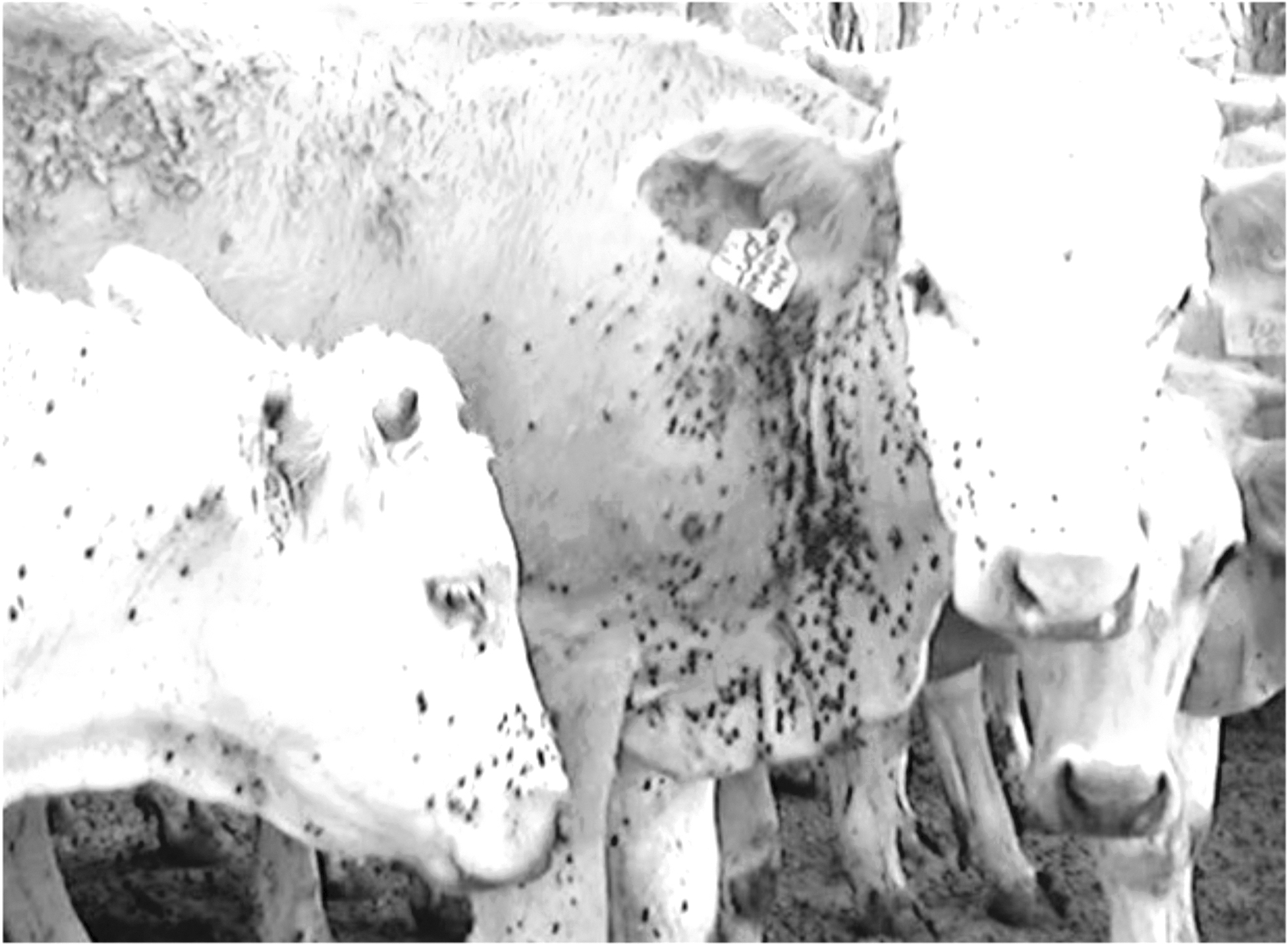
Hyperinfestation by cattle ticks is the result of multiresistance to ixodicides, which limits tick control and yields in meat and milk production. At the same time, the transmission of pathogens to vertebrate hosts increases, along with the presence of toxic residues in the environment and food for human consumption derived from this activity (photographic material provided by Dr. Martín Ortiz Estrada).
The Ixodidae family comprises about 80% of the known species of ticks. However, argasid ticks are also important disease vectors, especially in birds (Jongejan and Uilenberg, 2004).
The vectorial capacity of ticks is closely associated with the tick blood-sucking habits and with the evolutionary adaptation of the tick-borne pathogens, to evade the defense mechanisms of the vector, in each of the interfaces located in the midgut, hemolymph, salivary glands, and ovaries (Hajdušek et al., 2013), as well as in the vertebrate hosts (Eleizalde and Reyna, 2014).
Ticks and tick-borne diseases (TTBDs) are of great concern and pose a serious threat to human health, including Lyme disease (Chen et al., 2022), tick-borne encephalitis, rickettsiosis (spotted fever) (Guccione et al., 2022), as well as ehrlichiosis and human granulocytic anaplasmosis (Dumic et al., 2022). No less important are tick-borne zoonoses, such as anaplasmosis, babesiosis, theileriosis (Ayana and Fayisa, 2022), and African swine fever (de la Torre et al., 2022), which cause significant economic losses to the livestock industry around the world.
In Mexico, TTBDs have become a matter of great concern in recent decades (Ferreira et al., 2022), due to the invasion of habitats by human populations and climate change, such as the case of the genus Rickettsia, the causative agent of spotted fever and epidemic typhus, which have been associated with the presence of Amblyomma maculatum and Amblyomma mixtum, widely distributed in the Mexican States located on the coast of the Gulf of Mexico, from Tamaulipas to Yucatán and over the Pacific coast from the state of Sinaloa to Chiapas (Rodríguez Vivas et al., 2022). Worldwide, 139 species of the genus Amblyomma have been reported, of which 26 are found in Mexico.
Life Cycle of Rhipicephalus (Boophilus) microplus
Ticks are telmophagous ectoparasites, which feed on the blood of host animals during the parasitic phase of their life cycle. R. microplus infests cattle, occasionally horses, mules, sheep, goats, and deer. The biological cycle of R. microplus is a single host cycle (Fig. 2) divided into two phases:
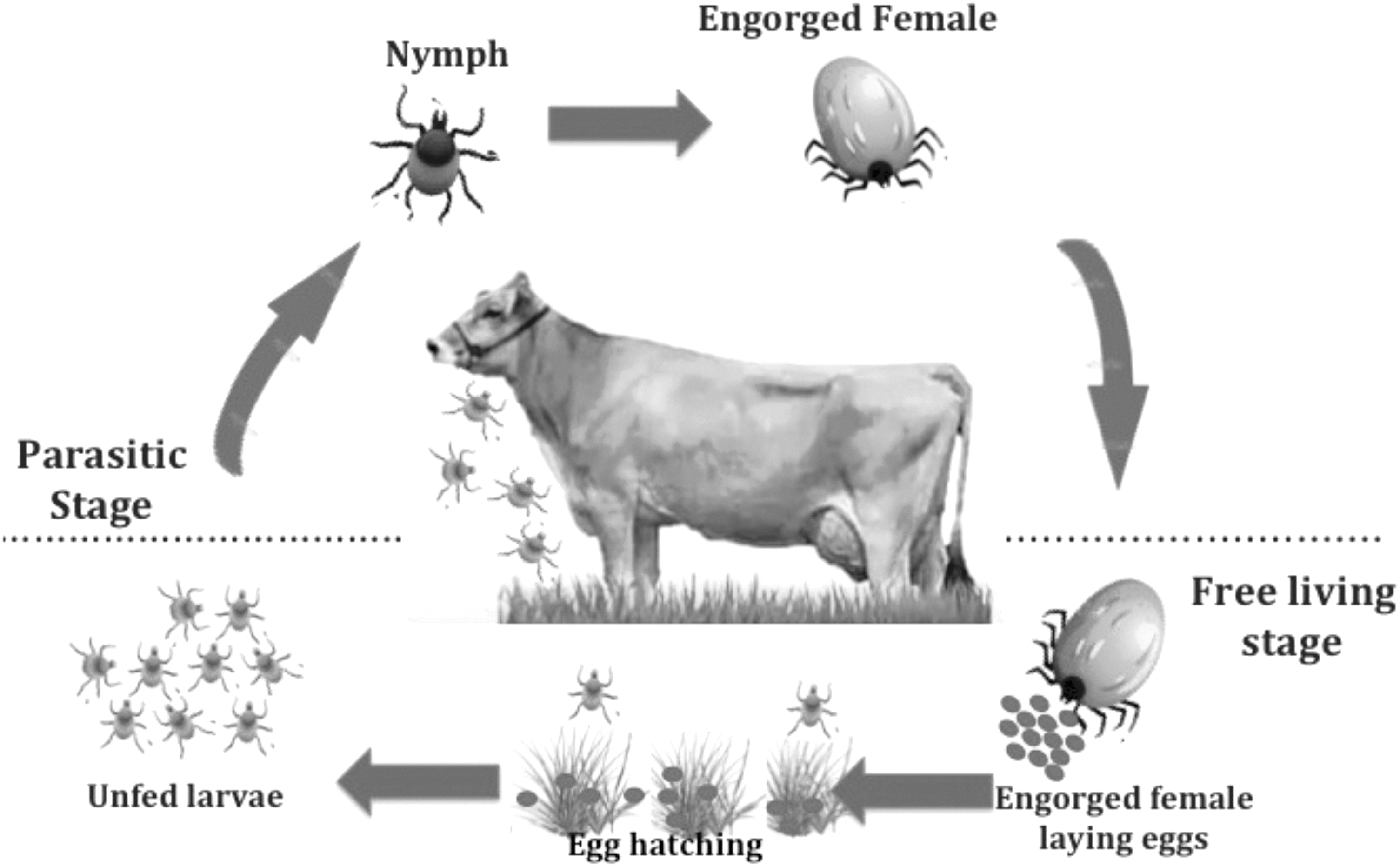
The life cycle of Rhipicephalus microplus occurs on a single host and includes three stages, larva, nymph, and adult, and is divided into two phases: the free-living phase and the parasitic phase (Artwork by F.R.D., 2023).
Epidemiological Surveillance and the One Health Approach
The epidemiological surveillance of diseases is based on the systematic collection, analysis, and dissemination of epidemiological data on infectious diseases affecting both animal and human health. Data collection allows taking appropriate decisions to prevent or limit the spread of diseases, risk assessment, manage resources, and formulate vaccination programs, when required (Johnson et al., 2022). For vector-borne diseases, it is important to identify the vector, know its behavior, abundance, and the infection rate of the vector-borne pathogens to understand and predict the dynamics of disease transmission. Ticks are one of the main vectors responsible for the transmission of pathogens to humans (Madison-Antenucci et al., 2020), domestic animals (Springer et al., 2020), and livestock (Perveen et al., 2021) worldwide.
Climate change is currently considered a major threat to the preservation of some species and at the same time, it represents for others, an opportunity to expand their geographic range. This principle applies to arthropod vectors, including TTBDs (Garcia-Vozmediano et al., 2022).
Climate change affects all aspects of life on earth; this global phenomenon impacts health, directly and indirectly, since it promotes social, economic, and political inequality in the affected regions (Smith et al., 2014). Therefore, it is necessary to know and understand more and better, the relationship between life and climate change, implying the permanent and systematic review of the scientific literature produced in different countries, to propose pertinent solutions that can be applied in the local and global fields. The Earth's global climate has already increased by 0.5°C over the last century, and recent studies show the effects of climate change, at all levels of organization of ecological systems.
Changes in recent decades are evident: changes in population and life history, changes in geographic range, and changes in the species composition of communities as well as in the structure and functioning of ecosystems. These ecological effects can be linked to recent population declines and both local and global species extinctions.
Although it is impossible to prove that climate change is the original cause of these changes in ecology, these findings have important implications for conservation biology and animal and human health. It is no longer safe to assume that the entire life history and changes within the geographical range of species are still adequate.
The social determination of health includes social, political, economic, environmental, and cultural factors that definitely influence people's health. The World Health Organization (WHO, 2018) has identified that the social and environmental determinants of health such as access to clean air, drinking water, sufficient food, and safe shelter are affected by climate change, which can trigger mass migration, violent conflict, malnutrition, loss of homes, and impacts on morbidity and mortality from diseases that are increasingly present in the affected regions and constitute one of the major public health problems (Espinal et al., 2019).
Additional threats will emerge as the global climate continues changing, especially when climate interacts with other stressors, such as habitat fragmentation. These type of studies can help to identify future challenges by providing valuable pieces of information for modeling and direct evidence of how different species respond to climate change. Ticks transmit a wide variety of pathogens that affect human and animal health, and tick biology is closely related to environmental factors and vertebrate hosts; therefore, tick-borne diseases will have a significant impact on public health, livestock industry, and environmental contamination, due to the improper use of ixodicides (Fig. 3) (Estrada-Peña et al., 2022; Johnson et al., 2022).

Frequent tick infestations require the frequent use of acaricides; these factors act as a selection pressure, which affects the genetic composition of the plastic genome of ticks, resulting in a gene selection conferring an adaptive advantage to survive a toxic environment (Artwork by F.R.D.).
In recent decades, cases of TBDs and established populations of medically important ticks, occupying expanding geographic areas, have been reported; and an increasing number of human pathogens such as bacteria, viruses, and protozoa transmitted by ticks have been recognized (Jongejan and Uilenberg, 2004), to contribute to the increasing number of cases of TBDs in Mexico and the United States. As a result, prevention and diagnosis are becoming a mandatory health issue, but they still depend largely on an accurate understanding of the epidemiology and distribution of TBDs by the public and health care providers, as well as the identification of when and where people are exposed to TTBDs. However, maps showing the distribution of medically important ticks and the prevalence of the pathogens they transmit are often incomplete or out of date, and therefore, efforts to accurately predict geographic distribution and risk are limited by the lack of systematic epidemiological surveillance.
Control of TBDs requires interdisciplinary and collaborative efforts to address such health emergencies, as well as managing the biological, political, and social components (Choi and Pak, 2006; Zinsstag et al., 2009).
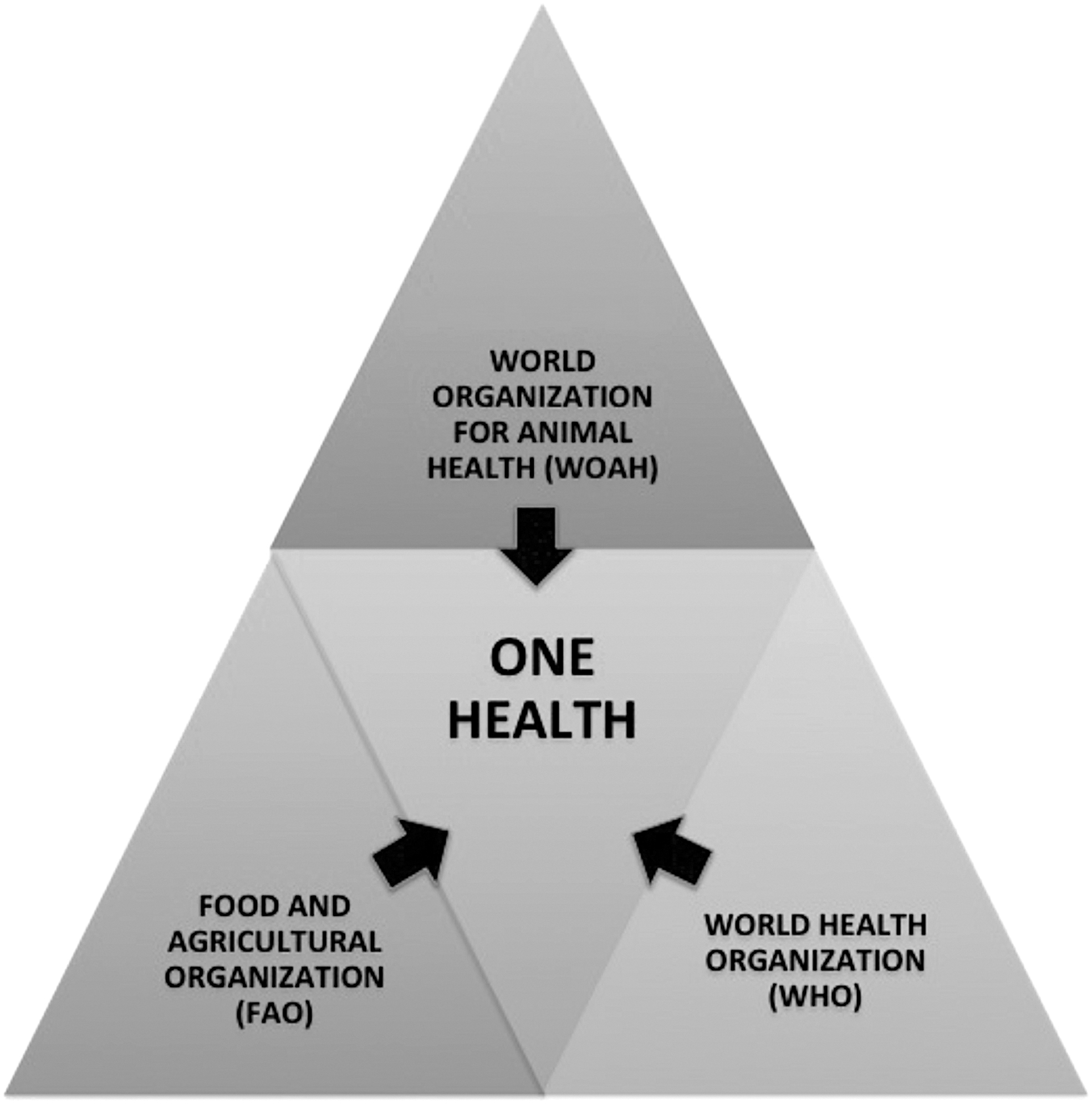
The One Health paradigm (Fig. 4) has been adopted as a tripartite institutional initiative by the WHO, the Food and Agriculture Organization of the United Nations, and the World Organization for Animal Health (Johnson et al., 2022). This consortium recognizes the complex interconnection and interdependence of human, animal, and environmental health, within a concept of global security, as well as the importance of replacing disciplinary groups with multisectoral, multidisciplinary, and interdisciplinary work teams, strengthening efforts to detect and respond to threats to human, animal, and environmental health (Madison-Antenucci et al., 2020; Perveen et al., 2021; Springer et al., 2020). For this reason, the One Health approach is a mandatory issue to guarantee that sustainable efforts become effective control programs that contribute to the prevention of TBDs.
The holistic vision applied to epidemiological research forces us to analyze biological phenomena as a part of a whole that needs to be seen from the perspective of One Health approach, in which the system is affected if any of its components are altered (Artwork by F.R.D., 2023).
Conclusions
(a) The survival and propagation of R. microplus in the Mexican Neotropics represent a problem affecting human, animal, and environmental health. The solution to this problem requires a deep knowledge of the biology, ecology, and distribution of the vector to predict its behavior and dispersion and to reduce the epidemiological incidence of TBDs, especially in countries such as Mexico, where they have been negligently forgotten to the detriment of livestock and the population in general.
(b) The control of ticks affecting cattle farming requires the active participation of government agencies, the pharmaceutical industry, farmers, and an epidemiological surveillance system to design control programs, based on a One Health approach, to reinforce the emerging areas of research with a holistic vision that integrates social, economic, and environmental aspects, as a part of a problem that needs to be solved from the same perspective.
(c) The indiscriminate use of ixodicides for veterinary and agricultural use represents a human health problem, caused by the presence of residues in the environment, food for human consumption (meat and milk), animal health, caused by the overdose of ixodicides, which also affects environmental health because it also kills beneficial insects, which play a preponderant role, such as bees and dung beetles.
(d) TTBD is a great challenge for scientists in Mexico and around the world, since it requires the political will and coordination of stakeholders, ranchers, government, and the private sector, for the design and application of an integrated tick control program that includes vaccines as an element of sustainability, to reduce the use of ixodicides, and therefore, the environmental contamination, with the holistic vision of an integrated One Health-based tick control program.
Footnotes
Acknowledgments
Thanks to the authors who reviewed and revised this article and the artwork support received from F.R.D.
Authors' Contributions
Writing—original draft: R.R.-C., C.A., D.I.D.-G., and F.R.D. Writing—reviewing and editing: R.R.-C., C.A., D.I.D.-G., and F.R.D. Conceptualization: R.R.-C., C.A., D.I.D.-G., and F.R.D. All the authors have read and agreed to submit this version of the article.
Author Disclosure Statement
The authors declare no conflict of interest regarding the publication of this article.
Funding Information
This publication did not receive any research funding.