




Abstract
Background:
Tick-borne relapsing fever (TBRF) caused by Borrelia persica is an endemic disease in Israel and highly prevalent in military personnel. Prevention among the Israel Defense Force soldiers is based on increased awareness mainly in hyperendemic areas and selective postexposure prophylaxis with doxycycline. In this study, we report the presence of a suspected outbreak of TBRF in four soldiers who spent 30 h inside a deserted bunker.
Materials and Methods:
Clinical data on TBRF suspected cases were retrieved from clinical records, soft ticks were collected using carbon dioxide (CO2) traps and their DNA was extracted and analysed by PCR and nucleotide sequencing. Environmental conditions such as relative humidity, air temperature, wind speed, and type of soil, as well as presence or absence of animal traces inside the bunkers were documented.
Results:
TBRF-like clinical symptoms in the patients included: tick bite scars, fever (37.5–39.2°C), rash, tachycardia, hypotension, myalgia, cough, headache, cervical lymphadenopathy and nausea. Microscopic search for B. persica in blood smears was performed in three patients and was negative. Out of the 255 Ornithodoros tholozani ticks collected from the bunker, 198 were analyzed and 2 (1%) were infected with B. persica. To determine if tick infestation in military bunkers is a common phenomenon, we surveyed nine additional military bunkers located in four different geographical areas for the presence of soft ticks. Only one additional bunker was infested with two O. tholozani ticks, both negative for B. persica. Presence of earth that probably helped sustain a relatively big tick population was observed on the floor in the highly infested bunker. Environmental treatment with lambda-cyhalothrin at 9.7% was performed and showed efficacy with no ticks recovered in the infested bunker 124 days after intervention.
Conclusion:
This study shows that military bunkers may harbor soft ticks infected with B. persica and entrance into bunkers should be considered as a risk for acquiring this infection like entrance into natural caves and archeological ruins.
Introduction
Relapsing fever is an acute infectious disease caused by spirochetes of the genus Borrelia in the family of Borreliaceae (Barbour and Hayes, 1986). In humans, the disease is characterized by an incubation period of 3–10 days, followed by spirochetemia with episodes of fever, separated by afebrile intervals (Cutler, 2015). Fever is accompanied by chills, headache, arthralgia, myalgia and abdominal pain (Dworkin et al., 2008). Complications with potentially fatal consequences include neurological manifestations, liver pathology, and cardiac dysfunction (Yagupsky and Moses, 1985; Cadavid and Barbour, 1998; Hasin et al., 2006; Lim and Rosenbaum, 2006). Tick-borne relapsing fever (TRBF) caused by Borrelia persica and transmitted by the tick Ornithodoros tholozani is common in Israel and other countries in the Near East extending from India and Central Asia to Egypt (Talagrand-Reboul et al., 2018). The incidence rate of TBRF between 2005 and 2021 reported by the Israeli Ministry of Health ranged between 0 and 0.2 cases per 100,000, with an average of 0.094 cases per 100,000. (https://www.health.gov.il/English/MinistryUnits/HealthDivision/PublicHealth/Epidemiology). However, in the Israel Defense Force (IDF), the incidence rate of TBRF ranged between 2.5 and 30/100,000 during the same period of years, with an average incidence rate of 9.33/100,000 (IDF Medical Corps records), almost 100 times higher. This difference is owing to the higher exposure of soldiers in endemic areas during training activities and probably owing to an elevated suspicion and diagnosis rate in the IDF (Sidi et al., 2005). Caves are the main foci for the distribution of O. tholozani, which extends throughout Israel with the exception of the Southern Negev desert (Avivi et al., 1973). In a previous study, 16 out 24 caves were infested with O. tholozani and 2.6% of the ticks were infected with B. persica (Kleinerman et al., 2021). Besides caves, O. tholozani can be found in ruins, archeological sites, rock crevices, and abandoned buildings, which are shady, moisty, and relatively cool (Avivi et al., 1973). In soldiers, the majority of the cases is linked to outdoor training and prolonged lying on the ground (Balicer et al., 2010). A 5-day doxycycline postexposure prophylaxis (PEP) protocol is mandatory in the IDF for every tick-bitten soldier (Hasin et al., 2006); in addition, during the course of 2 weeks after the exposure, if a soldier develops TBRF, the rest of the individuals that shared the same exposure conditions, receive PEP even if they did not show any tick bites (Moran-Gilad, et al., 2013). PEP should be initiated under medical observation owing to the risk of developing the Jarisch–Herxheimer reaction (Belum et al., 2013). The current suspected TBRF outbreak following a stay in a bunker required the implementation of a “One Health” approach, including tick surveillance, tick control, and reevaluation of prevention policy.
Material and Methods
TBRF case definition
Clinical data on TBRF suspected cases, PEP recipients, and epidemiological information regarding the exposure events were retrieved from the IDF clinical records, IDF medical personnel, and referral centers where applicable. A definitive TBRF case was defined as a clinical infection consistent with TBRF (fever, rash, anemia, thrombocytopenia) and thin or thick blood smear with evidence of spirochetemia; whereas, a possible TBRF case was defined as clinical illness consistent with TBRF among individuals at risk without laboratory confirmation, or an unspecific febrile illness among individuals at risk associated with a definitive case of TBRF without laboratory confirmation (Moran-Gilad et al., 2013).
Soft tick collection
Bunker #1 was the only bunker suspected of being infested with soft ticks, as it was the source of exposure of a team of 24 soldiers from a training platoon from which four soldiers developed TBRF-like symptoms. This bunker was surveyed two times: on February 23, 2022, 9 weeks after the platoon was exposed, and on March 13, 2023, 124 days after pest control was performed.
Soft tick collection was performed from nine additional bunkers in Israel during 2021–2023. The bunkers selected were IDF training sites and constitute potential locations for O. tholozani presence (Avivi et al., 1973). To collect the ticks, we used carbon dioxide (CO2) traps buried in the soil as described previously (Kleinerman et al., 2021). In addition, we developed two other types of traps to place on hard soil, the first consisting of two rat glue boards joined together (Catchmaster®, NY, USA), and the second, a plastic collector with built-in ramps to allow the ticks to climb inside. All traps were connected to a cool box emitting CO2 from dry ice (Supplementary Figs. 1–3). The next morning following placement of traps, all trapped ticks were collected, kept in vials with 70% alcohol, and brought to the laboratory for analysis. All the tick specimens were then identified morphologically as described by Filippova (Filippova 1966), counted, and sorted according to their life stage and gender if in the adult stage.
Environmental conditions
Relative humidity, wind speed, and air temperature were measured from the bunkers’ inside habitations using a Kestrel-meter instrument (Caliber Sales Engineering Inc., FL, USA). Information on the type of soil and signs of animal presence was also obtained.
Molecular analysis
DNA from ticks was extracted using a commercial kit (DNeasy blood and tissue kit; Qiagen, Germany) following the manufacturer’s protocol. Real-time PCR was performed on DNA extracted from individual males, females, and nymphs from each bunker. Larvae were not analyzed since they are known to have a very low B. persica infection rate (Kleinerman et al., 2021). For the real-time PCR, a 270-bp fragment of the Borrelia flagellin (flaB) gene was targeted using the primers Fbpbu (GCTGAAGAGCTTGGAATGCAACC) and Fbpcr (TGATCAGTTATCATTCTAATAGCA) according to previous publication (Fukunaga et al., 2001). Briefly, the PCR mix included 20 mL Maxima Hot Start PCR master mix (Thermo Scientific, Loughborough, UK) with 0.25 mM of each primer and 0.6 mL of SYTO9 (Invitrogen, CA, USA) and 4 mL of target DNA. The reactions were done at an annealing temperature of 52°C and 50 cycles followed by a melting phase. Plasmids (Topo TA cloning kit; Life Technologies, NY, USA) containing a B. persica flaB gene insert, non-template control, and Borrelia-negative tick DNA were employed as positive and negative controls, respectively. All samples positive by PCR underwent DNA sequencing, PCR amplicons were purified using a PCR purification kit (ExoSAP; New England Biolabs Inc., MA, USA) and subsequently sequenced using the Sanger technique at the Center for Genomic Technologies (The Hebrew University, Jerusalem, Israel). Sequences were further compared with sequences from GenBank using the Basic Local Alignment Search Tool (BLAST) algorithm (http://blast.ncbi.nlm.nih.gov/Blast.cgi). Species-level identification was obtained when the sequences were the first match by BLAST and showed percentage identity higher or equal to 98%.
Pest control
Pest control was carried out in bunker #1 on November 9, 2022, 37 weeks after the first tick collection using lambda cyhalothrin suspension 9.7% (Senator®, Adama Agan Ltd, Ashdod, Israel). Before application, the pesticide was suspended in H2O (ratio 6:1, final concentration = 0.06%) as recommended by the producer and delivered by spraying the floor and walls of the bunker up to a meter high using an electrical sprayer. Lambda cyhalothrin is a synthetic pyrethroid, which was proven to be effective against soft and hard ticks (Talbert et al., 1998; Jurisic et al., 2010). To attract the ticks and improve the exposure to the active component of the pesticide, five traps emitting CO2 from dry ice were placed 1 h after delivering the pest treatment and left overnight.
Results
Case report
On December 20, 2021, a team of 24 soldiers from a training platoon entered a deserted bunker (bunker #1) and spent 30 h inside it during a 3-day reconnaissance exercise in the central Jordan Rift Valley. On day 3 after exposure, soldier #1 complained of fever (39.21°C), diarrhea, tachycardia (104 BPM), rash in the legs, and general weakness. Signs of more than 10 tick bites were detected during physical examination by an IDF general practitioner. He received doxycycline with medical observation for the first 6 h following the IDF TBRF prevention protocol described above and was referred to the emergency ward at the Sheba Tel-HaShomer Medical Center for further examination. Aerobic and anaerobic microbiological cultures and malaria antigen test were performed with negative results; however, no blood smear or PCR was performed (Table 1). Owing to high suspicion of TBRF and similar exposure conditions, the rest of the 23 soldiers from the soldier’s platoon were subjected to a full body screening under medical supervision. Out of 24 soldiers, 12 showed multiple tick bite signs (50% attack rate) (Figs. 1 and 2). Prophylactic doxycycline was administered to all 23 team members, according to the IDF TBRF protocol. On day 4, after 1-day treatment with doxycycline, three (27.3%) tick-bitten soldiers also developed fever (39.1°C, 37.5°C, and 38.6°C) and were referred to the Sheba Tel-HaShomer Medical Center for a full checkup. A blood smear followed by microscopy for spirochaete detection, as well as aerobic and anaerobic microbiological cultures, were negative. All four TBRF-suspected patients were released and continued with ambulatory treatment with doxycycline for 10 days. In total, 4 out of the 12 bitten soldiers developed TBRF signs, however, none of them had a Borrelia-positive diagnostic blood smear. The first case patient was not subjected to the test, and in the rest, the blood smear was negative. A complete description of clinical symptoms and laboratory findings is shown in Table 1.
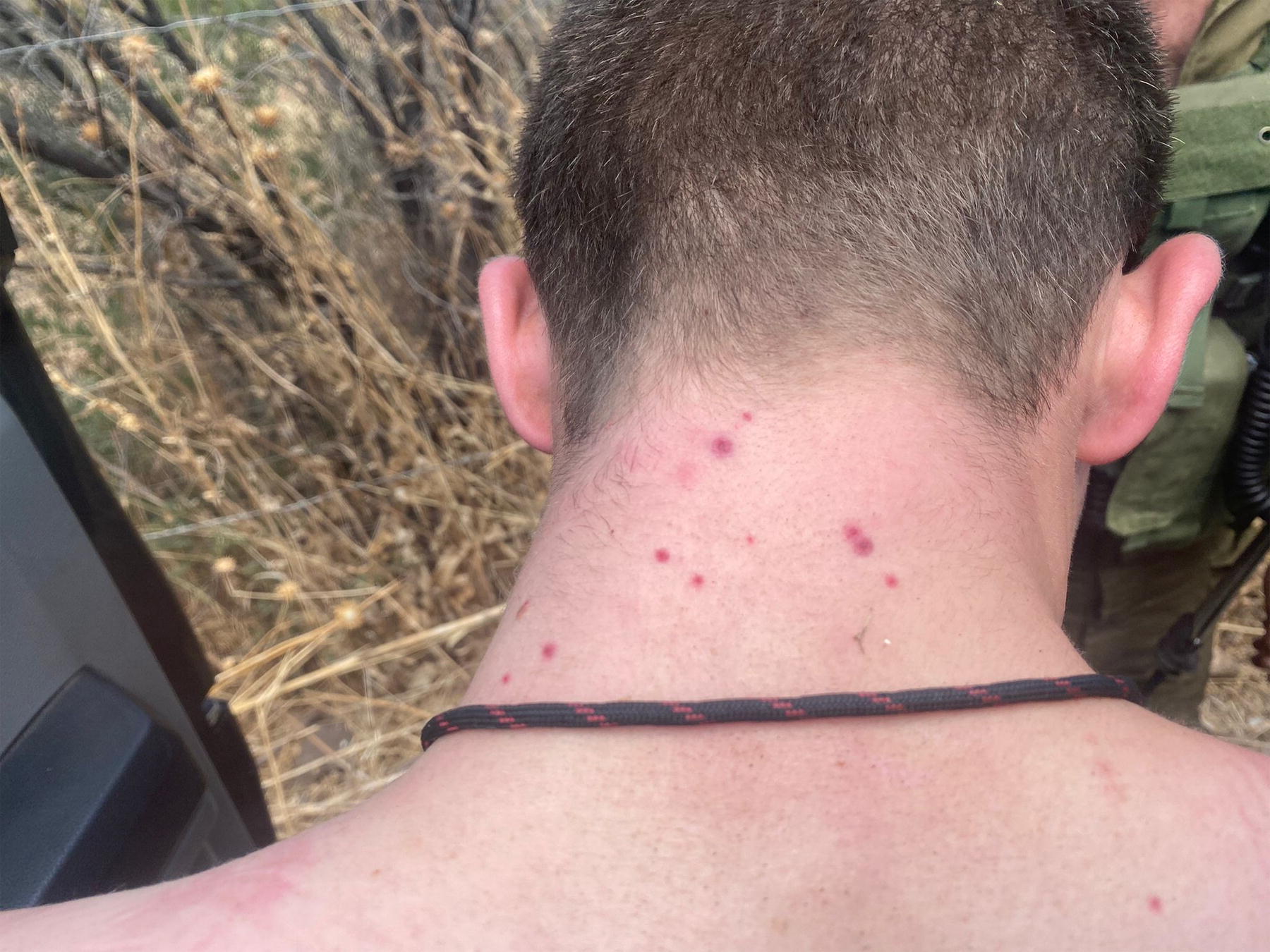
Multiple tick bite marks on the neck of a bitten soldier detected during tick-bite screening.
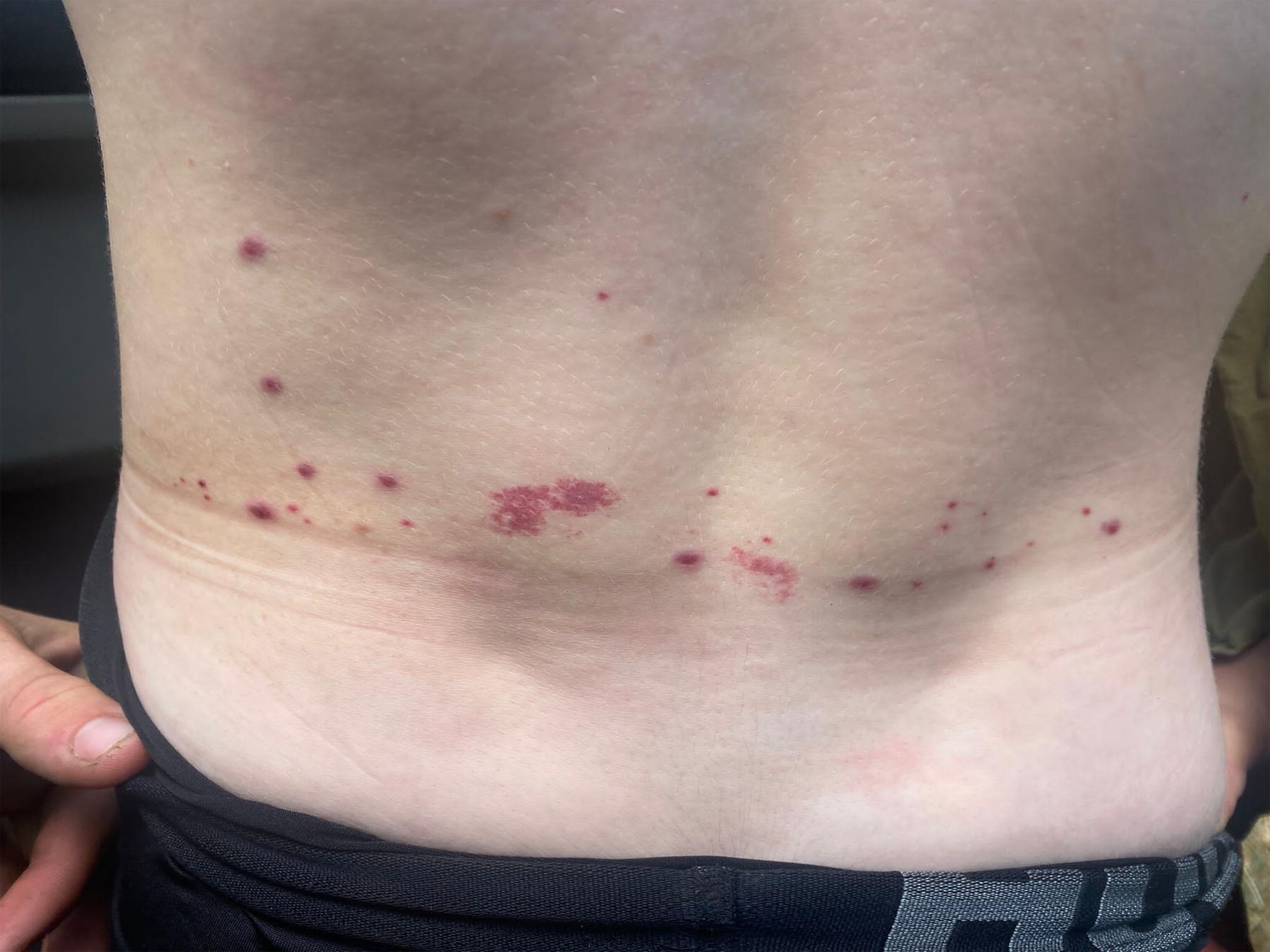
Tick bite marks on the back of a bitten soldier detected during tick-bite screening.
Clinical Findings Among Suspected Tick-Borne Relapsing Fever Cases from the Described Outbreak
CPK, creatine phosphokinase; CRP, C-reactive protein; INR, international normalized ratio; PT, prothrombin time; TBRF, tick-borne relapsing fever.
Tick collection
Altogether, 257 ticks were collected from 2 out of 10 bunkers surveyed, bunker #1, exposure site of the current outbreak, and bunker #2. In bunker #1, 255 O. tholozani ticks (17 females, 22 males, 159 nymphs, and 57 larvae) were collected on the February 22, 2022 (Table 2). A total of 238 ticks were trapped in an internal bunker room (142 from the buried trap, 69 from the glue board trap, and 30 from the built-in ramp trap) and 14 O. tholozani ticks were collected from a buried trap placed at the entrance room of the bunker (Supplementary Table S1). Sixty one percent of all the ticks (155 ticks) were found in traps buried in the soil. Out of the 255 ticks collected, 198 were analyzed (17 females, 22 males, and 159 nymphs) for Borrelia spp. by PCR. On March 13, 2023, during the second tick collection in bunker #1, 124 days after the pest control, no ticks were trapped.
Number of Soft Ticks and Ticks Infected with Borrelia persica in the Different Military Bunkers, Location, and Date of Collection
Only two O. tholozani were collected in bunker #2, one female tick from a glue board trap and one nymph from a built-in ramp trap. Both traps were placed in the middle room of the bunker. The two ticks were analyzed for Borrelia spp. by PCR. Bunker #2 is located in the Jordan Valley, 24.5 km north of Bunker #1, and had no history of TBRF or tick bites.
B. persica infection in the ticks
flaB DNA segments of 270 bp were amplified from 2 out of 198 ticks (a female and a nymph) analyzed from bunker #1 (1%) (Table 2). The 270 bp flaB DNA sequences were identical to B. persica collected from O. tholozani in Israel (GenBank accession number KX258795.1). B. persica-flaB sequences obtained in this study were deposited in GenBank (accession numbers PP826556 and PP826557).
The two ticks analyzed from bunker #2 were negative for B. persica PCR.
Environmental conditions
The bunkers were surveyed in different seasons between April 2021 and November 2023. O. tholozani in Israel is an opportunistic feeder and inhabits microhabitats where extreme temperatures are buffered. This allows the tick to be active throughout the year (Vial 2009; Gray et al. 2013).
The relative humidity inside the bunkers ranged between 47% and 89% (mean = 60.1, standard error-SE = 4.15), the temperature ranged between 17.8°C in the Golan Heights and 31.8°C in the Jordan Valley (mean = 25.5, SE = 1.4), and the wind speed was 0 in almost all the bunkers (with exception of bunker #7, which was 0.4). The floor in all the bunkers consisted of cement; however, in bunker #1, the cement floor was covered with piles of earth, apparently formed from the exterior soil that entered through the broken metal walls. Signs of animal presence were spotted in almost all the bunkers. A complete description of the conditions inside the bunkers is described in Table 3.
Microclimate Conditions in the Different Bunkers
Discussion
In this study, we evaluated the presence of soft ticks and Borrelia spp. infection in ticks from a deserted military bunker where four soldiers from a training platoon were exposed to tick bites and developed clinical signs of TBRF. In addition, nine additional military bunkers located in the Golan Heights, Jordan Rift Valley, and Menashe Heights were surveyed for presence of soft ticks. We present herein the first description of O. tholozani infected with B. persica collected from a military bunker. Two bunkers were infested with ticks, the first with 255 ticks and the second with two ticks, all identified as O. tholozani. The rate of infection in bunker #1 with B. persica was 1%, and the 270 bp Borrelia-flaB DNA sequences were identical to B. persica amplified previously from O. tholozani in Israel. In a previous publication, Moran-Gilad described three outbreaks of TBRF in Israeli soldiers during 2009 and 2010. In one of them, 3 out of 10 soldiers became infected with TBRF after spending 40 h inside a deserted military bunker in Eastern Israel; however, no tick collection was performed in this study (Moran-Gilad et al., 2013), therefore, there was no direct evidence that the infection actually occurred in the bunker. Soft ticks in Israel are found mainly in natural caves where they dig into the soil and live under microclimatic conditions of relatively low temperature and high humidity (16–29°C and 37–90%, respectively) (Assous and Wilamowski, 2009). In other countries, such as Russia, Iran, India, and Afghanistan, O. tholozani can be found in wall crevices in stables, barns, clay, and stone fences, storerooms, and human habitations (Hoogstraal, 1985). All the bunkers surveyed in our study had a concrete floor and walls. Only bunker #1 had several cracks in its walls and some areas of the floor next to the walls were covered with earth forming piles up to 1 meter tall. These piles of earth harbored most of the ticks collected (61%); therefore, the earth present in bunker #1 probably helped to provide the right microclimatic conditions for tick survival and reproduction (Gray et al., 2013). It may also explain why only 1 out of the 10 bunkers harbored a relatively big tick population. The second infested bunker sheltered only two ticks that may have been carried from a nearby burrow or cave by an animal. This bunker had concrete floor and walls, with no crevices in the walls and no earth or other material accumulated in the ground that may shelter the ticks during extreme temperatures and could have allowed their surveillance and reproduction. In addition, a source of blood meal is needed in order to sustain the large number of ticks found in bunker #1. Big amounts of feces belonging to rats were found inside the bunker, which could indicate presence of a permanent source of blood meal. In a previous study, DNA of 25 vertebrate species was found in the blood meal of O. tholozani ticks collected from caves in Israel (Kleinerman, et al., 2021). Although 71.5% (n = 1088) of the ticks with blood meal was from the Indian crested porcupine (Hystrix indica), DNA of black rat (Rattus rattus) was present in 1.3% (n = 19) of the ticks (Kleinerman, et al., 2021). It is also possible that porcupines entered bunker #1 as well, serving as an additional source of blood meal, as we observed traces of this animal, such as quills and feces, in other bunkers surveyed. On the contrary, in bunker #2, there were no traces of animals (Table 3).
Regarding the suspected TBRF clinical presentation of the four patients, all of them had signs of tick bites and fever (37.5–39.2°C), and some also showed different unspecific symptoms such as: rash, tachycardia, hypotension, myalgia, cough, headache, cervical lymphadenopathy, and nausea. Laboratory findings from the four patients included increased inflammatory C-reactive protein, high creatine phosphokinase, and an increase in coagulation time (Table 1). These findings matched previous reports of TBRF clinical presentation (Roscoe and Epperly, 2005; Dworkin et al., 2008; Talagrand-Reboul et al., 2018). The incubation period in our study was 3–4 days, whereas, the mean incubation period of relapsing fever according to Southern and Sanford is 7 days with a range of 4–18 days (Southern and Sanford, 1969). A short incubation period was previously reported in two Israeli soldiers who developed TBRF after 3 days of exposure (Balicer et al., 2010). Multiple tick bites were observed in 12 soldiers from the training platoon in our study who entered the bunker (Figs. 1 and 2); according to Assous and Wilamowski, a high number of tick bites may be associated with a shorter incubation period (Assous and Wilamowski, 2009). None of the four patients had a conclusive diagnosis of TBRF done by microscopic identification of B. persica in a blood smear or by PCR. The first patient who was submitted to the hospital was not subjected to a blood smear test, probably owing to a miscommunication with the physician in the emergency ward. Once other vector-borne diseases were ruled out, he was discharged after recovery with ambulatory treatment with doxycycline. The other three patients were referred to the hospital when symptoms such as fever developed after 1-day treatment with doxycycline; therefore, the blood smear was negative in all the cases. The sensitivity of the microscopic identification of Borrelia spp. in a blood smear of untreated patients is 80%, and this is greatly dependent on when the blood specimen is collected (Assous and Wilamowski, 2009). The occurrence of fever despite having started antibiotic therapy is not surprising since treatment was started 72 h after exposure. A similar case occurred when two soldiers developed TBRF while receiving prophylactic treatment. In this case, the soldiers started doxycycline treatment more than 48 h after exposure (Balicer et al., 2010). These cases emphasize the need for early field screening, prophylactic treatment with doxycycline as soon as possible, and direct communication with the emergency ward doctor to increase the awareness to a possible TBRF infection.
Environmental treatment with lambda-cyhalothrin at 9.7% against the ticks in bunker #1 showed high efficacy, considering that no ticks were recovered 124 days after the intervention. Pest control was done 37 weeks after the first tick collection, a period which provided enough time for the young tick stages to develop, reproduce, and repopulate their habitat, considering that a complete life cycle of O. tholozani takes between 7 and 12 months (Assous and Wilamowski, 2009). In order to prove complete efficiency of lambda-cyhalothrin against soft ticks, treatment should be performed in different types of tick habitats and different environmental conditions, such as natural caves and rock crevices, considering the biological impact and hazard to other animals and insects and including a test control treatment.
In conclusion, this study reports the presence of O. tholozani ticks infected with B. persica in an abandoned military bunker as the most possible source of infection for a suspected outbreak of TBRF in four soldiers. Although, most military bunkers are probably not the best habitat for development of soft ticks; the presence of earth, sand, or a similar material like limestone together with a source of blood meal, may increase the likelihood of tick presence and TBRF transmission. Therefore, control of B. persica TBRF should include enforcing inclusive measures to prevent entrance of animals to military bunkers, warning soldiers or visitors of the presence of dangerous ticks in abandoned buildings and bunkers, and practicing early active field tick-bite screening and prophylactic treatment of exposed subjects with doxycycline when tick bites are found. Pest control should be evaluated in each case as a possible environmental control measure.
Footnotes
Acknowledgments
We thank Dr. Yaakov Malamud, Dr. Efrat Gingis, Dr. Sagi Gilboa, and Dr. Or Genad for the help in the tick collection and Dr. Col Bendor for the assistance with the medical report of the patients.
Authors’ Contributions
G.K.: Conceptualization, investigation, methodology, and writing. M.R.: Investigation, methodology, and writing. G.B.: Writing—review and editing. S.G.: Investigation and methodology. Y.N.-B.: Methodology, review, and editing. D.G.: Supervision. N.D.: Supervision and project administration. L.C.: Conceptualization, investigation, and supervision.
Author Disclosure Statement
No competing financial interests exist.
Funding Information
No funding was received for this article.
Supplementary Material
Supplementary Figure S1
Supplementary Figure S2
Supplementary Figure S3
Supplementary Table S1
References
Supplementary Material
Please find the following supplemental material available below.
For Open Access articles published under a Creative Commons License, all supplemental material carries the same license as the article it is associated with.
For non-Open Access articles published, all supplemental material carries a non-exclusive license, and permission requests for re-use of supplemental material or any part of supplemental material shall be sent directly to the copyright owner as specified in the copyright notice associated with the article.
