




Abstract
Background:
The global burden of mosquito-borne diseases transmitted by Aedes aegypti and Aedes albopictus mosquitoes has become a pressing public health concern. This study sought to quantify and evaluate about eight decades of publication data on the global epidemiological trend of the diseases transmitted by A. aegypti and A. albopictus.
Methods:
A comprehensive bibliographic review of literature was performed on A. aegypti and A. albopictus transmitted diseases, focusing on disease transmission, epidemiological trends, vector control strategies, surveillance and monitoring, and international collaborations and initiatives. Extensive data were collected from the Web of Science database and analyzed for citation network analysis (CNA) using VoSviewer software. Data were collected from the Web of Science database encompassing various aspects of Aedes-borne diseases. The bibliographic CNA was performed to quantify and analyze the 77 years of data on A. aegypti and A. albopictus transmitted diseases.
Results:
The analysis included 4149 publications contributed by 13,416 authors from 149 countries. These articles comprised research articles (91.01%), review articles (6.267%), proceeding papers (1.76%), and book chapters (0.92%). The results revealed a cumulative h-index of 134, indicating the impact of the scientific output in this field.
Conclusion:
This review contributes to the ongoing efforts to mitigate the impact of Aedes-borne diseases and protect public health worldwide. By synthesizing current knowledge and evidence-based practices, the study provides all information related to publications, citations, co-citations, top journal trends, high-impact publications, and collaborations among authors in one place among the data published in the past eight decades on Aedes-borne diseases.
Introduction
The mosquitoes of the genus Aedes belong to the family Culicidae within the Diptera order and are visually distinctive from other mosquitoes because of the noticeable black and white markings on their bodies and legs. Aedes aegypti is commonly referred to as the Yellow fever mosquito, and Aedes albopictus is also known as the Asian tiger mosquito (S1). The global burden of mosquito-borne diseases, especially those transmitted by A. aegypti and A. albopictus, has become a pressing public health concern (Lwande et al., 2020). The diseases, including Dengue fever, Zika virus (ZIKV) diseases, chikungunya, Yellow fever, rift valley fever, lymphatic filariasis, etc., pose significant challenges to healthcare systems worldwide due to their widespread distribution, high morbidity, and potential for severe complications (Paixão et al., 2018; Patterson et al., 2016). The epidemiological landscape of Aedes-borne diseases is constantly evolving, influenced by factors such as climate change, urbanization, and globalization, which contribute to the spread of infectious agents and expansion of mosquito habitats (Kolimenakis et al., 2021; Naik et al., 2023). Understanding the epidemiological trends of Aedes-borne diseases is essential for effective disease prevention and control (Roiz et al., 2018). Over the past decades, there has been a notable increase in the incidence and geographic spread of these diseases, with outbreaks occurring in both endemic regions and previously unaffected areas (WHO, 2023a). Geographic hotspots of transmission have emerged, highlighting the need for targeted interventions and surveillance efforts to curb disease transmission. Control strategies for Aedes-borne diseases encompass a multifaceted approach, including vector control, community engagement (Lachyan et al., 2023), and public health interventions (Kua, 2022). Traditional vector control methods such as insecticide spraying and larval source management have been the cornerstone of mosquito control efforts (Karunamoorthi, 2011). However, environmental concerns coupled with insecticide resistance have necessitated the development of innovative approaches, including biological control methods and genetic modification of mosquitoes.
International collaboration and coordination are crucial for addressing the global challenge posed by Aedes-borne diseases. The World Health Organization (WHO), the Centers for Disease Control and Prevention (CDC), and other national agencies play a pivotal role in coordinating global efforts by providing technical guidance and supporting capacity-building initiatives in affected regions. Tremendous efforts to control the spread of Aedes mosquitoes to curb the spread of arboviral diseases have been done, and still the research is in progress in almost every aspect of the vector. From the past few decades, thousands of research articles have been published on the diseases transmitted by Aedes mosquitoes, and the aim of this bibliographic citation network analysis (CNA) is to map research influenced by identifying influential papers, authors, and journals; understanding research trends through the examination of citation patterns over time; identifying collaboration networks among researchers and institutions; evaluating research quality based on citation frequency and relevance; and facilitating literature reviews by visualizing connections between related works to provide context and background.
CNA is used to analyze the scientific literature by analyzing relevant additional publications through quantitative and qualitative approaches and building networks of subgroups based on citations, co-citations, associated authors, and their research. VoSviewer software version 1.2.60 was used to quantify the publication data (Van Eck and Waltman, 2014; Van Eck and Waltman, 2007). Furthermore, it explores the author’s collaborations using a co-citation network, publications by countries and their geographic locations, trends in publications, journals, associated research fields, etc. Bibliographic CNA provides valuable insights into research outputs that can significantly impact disease mitigation and public health improvement. By identifying key research themes, influential studies, and leading authors, this analysis helps prioritize funding and direct interventions toward emerging issues and evidence-based practices. It maps citation and co-citation networks, revealing how knowledge is disseminated and integrated, which aids in developing comprehensive public health policies. Geographical analysis of research contributions highlights regional gaps and opportunities for targeted capacity-building and international collaboration. The identification of high-impact journals and publications ensures that public health strategies are informed by the most credible and influential research. Keyword and term analysis helps pinpoint research gaps and emerging topics, guiding future research priorities. In addition, mapping collaboration and co-authorship networks foster effective partnerships and knowledge exchange. Overall, leveraging these research outputs enables informed decision-making, efficient resource allocation, targeted interventions, and enhanced global collaboration, all of which are crucial for advancing disease control strategies and improving public health outcomes.
Because of global transportation networks, land perturbation, and failure to contain the mosquito population coupled with enhanced vector competence, Aedes and associated arboviruses have widespread their geographical distribution to almost in all continents (Mousson, et al., 2005; Scholte and Schaffner, 2007; Womack, 1993), which were restricted earlier by geographical, ecological, and biological factors (Kraemer et al., 2015). Aedes albopictus is more adaptable to cooler climates than A. aegypti, allowing it to extend its range into temperate regions, and is listed among the top 100 invasive species by the International Union of Conservation of Nature (IUCN-Invasive Species Specialist Group) (Lowe et al., 2000). Both A. aegypti and A. albopictus are important vectors of arboviruses, but there are some differences in the pathogens they primarily transmit. Also, both A. aegypti and A. albopictus exhibit gonotrophic discordance; the ingestion of more than one blood meal by the female within a single gonotrophic cycle (Macdonald 1956, Hien 1976, Barata et al. 2001, de Lima-Camara et al. 2007) increases the risk of disease transmission.
Epidemiological Trend of the Major Diseases
Dengue virus fever has impacted the populations worldwide (WHO, 2023). It is transmitted primarily by A. aegypti mosquitoes. Dengue infection occurs when a mosquito gets infected while taking a blood meal from an infected person (Fig. 1). Dengue has a wide geographic distribution, affecting populations in tropical and subtropical regions, particularly in Asia, Americas, and Africa. After the coronavirus disease 2019 pandemic, a slight decline in dengue cases was observed due to the lower reporting rate between the years 2020 and 2022. An upsurge in dengue cases have been observed globally in 2023, spreading into regions previously unaffected and characterized by a significant increase in the multiple outbreaks of dengue (WHO, 2023). Dengue fever exhibits cyclical patterns of epidemic transmission with periodic peaks and troughs in disease incidence (Cuong et al., 2013). In tropical and subtropical regions, epidemics often coincide with the rainy season, favoring the mosquito breeding and viral transmission. Seasonal fluctuations in dengue incidence vary depending on factors such as climate, vector abundance, and population immunity (Polwiang, 2020). Rapid urbanization and population growth have contributed to the spread of dengue fever, particularly in densely populated urban areas (Gubler, 2011), providing abundant breeding sites, including water storage containers, discarded tires, and construction sites (Kolimenakis et al., 2021). Inadequate sanitation and waste management in urban settings exacerbate mosquito breeding, leading to increased transmission of Dengue virus (Naji, 2023; Zellweger et al., 2017). Climate change has the potential to influence the distribution and abundance of Aedes, affecting dengue transmission dynamics (Mweya et al., 2016). Changes in temperature, precipitation patterns (Nguyen et al., 2020), extreme weather events such as hurricanes and floods, can create conditions conducive to dengue outbreaks by creating temporary breeding sites and disrupting vector control efforts (Rocklöv and Dubrow, 2020).

Transmission cycle of dengue, Zika viral infection, chikungunya, and yellow fever by Aedes mosquito.
ZIKV, primarily transmitted by A. aegypti mosquitoes, with a potential role for A. albopictus, has exhibited distinct epidemiological trends since its emergence (Fig. 1). First identified in Uganda (Zika Forest) in 1947, it remained relatively obscure until outbreaks occurred in Micronesia in 2007 and French Polynesia in 2013–2014 (WHO, 2016) rapidly through the Americas in 2015–2016, causing large-scale outbreaks in Brazil (Lowe et al., 2018), Colombia (Ospina et al., 2020), Mexico (Earnest et al., 2024), and the first report from India in 2018 (Ciota et al., 2017; Singh et al., 2019). Zika virus has a broad geographic distribution, primarily affecting tropical and subtropical regions facilitated by the widespread distribution of Aedes, particularly A. aegypti (WHO, 2016). Transmission can be sustained through both mosquito-borne and sexual transmission routes, complicating efforts to control the spread of the virus (Plourde and Bloch, 2016). The most concerning aspects of Zika infection is its association with congenital Zika syndrome (CDC, 2024), including microcephaly and other neurological abnormalities in infants born to mothers infected during pregnancy; led to heightened public health responses and advisories aimed at preventing ZIKV transmission among pregnant women and women of childbearing age.
Chikungunya virus (CHIKV), primarily transmitted by A. aegypti and A. albopictus mosquitoes, has exhibited distinct epidemiological trends since its emergence (Fig. 1). First identified in Tanzania in 1952, CHIKV remained largely confined to Africa and Asia for several decades (Ciota et al., 2017). In the early 2000s, it spread beyond its traditional range, resulting in large outbreaks in the Indian Ocean islands, India and Southeast Asia, (Wimalasiri-Yapa et al., 2019) subsequently in Americas with significant epidemics reported in Brazil, the Dominican Republic, and the United States (de Souza et al., 2019). While chikungunya fever is usually self-limiting, chikungunya infection typically presents with acute febrile illness accompanied by severe joint pain (arthralgia) and other systemic symptoms such as rash, headache, and muscle pain, joint pain can persist for months or even years in some cases, leading to long-term disability and reduced quality of life (Cunha and Trinta, 2017; WHO, 2022a).
Yellow fever, a viral disease transmitted primarily by A. aegypti mosquitoes, has distinct epidemiological trends (Fig. 1) characterized by periodic outbreaks and endemic transmission in tropical regions of Africa and South America, where A. aegypti play a significant role in virus transmission (Tomori, 2004). Endemic transmission occurs in sylvatic (forest) and urban cycles, with nonhuman primates serving as reservoir hosts in the sylvatic cycle and humans as amplifying hosts in the urban cycle. Periodic outbreaks of yellow fever occur in endemic regions, particularly during the rainy season when mosquito population increases. Yellow fever is endemic in parts of sub-Saharan Africa and tropical regions of South America, including Amazon basin, although primarily transmit by A. aegypti mosquitoes, A. albopictus also contributed to transmission in some regions (Gianchecchi et al., 2022). Vaccination is the most effective strategy for preventing yellow fever and is recommended for individuals residing in or traveling to endemic regions (Avelino-Silva et al., 2014).
Vector Control Strategies
Vector control strategies for A. aegypti and A. albopictus aim to reduce mosquito populations and mitigate the spread of diseases they transmit. These strategies encompass a combination of traditional methods and innovative approaches, as well as community-based interventions and public health campaigns (Rivera et al., 2023). Indoor and outdoor residual spray and source reduction are common methods to reduce mosquito populations. However, insecticide resistance and environmental concerns have limited the effectiveness of this approach (Killeen et al., 2017). Targeting and treating mosquito breeding sites to prevent larvae from developing into adult mosquitoes. This may involve removing stagnant water, applying larvicides, or using biological control agents such as Bacillus thuringiensis israelensis (Ahmad et al., 2020). Several studies are conducted for the use of Wolbachia bacteria in Aedes mosquitoes (Guruprasad et al., 2014) to reduce their ability to transmit diseases. Field deployments of Wolbachia-infected mosquitoes have significantly reduced dengue virus incidence by effectively suppressing and replacing mosquito populations, highlighting the success of Wolbachia strategies (Caragata et al., 2021). Genetic engineering techniques, such as the release of genetically modified mosquitoes (Powell, 2022) carrying self-limiting or sterile traits, are also under trial in many countries for population suppression and disease control.
Surveillance and monitoring are critical components of effective control strategies, aiming to detect outbreaks early, monitor disease transmission dynamics, develop early warning systems (Hussain-Alkhateeb et al., 2021), and guide targeted interventions. Health authorities monitor and report suspected and confirmed cases of Aedes-borne diseases, such as dengue fever, ZIKV infection, and chikungunya, through healthcare facilities, laboratories, and public health agencies. Monitoring through routine trapping and sampling to assess abundance, species composition, and distribution of the Aedes population. Conducting surveys to identify and monitor mosquito breeding sites, focusing on potential sources of Aedes mosquito larvae such as containers, water storage vessels, and discarded tires, help in early assessment of Dengue (Liu et al., 2023). Geospatial mapping and analysis of epidemiological and entomological data to identify high-risk areas and prioritize control efforts for health authorities (Martins and Rocha, 2012). Analyzing temporal trends in disease incidence and mosquito abundance to detect seasonal patterns and anticipate outbreaks (Bowman et al., 2014; Faridah et al., 2022; Mulderij-Jansen et al., 2022).
International collaborations and initiatives are crucial for addressing the global threat posed by diseases spread by A. aegypti and A. albopictus, including coordination among international organizations, collaborative research projects, and cross-border cooperation in disease surveillance and response (Leta et al., 2018). WHO plays a central role in coordinating global efforts to combat Aedes-borne diseases, providing technical guidance, setting norms and standards, and facilitating capacity-building initiatives in affected countries. The CDC, regional agencies, such as the Pan American Health Organization in the Americas, the European Center for Disease Prevention and Control in Europe, and the National Center for Vector Borne Disease Control in India facilitate collaboration among neighboring countries and regions to address common challenges and enhance regional capacity for disease control (Gan et al., 2021; WHO, 2022).
Methods
A comprehensive bibliographic review of literature was performed on A. aegypti and A. albopictus transmitted diseases, focusing on disease transmission, epidemiological trends, vector control strategies, surveillance, and monitoring international collaborations and initiatives.
Data collection
Extensive data were collected from Web of Science, including relevant research articles, conference papers, and reports, by compiling the comprehensive dataset comprising bibliographic information (title, authors, publication year, journal), abstracts, and citation metadata. The Web of Science database was searched with keywords (Fig. 2). The search was streamlined using the Boolean algebra, filters such as and/or/must include/should not include to confine the search results as much as possible. Web of Science has the capability to maximize the results by facilitating the addition of other reference libraries from external databases and indices such as Science Citation, Book Citation, Social Sciences & Humanities, Science, Current Chemical Reactions, Emerging Sources Citation, Chemicus, Conference Proceedings Citation, and Science and Social Sciences Citation Index.
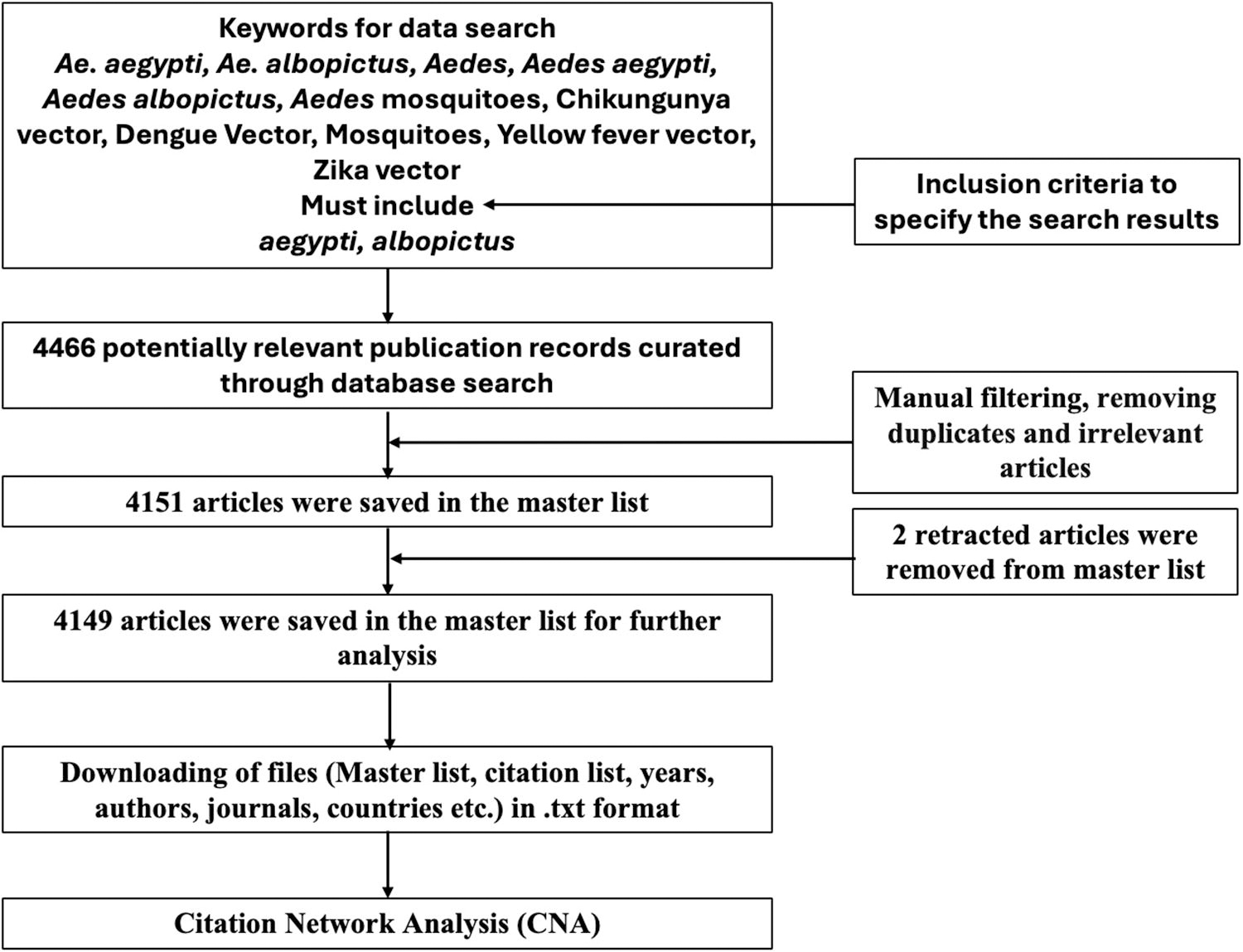
Flow diagram of the search strategy and analysis.
The data was retrieved till April 17, 2024, and a total of 4466 articles appeared in the searched panel. After manual filtering, removing duplicates and irrelevant articles, and ensuring data consistency, a total of 4151 articles were saved in the master list for further analysis, out of which, 2 articles were found to be retracted and excluded from the master list. Finally, the metadata for 4149 articles was retrieved and analyzed in this study. For CNA, VoS viewer software was used to construct citation networks (Van Eck and Waltman, 2014; Van Eck and Waltman, 2007).
Results
The articles (n = 4149) considered for CNA were contributed by 13,416 authors from 149 countries, having a total citation of 115,715 with 27.89 average citations per article and a cumulative h-index of 134. The retrieved publication data spanned from 1947 to April 2024 (77 years) was analyzed for CNA. The publications were comprised of research articles (n = 3778, 91.01%), review articles (n = 260, 6.267%), proceeding papers (n = 73, 1.76%), and book chapters (n = 38, 0.92%). Apart from this, meeting abstracts (n = 35), editorial material (n = 26), and data papers (n = 1) were not associated with any citations or co-citations because of a lack of referencing materials and were also excluded. Out of the total number of articles included for this study, 97.16% were published in English (n = 4031), 1.06% in Portuguese (n = 44), 1.04% in Spanish (n = 43), 0.53% in French (n = 22), 0.07% in Indonesian (n = 3), 0.05% in Malay (n = 2), and 0.024% (n = 1) each in German, Hungarian, Italian, and Russian. As all these articles were associated with citation/co-citation networks and the abstracts were also available in English language, all these were included in this study.
Annual trend of articles published and citations
The annual article trend spans for about eight decades (77 years), from 1947 to April 2024. The first article to appear in the database was published by Galliard (1947). The maximum number of articles (n = 362) published in the year 2020 and the maximum number of citations were recorded in 2021 (n = 4502). In addition, a steep increase in scholarly articles was observed from the years 2013 (Fig. 3).
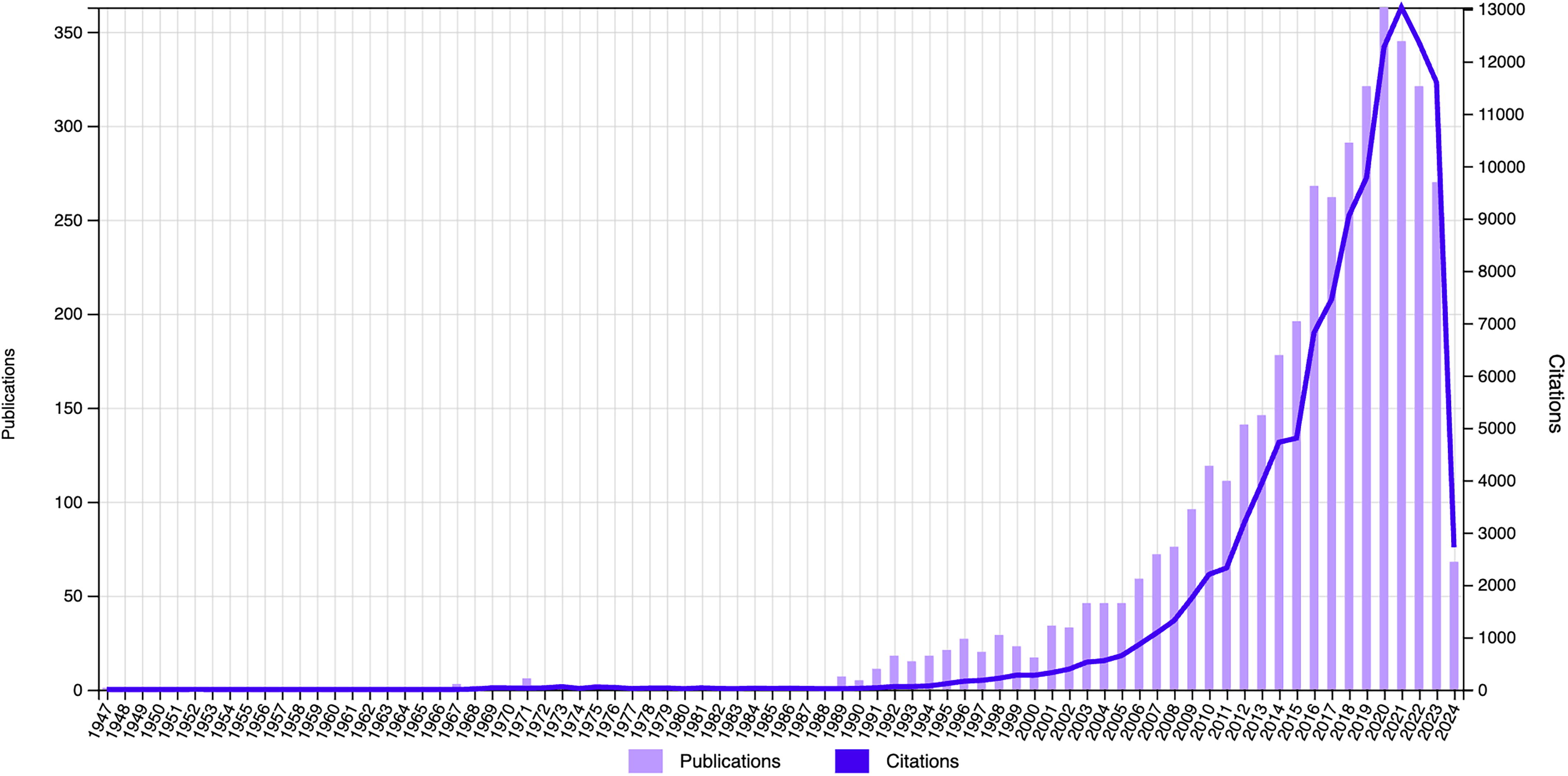
Global annual trend of publications.
Publications by countries
Authors from 149 countries published their scientific articles depicted with a density map (Fig. 4); some of the articles (n = 21; 0.506%) do not contain the respective country data. The maximum number of articles published was from the United States (n = 1451, 34.97%), followed by Brazil (n = 439, 10.58%). The other top 10 countries that contributed to scientific publications were France (n = 391, 9.42%), India (n = 281, 6.77%), Malaysia (n = 274, 6.60%), the People’s Republic of China (n = 268, 6.46%), England (n = 236, 5.69), Australia (n = 214, 5.16%), Thailand (n = 191, 4.60%), and Italy (n = 186, 4.48%).

Publications contributed by different countries.
The CNA of co-authorship as per different countries, with a maximum of 25 countries within a single article and with a minimum of five articles contributed per country, was calculated. Out of the 149 countries, 84 meet the threshold. The countries grouped into eight clusters (Fig. 5a) highlighted different colors based on the co-authorship links. The bigger the cluster, the more number of co-authorships; United States has emerged with the strongest connection among all countries with the maximum number of co-authorships. Citations shared by countries were calculated with a minimum of five articles per country; the countries were grouped into seven clusters with shared citations (Fig. 5b).
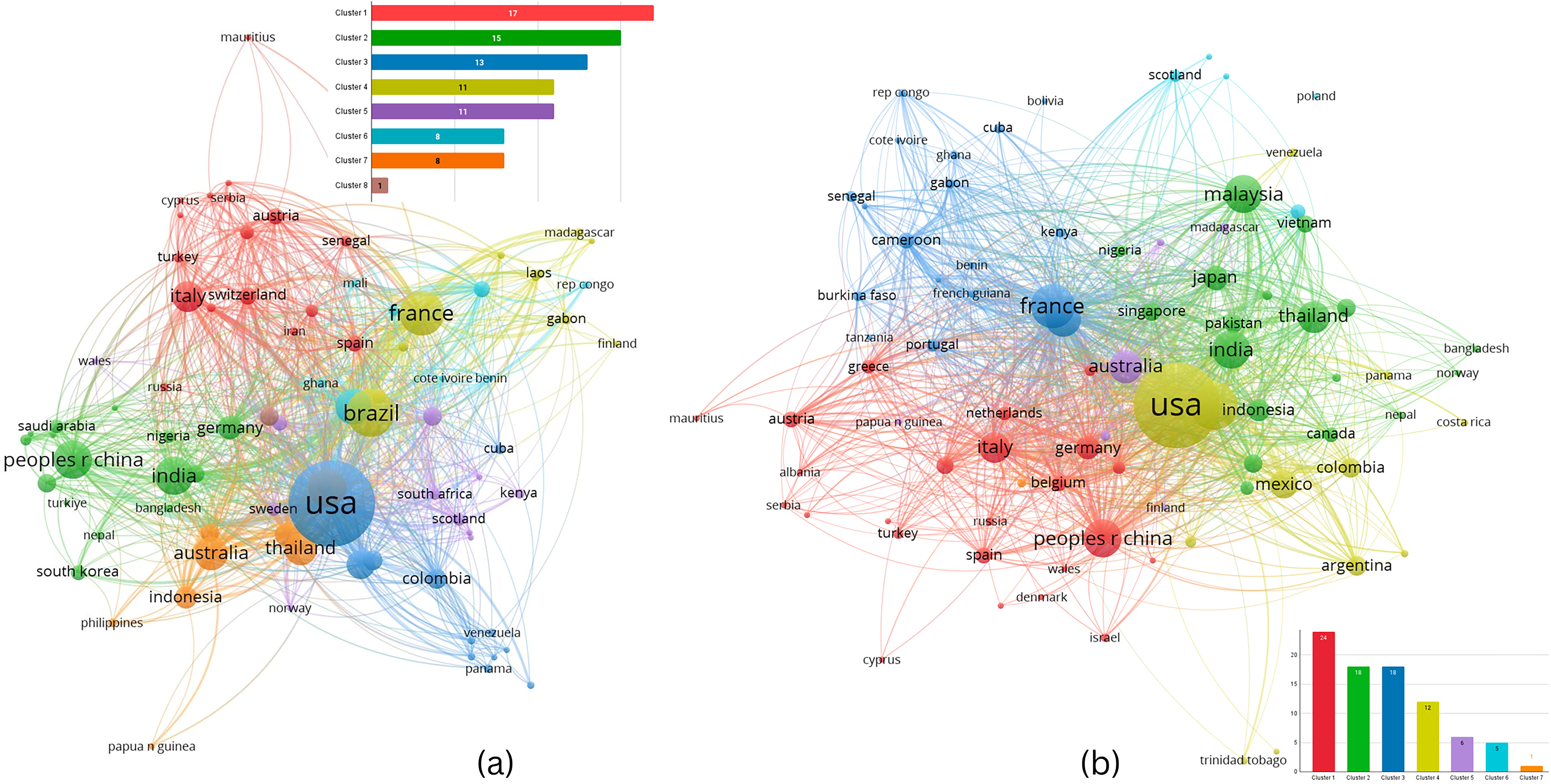
Citation network analysis of different countries as per co-authorship shared (5a) and citations shared (5b).
Top journal trend
The journals are specialized to publish the core research of the area chosen. A total of 801 journals and proceedings published the 4149 research articles. Table 1 highlighted the trend of the top 10 journals, their publications, and citations. The Journal of Medical Entomology has published the maximum number of publications and contributed the maximum number of citations, followed by Parasite & Vectors. PLOS Neglected Tropical Diseases numbered four in terms of publications but had the second highest citations among the top 10 journals.
Top 10 Journals with the Highest Number of Publications and Cumulative Citations
The citation network of citations in the journals was also calculated with a minimum number of 5 minimum numbers of publications by a journal and out of the total 801,125 journals met the threshold. The journals were grouped in seven clusters as per the citation links they shared. The overlay visualization of the citation network linking various journals, the number of citations drastically increased after 2008 (Fig. 3), and the colors of the visualizations range from blue (minimum score) to green to yellow (maximum score) (Fig. 6a and b).
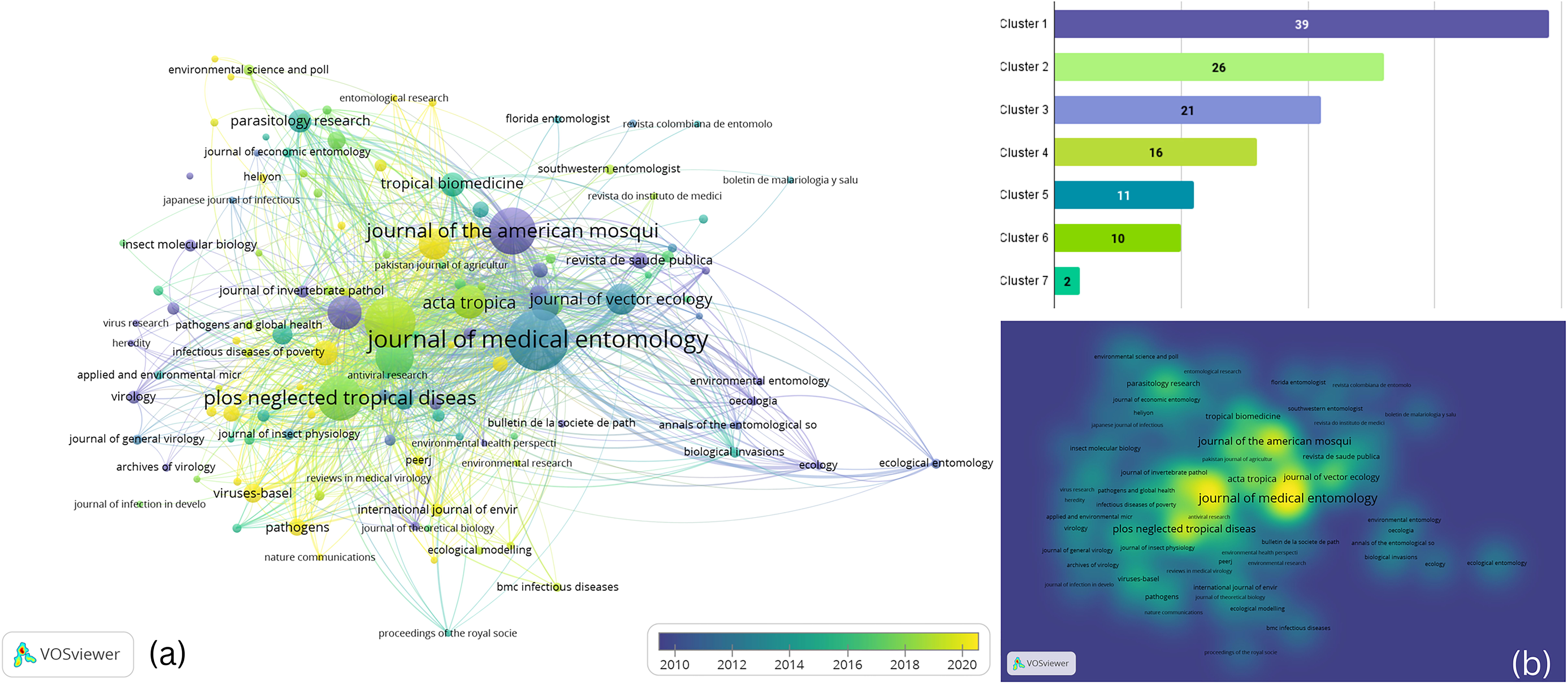
Citation network analysis of citations in the journals: Network visualization of Journals (6a) and Overlay visulization (6b).
Top cited articles
Citations to an article are one of the important characteristics of a good research article, and up to now, citations play an important role in the credibility of the research work, the authors, the institute, the funding, and even the journals. Among 4149 articles, Table 2 highlights the top 10 most cited articles in this study, highlighting all the major diseases transmitted by A. aegypti and A. albopictus. Kraemer et al. (2015) published the highly cited article. CNA to analyze the co-citations shared by different articles using cited references with a minimum number of 20 citations of a cited reference. Of the 78,561 cited references, 1200 met the threshold. But by default, the software can only handle a maximum of 1000 out of the 1200 that meet the threshold. For each of the 1000 cited references, the total strength of the co-citation links with other cited references was calculated. The co-citation network grouped the cited references into seven clusters based on their linking pattern, highlighted with different colors (Fig. 7).
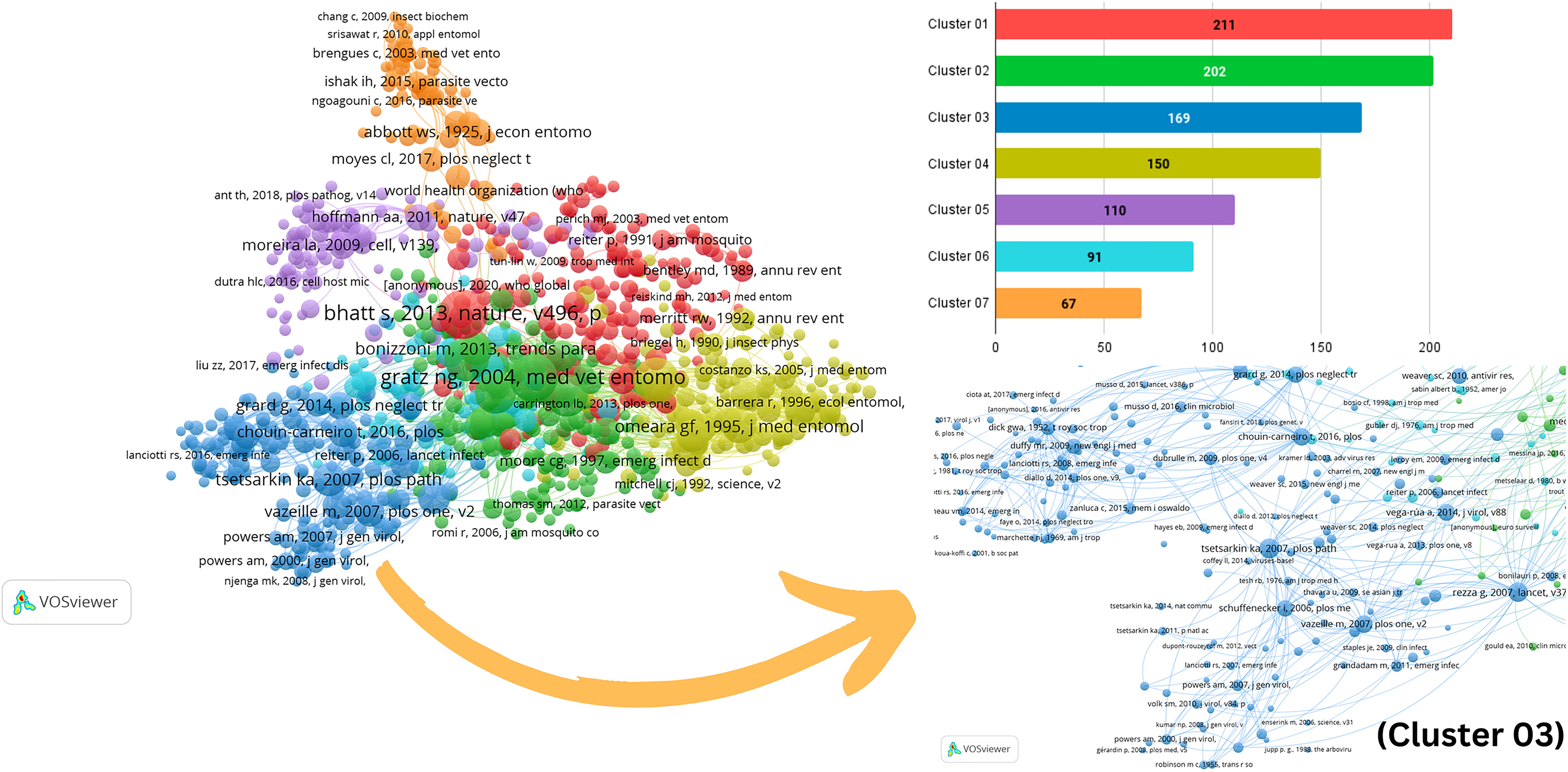
Citation network analysis of co-citations with cited references.
Top 10 Highly Cited Articles
Top terms and keywords trend
Terms and keywords are important criteria to search for potential publications in any database. Keywords are also an essential component of a research publication. The co-occurrences of all the keywords used in all publications in the titles and abstracts were analyzed using the CNA with five minimum numbers of occurrences of a keyword. Of the 9896 major keywords analyzed, 1250 meet the threshold, but only 1000 potential keywords (by default) are used for analysis by the software. The keywords were grouped into eight clusters as per their links to the associated occurrences in related articles. The density visualization highlighted the major keywords in different publications (Fig. 8). Among the top keywords, “Aedes albopictus” was analyzed to be the most important keyword with 1023 occurrences and 8935 total link strength, followed by “Aedes aegypti” (963 occurrences and 8583 link strength) and “dengue” (927 occurrences and 8251 link strength).
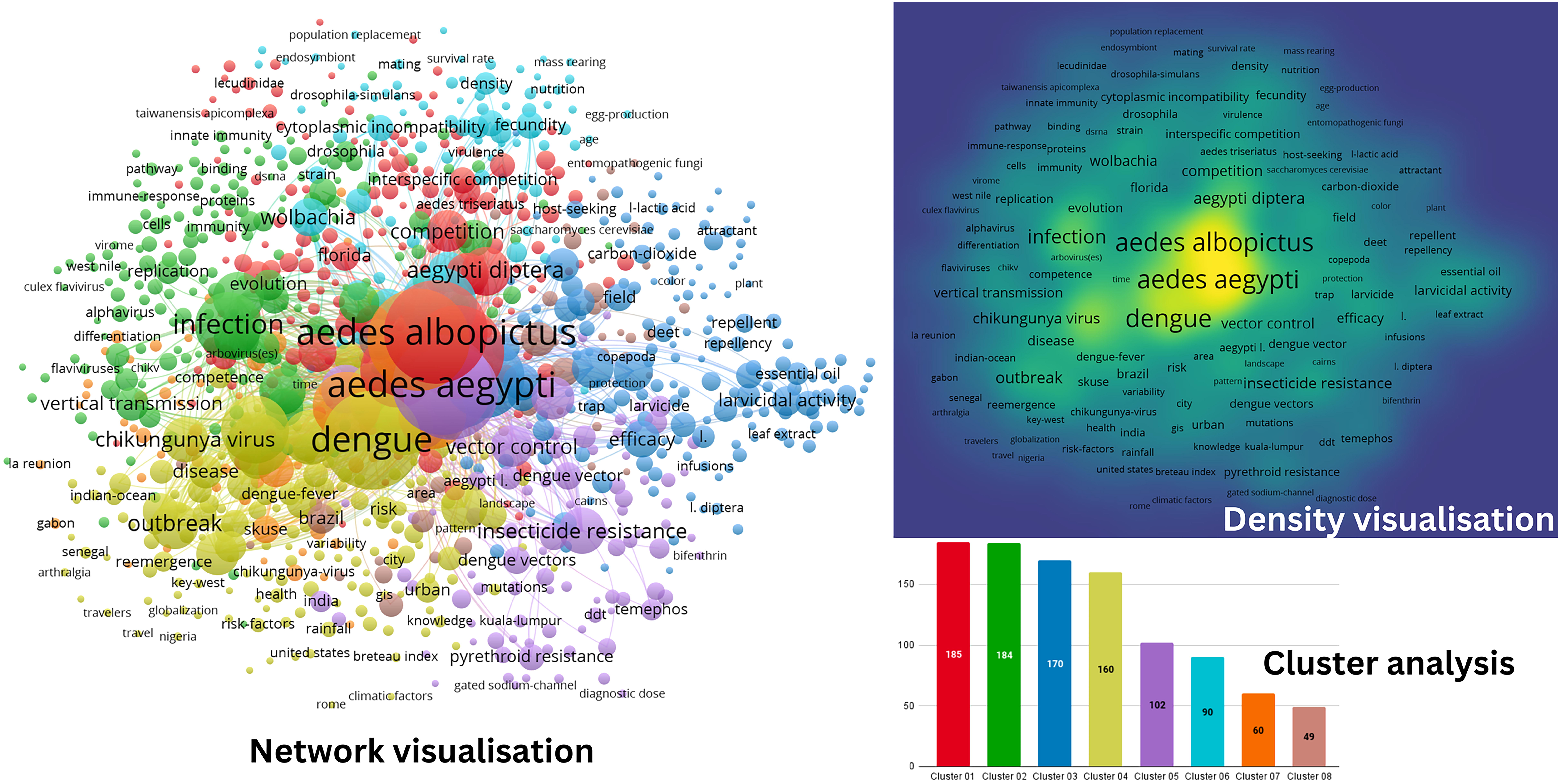
Citation network analysis of keywords.
Discussion
A comprehensive literature review on diseases transmitted by A. aegypti and A. albopictus provided important insights into the research landscape spanning 77 years. A total of 4149 articles written by 13,416 authors from 149 countries demonstrated strong global interest in mosquito-borne diseases. Annual publication growth shows a significant increase in scholarly activity, especially since 2013, increasing the number of articles by 2020 and citations by 2021. This growth may reflect increased global awareness and research efforts in exposure to an expending base of Aedes-borne diseases and public health problems. Geographical production of literature shows that the United States leads the most significant number of articles (34.97%), followed by Brazil and France. The co-authorship citation network clustering further illustrates the collaborative nature of global research, with the United States exhibiting the most extensive relationships. Among 801 journals, journals specializing in medical entomology and vector-borne diseases, such as the Journal of Medical Entomology and Parasites and Vectors, have been influential in disseminating research. Kraemer’s work on “The global distribution of the arbovirus vectors Aedes aegypti and Ae. albopictus” appears in heavily quoted words, emphasizing his impact in the field. Keyword analysis revealed “Aedes albopictus,” “Aedes aegypti,” and “dengue” as potential keywords, reflecting their dominant role in the research literature. Overall, this bibliometric analysis offers a detailed snapshot of the research dynamics, publication trends, and collaborative networks in the field of Aedes-borne disease research, providing valuable insights for future studies and public health strategies.
Conclusion
The comprehensive bibliographic review and CNA conducted in this study provide valuable insights into the global bibliometric trends of diseases transmitted by A. aegypti and A. albopictus. The analysis of 4149 articles contributed by 13,416 authors from 149 countries reveals key patterns and trends in research on Aedes-borne diseases. The articles highlight all the published literature in the past 77 years on biology, ecology, diseases transmitted, potential habitat, geographical location, effect of climate change, prediction for future occurrences, pesticide susceptibility, international collaboration for their further expansion, and many more of A. aegypti and A. albopictus. The analysis provides one-step information regarding best-cited research, top-most journals, and keyword trends for future references to the scientific community. The analysis of citation networks provides insights into the influence and impact of research articles, authors and journals within the field.
Furthermore, the identification of thematic clusters within the citation networks, including epidemiological trends, vector biology, disease transmission dynamics, and control strategies, reflects the multidisciplinary nature of research on Aedes-borne diseases. This highlights the need for integrated approaches that encompass vector control, community engagement, and public health interventions to effectively prevent and control these diseases. The findings underscore the increasing importance of understanding and addressing these Aedes-borne diseases in the context of global health challenges.
Footnotes
Acknowledgment
The authors acknowledge the Director, ICMR-RMRIMS Patna, for providing facilities and the Department of Health Research—Model Rural Health Research Unit (HRHRU), Kurhani, Muzaffarpur, Bihar, for the research support.
Authors’ Contributions
Y.P.S.: Conceptualized the study, analyzed data, and prepared the draft article and graphics. A.K.: Retrieved and curated data, and edited the final draft. K.B.: Reviewed and finalized the article critically. A.K.: Edited the final version and framed the abstract. All authors read the final version of the article.
Availability of Data and Material
The dataset analyzed in this study is available from the corresponding author on reasonable request.
Ethics Approval and Consent to Participate
Not required.
Author Disclosure Statement
No conflicting financial interests exist.
Funding Information
No specific funding was received for this study.