




Abstract
The expression levels of various cytokines increase with the progression of HIV-1 infection. However, the effects of antiretroviral therapy (ART) on serum cytokine levels have not been fully determined. In this study we measured serum cytokine levels of 35 HIV-1-infected Japanese adults. We first performed a cross-sectional study and observed that TNF-α, IL-6, IL-10, IL-18, and IL-7 levels all showed significant increases in those with advanced disease, and that this had a significant negative correlation with the CD4 cell count. However, IFN-γ levels did not show this relationship. A longitudinal study in 18 HIV-1-infected patients with a CD4 cell count <350/μL revealed that the introduction of ART reduced cytokine levels. Significant reductions of IL-7, IL-10, IFN-γ, and IL-18 levels were observed on days 30, 60, 90, and 90 after the initiation of ART, respectively. These results indicate a discrepancy between cross-sectional and longitudinal studies of serum levels of IFN-γ. To clarify this, we investigated serum IFN-γ levels in each patient. In 5 of the 15 patients IFN-γ levels did not decrease, even after ART initiation, and remained at 5 pg/mL or higher on day 120 after ART initiation. Higher IFN-γ levels (>5 pg/mL) were also observed in 2 of 7 asymptomatic patients, and 2 of 11 patients who underwent ART for 1 year or longer. These data demonstrate that IFN-γ levels in some patients increased and remained high even after the initiation of ART, which was a specific observation different from those of the other cytokines.
Introduction
Human immunodeficiency virus (HIV)-1 infects CD4+ cells to destroy the immune system, leading to the development of acquired immunodeficiency syndrome (AIDS). After HIV-1 infection, 5–10 y will pass without symptoms in most patients. This period is called the asymptomatic carrier (AC) period. Although apparently asymptomatic in this period, HIV-1 gradually destroys the immune system and decreases the number of CD4+ T lymphocytes (the CD4 cell count). When the CD4 count drops below 200/μL, various opportunistic infections, including AIDS indicator diseases, will develop. Antiretroviral therapy (ART) with multiple agents was developed in the second half of the 1990s, markedly improving the prognosis of HIV-1-infected patients. This therapy is called highly-active antiretroviral therapy (HAART), which continuously suppresses viral replication and restores the function of the immune system in HIV-1-infected patients.
Many studies have been conducted on the importance of cytokines in the pathogenesis of HIV-1 infection because it affects the immune system (11). In the pre-HAART era, the expression levels of various cytokines reportedly increased, along with the progression of immunodeficiency (1,3). Since in previous studies researchers have reported that a Th-1/Th-2 imbalance is strongly involved in HIV pathogenesis (5,7), the cytokines responsible for the Th-1/Th-2 balance, such as IL-2 (18), IL-6 (4), IL-10 (2), and IFN-γ, have been studied in detail (1). On the other hand, in the post-HAART era, the increased cytokine expression was decreased by ART (14,16,22,23,25). However, only a few cytokines examined in the pre-HAART era that exhibit abnormal expression have been studied. It has not yet been determined whether this abnormal cytokine expression is caused by biological responses to viral proliferation, or whether it is induced secondary to other infections caused by the immunodeficiency. In fact, the abnormal cytokine expression may be caused by latent opportunistic infections due to a decreased CD4 cell count. In this study we investigated the cytokines with expression levels that differed from those of the other cytokines, by measuring their serum levels primarily in patients who underwent ART, in order to identify the cytokines directly involved in HIV-1 infection.
Materials and Methods
Patients
We first obtained written informed consent from 35 HIV-1-infected adults who regularly visited our hospital, and collected sera from these patients. The median age of the patients (34 male and 1 female) was 39 y (range 28–73 y). All of the patients were Japanese. The putative infection routes of these patients included homosexual contact (29 patients), heterosexual contact (5 patients), and transfusion for hemophilia (1 patient). We then measured the CD4 cell counts by flow cytometry using the whole-blood lysis method. Plasma HIV-1 RNA levels were measured using reverse-transcriptase PCR (Amplicor HIV-1 monitor test; Roche Molecular Diagnostics Corp., Indianapolis, IN). This study was reviewed and approved by the Institutional Review Board, National Hospital Organization, Osaka National Hospital (approval number 0542).
Cross-sectional and longitudinal studies
The patients were divided into the following three groups: AC, pre-ART, and under-ART. They were then subjected to a cross-sectional study to compare serum cytokine levels. The AC group included asymptomatic patients with CD4 cell counts of 350/μL or higher. The pre-ART group included untreated patients (ART naive) with CD4 cell counts less than 350/μL, from whom samples were collected after treatment for opportunistic infections. The under-ART group included patients who underwent ART for 1 year or longer, and whose plasma HIV-1 RNA levels were below the detection limit. Patients in the pre-ART group were subjected to a longitudinal study, and samples were collected from them periodically after ART introduction for comparison with the baseline.
Measurement of serum cytokines
Serum cytokine levels were measured with a sandwich enzyme-linked immunosorbent assay (ELISA). The following reagents were used: IFN-γ (human IFN-γ ELISA; Bender MedSystems, Vienna, Austria), IL-6 (Quanti Glo human IL-6 chemiluminescent immunoassay; R&D Systems, Inc., Minneapolis, MN), IL-10 (human IL-10 ultra-sensitive ELISA kit; Invitrogen, Carlsbad, CA), IL-18 (human IL-18 ELISA; Medical & Biological Laboratories Co., Ltd., Nagoya, Japan), IL-1 (Quantikine HS human IL-1 immunoassay; R&D Systems), IL-2 (Quantikine human IL-2 immunoassay; R&D Systems), IL-4 (human IL-4 ultra-sensitive immunoassay; R&D Systems), IL-12 (Quantikine HS human IL-12 immunoassay; R&D Systems), IL-7 (Quantikine HS human IL-7 immunoassay; R&D Systems), TNF-α (Quanti Glo human TNF-α chemiluminescent immunoassay; R&D Systems), IL-17 (Quantikine human IL-17 immunoassay; R&D Systems), and IL-23 (Quantikine human IL-23 immunoassay; R&D Systems). The measurements were carried out according to the manufacturers' instructions.
Statistical analysis
Multiple comparisons were carried out using the Kruskal-Wallis non-parametric analysis of variance (ANOVA) test. The Spearman rank test was used for correlation, and the Wilcoxon signed-rank test was used for paired data. The significance level was set at p < 0.05.
Results
We measured the serum cytokine levels in 35 HIV-1-infected patients. IL-1β, IL-2, IL-4, IL-12, IL-17, and IL-23 were not considered in the analysis because they were below the detection limits in the majority of the samples (60% or above) (data not shown). To examine the relationship between the serum cytokine levels and HIV-1 infection, the patients were classified into three groups on the basis of their CD4 counts and the introduction of ART: AC, pre-ART, and under-ART groups, and their serum cytokine levels were compared (cross-sectional study). The CD4 counts and plasma HIV-1 RNA levels of the groups are shown in Fig. 1A and B. As presented in Fig. 1 D–G, serum TNF-α, IL-6, IL-10, and IL-18 levels in the pre-ART group showed significant increases compared with the corresponding values in the AC and under-ART groups. The IL-7 levels were significantly higher in the pre-ART group than in the AC group, but comparable with those in the under-ART group (Fig. 1H). On the other hand, IFN-γ levels did not differ significantly among the three groups (Fig. 1C). Thus, except for IFN-γ, all of the other cytokines were found to be increased in the immunocompromised patients.
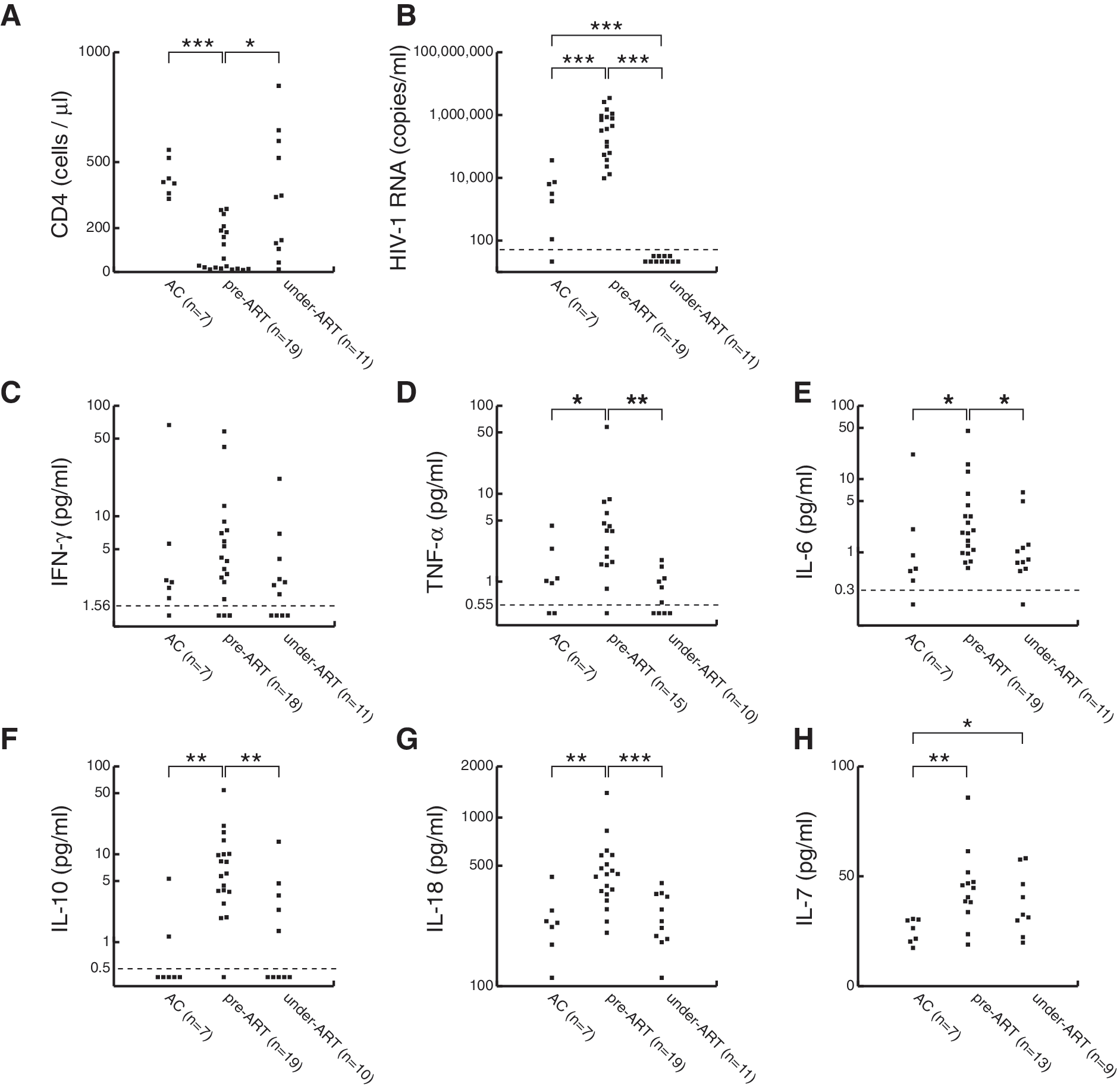
Serum cytokine levels in asymptomatic carrier (AC), pre-antiretroviral therapy (pre-ART), and under-ART groups.
Subsequently, the correlation between the serum cytokine levels and CD4 counts was analyzed using Spearman's rank test. Except for IFN-γ, all of the other cytokines exhibited a significant negative correlation with the CD4 cell counts (Fig. 2A). Among the cytokines we examined, IL-7 levels showed the strongest negative correlation (Spearman's ρ = –0.74); a similarly negative correlation was noted in the regression analysis (Fig. 2B). Serum cytokine and plasma HIV-1 RNA levels were also examined. Since the plasma HIV-1 RNA levels were below the detection limit in all of the patients in the under-ART group, and this might have led to bias-based errors, the under-ART group was excluded from this assay. A significant but weak correlation was noted between TNF-α/IL-18 and plasma HIV-1 RNA levels (Fig. 2C). Thus except for IFN-γ, the levels of the cytokines analyzed in this study increased with disease progression, and correlated with clinical indicators such as decreased CD4 cell counts and increased plasma HIV-1 RNA levels.
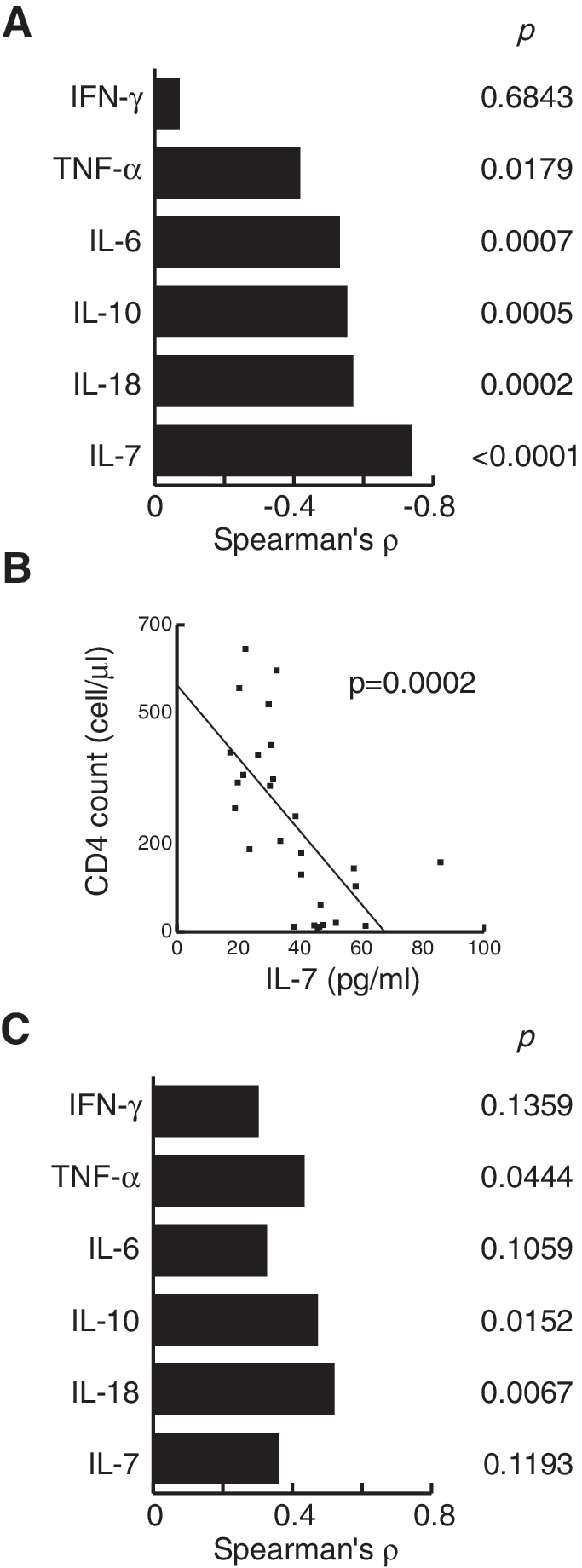
Association of serum cytokine levels in HIV-1-infected patients with CD4 cell counts and plasma HIV-1 RNA levels.
Finally, a longitudinal study was conducted on the pre-ART group to examine the effects of ART on serum cytokine levels. ART was introduced for all 19 patients in the pre-ART group. One patient in this group did not show an optimal virological response 24 wk after the introduction of ART, so this patient was excluded from the analysis. Fig. 3 shows the serum cytokine levels before the introduction of ART, and on days 30, 60, 90, and 120 after its introduction. On day 30, only IL-7 levels showed significant decreases compared with baseline levels. Some cytokines (IL-10 and IL-18) showed no change, while others (IFN-γ, IL-6, and TNF-α) showed upward trends. Four cytokines (IFN-γ, IL-6, IL-10, and IL-18), when measured over time, revealed downward trends on day 60 and beyond; IL-10 showed a significant decrease on day 60, and IFN-γ and IL-18 showed significant decreases on days 90 and 120. Thus, the IL-7 level rapidly declined after the initiation of ART, while the expression of the other cytokines decreased slightly later.
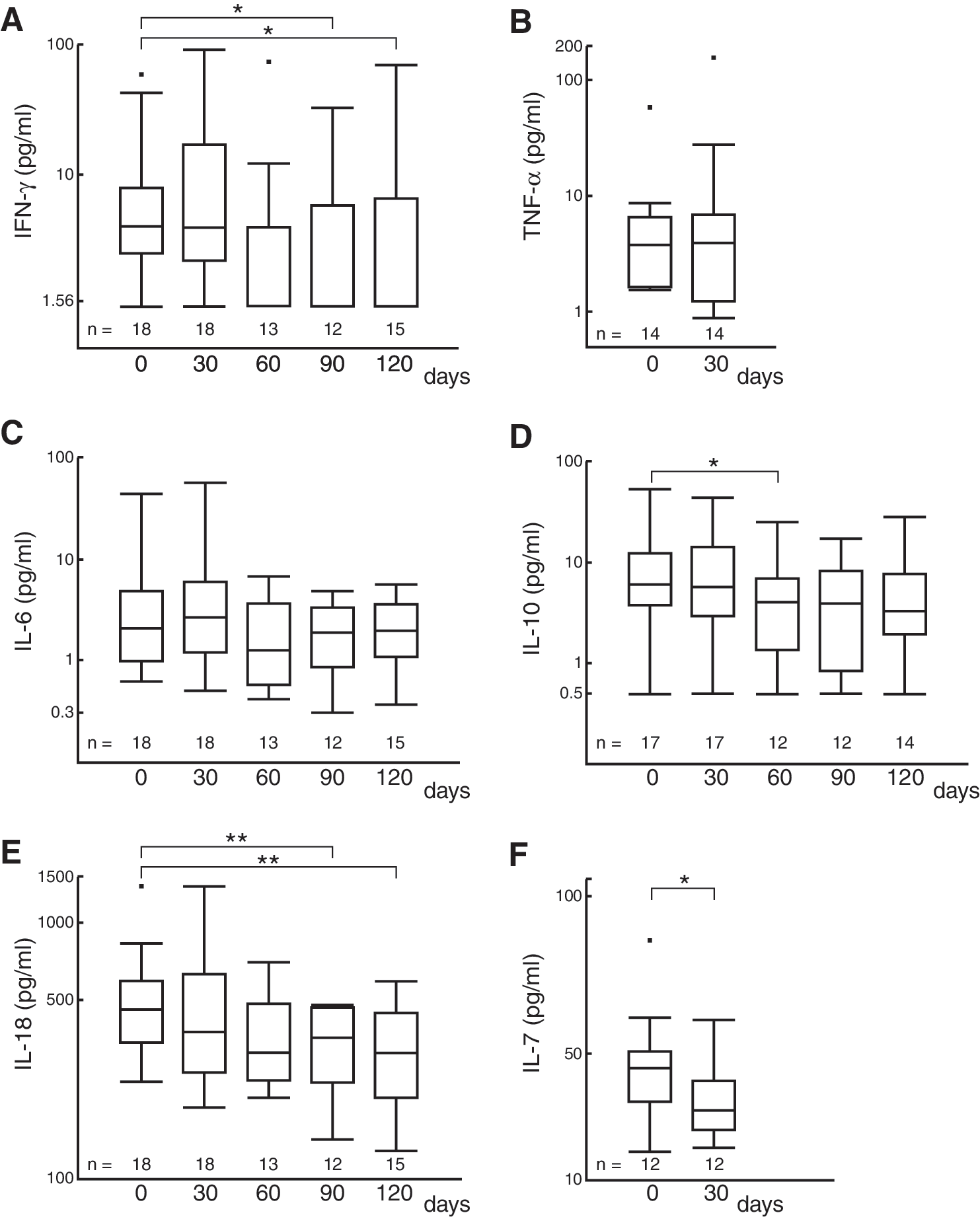
Serum cytokine levels in HIV-1-infected patients before initiation of and during ART
There was no correlation between the pre-ART and under-ART groups for IFN-γ (Fig. 1C). However, our longitudinal observations demonstrated a significant decrease in IFN-γ levels upon initiation of ART (Fig. 3A). To resolve this discrepancy, we examined the patients in the pre-ART group in more detail. In most of the patients, the IFN-γ levels were gradually suppressed by ART. However, in 5 of the 15 patients, IFN-γ levels did not decrease, even after the initiation of ART, and remained at 5 pg/mL or higher at day 120 after ART initiation, regardless of the ART-induced virological response. The data of two representative patients are shown in Fig. 4. In the patients shown in Fig. 4A, whose plasma HIV-1 RNA levels were maintained below the detection limit, the IFN-γ levels were above 30 pg/mL, even at 3 y after the initiation of ART. In addition, 2 of 7 patients in the AC group, and 2 of 11 patients in the under-ART group, had higher IFN-γ levels (>5 pg/mL). Thus, during the AC period or later, the IFN-γ levels in some patients increased, and remained high even after the initiation of ART.
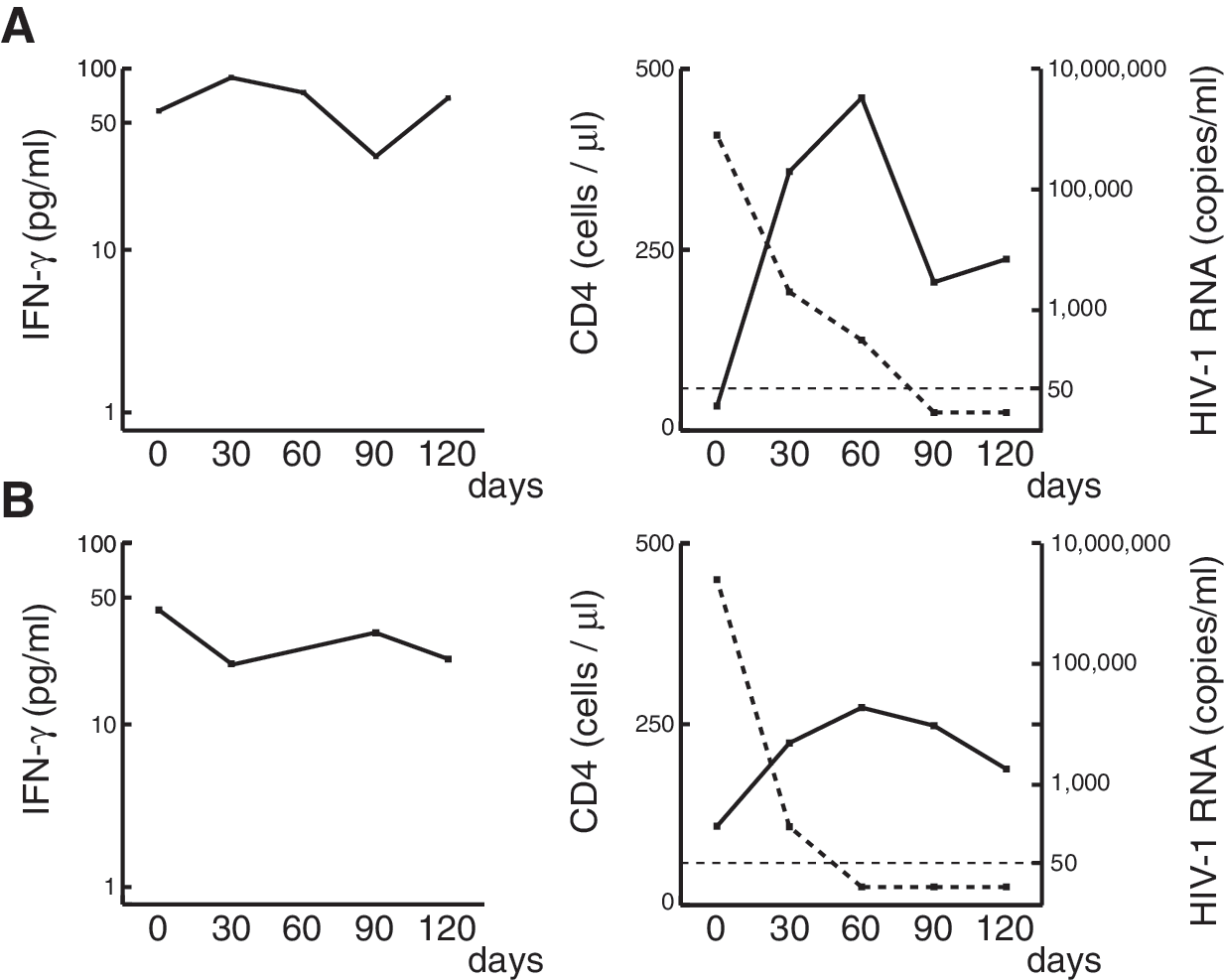
Sustained elevation of serum IFN-γ levels during ART in HIV-1-infected individuals
Discussion
Here we demonstrated changes in the serum cytokine levels in HIV-1-infected patients. The serum levels of many cytokines increased with disease progression, and were decreased by the initiation of ART. The abnormal cytokine expression patterns may be explained by two possible mechanisms: the direct effect of immune destruction by HIV-1, and the effects of opportunistic infection. In this study, 14 (74%) patients in the pre-ART group developed AIDS. However, since the samples were collected from all of the patients after the treatment of opportunistic infections, the effects of these opportunistic infections on abnormal cytokine expression patterns may be limited. On the other hand, it is important to note that there were changes in the cytokine levels after the initiation of ART. On day 30 after ART introduction in the pre-ART group, all cytokines except for IL-7 remained unchanged or increased. At this point, the HIV-1 RNA levels in the blood were decreased in all 18 patients, and the CD4 cell counts were increased in 16 (89%) patients. This indicates that the cytokine levels increased despite virological suppression and immune restoration. Immune reconstitution inflammatory syndrome (IRIS), a seemingly paradoxical pathological condition, has been extensively described (20). This is a condition in which the existing opportunistic infection is exacerbated, and/or a new opportunistic infection develops after the introduction of ART, presumably due to the restoration of immune responses against a pathogen that existed prior to ART. Of the 18 patients in the pre-ART group, only 2 developed clinically apparent IRIS. One patient experienced a relapse of an existing CMV infection, and the other patient newly developed an atypical mycobacterial infection, an AIDS-indicator disease, after the introduction of ART. In addition to these 2 patients, several other patients developed IRIS, but required no specific treatment, at 2–4 weeks after initiation of ART. In these patients, the increased cytokine levels observed on day 30 after ART introduction were associated with immune restoration, suggesting that these immune responses may have been mounted against a potential infectious agent. The direct effects of HIV-1 infection cannot be completely overlooked. However, the abnormal cytokine levels seen in immunocompromised patients may be at least partially associated with opportunistic infections.
After ART initiation, many cytokines showed no change or showed upward trends; on the other hand, IL-7 rapidly decreased. This appeared to be associated with the physiological actions of IL-7. Other cytokines are associated with immune responses and inflammatory reactions against microorganisms; however, the main function of IL-7 is for hematopoiesis (24). IL-7 mainly acts on hematopoietic stem cells, and induces their differentiation into T lymphocytes. The IL-7 levels were higher in the under-ART group, including those patients with poor recovery of CD4 cell counts, compared to the AC group (Fig. 1H). In addition, the IL-7 levels and CD4 counts show a marked negative correlation (Fig. 2B). These results are consistent with findings previously reported (14,15), suggesting that IL-7 is physiologically induced by decreased CD4 cell counts. Currently, IL-7 is receiving attention as a cytokine that increases the CD4 cell count (17), and is the focus of many clinical studies investigating whether IL-7 administration may induce CD4+ lymphocyte expansion in HIV-1-infected patients (13,19).
In this study we demonstrated characteristic increases in IFN-γ levels due to HIV-1 infection. ART has been reported to decrease the serum levels of many of the cytokines that are elevated in patients with HIV-1 infection (16,22,23,25), and increases the levels of IL-21, which are reduced in patients with HIV-1 infection (9,10). To the best of our knowledge, ours is the first study to report that cytokine levels remain unchanged by ART, despite their abnormally high levels. IFN-γ levels were high in some patients not only during the AC period, but also in patients with sustained suppression of viral replication and immune restoration by ART. This suggests the potential induction of IFN-γ expression by HIV-1. This may be the first report on the above-mentioned phenomenon, probably because these high levels are not necessarily sustained in all cases, and thus changes occurring following the initiation of ART should be studied in more detail. Although the sustained high IFN-γ levels observed in some patients is thought to be due to individual differences in immune responses against HIV-1, or the genetic characteristics of HIV-1 (8), or both, we could find no clinical data associated with increased serum IFN-γ levels to support this. Unlike the total CD4 cell counts and viral loads presented here, the total CD8 cell counts and their kinetics after the initiation of ART were not associated with changes in IFN-γ levels (data not shown). However, the IFN-γ levels were increased in 9 of 33 patients (27%), and these patients account for a significant proportion, thus yielding important findings. IFN-γ is a cytokine used as an immunocompetence indicator in HIV-1 vaccine studies (21). It has been reported that Th-2 cell numbers tend to increase with the progression of HIV-1 infection, and that IFN-γ is one of the key cytokines for differentiation into Th-1 cells (6). Thus IFN-γ may play an essential role, different from those of other cytokines, in the pathogenesis of HIV-1 infection. One possible mechanism behind the sustained high serum IFN-γ levels seen despite ART's introduction may be that IFN-γ production by HIV-1-specific CD8+ T lymphocytes is driven by HIV-1 viremia, and could even be induced by ongoing viral replication during ART. Only a small population of CD8+ T lymphocytes may be involved in IFN-γ production, because there was no association between total CD8 cell counts and serum IFN-γ levels. In future studies, we intend to investigate the role of this cytokine with a focus on acute HIV-1 infection, in which HIV-1-specific CD8+ T lymphocytes are preferentially expanded to control viral replication.
Footnotes
Acknowledgments
We are thankful to all of the patients who participated in this study. This work was supported by a Grant-in-Aid for Clinical Research from the National Hospital Organization. We thank Drs. Y. Yamamoto, T. Makie, S. Shiiki, S. Tominari, and A. Sasakawa for patient management; Ms. E. Okamoto and M. Ashida for their technical assistance; and Ms. M. Uota and A. Iuchi for their secretarial assistance. These results were presented in part at the 21st annual conference of The Japanese Society for AIDS Research, Hiroshima, Japan, November 2007.
Author Disclosure Statement
No competing financial interests exist.