




Abstract
To maintain homeostasis of the immune system is considered important for the prevention of influenza A virus infection. Aberrant systemic inflammation is frequently induced by influenza A virus infection, and the severity of the symptoms is associated with pathogenicity of the virus. Lactic acid bacteria are known to have a positive effect in maintaining the immune system. Furthermore, preparations of a lactic acid bacteria strain, Enterococcus faecalis FK-23 (FK-23), have been reported to exert preferable homeostatic effects on immune diseases such as allergic rhinitis and early asthmatic responses. In this study, we examined the efficacy of the water-soluble fraction of lysed and heat-treated FK-23 (SLFK) against a lethal influenza A virus challenge. Mice were orally administered SLFK from day −7 to day 20, and intranasally infected with influenza virus A/Puerto Rico/8/34 (H1N1) at 103 PFU on day 0. The survival rate of SLFK-administered mice after influenza A virus infection was significantly improved compared with that of control mice. In addition, the mRNA expression level of the anti-inflammatory cytokine interleukin-10 (IL-10) in lung tissues was enhanced by the oral administration of SLFK after influenza A virus infection. These observations suggest that the oral administration of SLFK exerts a protective effect against influenza virus infection through the activation of the anti-inflammatory response.
Introduction
Most healthy adult patients spontaneously recover from influenza after several days without antiviral drug treatment. However, high-risk groups, such as elderly patients, infants, pregnant women, and individuals with chronic diseases, are highly susceptible to influenza virus infection. These patients typically have some immune system deficiency. For example, older adults often have diminished immune capacity associated with the aging process. Among children, the immune system is often underdeveloped. The immune system is naturally suppressed in pregnancy, and may be diminished in individuals receiving immunosuppressive agents or those with underlying chronic illness. Individuals with poor nutritional status or who are physically fatigued are highly susceptible to influenza virus infection, and the infection sometimes causes serious pneumonia. Therefore, maintaining a healthy immune system is considered important for preventing lethal influenza virus infection.
Lactic acid bacteria are commonly used for fermented foods, and the beneficial effect of modulating the immune system is well established. Enterococcus faecalis FK-23, a kind of lactic acid bacteria, has been isolated from the feces of healthy humans. Heat-treated E. faecalis FK-23 (FK-23) shows antitumor and antimicrobial activities (1), and immunomodulatory effects (7,16). Additionally, lysozyme- and heat-treated FK-23 is reported to have anti-allergic activity by oral administration (17 –19).
It has been reported that oral or intranasal administration of lactobacilli, a group of lactic acid bacteria, is effective against influenza A virus infection (6,8 –10,13,21). However, there are few reports demonstrating the efficacy in attenuating influenza infection by the administration of other members of lactic acid bacteria, including enterococci (22). In this study, we show that oral administration of the water-soluble fraction of lysed and heat-treated FK-23 (SLFK) improved the survival rate of influenza A virus-infected mice, and enhanced the mRNA expression level of an anti-inflammatory cytokine, interleukin-10 (IL-10), in lung.
Materials and Methods
FK-23 cells were cultured in a broth medium containing 2.46% glucose, 1.4% yeast extract, 0.77% peptone, and 4.39% K2HPO4 for 18 h at 37°C, and the cells were collected by centrifugation. After washing with distilled water, the cells were treated with lysozyme, and then the reaction mixture was heated to 110°C for 10 min. The cells were lyophilized and stored. The lyophilized preparation was suspended in saline at a concentration of 150 mg/mL, and was incubated overnight at 4°C for dissolving. After the incubation, the supernatant, which was collected by centrifugation at 15,000 rpm for 10 min at 4°C, was designated as SLFK. SLFK was filtered (0.45 mm) and stored at 4°C until use.
An influenza virus strain, A/Puerto Rico/8/34 (H1N1; PR8) was used in this study. The infectious materials were handled in a biosafety level 2 facility under approved protocols in accordance with guidelines of Hokkaido University. The PR8 virus was propagated in the allantoic cavities of 10-day-old embryonated chicken eggs at 35°C for 48 h, and then was concentrated and purified by high-speed centrifugation of infected allantoic fluid passed through a 10–50% sucrose density gradient (20). The purified virus was resuspended in phosphate-buffered saline (PBS) and stored at −80°C until use.
Male C57BL/6N mice (6 weeks old) were purchased from CLEA Japan (Tokyo, Japan). All animals were housed in isolator cages in a biosafety level 2 room with a 12-h light/dark cycle. The experimental protocols were approved by the Hokkaido University Animal Care and Use Committee (08-0234).
The first experiment was designed to evaluate the effect of SLFK on mortality caused by PR8 infection. The mice were divided into control (n=10) and SLFK groups (n=10). All mice were lightly anesthetized with isoflurane vapor and inoculated intranasally with 103 PFU of PR8 at 0.05 mL in both nostrils on day 0. The mortality of mice was evaluated for 20 d after the infection.
The next experiment was designed to examine the expression level of cytokines in the lungs. The mice were divided into PR8/saline (n=9) and PR8/SLFK groups (n=9), and were inoculated intranasally with 103 PFU at 0.05 mL in both nostrils on day 0. On days 1, 3, and 5 after infection, mice (n=3/group/day) were killed by cervical dislocation, and the lungs were aseptically removed. The total RNAs were extracted from lung homogenates using TRIzol Reagent (Invitrogen, Carlsbad, CA). The total RNAs were treated with DNase I, and then cDNAs were synthesized from 3.0 mg of the RNA using the ReverTra Ace qPCR RT kit (Toyobo, Osaka, Japan). Real-time PCR was performed using SYBR Premix Ex Taq II (Takara, Otsu, Japan) with the MX3000P real-time PCR system (Stratagene, La Jolla, CA). Each procedure was performed according to the manufacturer's instructions. Expression levels of each mRNA were represented as relative expression amounts, which were normalized with glyceraldehyde-3-phosphate dehydrogenase (GAPDH).
Results and Discussion
As illustrated in Fig. 1A, SLFK was orally administered to mice at a dose of 15 mg per mouse for 7 d before the viral infection. The mice were then intranasally inoculated with the PR8 strain of influenza A virus at 103 PFU/mouse. SLFK was orally administered once daily for 20 d after the viral infection, and survival rate was recorded. As shown in Fig. 1B, only 10% of mice in the control group, which were orally administered saline, survived for 20 d after infection. In contrast, 70% of mice orally administered SLFK survived after infection. The survival rate of mice treated with SLFK was significantly higher than that of the control group (p<0.05). These results indicate that oral administration of SLFK is effective for the protection from lethal infection by influenza A virus.
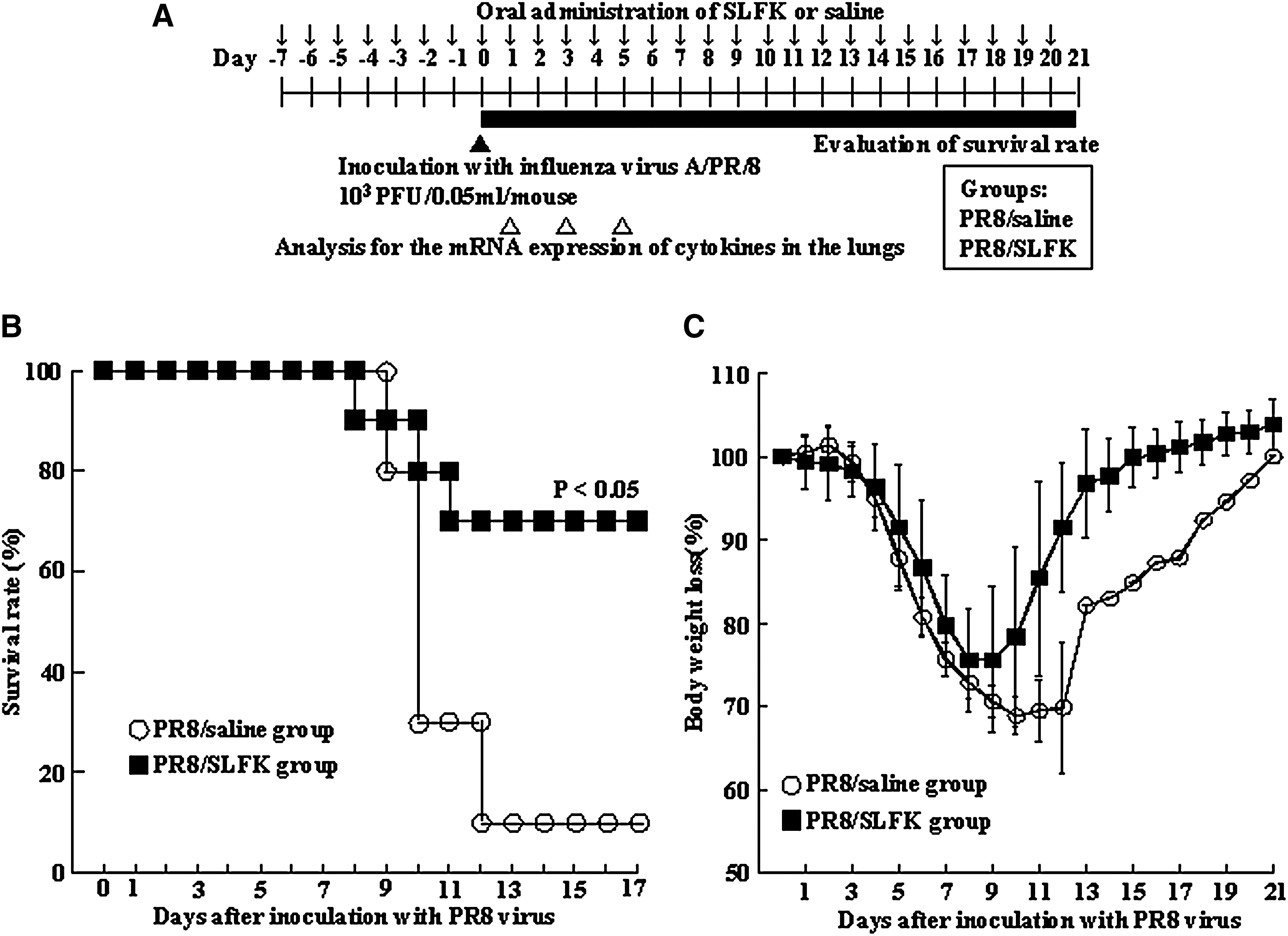
Survival rate of SLFK-treated mice after infection with PR8. (
It is known that mice infected with the PR8 strain of influenza A virus have severe lung inflammation (5,11). Similarly, the severe inflammation of lung surface area was observed in saline-administered mice (Fig. 2A, left panel). On the other hand, the lung inflammation in SLFK-administered mice was slightly reduced (Fig. 2A, right panel). These results suggest that oral administration of SLFK suppresses inflammation caused by influenza A virus infection.
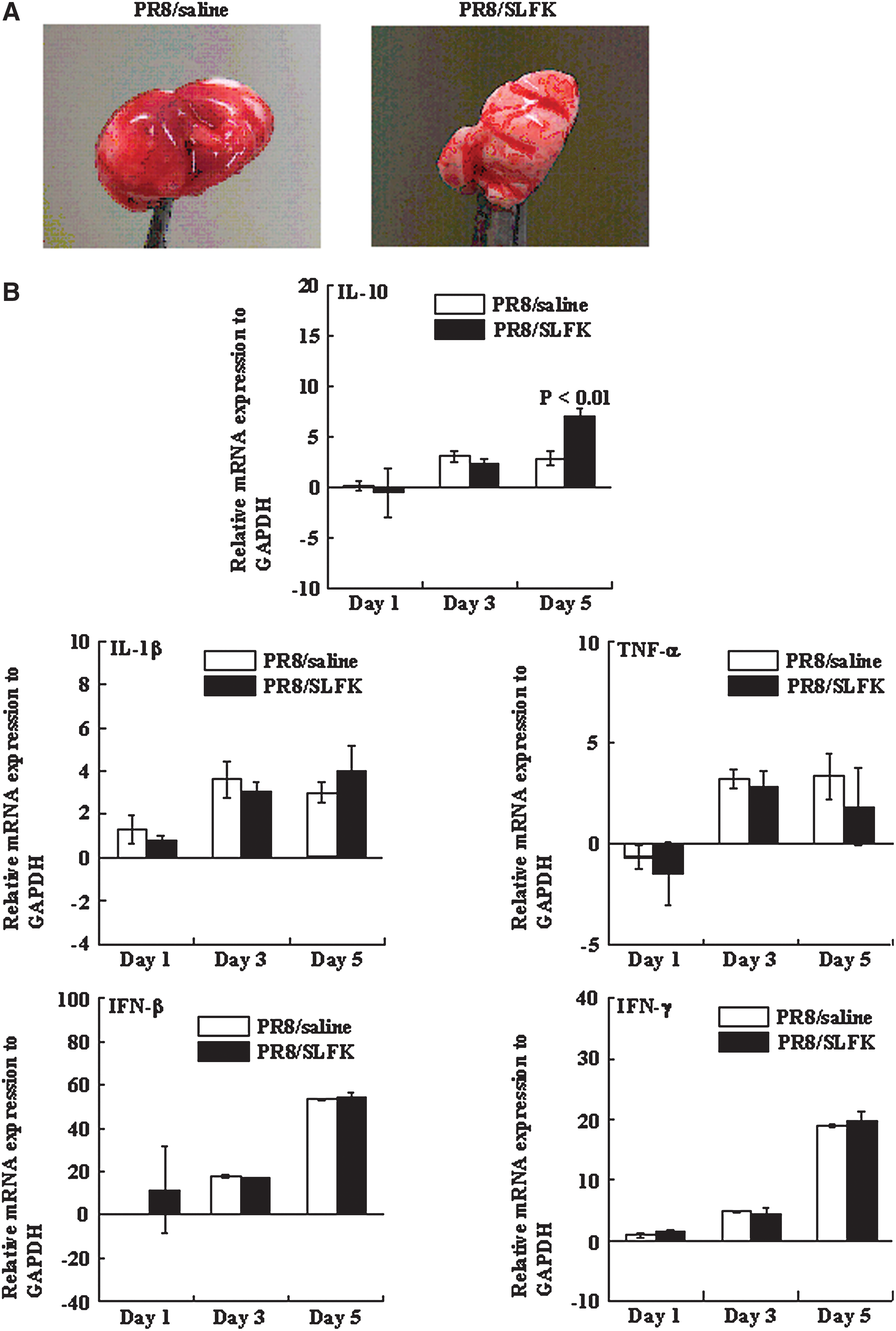
Gross pathology and mRNA expression of cytokines in the lungs of mice infected with PR8. Mice were orally administered SLFK for 7 d before infection with the PR8 strain of influenza A virus and daily until sacrifice. (
The virus infection resulted in the production of various cytokines in the lungs (Fig. 2B). The expression level of IL-10 mRNA, which is known to be a classic anti-inflammatory cytokine (14,15), was enhanced in the SLFK-treated mice at 5 d after inoculation (p<0.01), consistent with a tendency toward decreasing levels of the proinflammatory cytokine TNF-α in the SLFK-treated group. However, there was no significant difference for another proinflammatory cytokine (IL-1β) between saline- and SLFK-treated mice. Aberrant inflammation, which is frequently caused by lethal influenza A virus infection, is thought to be closely related to the pathogenicity of the virus (2,12). The abnormal expression of inflammatory cytokines caused by lethal viral infections induces apoptosis and results in the development of multiple organ dysfunction syndrome. These results suggest that the change in IL-10 production by the administration of SLFK may play an important role in the suppression of excess inflammatory or other immune functional response to infection by influenza A virus.
Lactic acid bacteria have been used for thousands of years to produce fermented foods, such as yogurt, cheese, and sauerkraut. The safety of lactic acid bacteria in food and their beneficial effects, including modulation of the host immune system, have been well established. It has been reported that the administration of lactobacilli, a different genera of lactic acid bacteria from E. faecalis, also exhibits anti-influenza effects in vivo (6,8 –10,13,21). These reports demonstrated that the enhancement of innate immune responses by the upregulation of various Th-1 cytokines, such as IL-12 and IFN-γ, is involved in the antiviral effect. However, the expression of Th-1 cytokine mRNAs were not significantly affected by the oral administration of SLFK to virus-infected mice (Fig. 2B). These observations suggest that the oral administration of SLFK induces its anti-influenza effects by different mechanisms from those seen after administration of lactobacilli. Therefore, it may be important to investigate the use of different genera of lactic acid bacteria for a more comprehensive understanding of the mechanism of action of the administration of lactic acid bacteria.
In this study, we demonstrated that the oral administration of SLFK exhibits efficacy for protection from lethal influenza A virus challenge. In addition, the enhancement of IL-10 mRNA expression in lung by the oral administration of SLFK was also demonstrated. This may help suppress the lung inflammation caused by influenza A virus infection, and might be involved in the improvement seen in survival rates. SLFK is thought to contain various compounds. However, the compounds that are critical in preventing lethal infections by influenza A virus remain to be identified. Further investigations are required to understand the molecular mechanisms by which orally-administered SLFK prevents lethal infection by influenza A virus.
Footnotes
Author Disclosure Statement
No conflicting financial interests exist.