




Abstract
Omicron variants have become the dominant SARS-CoV-2 variants due to their increased transmissibility and immune-escape ability. An outbreak of the Omicron variant BA.5.1.3 occurred in August 2022 in Sanya, China. Studying Omicron variants can promote the understanding of them and further contribute to managing the SARS-CoV-2 prevalence. This retrospective study analyzed the data of 258 patients with asymptomatic or mild SARS-CoV-2 admitted to the First Cabin Hospital of Sanya, China, between August 14 and September 4, 2022. The 258 patients comprised 128 males and 130 females with a mean age of 36.6 years and mean length of medical observation (LMO) of 10.1 days. Multiple linear regression analysis indicated that LMO was positively and negatively associated with age (p = 0.036) and vaccination status (p = 0.004), respectively. A Cox proportional-hazards model revealed that age (hazard ratio [HR] = 0.99, p = 0.029) and vaccination (HR = 1.23, p = 0.023) were risk and protective factors for LMO, respectively. Causal mediation analysis indicated that vaccination suppressed the effect of prolonging LMO caused by increasing age. Recovery times became longer with increasing age, which could be counterbalanced by vaccination. The present results indicate that vaccination interventions, even those developed through inactivated approaches, can still provide protection against Omicron variants.
Introduction
SARS-CoV-2
Real-time reverse-transcription polymerase chain reaction (RT-PCR) is considered the gold standard for confirming SARS-CoV-2 infection. Cycle threshold (Ct) values are therefore used in clinical practice to diagnose or predict SARS-CoV-2 infection (Rabaan et al., 2021). The Ct value is the number of cycles required to achieve detectable levels of amplified viral RNA in RT-PCR (Ding et al., 2022). It is therefore inversely proportional to the viral load, and each 3.3-fold increase in the Ct value corresponds to a 10-fold reduction in the amount of starting material (Tom and Mina, 2020). Higher Ct values indicate a lower viral RNA load and a decreased probability of infection transmission (Skok et al., 2021). According to the Chinese Guidelines for Prevention and Control of Coronavirus Disease 2019 (ninth edition), in two samples taken at least 24-h apart, if the Ct values of the nucleocapsid (N) and open reading frames (ORF) genes exceed 35, the patient does not need medical observation.
Vaccination is by far the most effective strategy for managing the SARS-CoV-2 pandemic (Fernandes et al., 2022). However, mutations in the spike protein receptor-binding domain of Omicron variants have been found to lead to immune escape and disrupt the efficacy of current antibodies and vaccines (González et al., 2022). The abilities of most vaccines to neutralize the virus through the production of antibodies are weaker for Omicron BA.5 than for the earlier variants (Branche et al., 2022; Lu et al., 2022), probably due to the additional spike protein(s) mutations from previous Omicron and variants of concern serotypes (Cao et al., 2022b; Hewins et al., 2022). Inactivated vaccines are the most widely used type in China. More studies are needed to determine the immune-neutralizing effect of inactivated vaccines on Omicron BA.5.
The Omicron BA.5.1.3 strain first emerged in China in August 2022. The present study aimed to determine its transmission characteristics, clinical symptoms, and the protective effect of inactivated vaccinations. Such information could improve our understanding of this variant and further contribute to managing SARS-CoV-2 prevalence.
Methodology
Data source
This was a retrospective study of patients with asymptomatic or only mild SARS-CoV-2 infection enrolled at the First Cabin Hospital of Sanya City from August 14 to September 4, 2022. Asymptomatic was defined as having no clinical symptoms but with a positive etiologic detection of SARS-CoV-2. Patients with mild symptoms were defined as having no pneumonitis findings on imaging despite their mild clinical symptoms. Note that in the analyses later in this study, we grouped asymptomatic and mild SARS-CoV-2 infection together, rather than analyzing them separately. The study enrolled 500 cases, among which 239 patients with incomplete records of clinical symptoms and 3 with unknown vaccination status were excluded, and so the remaining 258 were included (Fig. 1).
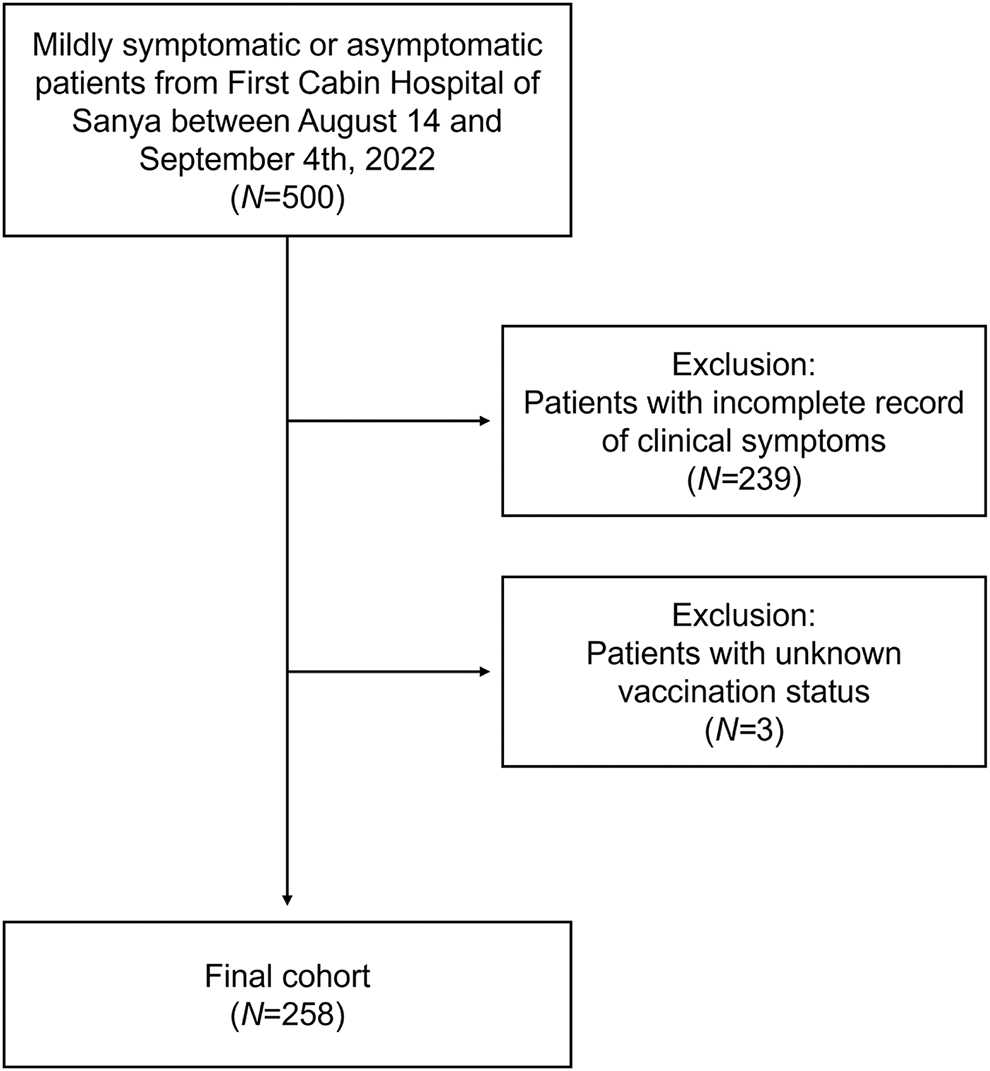
Flow diagram of the study population.
The general information, vital signs on the day of admission, clinical symptoms, past medical history, number of vaccine doses, Ct values of the N and ORF genes, and length of medical observation (LMO) were collected from the patient data (Table 1). All patients were injected with inactivated vaccines. Throat swabs were conducted for RT-PCR testing. Medical observations through the RT-PCR test begin when Ct values are below 35 and end when the Ct values are above 35.
Information Collected
Ct, cycle threshold; LMO, length of medical observation; N, nucleocapsid; ORF, open reading frames.
Statistical analysis
Analysis of variance (ANOVA) was used to determine the significance of differences in vaccination and LMO among four age groups. Data normality was confirmed using the Shapiro–Wilk test before the ANOVA. Multilinear regression analyses were undertaken to determine the factors associated with LMO. Vaccination status, sex, medical history, and clinical symptoms, including fever, cough, chills, sputum, fatigue, headache, throat pain, loss of smell or taste, rhinobyon, running nose, conjunctivitis, muscle soreness, and diarrhea, were inputted as the predictors in the original model. The stepwise regression method was adopted for predictor selection. A multivariate Cox proportional-hazards model was developed for identifying the risk and protective factors for LMO. The original predictors were identical to those in the multilinear regression, and stepwise regression was also used to construct the final model.
The Kaplan–Meier method and log-rank test were used to estimate the cumulative probability of medical observation discharge over time. Causal mediation analysis (CMA) was used to determine the generalized mediation effect of a third variable in the relationship between two others, which could be via mediation, confounding, or suppression effects (Sales, 2017). The differences among these three effects have been described previously (MacKinnon et al., 2000). To avoid confusion, the term indirect effect is used hereafter, rather than generalized mediation effect. The analysis reports consist of the average indirect effect (AIE), average direct effect (ADE), and total effect. The mediation effect requires the AIE and total effect to be significant in the same direction (i.e., positive or negative).
The suppression effect requires significant effects from ADE and AIE in different directions (Wen and Ye, 2014). The confounding effect requires significant effects from AIE and the total effect, with none from ADE (Wright, 2020). The results were considered significant at p < 0.05. All statistical analyses were performed using R software (version 4.1.0).
Results
Epidemiologic, demographic, and clinical characteristics
The study included 258 patients, comprising 128 males and 130 females. The mean age of the study population was 36.6 years, with the youngest being 1 year old and the oldest being 83 years old. The mean LMO was 10.1 days (range of 5–28 days). Thirty patients had pre-existing medical conditions, including hypertension, diabetes, and coronary heart disease, and some patients had more than one chronic disease (Table 2). The standard for medical observation discharge, namely Ct values ≥35 in two consecutive tests during the data collection period, was met by 145 patients, hereafter called the discharged group. The median slopes of the Ct values were 1.20 and 1.12 per day for the N and ORF genes, respectively.
Epidemiologic and Clinical Characteristics
Factors associated with LMO
A multilinear regression model was constructed using data from the discharged group. Vaccination and age were found to be associated with LMO after the stepwise regression. Lower age (p = 0.036) and more vaccine doses (p < 0.01) were found to correspond to shorter LMO (Table 3).
Results from Multilinear Regression of Factors Associated with Length of Medical Observation
CI, confidence interval.
Risk and protective factors for LMO
Multivariate Cox proportional-hazards regression analysis using the data of all enrolled patients indicated that age (hazard ratio [HR] = 0.99, 95% confidence interval [CI] = 0.98–1.00) was a significant risk factor (p = 0.029), while vaccination (HR = 1.23, 95% CI = 1.0–1.5) was a significant protective factor (p = 0.023) for LMO (Fig. 2).
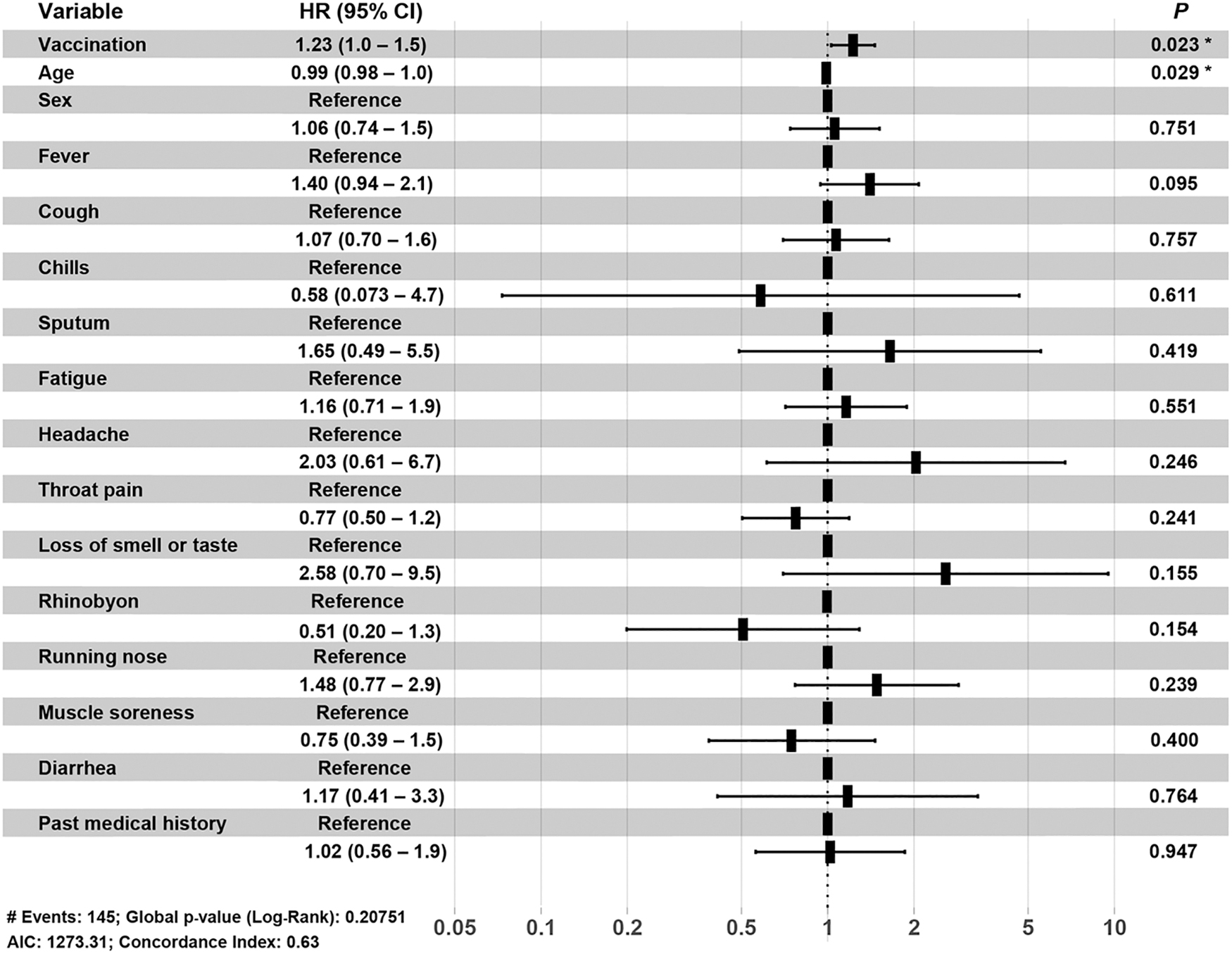
Cox regression analysis of risk and protective factors for LMO. AIC, Akaike information criterion; CI, confidence interval; HR, hazard ratio; LMO, length of medical observation. * Indicates statistical significance (P < 0.05).
Survival analysis of the effect of vaccination on LMO
To further explore the effect of vaccination on LMO, survival analysis was performed using the data of all 258 cases. This revealed that the vaccinated group tended to have a higher probability of medical observation discharge over time than the unvaccinated group, indicating that former recovered faster. However, the log-rank test indicated that this difference was not significant (p = 0.087), probably due to the smallness of the sample (Fig. 3).
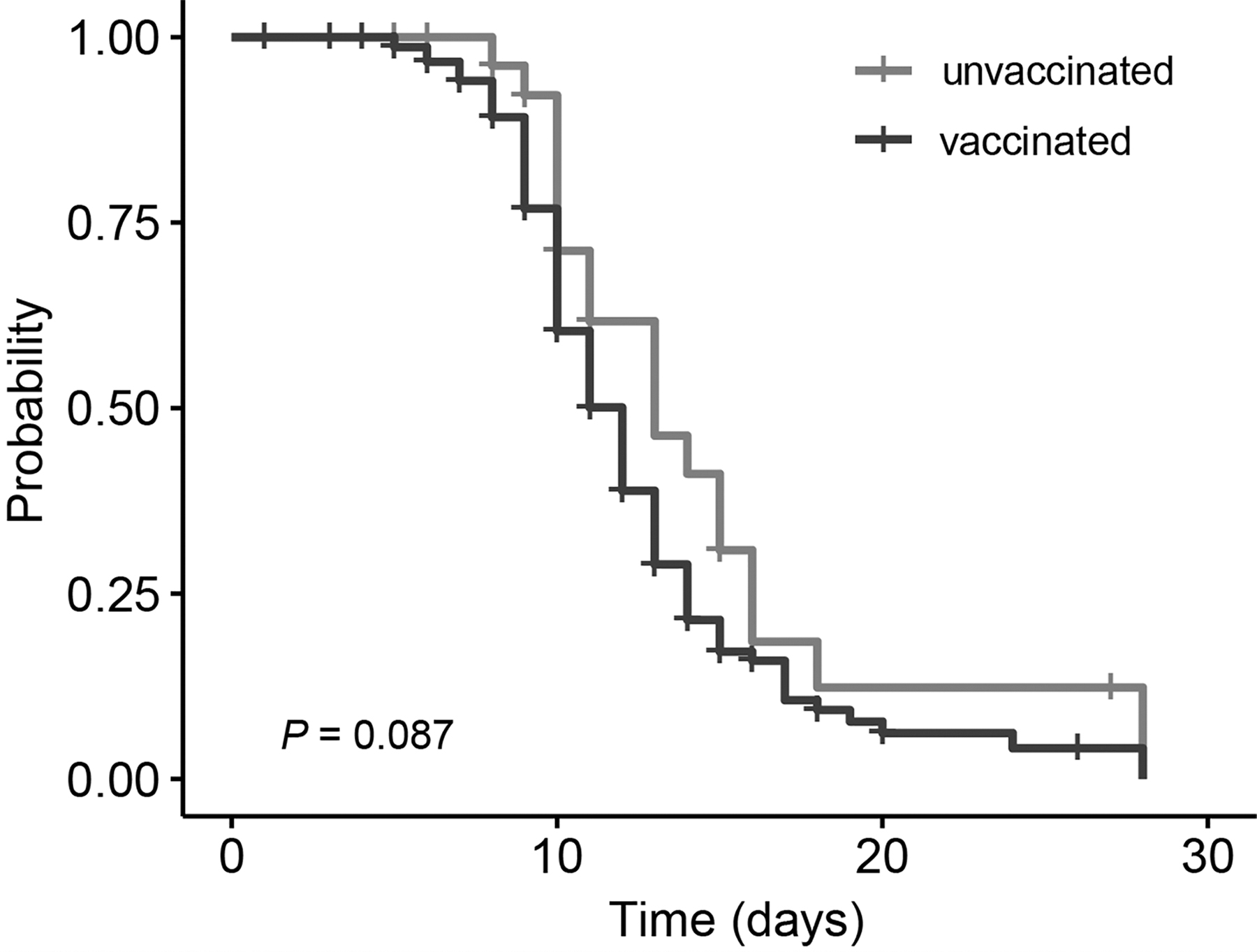
Kaplan–Meier survival curve for the cumulative probability of medical observation discharge.
Suppression effect of vaccination in the relationship between age and LMO
ANOVA was applied to the data of the discharged group, and the Student–Newman–Keuls test indicated that the number of vaccine doses varied significantly among the four age groups (≤15, 16–30, 31–60, and >60 years), while there was no such variation for LMO. The number of vaccine doses was largest in those aged 31–60 years, followed by those aged 15–30, >60, and <15 years (Supplementary Table S1).
CMA using the discharged group data indicated that the total effect of age (divided into four groups as in the ANOVA) on LMO was not significant (p = 0.064). However, after controlling for vaccination status, the direct effect of age became highly significant (p < 0.01). The indirect effect of vaccination in the relationship between age and LMO was negative (p < 0.01), contributing −36.68% of the total effect (Table 4; Fig. 4). The results suggested that the relationship between age and LMO was suppressed by vaccination. As demonstrated previously, higher age was associated with longer LMO, while more vaccine doses were related to shorter LMO. Moreover, the number of vaccine doses was found to differ significantly among the age groups. It is therefore understandable that vaccination had a suppression effect on the association between age and LMO.
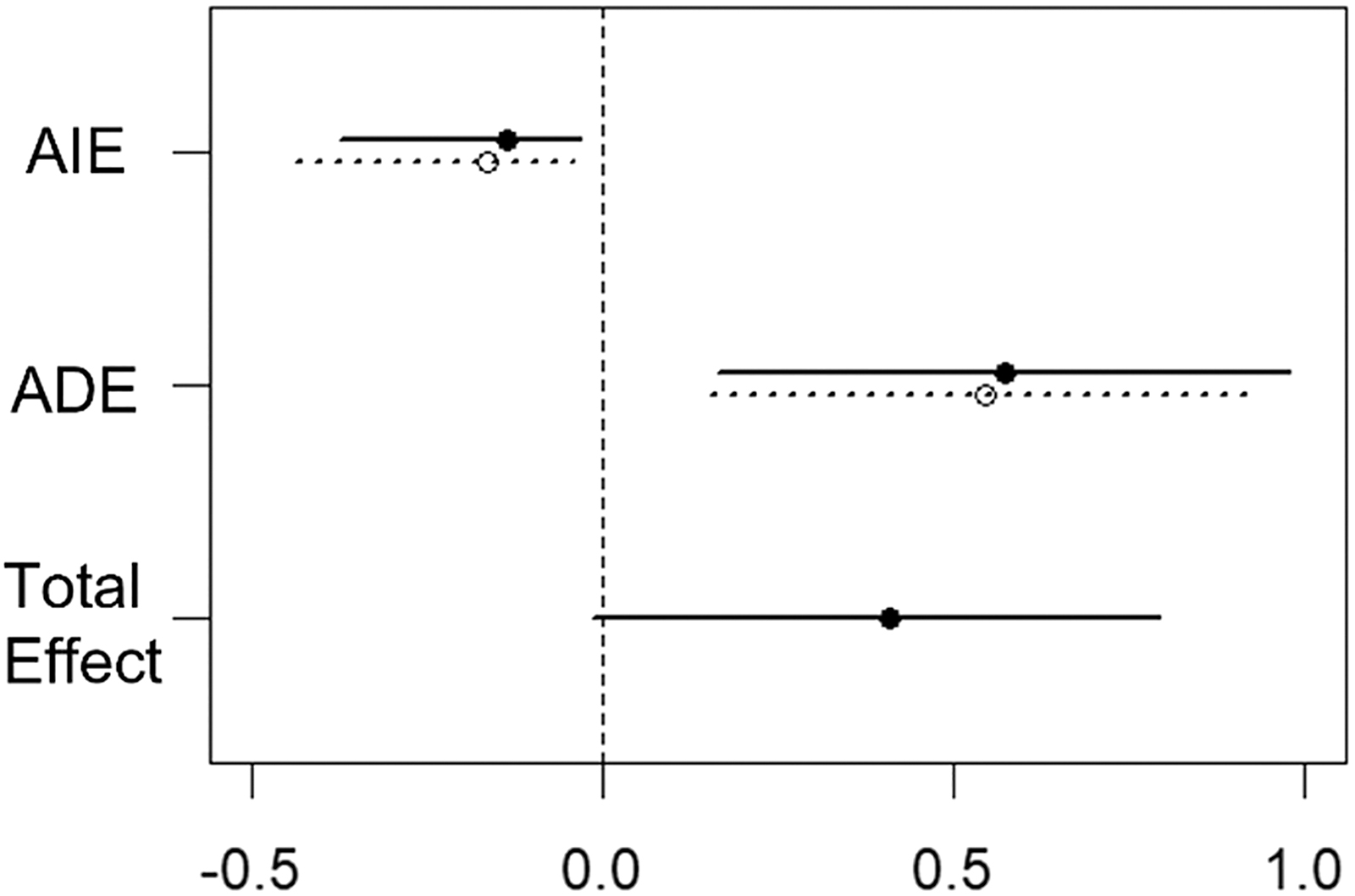
Results from causal mediation analysis of vaccination. ADE, average direct effect; AIE, average indirect effect.
Results from Causal Mediation Analysis of Vaccination
ADE, average direct effect; AIE, average indirect effect.
Discussion
Omicron variant BA.5.1.3 was first detected in China in August 2022. Its infectivity, clinical symptoms, and prognosis are not yet well understood. This situation prompted us to collect and analyze data on patients with an asymptomatic infection or with mild symptoms from the First Cabin Hospital of Sanya from August 14 to September 4, 2022. The sex distribution of the enrolled patients was balanced, and the rate of vaccination with three doses was 55.04%. The Ct value is a timely and cost-effective indicator of the progress of a patient in rehabilitation for mild or asymptomatic infection (Feng et al., 2022). Previous studies have demonstrated that people with a Ct value over 34 were not infectious (Aranha et al., 2021; La Scola et al., 2020). In the present study, the mean LMO as determined by the Ct value was 10.1 days.
Our findings indicate that older patients with an asymptomatic or mild SARS-CoV-2 infection recovered more slowly. Younger patients with SARS-CoV-2 infection tend to recover faster and have a better prognosis (Feng et al., 2022; Tan et al., 2022). One possible mechanism is that compositional differences of the precursor cells of plasma B and proliferative T cells, which are associated with disease severity, are prone to influence from age (Ren et al., 2021; Zhan et al., 2021).
The indirect suppression effect is the notion that there is a weaker relationship between two variables due to influence from a third (MacKinnon and Lamp, 2021; MacKinnon et al., 2000). We used the CMA method to investigate the role of vaccination in the relationship between age and LMO. The results indicated that the direct effect of age was a prolonged recovery time, and the indirect effect of the vaccination was the opposite, both of which were highly significant, while the total effect was not. Vaccination therefore suppressed the risks on recovery posed by age. Multilinear and Cox proportional-hazards regression also indicated that vaccination was associated with shorter LMO. Our findings therefore support the efficacy of inactivated vaccines against Omicron variants.
Previous research has also found that inactivated vaccines, especially those administered after booster injections, can still provide protection against Omicron variants, despite its strong immune-escape ability. A third dose of the CoronaVac vaccine could increase levels of neutralizing antibodies against Omicron variants (Cao et al., 2022a; Zeng et al., 2022). A booster dose of the Beijing Bio-Institute of Biological Products COVID-19 vaccine can also increase protection against Omicron variants and reduce the mortality risk (Silva-Valencia et al., 2022; Wang et al., 2022).
Several limitations of this study should be considered. First, during the data collection period, some patients had not yet met the conditions for medical observation discharge and their subsequent conditions were not tracked; their data were therefore not eligible for inclusion in some of the analyses. Second, due to the imperfect practice of data collection, the epidemiologic and clinical information of nearly 50% of the cases was somewhat incomplete and could not be included in the statistical analyses. Third, the vaccination status and medical history relied on patient recall, which might have introduced bias. Finally, the time of vaccination was not collected; nonetheless, we believed that some patients had their last injection more than 6 months previously.
Conclusion
We found that patients with mild or asymptomatic Omicron BA.5.1.3 infection remained under medical observation for a mean of around 10 days. The time for recovery from Omicron BA.5.1.3 became longer with increasing age, but this effect was counterbalanced by vaccination. Inactivated vaccines helped to shorten LMO and promote recovery, which demonstrates their usefulness in managing the prevalence of COVID-19, including its Omicron variants.
Footnotes
Acknowledgments
We thank Dr. Qun Tian for useful discussions.
Authors' Contributions
T.L.: software, visualization, writing, and original draft preparation. S.W., J.T., Z.H., L.L., W.L., and Y.W.: data curation and reviewing. J.L. and X.L.: methodology, supervision, and reviewing.
Ethics Approval Statement
This study was approved by the Institutional Review Board of the First Affiliated Hospital of Jinan University (Approval No.: KY-2023-077) on February 23, 2023.
Author Disclosure Statement
The authors declare that they have no conflict of interest.
Funding Information
This study was supported by Science and Technology Planning Project of Guangdong Province, China (Grant No. 32415102).
Supplementary Material
Supplementary Table S1
References
Supplementary Material
Please find the following supplemental material available below.
For Open Access articles published under a Creative Commons License, all supplemental material carries the same license as the article it is associated with.
For non-Open Access articles published, all supplemental material carries a non-exclusive license, and permission requests for re-use of supplemental material or any part of supplemental material shall be sent directly to the copyright owner as specified in the copyright notice associated with the article.
