




Abstract
Dioxygen is an integral part of every living organism, but its concentration varies from organ to organ. Production of metabolites from dioxygen may result in oxidative stress. Since oxidative stress has the potential to damage various biomolecules in the cell, therefore, it has presently become an active field of research. Oxidative stress has been studied in a wide range of model organisms from vertebrates to invertebrates, from rodents to piscine organisms, and from in vivo to in vitro models. But zebrafish (adults, larvae, or embryonic stage) emerged out to be the most promising vertebrate model organism to study oxidative stress because of its vast advantages (transparent embryo, cost-effectiveness, similarity to human genome, easy developmental processes, numerous offspring per spawning, and many more). This is evidenced by voluminous number of researches on oxidative stress in zebrafish exposed to chemicals, radiations, nanoparticles, pesticides, heavy metals, etc. On these backgrounds, this review attempts to highlight the potentiality of zebrafish as model of oxidative stress compared with other companion models. Several areas, from biomedical to environmental research, have been covered to explain it as a more convenient and reliable animal model for experimental research on oxidative mechanisms.
Introduction
Currently, oxidative stress is an active field of research, involving the studies of toxicology, stress response, Circadian rhythm, aging, plant, and medical research. 1 It may occur when the internal defense mechanisms are unable to control the reactive species inducing oxidative damage to proteins, lipids, and DNA as outcomes of cytotoxicity and genotoxicity. 2 The role of oxidative stress on various diseases, such as alcohol and drug abuse, asthma, chronic obstructive pulmonary disease, hepatitis and liver diseases, rheumatoid arthritis, kidney diseases, and various eye disorders, are well known.3–6 Therefore, oxidative stress may occur when some additional oxygen radicals are produced in cells or tissues, which could overpower the normal antioxidant capacity. Cells and tissues are continuously exposed to oxidants leading to various sources of reactive oxygen species (ROS) viz. endogeneous sources or exogeneous sources. 7
To maintain a proper cellular signaling, a lot of radical scavenging enzymes help to keep a threshold level of ROS in the cell. When such threshold level is exceeded, it may lead to unnecessary signals inside the cell resulting in indirect damage to the crucial components in the signaling pathways. Therefore, the cellular concentrations of ROS have to be checked by several defense mechanisms, which involve a number of antioxidants and antioxidant-detoxifying enzymes. 8
Such mechanisms are studied in various cell culture models, which are useful in both toxicity and cellular adaptive responses. 9 Mitochondrial oxidative stress was understood by using mice that was lacking the mitochondrial form of superoxide dismutase to better recognize the probable phenotypes.10,11 Oxidative stress has been studied in various cell lines, including retinal ganglionic cell line and brain cell culture models to study several oxidative stress-related diseases. Implication of oxidative stress in liver cirrhosis has also been studied.12–14 Studies have been conducted on various genetic, transgenic, and mutant mice models to monitor oxidative stress-related diseases like diabetes and Parkinson's disease.15–17 Oxidative stress also has a research approach toward the field of cancer and other cell injuries, which has been explained through several in vitro models.18–20 Studies reveal that mammalian models have been used to study oxidative stress to explain the mechanisms of cellular damages and responses because of its good congruence with human health issues related to oxidative stress.16,21
It is also confirmed that mammalian and piscine species have similar toxicological and adaptive responses toward oxidative stress, so, piscine models can also be used for understanding the mechanisms of oxidative stress response in addition to mammalian models. 22 For example, in vivo models like Fathead minnow (Pimepheles promelas) and zebrafish were used to examine biochemical biomarkers and antioxidant genes when exposed to industrial chemicals like BisphenolA.23,24
The study of human biology always relies on model organisms. The models, which are similar to humans in terms of development, physiology, and genetics are the right choices and should also be easy to maintain in large numbers. The laboratory mouse, which is largely used as a vertebrate model has limitations of its high cost of housing and large amount of space occupation. 25 The goal was to find a model organism that is not only similar to humans, but also inexpensive to house and can be manipulated in large numbers. In the past decade, fish (like zebrafish, Danio rerio; and medaka, Oryzias latipes) have emerged as promising model organisms that fit many of these criteria. 26 Like humans, fish are vertebrates, which indicate that a given gene would function in an analogous manner in both the species. Their small size helps them to be housed in large numbers within small facilities. Females can lay hundreds of eggs on a single day and can mate multiple times a month. 25 Because the embryos develop externally and are transparent, fish have become a premier model for in vivo visualization.
These fish, especially zebrafish, can be manipulated during their early embryonic development by genetic screens, and transgenic constructs of the embryos can also be made. 27 As a result, zebrafish, like other mammalian research, may have all credits to become a model fish in the study of oxidative stress. With these general features, the present review aims to discuss various relevant aspects from the literature to build a consensus on the use of this fish for the study of oxidative stress.
Advantages of Zebrafish as a Model Organism
Zebrafish is a freshwater fish that was originated from Southeast Asia and is the primary nonmammalian vertebrate for genetics studies. 28 It has been recognized as one of the best animal models to study developmental biology, cancer, toxicology, drug discovery, and molecular genetics because of its easy maintenance, easy breeding, and transparent body during early development.29,30 It was first used as an animal model in the 1960s. Zebrafish produces several offsprings at weekly intervals with an abundant supply of embryos. Being transparent, these embryos proved to be a good model to study the early development at stages. 31 Another major advantage is that the zebrafish genome is fully sequenced, 32 and it showed that the zebrafish genome is unusually similar to humans with at least 70% of genes having a zebrafish equivalent. 33 Additionally, zebrafish has the unique property of regenerating heart muscle, beta cells, retina, and caudal fins. 31
If the economics is to be considered in animal research, then zebrafish as model makes it quite cheaper as compared with any other rodent model organism, because they can cost quite a lot for their maintenance. Whereas zebrafish take less space to house, they cost less in terms of their feed requirements, and are easy to ship, especially the embryos, between the laboratories. Even studies have revealed that at times, zebrafish can predict better responses for mammalian research than rodent models.34,35 Due to these advantages, zebrafish is turning out to be the demanding animal model in research, and because of these reasons, studies related to immunological and oxidative stress responses have slowly accepted zebrafish as animal model for obtaining frequent and recurrent outcomes. 36
Advantages of Zebrafish in Biomedical Research
Drug-induced toxicity and its consequent oxidative stress have been reported from several biomedical research.37–39 Of these, Xia et al. experimented generation of oxidative stress for use of Psoralen—a Chinese traditional herb of wide medical implications. 39 Another such study was effect of isoniazid-induced oxidative stress on the embryonic development of zebrafish. 40 Not only in clinical studies to human, a handful of studies also attempted to understand the pathogenesis in fish as well as other invertebrates using zebrafish model. Chang et al. used GF-1 and pBudCE4.1-zebrafish catalase-producing cell culture to study the oxidative damage due to Red-spotted grouper nervous necrosis virus in fish GF-1 cells. 41 These studies evidenced that zebrafish is now largely being used as a model organism for drug development, and its effect in clinical studies. Rodent models generally get replaced in biomedical studies because they get stressed easily, so, some of the studies might not be reliable.29,42–44 Since 1960s, various evidences established the use of zebrafish as model organism in several fields of research in animal science.
It was studied as a model organism to understand finfish aquaculture research, fertility research, neurodevelopmental disorders and neurotoxicity, and injury.45–48 Furthermore, it is widely used to study nanoparticle toxicity. 49 They are also considered successful animal models for screening toxicity of medicinal plants.50–52 Various physiological aspects are being studied using zebrafish as a model organism.53,54 The biology of mitochondria, which is the potent target of study in oxidative stress, can also be monitored using zebrafish embryos. In a study, Sasagawa et al. made a detailed study on how clinical drug and disease-associated genes induced mitochondrial dysfunction using a novel cyanide dye ZMJ214 in zebrafish from 4 to 8 days postfertilization stage. 55 Several other mitochondrial evidences from zebrafish embryos are already in use.56–58 It is obvious that, zebrafish are becoming a truly emerging model organism of oxidative mechanisms in biomedical research.59,60
Toxin-Induced Oxidative Stress and Zebrafish
Evidence from the different studies showed that zebrafish has become a very popular model organism to study oxidative stress mechanisms as well as lipid peroxidation on exposure to various toxins, chemicals, heavy metals, and radiations in biological and pathological processes. 60 Especially, zebrafish embryos are considered one of the useful in vivo organisms to perform studies on oxidative impact that arises from pathological and toxicological conditions. 61 Various studies demonstrated that appropriate antioxidant could lessen ROS production during their sperm cryopreservation in zebrafish. 62 To study the ROS mechanisms in detail, researchers have developed a stable transgenic zebrafish line, which has high sensitivity as well as many potential applications to study important biomedical implications because of stress. 63
The effect of pesticides that induced nuclear factor erythroid 2-related factor 2 (Nrf2), a key regulator to combat oxidative stress in the cells, can be described using in vitro assays in zebrafish cell lines. 64 For example, there are various behavioral consequences as a result of oxidative stress in zebrafish. From studies in zebrafish, Magdeldin et al. 65 reported toxin-induced catalytic enzymes and cation transporters rapidly elevate to counteract oxidative stress conditions as a result of increasing fear or anxiety levels.
While attempting to understand the oxidative stress mechanisms of the cells of an organism, zebrafish is exposed to a number of toxins of various nature (Table. 1). Okadaic acid groups are lipophilic toxins that are produced in seawater by some other organisms (algal blooms), which may cause severe health hazards like diarrhea. The effects of these acid groups were examined on zebrafish larvae showing an imbalance in the antioxidants and increase in oxidative stress markers. 66 Chemical toxins like chlorpyrifos, pesticides like monocrotophos, tert-butyl hydroperoxide, isoniazid, endosulfan, and imidacloprid cause alterations in zebrafish behavior and antioxidant indices in both embryos and larvae. Exposure to these chemicals also alter the apoptotic gene expressions, promoting apoptosis in zebrafish embryos.67–71 There are even more chemicals, which are scrutinized on zebrafish model (either larval stages or adults) to understand the toxic levels and mechanisms to fight with the stress. For example, zearalenone, a mycotoxin produced by toxigenic fungal species, which may cause severe health hazards in humans. 72
Zebrafish Exposed to Various Chemicals and Their Affects
SOD, superoxide dismutase; TBECH, tetrabromoethylcyclohexane.
This mycotoxin is found to trigger neurotoxicity in zebrafish embryo inducing oxidative stress markers. 72 These stress markers get induced in zebrafish along with malformation of embryos during development due to apoptosis when exposed to deltamethrin, bisphenol A, and nonylphenol, which are well-known endocrine-disrupting chemicals.73,74 Zebrafish has also been considered to study the oxidative mechanism behind Parkinson's disease. 75 Chemicals and fungicides like menadione, paraquat, TBECH (tetrabromoethylcyclohexane), and strobilurin exposure to zebrafish causes alteration in the transcription of genes associated with oxidative stress and can result in irregular growth during embryonic development.76–79 Accidental exposure to acrylamide may cause neurotoxicity to animals. 80 To study the neurotoxic effects of acrylamide and subsequent increase in oxidative stress, zebrafish adults were studied recently and were found with some effective outcomes.81,82
Apart from these toxins, heavy metal exposure to animals is also an alarming topic, which is widely discussed in recent times. Water bodies are very vulnerable to heavy metal exposure. Therefore, zebrafish is an ideal model organism to evaluate the consequences under their exposure. Drastic changes and induction have been examined in the oxidative stress markers when exposed to heavy metals like copper, lead, cobalt, selenium, and chemicals like methylmercury chloride.83–87
Nanoparticles and Radiation-Induced Oxidative Stress and Zebrafish
Researchers have explored zebrafish as model organism in every way possible. They have now exposed zebrafish (adults or embryos) to nanoparticles (hydroxyapatite nanoparticles-loaded cadmium, perfluorooctane sulfonate, and ZnO nanoparticles) for understanding the effects of these particles on oxidative mechanisms of animals. These particles, as evident from their research, cause severe oxidative stress and damage biomolecules in the cells of organisms.88,89 The effect of such nanoparticles (e.g., ZnO) induce oxidative DNA damage. ROS-triggered mitochondria-mediated apoptosis and developmental toxicity have been explained in embryo–larval zebrafish.90,91
Similarly, TiO2 nanoparticles also showed induction of oxidative stress and cell apoptosis leading to neurobehavioral change in zebrafish larvae. 92 In his review, d'Amora, 93 extensively showed how widely zebrafish has been used as a model in studying nanoparticles of TiO2, IO, and ZnO. The zebrafish are also studied to know the impacts of various radiations on organisms. Although not extensively, it was found that radiations like gamma rays, GSM900 mobile phone radiations, and ultraviolet (UV) radiations increased the ROS production in zebrafish resulting in remarkable oxidative stress.94–96
Evidences That Suggest Zebrafish as a Convenient Model to Study Oxidative Stress
The above background has sufficiently explained how extensively zebrafish has been used for drug or toxin or nanoparticle-induced oxidative stress. A recent study conducted by Abbate et al. 97 reported that flavonoids are useful in increasing oxidative defenses in zebrafish against several stressors like heavy metals, UV radiations, high-fat diet, neurotoxins, etc. They have also considered zebrafish to be economically advantageous in comparison to many other species such as mice, which is commonly used as an experimental animal. Their study found zebrafish to be a potential experimental model to study oxidative stress-linked disorders and at the same time, can be helpful to evaluate novel therapeutic strategies for oxidative stress-linked disorders. 97 Zebrafish model not only has extreme potential for biomonitoring of toxicants in aqueous environments but also equally has potential for identifying ROS-mediated mechanisms involved in important human diseases.60,63 It has been revealed that zebrafish can be used as a rapid and simple model to assess antioxidant activity against oxidative stress in vivo. 98
Both transgenic and wild-type zebrafish have been used as a model organism to investigate the involvement of oxidative stress in disease pathogenesis and toxicity of nanomaterials. 36 Even zebrafish embryos are also considered as useful in in vivo systems to perform these studies and prepare a protocol to measure in in vivo oxidative stress. 61 The changes in oxidative stress mechanisms of a chronically ethanol-exposed brain was understood using a zebrafish model because of its psychopharmacological similarities to rodents and humans. 99 Earlier studies have already considered zebrafish as a novel experimental model for developmental toxicity because of its wide range of usefulness, however, researchers are now getting inclined to use zebrafish as a reference model from the fish community to study the oxidative stress mechanisms.87,100 Even the behavioral abnormalities (e.g., neurobehavioral changes) and fear responses can also be detected from adult zebrafish, which are chronically exposed to a stressor. 101
Recently, to study oxidative stress-mediated toxicity, a gene-targeted method in zebrafish have also been developed to generate homozygous null mutants in zebrafish. 102
Ambiance-Induced Oxidative Stress and Zebrafish
The ambiance of an animal, either terrestrial or aquatic can bother at times, due to the changes in the factors in the environment. The change in the environmental factors such as temperature, pH, and oxygen concentration can have adverse effects on any organism. Zebrafish, when exposed to reduced temperature showed changes in their gene expressions and their oxidative parameters in skeletal muscles. 103 Chronic hypoxia and acidification in the surroundings elevated the levels of oxidative stress indicators resulting in increased oxidative metabolism in the gills of zebrafish.104,105
The Tolerance Range of Cellular Hypoxia in Zebrafish
Zebrafish has already been considered as a more capable organism for maintaining oxygen consumption during their developmental progression at any developmental stage, even at higher temperature or any other acute hypoxic condition. 106 The known fact is that zebrafish can acclimate to mild hypoxia (3 mg/L), and could suffer from an oxidative damage when the dissolved oxygen reduces to 1 mg/L. 107 Not only that, acclimation to hypoxia also increases the survival time of zebrafish when exposed to lethal hypoxic condition,108,109 but both high and low temperature stress are directly proportional to the levels of hypoxia so it cannot be concluded yet that hypoxia acclimation can protect the fish from oxidative damage. 110 It has been reported that teleost fish has the capacity to cope with low oxygen through some complex processes for sensing oxygen that activate downstream molecular signal transduction networks, which are crucial in balancing tissue oxygen supply and demand. 111 A study further revealed that there are specific gene expression changes as a result of hypoxia in zebrafish embryos, which could be again reverted when exposed to normoxia condition (Fig. 1). 112

Gene expression during normoxia and hypoxia.
Later, it was known that the cellular response to hypoxia is regulated by the master regulator HIF1α (hypoxia-inducible factor-1α). 113 It was studied that hypoxia exposure during embryogenesis resulted in HIF1α induction, which was associated with hypoxia tolerance in the subsequent stages of development in zebrafish and consequent studies revealed that knockdown of this gene could lead to diminished metabolic capacity on exposure to hypoxic condition during the developmental stages. 114 Few recent studies have corelated tolerance of hypoxia in zebrafish with their mitochondrial responses.115–117 These studies explained that there was a significant alteration of zebrafish muscle mitochondrial state when exposed to hypoxia. It was found that zebrafish could cope with long-term hypoxia (up to 48 h of chronic hypoxia stress of 2–3 mg/L oxygen concentration) by decreasing the mitochondrial respiration rate and other mitochondrial activities. 115
Zebrafish Genome Database and its Relationship with Humans to Study Oxidative Stress
Zebrafish genome database includes various gene expression data, genome sequence data, gene ontology terms that can be used to understand the relationships between gene products of zebrafish and other organisms. They also collaborate with other databases like NCBI to standardize and interconnect these information. 118 Zebrafish and human genomes have a syntenic relationship. Eighty percent of genes are conserved and 56% of all the genes, which were analyzed have a conserved map order between the zebrafish and the human genomes.119–121 The Zebrafish Information Network (ZFIN), a web-based community resource that serves to integrate zebrafish's genetic, genomic, and developmental data, provides information about names of human disease related to oxidative stress, synonyms, and references to other databases for reporting the studies of such human diseases in which zebrafish were used. 122 They study the zebrafish orthologs of human genes that can be implicated in human disease etiology and can be studied to provide the understanding of the molecular basis of disease related to oxidative stress. 123
So, they provide a detailed list of human genes, which are involved in oxidative stress-related diseases with their corresponding zebrafish ortholog on their disease page with the links to additional information about the genes and mutations. 124 Therefore, they have emerged out to be a valuable database system for modeling human disease pathways and discovering new pathways.33,53 The improvements that ZFIN have made to display and search various data related to human disease and disease-associated genetic information and corelated to zebrafish models became extremely useful for researchers to consider zebrafish to study human diseases. 123 As the genes of associated diseases are mapped in zebrafish and readily available, the link between disease-induced oxidative stress of human beings may also be studied using zebrafish as model.
Crossreactivity of Mammalian Antibody with Zebrafish Antibody to Study Oxidative Stress
Studies have revealed that antibodies that are raised against mammalian proteins may have crossreactivity with zebrafish proteins making the antibodies useful for fish studies. Commercial mammalian antibodies greatly outnumber nonmammalian antibodies, which may greatly hinder research progress. 125 This problem can be addressed by many ways, first, monoclonal antibodies can be bought from hybridoma banks. Second, the protein can be tagged by an epitope that can be detected by an available antibody, and lastly, the antibodies available are highly conserved and can crossreact with their mammalian homologs provided that the proteins are similar enough.126,127 Crossreactivity generally improves the utility of an antibody and allows the same antibody to be used in multiple model organisms. Crossreactivity often occurs in human antigen-derived antibodies with the homologous proteins in nonhuman models like mouse, rat, monkey, or zebrafish. 127
Moreover, zebrafish has also been considered as an alternative animal model in its efficacy and safety to study both animal and human vaccines and genes, which regulate oxidative stress. 128 nrf2 and nrf2 gene families activate antioxidant response elements (AREs) to regulate oxidative stress and it has been reported that zebrafish, which is an important developmental model species, has six nrf genes (nfe2, nrf1a, nrf1b, nrf2a, nrf2b, and nrf3). After comparing the genes with humans, it was concluded that nrf2a and nrf2b of zebrafish are co-orthologs of human nrf2 demonstrating zebrafish as an appropriate model to study oxidative stress and oxidative stress-related pathways.129,130
Signaling Pathways in Oxidative Stress in Mammals and Zebrafish
Aerobic cell in general produces ROS as a consequence of normal metabolism and this redox balance is maintained by the antioxidant systems. When this redox balance gets disturbed by the prooxidants or any environmental stimuli, adaptive responses to these redox stress takes place, which results in upregulation of antioxidant proteins and detoxification enzymes. 131 It has already been known in mammals that NRF1 and NRF2 are responsible in transcriptional upregulation of protective genes against any environmental stressors. 132 Once the cells are challenged with environmental stressors, the oxidative balance between ROS and antioxidant defense systems are broken, resulting in the accumulation of ROS. ROS is linked with various signaling pathways, such as NRF2/Keap1, MAPKs (mitogen-activated protein kinases), NF-κB (nuclear factor kappa B), and protein kinase C, which are involved in prooxidant and antioxidant gene regulation and helps cell manage oxidative injury and antioxidant defense system. 133
In fish also, ROS homeostasis is prevalent, and ROS-based signaling and defense mechanisms are similar with that of mammals. 134 There are evidences that even oxidative stress in zebrafish also upregulates all the pathways mentioned here to defend against the redox imbalance in the cells. The ARE-driven genes, xenobiotic response element-driven genes, PPAR response element-driven genes, inflammation, autophagy, apoptosis, cell death, and every pathway gets triggered in zebrafish when exposed to environmental stressors (Fig. 2).135,136
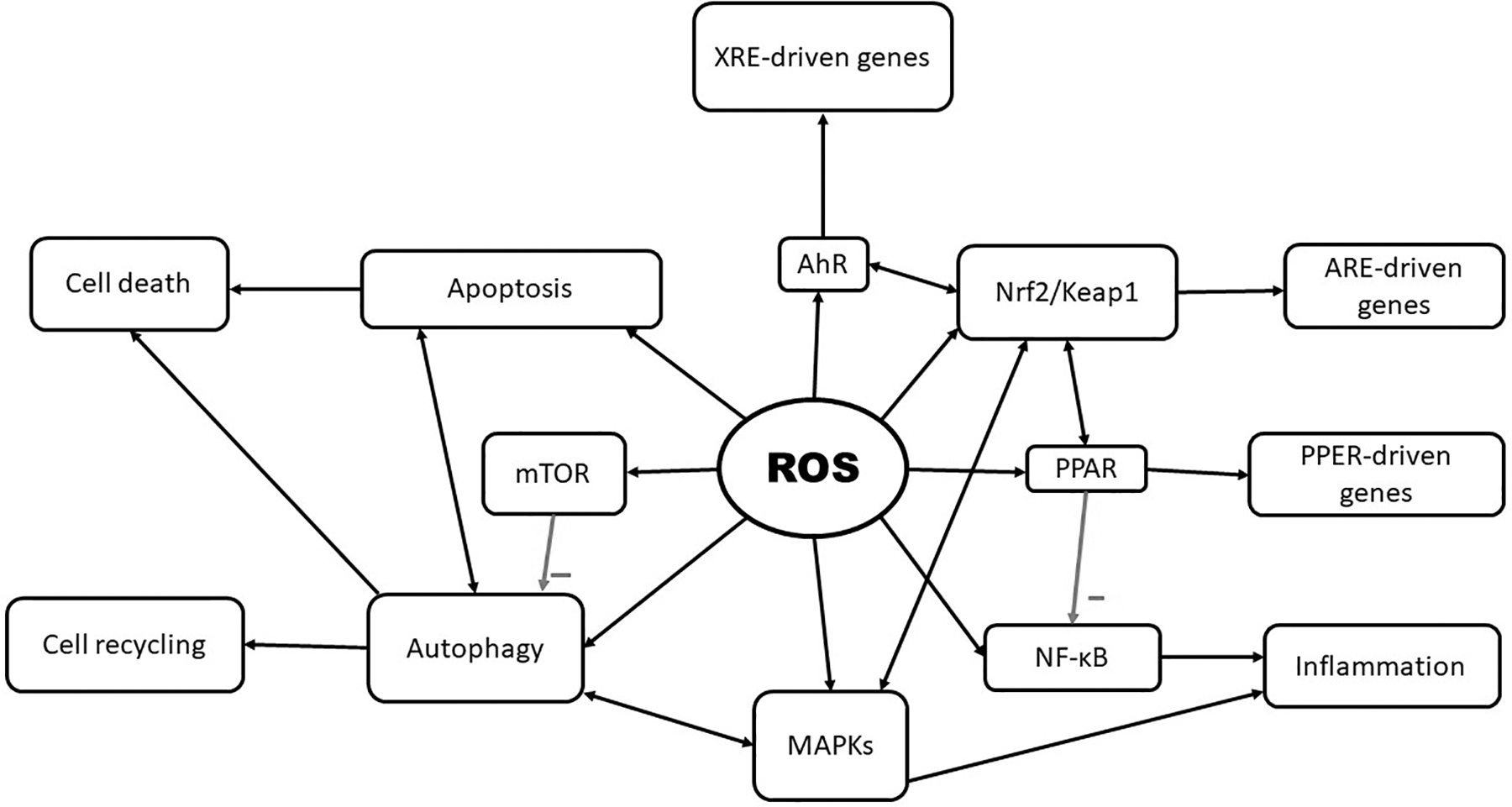
Network of genes expressed under oxidative stress in zebrafish.
Zebrafish as a Model for Oxidative Stress Neurodegeneration
Implications of oxidative stress is strongly related to depression, anxiety disorders, and high anxiety levels in all animals (including humans) and have been widely researched in clinical studies as well as other psychological disorders. Brain is an organ, which is highly vulnerable to oxidative stress because of high lipid peroxidation resulting in alteration of neurotransmissions. Oxidative stress causes anxiety like behaviors, but the mechanism behind it is still not known.137,138 Zebrafish has emerged out to be used as an animal model in neurobehavioral research and was found suitable to study various aspects of anxiety-related disorders because of its robust behavioral phenotypes. Anxiety-like behaviors of zebrafish are very similar to rodents and the endocrine and genomic responses match with humans. Hence zebrafish model came out to be one of the valid models to study pathways involved in anxiety regulation to discover potentially new classes of drugs. 139 Recently, zebrafish has been used to study oxidative stress-related neuropsychiatry focusing on autism, schizophrenia, Alzheimer's disease, and sleep disturbances. 140
These studies establish zebrafish as a potential candidate model to study neurodegeneration because of its transparency and transgenesis. A common method is to induce ROS generation in spinal cord of zebrafish under various conditions within the central nervous system to understand the aging and age-related neurodegenerative diseases. A recent study in zebrafish also reported that caffeine intake may lead to oxidative stress in brain. 141 The caffeine treatment provoked anxiety-like behavior, inducing lipid peroxidation, which is evident from elevated MDA level of brain tissue in zebrafish. 141 Zebrafish model has also been used to study acute stress that can develop anxiety disorders. Acute restrain stress leads to activation of cells in telencephalon reducing GABA levels of adult zebrafish, resulting in modulation and increase of anxiety-like behavior. On exposure to acute stress, it was understood that a neurochemical pathway that controls anxiety-like behavior is upregulated in zebrafish. 142 Such study opens new research opportunities to use this animal model for testing anxiolytic drugs.
Limitation and Future Directions for Studying Oxidative Stress in Zebrafish
As of now, there are hardly any limitations in the study of oxidative stress in zebrafish, however, there are some research questions, which remained unanswered for wide acceptability of zebrafish as the model organism for oxidative stress. Earlier in this review, it is mentioned that oxidative stress-related nrf2 gene family of humans is compared with zebrafish, which concluded that nrf2a and nrf2b genes of zebrafish are co-orthologs of human nrf2. Likewise, all the other oxidative stress-related gene sequences need a comparison between human and zebrafish to make it a fully dependable animal model to replace mammalian counterparts. Furthermore, most of the commercially available antibodies are mammalian specific, but, if research studies continue compatibility of gene sequences between humans and zebrafish then these commercially available human-specific antibodies can be used in studying zebrafish proteins more appropriately.
In spite of these two shortfalls of information, it can be concluded that the phenomenon of oxidative stress has been studied extensively in zebrafish to understand its enormous roles in various cellular mechanisms deciphering multifaceted advantages and thereby, has come up to be as the potential model organism (Fig. 3). The attributes contributing to such benefits include similarities to the human genome, cost-effectiveness in maintenance, transparent embryo, and easy developmental process with numerous offspring, etc. Apart from toxic chemicals, several studies have used zebrafish to explain the effect of chemicals like pesticides, fungicides, radiations, nanoparticles, and heavy metals. Although not in large, there are few attempts to explain zebrafish as a suitable model to understand the effect of environmental factors like oxygen concentration, pH, temperature, salinity, and turbidity, which can also influence the oxidative mechanisms in vertebrates, its emergence as an alternative animal model to study oxidative stress, and to understand oxidative mechanisms in particular, and mammals in general.

Schematic representation of the usefulness of zebrafish to study various fields.
Such emergence is strengthened by its highly similar genome with humans and the maximum crossreactivity of zebrafish proteins with mammalian antibodies. However, being a nonmammalian candidate, the demand for exclusive information of signaling mechanism of oxidative stress through the tissue–cell–protein–genetic axis may not be ignored.
Footnotes
Disclosure Statement
No competing financial interests exist.
Funding Information
This work is not funded by any agency.