




Abstract
In numerous product lines, globalization of production has been accompanied by increasingly austere product quality and safety regulations. These regulations are particularly stringent in the food and beverage sectors and put enormous strain on producers from developing nations. This article examines a cooperative of sugarcane, sugar, and ethanol producers from Brazil that, when confronted with the challenge of new regulations, adopted three policies that encouraged its members to upgrade quality and safety standards, enabling them to compete successfully in a demanding business environment. I argue that the co-op’s success was due to (1) a new cost accounting methodology that monetized some of the differences in product quality, attenuating tensions among members; (2) a low-cost, high-powered system of regulatory incentives that empowered middle managers vis-à-vis top executives within regulated firms; and (3) external auditors who acted not as police officers or consultants but as conduits, reestablishing information flows and helping to create a business atmosphere conducive to productive change.
In recent years, two global trends have changed how the goods we consume are produced. First, leading firms have stopped manufacturing their products directly or acquiring them locally and have started to outsource a significant number of activities to firms in developing countries. As a result, supply chains have become longer, more international, and harder to trace. Second, leading firms have started supervising, or governing, suppliers in their supply chains. In particular, leading firms now impose a number of regulations concerning product quality and safety, service levels, and labor and environmental standards on their suppliers, and monitor them for compliance.
These two trends are particularly visible in the food and beverage industry (Caswell, Bredahl, and Hooker 1998; Dolan and Humphrey 2000; Henson and Jaffee 2008; Humphrey 2008), but their effect on producers in developing countries remains unclear. In some cases, food quality and safety standards exclude developing-country suppliers from potentially lucrative supply chains. In other cases, regulations act as a catalyst that spurs producers to upgrade their structures and practices. To date, scholars who study this phenomenon have found that firms from richer countries and larger firms from developing nations tend to meet the requirements of these new regulations. Conversely, smaller firms from poorer countries often fall short. Yet existing studies provide limited insight into the process through which some firms, but not others, acquire the capabilities they need to succeed under these regulations. To shed light on this matter, this article examines the recent trajectory of a group of sugar and ethanol mills in Brazil.
Brazil is the most important producer of sugarcane, sugar, and ethanol (SSE) in the world. 1 With approximately 413 mills and 80,000 farms (Compromisso Nacional n.d., 15–17), the Brazilian SSE sector has had an eventful history. It grew tremendously during the 1960s and 1970s thanks to massive public investments from the national government and a set of policies that sheltered producers from market demands. In the 1980s and 1990s, the Brazilian government liberalized the economy and exposed local producers to international food quality and safety demands. Unable to compete, many farms and mills floundered. However, some eventually adjusted successfully. This article recounts the trajectory of a subset of sugar and ethanol producers that went through a depression but recovered, and it emphasizes two points. First, the article describes how these firms instituted an ingenious and potentially replicable system of self-regulation that helped laggards to improve their capacities and catch up. And second, it argues that this initiative succeeded because, within each firm, it empowered middle managers in their exchanges with top executives and subverted rigid hierarchies that prevented positive change. Moreover, external auditors acted as conduits that reestablished broken information flows. In a rewarding twist, many top executives came to realize that compliance with strict food quality and safety standards produced benefits they had not anticipated. Ultimately, this article contends, regulatory compliance is not a technical endeavor as much as a power struggle that emerges from and influences the politics of the firm.
The remainder of this article is divided as follows: The second section describes current research on the enforcement of food quality and safety standards and their effect on developing country producers. It points out that existing studies measure the effect of standards on these producers but overlook the process through which some producers adapt to new regulatory constraints. The third, or methodology, section describes the research activities that compose the current study. The fourth section introduces the main characters in this research and traces their trajectory from inception to crisis. The fifth section describes how this cooperative adopted a series of low-cost but high-impact incentives that both encouraged and helped its members to upgrade their practices and structures. The article concludes with some reflections on the implications of these findings for studies of regulation in general.
Standards as Barriers and Catalysts
Food quality and safety standards have become a fixture in the international trade system. In some cases, private buyers, such as supermarket chains (Dolan and Humphrey 2000) and large food and beverage manufacturers (Reardon and Farina 2002), impose the standards. In other instances, the standards are imposed by public authorities on products of certain types or based on countries of origin. For instance, the U.S. government requires that seafood imports meet Hazard Analysis & Critical Control Points (HACCP) standards (Anders and Caswell 2009) and the EU requires that all cereals, dried fruits, and edible nuts meet strict aflatoxin standards (Otsuki, Wilson, and Sewadeh 2001).
At first, researchers conjectured that food quality and safety standards constituted barriers to trade. Generally, compliance requires reporting procedures, improved facilities, and training, all of which can be costly. Many private firms in developing countries can hardly afford these improvements, and local governments lack the scientific expertise and financial resources to contribute to the effort. In theory, producers could join forces and collaborate on a common solution, and governments or trade associations could promote collective action, but insufficient supervision and free-riding are difficult to overcome (Henson and Loader 2001). Indeed, gravity models predict that strict sanitary standards would have a large adverse effect on developing country exports. According to these models, food quality and safety constraints “are becoming a major stumbling block in agricultural trade for developing countries” and “are limiting trade markedly” (Gebrehiwet, Ngwangweni, and Kirsten 2007, 23). Studies have predicted large adverse impacts of sanitary and phytosanitary standards on developing country exports of processed food (Jongwanich 2009), shrimp and fish (Nguyen and Wilson 2009), cereals, dried fruits and nuts (Otsuki, Wilson, and Sewadeh 2001), and other products.
Subsequent empirical studies suggested that stringent food quality and safety standards are particularly harsh on smallholders and tend to exclude them from global supply chains. Yet scholars have also found that standards can have positive effects on certain producers. Typically, larger firms from rich or middle-income countries meet the tighter requirements (Anders and Caswell 2009, 320). In other cases, smaller producers find ways to join forces and help each other to upgrade. Independent of size or prior technical capacity, those producers that meet the revised expectations benefit handsomely from doing so. For instance, fresh produce exporters from sub-Saharan Africa that obtained GlobalG.A.P. certification 2 increased their exports to Europe and accrued significant returns on investment (Henson, Masakure, and Cranfield 2011). Likewise, Pakistani firms that obtained ISO (International Organization of Standardization) 9000, an international certification of a firm’s quality management system, increased their exports considerably, and this effect was particularly pronounced among late entrants (that is, recent exporters) who did not already have established relations or a solid international reputation (Masakure, Henson, and Cranfield 2009). Along similar lines, brazil-nut producers from Bolivia have been able to meet stringent aflatoxin standards that the EU imposed, and thus, they practically dominate this value-added market. Conversely, their competitors from Brazil have been unable to meet these standards, so they resigned themselves to exporting a lesser version of the commodity to lenient markets (Coslovsky 2012).
In brief, standards are often treated as barriers, but they can also be catalysts for local economic development (Jaffee and Henson 2004). In this context, “the key question for firms in developing countries is how to exploit their strengths and overcome their weaknesses so they can become winners, rather than losers” (Jaffee and Henson 2004, 37). Existing studies that strive to answer this question assume that the depth and distribution of business capabilities in a given economy are fixed. According to this view, some firms are rich, capable, and well-connected, so they prevail. At the same time, other firms are poor, feeble, and isolated, so they fall short. So far, these studies have not examined why firms of roughly the same size, producing similar products for the same consumers, might react differently to revised standards. More pointedly, these studies measure the effect of standards on business performance but overlook the process of transformation, or the steps that certain firms take to revamp their practices, structures, and procedures so they can meet stringent food quality and safety constraints.
In recent years, scholars concerned with the enforcement of labor and environmental standards have examined how auditors and inspectors can facilitate compliance and business upgrading (Piore and Schrank 2008). In some cases, regulatory enforcement agents combine punishment with education (Pires 2008). In other instances, they help to modify the competitive environment in which the targeted firms operate so as to make compliance tolerable, even profitable, to all involved (Coslovsky 2009). Some private enforcement agents abandon the so-called compliance model of enforcement that emphasizes punishment to concentrate on the commitment model (Locke, Amengual, and Mangla 2009). The latter emphasizes productive and long-term business engagement, including commercial assurances, financial guarantees, subsidized loans, and technical support, that enables compliance. These studies suggest that front-line regulatory enforcement officials can be “sociological citizens” (Silbey, Huising, and Coslovsky 2009) who produce “local agreements and arrangements that realign interests, reshape conflicts, and redistribute the risks, costs and benefits of doing business and complying with the law” (Coslovsky, Pires, and Silbey 2011, 322). Building on these insights, this article examines how COBRACANA, 3 a cooperative of sugar and ethanol mills from Brazil, designed and implemented a system of audits that encouraged its members to upgrade their food quality and safety standards to compete successfully in a more demanding business environment.
Methodology
The data for this study come from a series of day-long field visits to ten mills (seven in São Paulo, four of which are affiliated with COBRACANA, and three mills in Pernambuco), and forty-five interviews, which the author conducted in 2008, with managers responsible for farm operations, industrial operations, human resources, quality assurance, sugarcane purchase, and other departments. The research also draws from thirty interviews with private auditors, public inspectors, elected officials, representatives from COBRACANA, business associations, labor unions, and research institutions. These interviews were also conducted in Brazil in 2008 by the author, a native Portuguese speaker, who translated all the interview material in this article. All these activities were part of a larger project directed by Richard Locke, a professor of political science and management at MIT, who accompanied the author on many of the interviews and field visits.
COBRACANA and the SSE Industry in Brazil
COBRACANA is a cooperative of sugar and ethanol mills located in south-central Brazil. It acquires the entire output of its members at cost, sells it in both the domestic and international markets, and redistributes profits according to members’ individual contributions. In theory, mills join the cooperative to concentrate on production; to take advantage of economies of scale and scope in warehousing, distribution, and sales; and to protect themselves against portfolio risk and price volatility. COBRACANA was created in 1959 by ten mills from São Paulo to increase their political power vis-à-vis other players in the supply chain. At that time, the Brazilian government invested heavily in sugar and ethanol production and determined prices throughout the supply chain (Barzelay 1986; Nunberg 1986). COBRACANA helped its members to secure a larger slice of this growing pie. As explained by an interviewee, “COBRACANA used to sell its sugar at the maximum price set by the government; those mills that weren’t members had to sell a significant share of their output to wholesalers at a discount—this was the advantage of membership.”
Brazilian mills are capital-intensive enterprises that employ thousands of workers and operate 24 hours a day, seven days a week, for the duration of the sugarcane season, which lasts roughly nine months of the year. Mills own and operate their own farms, but they also buy sugarcane from independent farmers in their vicinity (sugarcane is bulky and perishable, so the product cannot be stored or transported over long distances). To this day, most Brazilian mills are still family owned, with departments devoted to agricultural operations, industrial production, sugarcane purchasing, and other managerial activities. Typically, family members (or professional managers with close ties to the proprietors) occupy the top posts of the hierarchy; employees with technical training (in fields such as chemical analysis, logistics, quality control, financial management, and law) occupy the middle posts; and blue-collar workers perform the manual labor.
Historically, commercial and employment relations in this industry were arm’s length, with loose quality specifications, little systematic interaction, and limited oversight. Mills bought sugarcane based on weight and paid scant attention to the quality of the raw material. They assigned two workers for each job in alternating shifts of 12 hours each, provided them with no formal training, and laid almost everyone off at the end of the season. The quality of the output was not a significant concern either, and there was no pressure to improve. Mills associated with COBRACANA did not interact with clients and did not handle their requests or complaints. Whenever a problem arose, the cooperative diverted shipments and resolved the matter without mills even knowing about it. As explained by the industrial manager of a mill, “We do not hear from the clients and we do not know what they want. There is no feedback.” Decreasing pressure further, COBRACANA members used to sell most of their sugar to COBRACANA’s own sugar refinery, and the refinery transformed raw sugar of various qualities into the uniform, white powdery product that home cooks know and expect. Finally, COBRACANA retained so much market power that it abused its clients. As an interviewee explained, “Whenever we got sugar that was too dark, we said ‘leave it aside and ship it to Coca-Cola, they will buy anything.’” Despite this dismissive attitude, the organization thrived. In the late 1970s and early 1980s, COBRACANA had upwards of eighty members that accounted for more than 40 percent of the sugar and ethanol produced in Brazil. It maintained a training and research center with almost a thousand employees, developed new sugarcane varieties that are still used throughout Brazil, produced the best-selling brand of refined sugar in the country, and sponsored its own Formula 1 auto racing team. As an interviewee explained, “At that time, COBRACANA was the sugar and ethanol industry in the Southeast of Brazil.”
In the 1980s and 1990s, the situation changed dramatically. First, the Brazilian government curtailed public investments and eliminated quotas and price controls. Mills went from being price-makers to price-takers and were forced to compete for clients, labor, capital, and raw material. Second, rising incomes and increasing urbanization rates encouraged consumers to buy more industrialized products that already contained sugar and less refined sugar for home use. This shift in consumer preferences empowered food and beverage industries and forced mills to overhaul their food quality and safety practices. 3 COBRACANA was hit particularly hard. In theory, the cooperative still provided its members with economies of scope and scale, decreased risk, and increased bargaining power. However, its profit-sharing scheme relied on members performing at comparable levels, especially on items that are not easily monetized. To put it simply, the best-managed mills did not want to expend the enormous effort and money required to produce high-quality product for demanding clients while still being required to share aggregate profits with fellow members that produced lower-quality sugar for less exigent refineries. As one interviewee explained, “Usina Santa Julia [fictitious name] did everything that Nestlé asked it do to, but it wanted COBRACANA to reimburse it for its troubles. When COBRACANA refused, the mill simply left.” Many other top-performing mills left the organization as well and membership plummeted; it went from more than eighty-three mills in 1987 (Folha de São Paulo 1987) to thirty-four in 2003 (Folha de São Paulo 2003). For a while, it looked like COBRACANA would wither and die.
Furthermore, cooperatives and business associations face overwhelming collective action problems, and thus, their continued success can rarely be taken for granted (Tendler 1983; Doner and Schneider 2000). And yet COBRACANA turned itself around. At the time of the 2009–10 sugarcane harvest season, the organization had forty-eight members, accrued US$3.9 billion in revenue, and commercialized 22 percent of the sugar and ethanol produced in Brazil. COBRACANA exports almost 60 percent of its output, and its largest international customers are the United Arab Emirates, the United States, Switzerland, Singapore, the United Kingdom, and Canada. In 2011, COBRACANA exported more ethanol than any country in the world (other than Brazil in its entirety) and more sugar than either Australia or Guatemala (the third and fourth largest exporters, respectively [Mauro 2010]). The next section explains how COBRACANA helped its members to revamp their practices and structures to meet stringent food quality and safety standards and confront this new business environment.
The Transformation of COBRACANA
COBRACANA adopted a new cost accounting methodology that dampened internal conflicts and a system of quality audits and incentives that encouraged its members to upgrade. This section describes these two complementary policies and discusses their combined effect.
New cost accounting methodology
To mitigate internal disagreement, COBRACANA decided to monetize some of the differences in product quality so it could reimburse mills that produce better sugar at a higher rate than mills that produce low-quality product. This initiative was predicated on the idea that mills should not be punished or rewarded for producing different products for different clients, while quality should be appropriately recognized and compensated. To implement this policy, COBRACANA convened a series of meetings with technical experts appointed by each of its members. Together, these officials estimated the different costs of producing different types of sugar. Initially, their list included four types of sugar, but this was eventually updated to include more than fifteen types of sugar and ethanol. To make certain the formulas for estimating costs remained accurate and representative, COBRACANA instituted a permanent technical committee to periodically review and update the calculations.
This procedural change attenuated some of the tensions among mills, but many problems remained. First, instead of upgrading their practices to produce the best possible sugar, mills tried to “game the system” and produced whichever type of sugar afforded them the highest reimbursement rates relative to their actual costs. Second, those mills that produced high-quality products for demanding clients still incurred expenses that the estimates did not take into account. For instance, many food and beverage industries send their own auditors to visit suppliers, request that they maintain copious documentation, proscribe recycled bags, require deliveries on the weekend, and demand HACCP (Hazard Analysis Critical Control Point) certification and compliance with ISO 22.000 food safety standards. Some have started to check whether suppliers comply with labor and environmental laws as well. Altogether, these requests impose significant costs on producers, and the larger mills had to hire a designated professional to handle these requests.
In principle, COBRACANA could have decided to reimburse mills for the additional costs of servicing demanding clients. However, high-performing mills did not want to pay for other mills to revamp their facilities and acquire new equipment. Aware of the potential controversy, COBRACANA managers tried to avoid meddling with the existing system. As one interviewee explained, “Nobody wanted to mess with the existing program; it had already given us a lot of trouble to implement and fine-tune, a lot of disagreement, and nobody wanted to disrupt something that was working fairly well. Moreover, to estimate the marginal additional cost to serve the food industry versus a refinery would be too complicated.”
Instead of modifying the existing estimates, COBRACANA created an ingenious, low-cost but high-powered system of self-regulation that not only preserved internal cohesion but also encouraged all its members to upgrade their procedures and facilities.
Diferencial de Serviços: Engineering a race to the top
A small but growing literature suggests that rankings and other forms of information disclosure can have a deep impact on organizational behavior and performance (Elsbach and Kramer 1996; Sauder and Espeland 2009; Chatterji, Levine, and Toffel 2009). Building on these insights, in 2000–01 COBRACANA equipped a team of its own technical experts with a set of checklists and sent them to verify whether member mills complied with applicable quality and safety standards. Some items in the checklist concerned manufacturing practices, such as “Does the plant adopt statistical process controls? If so, are tests conducted hourly?” Other items concerned the facility itself: “Are internal roads paved? Is sugar packing and shipping isolated from the rest of the plant by a sterile anteroom?” The checklist devoted to ethanol emphasized safety in the handling of fuel and procedures to decrease contamination. The checklist devoted to sugar production was inspired by the audits that large buyers such as Purina, Nestlé, and Kraft were already conducting and emphasized food quality and safety standards. COBRACANA auditors were startled by what they found: “The difference between the mills was obvious at the gate.” Auditors also calculated a quality score for each mill (expressed in a 0- to 100-point scale), ranked mills according to performance, and presented the results to the members. Managers were startled as well: “Those at the bottom had no clue they would be at the bottom, but the ranking made them realize it.”
As one might have imagined, representatives from low-ranked mills reacted strongly and tried to contest the initiative on both substantive and procedural grounds. In particular, they claimed that the checklist did not take their specific conditions into account. For example, while some mills had been visited at the beginning of the season when facilities are neat and clean, their mill had been visited at the peak of the season, when the workload is so intense that many safeguards tend to fall by the wayside. As an auditor present at these deliberations described, “Disagreement was so intense that COBRACANA almost fell apart.” However, the low-performing mills could least afford to leave COBRACANA; establish their own logistics, sales, and financial departments; and confront market demands on their own. Membership in COBRACANA still granted mills a number of benefits and sheltered them from fluctuations in demand. And practically all large sugar buyers had already implemented or were implementing their own quality verification programs so mills would have to upgrade their structures and practices sooner or later.
When mills realized they had no other option but to revamp their operations, they engaged in a protracted process of negotiations to fine-tune COBRACANA’s quality verification program and ensure that audit methods and outcomes were fair to all. As a result of these discussions, mills modified the checklist and the protocol for each visit. They decided to outsource the actual audits to firms that specialized in quality control. And they agreed that auditors should visit mills at roughly the same period during the year so the circumstances at the mills would be comparable. Finally, in an ingenious move, they transformed the program, which they called Diferencial de Serviços, into a tournament. At the beginning of each season, mills deposited an amount of money proportional to their output into COBRACANA. At the end of the season, the cooperative calculated an average compliance score for its membership as a whole. The mills with above-average scores collected money, while those with below-average scores forfeited their deposits. As recounted by sales and quality control experts at COBRACANA, this intervention had an immediate impact:
It was not so much money, something like R$100,000 or R$150,000 [~US$50,000 to $75,000], it was a percentage of their revenues, but it was not negligible, and it had enormous symbolic value. It really made them concentrate. Mill owners are a proud bunch, they are not necessarily counting every penny, but they want to know whether their competitor has a piece of equipment that is more modern than their own, and then they want one that is even more modern. And if one of them shows up to a meeting in a nice airplane, at the next meeting they all try to show up with an even nicer plane, or a car, or whatever. The money involved in this program was more symbolic than the actual value. But for a mill owner, to pay for a competitor to buy a fancier SUV or airplane was incredibly shameful, so they all wanted to be at the top of the ranking. The mill owner that ended up at the bottom of the ranking in the first round actually cried during the meeting, out of shame, and vowed publicly to redeem himself. And in the next year, his mill ranked second, and then he placed first every year after that.
Given these interviewees’ references to fairness and pride, one can surmise that they were not motivated solely by commercial interests, or even bragging rights. Rather, this program reminded mill owners that a cooperative is also a community, with shared values and people in continuing relationships with one another. Above all, it reminded mill owners that they would rise and fall together. At the same time, the ranking and its associated prizes and punishments created an explicit status system, in which the ascent of a mill required the descent of others (Espeland and Sauder, forthcoming, 4). Together, these two forces created a pro-competitive constructive environment, and, as an experienced quality control expert described, the forces helped to create “the largest quality effort that [he] had ever seen.”
As the program proceeded, top managers at different mills hired external consultants and reached out to their own quality control experts to conduct mock audits, discover problems, propose changes in operating practices, and oversee implementation. For the most part, these professionals were instructed to identify low-hanging fruit: those interventions that required limited or no investment but generated a relatively large number of points in COBRACANA’s scoring and ranking systems. Despite the restricted mandate, this assignment constituted a radical departure from business as usual. As a quality control expert explained,
Before, we organized quality seminars, had a hotline to receive complaints from customers, analyzed complaints, and organized various programs for mills to upgrade their practices, but we did not have the backing of the directors. Up until that time, I had never been to a board meeting. But once the mill adopted this program, I participated in two meetings in six months.
This support from the executive level helped quality experts to modify operating practices and challenge entrenched interests on the shop floor. At first, the program emphasized a set of statistical methods, known as Statistical Process Control (SPC), that helps managers to correct problems in real time. To implement SPC, managers and workers must divide the production process into discrete steps, identify relevant variables that reflect the quality of output at each step, establish operational limits for each variable, measure these variables at regular intervals, and develop an action plan to intervene in case of deviation. For instance, to obtain light-colored (and therefore high-quality) sugar, mills must ensure that the sugar content of the sugarcane juice (brix) adheres to certain parameters as it flows through the plant. A quality control specialist explained,
When the sugarcane juice leaves the pre-evaporator, it should have a brix of 15 to 25. When we implement SPC, we instruct the operator to extract a sample of juice every 60 minutes, measure the brix, and plot the results in graph paper. The sheet has two parallel lines that represent the upper and lower limits for that specific process. If the dots are bouncing around the center, everything is fine. But if the dots start moving towards one of the outer boundaries, the operator must adjust the flow of juice until the brix returns to normal.
Interventions of this nature can be more consequential than they first appear. SPC requires that workers from each shift plot the data on a dedicated sheet of paper, and the quality control division saves all sheets to create a permanent document in book format. With this information in hand, quality control experts can tell if a worker is slacking off or being inattentive to quality demands. What is crucial is that these controls change the relationships among workers within the plant. Workers who clock in for their shift and find a dirty workplace, machines that do not function properly, or quality indicators that suggest problems will complain to the manager lest they take the blame. Likewise, downstream workers who receive a product that fails to meet standards will complain. In brief, instead of ignoring malfunctions or trying to fix problems after the fact, SPC forces workers to monitor their colleagues and to work together with them to correct any problems that arise.
Each year since implementation, COBRACANA tightened its criteria for performance and updated the checklists. To keep up, mills had to pave access roads; change flooring materials; seal windows, pipes, and vats; upgrade machines; acquire new equipment; and provide workers with uniforms, gloves, facemasks, and boot covers, among other improvements. But top executives did not always listen to quality experts on staff. As a quality control manager described, “‘The homegrown saint does not perform miracles’ [santo de casa não faz milagre]. You ask for something and the directors are not willing to approve it. Instead, they ask who requested it.” As the audit program progressed, middle managers and external auditors realized that they could join forces to increase their power vis-à-vis top executives and thus implement what they saw as necessary changes. The following quotes, from middle managers from different mills, illustrate this point:
Whenever I want to improve the production process and the boss disagrees, I ask the auditor to include it in his report, and then the boss approves and we go ahead and do it. Auditors ally with middle managers all the time, and this helps get certain investments approved. The auditor’s report allows you to go to the directors with a stronger argument for whatever it is you want to do. It was thanks to the auditor that we revived some dead projects, such as the syrup filter, which cost US$500,000, and to seal the crystallizer.
In these instances, the auditor is not acting as a police officer who detects violations and imposes fines. Likewise, he or she is not acting as a consultant who teaches businesses how to perform better. Rather, the auditor is subverting rigid hierarchies and acting as a conduit that connects middle managers and top executives to reestablish broken information flows. An experienced auditor corroborated this exact characterization:
The firms know [what needs to be done to come into compliance]. They don’t do it because nobody required it of them. But the health and safety professionals know. . . . In these cases, the auditor works by connecting the midlevel managers to the top echelons of the firm. One must understand that the audit is not a weapon, but a tool, a tool to help the firm learn how to perform better.
As COBRACANA’s audit program proceeded, it generated a range of positive outcomes that helped to institutionalize and spread the gains. First, improvements in the production process spurred mills to upgrade their human resources practices. As the industrial manager of a mill described,
Back in the day, all workers were hired for the season. But to improve the quality of the process and get the certifications we needed, we had to make the workers permanent. And to have them year-round, we had to train them for more than one task . . . so every technician has two roles, one during the season and another during the off-season. For instance, the guy who works at the lab, analyzing the sugarcane juice, takes his white coat off, and becomes a welder. Other office workers become plumbers or electricians.
Second, mills created mechanisms to integrate different departments and learned to use the audit in their favor. As reported by an interviewee, “At first, we saw the auditing process as an intrusion, but we grew past that, and started to see the auditing process as an opportunity to improve.” At least one firm required that each department being audited receive the support of people from two different departments. As explained by a manager in charge in that firm, “The person from HR accompanied the industrial audit; and a production person accompanied the audit on health and safety. This integrates the firm and improves the business.”
Third, mills learned how to share information among themselves. As mentioned earlier, the success of the Diferencial de Serviços program hinged on members agreeing to the rules and procedures. At the same time, COBRACANA continually tweaked the checklist and tightened the criteria associated with full compliance. To keep track of these changes and ensure their continued legitimacy, the cooperative created a “technical committee,” consisting of engineers and technical staff from all participating mills. The committee met on a regular basis, each time at a different mill. Meetings always included a tour of the facilities, but initially the host mill would go to great lengths to show only limited parts of the plant while keeping everything else confidential. As mills began to upgrade their equipment and improve their practices, host mills became proud of their achievements and wanted to show them off, so the visits became more comprehensive and informative.
The quantitative data suggest that, within a couple of rounds of the program, laggards had converged to the top of the quality scale. Every year, the Diferencial de Serviços program gave each mill a grade, from 0 to 100 for both sugar and ethanol. As indicated in Figure 1, in the first year, the best mill accrued 86 points for its sugar production while the worst mill accrued 25, a difference of 61 points. Within two years, the best mill accrued a perfect score of 100 points and the gap between best and worst shrunk to 12 points. A similar pattern can be observed in ethanol production (Figure 2).
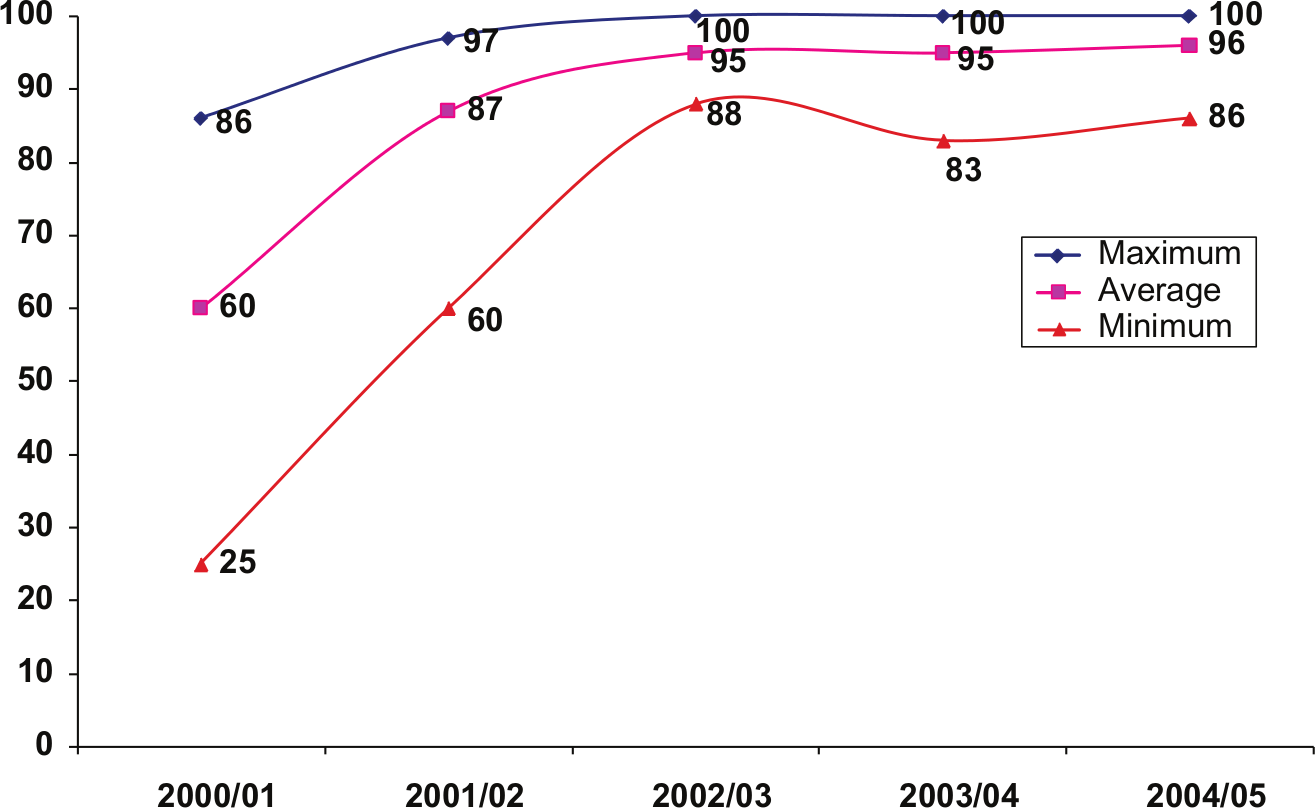
Process Quality in Sugar Production (Score 0–100%)
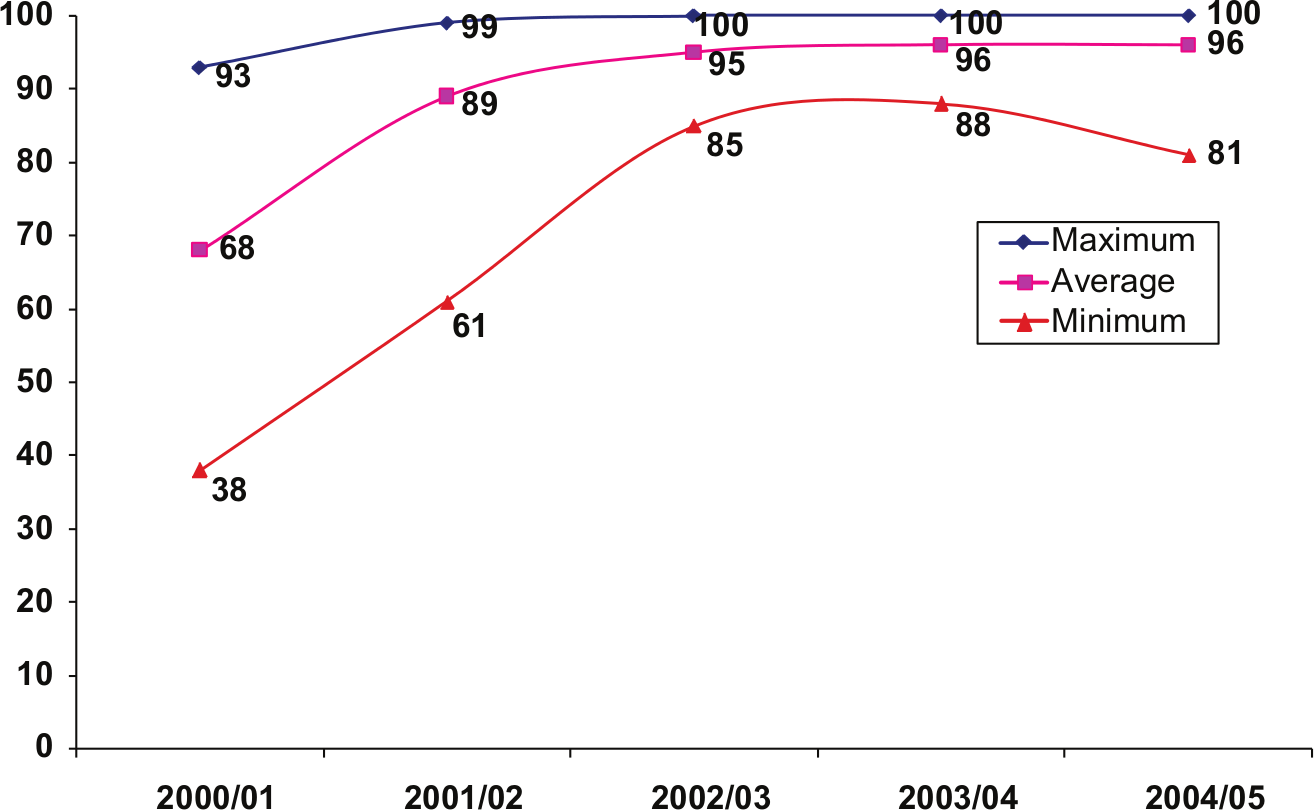
Process Quality in Ethanol Production (Score 0–100%)
One mill shared data on consumer complaints, and the available figures show dramatic improvement from 2000 onwards, even as total output increased markedly (see Figure 3).
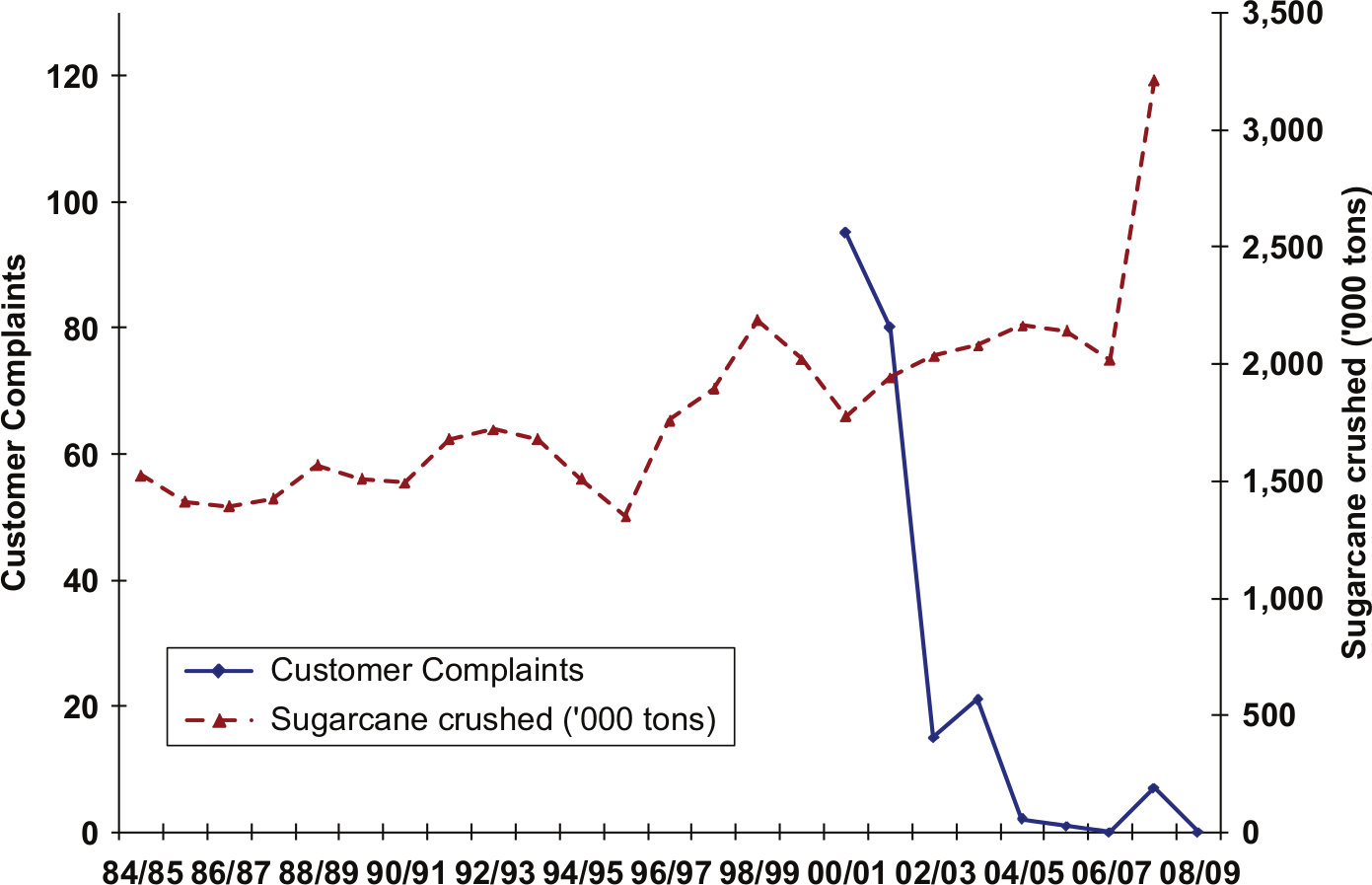
Mill A: Production Volume and Customer Complaints
Perhaps the most significant impact of the program concerns a change in managerial attitude, as indicated in the interviewees’ choice of language. Different managers affirmed that they were “proud” of selling to demanding clients, but their “pride” gets “hurt” when an auditor finds a nonconformity. Likewise, a good audit “lifts you up” while a particularly harsh visit leaves one “despondent.” Managers are “happy” to have a better quality control system because it “gives them confidence” in dealing with demanding clients in an unforgiving marketplace.
An experienced auditor compared this larger evolutionary process to a “snowball effect”:
At first, the firm is disorganized and the plant is dirty. You force them to change, and down the line this gives them room to improve some more. At first, the firm sees our requests as a cost, and it implements them as the lesser of two evils. But eventually they see the benefits, the fact that employees are happier, and that the relationship with employees improves. Progress is palpable. It takes some time, but things improve, and employees come to thank us for that.
The program operated as described here for approximately five years, at which point differences between top performers and laggards became so small that the ranking system had outgrown its raison d’être. As a former auditor stated, “Even if every year the requirements went up, the mills ended up so close to each other that the ranking lost its meaning. A mill would achieve 90 percent compliance and still end up in last place. Of course, they complained bitterly.” To solve this problem, COBRACANA eliminated the monetary aspect of the program, replaced the checklist with international norms, mostly ISO 22.000 (food safety standards), and, for some years, eliminated the rankings. Eventually, it brought the ranking system back and some mills boast of their performance in their annual reports.
Conclusion
This article examines how COBRACANA, a cooperative of SSE producers from Brazil, helped its members to meet stringent food quality and safety demands so they could compete successfully in a demanding global business environment. As the literature on international food quality and safety standards suggests, strict requirements create a polarizing effect: the most capable SSE producers upgraded their practices and retained or even expanded their market share. Conversely, their competitors downsized their operations or left the most demanding (and profitable) markets altogether. While this kind of adjustment may have positive effects for an economy or even for rural households that end up employed by these larger corporations (Maertens and Swinnen 2008), it puts enormous strain on a profit-sharing cooperative and may even drive it into the ground. To confront this challenge, COBRACANA adopted a quality control program that helped all its members to upgrade. This program had three components: (1) a new cost-accounting methodology that monetized some of the differences and appeased the discontent among mills; (2) an innovative set of regulatory controls that subverted rigid hierarchies and encouraged top executives to listen to technical experts on their staff; and (3) the enforcement practice of external auditors, who improved information flows. These interventions produced remarkable results. Within three to five years, poorly performing mills had improved on a variety of quality metrics to catch up with their more advanced counterparts.
This article suggests that it is not that mills are run by amoral calculators who retain cheap, low-quality, or risky manufacturing practices until monetary incentives force them to change, or that they are laggards without the technical expertise to upgrade; rather, the mills are often the victims of bounded rationality, inadequate management systems, and interrupted or neglected information flows that prevent positive change. Naturally, the research methods that led to this interpretation do not allow for broad generalizations. Still, this study suggests that compliance is not only a technical or economic challenge but also a contest for power within each targeted organization. In the end, the politics of the workplace, which are tightly linked to organizational structures and business practices, interact with regulatory design and enforcement to shape regulatory outcomes.
Footnotes
NOTE:
The research reported here was part of a larger project coordinated by Richard Locke, who accompanied me in many of my field visits and commented on drafts of this article. I am grateful for his support and guidance. This article also benefited from comments by Alberto Fuentes, Kristin Bumiller, Seth Pipkin, Matthew Amengual, Judith Tendler, and participants at the workshop that Susan Silbey at MIT organized in December 2012. Edson Maluf clarified several points concerning quality control in sugar and ethanol production. I am thankful to all of them; any remaining errors here are my own.
Notes
Salo Coslovsky is an assistant professor of international development at the Robert F. Wagner School of Public Service at New York University. He studies the enforcement of protective regulations in developing countries, including labor and environmental rights, food quality and safety standards, and laws concerning the use of shared urban resources and spaces.