



Abstract
In this article, we discuss the value of the RIT model for analyzing complex governance relationships in the regulation of food safety. By exploring food safety regimes involving the European Union and the Global Food Safety Initiative, we highlight the diverse and complex relationships between the actors in public, private, and hybrid regimes of food safety regulation. We extend the basic RIT model to better fit the reality of (hybrid) governance relationships in the modern regulation of food safety, arguing that the model enables disaggregation of these regimes into analytical subunits or “regulatory chains,” in which each actor contributes to and affects the regulatory process. Finally, we critically assess what the RIT model adds to alternative theoretical approaches in identifying, mapping, and explaining the different roles that actors play vis-à-vis others in regulatory regimes.
Keywords
The RIT model is about the analysis of regulatory interactions among actors beyond the dichotomy of regulators and targets (Abbott, Levi-Faur, and Snidal, this volume). In this article, we examine the current landscape of food safety regulation through the lens of this model, addressing the question of what the model has to offer to the analysis of regulatory governance in that field. The regulatory governance literature has moved away from a command-and-control model of regulation. The RIT model takes us one step further by introducing intermediaries as a separate concept. Still one can go beyond that by breaking down the concept and roles of intermediaries into separate categories, thus moving this literature forward even more.
Our critical analysis rests on empirical evidence from two cases of modern food safety regulation. From the public realm of food safety regulation, we focus on European Union (EU) law concerning food hygiene. Here we identify the EU legislature as the ultimate regulator, while the ultimate targets are food business operators within the EU. From the private domain, we discuss the Global Food Safety Initiative (GFSI). This industry-driven organization can be viewed as a meta-regulator, setting benchmarking standards for major transnational private food safety schemes (Verbruggen and Havinga 2016). The final targets are food business operators in buyer-driven commodity chains. Between the ultimate rule-makers and rule-takers in both cases, a wide range of actors enters the scene; each of these may be considered a regulatory intermediary, fulfilling the same, overlapping, or different regulatory functions. We have selected the institutionally diverging cases of EU hygiene regulation and GFSI meta-regulation so that we can discuss and test the RIT model in the full range of regulatory arrangements (public, private, national, and international) within the domain of food safety, which is increasingly “hybrid” in nature (Verbruggen and Havinga, forthcoming).
Using various schematic figures, we extend the basic RIT model to more closely fit the reality of (hybrid) governance relationships in the modern regulation of food safety. We contend that (1) there is a plurality of intermediaries in public and private regulatory contexts, and these intermediaries can be independent from one another, hierarchically organized, or related in complex ways; (2) some intermediaries mediate between various regulators and targets at the same point in time; and (3) intermediaries are “chameleonic,” in the sense that they may be regulators or targets themselves in relation to the same or other actors in the regime; they may thus “change color” (function) depending on the relationship studied.
The RIT model thus provides a useful analytical framework for understanding complex governance relationships in regulatory regimes. It facilitates the disaggregation of these regimes into analytical subunits or “regulatory chains,” in which each actor in its own way contributes to (or stalls) the regulatory process. However, in the field of food safety regulation, and perhaps other fields, the model may frequently be unable to capture the complex relationships, and the associated dynamics, between the actors in a regulatory regime. As regulatory intermediaries may assume the role of regulators or targets simultaneously, vis-à-vis other actors in the regime, the relationships between these actors as expressed through the RIT model constitute merely a static image—a snapshot—of a larger dynamic. Therefore, there is a need to consider how this model may learn from other theories that identify, map, and explain the roles of actors in regulatory regimes.
Regulatory Intermediaries in the RIT Model
Regulatory intermediaries, in the RIT model, are presented as the “go-betweens” in regulatory arrangements: they mediate the meaning, effect, and evaluation of regulation (i.e., rules) set by regulators to influence the behavior of targets. Previously, Levi-Faur and Starobin (2014, 21) broadly conceptualized regulatory intermediaries as “regulatory actors with the capacity to affect, control, and monitor relations between rule-makers and rule-takers via their interpretations of standards and their role in the increasingly institutionalized processes of monitoring, verification, testing, auditing, and certification.” These actors are public and private, individuals and organizations, and businesses and NGOs, all positioned to play a consistent and systematic role in the regulatory regime. Abbott, Levi-Faur, and Snidal (this volume) further develop this concept to include “any actor that acts directly or indirectly in conjunction with a regulator to affect the behavior of a target.” While intermediation may appear in a wide range of forms and for numerous reasons, at its core it involves the activity of facilitating rule implementation, monitoring, enforcement, and review. Intermediaries should, they contend, therefore be seen as systemically important actors in regulatory regimes that may help regulators to achieve their regulatory objectives in more effective ways or at lower cost.
Abbott, Levi-Faur, and Snidal (this volume) thus present a regulator-centered perspective on intermediaries. Intermediaries that are purposely incorporated into the regulatory process by regulators to help deliver regulatory objectives are the focus of the RIT model. 1
In this contribution, however, we do not limit our view to those intermediaries that are “called in” by the regulator but also include intermediaries that are hired by targets or step in on their own initiative to assist regulators or targets. Consequently, we also give careful consideration to the complex relationship between intermediaries and targets (I-T), which is equally important in understanding regulatory outcomes in food safety regulation. 2 More specifically, intermediaries such as certification bodies that provide auditing and inspection services to food business operators are typically enrolled by the targets themselves, to achieve compliance with food hygiene standards. As certification bodies offer their services in return for payment and compete with others for market share, the degree of dependency on targets and the (potential for) conflicts of interest in delivering certification services will influence food safety levels (Lytton and McAllister 2014). Understanding the I-T relationship is therefore key to understanding the operation and outcomes of the entire regulatory regime.
The RIT Model in Food Safety Regulation
We start our discussion of the RIT model in food safety regulation by identifying variations of the model. Extending the basic model seems appropriate simply because the field of food safety regulation is crowded with regulatory intermediaries across different dimensions. Taking this plurality of intermediaries as our starting point, we discuss the institutional characteristics of these actors, their functions, and their relationships with one another and with other actors. The elaborated models we present try to capture the plurality of regulatory intermediaries, the relationships between them, and the relationships they may simultaneously have with regulators (R-I) and targets (I-T).
In discussing these models, we distinguish between the public and private domains of food regulation. In the public domain, the traditional picture of food safety regulation is the policy (or regulatory) cycle driven by government actors. In the private domain, by contrast, the notion of the supply chain is more useful for studying the effects and impact of the nonstate market-driven regulation created by the actors involved. However, modern food safety regulation is increasingly hybrid. As we show, intermediaries from both the public and private domain play important roles in this development.
Plurality of intermediaries
The basic RIT model can be extended to incorporate multiple intermediaries between regulator and target. To offer insights into the relationship between these intermediaries, we build on the two basic ways in which components in an electrical circuit can be connected: we distinguish between series and parallel configurations of intermediaries. In the first case, shown in Figure 1, the intermediaries function in series, that is, a sequential ordering of intermediaries that builds on each other’s activities in delivering rules to targets. 3 This configuration implies a degree of dependence among the intermediaries. Alternatively, intermediaries may operate in parallel to one another, yet still between the same regulator and target, as shown in Figure 2. This configuration implies a stronger degree of independence for each intermediary.

Series Configuration of Regulatory Intermediaries
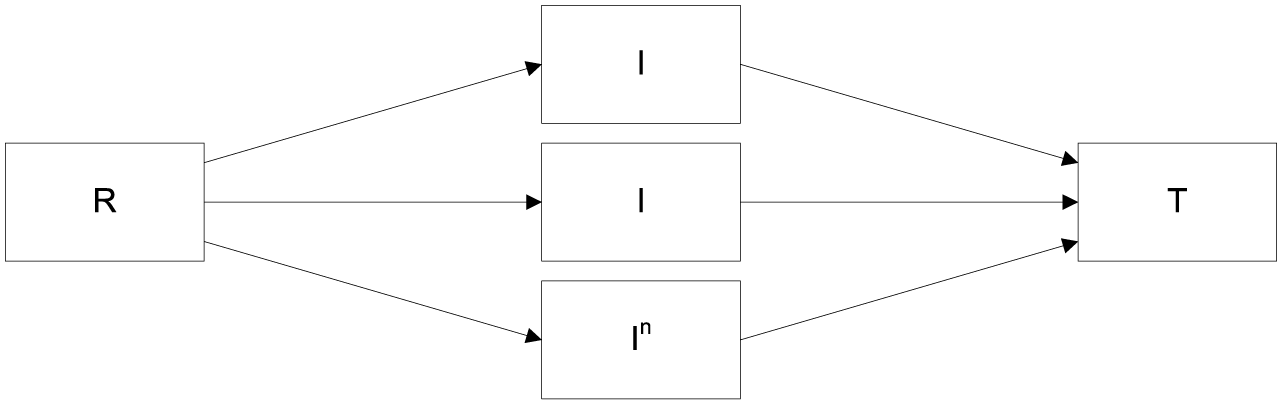
Parallel Configuration of Regulatory Intermediaries
Intermediaries in EU food hygiene law
To illustrate these two extended models, we first consider the case of EU food hygiene law, where the EU legislature is the ultimate regulator. The EU legislature comprises the European Commission, the European Council, and the European Parliament, all of which share responsibility for formulating and adopting EU laws. Accordingly, the regulator is a composite, within which regulatory power is distributed among its constitutive institutions. The ultimate targets of EU hygiene regulation are food business operators based in the EU. Between the regulator and target, a wide range of actors enters the scene, each of which might be considered a regulatory intermediary; these actors fulfill the same, overlapping, or different roles. Figure 3 offers an example of the potential intermediaries in EU food hygiene law. The intermediaries are not numbered (and the interior links have no arrows) to prevent overly generalized or simply incorrect statements about their relationships.
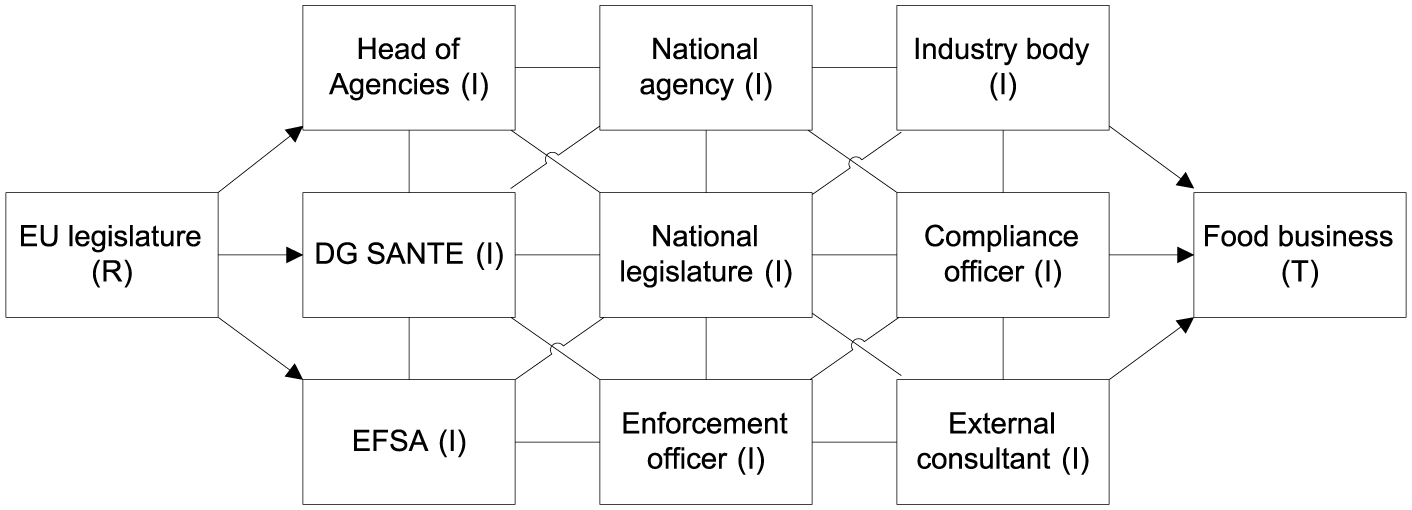
Hybrid Configuration of Intermediation in EU Food Hygiene Law
Various government actors may act as regulatory intermediaries: EU organizations (European Food Safety Authority [EFSA] and the Health and Food Audits and Analysis Directorate of DG SANTE); 4 the Member States (governments, departments, parliaments); the national agencies, local food authorities, and food enforcement officers (collectively termed national public enforcement authorities); and public prosecutors and courts. All these actors have formal, recognized roles in the dissemination, implementation, and enforcement of EU food hygiene rules vis-à-vis the target.
Some (but not all) of these intermediaries can be positioned in series, following legal and bureaucratic lines (Vos and Wendler 2006). Figure 4 shows such a formal sequence of governmental intermediaries. The EU legislature is the regulator, laying down specific rules regarding food hygiene. EU rules cover all stages of the production, processing, distribution, and placing on the market of food intended for human consumption. The main rules were adopted in April 2004 and came into force on January 1, 2006. 5 Food business operators in the EU Member States are the ultimate targets of these regulations. The Member States are responsible for the enforcement of the EU legislation. National agencies in the Member States organize official control systems within their respective territories to verify that food operators comply with relevant EU law. Enforcement officers (employed by the national agency or by local authorities) perform verification inspections. However, in reality the picture is complicated. Government intermediaries do not necessarily act in a hierarchical relationship, as Figure 5 highlights.

Series Configuration of Intermediaries in EU Food Hygiene Law
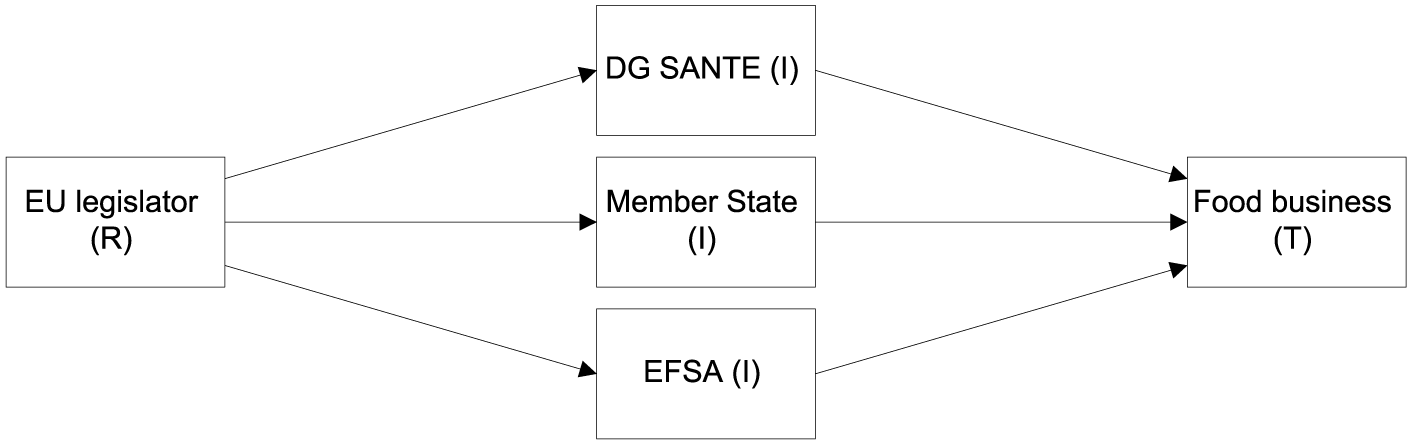
Parallel Configuration of Intermediaries in EU Food Hygiene Law
In addition to each Member State, DG SANTE (in particular its Health and Food Audits and Analysis Directorate) and EFSA fulfill intermediary functions between the EU legislature and the national competent authorities. These intermediaries differ in their functions and objectives. The Member State is responsible for the transposition and correct implementation of all EU law, that is, the translation of EU law into the national legal system, deciding which organization is the national competent authority, establishing and funding a national food agency, and adopting and publishing laws and decrees that implement EU law within national law. Independent of this process of implementation, DG SANTE is responsible for communicating changes in EU law and policy to the Member States and the national agencies, thereby acting as an intermediary between the EU legislature on one hand and the Member States and national agencies on the other. DG SANTE also provides guidance on the interpretation and application of EU law to national agencies. In addition, DG SANTE organizes audits and inspections to verify compliance with EU law by Member States and national agencies, harmonizing official controls and inspections by these agencies. EFSA, in turn, provides independent scientific advice to the European Commission, Parliament, and Council, as well as to Member States (Kuiper 2009). It also involves DG SANTE, national agencies, and national scientific councils in its risk communications. EFSA is, moreover, involved in managing food safety crises, providing advice on, for example, E coli or listeria outbreaks.
The intermediaries discussed here fulfill several functions for the regulator and the target. The most basic functions are communication and translation: the exchange of information about the practical application of rules and related food safety risks. Other functions may also come into play, such as monitoring compliance, consultation on how to achieve and maintain compliance, training and education, gate-keeping, and providing an additional layer of legitimacy to the regulation or regulator.
Intermediaries in transnational private food safety schemes
We now turn to the realm of private food standards. Here, we consider the GFSI as the ultimate regulator for the private food safety schemes that are widely implemented across the world and deeply rooted in global supply chains. GFSI is an industry-led organization that sets meta-standards for food safety schemes (Cafaggi 2016; Fagotto, forthcoming; Verbruggen and Havinga 2016). Scheme owners apply to have their schemes benchmarked by GFSI following the standards set out in the so-called GFSI benchmarking requirements (2016). Although GFSI sets standards for benchmarking private food safety schemes, the ultimate targets of these schemes themselves are (again) food business operators. Between regulator and target, a wide range of actors can be considered regulatory intermediaries; they (again) fulfill the same, overlapping, or different roles. Figure 6 shows the potential intermediaries in the context of a GFSI-recognized scheme.
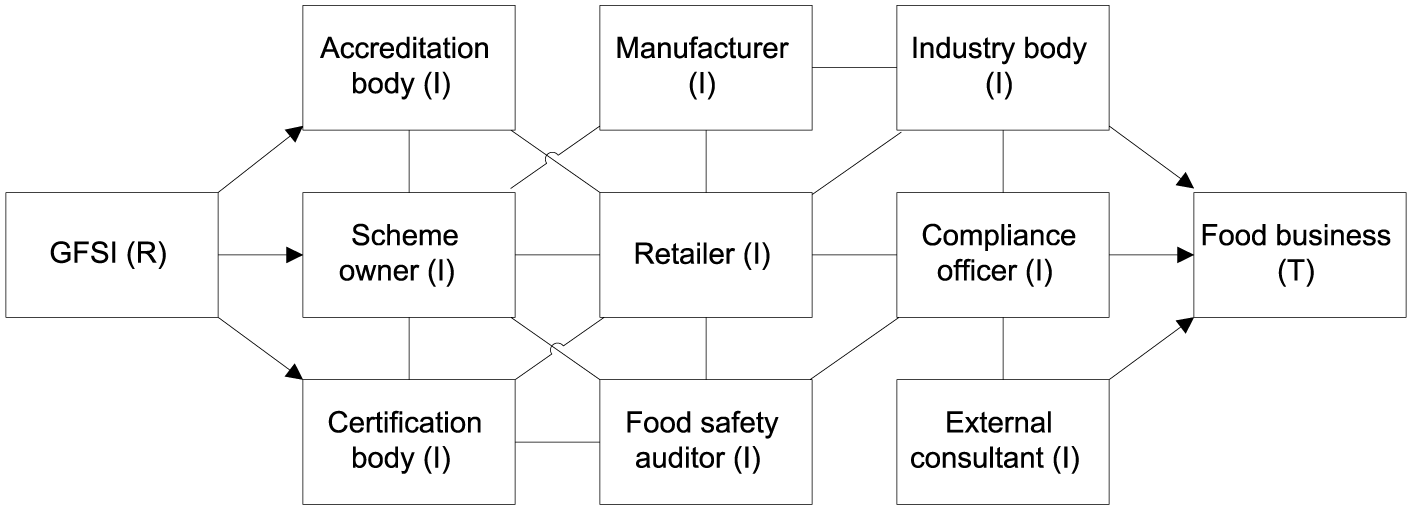
Potential Intermediaries in Transnational Private Food Safety Schemes
The first actors to be noted, which are the central actors in this regime, are retailers (Havinga 2015). Retailers have initiated most of the GFSI-recognized schemes, and indeed GFSI itself. Retailers also impose compliance with these schemes on their suppliers and other actors in the supply chain through binding contractual instruments. 6 They have used separate legal entities (e.g., British Retail Consortium) to collectively develop or host their schemes. These entities are known as “scheme owners”: they own the intellectual property rights related to the scheme’s standard, certificates, and logos, and are responsible for setting the standard, developing the scheme, and maintaining its integrity. The target group consists of food businesses that wish to be certified against the standard. The most important intermediaries in this regulatory domain are accredited certification organizations and their auditors, who bear responsibility for verifying compliance with the standard and granting certificates. 7 These certification bodies effectively behave as gatekeepers to competitive markets, deciding who receives certificates and may, thus, access those markets (Verbruggen 2014, 265).
Food producers or suppliers typically seek certification because their customers require it. They also expect a certificate to strengthen their competitive position in the market. In particular, large supermarket chains and food corporations have adopted private food safety schemes and imposed their standards on their suppliers. Such actors also play an important intermediary role in disseminating the schemes along the entire supply chain, incorporating enforceable requirements in commercial contracts with suppliers or requiring certification as part of private procurement strategies (Cafaggi 2012; Verbruggen, forthcoming-a).
Consequently, for firms that wish to operate in these markets, certification for a private food safety scheme is often mandatory (although legally voluntary). In several food supply chains, certification requirements are passed on along the chain: a supermarket requires certification for a GFSI-recognized scheme from its suppliers (e.g., wholesalers or food manufacturers), while these suppliers in turn require certification from their suppliers (e.g., farmers or suppliers of raw materials). As food supply chains are often complex, fragmented, and transnational (if not global) in scope, certification requirements may spread over entire sectors and regions (Verbruggen 2014, 170).
Certification bodies and auditors are part of the formal system set up by the scheme owner, as all GFSI-recognized food safety schemes require certification by a recognized, accredited third-party certification body. Scheme owners consciously incorporate these intermediaries into the regulatory process. However, the targets of the regulation—food businesses—can also incorporate intermediaries. Food businesses may appoint compliance officers, quality managers, or regulatory affairs officers to ensure better compliance with regulatory standards. Most large and many medium-sized firms employ such “internal” intermediaries. In addition, food firms may hire external consultancy firms to assist them with compliant behavior, administration, and good practice. Finally, the food business actually hires and compensates the certification body.
As in the case of EU food hygiene law, intermediaries within the context of transnational private food safety schemes may act in series, incrementally delivering and affecting the regulation as it flows to the target, as Figure 7 depicts. Here, GFSI sets meta-standards for scheme owners. Owners include these in their schemes and standards, and in turn authorize certification bodies to certify compliant food businesses. Auditors then perform the actual verification activities at the premises of food business operators.

Series Configuration of Intermediaries in Transnational Private Food Safety Schemes
Alternatively, intermediaries may not be connected in series, but may act independently and in parallel between the same regulator and target, as Figure 8 highlights.
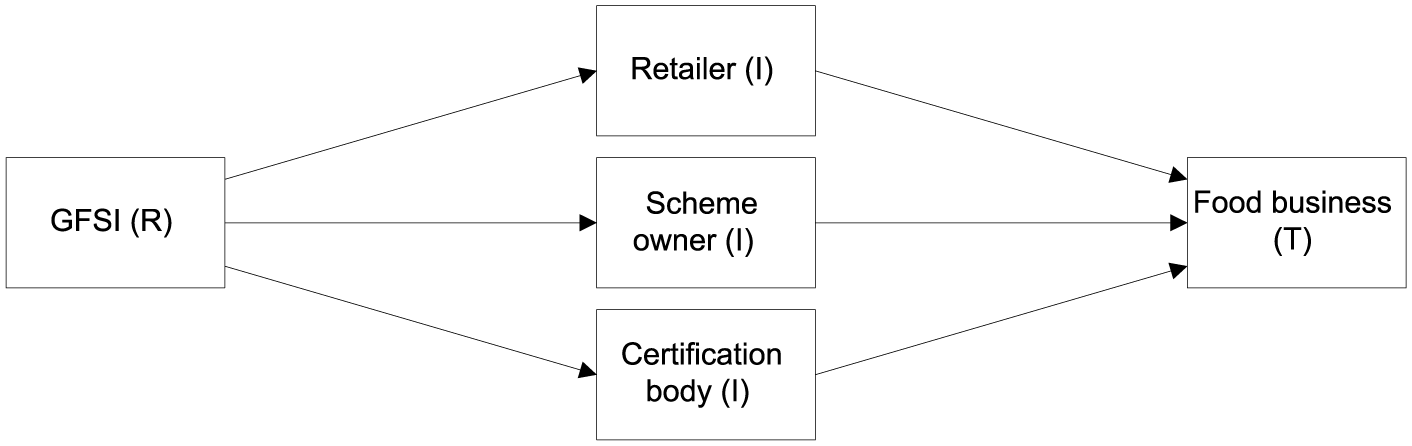
Parallel Configuration of Intermediaries in Transnational Private Food Safety Schemes
GFSI’s benchmarking requirements are directed at scheme owners that set private standards for food safety. These standards seek to influence the behavior of food businesses that want certification. Retailers enter the scene as intermediaries because they facilitate the diffusion of standards by requiring their suppliers in commercial contracts to be certified for a GFSI-recognized scheme. At the same time, however, a substantial part of GFSI benchmarking requirements deals with procedures to verify compliance by food business operators. These criteria focus on how certification bodies should act as intermediaries for rule implementation by food businesses, thereby making certification bodies targets as well.
Intermediaries in hybrid arrangements
Some intermediaries participate in both the private and public food regulatory arrangements discussed here. This is, in particular, the case for food businesses, which are the ultimate targets of both regulatory systems. A multinational food manufacturing company is a target because it must comply with government and private rules, but it is also an intermediary where it transmits public law rules to its suppliers, and again a regulator where it designs its own quality control system and imposes that system on its suppliers.
Private food safety schemes have incorporated important legal requirements for food safety risk management and control, and frequently make reference to legislation in their normative documents. In fact, they explicitly require participating firms to comply with public law obligations. Schemes such as the Global Standard for Food Safety of the British Retail Consortium also require firms to have a system in place to ensure that information on all relevant legislation is up to date and that labeling and packaging comply with all applicable legislation. On the other hand, important legal requirements are largely derivative of private industry (Oldfield 2015).
Despite this transference between public and private regulatory regimes at the level of rule-making, there is a strong separation between the two at the level of implementation and enforcement, with some exceptions. Recently, some public and private actors have begun to collaborate on monitoring and enforcement. As a result, a private certification body could also play an intermediary role within the public regime, and public food safety authorities could recognize private standards or controls for official inspection as part of their risk-based programs for food safety (Marks 2016; Verbruggen and Havinga 2015). This would make the arrangements even more complex, making it more difficult to assess who is the regulator, who is the target, and who are the intermediaries.
To illustrate this complexity, we use the following example. EU food hygiene law consists, in part, of open, principle-based standards that apply to all food businesses in the EU. Accordingly, these diverse businesses need interpretation and translation for different practices, stages in the supply chain, and even local circumstances (cf. Abbott, Levi-Faur, and Snidal, this volume). Member States choose different routes to implementation, in many cases involving private industry associations to assist them in this process (Havinga 2014). For example, in the Netherlands, industry associations are responsible for developing detailed hygiene prescriptions for their sector. A “guide to good hygiene practice” must be approved by the minister of health after consultation with the competent national enforcement agency. An approved guide is registered in a database administered by the European Commission. The industry association may also be involved in promoting the guide and offering training and advice to its members on how to apply it.
Here, other intermediaries also enter the scene. Private firms offer food companies in the Netherlands consultancy and auditing services related to industry hygiene guides, as a way of helping them to comply with legal obligations and maintain high levels of food safety. A food business may also hire an external consultant to develop a firm-specific food safety management plan (HACCP-based) that is in compliance with EU regulations. In each food business, compliance officers and quality managers are in charge of ensuring compliance with the regulatory framework. 8 All this creates a hybrid regulatory arrangement (see Figure 9), involving both public and private actors in the creation, implementation, and enforcement of food safety regulation.
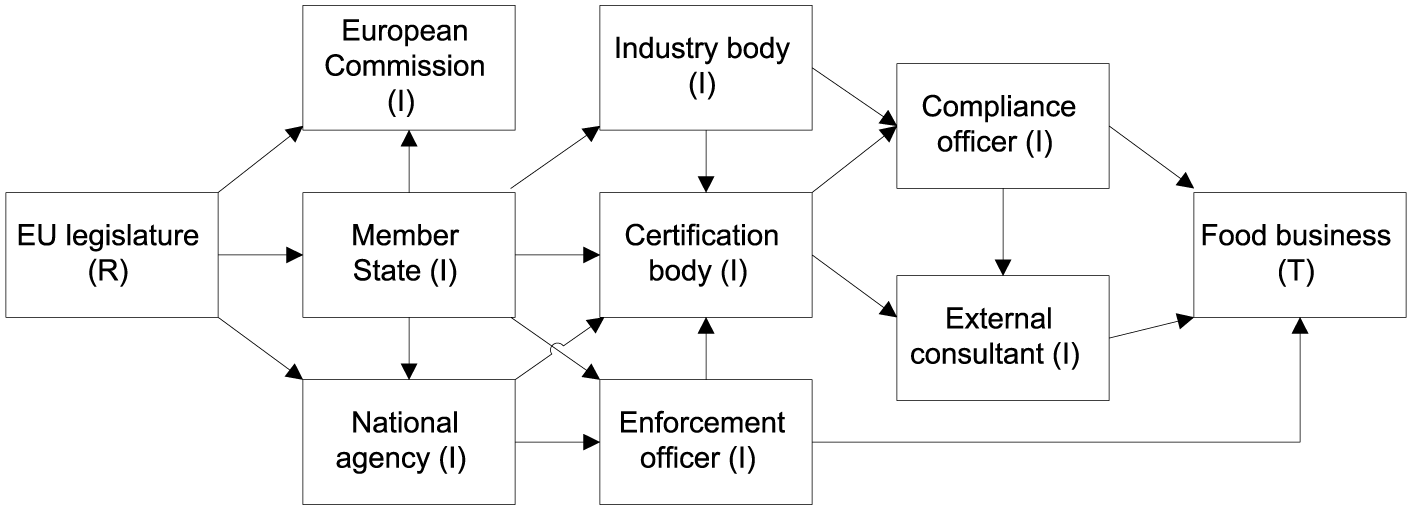
Intermediaries in a Hybrid Regulatory Arrangement
Civil society as intermediaries?
The actors that we have discussed so far are all directly involved in the governance of the regulatory arrangement. These are either state or business actors. In food safety governance, civil society organizations (e.g., NGOs and other public interest groups) are (still) only rarely involved. 9 Although consumers are the main beneficiaries of food safety regulation, they are prominent by their absence in this regulatory domain. 10 Consumer organizations rarely participate in either public or private regulatory arrangements. Where they do, they typically are members of advisory commissions or working groups; they do not hold voting positions. Presumably, the main reasons for the absence of consumer participation are that consumers perceive food safety as a technical matter, that consumer organizations do not prioritize food safety issues, and that consumers lack adequate resources to counterbalance the power of the food industry and government experts in standard-setting processes.
The press and broadcast and online media (blogs, rating pages, social media) can also be considered civil society actors. They are situated outside the regulatory arrangement, but they can act as intermediaries by providing information on the rules. In particular, press and broadcast and online media are important in sounding alarm bells in cases involving food safety incidents and fraud.
Other civil society actors enter the scene when environmental issues, fair trade, or animal welfare are at stake. Around these issues, several public interest groups try to influence the regulator and point to abuses by food businesses or intermediaries. These groups may at times formally participate in private standards schemes concerned with sustainable food production, fair trade, or animal welfare, such as the Marine Stewardship Council for sustainable fisheries (Auld and Renckens, this volume), Fairtrade International for fair trade (Loconto, this volume), and RSPCA for animal welfare standards. These standards are developed to inform consumers about the food products that they buy and to promote good practice within the industry. These are so-called B2C (business-to-consumer) standards, whereas the food safety schemes discussed above involve B2B (business-to-business) standards. Civil society groups are often (co-)initiators of B2C standards, and play important roles in agenda-setting and rule-making, promoting the uptake of standards in the market, and sometimes in monitoring and enforcement (either by verifying compliance or by acting as informal watchdogs) (e.g., SOMO 2011).
Adding Further Complexity to the RIT Model
The empirical examples we presented already hint at greater complexity than simply the existence of multiple intermediaries in a regulatory regime. In this section, we extend the basic RIT model by adding three additional complexities: (1) the degree of closeness of an intermediary vis-à-vis a regulator or target; (2) simultaneous intermediation by a single intermediary vis-à-vis different regulators and targets; and (3) the chameleonic character of intermediaries that can be viewed not only as an intermediary within a regulatory regime, but also as a target and/or regulator.
Regulator- or target-oriented intermediaries
Although all intermediaries are positioned between regulator and target, the position of an intermediary vis-à-vis these other actors may vary. Depending on their functions, intermediaries can be closer to the regulator (
The degree of closeness to the regulator or target appears to be informed by the function of a particular intermediary. In particular, intermediaries that are hired by targets on a commercial (for-profit) basis to provide expertise and assistance in rule implementation and compliance verification, such as consultants or certification bodies, often perceive the target as their client or customer, and their task as providing services to their clients. As the intermediary is dependent on the target for further business, this may give rise to conflicts of interest, jeopardizing the legitimacy and effectiveness of the entire regime (Lytton and McAllister 2014). Organizations representing targets, such as industry associations, may also be prone to giving priority to the interests of the target over those of the regulator. Generally, we can assume that intermediaries enlisted by a particular actor, be it the target, the regulator, or another intermediary, will show a higher degree of orientation to that actor.
Obviously, the regulator-oriented and target-oriented models can be developed to further reflect the plurality of intermediaries in a particular arrangement. This is not limited to serial configurations of intermediaries. In parallel configurations, different intermediaries may also be regulator-oriented or target-oriented.
Focal intermediaries
The model we present in Figure 10 contrasts with our previous models in that it does not presuppose multiple intermediaries. Instead, it presents a single intermediary as the centerpiece in relation to multiple regulators and targets. Thus, the same actor may act as intermediary in different regulator-target relationships. The intermediary then becomes the focal point around which multiple regulators and targets are identified and connected.
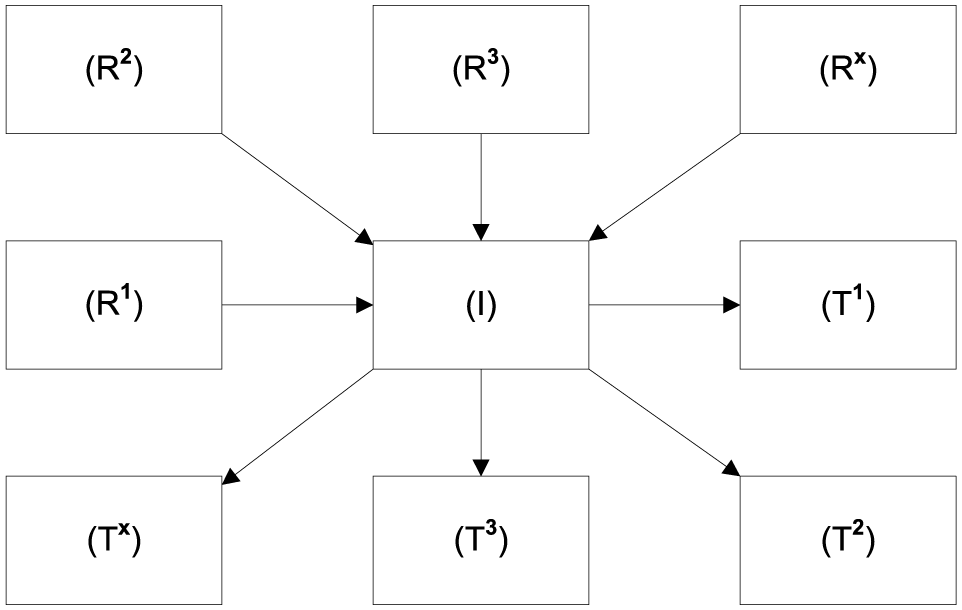
Focal Intermediaries
An example in the public domain would be an EU Member State acting as intermediary both between the EU legislature (R
When combining the insights that (1) there are multiple intermediaries and (2) the same actor may fulfill an intermediary role for different regulators and targets, we begin to see just how complex the picture becomes in the field of food safety regulation. In the next subsection, we add another layer to that complexity.
Chameleonic intermediaries
Actors may not only be intermediaries but may simultaneously be regulators and/or targets. Intermediaries may “change color,” much as a chameleon does in different surroundings. While in one relationship an actor may act as an intermediary, it may operate as a regulator or target in another.
An example from EU hygiene law, depicted in Figure 11, illustrates this model. We take the national enforcement agency of an EU Member State to be the central actor here. The national agency is first considered as a target, then as an intermediary, and finally as a regulator.
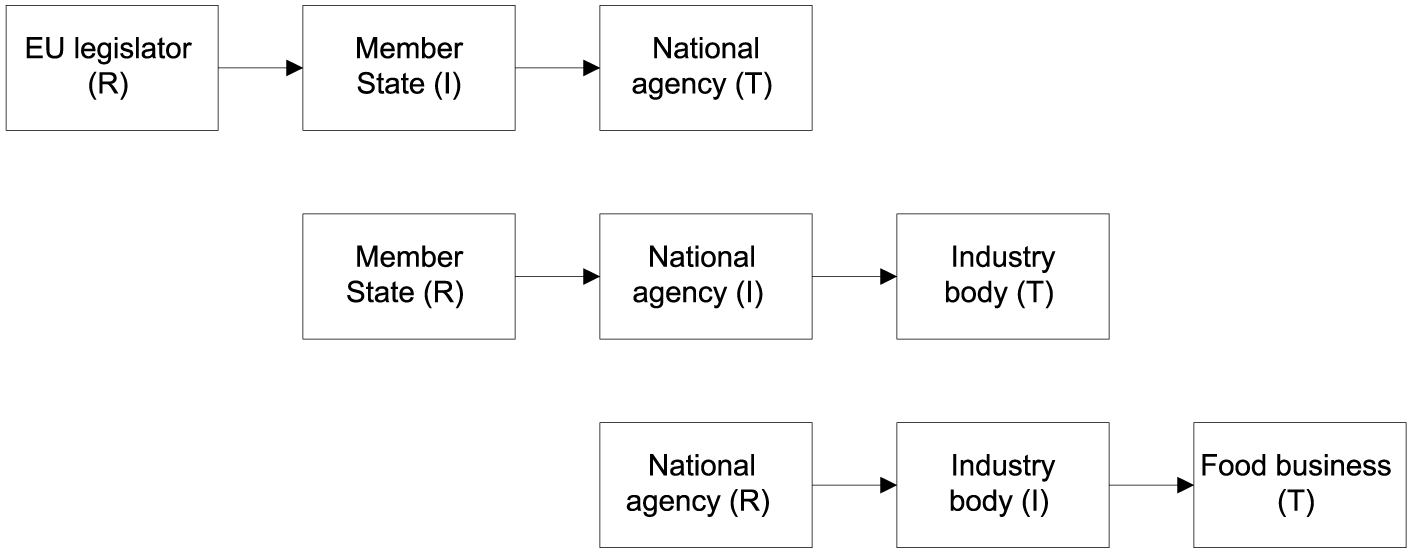
Chameleonic Intermediaries in EU Hygiene Law
First, an enforcement agency can be a target, where it is subject to prescriptive rules adopted at the EU level, for example, official food controls and risk assessment and management responsibilities. The Member State might then be considered as a regulatory intermediary between the EU and the national agency, as it is responsible for informing its national agencies about policy developments and providing scientific support for and coordinating responses to cross-border food crises.
In the second configuration, the national food authority acts as an intermediary, informing food businesses about their responsibilities under EU and national laws, translating applicable rules, and offering training and assistance to help food businesses comply with applicable legislation. This has become a major function of national agencies, as many food businesses (in particular small and medium-size enterprises) have struggled to implement adequate hazard analysis and critical control points (HACCP) systems, required under EU hygiene law (Fairman and Yapp 2005).
In the third configuration, the national enforcement agency acts as a regulator, in cases where it decides on the details of implementation and practical interpretation of European and national rules and issues guidelines for compliance with these rules. Industry bodies, like those in the Netherlands, may further help to operationalize regulatory standards for food businesses, effectively acting as intermediaries (Havinga 2014).
In private regulation, intermediaries can similarly act simultaneously as regulators and targets. To illustrate this, Figure 12 sketches the functions that a scheme owner and a certification body may perform. Again, the model develops in a layered fashion, now adding a fourth layer.
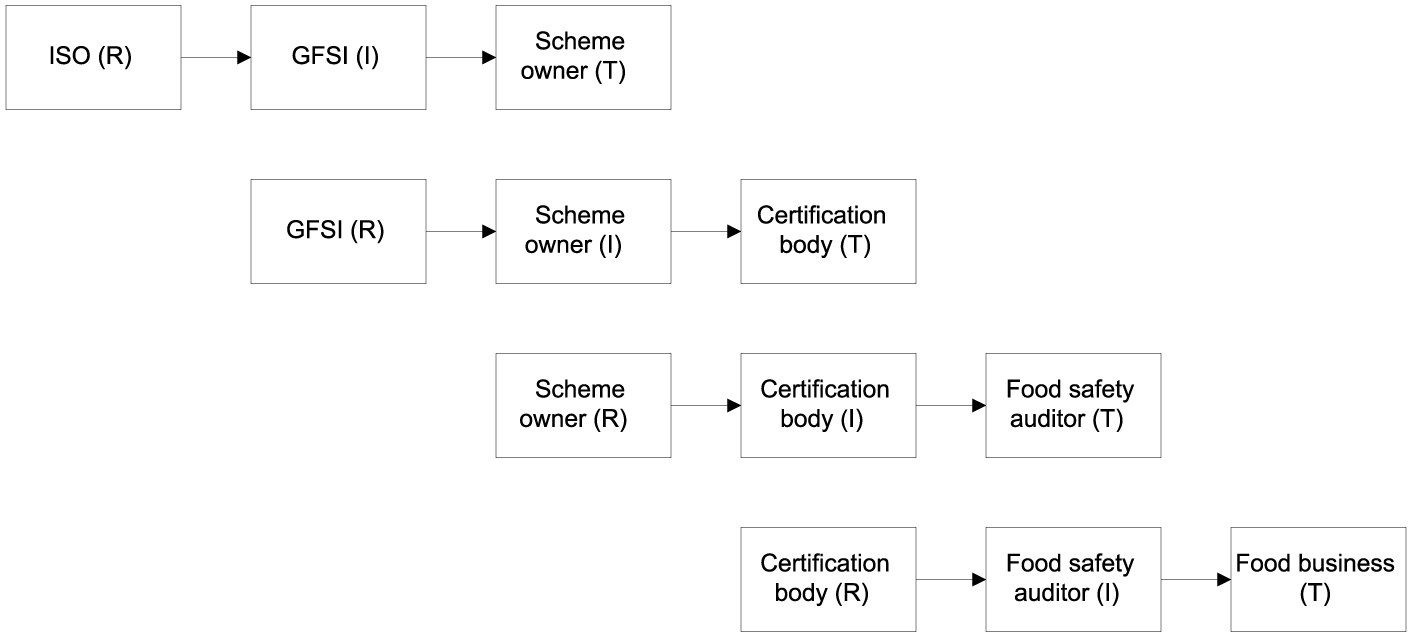
Chameleonic Intermediaries in Transnational Private Food Safety Schemes
In the first layer, the scheme owner is the target of regulation. The regulator is the International Organization for Standardization (ISO), which sets meta-standards for rule-making, monitoring, and enforcement in (among others) the domain of food regulation. 11 The intermediary is GFSI, which functions as a global forum for scheme owners, retailer associations, and producer organizations to discuss and set benchmarks for food safety controls. GFSI uses ISO 22000 series standards as a basis for its own meta-standards. 12
In the second layer, certification bodies can be regarded as targets, as their operations and institutional design are subject to the standards set by GFSI. As noted above, as part of its meta-standards for benchmarking (transnational) food safety schemes, GFSI develops rules regarding inspections, sanctioning, and even institutional design (GFSI 2016). Certification bodies, however, are not directly subject to these rules; they become targets of GFSI only where they are licensed by GFSI-benchmarked schemes such as British Retail Consortium, GLOBALG.A.P., International Featured Standards, and Safe Quality Food. Seen in this way, GFSI-recognized scheme owners act as intermediaries between GFSI and licensed certifiers.
In the third layer, the certification body can be seen as an intermediary between scheme owners and auditors subject to the audit requirements set out by those schemes. Auditors may be internal staff or external experts hired on a project basis. The certification body helps them to implement and comply with standards on reporting, audit frequency, and independence adopted by the scheme and any accompanying inspection protocols. They are the eyes and ears of the scheme owner, which has a clear interest in making sure that all businesses using its certificate comply with the rules.
Finally, in the fourth layer, the certification body can be seen as a regulator of the food businesses it certifies. Certification bodies typically require such businesses to improve their practices or compliance levels, and wield suspension or withdrawal of certification if they do not. The individual auditors employed by the certification body then act as intermediaries.
The Added Value of the RIT Model for the Analysis of Food Safety Regulation
The RIT model rightly broadens the scope of research and analysis in regulatory governance beyond rule-making and command-and-control. This is a valuable contribution, as the regulatory space is not populated solely by regulators and targets (Black 2008; Hancher and Moran 1989; Scott 2001). Calling attention to regulatory intermediaries opens the black box of regulation and invites investigation into what is really happening; who is involved; and why, how, and where. Above all, the RIT model is a helpful analytical tool in mapping governance arrangements in complex domains such as food safety regulation, and in singling out both the roles different actors play in these domains and their relationships with other regulatory actors. Accordingly, it facilitates the disaggregation of multifaceted regulatory regimes into separate regulatory chains, which are manageable analytical subunits for empirical analysis.
However, our schematic outline of the regulatory space in the food safety domain shows that the linear RIT model needs to be extended in at least four ways to better encompass the reality of modern food safety regulation:
(i) Multiple Is: There are many actors in food safety regulation that mediate between a regulator and a target. These intermediaries can be independent of one another, hierarchically organized, or related in more complex ways. Moreover, intermediaries develop different relationships with regulators and targets, and show different degrees of leniency toward one or the other, depending on their function. These functions are equally plural: they involve information exchange, rule interpretation, rule adaptation or negotiation, operational assistance, risk assessment, compliance verification, gate-keeping, enforcement, dispute resolution, standards review, and training and professionalization.
(ii) Focal Is: Some actors play an intermediary role in different regulatory chains, simultaneously acting as go-betweens for different regulators and targets.
(iii) Chameleonic Is: A regulatory intermediary may itself be a regulator or target, vis-à-vis either the actors between which it intermediates or other actors in the regime. Intermediaries may thus perform different roles along the regulatory chain. Almost all actors in the supply chains and regulatory chains for food are targets at one point and intermediaries at another; some also act as regulators.
(iv) Regulatory chains in the RIT model are interlocked and “nested” in other chains (cf. Lytton, this volume), increasing the complexity of the overall regime. Examples include linkages between public and private food safety regimes, and regimes that involve multiple, interrelated levels of governance (transnational, national, local). As a consequence, any analysis of the activities, institutional characteristics, and performance of regulatory intermediaries should take into account the social, political, and legal context of the entire regulatory regime.
What is the distinctive value of the RIT model to modern studies concerned with the regulatory governance of food safety, and perhaps of other domains as well? As we have shown, the basic model is easily applied and one can easily relate to it. While these are important attributes, there is also a trade-off. Arguably, the model in its basic form is too open, too undefined to assist scholars of regulation in understanding the complex dynamics between the actors involved in the entire regulatory regime. While these actors are easily boxed into the constitutive elements of the RIT model, this may obscure how things really are, given that regulatory actors’ roles are exchangeable and subject to change. The model provides only a static picture—a snapshot (see also Lytton, this volume)—of the relationship between regulators, intermediaries, and targets, rather than the dynamics and interchange among them. This draws attention to the importance of the regulatory context to provide meaning to the model and the relationships that it emphasizes.
Several alternative theoretical approaches have been offered in the literature on regulatory governance to understand regulatory change and regime complexity. Some scholars have advanced network theory to assess the revolving regulatory relationships and dynamics among the actors involved, such as Lytton (this volume). Alternatively, one may seek to isolate specific intermediaries or functions on intermediation as an entry to complex regulatory regimes and the study of regulatory performance. Research focused on the role of gatekeepers is an example here (Coffee 2006; Kraakman 1986; Short 2015).
We draw attention to another alternative theory that appears more responsive to regime complexity and regulatory change than the RIT model, namely, the theory of “regulatory enrollment” developed by Julia Black (2003). This theory, much like the RIT model, presupposes that the capacity for regulatory governance is dispersed among a variety of actors, none of which holds such a central position in the regulatory arena that it can unequivocally determine outcomes. In other words, regulation is not the product of a single regulator, but is the outcome of a process involving a multitude of regulatory actors or different sites of regulation that interact in complex ways (see also Djelic and Salin-Andersson 2006, 386; Levi-Faur 2011; Lytton, this volume; Scott 2001).
In this polycentric conception of regulation, enrollment provides “a normative framework for considering ways in which the capacity of the system as a whole might be enhanced effectively and legitimately by the careful deployment within it of the regulatory capacity of different actors” (Black 2003, 91). By enrolling actors possessing different configurations of resources (e.g., information, expertise, wealth, legitimacy, strategic position, or organizational capacity), actors that lack these resources may strategically enhance their own capacity to regulate and meet regulatory objectives. Regulatory enrollment is thus essentially a strategy for linking actors that have different regulatory capacities to enhance the capacity of all (Black 2003, 84). Such enrollment can occur consciously or unconsciously, implicitly or explicitly, and does not imply a level of hierarchy between the enrolling actor and the actor being enrolled. In fact, enrollment is often mutual. As Black (2003, 87) explains, an actor is frequently relying on or seeking to deploy resources of another actor to achieve its own goals, while the actor being enrolled is doing the same.
While the RIT model clearly has analytical merits, we consider analysis of the relationships between the actors in complex regulatory regimes through the concept of enrollment to have a number of advantages over that model (cf. Verbruggen, forthcoming-b). First, enrollment theory challenges the very idea of a single regulator, which is the starting point of the RIT model. At least in the field of food safety, as our analysis shows, various actors assume the role of regulator, sequentially and simultaneously, be they intermediaries, targets, or others. Second, regulatory enrollment allows for the complex nature of rule-making, which takes place at various sites involving numerous interdependent regulators (see also Lytton, this volume). Third, enrollment does not presuppose a linear chain of influence from regulator to intermediary to target, or the reverse. Instead, it sees regulation as the outcome of a messy complex of power struggles and relationships among the various actors in the regulatory regime. As such, it stresses the interconnectedness of actors and their (regulatory) capacity for regulatory performance. Accordingly, regulatory enrollment provides a number of key advantages over the basic RIT model that make it a rival analytical lens through which to assess and understand regulatory change in complex domains such as food safety regulation.
Footnotes
Notes
Tetty Havinga is an associate professor in sociology of law at Radboud University, Nijmegen, the Netherlands. She has published on hybridization in food governance (with Paul Verbruggen), private regulation of food safety and official controls in the food industry, policy implementation and law enforcement, specialized business courts, nondiscrimination, and migration law.
Paul Verbruggen is an assistant professor of global and comparative private law at Tilburg University, the Netherlands. He writes on the design and operation of regulatory regimes, focusing on questions of legitimacy, accountability, and enforcement. His research interests concern European private law, consumer protection, regulatory policy, and risk regulation.