



Abstract
Although antitrust always evolved with the economics of its time, economic analysis was not central to the antitrust enterprise until Continental T.V. Inc. v. GTE Sylvania. In doing so, the Court abandoned the multiple goals of the prior era to embrace a singular economic goal. With a singular goal, antitrust had become revolutionary. How to measure the antitrust revolution has been difficult. In this article, we focus on published case law, which provides a broad set of observations that includes government enforcement actions and private antitrust suits. We use the Caselaw Access Project database and its associated “Historical Trends” tool to track the usage of certain words and phrases in judicial opinions. This article is the first to measure antitrust terms in court cases that combine big data with data visualization techniques to better understand, based on the usage of common antitrust terms, the impact economics has had on decided cases.
I. Introduction
Although antitrust always evolved with the economics of its time, 1 economic analysis was not central to the antitrust enterprise until the Supreme Court signaled a change in its groundbreaking decision Continental T.V. Inc. v. GTE Sylvania. 2 In Sylvania, the Court shifted from per se illegality of vertical territorial restrictions to a rule of reason approach. 3 In doing so, the Court abandoned the multiple goals of the prior era to embrace a singular economic goal.
With a singular goal, antitrust had become revolutionary. Because of the singular goal, antitrust became easier to administer. Gone were the days in which issues of fairness, with its implicit indeterminacy, required trade-offs with efficiency. 4 The antitrust revolution meant that antitrust’s singular concern would be based on the application of economic analysis and economic evidence to legal questions.
The importance of administrability to a complex set of doctrines which marry multiple institutions cannot be overstated. Yet antitrust’s revolution did exactly that. 5 Antitrust became synonymous with economic analysis and has remained that way for a generation.
Although there are multiple institutions in antitrust—Congress, the two antitrust agencies, state enforcers, and private plaintiffs—it is the courts that play the most important role in the evolution of antitrust. The language of the Sherman Act is broad. Multiple goals of the Sherman Act emerged both from the legislative history and case law. 6 As with many statutes with multiple goals, sometimes these goals were in conflict. Although there are federal and state enforcers of antitrust, the courts have taken the primary role of antitrust enforcement through their decisions. In this sense, antitrust has become evolutionary, like traditional common law. 7 But unlike any other substantive field of law, the courts’ antitrust decisions marry case law development to shifts in economic analysis.
The revolution in antitrust in the courts, starting with Sylvania, created a path-dependent outcome toward the embrace of economic effects across doctrines. A number of doctrines that had been per se illegal shifted to a rule of reason that would weigh procompetitive justifications for the business behavior against anticompetitive effects.
8
To put this change in perspective, Herb Hovenkamp has written: The half-century period that ended in the late 1970s had seen many antitrust infidelities, mainly from expansion that today seems unprincipled, given that injury to competition was so often absent…Today, the antitrust landscape differs so much from the view of Brown Shoe that one could barely recognize it from that vantage point. The reformation of antitrust involved not only the development of a coherent theory of harm related to the underlying goals of the antitrust laws, but also a major revision in substance.
9
Changes in priorities to that of economic analysis became not merely a function of changes in case law but in agency practice. The antitrust revolution meant that the FTC and DOJ brought fewer of certain types of cases across mergers and noncriminal conduct. 14 Even on the criminal side, an economic approach in thinking, using a prisoner’s dilemma model, transformed cartel enforcement with the rise of the leniency program to uncover cartels. 15
As part of this transformation of the agencies, economics began to play a more central role in terms of the organization of economists and resources given to the economic staffs of both agencies. As Professor Luke Froeb and his colleagues explain, “Economic methodology is particularly well suited for predicting the causal effects of business practices and for determining the effects of counterfactual scenarios that are used to determine liability and damages.” 16 If economic analysis forms the basis of antitrust enforcement, then the antitrust revolution has prioritized economic effects as the basis for decision-making for the purposes of investigations, settlements, and litigation.
Economic analysis played a particularly outsized role in the issuance of horizontal merger guidelines (HMG) by the antitrust agencies. Through various iterations in 1982, 1984, 1992, and 2010, 17 the HMG reshaped antitrust practice before the agencies and courts to focus more on specific economic inquiries as the basis of the steps to go through for the purposes of merger analysis. The courts embraced the HMG, transforming the nature of merger law in front of the courts. 18
II. Measuring the Antitrust Revolution
The first edition of The Antitrust Revolution was published in 1989, 19 roughly a decade after the revolution began. The book captured major themes in practice from both mergers and conduct in terms of specific matters where economic analysis had played a considerable role. More importantly, it told the story of the cases from the point of view of economists who were intimately familiar with them. Through seven editions, the book has kept the same format, though it has updated specific matters and emphasized the changing areas of enforcement focus and shifts in economic thinking.
How to measure the antitrust revolution has been difficult. Kwoka and White take a case study approach. The benefit of such an approach is that through a series of case studies, the shape of economic thinking and its application to antitrust law can be measured. However, the weakness of the case study approach is that the cases sampled are not representative of the entire population of antitrust cases. Rather, it focuses on the sexiest of cases and topics. The plurality of antitrust cases is decided not based on the merits but on far less sexy issues such as antitrust injury, motion to dismiss, and motion for summary judgment. 20
While it is possible to examine DOJ or FTC work statistics in terms of the yearly changes, this approach does not capture that antitrust’s institutions also include private actors. 21 Private actors play an important role in the antitrust system for bringing cases. 22 Their motivations for doing so may differ from that of the government across several dimensions. Although in some cases the government may step into the shoes of private litigants because of resource constraints of private parties (particularly small private plaintiffs), the motivation for the government to bring suit is sometimes different than that of private plaintiffs. 23
Government enforcement and case discretion may be a collection of factors such as agency resources, shifts in the philosophy of agency leadership as to particular industries or types of litigation, the appeal of settlement relative to a fully litigated case, the creation of precedent, or pressure from other parts of government. Another reason to bring cases on the part of government is to create a more optimal deterrent effect for potential wrongdoing. 24
Private enforcement may be motivated by financial gain. In some situations, private antitrust plaintiffs may sue for injunctive relief. Private plaintiffs also may litigate (or get the government to litigate on their behalf) as a strategy to raise rivals’ costs. 25
In this article, we focus on published case law, which provides a broad set of observations that includes government enforcement actions and private antitrust suits. We used the Caselaw Access Project (“CAP”) database and its associated “Historical Trends” tool to track the usage of certain words and phrases in judicial opinions beginning with 1975, two years before the Supreme Court’s pivotal Sylvania decision. The CAP is a project of the Harvard Law School Library Innovation Lab in partnership with Ravel Law, and it involved digitizing the entire collection of published U.S. case law in the Harvard Law Library collection. The resulting database is freely available and accessible online, and the coverage includes all cases from federal and state courts that have been published in reporters through June 2018. 26 In June 2019, the Harvard Law School Library Innovation Lab released “Historical Trends,” a free data visualization tool linked to the CAP database that allows users to quickly and easily track the usage of words and phrases in judicial opinions over time. 27
One limitation of the CAP database is that its coverage ends with June 2018. Consequently, we only examine the period from 1975 through 2017, the last year for which a complete collection of published case law is available in the database. Another limitation of the CAP database is that it only includes published cases. To the extent, opinions were not published in a reporter, and, many are not, 28 our study excludes them.
We were able to restrict our searching to particular years—namely, 1975 through 2017—and to include all published cases from federal courts. The Historical Trends tool allows users to map all instances of a term or to count each case only once. We chose the latter option, meaning that if a case used a given term at all, it was counted exactly once in our tally. If a case used that term multiple times, it still only counted once in our tally.
The Historical Trends tool is very user-friendly but it, too, imposed some limitations on our study. We were not able to restrict our searching to only antitrust cases. Consequently, we restricted our research to terms that are used virtually exclusively in antitrust contexts. To confirm that a term is an “antitrust” term, we tested a number of terms using the set of all federal cases in Westlaw, a database even larger than the CAP database because it includes many unpublished cases. We consider a term to be an antitrust term if it appears with the word “antitrust” or “anti-trust” over 90% of the time in Westlaw’s federal cases data set.
Using this methodology to isolate antitrust-related terms, we compiled the following list: Conglomerate merger Coordinated effects Diversion ratio Double marginalization Entry barriers Hypothetical monopolist Market definition Merger guidelines Merger simulation Merger specific Monopsony power Raising rivals’ costs Resale price maintenance SSNIP Unilateral effects Vertical mergers
III. Information Science Has Changed Tremendously in Recent Years
For much of U.S. history, legal research was conducted using print resources. In the 1970s, Mead Data Central debuted the first commercially available, full-text database of cases, which it called LEXIS. 29 Legal publishing giant West Publishing soon followed with its own electronic case law offering, which at first was limited to just headnotes. 30 Yet print research remained dominant for more than another twenty years. 31 Finally, by the mid-1990s, electronic legal research really started to take off, with developments like natural language searching capabilities within full-text case law databases. 32 As an ever increasing amount of legal information became available online, some material was published electronically only (i.e., it was born digital) and the variety of access points proliferated. By 2012, it was “possible to conduct legal research entirely online.” 33
The last decade has seen significant innovation in computer-assisted legal research (“CALR”), ranging from free platforms, such as Google Scholar, which started making U.S. case law available online in November 2009, to sophisticated commercial products, such as litigation analytics, pioneered by companies like Ravel Law, Lex Machina, Docket Navigator, and Docket Alarm. All of these tools harness the power of technology to plumb the depths of massive data pools, such as the entire body of published U.S. case law or the entire set of docket data for the federal courts. Many of these new CALR platforms and tools also incorporate data visualization features to make the data more comprehensible and, therefore, more accessible. 34
As access to big data and sophisticated computing technology has grown, so, too, have the opportunities for exploring the law. Our brief study of antitrust terminology using the CAP database and the Historical Trends tool offers just a glimpse of the new directions available for antitrust research. To be sure, the study we conducted could have been performed by searching Westlaw or Lexis and plotting the results onto time line charts. But our methodology was much faster and could be performed by anyone with access to a computer and the Internet—no subscriptions to pricey databases required. Likewise, no advanced computer skills were required.
While quantitative legal research is not new, 35 scholars are only beginning to experiment with the latest CALR tools in research involving the so-called “big data.” 36 Moreover, little legal scholarship has been produced that combines big data analysis with data visualization techniques. 37 We believe that we will soon see much more of it.
IV. Measuring Changes in Antitrust in New Ways
Looking at the field of antitrust scholarship, in particular, the vast majority of research has taken the form of case studies. We anticipate that will change as big data sets and tools become increasingly accessible. Although we are not aware of any published studies using the CAP database or its Historical Trends tool—in the antitrust field or any field—some exploratory work is underway. Felix Chang has teamed up with colleagues at (or formerly at) the University of Cincinnati to dig into the CAP database using a custom-built machine learning platform. The Cincinnati team has prepared a draft paper titled, “Mining the Harvard Caselaw Access Project,” in which they describe the application of topic modeling to sets of antitrust-related cases mined from the CAP database. 38 They use a variety of data visualizations to convey their findings. Specifically, they examine the concepts of “market power” and the “balance between antitrust and regulation,” with an eye to understanding “how courts think through” these concepts. 39 To do this, the Cincinnati team’s web-based platform uses algorithmic topic modeling—in other words, applying algorithms to large sets of cases to reveal terms and clusters of terms that appear most frequently in those case sets.
The specific case sets that the Cincinnati team extracted from the CAP database and tested were (1) federal cases that contain both the term “antitrust” and the term “market power” and (2) federal cases that contain both the term “antitrust” and “regulation.” As the authors put it, “The platform creates visualizations that depict how thousands of market power and antitrust–regulation cases cluster around different terms—as well as how these clusters have evolved over time.” 40
The work of the Cincinnati team marks a significant advancement for antitrust research and offers a glimpse of the future. Going forward, researchers will have to give considerable thought about how best to use the available data and analytical tools to extract meaningful insights.
V. Understanding Case Counts
This article leverages free and user-friendly legal research tools to see how concepts contained in The Antitrust Revolution (as embodied in quintessential antitrust economics terminology) correlate with the language used in real-world judicial opinions over time. Our assumption was that we would see certain economics-based phrases used more often by the courts in antitrust cases since the launch of The Antitrust Revolution in 1989. We did not analyze the cases identified by the Historical Trends tool to confirm that the target terminology was, in fact, being used in each opinion in the same way that the term is discussed in The Antitrust Revolution. We are using appearance of certain terminology in judicial opinions as a proxy for the notion that economic concepts elucidated in The Antitrust Revolution have influenced court rulings. 41
We recognize that the tallying of cases using certain terminology, at most, shows correlation between the economic ideas and the usage in judicial opinions. It does not show causation; in other words, it does not prove influence. 42 We also note that The Antitrust Revolution, as a case book, is organized around a selection of cases. Consequently, it stands to reason that the language of the cases is driving the analysis reflected in The Antitrust Revolution and not the other way around.
By simply tallying cases mentioning certain terms, we make no examination of the context in which the terms are used. There is no guarantee that all of the cases in our study are antitrust cases nor that the cases speak favorably of the terms. Again, we attempt to limit our study to antitrust cases as described above. And since we are interested in influence, we do not think it is significant whether a court is receptive to a certain idea, so long as it considers it. 43
With these caveats in mind, here are the results of our term searching in the CAP database using the Historical Trend tool.
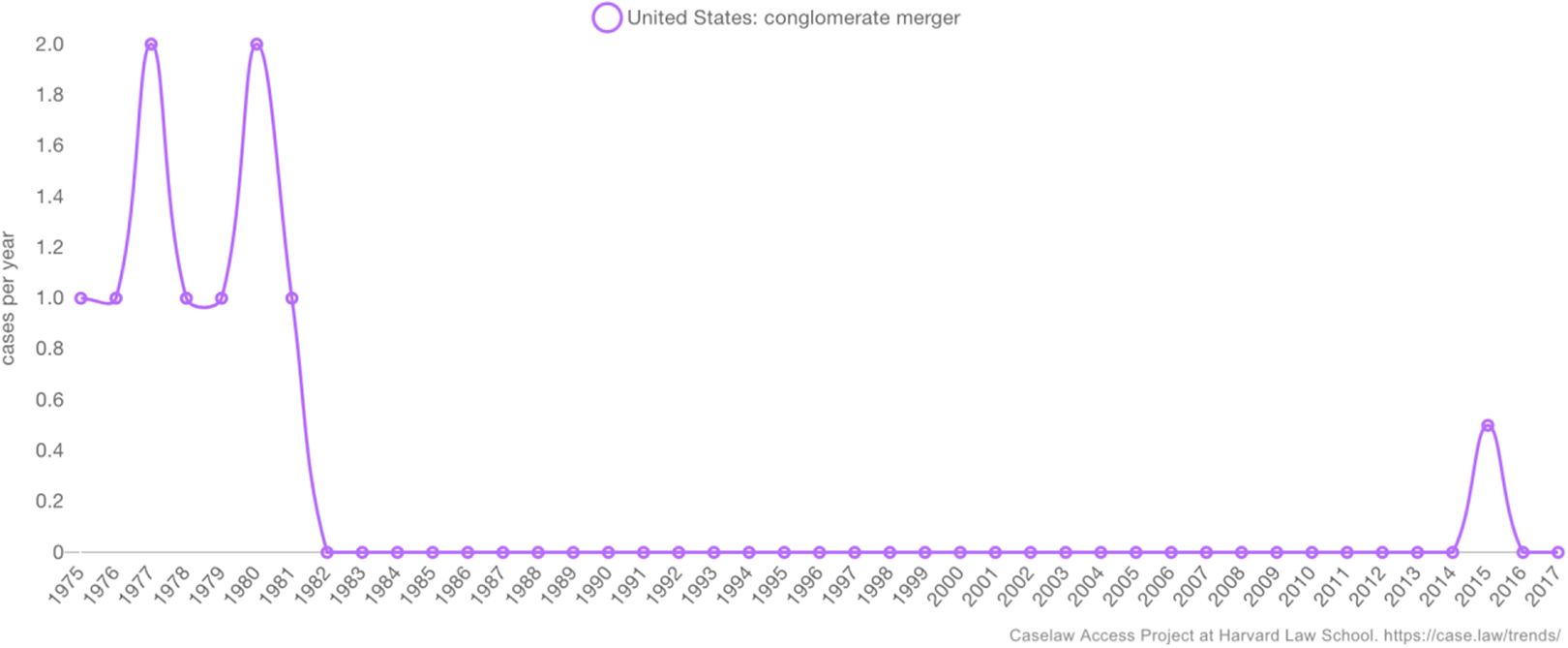
Conglomerate merger. The term “conglomerate merger” was used in two cases in each of the following years: 1976, 1977, 1979, and 1980. The term was not used in any other year between 1975 and 2017, except for 2015, when it was used in one case.
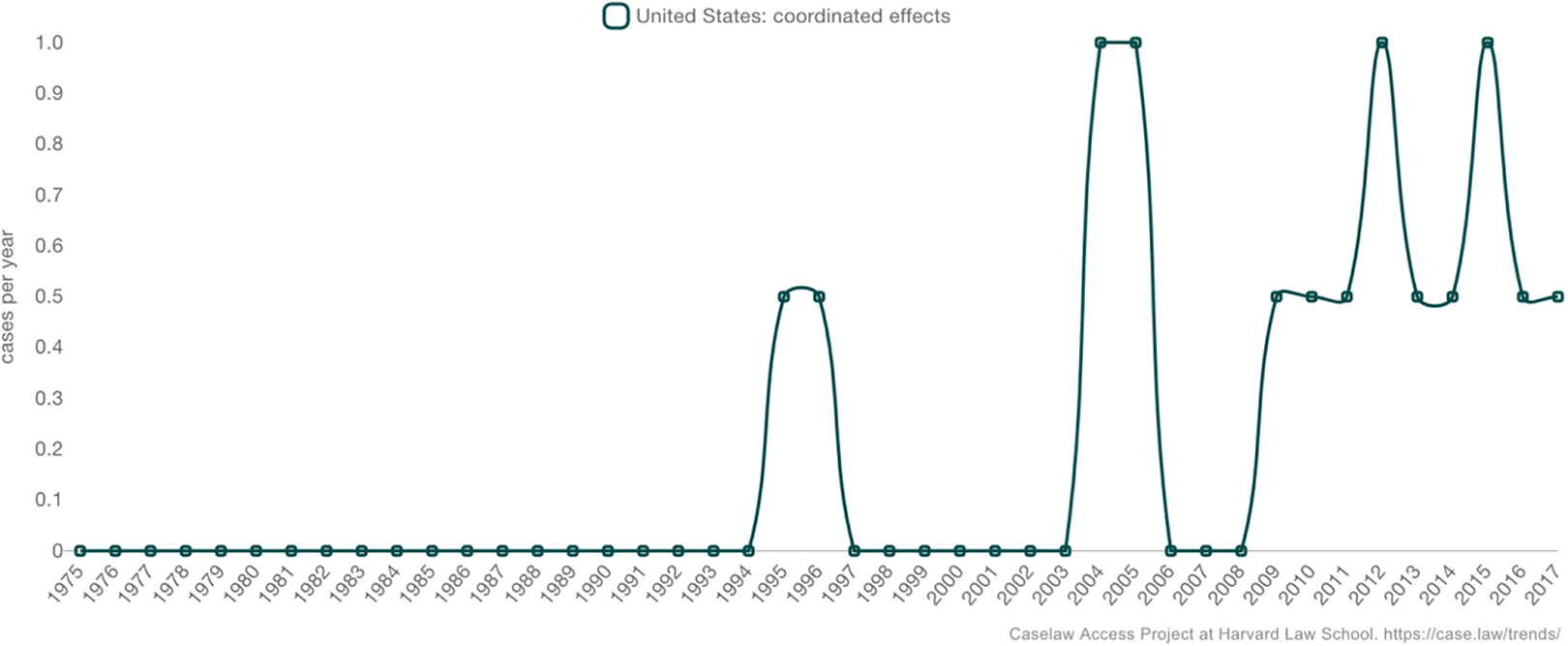
Coordinated effects. Between 1975 and 2017, the term “coordinated effects” was used in only eight years. Its maximum usage was in 2004 in two cases; in all other years in which it was used, it was only used in one case. It would appear that the term is becoming more common, given that six of the eight years it was used in fall between 2009 and 2017.
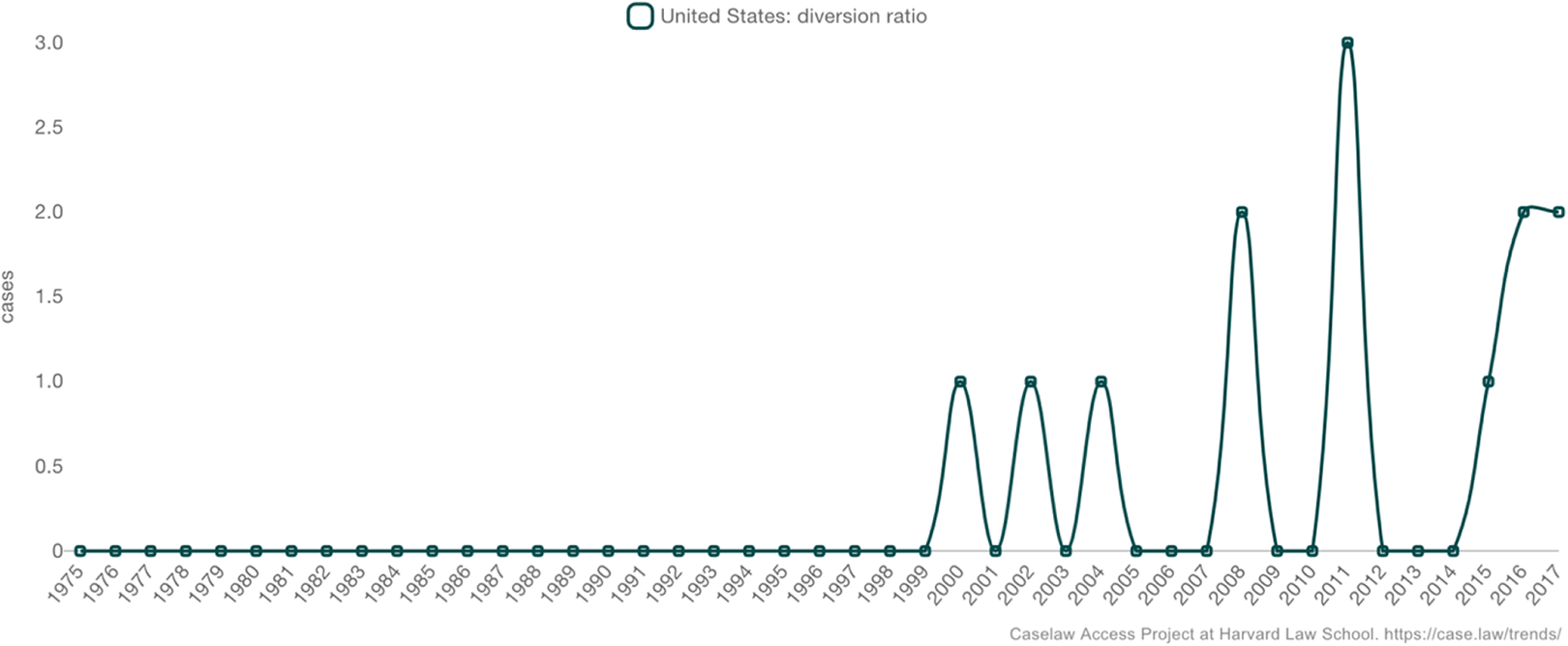
Diversion ratio. Between 1975 and 1999, the term “diversion ratio” was not used in any cases. Since 2000, the term has been used in cases sporadically, with a maximum in 2011 with three cases. It was used at least once in each of the last three observed years (2015, 2016, and 2017).
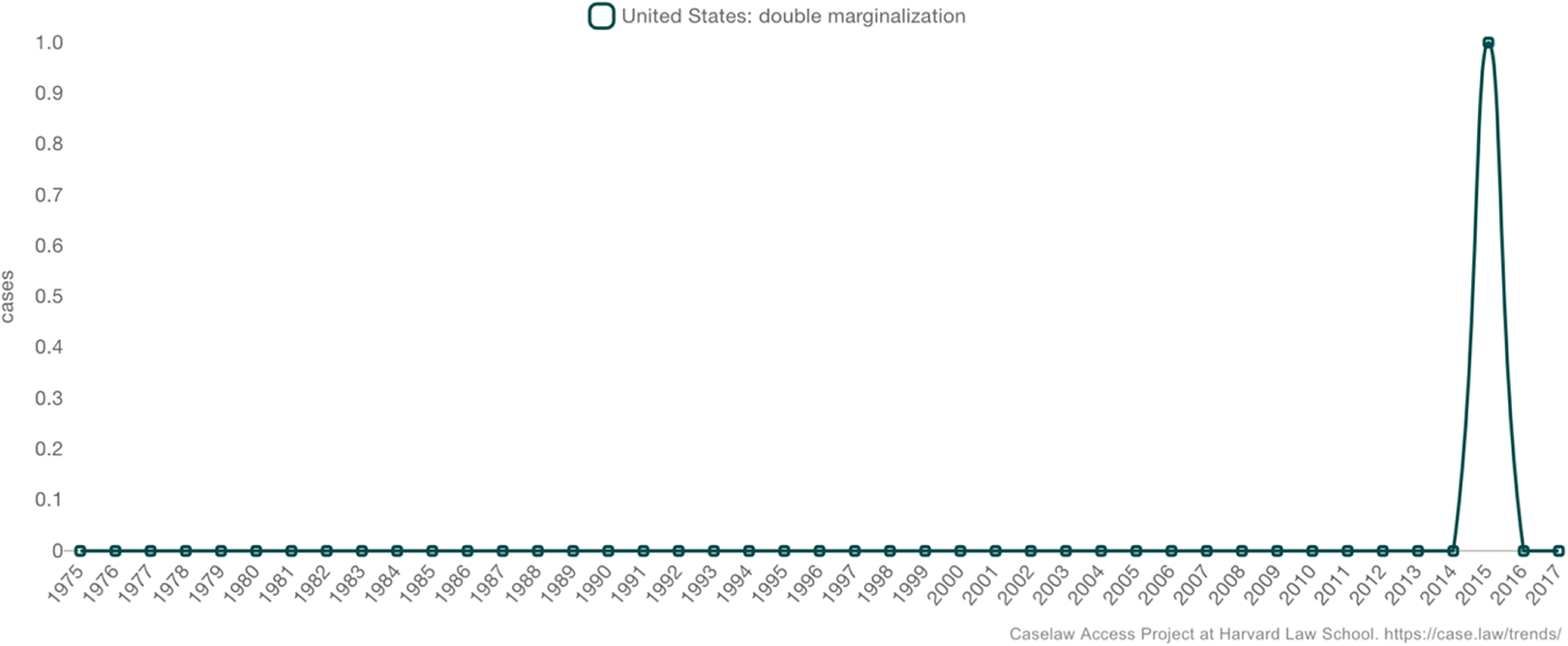
Double marginalization. Between 1975 and 2017, the term “double marginalization” appeared in only one case, in 2015.
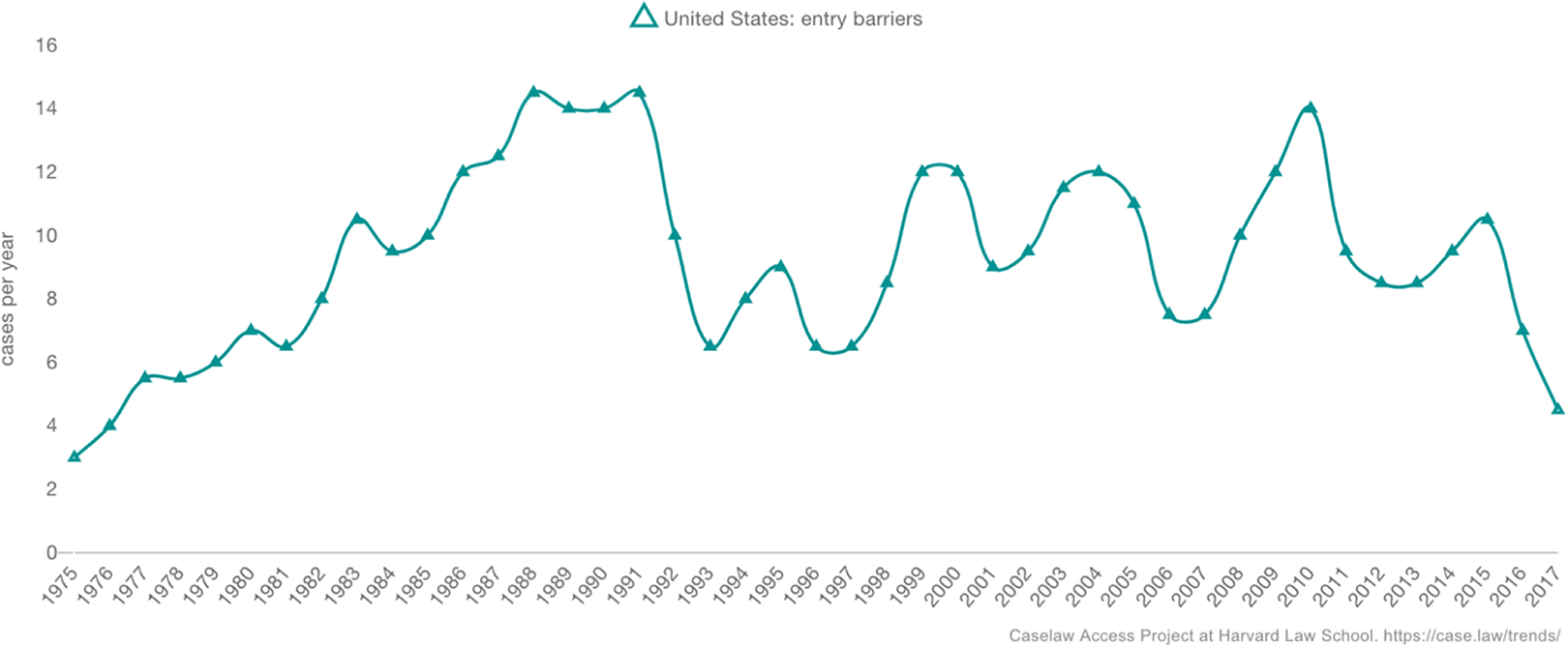
Entry barriers. Between 1975 and 1990, the usage of the term “entry barriers” steadily increased, from a minimum usage of three cases in 1975 to its maximum usage of sixteen cases in both 1988 and 1990. Following 1990, the number of cases in which it was used varied widely depending on the year. There seems to be a slight downward trend, with the year 2017 also having a minimum of three cases in which the term was used.
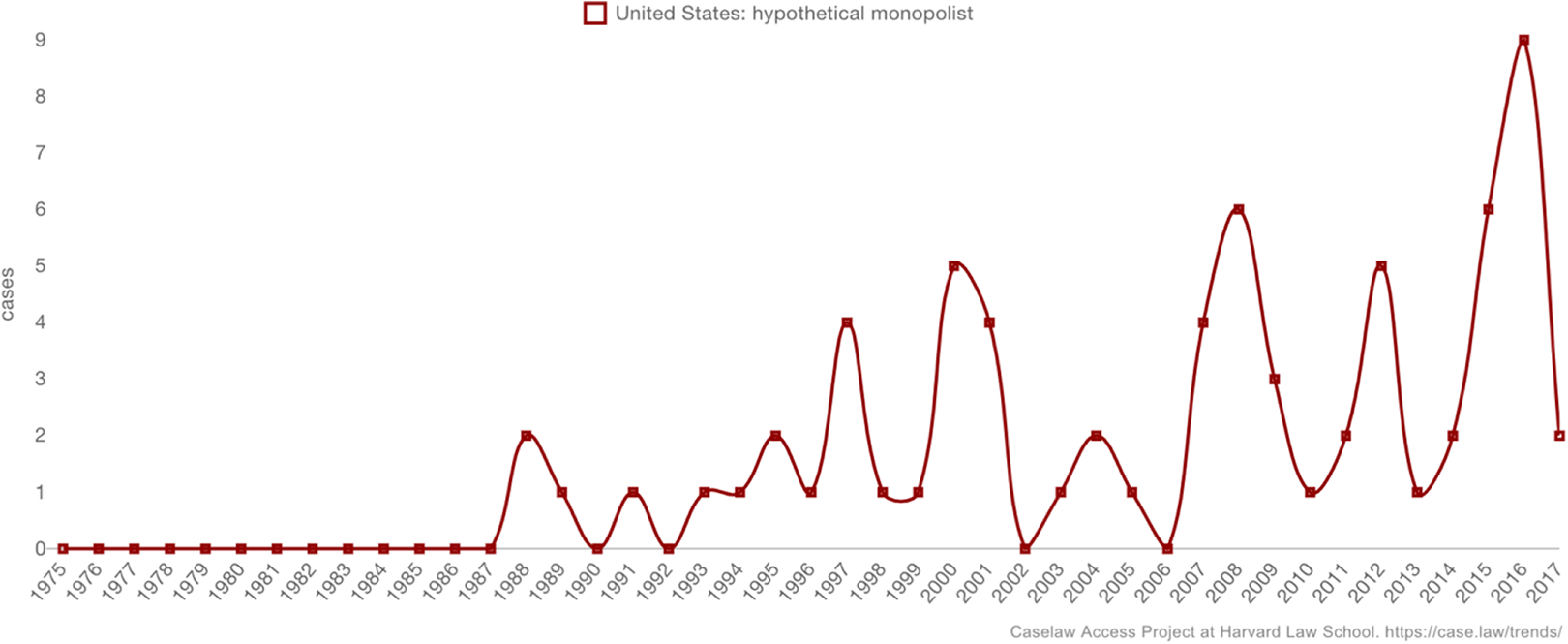
Hypothetical monopolist. Between 1975 and 1987, the term “hypothetical monopolist” was not used in any cases. Since 1987, the term has showed slight positive growth, though it varies widely depending on the year; for example, it was not used in any cases in both 2002 and 2006. Its maximum number of cases occurred in 2016, with a total of nine cases.
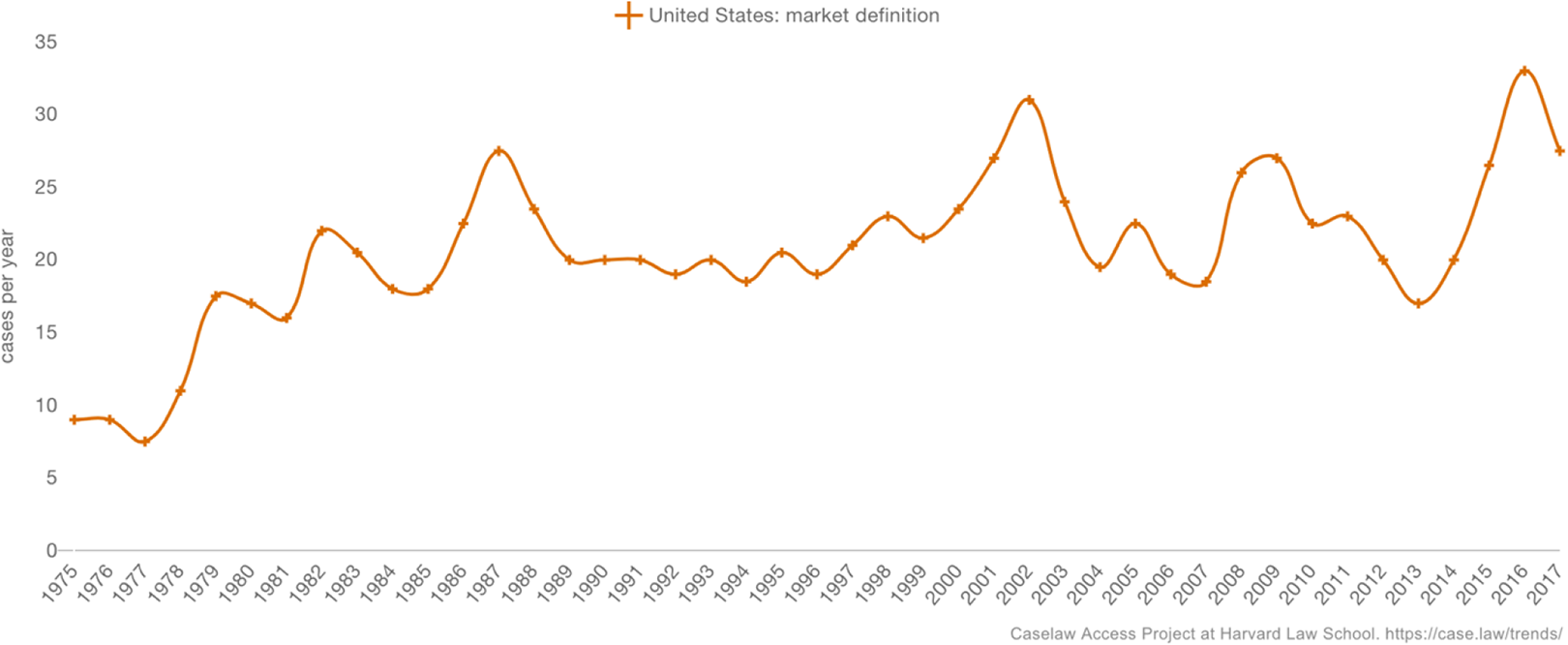
Market definition. From 1975 to 2017, the usage of the term “market definition” experienced overall positive growth, though the number of cases it was used in fluctuated by the year. Its minimum number of cases occurred in 1977 with five cases, and its maximum number occurred in 2016 with thirty-five cases.
Merger guidelines. From 1975 to 2017, the usage of the term “merger guidelines” showed no clear signs of positive or negative growth. The number of cases per year in which it occurs varies widely, with a minimum of zero in 1980, 1982, and 2006 and a maximum of ten in 1986, 1988, and 1993.

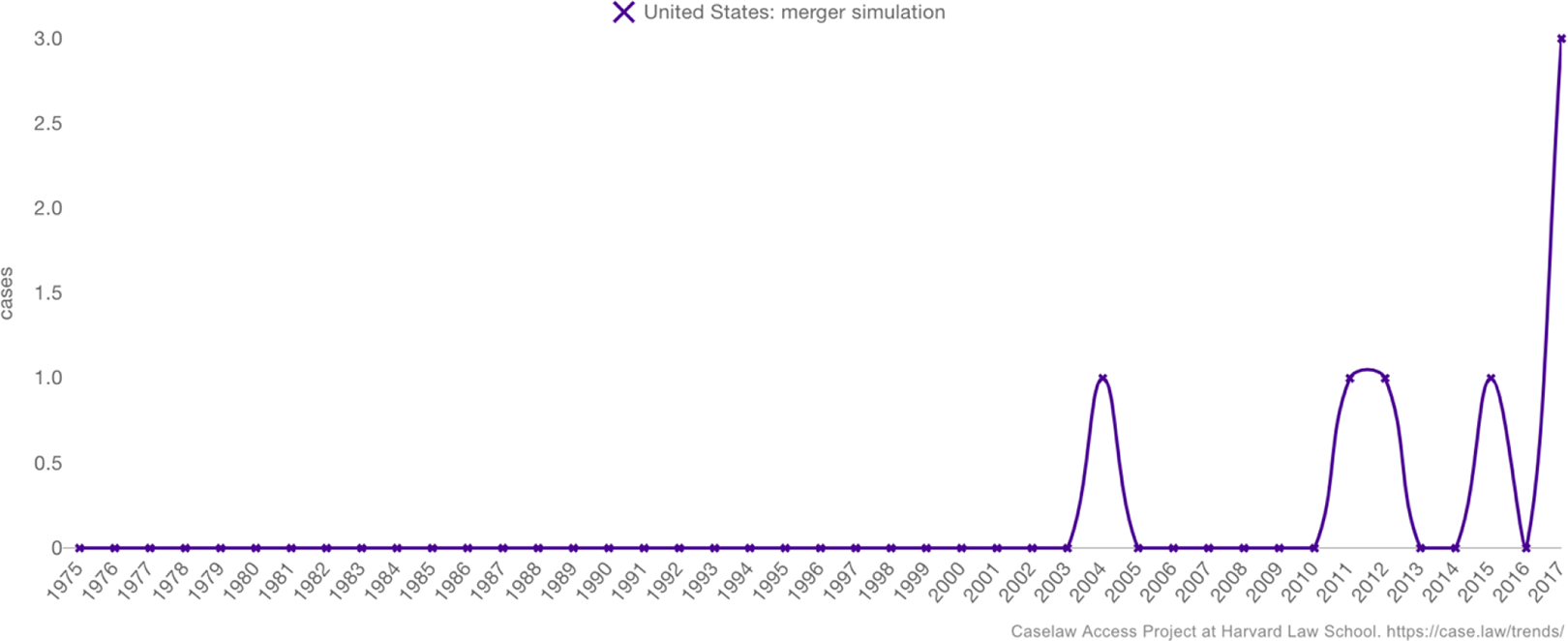
Merger simulation. The term “merger simulation” was not used in any cases from 1975 to 2003. It was used for the first time in one case in 2004, then again in one case each year in 2011, 2012, and 2015. In 2013, it was used three times. This suggests the term is becoming slightly more common in cases in recent years.
Merger specific. The term “merger specific” was not used in any cases between 1975 and 1997. Between 1998 and 2016, it was used sporadically, its usage varying between zero and two cases each year. In 2017, it was used in five cases, its highest point.

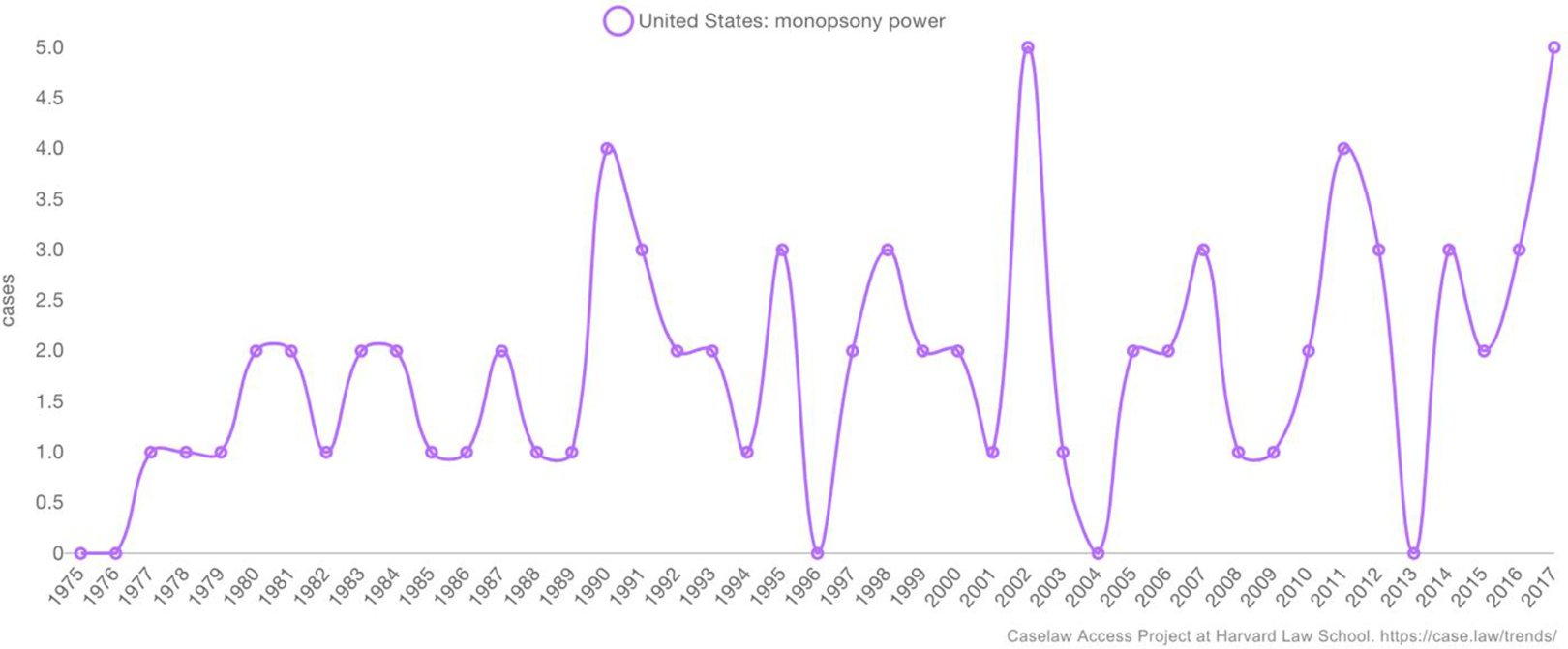
Monopsony power. Between 1975 and 2017, the usage of the term “monopsony power” varied by the year, fluctuating between a minimum of zero cases (in 1975, 1976, 1996, 2004, and 2013) and a maximum of five cases (in 2002 and 2017). There seems to be very slight positive growth in the number of cases in which this term was used over these years.
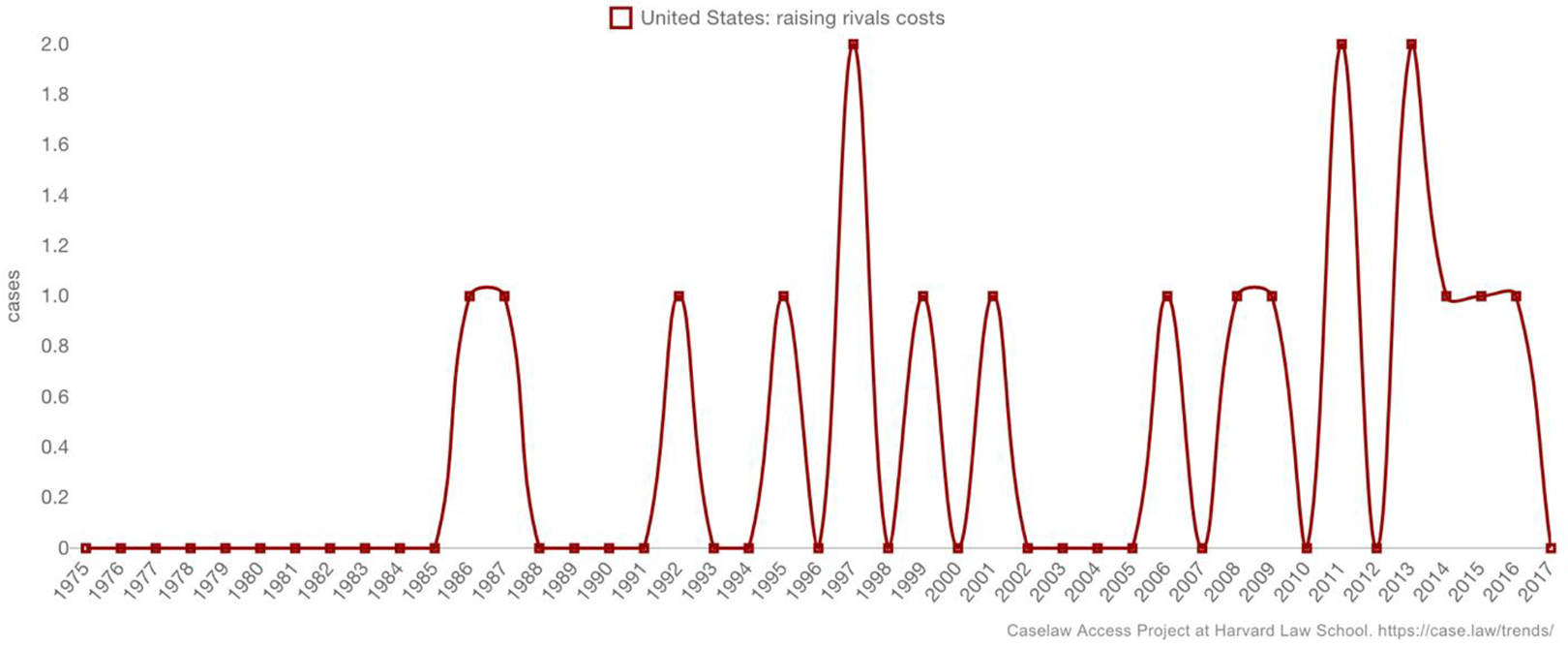
Raising rivals’ costs. Between 1975 and 1985, the term “raising rivals’ costs” was not used in any cases. After 1985, the usage of the term fluctuated between zero and two cases per year, with increasing frequency following 2006. The maximum number of cases it was used per year was two, occurring in 1997, 2011, and 2013.
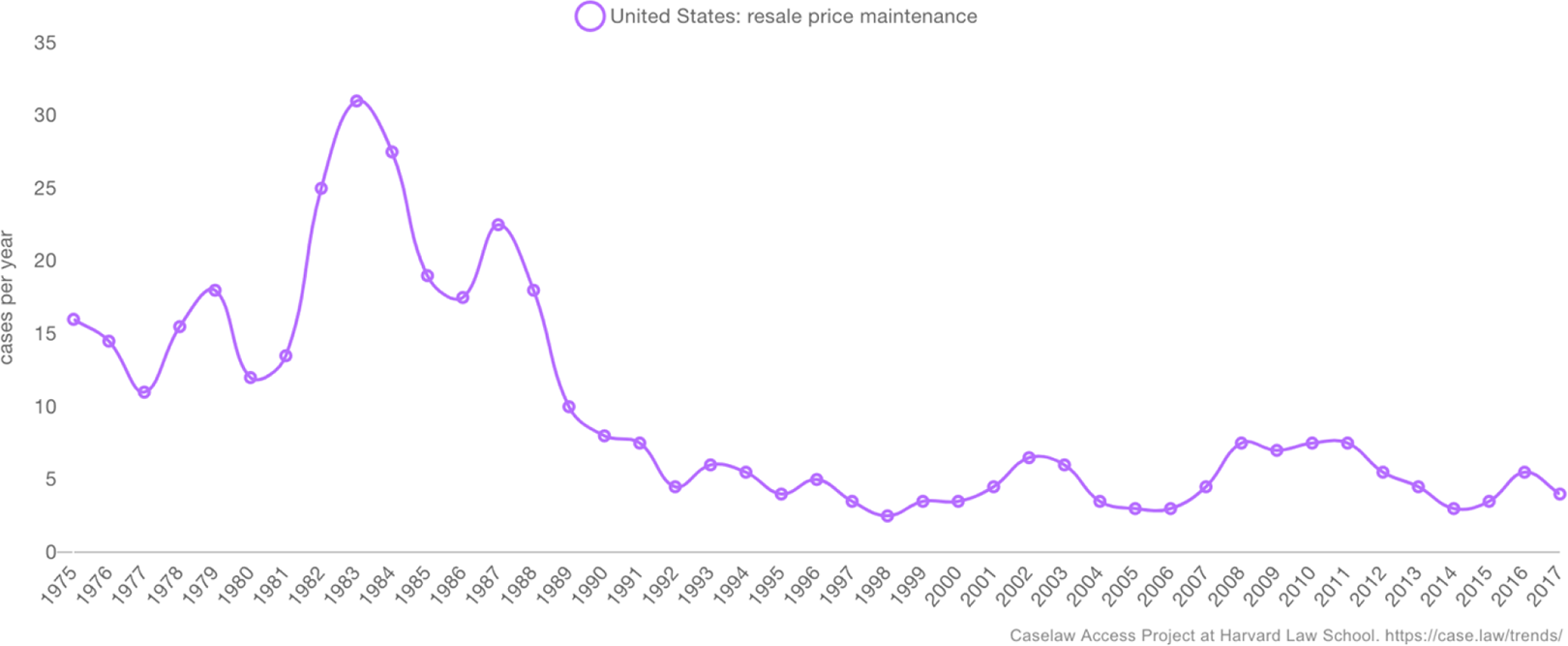
Resale price maintenance. Between 1975 and 1982, the number of cases in which the term “resale price maintenance” was used showed positive growth, peaking at thirty-three cases in 1982. From 1982 to 1991, the number of cases decreased. Following 1991, the number of cases remained fairly steady, fluctuating between two and nine cases per year. The minimum number of cases in which it was used was two (in 1997, 2004, 2014, and 2017) and the maximum number was thirty-three (in 1982).
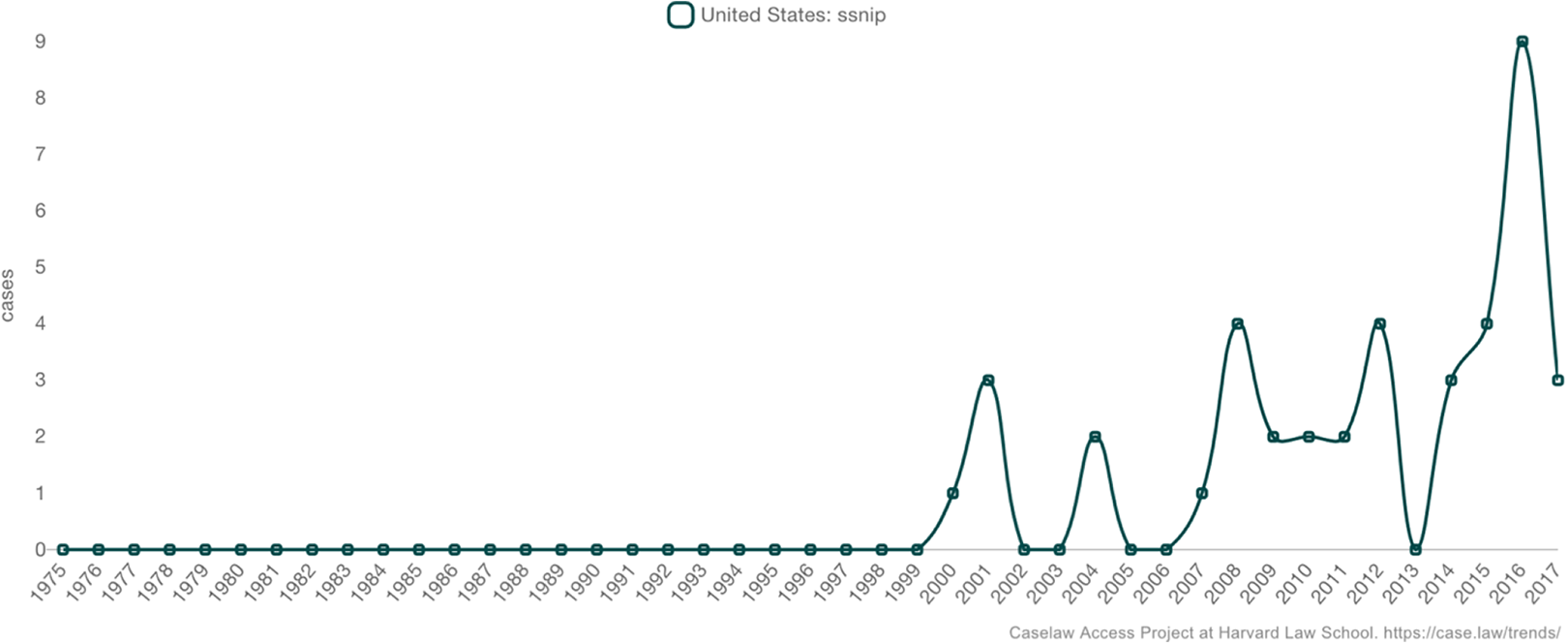
SSNIP. Between 1975 and 1999, the term “SSNIP” was not used in any cases. Following 1999, the term’s usage showed positive growth, though it fluctuated by the year. Its maximum usage was nine cases, in 2016.
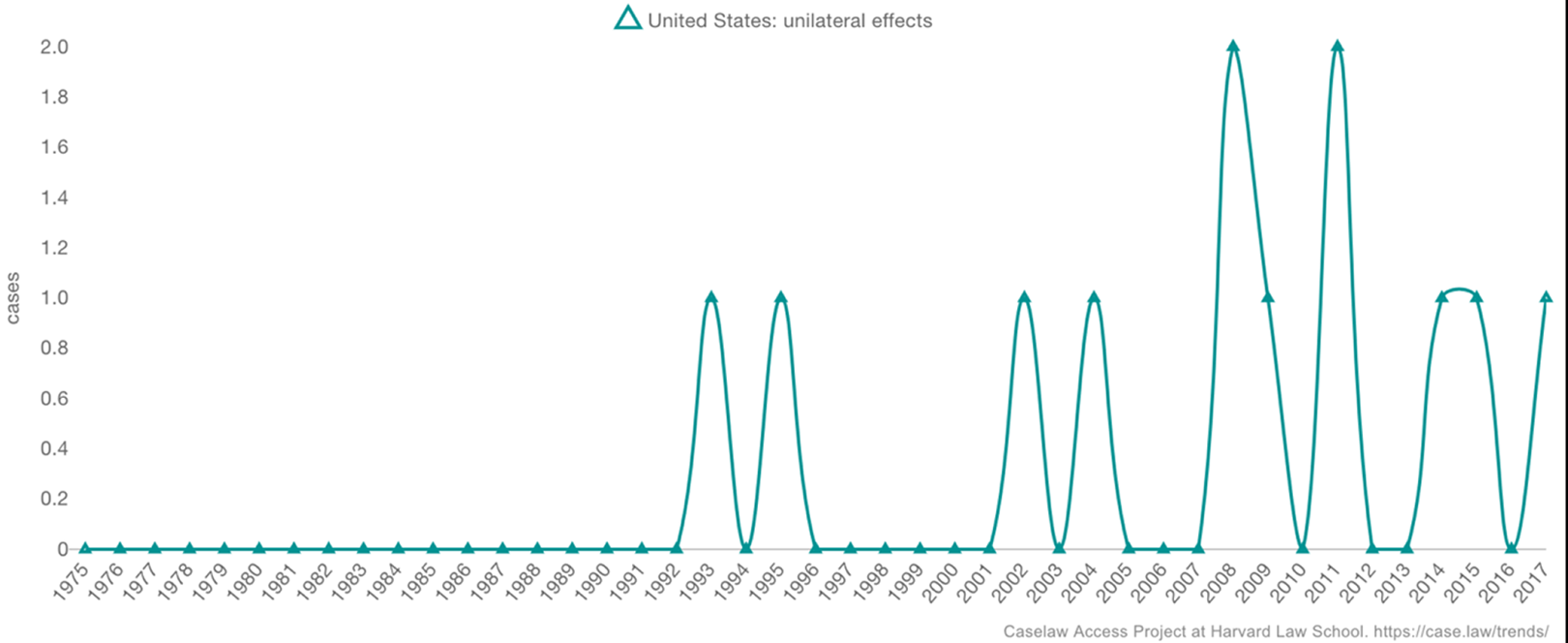
Unilateral effects. Between 1975 and 1992, the term “unilateral effects” was not used in any cases. Following 1992, the term was used sporadically, with increasing frequency, fluctuating between zero and two cases per year. Its maximum of two cases occurred in 2008 and 2011.
Vertical mergers. Between 1975 and 2017, the number of cases in which the term “vertical mergers” was used showed a slight downward trend. Its usage fluctuated between zero and three cases per year, with three cases occurring in 1979. From 2007 and 2017, the term was used only once, in 2015.

Conclusion
The Antitrust Revolution has measured through case studies how economics has played a central role in high-profile antitrust cases. This article is the first to measure antitrust terms in court cases that combine big data with data visualization techniques to better understand, based on the usage of common antitrust terms, the impact economics has had on decided cases.
Footnotes
Declaration of Conflicting Interests
The author(s) declared no potential conflicts of interest with respect to the research, authorship, and/or publication of this article.
Funding
The author(s) received no financial support for the research, authorship, and/or publication of this article.