



Abstract
Green infrastructure has become a critical part of society for environmental sustainability. Students studying in public urban spaces seem less satisfied with their living standards and environmental conditions. This research aims to determine the impact of perceived danger in urban public spaces, green infrastructure, and ecological education on student satisfaction. Additionally, this study considers the moderating effects of ecological education and green infrastructure. Data were collected from 350 students at public schools and colleges. The Partial Least Squares Structural Equation Modeling (PLS-SEM) method was used for data analysis. The study found a significant direct relationship between perceived danger in urban public spaces, green infrastructure, ecological education, and student satisfaction. Moreover, the moderating effects of green infrastructure and ecological education are significant in increasing student satisfaction. This research is based on a novel idea and contributes a newly developed model to the body of knowledge on student satisfaction and ecological education. The research has both theoretical and practical implications for improving student satisfaction through ecological education and green infrastructure. The limitations of this research are described, along with future directions to guide researchers in their future studies.
Keywords
Introduction
Ecological education, essential for societal survival, involves imparting knowledge and values about the environment and its sustainability. Xue et al. (2022) stress the necessity of such education for students, emphasizing its role in fostering a proactive attitude towards environmental protection and development of eco-friendly infrastructure. Ecological education equips individuals, especially students, with the skills and mindset to engage in environmentally responsible behaviour, thereby contributing to a sustainable future (Bögeholz, 2006; Pesonen, 2003). This form of education is crucial in empowering students to participate in, and advocate for, environmental protection and sustainable living practices (Sharma et al., 2022).
Green infrastructure, on the other hand, refers to a network of natural and semi-natural spaces and elements that interconnect to provide ecological, social, and economic benefits (Derkzen et al., 2017). In urban contexts, this includes parks, green roofs, street trees, and water bodies. Green infrastructure is instrumental in enhancing the quality of urban life, offering not just aesthetic and recreational value, but also playing a critical role in mitigating urban environmental issues like pollution and heat islands (Latif et al., 2022; Liobikienė & Poškus, 2019). The integration of green infrastructure in urban educational settings can significantly improve the living standards of students, and has become critical for the sustainable living of students in schools and colleges of the city’s schools (Xue et al., 2022), making schools and colleges more sustainable and conducive to learning. Maintaining environmental sustainability is crucial for safeguarding students’ well-being (Philip et al., 2022). Furthermore, an eco-friendly environment plays a significant role in enhancing students’ performance and productivity (Dai et al., 2022).
The students of the developed countries are satisfied with the advancement of eco-friendly working of the government for town planning (Polas et al., 2021). However, it is not only the responsibility of the government to protect the environment, but the students are also responsible for it. Students in European countries are demanding the government pass laws for environmental protection that are necessary for the development and advancement of the education world (Ahmad et al., 2021). The protection of the environment by the government can increase the level of satisfaction of the students with their living in the country (Adebayo & Kirikkaleli, 2021). The little attention paid to the students for their living is dangerous because most unsatisfied students are migrating from country to country for a better standard of living in schools life (Xue et al., 2022; Zhu et al., 2022). The responsibility of the town planning department is to develop the green infrastructure and work more tragically for better planning for the standard of living of the students (Zhao et al., 2022).
Many researchers have explored the literature on resident satisfaction and education problems. Sampantamit et al. (2020) reported that student satisfaction is based on the quality of the environment that is available in schools and colleges. Pesonen (2003) also highlighted that the students who have the opportunity to get a quality environment for their living, are satisfied with the government on the issues of town planning and development. Xue et al. (2022) concluded that a better living environment is necessary for the students of any country, and they should be motivated to live a standard life. Zhen et al. (2009) highlighted that the relationship between the government and the satisfaction of the students would be increased when the appropriate measures are taken to improve the quality of life and standard of the students. Meanwhile, Smerecnik and Andersen (2011) reported that the students of the current era are informed about the environmental issues and they are against environmental degradation the improving their living in the better way. Also, Haibo et al. (2019) concluded that the students would be satisfied when the government works on the actual actions needed for improving the environmental issues in the schools and colleges.
Indeed, the existing research in the body of literature is reviewed critically, and the gap in the literature is identified. Therefore, the goal of this research is to determine the relationship between urban public space perceived danger and residence satisfaction with the direct and moderating relationship between ecological education and green infrastructure in the context of schools and colleges. The research is based on a novel idea and contributes a newly developed model in the knowledge of resident satisfaction and ecological education. The research has both theoretical and practical implications for improving residence satisfaction through ecological education and green infrastructure. Furthermore, there are some limitations of this research that are described with the future directions to provide a way forward to the researchers for their studies in the future.
Review of Literature
The urban area of big cities is in a crisis because of the large population living there which is a challenge to the standard of living and the environment (Philip et al., 2022). For environmental protection, the government has the responsibility to protect the schools and colleges of any city as it is necessary for residential satisfaction and standard of life (Parmentola et al., 2022). The less attention paid to the schools and colleges of big cities is a challenge for students, but this challenge can be resolved with the implementation of strategic planning by the government to control any kind of ecological problem (Khan et al., 2022). The students who are self-motivated to protect the urban space, are demanding new policies and better services from the government sector to protect the schools and colleges (Zhao et al., 2022). Green infrastructure of schools and colleges has become critical for the standard and quality of living because the students who have the opportunity of green infrastructure, are living in the best environment (Sharma et al., 2022). Unfortunately, many of the schools and colleges in the large and small cities are not surrounded by the green infrastructure which is a challenge to their survival and working differently (Xue et al., 2022). Green infrastructure is necessary for a better environment for studying. Advanced and developed countries are protecting urban spaces with green infrastructure by implementing proper policies that are necessary for the benefit of the citizen (Polas et al., 2021). Education about the ecology and environment is necessary for the development of a proper standard of living of students regarding green infrastructure (Adebayo & Kirikkaleli, 2021). The nations that have information and awareness about environmental issues are more concerned to protect their environment for a better standard of life (Liu et al., 2020). Environmental issues are common, but awareness about these issues and remedies at the mass level can protect students from environmental degradation which is necessary for a better standard of living in the better way (Roxas, 2021). The environmental issues should be resolved with the cooperation of the students and the government because both are the key stakeholders of education. The students of any community are satisfied when they have appropriate resources to live and they are also supported by the government (Bögeholz, 2006). The community that is provided with the better environmental atmosphere in any country is more satisfied than the community that is little allowed to live in the green schools and colleges (Philip et al., 2022; Zhu et al., 2022). The protection of the environment is the key responsibility of the students that is necessary for their protection and living standards. The students living in large cities are always concerned about the urban policy of their governments for the protection of the environment in a strategic way.
Hypotheses Development
Biswas et al. (2021) demonstrated that the students of any community are directly influenced by the environmental policies of the government and their satisfaction is directly dependent on it. Sharma et al. (2022) concluded that environmental issues are always a big concern of the students and they don’t get satisfaction when the government is taking no actions to protect the environment. Furthermore, Xue et al. (2022) reported that the students of the advanced and developed countries are satisfied with the government because they believe that the government working action plans are strategically implemented to protect the environment. Zhu et al. (2022) reported that the students are informed about the environmental issues, and their major concern is to protect the environment critically. Indeed, Philip et al. (2022) reported that the environmental issues are increasing and the education of students about environmental degradation is changing their level of satisfaction with the government policies. Also, Latif et al. (2022) reported that the awareness of the students about the environmental issues can improve their living standard when the government work in their favor to protect the urban environment. Moreover, Zhao et al. (2022) concluded that the role of town planning has a significant impact on the satisfaction level of the students because they are directly influenced by these policies.
H1: Urban public space perceived danger has an impact on residential satisfaction.
Polas et al. (2021) highlighted that the role of green infrastructure is necessary for better living of the students in modern times. Ahmad et al. (2021) concluded that the countries that are working to provide better living infrastructure to their students, these countries have a quality of life. The satisfaction of the students according to Adebayo and Kirikkaleli (2021), depends on the level of better environmental protection by the government. Furthermore, Roxas (2021) concluded that the students in any country have the right to green infrastructure for their better health and advancement of facilities for living standard. Meanwhile, Xue et al. (2022) reported that the students of any country should be highly motivated to perform their duties productively and increase their standard of living. Zhu et al. (2022) highlighted that the economic prosperity of any country is key to the green infrastructure that is necessary for better living standards for the students. As concluded by Khan et al. (2022), the students of any community are always looking for the facilities provided by the government because based on these facilities, their actions are taken productively. Polas et al. (2021) furthermore, concluded that green infrastructure has importance for the health of the public and it influences the students to apricate the government when it is deliberately provided for any community with strategic planning.
H2: Green infrastructure has an impact on residential satisfaction.
Ecological education is necessary for environmental protection in any country and it has a direct influence on the lives of students of any community Sampantamit et al. (2020). According to Biswas et al. (2021), based on this ecological education, the appropriate support is delivered to the public for getting the standard quality of living by the government. Pesonen (2003) reported that awareness about the environment is critical for the benefit of the citizen because based on this awareness, the students are working appropriately. According to Xue et al. (2022), the students of any country are directly associated with environmental issues, and they want a better environment for living. Zhen et al. (2009) highlighted that the government alone can’t protect the environment, therefore literacy about environmental issues should be provided to the students which are necessary for their better response and a better standard of living. Smerecnik and Andersen (2011) concluded that the students in any community who are living with the best knowledge of environmental issues, these students should protect the environment with the support of the government. Long and Ji (2019) highlighted that the government can use the citizen’s awareness about the environmental challenges because engaging the large community in it can work better for the residential satisfaction about the environmental awareness and its protection.
H3: Ecological education has an impact on residential satisfaction.
Green environment and infrastructure are necessary for the protection of the environmental issues in schools and colleges of any city (Liobikienė & Poškus, 2019). Furthermore, Turrini et al. (2018) reported that the environmental issues are necessary to tackle and students are demanding the quality of living standard by the government. Mohiuddin et al. (2018) concluded that the government and environmental protection agencies of the advanced countries are working on innovative ways to establish policies for green infrastructure in the cities. Pu and Fu (2018) also concluded that the green infrastructure in large cities can protect the environment which is necessary for the living standard and satisfaction of the students. Meanwhile, Biswas et al. (2021) concluded that the students of any community who are provided with the opportunity to live a quality life with a better environment, are also concerned about the environmental structure. Meanwhile, Liu et al. (2020) highlighted that the protection of the environment is possible with green infrastructure, and it is also necessary for better residential opportunities for the students of any community.
H4: Green infrastructure moderates the relationship between urban public space perceived danger and residential satisfaction.
Bögeholz (2006) highlighted that ecological education has become critical for the community that is living in large cities. The students who are devoted to protecting the community from environmental issues, as reported by Mohiuddin et al. (2018), these students are informing the other students as well for the protection of the environment. The protection of the environment is not an easy task, but it demands a high relationship between the students and the community that could protect it in a better way. Turrini et al. (2018) concluded that environmental issues are emerging and students should be provided with all kinds of resources and information to protect the environment. Indeed, Liobikienė and Poškus (2019) concluded that the students who are living in a better environment, are also concerned about the environmental issues as they believe that these environmental issues are a big challenge to their sustainable living in the future. Zhen et al. (2009) asserted that environmental education is necessary for the community to protect it from living in environmental degradation. Moreover, Biswas et al. (2021) pointed out that the government should spread awareness about the environmental literacy that is necessary for the students for their better living standards.
H5: Ecological education moderates the relationship between urban public space perceived danger and residential satisfaction.
The research framework is highlighted in Figure 1.
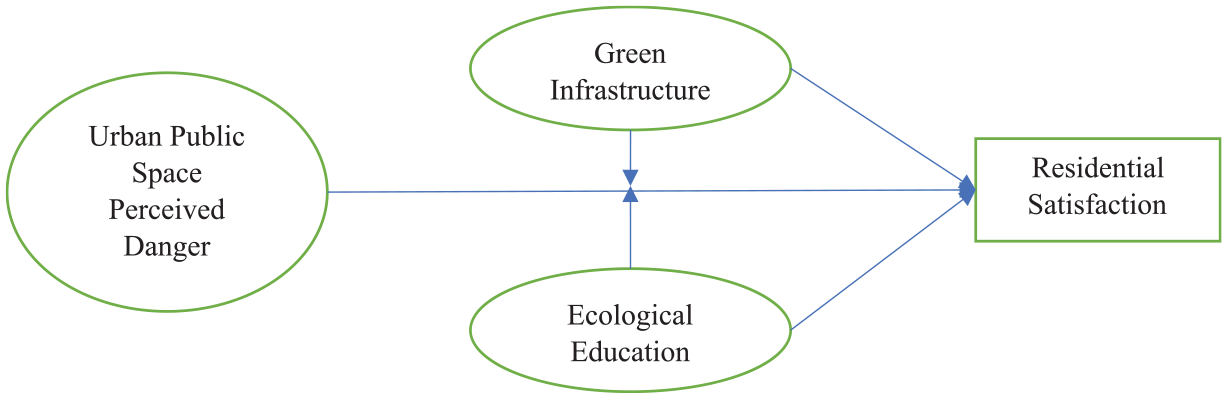
Research framework.
Methodology
The current quantitative research collected data from public sector educational institutions in China, specifically targeting key urban cities including Beijing, Shanghai, Guangzhou, Chengdu, and Wuhan. The researchers utilized purposive sampling to intentionally select the previously stated cities, considering their importance as educational hubs in China. The selection of this strategy was made in order to ensure that the sample is a true reflection of locations that have a significant impact on education, as well as any potential differences between regions (Creswell & Clark, 2017). The research utilized a structured questionnaire as the primary tool for data gathering. To ensure the voluntary engagement of students, informed consent was obtained prior to the initiation of data collection. The researchers meticulously sought and gained ethical approval from the appropriate school and college authorities adhering to ethical research protocols (Bryman, 2016). Indeed, the study has adapted the items from the previous research that existed in the literature, but the researchers have determined the “reliability and validity” of the questionnaire before taking scale items. The “validity” of the “measurement scale” is tested by “Cronbach’s alpha and factor loadings” value.
The items for urban public space perceived danger were adapted after checking the validity and reliability from Blöbaum and Hunecke (2005). These items are significantly integrated into the questionnaire to collect the data. Secondly, the items for ecological education were adapted after checking the validity and reliability from Eren and Yaqub (2015). Thirdly, the items for residential satisfaction were adapted after checking the validity and reliability from Biswas et al. (2021). Finally, the items for green infrastructure were adapted after checking the validity and reliability from Derkzen et al. (2017).
The research used developed and printed 450 questionnaires that were distributed to the students for data collection. In response, 355 questionnaires were collected back for this study data analysis. Furthermore, this research has finalized 350 responses for data analysis for this study. The study has used “partial least square–structural equation modeling (PLS-SEM)” for the data collection and findings of this research.
Results and Analysis
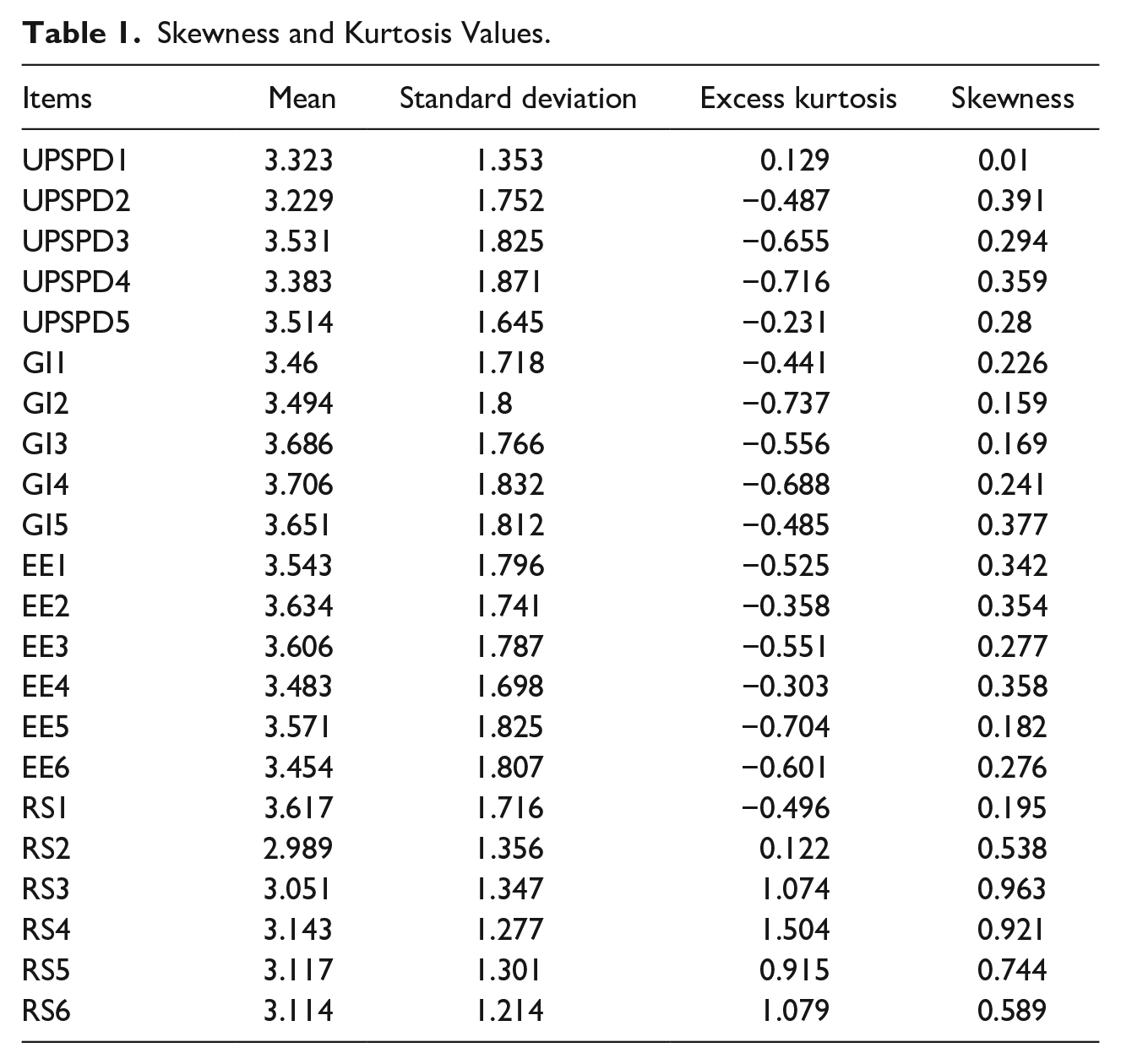
In methodology, the current study has used “Smart PLS 3.0.” Furthermore, “skewness and kurtosis values” are obtained for the “normality test.” “When the value is not below +1.0, the distribution is right-skewed, and when the value is not greater than −1.0, the distribution is left-skewed,” asserted by Field (2013). On the other hand, “for kurtosis, when the value is not less than +1.0, the distribution is leptokurtic, and when the value is not greater than −1.0, the distribution is “platykurtic,” reported by Yang (2013). The findings in Table 1 disclose the study has normality in data.
Skewness and Kurtosis Values.
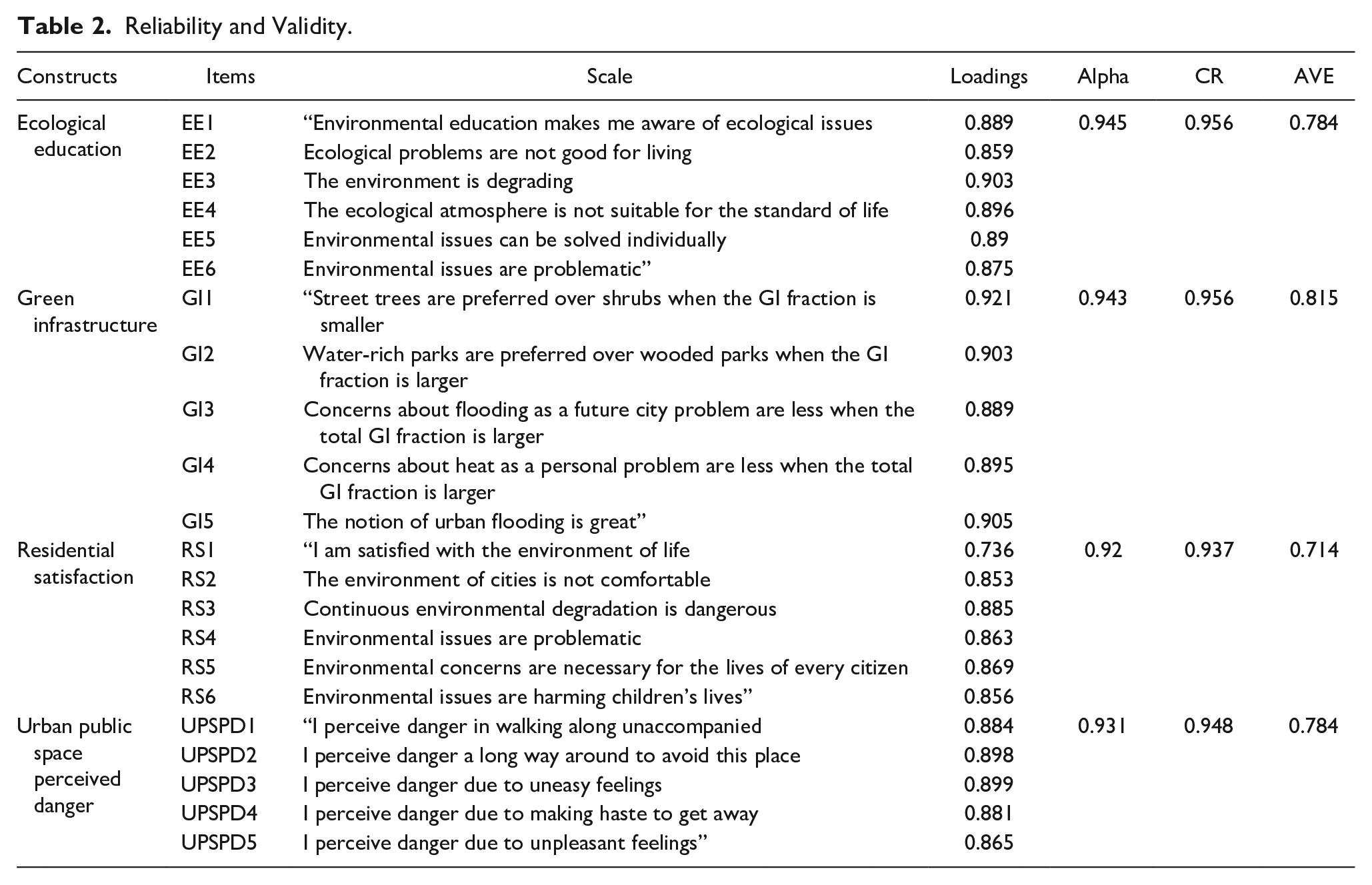
To determine the “reliability and validity,” the “measurement model” is checked with “Cronbach alpha (α), factor loadings, composite reliability (CR) and average variance extracted (AVE) values.” In this way, the threshold “factor loadings >0.60” is achieved. In addition, the threshold “α > .70,” “composite reliability (CR) > .70” and “average variance extracted (AVE) > .50” is attained asserted by Ringle et al. (2015). The findings are significant for “reliability and validity” (see Figure 2 and Table 2).
Measurement model.
Reliability and Validity.
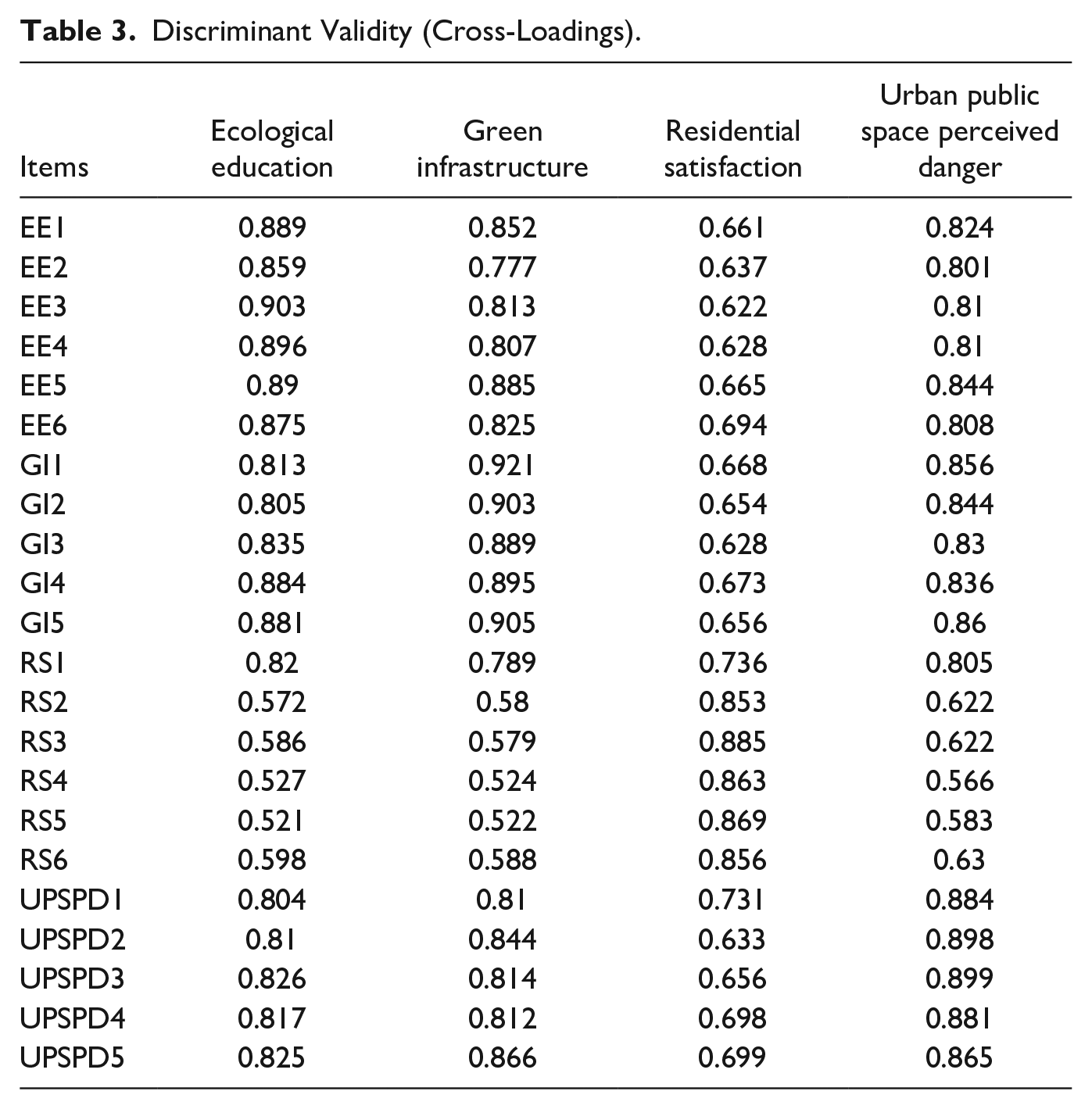
For discriminant validity, the “cross-loadings” are obtained. “Cross-loading is to establish discriminant validity at the item level means there is a high correlation between items of the same construct and a very weak correlation between items of a different construct”, asserted by Ab Hamid et al. (2017). Furthermore, the research achieved “cross-loadings” and findings are presented in Table 3.
Discriminant Validity (Cross-Loadings).
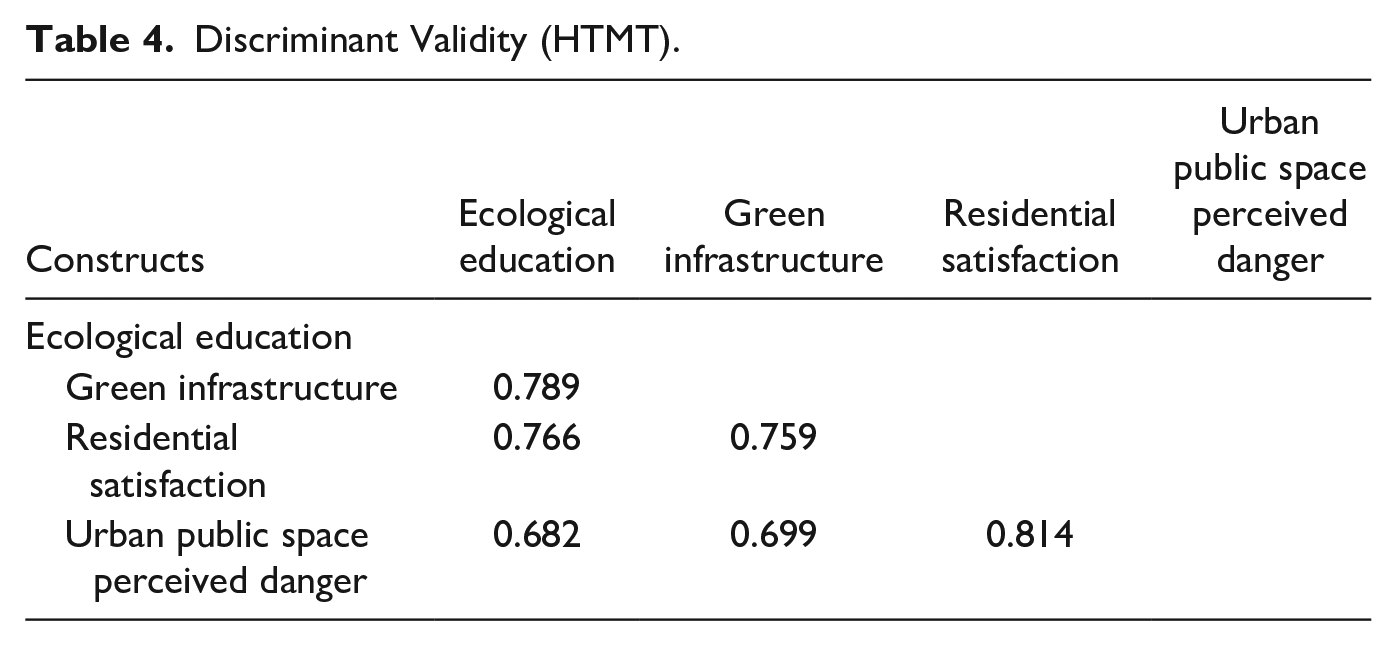
The “Heteritrait-Monotrait (HTMT)” technique of “discriminant validity” is used in this research. “HTMT < 0.90” is the threshold asserted by Gold et al. (2001) for reliable results and findings. Thus, the research has significant “discriminant validity” based on the results available in Table 4.
Discriminant Validity (HTMT).
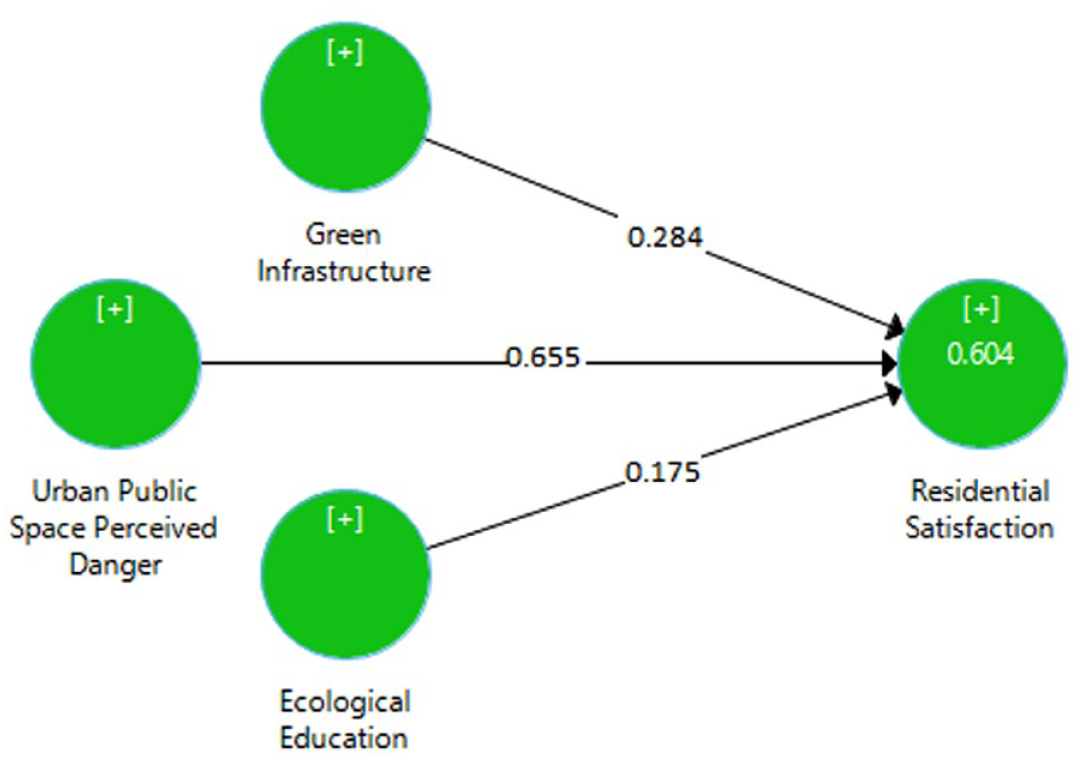
The study has used “structural model” findings for significant results. In this way, the recommended threshold “t > 1.96 and p < .05” is considered for the results. The study obtained that the first hypothesis is significant and the impact of urban public space perceived danger on residential satisfaction is significant “β = .655, t = 5.057, and p = 0.” Furthermore, the study obtained that the second hypothesis is significant and the impact of green infrastructure on residential satisfaction is significant “β = .284, t = 13.523, and p = 0.” Also, the study obtained that the third hypothesis is significant and the impact of environmental education on residential satisfaction is significant “β = .175, t = 7.608, and p = 0.” The results are available in Figure 3 and Table 5.
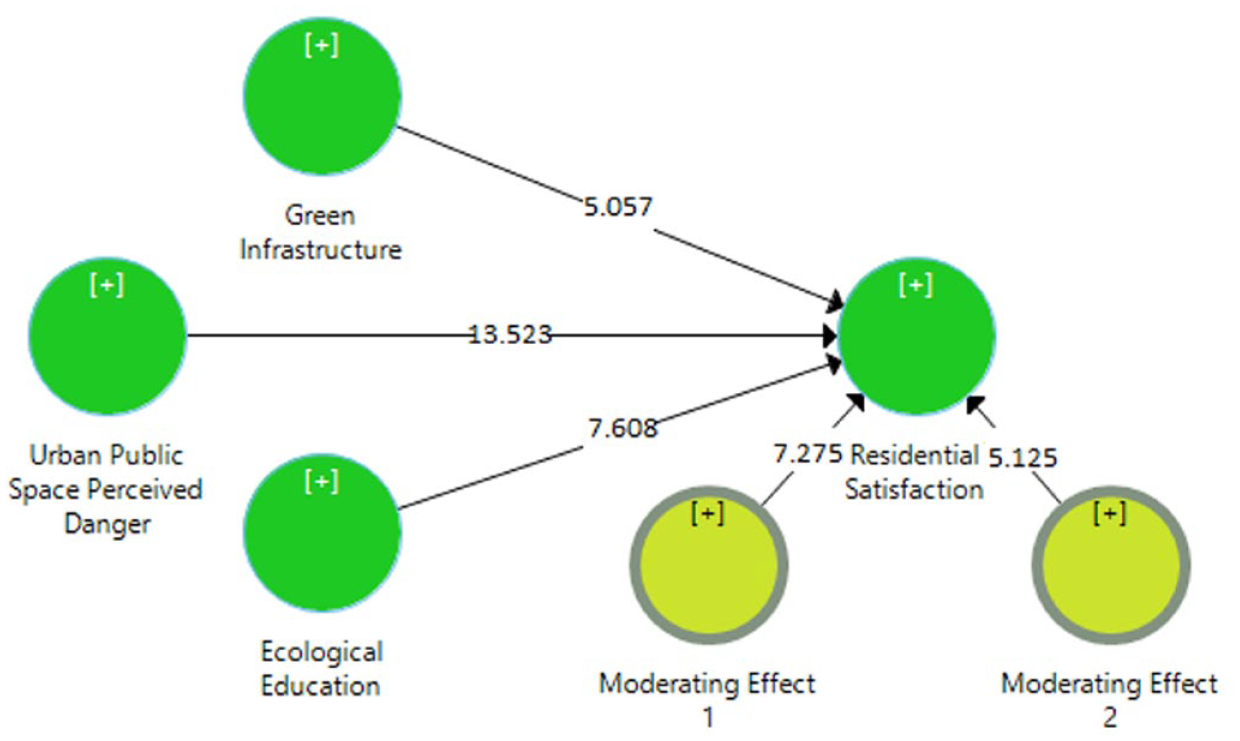
Structural model.
Structural Model Statistics (Path).
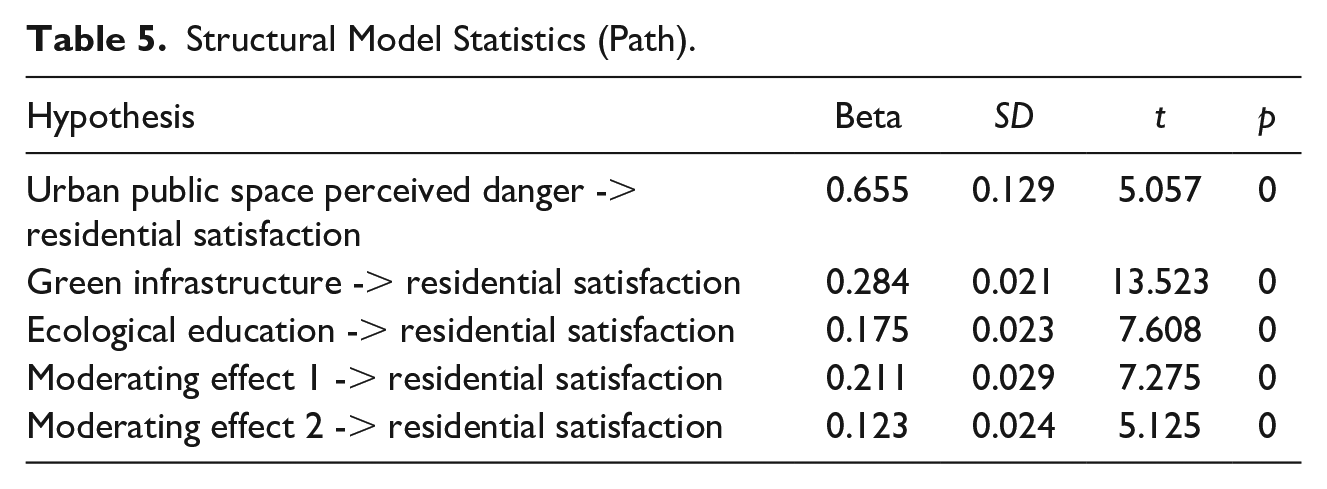
Moreover, the study obtained that the fourth hypothesis is the significant and moderating impact of green infrastructure between urban public space perceived danger and residential satisfaction is significant “β = .211, t = 7.275, and p = 0.” This moderation is significant and positive (see Figure 4).
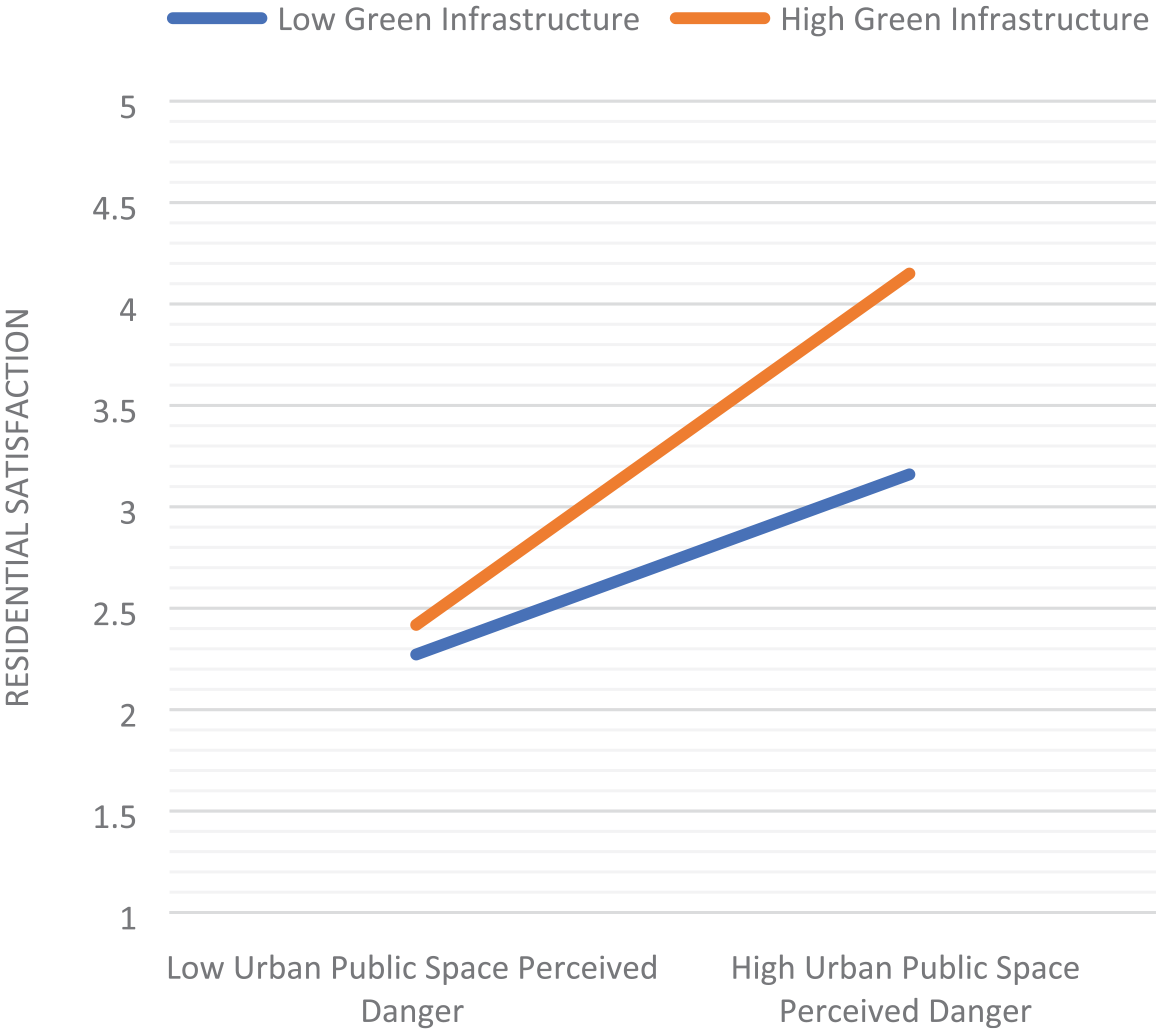
Moderation 1.
Finally, the study obtained that the fifth hypothesis is the significant and moderating impact of ecological education between urban public space perceived danger and residential satisfaction is significant “β = .123, t = 5.125, and p = 0.” This moderation is positive and strengthens the relationship between both variables (see Figure 5).
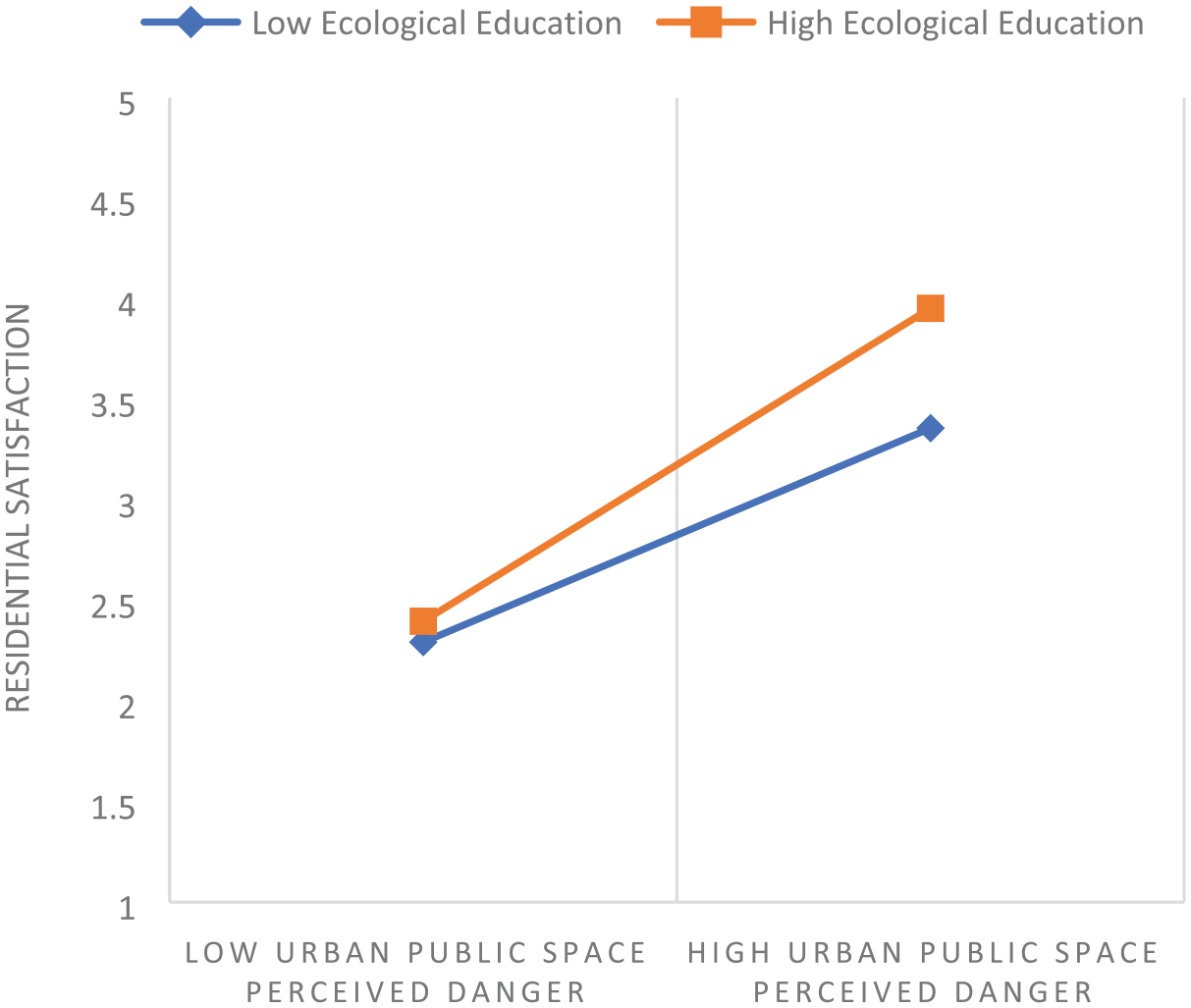
Moderation 2.
The “predictive relevance” of the research model is checked in the end. “The value of predictive relevance should be greater than 0 for research model,” asserted by Ringle et al. (2015). Consequently, the model has strong “predictive relevance” based on the findings available in Table 6.
Predictive Relevance.

Discussion and Conclusion
The study got significant findings from the responses collected on the questionnaire. All the hypotheses of the study are supported. The study identified H1 is accepted and there is an influence of urban public space perceived danger has an impact on residential satisfaction. This relationship is significant and backed by the research already contributed in literature. Xue et al. (2022) shown that students are immediately impacted by the government’s environmental policies, and their satisfaction is closely correlated. Zhao et al. (2022) concluded that students are always concerned about the environment in schools and colleges, and they are not satisfied when the government does little to protect the green environment. Furthermore, it was claimed that the students of advanced and developed nations are happy with their governments since they think that the working action plans that are being executed by them are done so in a way that will safeguard the environment in schools and colleges. According to Sharma et al. (2022), the students are aware of environmental issues and cares deeply about protecting the environment in schools and colleges. Indeed, Zhu et al. (2022) observed that pollution problems are growing and that students’ levels of satisfaction with governmental actions are changing as a result of being educated about environmental deterioration. Additionally, it was observed that when the government works to protect the urban environment in schools and colleges, students’ understanding of environmental issues might raise their level of living. Furthermore, Khan et al. (2022) concluded that because inhabitants are directly affected by these regulations, the role of town planning has a substantial impact on their level of satisfaction of the students.
The study identified that H2 is accepted and there is an influence of green infrastructure has an impact on residential satisfaction. This relationship is significant and backed by the research already contributed to the literature. Zhao et al. (2022) emphasized how important green infrastructure in schools and colleges is to modern folks’ ability to live better lives of the students. Adebayo and Kirikkaleli (2021) came to the conclusion that the nations attempting to improve their inhabitants’ living conditions have high standards of living for the students. According to Hameed et al. (2020), the degree to which the government improves environmental protection will determine how satisfied the students are in their educational institutes. Additionally, it was determined that all students had a right to green infrastructure for improved health and higher-quality living conditions. According to Xue et al. (2022), students of all nations should be highly driven to carry out their responsibilities in a productive manner and raise their quality of life. Furthermore, Zhu et al. (2022) emphasized that a nation’s ability to afford green infrastructure in schools is essential for raising the level of living for its students. According to Zhao et al. (2022), students of every community are constantly searching for the amenities offered by the government since these amenities allow them to carry out their daily activities in a useful manner under living in green infrastructure. Additionally, Xue et al. (2022) asserted that when green infrastructure is purposefully given for any town with a planning process, it has a positive impact on public health and unquestionably motivates individuals to applaud the state.
The study identified that H3 is accepted and there is an influence of ecological education has an impact on residential satisfaction. Environmental education is essential for the conservation of the environment in any nation and has a significant impact on daily life in every community and its students. According to Smerecnik and Andersen (2011), the government provides the required support to the students for them to obtain a level of life and this support is based on ecological education and awareness of the students. Pesonen (2003) said that environmental awareness is essential for citizen benefit since, as a result of this awareness, students act responsibly. According to Zhen et al. (2009), environmental challenges directly affect every nation’s students, who also desire a better living environment in the schools and colleges. Long and Ji (2019) emphasized that the government cannot safeguard the ecosystem alone; therefore, students should be educated on environmental issues in schools to help them respond more effectively and to improve their level of living. The government should support its students in protecting the environment since they have the best understanding of environmental challenges in their neighborhood (Pesonen, 2003). The government can benefit from the student understanding of environmental issues since involving a wide population in them will increase students’ contentment with awareness and preservation (Sampantamit et al., 2020).
Furthermore, the study identified H4 is accepted and there is a moderating influence of green infrastructure between urban public space perceived danger and residential satisfaction. For the safeguarding of environmental concerns in metropolitan regions of any metropolis, green infrastructure in schools and colleges is essential for betterment of the students (Liu et al., 2020). Furthermore, it was noted that climate change must be addressed and that students are pressing the government to raise living standards and educational activities. Turrini et al. (2018) came to the conclusion that developed countries’ governments and environmental safety organizations are working on creative ways to build policies for green infrastructure in schools and colleges for their students. Liobikienė and Poškus (2019) also concluded that green infrastructure may help protect the schools and colleges in big cities, which is important for students’ quality of life. Nevertheless, it was found that when given the chance to live a quality life in a healthier environment, a community’s students are also worried about the atmosphere’s structural integrity (Mohiuddin et al., 2018). Meanwhile, it was emphasized that green infrastructure in schools not only makes environmentalism possible but is also essential for giving students to improve their living standard.
Additionally, the study identified that H5 is accepted and there is a moderating influence of ecological education between urban public space perceived danger and residential satisfaction. This relationship is significant and backed by the research already contributed to the literature. Many researchers emphasized the way important ecological literacy for students has become for the population living in big cities. According to Sampantamit et al. (2020), students who are committed to defending their community from environmental problems are also educating others about the need to preserve the environment in schools and colleges. It is not a simple effort to safeguard the environment, but strong relationships between the schools administration and its students are necessary. Zhen et al. (2009) came to the conclusion that environmental challenges are growing, and students should be given access to all available tools and knowledge to safeguard the environment particularly in the schools. Indeed, it was found that students who were living in better environments were also concerned about the environment since they felt that it would be difficult for them to preserve their way of life in the future (Smerecnik & Andersen, 2011). Xue et al. (2022) argued that to safeguard society from having to live with environmental damage, ecological education is a need. Furthermore, Biswas et al. (2021) emphasized the need for the government to raise students understanding of the importance of environmental literacy for a higher standard of living.
Implications and Future Directions
This research has remarkable theoretical implications that have extended the body of knowledge in a significant way. The study has introduced new relationships in the body of literature. The direct relationship between urban public space perceived danger and residential satisfaction is newly developed in this research that was not explored by the earlier studies. This relationship has extended the model of residential satisfaction. Similarly, the direct relationship between green infrastructure and residential satisfaction is newly developed in this research that was not also explored by the earlier studies. Furthermore, the direct relationship between ecological education and residential satisfaction is newly developed in this research that was not explored by the earlier studies. Furthermore, this research also developed a moderating relationship in the literature. The moderating relationship of green infrastructure between urban public space perceived danger and residential satisfaction is a contribution of this study in the knowledge of residential satisfaction. Likewise, the moderating relationship of ecological education between urban public space perceived danger and residential satisfaction is a contribution of this study in the knowledge of residential satisfaction. In this way, the direct and moderating relationship development in the research model based on the significant findings are remarkable contributions to the body of knowledge and literature. Therefore, these implications would be useful for researchers in the future to work on the residential satisfaction model.
The research also has some practical implications that are necessary for improving students’ satisfaction. The study demonstrated that the government is required to play a critical role in the satisfaction of the students because when they would get education and awareness related to environmental issues and protection, they would work in a better way to protect it in schools and colleges. The study demonstrated that it is not only the responsibility of the government to protect the environment, but the students are also required to work on green infrastructure because the joint effort of both can provide a better way for improving the problems occurred in the way of environmental issues. The environmental issues can be managed accordingly and the appropriate resources can be utilized for the advancement of the living standard of the students in schools. The government is required to get advancement in school building planning and the colleges should be developed strategically with green infrastructure because it is necessary for the quality of life and living standard of the students. The study demonstrated that the joint effort of the school building department and the students can be useful for improving the infrastructure of schools and colleges in the appropriate way for the satisfaction of the students.
Finally, current research obtained a significant relationship between urban public space perceived danger and residence satisfaction with the direct and moderating relationship between ecological education and green infrastructure. No doubt, the research is based on a novel idea and contributed a uniquely developed model in the knowledge of resident satisfaction and ecological education. Although, the research has both theoretical and practical implications for improving residence satisfaction through ecological education and green infrastructure. Yet, there are some limitations of this research that are described with the future directions to provide a way forward to the researchers for their studies in the future. The research has obtained the moderating relationship of green infrastructure between urban public space provided danger and residential satisfaction, but it has not discussed the factors that are supporting this relationship. Therefore, scholars in future research are required to determine the moderating impact of government environmental policies between urban public space-provided danger and residential satisfaction. Secondly, the research has obtained the moderating relationship of ecological education between urban public space provided danger and residential satisfaction, but it has not discussed the factors that are supporting this relationship. Consequently, scholars in future research are required to determine the moderating impact of support from non-profit organizations between urban public space-provided danger and residential satisfaction. These limitations can be addressed by future studies to contribute significant findings to the body of knowledge.
Footnotes
Declaration of Conflicting Interests
The author(s) declared no potential conflicts of interest with respect to the research, authorship, and/or publication of this article.
Funding
The author(s) disclosed receipt of the following financial support for the research, authorship, and/or publication of this article: This work is supported by Shandong Provincial Federation of Social Science and Technology 2023. Humanities and Social Science Project, Practical Research on Digital Technology Empowering Chinese Excellent Tradition Culture “Two Innovations” (Project Number 2023-WHLC-005).
