



Abstract
Keywords
In her address to the Philadelphia Bar Association in March 2011, Supreme Court Justice Sonia Sotomayor (2011) stated, “Inequality in education is the most pressing issue in diversity in the U.S.” Similarly, in her book on student-centered leadership, prominent international educational leadership researcher Viviane Robinson (2011) stated, “diversity has revealed the limitations of schooling systems that cannot rapidly teach children the cognitive and linguistic skills that enable them to engage successfully with the school curriculum” (p. 2). Judge Sotomayor’s address and Professor Robinson’s research contributions make educational equity and diversity mainstream issues for practitioners, scholars, and policy makers to consider.
Empirical evidence connecting educational inequity to diversity and student outcomes may require deliberation about the manner in which educational leadership is practiced nationwide (Brooks & Miles, 2008; Normore, 2008; Shapiro, 2008). With some of the most recognized models of leadership practice being managerial (Bass, 1990), instructional (Blase & Blase, 2004), transactional (Burns, 1979, 2003), transformational (Avolio, 2005; Bass, 1990; Burns, 2003), moral (Sergiovanni, 2007), and situational (Hersey & Blanchard, 1988; Kezar, 2008; Nahavandi, 2006), some scholars in the field have suggested leadership for social justice as an innovative approach to addressing diversity challenges in the national educational landscape (Astin & Leland, 1991; McKenzie et al., 2008; Scheurich & Skrla, 2003). These scholars argue that if we add multiple perspectives and equity-based leadership approaches to status quo leadership practices, educational leaders may be able to transform leadership and improve educational outcomes for larger numbers of culturally and linguistically diverse (CLD) learners from prekindergarten to higher education (HE) (Jean-Marie, 2006; Normore, 2008; Santamaría & Santamaría, 2012; Tooms & Boske, 2010).
Including multiple perspectives in leadership practice sounds innovative today; however, in the recent past, multiple perspectives of women and people of color were not considered with regard to scholarly contributions in educational leadership (Parker & Villalpando, 2007). Ethnic, racial, cultural, linguistic, and gender differences were not considered differences of consequence, particularly with regard to the way in which leadership was practiced or expressed (Bass, 1981). To the contrary, and as others have documented, there is value in the culturally relevant stories and narrative accounts educational leaders of color share about the ways in which they lead, which are qualitatively different from historically mainstream leadership practices (Ah Nee-Benham & Cooper, 1998; Dantley & Tillman, 2006; Jean-Marie, 2008; Jean-Marie, James, & Bynum, 2006; Tillman, 2003).
Research provides evidence that educational leaders who are also members of historically underserved groups in the United States may practice educational leadership through different filters of experience than their mainstream peers, rendering their leadership practice qualitatively different (Alemán, 2009; McGee Banks, 2001, 2007; Santamaría & Santamaría, 2012; Tillman, 2007). Shared marginalized educational experiences might result in these leaders’ increased multicultural understandings, alternative perceptions, and practices of applied leadership. This may also result in possible increased likelihood for leadership practices promoting multiculturalism or social justice and equity.
In this yearlong conceptual inquiry using culturally responsive case study methods and critical race theory (CRT) methodology, I aim to offer insight into the ways in which historically marginalized educational leaders of color translate theory to practice in the face of educational inequities and change as a Spanish-speaking, Choctaw descent, Black female scholar and educational leader. This work is largely about leveraging diversity with knowledge and information gleaned from rarified and authentic multicultural perspectives of leaders of color who experience race, gender, and class oppression simultaneously and, as a result, practice leadership differently. This type of inquiry relating multiculturalism to educational leadership has not been thoroughly explored in educational research or scholarly literature. Research of this kind is needed to support theoretical and practical conversations about different kinds of leadership practice, inequalities in education, and diversity as a key issue in the United States, compounded by limitations within school systems unable to adapt to the realities of multiculturalism (Sotomayor, 2011). This study aims to provide space in scholarly leadership discourse for practicing educational leaders from historically underserved and professionally underrepresented groups to share ways in which to realize their leadership practice in their particular K-HE contexts. It is important for aspiring and practicing leaders, students, and scholars of educational leadership, policy makers, and stakeholders to consider the perspectives of CLD leaders, not because of what the leaders look like or the languages they speak, but, more profoundly, because of what they bring to the table and leadership practice in general.
Value-Added Leadership
Educational leaders of color in the United States have traversed, negotiated, and often overcome myriad inequities in education themselves. What they contribute to leadership theory and practice is largely unknown or reflected in mainstream leadership paradigms. As Thomas and Ely (1996) claim in their research, by virtue of their experiences, diverse educational leaders bring different, important and qualitatively relevant knowledge to the table. Their experiences inform how they respond and approach challenges such as student achievement, motivation, and engagement. Educational leaders of color think differently about how students reach goals, frame tasks, create effective teams, and communicate ideas. As a result of historical and often shared oppressions, they tend to challenge assumptions about ways in which schools and universities function, strategize, and operationalize teaching and learning in diverse societies. Their leadership practice is affected by the essence of who they are, however few studies have investigated the ways in which “who they are” positively influences “what they do.” What is unique and what is conveyed in this study is that the leaders’ multicultural voices and perspectives are revealed. In this inquiry, their practices and strategies are analyzed, shared, and celebrated.
This study thus introduces an approach for others to consider how educational leadership connects to other fields of knowledge, such as multicultural education, in order to meet the diversity needs of our present and future, serving the largest number of learners possible. Furthermore, this inquiry is beneficial for students of educational leadership and education as a discipline because it pushes the notion that diversity should be understood as the varied perspectives and approaches to leadership that members of different identity groups bring (Thomas & Ely, 1996). I concur with these researchers and, working from their findings, propose that when multicultural perspectives of leaders of color are realized, praxis occurs (movement from theory to practice) and leadership for social justice and educational equity ensues. This is a value-added approach to counter deficit thinking, which features prominently in educational leadership research (Skrla & Scheurich, 2003).
The intent of this inquiry is threefold. First, it is to make explicit the implicit behaviors of CLD leaders of color who practice transformative leadership through the lens of CRT based on positive aspects of their marginalized identities. Second, this study aims to inform educational leaders, stakeholders, policy makers, and individuals in positions of educational influence of the positive nontraditional traits that historically underserved and underrepresented leaders may use to inform their leadership practice in K-12 and HE educational settings. Finally, this study serves to bridge multiculturalism and educational leadership theory to practice. In this way, it strengthens the consideration of alternative and critical theories presented by researchers contributing multiple perspectives and ways of thinking about educational leadership as a means of providing innovative solutions to inequity and diversity issues in education.
Original research questions guiding this study are
Rationale for the use of CRT methodology and culturally relevant case study methods are provided, followed by summaries of educational leadership for social justice and educational equity 1 (National Association for Multicultural Education, 2003), and the role of identity in applied critical leadership (ACL). This review lays the theoretical groundwork and conceptual foundation for this study. The review is followed by culturally relevant 2 case study design, findings, discussion, and implications for practice and research.
Inquiry Approach and Literature Framing the Study
Literature reviewed for this study is substantial as it serves to provide a rationale for relating the often disparate fields of multicultural education and educational leadership. To this end, literature on CRT will be reviewed briefly in its own right and then as it relates to researcher positionality. This is followed by literature on multicultural education and critical multiculturalism, including relevant definitions. Next, scholarly literature on culturally responsive leadership, the role of identity in educational leadership, and research on ACL are reviewed. These frameworks and studies provide a solid foundation on which to build the current study.
Critical Race Theory
Although CRT was derived from the collective legal scholarship of Derrick Bell (1992), Alan Freeman (1977), Richard Delgado and Jean Stefancic (2001), for more than 15 years it has been used as a theoretical, methodological, and analytical framework in educational research (Ladson-Billings & Tate, 1995; Solórzano & Yosso, 2002). In the opinion of Ladson-Billings and Donnor (2005), who used CRT to analyze race and racism in largely binary Black–White educational frames, the theory is likened to a new scholarly covenant moving educational scholars toward new interpretations and understandings. CRT is also used to challenge conventional accounts of educational institutions and social processes that occur as a result of multidimensional oppressions (e.g., race, sex, class, national origin, sexual orientation) within education (Crenshaw, 1995; Delgado & Stefancic, 2001; Ladson-Billings, 2009; Powers, 2007).
In this article, and with particular regard to educational leadership, CRT is expanded beyond a binary conceptualization by incorporating the multicultural counterstories of practicing leaders of color to challenge tales of White supremacy, thereby giving voice to historically oppressed and underrepresented leaders of color at every level (Parker & Villalpando, 2007; Solórzano, 1998). CRT, when portrayed and described in this way, promotes social justice and educational change, further challenging traditional ways in which scholars of color conduct, practice, or engage in educational leadership (Alemán, 2009). This research, like that of other CRT theorist and scholars, serves to further engage in the elimination of racial oppression, through a scholar of color’s commitment to social justice, which is part of a shared goal of addressing prevalent forms of oppression in the United States and similar Western societies (Solórzano, 1998). In this contribution, CRT is carried from theory into practice as leaders of color share racialized accounts of their leadership experiences and the ways in which their racialized identities affect their leadership practice.
Critical Race Theory and the Positionality of Researcher
In this work, careful consideration was given to the potential for researcher bias, as I am an educational leader and a woman of color (Evers & Wu, 2008; Littell, 2008). Although I am a Spanish speaker of African American and Oklahoma Choctaw descent, I identify and present as a heterosexual African American woman. I am a first-generation university graduate from a working class (my father was a noncommissioned officer) military family. I know each one of the participants as colleagues, doctoral students, or former doctoral students. It is important to disclose my positionality in this work, so that any biases I may have are apparent throughout the process. To counter the potential for my bias, I relied heavily on letting participants be a part of every aspect of the research and process throughout the inquiry. This included the use of culturally relevant research methods wherein cultural referents (e.g., research, theory, data-analysis techniques, and contributions by women and scholars of color) were used to inform and frame this study. Furthermore, participants of color were active in the research process by reading transcripts and member-checking matrices and reports. I use CRT throughout this inquiry as a point of reference and a research tool. A closer look at multicultural education, critical multiculturalism, and culturally relevant leadership behaviors will serve to further frame this work.
Multicultural Education and Critical Multiculturalism
Expanding on CRT, there are complementary multicultural adaptations of critical theory (e.g., LatCrit, TribalCrit) in a range of subdisciplines that can be considered when referencing particular groups in specific diverse contexts (Brayboy, 2005; Espinoza & Harris, 1997). These perspectives have come out of the rich tradition of multicultural education concerned with prejudice reduction, challenging and rejecting racism, comprehensive school reform, and basic education for all students (Nieto, 2000). According to James Banks (1993), multicultural education serves to transform schools so “all students will acquire the knowledge, attitudes, and skills needed to function in an ethnically and racially diverse nation and world” (p. 28). Scholars of multiculturalism concur that the goals of multicultural education include reducing prejudice and discrimination against oppressed members of society, and working toward equal access and social justice for all, and equitable power distribution among different cultural groups (Banks, 2008; Sleeter, 1996; Sleeter & Grant, 2003). Hence, traditional multiculturalism asserts the reality of mainstream hegemony and, as a result, the marginalization of disadvantaged or segregated groups. Multicultural education has rarely been related to educational leadership in scholarly literature (McGee Banks, 2001, 2007; Santamaría & Santamaría, 2012). As such, the discipline rarely, if ever addresses leadership practices toward the goals of multicultural education.
Critical multiculturalism pushes beyond traditional multiculturalism in that it promotes democratic programs and plans for use in curriculum, pedagogy, and social relations in school settings (McLaren, 2003). Extending multicultural education, critical multiculturalism fosters empathy and participation in a diverse society supporting efforts toward attaining sociocultural and emotional accord. Critical multiculturalism promotes pluralism, an appreciation of diversity, and the provision of teachers, students, and learners with tools to critique relationships between power, knowledge, and other oppressive discourses. The connection between knowledge, power, reexamination, and transformation are explicit in critical multiculturalism (May & Sleeter, 2010; McLaren, 2003; Sleeter & Grant, 1994). Like multiculturalism, critical multiculturalism has not been explored in relation to educational leadership. Doing so, with leaders of color relating their experiences and practice, would add much to the current discourse on educational leadership. A few studies on culturally relevant leadership practices illustrate the value of further exploring multicultural education, critical multiculturalism, and educational leadership within the same inquiry.
Culturally Relevant Leadership
Siddle Walker’s (1996, 2000, 2003) research of African American leadership practices pre–Brown v. the Board (Bell, 1980), reveal unique and different principal leadership practices as noted when compared with their White counterparts. Some might argue that what made their leadership different was its cultural responsivity or relevance to their particular cultural and sociopolitical context. According to L. Johnson (2006), culturally responsive leadership occurs when administrators function in their roles as public intellectuals, curriculum innovators, and social activists. Similarly, Gooden (2010) suggests that culturally responsive leadership actively and persistently pursues achievement equity while supporting teaching practices that incorporate culture as a means to teach and empower children. These views and perspectives are idealistic, ethical, and well aligned with multicultural education and critical multiculturalism with their foci on innovation, activism, and empowerment toward educational reform. However, what do we know about the actual leadership practices of leaders or administrators of color after Brown v. the Board?
Lomotey’s (1987, 1989, 1990) case studies of three African American principals in predominantly Black primary schools in California in the early 1980s were the first inquiries that featured the leadership practices in African American principals during this era. Findings from these and subsequent studies by scholars interested in the leadership practices of Black principals indicate a number of what can be considered culturally responsive leadership behaviors. Some of these include the demonstrated commitment of the principals to the education of African American children, and to challenging racism; their compassion for and understanding of their students and communities; their desire to empower students by helping them identify alternative behaviors when faced with confrontational situations; their efforts to advocate for students, setting high standards for themselves, their teachers, and students; and their confidence in the ability of African American children to learn (Case, 1997; Khalifa, 2011; Lomotey, 1987, 1989, 1990; Morris, 1999, 2004; Pollard, 1997; Reitzug & Patterson, 1998). In other words, grounded by their own experiences and their knowledge of their communities, Black principals who provide leadership in predominantly Black communities lead with a practical and lived compassionate understanding of their communities (Gooden, 2005) coupled with the expectation of high academic achievement for their students.
Community Leadership
Leadership wherein the community is highly involved is another aspect of culturally responsive educational leadership. In her review of the literature on gender and race as factors in educational leadership and administration, McGee Banks (2001) found that compared with White principals, African American principals tend to involve parents and community members more in the activities of their schools. Recently, other researchers have similarly examined the leadership role of principals in developing community-based school leadership and collaborative partnerships with community organizations (Brown & Beckett, 2007; Khalifa, 2012; Sanders & Harvey, 2002). In his case study featuring the impact a principal’s community-leadership has on school community relations and student outcomes, Khalifa (2012) found that when principals have high visibility and advocate for community issues, they gain increased buy-in, trust, and positive interactions between school and community. Likewise, in their case study of principal leadership for school-community collaboration, Sanders and Harvey (2002) concluded that in order for school-community collaborations to thrive principals need support and guidance in understanding the benefits of partnerships, knowing who to partner with, and creating welcoming environments. Finally, in their case study of an African American principal building community in an urban school district, Brown and Beckett (2007) found that an effective principal,
Involved parents at the school and teachers and staff in parents’ homes; created a disciplinary advisory board with disadvantaged parents and wealthy business people – all of this involved facilitating meaningful communication and mediating disagreements between a city’s Black and White communities. (p. 26)
These studies seem to suggest certain personality attributes for leaders of color wherein the role of identity might be relevant.
The Role of Identity in Educational Leadership
Leaders, like those portrayed in the case studies reviewed, who work toward social justice may introduce and support more democratic or ethical processes in their organizations. They may reform, align, or expand curricula, making it more accessible or appropriate for target populations. They may, as asserted by Khalifa (2012), practice a type of “nuanced culture-specific leadership” (p. 429). Moreover, these leaders may also promote the understanding and practice of critical multiculturalism by using culturally responsive leadership (Gooden, 2010) or by encouraging staff to attend professional development focused on culturally and linguistically appropriate or differentiated instructional approaches to benefit CLD learners (Brooks & Miles, 2008; Capper, 1993; Marshall & Oliva, 2006; May & Sleeter, 2010).
Recently, there has been some consideration of the ways in which identity directly affects leadership (Ah Nee-Benham & Cooper, 1998; McGee Banks, 2007). For example, Jean-Marie et al. (2006) explored the impact of the identities of African American women on their leadership practices in HE in historically Black colleges and universities. The researchers found that these women were able to survive integration, overcome educational barriers, commit to social justice, present struggles to students, and acknowledge the impact of spirituality in their lives and leadership practice. From Alemán (2009), we learn that Latino/a leaders tend toward gentrified leadership interactions, which result in a type of self-silence for the communities the leaders strive to serve. Tillman’s (2007) research indicates the ability Black leaders have to pull traditions and ways of knowing from ancestral African roots to inform leadership practices. Beyond tapping into their identities and communities as a source to inform culturally relevant and culture-specific leadership practices, leaders in these studies appear to practice leadership driven by tenants of critical multiculturalism, working through the lens of CRT. These studies indicate the need to further investigate the role identity plays in leadership practice for leaders of color. They also suggest the need for new theories and models that are more inclusive and appropriate for leaders in multicultural educational contexts.
Applied Critical Leadership
Research that features the perspectives of CLD leaders of color reveals a tendency toward leadership practices that are both critical and multicultural. These are sometimes couched in transformative leadership indicative of leaders able to consider the complexity of positioning their organizations within greater sociopolitical and sociohistorical realities (Quantz, Rogers, & Dantley, 1991). These leaders tend to work from within dominant or mainstream paradigms to exercise “effective oppositional power, to resist courageously, and to be activists and voices for change and transformation” (Shields, 2010, p. 570). The educational leaders of color considered in this study all work from within dominant mainstream educational institutions and, as can be gleaned from the data on the underrepresentation of these leaders in leadership, most do so even when serving large numbers of historically underserved groups in African American or Latino communities.
Based on preliminary observations and thoughts about culturally relevant leadership practice, as well as findings from a previous, more comprehensive study and the literature reviewed, this inquiry supports the notion that critical leaders of color lead in ways that are critically multicultural and also qualitatively different to those styles, types, or models described in mainstream educational leadership literature (Beachum, 2011; Lomotey, 1987, 1989, 1990; Santamaría & Santamaría, 2012). There is considerable overlap in transformative leadership, critical multiculturalism, and CRT, as can be gleaned from Table 1.
Conceptual Bridge Critical Multiculturalism Alternative Leadership With Critical Race Theory.

This study operates under the possibility that something unique and useful occurs when these concepts are at play together, feeding one into the other. Rather than rely on transformative leadership as a model however, this study builds on the aspects of transformative leadership that are not responsive to culture and identity, as indicated by the asterisks in Table 1. May and Sleeter’s (2010) conceptualization of critical multiculturalism is used as a framework with which to think and expand because it reflects a composite understanding of the construct. Critical multiculturalism complements L. Johnson’s (2006) culturally responsive leadership, Gooden’s (2010) culturally relevant leadership, and Khalifa’s (2012) culture-specific leadership, as can also be gleaned from the table. Other elements of culturally responsive leadership that relate to critical multiculturalism are included in the table to further demonstrate relevance.
Figure 1 builds on Table 1 by illustrating the way in which critical multiculturalism when practiced through the lens of CRT, results in ACL. This figure reflects critical multiculturalism as including elements of traditional multicultural education, critical pedagogy, feminism, transformative leadership, other kinds of traditional leadership, and related critical theories. These related theories, as were indicated in the literature review, are illustrated in the figure as spheres of different shades and sizes around critical multiculturalism. This is to illustrate that prior to making a decision to commit to leadership practice through the lens of CRT, an educational leader has difficulty connecting theory to practice. When an educational leader is able to make this connection, they are able to analyze and think more deeply about their practice, asking questions such as, “In what ways does my identity enhance my ability to see, understand, or consider alternate perspectives in my leadership practice?”
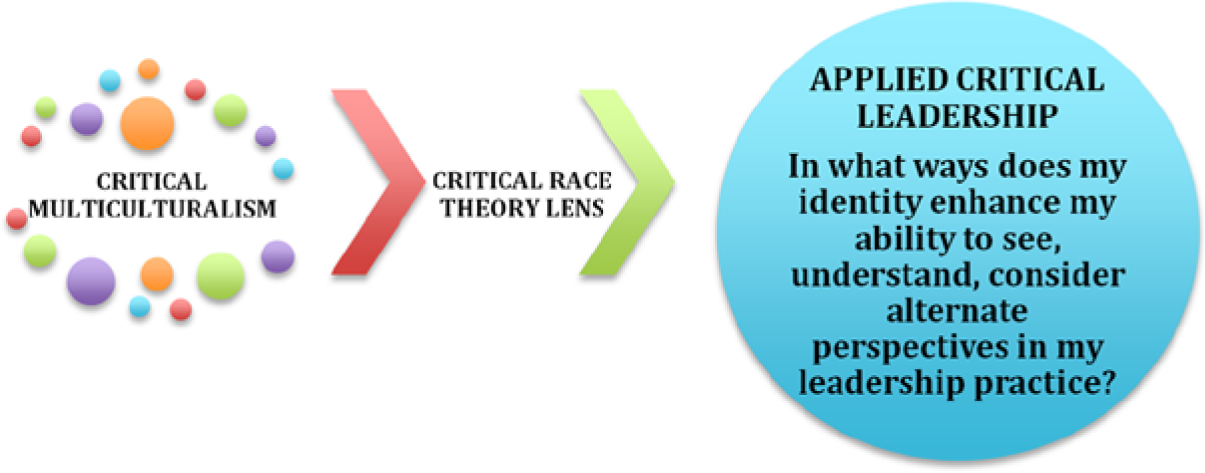
Theoretical framework underlying alternative leadership model.
This conceptualization pushes educational leaders’ thinking about leadership for social justice toward thinking about leadership practice or qualities that result in social justice and educational equity. This consideration moves the leader from engaging in an intellectual and professional exercise or duty to concrete and possibly measureable action. It directly links educational leadership theory and critical theory to practice where leaders are less focused on looking good and more focused on doing good (Noguera, 2003). This current study builds and expands on the theoretical frameworks, methodologies, and findings of the various studies summarized in this literature review and serves to bridge the disciplines of multiculturalism, CRT, and educational leadership.
Inquiry Method
Design and Data Sources
Case study research was chosen for the inquiry design because it follows the tradition of the research reviewed involving leaders of color. It also captures and portrays an understanding of the complex issue of leadership for diversity by CLD leaders of color in diverse contexts. As such, this inquiry serves to emphasize detailed contextual analysis of a small number of events, conditions, and relationships (Yin, 1994). This carefully planned and crafted study of real-life situations, issues, and problems is culturally responsive, in that it recognizes multiple races, ethnicities, and cultures at the center of the research process. As a female scholar of color, I respectfully approached this inquiry from a culturally sensitive perspective, acknowledging aspects of each language, culture, and gender including the historical and contemporary experiences of the participants (Denzin & Lincoln, 2005; Tuhiwai Smith, 1999). My work was intentionally designed to consider each individual and their unique CLD identity, as well as the group as leaders of color. Throughout the process, my own cultural intuition was used and applied as legitimate, appropriate, and critical to the understanding of leaders of color in K-12 and HE contexts (Bernal, 1998).
A culturally responsive case study was chosen for this inquiry in order to provide an in-depth profile for each participant that was sufficiently multifaceted to create a narrative counterstory of their leadership practice and experience to “counter deficit storytelling,” addressing the research questions posed (Solórzano & Yosso, 2002, p. 23). These counterstories serve to expose, analyze, and challenge mainstream majority stories steeped in racial privilege in order to “challenge the dominant discourse on race . . .” (p. 32). The method and design selected also served to provide a comparison of findings to the literature framing the inquiry.
Data sources included an identity survey, a prompt with interview questions, two formal interviews of 1 hour in length, at least one article or paper written by each participant, supporting documents from each participant’s educational site, and observational researcher notations. The range of data collected ensured appropriate data triangulation for the purposes of emergent-theory generation adding depth, texture, and multiple insights as a result of the study (Anzaldúa, 1990; B. Johnson & Christensen, 2012).
Participants and Data Collection
Participants 3 known and purposefully selected by the researcher were practicing educational leaders representing a range of races, ethnicities, cultural and linguistic backgrounds, and genders (e.g., African, Native North American, Arab, Okinawan, Indigenous Mexican, male, female, transgender, heterosexual) as well as a range of K-HE settings, and each racing themselves outside of Whiteness 4 (Haney Lopez, 1998). These people, who are at the heart of this inquiry, were the individuals who initially inspired me to take a closer look at leadership theories, as I was previously unable to find one that aligned with the unique leadership practices I observed in this group of people. Some were students and staff at a midsized suburban university in Southern California. Others represented several school districts in the region. Each participant was selected because of their self-proclaimed practices of leadership that promoted social justice and educational equity. These views were documented in their own previously published or unpublished scholarly work (e.g., peer-reviewed articles, dissertations, proposals for dissertation defenses), applications to doctoral study programs, or seminars, all of which appeared on the surface to satisfy the purpose of the study, with the potential to answer research questions posed (Merriam, 1998; Yin, 1994). I personally knew each one of the participants prior to the study, some for as many as 8 years, and was able to observe their leadership practices as a peer, professor, or administrator. Having had the privilege of seeing most of their practice as well as their scholarly contributions, I knew that each participant was committed to “walking the talk.” Moreover, participants were selected to support cross-case comparative cases to capture and reflect a range of individual perspectives, perceptions, behaviors, experiences, and situations, as well as to identify trends in the practices of the whole group of CLD educational leaders (Miles & Huberman, 1994). This intentional convenience sample of diverse individuals working as educational leaders in culturally and linguistically diverse K-HE settings may be considered either a limitation or a strength of the study, depending on the perspective taken. See Table 2 for participant demographics.
Participant Demographics.

Both the participants and researcher were affiliated with a common doctoral program in educational leadership, either as students or as faculty. This facilitated natural access opportunities and a rapport between researcher and participants, which may also be perceived as inquiry limitations.
At least two culturally responsive and culturally driven (e.g., time, space, tenor, language usage) interviews, which took place in participants’ school settings or a location of their choice, were followed by several e-mail communications or phone interviews that allowed participants to elaborate on responses over time and at their convenience. I met with most participants several times before and after the formal interviews as a normal course of contact in our roles as educational leaders. During the course of the inquiry, and with participants’ ongoing permission during follow-up contacts, member checking, and other planned and unplanned meetings over the course of the year (three deliberate formal with each participant), I made formal and informal observations of participants in their workplace, professional communities, and administrative offices. Additional supporting documents were collected over the course of 1 year. Open-ended interview questions were loosely based on ways in which leaders perceived their identities to affect their leadership practice, whether or not they thought their being leaders of color affected social justice and educational equity in their contexts, and whether there were measureable outcomes as a result of their leadership practice. Interview transcripts and researcher observations were coded, along with historical and institutional documents from each participant’s school setting.
Throughout the process of data collection, databases and matrices were created to categorize, sort, store, and retrieve multiple sources of evidence for ongoing analysis. Folders were created for each participant and, as data were analyzed, sorted by relevance to literature reviewed, research questions, themes repeated within a participant, and subsequently by all participants. Researcher field notes were kept separate from data collected and stored for ongoing analysis (Yin, 1994). Interview and participant written data were entered into an NVivo database whereas other data were stored in physical folders for cross-reference, recall, and sorting throughout the case study.
Data Analysis
Data were analyzed in two phases. The first was within-case analysis that relied on the theoretical propositions for the study based on literature reviewed. For each individual case at least one written document by the participant and interview data were studied to identify patterns in the data that suggested evidence for elements of ACL. These included principles of critical multiculturalism, culturally responsive/relevant leadership, and CRT combinations in more than one participant instance or utterance, which signalled the practice or presence of ACL in that participant. Following this initial frequency analysis, a detailed case study write-up was developed for each participant in the form of a counterstory in their own words (Solórzano & Yosso, 2002). Interview answers were then organized as they related to research questions, which led to an examination of the data for within-group similarities and differences. Cases created were member-checked by participants. Follow-up interviews, phone calls, or e-mails were conducted if needed for clarity.
The second phase consisted of cross-case analysis. In this phase, cases were examined by level (K-12 and HE) categorizing similarities and differences in each group. As patterns emerged, evidence began to stand out as conflicting with patterns within and across the group. As a final analysis, I looked for similarities and differences within the group of participants.
Data presented in the “Results” section are initially organized by nine common characteristics (e.g., critical conversations, decision making by consensus) consistently present for each participant, and thus transcendent across each case. After checking with participants that they agreed these characteristics were present and prevalent in their practice, I gave the core activities their conceptual names, grounded in multicultural education, and social justice and equity literature. There were many more concepts that showed up in the participants’ data, but it was decided to only include those that were present in all participants’ findings. These findings are presented as counterstory cases featuring a blend of personal stories in participants’ voices and some composite narratives based on participant data that recounted more racialized, sexualized, or classed experiences for each participant (Solórzano & Yosso, 2002). Finally, research questions are addressed to close the “Results” section.
Results
Observational and interview findings from the conceptual analysis grounded in the literature frames for this inquiry indicate that within-cases participants in the study individually practiced critical multiculturalism and ACL as viewed through the lens of CRT. This evidence suggests a unique and more ACL toward social justice and educational equity arising out of participants’ identity attributes. Frequency of the characteristics, at least twice for each participant, confirmed these characteristics and qualities as common enough to suggest core or shared emergent tenets of ACL. Table 3 summarizes these data.
Critical Leadership Strategies Across Cases.

Note. LGB & T = lesbian, gay, bisexual, and transgender.
During individual member checks, participants confirmed common ACL characteristics with which they most strongly identified. These themes or common ACL characteristics capture the shared leadership behaviors of the participants independent of the level where leadership was being enacted (e.g., K-12 or HE) and regardless of ethnic, cultural, linguistic, or gender difference. These were the shared macro themes by frequency, many of which are aligned with practices grounded in related literature. These were the use of critical conversations to discuss inequities and access issues (e.g., Robinson, 2011; Singleton & Linton, 2006) and the use of a CRT lens when leading and problem solving (e.g., Delgado & Stefancic, 2001). Other characteristics included the use of group consensus when meeting with constituents, consciousness of stereotype threat when leading in mainstream environments (Steele, Spencer, & Aronson, 2002), and active engagement in academic discourse (Solórzano & Yosso, 2002). Yet others included the practice of honoring constituents in leadership practice (Gross, 2008), leading by example, and development of trust with mainstream (Robinson, 2011) followed by the use of some form of servant leadership (Sergiovanni, 2007). These are reflected in counterstory vignettes indicated as ACL Characteristics 1 through 9 in this section. These cases were chosen to exemplify the named characteristic. The ways in which other participants related to the characteristic are included for each one to further substantiate the salience of the emergent feature. It is important to note that even though one participant counterstory is provided for each characteristic, every participant provided evidence of all the characteristics in the cross-case data analyzed. Following the nine characteristics, results with regard to the research questions are presented.
ACL Characteristic 1: Critical Conversations
Kelly’s case reflects an example of critical leaders’ willingness to initiate and engage in critical conversations with individuals and groups in formal or informal settings even when the topic was not popular in the whole group (e.g., ageism, institutional racism, affirmative action, LGBTQ-ism). Participants report that these conversations took place in meetings as well as in everyday interactions between themselves and individuals or groups. As was also indicated by other participants in their cases, these conversations were sometimes data driven, with educators becoming empowered with the knowledge through the understanding of disaggregated data.
Kelly
Kelly is a Japanese Okinawan post-op transgender woman appointed as the Dean of Students at a Hispanic-serving university in Southern California. She has burnished honey-colored skin and dark hair. Her father, who was born in Okinawa, worked as a gardener in the United States. He raised Kelly and Kelly’s siblings to work hard in school so that they would not have to do physical labor. Her mother, who was born and raised in Japan, was a homemaker. Kelly refers to herself regularly as an Islander or a woman of color, racing herself outside the bounds of Whiteness (Haney Lopez, 1998). Kelly is active and supportive of student groups on campus and floats effortlessly among the Black, White, Latino/a, Native American, Asian Pacific Island, and mostly White Greek organizations on campus. She is a student advocate and loves her service-oriented leadership role. Most of the CLD students Kelly serves, and all of the professional staff with whom she works, assume Kelly is a lesbian because of her affiliation with the lesbian, gay, bisexual, transgender, questioning/queer (LGBTQ) community. She is happy to “pass” as a lesbian, fearing prejudice associated with being a transgender person. In an interview, Kelly shared the following with regard to her use of courageous conversations in her higher educational leadership context:
You probably won’t walk into a room and hear me saying, “listen up, we are going to deconstruct the notion of transgender students on campus” or “why don’t Asian Pacific Island demographics play into discussions on culture race and ethnicity on our campus?”
Instead, she shared that she provides gentle conversational correction by inquiring whether her students or colleagues understand why nuances and false information about individuals or groups might be damaging. In this way, Kelly’s leadership practice from a multiple identity perspective aligns with research suggesting that leaders of color add rich and varied layers of leadership practice grounded in their own experiences with marginalization and oppression (Alemán, 2009; Gooden, 2010; Dantley & Tillman, 2006).
Moreover, participants in this inquiry each shared a positive counterstory about their purposeful use of critical conversations (Singleton & Linton, 2006; Solórzano & Yosso, 2002). For example, Mona, another dean in a HE setting shared in her case that she has “become an expert at leading critical conversations in large groups.” Kelly, Mona, and the other participants find value in the use of conversation as a leadership strategy. The leaders also made use of CRT, as can be gleaned in their counterstories, and was overwhelmingly interwoven throughout their leadership practice (Parker & Villalpando, 2007).
ACL Characteristic 2: Critical Race Theory Lens
According to the data analyzed, every critical leader who participated in this inquiry chose to assume a CRT lens in order to consider multiple perspectives of critical issues. This lens involved the notion of considering race first, valuing story as communication, being critical of liberalism, and understanding the reality of racism. The data also indicated the leaders’ mention of the ability of White and international allies in the workplace to also “pick up” a CRT lens and act through it with regard to the practice of decision making toward social justice or educational equity at times. This nuance is important to note, rendering ACL as a way of leading that is not exclusive to leaders of color.
Mona
Mona is a Chicana and works as the associate vice president and Dean of Graduate Studies at her university. She is heterosexual in her orientation and yet embraces all manners of diversity in her students, directly identifying with marginalization, barriers to educational access, and sociopolitical realities of being a native Spanish speaker of Mexican descent who has made it. Her parents were active in the “La Raza” movement, providing Mona with a politically aware childhood and upbringing. Education proved to be the key for Mona and her family, and she feels fulfilled to pass on this message to other students of color. Mona shares her thoughts, reflecting her use of a CRT lens in her leadership practice:
I support the Chicana/o student organization MEChA and identify with “the struggle.” If large disproportionate numbers of so-called Hispanic students are failing in the academic system for which I work, I personally feel the need to get involved. I live my life through a race and gendered lens, fully aware of historical racism, sexism, classism, and other forms of subordination that impact Chicana/os and other individuals of Mexican descent in the US.
By her words, it is clear that Mona sees herself and her leadership practice through a CRT lens. As can be found in previous research, her support of sociopolitical heritage groups such as Movimiento Estudiantil Chicana/o de Aztlan (MEChA), signals her participation in addressing and eliminating forms of oppression (Solórzano, 1998). Other participants in this inquiry maintain that leading with critical consciousness is a choice, even for them. Data also indicate that, like Mona, participants perceive their diversity and difference as assets better informing their leadership roles. Group consensus is a process the leaders used to realize or apply CRT, as can be evidenced in Misha’s case.
ACL Characteristic 3: Group Consensus
Data reveal that participants in this study used consensus building as the preferred strategy for decision making in meetings, one-on-one talks, and so on. Misha was generous in providing concrete suggestions for other leaders to use in employing this strategy.
Misha
This participant is a heterosexual Arab American woman of Christian Chaldean descent. She was born in the United States, although both her parents were born in Iraq. Misha, with her dark curly hair and brown skin, has never considered herself a White person. When her parents chose to immigrate to the United States, they settled in a Chaldean neighborhood on the U.S.–Mexico border. Misha went to primary, middle, and high school alongside Mexican American and Chicano English language learners (ELLs). She learned to speak Spanish and survive in Mexican and Mexican American culture as a function of being immersed and being confused for a Mexican or Chicana woman all her life. She is very close to her working-class family and brought even closer by racism post events associated with 9/11. Misha works diligently as an academic and a leader in HE to end racism and discrimination for ELLs in Southern California high schools. In an interview, Misha shares her perspective on consensus building in her leadership practice:
When I’m in a large group of educators who need to make a decision about something having to do with social justice and educational equity, I become masterful at finding a piece of butcher paper, a blackboard, or projecting something from a computer onto a screen and simply listing pros and cons. Without consensus I find it very difficult to move a group.
According to the data, while working toward consensus, the notion of interest convergence is sometimes the goal, wherein the solution benefits one or more oppressed groups, as well as members of the mainstream (Bell, 1992; Ladson-Billings, 1999). Misha’s leadership practice is supported in literature on the application of a CRT lens that expands binary notions of diversity. For her, this manifests as support of culturally, linguistically, and positionally different groups through consensus building to identify shared goals toward social justice and equity for the largest number of students (Gooden, 2010; Parker & Villalpando, 2007; Solórzano, 1998). There were some hindrances in the leaders’ realization of ACL. Rick’s case provides an example of a barrier experienced by all the participants in the study.
ACL Characteristic 4: Stereotype Threat
Participants were particularly conscious of stereotype threat or fulfilling negative stereotypes associated with their perceived racial, ethnic, or linguistic group as was indicated in the data analyzed. Some participants described working hard to dispel negative stereotypes for groups with whom they identified (Steele et al., 2002). Rick, for example, was preoccupied with others’ perceptions of his leadership practices. For Rick, this characteristic, which might seem controversial as a positive trait in a culturally responsive study of leaders of color, resulted in his being more conscientious in his leadership practice. He was adamant that his knowledge of this phenomenon kept “his head in the game.”
Rick
The school leader featured in this case is a Black Jamaican American heterosexual or straight male. He is also the principal of a CLD alternative high school. Rick’s family background is that of immigrants from Jamaica making their way in the United States. Rick expresses his disdain for the ways in which Black males are treated, perceived, and considered in the United States. He describes his experiences in U.S. schools as dark, lacking opportunity, and oppressive. As do all participants of color in this study, Rick struggles continuously with notions of not being perceived as competent “enough,” not being on time to meetings “enough,” not being articulate “enough,” and not being taken seriously by mainstream peers, teachers, and parents. He constantly measures himself up against the mainstream, comparing his experience as a school administrator with that of his White male and female peers. The literature calls this orientation stereotype threat (Steele et al., 2002) and this feeling that a leader of color needs to work had to counter perceived negative associations with their race, language, or culture is alive and well with Rick, as can be demonstrated in his words below:
I do feel empowered, now that I have all of the credentials and degrees that I think are necessary, to act on behalf of students and others who need support or intervention when it comes to educational inequities, such as attention to closing the achievement gap for example.
In their cases, Rick, Kelly, Misha, Mona, and other participants share ways in which they display their credentials, demonstrate their competence, “work twice as hard” as their White counterparts, or otherwise counter common negative stereotypes in the workplace. This was accomplished by their ability to tap into positive attributes of their identities for application within their leadership practice, as can be gleaned from literature that similarly identifies this practice (Ah Nee-Benham & Cooper, 1998; McGee Banks, 2007; Santamaría & Santamaría, 2012). Participants equally share a propensity to set the record straight when it comes to telling their stories. Like Rose, featured in the next section, they often chose to do so by use of academic discourse.
ACL Characteristic 5: Academic Discourse
Rose considers educational research as an opportunity to tell the truth about Native education and to provide answers to the communities she serves. Data in this study reveal all participants felt the need to make empirical contributions and to add authentic research-based information to academic discourse regarding underserved groups. This practice is also found in the research findings of Ah Nee-Benham and Cooper (1998) and others (Alemán, 2009; Dantley & Tillman, 2006; Jean-Marie, 2008).
Rose
A Creek/Oklahoma Choctaw straight woman, Rose also happens to be a school psychologist. She lets the world know precisely who she is as opposed to what she does, a distinction she holds dear to her heart. Despite this proclamation, Rose does feel responsible for providing some leadership and direction to her community on issues specifically related to the overrepresentation of Native students receiving special education services in her region. To this end, she is eager to seek solutions with stakeholders in order to improve the situation. Her belief is that to address the issues, educators and educational leaders require historical and political awareness about indigenous issues in their direct service areas, neighborhoods, and communities. Rose communicated her awareness of particular thriving, successful, culturally relevant academic programs designed for Native students in communities with which she has had contact, that have lost funding over the years. We were both perplexed as to why funding to improve academic outcomes for Native students would disappear. In order to address questions of this nature and to seek remedies to assist Native communities, Rose has embarked on a professional development course that encompasses her desire for lifelong learning. Like the other participants, Rose aims to change the common discourse about Native American people in education for good:
I know from my experience that one way to dispel myths and to help Native communities is to involve myself in academic work. I don’t want to be a part of any research agenda that is not going to specifically work toward providing solutions for individuals and groups in Indian country.
This propensity to tell the truth is further evidenced by participants’ current or past participation in doctoral programs of study and other affiliations in academia (e.g., publishing articles, teaching as adjuncts), providing research-grounded examples of storytelling and counterstories described by Solórzano and Yosso (2002). Previous research findings indicate that when leaders of color engage in scholarship, they add rich layers to what we are learning about leadership for social justice and educational equity (Alemán, 2009; Dantley & Tillman, 2006). This aspect is also an example of the way in which the storytelling dimension of CRT is embedded throughout each participant’s leadership practice. Beyond their propensity to get their stories heard, leaders also felt the need to hear the stories of those they were charged to lead. Julian describes the ways in which he honors his community in his case.
ACL Characteristic 6: Honoring Constituents
Participants each felt the need to honor all members of their constituencies (e.g., staff, parents, community members, stakeholders). The leaders sought out and wanted to include voices and perspectives of traditionally silenced groups and individuals (e.g., Spanish-speaking parents of ELLs, students, etc.).
Julian
This participant is a young, straight Latino male principal working in a primary school with teachers who have been teaching for upward of 30 years. The school is in a rural community with few Mexican American teachers or administrators. Julian, who was born and raised in Los Angeles California, is able to use his native and familial knowledge of the Spanish language and Mexican culture to connect to his students, their families, and members of the community. He feels responsible for making educational opportunities available to his students and their families. Julian also feels responsible for letting his staff and teachers know that they need to take a closer look at data and teaching methods if they intend to close the achievement gap separating the mostly (90%) Mexican descent ELL students at the school from their mostly White English dominant peers at the school and in the district. Here he shares his passion for honoring constituents as he functions in the role of principal:
If language or culture has been perceived as a barrier to parents not coming on my school campus, then it is my responsibility to remove it; even if I become the physical, psychological, or emotional bridge linking the parents to the school or classroom. It is one thing to have parents on your campus, it is another thing to have parents helping to make decisions about what happens on your campus.
In the experiences of participants, marginalized members of communities who were perceived to not care about education as a system, were often the target groups the participants invited to meetings and approached for advice and direction. Previous research findings on similar leadership–community relations indicate that exclusionary leadership practices can lead to the demise of a learning institution (Brooks & Miles, 2008). Furthermore, as can be found in research undertaken by Muhammad Khalifa (2012), Julian relies heavily on leadership input from members of the community. Participants communicated the ethical inclusion of every member of the community and strategies for bringing them in. Participants were aware of the perceptions of others and felt the need to be “on” 24/7. Rick describes what this looks like for him in the case below.
ACL Characteristic 7: Leading by Example
As indicated in the data analyzed, individuals included in this study led by example to meet unresolved educational needs or challenges. The data reveal that these leaders purposely lead in order to “give back” to the marginalized communities with which they identified or served, supporting their own social justice journeys. These leaders stated that they felt it was their responsibility to publically bring critical issues with regard to race, ethnicity, gender, and class to their constituents for resolution, underscoring honoring constituents by way of leading by example. This way of leading is closely aligned to the kind of praxis associated with transformative leadership (Jean-Marie & Normore, 2008; Shields, 2010).
Rick
In this passage, Rick reflects on how as a school principal he gets “buy-in” from teachers and other administrators by active pursuit of social justice and equity in the workplace:
I want people at my school to think about educational inequity and diversity and to talk about these issues openly. Right now I have to initiate conversations at staff meetings, in the hallway, wherever, whenever, until the conversations become the norm.
This example can be considered as much a critical conversation as it is an illustration of leading by example. Furthermore, as is corroborated in similar research and best practices in educational leadership, Rick attends professional development trainings to benefit diverse learners and invites colleagues, teachers, and parents to join him (Brooks & Miles, 2008; Capper, 1993; Marshall & Oliva, 2006). This illustrates the overlap in the transcendent ACL characteristics shared by the group of participants. Each participant reported feeling that if he or she did not address critical issues, the issues would likely not be brought to surface. Sometimes participants were hesitant to act on issues related to social justice. Trust was not automatic in every situation.
ACL Characteristic 8: Trust With Mainstream
According to data analyzed in this inquiry, Misha and participants in this study communicated the need to build trust when working with mainstream constituents or partners, or others who did not share an affinity toward issues related to educational equity. They communicated the need to win the trust of individuals in the mainstream, as well as the need to prove themselves qualified and worthy of leadership positions and roles, as Misha shared in her example. In Viviane Robinson’s (2011) research on student-centered leadership, trust also played a major role with regard to effective leadership practice.
Misha
Here, Misha describes aspects of her leadership journey toward developing more trust when working alongside White professionals in the mainstream:
As an Arab descent woman of color who is clearly not White, I have a whole host of reasons to withhold my trust and remain guarded about my personal life and aspects of my culture and spiritual practices. Trust is something that leaders don’t realize can make or break progress.
This characteristic has some overlap with stereotype threat as critical leaders in these cases often assumed mainstream peers and constituents would automatically not trust them. Previous studies indicate trust as necessary for leaders of color, in particular, as they learn to trust their instincts with regard to tapping into the richness of their ethnic and cultural identities (Santamaría & Santamaría, 2012; Tillman, 2007; Venzant Chambers & Huggins, in press). This is a different way of thinking about the concept, but important nonetheless to consider. Regardless, the notion of trust building here goes several ways. The bottom line for the leaders ultimately became a matter of leading beyond or outside of themselves as is described by Mona.
ACL Characteristic 9: Servant Leadership
Beyond the characteristics stated, the data further reveal that participants also felt somehow “called” to lead. These individuals were reportedly led by what they called “spirit.” In existing literature this was aligned with leaders’ identity as well (Jean-Marie et al., 2006).
Mona
Like all participants in this study, Mona goes out of her way in her leadership efforts to work for her organization. She is loyal and nurturing, and feels responsible for taking care of the tasks she needs to complete. Service is an integral, almost spiritual, part of her leadership practice. She shares,
I make it a point to take care of myself so that I can better serve others. During some seasons of my life I have been better at this than at other times. However, in my current position, I find that I need to replenish in order to lead. I keep an open heart, act with grace, and try to keep a generous spirit.
This way of working is a variation of servant leadership and further reflected in the literature as authentic leadership for the greater good (Noguera, 2003). Related to this idea, all the critical leaders featured in this inquiry may be classified as transformative, servant leaders who ultimately work to serve the greater good. Leading for something outside of themselves or beyond themselves is a notion shared by all the participants.
Research Questions
The ways in which data emerged and were organized around the research questions, provides more information about critical leadership and how critical multiculturalism and educational leadership toward social justice manifested for participants in this study. All participants were able to describe individually and corporately ways in which their identities of difference contributed to their leadership practice. They were also able to articulate and demonstrate the types of strategies they used in order to practice leadership for social justice and educational equity in the face of diversity. They shared the important detail that leading in this way is accessible and a choice available to any educational leader willing to consider race, culture, language, and gender difference in relation to power and decision making in K-HE educational settings. Differences between women and men were not analyzed in this study, but can certainly be considered in future research. There were some subtle differences between K-12 and HE educational leaders, but not enough to separate the findings. Participants reported measureable differences as a result of their leadership approach, but there were not enough data provided to substantiate claims of increased academic achievement. In this section, research questions are presented followed by a brief discussion with corresponding examples from the participants’ experience for illustration.
In what ways do the identities (e.g., subjectivity, biases, assumptions, race, class, gender, and traditions) of leaders of color K-12 through HE affect their leadership goals, decisions, and practices?
The participants were able to state ways in which they were able to draw from positive attributes of their identities to inform their leadership practice. Sometimes the identity was corporate, as in a community identity; other times it was more personal, passed on by a parent or family member. Each time, it was powerful, as can be gleaned here.
Julian stated that his ties to the Latino community were automatic and sealed by shared language and culture with the students and their parents at his school. This is further evidence of critical multiculturalism with regard to Julian’s ability to reflect on his experience within his social location. He also described his work ethic as being learned from his Mexican father, and cited servant leadership as a style that resonated with him. Like most of the leaders of color, Julian also shared ways in which his identity negatively affected his practice:
I was always thinking of what the White people in the community, parents and teachers, thought about certain decisions being made about meeting the needs of ELLs in the school who were “at” or “below basic.”
Similarly, Rose perceived her identity as a key to working for her community. The reason she pursued educational leadership as an option was to benefit Native learners and the members of her community. Her identity as a Native woman could not be teased out from her leadership practice. She shared:
I work on behalf of all of the students on my caseload, but I feel a particular responsibility for the Native students in my district, especially because of the overrepresentation of Native students in special education.
Rick felt certain that his thinking and reflection on his own marginalized experience in school growing up affected the way in which he carried out his daily leadership practice. “Making sure no one falls in between the cracks” was his number one goal, completely based on his experience of feeling that he was at risk for being “lost” throughout his educational experience.
Kelly was the participant most influenced by her gender and ethnicity, which both served to drive her leadership practice. Her leadership style is particularly interesting in that she remembers being perceived as a male:
I understand the need for leadership for social justice. I can remember what it was like to have the privilege of having been a young man. I actually know, because I lived that perspective and that life, and there were benefits. I can’t say I miss them, I just know they are real.
Misha claimed her leadership style comes out of her ability to be perceived as racially ambiguous but she also spoke about strength in multiple identities. She reflected on ways in which Arab women are portrayed in popular media as contrasting to the way “women run the house” in her home and in the homes of her closest relatives. Mona was similarly blatant in her decree that her leadership style comes out of her family ties and values, political identity, and self-perception that she is a woman of color. These attributes positively informed her leadership practice rather than served as a detriment to decision making on the job.
What kinds of effective leadership strategies do these leaders use in their daily practice, and in what ways do these strategies differ from effective strategies identified in mainstream educational leadership literature?
Table 3 captures examples of the common, transcendent, and multicultural critical leadership strategies across cases. It describes examples of specific actions or activities in which each leader was engaged throughout the study. Data that informed this question included interview transcripts as well as observations. The strategies were organized using the hybrid analytic framework used in this article: In Table 3, indicators of transformative leadership are indicated, as well as the practice of critical multiculturalism, and the use of a critical race perspective, including CRT, TribalCrit, and LatCrit theories that contribute to ACL. A fourth category emerged when analyzing data: spirit. In the table, spirit can be noted several times with regard to particular strategies.
Julian, Rick, and Mona each expressed core elements of spirituality in their leadership practice. In this way, evidence of moral and ethical leadership, which is becoming prevalent in mainstream educational leadership, was suggested. Their leadership, as a result, was also most like contingent or situational leadership (Hersey & Blanchard, 1988; Kezar, 2008; Nahavandi, 2006).
Discussion
Gloria Anzaldúa (1990) urges CLD researchers of color to look for and create theories so that they can “rewrite history using race, class, gender, and ethnicity as categories of analysis and theories that cross borders” (pp. xxv-xxvi). In this work, Anzaldúa’s call has been answered within the realm of educational leadership in the consideration of race and culture first when considering the practice of educational leaders of color at various levels, K-HE and from many chairs (e.g., principal, dean, psychologist, researcher). This contribution helps to illustrate, through the voices and practices of leaders of color, ways in which diversity is as much an opportunity for change as it is a challenge to status quo educational leadership (McGee Banks, 2007; Robinson, 2011; Sotomayor, 2011). This examination of K-HE educational leaders of color working in the United States presents evidence of characteristics supporting the transcendent culturally relevant and multicultural leadership approach: ACL. This study also offers an expanded way of thinking about multicultural education and critical multiculturalism, cogently bridging notions of multiculturalism to educational leadership—a powerful idea that is virtually untapped and holds promise in furthering our thinking and conceptualization of educational leadership for a CLD society in the United States and the world. Additionally, this contribution reveals some of the implicit strategies leaders of color use in their applied work toward social justice and educational equity to address diversity in different learning environments, as well as strategies they use to navigate dual and multiple cultures. Bringing their practices to light in this manner demonstrates what it is that leaders of color “bring to the table” and suggests how imperative it is that they be invited.
The discussion is further organized by a report on trends found in the data that informed ACL, with relevant links to the literature reviewed to support the inquiry. The ACL subsection includes additional emergent themes and trends between and across educational levels (e.g., primary, high school, HE). Finally, ACL is discussed in its relation to mainstream leadership practice followed by implications for further research and a conclusion.
Characteristics of Applied Critical Leadership
In the “Results” section, nine characteristics of ACL that emerged from the data were related to relevant literature, defined, and exemplified by selected participant cases: use of critical conversations, CRT lens, group consensus, consciousness of stereotype threat, engagement in academic discourse, honoring constituents, leading by example, development of trust with mainstream, and use of servant leadership. Examples of each were detailed in the cases presented. These findings are not particularly unique in that other scholars of color who examine social justice and educational equity and those in the mainstream have documented similar findings. For example, Singleton and Linton (2006) published a body of work on courageous conversations about race that are similar to the ways participants describe their use of critical conversations in their schools on topics ranging from academic achievement to parent involvement. Robinson (2011) similarly found the use of open-to-learning conversations with regard to building trust imperative with school site leaders. This notion of building trust was echoed in the voices of participants who stated the need to build and establish trust before being able to work in their schools for social justice. Use of the CRT lens in educational leadership was not as prevalent in the literature nor was the notion of stereotype threat; however, studies indicate that both phenomena are common in the leadership practices of leaders of color (Alemán, 2009; Jean-Marie, 2006; Tillman, 2007). Group processes such as finding consensus and honoring constituents are similar to components of democratic leadership for social justice (Gross, 2008), whereas engagement in academic discourse was more like contributing one’s own story or counterstory to disrupt the hegemonic version of participants’ histories (Solórzano & Yosso, 2002).
These conscious leaders present in related literature, like the participants in this study, are described as leading for the greater good, leading democratically, integrating school reform through scholarship dialogue and action; demonstrating ethical decision making, seeing one’s career as a calling, and the notion of being called to lead (Gross, 2008; Jean-Marie, 2008; Normore, 2008).
The data presented in this study reveal that at the very least, critical leaders who are demonstrably reflective individuals of color present a value-added, critical, multicultural dimension to leadership practice (McGee Banks, 2001). The way in which they lead through their identity is like adding their ethnic, cultural, and linguistic “funds of knowledge” (Moll, Amanti, Neff, & Gonzalez, 2001, p. 138) to standard mainstream leadership practices, models, and theories (e.g., managerial, instructional, transactional, transformational, moral, contingent, servant, transformational). By providing leadership through the lens of CRT (e.g., accepting the notion that racism is the norm in U.S. society, storytelling is a part of exploring identity, liberalism is open to critique, and race is real), and recognizing and expressing positive attributes of their identities and differences, through the data analyzed, the leaders in this study demonstrated a variety of ways in which they apply multicultural perspectives. These perspectives are manifested in their deliberate documented work toward social justice and educational equity in their applied leadership practice (Bell, 1992; Ladson-Billings & Tate, 1995; Santamaría & Santamaría, 2012). In these ways, although participants may be said to practice instructional leadership or contingent leadership or any other mainstream model, it is the value-added ability to practice through the CRT lens while reflecting on multiculturalism that qualitatively differentiates the participants’ leadership practice. Various data trends from both within-case and cross-case analyses are discussed next.
Higher Education Trends
Issues in HE were more global or institutional than issues brought to the surface by K-12 educational leaders. These issues lent themselves to different ACL characteristics. Most HE issues were around educational access for first-generation students, equity for LGBTQ individuals and groups, and trust, including its role in bringing large groups to shared understandings of the impact of diversity as a resource (rather than a detriment) in HE. HE participants often challenged power distribution in their contexts with critical multicultural leadership practice resulting in the pushing of boundaries between power and authority; individual versus collective (Quantz et al., 1991; Weiner, 2003).
For Kelly, as a dean of students, courageous conversations were used to address gender and sexual orientation issues. She chose courageous conversations as her exemplar characteristic because of her propensity to use words and language in her leadership practice (Singleton & Linton, 2006). This transgendered woman of color suggested that her social justice work was in the area of gender and sexual orientation, because she was certain the “race, language, and culture movement was gaining appropriate traction on her campus.” As part of her critical multicultural leadership practice, Kelly spent an entire year working within a dominant university structure, convincing the academic senate at her university to join her and LGBTQ students in a push for gender-neutral bathrooms on campus (Shields, 2010). She also, by way of courageous conversation, convinced the faculty affairs committee chair to change all noninclusive and gender-specific language in all university policies and documents to be completely inclusive and gender free. Many of the conversations she described herself as having could be considered, “conversations around issues of emancipation and domination” (Quantz et al., 1991). Kelly’s social justice and equity efforts were largely institutional in nature.
Mona, on the other hand, who was more personal in her approach, relied on a CRT lens and servant leadership tendencies to identify with and appropriately serve Chicano/a and Latino students known to struggle historically at the university (Delgado & Stefancic, 2001; Ladson-Billings & Tate, 1995). This high-level dean considered race first in every leadership decision, thinking through how the result would affect Latino/Latina and other students of color on campus (Alemán, 2009; Espinoza & Harris, 1997). Her tendency to spiritualize her leadership and want to give back to her community was reiterated by all the participants in relation to their ethnic, racial, or linguistic communities.
Misha did not have a large group of like-ethnic people as a basis for a safe community. Instead, as a quintessential multiculturalist, she worked with other leaders on her university campus who “fell outside of White, male, middle class identities” and were known for sustaining social justice, educational equity, and access for first-generation students of color and ELLs (Kincheloe & Steinberg, 1997, p. 17). In her professional efforts to build solidarity across diverse communities, Misha eventually became the director of the campus center for social justice (May & Sleeter, 2010). In multiple leadership roles with various groups of historically underserved constituents, Misha perfected the use of consensus as a means of getting large groups of individuals to agree that diversity in HE is a critical real issue that warranted appropriate attention, discussion, and action. Trust played a major role for Misha in her work with White allies as well as with multicultural and multilingual groups. Being on the margins of marginalized groups as an Arab American woman post 9/11, gave Misha cause for her caution and quest to establish trust before moving forward in any constructive leadership for social justice context (Normore, 2008). Issues for K-12 leaders had some subtle differences.
Trends in K-12 Education
Julian, Rose, and Rick functioned more as critical multiculturalists in their progressive leadership, bringing to the surface of their leadership practice issues that were more personal than those of HE participants (May & Sleeter, 2010). Like Mona, Julian used his native language and culture as bridges to connect to and to empower teachers, staff, and members of his community, while Rose personalized reasons why she should empower herself in order to empower her community (Santamaría & Santamaría, 2012). Social justice issues addressed in Julian’s multicultural leadership practice were parent involvement and giving voices to individuals who had been historically silenced in schools (Quantz et al., 1991), whereas Rose was focused on addressing overrepresentation of Native youth in special education and “truth telling” with regard to Native peoples and their experiences in education (Weiner, 2003).
Conversely, Rick was more myopic in his multicultural leadership perceptions internalizing the notion of remedying negative stereotypes associated with Black men in the United States (Steele et al., 2002). He was focused on leading by example to ensure everyone in the school environment and in the teaching and learning community knew that he was pulling his leadership for social justice and equity “weight.” Modeling appropriate administrative involvement was critical for Rick as it satisfied the stereotype threat he felt and kept him engaged in remedying the way schooling played out for students of color at his site.
Issues for the K-12 leaders ran the gamut from addressing the academic achievement gap for CLD learners and overrepresentation of Native learners in special education, to leaders of color grappling with how their identities affected the ways in which their leadership was perceived (May & Sleeter, 2010). In contrast, inquiry participants in HE did not seem to focus as much on their own practice as they did on the larger equity issues at hand (Shields, 2010).
Conclusions and Implications
This article, looking to the ordinary practices of nontraditional educational leaders who transform theory into practice, builds on the theoretical and practical premises of relevance and necessity when finding appropriate solutions for challenges and limitations as a result increasing school diversity (Robinson, 2011). The hybrid analysis provided saliency for thinking about educational leadership for leaders of color in a variety of contexts.
Role of Multicultural Perceptions in Educational Leaders of Color
Data collected indicate that educational leaders who are also people of color in the United States may have memories or direct experiences with institutionalized racism as a part of their schooling experiences that they are able to use to fuel their interest and effectiveness in the field of educational leadership. These experiences directly contribute to their perceptions, which are multicultural in nature and, as a result, the particular ways in which their leadership practices are realized. As was suggested by the findings in this inquiry, by way of their direct experiences and multicultural perspectives, these leaders may be more likely to recognize the need for and practice leadership for social justice and educational equity (Dantley & Tillman, 2006; Jean-Marie, 2006; Santamaría & Santamaría, 2012). The educational leaders featured in this study—Julian, Rose, and Rick from the K-12 context; and Misha, Kelly, and Mona from HE—demonstrate ways in which positive identity traits associated with ethnic, cultural, linguistic, and gender diversity (independent of gender and level of practice [i.e., K-12, HE]) are manifested in terms of leadership for social justice and education equity (Theoharis, 2007). Each participant in the study shared a sentiment of responsibility to enact leadership for social justice and educational equity by drawing on positive attributes of their identities.
Although diverse in both identity and educational leadership position and level, leaders of color included in this study share core ways of leading that, in the words of Rick, “Push the mainstream kids in the middle, while making sure the students of color don’t fall by the wayside.” The leaders in this inquiry are similar to others featured in related work in that the approach “works for the good of every individual in the school system; at its heart, it has the potential to work for the common good of society as well” (Normore, 2008; Shields, 2010, p. 583).
This contribution provides evidence, albeit emergent and across multiple cases, that leaders of color in various contexts may, as a result of critical reflective thinking about their own educational experiences within their particular social location (May & Sleeter, 2010), posses a unique leadership skill set that lends itself well to addressing some of the contemporary challenges (e.g., inequality in education) at the forefront of societal issues in the United States and globally. These characteristics are in alignment with multiculturalism (Banks, 1993, 2008) as well as critical multiculturalism. Featuring these practices may serve to better inform leadership behaviors of those who aspire to become more effective leaders in the face of increasing K-12 and HE diversity. Nurturing these practices in aspiring educational leaders may be prudent as educational leadership preparation programs design curriculum that is progressive and future responsive.
Research findings make explicit the implicit culturally relevant leadership strategies and practices leaders of color use in educational settings, suggesting an emergent leadership model: ACL (Santamaría & Santamaría, 2012). It is this unique perspective, complemented by the culturally relevant case study research approach with American leaders of color, that sets this contribution apart from related works in the field (Capper, 1993; McKenzie et al., 2008; Normore, 2008; Shields, 2010).
Research findings presented in this article link theory to practice, adding to similar educational leadership research and efforts toward applied social justice and educational equity research pushing multicultural theory into praxis. Applied critical leadership suggests the possibility that a type of multicultural funds of knowledge might be at play for CLD leaders who draw from positive aspects of their diversity to inform leadership practices (Moll et al., 2001, p. 138). A similar study featuring women or men only, leaders from a particular racial or ethnic group, or CLD leaders at a particular level (e.g., K-12, HE) might provide more information with regard to ACL and would be worthy for additional study. Additionally, a study comparing ACL with other leadership models to further develop and test the approach would be useful. Findings from this study can lead to meaningful discussions about educational leadership for social justice and educational equity, and might inform leadership practice and policy with regard to addressing diversity, multiculturalism, and inequality in education in the United States and abroad (Robinson, 2011). Findings may also encourage researchers of color across disciplines in education to consider culturally relevant methodology in their current and future studies. Although the sample was small, representing men and women, many racial, ethnic, cultural, and linguistic differences, the findings are intriguing and suggest that there is a great deal of additional research needed to explore alternative approaches to educational leadership in the face of increasing diversity in K-12 and HE.
Diversity in K-12 and HE contexts is rapidly increasing. Demographic shifts are changing the number of pupils of color attending school in the United States and all over the world. Rather than having diversity reveal limitations in educational leadership, scholars and educational leaders need to find ways in which diversity can inspire transformation, improvement, and achievement for all learners at every level of education.
Footnotes
Declaration of Conflicting Interests
The author declared no potential conflicts of interest with respect to the research, authorship, and/or publication of this article.
Funding
The author received no financial support for the research, authorship, and/or publication of this article.