



Abstract
Objective:
To implement a new health promotion course as part of pharmacy public health practices and to identify pharmacy students’ knowledge, perceived role and self-efficacy with respect to what was learned through this.
Method:
A total of 119 fifth-year pharmacy students undertook a new health promotion course in a pharmacy school in Yogyakarta. A questionnaire consisting of 30-item knowledge scale, a 6-item perceived-role scale, and a 9-adjective self-efficacy scale was used to measure students’ knowledge and attitudes before and after the new course.
Results:
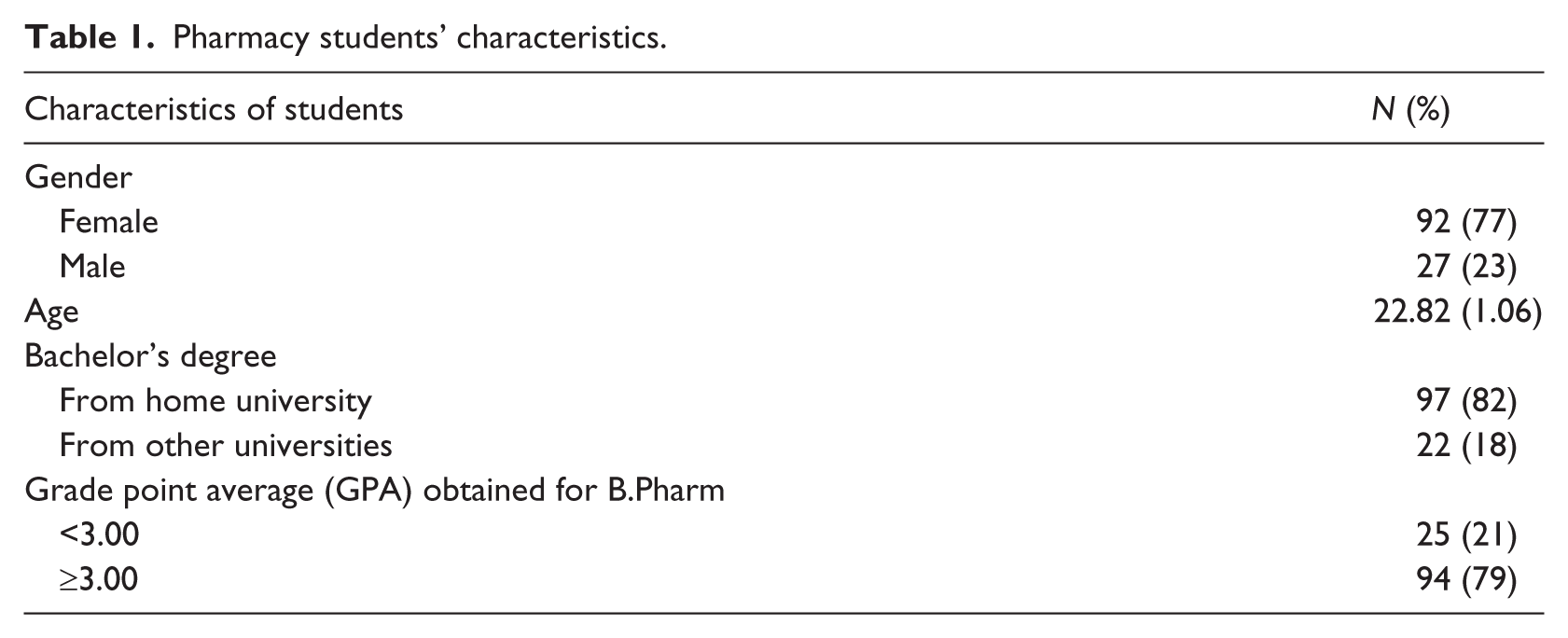
Of the 119 pharmacy students completing the questionnaire, 77% were female, with a mean age of 22.8 years, and 79% had BPharm degree with a grade point average in excess of 3.00. A significant post intervention improvement (p < .001) was found in terms of knowledge, perceived role and self-efficacy. The majority of students perceived that their involvement in health promotion activities would help the community and have a positive impact on their future careers.
Conclusion:
Pharmacy students gained positive knowledge, perceived role and self-efficacy towards a health promotion course. Strategies to ensure that positive attitudes translate into actual behaviours of engaging in health promotion activities are needed. Sustainability and the integration of health promotion activities into the curriculum of pharmacy schools nation-wide in Indonesia should be encouraged.
Introduction
The developing need for public health has created a unique opportunity for pharmacists to become more engaged in health promotion activities (Oqua et al., 2013; Vincent et al., 2007). Although there is a potential role for pharmacists to contribute in this field, currently few changes in pharmacy education are being made. To date, pharmacy education has focused on micro-level activities such as medicines management and prescribing advice, rather than on wider health promotion matters such as health inequalities in the community (Anderson, 2007). To enhance the competency and skills of future pharmacists, it is important that health promotion be incorporated into the core pharmacy curriculum (Saba et al., 2013).
Pharmacists’ involvement in health promotion activities has been advocated by both World Health Organisation (WHO) and the International Pharmaceutical Federation (FIP) (WHO, 2011). A systematic review of consumers’ views regarding pharmacists’ contribution to public health suggested that consumers perceive pharmacists as appropriate providers of health-related advice (Anderson, 2002). Unique opportunities present themselves to pharmacists in this respect, including accessibility, extensive knowledge of drug treatments and trustworthiness in the minds of consumers (Eades et al., 2011).
In developed countries, several schools of pharmacy have incorporated public health topics into the Bachelor of Pharmacy (B.Pharm) curriculum (Globe et al., 2004; Shah et al., 2009). Some institutions have incorporated this content into existing courses; others have created new subject areas dealing with health promotion and public health issues. In contrast, there is a huge gap in developing countries, where approaches to pharmacy education are more traditional, and where more effort must be made to explicitly incorporate health promotion components into the pharmacy education curriculum (Hassali, 2011).
The Indonesian Association of Pharmacy School has argued that pharmacists should be involved in the provision of community level health promotion (Indonesian Association of Pharmacy School [APTFI], 2013). This requires students to be educated in a number of core competencies so as to facilitate the delivery of comprehensive healthcare services attuned to public health policies (Zwarenstein and Reeves, 2006). Pharmacists’ involvement in health promotion will be facilitated by a pharmacy degree curriculum that goes beyond the topics typically covered in traditional undergraduate coursework (Kristina et al., 2014b). Such work has been undertaken at the Universitas Gadjah Mada (UGM) in Indonesia, with a particular focus on pharmacists’ involvement in tobacco cessation. Evidence suggests that the integration of tobacco education into the core pharmacy curriculum improved students’ knowledge, perceived role and self-efficacy, and developed their ability to undertake smoking cessation counselling (Kristina et al., 2014a). However, most pharmacy schools currently lack formal provision in public health (Indonesian Association of Pharmacy School [APTFI], 2013), and still the vast majority of pharmacy students have little exposure opportunity to develop and implement health promotion programmes in the general community.
As several international studies have shown (Hassali et al., 2009; Maffeo et al., 2009; Naughton et al., 2010; Sookaneknum et al., 2009), the knowledge and skills acquired by pharmacy students in the field of public health area hold the potential to improve the quality of pharmacy services. As a result, many universities have sought to develop this aspect of pharmacy education through learning programmes using combination of lectures and practice skills within the targeted community (Bruselius-Jensen et al., 2017; Naughton et al., 2010). In this article, we describe the effects of such a programme in enhancing knowledge, perceived role and self-efficacy towards health promotion among fifth-year pharmacy students in a pharmacy school in Yogyakarta, Indonesia.
Materials and methods
Course description
The Health Promotion for Pharmacy course was developed and implemented during the academic year 2015–2016. In Indonesia, pharmacy students undertake 5 years of study, with the last year counting as a professional qualification. In this final year, pharmacy students gain clinical experience in hospitals, pharmacies and primary health centres (Andayani and Satibi, 2016).
The course developed was a two-credit required (core) course lasting 3 weeks duration. It consisted of lectures about concepts of health promotion and behavioural theory, consultation with facilitators regarding field projects and community attachments. The role of pharmacists in health promotion and disease prevention was explored through cases studies of pharmacists’ involvement in public health issues such as smoking cessation, antibiotic use awareness, dengue fever awareness and cardiovascular health for healthy community members. Students also were taught about the socio-behavioural aspects of health and wellness, as well as the social responsibilities of pharmacists to the healthcare system and society.
Skills gained during course period were assessed via group project presentations at the end of course. The course was delivered by lecturers from the Universitas Islam Indonesia with the assistance of academics from the UGM.
Course delivery methods
The main instructional strategies employed in the course include lectures and community attachments. During the community-based elements of their work, students were expected to develop skills in needs assessment, programme implementation and programme evaluation. After choosing a topic to focus on, students developed a small-scale health promotion project and worked as a group in a selected community setting.
Student evaluation
Students’ course performance was evaluated via weekly evaluation reports (20%), a group field project (20%) and a group presentation (20%). Students’ performance in a comprehensive final semester examination covering the more formally taught elements of the course accounted for the remaining 40% of their grade.
A validated questionnaire adopted from previous studies (Kristina et al., 2014b) was used to assess student’s responses to the health promotion programme specifically. Section 1 included 30 yes/no questions covering students’ knowledge regarding four modules: (1) health promotion concepts, (2) community focused assessment, (3) programme planning and development, (4) programme implementation, and (5) programme evaluation. Section 2, focusing on pharmacy students’ perceived role in relation to health promotion activities, consisted of 6 questions on a 4-point Likert scale (1 = strongly disagree; 2 = disagree; 3 = agree; and 4 = strongly disagree). Section 3 on self-efficacy included 9 questions measuring students’ confidence in performing health promotion activities. Responses on this part were also scored on 4-point Likert scale (1 = not very confident; 2 = not confident; 3 = quite confident; and 4 = very confident).
T-tests were used to assess the mean difference between pre- and post- course. A survey on students’ satisfaction regarding course implementation was also conducted using a 4-point Likert scale. The study was approved by the UGM institutional review board (reference number KE/FK/1042/EC/2016).
Results
A total of 119 students in total completed the questionnaire. Approximately 77% of students were female, with a mean age of 22.82 (1.06) years. In all, 79% of students had a previous grade point average (GPA) ≥3.00 (Table 1).
Pharmacy students’ characteristics.
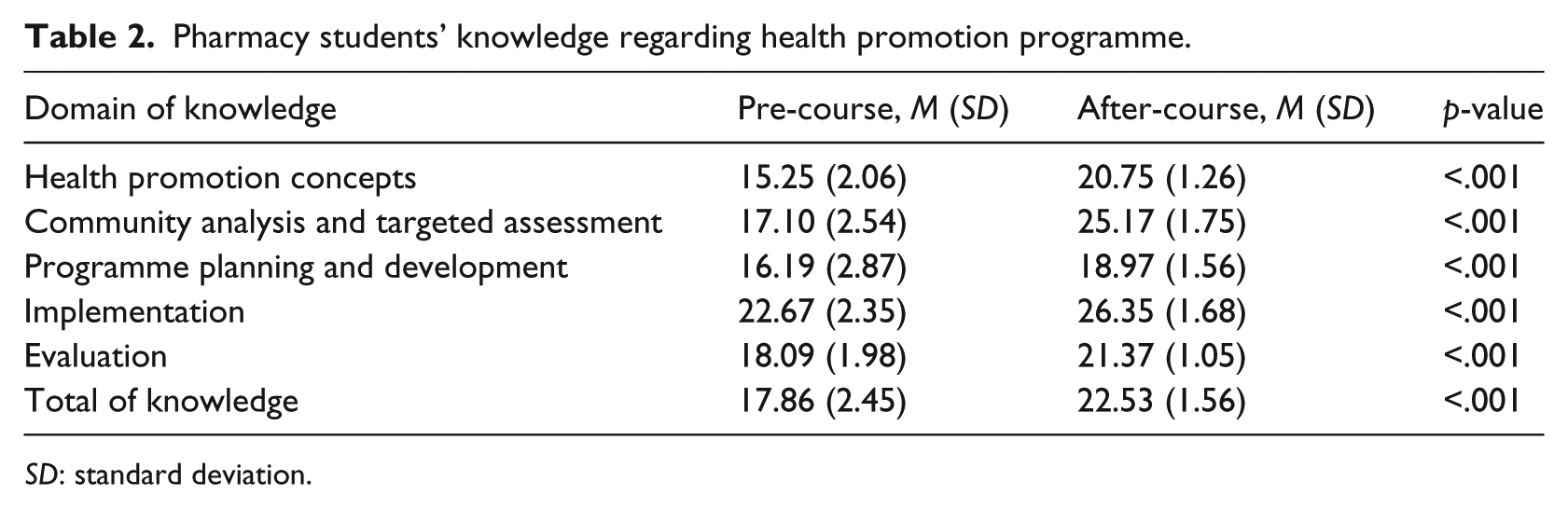
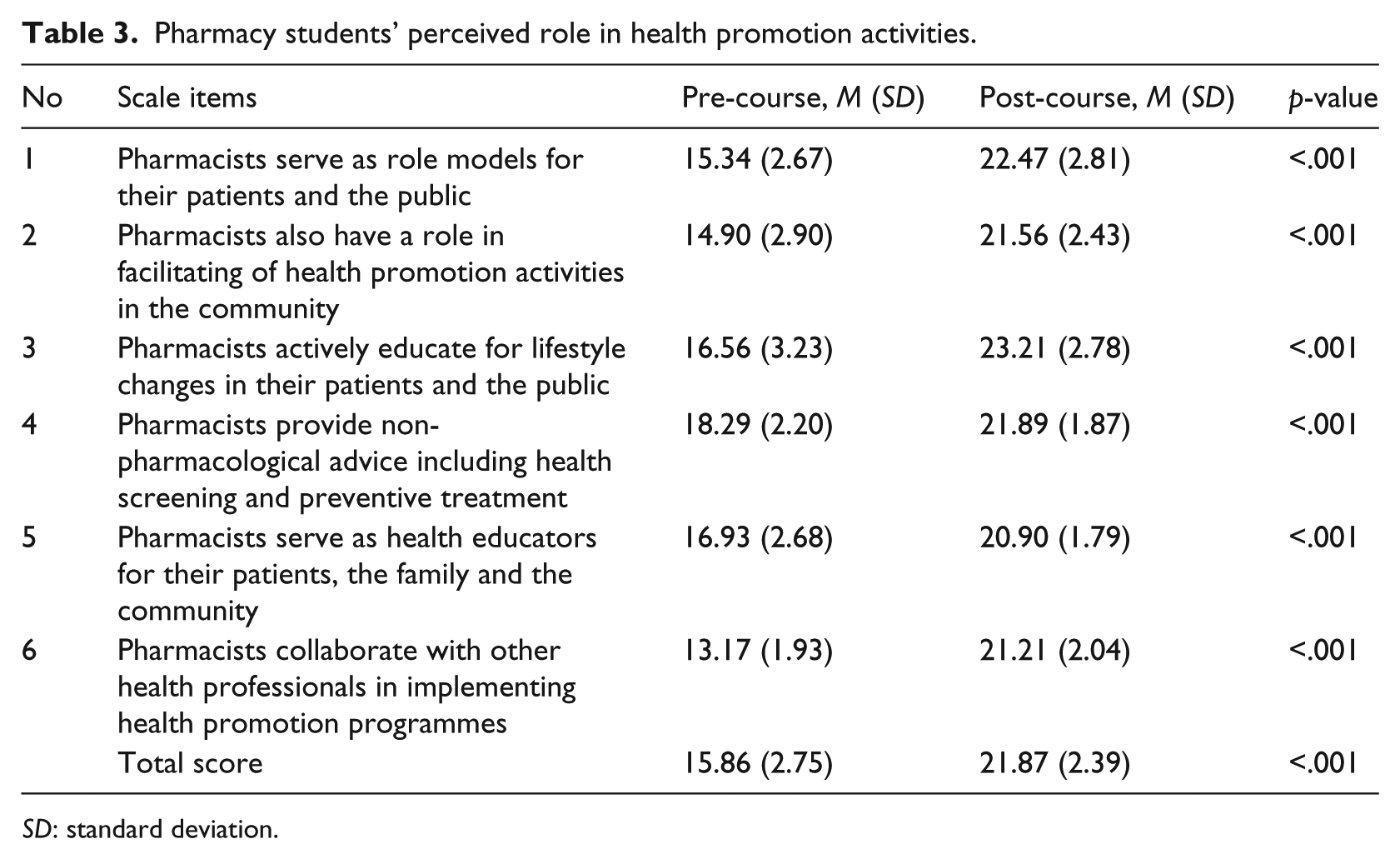
At pre-course assessment, there were low levels of knowledge, perceived role and self-efficacy, with mean scores (standard deviation [SD]) of 17.86 (2.45), 15.86 (2.75), and 21.59 (2.18), respectively. Following the course, the mean score of the three outcomes improved significantly (p < .001) (Table 2). Students’ overall perceived role in contributing health promotion activities increased subsequent to the course (Table 3). The majority of students believed that they were able to serve as role models for their patients and the public, actively educate their patients and public about lifestyle changes, and collaborate with other health professionals in implementing health promotion programmes, with the mean scores (SD) of 22.47 (2.81), 23.21 (2.78), and 21.21 (2.04), respectively (Table 4).
Pharmacy students’ knowledge regarding health promotion programme.
SD: standard deviation.
Pharmacy students’ perceived role in health promotion activities.
SD: standard deviation.
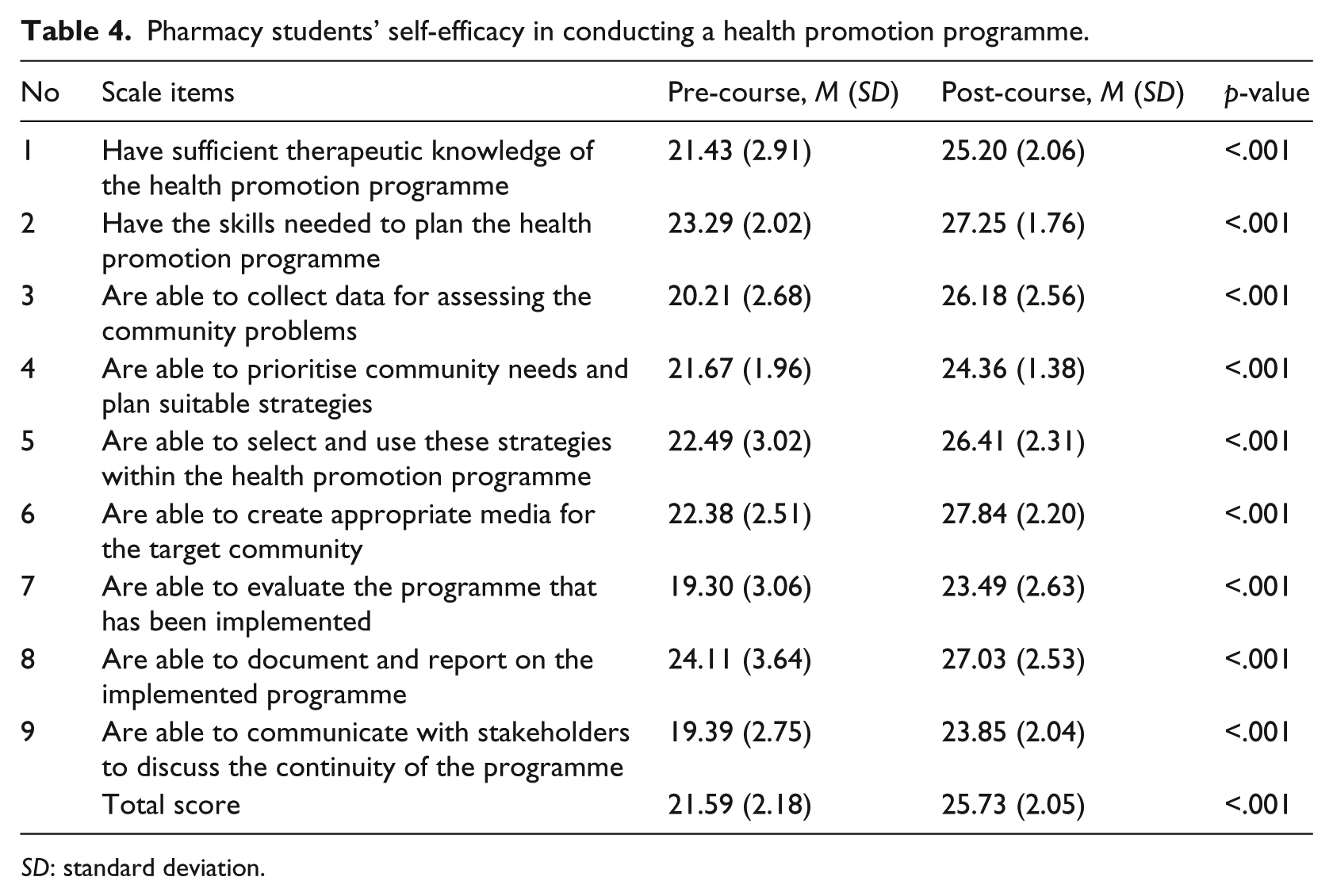
Pharmacy students’ self-efficacy in conducting a health promotion programme.
SD: standard deviation.
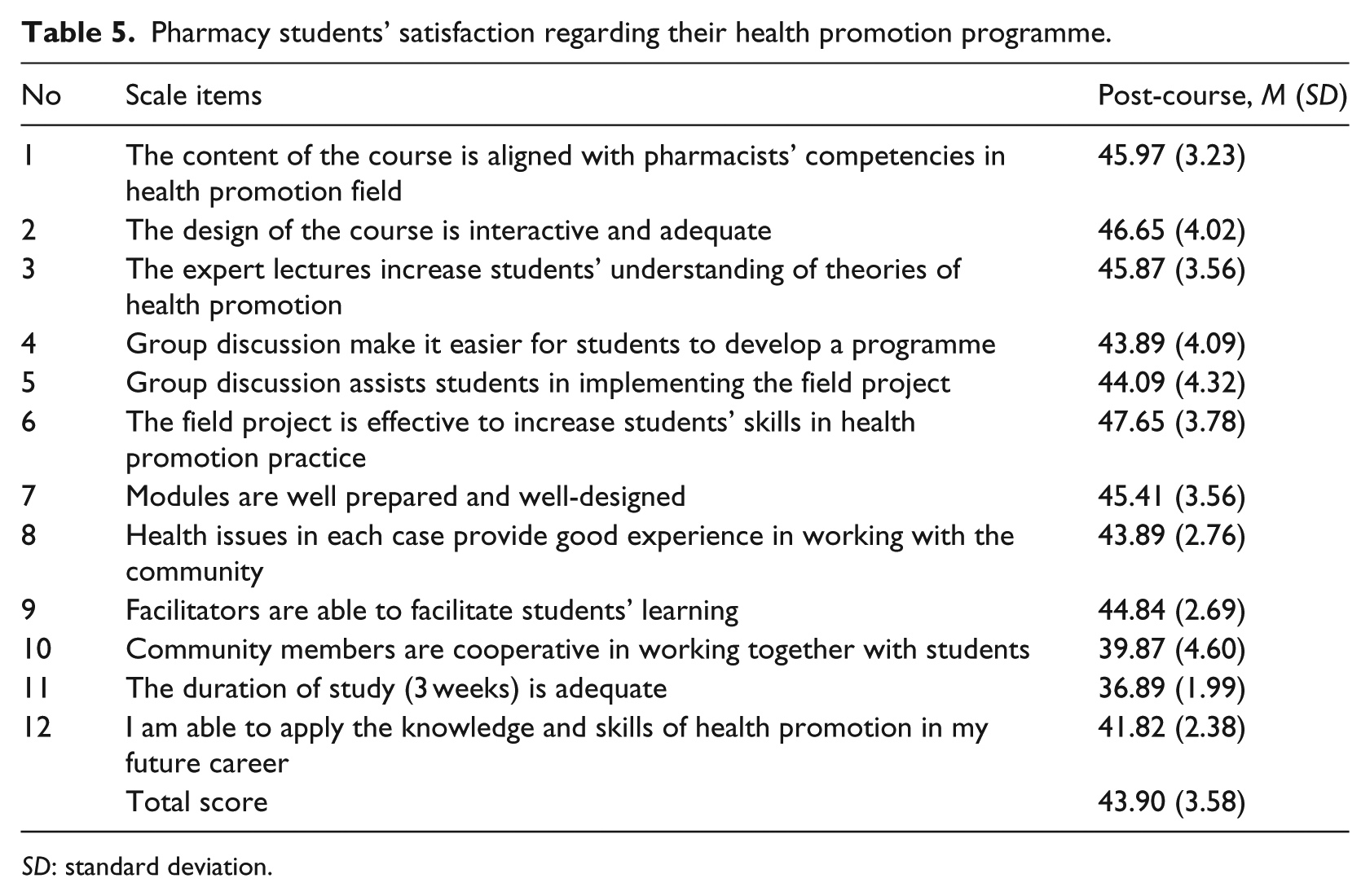
Students’ self-efficacy in implementing a health promotion programme in real-world community also increased dramatically, from 21.59 (2.18) to 25.73 (2.05) at pre-test to post-test respectively. Our assessment of students’ satisfaction demonstrated that they were largely satisfied with the implementation of health promotion course. Overall, the majority of the students (mean score 43.90) felt they had gained benefits from the new health promotion course (Table 5).
Pharmacy students’ satisfaction regarding their health promotion programme.
SD: standard deviation.
Discussion
The findings of this study are consistent with those of other relevant studies (Globe et al., 2004; Kristina et al., 2014a; Naughton et al., 2010; Shah et al., 2009), demonstrating that a health promotion course can have a positive impact on pharmacy students’ knowledge, perceived role and self-efficacy in implementing health promotion programmes. These findings are important because such a model of provision is relatively new in Indonesia. An emphasis on health promotion and disease prevention as part of universal health coverage is mandated by health authorities in order to reduce the cost of treatment. To the best of our knowledge, however, this is the first study to report on pharmacy students’ perceptions of a health promotion course in a developing country. In previous research in Malaysia, a public heath course was successfully integrated into the pharmacy curriculum, resulting in a positive impact on student professional skills (Saleem et al., 2015). The present study adds to the evidence base provided by this earlier work.
The majority of students believed that the health promotion course helped to increase their understanding of the pharmacist’s role in public health and would be useful in their future pharmacy practice. Nevertheless, there is always room for improvement in the offering and delivery of a new course. This is reflected in some students’ negative perceptions with respect to the course’s duration and its links (or otherwise) to their core competencies. The course is worth only two credits and the majority of the curriculum remains focused on basic and clinical sciences, with little focus on social and public health-related issues.
The results of this survey confirm the importance of experiential aspects of learning as tools to improve knowledge and skills. The use of tools such as exposure to real-life scenarios has been advocated to aid learning and attainment of higher cognitive levels among students. For instance, the socio-behavioural aspects of community members are relatively unique and increased pharmacist involvement in health promotion will have an impact on their well-being. The challenge lies in designing good practical experiences which provide enough depth while making them attractive to students.
The major challenge to offering such courses in pharmacy schools in Indonesia is lack of awareness and perception of the importance of such topics among pharmacy faculty members (Andayani and Satibi, 2016; Kristina et al., 2014b). Many still perceive pharmacy as a pharmaceutical science based subject, which hinders the incorporation of health promotion and public health elements into the pharmacy curriculum. A change of mind-set among education policy makers is needed to develop a more balanced curriculum to enhance the competencies of pharmacy practitioners in developing countries. More pharmacy educators and leaders should advocate for the importance of courses in health promotion and public health as part of the pharmacy education curriculum.
Some possible limitations of this study should be considered. First, the study was conducted in a single school of pharmacy at a private university, thus, generalisation of the study findings is problematic. Second, the course duration was only 3 weeks in total, and it was offered independently, without being integrated into other courses; therefore, the greatest impact may not have been achieved. Third, the data collected for the study was largely quantitative in nature. Qualitative data would have provided greater insight into areas of the course that could be improved. Because the course is in its early years of implementation, more research is needed to examine the impact of the model taken in the longer term.
Conclusion
A health promotion course for pharmacy students was successfully implemented with an increase in knowledge, perceived role and self-efficacy in conducting health promotion work. On course completion, pharmacy students saw themselves as able to provide positive role models, extending their role in ways beneficial to the communities in which they worked. Curriculum change in departments and schools of pharmacy and collaboration with other healthcare professional development programmes can build on this work, enabling pharmacists to become more effective health promotion and public health providers in countries such as Indonesia.
Footnotes
Funding
The author(s) received no financial support for the research, authorship, and/or publication of this article.