




Abstract
Objective:
The aim of this study was to identify the cognitive factors that predictability and adaptability during multitasking with a flight simulator.
Background:
Multitasking has become increasingly prevalent as most professions require individuals to perform multiple tasks simultaneously. Considerable research has been undertaken to identify the characteristics of people (i.e., individual differences) that predict multitasking ability. Although working memory is a reliable predictor of general multitasking ability (i.e., performance in normal conditions), there is the question of whether different cognitive faculties are needed to rapidly respond to changing task demands (adaptability).
Method:
Participants first completed a battery of cognitive individual differences tests followed by multitasking sessions with a flight simulator. After a baseline condition, difficulty of the flight simulator was incrementally increased via four experimental manipulations, and performance metrics were collected to assess multitasking ability and adaptability.
Results:
Scholastic aptitude and working memory predicted general multitasking ability (i.e., performance at baseline difficulty), but spatial manipulation (in conjunction with working memory) was a major predictor of adaptability (performance in difficult conditions after accounting for baseline performance).
Conclusion:
Multitasking ability and adaptability may be overlapping but separate constructs that draw on overlapping (but not identical) sets of cognitive abilities.
Application:
The results of this study are applicable to practitioners and researchers in human factors to assess multitasking performance in real-world contexts and with realistic task constraints. We also present a framework for conceptualizing multitasking adaptability on the basis of five adaptability profiles derived from performance on tasks with consistent versus increased difficulty.
Introduction
From pilots to personal assistants, the average 21st-century individual is often expected to attend to two or more tasks simultaneously, or multitask (Bühner, König, Pick, & Krumm, 2006). (For the purposes of this article, multitasking is defined as performing two or more tasks at once. It also refers to switching from one task to another after short spans of a few seconds, i.e., time sharing; Oswald, Hambrick, & Jones, 2007.) Performing multiple tasks simultaneously is more challenging than doing a single task (Monsell, 2003; Sauer, Wastell, & Hockey, 1999). When multitasking, people can become overloaded as working memory and attentional resources are exhausted. They might also become anxious and frustrated when task challenges outweigh cognitive resources (Csikszentmihalyi, 1975). Furthermore, overall performance can be negatively affected when the demands of one task interfere with those of another (Altmann & Gray, 2008). Thus, with multitasking, the whole does not always equal the sum of the individual parts.
Furthermore, there is no one-size-fits-all approach to multitasking because performance varies across individuals (e.g., Watson & Strayer, 2010). Some people even report a preference for multitasking (e.g., Branscome, Swoboda, & Fatkin, 2007; Poposki, Oswald, & Brou, 2009; Slocombe & Bluedorn, 1999), although the association between preference and performance is unclear. There have been some attempts to identify the individual differences associated with multitasking performance. For example, differences in perceptual speed (Oberlander, Oswald, Hambrick, & Jones, 2007), motivation (Oswald, Hambrick, & Jones, 2007), and neuroticism (Oswald, Hambrick, & Jones, 2007; Poposki, Oswald, & Chen, 2008) have been linked to multitasking effectiveness. That said, when a person decides to engage in multitasking, the critical predictor of performance appears to be working memory and executive control, ostensibly because multitasking requires the individual to maintain representations of different tasks in working memory and strategically deploy attentional resources to effectively switch between these tasks (e.g., Bühner et al., 2006; Hambrick, Oswald, Darowski, Rench, & Brou, 2009; Oberlander et al., 2007; Rubinstein, Meyer, & Evans, 2001).
Although considerable work has focused on predictors of multitasking ability, relatively little research has addressed multitasking adaptability. In this article, we operationalize multitasking ability as a task-dependent metric of performance when the difficulty level of a given set of tasks is at some baseline. In contrast, adaptability refers to the capacity to adapt to changing task constraints relative to baseline performance. That is, how is performance affected if the difficulty of one or more tasks changes or if a new task is introduced or a task is dropped? Therefore, ability and adaptability, although related, might be separate constructs.
In this vein, Branscome and Grynovicki (2007) assessed adaptability using SynWork (Elsmore, 1994), a multitasking environment with four tasks (memory, math, auditory, and monitoring). They also added a military target identification task of identifying friendly versus enemy targets. The three conditions in their study were all four SynWork tasks, three SynWork tasks plus the target identification task, and all four SynWork tasks plus the target identification task (with counterbalanced ordering). They found that the third (most difficult) condition was associated with poorer performance compared with the other two. Additionally, Wang, Proctor, and Pick (2007) found that when certain SynWork tasks were biased via a payout structure (i.e., more points awarded for some tasks), some people strategically adapted to this payout bias whereas others did not. This finding suggests that some people show a greater propensity for multitasking adaptability than do others.
The individual differences associated with multitasking adaptability were investigated by Oswald, Hambrick, and Jones (2007). They reported that cognitive ability was positively associated with multitasking performance at both baseline (ability) and increased difficulty (adaptability), whereas conscientiousness was negatively correlated with adaptability (i.e., excessive attention to detail impaired performance with increased demand but improved performance at lower levels of demand). However, Oswald, Hambrick, and Jones performed a factor analysis on their cognitive task battery; as they note, doing so made it impossible to isolate the impact of individual cognitive abilities. Thus, the specific cognitive factors associated with multitasking ability and adaptability remains an open question.
To address this question, we assessed the relationship between cognitive factors and multitasking ability and adaptability in a pilot simulation task. We collected scores on four standard cognitive measures (working memory, scholastic aptitude, spatial manipulation, and creativity) and correlated these with performance at baseline difficulty (ability) and changes in performance when task(s) difficulty increased (adaptability).
We expected that baseline performance (ability) reliably predicts performance with increased demand (adaptability). For multitasking ability, we hypothesized that working memory span is positively correlated with performance. With respect to adaptability, there are two competing hypotheses. First, the cognitive factors involved in multitasking performance (ability) are also involved in adaptability. Alternatively, it may be that adaptability is predicted by a set of cognitive measures that are either different from or complement those that predict ability. This second hypothesis is graphically depicted in Figure 1. The solid lines indicate predicted relationships between components. For example, on the basis of the prior research cited earlier, higher working memory span is associated with higher ability. Dashed lines represent the investigated relationships between components, which are the focus of this article.
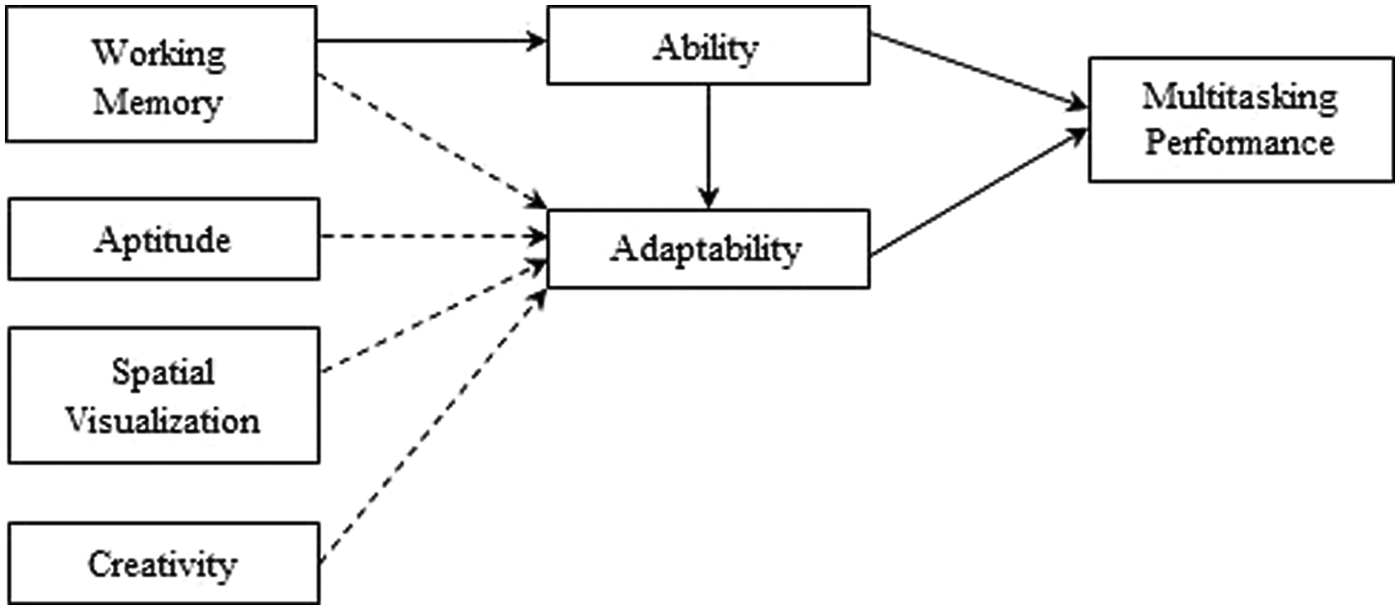
Proposed hypothesis for multitasking ability and adaptability.
Method
Participants
The sample included 32 participants either enrolled in a midwestern university or who were volunteers of various educational backgrounds from a southern city in the United States. Participants selected from the university received partial course credit for participation in the study.
Materials: Individual Differences Measures (IDMs)
At the start of the experiment, participants completed a computer-administered battery of cognitive tests, including scholastic aptitude, working memory, creativity, and spatial manipulation.
Scholastic aptitude
As a measure of scholastic aptitude, participants self-reported SAT Reasoning Test or American College Test (ACT) scores. ACT scores were converted to equivalent SAT scores via a concordance table on the ACT website (ACT, 2008). Self-reported ACT and SAT scores reliably correlate with actual test scores (Cole & Gonyea, 2010).
Working memory
Working memory was assessed with a comprehension span task (Waters & Caplan, 1996), which correlates with other memory span measures, such as the operation span task (Unsworth, Heitz, Schrock, & Engle, 2005). On each trial, participants indicated whether a given sentence made sense. Sentences were presented in sets of two to six, and set size increased by one after every five sets. After judging the sentences in a set, participants recalled the last word of each of those sentences. The sum of correctly recalled sets served as a measure of working memory span, with one point given for each word in a correctly recalled set.
Creativity
As a measure of creativity, a version of the remote association task (Mednick, 1962; Topolinski & Strack, 2009) was used. Participants were given a triad of words with the task of determining whether a fourth word was related to all three (Topolinski & Strack, 2009). For example, given the words super, ship, and gazer, the word star would be related to the first three. Responses were scored with one point for each correct answer across 40 trials.
Spatial manipulation
Spatial manipulation was measured with a variant of the Shepard and Metzler mental rotation task (Just & Carpenter, 1985; Shepard & Metzler, 1971). Participants were shown two 3-D images of block figures and had to determine whether the figures were the same if they were rotated. A correct answer was scored as a 1, whereas incorrect answers received a −1. They had 1 min to judge as many pairs of figures as possible.
Materials: Multitasking Environment
The Multi-Attribute Task Battery (MATB; Comstock & Arnegard, 1992) is a computerized flight simulator that requires users to simultaneously attend to four separate tasks: system monitoring, communications, resource management, and tracking. Each task had four difficulty levels: automatic (0), low (1), medium (2), and high (3). The MATB interface is shown in Figure 2.
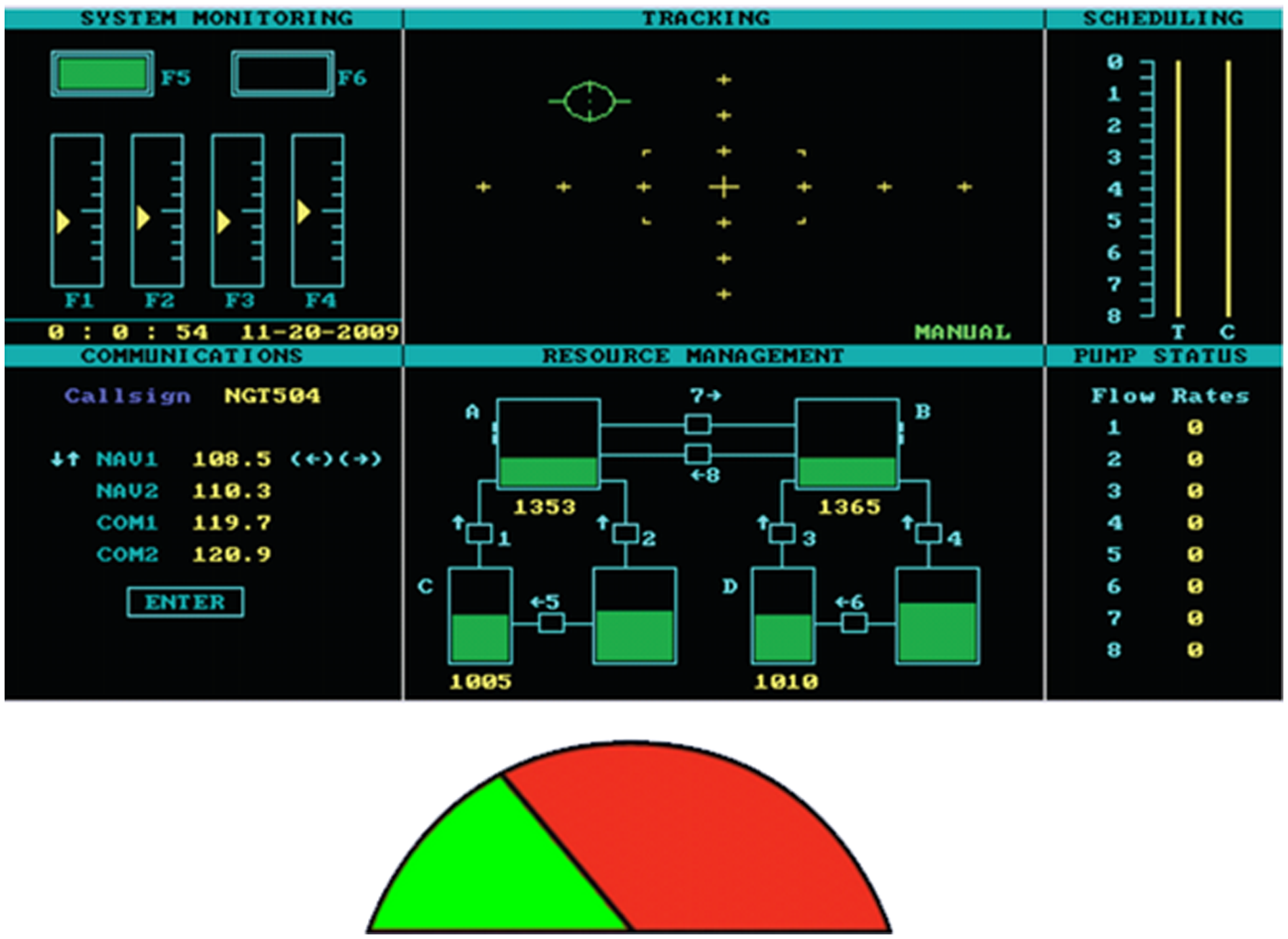
The Multi-Attribute Task Battery interface, with the composite score displayed at the bottom.
System monitoring
In the top-left quadrant of the screen, participants responded to feedback from lights and gauges. There were two lights at the top of the quadrant, one green and one red. Participants were instructed to press the F5 key if the green light turned off and to press the F6 key if the red light came on. Doing so turned on the green light and turned off the red light, respectively.
Beneath the lights were four gauges, each associated with a corresponding key on the keyboard. Each gauge had a yellow pointer that typically hovered around the center line. Partici-pants were asked to press the corresponding key (F1 to F4) if any gauge’s pointer exceeded one unit in either direction from the center line. When a correct response was made, feedback was provided via a yellow line that would briefly appear on the respective gauge.
Communications
In the bottom-left quadrant, participants were asked to monitor for a call sign (NGT504) and to follow audio instructions pertaining to this call sign while ignoring instructions for other call signs. Each message began with a six-character call sign (which was repeated), followed by a command to change one of four settings (two navigation and two communication) to a particular frequency, represented by a four-digit number. An example command would be “NGT504, NGT504, change navigation two to one-one-zero-point-five.” The four navigation and communication settings were changed by using the up and down arrow keys, and frequency was changed by using the left and right arrow keys.
Resource management
In the bottom-right quadrant, participants were asked to manage the fuel levels (represented in green) of two tanks, A and B. The fuel levels decreased constantly as fuel was used, and the goal was to keep the fuel level of both tanks between the tick marks on each tank (5/8ths full). This task was done by turning various pumps on or off to transfer fuel from another tank. Tanks C and D had a finite supply, whereas the other two had an unlimited capacity. To turn a pump on or off, participants pressed the number key corresponding to the pump flow indicators on the screen (1 through 8). At various points, one or more pumps would fail and become unusable for a period.
Tracking
In the top-right quadrant, the task was to keep a moving reticle (crosshairs) as close as possible to the center crosshairs using a joystick. The reticle would drift and randomly change directions with varying speed.
Scheduling and pump status
The scheduling and pump status zones on the far right provided supplementary information for the communications and resource management tasks, respectively. They were not necessary for completing any of the tasks, and so are not discussed.
Performance
Performance was calculated as a product of the scores on the four individual tasks (the composite score) and was displayed on a gauge at the bottom of the screen. Completely neglecting any task would yield a composite score of zero. Scores could range from 0 to 100. Comstock and Arnegard (1992) provide details on how scores for the individual tasks are computed.
Procedure
Participants first completed the IDMs on a computer for approximately 1 hr. After a short break, they completed the MATB task on a separate computer for another hour. Participants were seated with a keyboard and mouse (IDMs) or joystick (MATB), and speakers or headphones were used for audio output. The MATB task had five conditions: practice, baseline, single difficulty, paired difficulty, and difficulty ramp-up. No instructions were given regarding priority of the individual tasks or how the composite score was calculated.
Practice
The first condition consisted of four separate practice sessions in which participants completed each task separately for a total of 9 min. The composite score was displayed in all practice conditions. Participants did not engage in all four tasks simultaneously in the practice condition.
Baseline
The baseline condition had all four tasks set at the low difficulty level for 5 min. No feedback was given on the performance scores to encourage participants to concentrate on doing all four tasks simultaneously. Subsequent conditions provided feedback on the composite score.
Single difficulty
The single-difficulty condition began with a 3-min warm-up during which all tasks were at baseline difficulty, after which the difficulty level of one task was set to hard for 1 min and the others were set at easy. All difficulties were then set to easy for another minute. This procedure was done for all four tasks in succession, then the process was repeated, for a total of 16 min.
Paired difficulty
The paired-difficulty condition raised the difficulty of both the system monitoring and communications tasks to hard for 2 min, whereas the resource management and tracking tasks remained at easy. System monitoring and communications were manipulated because both provide discrete events that immediately affect composite scores, thereby encouraging participants to constantly attend to these tasks.
Difficulty ramp-up
For the final condition, after a 1-min warm-up, the difficulty of all four tasks was raised to medium for 1 min (Ramp-Up 2) and then to the hardest difficulty for an additional minute (Ramp-Up 3).
Results
We began by examining the data for potential outliers. A Mahalanobis D2 test indicated no multivariate outliers among the IDMs (p > .01), and a tolerance analysis indicated no multicollinearity among aptitude, working memory, and spatial manipulation (variance inflation factor < 1.64). We then proceeded by analyzing the MATB performance data.
Multitasking Ability
Table 1 displays the mean scores and standard deviations for each task in each condition as well as an average across tasks. As our goal in this article is to examine multitasking ability and adaptability, the analyses generally focus on the combined performance of all four tasks, as opposed to analyzing each task individually. The similarity in average scores across difficulties indicates learning on the part of the participants in both individual task skills and coping with multitasking. This finding was especially evident in tasks that were relatively more intermittent (communications and resource) rather than continuous (monitoring and tracking). The similarity in average performance on the difficult conditions compared with the baseline might also be attributed to individual differences in performance in the difficult conditions. That is, mean performance in the difficult conditions would be comparable to baseline if the performance of some participants decreased whereas others improved as task difficulty increased. It is exactly this source of individual differences in adaptability that is the focus of this research.
Means of MATB Scores for Each Task and Condition

Note. Standard deviations are shown in parentheses. Bolded values represent tasks with increased difficulty. MATB = Multi-Attribute Task Battery (Comstock & Arnegard, 1992).
To investigate how performance on the various MATB conditions was interrelated, we examined correlations of the average scores across conditions (see Table 2). Since the tasks are identical for each condition (except for difficulty), we expected the relationships between conditions to be relatively strong. This hypothesis was largely confirmed. However, there were also some differences based on difficulty level. For example, baseline, single difficulty, and paired difficulty had a much stronger correlation with each other than with Ramp-Up 2 and Ramp-Up 3. Also, the correlations for the Ramp-Up 3 condition increased uniformly with the relative difficulty level of the other conditions.
Correlations Between MATB Scores in Each Condition
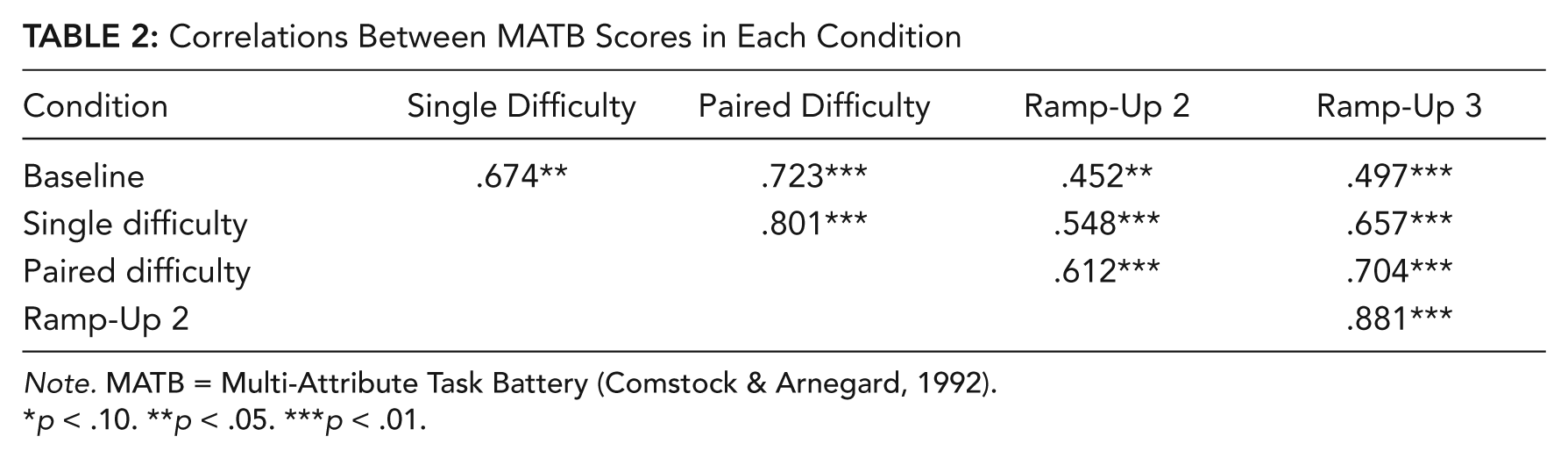
Note. MATB = Multi-Attribute Task Battery (Comstock & Arnegard, 1992).
p < .10. **p < .05. ***p < .01.
We proceeded by analyzing the IDMs. The means and correlations of the IDMs (listed in Table 3) indicate some covariance between working memory, aptitude, and spatial manipulation. To assess which IDMs (if any) predicted performance on the MATB, we correlated the scores of each IDM with average performance in each condition (see Table 4). Although we tested the significance of the correlational coefficients, a power analysis with alpha = .05 and power = .8 indicated that our small sample of 32 participants could detect only correlations of .45 or higher with a two-tailed test. Hence, in addition to discussing significant effects, we also consider nonsignificant correlations of .20 or higher to be meaningful because these might be significant with a larger sample.
IDM Descriptives and Correlations

Note. IDM = individual differences measure.
p < .10. **p < .05. ***p < .01.
Correlations Between IDMs and MATB Scores in Each Condition
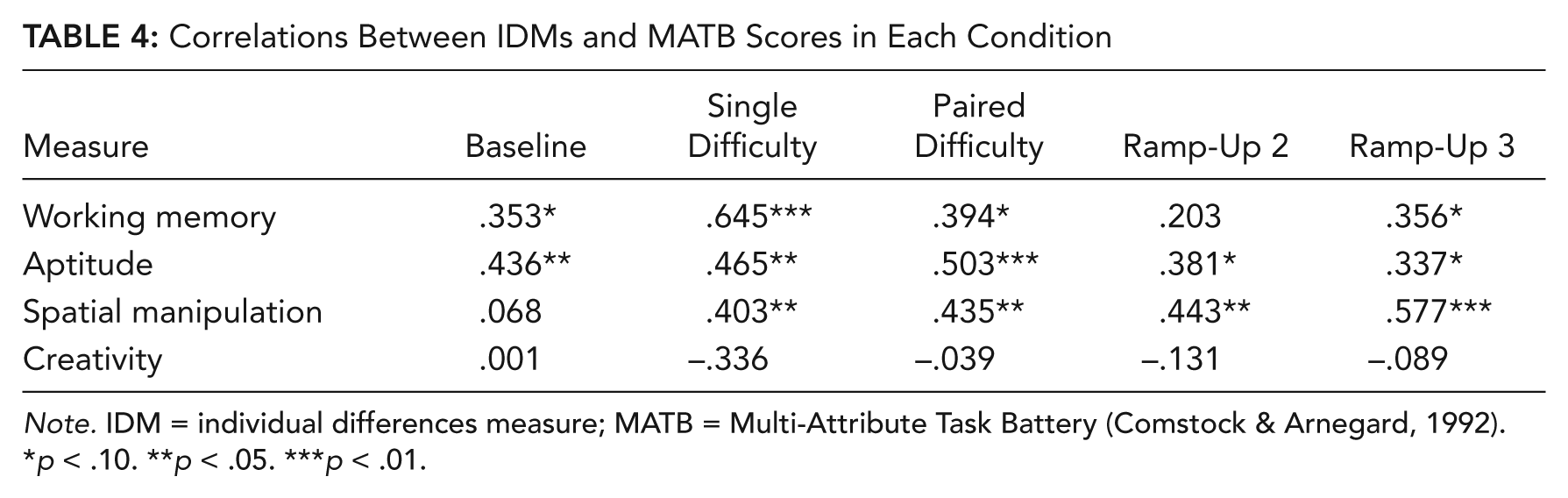
Note. IDM = individual differences measure; MATB = Multi-Attribute Task Battery (Comstock & Arnegard, 1992).
p < .10. **p < .05. ***p < .01.
The results indicated that scholastic aptitude and working memory were associated with superior performance at baseline (multitasking ability), whereas spatial manipulation and creativity had negligible correlations with baseline performance. This finding confirms prior work suggesting that executive functioning is a positive predictor of multitasking ability.
A somewhat different pattern emerged for the conditions with increased difficulty. Consistent with the patterns of correlations with baseline scores, scholastic aptitude and working memory were positively correlated, and creativity was negatively or not correlated with performance on the more difficult conditions. However, in contrast to baseline correlations, spatial manipulation was positively correlated with performance in all four increased-difficulty conditions. Last, although the effects for creativity and spatial manipulation were similar at baseline, unlike spatial manipulation, creativity still did not correlate with performance in the increased-difficulty conditions.
Multitasking Adaptability
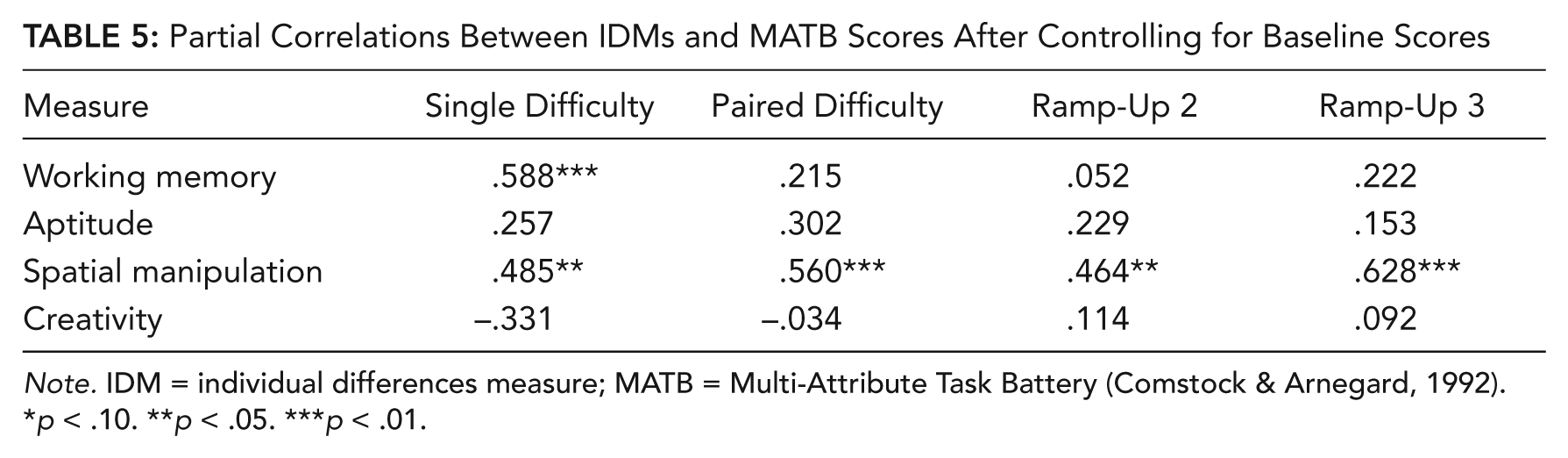
The correlations in Table 4 represent the cognitive abilities associated with multitasking ability. However, it remains to be seen whether these also govern adaptability. To address this question, partial correlations on IDMs and MATB scores were calculated with baseline performance as a covariate (Table 5). These correlations indicate which cognitive abilities predict performance when task difficulty increases (adaptability) after we account for general multitasking ability (baseline scores).
Partial Correlations Between IDMs and MATB Scores After Controlling for Baseline Scores
Note. IDM = individual differences measure; MATB = Multi-Attribute Task Battery (Comstock & Arnegard, 1992).
p < .10. **p < .05. ***p < .01.
The partial correlations presented in Table 5 reveal that the effects of both scholastic aptitude and working memory on adaptability were diminished relative to their effects on multitasking ability (Table 4). The effect of spatial manipulation, however, was stronger for adaptability (versus ability) across all four experimental conditions. Finally, controlling for baseline scores did not significantly adjust the effects for creativity on adaptability.
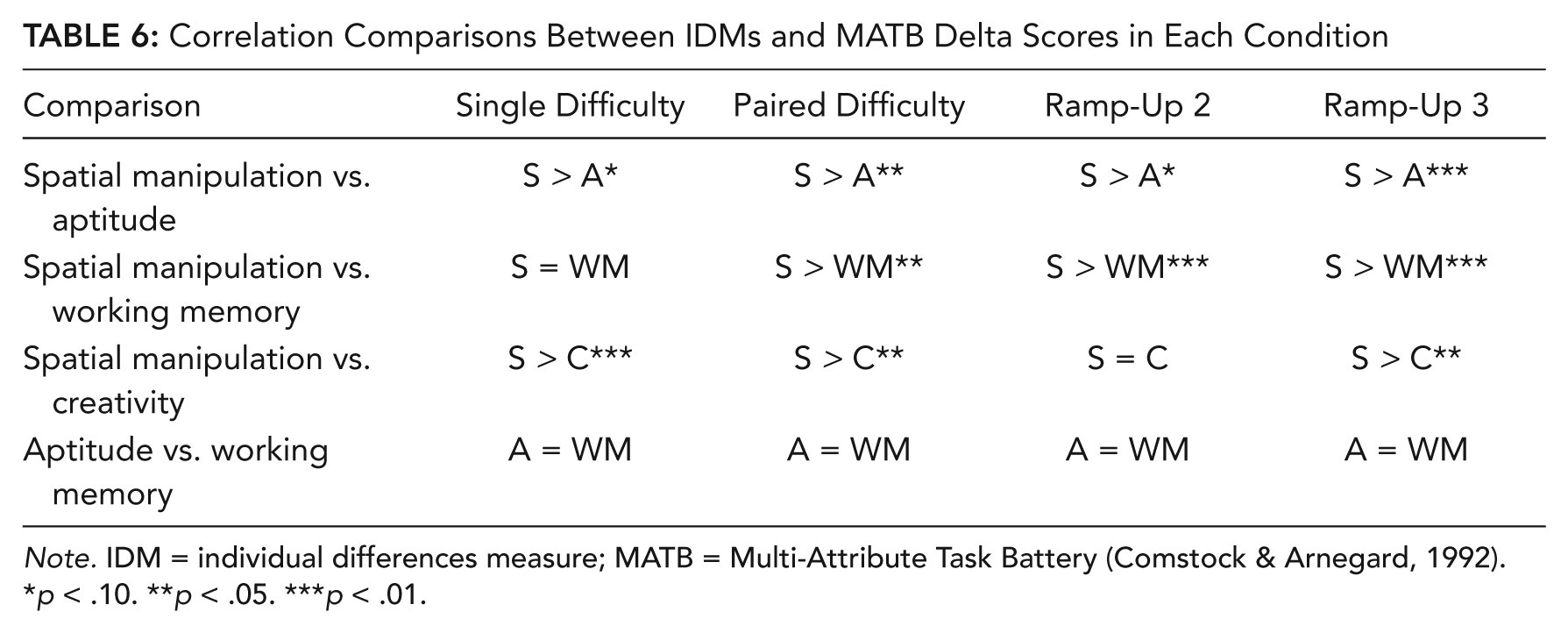
There is the important question of whether the correlations between spatial manipulation and adaptability are greater than the correlations between aptitude, working memory, creativity, and adaptability. This question was addressed by testing for significant differences among overlapping correlation coefficients (Meng, Rosenthal, & Rubin, 1992). The results of these comparisons are presented in Table 6. Creativity was compared only with spatial manipulation because it was generally not correlated with multitasking ability (Table 4) or adaptability (Table 5).
Correlation Comparisons Between IDMs and MATB Delta Scores in Each Condition
Note. IDM = individual differences measure; MATB = Multi-Attribute Task Battery (Comstock & Arnegard, 1992).
p < .10. **p < .05. ***p < .01.
The results indicated that the correlation between spatial manipulation and adaptability was greater than the correlation between aptitude and adaptability in all of the increased-difficulty conditions (top row of Table 6). A similar finding was obtained for the comparison between spatial manipulation and working memory, with the exception of the single-difficulty condition (second row of Table 6). Likewise, the correlation between spatial manipulation and adaptability was greater than the correlation between creativity and adaptability in all of the increased-difficulty conditions except for Ramp-Up 2 (third row of Table 6). Finally, aptitude and working memory were equivalent in predicting adaptability (bottom row of Table 6). Taken together, these findings indicate that the cognitive abilities that predicted performance at baseline (ability) were somewhat different from the factors that predicted adaptability. (These analyses were also replicated with hierarchical linear regressions, with baseline entered as Step 1 and the IDMs together as Step 2. In all four regressions, spatial manipulation was a statistically significant predictor, p < .05, and no other IDM was statistically significant, p > .10.)
Given the positive relationship between spatial manipulation and adaptability, there was the concern that there might have been an inherent bias toward spatial manipulation in the MATB environment. However, as reported in Table 4, there was no correlation between spatial manipulation and baseline performance. We investigated further and correlated spatial manipulation with performance on each of the four individual tasks in the MATB. Importantly, none of these correlations was significant (p > .10), indicating that there was no spatial bias even at the level of the individual task.
It should also be noted that although pre- and posttest analyses such as this are common in experimental research, there is some debate on the proper data analysis techniques (e.g., Bereiter, 1963). Although regression-based analyses (including partial correlations) have pitfalls (e.g., Linn & Slinde, 1977), they are generally preferred to other methods (such as analyses on difference scores; Blaikie, 2003; Cribbie & Jamieson, 2004; Flury, 1989; Huck & McLean, 1975).
An additional concern may be that the lack of relationship between spatial manipulation and baseline performance artificially inflated the findings for spatial manipulation and multitasking adaptability. However, the same pattern did not emerge for creativity, which was also unrelated to baseline performance. Similarly, it could be argued that accounting for baseline performance would inevitably cause working memory and aptitude to be unrelated to adaptability (i.e., a spurious effect attributable to suppression; Cohen, Cohen, West, & Aiken, 2003). This outcome is not necessarily the case, as working memory was, in fact, strongly correlated with adaptability in the single-difficulty condition.
General Discussion
In this study, we analyzed multitasking ability and adaptability within the context of a flight simulator. We administered measures of individual differences to identify cognitive abilities associated with multitasking performance. By manipulating the task constraints, we aimed to identify whether multitasking ability and adaptability were separate constructs. In this section, we consider the extent to which our findings support this position as well as consider a framework that might be used to categorize different types of adapters.
Ability Versus Adaptability
The results supported a number of conclusions related to multitasking abilities, adaptability, and individual differences. First, although the correlations between baseline performance and the single- and paired-difficulty conditions were quite high, the correlations decreased for the more difficult ramp-up conditions (see Figure 3). This finding suggests that the effect of baseline performance (multitasking ability) decreased as the task became harder. Second, scholastic aptitude and working memory predicted baseline performance, as expected on the basis of prior work (Bühner et al., 2006; Hambrick et al., 2009; Oberlander et al., 2007; Rubinstein et al., 2001). However, the impact of these measures was somewhat reduced (although not necessarily zero) with regard to performance in the more difficult conditions (adaptability). Conversely, spatial manipulation was not related to baseline multitasking ability but was the strongest predictor of performance in the difficult conditions and after we controlled for baseline performance (adaptability). Simply put, one set of cognitive factors best predicted ability (baseline performance) whereas another best predicted adaptability (performance on difficult conditions after we accounted for baseline performance). Thus, although it may be too strong to claim that multitasking ability and adaptability are mutually exclusive, the present analyses do open the possibility that they might be overlapping but separate constructs.
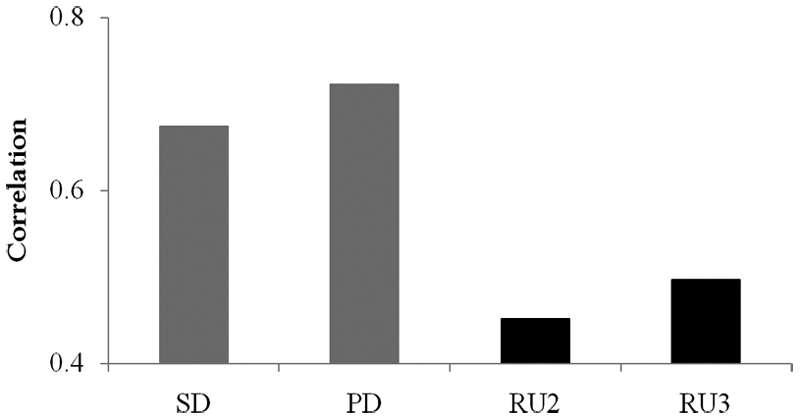
Correlation of baseline scores with scores in difficult conditions. SD = single difficulty; PD = paired difficulty; RU = ramp-up.
These results offer a distinct contribution from previous studies of adaptability in multitasking. Whereas a principal finding from Oswald, Hambrick, and Jones (2007) was that a noncognitive factor (conscientiousness) emerged to negatively predict performance in emergency conditions, the current results suggest that an aspect of cognitive functioning (other than working memory) was a predictor of adaptability. Additionally, Branscome and Grynovicki (2007) did not account for baseline performance in their analyses, which may have yielded some additional patterns.
Although spatial manipulation was the individual difference that predicted adaptability in the present task (as well as working memory in the single-difficulty condition), it is important to note that these results may be task specific. That is, although the MATB environment had no initial bias toward spatial manipulation (both overall and at the level of the individual task), certain aspects of the environment might draw on spatial abilities. For example, Oksama and Hyona (2004) noted that tasks with multiple moving objects (which would include the MATB) may be biased toward people with high visuospatial working memory. It is important to note, however, that the MATB environment is also biased toward those with superior executive functioning because strategic deployment of attentional resources is critical for this task. Indeed, executive functioning was strongly correlated with general ability, yet it had small or negligible correlations with adaptability.
The association between adaptability and spatial manipulation when multitasking may lie in the close tie in working memory between spatial manipulation (i.e., the visuospatial sketchpad) and the central executive (Miyake, Friedman, Rettinger, Shah, & Hegarty, 2001). Thus, although spatial manipulation may not be a critical factor at baseline difficulty, it may play a role when the central executive is under increased pressure because of task constraints. Miyake et al. (2001) also note that this link does not extend to the verbal domain, which might explain the relative lack of impact of the other IDMs (each of which contains a verbal component).
Additionally, spatial ability is highly correlated with fluid intelligence (Gf; Carroll, 1993; Lohman, 2000). Gf is considered to be the subset of general intelligence (g), which encompasses reasoning and adaptability to novel situations or domains (e.g., Engle, Tuholski, Laughlin, & Conway, 1999; Gray, Chabris, & Braver, 2003). Although the experimental conditions in the current study did not constitute a novel domain per se, manipulating the task constraints of a familiar environment imposes demands on reasoning ability and spurs adaptive shifts in strategy (Schunn & Reder, 2001).
Nevertheless, because of limitations of the current findings, we recommend further research to confirm the existence of overlapping (but not identical) sets of cognitive abilities required for adapting to changing task constraints when multitasking. We considered possible restrictions of statistical power and analytical methods on our findings for working memory or aptitude versus spatial manipulation in regard to multitasking adaptability. Given the sample size and possible effects attributable to suppression, our claim is not that there is no relationship between adaptability and working memory or aptitude; rather, our results indicate that spatial manipulation was the strongest predictor of adaptability. This finding was supported by a comparison of correlations among the IDMs and adaptability and by the regression analyses. Furthermore, despite the potential pitfalls, Cohen et al. (2003) state that the ability to assess unique or partial relationships is a defining feature of multiple regression and correlation. In addition to further addressing these issues, future examination should also expand to different multitasking environments to ensure generalizability.
Adaptability Profiles
Future researchers of multitasking adaptability may also consider adaptability profiles to better understand how individuals or groups respond to task constraints. A framework to conceptualize adaptivity may be useful to distinguish between changes in performance (from a baseline) with increased task difficulty (increased-difficulty task) versus constant task difficulty (consistent-difficulty task). Such a framework is presented in Figure 4. The vertical axis represents performance on a difficult task or tasks relative to a given baseline difficulty, whereas the horizontal axis represents performance on a task or tasks with baseline difficulty. It is important to note that in this framework, it is assumed that each of the tasks has equal priority when all tasks are at baseline difficulty. The more difficult task is given priority when difficulty increases.
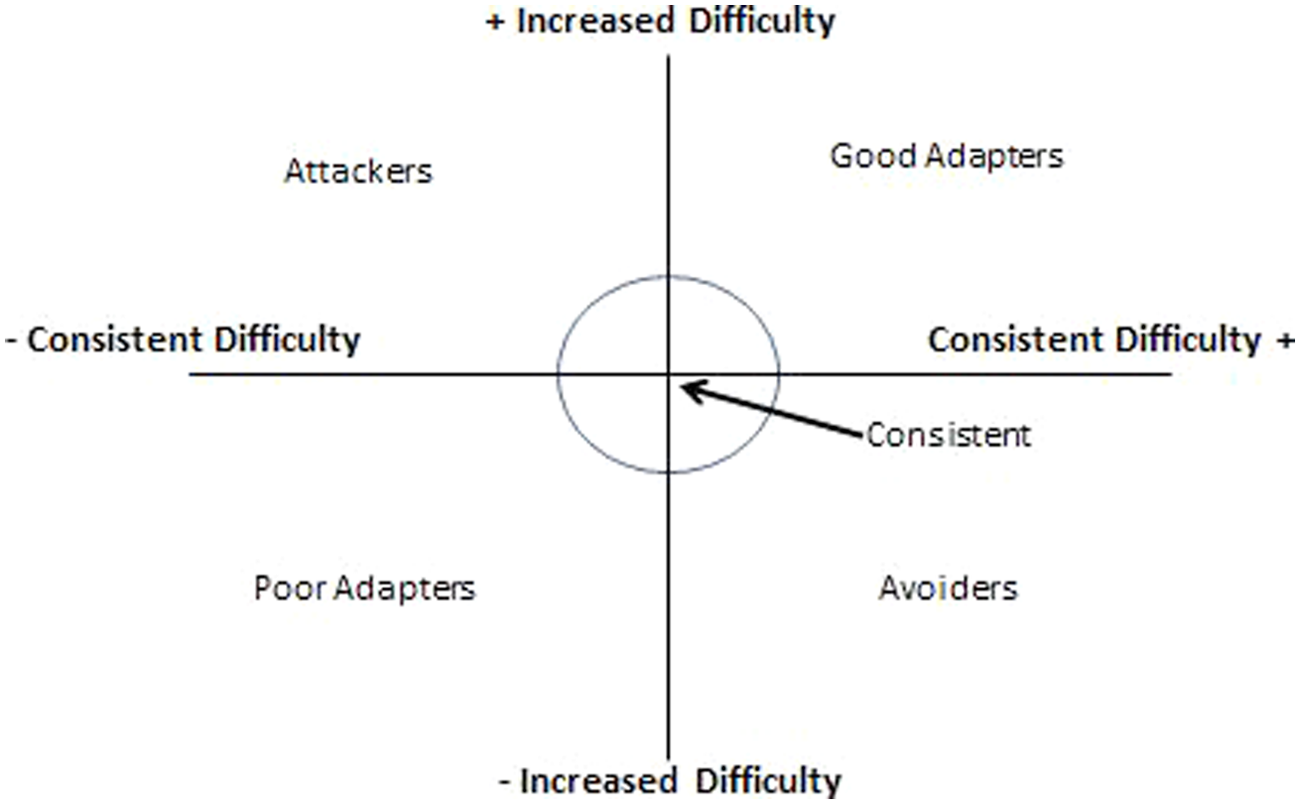
Framework to characterize multitasking adaptability.
The different regions in the figure represent various adaptability profiles. For example, individuals whose performance is not compromised when additional difficulty in a task or tasks is encountered are consistent performers (circle around the origin in Figure 4). The top-right quadrant encompasses the individuals whose performance increases for both the increased-difficulty and consistent-difficulty tasks (good adapters). Conversely, the bottom-left quadrant represents individuals who show a decline in performance for both increased-difficulty and consistent-difficulty tasks (poor adapters).
There might also be situations when an individual sacrifices performance in one task or tasks for the sake of another. When encountering additional difficulty on a task or tasks, some individuals may choose to tackle the difficult task(s) at the expense of the other task(s). These individuals are called attackers (top-left quadrant). Alternatively, others may neglect the difficult task(s) and focus on the other tasks, which are at baseline difficulty. These are the avoiders (bottom-right quadrant).
There are two final points to note about the proposed adaptability framework. First, the distribution of individuals to adaptability profiles need not be uniform. For example, there may be no avoiders for a given multitasking context, whereas everyone might be classified as avoiders for a different context. In the latter case, the differences among the individuals may still be useful; since all avoiders are not equivalent, the relative differences among avoiders can be informative. Second, the five adaptability profiles are sensitive to differences in multitasking contexts. That is, a poor adapter in Context A is not necessarily a poor adapter in Context B. Rather than a rigid dispositional characterization of an individual’s ability to adapt, the primary purpose of the framework is to relatively organize the relationship between individuals or groups within a given multitasking context.
These relationships represent a critical area for future research. For example, although adaptability may be measured at an individual level (as in this article), it may be useful to consider a group-level analysis as well. Here, clustering analyses may be used to determine whether individual performances can be classified into separate groups, which may be interpreted using the aforementioned framework. This analysis would be quite informative to researchers and practitioners in the field of human factors.
Concluding Remarks
The findings in this article suggest some critical implications with respect to multitasking for practitioners and researchers in human factors. First, performance on the individual tasks should not be the only consideration; rather, overall performance when concurrently switching between the multiple tasks relevant to a given occupation (multitasking) should also be considered. Furthermore, beyond accounting for the cognitive abilities needed for superior multitasking ability, practitioners and researchers in human factors should also attempt to identify those abilities needed for adapting to realistic task constraints, as they may be different from those required for mere performance.
Key Points
Working memory and aptitude predicted multitasking ability, and spatial manipulation was a major predictor of multitasking adaptability.
Adaptability profiles were presented as a method for categorizing different types of adapters.
Multitasking ability and adaptability may be overlapping but different constructs.
Footnotes
Acknowledgements
This work was supported by Sandia National Laboratories’ Laboratory-Directed Research and Development (LDRD) Project 130787. Sandia is a multiprogram laboratory operated by Sandia Corporation, a Lockheed Martin Company, for the U.S. Department of Energy under Contract DE-AC04-94AL85000.
Brent Morgan is a graduate researcher and doctoral candidate in experimental psychology at the University of Memphis, where he received a master of science degree in 2010.
Sidney D’Mello is an assistant professor in the Departments of Psychology and Computer Science at the University of Notre Dame. He received his PhD in computer science from the University of Memphis in 2009.
Robert Abbott is a principal member of the technical staff at Sandia National Laboratories in Albuquerque, New Mexico. He received his PhD in computer science from the University of New Mexico in 2007.
Gabriel Radvansky is a professor in the Department of Psychology at the University of Notre Dame. He received his PhD in experimental psychology from Michigan State University in 1992.
Michael Haass is a research and development engineer at Sandia National Laboratories in Albuquerque, New Mexico. He received his master of science degree in physics from the University of Tennessee in 1993.
Andrea Tamplin is a doctoral candidate in the Cognition, Brain, and Behavior program at the University of Notre Dame. She received her master’s degree from the University of Notre Dame in 2008.