




Abstract
In recent years when many Western economies are facing serious public debt crises and undergoing massive fiscal austerity, China’s Hong Kong Special Administrative Region (HKSAR)’s experience is quite different as it has achieved successive years of huge budget surpluses and has accumulated an unprecedented level of fiscal reserves. Ironically, the strong budgetary position does not help the Hong Kong government formulate a well-received budget. Despite the huge budget surpluses in recent years the Hong Kong government remains conservative in increasing recurrent expenditure items and chooses to spend billions of dollars on various one-off relief measures and set aside the remaining surpluses in fiscal reserves. However, such a budgetary strategy fails to accommodate rising public demands, and public resentment of the budget has boiled over into waves of social protests. Currently, much of the existing budgetary literature is focused on the politics of budget deficits in Western democracies. This article will make a contribution to the literature by offering an illustrative case study of the politics of budget surpluses.
Points for practitioners
This article uses the case of Hong Kong to illustrate the political challenges facing policy-makers in a time of huge budget surpluses. For policy-makers, the lesson from the case of Hong Kong is that consistent budget surpluses, similar to recurring budget deficits, will give rise to continuous budget battles. More policy learning is necessary for policy-makers to share the experiences of handling political challenges arising from budget surpluses.
Hong Kong has a long tradition of fiscal conservatism and since British colonial time the Hong Kong government has strived to achieve budget balance and to maintain substantial fiscal reserves. In recent years, the fiscal performance of the Hong Kong government is particularly impressive as it has achieved successive years of huge budget surpluses and has accumulated an unprecedented level of fiscal reserves. When many Western economies are now facing serious public debt crises and undergoing massive fiscal austerity, Hong Kong’s recent experience is fundamentally different. Ironically, the strong budgetary position does not help the Hong Kong government formulate a budget that could command extensive support within society. Constrained by traditional prudent financial management, despite the huge budget surpluses in recent years the Hong Kong government remains conservative in increasing recurrent expenditure items and chooses to spend billions of dollars on various one-off relief measures and set aside the remaining surpluses in fiscal reserves. However, such a budgetary strategy fails to accommodate rising public demands and public resentment of the budget has boiled over into waves of social protests against the Hong Kong government. Currently, much of the existing budgetary literature is focused on the politics of budget deficits in Western democracies. This article will therefore make a contribution to the literature by offering an illustrative case study on the politics of budget surpluses.
This article is divided into four sections. First, I will provide an overview of the public finance in Hong Kong. Second, I will trace the changing political contexts for Hong Kong’s budgetary process from British colonial time to the post-1997 period. Third, I will examine the politics of budget surpluses facing Hong Kong today by analysing the contradiction between traditional prudent financial management and the changing patterns of government revenues. The conclusion of this article will discuss how the case study of HKSAR will help make a contribution to the existing budgetary politics literature.
Background: overview of public finance in Hong Kong
In the management of public finance, the Hong Kong government has usually been described as adopting the principle of ‘financial prudence’ 1 and such a fiscal conservatism could be dated back to its origin as a former British colony. For the British government, it was of great importance to keep the cost of running its colonial empire as low as possible and minimizing the possible financial burden. To this end, London imposed stringent fiscal disciplines such as financial self-support and balanced budget on its colonies around the globe, and as a former British colony Hong Kong was certainly no exception to this rule. Thus since the founding of the colony in 1842, the Hong Kong government had already adopted financial prudence as the foundation of its budgetary system (Scott, 2010: 152). The transition of Hong Kong from a British colony into a SAR under Chinese sovereignty on 1 July 1997 did not bring about significant change to its budgetary system. The Basic Law, the mini-constitution of the HKSAR after 1997, essentially adopted the colonial principle of prudent financial management and explicitly stated that achieving fiscal balance, avoiding deficits and keeping budgets commensurate with economic growth are the official objectives of the government’s budgetary system. 2
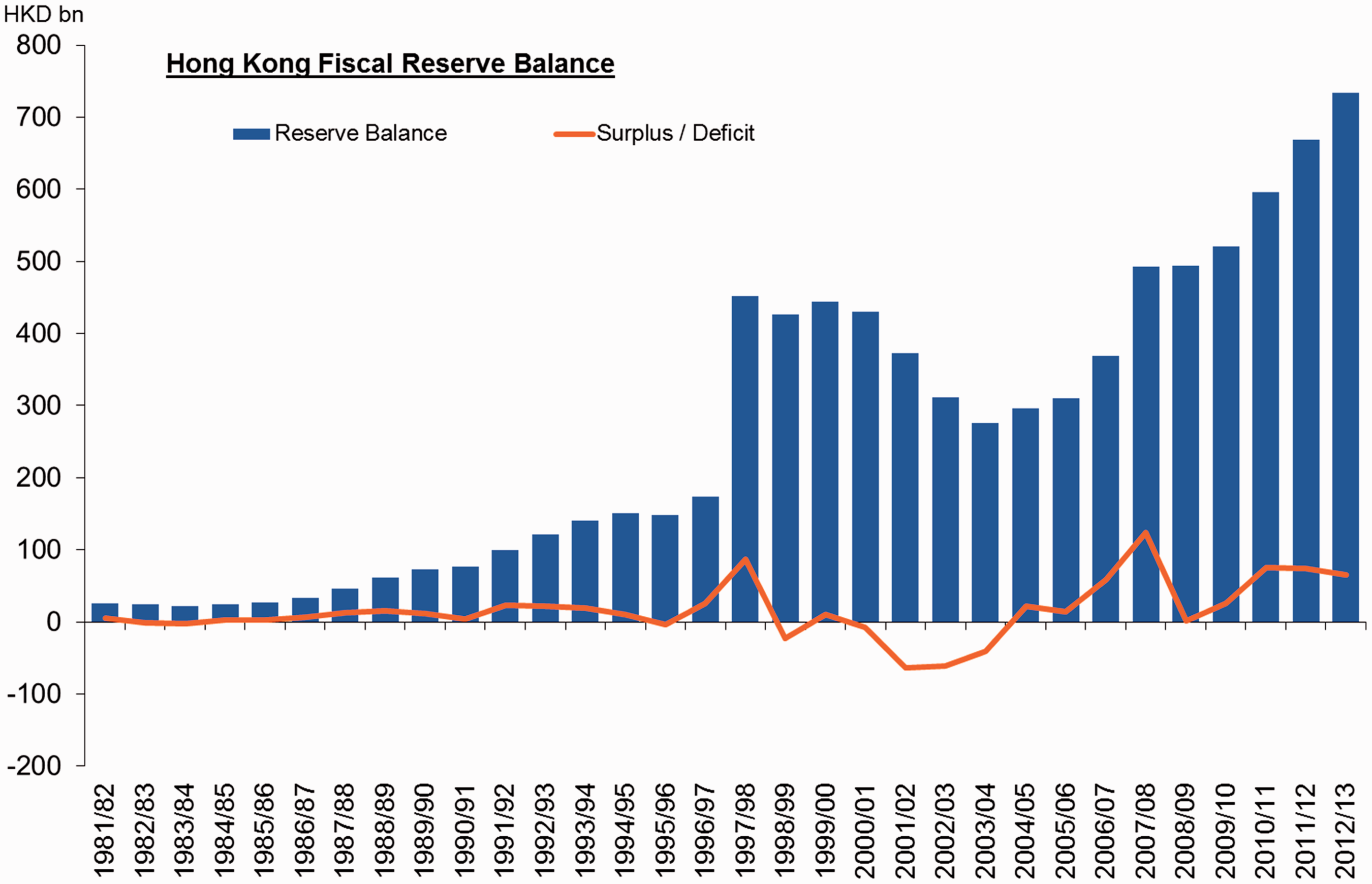
The Hong Kong government’s consistent adherence to the principle of financial prudence over recent decades had enabled it to establish a sound budgetary position and accumulate a high level of fiscal reserves (Tang, 1997). Taking the last 30 years as an example, the Hong Kong government only experienced five years of budget deficits, in 1998/99 and from 2000/01 to 2003/04, due to the worst economic recession Hong Kong has had since the Second World War (which was caused by the aftermath of the 1998 Asian financial crisis). For most of the time, the Hong Kong government successfully achieved a balanced budget and in recent years it even attained huge budget surpluses, resulting in the accumulation of fiscal reserves to an unprecedented level of HKD733.9 billion in 2012/13 with no major public debt (Figures 1 and 2).
3
Hong Kong Government’s consolidated account (1981/82 to 2012/13) Hong Kong Government’s fiscal reserves (1981/82 to 2012/13)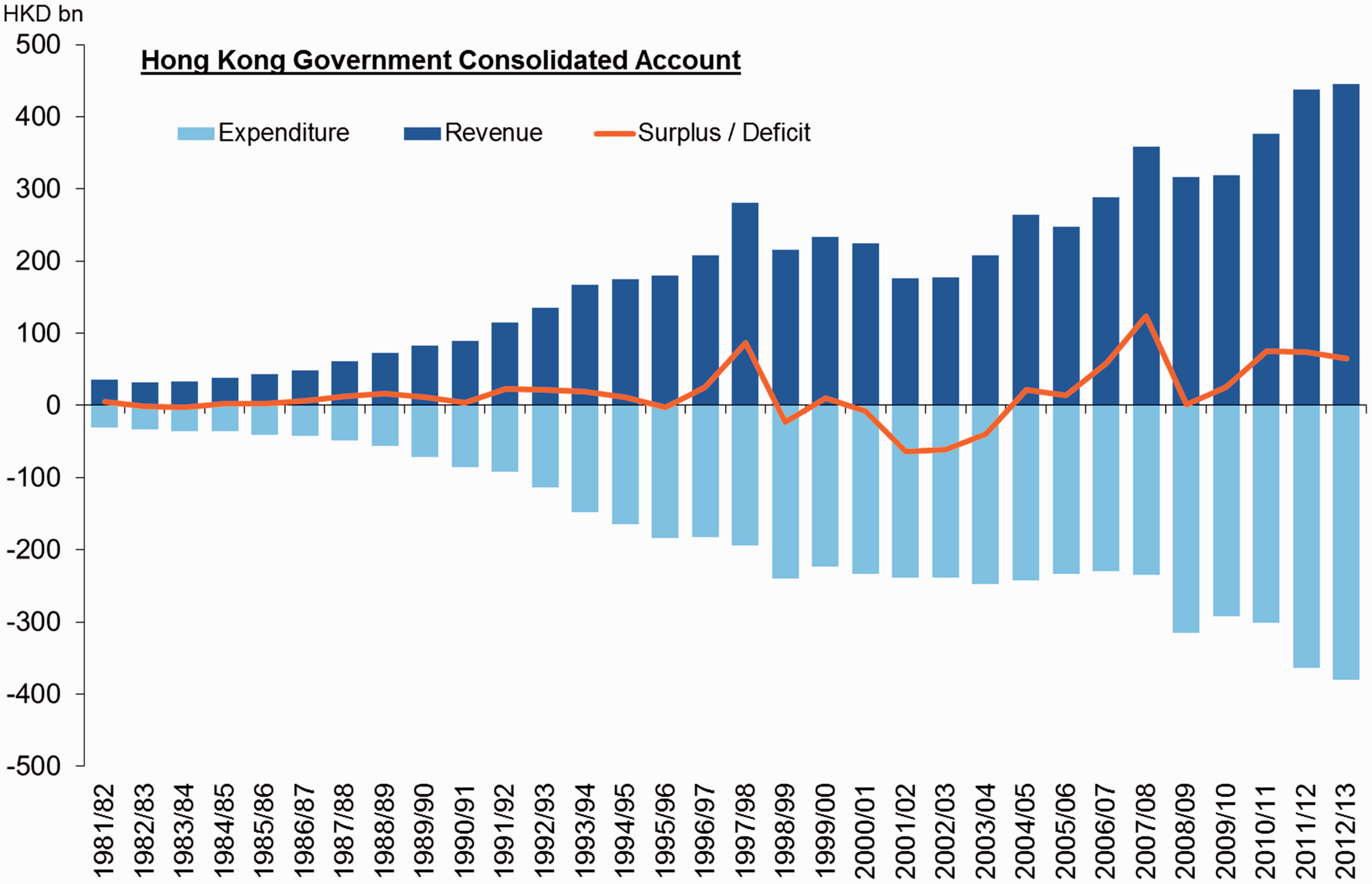
When compared with many other developed economies, the Hong Kong government’s revenue profile has its own unique characteristics. The Hong Kong government’s revenue in 2011/12 amounted to HKD482 billion, with salaries tax (10.7 percent) derived from the working population and profits tax (24.6 percent) collected from commercial corporations accounting for over one-third of total government revenues. However, the Hong Kong government is unique in relying heavily on non-tax revenues, namely the land premiums (17.6 percent) through sales of government land and investment income (8.4 percent) derived from the investment returns of fiscal reserves as its important sources of income (Figure 3). Obviously, the existence of a large amount of non-tax revenues has enabled the Hong Kong government to finance its expenditure while maintaining its low and simple tax regime (Wong, 2009).
4
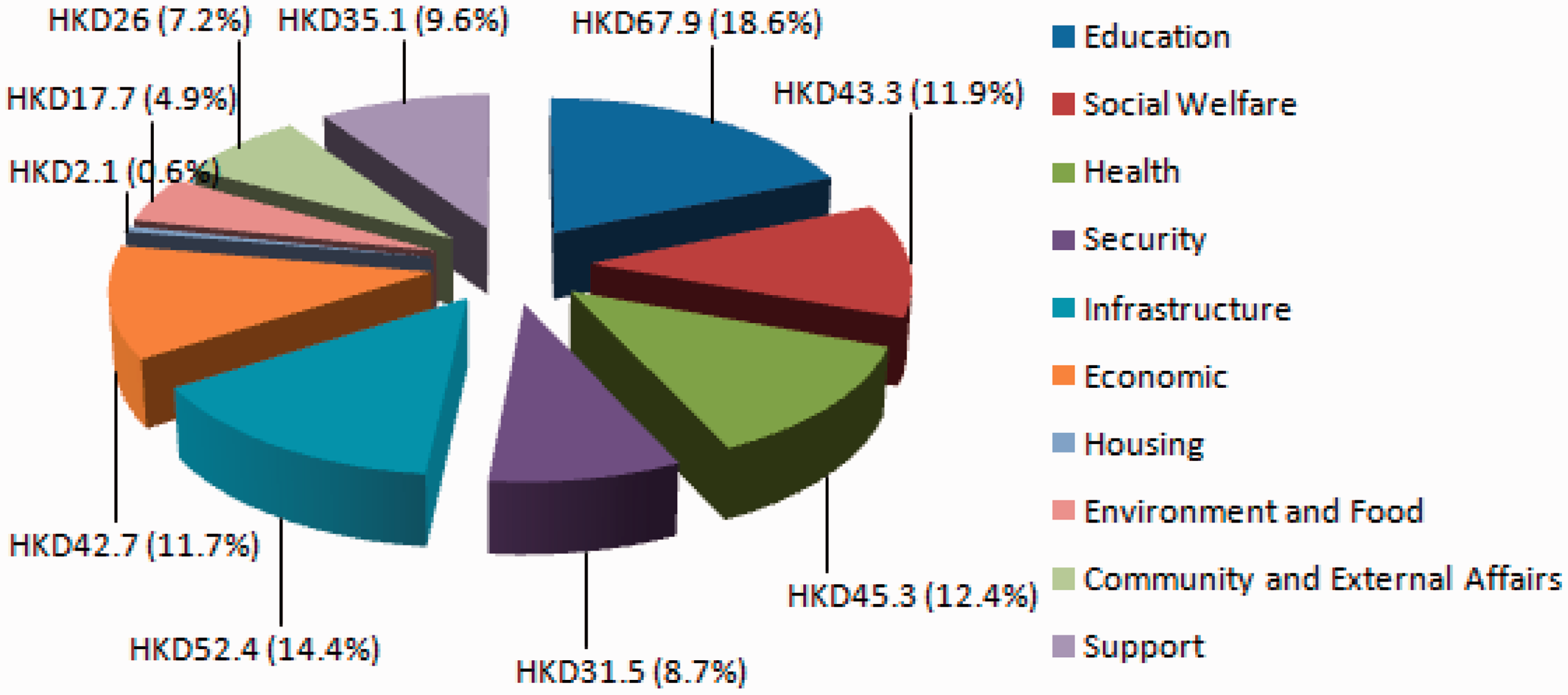
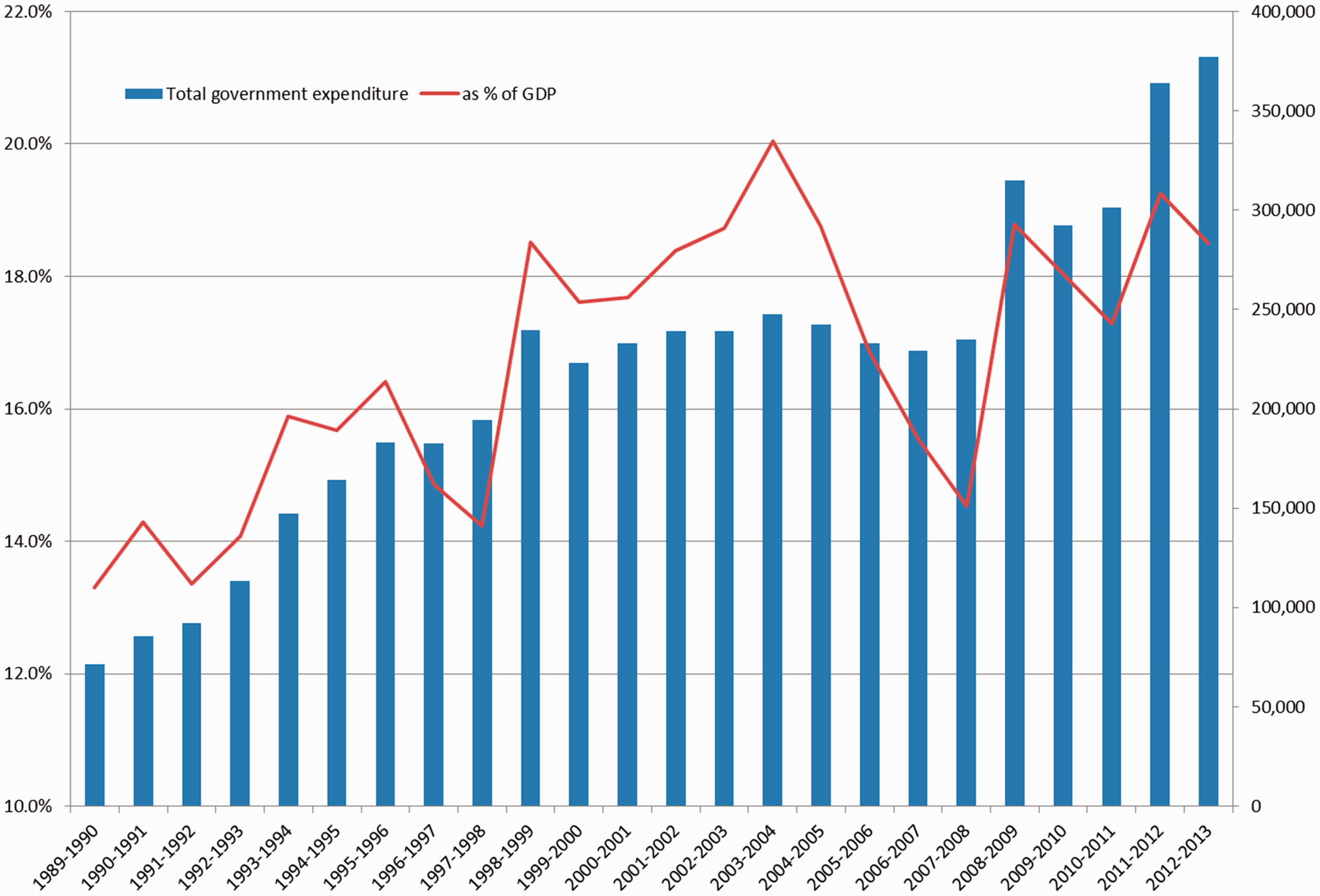
On the expenditure side, the Hong Kong government spent a large percentage of its budget on social policy programmes as was the case in many developed countries. In 2012/13, the Hong Kong government’s expenditure totalled HKD377 billion with the vast majority of resources spent on education (18.6 percent), social welfare (11.9 percent) and health (12.4 percent) (Figure 4). Although the Hong Kong government has substantially increased its expenditure level in recent years from HKD234.8 billion in 2007/08 to HKD377 billion in 2012/13, total government expenditure as a percentage of nominal GDP still stayed below the benchmark of 20 percent, indicating that Hong Kong has so far maintained a relatively small public sector by international standards (Figure 5).
5
Hong Kong Government’s revenue profile by income sources (2011/12) Hong Kong Government’s expenditure profile by policy areas (2011/12) Hong Kong Government’s total government expenditure as percentage of nominal GDP (1989/90 to 2012/13)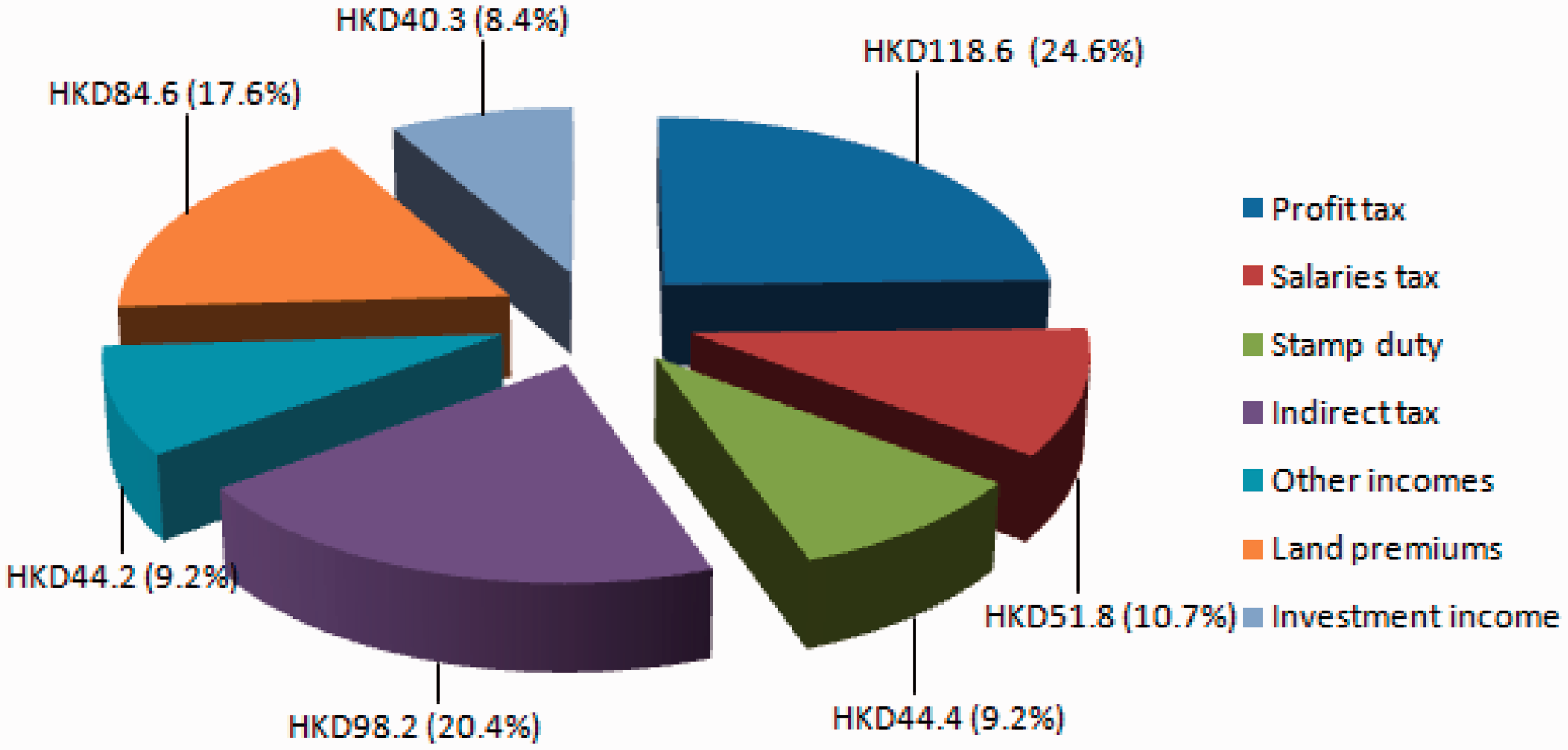
The changing political contexts for Hong Kong’s budgetary process: from colonial time to the post-1997 period
In the budget politics literature, public budgeting is interpreted as a political process that determines ‘who gets, who pays, and who and what wins or loses’ (Lewis and Hildreth, 2011: 1), and the government budget is considered as not merely a technical statement but an intrinsically political document reflecting the choices, preferences and priorities of government as well as the relative power of different political actors (Rubin, 2010: 1). For budget politics researchers, in all societies the budgetary process is shaped by its political context, and public budgeting must be discussed in the context of political institutions, structures and processes. In the United States, for example, the political context of public budgeting is its democracy, and as a consequence the democratic institutions and processes shape the dynamics of its budgetary politics (Lewis and Hildreth, 2011: 2–4).
From the perspective of budgetary politics, Hong Kong’s colonial political history and its transition to a semi-democracy since the 1990s have placed its budgeting process within rapidly changing political contexts over recent decades. To understand the dynamics of budgetary politics in Hong Kong, it is necessary to trace the changing political contexts of Hong Kong from British colonial time to the post-1997 period and examine how these contexts shaped its budgetary politics.
Budgetary politics within a bureaucratic polity: political context of colonial Hong Kong
The predominant feature of colonial Hong Kong’s political context was the concentration of decision-making powers in the hands of bureaucrats, and such a power structure had undoubtedly shaped the budgetary process. In accordance with the Letters Patent and the Royal Instructions, the two constitutional documents issued by London, the British Governor was at the centre of the colonial power structure who ‘personified the combination of executive and legislative, and civil and military powers’. The Governor was the head of government, chairman of the Legislative Council and the commander-in-chief of British military forces in Hong Kong, and he also had the power to appoint all members of the Legislative Council (Cheung, 2007). While constitutionally speaking the colonial Governors had almost autocratic powers, they came and went on a regular basis and could only govern with the cooperation and support of the permanent civil service (Cheung, 2007; Miners, 1998: 70). On the other hand, although the Legislative Council had the constitutional powers to approve the government’s budgets and supplementary provisions, it was wholly constituted by legislators appointed by the Governor up to 1985. Senior civil servants were appointed as official members to form a majority in the legislature, while unofficial members, mainly from the business and professional sectors, also owed their allegiance to the colonial government. Such an appointment system enabled the bureaucrats to dominate the legislative process, and the role of the Legislative Council was confined to rubber-stamping the government’s budgetary proposals (Lo, 1990: 57). In view of the above, the civil service maintained a commanding position within the colonial political system and therefore colonial Hong Kong was usually described as a ‘bureaucratic polity’ (Lau, 1982) or an ‘administrative state’ (Harris, 1988) governed by bureaucrats in the absence of accountable politics (Cheung, 1998).
Within this bureaucrat-dominated political system, the Financial Secretary exercised the strongest influence over the budgetary process. In colonial Hong Kong, although the Financial Secretary only ranked third in the colonial hierarchy after the Governor and the Colonial Secretary, he functioned as a virtual autonomous dictator over budgetary matters (Rabushka, 1976: 54). The superior status of the Financial Secretary 6 in the budgetary process was built upon his political autonomy from the Governor (who usually delegated much of his budgetary powers to the Financial Secretary) and his strategic role as a ‘guardian of public purse’ (which was a product of the British tradition of prudent financial management) (Cheung, 2006). By virtue of his strategic powers to approve expenditure items and to examine the financial implications of all policy proposals, the influences of the Financial Secretary (and his treasury officials from the Finance Branch) went beyond the ambit of budget allocation and spilled over into policy formulation and implementation. As a consequence, the Financial Secretary effectively functioned as a key policy-maker in the Government Secretariat, and the Finance Branch was also developed into an ‘all-powerful policy branch’ running the colonial Hong Kong government by default (Rabushka, 1976: 55–57, 64).
Because an external political institution, namely the Legislative Council, exerted little influence over the budgetary process and bargaining among political parties and interest group politics was almost absent in colonial Hong Kong until the 1990s (Lo, 1990: 54), budgetary politics in colonial time were essentially bureaucratic in nature. The politics of the budget was mainly confined to the interaction between two sets of players within the colonial bureaucracy, i.e. the Central Budget Agency (the Financial Secretary and his treasury officials of the Finance Branch) and the Budget Spenders (government officials from policy branches and departments) (Cheung, 2005a; Rabushka, 1976: 128). In this connection, the budgetary process in colonial Hong Kong was characterized by bureaucratic competition for financial resources. With the Central Budget Agency adhering to its constitutional position of maintaining centralized financial control and of constraining government expenditure through rigorous scrutiny of policy proposals, while the Budget Spenders sought a maximum of delegated authority and attempted to expand their budgets. This kind of budgetary politics resulted in continuous internal conflicts and negotiations within the colonial bureaucracy (Cheung, 2005a; Lo, 1990) (Figure 6).
7
The political context of the budgetary process in colonial Hong Kong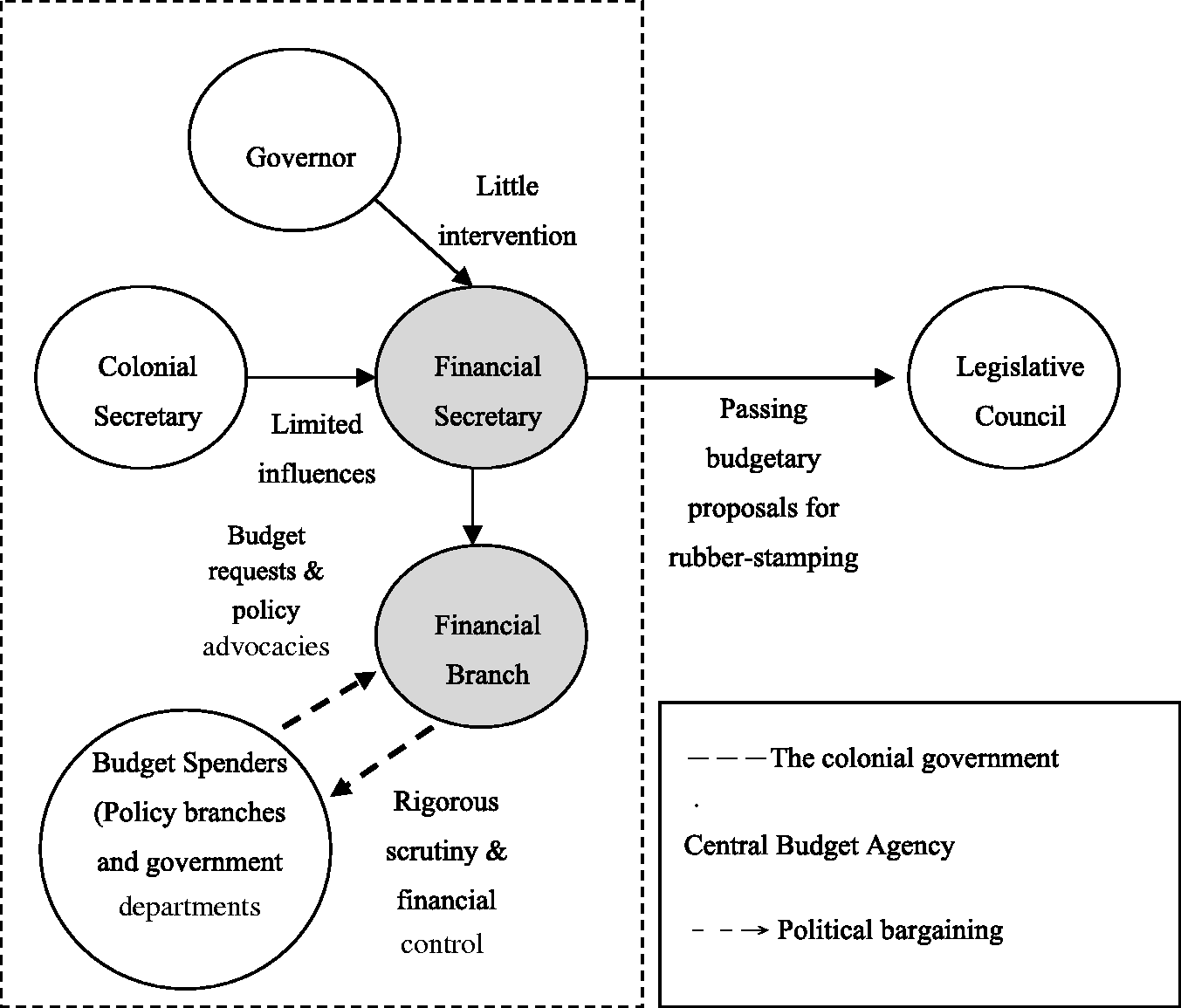
Budgetary politics within a semi-democracy: political context of the HKSAR
The bureaucratic-dominated political system in colonial Hong Kong has been gradually changed since the 1990s as a result of a number of constitutional and administrative reforms. Unavoidably, the changing political contexts have resulted in corresponding shifts in the nature and characteristics of the budgetary process.
The democratization of Legislative Council (from 1985 to 2012)

The Chinese government disbanded the Legislative Council formed in 1995 and replaced it with the Provisional Legislative Council composed of 60 members all returned by the Election Committee.
Source: Adapted from Ma (2007) and Lui (2012).
Partisan distribution in the Legislative Council (from 1998–Present)
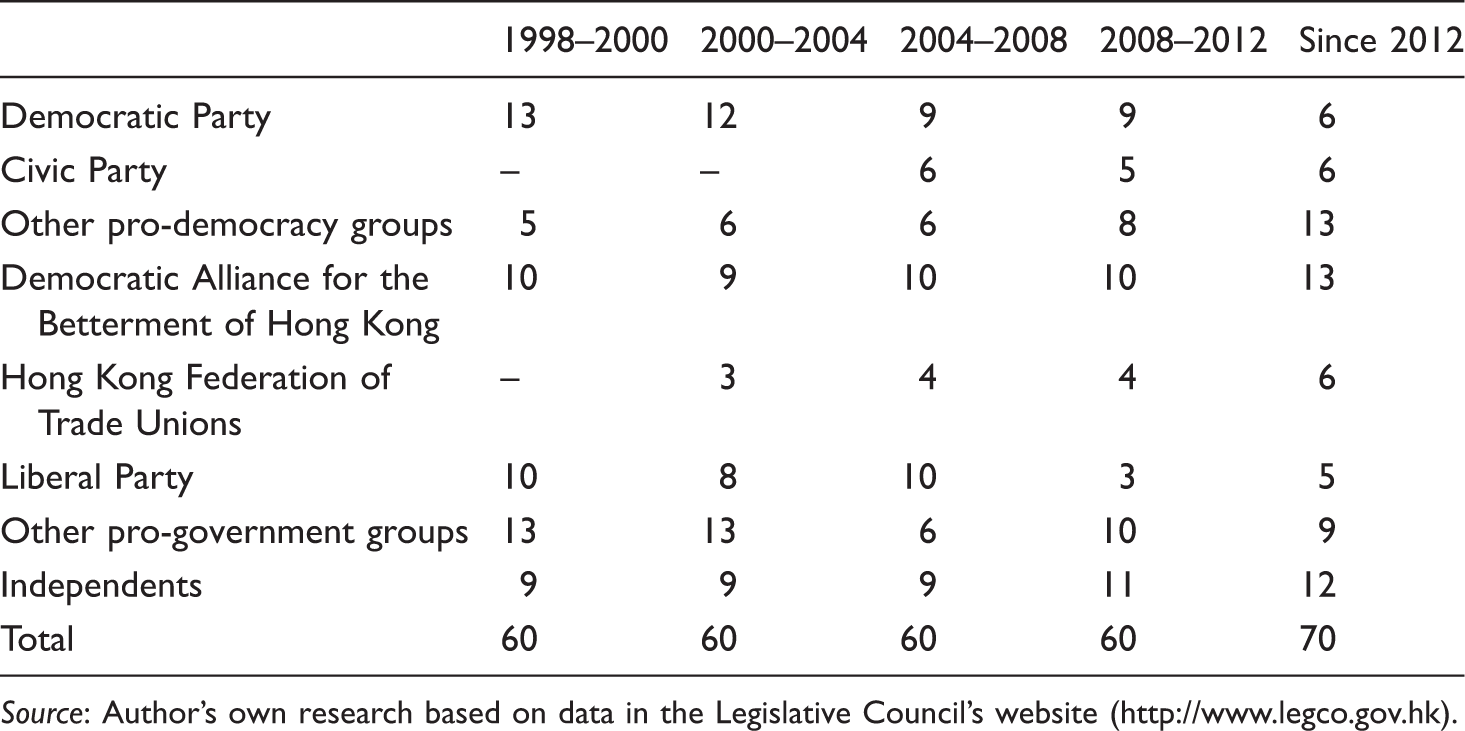
Source: Author’s own research based on data in the Legislative Council’s website (http://www.legco.gov.hk).
On the other hand, within the Hong Kong government there have been a number of institutional reforms and political changes which, by intention or default, resulted in weakening of the Financial Secretary’s dominant position in the budgetary process. Several factors have caused the change. First, the Star Chamber, which is co-chaired by the Chief Secretary and the Financial Secretary and includes the Secretary for the Treasury and the Secretary for the Civil Service, was set up in 1994 as a mechanism to decide the allocation of resources for financing new policies in the annual Resources Allocation Exercise (RAE). Under this arrangement, the Chief Secretary was for the first time given an important role to play in budget allocation and the Financial Secretary’s superior status in the budgetary process has been somewhat weakened (Cheung, 2005a). Second, one of the major themes of public sector reforms in Hong Kong since the 1990s was the devolution of financial powers. Financial reforms including the setting up of resource management units in policy bureaus in 1994 and the introduction of the operating expenditure envelope and one-line vote in 2003/04 have significantly enhanced the financial autonomy of policy secretaries (who are now political executives instead of career civil servants since the implementation of the Principal Officials Accountability System in 2002) (Cheung, 2006). Third, unlike the colonial Governors who usually adopted a hands-off approach on budgetary matters, the HKSAR Chief Executives now assume a more presidential style of leadership. As a result, the Financial Secretary’s annual budget speeches have been increasingly integrated into the Chief Executive’s policy address which presets spending priorities (Cheung, 2006). All in all, the Financial Secretary is no longer a ‘financial czar’ as in the colonial past and there have been some forms of power-sharing between the Central Budget Agency and policy bureaus with the former now concentrated on macro-budget allocations while the latter focuses on meso-budget allocations to departments within its portfolios.
As a consequence of the above changes in Hong Kong’s political contexts, budgetary politics in the HKSAR period is not a mere bureaucratic game as in the colonial past but the overall budget allocation has been increasingly driven by political dynamics within the legislative arena (Cheung, 2005a). Nowadays, the budgetary process is characterized by competition for financial resources between various political actors. The Financial Secretary now needs to bargain intensively with political parties and pressure groups over the formulation of annual budgets and also directly consult the general public in the process, while political executives and bureaucrats of various policy bureaux engage in continuous public debates with different stakeholders over the allocation of resources (Scott, 2010:173) (Figure 7).
9
The political context of the budgetary process in the HKSAR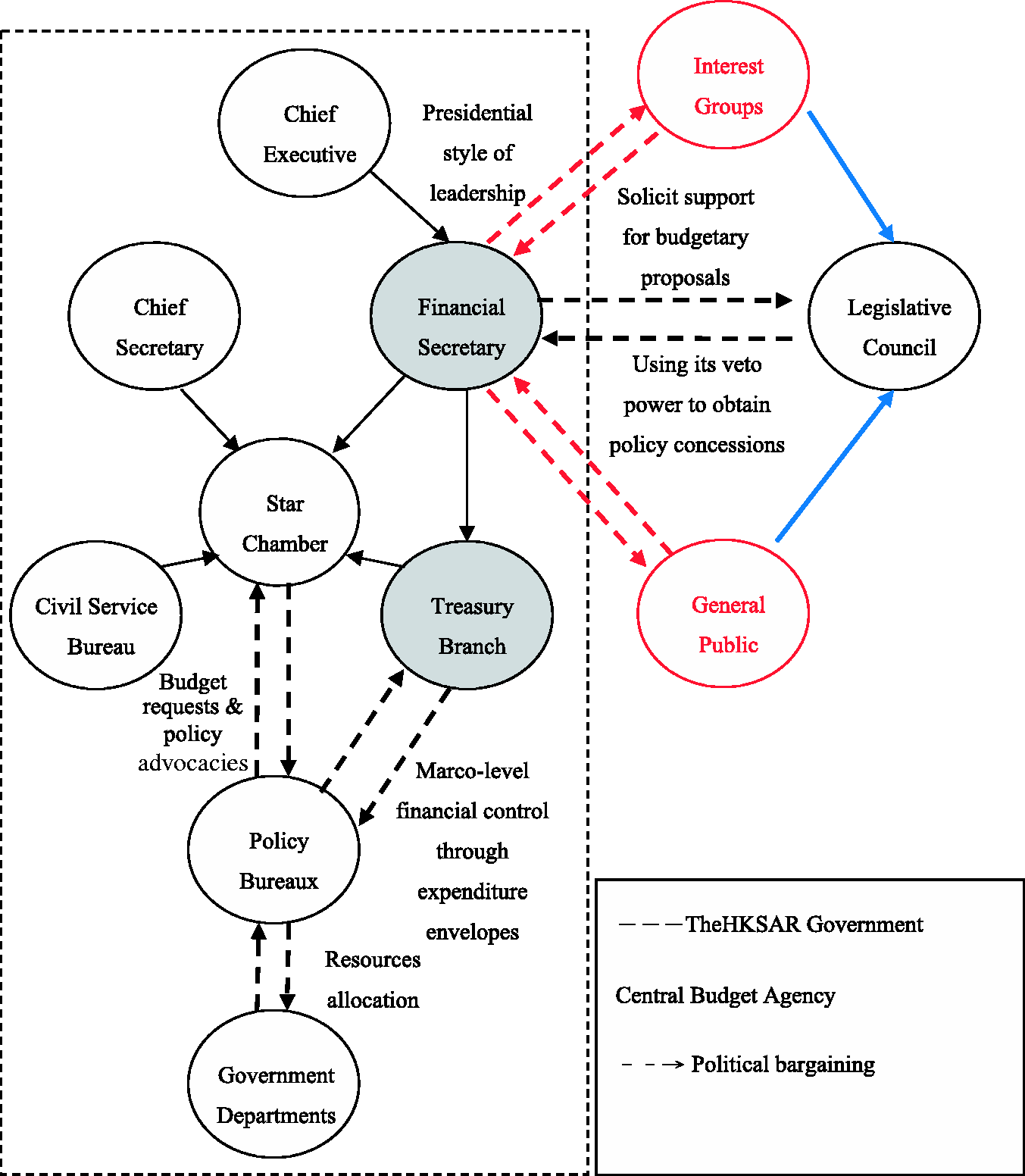
The politics of budget surpluses in Hong Kong today: how best to allocate the budget surpluses?
Despite the fact that Hong Kong remains a semi-democracy where a non-popularly elected Chief Executive handpicked by Beijing coexists with a partially popularly elected Legislative Council (Overholt, 2001), nowadays the budgetary process in the territory is operated within a political context quite similar to many Western democracies: different political actors inside and outside the Hong Kong government compete with each other for financial resources in the budgetary process. While the political contexts of the budgetary process in Hong Kong have become increasingly similar to many developed economies, the politics of budget surpluses facing the Hong Kong government today has made the nature and characteristics of its budgetary politics fundamentally different.
Since 2004/05, the HKSAR government has experienced budget surpluses for nine consecutive years. In 2007/08, the Hong Kong government achieved a record surplus of HKD123,650 million. Although in 2008/09 the amount of surplus had dropped to HKD1,450 million due to the economic slowdown triggered by the global financial tsunami, the Hong Kong government reaped successive years of huge surpluses again starting from 2009/10. On average, the Hong Kong government has sustained a budget surplus of HKD50,952 million from 2004/05 to 2012/13 (Figure 8).
Budget surpluses of the Hong Kong government (from 2004/05 to 2012/13)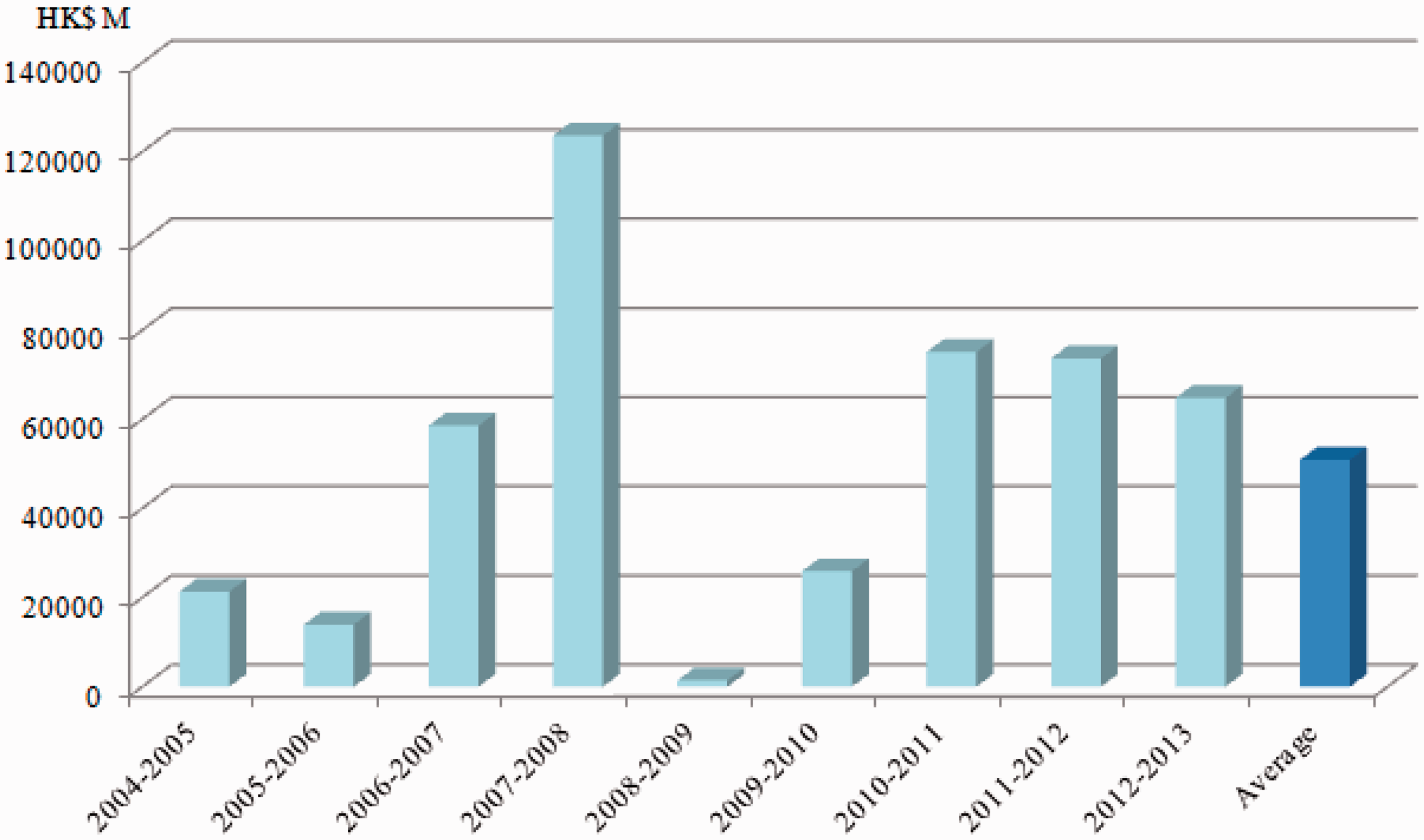
In the face of consecutive years of surpluses, the Hong Kong government must decide on how best to allocate the budget surpluses, something that is unusual in many developed economies. For this purpose, the budgetary strategy adopted by John Tsang, Financial Secretary since 2007 and a former civil servant, was two-fold.
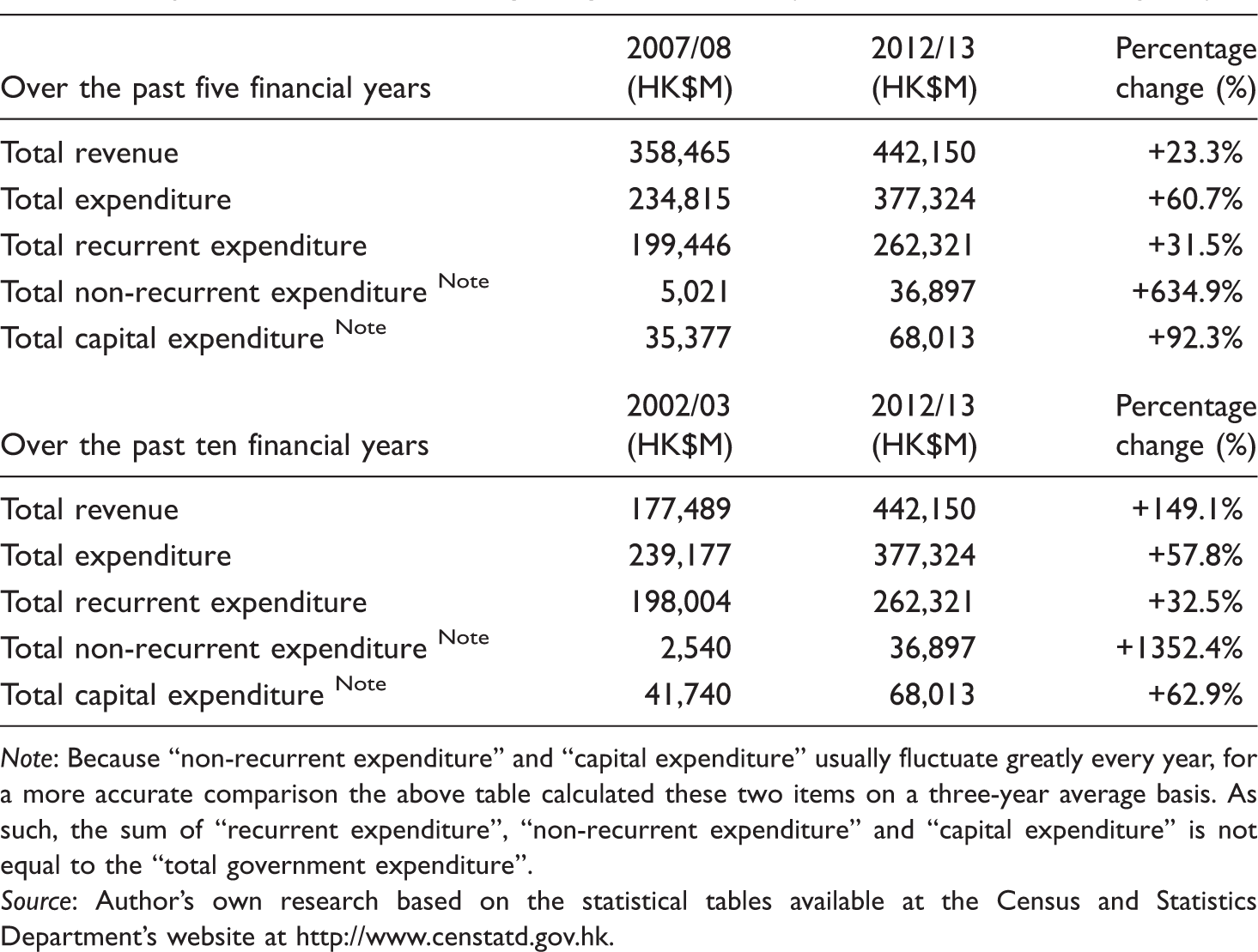
The first part of the budgetary strategy adopted by John Tsang was to spend billions of the budget surpluses on ‘one-off relief measures’, while continuing to strictly control the growth of recurrent expenditure. Those one-off relief measures, nicknamed ‘one-off sweeties’ (Yiciguo Paitang), normally included granting salary tax rebates, waiving rates, paying an extra allowance to recipients of Comprehensive Social Security Assistance and the Old Age Allowance, waiving rental for public housing tenants, providing an electricity subsidy, etc. Over the last six budgets from 2008/09 to 2013/14, the total amount of ‘one-off sweeties’ handed out by Tsang exceeded HKD198,803 million, meaning an average of HKD33,314 million per year (Figure 9). Closer examination of the expenditure pattern of the Hong Kong government further indicated that in the past five and ten years, it had increased its total expenditure by 60.7 percent and 57.8 percent, respectively, but the growth for recurrent expenses lagged behind the overall growth rate of total government expenditure and only experienced a relatively slow increase of 31.5 percent and 32.5 percent, respectively. On the other hand, the growth rate for non-recurrent expenditure had increased sharply by 634.9 percent and 1352.4 percent respectively, indicating John Tsang’s attempt to address public demands through non-recurrent one-off relief measures (Table 3).
One-off relief measures announced in budget speeches (from 2008/09 to 2013/14) Expenditure Pattern of Hong Kong Government (Past five and ten financial years) Note: Because “non-recurrent expenditure” and “capital expenditure” usually fluctuate greatly every year, for a more accurate comparison the above table calculated these two items on a three-year average basis. As such, the sum of “recurrent expenditure”, “non-recurrent expenditure” and “capital expenditure” is not equal to the “total government expenditure”. Source: Author’s own research based on the statistical tables available at the Census and Statistics Department’s website at http://www.censtatd.gov.hk.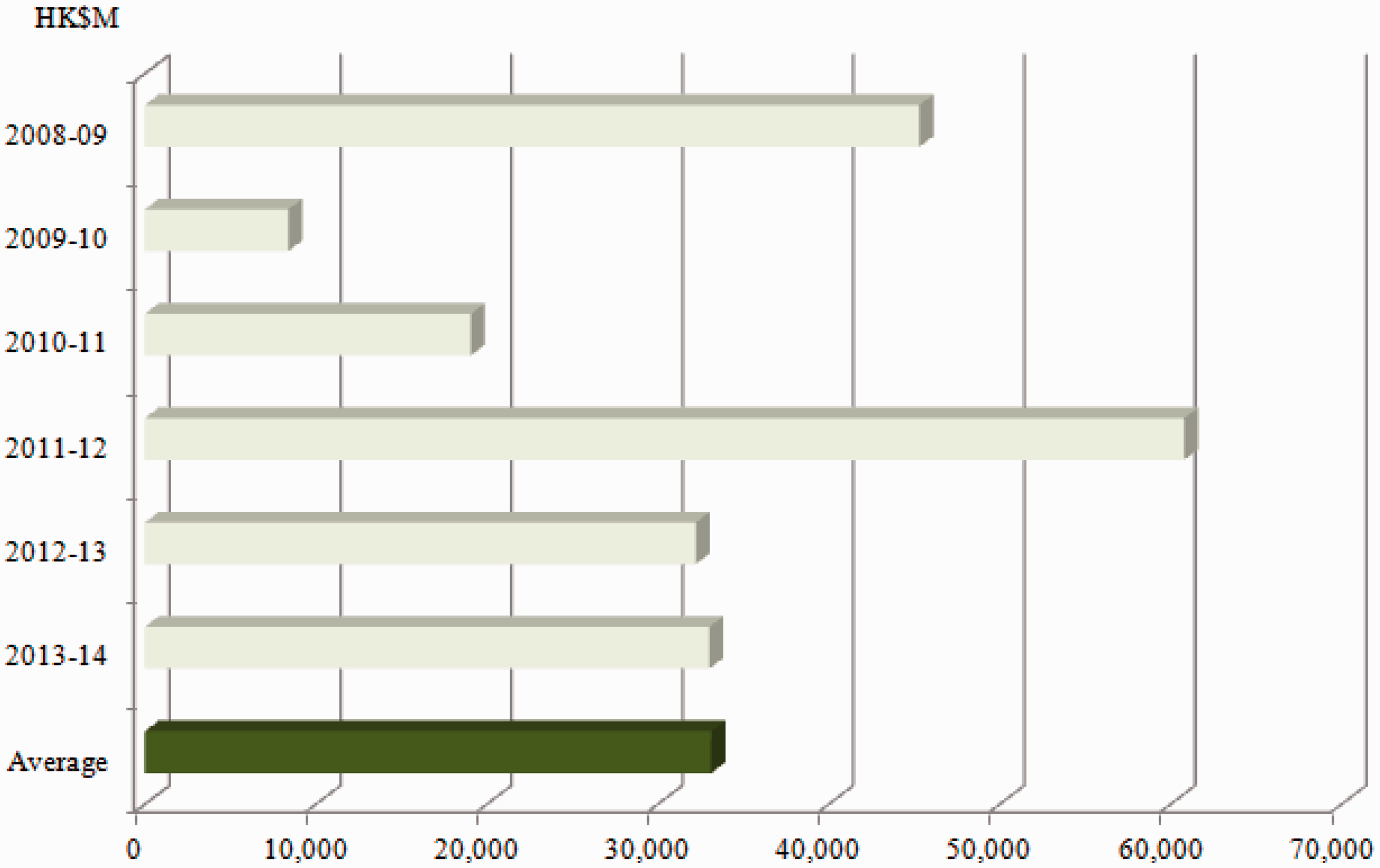
The second part of John Tsang’s budgetary strategy was to set aside the remaining budget surpluses in fiscal reserves so as to provide a stronger buffer for future economic downturns and financial fluctuations. Statistics showed that the total amount of fiscal reserves held by the Hong Kong government have soared to a historic high level in recent years. As at 2012/13, the amount of fiscal reserves stood at HKD733.9 billion, which is equivalent to 36 percent of Hong Kong’s nominal GDP or 23 months of government expenditure (Figures 10 and 11).
Hong Kong Government’s fiscal reserves as percentage of nominal GDP (From 1989/90 to 2012/13) Hong Kong Government’s fiscal reserves as months of government expenditure (From 1989/90 to 2012/13)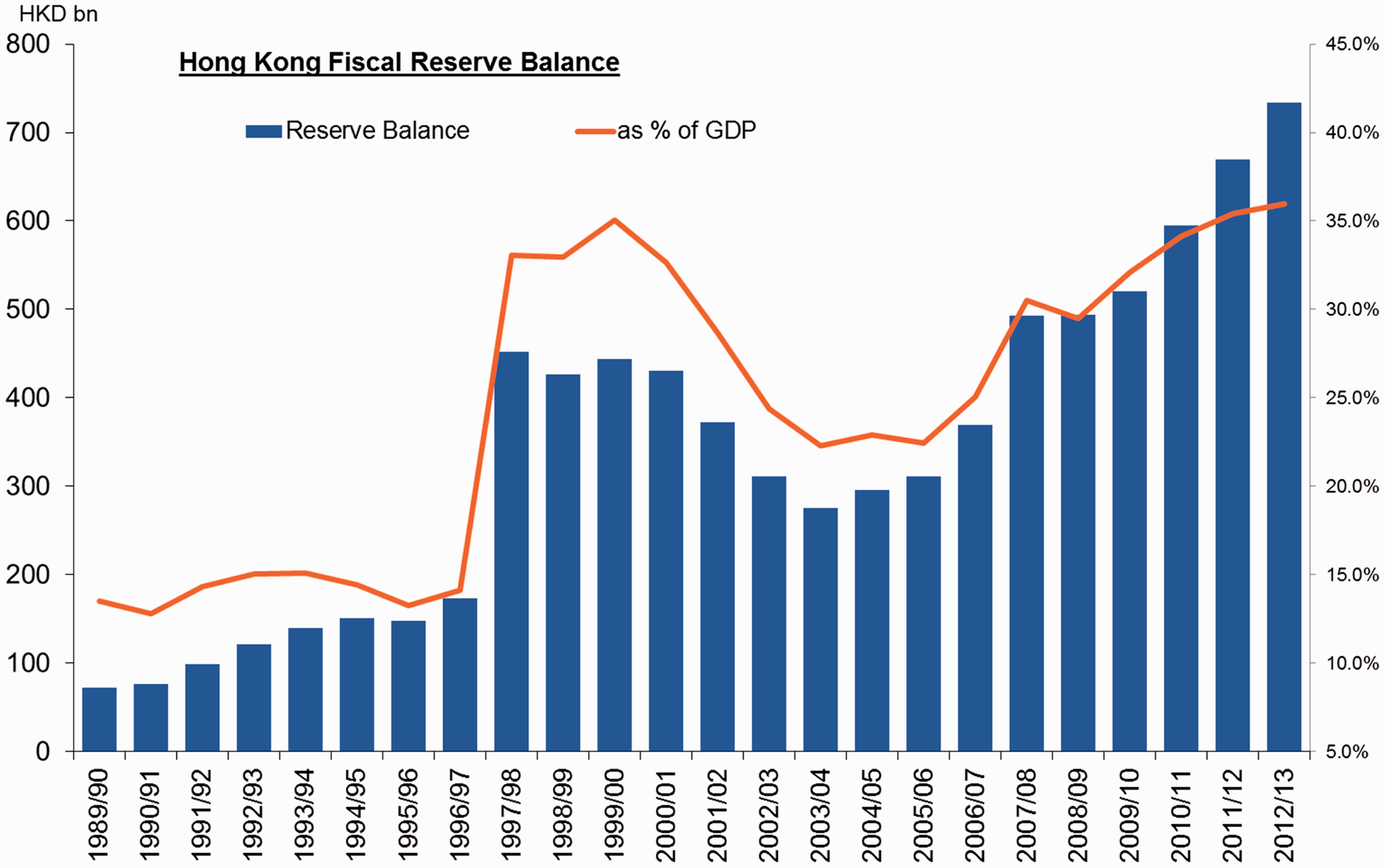

Unfortunately, John Tsang’s budgetary strategy failed to win popular support, and even backfired. Legislators across the political spectrum and major pressure groups have usually criticized Tsang as ‘lacking vision and long-term planning’ in budget allocation. John Tsang’s strategy to implement one-off relief measures and to keep a high level of fiscal reserves was commonly seen by legislators and social activists as too ‘short-sighted’ and ‘devoid of commitments’. Critics usually argued that the budget surpluses and the massive fiscal reserves should be better spent on increasing recurrent expenditure items so that social services such as education and welfare could be substantially improved.
10
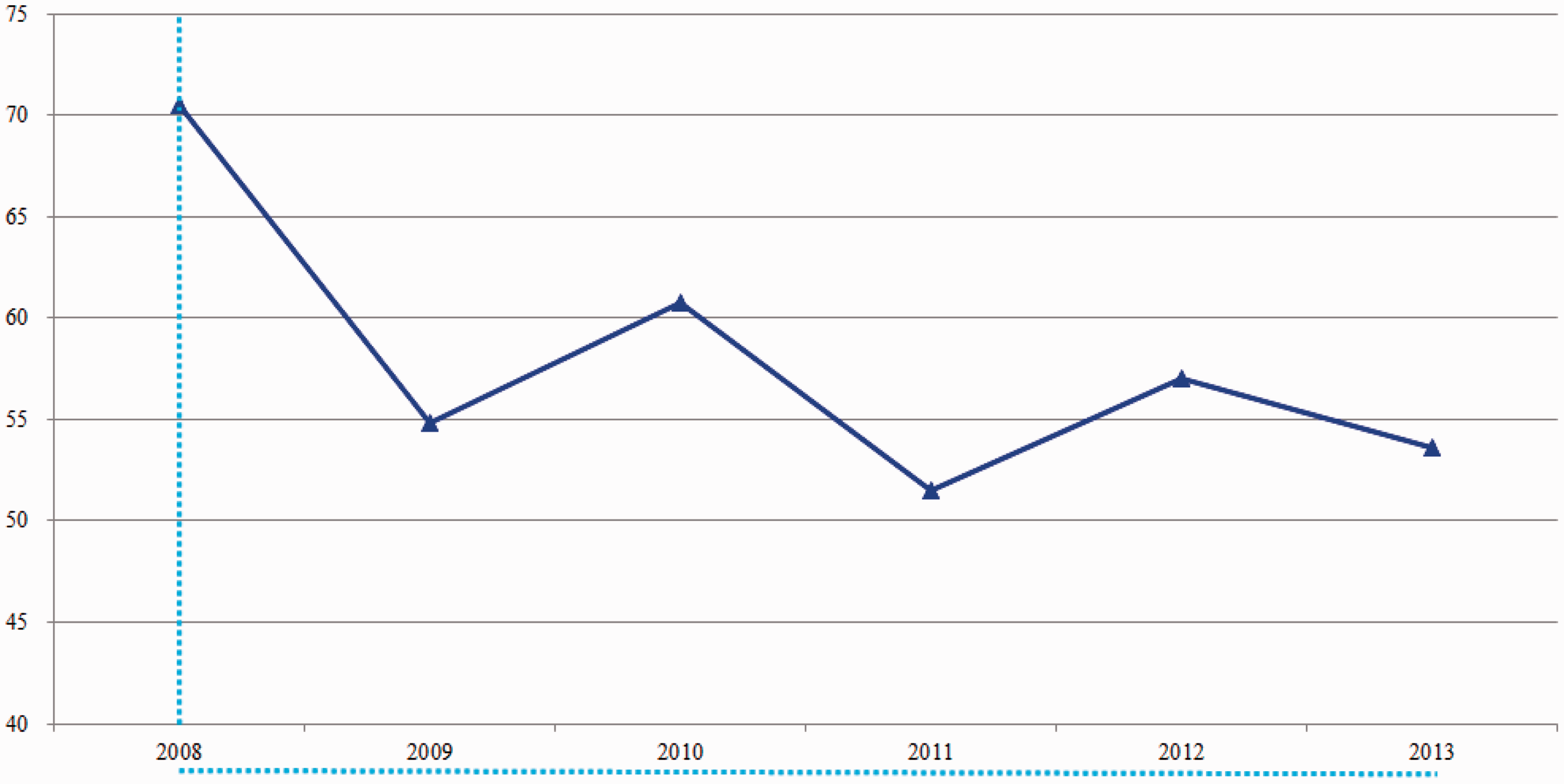
The public resentment of the Financial Secretary’s budgetary strategy was clearly reflected in the growing number of social protests against budget allocation (Figure 12) and the negative public ratings of the annual budget speeches (Figure 13). All in all, there is a growing gap between public expectations and the budgetary strategy of the Financial Secretary, and the public dissatisfaction with the budgets has certainly added fuel to the governance crisis facing the Hong Kong government.
11
Social protests against budget allocations (1999 to 2013) Public rating of John Tsang’s budget speeches (from 2008/09 to 2013/14)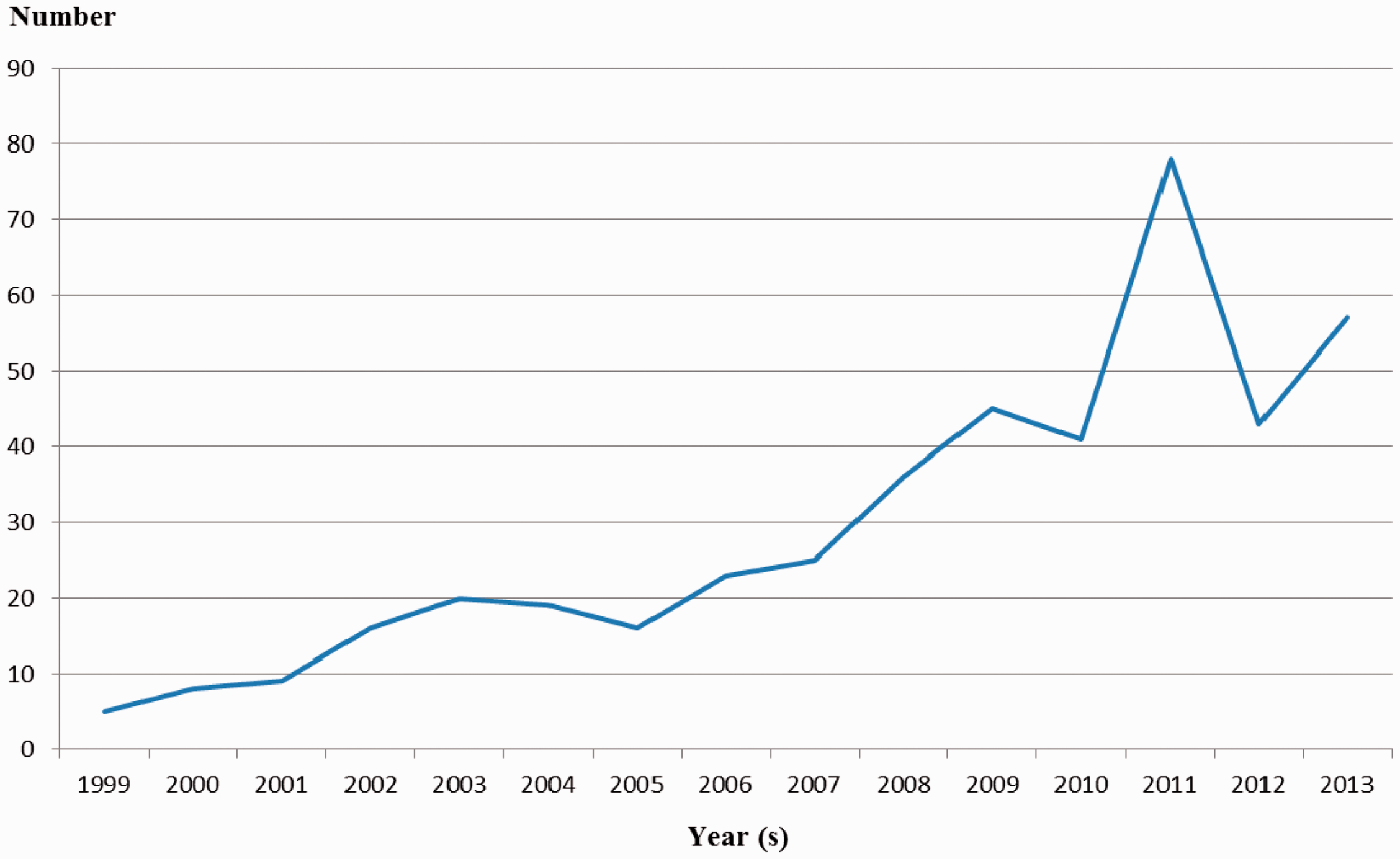
The controversies surrounding the 2011/12 budget are illustrative of the politics of budget surpluses in Hong Kong today. In anticipation of a huge budget surplus of HKD71.3 billion, John Tsang announced in the 2011/12 budget speech to allocate a total of HKD24 billion to make a one-off injection of HKD6000 into the Mandatory Provident Fund (MPF) accounts of the whole working population. 12 As well as granting salary tax rebates, John Tsang also announced other ‘one-off sweeties’ such as waiving rates, paying an extra allowance to recipients of Comprehensive Social Security Assistance and the Old Age Allowance, waiving rental for public housing tenants and providing an electricity subsidy (HKSAR Government, 2011). However, the billions of one-off measures announced by John Tsang have received more reproof than praise. Legislators across the political spectrum all criticized the proposal of a one-off injection of HKD6000 into each MPF account as too remote to be of any help because the general public were not allowed to draw the money until their retirement. Political parties were also dissatisfied with the Financial Secretary’s decision to focus on handing out ‘one-off sweeties’ instead of coming up with concrete long-term measures to address structural social problems (The Standard, 2011a). Opinion polls showed that over 41.3 percent of respondents were dissatisfied with the 2011/12 budget with only a 16.7 percent public satisfaction rate, indicating a marked increase in public resentment when compared with the previous budgets (The Standard, 2011b).
In view of the huge public outcry, pro-democracy parties called for a massive demonstration, known as the ‘Bauhinia Revolution’, to voice their anger and grievances against John Tsang. Pro-democracy legislators also joined forces with their counterparts in the pro-government camp to press the government to revise the budget. Initially the Financial Secretary insisted that there was no room to revise or fine-tune the budget. But finally as a result of strong pressure from the pro-government legislators, John Tsang announced substantial revisions to the 2011/12 budget. First, instead of injecting money into every MPF account, the government would release a sum of HKD6000 cash to all Hong Kong permanent residents aged 18 or above. Second, a tax rebate of 75 percent of salaries tax would be offered to every tax payers, subject to a ceiling of HKD6000 (The Standard, 2011c).
The case of the 2011/12 budget has clearly illustrated how the politics of budget surplus was played in Hong Kong. In allocating the huge budget surpluses, the Financial Secretary faces a challenging task of accommodating the competing demands of political parties, pressure groups and the general public. In particular, the Financial Secretary’s budgetary proposals had been significantly driven by partisan politics under which legislators across the political spectrum made use of their veto power over the budget to press the government for policy concessions.
Public expectations of the 2011/12 budget speech

Source: Adapted from the Chinese University of Hong Kong (2011).
But with successive years of budget surpluses, the Financial Secretary’s insistence on traditional fiscal disciplines (i.e. spending the surpluses on one-off relief measures and keeping a high level of fiscal reserves) has become increasingly unjustifiable in the eyes of the public. Rather, the traditional financial prudence has become a straitjacket on budget allocation, making it difficult for the Hong Kong government to accommodate rising public demands in the budgetary process. All in all, the successive years of budget surpluses do not help the Hong Kong government formulate a budget that could command extensive support within the community. Ironically the budget surpluses only widen the gap between society (which had higher expectations of the government) and the Hong Kong government (which stuck to the traditional financial prudence) over its budget allocation.
Conclusion: lessons from the case of Hong Kong
The politics of budget surpluses in China’s HKSAR today is an illuminating case study. Currently, much of the budgetary politics literature is focused on the politics of budget deficits in Western democracies (Buchanan and Wagner, 1996; Imbeau and Pétry, 2004). For example, Kettl (2003) and Morgan (2009) have discussed the budget deficits in the United States within the broad context of American politics and have examined the political struggles between the presidents and the congressmen over the balancing of budget deficits. They have analysed how the partisan struggles, ideological differences and the divided government in the United States shaped the budget battles between the presidents and the congress. In recent years, because of the worsening of the fiscal position of the American and European countries, scholars were drawn to discuss the global public debt crises and to examine the political challenges arising from the management of public debt (Braga and Vincelette, 2011; Eichengreen et al., 2011; Lemieux, 2011; Reinhart and Rogoff, 2013).
From this perspective, this article will broaden our understanding of budget politics by offering an illustrative case study on the politics of budget surpluses. The case of Hong Kong pointed to the fact that while prolonged budget deficits in most Western democracies have given rise to continuous budget battles (e.g. what kinds of policy programmes should be trimmed down to cut expenditure and who should be required to pay more tax to raise revenue), consistent budget surpluses could also be a source of recurring controversies in the budgetary process (e.g. how best to allocate the budget surpluses). While it is true to say that most of the countries around the globe are experiencing budget deficits, we should understand that Hong Kong is not the only place experiencing consistent budget surpluses. In fact, there are quite a number of countries and regions where massive budget surpluses are the norm in recent years such as Macau, Kuwait, Norway, Singapore, Qatar and South Korea. 16 While a deeper investigation into the budgetary politics of these economies is well beyond the scope of this article, there is reason to surmise that their politics of budget surpluses should be quite different from the politics of budget deficits as described by the established literature. Did other economies with continual and massive surpluses experience political tensions over the allocation of surpluses similar to Hong Kong? What kind of budgetary strategies did governments around the world adopt to deal with the budget surpluses? Can we compare and contrast the politics of budget surpluses facing these countries and regions? All these are interesting research questions that we could explore to better comprehend the nature and dynamics of the politics of budget surpluses. From this perspective, the case study of Hong Kong should open up a new research agenda and provide the basis for more comparative studies of the politics of budget surpluses.
