



Abstract
Positivity in organizations accentuates that which is flourishing and life-giving to discover and promote the best of the human condition, exemplified in the recent focus on positive practices, behaviors that enhance positive affect in employees and lead to organizational performance. A quantitative study of positivity in a team-based food service context elucidated significant relationships between positive practices, social climate, work engagement, and task performance. Finer delineation of positive practices demonstrated the importance of team members discovering meaning in their work through mutual interaction that promotes trust, respect, and confidence, with employees believing the best in one another and inspiring one another in their performance. The findings suggest that in an intensive service climate positivity can foster team member engagement and performance through prosocial actions that demonstrate appreciation, affirmation, and respect, thus promoting greater meaningfulness in work.
Keywords
The nature of today’s competitive organizational environments requires the workplace to expand beyond a mentality of survival to envision new pathways toward better-than-average performance (Luthans & Youssef, 2007). To pursue optimal performance, organizations are shifting their focus away from a fixation on weaknesses to facilitating conditions that promote human flourishing (Cameron, 2010). Traditional approaches to organizational improvement have concentrated on identifying problems and deficiencies, a form of “deficit thinking” (Whitney, 1998, p. 315) that follows the logic of disease (Cunha, Cunha, & Rego, 2009). However, a more positive focus has arisen that looks for what is flourishing and life-giving to discover and promote the best of the human condition (Cameron & Caza, 2004). Positivity in organizations is rooted in positive psychology’s shift away from what is wrong with people to what is right, good, and makes life worth living (Seligman & Csikszentmihalyi, 2000). Positivity focuses on strengths, capabilities, and possibilities rather than problems, deficits, and weaknesses (Cameron, 2008). Attention is given to what is improving and has potential, thus “to build on what is working [rather] than to obsess about what is not working” (Schein, 2000, p. xxix). Spreitzer and Cameron (2012) highlighted positivity in organizations: Positive businesses achieve [high performance and profitability] by bringing out the best in their people to help them grow, and by leveraging their unique strengths and talents . . . design[ing] work to empower people and make work meaningful. (p. 87)
Capturing many of these aspects of positivity is the recent focus on positive practices—behaviors that are respectful, caring, supportive, inspiring, meaningful, and forgiving (Cameron, Mora, Leutscher, & Calarco, 2011). Such practices have been found to predict organizational performance by enhancing positive affect in employees and inspiring positive worker attitudes. Positivity can lead to a positive work environment (PWE)—a type of social climate that contributes to employee well-being and human flourishing (Hartel & Ashkanasy, 2011). Empirical research studies have confirmed that organizations are “doing well,” because they are “doing good” (Spreitzer & Cameron, 2012); when employees bring out the best in one another, the result includes positive outcomes for both the employees (who are vitalized to grow, develop, and perform better) and the organization (outcomes that are characterized by profitability, innovation, and sustainability) (Meyer, 2015; Ozcelik, Langton, &Aldrich, 2008).
Cameron et al. (2011) noted that positive practices capture the fullest breadth of positivity, namely “behaviors, techniques, [and] routines” (p. 269) that reflect exceptional, affirmative, and virtuous attitudes and actions, thus designing a positive practices scale with six dimensions:
Respect: People trust and have confidence in one another, treating one another with integrity, dignity, and gratitude.
Care: People show interest in and respond to one another, genuinely caring for one another as friends.
Support: People honor and support one another in their endeavors, building strong relationships through kindness and helping those who are struggling.
Inspiration: People share enthusiasm and inspire one another by drawing out the good in one another.
Meaning: People are motivated, renewed, and elevated by their work as they see the greater purpose in work and discover its profound meaning.
Forgiveness: People do not place blame on one another for errors but forgive one another’s mistakes.
Indicating a “dearth of research” on positive practices and their effects, Cameron et al. (2011, p. 267) called for additional research on positivity, including potential moderating and mediating mechanisms in positivity’s effect on employee and organizational outcomes. Thus, the current study investigates how positive practices are related to a PWE, a type of social and emotional climate that contributes to employee well-being and flourishing and to desirable employee outcomes—namely, work engagement and task performance. Which positive practices have the greatest effect on a PWE and engagement and performance outcomes? Does a PWE moderate these relationships?
Positivity in the Workplace
The potential of positivity has been recognized since the time of ancient Greek mythology (the Pygmalion effect; Avey, Reichard, Luthans, & Mhatre, 2011). Positivity is rooted in the Aristotle’s concept of eudaimonia—that inclination exists in all human systems toward flourishing and the achievement of the highest aspirations (Cameron, 2011; Ryan & Deci, 2001). Thus, positive organizational scholarship has emerged as “the study of especially positive outcomes, processes, and attributes of organizations and their members” (Cameron, Dutton, & Quinn, 2003, p. 4), and there is now an accumulating body of positive organizational scholarship research (Caza & Caza, 2008) with research and theory development in positivity expanding (Avey, Avolio, & Luthans, 2011).
According to Cameron and colleagues (Cameron, 2008, 2011; Cameron et al., 2011; Cameron & Spreitzer, 2012; Spreitzer & Cameron, 2012), positivity in organizational studies has come to reflect four related meanings. First, positivity concerns exceptional performance and extraordinarily positive outcomes. These include spectacular and surprising results that exceed expectations or business as usual and reflect positive deviance, defined by Spreitzer and Sonenshein (2004) as “intentional behaviors that significantly depart from the norms of a referent group in honorable ways” (p. 841). Second, positivity takes an affirmative bias. It focuses on strengths and abundance rather than weaknesses and deficit. Positivity endeavors to unlock, broaden, and amplify the positive emotions of employees (Fredrickson, 2001), so that a heliocentric or life-giving effect occurs toward positive energy and climate. This includes affirmative and strength building approaches, such as appreciative inquiry, that focus on positive organizational aspects, signature strengths, and potential opportunities (Cooperrider & Srivastva, 1987; Cooperrider & Whitney, 2001). Third, positivity focuses on virtuousness, well-being, or the best of the human condition. Well-being concerns “optimal psychological functioning and experience” (Ryan & Deci, 2001, p. 142), while virtuousness extols the value of excellence and goodness for its own sake, what “individuals and organizations aspire to be when they are at their very best” (Cameron et al., 2003, p. 2). Fourth, positivity concerns adopting an alternative perspective. It reinterprets challenges and obstacles as opportunities for strength building, rather than as problems and tragedies, and focuses on generative processes of learning, adaptation, and discovery of positive outcomes (James & Wooten, 2012).
Positive Practices
As noted, positive practices concern behaviors and techniques that are affirming and virtuous (Cameron et al., 2011). Key is how their enactment in work relationships produces positive emotions, which can affect others through social contagion processes (Barsade, 2002), such as how positive mood states enhance a reciprocal effect of helping behaviors, while also increasing self-efficacy and task performance (Tsai, Chen, & Liu, 2007). In work teams, positivity not only enhances individual performance, but others’ positivity can neutralize an individual’s low positivity, uplifting his for her positivity and performance (Livi, Alessandri, Caprara, & Pierro, 2015). Baker and colleagues (Baker, Cross, & Wooten, 2003; Cross, Baker, & Parker, 2003) identified those who uplift and boost others as “positive energizers,” who enact positive energy as a behavioral mechanism, with research indicating that high performance organizations have three times as many positive energizers as average organizations do (as cited in Caza & Cameron, 2009, p. 108).
Cameron et al. (2011) suggested that mechanisms for the effect of positive practices on organizational effectiveness involve amplification (enhancing positive emotions and enabling effective social connections), buffering (shielding and reducing negative effects of stress, trauma, and illness), and heliotropism (fostering positive energy and life-giving effects that elevate performance). According to Bright, Cameron, and Caza (2006), virtues represent that which is good in humans and produces social betterment, meaning that virtuousness transcends instrumental reciprocity in relationships and focuses on the right thing to do in respect to the other, without intent of return (Peterson & Seligman, 2004). Observing and experiencing virtuousness creates “upward spirals” (Fredrickson & Joiner, 2002, p. 172) of positivity through processes of elevation (Haidt, 2000), where positive behaviors (e.g., goodness, kindness, compassion) emotionally inspire others to do the same, thus engendering a positive cooperative phenomenon, such as how enjoyment and excitement in work teams engender “charged behavior” (Sethi & Nicholson, 2001, p. 155).
Key in self-determination processes (Ryan & Deci, 2000) is how positive work relationships energize intention, action, and direction, shaping how people think, feel, and act (Colbert, Bono, & Purvanova, 2016; Kahn, 2007). Thus, Spreitzer, Sutcliffe, Dutton, Sonenshein, and Grant (2005) posited that thriving at work is socially embedded, meaning that experiences of vitality, energy, feeling valued, and being productive involve dynamic connections with others. Miller and Stiver’s (1997) relational view of self-development suggests that zest comes from relational connection to others. Energy is an important organizational resource that increases employees’ capacity for action, enabling them to do their work more effectively (Spreitzer, Lam, & Quinn, 2012). Zest at work contributes to experiences of engagement in work, and is contagious, being related to group morale (Peterson, Park, Hall, & Seligman, 2009). The clear suggestion is that positive practices can create a charged atmosphere of positive affect that produces energy, zest, and vitality in work interactions and relationships, leading to engagement and better performance.
Positive Work Environment
Wilderom (2011) suggested that if all persons who make up the culture and climate of an organization are treated as positively as possible, a contagion effect of better contribution is likely to happen. Hartel and Ashkanasy (2011) identified a climate for well-being—one where procedures and practices promote employees “feeling good and worthwhile in the workplace” (Schneider, Ehrhart, & Macey, 2011, p. 30)—as a PWE. These PWEs are characterized by elevating interactions, social inclusion, and uplifting emotions.
Elevating Interactions
A PWE is characterized by the enacted values of openness, friendship, collaboration, encouragement, personal freedom, and trust that enhance affect and well-being. A climate characterized by such positive social values has been found to enhance work involvement (Glisson et al., 2008), positive worker attitudes (Aarons & Sawitzky, 2006), and positive affect (Schulte, Ostroff, Shmulyian, & Kinicki, 2009). Key in studies of positive climate is how performance can be mediated or moderated by employee positive affect and well-being (Dawson, Gonzalez-Roma, Davis, & West, 2008; Patterson, Warr, & West, 2004), where the affective tone of a group can establish a global team climate through members’ social interactions (West & Richter, 2011). Carr, Schmidt, Ford, and DeShon (2003) found that the effect of positive climate on workers’ sense of well-being and performance in the workplace was more affective (sense of warmth and fellowship) than cognitive (perception of autonomy and growth) or instrumental (structure of tasks and work processes). Thus, relational support is key in positive organizational climates (Shadur, Kienzle, & Rodwell, 1999).
Social Inclusion
A PWE entails beliefs and behaviors that promote respect, trust, dignity, and social inclusion. Ferris et al. (2009) identified work relationships as patterns of exchanges geared toward accomplishing objectives or goals, which involve mutuality between employees that is both attitudinal and behavioral, reflecting qualities such as respect, trust, attention, and liking. High quality employee relations are marked by vitality and positivity and based on mutual respect for the dignity of the other and the centrality of trust (Dutton & Ragins, 2007). A clear way to energize the workplace and increase involvement is through these high-quality interpersonal relationships based on respect and trust (Atwater & Carmeli, 2009; Dutton, 2003).
Uplifting Emotions
A PWE is a positive emotional climate that broadens and builds the potential to perceive, think, and act. Fredrickson and associates’ (Fredrickson, 2001; Fredrickson & Joiner, 2002; Fredrickson & Losada, 2005) broaden-and-build theory suggests that experiences of positive emotions, such as interest, excitement, enthusiasm, and attentiveness (Watson, Clark, & Tellegen, 1988), broaden people’s thought–action repertoires (e.g., fight or flight responses) and thus build their mental, emotional, social, and physical resources. Broadening effects include social inclusion (Isen & Daubman, 1984), enhanced attention to others and sense of oneness (Waugh & Fredrickson, 2006), and increased trust (Dunn & Schweitzer, 2005). Positive emotions have also been linked to enhanced sociability and improved social interactions (Burger & Caldwell, 2000).
Thus, the cultivation of PWEs or a social climate characterized by positivity is consistent with the social and emotional contagion processes that accompany Cameron et al.’s (2011) relationally rich positive practices, with positive emotions underlying the interactions that promote flourishing at work. Thus, the following hypothesis can be proposed:
Work Engagement
Work engagement has been related to positive psychology’s emphasis on workplace well-being, recognized as a positive and fulfilling work-related state of mind that involves an energetic and effective connection with work activities (Schaufeli, Bakker, & Salanova, 2006). It reflects the degree to which employees apply themselves to their work roles, suggesting their psychological presence in a role, or being “fully there” (Kahn, 1992, p. 321). Engaged employees exert significant effort toward their work but not out of compulsion, a workaholic condition, or Type A behavior (Bakker, Schaufeli, Leiter, & Taris, 2008). Bakker et al. (2008) indicated that antecedents to employee engagement include positive self-esteem, optimism, or a positive belief that good outcomes will be experienced, as well as being self-efficacious and believing that participation at work will satisfy need. In addition, engaged workers perform better because they experience positive emotions, including happiness, joy, and enthusiasm; have better psychological health; and transfer their engagement to others—engagement is “shared by employees in the workplace,” involving “positive psychological contagion processes” (Salanova, Agut, & Peiró, 2005, p. 1218). Work engagement has three interrelated dimensions: (a) vigor, which is characterized by high energy, mental resilience, and a willingness to invest extra effort and persistence in one’s work; (b) dedication, which refers to being strongly involved in one’s work, with a sense of purpose, enthusiasm, inspiration, pride, and challenge; and (c) absorption, which indicates concentration, happiness with work, and being deeply and fully engrossed in work, where time passes quickly and detachment from work is difficult (Bakker & Demerouti, 2008; Bakker et al., 2008).
Work engagement is an important attitudinal employee outcome, for it indicates the quality of participation in work role activities (Rothbard & Patil, 2012). It suggests both the degree of investment of personal energies into role behaviors (self-employment) and the display of the self at work (self-expression), and it therefore reflects a holistic investment of the self in one’s work role. The value of work engagement in relation to positivity is suggested by its causal effect on exceptional performance outcomes (Bakker & Demerouti, 2008; Rich, Lepine, & Crawford, 2010), including the enhancement of service climate and employee performance in restaurant teams (Salanova et al., 2005). The amplifying effects of positivity include sustainable energy (Cameron & Winn, 2012), and according to Spreitzer et al. (2005), individuals are more likely to thrive when they focus on their tasks at hand, due to absorption with work and accompanying energy, as illustrated by the positive state of flow (Csikszentmihalyi, 1990), a work activity characterized by full immersion and energized focus. Work engagement is linked to positive work-related feelings (Rich et al., 2010), and it is enhanced when employees shift from negative to positive affect (Bledow, Schmitt, Frese, and Kühnel, 2011). Thus, the following hypothesis is proposed:
Task Performance
In addition to the quality of participation in work activities denoted by work engagement, the quantity of performance by employees and teams is critical to positivity’s focus on positive outcomes (Cameron et al., 2011). Task performance concerns the core, technical, or formal aspects of work (Rich et al., 2010) and is enhanced by positive attitudes and behaviors (Kluemper, Little, & DeGroot, 2009). At the organizational level, intervention through positive practices has demonstrated increased effectiveness and performance (Cameron et al., 2011). Virtuous business practices lead to both individual and organizational performance (Bright et al., 2006; Cameron, 2003), while team performance has been linked to positive psychological capacities (B. J. West, Patera, & Carsten, 2009) and positive mood (Tsai et al., 2007). Positivity’s effect on task performance emphasizes the amplifying mechanisms of positive affect and elevation (how witnessing virtuousness in others engenders an emotionally uplifting and reciprocating response), social capital (the improved functioning facilitated by trusting and cooperative high-quality relationships), and prosocial behavior (how members are energized to help and benefit others; Cameron, 2003).
In work teams (the focus of this study), task performance includes both the quantity (or quality) of team member output as well as the difference between team goals and performance (or goal achievement) and was shown by Aubé and Rousseau (2005) to be dependent on the quality of the team members’ group experience, the latter denoting group well-being or “the extent to which the social climate within the work team is positive” (p. 191). This team climate involves positive interaction between members, where pursuit of goals and desired performance requires the maintenance of positive and prosocial relationships within the team. The positive emotional and social connection between team members necessary for effective task performance in teams is consistent with Cameron’s proposition regarding how the amplifying effects of positivity promote high-quality energetic connections between team members and the exchange of information and valued resources necessary for the accomplishment of group tasks. Positive behaviors induce positive emotions in individuals that lead to elevated performance (Fredrickson, 2003) as positive emotional climates enhance the performance outcomes in organizations (Ozcelik et al., 2008). Positive affective tone in groups is amplified through rich and supportive team member interactions, which enhance team effectiveness (M. A. West & Richter, 2011). Thus, the following proposition is proposed:
Furthermore, it is proposed that a positive social climate, being integral to how positive, uplifting interactions elevate employee emotions and mutually charge work behavior, will moderate the relationship between positive practices and employee outcomes:
These relationships are depicted in Figure 1.
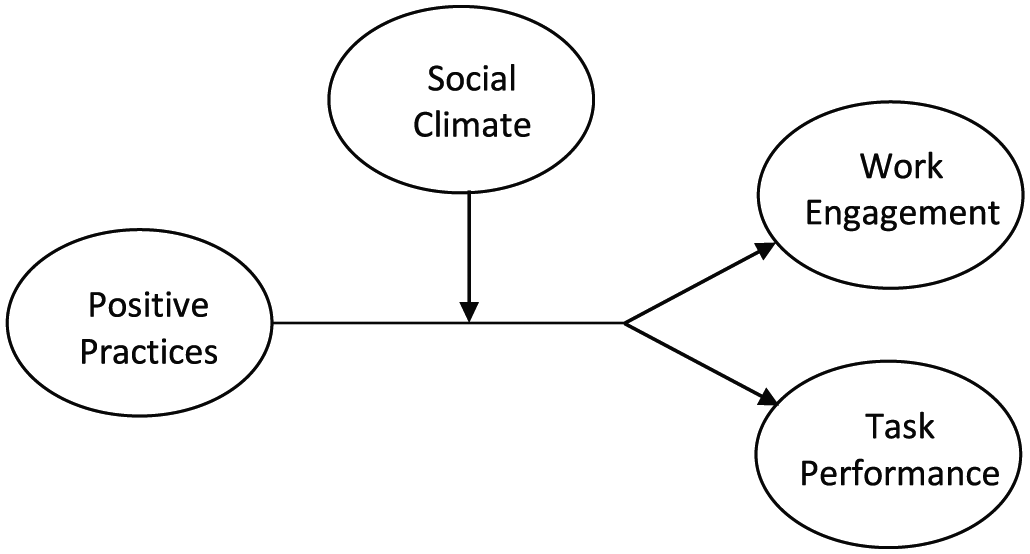
Diagram depicting the relationship between positive practices (respect, care, support, meaning, inspiration, forgiveness) and the outcomes of work engagement and task performance, as mediated by a positive work environment (PWE, or positive social climate)
Method
The project focused on a rapidly expanding gourmet sandwich and salad restaurant chain in southern California named Urbane Café, noted for its “fast, friendly service” and “warm, inviting environment,” one that “cares for [its] employees” (Urbane Café website, http://urbanecafe.com/vision/). Research focused on the nature of positivity in relation to social and service climates in restaurants and the interaction of their team members is valuable for understanding how climate energizes work teams and promotes customer service and satisfaction (Salanova et al., 2005; Schneider, White, & Paul, 1998). The results could be generalizable to other types of service climate organizations.
Sampling and Procedures
The research involved a nonexperimental, cross-sectional study using a voluntary survey questionnaire, including assurance of employee privacy and confidentiality. Surveys were made available to all employees at the 12 Urbane Café locations in southern California (N ≈ 230), including team members, shift leads, and team managers, during the course of a week. The survey included demographic questions concerning gender, age, job tenure, and café location. An HSRB (Human Subjects Review Board) application was submitted and approved prior to commencing the data collection.
Measures
Positive Practices
Cameron et al.’s (2011) 29-item positive practices scale was used to measure positive practices (©Kim Cameron). To develop a valid and reliable instrument, the authors compiled a list of 114 positive organizational practices—“behaviors and attributes assumed to characterize positivity in organizations” (p. 270)—nominated by senior faculty members at the University of Michigan’s Center for Positive Organizational Scholarship and drawn from literature reviews, prior research (e.g., Cameron, Bright, & Caza, 2004), prior measures (e.g., Chun, 2005), and observations of how positivity is practiced in organizations. In two separate studies, exploratory factor analyses revealed six distinct stable dimensions comprising the 29 items: (a) caring (4 items, α = .93, .95), (b) forgiveness (3 items, α = .85, .89), (c) inspiration (3 items, α = .90, .93), (d) meaning (5 items, α = .90, .92), (e) dignity, or respect (7 items, α = .94, .95), and (f) support (7 items, α = .95, .96). (The survey was additionally administered by Cameron et al., 2011, in a variety of other organizations confirming the same factor structure.) The dimensions and items use a 5-point Likert-type scale, ranging from 1 = strongly disagree to 5 = strongly agree. Cameron et al. (2011) did not test specific hypotheses, stating, “not enough information [regarding the relation of positive practices to performance outcomes] is available to formulate precise hypotheses” (p. 269). To my knowledge, this scale has not been used apart from Cameron et al.’s initial studies, so the current study is the first to test hypotheses, based on the current literature. Permission was received from Dr. Kim Cameron to use the scale. Respondents were asked to respond to the positive practice items/statements and rate how they perceive their work team on a scale of 1 to 5, such as “We treat each other with respect,” and “We show kindness to one another.”
Positive Work Environment
To measure positive social climate, Aubé and Rousseau’s (2005) three-item scale for quality of group experience, or group well-being, was used. The measure is a social climate scale that assesses the degree of posivity in work teams, denoting team harmony and friendliness. Scale development and validity entailed a subject matter expert approach involving professors and PhD candidates who formulated items drawn from an analysis of the construct domain for quality of group experience. Aubé and Rousseau (2005, p. 196) found their scale to have excellent reliability (α = .96). The scale is set to a 5-point Likert-type scale, with responses ranging from 1 = not true at all to 5 = totally true. Permission was obtained from Dr. Caroline Aubé to use the scale. Respondents were asked to rate their work team relative to items such as “The social climate in our work team is good” and “In our team, relationships are harmonious.”
Work Engagement
Work engagement was measured with the widely used and “well-validated” Utrecht Work Engagement Scale (UWES; Bakker et al., 2008, p. 190), which was shortened to a nine-item scale (UWES-9) by Schaufeli, Bakker, et al. (2006). The UWES-9 measures engagement along the dimensions of vigor, dedication, and absorption, and factor analysis has supported the three dimensions with Cronbach’s alpha ranging from .81 to .92 in multinational samples (Schaufeli, Bakker, et al., 2006). Validity of the UWES-9 three-factor scale was reported by Schaufeli, Bakker, et al. (2006) and confirmed by Seppälä et al. (2009), who established its “convergent, divergent, and predictive validity” (Hirschi, 2012, p. 482). The nine-item measure (short form) uses a 7-point Likert-type scale, with responses ranging from 0 = never to 6 = every day. Sample items include “At work, I feel bursting with energy” and “I am enthusiastic about my job.” The scale is available at Dr. Wilmar Schaufeli’s website (http://www.wilmarschaufeli.nl/), which grants permission for use of the survey, per conditions fulfilled, such as it being used for noncommercial purposes.
Task Performance
Aubé and Rousseau’s (2005) three-item scale for team performance was used for task performance, which concerns team goal achievement, work quality, and productivity. Scale development and validity employed a subject matter expert method in the same manner as the quality of group experience scale by Aubé and Rousseau. Aubé and Rousseau (2005, p. 196) found the scale to have good reliability (α = .82). The scale is set to a 5-point Likert-type scale, with responses ranging from 1 = not true at all to 5 = totally true. Permission was obtained from Dr. Caroline Aubé to use the scale. Respondents were asked to rate their work team relative to items such as “The members of this team produce good quality work” and “This team is productive.”
The completed questionnaire had a total of 47 items and was designed using SurveyMonkey. 1 Due to limited group e-mail capability among café team members, hard copies of the survey were prepared and delivered to the 12 Urbane Café locations in southern California.
Results
Of the 230 surveys made available at the cafés, 154 completed surveys were collected, with 15 completed surveys lost in the mail, and eight surveys discarded due to incomplete responses. Café managers who administered the surveys indicated that nonparticipating employees primarily chose to use their work breaks for personal intents rather than take a survey but not due to a predisposition against the focus of the survey. Data from the completed surveys (N = 154, 67% response rate) was entered into SPSS 24.0 for analysis, 2 showing a gender distribution of 47% male and 53% female, with age range distributions of 16-20 years at 20%, 21-30 years at 39%, 31-40 years at 24%, and over 40 years at 17%, and job tenure range distributions of 0-1 year at 43%, 1-5 years at 42%, and more than 5 years at 15%. Overall ratings by team member participants for the variables (converting means to percentages) showed positive practices rated at 70%, social climate at 72%, task performance at 78%, and work engagement at 84%. Specific positive practices were rated as follows: respect at 72%, care at 70%, support at 73%, meaning at 68%, inspiration at 67%, and forgiveness at 66%. The correlation and reliability analyses are shown in Table 1.
Descriptive Statistics, Correlation (r), and Reliability (α) Analyses: All Variables.

Note. N = 154. Diagonals (parentheses) are reliability coefficients. Demographics are not shown.
p ≤ .05 (two-tailed). **p ≤ .01 (two-tailed).
The internal consistency reliability values (Cronbach’s α) from Table 1, all greater than .70, showed acceptability for all scales (Hair, Black, Babin, & Anderson, 2010). Each of the bivariate correlations between the positive practice dimensions was significant, as were their relationships to the composite positive practices variable (reflecting all six scales). Correlation between each item and the total score is important (the item–total correlations), for without this correlation, items could be “measuring a different variable” (Cozby & Bates, 2012, p. 99). Each of the six positive practice dimensions showed acceptable alpha values, and the alpha value for the composite positive practices variable revealed a high correlation among the dimensions (.97). This suggests the viability of using the positive practices as a higher order variable in the hypotheses testing, as well as applying the individual scales for selective analyses.
Effect of Positive Practices
From Table 1, the correlation between positive practices and work engagement, though weak (r = .34, p ≤ .01), was significant, and the correlations between positive practices and both social climate (r = .79, p ≤ .01) and task performance (r = .74, p ≤ .01) were moderately strong and significant. Significant correlations were also found between the demographic and outcome variables, notably age was significantly correlated with work engagement (r = .26, p ≤ .01), task performance (r = −.23, p ≤ .01), and social climate (r = −.180, p ≤ .05), while job tenure was significantly correlated with task performance (r = −.19, p ≤ .05) and social climate (r = −.20, p ≤ .05) (correlations for the demographics not shown in Table 1). Gender showed no significant correlation with the outcome variables. Thus, in preparation for testing Hypotheses 1, 2, and 3, the potential confounding effect of the demographic variables was investigated. Both stepwise multiple regression and stepwise backward elimination regression (Girden & Kabacoff, 2011; Roof, 2015) were run to ascertain the potential effects of the demographics on the relationship between positive practices and the outcomes of social climate, work engagement, and task performance (results not shown in Table 1). Consistent with the correlation analysis, gender had no significant effect, and neither age nor job tenure had a significant effect on social climate or task performance. However, with work engagement as the criterion variable, the stepwise analysis showed a significant model when age was added to the regression, R2 = .22, ΔR2 =.10, F(2, 151) = 21.21, p ≤ .001, and significant regression coefficients for both age (β = .33, p ≤ .001) and positive practices (β = .40, p ≤ .001). Although many work engagement studies have not found age to be a confounding variable (Chughtai & Buckley, 2011; Xanthopoulo, Bakker, Demerouti, & Schaufeli, 2009), even when significantly correlated to work engagement (Chan et al., 2017; Joo, Lim, & Kim, 2016), age has been shown to have a potential effect on work engagement (Kooij, De Lange, Jansen, & Dikkers, 2013) and was recently shown to have a significant confounding effect on work engagement (Ugwu & Onyishi, 2018). Thus, hierarchical regression analyses were run to test the relationship between positive practices and social climate, task performance, and work engagement, while controlling for age in each analysis. The results are shown in Table 2.
Hierarchical Regression Analyses: Positive Practices as Independent Variable in Relation to Work Engagement/Task Performance/Social Climate.

Note. N = 154.
p ≤ .05 (two-tailed). **p ≤ .01 (two-tailed). ***p ≤ .001 (two-tailed).
As shown, positive practices was significantly related to work engagement, R2 = .22, F(2, 151) = 21.21, β = .40, p ≤ .001; task performance, R2 = .55, F(2, 151) = 93.08, β = .72, p ≤ .001; and social climate, R2 = .62, F(2, 151) = 124.29, β = .78, p ≤ .001. Thus, Hypotheses 1, 2, and 3 were confirmed, though the effect size for the relation between positive practices and social climate and task performance was much greater than the relation to work engagement. These relationships are depicted in Figure 2. Although age showed significance in direct relation to each of the outcome variables (Model 1 of each analysis), only with work engagement did age show a significant effect as a confounder (β = .33, p ≤ .001). The prior stepwise multiple regression had first entered positive practices into the regression in Model 1, R2 = .12, F(1, 152) = 20.05, β = .34, p ≤ .001; and then added the control variable (age) in Model 2, R2 = .22, F(2, 152) = 21.21, β = .40, p ≤ .001; revealing that the variance, though small, nearly doubled from 12% to 22% when age was added to the regression, while the effect size of positive practices increased from .34 to .40. Age showed a significant effect size in Model 2 (β = .33, p ≤ .001) for both the hierarchical analysis (Table 2) and prior stepwise analysis (results not shown in Table 2) similar to that of positive practices in Model 1 of the stepwise analysis (β = .34, p ≤ .001; results not shown in Table 2).

Diagram depicting the relationship between positive practices and the outcomes of social climate, task performance, and work engagement, along with interrelationships between the outcome variables (all work engagement relationships include control for age).
Hierarchical regression analyses were run to test the moderating effect of social climate on the relationship between positive practices and work engagement and task performance, while controlling for age. The results are shown in Table 3.
Hierarchical Regression Analyses: Social Climate as Moderator Between Positive Practices and Work Engagement/Task Performance.

Note. N = 154.
p ≤ .05 (two-tailed). **p ≤ .01 (two-tailed). ***p ≤ .001 (two-tailed).
The results show that the moderating effect of social climate on the relationships between positive practices and work engagement (ΔR2 = .02, p ≤ .05), though statistically significant, was negligible, while the moderating effect of social climate on the relationship between positive practices and task performance (ΔR2 = .00, p = .65) was not significant. Thus, Hypotheses 4 and 5 were not confirmed.
Positive Practice Dimensions
With Hypotheses 1, 2, and 3, confirmed, multiple linear regression analysis was run to further delineate which positive practice dimensions (respect, care, support, meaning, inspiration, and forgiveness) most strongly predict social climate, work engagement, and task performance. Multiple regression analysis is the preferred method when “the intent of the analysis is to determine whether certain predictor variables explain or account for an outcome measure,” with all variables “entered into the equation simultaneously” (Girden & Kabacoff, 2011, p. 130). The positive practice dimensions were regressed on each of the outcome variables while controlling for age. Table 4 shows the results of the multiple regression analysis, with partial regression coefficients shown for the specific positive practices.
Multiple Regression Results: Positive Practices Dimensions Regressed on Work Engagement, Task Performance, and Social Climate.

Note. N = 154.
p ≤ .05 (two-tailed). **p ≤ .01 (two-tailed). ***p ≤ .001 (two-tailed).
The correlation between specific positive practice dimensions and work engagement from Table 1 showed weak but significant correlations, ranging from forgiveness (r = .21, p ≤ .01) to meaning (r = .42, p ≤ .01), while the hierarchical regression in Table 2 showed a weak but significant coefficient for the positive practices composite variable (β = .40, p ≤ .01). The multiple regression analysis shown in Table 4 revealed a significant model, R2 = .31, F(7, 146) = 9.35, p ≤ .001, with significant standardized coefficients shown for meaning (β = .53, p ≤ .001), which had the predominate association with work engagement, and for inspiration (β = .22, p ≤ .05), which also showed effect. The control variable age also showed significance (β = .30, p ≤ .001).
The correlation between specific practice dimensions and task performance from Table 1 were all reasonably good, ranging from forgiveness (r = .52, p ≤ .01) to respect (r = .72, p ≤ .01), while the hierarchical regression results from Table 2 showed a good and significant relationship between the practices and performance (β = .72, p ≤ .001). The multiple regression analysis shown in Table 4 indicated a significant model, R2 = .57, F(7, 146) = 27.94, p ≤ .001, with standardized coefficients significant for respect (β = .35, p ≤ .05) and inspiration (β = .23, p ≤ .05).
The correlations between the positive practice dimensions and social climate from Table 1 showed better association than the other outcome variables, ranging from forgiveness (r = .65, p ≤ .01) to respect (r = .75, p ≤ .01), while the hierarchical regression results from Table 2 showed that social climate accounted for the highest percentage of variance for the effect of positive practices (62%), with a good and significant coefficient (β = .78, p ≤ .001). The multiple regression results shown in Table 4 reported a significant model, R2 = .63, F(7, 146) = 35.44, p ≤ .001, revealing significant standardized coefficients for the positive practices of inspiration (β = .24, p ≤ .05) and forgiveness (β = .20, p ≤ .05).
Discussion
Positive practices denote virtuous behaviors that promote the best of the human condition, evidenced by a healthy work climate, employee well-being, and positive and exceptional outcomes (Cameron et al., 2011). The current results confirm the effect of positive practices on the positive outcomes investigated in this study but found no moderating effect from social climate. Social climate was found positively related to positive practices (Hypothesis 1) and could serve a partial mediating role with the outcomes in the study, as suggested by the correlation analysis and the significant association between social climate and both task performance (r = .79, p ≤ .01) and work engagement (r = .27, p ≤ .01). Task performance was also significantly associated with work engagement (r = .29, p ≤ .01). To further explore these interrelationships (though not hypothesized), in addition to the analyses involving positive practices (Table 2), additional multiple regression analyses were run to ascertain the relationships between all the outcome variables while controlling for age with work engagement (age did not show statistical significance in the relationship between social climate and task performance). In addition to results in Table 2, there was a moderately strong relationship between social climate and task performance, R2 = .62, F(1, 152) = 245.93, β = .79, p ≤ .001, but a weak relationship between social climate and work engagement, R2 = .16, F(2, 151) = 15.11, β = .32, p ≤ .001, including the reverse relationship between work engagement and social climate, R2 = .13, F(2, 151) = 12.06, β = .34, p ≤ .001, and a weak relationship between task performance and work engagement, R2 = .18, F(2, 151) = 15.72, β = .36, p ≤ .001, as well as the reverse relationship between work engagement and task performance, R2 = .17, F(2, 151) = 16.70, β = .37, p ≤ .001. All the relationships were significant. These relationships are shown in Figure 2 (the partial regression coefficients for work engagement solely reflect its dependent role in relation to the other variables, though work engagement as a predictor was positively related to the other outcome variables with nearly identical coefficients).
Surprising in the analyses was the significant relationship between age and work engagement, R2 = .06, F(1, 152) = 10.562, β = .25, p ≤ .001, which introduced small but significant changes in variance when added to the regression for the effect on work engagement by positive practices, ΔR2 = .10, F(2, 151) = 21.21, p ≤ .001; social climate, ΔR2 = .10, F(2, 151) = 15.11, p ≤ .001; and task performance, ΔR2 = .11, F(2, 151) = 17.78, p ≤ .001. To further explore this, the three dimensions of work engagement—absorption, vigor, and dedication—were regressed on age to reveal a significant model, R2 = .08, F(3, 150) = 5.53, p ≤ .001, with only absorption showing a significant contribution (β = .30, p ≤ .05). With age having an enhancing effect on the relationship between positive practices and work engagement (as noted, the β for positive practices increased from .34 to .40 when age was added to the regression equation), this suggests that age might induce higher levels of immersion and joy for experienced employees who identify with the social benefits of a PWE (Kooij, De Lange, Jansen, Kanfer, & Dikkers, 2011) This was also noted by Kooij et al. (2013), who found that the growth, esteem, and generativity motivations accompanying age have a positive association with work engagement.
With all interrelationships between the variables demonstrating significance, along with the absence of a moderating effect, it would seem that positivity, climate, and performance in work teams have a mutually affective relationship (Hartel, Gough, & Hartel, 2008; Schneider et al., 1998). These relationships suggest that positive virtuous practices in work teams can engender social and team climates that are healthy, harmonious, and positive, further generating factors such as positive identity (Chen, 2014), positive social contagion (Cameron et al., 2011), synergistic teamwork (Salanova et al. 2005), and an upward spiral of good deeds (Fredrickson, 2003), which amplify positive emotions and lead to enhanced performance (Tsai et al., 2007; Cameron et al., 2011).
The weaker linkage between the relationally rich positive practices and work engagement, and similar connection between social climate and task performance, respectively, and work engagement, could suggest that work engagement is not entirely a causal result of employee relational influence but is more related to employee self-concepts. Work engagement concerns employees’ psychological connection to work tasks with antecedents related to personal resources, such as optimism, self-esteem, and self-efficacy, thus establishing employees’ sense of presence in relation to the work task (Bakker et al., 2008; Rothbard & Patil, 2012). The multiple regression results identified the positive practices of meaning (β = .53, p ≤ .001) and inspiration (β = .22, p ≤ .05) as having the primary impact on work engagement. Further regressing the work engagement factors of absorption, vigor, and dedication on the positive practice dimension of meaning revealed a significant model, R2 = .24, F(4, 149) = 13.10, p ≤ .001, with only dedication making a significant contribution (β = .42, p ≤ .01). Regressing the positive practice of meaning (the specific items constituting this item) on work engagement, R2 = .33, F(6, 147) = 12.00, p ≤ .001, indicated that employees seeing the larger purpose in work (β = .39, p ≤ .001) and being elevated by work (β = .18, p ≤ .05) were the primary factors contributing to employees being dedicated and engaged. This suggests that meaning in work, where employees experience work being elevating, renewing, and purposeful (relevant meaning items) is related to employees feeling dedicated to the work task through increased enthusiasm, inspiration, and a sense of accomplishment (dedication items). According to Bakker et al. (2008), dedication means being strongly involved in one’s work through “a sense of significance”—a clear connection between meaningfulness in work and engagement in work (p. 188). The additional contribution of inspiration to work engagement suggests that team members mutually inspire one another in their confidence and identity, for meaningfulness stems from members feeling worthwhile, useful, and valuable (Rich et al., 2010).
The stronger relationship between positive practices and the outcomes of social climate and task performance suggest the possibility of specific virtuous behaviors having a causal effect on team dynamics. Regressing positive practices on the outcome of social climate indicated that inspiration (β = .24, p ≤ .05) and forgiveness (β = .20, p ≤ .05) showed a significant effect. These positive practices concern proactive influence between employees with regard to enthusiasm, employees communicating the good in one another, and employees showing tolerance when mistakes are made, suggesting that a PWE can form from such behaviors. Regressing the positive practice of inspiration on social climate, R2 = .52, F(4, 149) = 41.87, p ≤ .001, showed the effect of specific behaviors on climate, namely, how employees inspire one another (β = .30, p ≤ .001) and communicate the good in one another (β = .44, p ≤ .001), suggesting that employees valuing one another and looking for what is best in one another to affirm, encourage, and inspire, is key in a PWE. Regressing forgiveness on social climate, R2 = .48, F(4, 149) = 17.57, p ≤ .001, revealed that forgiveness of mistakes (β = .43, p ≤ .001) and refusal to blame (β = .27, p ≤ .001) were both highly significant.
The multiple regression analysis of positive practices and task performance, R2 = .52, F(4, 149) = 41.87, p ≤ .001, showed respect to be a primary predictor of performance among the six behaviors (β = .35, p ≤ .05), with inspiration also having a significant effect (β = .22, p ≤ .05). Regressing the respect dimension of positive practices on task performance, R2 = .56, F(8, 145) = 25.24, p ≤ .001, showed significant and primary contribution through items that identified employee trust (β = .28, p ≤ .01), employee confidence (β = .24, p ≤ .01), and employee respect (β = .22, p ≤ .05). Similar to social climate, regressing inspiration on task performance, R2 = .48, F(4, 149) = 36.84, p ≤ .001, found that employees communicating the good they see in one another (β = .38, p ≤ .001) and inspiring one another (β = .29, p ≤ .01) were both significant. This suggests that when employees trust, have confidence in, and respect one another, there is a direct effect on task performance. In an intensive service climate atmosphere, emotional support and care (practices that did not show significant contribution in the regression) may not be as critical as team members respecting and trusting one another in their work tasks, including actions that demonstrate value, appreciation, and gratitude, which could elevate and inspire performance.
Implications for Practice
The current research advocates specific behaviors and routines that coworkers and managers in service teams can employ to promote a PWE and thus enhance work engagement and task performance. Framing these behaviors are the importance of employees finding meaning in their work, experiencing mutual respect and trust in their relationships, and being inspired and charged in their work tasks. The interplay of these dynamics suggests real-world activities that practitioners can utilize to engender positivity in the workplace.
Meaningful work has to do with work being purposeful and significant (Pratt & Ashforth, 2003). Employees finding meaning and value in their work is no longer optional in the workplace (Van den Heuvel, Demerouti, Schreurs, Bakker, & Schaufeli, 2009). However, in an intensive and often routinized café food preparation and service context, such as the cafés investigated in this research project, it can be challenging for team members to discover factors that contribute to meaningfulness of work, such as autonomy and freedom, personal development and self-expression, and growth and goal fulfillment (Cardador & Rupp, 2011). The limitations in task variety that constrain employee autonomy in intense service settings can be very problematic (Coelho & Augusto, 2010). Autonomy is integral to meaningfulness of work (Rosso, Dekas, & Wrzesniewski, 2010) and a primary antecedent of work engagement (Bakker & Demerouti, 2008). Yet the current research found a connection between work meaningfulness and engagement in such a context. Kahn’s (1990) insights regarding personal work engagement explain its feasibility in a demanding team context: Finding psychological meaning and engagement in work goes beyond the task itself but incorporates “rewarding interpersonal relationships with coworkers and clients” that promote “dignity, self-appreciation, and a sense of worthwhileness” (p. 707), as well as members sensing psychological safety through relational interactions that are “supportive and trusting” (p. 708). To enhance meaningfulness in work, managers should never disconnect people from supportive relationships (Bailey & Madden, 2016).
The work meaning derived from team relationships and its influence on engagement inherently involves “display[s] of emotions” with members together feeling “emotionally attached to the task at hand,” where the spreading and sharing of positivity in the team enhances their engagement with work (Torrente, Salanova, & Llorens, 2013, p. 154). Work engagement in teams must take into account the dynamics of group affective tone and emotional contagion (Costa, Passos, & Bakker, 2014), for these processes of emotional contagion in work teams can engender a positive emotional team climate (Hartel et al., 2008). In fact, research has found that strong positive affect will buttress the relationship between meaningfulness and engagement in the work context even in environments where the work itself is not as meaningful (Steger, Littman-Ovadia, Miller, Menger, & Rothmann, 2012). Pratt and Ashforth’s (2003) distinction between meaningfulness in work (the task aspect) and meaningfulness at work (the social aspect) is important here—the latter can contribute to the former. Cooperation between coworkers can lead to “shared meaningful engagement” that elevates workers while energizing their work (Sekerka & Fredrickson, 2010, p. 82) as positive emotions lead to a sense of oneness between coworkers (Waugh & Fredrickson, 2006). This research has confirmed these findings, prioritizing the role of a PWE in facilitating meaning and engagement in intensive team service settings, thus suggesting that appropriate practices that connect workers in a deeper manner can energize and engage workers through the sharing of positive emotions.
In this regard, the current research found task performance specifically connected to employee trust and respect and interactions that engender inspiration and elevation. Employees want to feel both valuable and valued, and when mutual respect and trust are present at both managerial and team levels, employees are able to express themselves without fear of negative consequences—a key to full immersion in the workplace (Rothbard & Patil, 2012). The results additionally demonstrate that a positive team climate involves harmonious relationships characterized by mutual inspiration and forgiveness. Employees encourage, uplift, and draw out the best in one another by focusing on the good, not blaming one another for the bad. The results confirm that in an intensive task environment, team members can mutually inspire one another and promote meaningfulness in work by respecting, trusting, expressing confidence in, and communicating the good they see in one another, which enhances team member dignity and sense of worth. The extra energy, persistence, and dedication that engaged employees invest in their work can be shared and transferred between team members during task accomplishment (Salanova et al., 2005; Torrente et al., 2013). The worst thing that managers can do in an intensive service climate is to isolate team members in a controlled environment with a task-only focus that erodes psychological safety and trust (Rothbard & Patil, 2012). To facilitate work engagement and improved performance, not only should team members be free from controlling perceptions, but barriers to vital, emotional, and caring connections between team members should be removed, such as how the discouragement of fun and play (types that are not detrimental to work tasks) keeps members from feeling comfortable, relaxed, and experience enthusiasm and joy in liking their work (Tse & Dasborough, 2008).
In the current context of study, team managers at Urbane Café work together closely with team members to coordinate and encourage their efforts, also participating in food preparation and customer service. The findings of the study suggest the importance of managerial involvement in how team members influence one another toward greater work engagement through processes of mutual inspiration that entail connection, energy, and elevation. High-quality employee connections imbued with positive regard and emotional engagement (Dutton & Heaphy, 2003) can promote energetic networking (Cross et al., 2003) and a contagion of energy (Quinn, Spreitzer, & Lam, 2012) that elevates and inspires worker performance (Haidt, 2000). In this way, a PWE is created through the reciprocating influence and upward spiral of positive emotions and actions. The positivity of a leader can catalyze this process, for employees can sense the emotions of their manager or supervisor (Barsade, 2002), and they are elevated through their witness of leader-positive behavior (Cameron, 2011). Managers can foster a PWE by modeling for team members how to think and feel more positive, thus being positive energizers who “benefit their organizations by enabling others around them to perform better” (Cameron, 2010, p. 49). Thus, ensuing from this research, the following positive management practices are proposed as a means to enhance positivity in teams and contribute to meaningful work engagement and team performance (Cabrera, 2012; Cameron & McNaughtan, 2014; Rothbard & Patil, 2012):
Managers can encourage team members to focus on the positive by looking for what is good and best, celebrating wins, highlighting team member accomplishments, telling success stories, and prompting the search for solutions rather than dwelling on problems. This includes team members being encouraged toward optimistic thinking, where pessimism is set aside and challenges are reinterpreted as opportunities. Such forward thinking can enhance the meaningfulness of work by granting workers more autonomy in problem solving, thus enhancing energy, flow, and engagement. The findings of this research suggested a connection between workers sensing accomplishment in their work and work becoming more elevating and renewing: that when team members feel more useful, they are also more inspired.
Managers can facilitate a culture of gratitude and appreciation in work teams, leading team members in acknowledging one another for their contributions, expressing thankfulness for accomplishments, and engendering virtuous cycles of honor. In this way, managers lead the way in recognizing the inherent value of their employees. The current research suggested that task performance in teams is enhanced by coworkers communicating the good they see in one another, which managers should model and mentor for team members.
Managers can help team members identify and utilize their strengths by granting them increased autonomy in recrafting job tasks and reshaping their roles and relationships in these tasks to enhance the full potential of their employees, thus instilling greater confidence and meaningfulness in work. The results in this study found employees’ confidence related to their task performance. Managers can expand team member confidence by leveraging and developing member strengths, allowing members to experience more accomplishment and discover greater significance in their work.
Managers can encourage and model forgiveness for mistakes by giving latitude for missteps, engendering a safe psychological climate, and viewing mistakes as opportunities for learning. Thus, managers thwart the blame game that is so demoralizing and defeatist and elicits defensiveness from employees, and thereby encourage team members to engage themselves without fear of negative consequences to their self-image or job status. As discovered in this research, forgiveness is integral to a positive social climate.
Managers can exhibit respect by asking for ideas and opinions and listening to what team members have to say, thus valuing their input and trusting their abilities. Trust is the glue that holds relationships together, and when managers grant and elicit trust in a higher exchange relationship, it promotes collaboration and allows for emotional and social contagion, which can energize, charge, and inspire employees. Higher quality connections are established through managers and coworkers expressing positive regard and taking a mutual interest in one another. The current research indicated that better performance stems from employees trusting and respecting one another in their work tasks.
Managers can help team members recognize the value of their work, even in an intensive service context, by raising their sights to perceive its impact on customers and colleagues. By sharing customer feedback with team members, managers can encourage team members that their efforts are valuable and make a difference. As noted in this study, when work is perceived as significant and purposeful, engagement in work increases.
These and other positive practices specifically geared toward enhancing the engagement and performance of teams are highlighted in the literature (Schneider et al., 1998; Torrente et al., 2013; Tsai et al., 2007; Tse, Dasborough, & Ashkanasy, 2008).
Conclusion
This research study constitutes a finer-grained analysis of positive virtuous practices in the workplace and their relation to organizational climate and the outcomes of work engagement and task performance. How specific virtuous behaviors relate to the formation of a PWE and the resultant effect on workers is strategic, for it is necessary in today’s competitive markets that workplaces pursue exceptional performance at all levels. Organizations that provide customer service face a highly competitive environment, putting much onus on the nature and quality of services provided to customers. A service climate is a “collective and shared phenomenon” that involves both employee and customer perceptions, and positive experiences for both employees and customers are paramount (Salanova et al., 2005, p. 1217). Schneider, Bowen, Ehrhart, and Holcombe (2000) demonstrated that a positive service climate for workers engenders behaviors toward customers that are also positive, resulting in positive customer reports on service quality, which, in turn, leads to greater profits. The current study demonstrates the importance of team members discovering meaning in their work through interaction with other members, involving mutual trust, respect, and confidence, where team members believe the best in one another and tolerate mistakes, thus inspiring and charging one another in their performance. In this manner, positive employee behaviors can enhance both climate and performance.
Limitations in the study include the focus on a single gourmet sandwich and salad restaurant chain, and the use of an instrument for positive practices that was described as “blunt” (Cameron et al., 2011, p. 292), since it produces aggregated ratings (based on it involving perceptions of the organization). This study constitutes the first use of the positive practice dimensions as a single instrument and the scales for hypotheses testing. Possibly, the present study with focus on café work teams has sharpened the instrument and demonstrated more intricate linkage between positive behaviors and worker outcomes.
Future study is needed to show valid and consistent results for the positive practices scale dimensions. Confirmatory factor analysis is needed to establish the validity of the scales and demonstrate that the six positive practice dimensions constitute a higher order variable. More research linking positive practices to attitudinal (e.g., organizational citizenship behavior), attachment related (e.g., organizational commitment and identity), and achievement-oriented (e.g., production and profitability) outcomes are needed to show the viability and practicality of the positive practice instrument. Further study could help delineate positivity with regard to its cognitive, emotive, and volitional aspects and elucidate how positivity enacted through employee attitudes and actions comprises both psychological resources and relational behaviors, including mechanisms for how positivity in employees engenders both a PWE and positive organization. Different types of organizations and work environments should be investigated with regard to how positivity relates to work meaningfulness and its effect on engagement, possibly a comparative analysis between more routinized work environments and work climates that allow greater autonomy. Meaningfulness at work involves relationships, roles, and goals (Cardador & Rupp, 2011), and thus, the characteristics of the job (Hackman & Oldham, 1980) with regard to the variety, identity, and significance of the work tasks (Kahn, 1990) affect members’ sense of agency and opportunity to form high-quality connections with coworkers (Dutton & Heaphy, 2003), thus determining the degree to which positivity can influence the meaningfulness of work. How all these job characteristics interplay in positivity’s effect on work meaningfulness and engagement would be valuable pursuits for future research.
Footnotes
Declaration of Conflicting Interests
The author(s) declared no potential conflicts of interest with respect to the research, authorship, and/or publication of this article.
Funding
The author(s) received no financial support for the research, authorship, and/or publication of this article.