




Abstract
Using data from two waves of the China Health and Retirement Longitudinal Study (N ≈ 5,500), this study used latent class analysis to identify tangible support patterns among Chinese older adults based on types and sources of support. Furthermore, multivariate regression was used to examine the stress-buffering roles of tangible support patterns in the relationships between two stressors (i.e., poor health and functional dependence) and older adults’ subjective well-being (i.e., depressive symptoms and life satisfaction). We found four distinct tangible support patterns (i.e., semitraditional, traditional, formal financial-spousal instrumental, and restricted) among Chinese older adults. Poor health and functional dependence were significantly associated with lower subjective well-being. The moderating role of support differed significantly by patterns. Two patterns, formal financial-spousal instrumental and restricted, mitigated or reversed the negative relationships between both stressors and older adults’ subjective well-being. In addition, the traditional Chinese support pattern reduced the positive relationship between poor health and depressive symptoms. Implications for the well-being of the Chinese older adult population are discussed.
Keywords
Aging is associated with stressors such as health concerns and functional decline (Keller et al., 1989). Both theoretical and empirical research confirmed that high-quality support was important in reducing stressors’ influence on individual’s well-being (e.g., Cohen & Wills, 1985; Krause, 1987, 1990). Tangible support may be particularly vital to buffering deleterious outcomes related to stressful events because it provides solutions to the problems and reduces repeated stress exposure (Cohen & Wills, 1985; Glass et al., 2007). Some studies have found tangible support had a greater protective role for individuals with trauma than intangible support (e.g., Glass et al., 2007). This study, thus, focused on tangible support and its stress-buffering roles among Chinese older adults.
Social support is commonly operationalized based on its type and source (Tardy, 1985). Regarding sources, individuals’ supportive network can be composed of both informal (e.g., kin, significant others) and formal (e.g., professionals, government) sources (Tardy, 1985). In addition, tangible support is commonly classified into financial support (i.e., provision of money or material) and instrumental support (i.e., provision of labor) by type (Kent de Grey et al., 2018; Silverstein et al., 2006). Many previous studies focused on a single dimension of social support and examined the relationship between either types or sources of support and older adults’ well-being (Krause, 1987, 1990; Silverstein et al., 2006). For example, Krause (1990) assessed whether support from formal sources more effectively benefited older adults’ life satisfaction than assistance from informal network members. By contrast, Silverstein et al. (2006) paid attention to support types. However, for different types of support, older adults may have different expectations or preferences for sources; thus, one supportive task may differently affect older adults’ well-being due to various sources (Litwak et al., 2003). Studies examining the effect of sources or types separately cannot adequately capture these differences. In addition, although children were the primary sources of both financial and instrumental support for older adults in traditional Chinese society, older adults in present China are experiencing changes in social support (Chen & Silverstein, 2000; Silverstein et al., 2006). Specifically, current and future generations of older adults are much less likely to rely on adult children’s support due to birth control policies, children’s migration, living arrangement changes, etc. (Chen & Silverstein, 2000; Zhu, 2003). At the same time, these older adults are eligible to receive formal social support services and will be likely to continue to get more due to recent development of professional eldercare services and facilities (Chen & Han, 2016). As a result, current and future generations of older adults may have very different social support patterns than previous generations in China. This study, thus, paid attention to how type and source of support interacted with each other and provided a comprehensive picture of tangible support for the aging population in contemporary China.
China has the largest older adult population in the world and a quickly aging population. In 2018, China had 250 million older adults aged 60 or older (Ministry of Civil Affairs of the People’s Republic of China, 2019), and this number is expected to grow to 487 million by 2053, accounting for 35% of the population in China (Ge, 2014). In addition, the number of older adults dealing with stressors may grow very rapidly because the number of oldest-old adults (aged 80 or older) has grown much faster than the general older adult population in China (Zeng et al., 2002) and oldest-old adults are more likely to experience stressors than their younger counterparts (Lin, 2015). There is a need to uncover tangible support patterns and their impacts on Chinese older adults to develop appropriate supportive systems for the older population and help them deal with stressors. Thus, this study used data from the China Health and Retirement Longitudinal Study (CHARLS) to explore Chinese older adults’ tangible support patterns formed by types and sources and to examine the buffering roles of these patterns in the relationships between poor health and functional dependence and older adults’ subjective well-being. Subjective well-being refers to personal cognitive and affective evaluations of life, which includes both emotional responses to events and cognitive judgments of satisfaction and fulfillment (Diener et al., 1999). Based on this definition, this study used self-reported depressive symptoms and life satisfaction to measure subjective well-being.
Theoretical Considerations and Previous Scholarship
Theoretical Considerations
This study builds on the stress-buffering model (Cohen & Wills, 1985), which posits that stressors may negatively affect individuals’ subjective well-being and social support may reduce the negative impact by leading to more benign appraisal of the stressor and providing solutions to the problems caused by stressors. Based on the stress-buffering model, compared to older adults without tangible support, those who have tangible support may feel less stressed about dealing with stress-provoking situations and events because their supportive network could provide caregiving and monetary help as needed and enhance their perceptions of being supported. Poor health and functional dependence have been regarded as two common stressors in late life resulting in various difficulties and problems that affect older adults’ subjective well-being (e.g., financial strain, loss of everyday living skills; Keller et al., 1989). Although poor health and functional dependence are both indicators of health, they focus on different aspects. Self-reported health reflects older adults’ perspectives on their overall health, whereas physical functioning reflects older adults’ abilities to maintain independence, which has been regarded as a “vital sign” for long-term care (Bierman, 2001). Therefore, the stress-buffering roles of tangible support patterns may differ for functionally dependent older adults compared to older adults with poor health, due to their different needs for long-term care and costs of related services (Lee & Shinkai, 2003). Thus, we examined these two stressors separately in this study.
Our approach to identifying the stress-buffering roles of tangible support patterns among Chinese older adults was also driven by the task-specific model (Litwak et al., 2003). This model emphasizes the functions of different sources of support and posits that help from different sources may be distinguished by their capacity for providing different types of assistance. The task-specific model might be particularly important in the Chinese context. Chinese culture and traditions, specifically the Confucian norm of filial piety (xiao), strongly expect adult children to serve as the primary providers of all types of support for their older parents, and this tradition has also been enforced by law (Chow, 2009). Articles 13 to 19 of the revised Law on Protection of the Rights and Interests of the Elderly (2018–present; Standing Committee of the National People’s Congress, 2018) specify adult children’s duties to take care of their older parents. Spouses are also regarded as appropriate supportive sources, given a marital relationship emphasizes a lifelong commitment to caring for each other (Chan & Chui, 2011). However, spouses cannot replace children’s caregiving roles based in filial piety, and some older adults have reported feeling abandoned when they have to rely on care from other sources or living in nursing homes due to their children’s inability to look after them (Ma et al., 2019; Silverstein et al., 2006). Despite Chinese traditions of depending on family support and Chinese older adults’ preference for children’s instrumental support (Ma et al., 2019), some recent studies found Chinese older adults’ expectations regarding public pension programs were rising along with the expansion of the social welfare system, a decrease in the number of adult children, and a consequent increase in adult children’s financial pressure (e.g., Chen et al., 2019). Such findings indicate that the tangible support patterns of Chinese older adults are experiencing gradual changes. In addition, Chinese older adults’ different attitudes toward financial and instrumental support from formal sources suggest that the effect of tangible support on Chinese older adults may differ by both types and sources.
Previous Scholarship
Although some studies have used typology methods to analyze and depict the complex structures of older adults’ social support patterns, most of these studies primarily focused on older adults’ social network size and supportive sources (e.g., Ellwardt et al., 2016; Park et al., 2013). Less is known, however, about how various types and sources form a multifaceted social support picture, particularly regarding tangible support among Chinese older adults. For example, Park et al. (2013) used marital status, religious services attendance, living arrangements, family and friend support, and social participation as indicators to identify a typology of social networks in older Korean immigrants and found six patterns: diverse, unmarried and diverse, married and coresiding, family focused, unmarried and restricted, and restricted. They found that diverse and married and coresiding patterns were positively associated with self-reported health and negatively associated with depressive symptoms. Some studies accounted for support types, but they only examined support from children (Guo et al., 2012; Silverstein et al., 2010). For example, Silverstein et al. (2010) used samples from six developed countries to explore support patterns and found four intergenerational relationships of older adults: amicable (i.e., high affection and low conflict), detached (i.e., low affection and low conflict), disharmonious (i.e., low affection and high conflict), and ambivalent (i.e., high affection and high conflict).
Many studies have reported that poor health and functional dependence were negatively associated with older adults’ subjective well-being (e.g., Chang-Quan et al., 2010). Some studies, as mentioned, have found older adults who had larger networks and greater variation in supportive sources reported better subjective well-being than those with smaller supportive networks, less variation in support, or both (e.g., Ellwardt et al., 2016; Park et al., 2013). However, studies on the stress-buffering effect of tangible support patterns are very rare, and studies on the stress-buffering effect of social support had inconsistent findings (e.g., Krause, 1990; Mancini & Bonanno, 2006; Yang, 2006). For example, Mancini and Bonanno (2006) reported that marital closeness buffered the negative effect of functional disability on older adults’ mental health, whereas Yang (2006) reported that social support did not have a stress-buffering effect among functionally disabled older adults. Krause (1990) indicated that the inconsistent findings may be due to different support sources and types. It is possible only some support patterns can buffer the stressors’ negative effect on older adults’ well-being.
Present Study
Although some studies used samples from Western societies to investigate the typology of social support and its effect on older adults’ well-being, very few studies have explored Chinese older adults’ social support patterns (Guo et al., 2012). Previous studies have reported cross-national differences in intergenerational support patterns (Silverstein et al., 2010) and their effects on older adults’ well-being (Schwarz et al., 2010), which indicates older adults in China may experience unique social support patterns with various roles in the relationship between stressors and well-being. Our study, thus, used a nationally representative longitudinal sample and latent class analysis (LCA) to identify Chinese older adults’ tangible support patterns and their stress-buffering effect. LCA is a person-centered statistical technique that identifies unobservable subgroups using observed variables (Collins & Lanza, 2010). Different than conventional techniques (e.g., correlation analysis, regression analysis) primarily focused on variables and aiming to examine relationships between them, LCA enables researchers to understand similarities and heterogeneity in the observed sample by revealing underlying constructs and the co-occurring nature of observed variables of interest (Collins & Lanza, 2010). In our case, LCA helped us to identify underlying patterns of older adults’ tangible support in China and categorized our sample into different subgroups based on these patterns.
This study had three aims: (a) identify tangible support patterns among Chinese older adults based on types and sources using an LCA approach; (b) examine the associations between two stressors for Chinese older adults (i.e., physical health and functional dependence) and their subjective well-being (i.e., self-reported depressive symptoms and life satisfaction); and (c) explore whether and how various tangible support patterns play buffering (moderating) roles in the relationship between stressors and subjective well-being. Guided by this theoretical framework, empirical evidence, and their specific applications in the Chinese context, we expected that (a) LCA would uncover different patterns of tangible support based on types and sources among Chinese older adults; (b) poor physical health and functional dependence would be associated with more depressive symptoms and lower life satisfaction among Chinese older adults; and (c) tangible support patterns characterized by traditional involvement with support from family, children in particular, and/or formal financial support would more strongly buffer the negative relationships between stressors and subjective well-being than other support patterns.
Method
Data
This study used data from the CHARLS, a longitudinal national survey conducted by Peking University that aimed to collect a nationally representative sample of Chinese residents aged 45 or older to serve the needs of scientific research on older adults in China. CHARLS used a probability sampling strategy and collected data through face-to-face interviews with 17,500 respondents from 450 villages or resident communities in 28 provinces in 2011 and reinterviewed them in 2013. We included respondents who were aged 60 or older in 2011 and participated in both 2011 and 2013, with a total survivor sample of 6,566 Chinese older adults.
Measures
Subjective well-being
Subjective well-being was measured by two indicators from the 2013 wave: depressive symptoms and life satisfaction. Respondents were asked to answer a shortened Center for Epidemiologic Studies Depression Scale with 10 questions (e.g., “I felt fearful,” “My sleep was restless”) to rate how often during the past week they experienced depressive symptoms (Radloff, 1977). The total score ranged from 0 to 30, with higher scores representing more depressive symptoms. Cronbach’s alpha for the 10 items was .76, indicating an acceptable level of internal consistency.
CHARLS measured life satisfaction by asking respondents: “How satisfied are you with your life?” Participants had five possible responses, ranging from 1 (completely satisfied) to 5 (not at all satisfied). In our analyzed sample, only 2.8% and 2.3% of the older adults answered completely satisfied and not at all satisfied, respectively. Following previous studies (e.g., Zhou & Qian, 2008), we created a dummy variable with a value of 1 if the participant chose completely satisfied or very satisfied and 0 otherwise to address the sample skewness. We used both dummy and ordinal life satisfaction variables to conduct the analyses and found very similar results. However, both of our dependent and independent variables had multiple categories, making it difficult to interpret the results based on multiple group comparisons. To enhance interpretability, we decided to present results using the dummy variable for life satisfaction.
Stressors
Two stressors were measured in CHARLS: poor health and functional dependence. In addition to the conceptual differences between the two measures as previously indicated, Cramer’s V coefficient between poor health and functional dependence was 0.23 in our sample, which suggests a relatively small to moderate association. We thus examined the support patterns’ stress-buffering effect for these two stressors.
Poor health was assessed by self-reported health status using a question, “Would you say your health is excellent, very good, good, fair, poor, or very poor?” Respondents who chose poor or very poor were regarded as having poor health (with a value of 1), and the rest were regarded as having nonpoor health (with a value of 0).
Functional dependence was measured by an index assessing the degree of limitation in performing six activities of daily living: (a) dressing, (b) bathing or showering, (c) eating, such as using chopsticks, (d) getting into or out of bed, (e) using the toilet, including getting up and down, and (f) controlling urination and defecation. For each item, respondents had four options: (1) No, I don’t have any difficulty; (2) I have difficulty but can still do it; (3) Yes, I have difficulty and need help; and (4) I cannot do it. Respondents who chose the latter two options for any item were regarded as functionally dependent (with a value of 1), and the rest were regarded as functionally independent (with a value of 0).
Tangible support
CHARLS included two types of tangible support: financial support and instrumental support. Thus, we had two groups of variables for tangible support, and each group included variables indicting having that type of support from various sources.
Financial support
We defined three nonexclusive sources of financial support—financial support from children, other informal sources, and formal sources—by using all available questions on financial support in CHARLS, including a question asking for participants’ primary sources of financial support with response options of children, others, public pension, private pension, and savings, and questions asking whether participants received financial support from children, grandchildren, nonresident relatives, nonresident nonrelatives, and pension in the past year. Specifically, we defined having financial support from children if the participant reported having children as a primary source of financial support or receiving any financial support from children or grandchildren in the past year. Similarly, a participant was deemed to have financial support from other informal sources if choosing others as primary source of financial support or receiving any financial support from nonresident relatives or nonrelatives (e.g., friends) in the past year. We defined having financial support from formal sources if a participant received a public pension or private pension as the primary source of financial support or received any pension in the past year.
Instrumental support
We defined sources of instrumental support—spouse, children, other informal sources, and formal sources—using the same logic that guided the financial support variables. We used questions asking respondents whom most often helped them or would help them when needed with daily activities, with response options of spouse, mother, father, mother-in-law, father-in-law, child, sibling, sibling of spouse, brother-in-law, sister-in-law, spouse of child, grandchild, other relative, paid helper, volunteer or employee of facility, other person, and no one. Participants could choose up to three people. We regarded an older adult to have instrumental support from spouse if they chose spouse; to have instrumental support from children if they chose child, spouse of child, or grandchild; to have instrumental support from other informal sources if they chose mother, father, mother-in-law, father-in-law, sibling, sibling of spouse, brother-in-law, sister-in-law, other relative, or other person; and to have instrumental support from formal sources if they chose paid helper or volunteer or employee of facility.
Consequently, we had seven nonexclusive dummy tangible support variables—three financial support variables and four instrumental support variables. These variables were used to conduct LCA to identify older adults’ tangible support patterns.
Sociodemographic characteristics
Building on previous literature (e.g., Cong & Silverstein, 2008; Mao & Han, 2018), this study included characteristics that are important to older adults’ subjective well-being. These characteristics from the 2011 wave included marital status, age, gender, hukou (China’s family registration program) status, education level, and number of living children. Also, cognitive function has been repeatedly found to be a determinant of older adults’ subjective well-being (e.g., Langa et al., 2009) and mattered to older adults’ health (Cigolle et al., 2007). Thus, we included a subset of the Telephone Interview of Cognition Status to measure respondents’ mental intactness and episodic memory in our models to prevent spurious relationships caused by cognitive function. Mental intactness was measured by three groups of items (Cronbach’s alpha = .80): the serial sevens test (e.g., “What does 100 minus 7 equal?”), time orientation (e.g., “what day is today?”), and picture drawing. Episodic memory was measured by immediate and delayed recall of 10 nouns (Cronbach’s alpha = .79). Scores of these two measures ranged from 0–11 and 0–20, respectively, with higher scores indicating better cognitive function.
Analytic Strategy
We conducted LCA in Mplus 7.4 to identify tangible support patterns and regression analyses in Stata 14.0 to investigate the moderating role of support in the relationship between stressors and subjective well-being. Specifically, we used LCA to identify and describe underlying patterns of tangible support based on types and sources (Muthén & Muthén, 2017). LCA can help identify underlying subgroups in which individuals share similar characteristics in observed data, thus allowing examination of older adults with similar patterns of tangible support types and sources (Collins & Lanza, 2010). As addressed in the Measures section, support types and sources were treated as nonexclusive dummy indicators, including financial support from children, other informal sources, and formal sources; and instrumental support from spouses, children, other informal sources, and formal sources. An exploratory approach was conducted to estimate two to nine latent classes. We determined the final number of latent classes based on agreement with model interpretability and statistical model fit indexes including the Akaike information criterion (AIC), Bayesian information criterion (BIC), adjusted BIC, entropy statistics, Lo-Mendell-Rubin (LMR) test, the sample size of the smallest class, and mean responses to each indicator by group (Collins & Lanza, 2010). Once the latent class model was identified, we assigned meanings to each class based on the types and sources of tangible support. A new dataset was then developed, including latent classes and variables necessary in the follow-up regression models.
Identified tangible support patterns were then examined for their buffering roles in the relationship between stressors and subjective well-being among Chinese older adults in two steps. First, we used ordinary least squares and logistic regression analyses to examine the relationships between the stressors and (a) depressive symptoms and (b) life satisfaction. Second, the buffering effects of tangible support patterns was examined by adding the interaction terms between stressors and categorical support pattern variables. Our analyses were weighted using CHARLS-created individual sampling weights with nonresponse adjustment. This set of weights was constructed from the inverse of the individuals’ selection probabilities and the inverse of individuals’ response probabilities, which enabled our sample to represent the general older adult population in China (Zhao et al., 2013). In addition, to ascertain the proper temporal sequence, we drew the independent variables (i.e., poor health and functional dependence), moderators (i.e., tangible support patterns), covariates (e.g., age), and baseline depressive symptoms and life satisfaction from the interviews in 2011 and the dependent variables (i.e., depressive symptoms, life satisfaction) from the 2013 survey wave.
All variables had missing rates of 10% or less. We used Little’s test and significance tests (t-tests for continuous variables and chi-square tests for categorical variables) to examine the pattern of missing cases (Garson, 2015). The results from Little’s test (p < .001) rejected the hypothesis of missing completely at random (MCAR). In addition, Appendix Table A1 presents the comparisons between older adults with and without missing data on outcome variables. We found that respondents with missing values on outcome variables were significantly older, had significantly poorer cognitive function, and were more likely to be illiterate and live in rural areas. These significant differences indicated that missingness was significantly associated with observable variables, which suggests that outcome variables were missing at random (MAR, not MCAR; Garson, 2015). Thus, we used full information maximum likelihood (FIML) estimation while conducting LCA in Mplus and multiple imputations while performing regression analyses in Stata to account for missing data.
In Mplus, FIML directly estimates parameters using all available information already contained in the incomplete data. Because FIML did not alter or impute data, in Stata, we further conducted multiple imputation (via the “ice” command) to handle missing data in the follow-up regression analyses. The fraction of missing information (FMI) was about .10. Thus, we decided to have 20 imputed datasets according to recommendations on number of imputations for data with a small FMI (Graham et al., 2007). Finally, using imputed outcome values in analysis would add needless noise to estimates (von Hippel, 2007). Thus, we excluded cases with missing information on outcome variables from the analyses to improve estimating accuracy. The final analyzed sample size was 5,320 for depressive symptoms and 5,809 for life satisfaction.
Results
Descriptive Statistics
Table 1 presents sociodemographic characteristics, tangible support types and sources, depressive symptoms, and life satisfaction by two stressors (i.e., poor health and functional dependence). Half of the respondents were male. The average age was 68. Most of our respondents were married, registered in a rural area, and had an educational attainment of primary school or below. About 35% and 9% of the respondents reported poor health and were functionally dependent, respectively. Descriptive statistics in Table 1 suggest that older adults with stressors tended to have relatively disadvantaged sociodemographic characteristics (e.g., poorer cognitive function and lower education levels) compared to their counterparts. In addition, older adults with poor health and who were functionally dependent reported more depressive symptoms compared to their corresponding counterparts. Those who had poor health were also less likely to report being satisfied with their lives. These descriptive statistics suggest that having stressors might be related to different sociodemographic characteristics that tend to be associated with varying subjective well-being, and older adults’ tangible support patterns might matter to these relationships. We turned to LCA to identify older adults’ tangible support patterns and regression analyses to examine these patterns’ moderating roles in the links between stressors and subjective well-being, controlling for sociodemographic characteristics.
Sociodemographic Characteristics, Tangible Support, Psychological Well-Being, and Life Satisfaction by Stressors.

Note. Standard deviations are in parentheses. Information presented here includes all respondents regardless of whether they had missing values in outcome variables because some older adults might have reported psychological well-being but not life satisfaction, and vice versa. Score of mental intactness ranged from 0 to 11; score of episodic memory ranged from 0–20; score of depressive symptoms ranged from 0–30.
p < .05. **p < .01. ***p < .001.
Latent Class Model of Tangible Support Patterns among Chinese Older Adults
We present the model selection criteria for two to nine latent classes in Table 2. We found that the p-values of the LMR test were significant from the two-class solution to the five-class solution, except for the four-class solution, indicating that the five-class solution fit better than the four-class solution or six-class solution (p < .01). The higher entropy of the five-class solution also indicated a better class separation compared to the four- and six-class solutions. Yet a closer investigation of the item probabilities indicated that the identified five and four classes had similar patterns of tangible support types and sources. In addition, the five-class solution included a latent class representing a small percentage of the sample (<5%), which may not have sufficient power to detect differences among classes (Nylund et al., 2007). The four-class solution had relatively small AIC, BIC, adjusted BIC, and reliable entropy (>.60). Based on these factors and examination of the substantive meanings of the classes, we retained the four-class model to indicate different patterns of tangible support types and sources.
Fit Statistics for Latent Class Solutions.
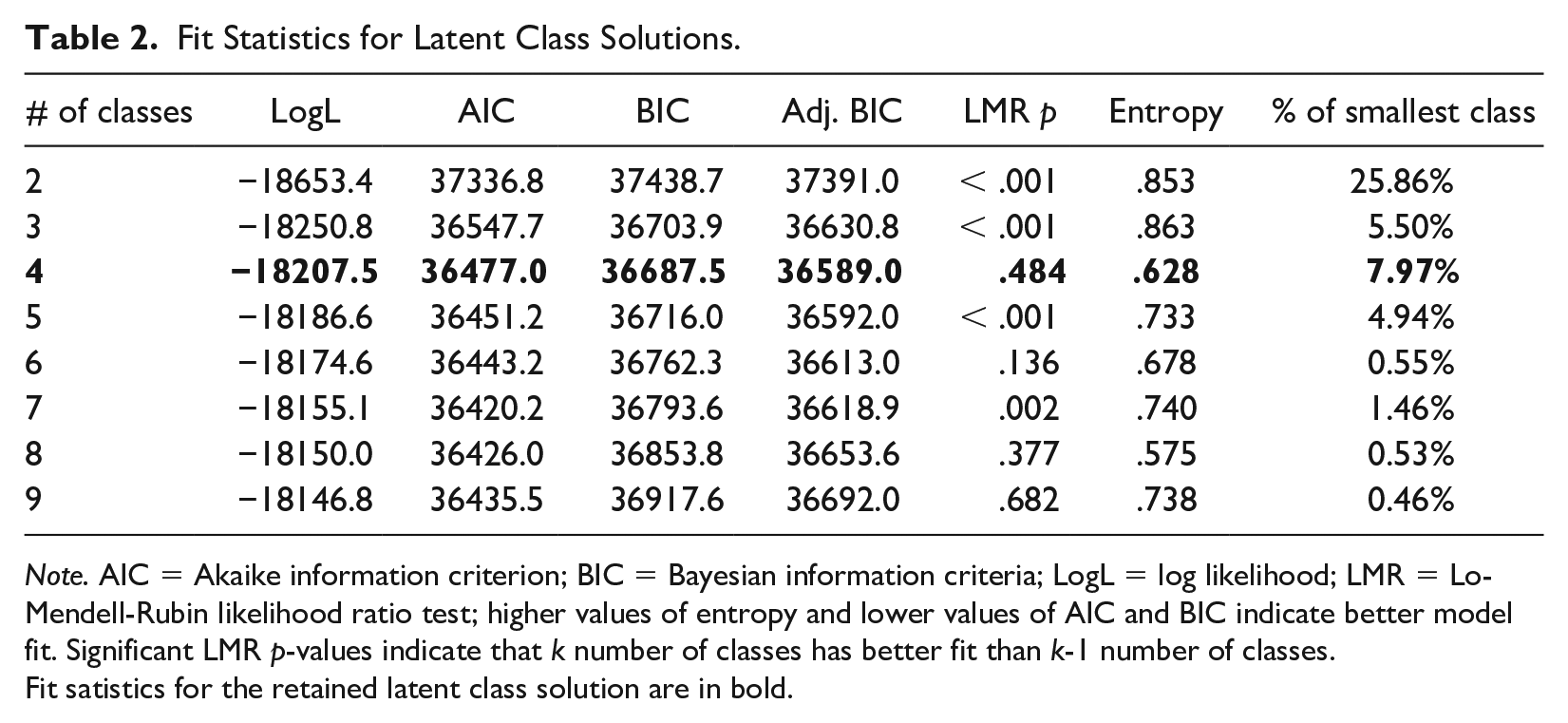
Note. AIC = Akaike information criterion; BIC = Bayesian information criteria; LogL = log likelihood; LMR = Lo-Mendell-Rubin likelihood ratio test; higher values of entropy and lower values of AIC and BIC indicate better model fit. Significant LMR p-values indicate that k number of classes has better fit than k-1 number of classes.
Fit satistics for the retained latent class solution are in bold.
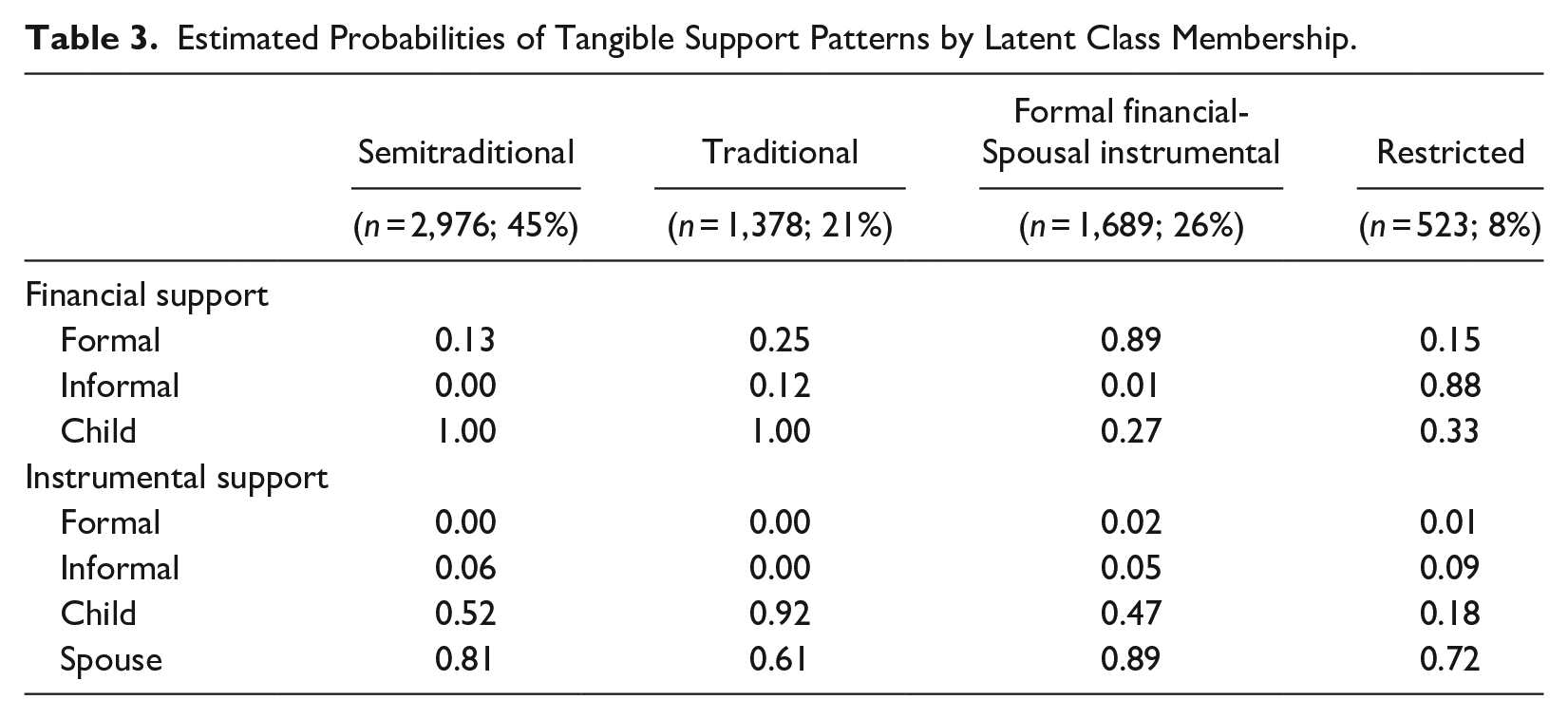
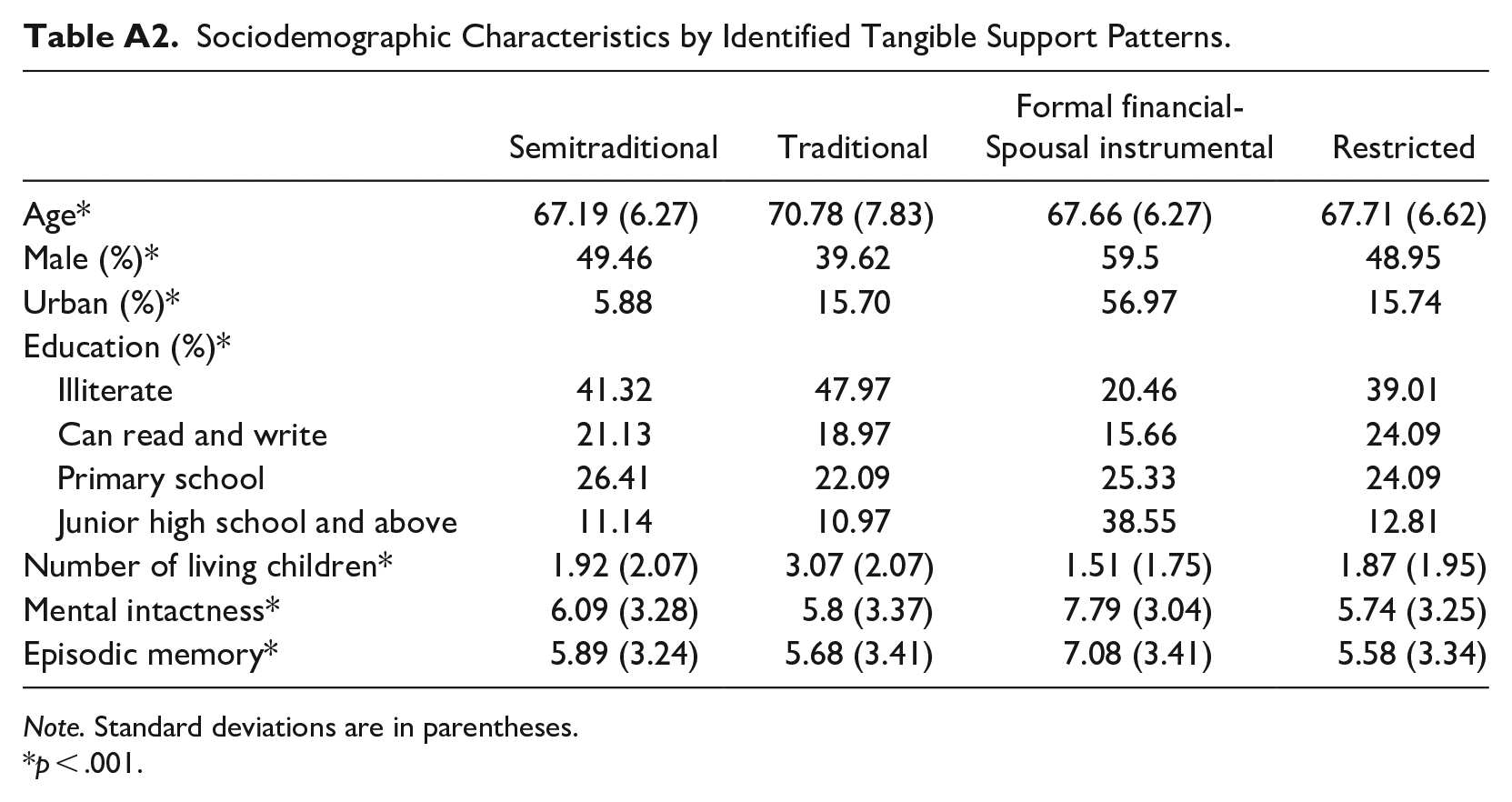
Table 3 shows the final four tangible support patterns after fitting the latent class model to the observed data. Each group exhibited a unique pattern of support types and sources. Pattern shown in the first column reflected older adults with a semitraditional support pattern (n = 2,976, 45%). Although these older adults received monetary help from adult children (1.00) as Chinese tradition requires, their probability of receiving children’s instrumental support was only 0.52, even lower than for the total sample. The second pattern was referred to as the traditional support pattern (n = 1,378, 21%) and featured older adults who primarily relied on children for both financial (1.00) and instrumental support (0.92); their probabilities of receiving tangible support from nonchild sources were lower than for the total sample. The third pattern was identified as the formal financial-spousal instrumental support pattern (n = 1,689, 26%). Older adults with this pattern primarily received financial support from formal sources (0.89) and instrumental support from spouses (0.89), whereas their probability of receiving tangible support from children or informal sources was relatively low. The fourth pattern was labeled restricted support pattern (n = 389, 6%). Older adults with the restricted support pattern had the highest probability of receiving financial support from informal sources (0.88), and they were much less likely to receive financial support from either children or formal sources than other older adults in the sample. It is common among older adults in Asian societies to depend on nonfamily informal supportive sources, such as friends and neighbors, to compensate for the lack of family members (Tang, 2009). The high probability of receiving financial support from informal sources in the restricted support pattern was probably related to insufficient monetary help from children and formal sources. In addition, their probabilities of having instrumental support from all four sources were extremely low or lower than for the total sample, indicating restricted support resources. These four groups differentiated older adults significantly in terms of sociodemographic characteristics, as shown in Appendix Table A2.
Estimated Probabilities of Tangible Support Patterns by Latent Class Membership.
Regression Analyses of Tangible Support Patterns’ Stress-Buffering Roles
Table 4 shows the regression results of the stress-buffering effect of tangible support patterns. Unstandardized estimates were reported. Model 1 presents regression estimates of the relationships between stressors (i.e., poor health and functional dependence) and older adults’ subjective well-being (i.e., depressive symptoms and life satisfaction), controlling for tangible support patterns and sociodemographic characteristics. As expected, poor health (b = 1.14, p < .001; b = –.25, p < .001) and functional dependence (b = .19, p < .05; b = –.07, p < .01) were significantly associated with more depressive symptoms and lower life satisfaction, respectively. In addition, older adults with the traditional support pattern (the reference group) reported fewer depressive symptoms than their counterparts with other patterns. The semitraditional support pattern was associated with better life satisfaction than the traditional one. These findings suggest the importance of children and potential differences in the stress-buffering effect of various tangible support patterns.
Stress-Buffering Effect of Tangible Support Patterns.
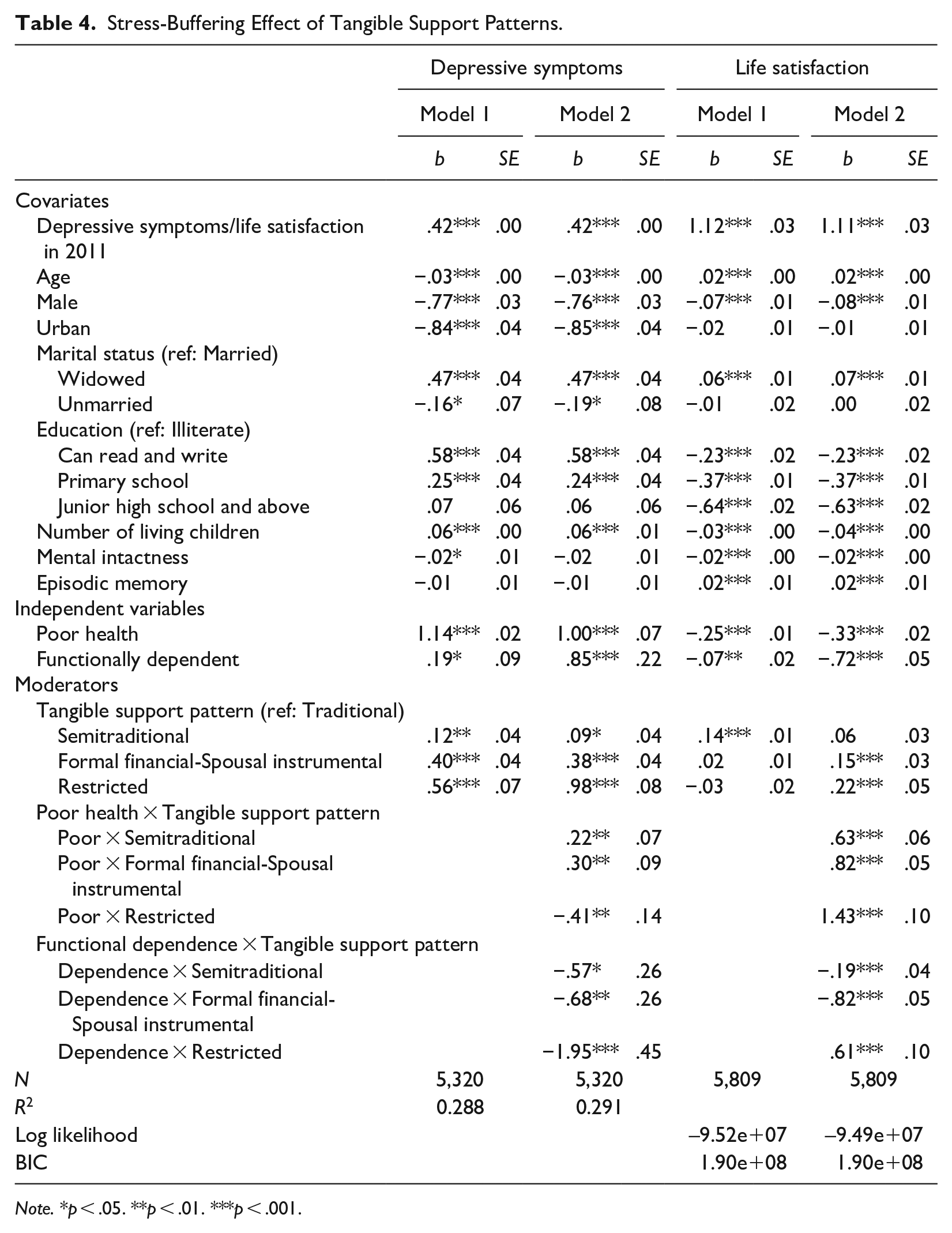
Note. *p < .05. **p < .01. ***p < .001.
Model 2 in Table 4 presents the regression estimates regarding the moderating effect of tangible support patterns. Despite the small increments in model fit indexes, nearly all estimates of interactions were significant. The likelihood ratio tests comparing Model 1 and 2 for both depressive symptoms (χ2 = 2.23e+5, p < .001) and life satisfaction (χ2 = 4.89e+5, p < .001) were significant, suggesting Model 2 fit the data significantly better than Model 1. These results indicate that tangible support patterns played small but significant moderating effects in the relationship between stressors and older adults’ subjective well-being.
To provide a clear picture of the stress-buffering roles of various tangible support patterns, Figures 1 to 4 illustrate the relationships between the stressors and subjective well-being by different tangible support patterns, holding all other variables at their means. Specifically, Figures 1 and 2 present the moderating effect of support patterns on the relationships between poor health and depressive symptoms and life satisfaction, respectively. Figure 1 indicates that the traditional support pattern and restricted support pattern mitigated the positive relationship between poor health and depressive symptoms. Figure 2 indicates that the negative relationship between poor health and life satisfaction was mitigated by the formal financial-spousal instrumental support pattern and restricted support pattern. Similarly, Figures 3 and 4 illustrate the moderating effect of support patterns on the relationships between functional dependence and subjective well-being. We found the positive relationship between functional dependence and depressive symptoms was slightly reduced among older adults with the formal financial-spousal instrumental support pattern, and the association between functional dependence and life satisfaction was reversed for these older adults. In addition, the relationships between functional dependence and depressive symptoms and life satisfaction were reversed by the restricted support pattern.
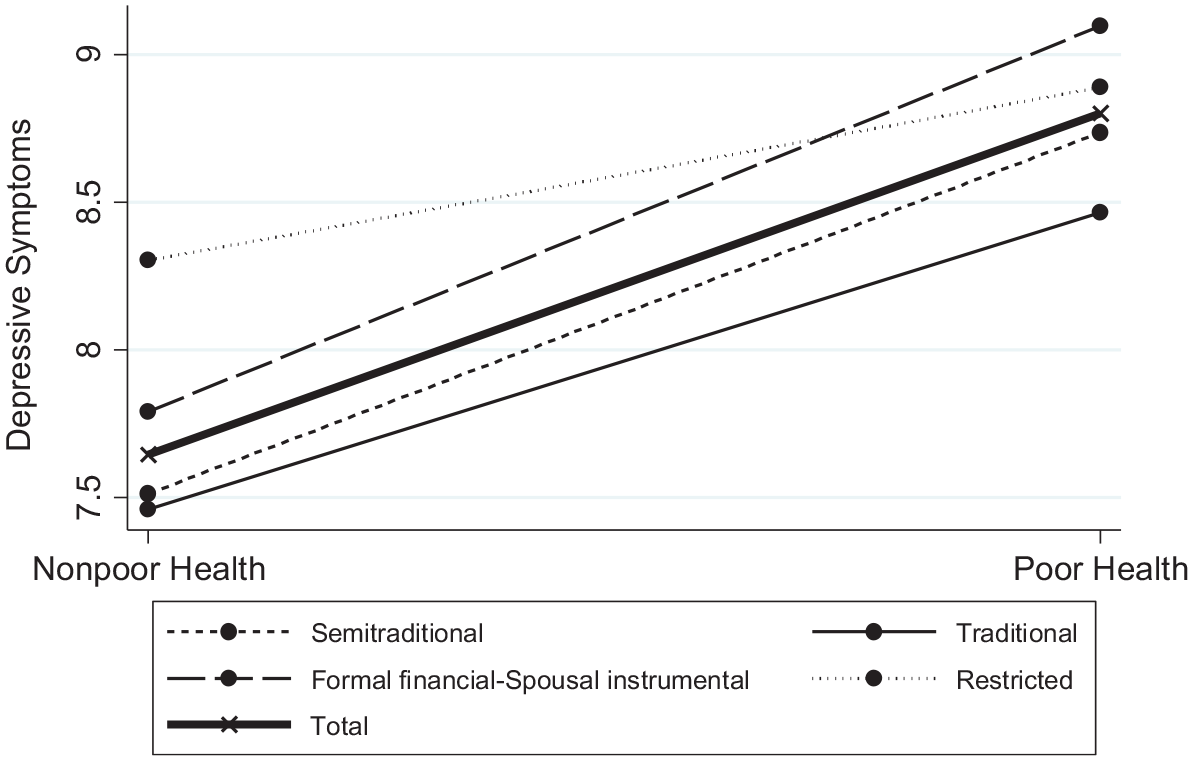
Moderating effect of tangible support pattern between poor health and depressive symptoms.

Moderating effect of tangible support pattern between poor health and life satisfaction.
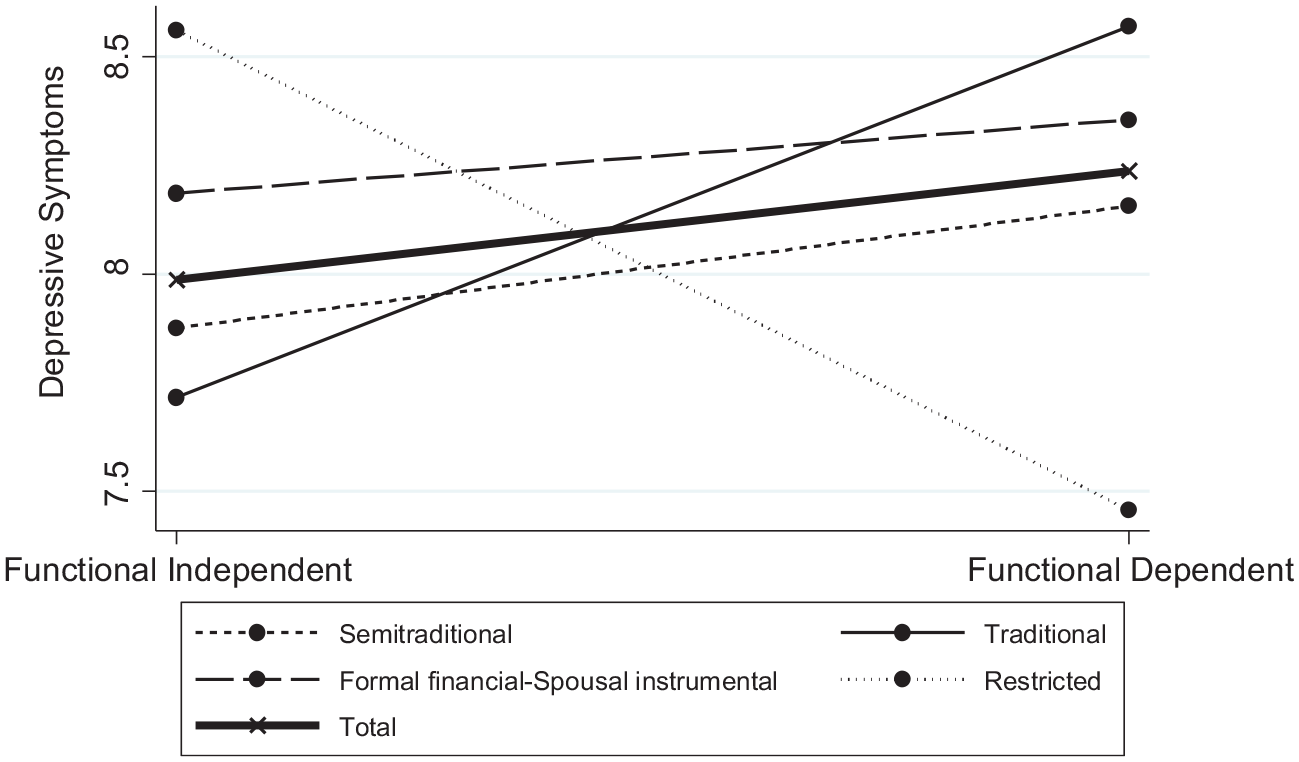
Moderating effect of tangible support pattern between functional dependence and depressive symptoms.
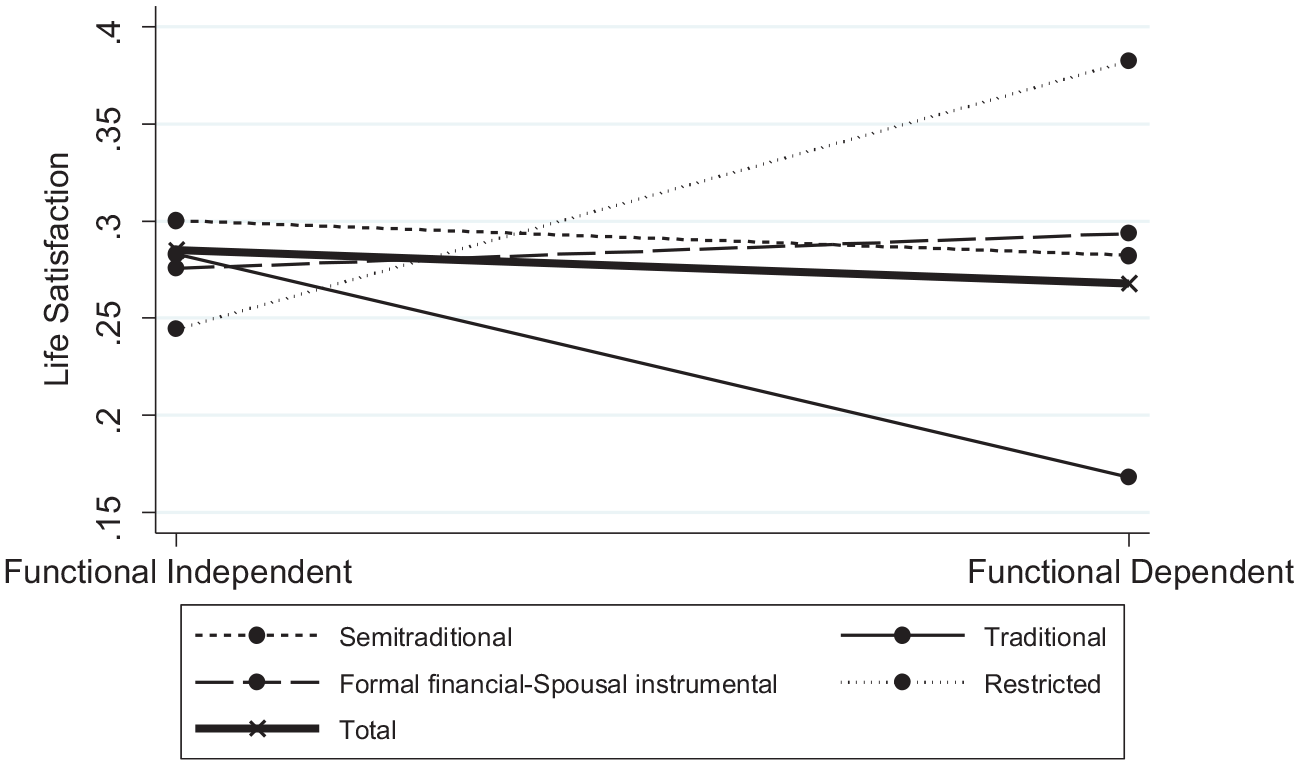
Moderating effect of tangible support pattern between functional dependence and life satisfaction.
Discussion
To capture a comprehensive picture of tangible support among older adults in China, we examined tangible support patterns by incorporating types and sources from a large national longitudinal dataset. Our results indicated four distinct tangible support patterns (i.e., semitraditional, traditional, formal financial-spousal instrumental, and restricted) among Chinese older adults, with each representing a unique arrangement of tangible support for older adults. We further examined the stress-buffering roles of these support patterns. Our findings suggest that poor health and functional dependence were significantly associated with lower subjective well-being, and some tangible support patterns mitigated or even reversed the links between stressors and subjective well-being. Notably, our results also highlight variations in the role of tangible support, depending on patterns of support and types of life stressors.
Chinese Older Adults’ Tangible Support Patterns
Our LCA identified three tangible support patterns in addition to the traditional support pattern, which revealed the substantially changing role of traditional support in the changing social and cultural context of China. Older adults with these three support patterns, accounting for 79% of the sample, no longer chiefly relied on children’s instrumental support. In addition, older adults with the formal financial-spousal instrumental support pattern or restricted support pattern did not have children as their primary sources of financial support. These findings are consistent with previous studies emphasizing the impact of societal changes on older adults’ social support in contemporary China (e.g., Chen & Silverstein, 2000; Silverstein et al., 2006). Relying on children for all types of support has become an unattainable traditional ideal for most Chinese older adults because of the decrease in the number of children and the prevailing trend of living apart from children in different neighborhoods, provinces, or even countries (Dykstra, 2007; Mao & Han, 2018). At the same time, older adults with the formal financial-spousal instrumental support pattern received financial support primarily from formal sources. Although these older adults only accounted for 26% of the sample, this pattern echoes the development of social welfare for older adults, particularly the expansion of pension system, in recent decades (Liu & Sun, 2016).
Besides the social welfare system, China has developed its eldercare services industry for more than 2 decades. Some scholars found that hiring paid caregivers and receiving care services from formal sources had become common practices for older adults in some first-tier cities (Chen & Han, 2016). Nevertheless, the probability of receiving formal instrumental support was equally extremely low across all patterns (<2%). Possibly, older adults or their family members preferred domestic instrumental support rather than formal instrumental support due to traditional norms (Chow, 2009). In addition, other studies have suggested that older adults tend to avoid intimate contact or bodily exposure (i.e., assistance with toileting) with people with whom they do not have an intimate relationship (Inoue et al., 2006). The extremely low proportion of formal instrumental support may also indicate the uneven development of eldercare services in different areas in China. In many places, particularly rural ones, formal instrumental support may be still not available or cannot meet older adults’ needs.
The underdeveloped formal tangible support system, combining with the erosion of adult children’s caregiving capacities, raises the concern of lack of support among some Chinese older adults. The restricted support pattern in our study featured low levels of support from children and formal sources, and older adults with this pattern reported more depressive symptoms than their counterparts with other support patterns. Lack of support likely caused problems and difficulties in their later lives and thus, somewhat negatively affected their well-being, which has been repeatedly found in previous studies (e.g., Ellwardt et al., 2016; Park et al., 2013). These findings address the importance of developing a formal supportive system as a replacement or at least a supplement to family caregivers and ensuring older adults receive adequate support resources. Pension plans and eldercare services should be expanded to support the whole Chinese older adult population, regardless of socioeconomic status and place of residence.
In addition, the fact that older adults across the three nontraditional tangible support patterns depended heavily on instrumental support from spouses (72%–89%) highlights the need to develop policies and programs to support spousal caregivers in China. Caregiving spouses are probably of a similar age as older adults who need care and have health problems as well, and they have been found to be at high risk of perceived burden and psychological distress (e.g., Hong & Kim, 2008). Adequate support and tangible resources are needed to relieve spousal caregivers’ burden and improve their well-being. For example, professionals (e.g., psychology practitioners, social workers) could develop interventions and programs to improve spousal caregivers’ knowledge and skills regarding time management and coping strategies for stress.
Stress-Buffering Roles of Tangible Support Patterns
Our regression analyses found some tangible support patterns showed buffering or even reversed roles in the relationship between life stressors and subjective well-being, which is consistent with previous studies (e.g., Krause, 1987, 1990; Mancini & Bonanno, 2006) and confirmed the stress-buffering model in the Chinese older population (Cohen & Wills, 1985). However, we surprisingly found that although older adults with support patterns characterized by high involvement with family caregivers reported better subjective well-being than their counterparts, these patterns did not show better stress-buffering effects. The semitraditional support pattern did not buffer any link in our study, and the traditional support pattern only slightly mitigated the positive relationship between poor health and depressive symptoms. These mixed findings suggest that support patterns providing solutions to the problems are more effective than patterns following Chinese traditions for older adults facing stressful events. In our case, the formal financial-spousal instrumental support pattern exhibited a better stress-buffering effect than the semitraditional and traditional support patterns. It might be because formal financial support mitigated the negative stressors’ effect by alleviating financial burdens not only for older adults, but also for their family members.
Further, the buffering effects of formal financial-spousal instrumental support pattern differed by stressors. This pattern reduced the negative associations between stressors and subjective well-being, and its stress-buffering effect was smaller for poor health than for functional dependence. These findings may indicate that a support pattern may be more appropriate for certain conditions because they can more effectively buffer certain stressors. Recent national data in China indicated that almost all older adults were covered by basic medical insurance, which paid for part of their health care services and expenses (e.g., medical consultation and medication costs; Center for Health Statistics and Information, 2015). The financial burden of older adults with poor health could be largely alleviated by universal medical insurance; therefore, other formal financial support may not play a critical role in addressing their financial strains. In contrast, older adults with functional dependence require long-term care services, which are almost completely paid for by older adults and their families. Xu (2015) surveyed functionally dependent older adults from nine provinces in China and found most participants were unable to afford these services. Having formal financial support, thus, may be particularly important in alleviating the heavy financial burden and economic worries of functionally dependent older adults and reducing the negative impact of functional dependence on their subjective well-being. Our findings call for targeted policies that could adopt different approaches for older adults with different stressors. For example, in this case, policymakers should invest more in social safety nets and develop financial aid programs for older adults with functional limitations.
In addition, the relationships between stressors and Chinese older adults’ subjective well-being were mitigated or even reversed among older adults with the restricted support pattern. However, these older adults had relatively low subjective well-being, particularly in conditions without stressors. The mitigating and reversing effects are possibly because they have become used to having restricted support resources as a stressful living condition and developed coping skills (Dienstbier, 1992). Also, support seeking is an important coping mechanism for stressful life events (Wills, 1987). Compared to older adults without stressors, those with stressors may be more likely to ask for help and thus, receive more support resources such as more frequent visits and assistance. In other words, the negative effect of stressors on the well-being of these older adults may be buffered by their high resilience, effective coping strategies, or increased access to supportive resources rather than the restricted support pattern.
Limitations
Several limitations of this study deserve attention. First, although we used two indicators as proxies for older adults’ subjective well-being, our analyses used self-reported depressive symptoms and a single question to determine life satisfaction due to the limitations of available measures. Future research would benefit from multidimensional and standardized measurements reported by multiple resources. Second, we could not differentiate among children, children-in-law, and grandchildren due to the data at hand. It is possible that older adults’ expectations for these groups are different. Third, although this study examined tangible support patterns, intangible support (e.g., emotional support) affected older adults’ well-being as well. However, the limited information on intangible support in the data restricted our ability to study this type of support. Further studies are needed to explore and examine the complete social support structure among Chinese older adults. Fourth, although we found the stress-buffering effects of tangible support patterns, the effect sizes were relatively small. Further studies are needed to explore other individual- and contextual-level factors’ stress-buffering roles among Chinese older adults. Moreover, although our analysis utilized FIML and multiple imputations as suggested by previous literature to account for unavoidable attrition and missing data, the parameter estimates were still vulnerable to selection bias. Some characteristics of respondents with missing values were significantly different from those without. If these characteristics were associated with larger effects of stressors on subjective well-being than other factors (e.g., number of living children), the associations between stressors and subjective well-being could be underestimated. Last, although we sometimes used language that implied causation based on our conceptual model and attempted to build confidence in the nature of the relationships found by using longitudinal data with proper temporal sequences to manage our independent, moderating, and dependent variables, our results could only address associations, not causation.
Conclusion
Despite these limitations, this study presents the structures of older adults’ tangible support patterns in China and offers empirical evidence of the critical role of tangible support patterns on Chinese older adults’ subjective well-being. The empirical evidence presented here is timely and of policy and practice importance, particularly given China is currently undergoing substantial development in establishing an infrastructure that is coherent with not only its culture but also the ever-changing demographic profiles of older adults to support its aging society for years to come. Our findings emphasize the importance of developing a social support system with diverse supportive resources. Additionally, although family-focused tangible support patterns are beneficial to older adults, the pattern involving formal financial support is more effective to mitigate the negative impact of stressors on older adults’ subjective well-being. These findings call for targeted policies and interventions to provide support from suitable sources for Chinese older adults, particularly those struggling with stress-provoking health issues.
Footnotes
Appendix
Sociodemographic Characteristics by Identified Tangible Support Patterns.
| Semitraditional | Traditional | Formal financial-Spousal instrumental | Restricted | |
|---|---|---|---|---|
| Age* | 67.19 (6.27) | 70.78 (7.83) | 67.66 (6.27) | 67.71 (6.62) |
| Male (%)* | 49.46 | 39.62 | 59.5 | 48.95 |
| Urban (%)* | 5.88 | 15.70 | 56.97 | 15.74 |
| Education (%)* | ||||
| Illiterate | 41.32 | 47.97 | 20.46 | 39.01 |
| Can read and write | 21.13 | 18.97 | 15.66 | 24.09 |
| Primary school | 26.41 | 22.09 | 25.33 | 24.09 |
| Junior high school and above | 11.14 | 10.97 | 38.55 | 12.81 |
| Number of living children* | 1.92 (2.07) | 3.07 (2.07) | 1.51 (1.75) | 1.87 (1.95) |
| Mental intactness* | 6.09 (3.28) | 5.8 (3.37) | 7.79 (3.04) | 5.74 (3.25) |
| Episodic memory* | 5.89 (3.24) | 5.68 (3.41) | 7.08 (3.41) | 5.58 (3.34) |
Note. Standard deviations are in parentheses.
p < .001.
Declaration of Conflicting Interests
The author(s) declared no potential conflicts of interest with respect to the research, authorship, and/or publication of this article.
Funding
The author(s) disclosed receipt of the following financial support for the research, authorship, and/or publication of this article: This study was supported by “the Fundamental Research Funds for the Central Universities”.
